Archive | May, 2011

The Kitchen Garden

31 May


Cucumbers

It would be no exaggeration to admit that we bought our house because of the size of the yard.  The average size of a residential lot in the close-in neighborhoods of Portland is around 5000 square feet.  The lot of our last house was only 2000 square feet, which meant that one could do little more outside than just sit and read, or perhaps sit and fantasize about what life would be like with a more spacious yard.  In this miniscule yard I had a very tidy little vegetable garden where I grew tomatoes, herbs, squash, and peppers.  Everything fit into two small raised beds that we built out of lengths of cedar fencing.

Raspberries

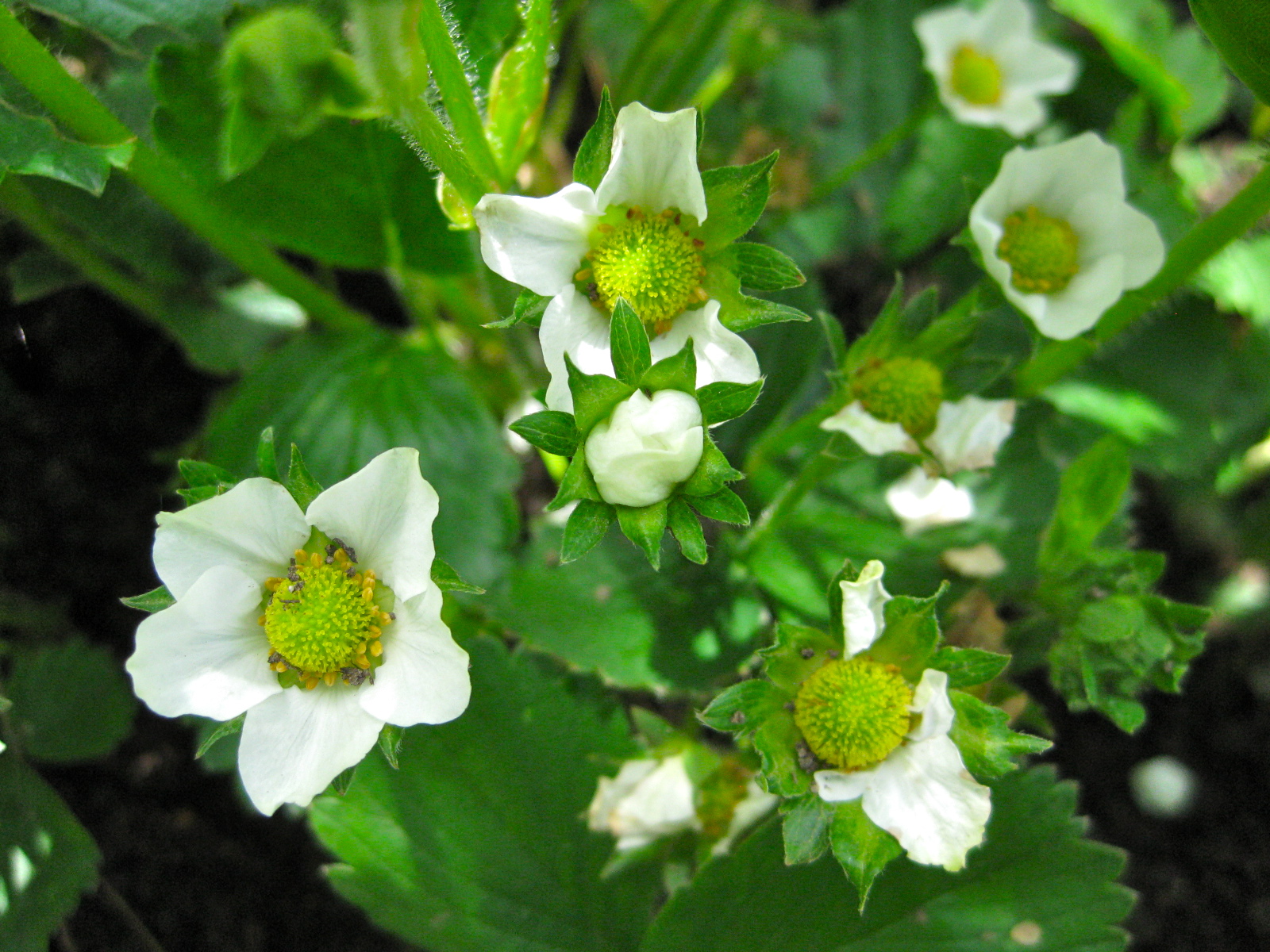
Strawberries

Our current house sits on a lot that is over three times as large as that of our last house.  We have space for our kid to run around and play, we have trees, and we, finally, have room for the type of kitchen garden that I’ve always thought would fit wonderfully in a family yard.  Meaning, a vegetable and fruit garden that would sit comfortably and seamlessly in a yard that was also suitable for playing, exploring, and relaxing.  If we can grow cucumbers ten feet from where we can also play baseball, we’re as happy as can be.

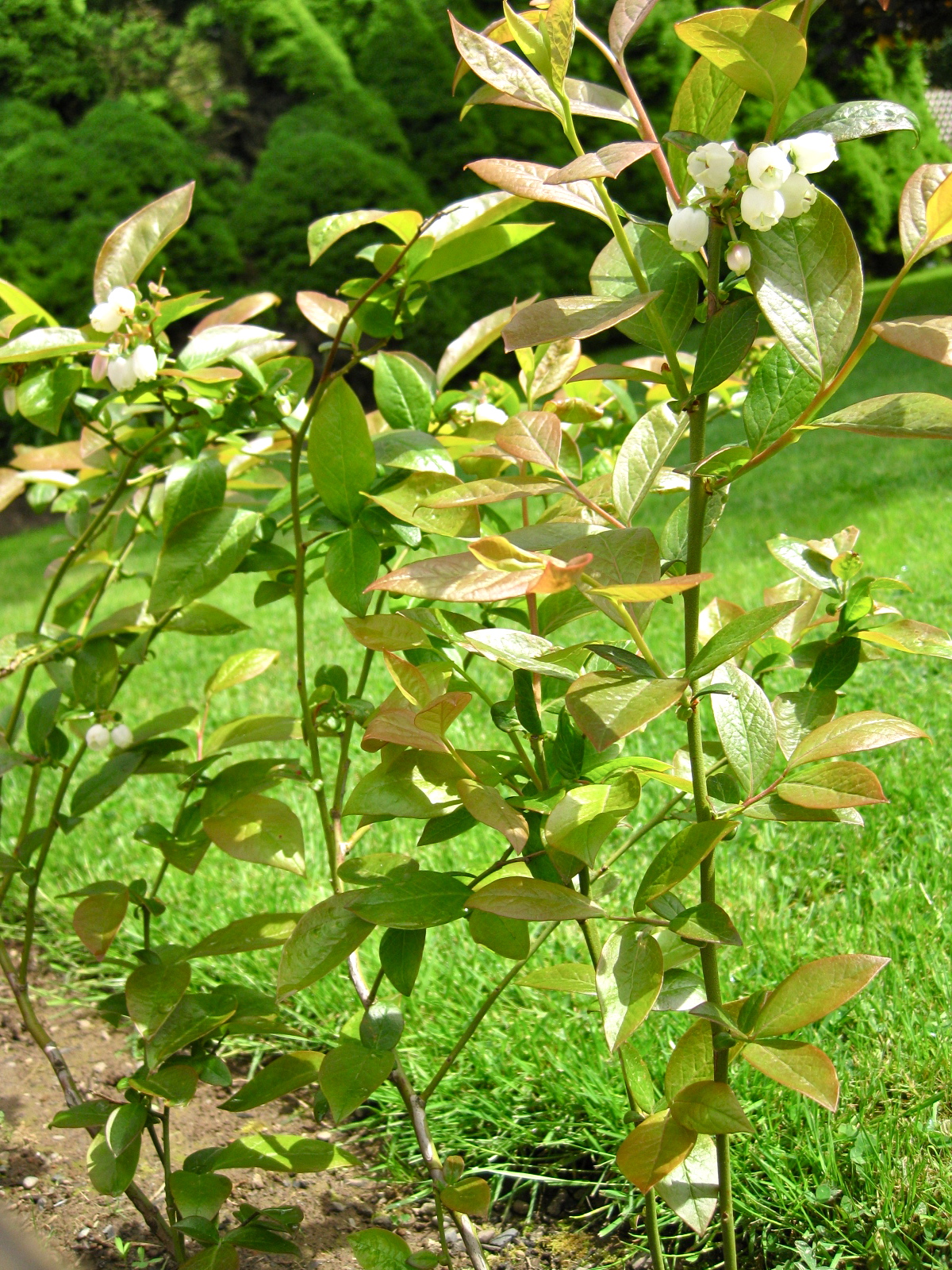
Blueberries

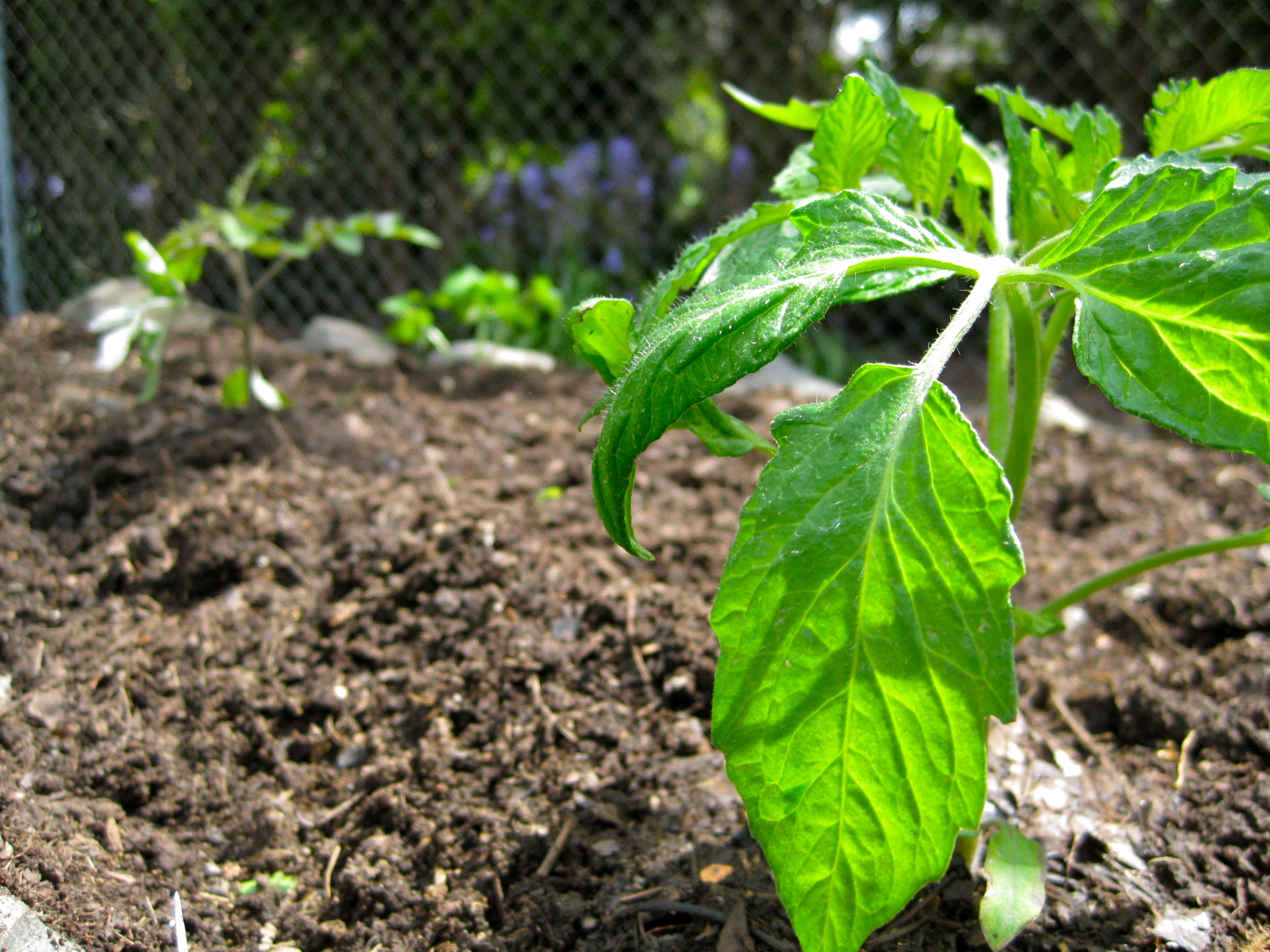
Tomatoes

Being modest gardeners, we are not the type of people who plan ahead in the spring for autumn canning.  We eat everything that we grow, but we also make an effort to not grow more than we can eat.  We happily harvest and preserve all the garden produce we can, but we are very conscious of not going overboard and growing so much food that we run out of places to store it.  We’re a small family to feed, so we’ve always known that ripping out an entire quarter of our yard for a vegetable garden would make no sense for the way we live.  As time goes on and the play space in our yard evolves, I am sure that our garden will change along with it.

Purple Basil

Genovese Basil

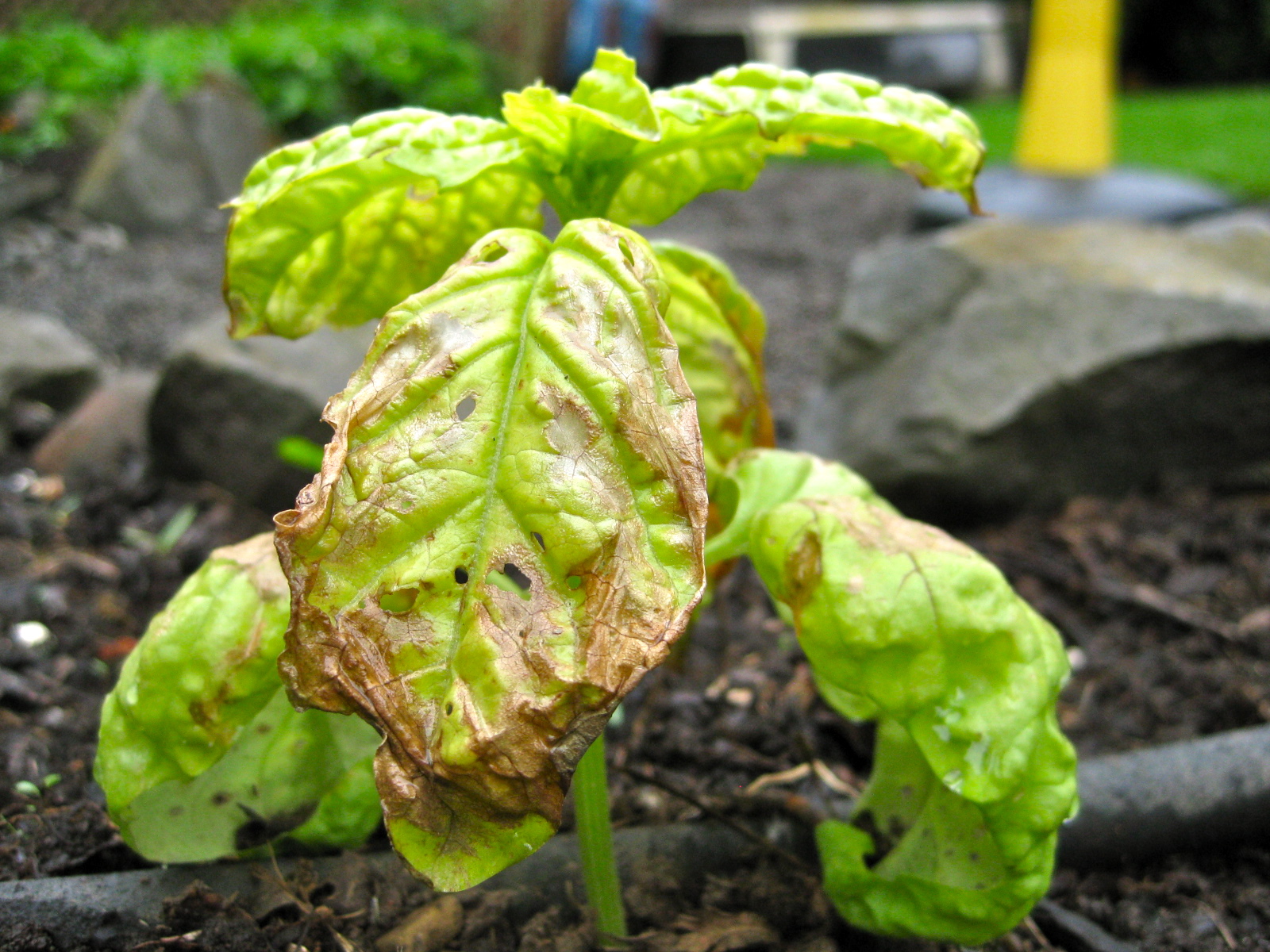
It’s been a cold and sad May this year, and I don’t really know what type of weather June will bring us.  Our garden thus far is hanging on, but certain things are looking a little worse for the wear  That lovely bright green basil that you see in the previous picture from two weeks ago?  Yeah, it now looks like this:

Basil in Distress

To say that I am feeling unhappy about this would woefully understate the intensity of my displeasure.

I am curious about the gardening exploits of other people out there.  Does anybody have great garden plans?  Has your spring been as punishingly cold and wet as ours?  How is your garden faring thus far?

Vegetable Garden

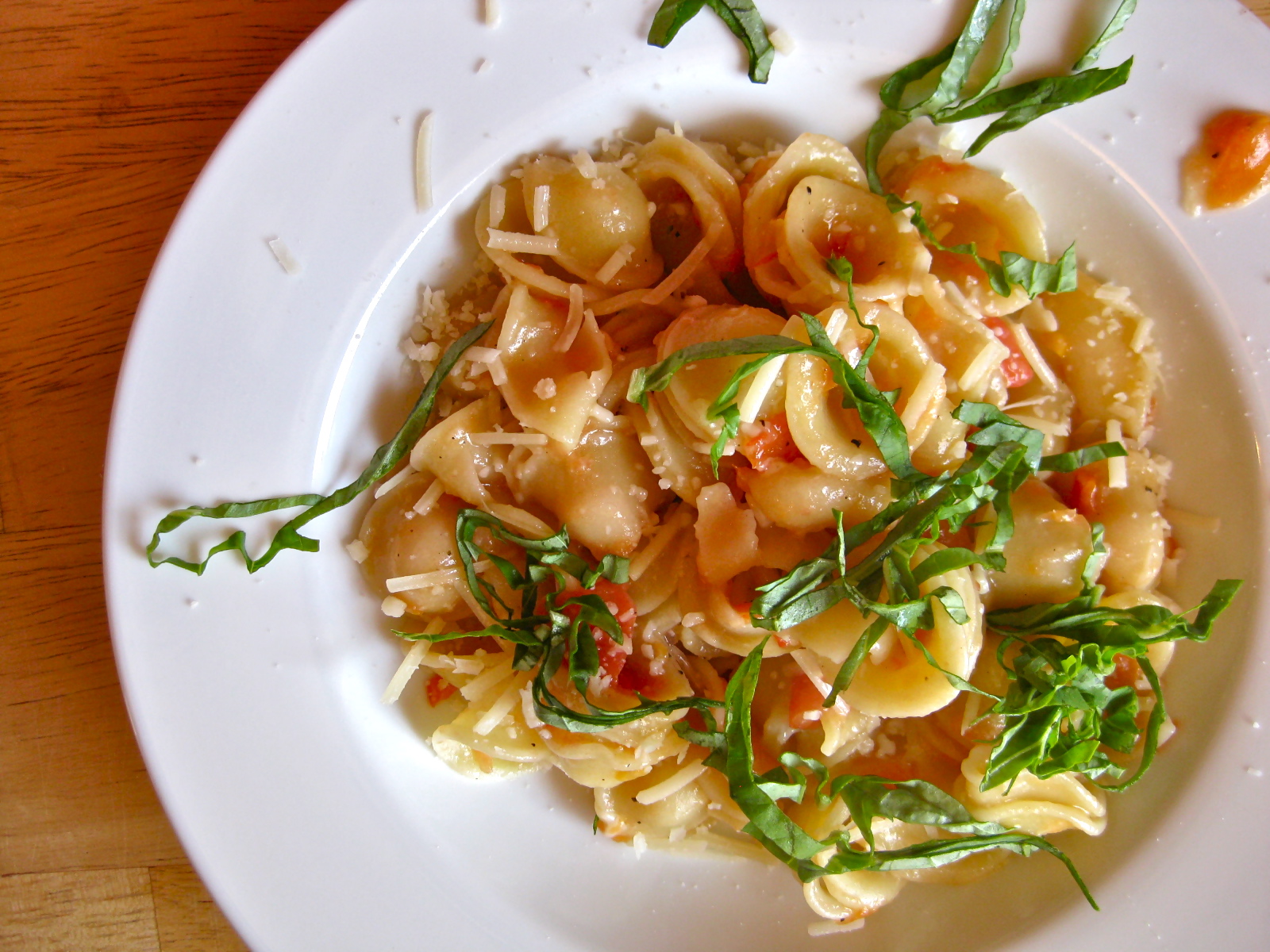
Orecchiette with Grated Garlic and Tomato

28 May

When the sun comes out, we leave the house.  Not to, for the one millionth time, make mention of the abysmal weather we suffer through in the Pacific Northwest, but when May begins to draw to a close and June starts to creep up on us, we all start to feel a little cooped up from the previous seven months we’ve just spent trapped indoors by unrelenting rain and gloominess.  You can understand, then, why a rare glimpse of the sun during the month of May (or June, for that matter, because here summer likes to hang out in its pajamas and nurse a few beers on the couch for a while before it finally decides to emerge from its extended time off and finally get to work) will cause people to take to the streets of Portland in a pasty parade of boisterous revelry.

Because you’re contractually obligated to own a bicycle if you live here, we, not surprisingly, spend a lot of our outdoor time traveling by bike to various locations.  We bike to the park, we bike to the baseball field, we bike to the science museum, and we bike while running errands.  If the weather is truly wonderful, we pack a picnic and head downtown to have a picnic on the waterfront.  If the weather very suddenly stops being wonderful and forces us back home before we find ourselves biking through a rainstorm, we unexpectedly unload ourselves from our bikes to face dinnertime totally unprepared.  On the rare occasion that I don’t want to break down and just order Thai food (okay, so I always want to break down and just order Thai food, but budgetary constraints dictate that ordering Thai food several times a week is a ridiculous and ruinous financial strategy), I head into the kitchen and prepare what has become our quickest last minute dinner.

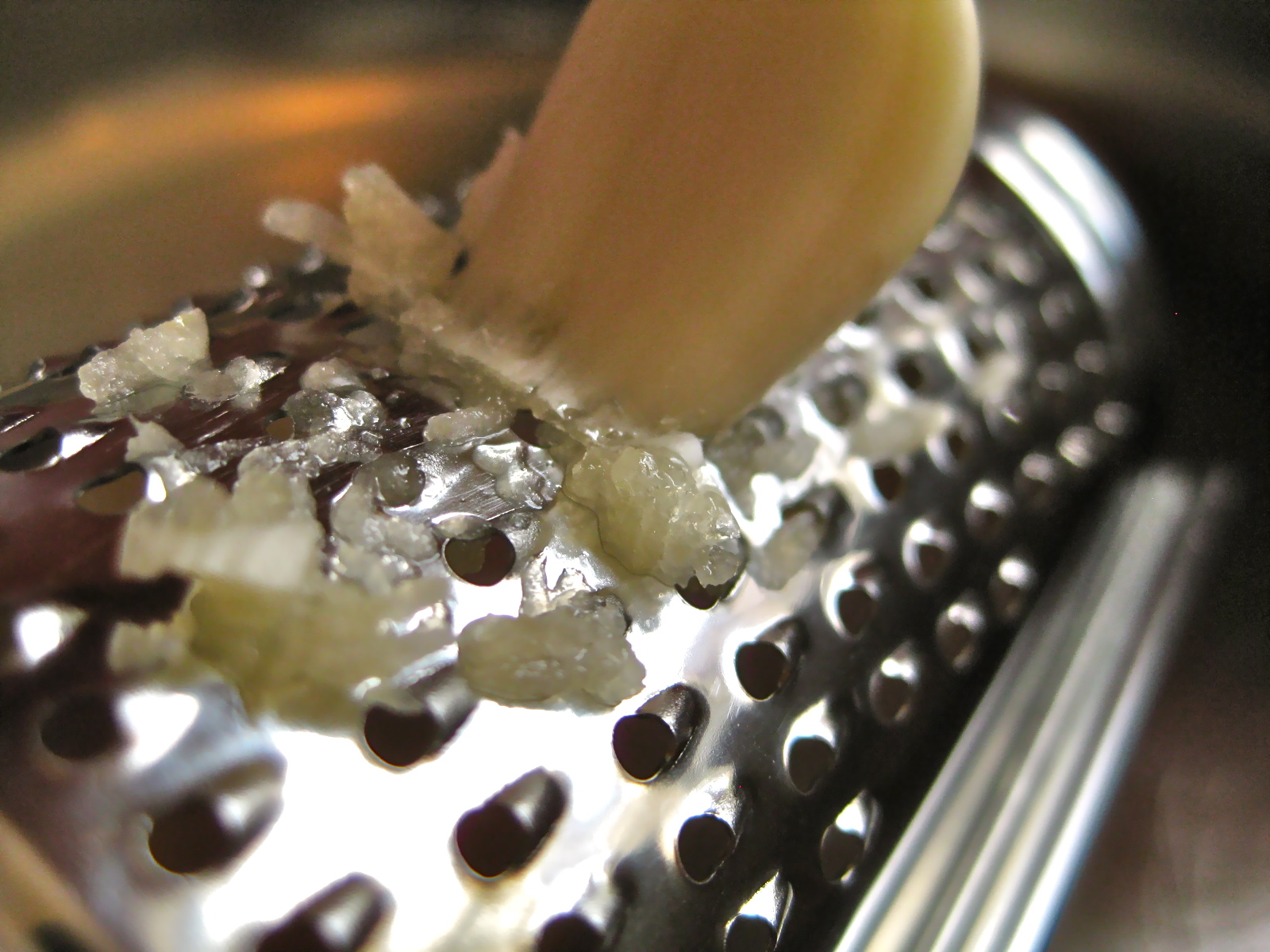
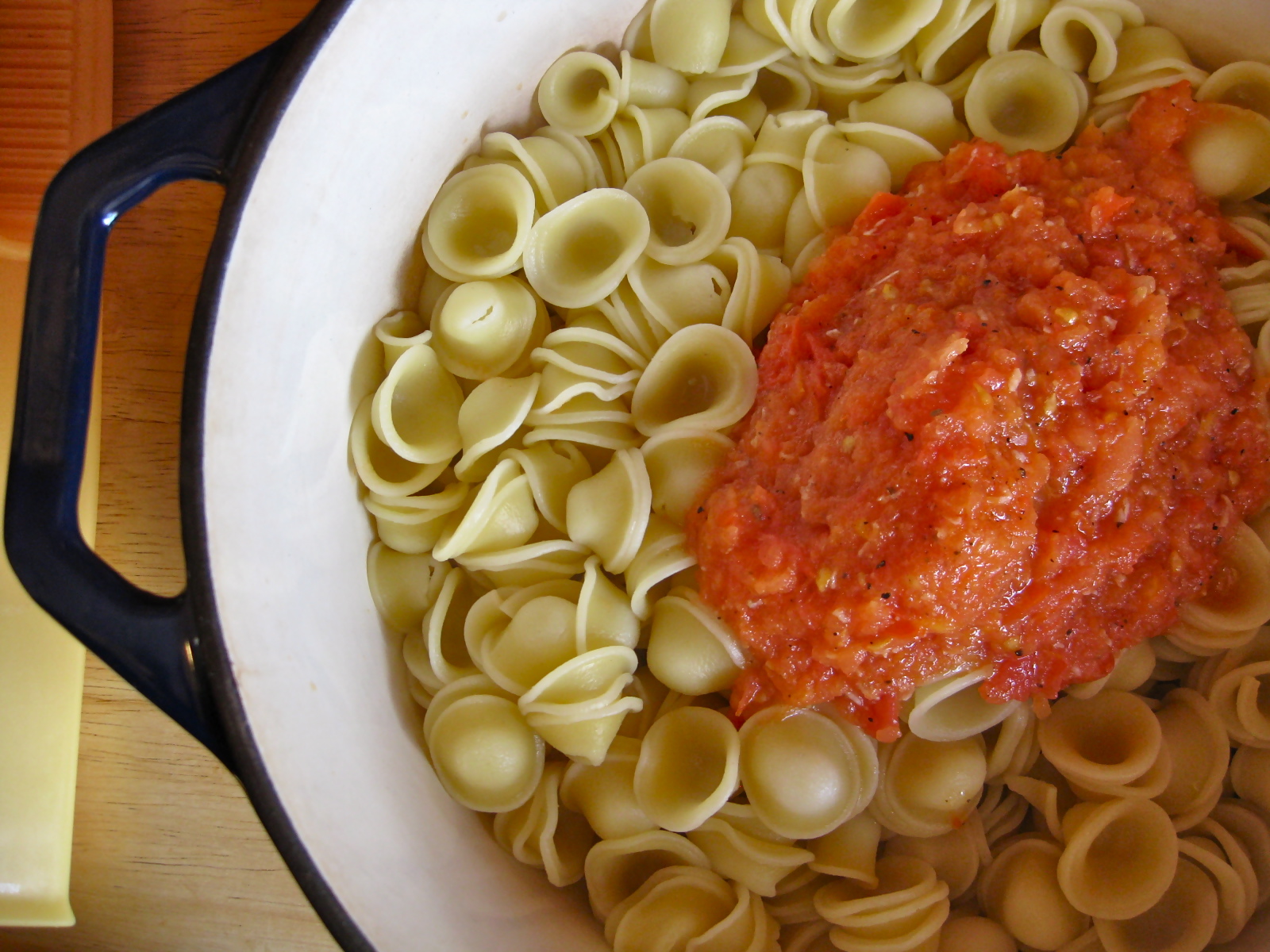
When the summer months actually arrive proper and the garden is bursting with tomatoes, this pasta dish sees a lot of action in our house.  More a handful of ingredients than an actual recipe, the technique (and I use that word very, very loosely here) of making this dish should serve as a nice base for creating a quick tomato pasta.  You boil your pasta water, throw in your pasta, then start on the sauce.  You put some fat (butter, olive oil, both) in a pan, allow it to gently melt, then grate in some garlic.  While the garlic simmers and melts into the fat, you grate up as many tomatoes as you can find, then add them to the garlic.  You simmer the sauce while the pasta cooks, you add some pasta water to the sauce, you drain and the pasta and combine the two, you stir in a bit of Parmesan, season everything, then you’re done.

If you think you’d want the sauce to be more garlicky, use more garlic.  If you want a looser sauce, add more pasta water. Add herbs, add red pepper flakes, add a sharper cheese–no matter what you want to do to this base recipe, it’s pretty difficult to render it inedible.  And, depending mainly on how fast your pasta water can come to a boil, you can have this dinner on the table in around 20 minutes.  Which will leave you plenty of time to, weather permitting, hop back on your bike after dinner and head out for some ice cream.

Orecchiette with Grated Garlic and Tomato

1 lb orecchiette, or another pasta of your choice (I find that the shape of orecchiette is perfect for cradling little bits of this sauce in each bite)

2 tablespoons of butter or olive oil (I like to use a mixture of both)

2 or 3 large cloves of garlic

3 or 4 large ripe tomatoes (or more, if you have them), cut in half and seeds removed

salt and pepper

Parmesan cheese

fresh herbs

Cook pasta in salted water according to package directions.  While pasta cooks, heat butter or olive oil (or both) in a medium-sized pan over low heat.  When the butter/olive oil is heated, use a small grater or rasp grater to grate the garlic directly into the pan.  Gently saute the garlic over low heat, stirring occasionally, until it starts to melt into the butter/oil and become translucent (about 1 to 3 minutes).

Using the large holes on a box grater, grate all the tomatoes directly into the pan with the garlic.  (You can grate the tomatoes onto a cutting board the add them to the sauce, but, accounting for the juiciness of the tomatoes, it is actually easier and less messy to just grate them directly into the pan.)  Grate the cut side of the tomato, so you end up holding the empty skin of the tomato after all the flesh has been grated into the pan.  Discard the tomato skins.  After you have grated all the tomatoes, simmer sauce over low heat, stirring occasionally to prevent sticking and browning.  Right before you drain the pasta, scoop out 1 cup of pasta water and add it to the tomato sauce, stirring to combine.

Drain the pasta, then return it to the cooking pot.  Add the tomato sauce to the pasta and stir to combine.  If desired, stir 1/2 a cup of grated Parmesan into the pasta while it is still in the pot, or reserve Parmesan to add later, when serving. Add salt and pepper to taste.

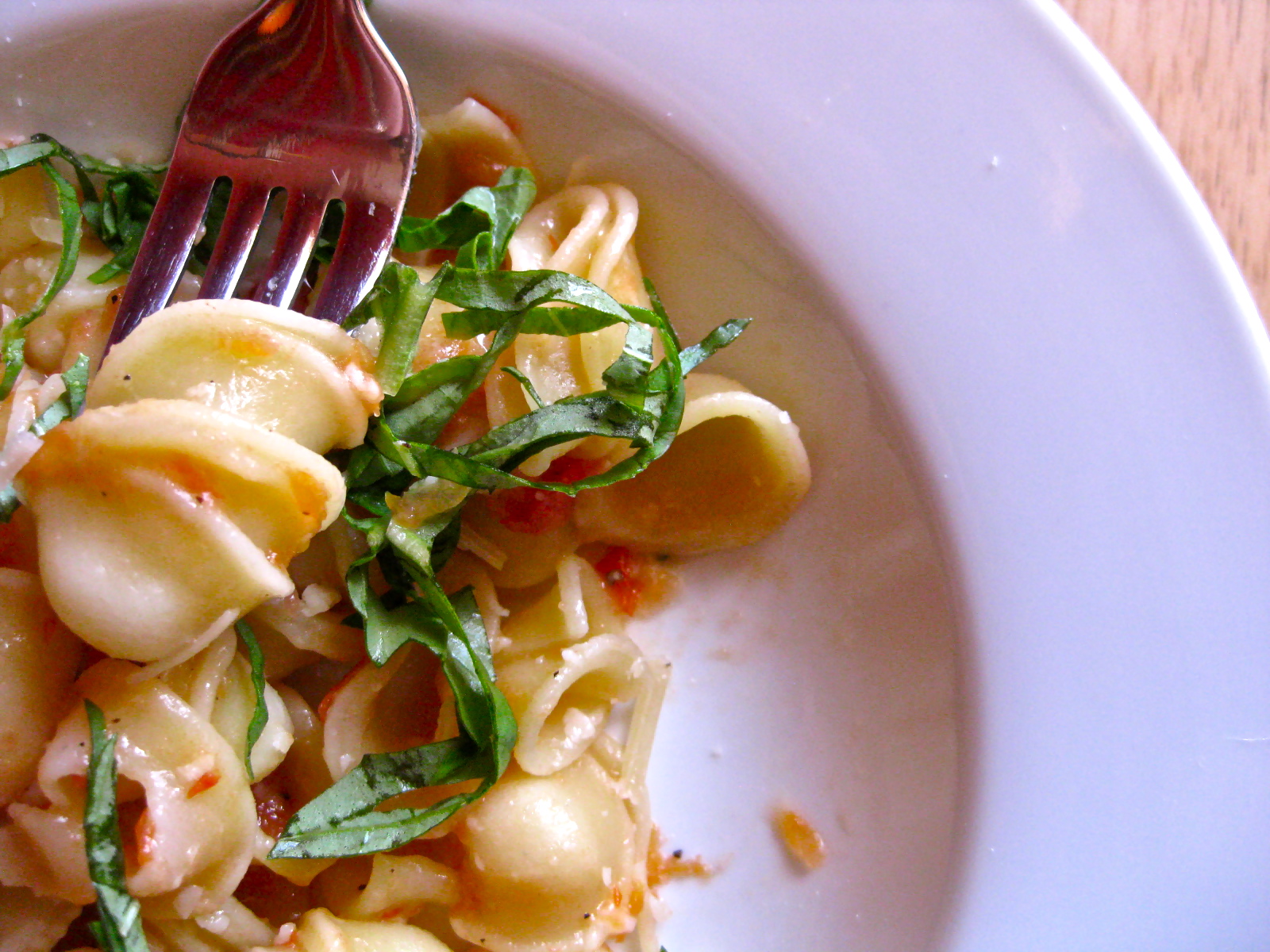
Top each serving of pasta with chopped fresh herbs (I used basil here, but any combination of fresh herbs is nice–basil, parsley, thyme, chives) and a sprinkling of Parmesan cheese.

Serves 4-6 people.

Chocolate Cake with Coffee Frosting (and a Secret)

25 May

There seem to be as many chocolate cake recipes in existence as there are people who enjoy chocolate cake.  There also seem to be as many names for chocolate cake (devil’s food cake, dark chocolate cake, chocolate layer cake) as there are people who are willing to taste all those chocolate cakes in order to officially prove whether or not those differently named cakes actually taste any different from one another.  You’ve never heard of these official cake-tasters, you say?  You think I just made all that up, you say?  Or did I just create a new job for myself—Official Chocolate Cake Taster—all in the name of finally getting to the bottom of this great chocolate cake mystery, thusly making my new job a selfless and totally essential function aimed at bettering the chocolate cake eating habits of all of humanity?  Think about that for a minute.

Though it seems unlikely, it’s not difficult to make a bad chocolate cake.  Cakes lacking moisture will never be able to taste good enough to allow anyone to forget their sawdust-like texture, but, conversely, cakes suffering from a shortage of true chocolate flavor will never be able to shine to their utmost greatness, no matter how moist and toothsome a morsel may be.  The other side of that coin, however, is the realization that it’s not all that hard to make a really, really good chocolate cake either.  In fact, the most difficult step in making a great chocolate cake starts not with one’s prowess in the kitchen, but rather in finding a standout recipe.  Which is where my new job comes in.

Some recipes stress a particular mixing technique, while others insist on using only oil, not butter, in their chocolate cake, arguing that the neutral flavor of vegetable oil allows the true taste of the chocolate in a chocolate cake to really take center stage.  Some recipes favor buttermilk for achieving an optimal texture, but others prefer that you amend the batter with a simple chocolate pudding made from milk and chocolate heated together on the stove.  Though there are endless tricks and techniques by which people will swear, in my new capacity as Official Chocolate Cake Tester, I feel as though I would be remiss in my newfound duties if I did not reveal to you a bit of a secret: Sometimes the secret to making a flawless chocolate cake comes from the most unlikely source, and that source just so happens to grow underground.

While also welcoming in a not insubstantial amount of both butter and buttermilk, this particular cake recipe utilizes a little-known helper in the world of baked goods.  In an effort to turn out a cake with maximum moistness, the recipe calls for the inclusion of a simple handful of shredded raw beets, an ingredient that is undetectable in taste, but very much evident when it comes to texture.  The shredded beets melt into the cake during baking, resulting in a cake with incomparable moistness and richness.  While I won’t pretend that adding beets to a cake magically transforms it into a healthy and wholesome snack (see: butter, chocolate, and sugar), I will wholeheartedly admit that this cake can be deemed magical in an entirely different, indulgent, deliciously chocolaty way.
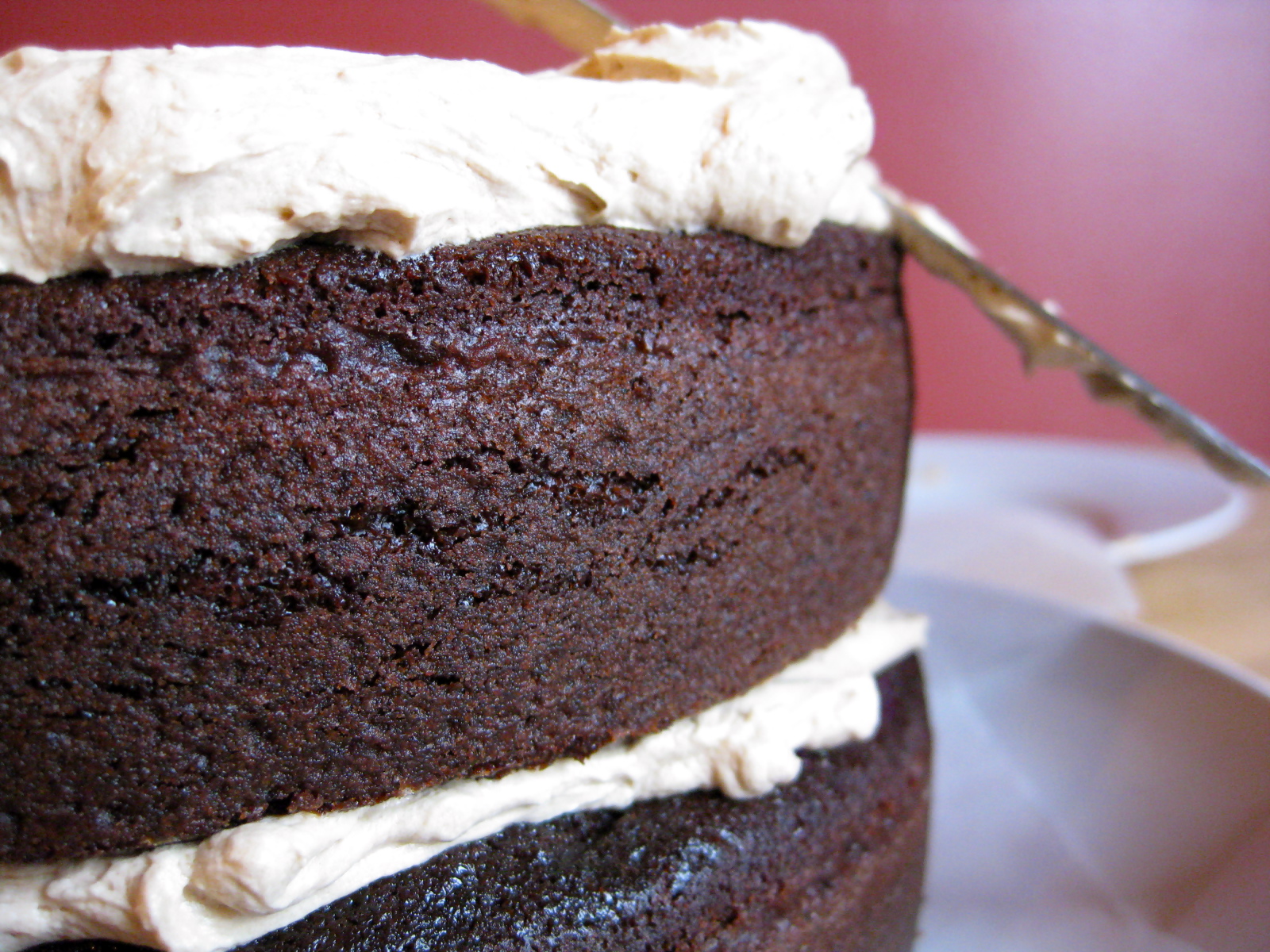
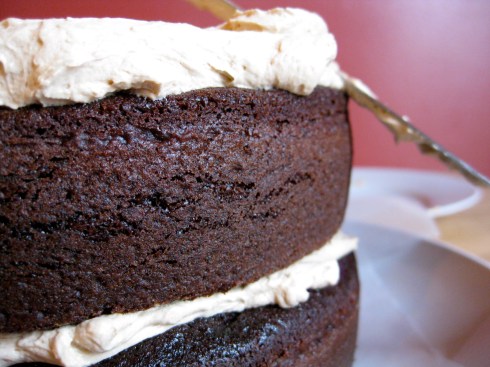
I’ve mentioned before my propensity to punch up chocolate baked goods with a bit of coffee.  Rather than adding a dose of coffee directly into the cake batter, I took my love of the chocolate/coffee combination a bit further by covering this cake with a completely immodest amount of coffee frosting.  Even if you happen to be a lukewarm fan of coffee on its own, I cannot recommend enough that you go ahead and put these two elements together.
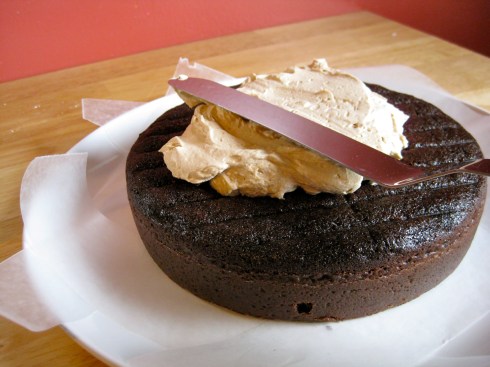
The two flavors go together like a dream, and they were a perfect pairing for celebrating the birthday of a 33 year-old brother who loves both coffee and chocolate with equal affection.  Just add in some friendly dinosaurs and your consummate chocolate cake is complete.  (Note: Dinosaurs are for decoration only and are not meant to enhance the flavor of the cake in any way.)


Chocolate Cake with Coffee Frosting (and a Secret)

Chocolate Cake

From Cooking School Secrets for Real-World Cooks, by Linda Carucci 

2 cups all-purpose flour

2 cups granulated sugar

1 cup natural unsweetened cocoa powder

2 teaspoons baking soda

3/4 teaspoon baking powder

1/2 teaspoon salt

4 large eggs, room temperature

2 cups buttermilk

1 cup (2 sticks) unsalted butter, melted and cooled to room temperature

1 teaspoon pure vanilla extract

2/3 cup packed finely shredded raw beets

Preheat oven to 350 degrees F.  Position a rack in the lower middle position.

Butter and flour the sides and bottom of 2 8-inch round cake pans with 2-inch sides.  Line the bottoms with parchment paper.

Sift together the flour, sugar, cocoa powder, baking soda, baking powder, and salt into a large bowl.  Stir to combine, then make a well in the center and set aside.

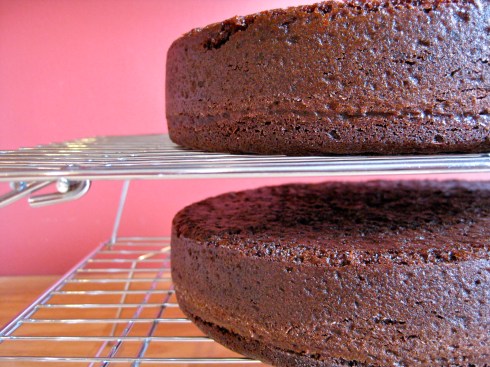
In a medium bowl, whisk the eggs to combine.  Whisk in the buttermilk.  Add to the dry ingredients all at once, and stir to combine completely.  Slowly whisk in the butter.  Add the vanilla and stir to combine.  Stir in the beets.  Transfer to the prepared cake pans and spread evenly, using a rubber spatula to pull the batter away from the center of the pans and out along the sides.  (The recipe claimed that this act would ensure flat, rather than domed, tops, and, I’ll admit, I was dubious, but still did it.  To my complete surprise, it totally worked.  I didn’t have to slice off the tops of either of the cakes whilst in the pursuit of non-crooked layers!  Who knew?)

Bake until the center of each cake springs back when lightly touched and the sides of each cake just begin to pull away from the pan, 30 to 35 minutes.

Allow cakes to cool on a wire rack, still in their pans, for 10 minutes.  Invert each cake onto another rack and remove pans.  Carefully peel off the parchment paper and cool the cake completely, upside down.  Make sure your cake layers are completely and totally cooled before frosting, lest your frosted cake end up a dripping, melted mess.

Coffee Frosting

From The America’s Test Kitchen Family Baking Book 

3 sticks unsalted butter, cut into chunks and softened

2 tablespoons instant espresso

3 tablespoons milk or heavy cream

2 1/2 teaspoons vanilla extract

1/4 teaspoon salt

3 cups confectioners’ sugar

Beat the butter, espresso powder, milk or cream, vanilla, and salt together in a large bowl with an electric mixer on medium high speed until smooth, 1 to 2 minutes.

Reduce the mixer speed to medium-low, slowly add the confectioners’ sugar, and beat until incorporated and smooth, 4 to 6 minutes.  Increase the mixer speed to medium high and beat until the frosting is light and fluffy, 5 to 10 minutes.