Archive | September, 2011

The Best Wine Opener

12 Sep

For years, when tasked with opening a bottle of wine, I used that bad boy on the left.  It’s compact, it’s fairly straightforward to use in terms of technique, and it’s highly durable.  The only problem I have ever had with it has arisen when encountering a bottle of wine with a particularly stubborn cork.  On more than one occasion, I have managed to break a cork in half, which, though certainly not the end of the world, is at the very least a mild annoyance.

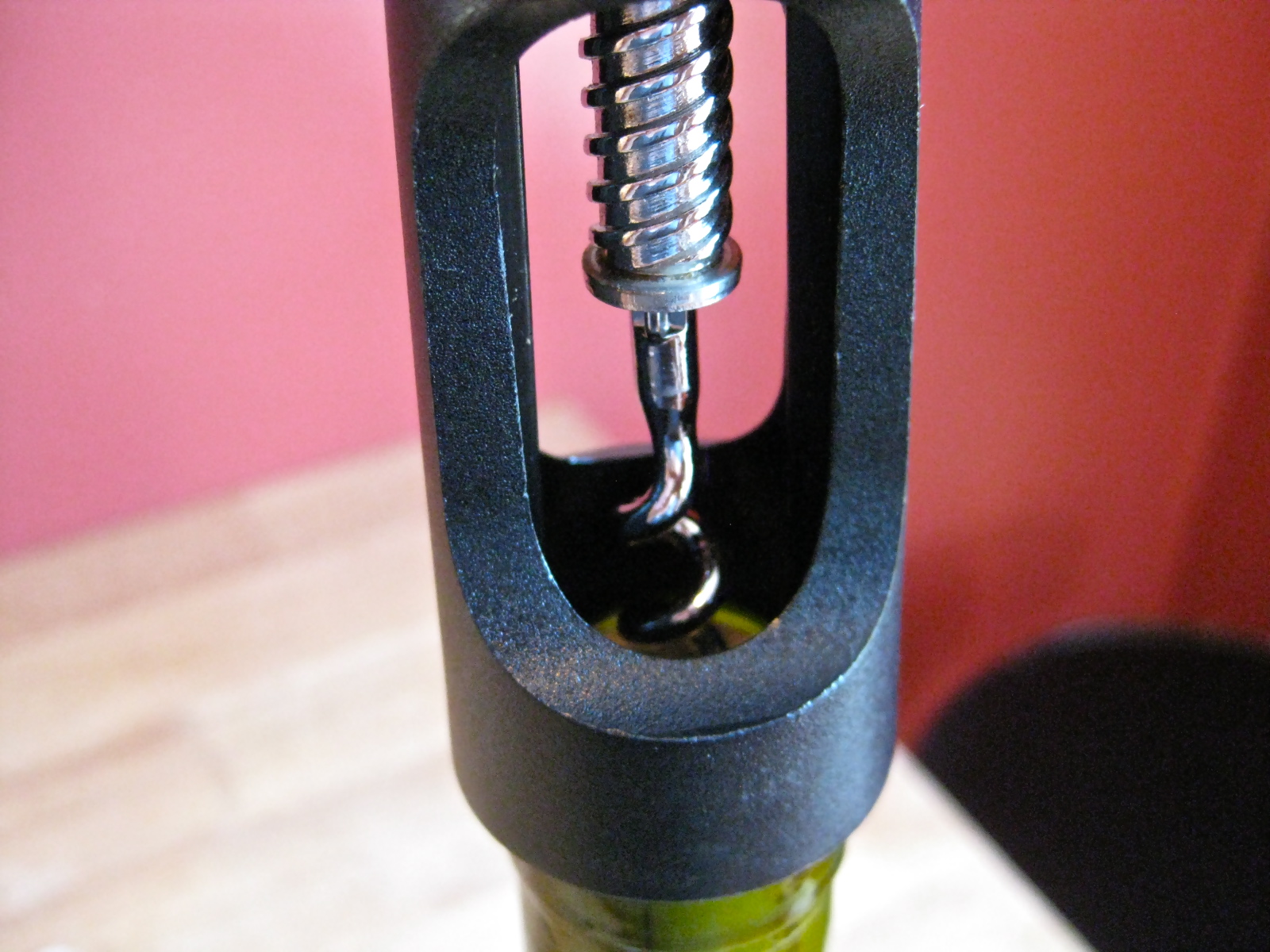
The corkscrew on the right is what I believe people refer to as a locking top wine opener.  It is the best wine opener I have ever used in my life, hands down.

But, wait.  Let me back up a bit.

During all the years I was using my $5 corkscrew pictured above on the left, I was constantly being given bigger, fancier corkscrews by people who thought that I was perhaps clinging to my simple corkscrew out of a sense of duty or frugality (it wasn’t broken, so why replace it?).  Every corkscrew I received, I then tried, and many of them I actually liked.  The problem was, every single one of them—and I really to mean every single one—broke within a few months, or perhaps even a full year, of use.  The one with the wings on the side that leveraged the cork out of the bottle?  Broke.  The ultra-fancy one that had two different handles, a lever, and came with its own display case?  Broke.  The one that came with a special foil cutter and had the unfortunate look of a tool one would find in a dentist’s office?  Both items broke.  So, it was back to me and my simple corkscrew that sometimes broke stuff and made my wine a little more textured than I desired.

And then one Christmas a few years ago, my husband and I were given this wine opener (perhaps by a relative?  I am guessing an uncle?  I don’t know.  My husband has a big family, and there are a lot of uncles floating around in there).
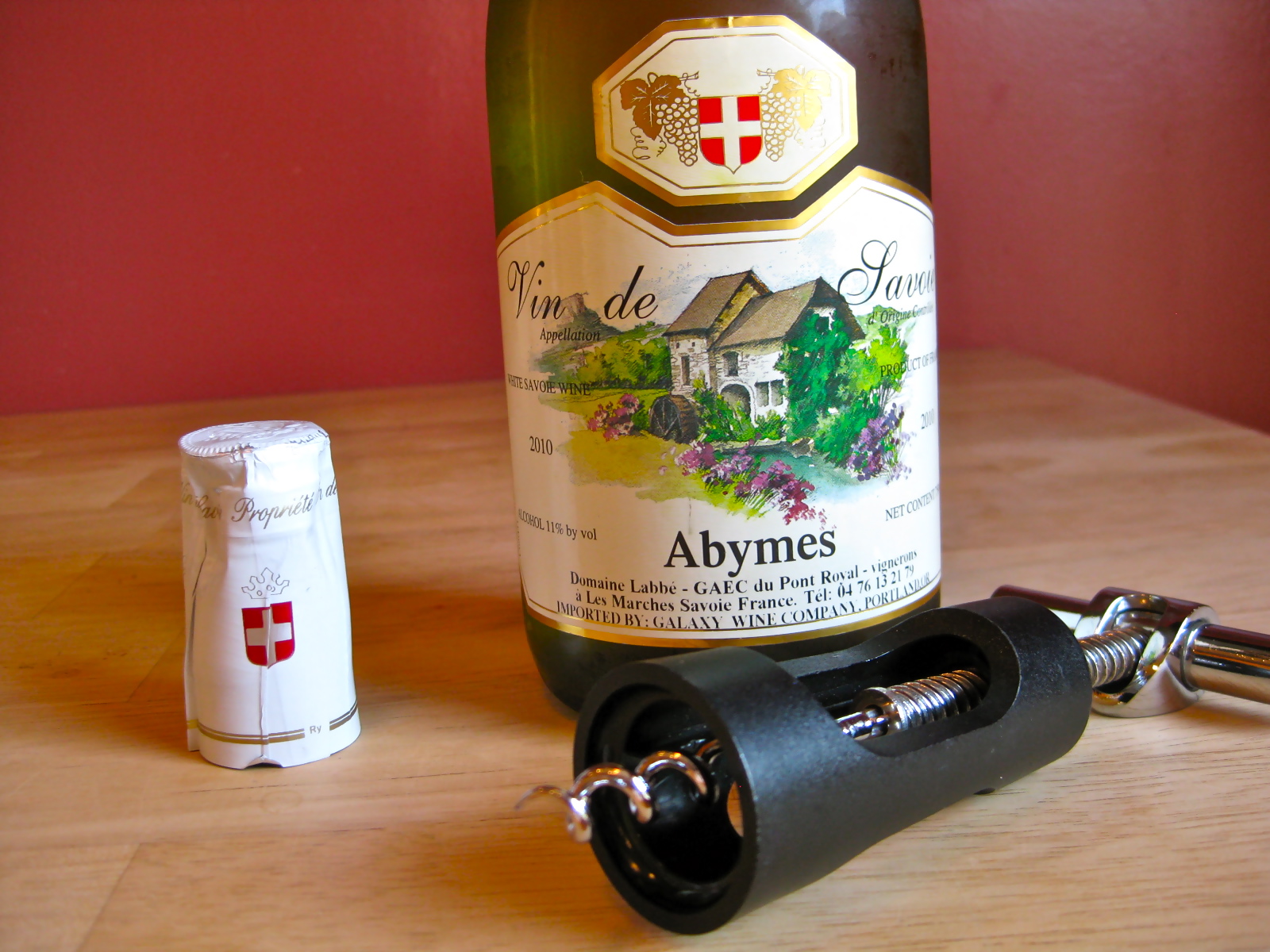
At first, not recognizing it as any wine opener I had ever used before, I resisted it.  It required too much fiddling and fussing, I complained, and it bore a strange resemblance to the vise in my dad’s workshop that used to pinch my fingers all the time when I was a kid (which was entirely my fault because I could never stop fiddling around with the lever on the vise, but whatever).  No, I declared, I will not be needing that, thank you.  But then time wore on, we moved, and I momentarily lost my old corkscrew.  With a bottle of wine waiting to be opened, the time had come.  I could not avoid it any longer.  I had to use the vise-looking corkscrew.

Here is how it is done.

You place the base of the opener over the cork:

If the tab on top of the opener is positioned with the hole facing up,
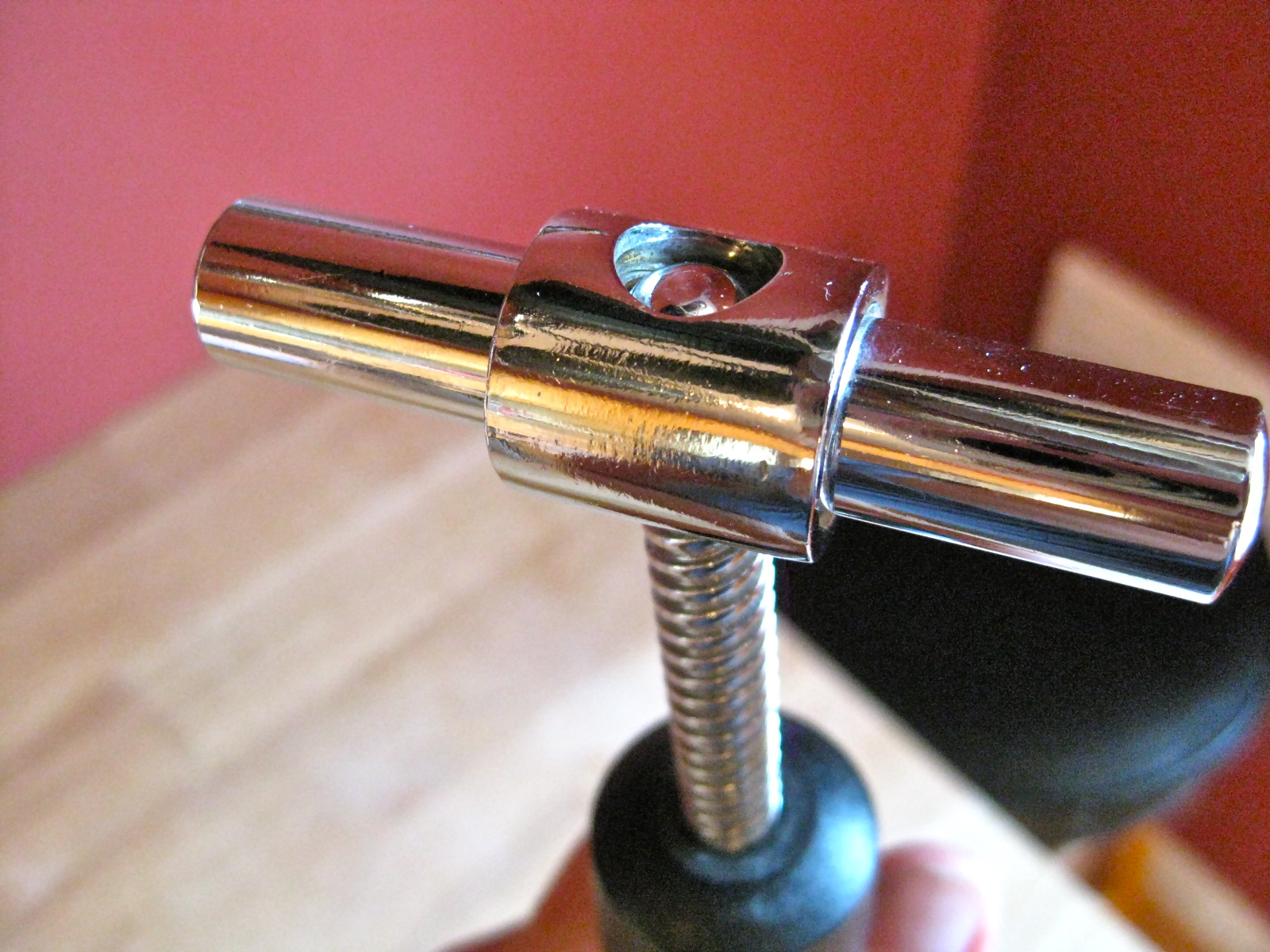
you flip the tab about 90 degrees so the opening is facing the side and the solid portion is on top:
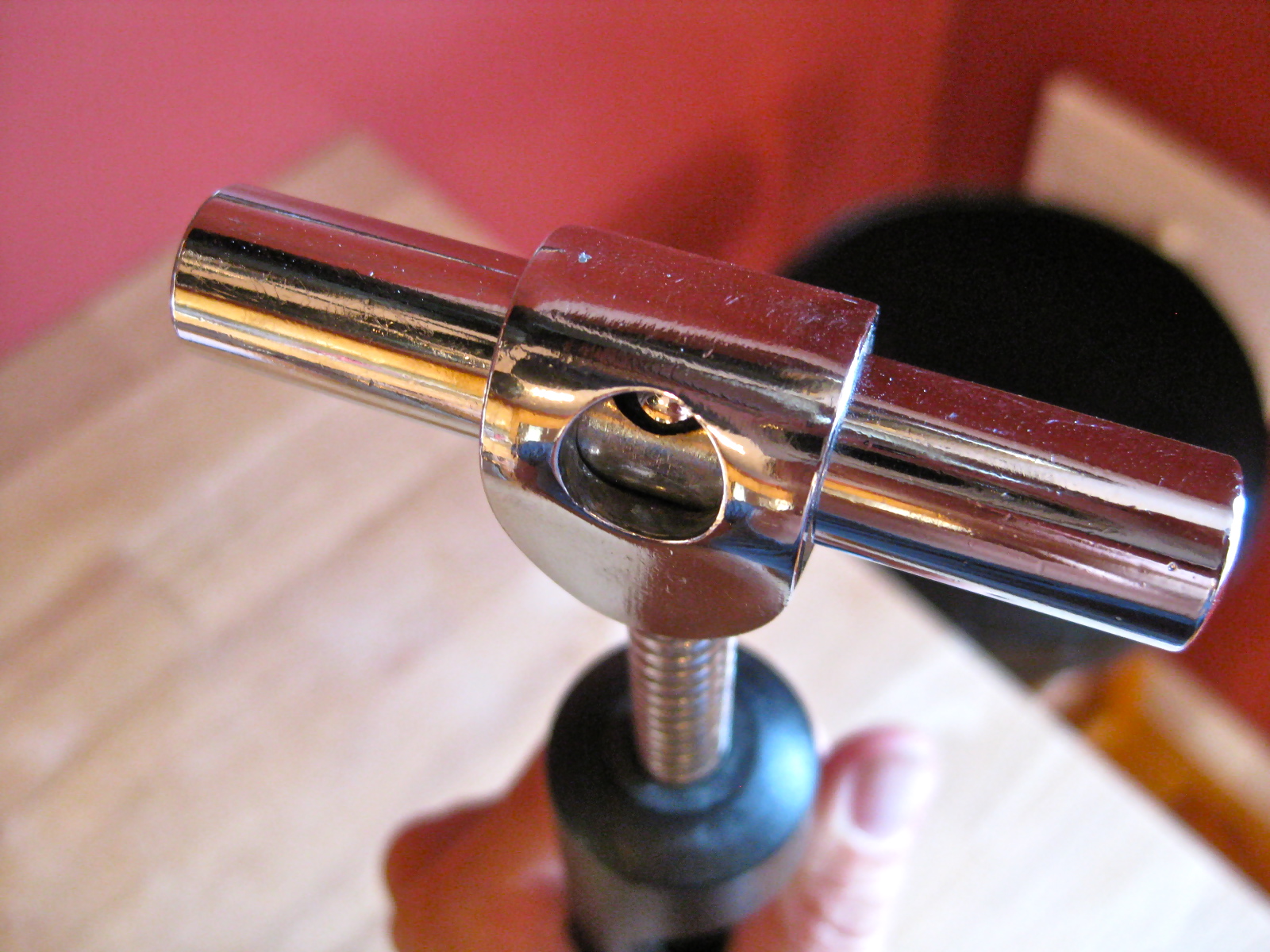
With one hand you hold the base of the opener on top of the bottle, and with the other hand you turn the handle of the opener in a clockwise direction.  This will force the corkscrew into the cork:

When the corkscrew has been driven all the way into the cork, the tab on top flips back over so the hole is now facing up:
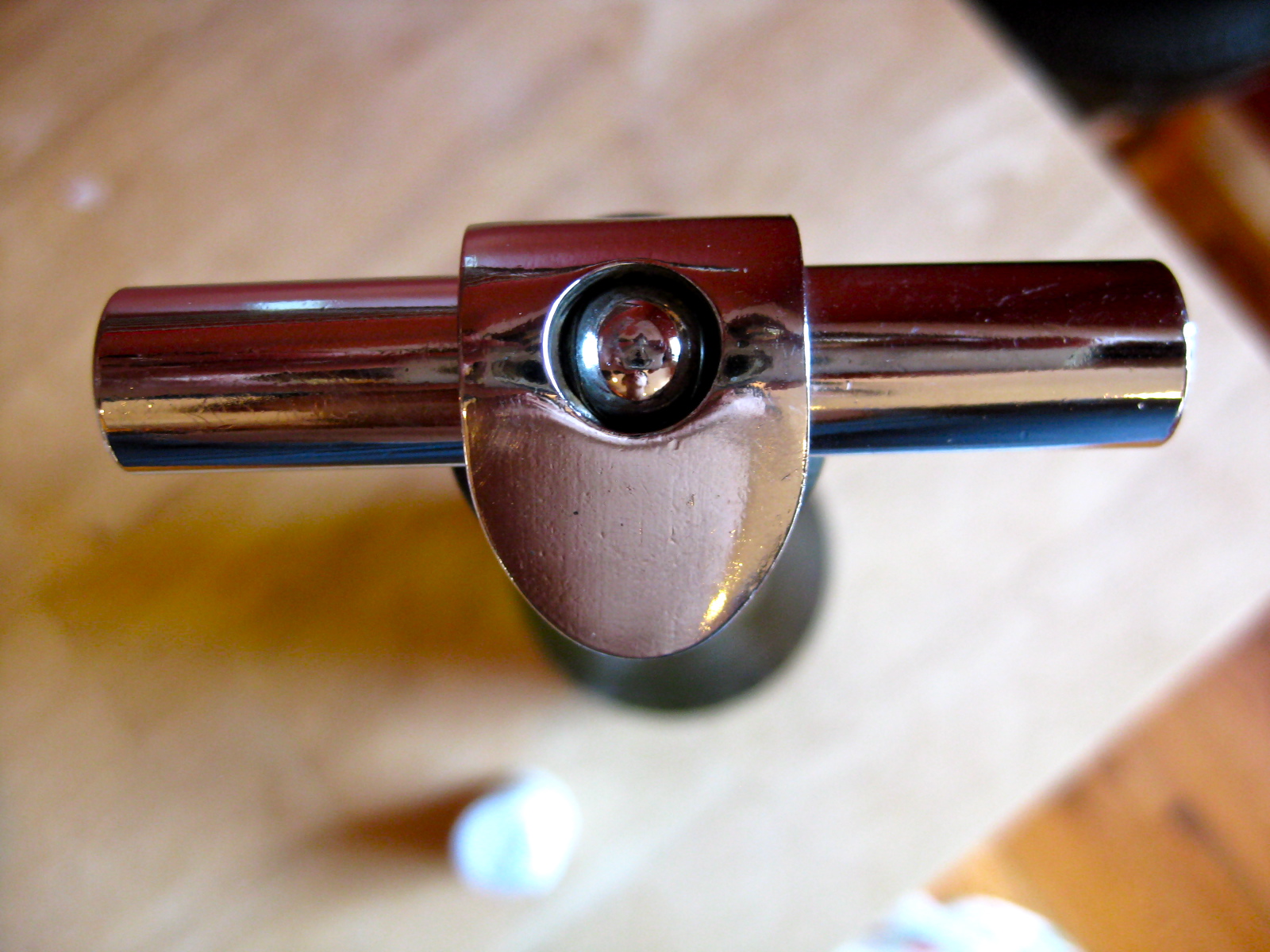
Then you just keep turning the handle clockwise and behold!

The opposite end of the corkscrew comes up through the hole in the tab,

freeing your cork from the bottle in the process:
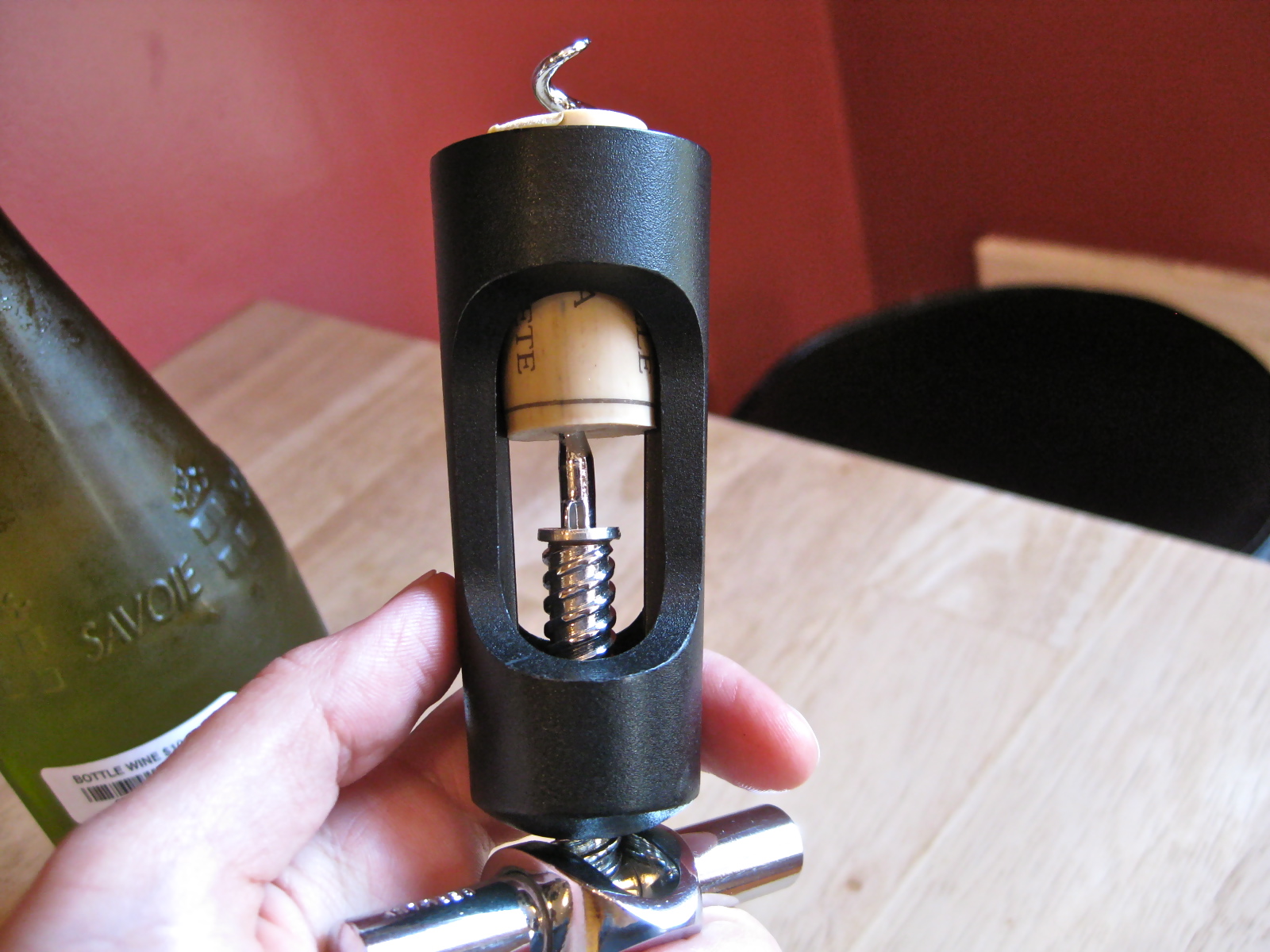
To free the cork, flip the tab to the side once more, then turn the handle counterclockwise, unscrewing the cork:
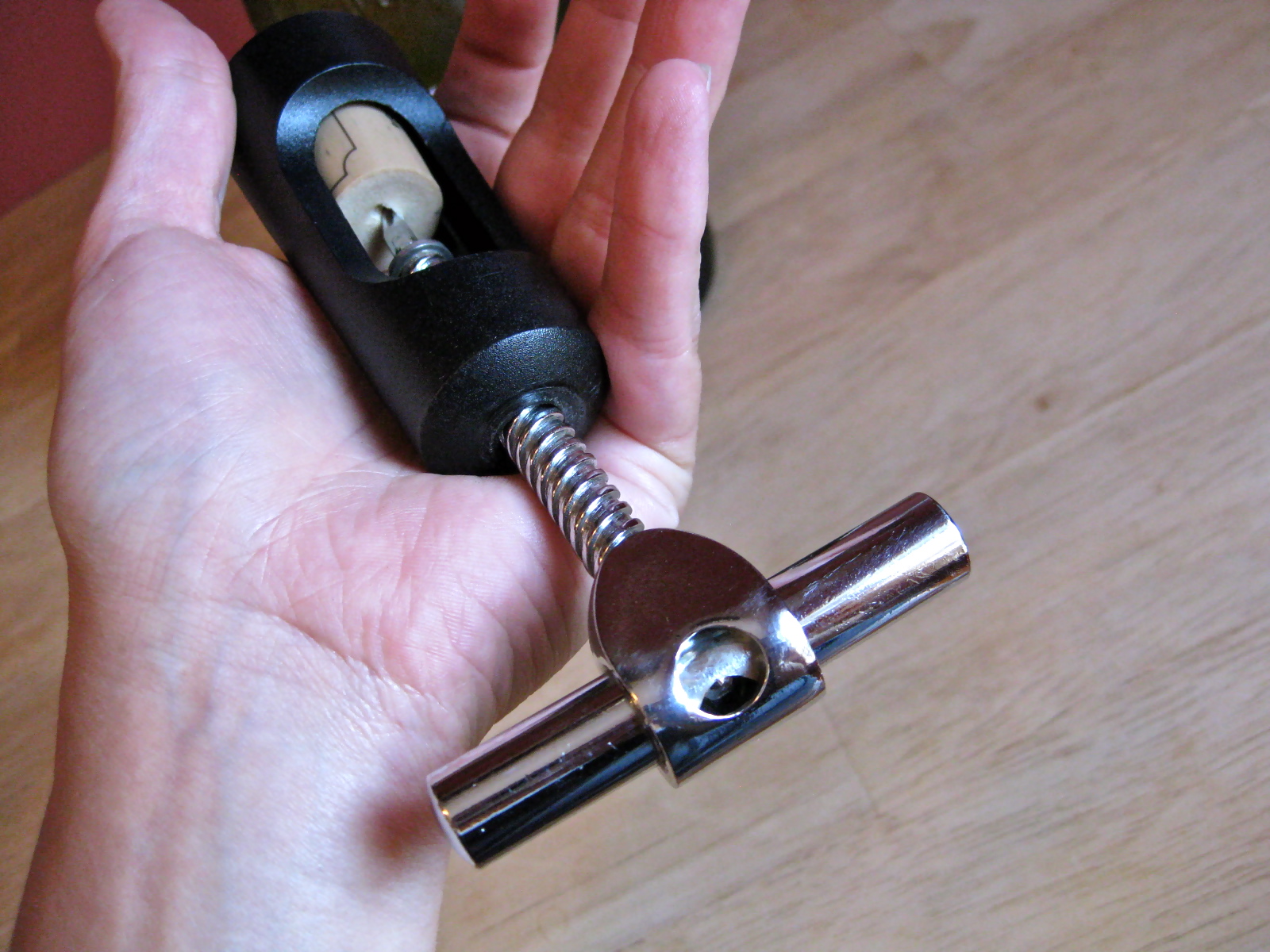
This corkscrew works like magic every single time.  After the first time I used it, chastened, I swore my allegiance to it almost immediately.  I still keep the other corkscrew around (you know, for additional wine-opening emergencies), but for my general wine-opening duties, this corkscrew can’t be beat.

Now, here comes the sad part.  I have no idea where it came from.  I’d love to tell you where you can find your own magical wine opener, but when I tried to research places one could buy this type of wine opener, all I could find were collector guides to antique locking top wine openers from Europe.  (This, incidentally, evolved into a rather fascinating afternoon for me, as I came across page after page of great examples of vintage wine openers.  I highly recommend checking those out.)

So, if you are reading this, Uncles of My Husband, perhaps you might enlighten us as to where you procured such a fantastic wine opener?  Just in case I might someday feel the need to get a backup wine opener for my backup wine opener.  Because I am like that.

Green Beans with Cherry Tomatoes and Caramelized Lemon-Balsamic Onions

8 Sep

Every year it seems as though Portland teases us through most of the summer with its cold, misty mornings, overcast days, and utter lack of regard for those of us who try time and time again to coax our vegetable gardens into producing even the smallest amount of fresh rewards.  And then, come the end of August, everything seems to explode with abundance.  All at once, tomatoes are ripening, cucumbers are growing fat, and long-awaited peppers of all types are finally starting to showcase a veritable rainbow of colors.

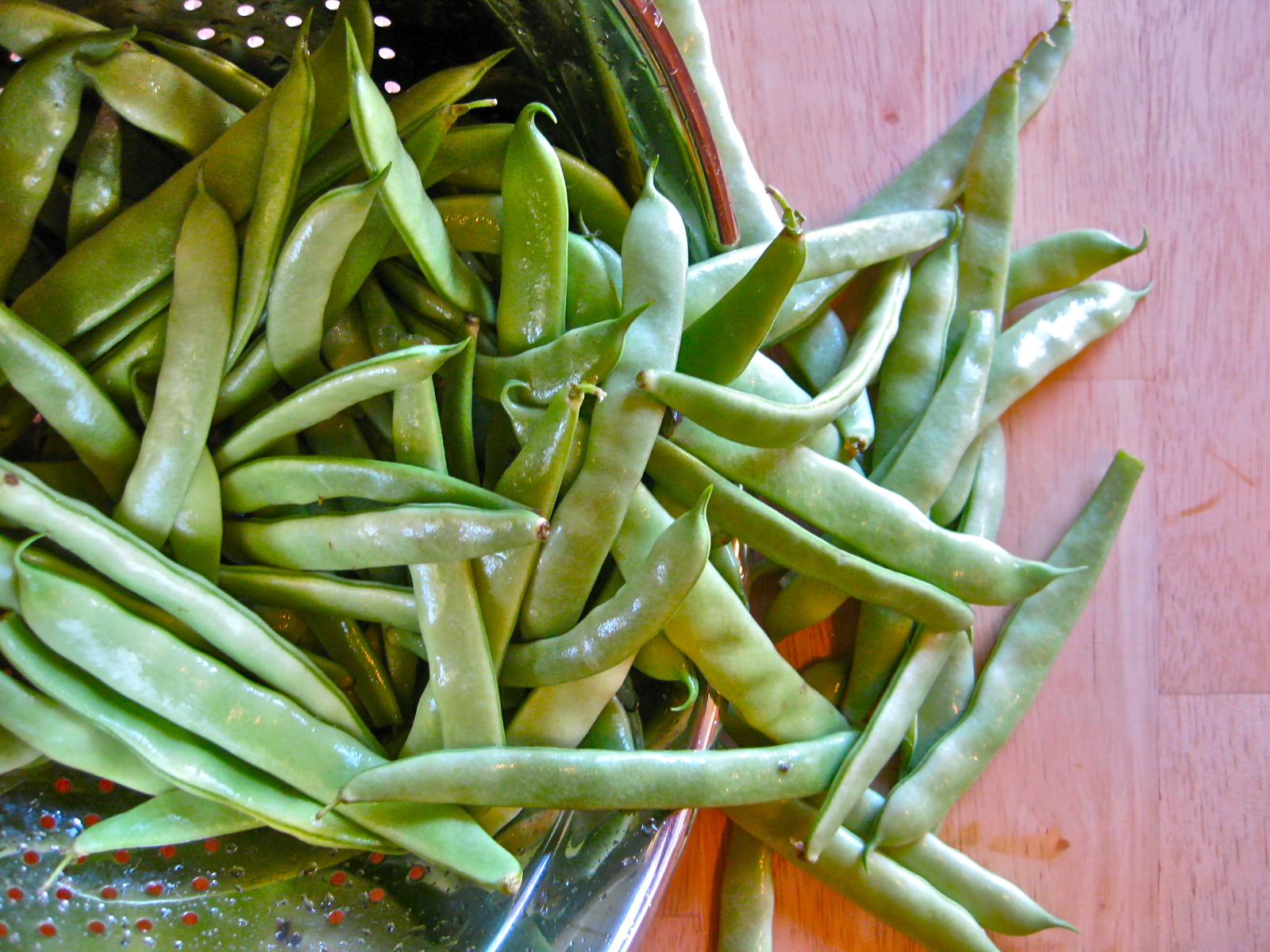
Somewhat  miraculously, the one vegetable that seems undaunted by the chill of Portland summers is green beans.  When your garden’s tomatoes are rock hard and still hiding from the cold behind their pale skins, green beans of all sorts will be waiting for you, their crispness like a friendly welcome to the growing season.  I’ve been known to snap beans right off of the vine and immediately start munching, but, when feeling a bit more refined, it’s never a chore to find ways to dress the beans up a bit.

Unfortunately, having now introduced myself to fancied up green beans with a layer of lemony-bright caramelized onions, topped with a blanket of sweet-tart cherry tomatoes, I now feel as though there will never be another way for me to eat fresh garden beans.  While I will never disparage the simple steamed green bean, it’s been a long time since I have found myself so enamored with a green bean dish that I want to make it—and eat it in its entirely—every single day.  This combination of richly caramelized onions and crisp beans has become my most beloved summer side dish, the dish I want to bring to potlucks, make for a family dinner, or just eat straight from the platter while standing in the kitchen.  It’s summery and satisfying, and it makes me think that next year, when the sun is still hibernating and the garden sitting in waiting, I might have to set aside a large plot of yard space for beans to help me make it through the chilly beginnings of another Pacific Northwest summer.

Green Beans with Cherry Tomatoes and Caramelized Lemon-Balsamic Onions

1 ½ pounds green beans, both ends trimmed and any tough strings removed

1 pound onions (I used 1 very large sweet onion)

2 tablespoons olive oil

1 tablespoon balsamic vinegar

1 generous tablespoon lemon zest

8 ounces cherry or grape tomatoes

salt and pepper

Bring a large pot of salted water to boil.  Boil beans until bright green and crisp-tender, anywhere from 3-5 minutes, depending on the size of your beans (larger beans will need to cook longer, and smaller, skinnier beans will need less time).  Drain the beans and immediately plunge into an ice water bath (this will stop the beans from cooking any further, and also help them retain their bright green color).  When the beans have cooled, drain and set aside.

Cut onions in half from end to end, then slice into thin ribs.  In a large pan, heat olive oil over medium-low heat.  Add the onions to the pan, throw on a pinch of salt, and slowly cook onions, stirring occasionally, until they turn golden, about 20 minutes.  Turn heat down to low, add balsamic vinegar, stir to combine, and cook an additional 5 minutes.  Remove from heat and add lemon zest.  Add salt and pepper to taste, and stir to combine.

Slice each cherry or grape tomato in half.  Arrange cooked beans on a large platter, and top with caramelized onions.  Sprinkle tomato halves over the onions and beans.

Seared Tuna Steaks with Salsa Verde

5 Sep

Sometimes it takes me a while to come around to certain foods.  For years I could not understand the logic behind combining sweet and savory foods, and then one day I ate a salad packed with huge chunks of watermelon tossed with deliciously salty squares of feta cheese and, oh, my lord, life had never been better.

Meats, however, are still a tough sell for me.  I’ve mentioned this before, but I just can’t get behind most meats, and, if I do decide to go near them, I am frequently struck with the terrible notion to instruct whoever is serving me said meat to just burn it, char it—do whatever is needed to make it seem less meaty and tendon-filled.  But then I’ll virtually inhale a plate of sushi and not flinch, which, I know, does not make any sense at all.

But to me, it sort of does.  Whereas rare meat seems, to me, utterly and unmistakably meaty, fish is so much less fishy when eaten either rare or simply raw.  Thus, I have arrived at the logic that, hey, if you just barely cook your fish at all, it’s somehow less meaty and weird.  At least, that’s where I arrive when I approach the cooking of a piece of fish, and, I admit, it’s an end point I’ve reached only after years of eating dry, hardened fish that I either purposely cooked until inedible or instructed others to do for me.  Over a decade ago, in a terrible fit of fear and squeamishness, I actually begged a friend of mine—who is a professional chef, I might add—to please, please char the daylights out of a tuna steak for me, as I was not feeling up to the task of tackling a meat that was left pink and soft.  To her credit, she complied with my request, and, boy, did I ruin that meal for myself.

But years have passed, lessons have been learned, and now, aware of the myriad of ways I have managed to ruin countless meals for both myself and others, I have come around to the very wise notion that, when it comes to cooking fish, less is more.  Tuna steaks, in particular, can go from transcendent to terrible in just a matter of a minute or two, but when done right, the outside perfectly seared and the inside lustrous and bright, it’s tough to understand why anyone would ever want to subject their meal—and themselves—to a fate made deliberately less delicious.  Having become fully aware of this, I have now vowed to conquer a medium-rare steak. (Confession: I am not actually going to do that.)

Seared Tuna Steaks with Salsa Verde

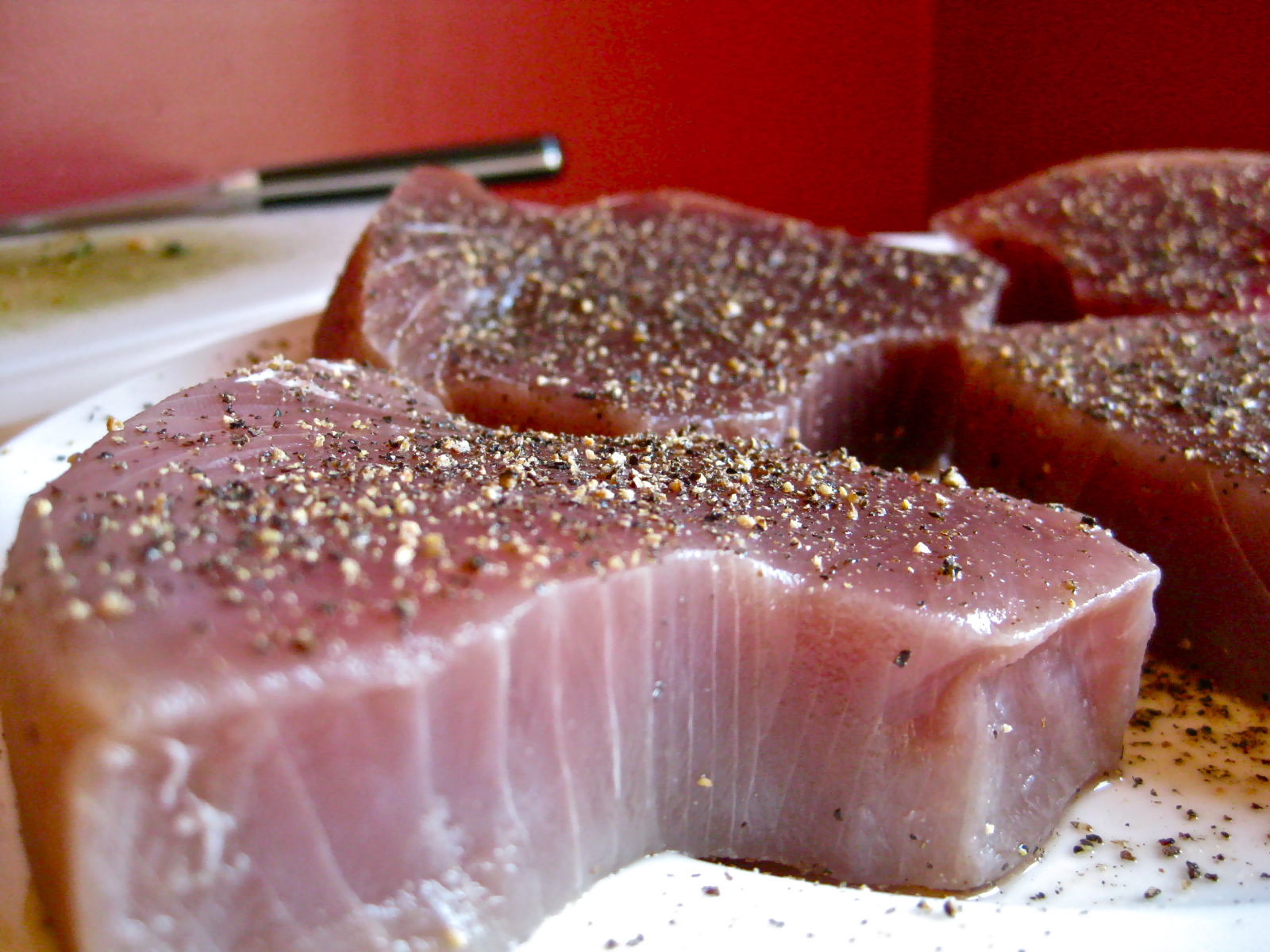
4 tuna steaks, rinsed then patted dry

olive oil, for brushing

freshly ground black pepper

sea salt

Very lightly brush each tuna steak with olive oil, then generously salt and pepper both sides.  On a well-oiled, very hot grill or grill pan, sear tuna steaks for about 1 minute on each side.  Grill should be hot enough to make an audible sizzling noise when tuna steaks are laid on the hot grill.  If you desire a more heavily cooked tuna steak, sear it for up to 1 ½ minutes, but be cautious to not overcook your fish.  It gets dry and rubbery very quickly.

Salsa Verde

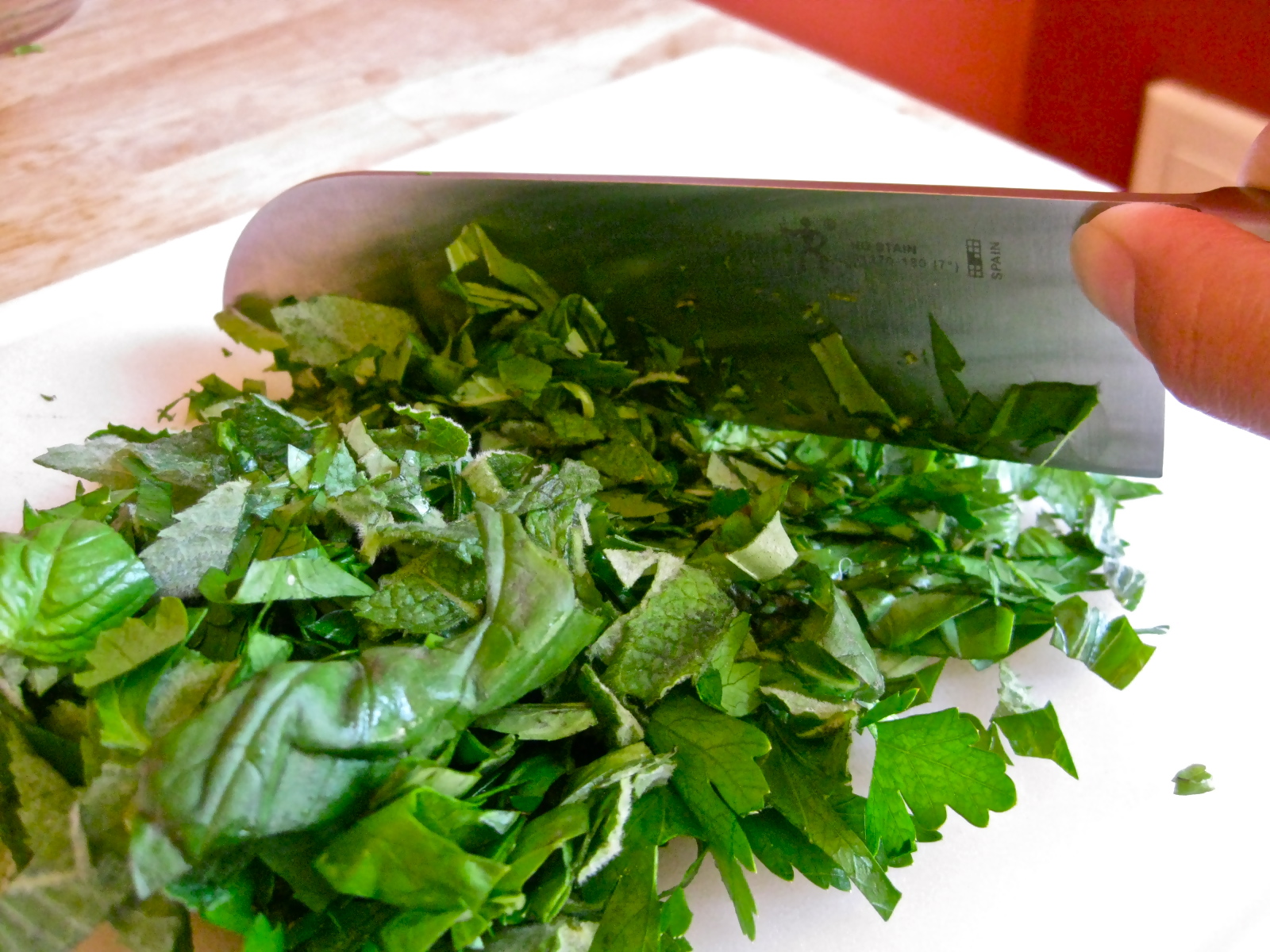
½ cup chopped fresh herbs (about 2 ½ large handfuls of whole herbs—I used basil, parsley, and mint)

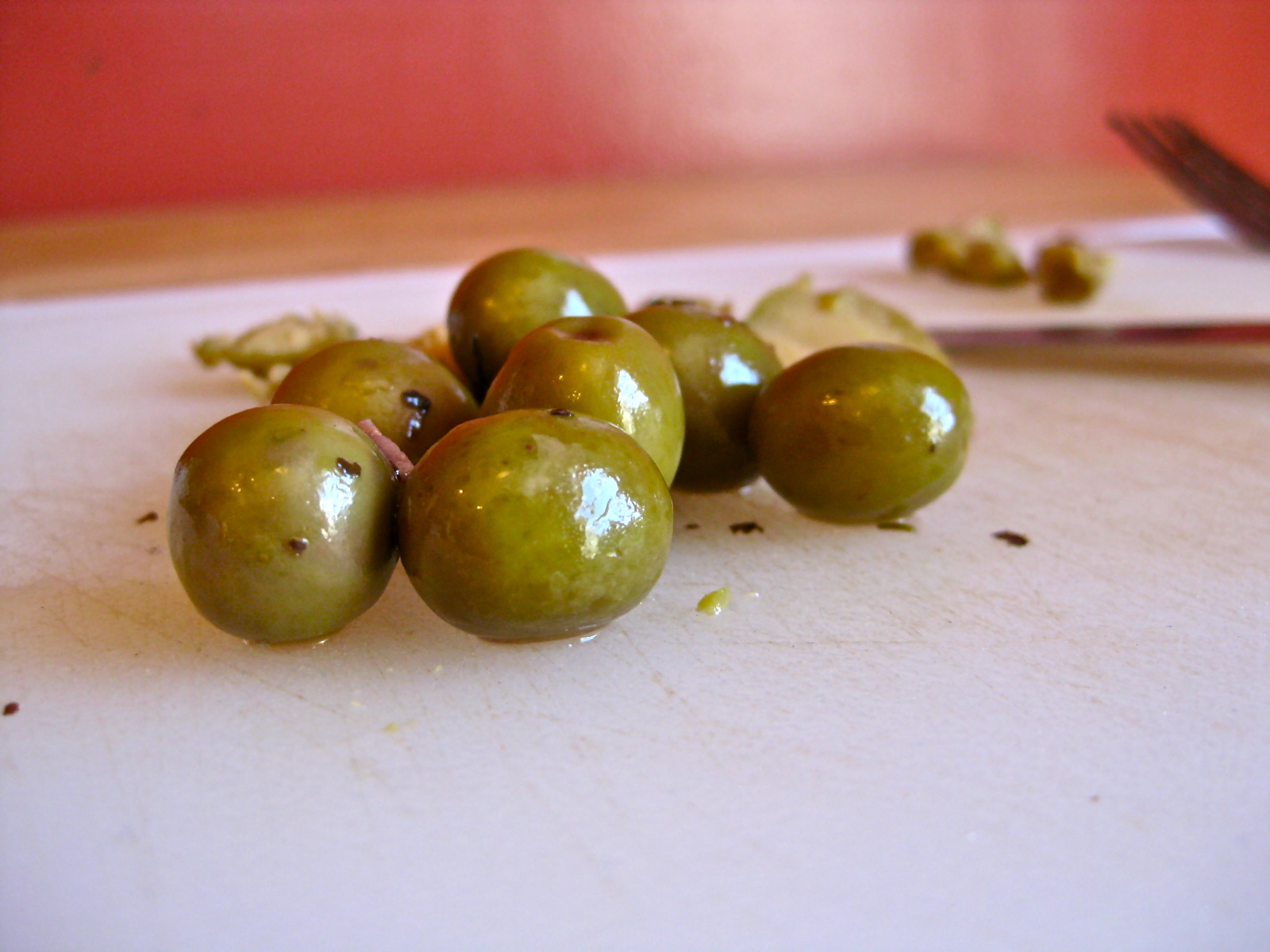
¼ cup pitted chopped green olives

3 tablespoons extra virgin olive oil

1 tablespoon red wine vinegar

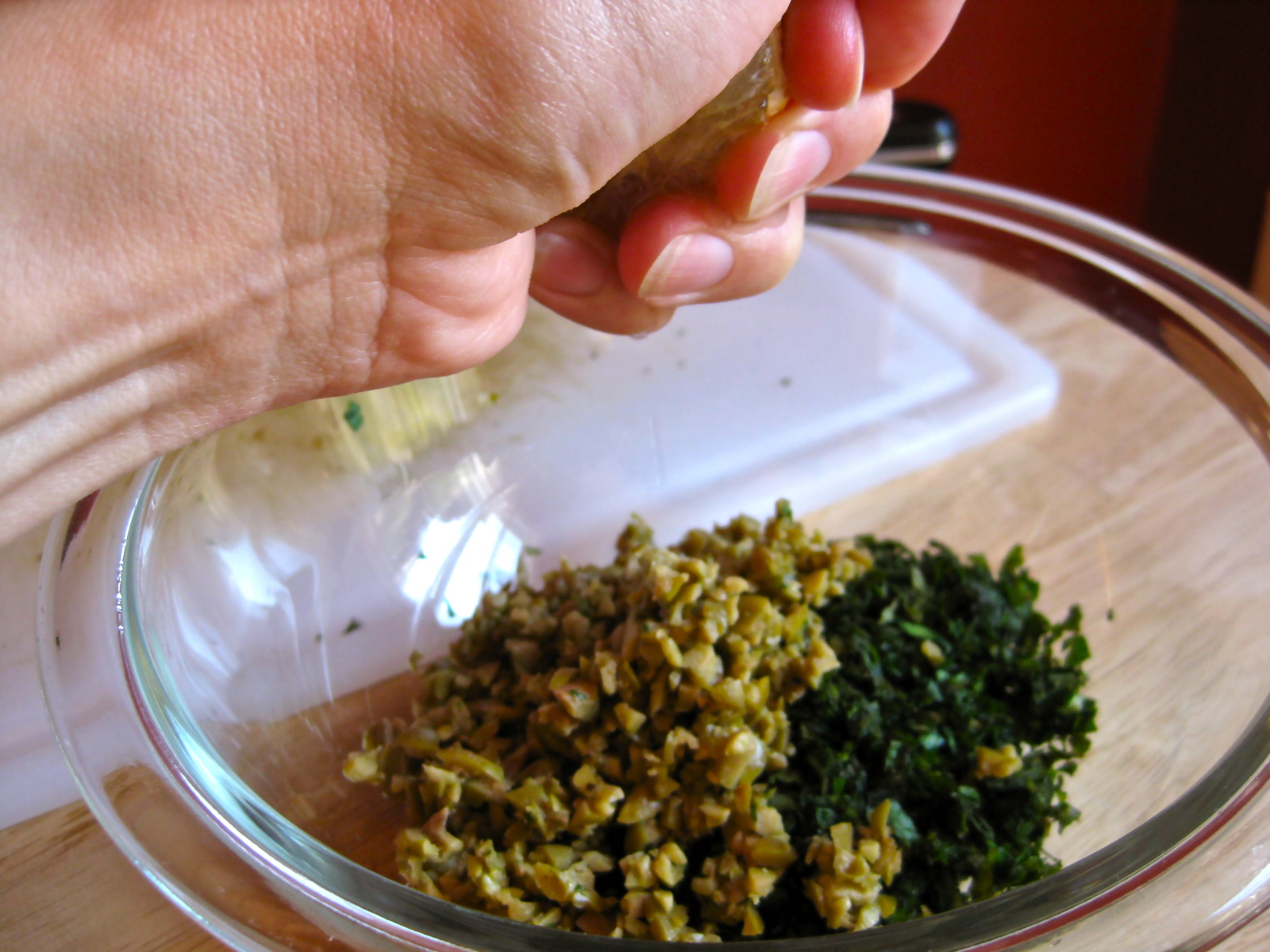
1 tablespoon freshly squeezed lemon juice

freshly ground black pepper

salt (optional)

To make salsa, combine all ingredients in a small bowl, and toss to combine.  If your olives are particularly salty, you will not need to add much, if any, additional salt to the mix.

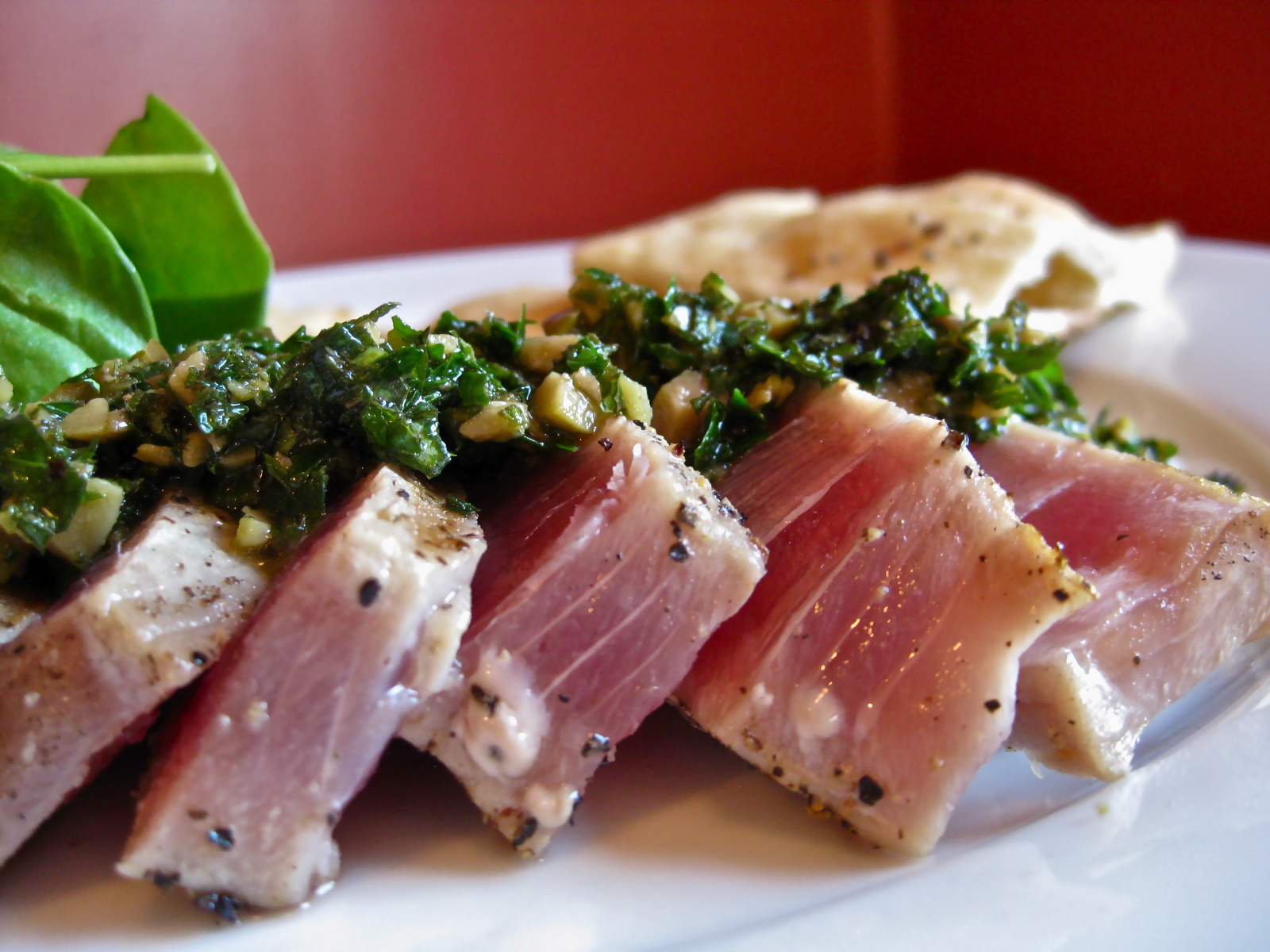
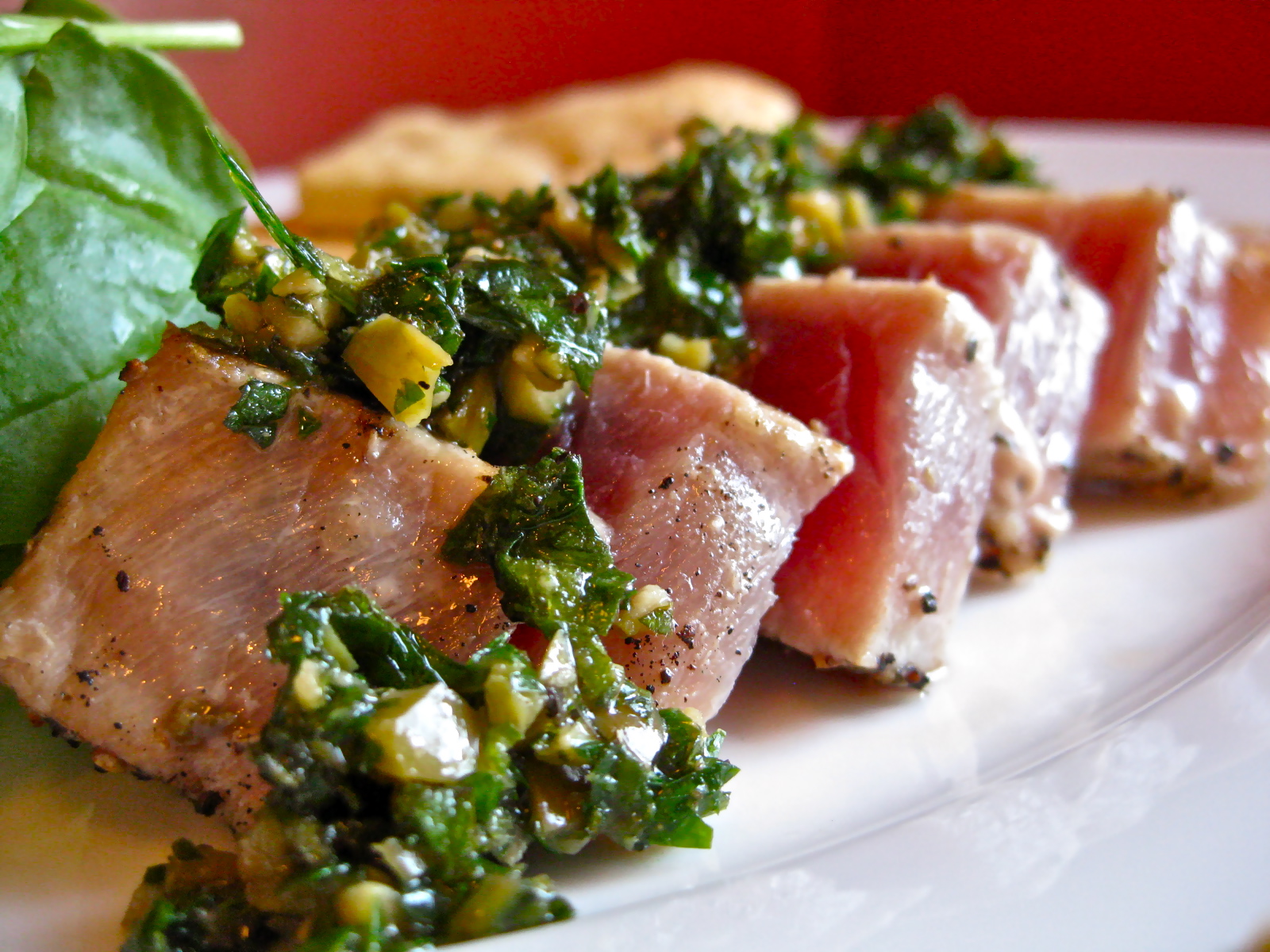
To serve tuna, cut each steak, against the grain of the meat, into thin slices.  Top with salsa verde.

Serves 4