Archive | Appetizers RSS feed for this section

Ya Hala’s Hummus

2 May

Up until last week, I had never made hummus.  This may not seem strange to you, but to me, a person who has been known to make a loaf of bread from scratch for the sole purpose of turning that bread into croutons as an accompaniment for salad (I didn’t say it was a smart thing to do, I am just pointing out that I did it), it seemed downright puzzling.

But I have a reason for my avoidance.  It’s not that I thought making hummus would be too difficult or time consuming, and it’s not as though I thought that prepackaged hummus tasted good enough to permanently sit in for an attempt at making a home made batch.  Embarrassingly, my hesitating was the result of something far less rational, and it went a little something like this:

If I am going to make hummus, it is going to have to taste as good as the hummus at Ya Hala.
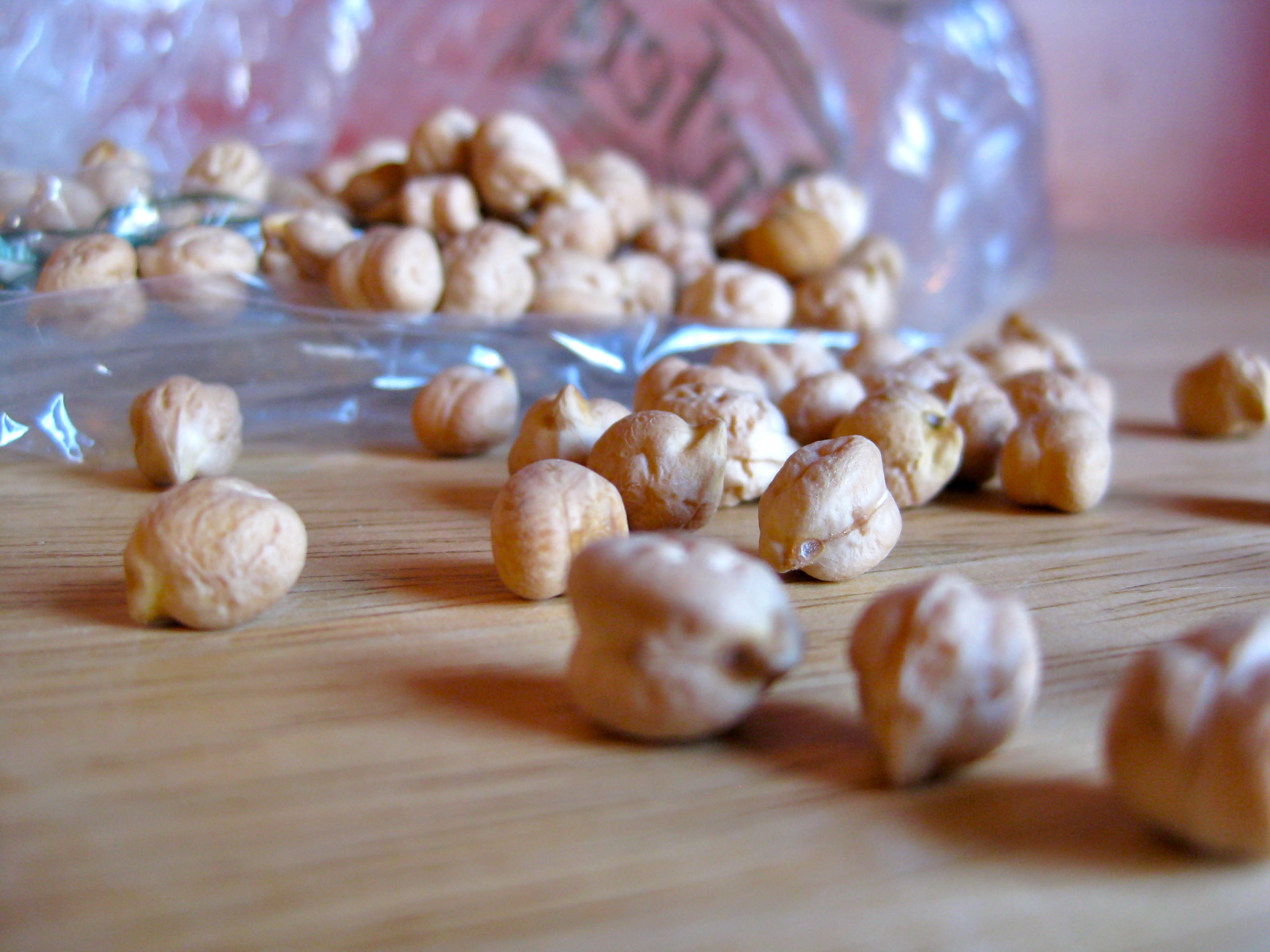
That might not sound very reasonable at first mention, but hear me out.  I know the basic components of hummus (chickpeas, tahini, lemon juice, garlic), and I know that I could have just retrieved those ingredients, thrown them in the food processor, and come up with an end result that was tasty and entirely edible, but that’s the basic end result that I get when I buy a pint of hummus from Trader Joe’s, and making something that tastes like it came from Trader Joe’s is not high on my list of worthy accomplishments.  If I was going to make hummus, it had to be thick, but not impassably so.  It had to be creamy, but not runny.  It had to be garlicky enough to have a kick, but not so garlicky that my tongue felt scorched after one bite.  In short, it had to be the delicious and dreamy hummus that, heretofore, I had only had the pleasure of eating at one of my favorite local Middle Eastern restaurants.
Then, as if by magic, my prayers to the hummus gods were answered.  Flipping through an errant pile of papers on a dining room bookshelf, I found a newspaper profile of the family that runs a trifecta of fantastic Lebanese restaurants in Portland: Hoda’s, Nicholas, and the aforementioned Ya Hala.  The article told of the family’s sojourn from Lebanon, their unlikely journey to becoming restaurateurs, and, what’s this?  The article includes family recipes?  For flatbread, kebabs and (this is when the clouds parted and an unearthly beam of light shined down from the heavens upon the newspaper before me) hummus?
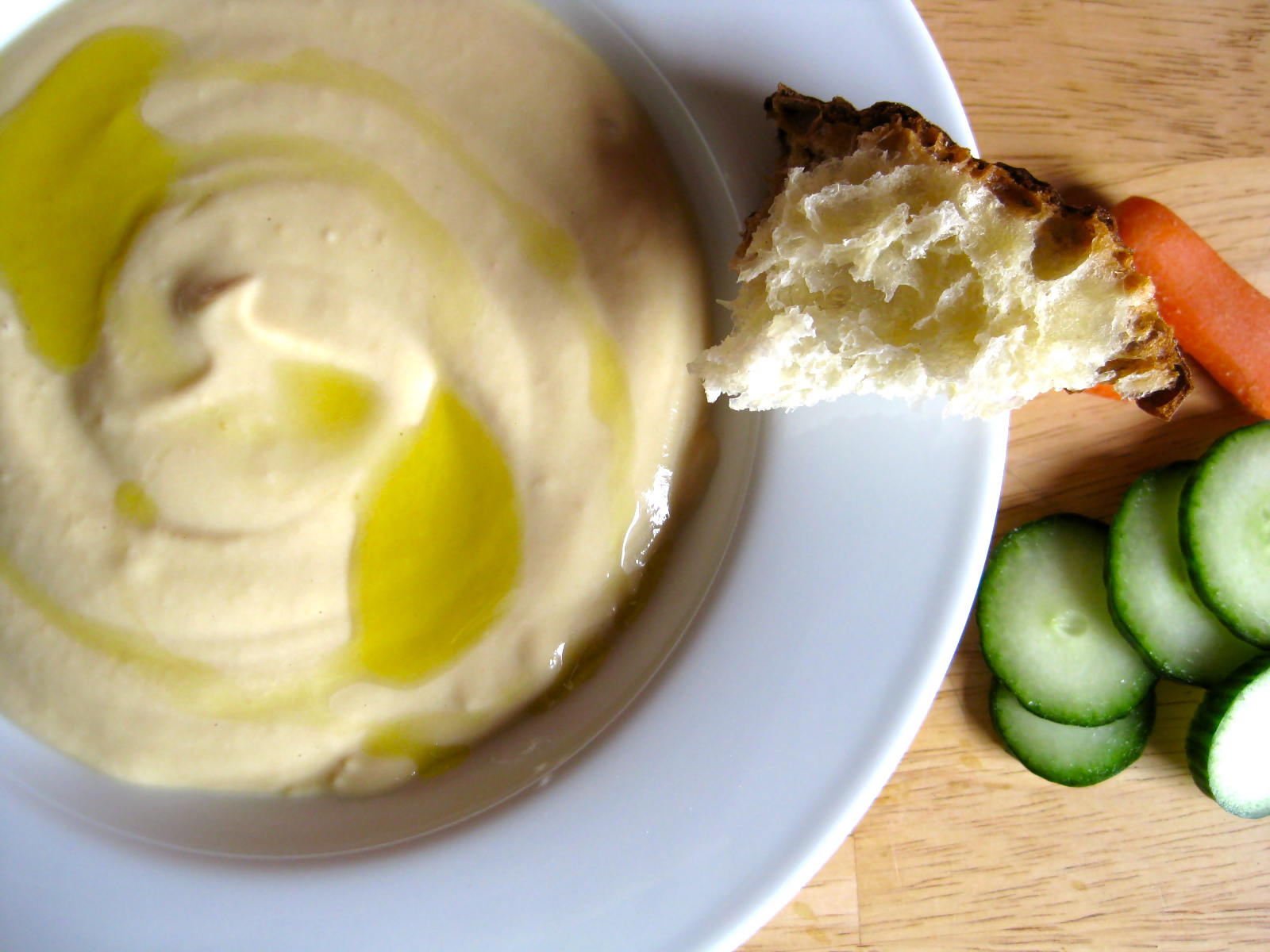
This story would have a much tidier ending if I told you that I immediately dropped everything I was doing and headed straight to the kitchen to whip up a batch of this mythical hummus, but that’s not quite how things turned out.  First of all, it was to my extreme consternation that I discovered the date on the newspaper read 2009, meaning that I had held onto this recipe for two full years without remembering so (note that I didn’t say I did not know I had the recipe, because what I almost instantly realized when I saw the recipe was that, oh, yeah, I remember reading this article and then saving it to try the recipes later and then, yes, completely and totally forgetting all about it).  Secondly, it took at least another week before I could attempt the hummus, as often happens when life interferes with one’s greatest recipe intentions.  But, oh, when I finally made the hummus, in all its creamy, tangy, and thick glory, it was, without a doubt completely worth the wait.  If only the end of my wait hadn’t spent the last two years sitting a mere couple of feet from where I sit at the dining room table every single day of the week.
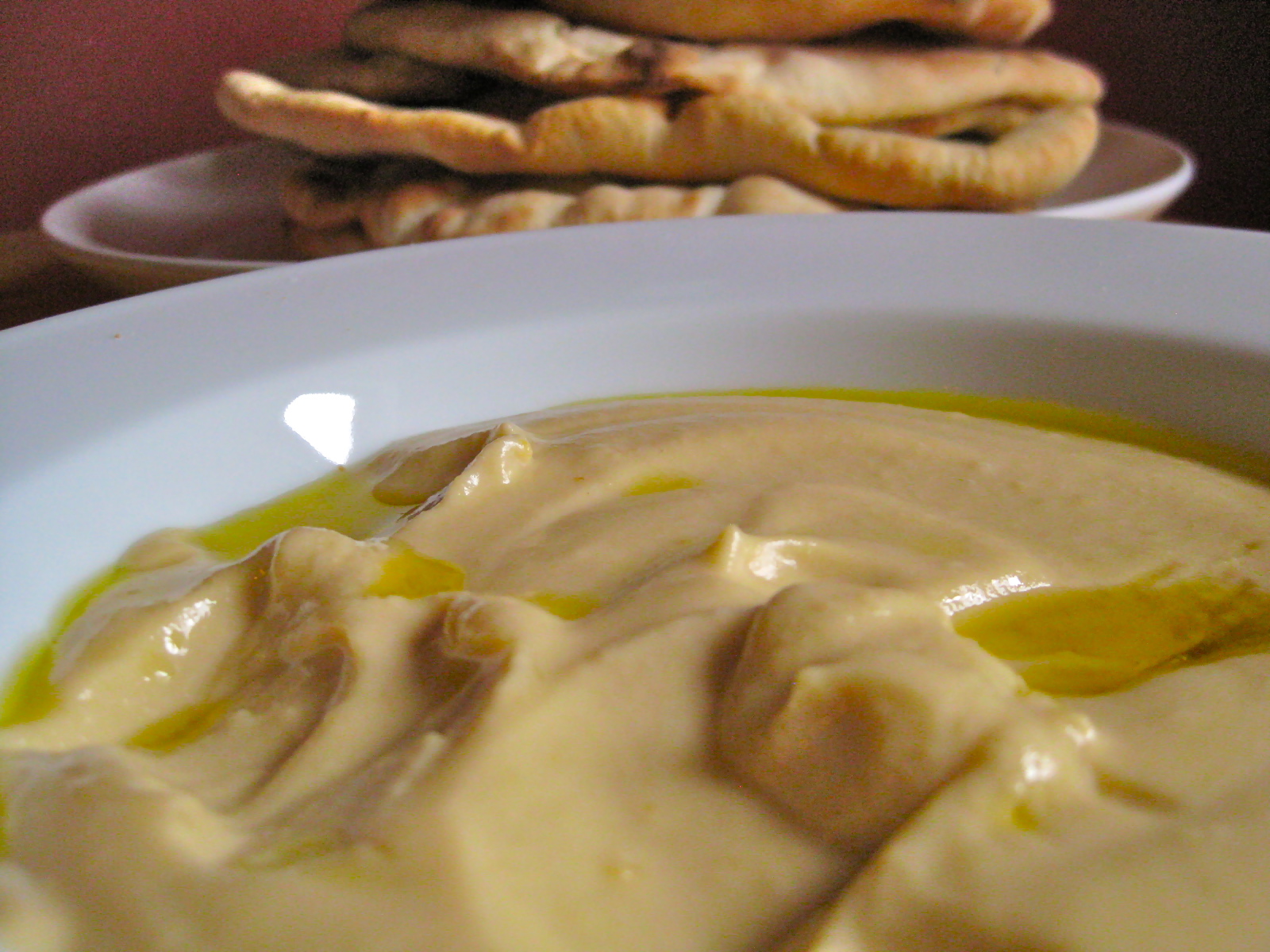
Ya Hala’s Hummus

From Mirna Attar, via the Oregonian

According to the article, and as evidenced by my repeated tastings, baking soda is the key to silky smooth hummus.  Baking soda helps soften the beans so they cook quickly and break down easily when blended.  According to the recipe, this hummus can be prepared up to 2 days ahead and stored in an airtight container in the refrigerator until ready to use (but we ate this hummus for a whole week and it was just divine).  Additionally, I find that the hummus tastes best when allowed to rest for a few hours in the fridge before eating.  Resting seems to allow the flavors to combine more smoothly and intensely.  Straight from the food processor the flavor was good, but after spending a few hours in the refrigerator the flavor of the hummus became infinitely more silky and fantastic.

1 cup dry garbanzo beans

7 cups water (for cooking beans)

1 teaspoon baking soda

1 1/2 teaspoons salt

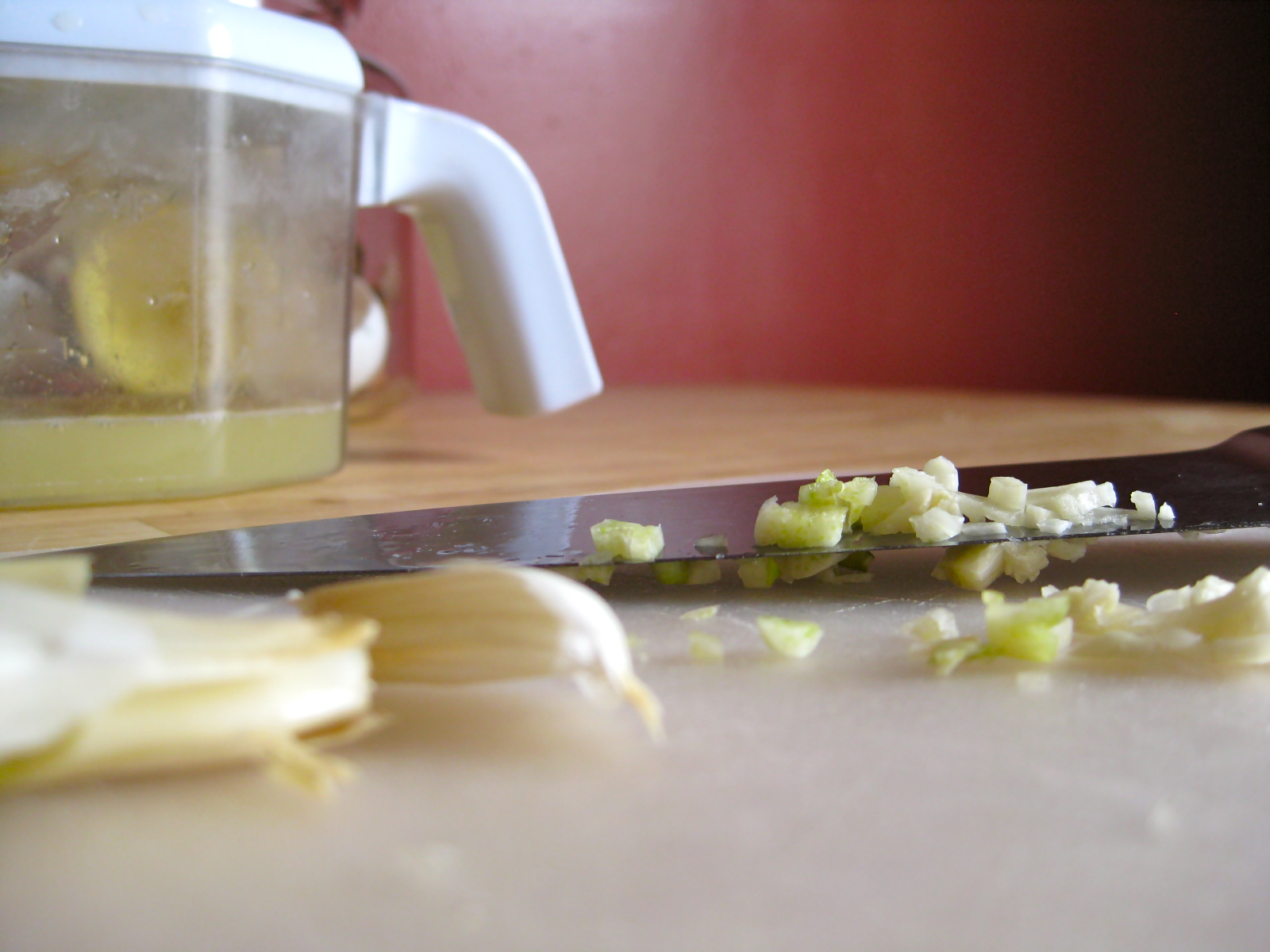
1/2 heaping teaspoon minced garlic

1/4 cup tahini

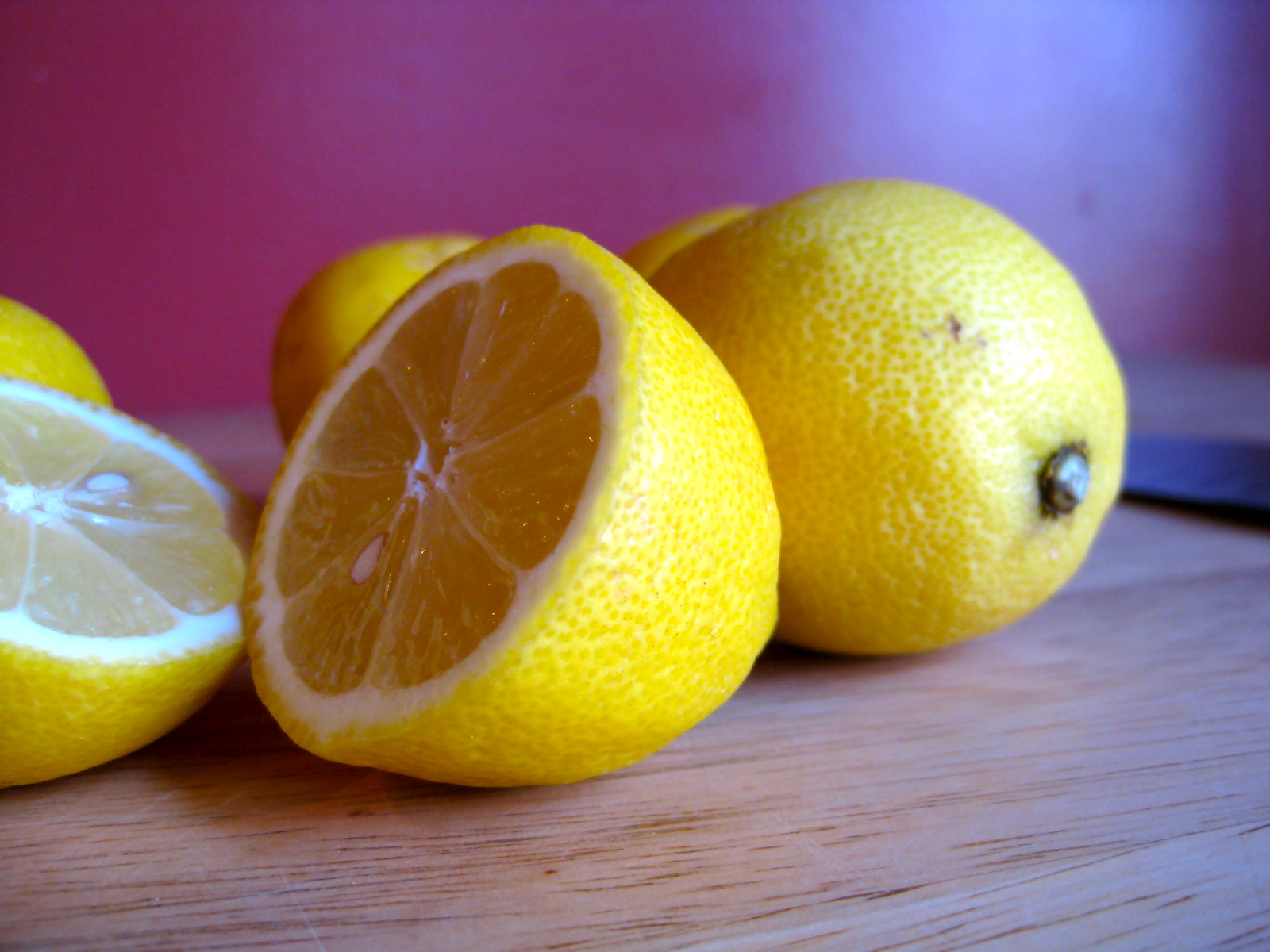
1/2 cup freshly squeezed lemon juice

Rinse the garbanzo beans, drain and cover with water to cover by 3 inches.  Soak beans for 4 to 6 hours. Drain in a colander and rinse thoroughly.  In a large pot combine soaked beans, the 7 cups water, and the baking soda.  Bring to a boil, reduce heat, and simmer until the beans are falling apart, about 1 hour.  Stir any foam that comes to the surface back into the beans while they cook.  Pour beans and any remaining cooking liquid into a large bowl and cool to room temperature in the refrigerator.

Transfer beans and liquid to a food processor.  Add the salt, garlic, tahini, and lemon juice and process until smooth.  If the mixture is too thick (it should be the consistency of very thick cream), add water 1 tablespoon at a time until the hummus is smooth.  Transfer to a medium serving bowl and allow to rest in the refrigerator for at least 1 hour.  If desired, drizzle with olive oil before serving.

Makes roughly 2 1/2 cups hummus.

Indian Chicken Kebabs

27 Apr

When I was in India many years ago, I accompanied one of my cousins to the market so she could buy a chicken for that evening’s dinner.  She instructed me to wait for her in the car while she ran into the market, so I did.  Two minutes later, my cousin emerged from the market holding a plastic bag.  She set the bag on the floor in front of the seat next to her, and we started home.

Now, as an admission of my total ignorance, when my cousin told me that she was buying a chicken at the store, I very much imagined her buying what I knew as a market chicken: a headless, featherless, organless chicken that came in a shrink wrapped bag.  Keeping that in mind (and the fact that I was still a very dedicated vegetarian), you can imagine my alarm when the bag on the floor of the car began to softly and almost indiscernibly cluck.  No, I thought.  Clearly I am imagining that.  I watched the bag for a moment, wondering if the subtle crinkling of the bag’s sides was a product of the car’s bumping along a dirt road.  Um, is that chicken… I started to ask, when, as though sensing my mild horror (can chickens smell fear?) the bag started to freak out.  By the time we got home, the chicken bag was expanding from all directions.  My cousin grabbed the bag, holding it out to her side like, well, like a plastic bag with a frenzied chicken contained within, and hurried along to the backyard.

I didn’t see my cousin or the chicken again until about an hour later, when both emerged from the kitchen.  My cousin was holding a platter of fresh (no, really, I mean fresh) kebabs, which, moments after she set on the table, people began to rave about.  The perfect seasoning, the fresh spices, the juicy meat—I was the only person at the table not enraptured by the kebabs, because I was the only person at the table not eating the kebabs.  Vegetarianism aside, I could not help thinking of how quickly and matter-of-factly that chicken made its way to the table, and how impressed I was by the whole affair.  Forget buying a trussed and refrigerated organic chicken from Whole Foods, my cousin had just bought a chicken.

More than a decade later, now a beginning meat eater, I found myself telling that story to a friend.  After justifiably laughing at my discomfort, she then said, “I’ll bet those kebabs tasted fantastic.”  Weirdly, no one had ever brought that up before.  It seemed almost unbelievable that she was the first person to mention the actual kebab in the story.  Since it didn’t seem right to leave that part of the story unsolved, I felt it was my duty to dig up a recipe for chicken kebabs and see what all the fuss was about.

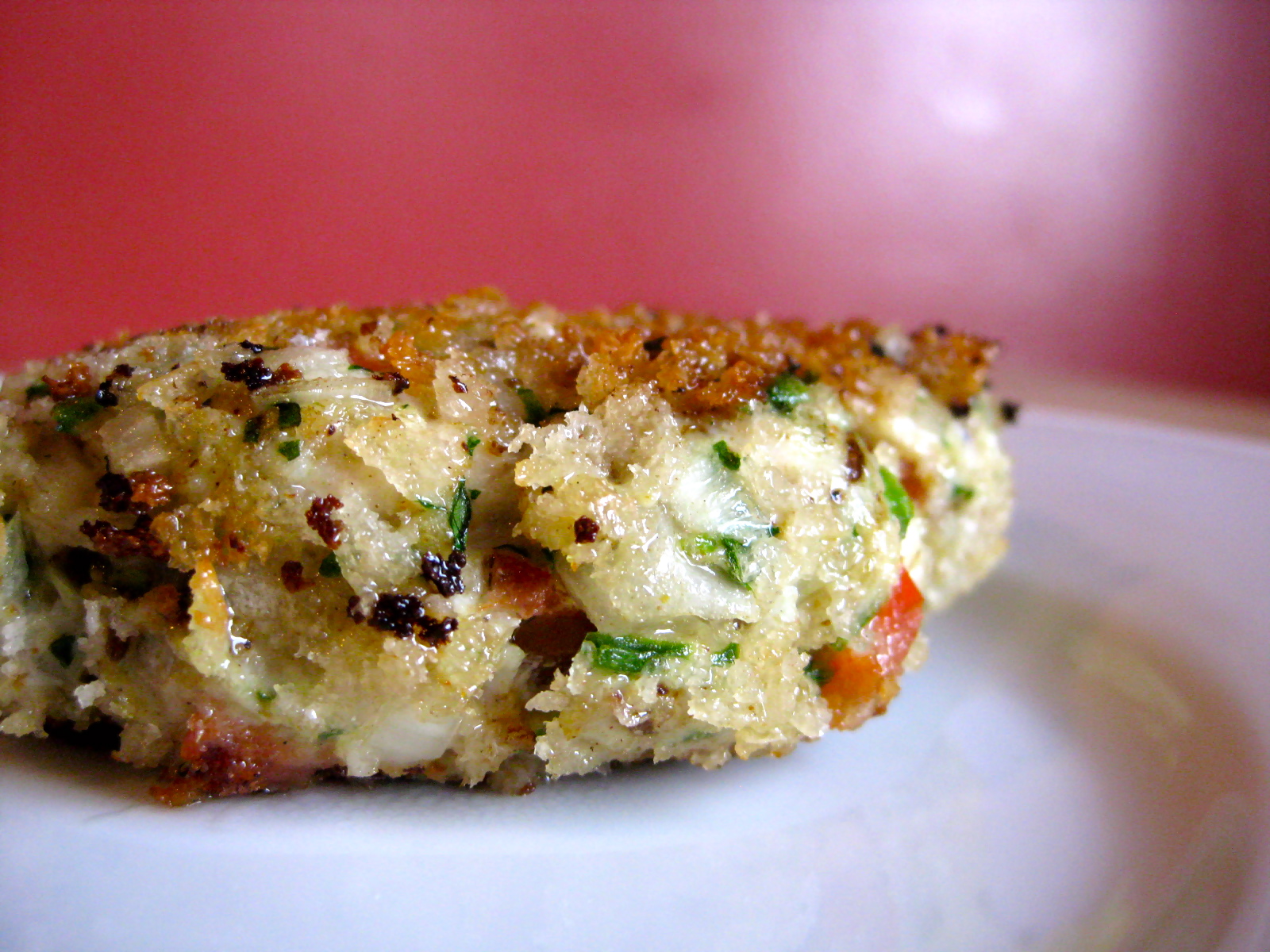
Though the chicken I used was nowhere near as fresh as the chicken in my cousin’s kebabs, I now understand the revelry that surrounded them. The chicken is moist while the outer breading is pleasingly crunchy, and the earthy spices combine with fresh green chilies to make a fantastic blend of lightly spicy and savory elements in each bite.  I may be many years late to this wonderful dish, but I feel that makes me uniquely qualified to insist that you not wait as long as I did to discover it.  Eat it now.

Indian Chicken Kebabs

Adapted from Madhur Jaffrey Indian Cooking

Jaffrey’s original recipe called for slightly different ingredients and yielded a smaller number of larger kebabs.  I prefer a daintier portion of meat, so I made each kebab smaller, but I think these kebabs would be even better if they were sized into two or three bite portions.  I served the kebabs with basmati rice and a bit of cucumber and yogurt sauce, but you could also tuck one into a bit of naan to make yourself a lovely light meal.

Makes 8 kebabs

1 lb finely ground chicken (I bought ground chicken and then pulsed it in the food processor to make it even finer)

12 tablespoons panko breadcrumbs, or another very fine, dry breadcrumb

3/4 teaspoon salt

3/4 teaspoon garam masala

1/2 teaspoon cumin seeds

1/2 teaspoon coriander seeds

1/2 cup finely chopped cilantro

2 tablespoons finely chopped fresh mint

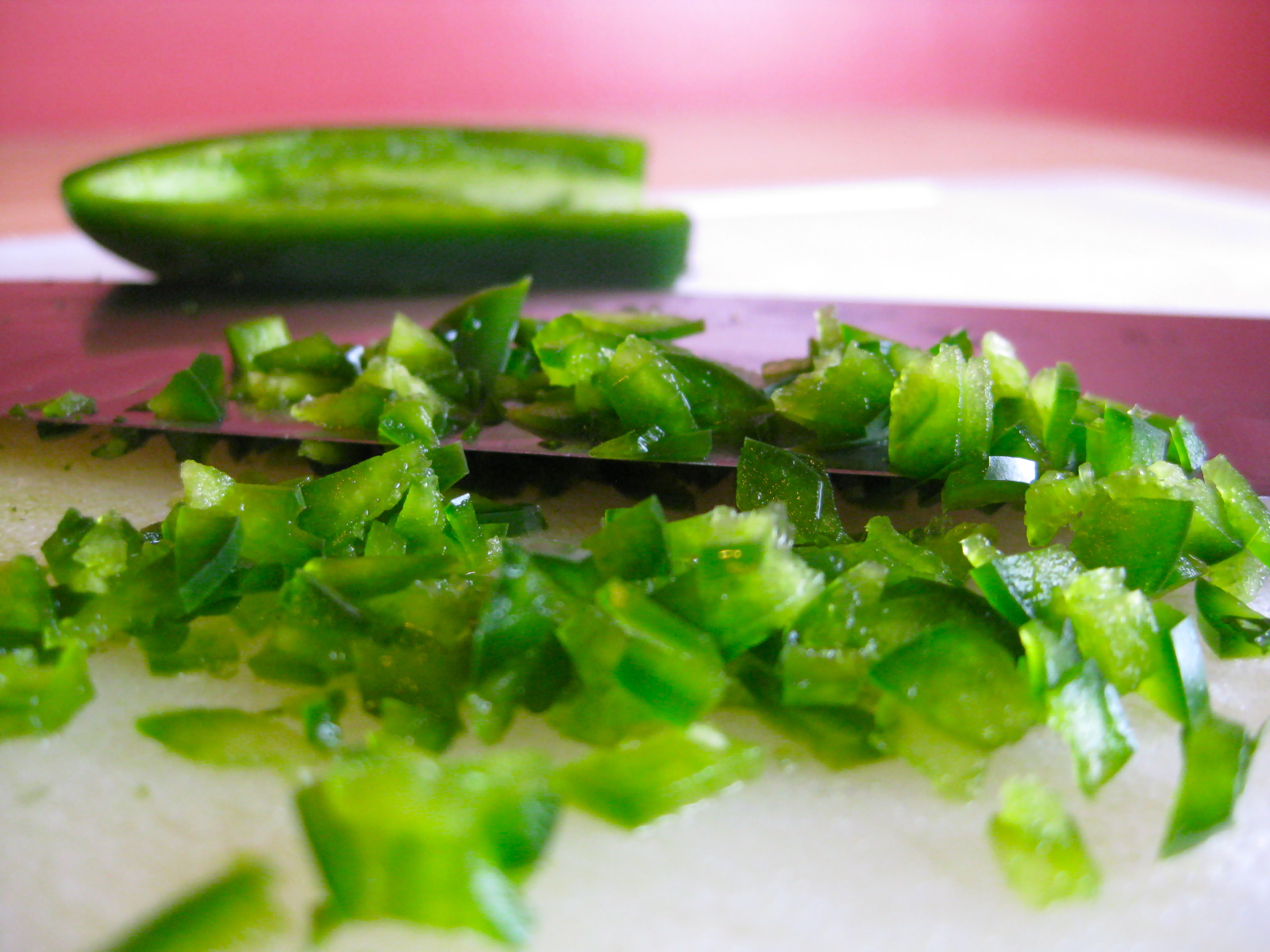
1 or 2 fresh, hot green chilies, finely chopped

1/2 medium onion, peeled and finely chopped

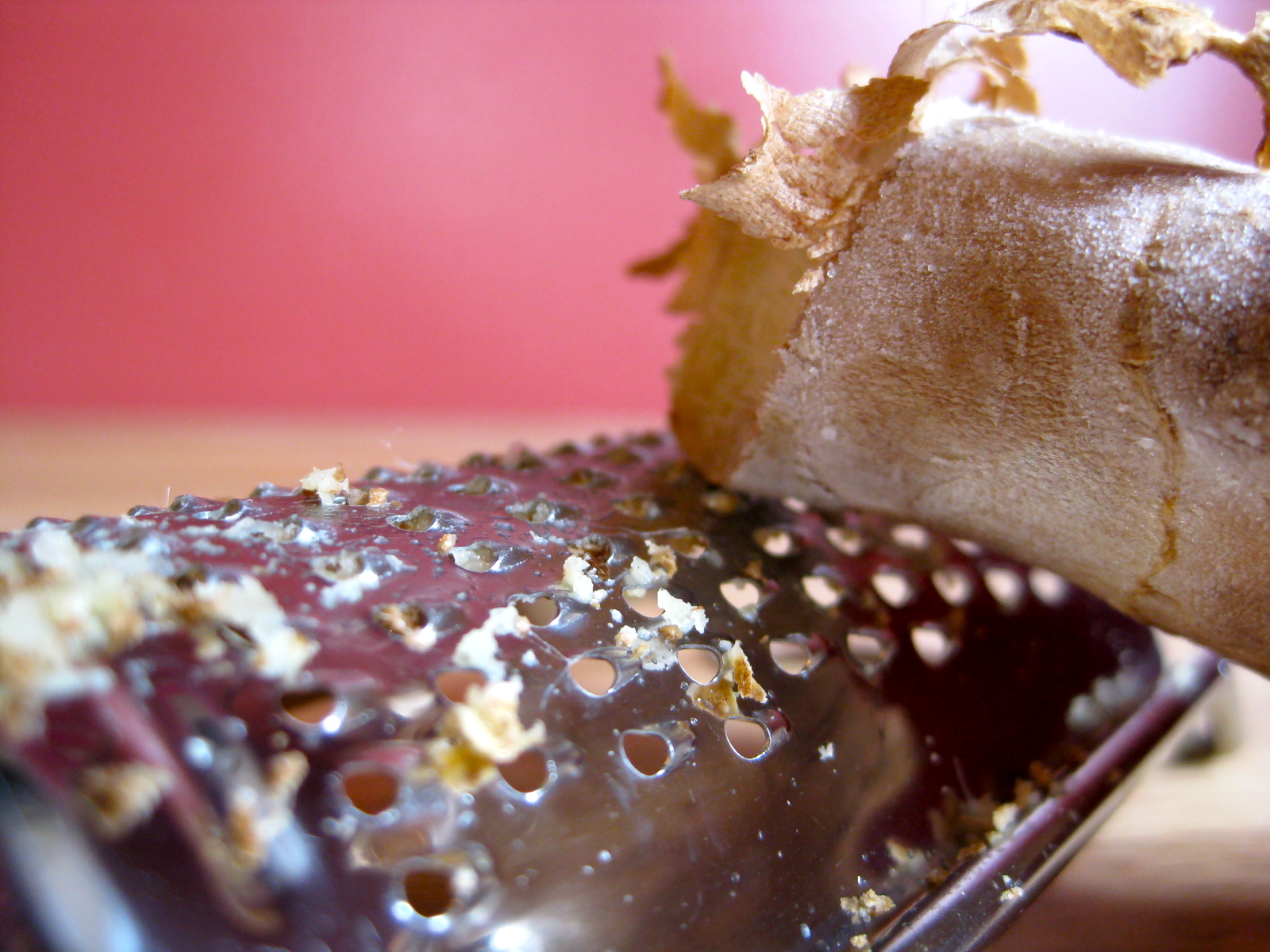
2 teaspoons peeled, finely grated fresh ginger

1/2 medium fresh tomato, finely chopped

1/4 teaspoon cayenne pepper

vegetable oil to line the bottom of a frying pan

lemon wedges

Preheat oven to 300 degrees F.

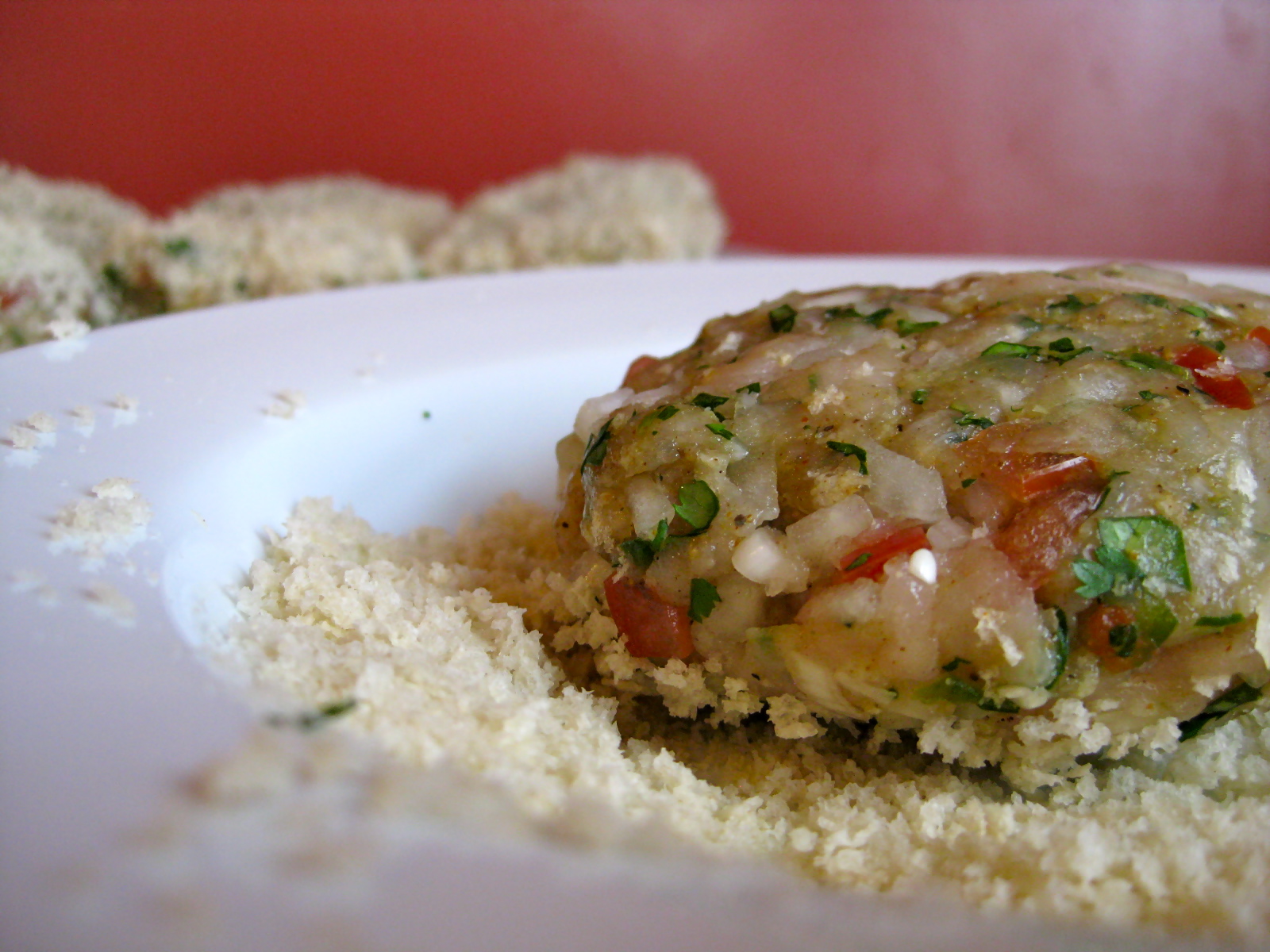
Combine the chicken, 4 tablespoons of the breadcrumbs, salt, garam masala, cumin seeds, coriander seeds, cilantro, mint, green chilies, onion, ginger, tomato, and cayenne in a bowl.  Mix well and form 8 patties.  Put the remaining 8 tablespoons breadcrumbs on a plate and dip each patty in them.  There should be a thin layer of breadcrumbs on all sides.  Cover and refrigerate the patties in a single layer until needed.

Put enough oil in a large frying pan to cover the bottom lightly and set over medium-high heat.  When hot, put in the patties–only as many as the pan will hold in a single layer.  Cook for 3 minutes on each side.  Turn heat to medium and cook for another 2-3 minutes on each side.  Place cooked patties on a large baking sheet and place in preheated oven for 5 minutes to keep warm and continue cooking all the way through.  If you make several very small patties instead of 8 medium ones, it will not be necessary to continue cooking the patties in the oven.

Before eating, top the patties with a generous squeeze of lemon juice.

Roasted Poblano Johnnycakes

5 Apr

I grew up reading the Little House books, Laura Ingalls Wilder’s original nine volume set of semi-autobiographical books about pioneer life.  As a harbinger of interests to come, one of the things I remember most enjoying about the books was Laura’s descriptions of the foods she and her family ate.  When times were good and they had a home with four walls, a well-tended garden, and tidy fields of wheat and corn crops, her family ate fresh garden vegetables and fresh homemade cottage cheese.  When times were rough and months were spent living in a covered wagon or outliving seven straight months of blizzards, they ate bread, potatoes, and, if they were lucky, whatever wild game they could shoot.  Every single thing they ate was cooked in cast iron or baked within an open fire.

Recently my husband and I started reading the Little House books to our preschool-aged son.  In addition to the occasional on-the-fly edit in order to omit the rather blunt and one-sided talk about the local Native American tribes (the original inhabitants of the land on which Laura’s family was settling), we have spent a great deal of time discussing the different types of food that Laura and her family ate.  (We also spent a great deal of time talking about food when we read Farmer Boy, since a substantial portion of that book is spent discussing the mountains of food that Laura’s husband Almanzo ate when he was a boy—every meal seemed to be presented as an exercise in competitive calorie intake, no doubt as a result of their twelve hours a day of hard manual labor on a farm.)  Much of the food of the era, as well as the manner in which people got that food, is not only unfamiliar to a city-dwelling boy of 4.5 years of age, it’s also nearly unimaginable.  What’s a prairie hen?  What is salt pork?  And did you really just say that Pa shot a bunny rabbit so the family could roast it for Christmas dinner?

Perhaps in an effort to distract our son from the fact that Laura’s Pa could frequently be found shooting and skinning what is regarded, to some people in this house, as being the world’s greatest animal, I decided that we should focus our attention on a pioneer-era food that was less fraught with peril and woe.  That is, in essence, the long story of how I came to make johnnycakes.

As luck would have it, one of my favorite breakfast food bibles, James McNair’s Breakfast, happened to have, smack dab in the center of the book, a simple recipe for Johnnycakes.  A quick perusal of the ingredients led me to some automatic adjustments, namely the immediate realization that these crispy corn cakes were just begging to be paired up with something mildly spicy and smooth to counter the sweetness and crunchiness.  One roasted poblano pepper later, I had exactly what I had imagined.

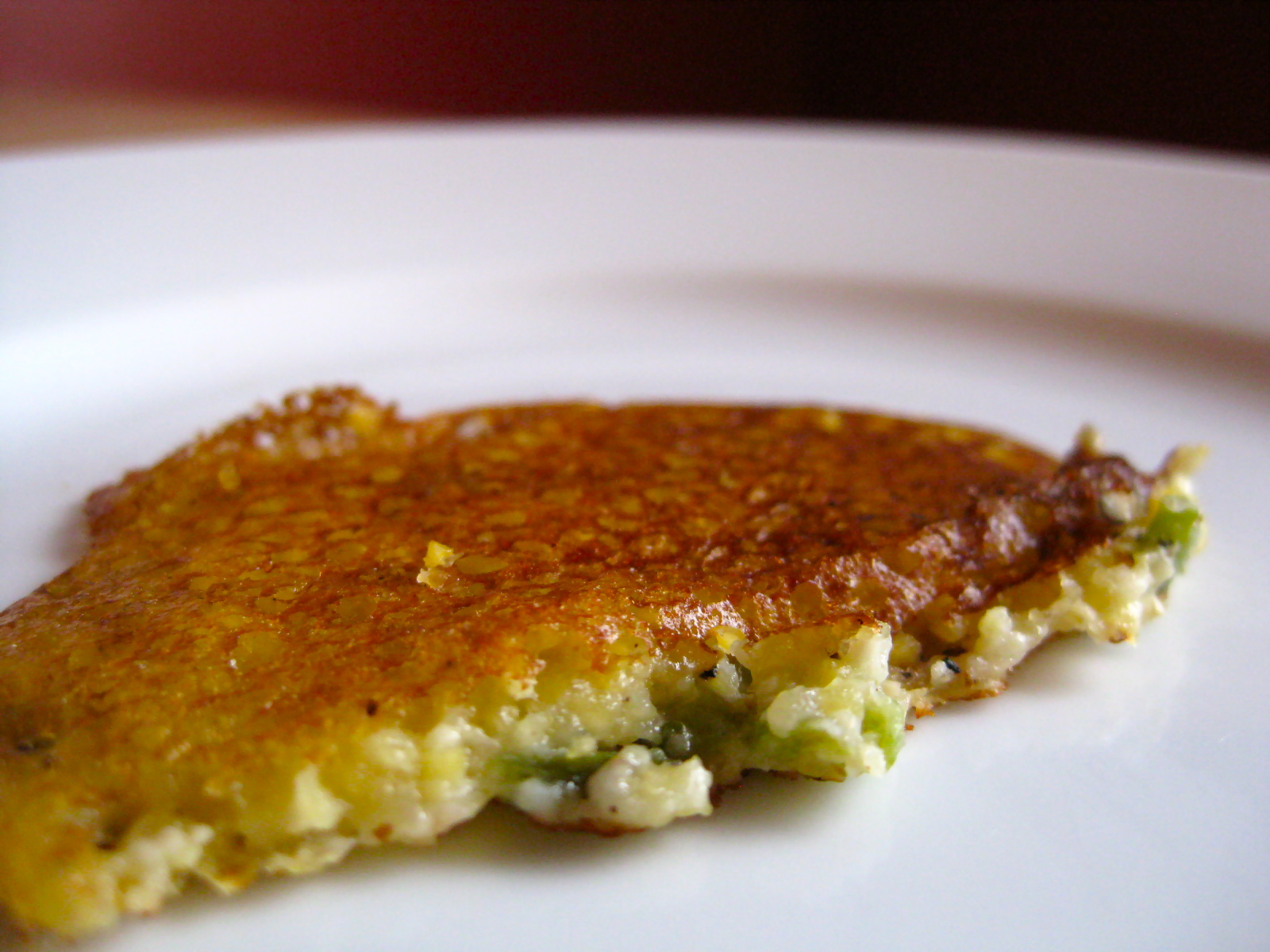
When paired with a soft fried egg and an additional sprinkle of chopped roasted poblanos, you’ve got yourself one special meal, suitable for breakfast, lunch, or dinner.  Though not entirely traditional in the pioneer sense, I’d like to think that, were the times good and the livestock thriving, it might even possibly be considered Laura-approved.

Roasted Poblano Johnnycakes

Partially adapted from James McNair’s Breakfast

1 medium-sized poblano pepper

1 cup white flint or other stone-ground cornmeal

1/2 teaspoon salt

3/4 cup boiling water

2 tablespoons unsalted butter, melted

1 teaspoon sugar

1/4 cup milk

Set your oven’s broiler to high heat and place an oven rack on the highest shelf, nearest the heat of the broiler.  Set the poblano pepper on a heavy baking sheet, then place directly under the broiler.  Let the skin of the pepper blister, darken, and flake.  Turn pepper several times, allowing its skin to blister and flake on all sides.  When pepper’s skin has been uniformly darkened, remove pepper from oven and set on a plate, cover with aluminum foil, and allow pepper to cool to the touch and the skin to become loose.  When pepper has cooled slightly, remove the skin.  Remove and discard stem and seeds.  Roughly chop roasted pepper and set aside 1/4 cup to add to the johnny cake batter.

In a bowl, combine the cornmeal and the salt, then gradually add the boiling water, whisking to prevent lumps and integrate cornmeal and water.  Stir in the melted butter, sugar, and milk.  Stir in 1/4 cup chopped roasted poblano pepper.

Meanwhile, heat a griddle or a large, heavy skillet over medium-high heat, then generously brush with melted butter.

Spoon the batter, about a heaping tablespoon for each cake, onto the cooking surface.  Cook turning once, until crisp and golden on both sides.  Serve hot.  If desired, top with a soft fried egg and an additional sprinkling of chopped roasted poblano pepper.