Archive | Asian RSS feed for this section

Spicy Ginger Garlic Potatoes and My Favorite Raita

17 May

If it not entirely obvious by now, I tend to go on extended cooking benders that involve certain types of foods.  Sometimes the focus of my cooking will be a particular item, while other times I’ll becomes enamored with cooking food from a particular country or region.  Last week, perhaps inspired by the arrival of unseasonably hot weather, I could not stop making Indian food.
The best, and yet simultaneously worst, thing about making Indian food is the rather insistent habit I have of never, ever just making one Indian dish at a time.  If there is a main dish, there will be a side dish, and when there is a side dish, there will be an added starch, and when there is an added starch, there will be spicy pickles and cooling raitas and on and on and on.  On more than one occasion, I have taken to inviting people over at the last minute to help us devour the feast of food I just spent an afternoon preparing, because when I took a step back and really looked at the Thanksgiving-like spread of food I had just laid out, I actually got a little embarrassed.  When it comes to Indian food, I do not mess around.

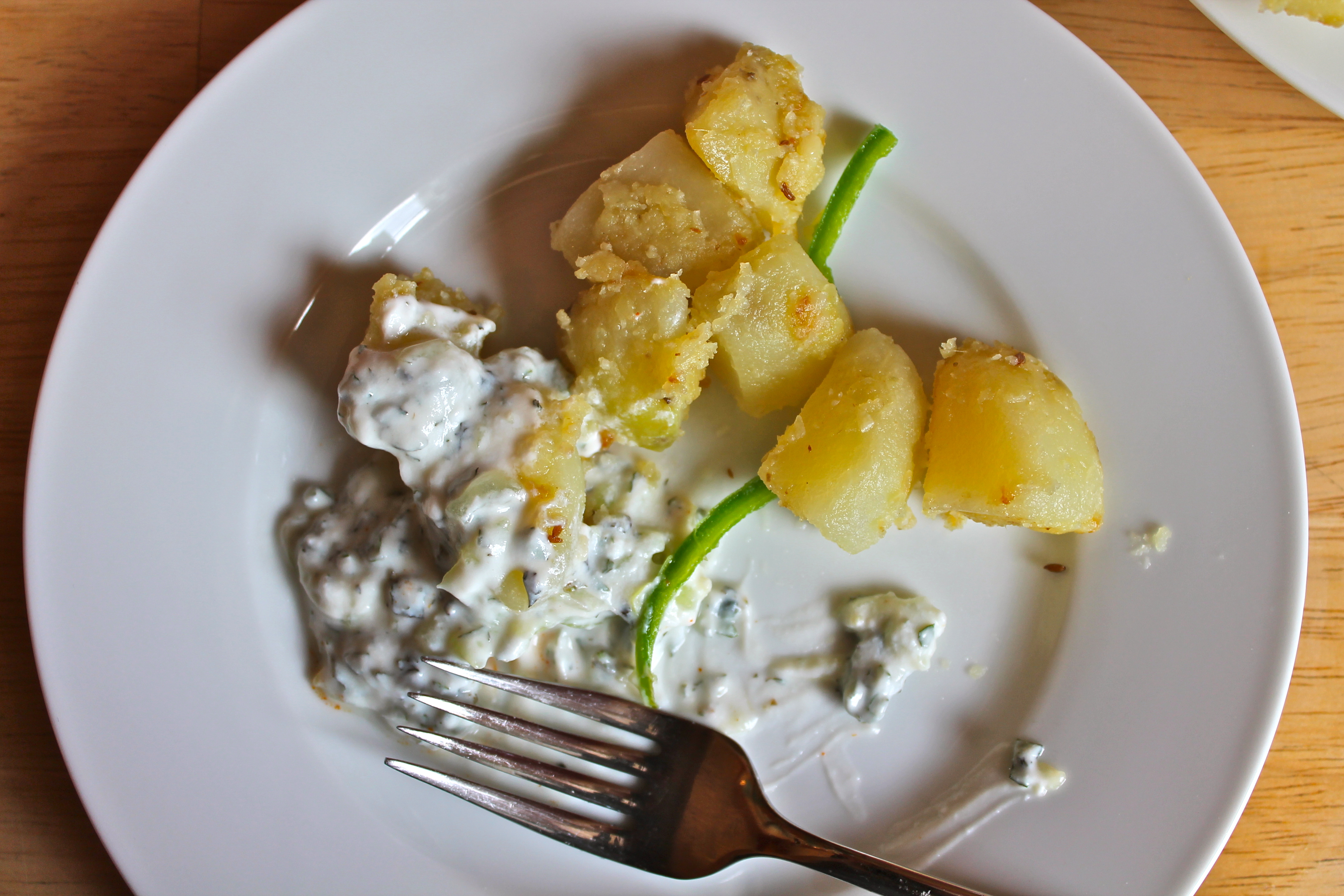
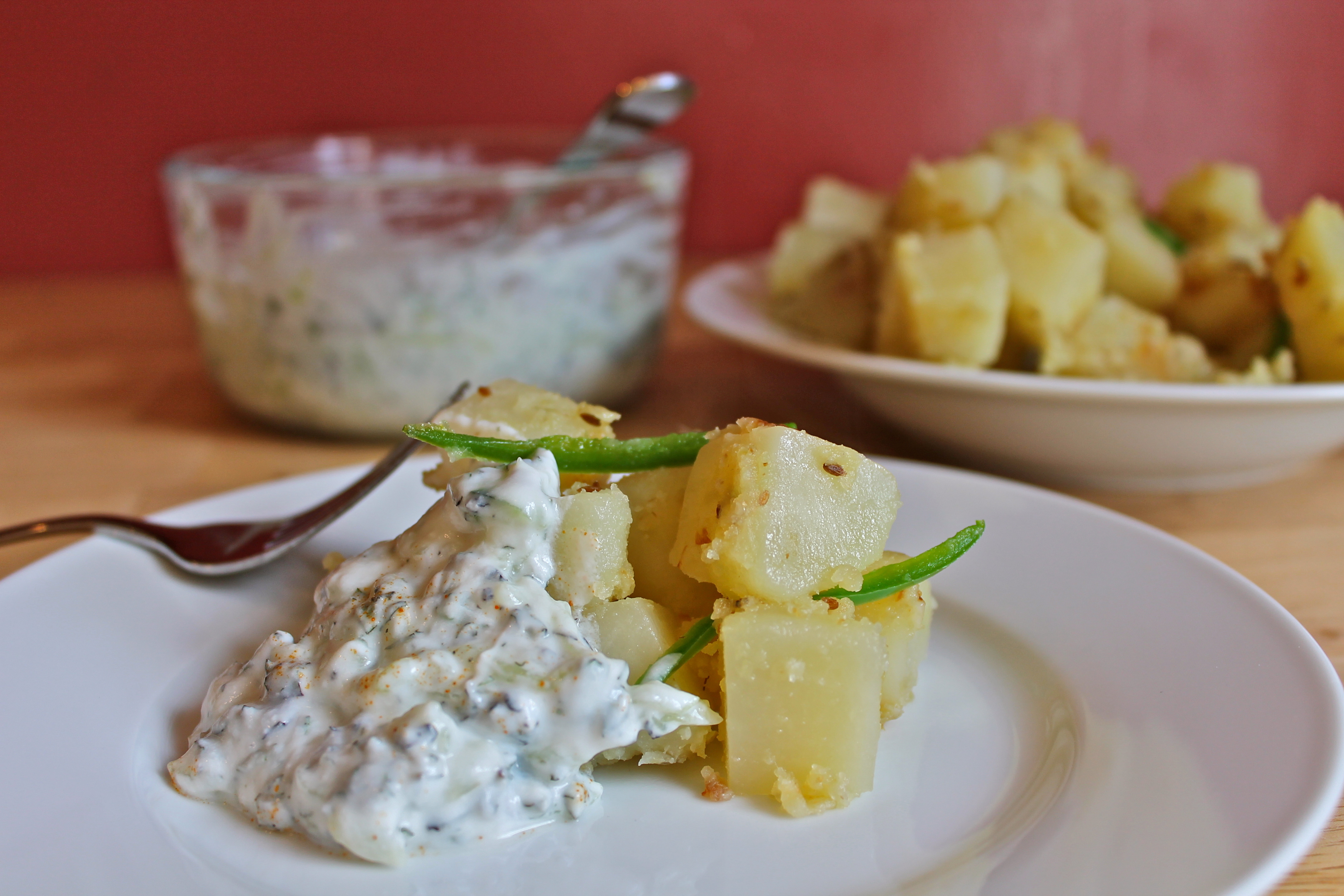
So, though it might be a bit late to declare this week to be Indian Food Week on Savory Salty Sweet, I have a stockpile of lovely Indian recipes to share, and I will likely be spending the next few posts talking about just that.  I’ll start with this great staple of any Indian meal I make: gingery, garlicky potatoes topped off with a fresh, cooling raita.  If you’re looking for a simple place to start your journey into cooking Indian food, you can’t find anything easier than this.  This dry sauté of wonderfully seasoned potatoes comes together in a flash, and you can throw the raita together in the time it takes the potatoes to finish.  It’s the perfect gateway into Indian cooking, which is good if you are looking for a simple place to start, but perhaps not so good if you one day find yourself so smitten with cooking Indian food, you’re forced to throw an impromptu dinner party every time you break out a jar of cumin seeds.  You’ve been warned.

Last Year: Blueberry Biscuits

Spicy Ginger Garlic Potatoes and My Favorite Raita Recipe

Spicy Ginger Garlic Potatoes

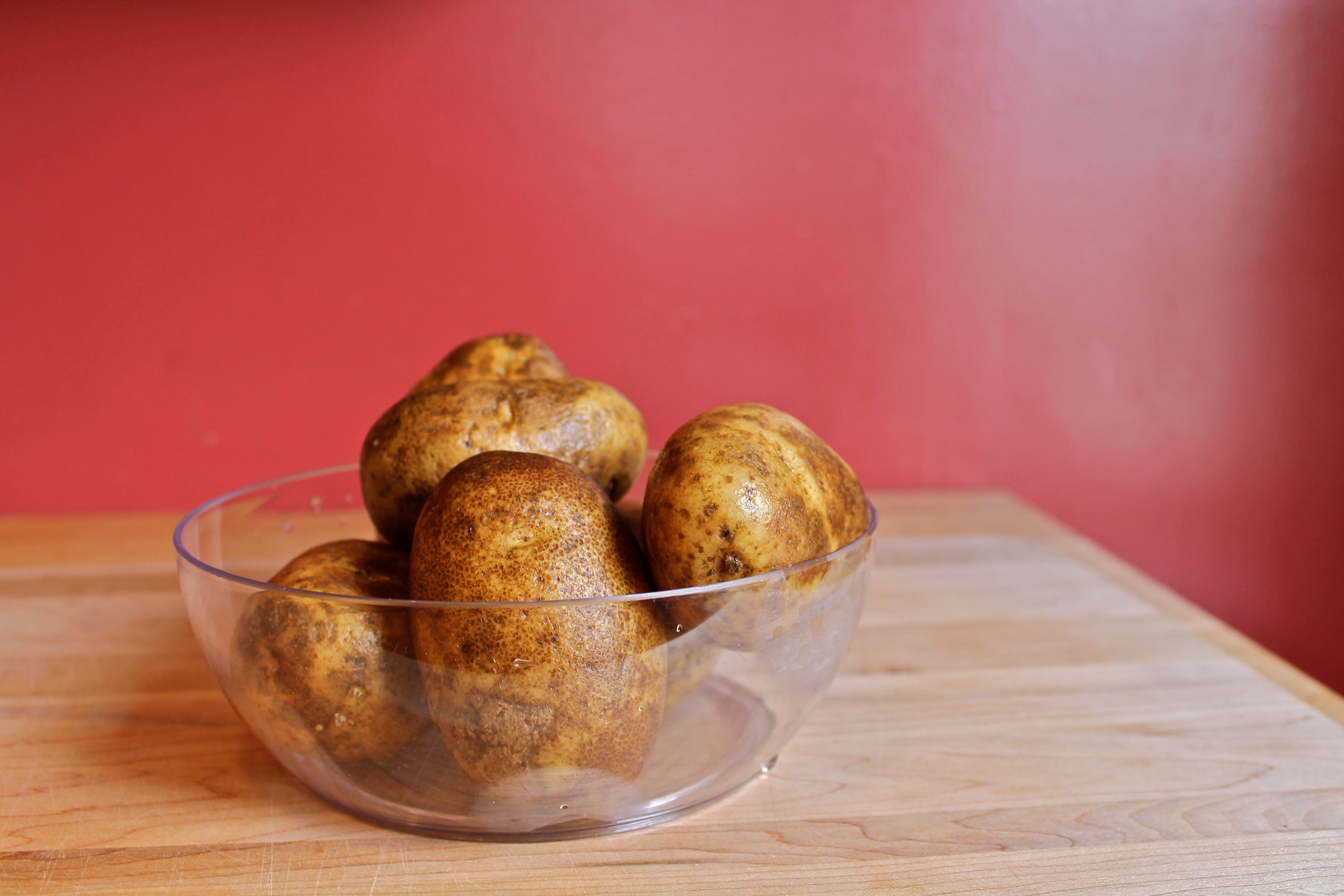
1 pound small or medium potatoes, whole and unpeeled

1 tablespoon unsalted butter

¼ teaspoon whole cumin seeds

2 tablespoons finely grated fresh ginger

2 tablespoons finely grated or minced-and-smashed garlic

1 jalapeno pepper

salt to taste

In a small pan, cover the whole potatoes with water and bring to a boil over high heat.  When the water begins to boil, lower the heat and simmer the potatoes until they are tender enough to be easily pierced with a fork (this should take about 10 to 15 minutes).  Drain the potatoes and allow to cool enough to be handled.

When the potatoes have cooled enough to touch, peel the skins form the potatoes and then dice the potatoes into 1-inch chunks.

In a large skillet, melt the butter over low heat.  When the butter has melted and is just stating to foam a bit, add the cumin seeds.  Stir the cumin seeds, allowing them to sizzle and pop for about 20 seconds.  Add the grated ginger and garlic, and stir over low heat for 1 minute, until the ginger and garlic are very aromatic, but not browned.  If you see your ginger and garlic beginning to brown, remove the pan from the heat and keep stirring the ginger and garlic until their sizzling subsides a bit and the browning has stopped.

Turn the heat under the pan to high.  Add the diced potatoes to the pan, and stir to coat with the ginger and garlic mixture.  Allow the potatoes to develop a nice brown crust on one side, then stir, turn the heat to low, cover the pan, and leave to cook for another 3 minutes or so.

Slice the jalapeno pepper into thin strips, discarding the seeds and white ribs.  Add the jalapeno strips to the potatoes, stir to combine, then remove from heat.  The jalepenos should still retain some crispness (you don’t want them to turn totally limp).  Add salt to taste.

Cucumber Mint Raita

1 cup peeled, seeded, shredded cucumber (about 1 large cucumber)

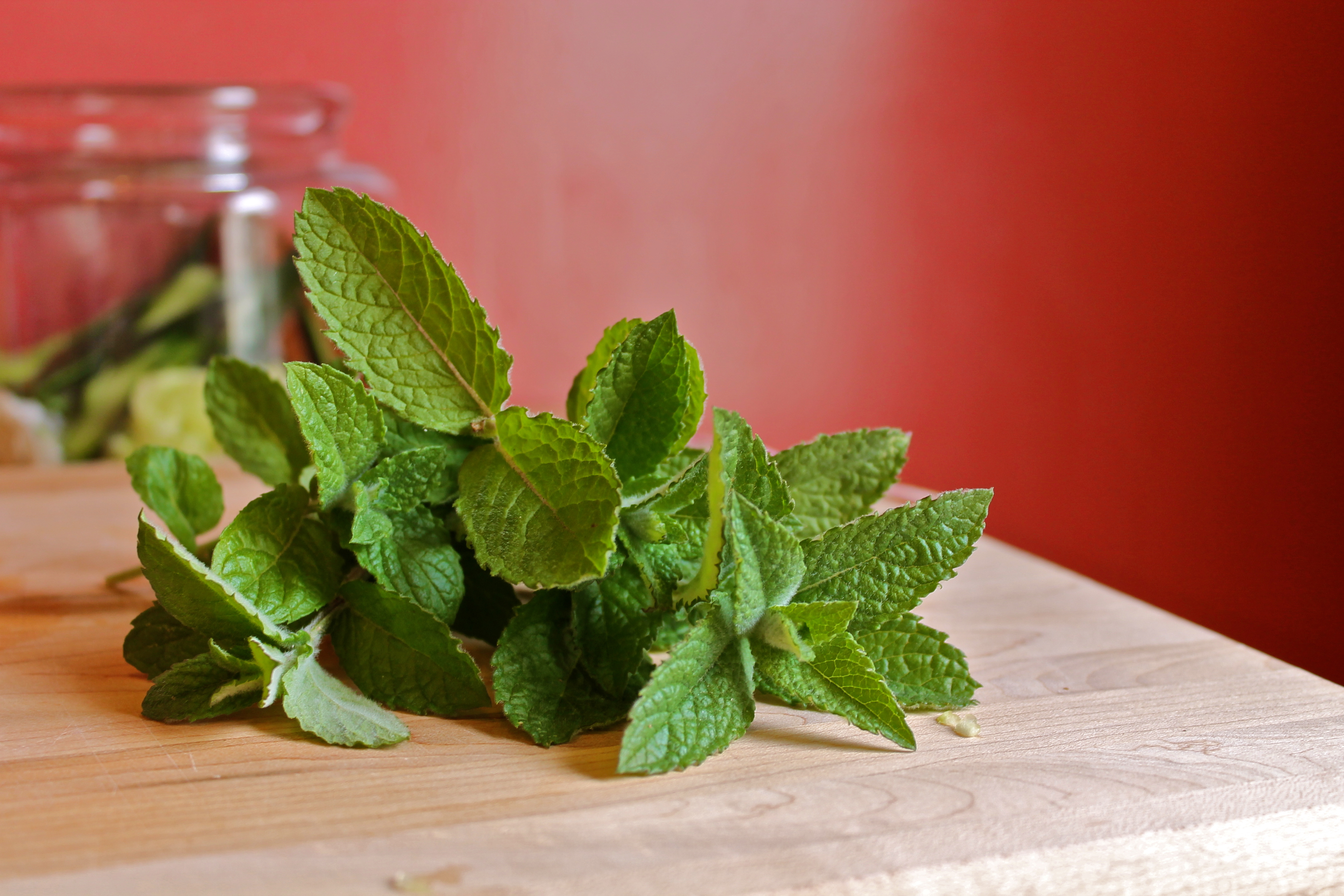
1/3 cup finely minced fresh mint leaves

1 cup plain yogurt

pinch of salt

pinch of cayenne pepper

Using your hands, squeeze the shredded cucumber until you have removed as much moisture as possible.  Place squeezed cucumber in a medium bowl.  Add minced mint, yogurt, and salt.  Stir to combine.  Sprinkle a pinch of cayenne pepper over the top of the raita.

Rice Noodle Salad (Bún) with Vietnamese Turkey Meatballs

7 May

If you really want to split hairs, this salad—one of my all-time favorites—is not really a salad, so to speak.  More than anything, it’s a collection of crisp, crunchy vegetables—some pickled, some not—a handful of fresh herbs, and a brisk, punchy sauce, all piled on a bed of cool noodles.  It is, in essence, the embodiment of all the elements I love in a dish.  It is versatile, it is complex in its bite and flavors, but it is the perfect meal to make on a slow afternoon or evening, when your only pressing plans involve eventually sitting down with friends or family and enjoying a nice, casual meal with one another.

This dish may appear to contain far too many steps and ingredients for the casual home cook, but I promise you that a long list of ingredients—many of which are pantry and refrigerator staples—does not equal a prolonged sentence of kitchen labor.  Everything comes together in due time, with one item resting while another one steeps, some items cooking while others are being chopped.

This inspiration for this dish, beyond the dozens of Vietnamese noodle bowls I’ve eaten over the course of my life, comes from Hot, Sour, Salty, Sweet, that veritable bible of Southeast Asian cooking.  I’ve extolled the many virtues of Naomi Duguid and Jeffrey Alford before, but it bears repeating that, if you are looking for an all-purpose Asian cookbook, you could do much worse than to get comfortable with a copy of this book.  Duguid and Alford, now separated, sadly, have spent years traveling throughout Asia, first as a couple, then eventually as a family of four.  Their traveling, while seemingly culinary in its focus, served as much as an education as anything else.  To be able to immerse oneself in another culture, or many cultures, so completely is just astonishing in its accomplishment.  Reading their books (and there are many from which to choose) is not only a gateway to an entirely new focus in cooking, but also in examining the role and history of food in the lives of people all over the world.

Last Year: Quick and Easy Citrus Crepes with Berry Sauce

Rice Noodle Salad (Bún) with Vietnamese Turkey Meatballs Recipe

Not into meat?  These baked vegetable wontons would be a great substitute for the turkey meatballs.

For the Salad:

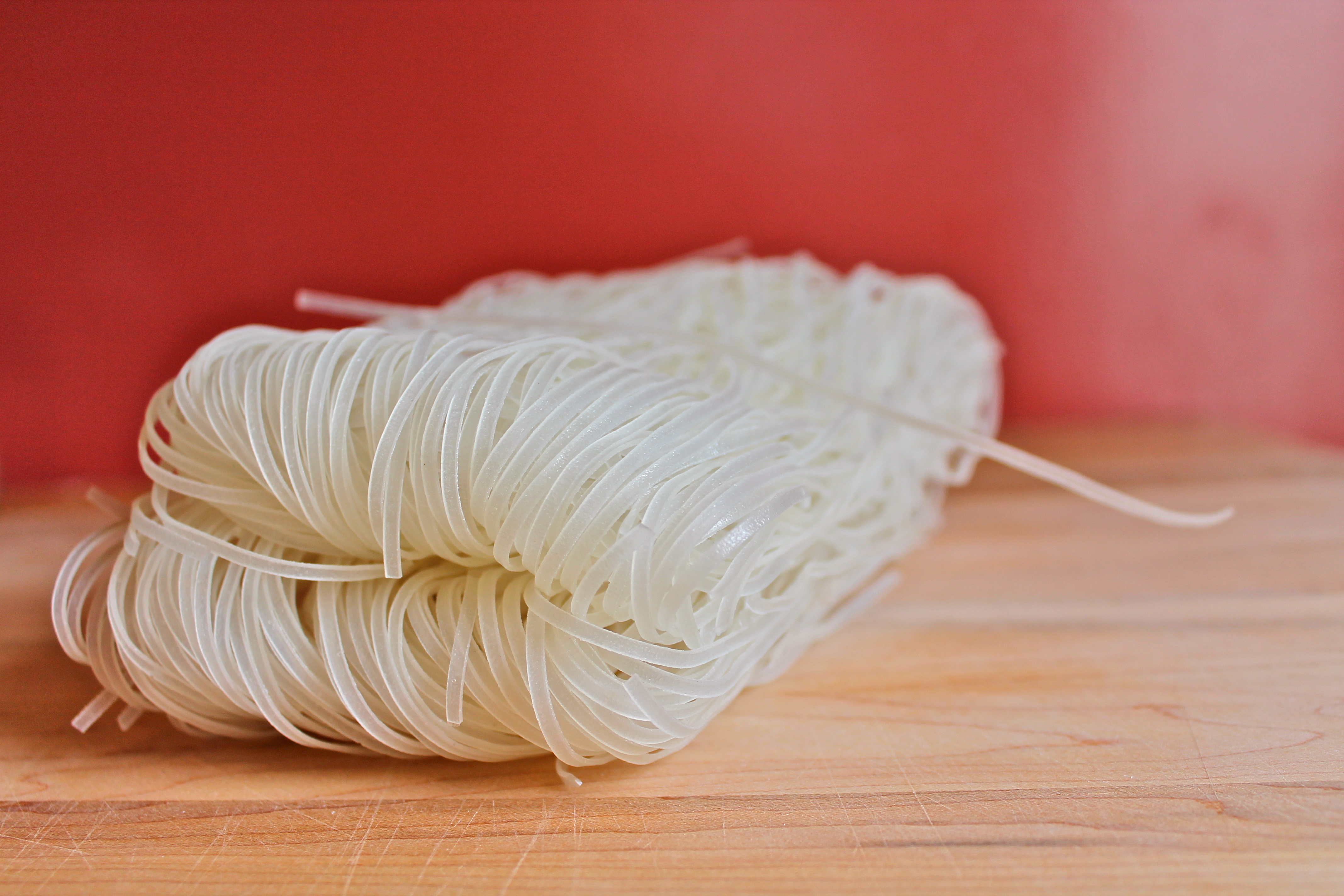
1 pound rice vermicelli or dried rice noodles (soaked in warm water for 20 minutes, then cooked in boiling water for 2 minutes, then drained, rinsed, and set aside)

chopped salad greens (spinach, Napa cabbage, etc.)

pickled carrot and daikon strips (recipe follows)

bean sprouts

chopped cucumber, seeds removed

fresh cilantro leaves

fresh mint leaves

lime wedges

nuoc cham (recipe follows)

Vietnamese turkey meatballs (recipe follows)

Pickled Carrot and Daikon Radish Salad

½ pound peeled carrots

½ pound peeled daikon radish

½ teaspoon kosher salt

1 ½ cups water

¼ cup rice vinegar

2 tablespoons sugar

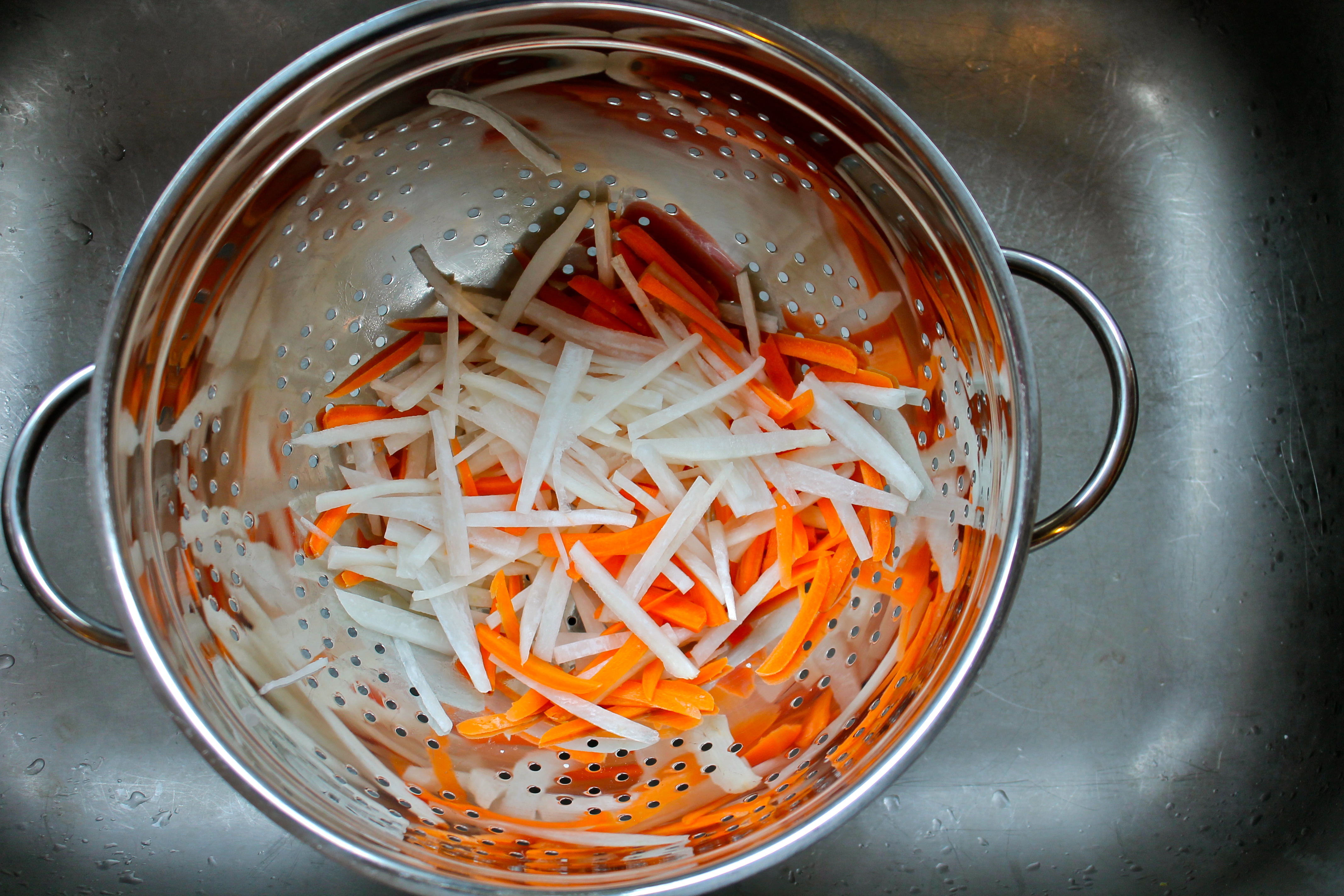
Using a very sharp knife or a mandolin slicer, cut the carrots and radish into matchsticks.  You should have about 4 cups of matchsticks total.  Place the carrots and radish in a large strainer, sprinkle over the salt, and toss well with your hands.  Place over a bowl or in the sink, and allow to stand for 20 to 30 minutes.

While the vegetables are waiting in the strainer, combine the water, vinegar, and sugar in a nonreactive saucepan and bring to a boil.  Remove from the heat and cool to room temperature (the mixture must cool almost completely, as the goal is not to cook the vegetables, but simply quick pickle them).

Rinse the vegetables in cold water, then squeeze dry and transfer to a medium bowl.  Pour over the vinegar mixture and stir gently to ensure all the vegetables become completely coated.  Allow vegetables to sit in vinegar mixture for at least 1 hour before serving.

Nuoc Cham

¼ cup fresh lime juice

2 tablespoons Thai or Vietnamese fish sauce

¼ cup of water

2 teaspoons rice vinegar

1 tablespoon sugar

1 small clove of garlic, minced

1 minced bird chile, or 2 crumpled dried red chiles

In a small bowl or small jar (I find that a jar works best), combine all the ingredients.  Stir or shake (if using a jar) to combine completely, making sure the sugar is completely dissolved.  This sauce can be stored in the refrigerator for up to 3 days.

Makes roughly ¾ cup sauce.

Vietnamese Turkey Meatballs

1 pound ground turkey

¼ cup minced shallot

¼ cup minced garlic

1 teaspoon sugar

2 tablespoons Vietnamese or Thai fish sauce

2 tablespoons vegetable oil

generous grinding of black pepper

2 tablespoons roasted rice powder, optional (recipe follows)

In a large bowl, combine all the ingredients.  Using your hands, mix everything together until they are completely integrated.  You can, at this point, cover the bowl with plastic wrap and leave it in the refrigerator for up to 24 hours, or you can proceed immediately to cooking.

Place an oven rack 5 to 6 inches from the broiler, and preheat your oven’s broiler on high.  Line a large baking sheet with a layer of foil.

Scoop a generous tablespoon of turkey mixture and, using your hands, form it into a tight ball.  Place on the prepared baking sheet.  Form all the turkey mixture this way.  You should end up with roughly 3 dozen balls.

Place the filled baking sheet under the broiler and cook meatballs for 10 minutes.  Turn meatballs over, then continue cooking until meatballs are entirely cooked through, yet still quite succulent (this should take around 15 minutes total, but could take up to 20 minutes, depending on the strength of your broiler)

Roasted Rice Powder

¼ cup uncooked jasmine rice

Heat a heavy skillet over medium high heat.  Add the rice and dry roast, stirring frequently, until the rice has turned golden brown all over.  Transfer to a spice grinder, clean coffee grinder, or mortar and pestle, and grind to a powder.  Let cool completely before storing in a well-sealed jar.

To assemble a noodle bowl:

Place a pile of noodles in a bowl of your choice (I like a medium-sized bowl with tall sides).  Top with chopped greens, pickled carrots and daikon, cucumber slices, sprouts, and herbs.  Add some turkey meatballs.  Pour over nouc cham to taste.  Add a lime wedge.

Serves 4-6 hungry people.

Crisp Baked Vegetable Wontons

30 Apr

Tiny foods are the best.  Tiny sandwiches, tiny muffins, tiny cookies, tinier than average samosas, tiny, two-ingredient crackers—really, I could go on and on about my love of tiny foods.  The fondness knows no bounds.

But what to make of the fact that making tiny foods can oftentimes seem like a never-ending, cumbersome task?  There’s no way around it.  When you choose to make 36 tiny sandwiches instead of 8 normal-sized sandwiches, you’re going to have to put in some extra time.  But I am all right with that.

Maybe it’s because I am soothed by being in the kitchen, but the task of filling or folding or forming dozens of tiny little foodstuffs has never bothered me.  Truth be told, it can sometimes bother my back and neck (because no matter how much I mentally enjoy the repetitive motion of forming little cookies, standing upright with my head pointed down at a work surface is not the most forgiving posture), but that’s small price to pay for feeling so mentally sound at the end of a long marathon of cooking or baking.

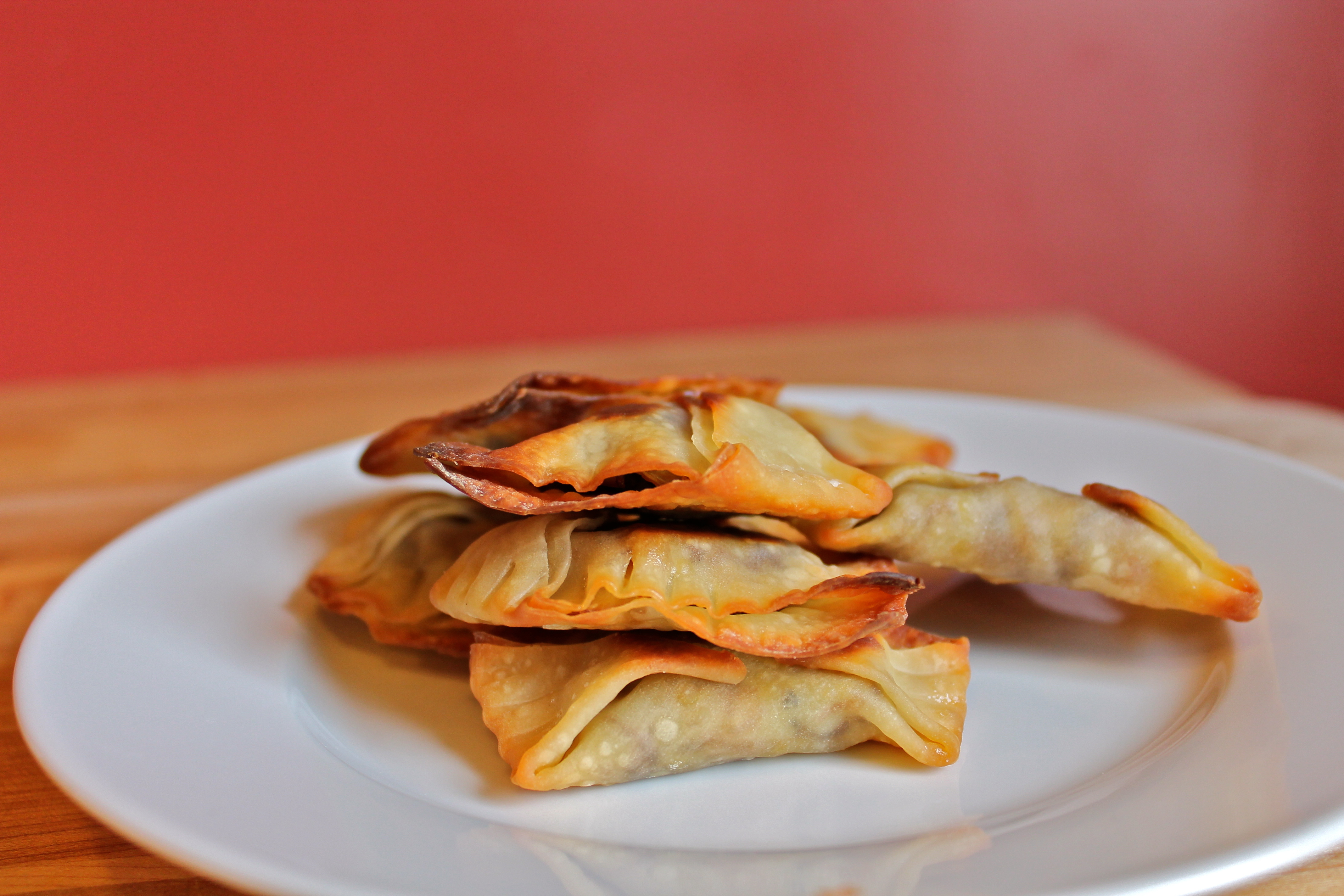
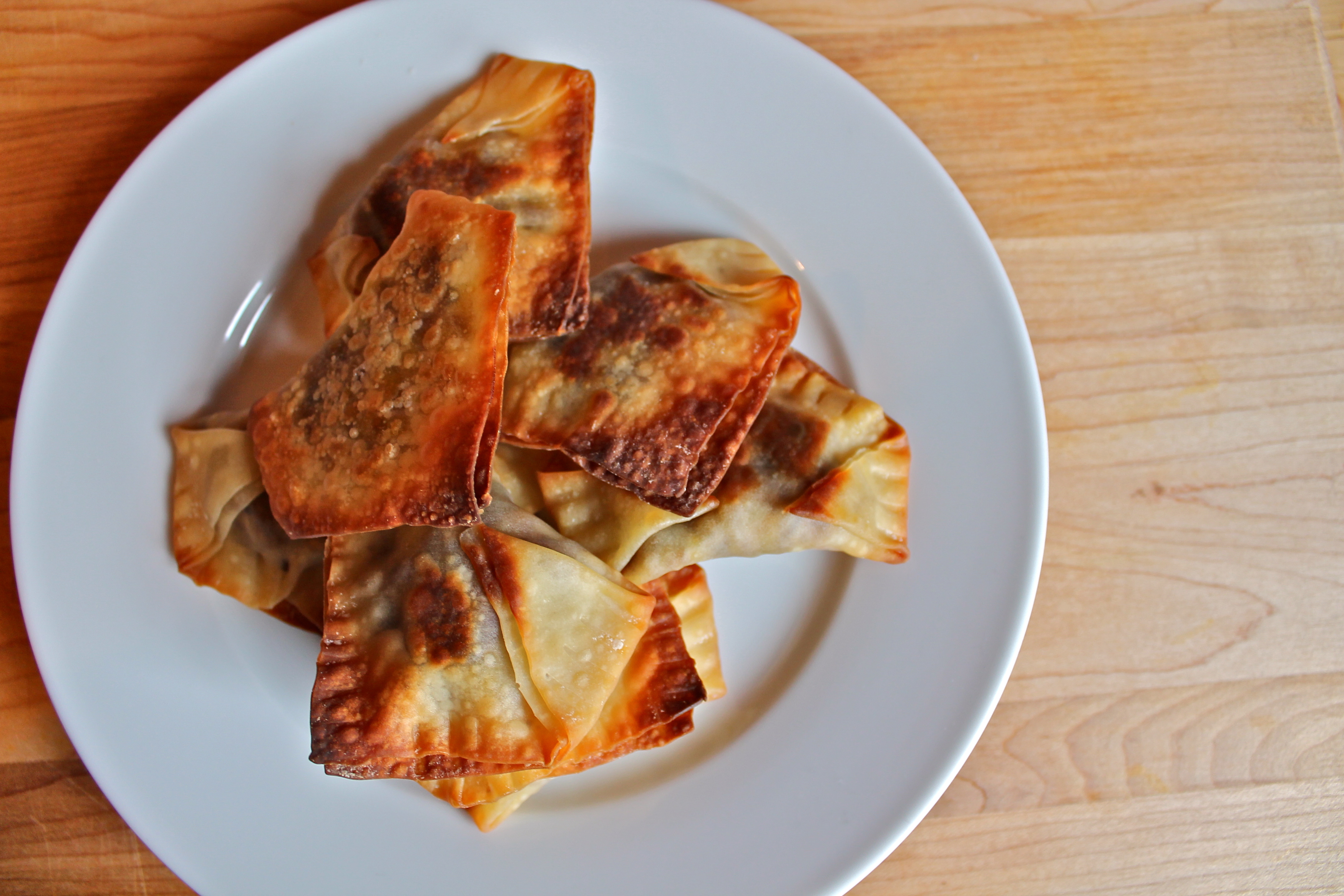
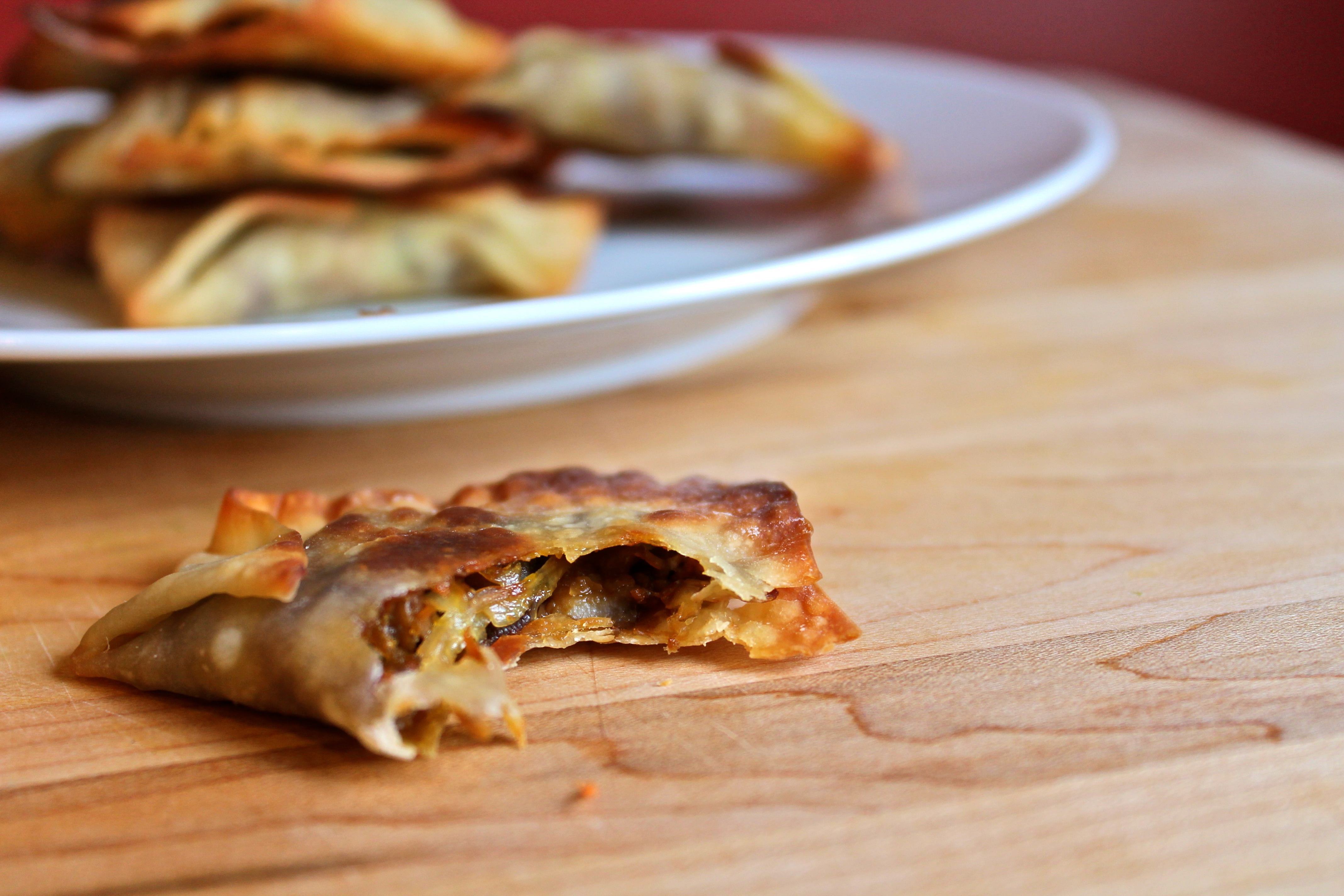
Most importantly, however, is the fact that waiting for you at the end of your cooking trials is something delicious to eat.  When I made these delightful little wontons, filled with carrots, mushrooms, and cabbage, and perfectly seasoned with ginger and mirin, I took that thought to heart.  No, really.  To test the recipe, I made a half batch of crispy, crunchy wontons, and then, when they emerged from the oven, I proceeded to then eat them all.  Every single last one of them.  At first I felt sort of sheepish about what I had done, but I soon got over it.  They were delicious, I took the time to make them, so why shouldn’t I get to enjoy them?  Up until now, however, my husband and son were unaware of what they missed when I made these, because I never told them that I made them.  It was a stealth recipe test.  “Was” being the operative word here, because now, having admitted to the world (and my husband) what I did, I must make amends and whip up another batch of wontons for everyone.  And I do not mind one bit.

Baked Vegetable Wontons Recipe

Adapted from The Healthy Kitchen, by Andrew Weil and Rosie Daley

2 tablespoons toasted sesame oil

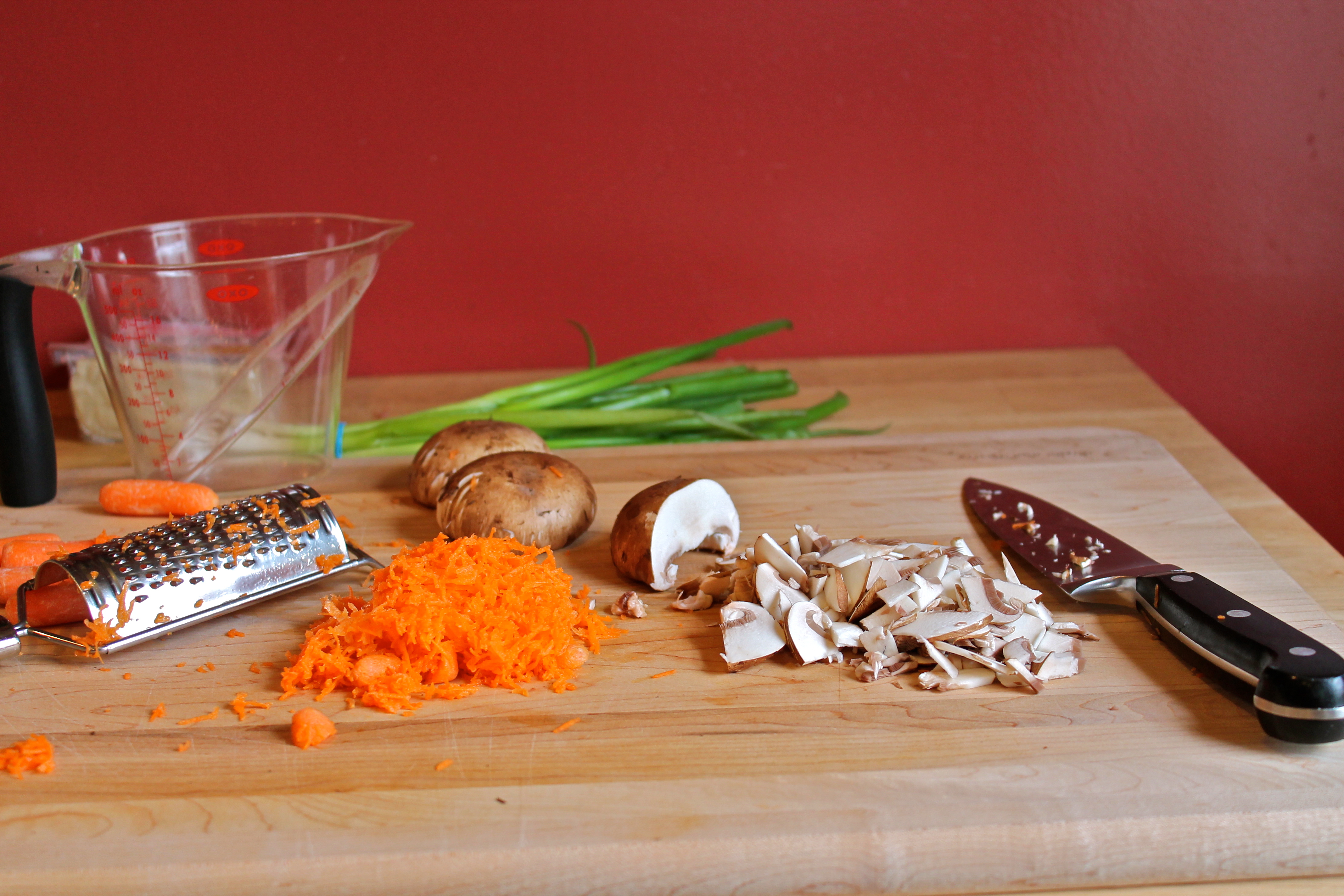
1 cup finely shredded carrot

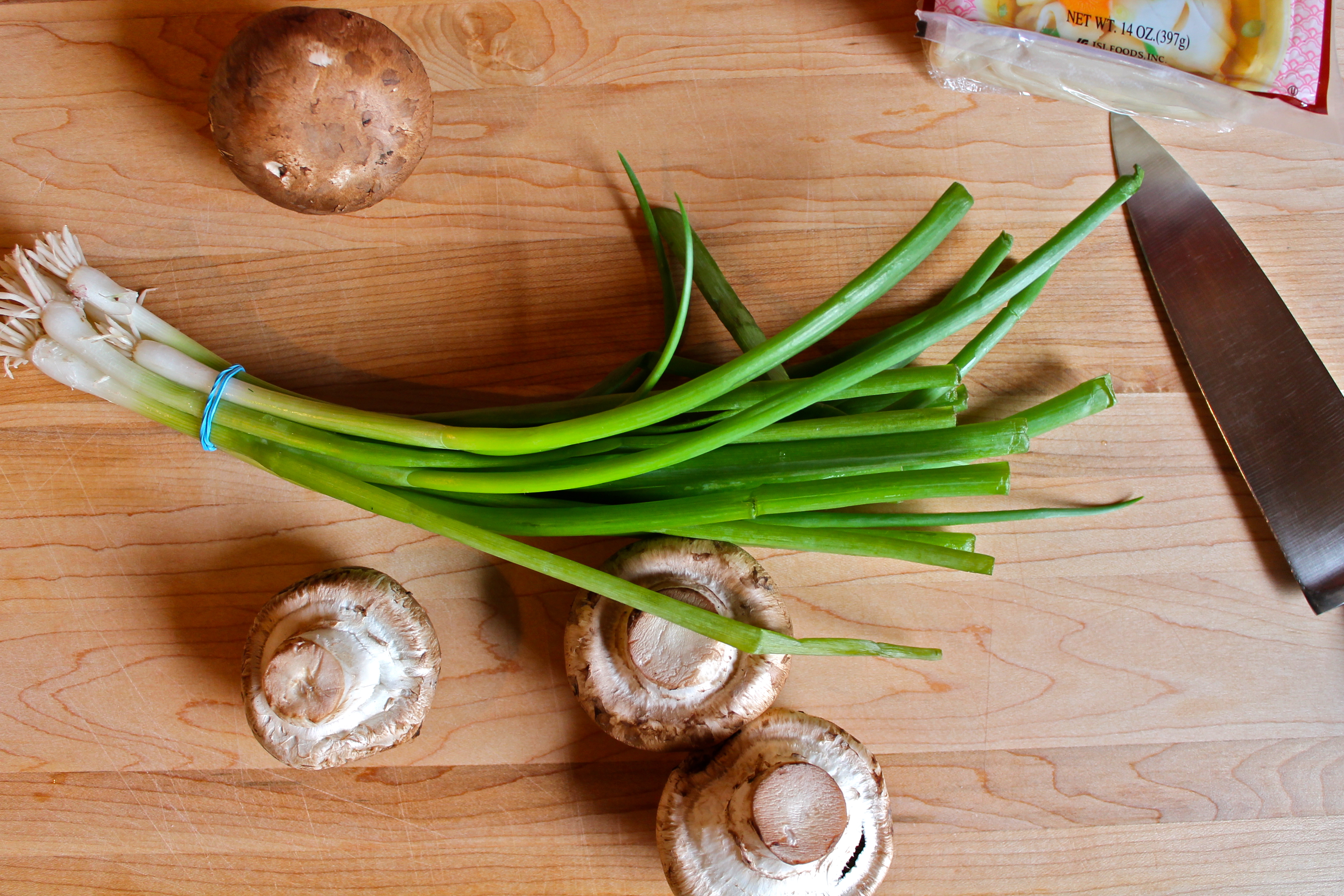
1 cup finely chopped mushrooms (the original recipe called for shiitake or oyster mushrooms, but I used much more reasonably-priced cremini mushrooms and they were great)

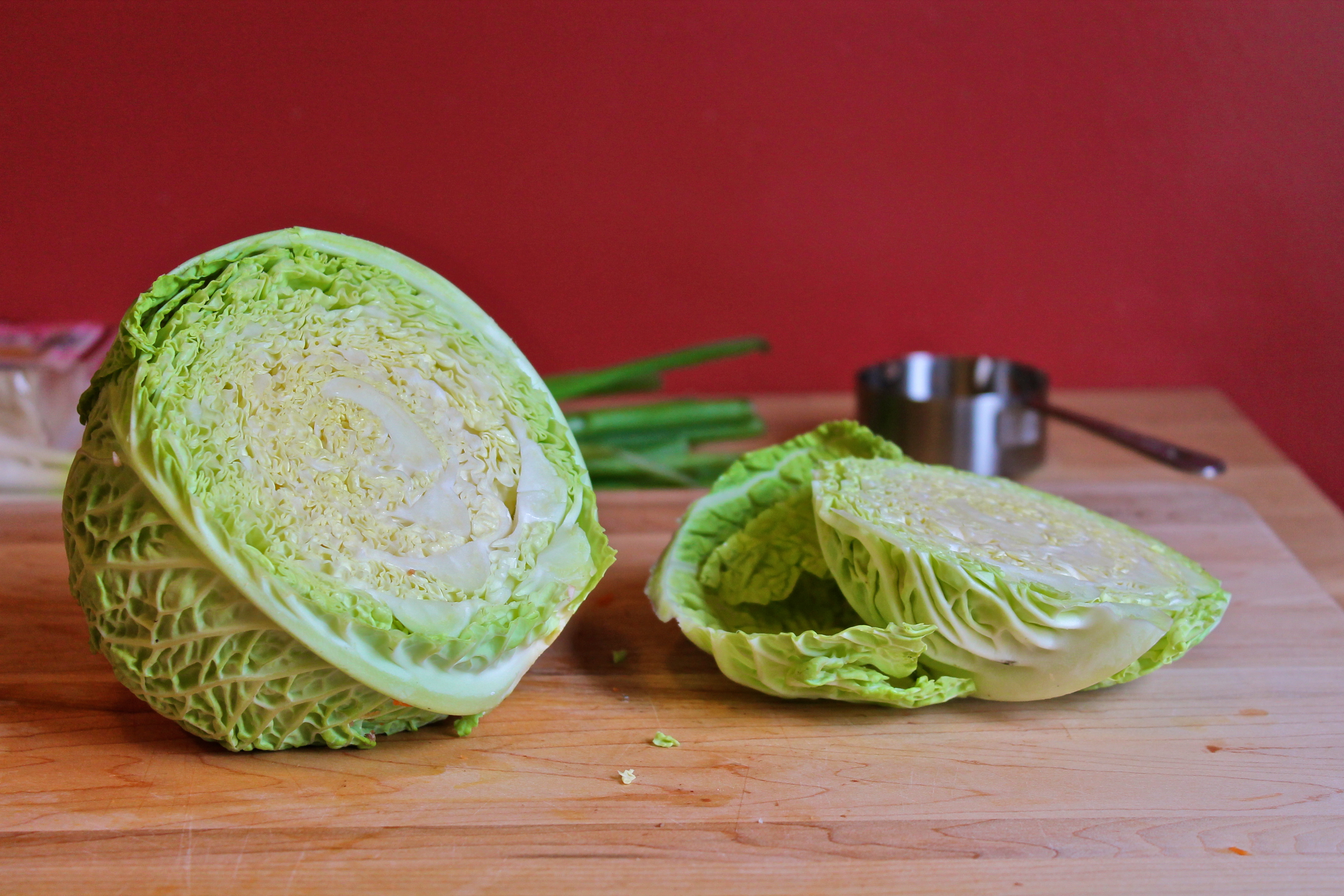
2 cups finely shredded Napa or savoy cabbage

½ cup chopped scallions

2 teaspoons grated fresh ginger

2 tablespoons mirin

2 tablespoons soy sauce

24-30 small, square wonton wrappers

¼ cup toasted sesame oil, for brushing the wontons

Preheat oven to 375 degrees Fahrenheit.

In a large skillet, heat the 2 tablespoons of toasted sesame oil over medium heat.  Add the carrots, mushrooms, and cabbage and sauté until limp, about 5 minutes.  Add the scallions and ginger and cook for another 1 minute.  Stir in the mirin and soy sauce, and remove from heat.

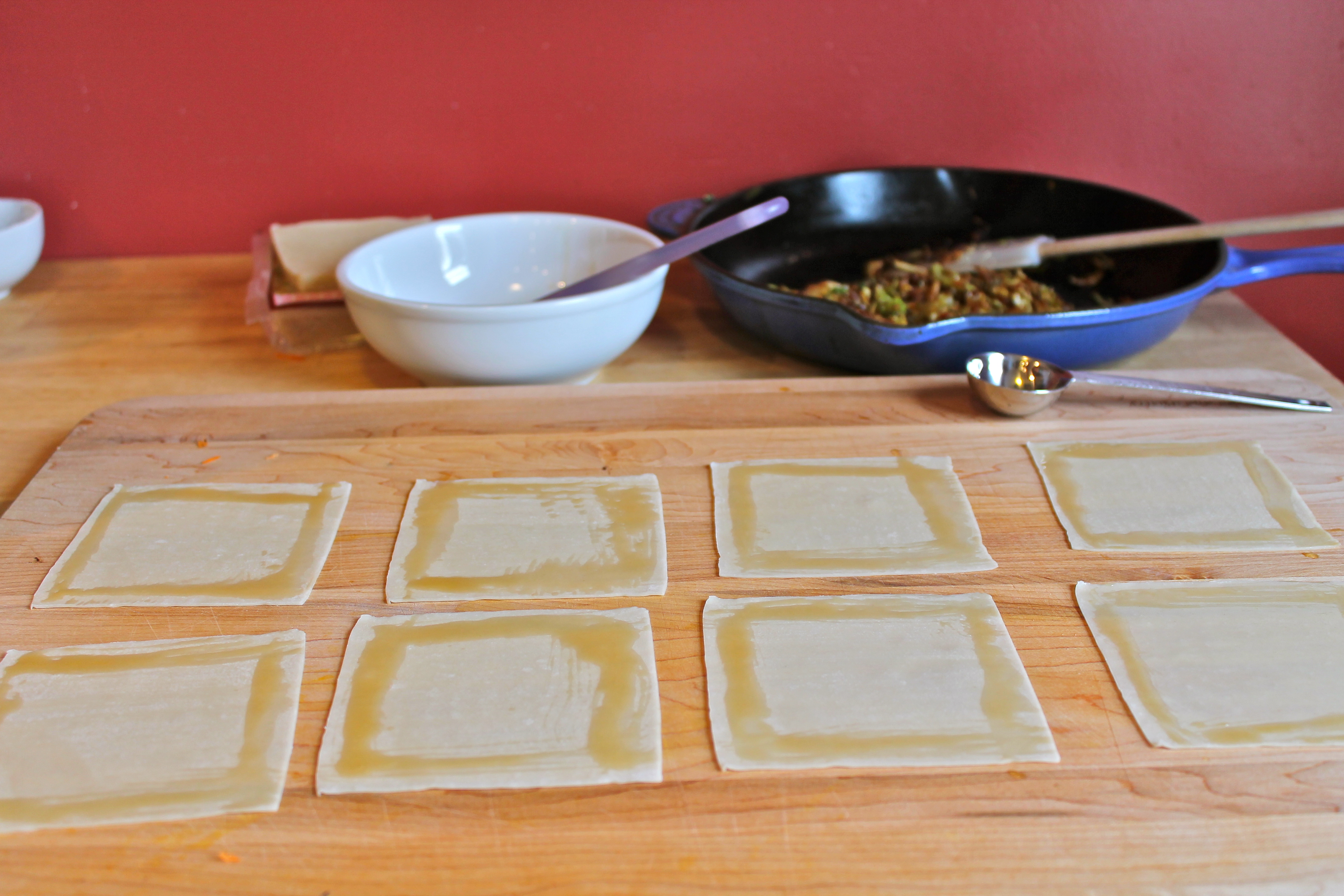
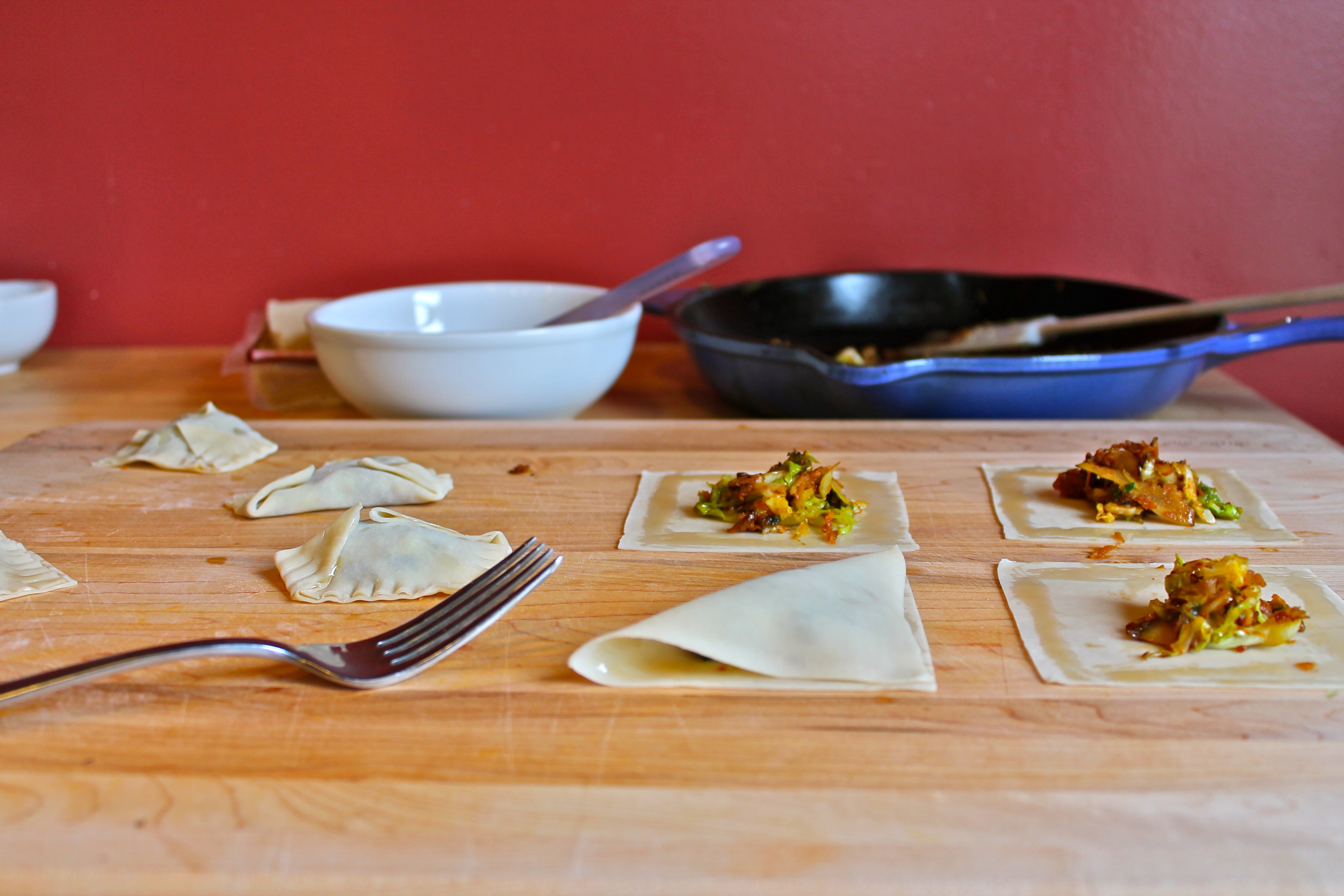
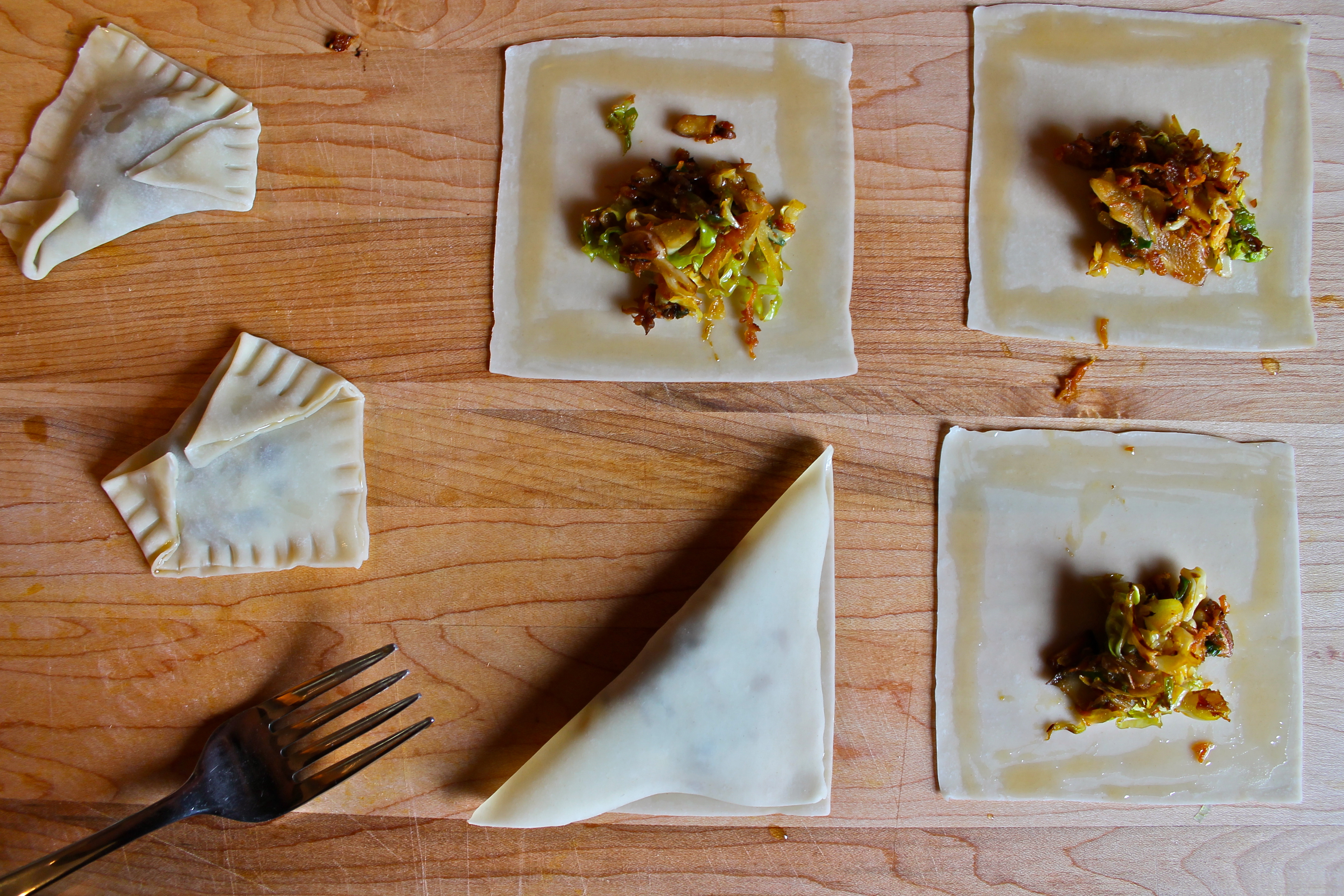
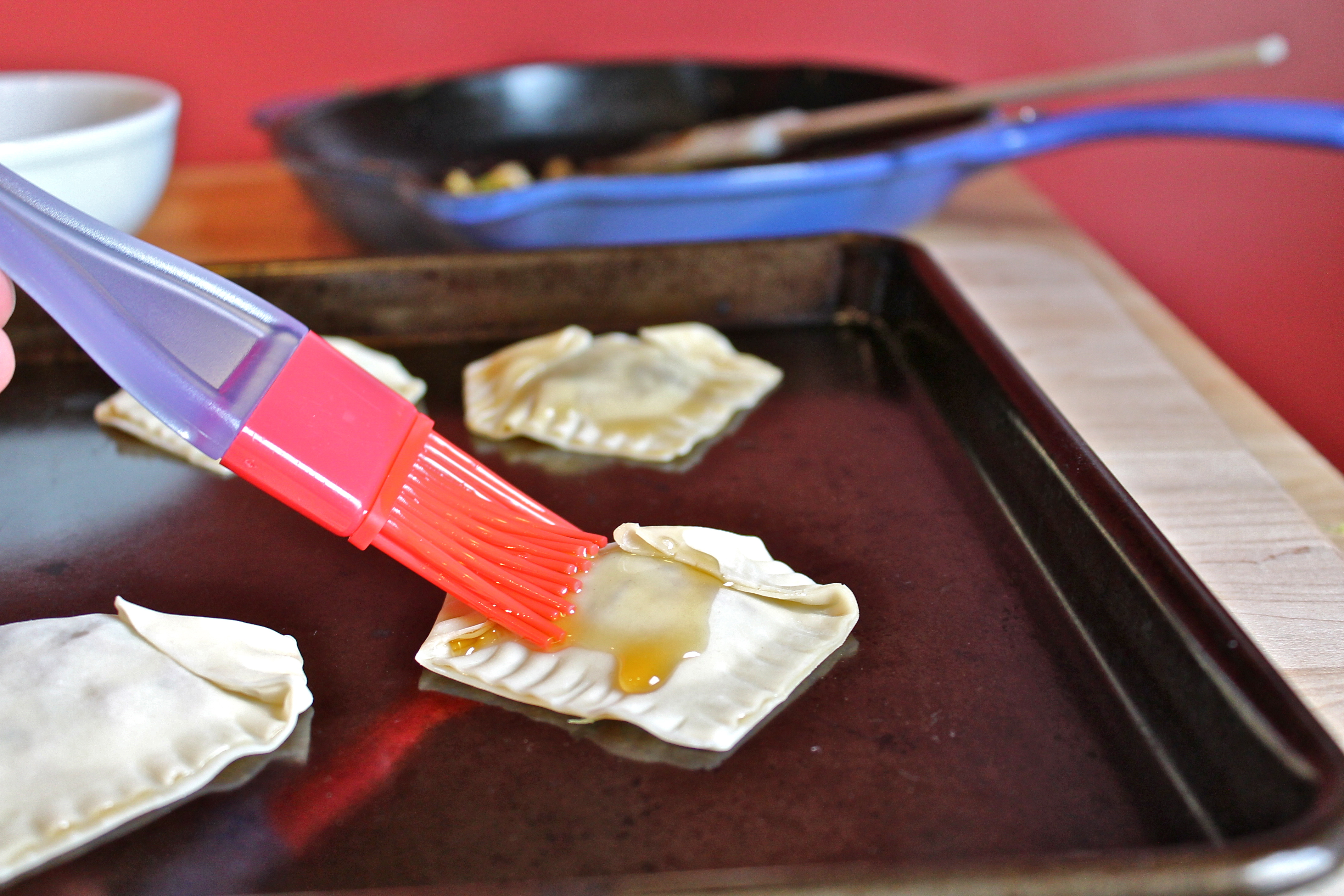
Lay out 12 wonton sheets at a time.  With a pastry brush, lightly brush toasted sesame oil all along the edges of the wonton sheets.  Drop about 1 tablespoon of the vegetable mixture just a touch off the center of the diagonal middle of each wonton sheet, then fold the sheet diagonally so the opposite corners touch.  Using the tines of a fork, press down the 2 open sides (these would be the non-folded sides) of the triangle.  Fold in the two pointed edges that jut out from the folded sides of the triangle, and press them in place with the fork.  Brush the tops of each completed wonton with a bit more sesame oil.

Very lightly spray or brush a baking sheet with vegetable oil.  Arrange the completed wontons, about 12 at a time, on the baking sheet.  Bake wontons for 6 minutes, then turn them over and return to the oven to bake for an additional 6 minutes, or until the wontons are dark golden brown and very crisp.