Archive | Budget RSS feed for this section

Sweet Potato and Cauliflower Samosas in Phyllo

20 Aug

In the spirit of my propensity to toss bits and pieces of leftover vegetables into a tart or a quiche and then sit back and enjoy the fruits of my frugality, a little while ago I decided that my bits and pieces of this and that were ready to branch out a bit. I love a good tart and quiche, but I also love a good challenge. Also, I love Indian food.
I know that I went super heavy on Indian food posts a few weeks ago, but can you blame me for wanting to add on to my arsenal of Indian food recipes? And it’s not just because I am Indian. I mean, technically I am half Scottish as well as half Indian, but you won’t see me whipping up a batch of haggis any time soon. Though I have been know to make shortbread, but, you know, I put ginger and lime in it, because that’s what happens when India creeps into Scotland.

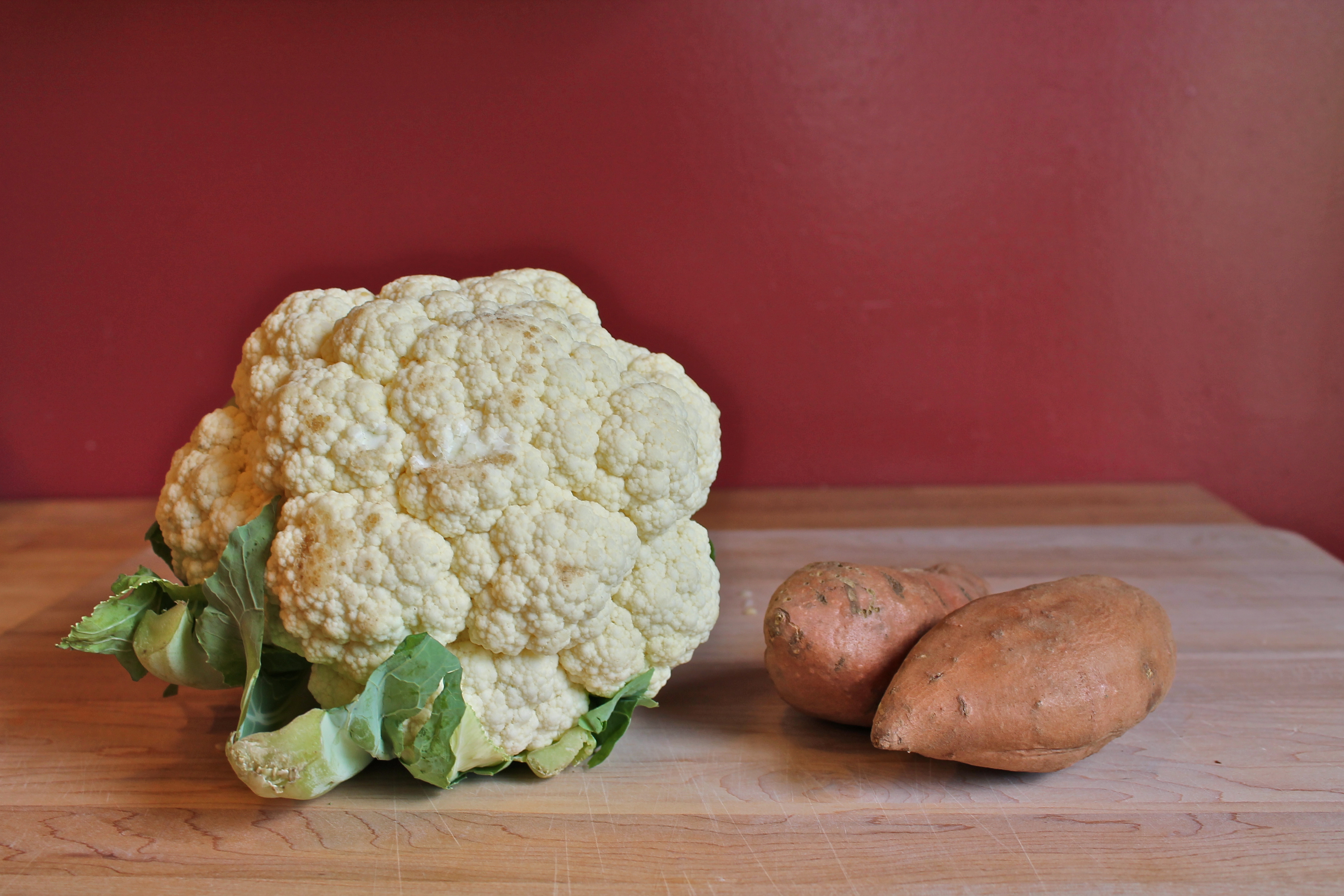
This new riff on samosas is also a new riff on the traditional Indian dish of aloo gobi, a dry sauté of spiced potatoes and cauliflower Literally, in Hindi, “aloo” means potato and “gobi” means cauliflower. Now you know roughly 50% of the Hindi that I know. (If I ever have to negotiate a taxi fare in India, I am going to be in so much trouble.) With a sad little bag of leftover sweet potatoes sitting in the pantry and a fast-wilting head of cauliflower in the refrigerator, I knew I wanted to whip up a decidedly different version of aloo gobi. Since I also had a package of phyllo dough that was quickly turning dry, it soon became clear to me that the universe wanted me to make samosas. And who am I to throw a cold shoulder to the universe?

I am a big fan of my initial recipe for samosas in phyllo, and I cart that sucker out quite a bit when tasked to bring a dish to a potluck or picnic, but these sweet potato and cauliflower samosas are fast overtaking the originals on my list of favorites. The sweet potatoes add a nice change in flavor from ordinary potatoes, and the cauliflower, once sautéed, wrapped up, and baked, practically melts into the creamy and delicious mixture. The spices in this version of samosas are different from the original, I have streamlined the filling and folding process, and, believe it or not, I just might prefer this version overall. For now, at least. Until I find a couple of sprouting potatoes and sagging chiles lying around and decide to make a batch of samosa recipe #1, and then predictably pronounce them to be my reigning favorite.

Last Year: How to Cook Pizza on the Grill

Sweet Potato and Cauliflower Samosas in Phyllo Recipe

3 tablespoons vegetable oil or ghee

1 teaspoon whole cumin seeds

1 large sweet potato, peeled and diced into very small ¼-inch cubes

½ head fresh cauliflower, cored and cut into ½-inch chunks

½ teaspoon ground coriander

¼ teaspoon ground turmeric

¼ teaspoon cayenne pepper

1 teaspoon ground cumin

1 tablespoon grated fresh ginger

1 small green chile, seeds and ribs removed, then very finely chopped

1 tablespoon lemon juice

½ teaspoon sea salt

1 package phyllo dough, about 35 to 40 sheets

4 tablespoons unsalted butter, melted then cooled a bit

In a large pan set over high heat, heat vegetable oil or ghee until it is very hot. Add cumin seeds, and cook them just until they begin to sizzle and pop (this will take just a few seconds). Carefully add in sweet potatoes, and sauté for 3 minutes, stirring occasionally. Using a slotted spoon, remove potatoes from pan and set aside. In the still-hot pan, add the cauliflower and sauté, stirring occasionally, for 3 minutes. Add the potatoes back to the pan with the cauliflower, then add in the spices, ginger, and chopped chile. Reduce heat to low, stir to combine, cover, then let cook for 5 minutes. Remove cauliflower mixture from heat and set aside to cool to room temperature.

When the mixture has cooled, preheat oven to 375 degrees Fahrenheit. Line two baking sheets with parchment paper and set aside.

Cover phyllo stack with a dampened kitchen towel (this will keep the phyllo from drying out as you work).  Take one phyllo sheet from stack and lay it down on your work surface with a long side nearest you (keeping remaining sheets covered as you work) and brush lightly with butter. Fold the dough towards you in three folds, like a tri fold business letter. You will now have a long, three-layer strip of phyllo dough.

Place a tablespoon of filling near one corner of a strip, then fold corner of phyllo over to enclose filling and form a triangle. Continue folding the strip (as one would fold a flag), maintaining a triangle shape. Put fully wrapped samosa triangle, seam side down, on a parchment-lined large baking sheet. Repeat process, making more triangles in the same manner, until you’ve used all the phyllo and all the filling, whichever comes first. Very, very lightly brush the tops of the formed samosas with any remaining melted butter.

The samosas can be baked in a 375 degree oven, one sheet at a time, for 20-25 minutes, or until they are golden brown.  Cool them slightly on a wire rack before serving.

If you plan to freeze the samosas instead of bake them straightaway, place the wrapped samosas in the freezer on their parchment-lined baking sheets, and freeze for one hour.  Remove the samosas from the freezer, and stack them in an airtight container, separating each stack with a layer of parchment or wax paper.  The samosas will keep in the freezer for up to 1 month.  When you are ready to bake the frozen samosas, follow the baking directions for fresh samosas.  There is no need to adjust the baking time.

Makes 35 to 40 samosas, depending on how generous your 1 tablespoon scoops are.

Spicy Ginger Garlic Potatoes and My Favorite Raita

17 May

If it not entirely obvious by now, I tend to go on extended cooking benders that involve certain types of foods.  Sometimes the focus of my cooking will be a particular item, while other times I’ll becomes enamored with cooking food from a particular country or region.  Last week, perhaps inspired by the arrival of unseasonably hot weather, I could not stop making Indian food.

The best, and yet simultaneously worst, thing about making Indian food is the rather insistent habit I have of never, ever just making one Indian dish at a time.  If there is a main dish, there will be a side dish, and when there is a side dish, there will be an added starch, and when there is an added starch, there will be spicy pickles and cooling raitas and on and on and on.  On more than one occasion, I have taken to inviting people over at the last minute to help us devour the feast of food I just spent an afternoon preparing, because when I took a step back and really looked at the Thanksgiving-like spread of food I had just laid out, I actually got a little embarrassed.  When it comes to Indian food, I do not mess around.

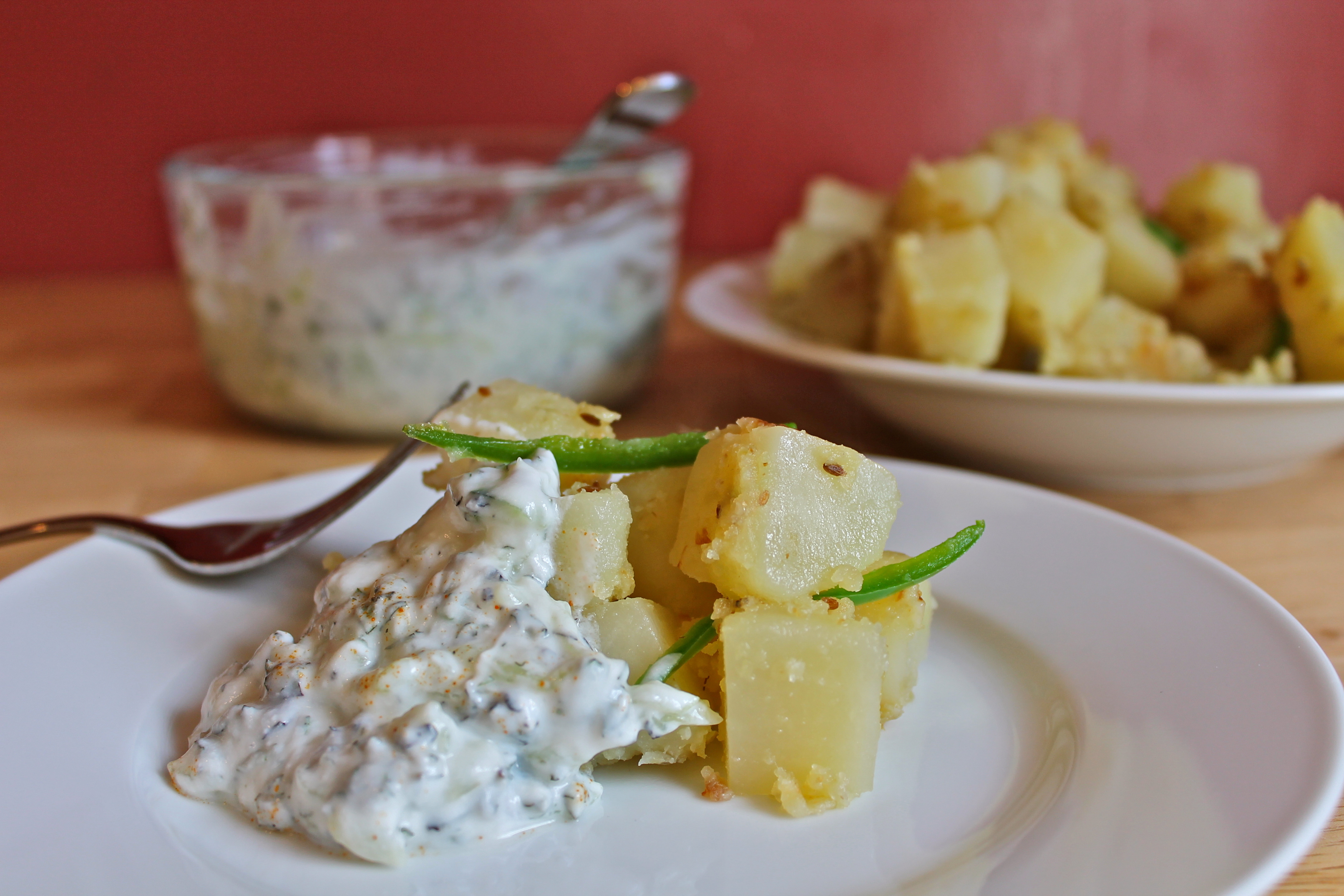
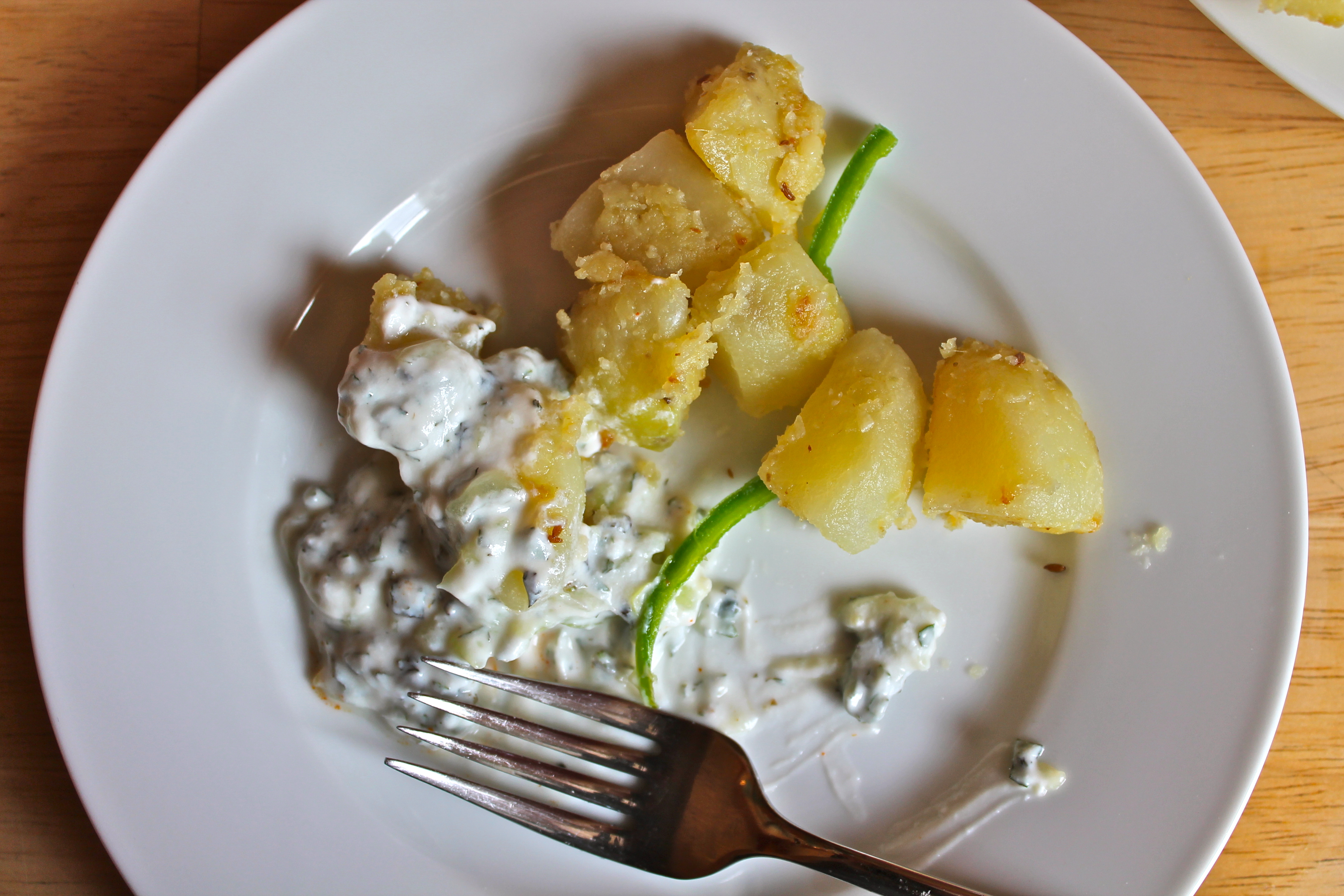
So, though it might be a bit late to declare this week to be Indian Food Week on Savory Salty Sweet, I have a stockpile of lovely Indian recipes to share, and I will likely be spending the next few posts talking about just that.  I’ll start with this great staple of any Indian meal I make: gingery, garlicky potatoes topped off with a fresh, cooling raita.  If you’re looking for a simple place to start your journey into cooking Indian food, you can’t find anything easier than this.  This dry sauté of wonderfully seasoned potatoes comes together in a flash, and you can throw the raita together in the time it takes the potatoes to finish.  It’s the perfect gateway into Indian cooking, which is good if you are looking for a simple place to start, but perhaps not so good if you one day find yourself so smitten with cooking Indian food, you’re forced to throw an impromptu dinner party every time you break out a jar of cumin seeds.  You’ve been warned.

Last Year: Blueberry Biscuits

Spicy Ginger Garlic Potatoes and My Favorite Raita Recipe

Spicy Ginger Garlic Potatoes

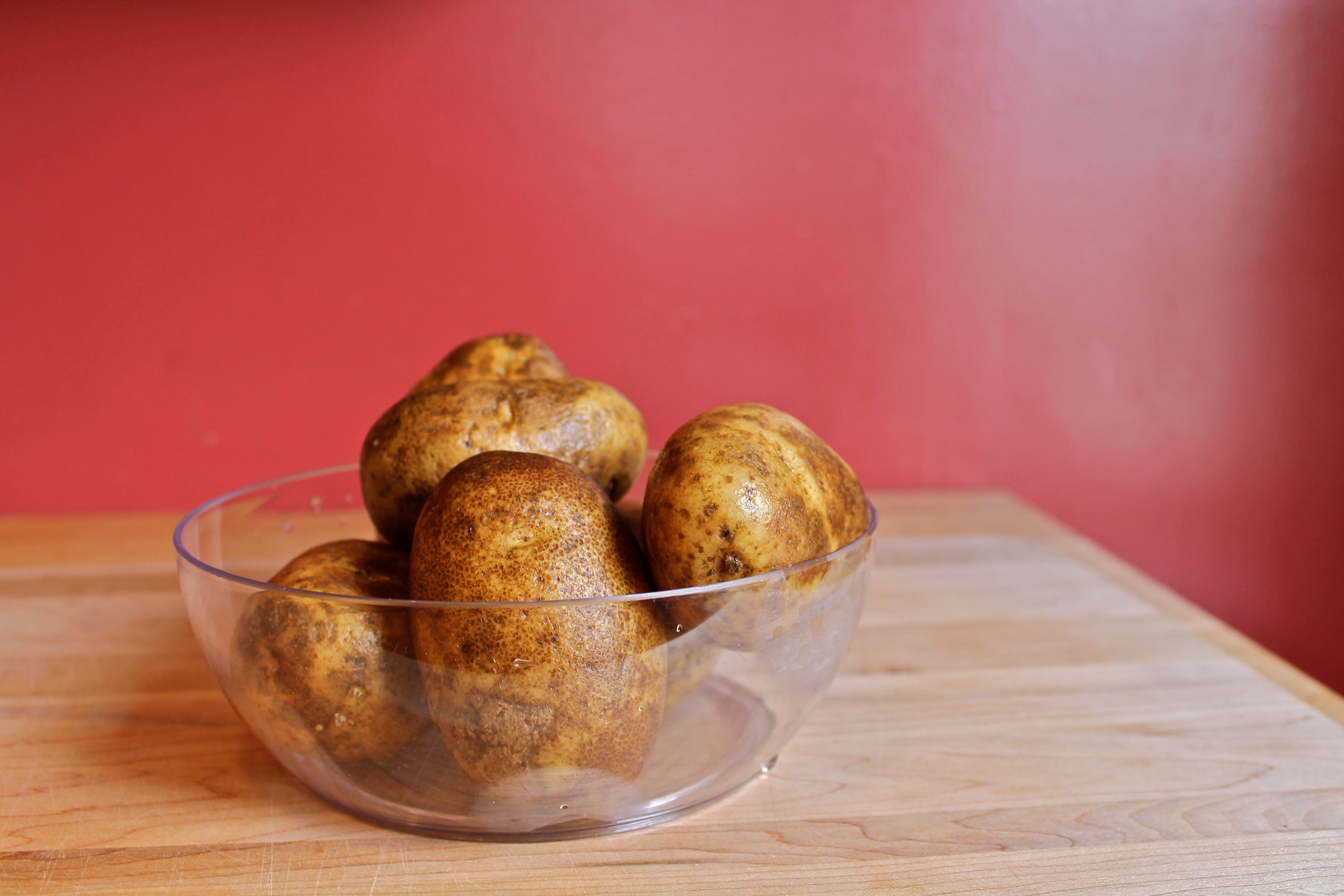
1 pound small or medium potatoes, whole and unpeeled

1 tablespoon unsalted butter

¼ teaspoon whole cumin seeds

2 tablespoons finely grated fresh ginger

2 tablespoons finely grated or minced-and-smashed garlic

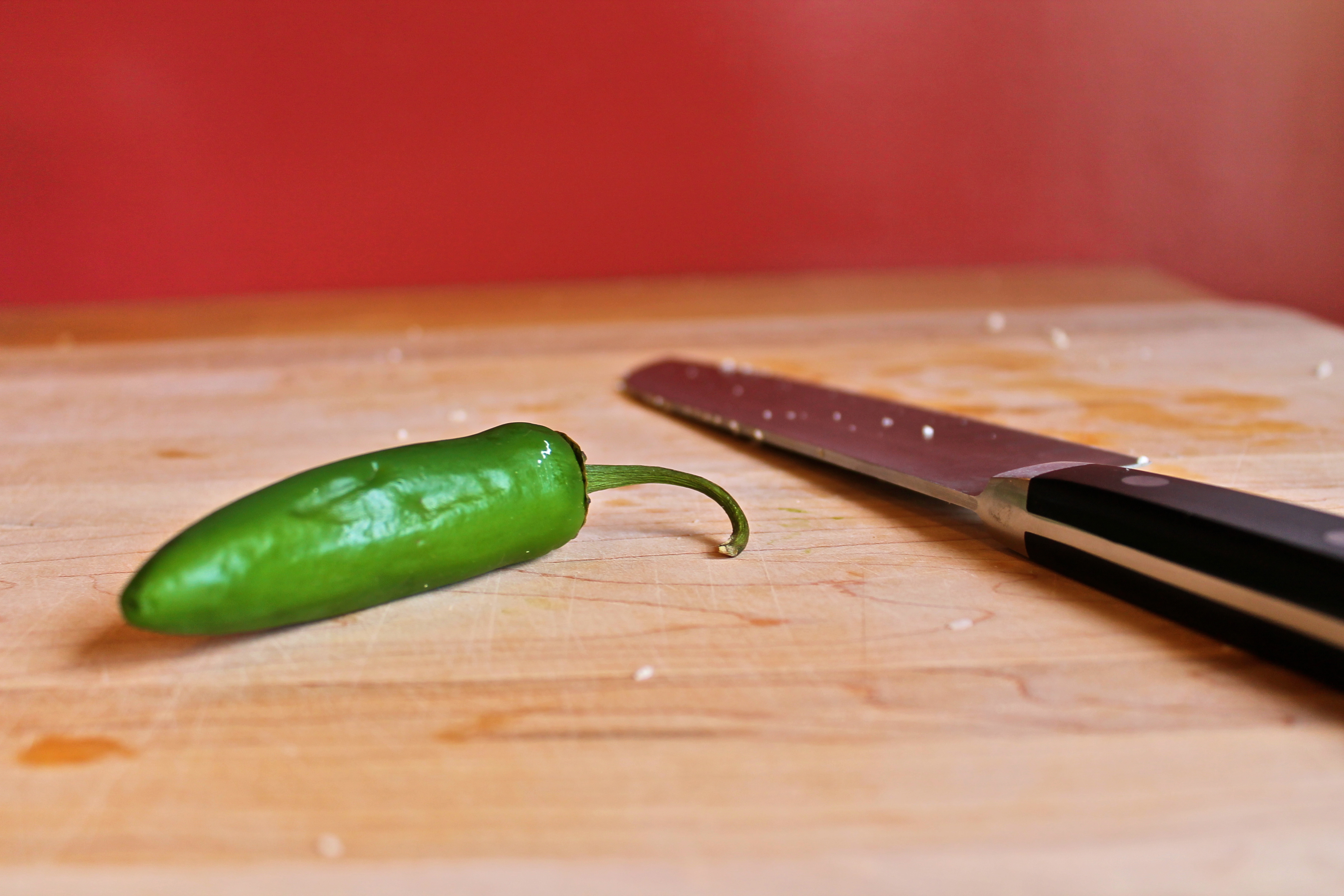
1 jalapeno pepper

salt to taste

In a small pan, cover the whole potatoes with water and bring to a boil over high heat.  When the water begins to boil, lower the heat and simmer the potatoes until they are tender enough to be easily pierced with a fork (this should take about 10 to 15 minutes).  Drain the potatoes and allow to cool enough to be handled.

When the potatoes have cooled enough to touch, peel the skins form the potatoes and then dice the potatoes into 1-inch chunks.

In a large skillet, melt the butter over low heat.  When the butter has melted and is just stating to foam a bit, add the cumin seeds.  Stir the cumin seeds, allowing them to sizzle and pop for about 20 seconds.  Add the grated ginger and garlic, and stir over low heat for 1 minute, until the ginger and garlic are very aromatic, but not browned.  If you see your ginger and garlic beginning to brown, remove the pan from the heat and keep stirring the ginger and garlic until their sizzling subsides a bit and the browning has stopped.

Turn the heat under the pan to high.  Add the diced potatoes to the pan, and stir to coat with the ginger and garlic mixture.  Allow the potatoes to develop a nice brown crust on one side, then stir, turn the heat to low, cover the pan, and leave to cook for another 3 minutes or so.

Slice the jalapeno pepper into thin strips, discarding the seeds and white ribs.  Add the jalapeno strips to the potatoes, stir to combine, then remove from heat.  The jalepenos should still retain some crispness (you don’t want them to turn totally limp).  Add salt to taste.

Cucumber Mint Raita

1 cup peeled, seeded, shredded cucumber (about 1 large cucumber)

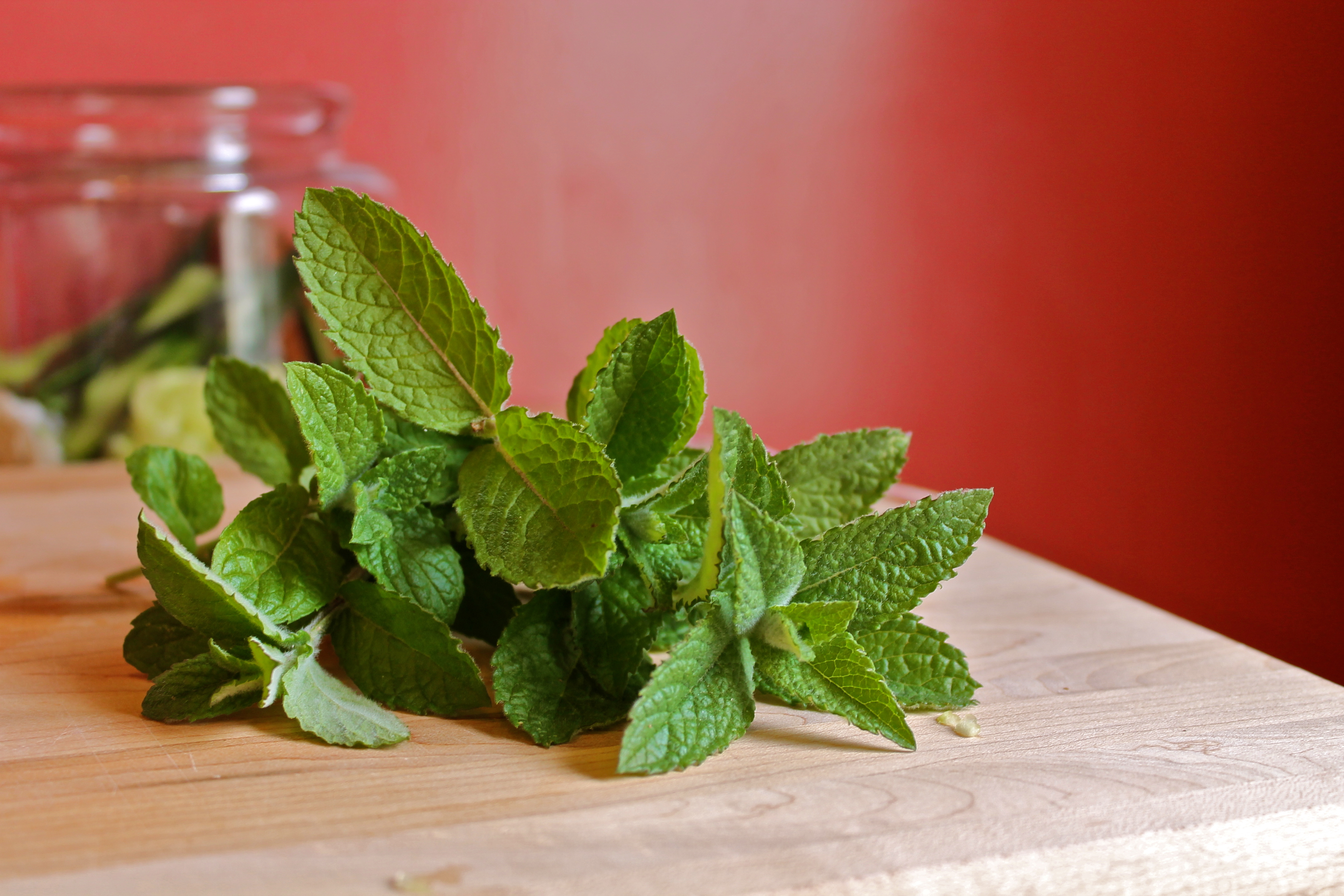
1/3 cup finely minced fresh mint leaves

1 cup plain yogurt

pinch of salt

pinch of cayenne pepper

Using your hands, squeeze the shredded cucumber until you have removed as much moisture as possible.  Place squeezed cucumber in a medium bowl.  Add minced mint, yogurt, and salt.  Stir to combine.  Sprinkle a pinch of cayenne pepper over the top of the raita.

Esquire Pancakes

29 Mar

Many years ago, I was a longtime subscriber to Esquire Magazine.  This was while I was also a longtime subscriber to the New Yorker, as well as a subscriber to both Harper’s and the Atlantic.  For those of you counting, that totals four magazine subscriptions, one of which is a weekly with which, as I have mentioned before, I have an extremely difficult time keeping current.  In an effort to stop the ominous growth of the pile of unread magazines growing higher and higher each month, like bricks in the wall of my own magazine prison, I had to start letting magazine subscriptions lapse.  Esquire was the first to go.

It’s not that I didn’t appreciate Esquire.  It’s just that, overall, the other magazines in my arsenal happened to speak more clearly to my own interests and concerns.  I showed an at least passing interest reading about mail-order meat, or the intricacies of what men think about what women think about underpants, or $12,000 suits made to order by a 75 year-old tailor in Italy, but it’s just that Esquire seemed to contain content that I found interesting, say, 50% of the time, whereas the other magazines I received tended to hover around a more respectable 70%-90%.  This is not a slam against Esquire, of course.  I am clearly not in their target demographic, so our parting was really just a matter of time.

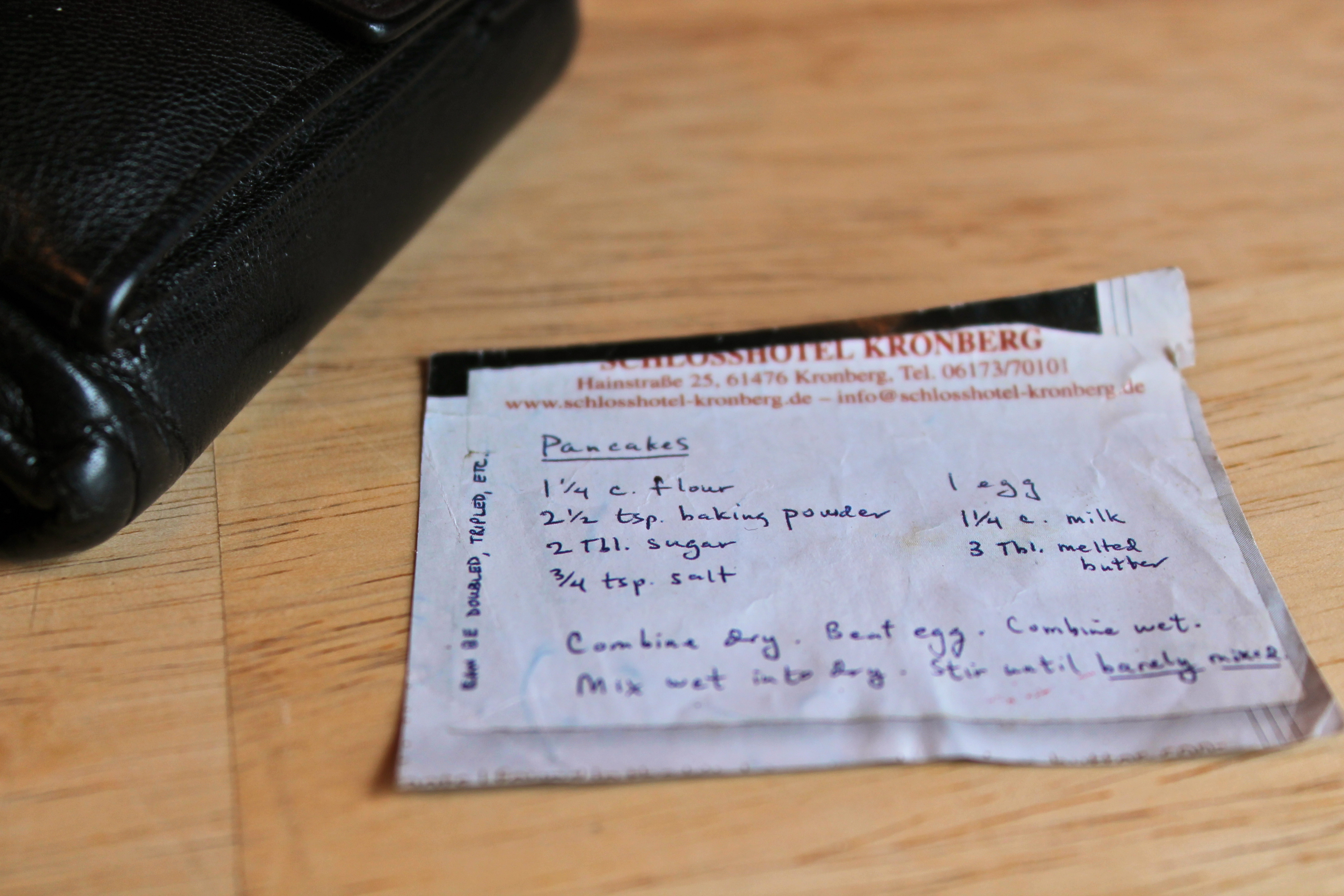
There is, however, one item from Esquire for which I will be forever grateful.  About five years ago, Ryan D’Agostino wrote an article for Esquire about his favorite recipe, written on a slip of German hotel stationery, that he carries around in his wallet.  It was a simple recipe for pancakes, but it was also D’Agostino’s signature recipe, the one he made at a friend’s vacation house, and the one he made for his wife before she was his wife.  The pancake recipe was simple, but surefire.  And I am here to attest that, without fail, they are indeed the best pancakes I have ever eaten.

Taking a cue from D’Agostino, I cut out the picture of his recipe and put the slip of paper in my own wallet.  I have made his pancakes while on vacation, while visiting family, and while camping (I just put the liquid ingredients in one container, the dry in another, then combine them when breakfast calls—which is another point I’d like to make: these pancakes, cooked in a cast iron pan over a campfire?  Unbeatable).  I have at least seven other cookbooks with basic, no-frills pancake recipes in them, and not one of those other recipes even comes close to being as perfect as this one.  For a recipe gleaned from a magazine I stopped receiving two or three years ago, that’s a pretty good track record. I can’t say I’ve gotten that much mileage out of that one article I read in the Atlantic about Mexican drug cartels but, you know, there’s still time.

Last Year: Black Bread Rolls and Food for Traveling

Esquire Pancakes Recipe

Adapted from Ryan D’Agostino in Esquire

Keen observers will note that the one change I have made in D’Agostino’s recipe is in regard to the amount of sugar in the pancakes.  I prefer a less-sweet pancake, so I make these with 2 teaspoons of sugar, rather than D’Agostino’s suggested 2 tablespoons.  You can use whichever you please, to no ill effect.

1 ¼ cups all-purpose flour

2 ½ teaspoons baking powder

2 teaspoons sugar

¾ teaspoon salt

1 large egg

1 ¼ cups milk

3 tablespoons melted butter

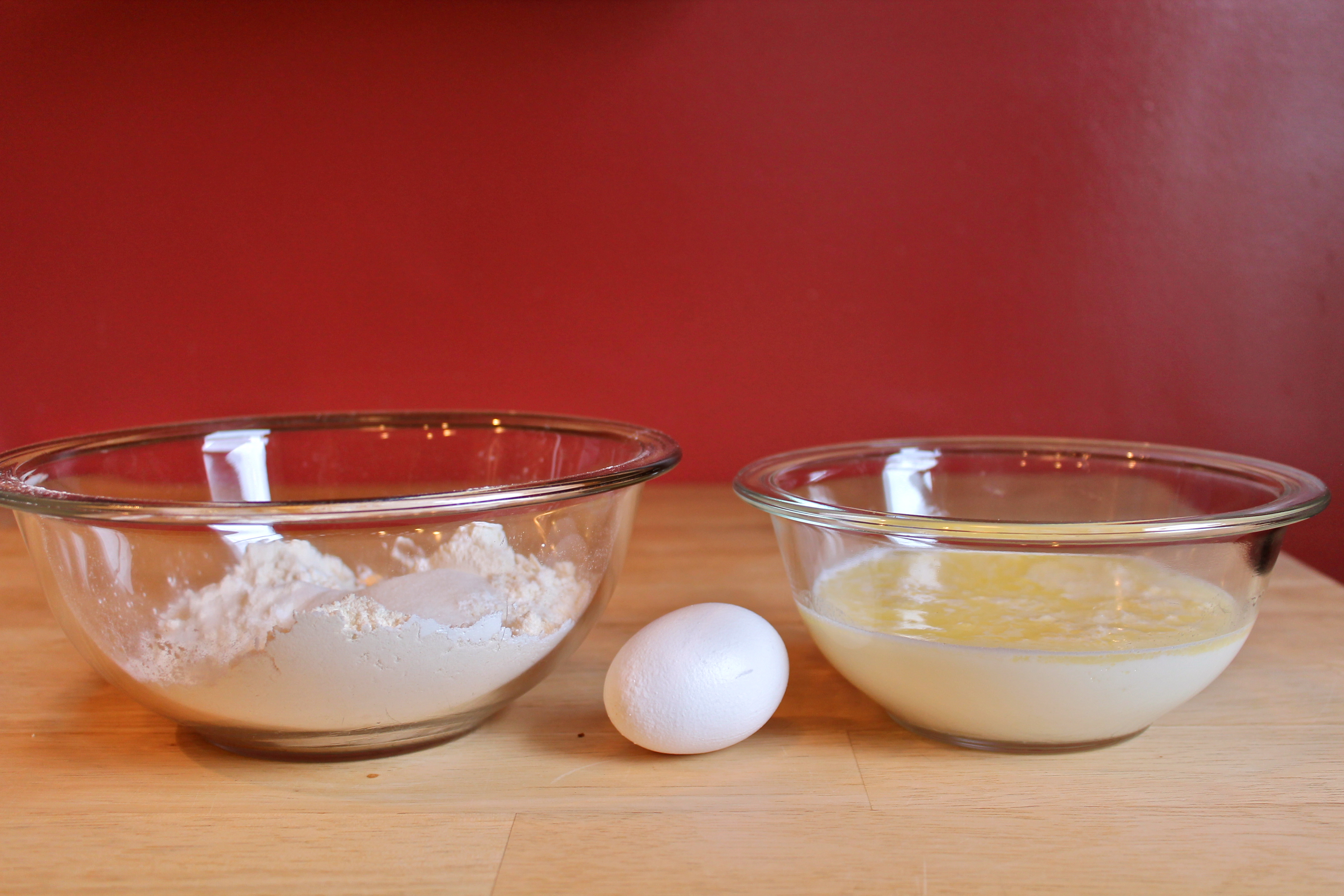
Combine dry. Beat egg. Combine wet. Mix wet into dry. Stir until barely mixed. Can be doubled, tripled, etc.

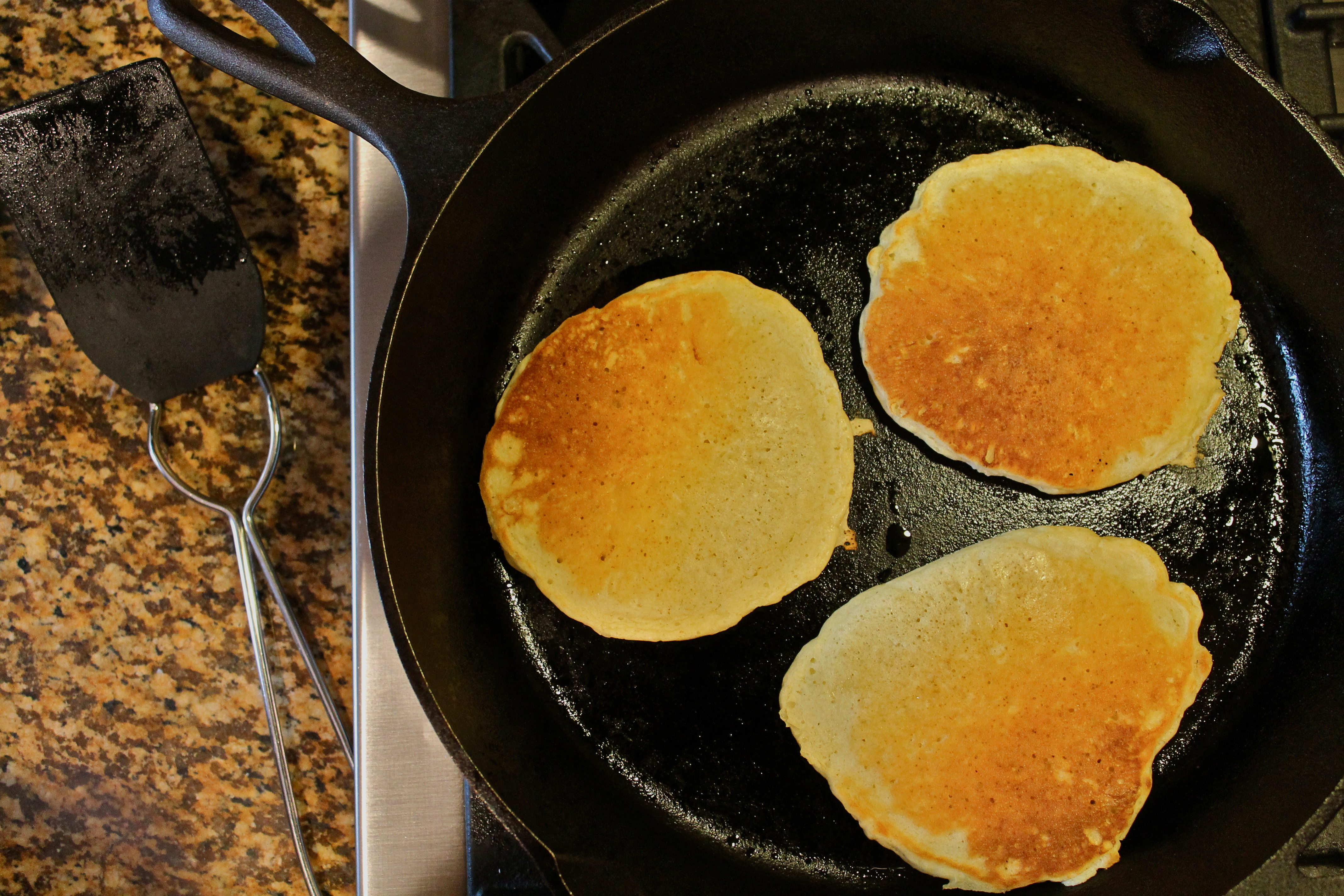
Cook pancakes, ¼ cup of batter at a time, on a well-oiled or seasoned skillet set over medium low heat.  Flip pancakes when bubbles on surface begin to pop, and the edges of the pancakes are just beginning to appear dry.

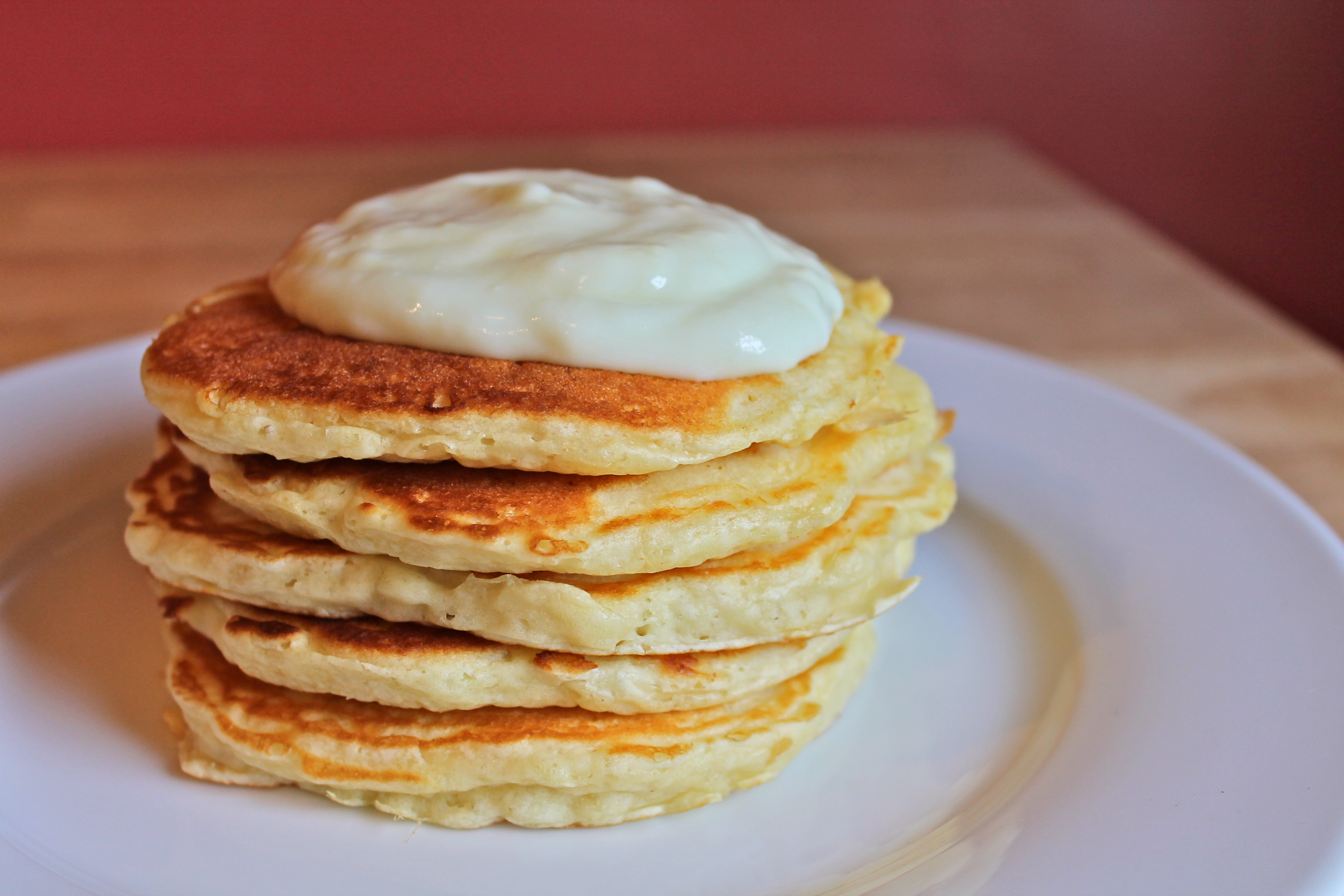
Top with maple syrup or lemon yogurt.

Makes 8 pancakes of medium-large size.