Archive | Budget RSS feed for this section

Indian Cauliflower Rice

9 Feb

I am not generally one to eavesdrop, but I am also not one to hear whisperings of what sounds like an incredible meal and then walk away.  This is how I found myself pretending to read messages on my phone while I stealthily listened to two people waiting for coffee talk about a dish involving fried rice made out of cauliflower, as in, the rice being fried was not rice at all, but rather finely chopped cauliflower.  It involved ginger, green onions, and then something-something that I could not hear, on account of the steady coffee shop din of sputtering milk steaming wands and a slightly-too-loud-for-eavesdropping playing of the Replacements (Let It Be).
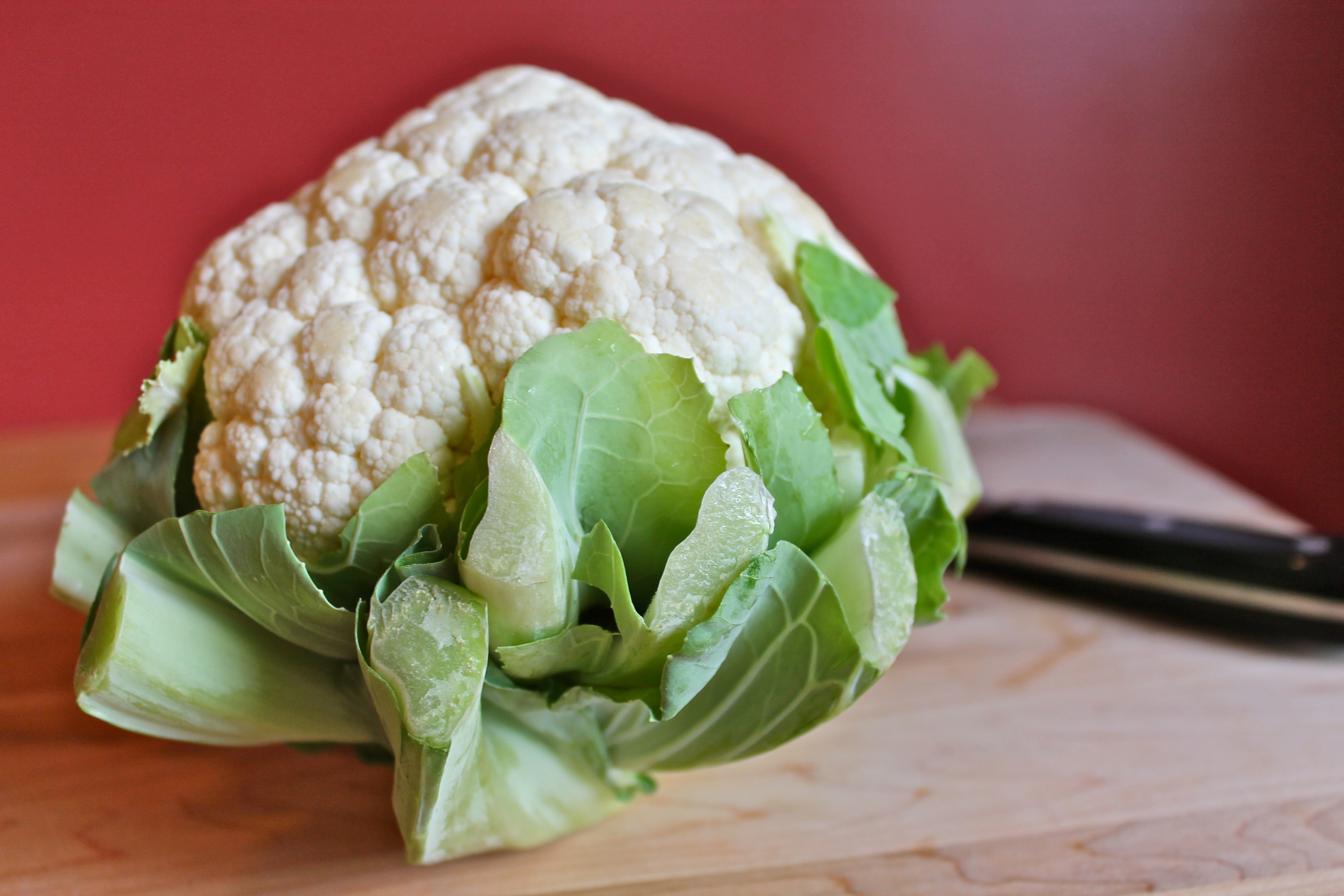
I thought about the dish, and the concept of the dish, during the entirety of my walk home.  By some heretofore unseen miracle of refrigerator preparedness, I actually had cauliflower on hand (which never happens, ever, even though, I know, I am Indian and I like to make Indian food and Indian food means cauliflower and potatoes but, still, MIRACLE), but I was mildly flummoxed about what should come after finding the cauliflower in the refrigerator and marveling at my good fortune (it apparently does not take much to impress me).  Since I was receiving all the information about this new recipe via an unsanctioned source, there was very little required of me in the way of actually following a recipe.  Really, I was in this position on account of a concept, which meant that whatever I wanted to do with the cauliflower could probably not mess things up too badly.
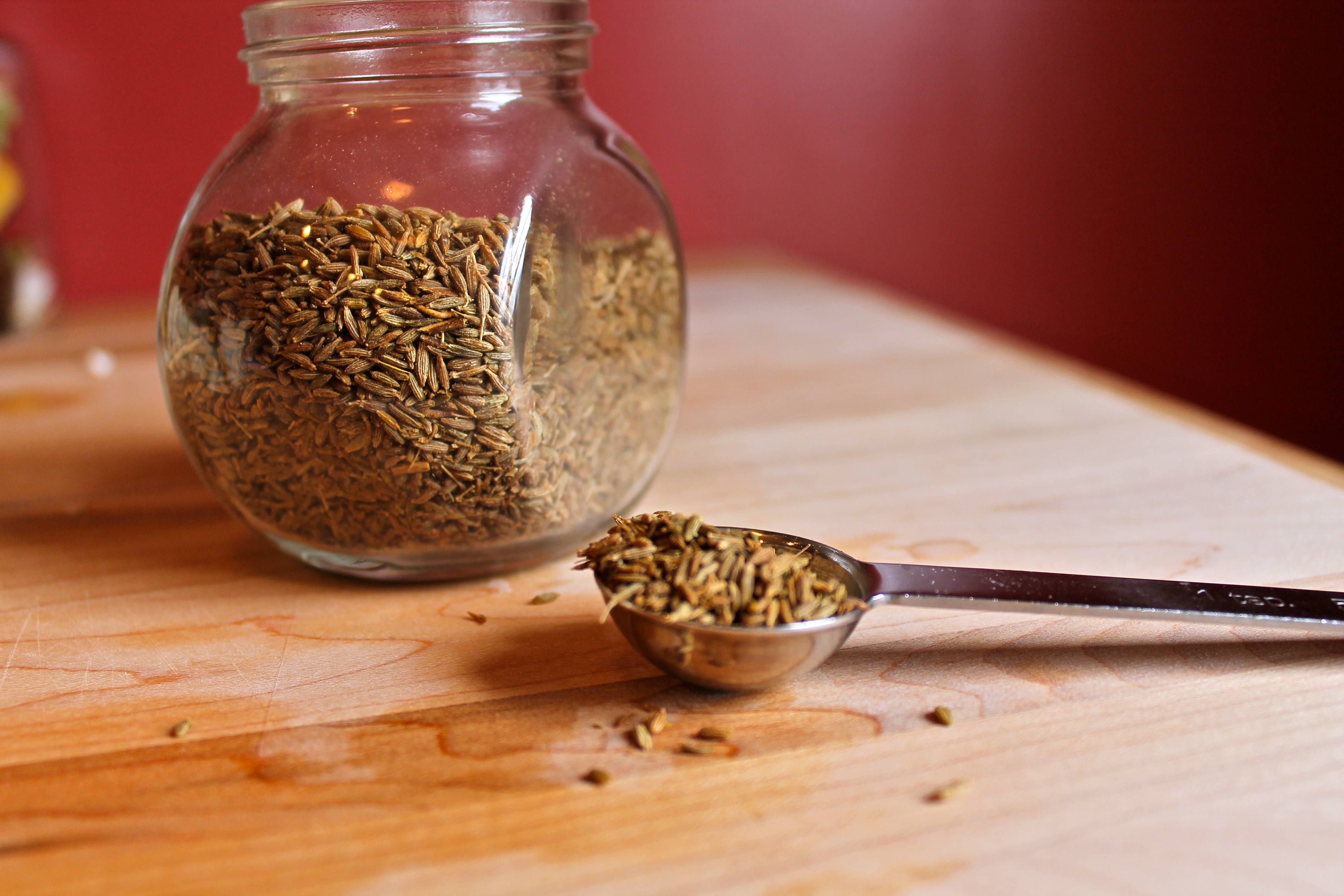
So I went with what I know.  The cauliflower rice, originally conceived as a Chinese fried rice-type dish, became an Indian dish.  Toasted spices joined a healthy dose of grated fresh ginger, and a tiny bit of heat was added to keep things interesting.  What came together was a pleasant, delicious surprise, and one I don’t think that, left to my own devices, I would have ever happened upon myself.  Though I can’t condone eavesdropping on a regular basis (I suspect that most topics of private conversation probably involve things a lot more spicy than this dish), I have to admit that, used sparingly, a little nosiness can sometimes result in a lot of deliciousness.

Indian Cauliflower Rice

1 large head cauliflower, leaves and core removed

2 tablespoons vegetable oil

1 teaspoon whole cumin seeds

1 bay leaf

1 teaspoon minced garlic

2 teaspoons freshly grated ginger

½ medium yellow onion, finely diced

¼ teaspoon garam masala

¼ teaspoon turmeric

¼ teaspoon cayenne pepper

½ teaspoon coriander

salt to taste

¼ cup fresh cilantro (optional)

Cut the cauliflower into large florets.  In a food processor, pulse about 1/3 of the cauliflower until it is uniformly chopped into very small, rice-sized pieces.  Repeat with the remaining cauliflower, working in small batches and being careful to pulse the cauliflower only until it is chopped (over-chopping the cauliflower in the food processor will turn the cauliflower into a mushy paste).  When you have chopped all the cauliflower, set it aside.

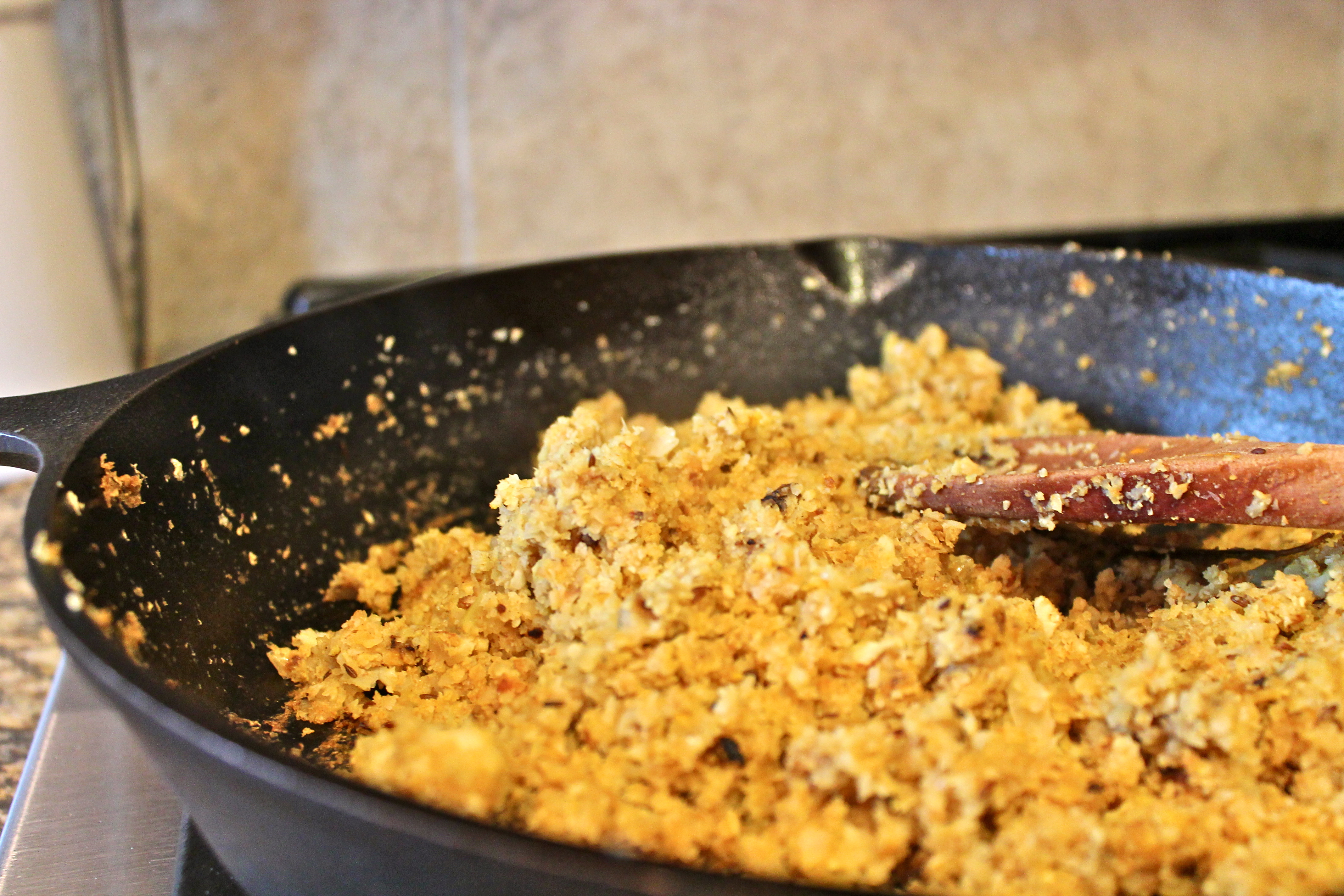
In a large skillet, heat the vegetable oil over medium-high heat.  When the oil has just started to shimmer, add the cumin seeds and bay leaf, stirring constantly to keep them from burning.  When the seeds start to sputter and pop (this should take just a few seconds), add the garlic, ginger, and onion.  Cook, stirring frequently, until the onions are softened and just beginning to brown, about 8 minutes.  If your onions and garlic begin to brown too quickly, turn the heat down to medium.  Add the chopped cauliflower to the pan, and stir fry for 2 to 3 minutes, until the cauliflower just begins to turn slightly golden at the edges.  Add the garam masala, turmeric, cayenne pepper, and coriander.  Cook for an additional 7 to 10 minutes, until the cauliflower is golden and the spices smell toasty.  Add salt to taste.

Garnish with fresh cilantro, if desired.

Serves 3-4 people as a main dish, twice as many as a side dish.

Yard Long Beans with Chile Oil and Garlic Bits

19 Jan

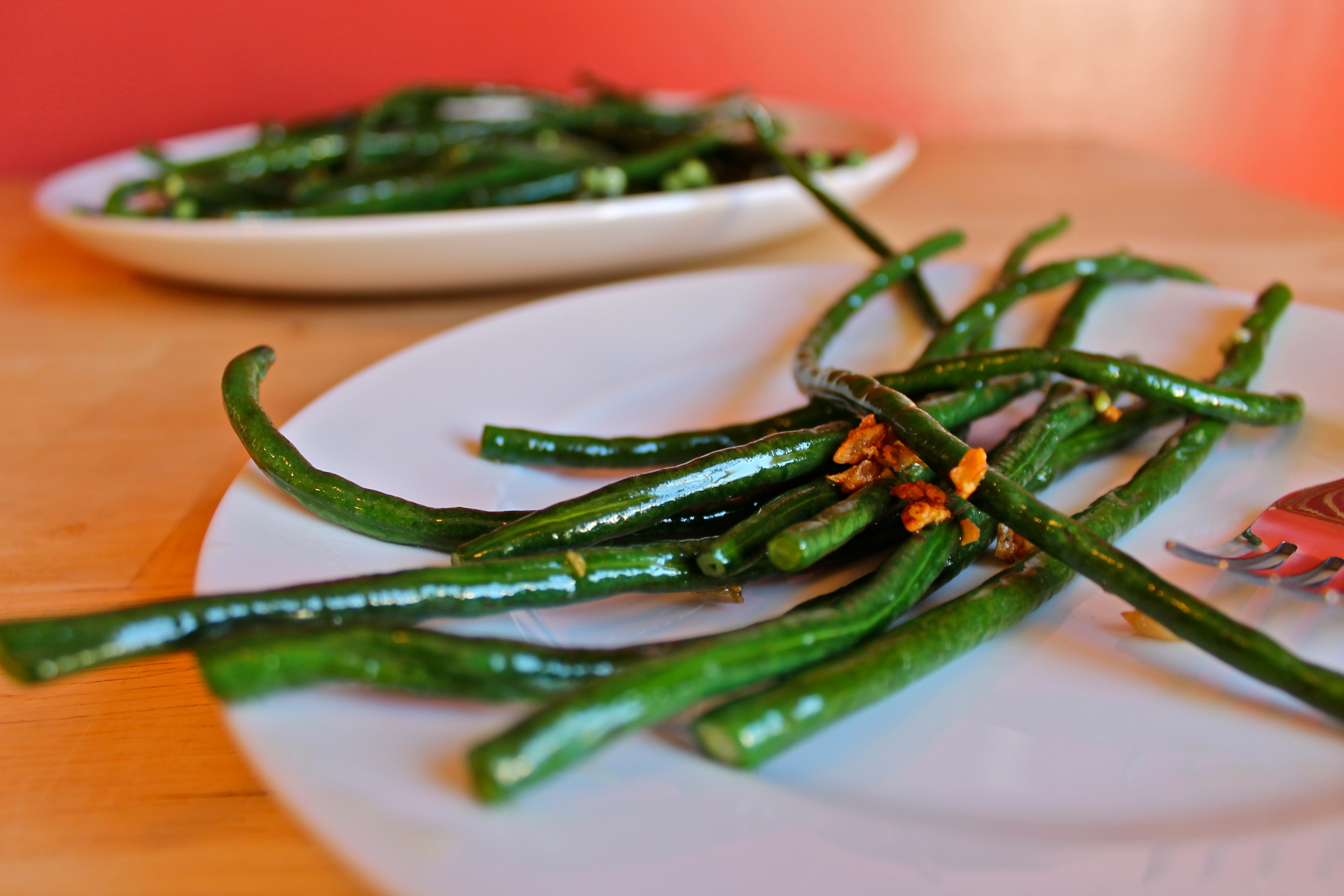
There are certain elements of culinary wisdom that I find difficult to follow.  One in particular is the tenet that garlic should never, ever be allowed to brown, lest it get bitter.  I know, I know.  Bitter bits of garlic flavor-bombing a nice, mellow sauce would be a terrible thing indeed.  But what about tiny little bites of caramelized garlic resting upon a bed of fresh, crisp, slightly spicy green beans?  Sound better?  It should sound better, because it is better.  In fact, it is delicious.

I’ve been wanting to make this dish forever, which is sort of funny for two reasons.  One reason is because I think this dish took me all of ten minutes of actual work to prepare.  The other reason is because I never had a recipe for this dish, I just had a vague idea in my mind of what I wanted it to taste like.  When I found myself at Fubonn last week, standing in front of an enormous pile of yard long beans that had been fortuitously placed almost directly in front of a large bin of garlic (5 bulbs for $1!  Oh, boy!), I took it as a sign to make this idea of mine come to fruition.

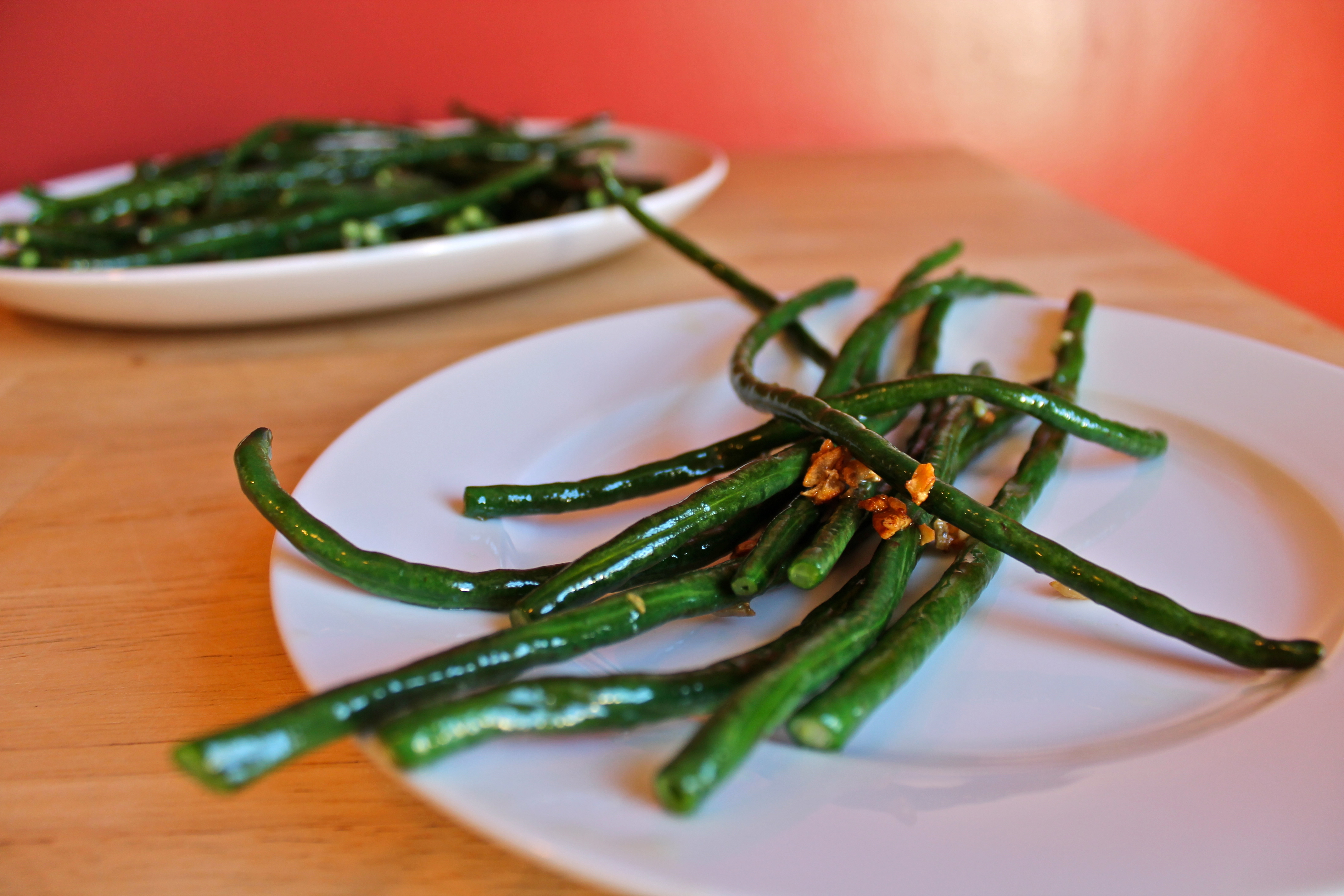
Though I can’t claim that every single food-related idea I’ve ever had has turned out quite so well (like the time I tried to make cream caramels with fresh ginger, only to discover that, oops, fresh ginger combined with heated cream = one giant curdled mass of disgusting), I must admit that I am particularly fond of this combination of ingredients.  Crisp long beans get stir fried for just a couple of minutes with tiny bits of garlic that have been caramelized in a mildly spiced chile oil, making a simple, but perfect, bundle of flavor.  I loved these beans so much, I essentially ate them all by themselves for dinner.  And yet?  I was totally and completely satisfied.  Had there been any leftovers, I would have eaten them for lunch the next day, but there were no leftovers at all, not even a speck of caramelized garlic.  I suppose the only way to ensure that there is going to be a healthy serving of these beans around all the time is simply to make them all the time, which, no surprise, is just fine by me.

Yard Long Beans with Chile Oil and Garlic Bits

¼ cup olive oil

2 whole dried red chiles

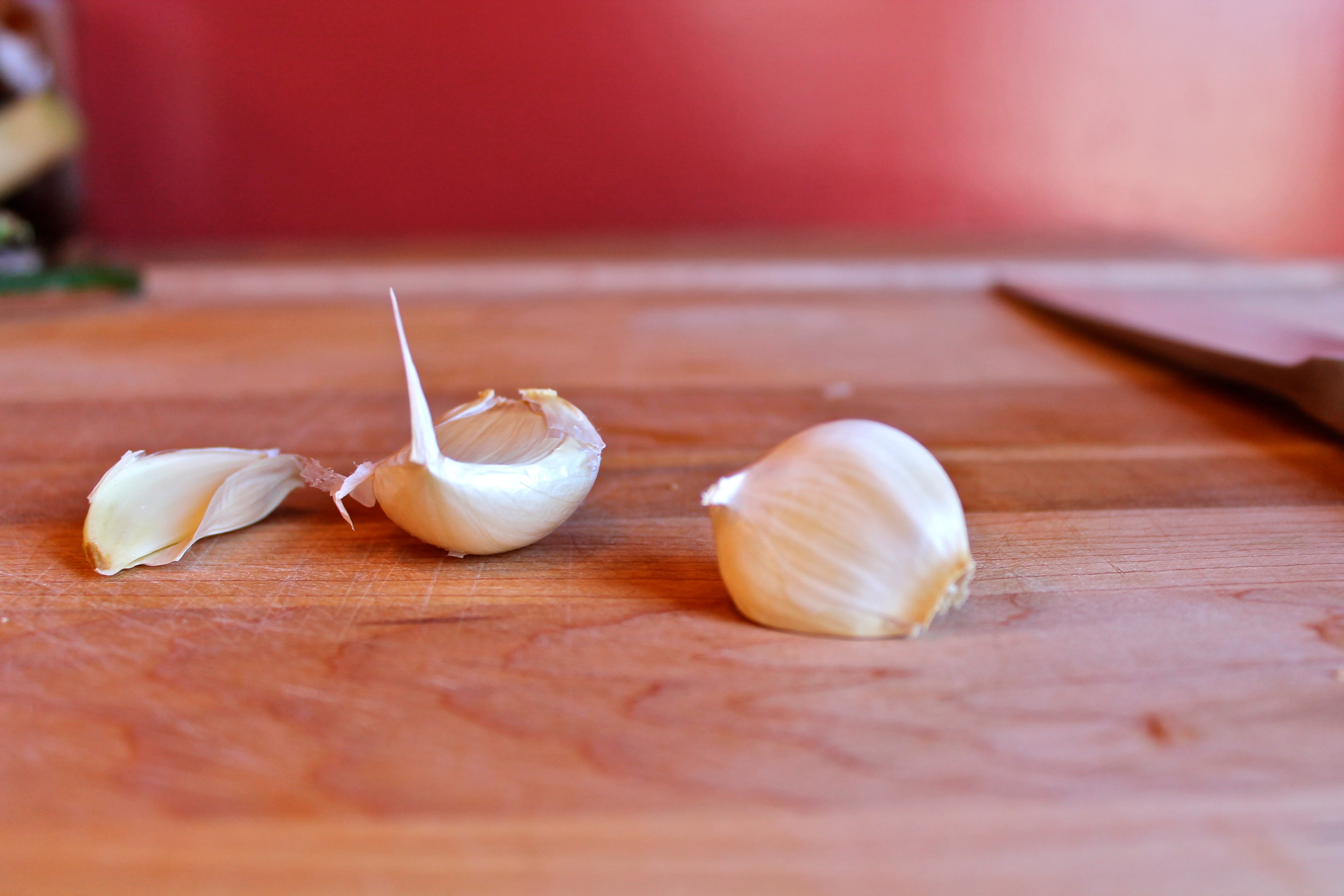
2 tablespoons chopped fresh garlic (about 4 large cloves)

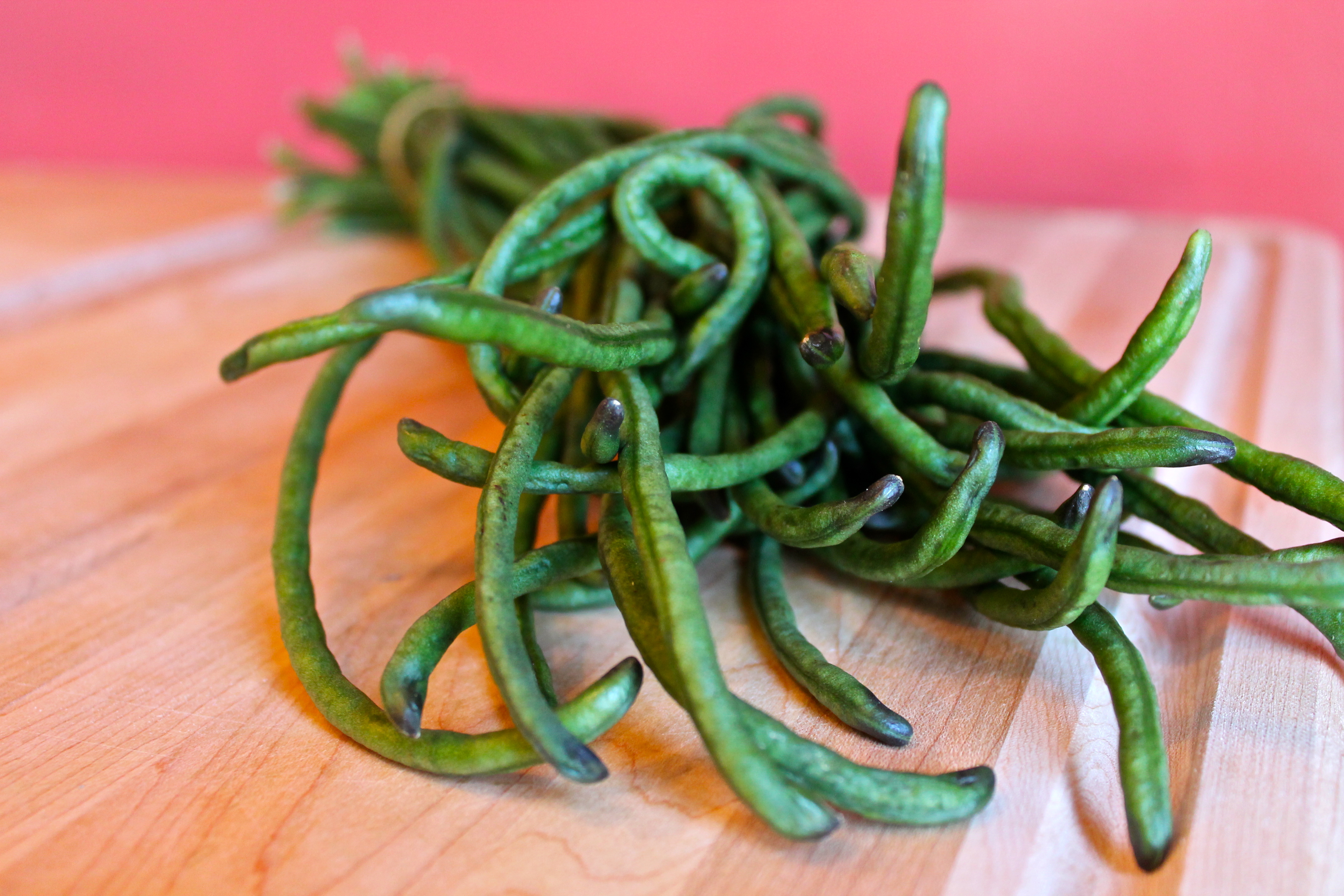
1 pound yard long beans, ends trimmed, then beans cut to half their length

sea salt

In a small pan set over medium heat, combine olive oil and chiles.  Gently heat the oil and chiles until they just begin to show signs of simmering, then remove from heat and set aside.  Allow chiles to steep in oil for 30 minutes to 1 hour, gently smashing the chiles with the back of a spoon every now and then to bruise the chiles and encourage them to release some of their spice.

When you are done steeping the chiles, remove the chiles from the oil and discard.  Heat a very large sauté pan or wok over high heat.  When the pan is hot, add 2 tablespoons of chile oil (reserve the rest for another use). When the oil just begins to shimmer (this should take no more than a few seconds), add the chopped garlic.  Using a wooden spoon or heatproof spatula, vigorously move the garlic around in the oil for about 15 seconds.  The garlic should not yet start to brown.  Add the beans and stir fry, stirring constantly, for 3 to 4 minutes.  The garlic will turn crisp and golden, then brown, and the beans will just begin to lose their stiffness.

Immediately remove the beans from the heat, add a large pinch of sea salt, and toss to combine.  Turn out onto a large platter to serve, being sure to spoon out all of the good browned garlic bits.

Might serve 6.  In our house, it served 3 (I am not at all ashamed to admit that).

No-Knead Apple Bread

23 Dec

It’s possible that there has never been a recipe as wholeheartedly embraced, and universally loved, as Jim Lahey’s recipe for no-knead bread that appeared in the New York Times half a decade ago.  There’s good reason, too.  Being able to make a delicious, totally foolproof artisan bread in the comfort of your own kitchen is a seemingly miraculous achievement.  And just when you thought that Lahey’s recipe, perfect as it is, could never, ever be improved upon, here comes this great tutorial from Savory Sweet Life  (our sites have very similar names, but that occurrence is nothing more than a weird coincidence) about how to make Lahey’s bread an even more foolproof affair.  By removing the least pleasant aspects of Lahey’s recipe (the very messy resting period atop a floured cloth, the even messier transfer of the rested dough into a wicked hot Dutch oven), Alice from SSL somehow managed to improve upon what I’ve always considered to be a nearly flawless recipe.

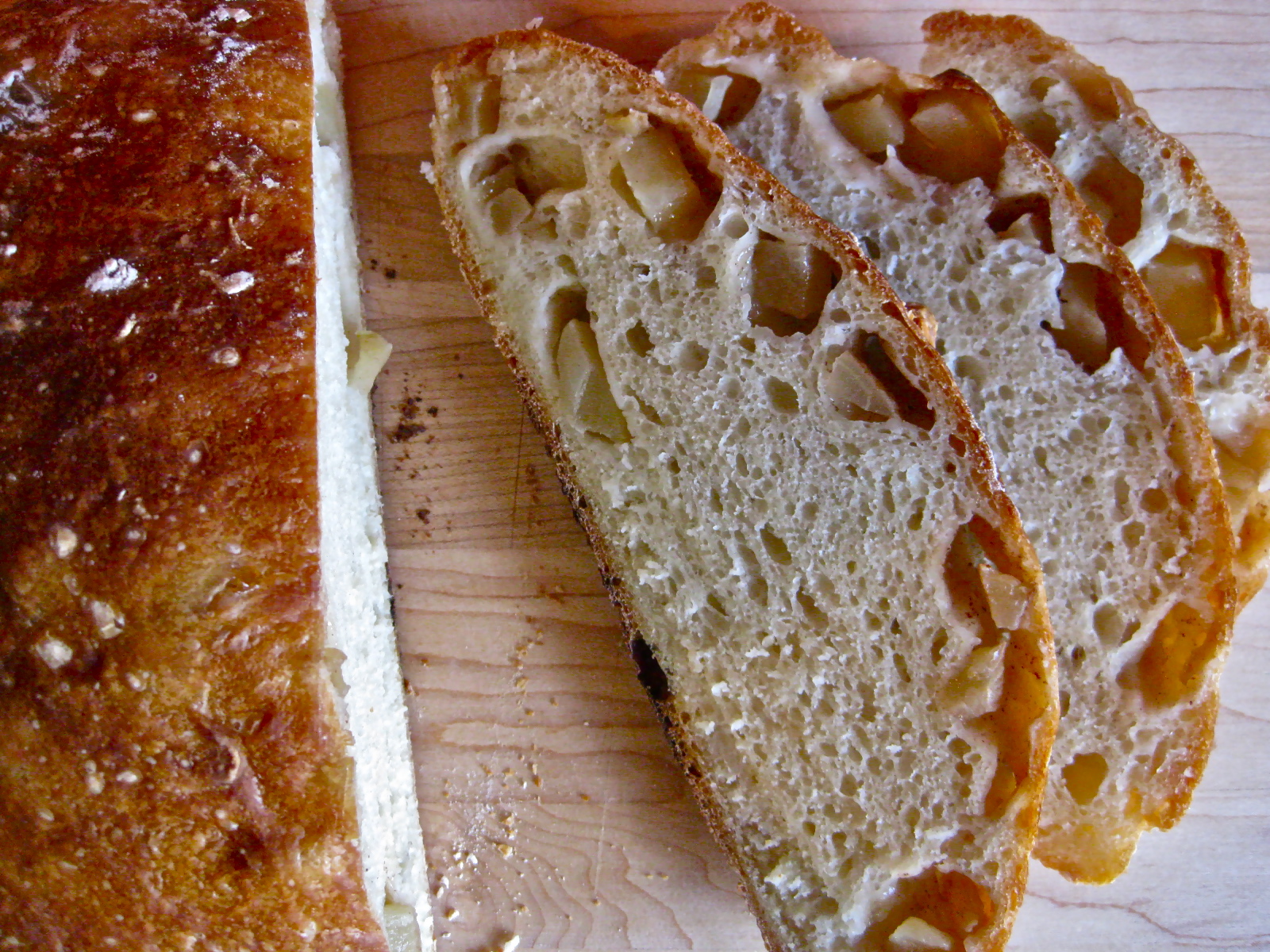
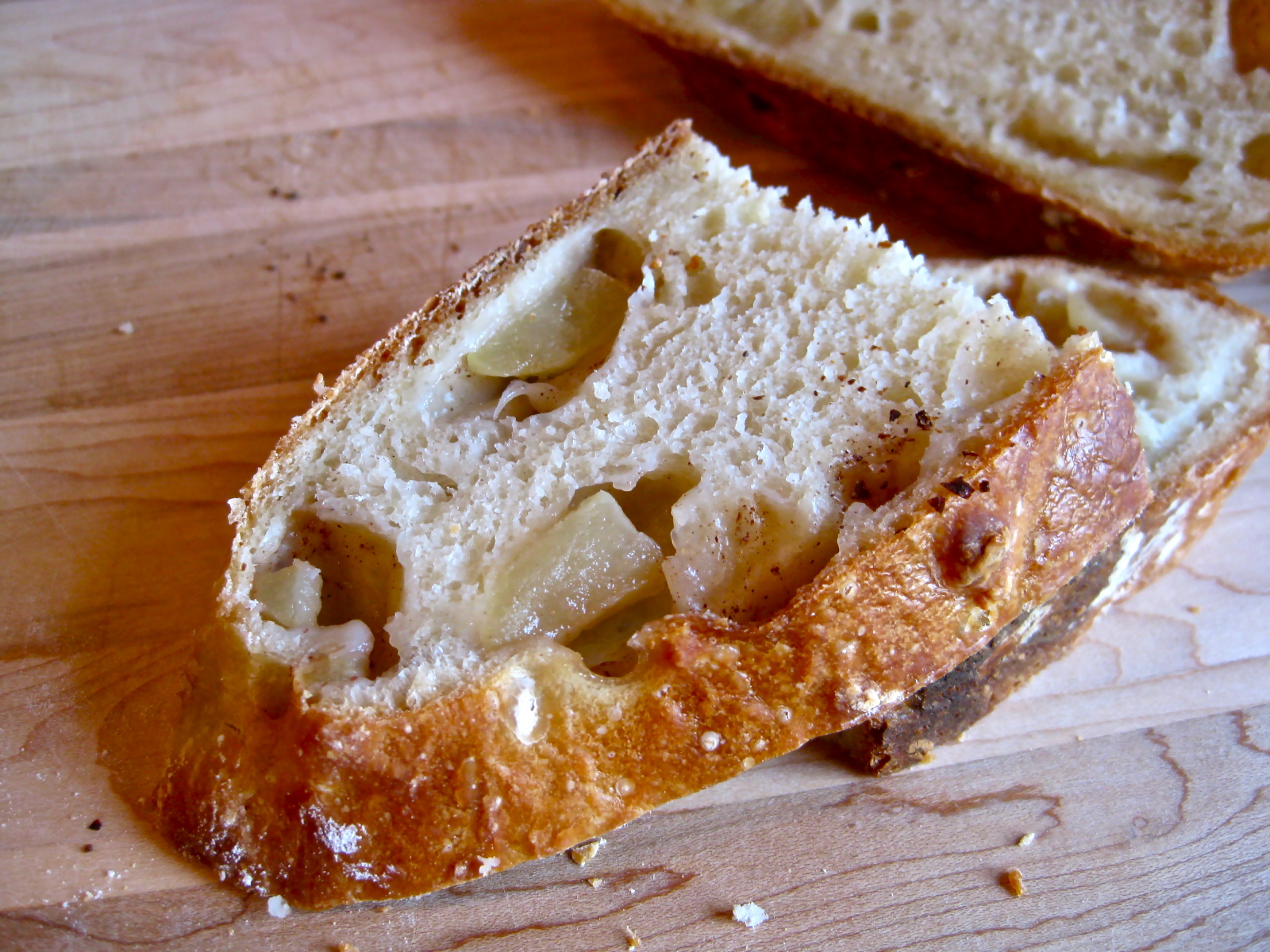
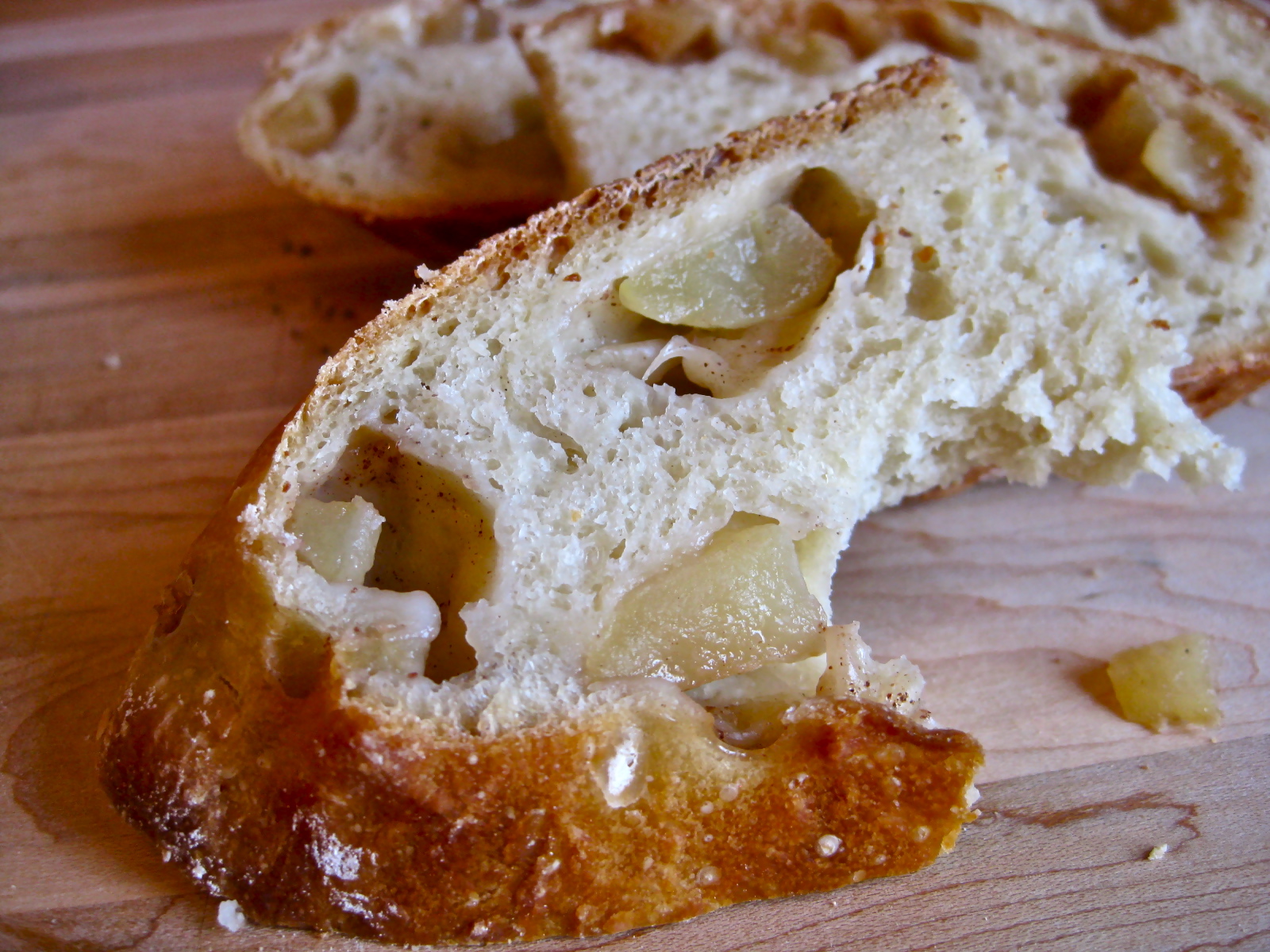
That said, a perfect recipe is still open to fiddling, and in my own kitchen I’ve recently taken to making Lahey’s bread, via Savory Sweet Life, with a bit of my own twist.  On a whim, I one day decided to fold some very lightly spiced apples into the bread dough, thinking that if I was lucky, the apples would settle nicely throughout the bread and bake up perfectly tart and sweet; if I was unlucky, the apples would sink to the bottom of the dough and form a terrible, congealed mass of wet, doughy disaster.

Success prevailed!  And I’ve now baked this bread enough times to declare it my favorite morning bread.  It’s perfect as toast, with a slice of sharp cheese, or smeared with almond butter.  Because Alice’s method of making the bread eliminates both the second rise and the step of heating up a cooking vessel in a preheated oven, you can wake up early, chop up an apple, fold it into the bread, then plop the bread straight into the oven.  An hour later, after you’ve showered, had a cup of coffee, read roughly two dozen books to your child, and managed to prepare yourself for making some breakfast, your bread is done.

Having a small child, our Christmas morning is guaranteed to begin well before the sun rises.  My plan this year is to mix up a batch of no-knead bread dough (which takes all of three minutes, if that) on Christmas Eve, leave it to rest overnight, and then fold in some apples on Christmas morning while I am preparing some coffee.  The bread will go in the oven, my son will pace around the Christmas tree, eventually tackling the presents underneath like a ferocious lion attacking a gazelle, and then, when the mayhem subsides, the bread will be ready.  Just in time for a family breakfast, we’ll have fresh bread.  Crisp on the outside, piping hot in the middle, the apples strewn artfully about the loaf, it’s a great complement to any meal, on any day.

No-Knead Apple Bread

Adapted from the New York Times and Savory Sweet Life

3 cups unbleached all-purpose flour

¼ teaspoon instant, rapid-rise yeast

1 ¼ teaspoons salt

1 5/8 cup of warm water (this essentially equals 1 ½ cups plus 2 tablespoons of water)

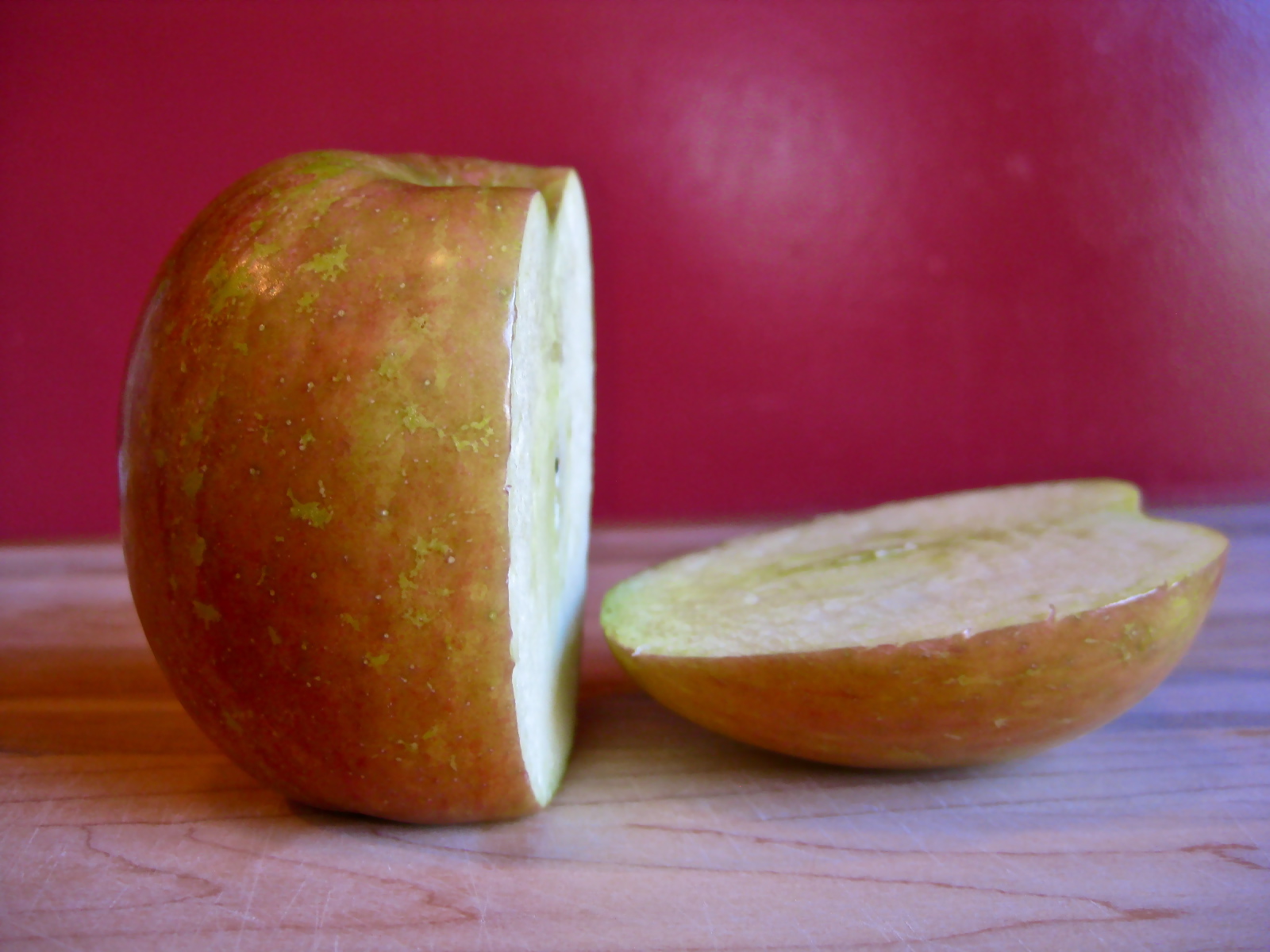
1 apple, cored, peeled and diced into ¼-inch chunks

¼ teaspoon dark brown sugar

1/8 teaspoon ground cinnamon

extra flour, for dusting

Note: You will NOT be preheating the oven while you prepare the bread dough.

In a large bowl, combine the flour, yeast, and salt.  Don’t let the salt come into direct contact with the yeast, as it might kill it.  Add the warm water, and stir everything together.  The dough will appear quite wet and shaggy.  Cover the bowl with plastic wrap, and let rise at room temperature overnight for at least 12 hours, preferably closer to 18 hours.

The next morning, cut a small round of parchment paper and fit it inside the bottom of a large heavy pot or Dutch oven with a tight-fitting lid (I use an enameled cast iron pot, which works perfectly).

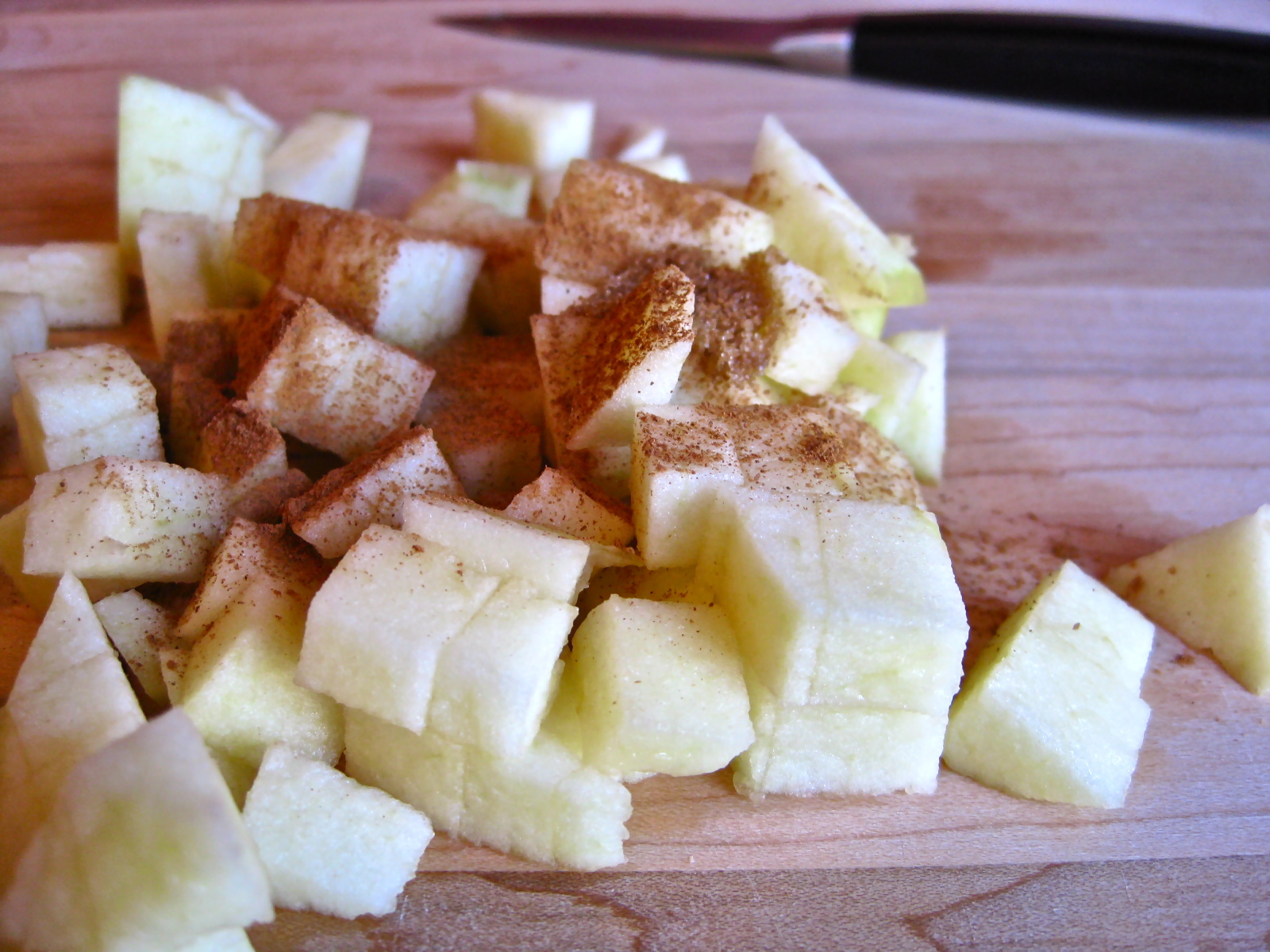
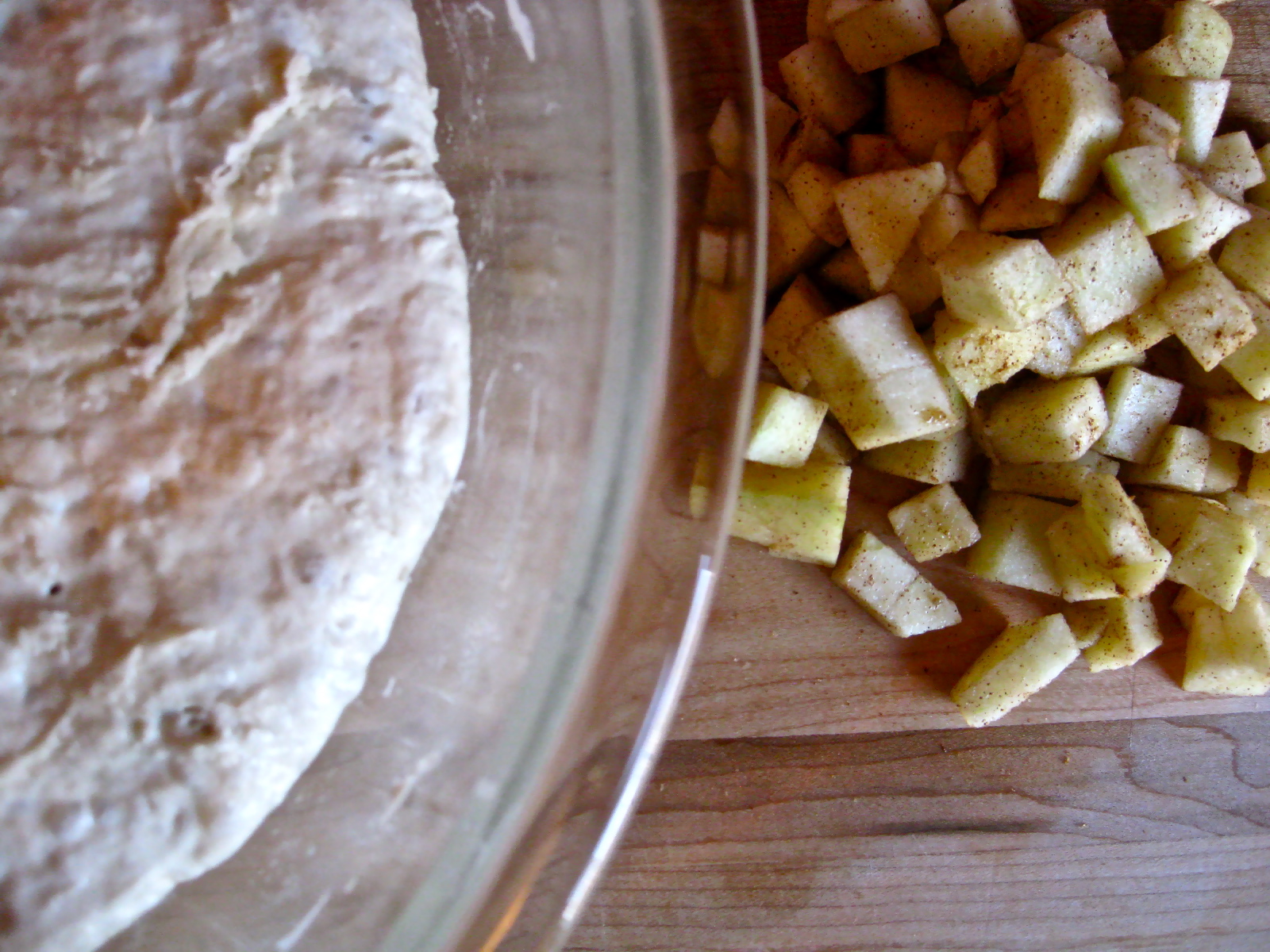
When you have diced up the apple, sprinkle the dark brown sugar and cinnamon on top of it.  Don’t even bother putting them in a bowl to do this—just sprinkle everything on top of the pile of apple chunks and mix it together with your hands.

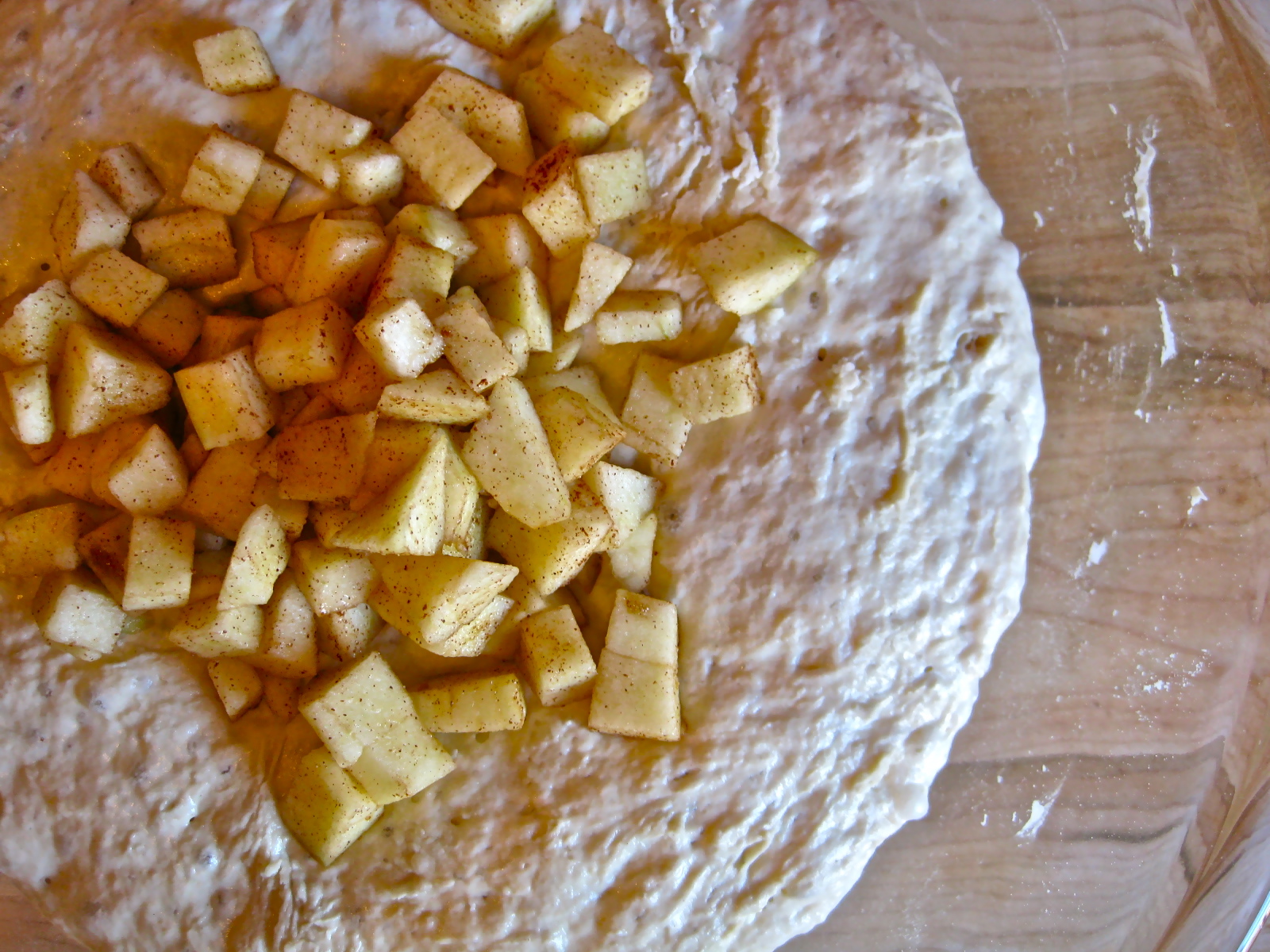
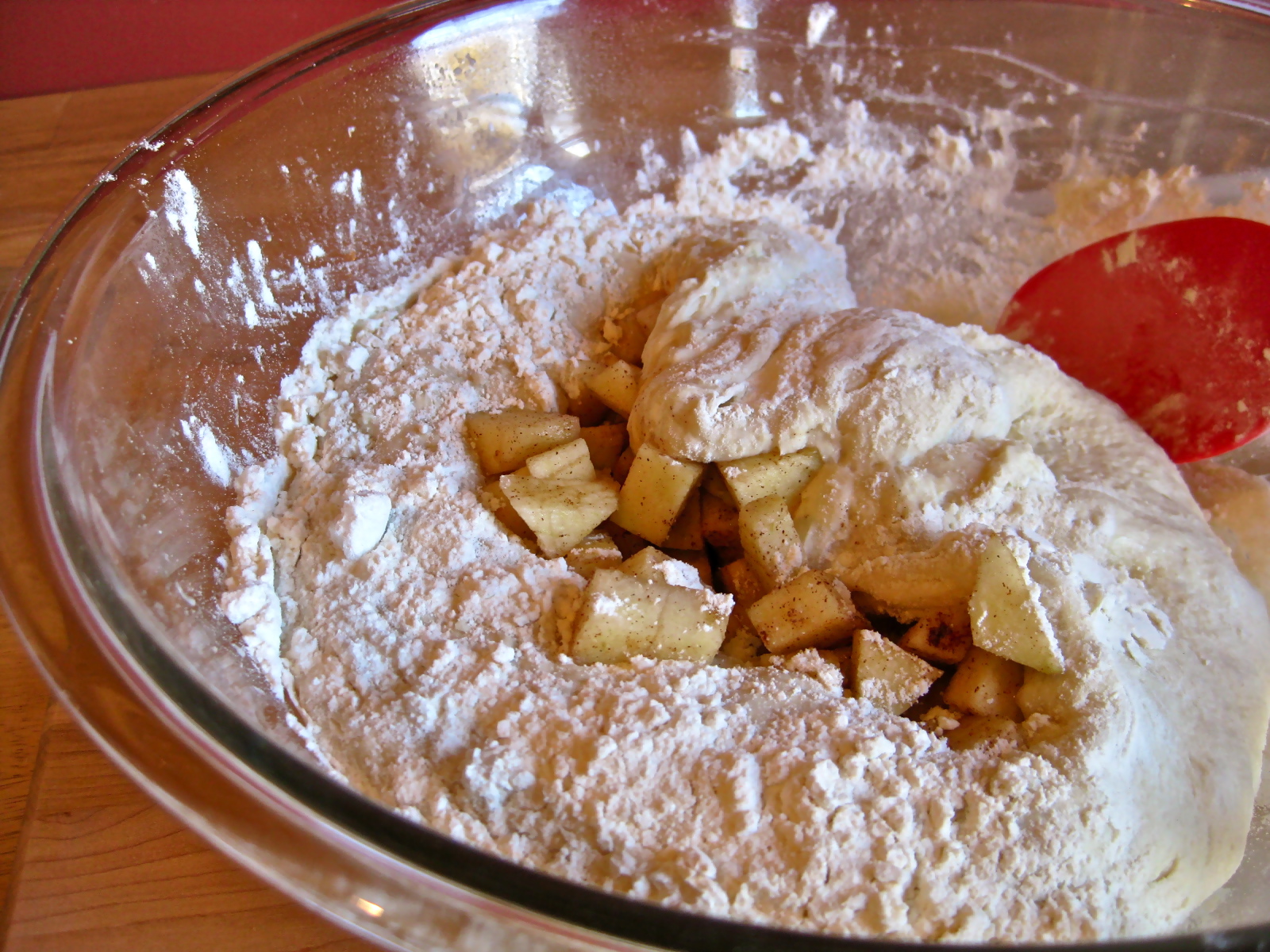
With the dough still in the bowl, place the spiced apple chunks in the middle of the dough.  Sprinkle a good amount of flour around the perimeter of the dough, then, using a flexible spatula or silicone spoon, fold the edges of the dough over the apples in the middle of the dough, turning the bowl to follow your fold.  If the dough absolutely won’t let go of the side of the bowl, sprinkle a bit or flour over the stubborn spots.

Carefully turn the dough out into the heavy pot.  It will not look terribly attractive at this point, and it might have gotten a bit ripped in the process, but that’s fine.

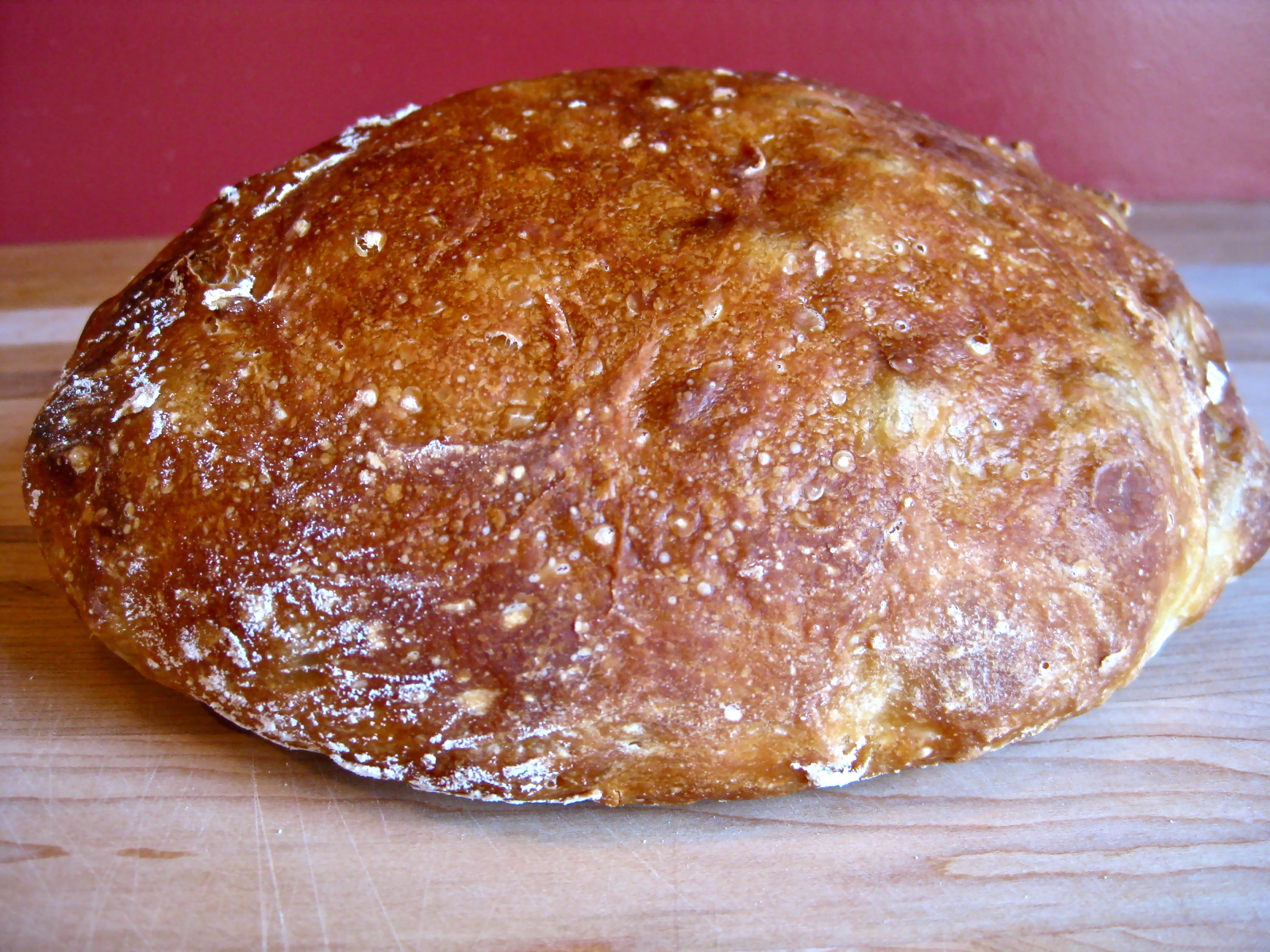
Place the lid on the pot, and place the pot in the cold oven.  Turn the oven on to 450 degrees Fahrenheit, and set a timer for 30 minutes.  After 30 minutes have passed, carefully remove the lid from the scorching hot pot, and continue to bake the bread, uncovered, for an additional 30 minutes.  When the bread is done, it will be deeply browned on the outside, with a visibly crackly crust.

Allow bread to cool for at least 15 minutes before cutting into it. The apples are super hot when the bread first emerges from the oven, and they need time to calm down so you don’t burn yourself when you bite into them.

Makes 1 loaf.