Archive | Cake RSS feed for this section

Cinnamon Apple Cake

9 Jan

IMG_8092

IMG_8055

IMG_8060

IMG_8065

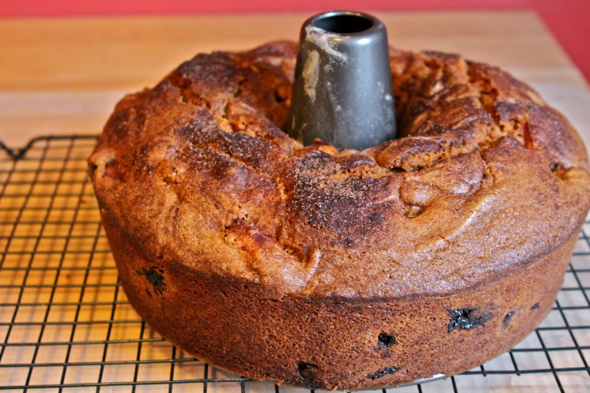
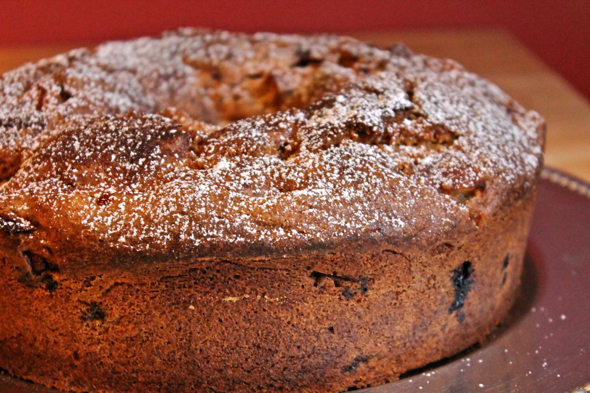
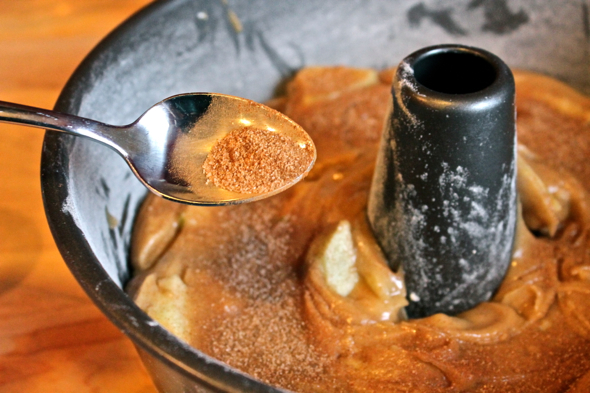
This apple cake is my take on the classic and somewhat legendary New York Times recipe for Teddie’s Apple Cake, circa 1973. The cake was meant to be a proven example of how not all cakes needed to be laborious, time-consuming affairs. This apple cake was about as straightforward as you could make a cake: you chopped, you mixed, you baked, you were done. Though nearly perfect in its original form, I’ve made this cake a number of times, and each time I do, I change a little something here and there. Predictably, I have reduced the sugar, and swapped out a bit of the regular sugar for brown sugar. I’ve added more spices, used an apple with a bit more bite to it, and, inspired by my son’s desire to have more cinnamon in everything at all times, I’ve added a crunchy cinnamon sugar lid that, while subtle, adds a lovely dimension to each bite. I may have made the cake evolve a bit, but, at its core, it’s still the same, simple, endlessly pleasing cake.
IMG_8068

IMG_8069

IMG_8077

Cinnamon Apple Cake

Adapted from Teddie’s Apple Cake, in the New York Times

Butter for greasing pan

3 cups unbleached all-purpose flour, plus more for dusting pan

1 1/2 cups vegetable oil

1 cup granulated sugar

1/3 cup brown sugar

3 eggs

1 teaspoon salt

2 teaspoons cinnamon, divided

½ teaspoon ground ginger

pinch of nutmeg

1 teaspoon baking soda

1 teaspoon pure vanilla extract

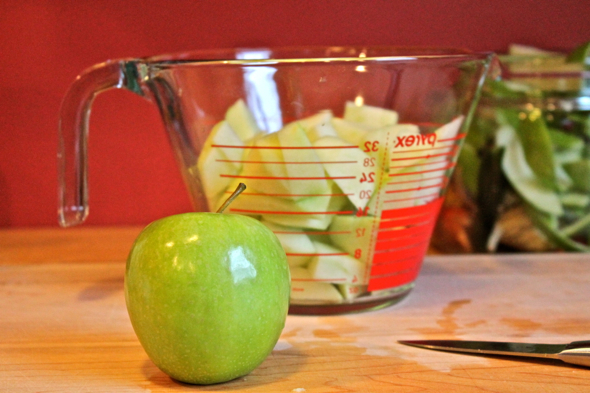
3 cups peeled, cored and thickly sliced tart apples, such as Granny Smith

For sprinkling on top of cake:

½ teaspoon cinnamon

1 teaspoon granulated sugar

Preheat oven to 350 degrees Fahrenheit. Butter and flour a 9-inch tube pan. Beat the oil and sugars together in a mixer fitted with a paddle attachment, or beat in a large bowl using an electric mixer. After about 5 minutes, add the eggs and beat until the mixture is creamy.

In a large bowl, toss the apple chunks with 1 teaspoon of the cinnamon, then set aside.

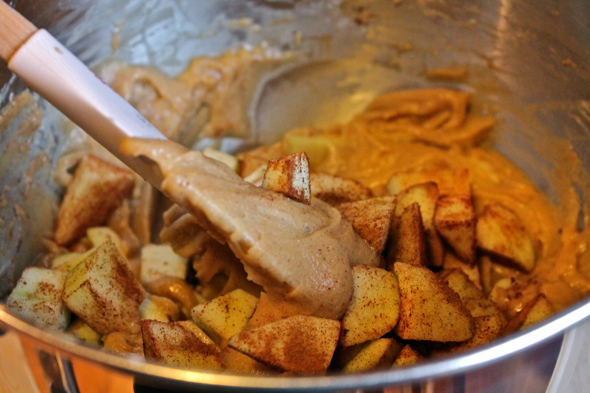
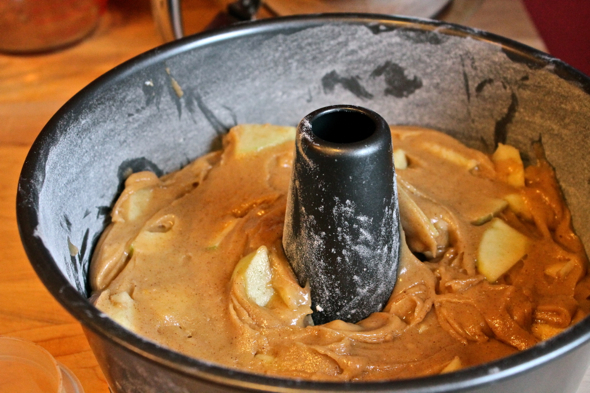
Sift together 3 cups of flour, the salt, the remaining 1 teaspoon of cinnamon, ginger, nutmeg, and baking soda. Stir into the batter. Add the vanilla. Fold in the cinnamon apples.

Transfer the mixture to the prepared tube pan pan. Combine the ½ teaspoon of cinnamon with 1 teaspoon of sugar, and sprinkle evenly over top of cake. Bake for 1 hour and 15 minutes, or until a toothpick inserted in the center comes out clean. Cool in the pan before turning out. Serve cinnamon-sugar-side-up, at room temperature.

Devil’s Food Cake with Cream Cheese Frosting

2 Jan

IMG_7898

IMG_7625

IMG_8035

IMG_7635

IMG_7647

IMG_7652

Nearly every birthday party features cake, and this cake–a red velvet cake with cream cheese frosting– is no exception. There are two points I need to make about this cake. The first point is that the person who chose this cake as his birthday cake happens to be English. I have to point this out only because I found it utterly delightful that an Englishman would choose for himself a cake whose presence is so deeply rooted in the American South. The second point about this cake is that, much as I tried, I did not end up making it a typical red velvet cake. The cake I knew I wanted to make (because it is one of the best cakes I’ve ever had, and it pairs beautifully with cream cheese frosting) is technically a chocolate cake, but it does contain shredded beets, so, really, it might count as being sort of a red velvet cake, right? It’s more of a devil’s food cake, which is sort of similar because…the devil…is red?

IMG_7887

IMG_7893

IMG_7894

Last Year: Hazelnut Orange Pesto, and a confession about how I am consistently 3 issues behind on the New Yorker.

Devil’s Food Cake

Adapted from Cooking School Secrets for Real-World Cooks, by Linda Carucci

2 cups all-purpose flour

1 ½ cups granulated sugar

1 cup natural unsweetened cocoa powder

2 teaspoons baking soda

3/4 teaspoon baking powder

1/2 teaspoon salt

4 large eggs, room temperature

2 cups buttermilk

1 cup (2 sticks) unsalted butter, melted and cooled to room temperature

1 teaspoon pure vanilla extract

2/3 cup packed finely shredded raw beets

Preheat oven to 350 degrees F. Position a rack in the lower middle position.

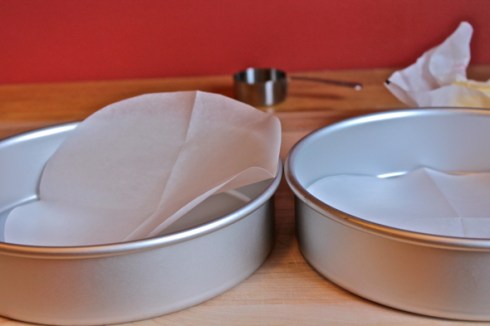
Butter and flour the sides and bottoms of 3 8-inch round cake pans with 2-inch sides. Line the bottoms with parchment paper.

Sift together the flour, sugar, cocoa powder, baking soda, baking powder, and salt into a large bowl. Stir to combine, then make a well in the center and set aside.

In a medium bowl, whisk the eggs to combine. Whisk in the buttermilk. Add to the dry ingredients all at once, and stir to combine completely. Slowly whisk in the butter. Add the vanilla and stir to combine. Stir in the beets. Transfer to the prepared cake pans and spread evenly, using a rubber spatula to pull the batter away from the center of the pans and out along the sides.

Bake until the center of each cake springs back when lightly touched and the sides of each cake just begin to pull away from the pan, 30 to 35 minutes.

Allow cakes to cool on a wire rack, still in their pans, for 10 minutes. Invert each cake onto another rack and remove pans. Carefully peel off the parchment paper and cool the cakes completely, upside down. Make sure your cake layers are completely and totally cooled before frosting, lest your frosted cake end up a dripping, melted mess.

Cream Cheese Frosting

From The America’s Test Kitchen Family Baking Book

16 ounces cream cheese, softened at room temperature

10 tablespoons (1 ¼ sticks) unsalted butter, cut into chunks and softened at room temperature

2 tablespoons sour cream

1 ½ teaspoons pure vanilla extract

¼ teaspoon salt

2 cups confectioner’s sugar

In a large bowl, or in the bowl of a stand mixer fitted with the paddle attachment, cream together the cream cheese, butter, sour cream, vanilla, and salt by beating on medium-high speed until smooth, about 2 to 4 minutes.

Reduce the mixer speed to medium-low, slowing add the confectioner’s sugar, and beat until smooth, 4 to 6 minutes. Increase the mixer speed to medium-high and beat until the frosting is light and fluffy, 4 to 6 minutes.

Orange Butter Cake with Chocolate Ganache

26 Dec

IMG_7810

IMG_7731

IMG_7738

IMG_7742

IMG_7746

IMG_7754

IMG_7783

IMG_7790

Featuring my favorite butter cake as the building block, this is a celebratory stack of orange-scented cake and deeply creamy, chocolaty ganache. Though I was, sadly, not able to get a photo of the final iteration of the cake (all of my daylight was gone, and my kitchen’s lighting is not at all suitable for taking pictures at night), just try and picture this cake with a towering top hat of snowy whipped cream, and you’ll get an idea of its official presentation. A real showstopper.

IMG_7813

Last Year: Smoked Salmon Canapés on Potato Crisps

Orange Butter Cake with Chocolate Ganache

1 cup unsalted butter, softened

1 ½ cups sugar

4 eggs

2 teaspoons pure vanilla extract

¼ cup finely grated orange zest

¾ teaspoon salt

1 tablespoon baking powder

3 cups cake flour

1 cup half-and-half or whole milk

Preheat oven to 350 degrees Fahrenheit. Grease two 9-inch cake pans and line the bottoms with rounds of parchment paper.

Place the butter and sugar in a large bowl, or the bowl of a stand mixer fitted with the paddle attachment. Beat together on high speed, scraping down the sides of the bowl often, until the butter and sugar are light and fluffy, about 5 minutes. Turn the mixer speed down to low and add the eggs one at a time, scraping down the sides of the bowl and mixing well after each addition. Add the vanilla and orange zest and mix well, again scraping down the sides of the bowl.

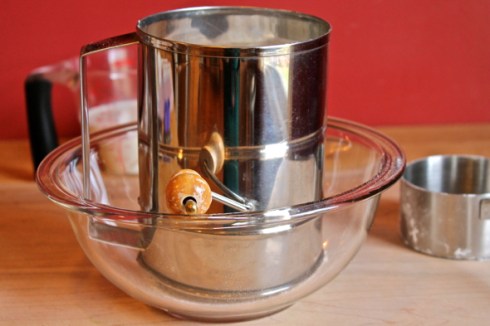
Sift together the salt, baking powder, and cake flour.

Add about one half of the dry ingredients to the butter mixture, then beat on low speed until well blended. Add about one half of the milk and beat well. Add the rest of the flour mixture and beat until mixed well. Add the rest of the milk and continue to beat well until the mixture is completely combined.

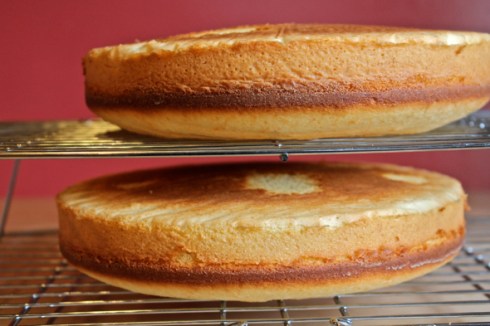
Divide the batter between the prepared pans and bake until the cakes spring back when touched lightly in the center, and a cake tested inserted in the middle of the cakes emerges with just a few moist crumbs attached, 25 to 35 minutes. Allow cakes to cool in pans for 10 minutes before inverting onto cooling racks to continue to cool completely.

Chocolate Ganache

8 ounces bittersweet chocolate, roughly chopped

½ cup heavy whipping cream

In a double boiler or large, heat-safe bowl set over a pan of simmering water, slowly melt the chocolate, stirring frequently, until it is just melted. Remove double boiler from heat, then whisk in the heavy cream until the mixture is smooth, thick, and shiny.

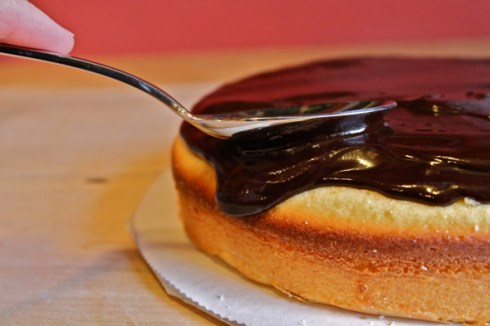
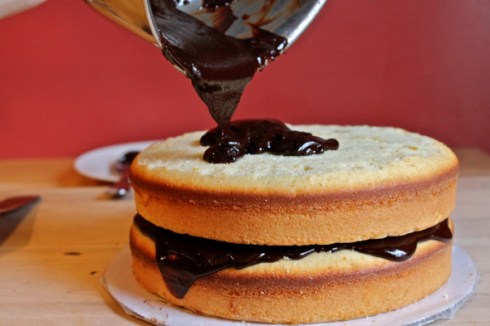
When cakes have cooled completely, set one cake on a serving plate. Slowly pour half of the ganache over the cake, concentrating the ganache in the middle of the cake. The ganache will pool out towards the edges of the cake on its own, but, if you want, you can help coax it to the edges by gently spreading it with a spoon or an offset spatula until it just reaches the tipping point. Place the second layer of cake over the ganache, very gently pushing it in place, just to secure it a bit. Pour the rest of the ganache over the top of the cake, again gently spreading the ganache towards the edges.

You can serve the cake as is, or you can top the whole affair with a mountain of freshly whipped cream.