Archive | Grilling RSS feed for this section

Ponzu-Marinated Flank Steak

23 Jan

There is a restaurant down the street from me that just might end up unseating the other restaurant down the street from me as the World’s Most Dangerous Restaurant to Have Down the Street from You (which is not to be confused with our other nemesis, The World’s Most Dangerous Food Cart to Have Down the Street from You).  My will power, it is weak.  When faced with the sweet memory of duck breast and lemongrass salad, I grow loose in the knees and wallet, and all I want to do is run down the street and place my order immediately.  I hear the name of a certain restaurant, and I am like a seal that has been trained to bark on command.  Spicy!  Thai!  Street!  Food!  Now!  Completely puzzling, however, is the added desire to eat a particular meat dish from the other, newer dangerous place, a meat dish that, in any other place, I am sure I would loathe.

Picture this: super thin slices of steak (I know!  I am talking about steak! Who am I?) are marinated in a savory, bright, citrusy mix of kelp and lime juice.  Then the meat gets skewered and stuck directly into a roaring fire, searing in every possible place and becoming incredibly, impossibly juicy.  The skewer, still sizzling, is brought directly to your table, where you try with all your might to maintain a sense of dignity and manners while you ravenously devour the meltingly delicious meat.  No one is more surprised than me that I enjoyed this dish as much as I did.  For a split second, I was transformed into a dedicated carnivore, a person who actually devoured meat.  It was utterly bizarre.

A few weeks ago, the holidays in full swing, I was overcome with the idea I had to try and recreate the dish at home, a task made difficult by the fact that a) I didn’t really know what exactly made up the marinade enveloping the meat in question, and b) it is winter, and therefore my access to an open fire over which to cook things is fairly well nonexistent.  The first problem was easily remedied, as a small amount of hunting around led me almost immediately to an old specials menu from the Dangerous Restaurant, and a bit more poking around led me to this great New York Times recipe for ponzu marinade, which happened to be the mystery flavor.  Ponzu, as it turns out, is sort of like a Japanese vinaigrette, and can be used in everything from salads to marinades.  One of the main flavor profiles in ponzu is kombu (dried kelp), which provides a hefty dose of natural glutamates to give the ponzu a fat (but not fatty), umami taste that rounds out your taste buds.  It also helps break down the fibers in meat, tenderizing as it simultaneously flavors.
The other problem, I am afraid, could not really be solved, as winter in the PNW means cold and wet, and cold and wet are no friends of the grill.  In a pinch, I fired up our stovetop grill pan as hot as it could possibly get, and hoped that it would do the trick.
To be quite honest, it was pretty close.  The only thing missing was the melting, seared texture that can only be achieved by sticking a piece of meat into a wall of fire, but the flavor was dead on.  Bright, but also slightly mysterious, there is a lot going on in each bite.  I am waiting for summer to arrive so I can cook this dish again as I really want to (massive pile of fire, I await you), but, in the meantime, this version is certainly no slouch.

Ponzu Marinated Flank Steak

Sauce from Mark Bittman in The New York Times

2/3 cup fresh lemon juice, more to taste

1/3 cup fresh lime juice, more to taste

1/4 cup rice vinegar

1 cup good-quality soy sauce

1/4 cup mirin

1 3-inch piece kombu (dried kelp)

1/2 cup (about 1/4 ounce) dried bonito flakes (or, in a pinch, 1 tablespoon Vietnamese fish sauce)

Pinch cayenne

1 pound flank steak

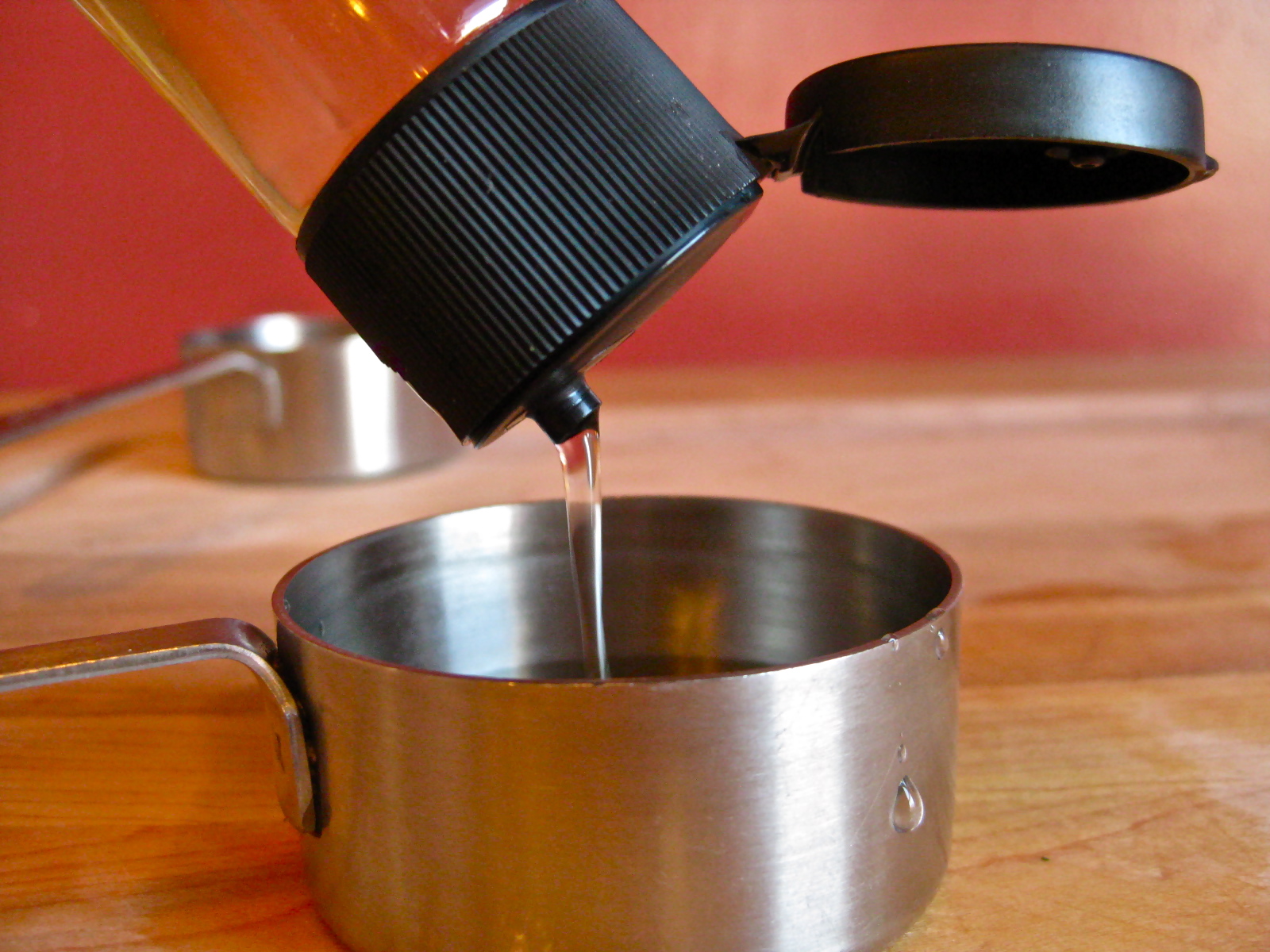
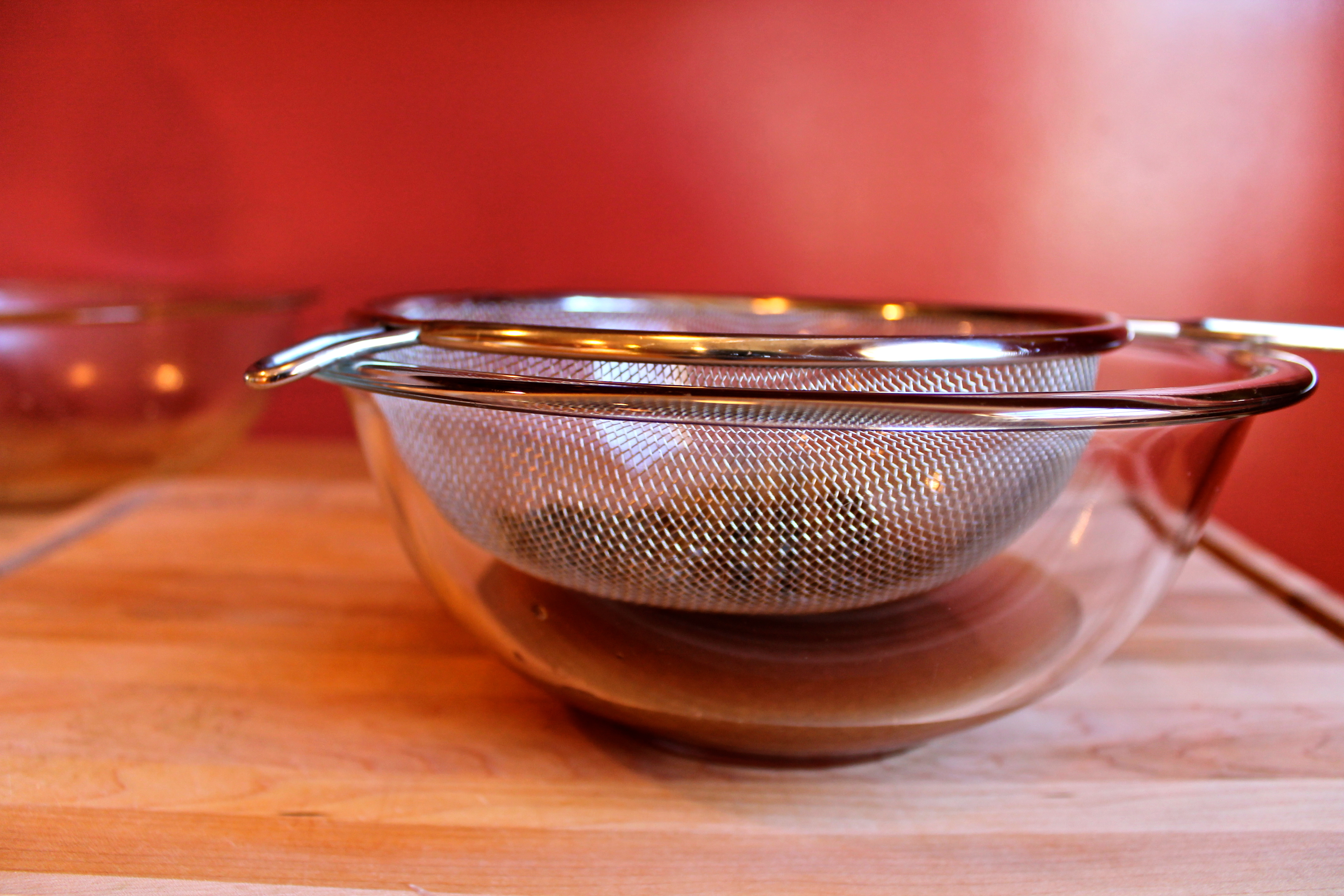
In a bowl, combine all ingredients except flank steak. Let sit for at least 2 hours or overnight. Strain.

Slice the flank steak against the grain into thin strips.  Add the strips of steak to the bowl of ponzu, and marinate in the refrigerator, covered, for at least 1 hour.  When ready to cook, drain the meat and set aside.

Heat an outdoor grill as high as it will go, or heat a stovetop grill pan on high.  When the grill is incredibly hot, add the strips of steak, cooking as many as you can without crowding the meat.  The meat will cook very fast, only needing a minute or so on each side.  If your grill is not as hot as can possibly be, it might take two minutes per side.  What you are looking for are crisp edges and a remaining quality of juiciness.  It might take a bit of trial and error (depending on how thick your slices are and how hot your grill is), so start by cooking two or three pieces at a time and seeing how long they take.  The meat is thin, so the cooking time should not be more than a couple of minutes per side.

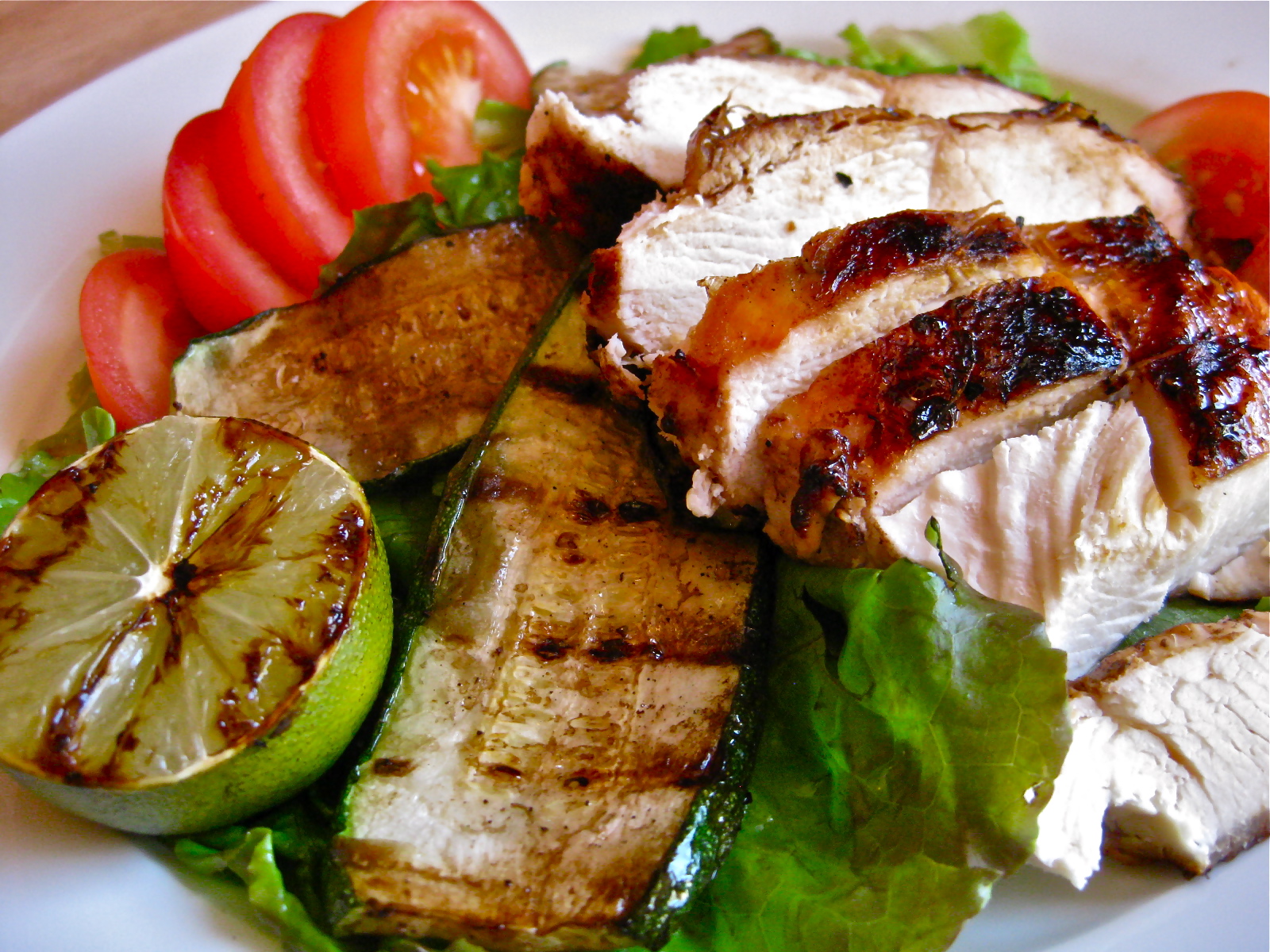
Balsamic-Glazed Chicken and Zucchini with Grilled Limes

30 Sep

It may seem a little late for a recipe centered around grilling, but summer came so late around here that we’ve been able to keep our grill working well into September.  It’s a good thing we took advantage of that long stretch of dry weather, too, for right now it is raining and I am wearing a scarf.  Over my sweater.  And crying.

But let’s not talk about that.  Let’s instead talk about something that I think everybody needs in their arsenal of quick meals: a fast weeknight dish.  It’s not the most exciting of topics, I know, but maybe pretend you are making this quick meal before you take off to meet some friends for drinks and then go to your favorite bar to see the Hold Steady.  Only that bar has closed down now, and the Hold Steady no longer plays in little bars anyhow, so you might have to see them play some big club with far too many beer-sodden patrons who think they should jump up and down in front of you like the (now departed) keyboardist in the Hold Steady used to do, only when the keyboardist did it it was charming, and when this dude in front of you does it it just blocks your view and makes you a little tired of being violently leaped on every two seconds.

I seem to have veered off course a bit.

So, chicken!  I know that boneless, skinless chicken breasts have a bad reputation, and I completely understand why.  It’s very easy to make something as simple as a chicken breast taste terrible, what with that portion of the chicken being so utterly plain, devoid of fat, and easy to overcook.  The other side of that equation is, it is also fairly easy to make a chicken breast shine, what with its versatility and unrivalled ability to absorb flavor.  With this simple balsamic glaze that requires very little action other than a periodic swipe across the chicken, you can produce a quick chicken dish that is flavorful, fast, and totally satisfying.

The greatest asset of the entire dish, however, lies not in the chicken, but in the grilled limes.

Just a couple of minutes on a hot grill will coax untold amounts of juice out of each lime, and with just a bit of the bright, caramelized fruit squeezed over each serving of chicken, you instantly add a layer of flavor to each bite that will make you wonder how you ever managed to produce such a fantastic meal in such a short amount of time.

Balsamic-Glazed Chicken and Zucchini with Grilled Limes

Hey, lady, why on earth are you giving us a recipe for grilled chicken when it’s no longer grilling season?  Because if you have a grill pan sitting in your kitchen, that grill pan will work just as well as an outside grill.  Good grill pans are available for as little as $19 on Amazon, and I’ve yet to enter a discount kitchen store that hasn’t had at least half a dozen grill pans sitting around looking all well-priced and ready to be taken home.

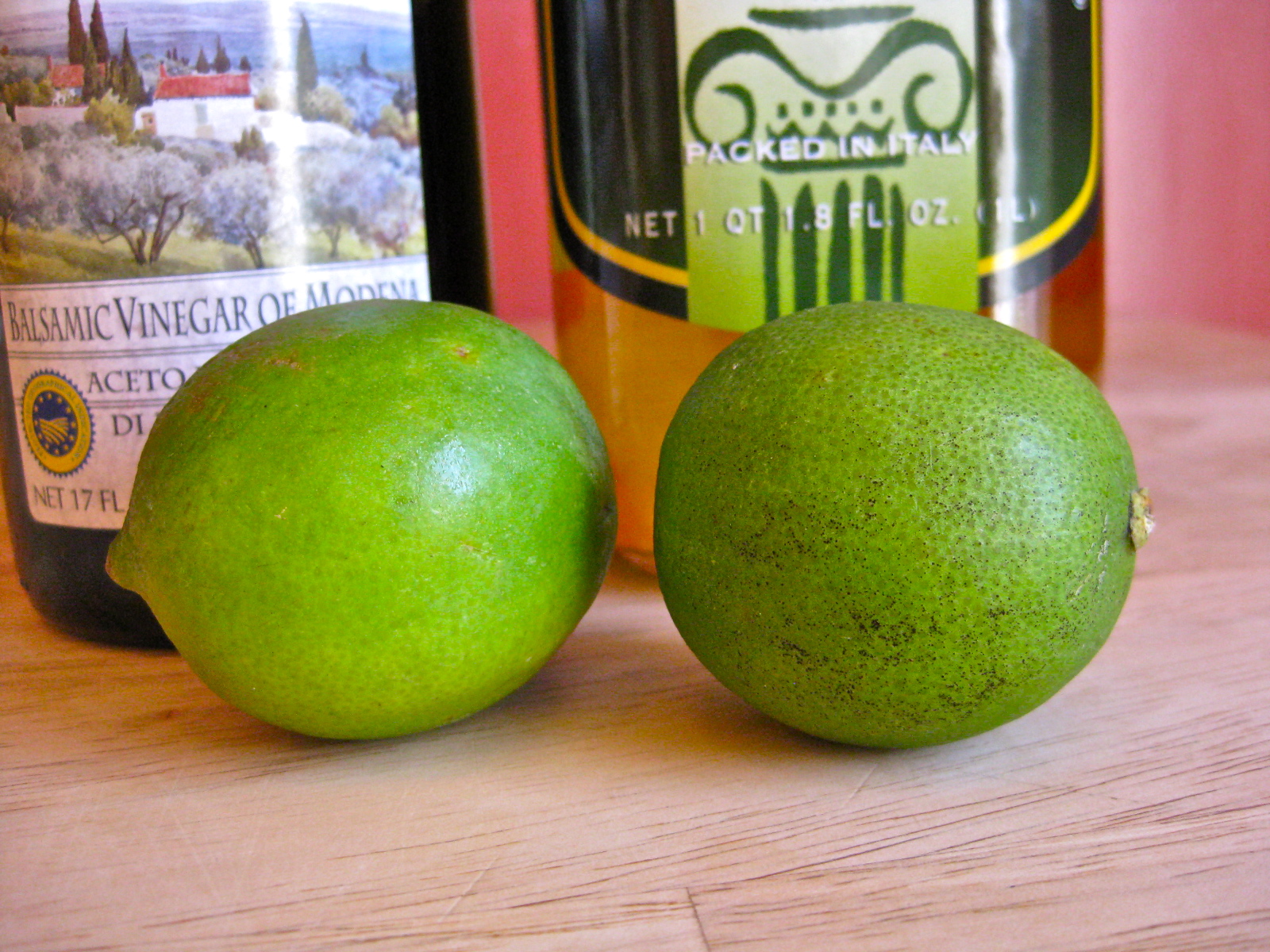
1/3 cup balsamic vinegar

3 tablespoons olive oil

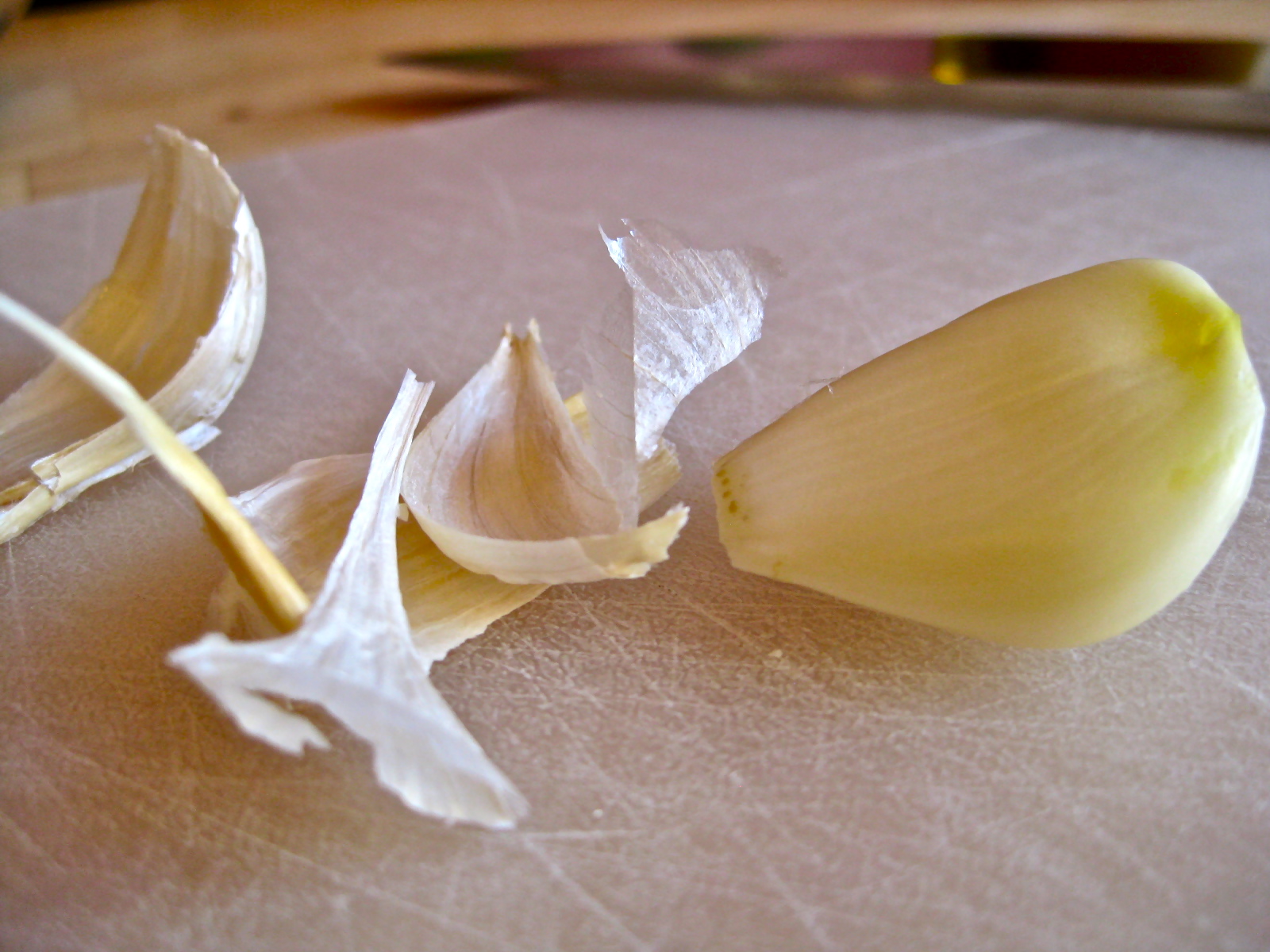
1 large garlic clove, crushed and finely chopped

salt and pepper

4 boneless, skinless, chicken breast halves

2 medium zucchini, sliced lengthwise into ¼-inch slices

2 limes, sliced in half

In a medium bowl, whisk together balsamic vinegar, olive oil, chopped garlic, and salt and pepper to taste.  Add zucchini slices to glaze, toss to combine, and set aside.  The zucchini slices will only have to sit in the glaze for a minute or two.

Heat a grill or grill pan to medium high heat.  Place chicken breasts on grill.  Remove zucchini slices to a plate, and set aside.  Using a heatproof brush, brush a generous amount of the balsamic blaze on the exposed side of each chicken breast.  Cook the first side of the chicken breast for 4-5 minutes (until chicken has dark, visible grill marks), then flip chicken and brush glaze on the cooked side of the chicken.  After 4-5 more minutes, brush chicken with glaze again, flip again, then brush once more.  Cook chicken until done, occasionally brushing with more glaze. Chicken will be done when it reaches an internal temperature of about 160 degrees Fahrenheit.  When poked with a knife, the emitting juices should be clear, not tinged pink or yellow.

While the chicken finishes cooking, add the limes to the grill, cut side down.  Add the zucchini slices to the grill, and cook for 1-2 minutes on each side, until zucchini is soft but not mushy, and has visible grill marks on each side.

If you are using a grill pan instead of an outdoor grill and do not have enough room to cook chicken, zucchini, and limes all at once, cook the chicken first (for a total of about 7-10 minutes on each side, depending on how large the chicken breasts are), set aide, and then cook zucchini and limes.

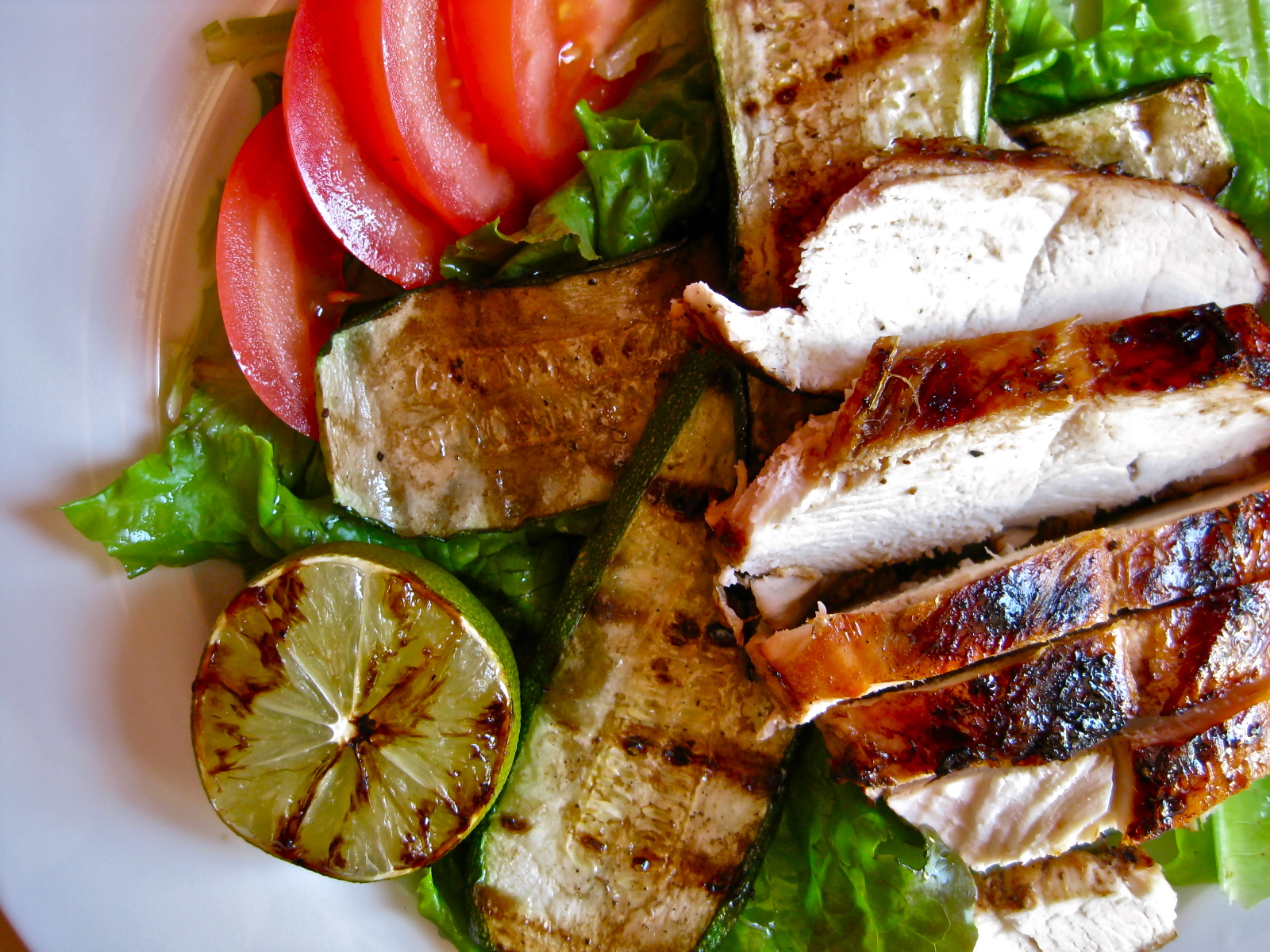
Serve each chicken breast sliced, accompanied by zucchini and half of a grilled lime.  I like to serve the chicken and zucchini on a bed of greens, often with slices of fresh tomato.  When ready to eat, squeeze the juice of the grilled lime over the chicken and vegetables.

Serves 4-6 people.

Seared Tuna Steaks with Salsa Verde

5 Sep

Sometimes it takes me a while to come around to certain foods.  For years I could not understand the logic behind combining sweet and savory foods, and then one day I ate a salad packed with huge chunks of watermelon tossed with deliciously salty squares of feta cheese and, oh, my lord, life had never been better.

Meats, however, are still a tough sell for me.  I’ve mentioned this before, but I just can’t get behind most meats, and, if I do decide to go near them, I am frequently struck with the terrible notion to instruct whoever is serving me said meat to just burn it, char it—do whatever is needed to make it seem less meaty and tendon-filled.  But then I’ll virtually inhale a plate of sushi and not flinch, which, I know, does not make any sense at all.

But to me, it sort of does.  Whereas rare meat seems, to me, utterly and unmistakably meaty, fish is so much less fishy when eaten either rare or simply raw.  Thus, I have arrived at the logic that, hey, if you just barely cook your fish at all, it’s somehow less meaty and weird.  At least, that’s where I arrive when I approach the cooking of a piece of fish, and, I admit, it’s an end point I’ve reached only after years of eating dry, hardened fish that I either purposely cooked until inedible or instructed others to do for me.  Over a decade ago, in a terrible fit of fear and squeamishness, I actually begged a friend of mine—who is a professional chef, I might add—to please, please char the daylights out of a tuna steak for me, as I was not feeling up to the task of tackling a meat that was left pink and soft.  To her credit, she complied with my request, and, boy, did I ruin that meal for myself.

But years have passed, lessons have been learned, and now, aware of the myriad of ways I have managed to ruin countless meals for both myself and others, I have come around to the very wise notion that, when it comes to cooking fish, less is more.  Tuna steaks, in particular, can go from transcendent to terrible in just a matter of a minute or two, but when done right, the outside perfectly seared and the inside lustrous and bright, it’s tough to understand why anyone would ever want to subject their meal—and themselves—to a fate made deliberately less delicious.  Having become fully aware of this, I have now vowed to conquer a medium-rare steak. (Confession: I am not actually going to do that.)

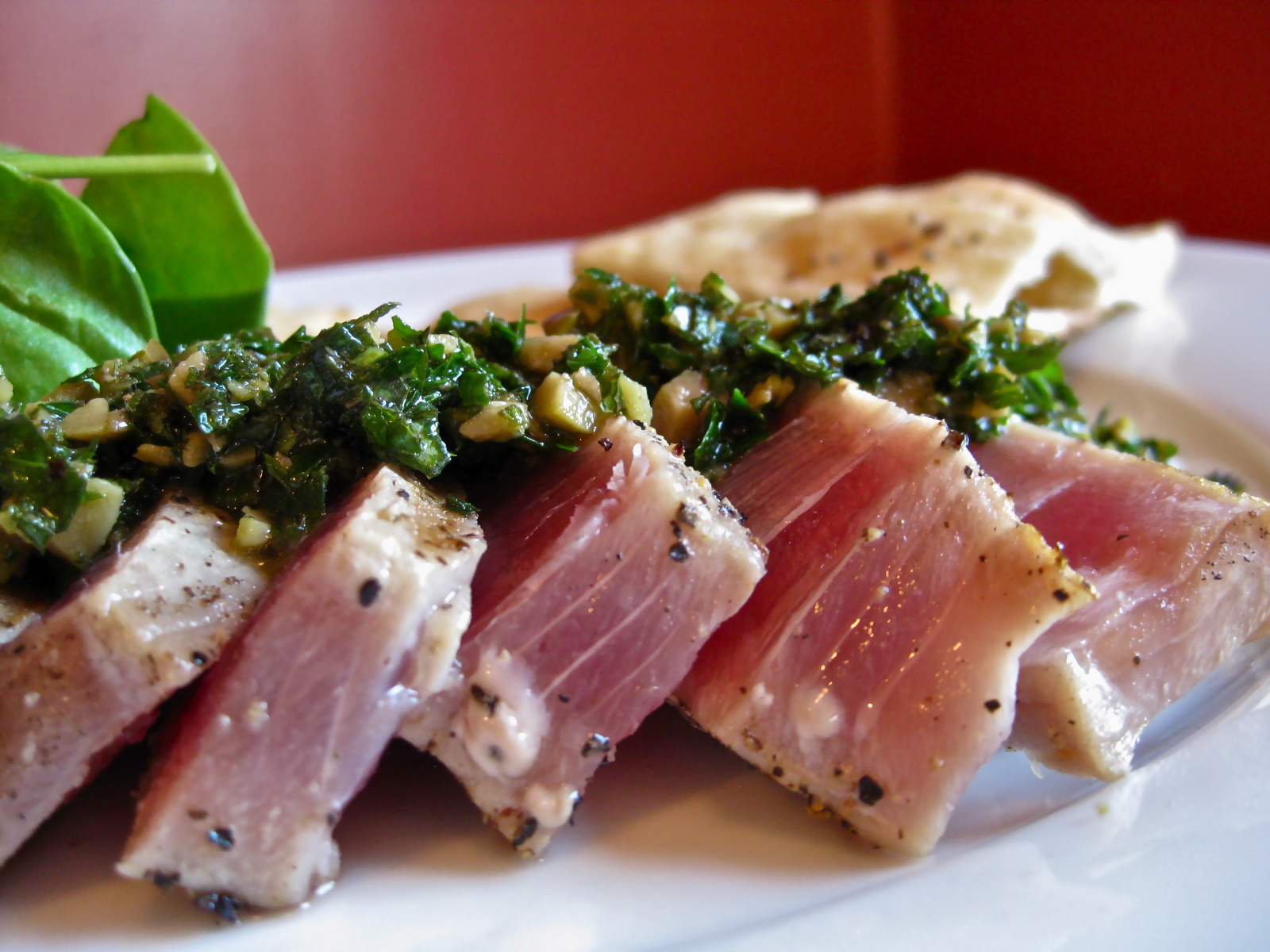
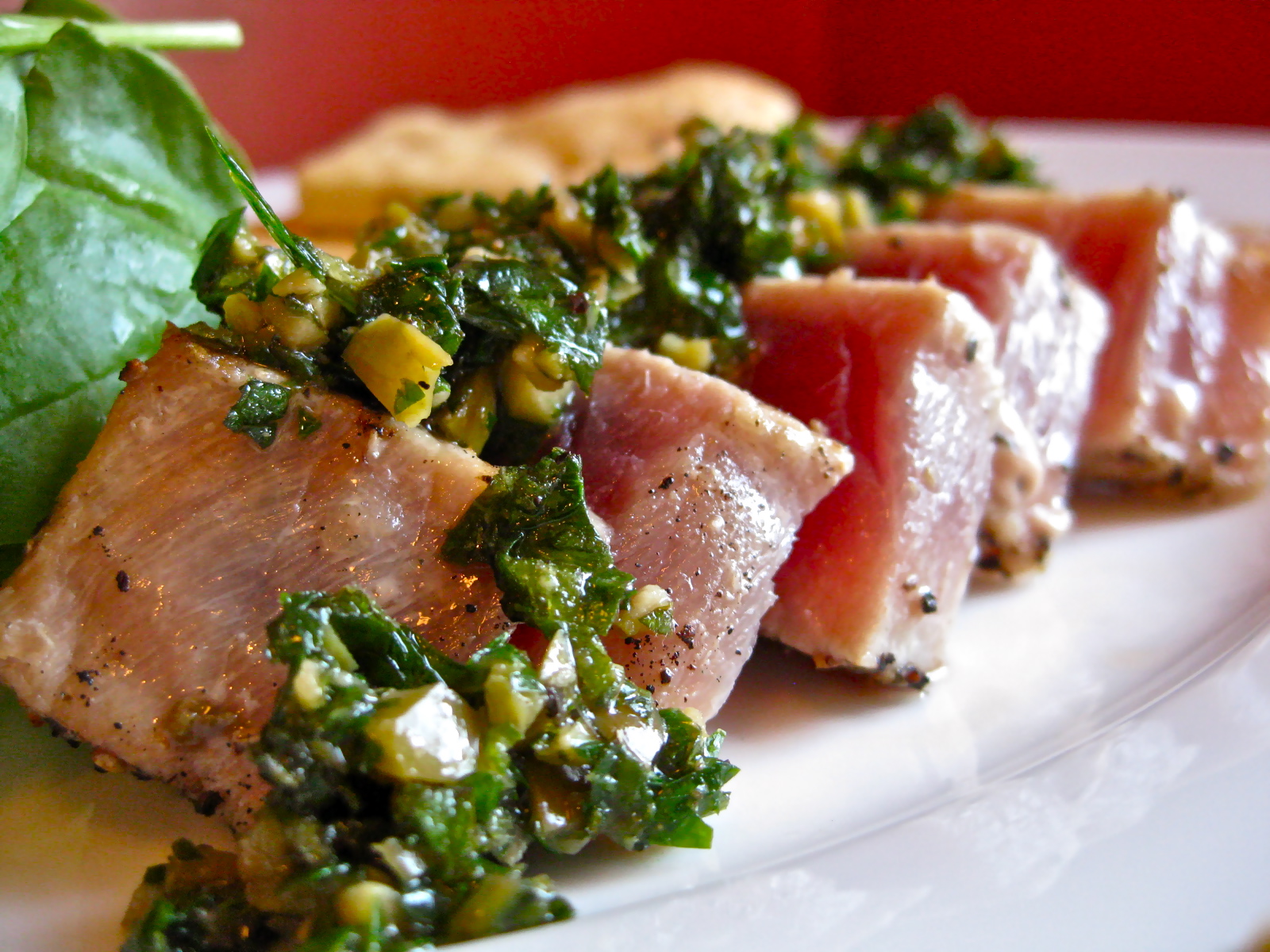
Seared Tuna Steaks with Salsa Verde

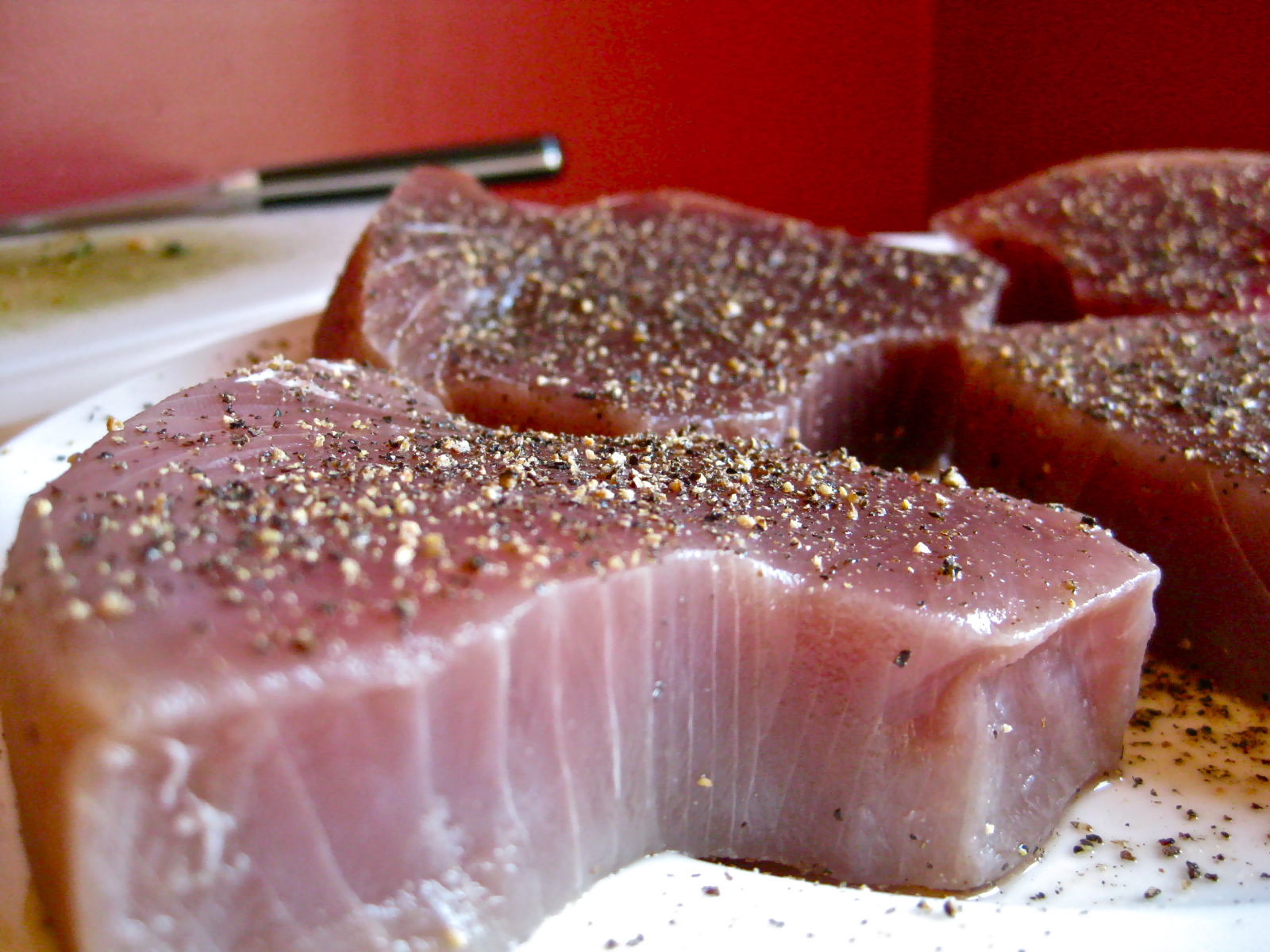
4 tuna steaks, rinsed then patted dry

olive oil, for brushing

freshly ground black pepper

sea salt

Very lightly brush each tuna steak with olive oil, then generously salt and pepper both sides.  On a well-oiled, very hot grill or grill pan, sear tuna steaks for about 1 minute on each side.  Grill should be hot enough to make an audible sizzling noise when tuna steaks are laid on the hot grill.  If you desire a more heavily cooked tuna steak, sear it for up to 1 ½ minutes, but be cautious to not overcook your fish.  It gets dry and rubbery very quickly.

Salsa Verde

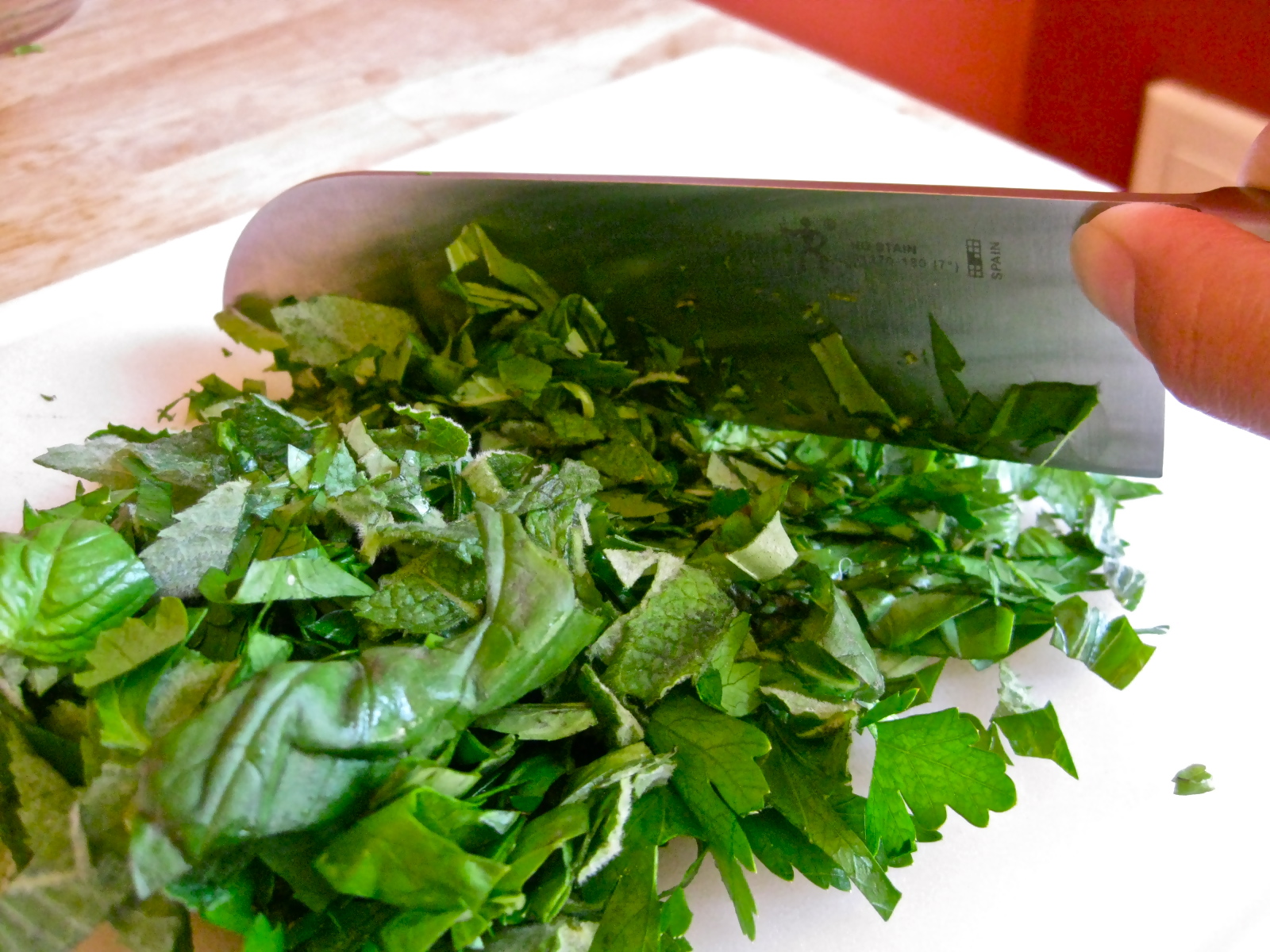
½ cup chopped fresh herbs (about 2 ½ large handfuls of whole herbs—I used basil, parsley, and mint)

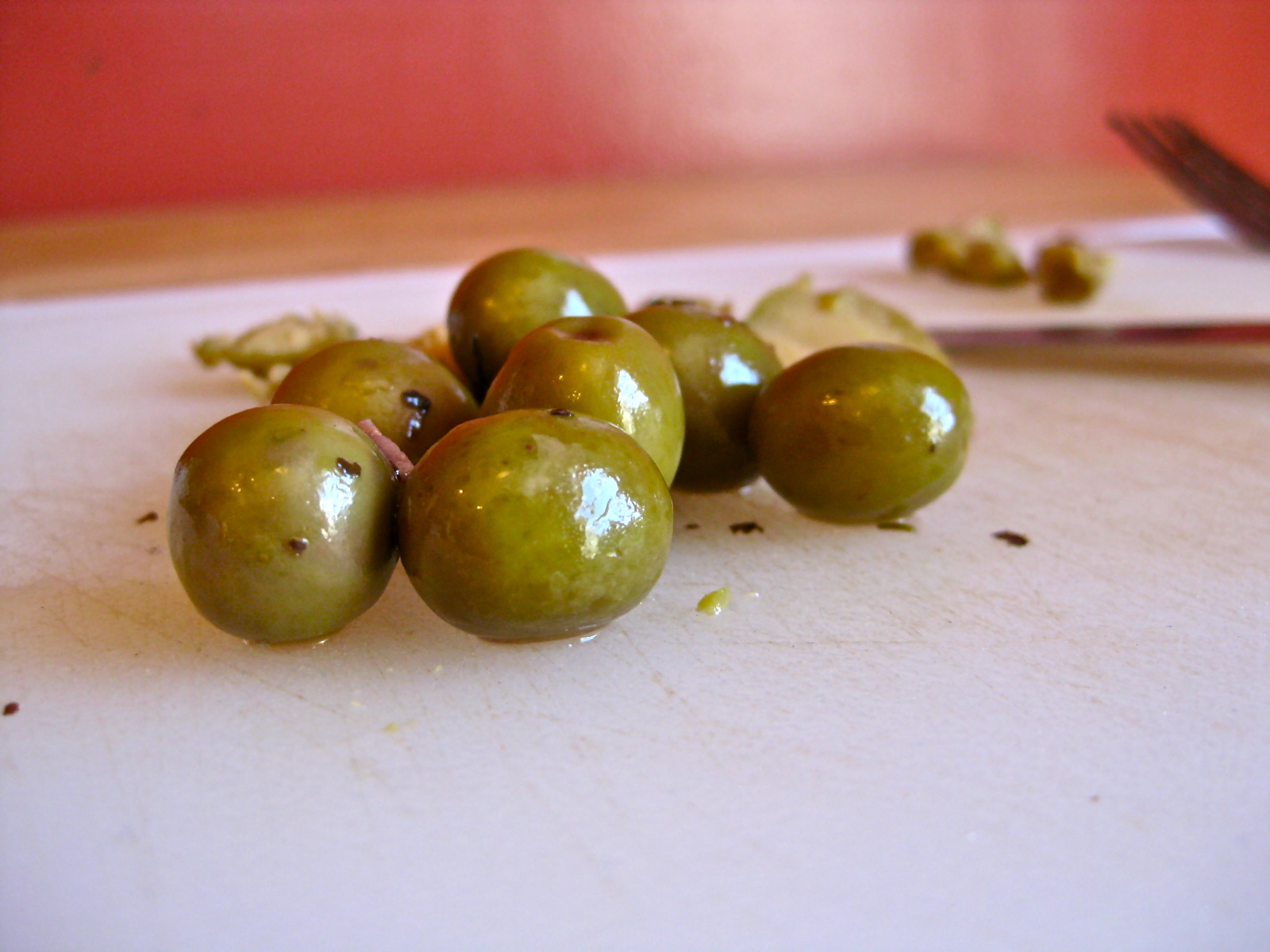
¼ cup pitted chopped green olives

3 tablespoons extra virgin olive oil

1 tablespoon red wine vinegar

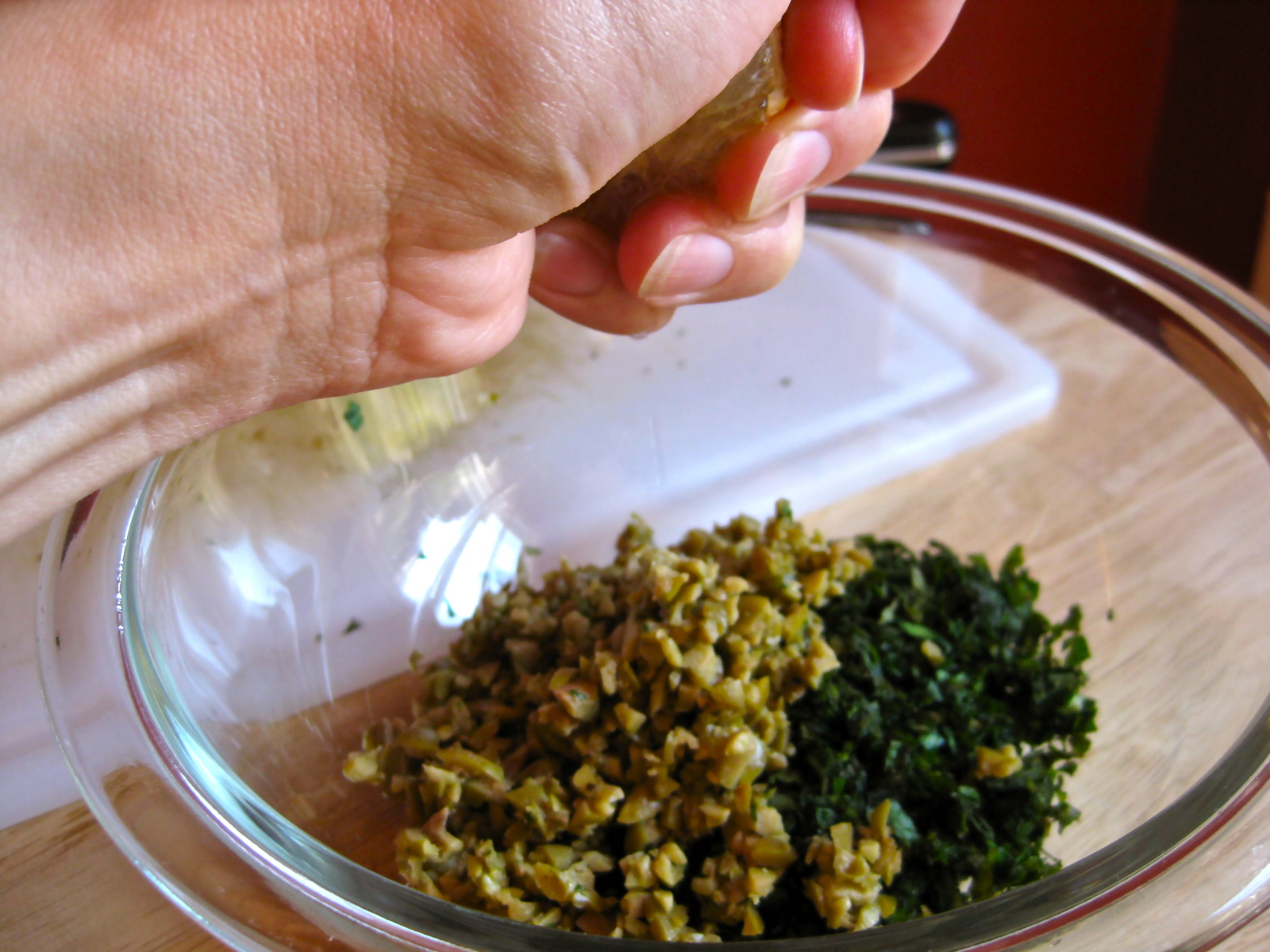
1 tablespoon freshly squeezed lemon juice

freshly ground black pepper

salt (optional)

To make salsa, combine all ingredients in a small bowl, and toss to combine.  If your olives are particularly salty, you will not need to add much, if any, additional salt to the mix.

To serve tuna, cut each steak, against the grain of the meat, into thin slices.  Top with salsa verde.

Serves 4