Archive | Indian RSS feed for this section

Chicken Biryani

12 Jan

This is my new favorite chicken dish.  In fact, it is my new favorite dish, period.  I am not being hyperbolic in the least.  In fact, when I took a bite of this dish, the very first words that ran through my head were, “Holy —-, this is the best chicken I have ever eaten.”  (Edited for posterity.)
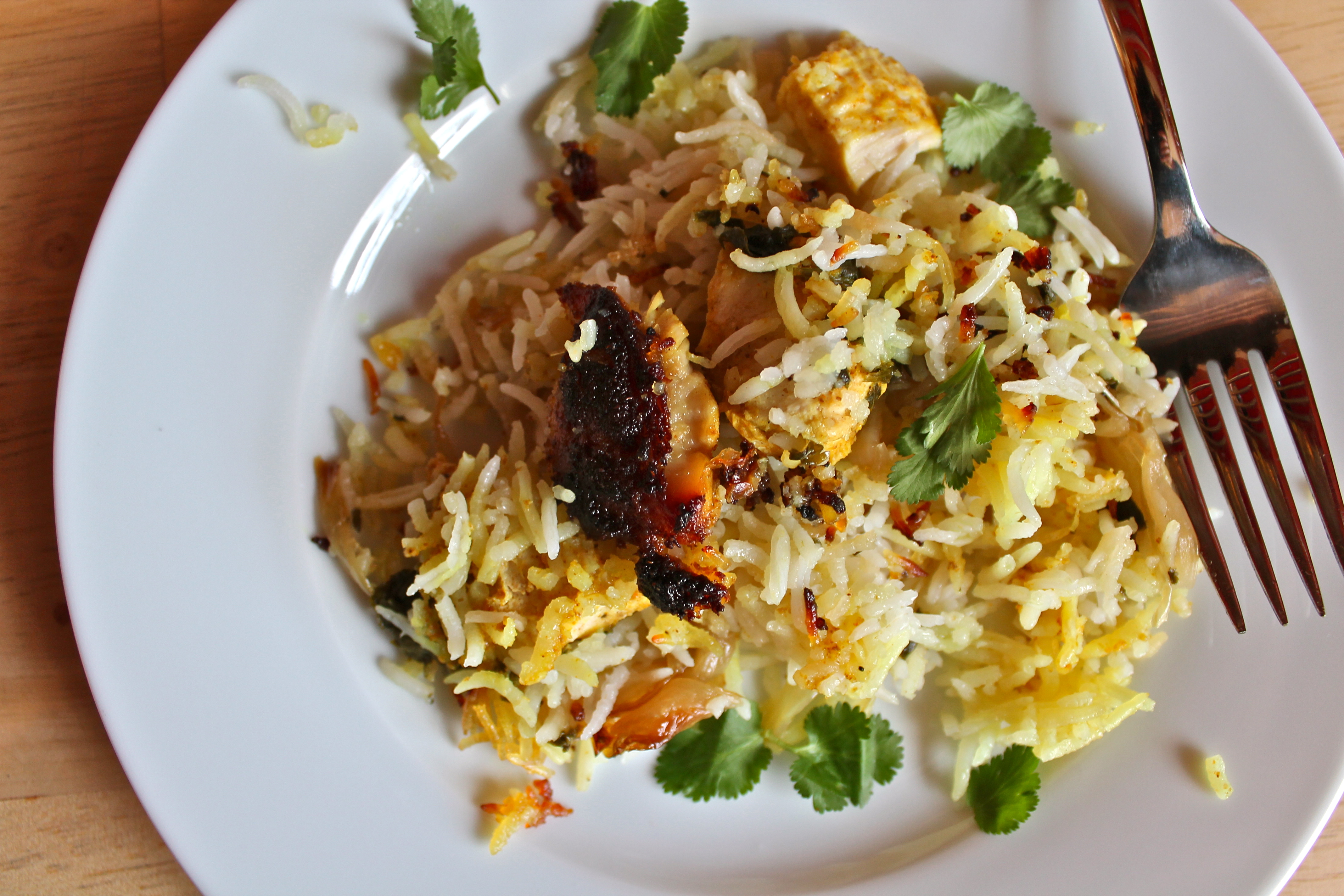
Which is odd, really, because to be quite honest, the chicken is not what makes this dish.  Sure, the chicken is cooked nicely, nestled amongst a cushion of basmati rice, softened onions, and fresh cilantro, but it’s the flavors of the marinade enveloping the chicken that really permeate this dish and make it shine.  The spices, seemingly simple, are subtle, but with a great build.  The first bite is pretty astonishing, but as you eat, each bite seems to take on a different characteristic.  Some bites are packed with the sweet and mellow taste of slow cooked onion, while other bites are flecked with cinnamon and coriander.  Occasionally I happened upon a strangely spicy bite, an unexpected, yet pleasant, surprise in a dish that is relatively mild on the spiciness scale.
And that’s one of the things that makes this recipe so mysteriously satisfying.  There is no abundance of spicy sauce.  There is no interplay between sour and spicy to test the agility of your taste buds.  It doesn’t taste predominantly of chicken, but it doesn’t taste mainly of rice, either.  Everything just sort of works together, tasting comforting and warm, well rounded, but also delicate.  Does it seem odd that I am speaking of a chicken dish as though it were a fine glass of wine?
I hate to make so many grand statements at once, but I really do think that this recipe is darn near close to perfect.  Even the casual side notes from the recipe’s authors are indispensible.  Taking their cue, I paid special attention to the layer of crisped rice and chicken that had formed on the bottom of the pot during the long baking time.  Though the recipe recommended that this layer of deeply browned bits be scraped from the pot and laid on top of the turned-out rice, I instead took the instinctive step of placing the browned bits directly into my mouth, a decision I highly recommend to anyone else who chooses to cook this.
All that said, I am not going to lie to you.  This is not a quick dish.  You are going to have to set aside some time to turn this baby out, but when you do, you will most certainly not regret it.  Make it a weekend affair, when you’ve got your afternoon ahead of you and you can take some time to prep the ingredients without being rushed.  Though the effort may seem to be a time challenge, I promise you that the result is nothing short of a reward.

Chicken Biryani

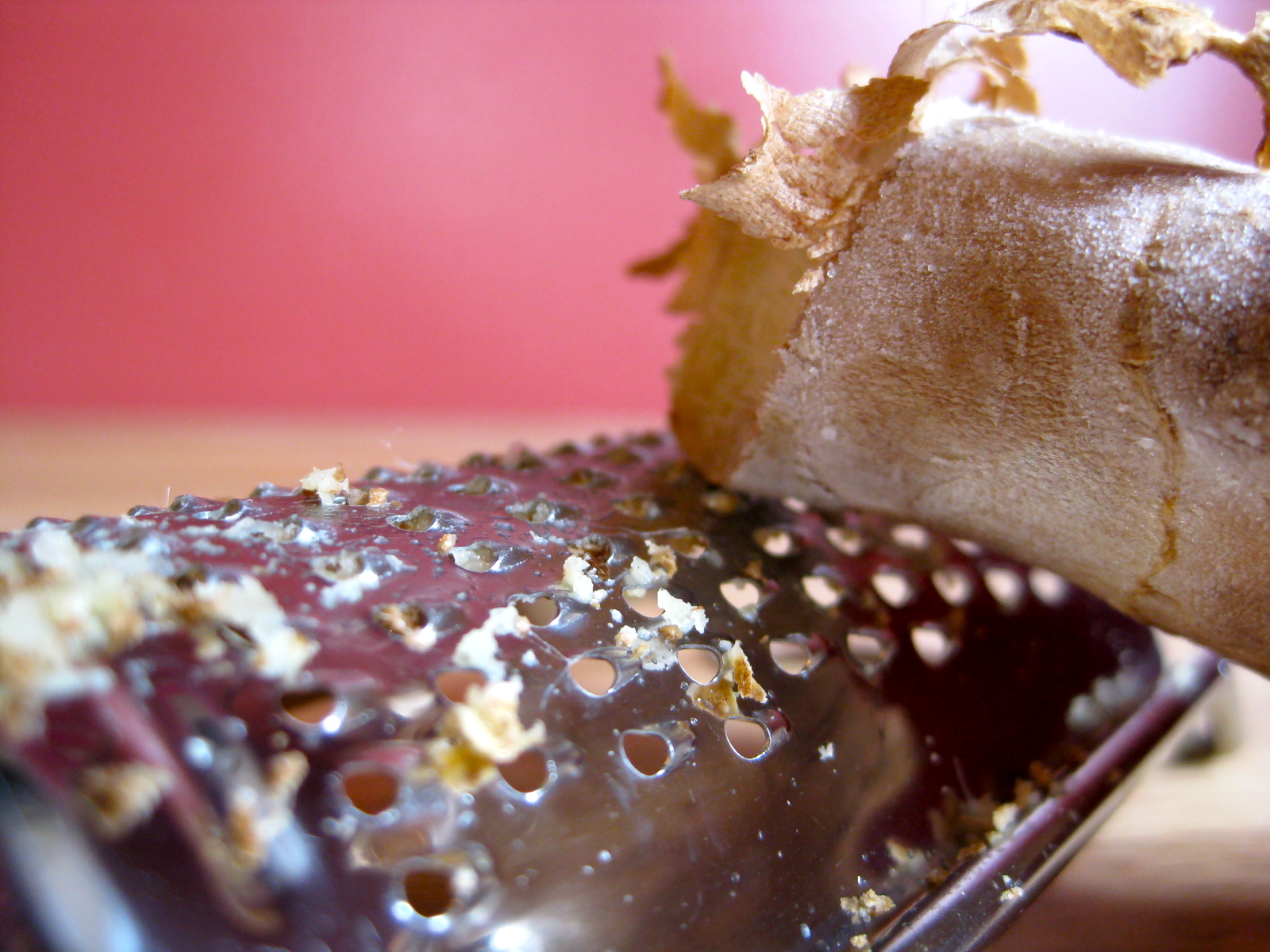
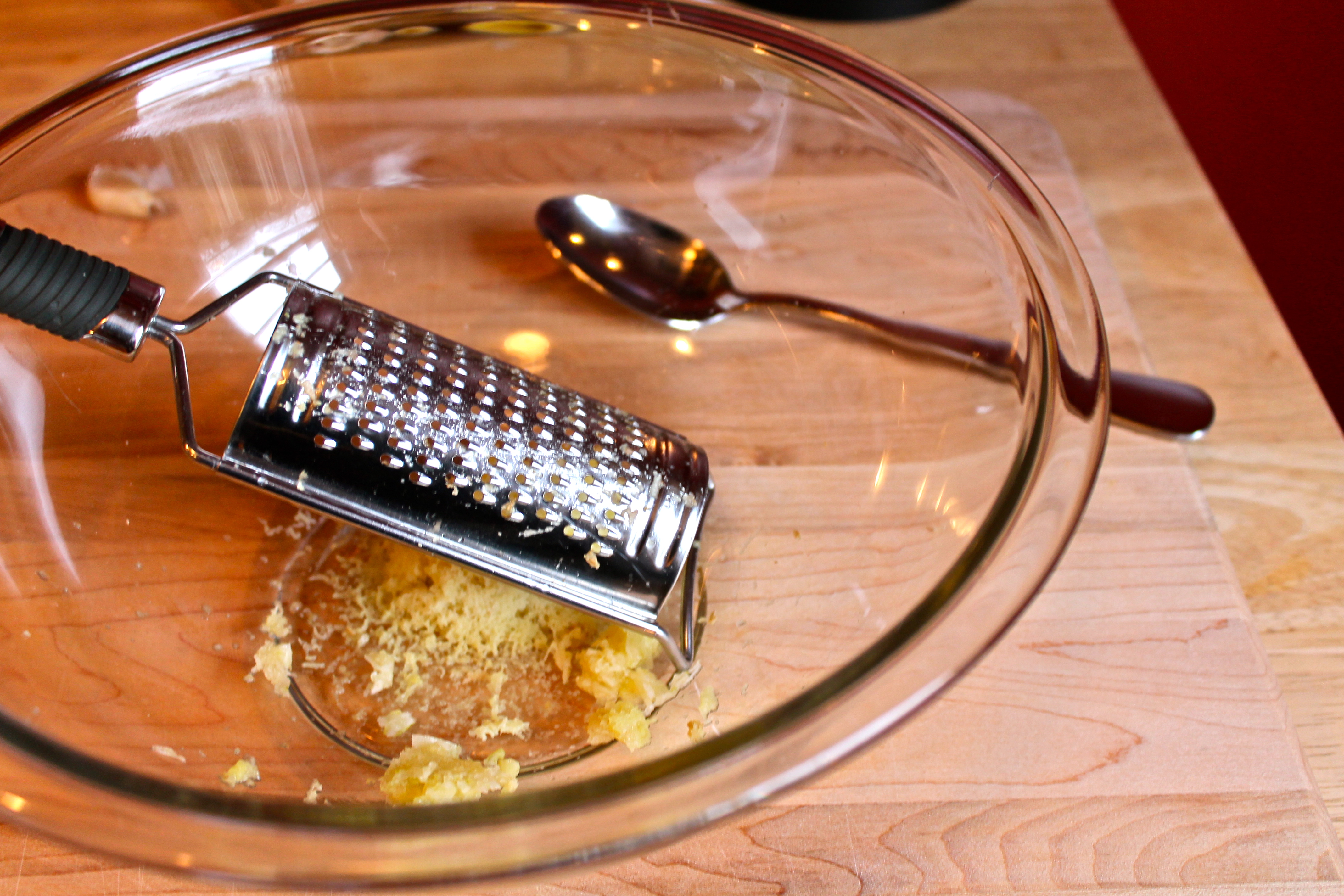
Nearly perfect as is, there are a couple of things about this recipe that I have altered only slightly.  One is the preparation of the garlic and ginger.  I find that grating both items into a bowl and then mashing them with a spoon is a far simpler and more reliable method of turning them into a paste, rather than trying to wrestle with them in a mortar and pestle.  I also decreased the amount of oil called for, as I had enough oil left over in the end that I thought it prudent to simply use less next time around.

From Mangoes and Curry Leaves, by Jeffrey Alford and Naomi Duguid

1 pound boneless chicken breasts or thighs, or a mixture

3 large cloves of garlic, grated finely (you want to end up with about 2 teaspoons total)

1 teaspoon finely grated fresh ginger

1 ½ teaspoons ground coriander

½ teaspoon cayenne

¼ teaspoon turmeric

¼ teaspoon garam masala

½ cup plain yogurt (full or reduced-fat are both fine)

2 teaspoons salt

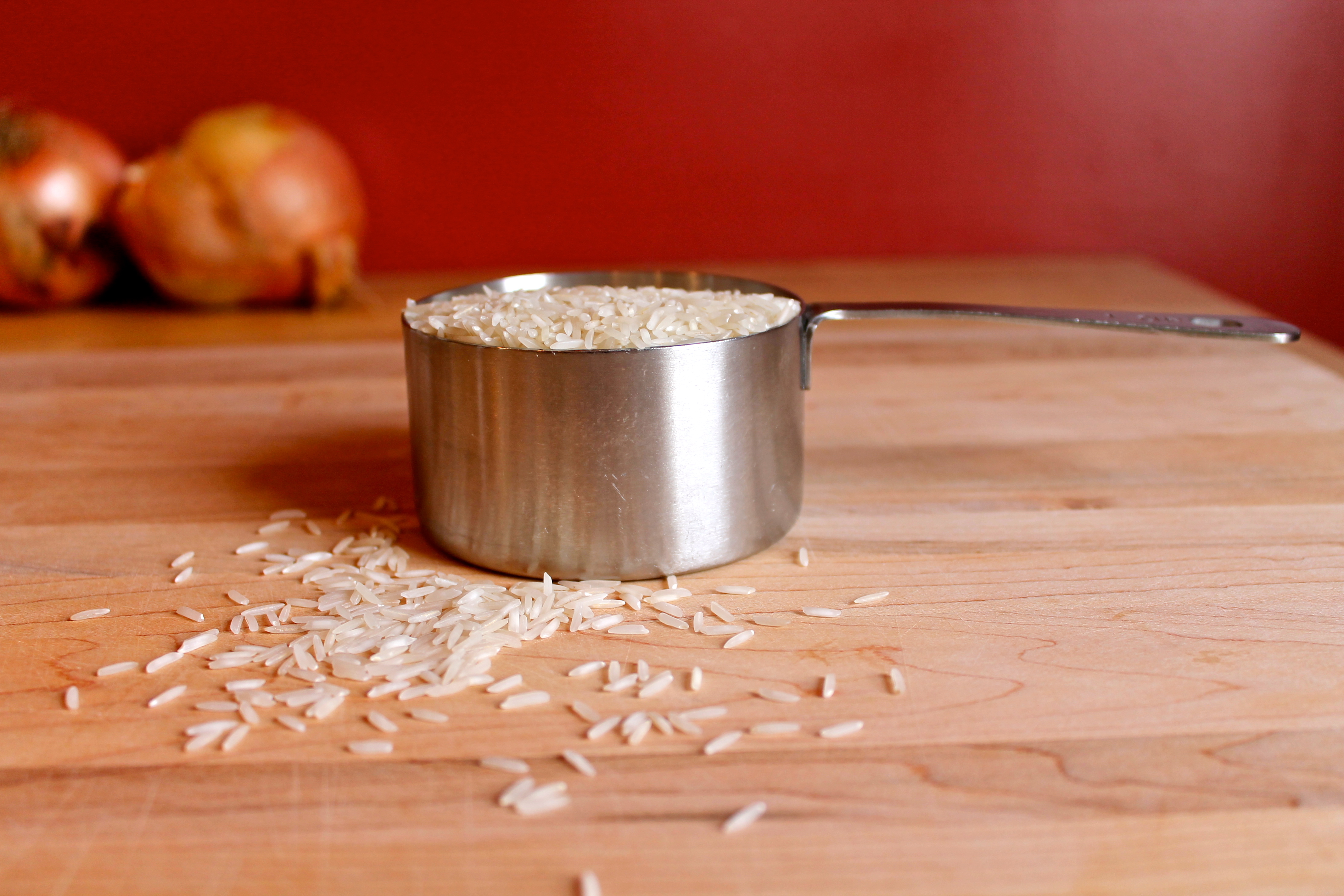
2 cups basmati rice

3 medium-large onions (about 1 pound)

½ cup vegetable oil

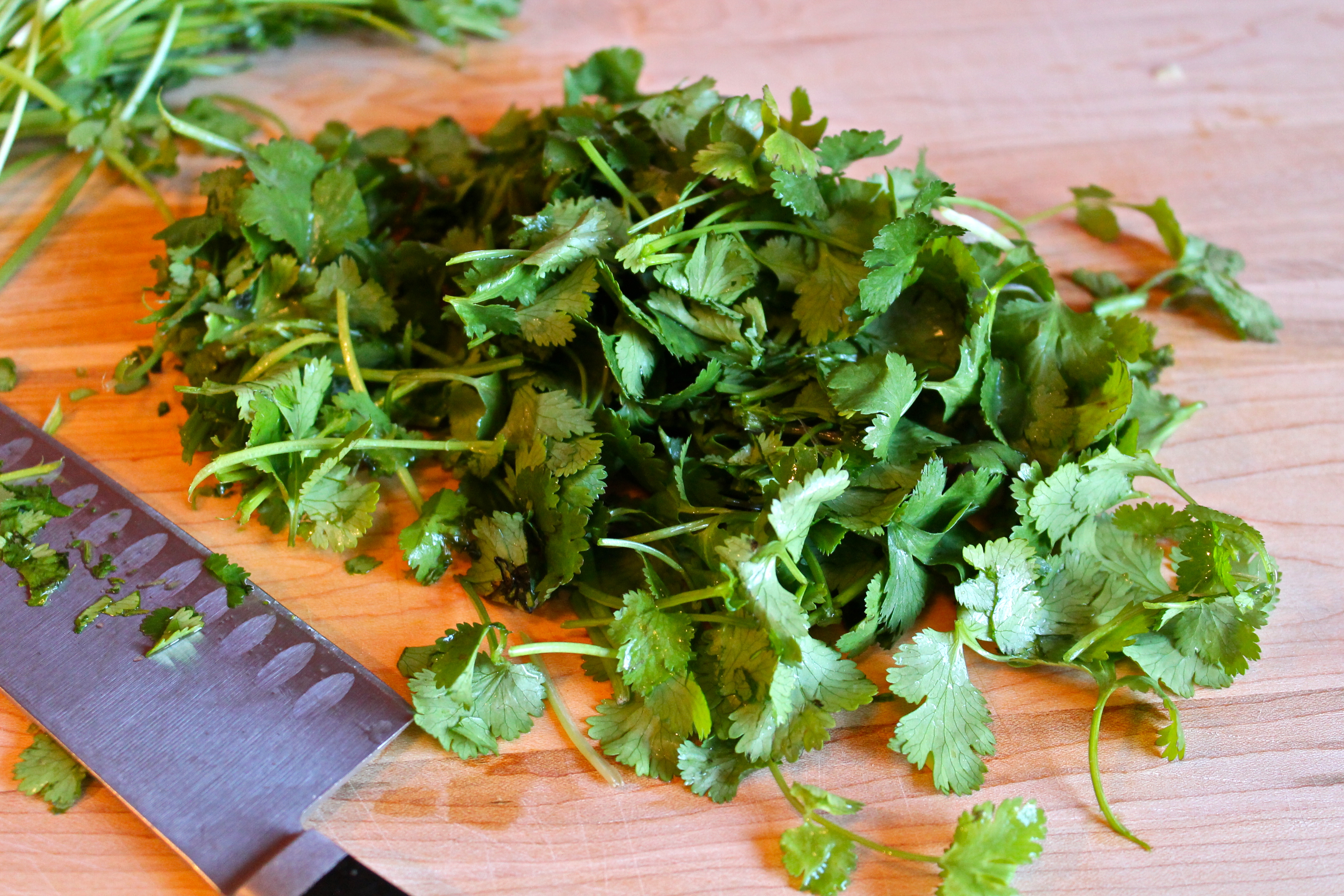
1 cup minced cilantro leaves

2 tablespoons of water

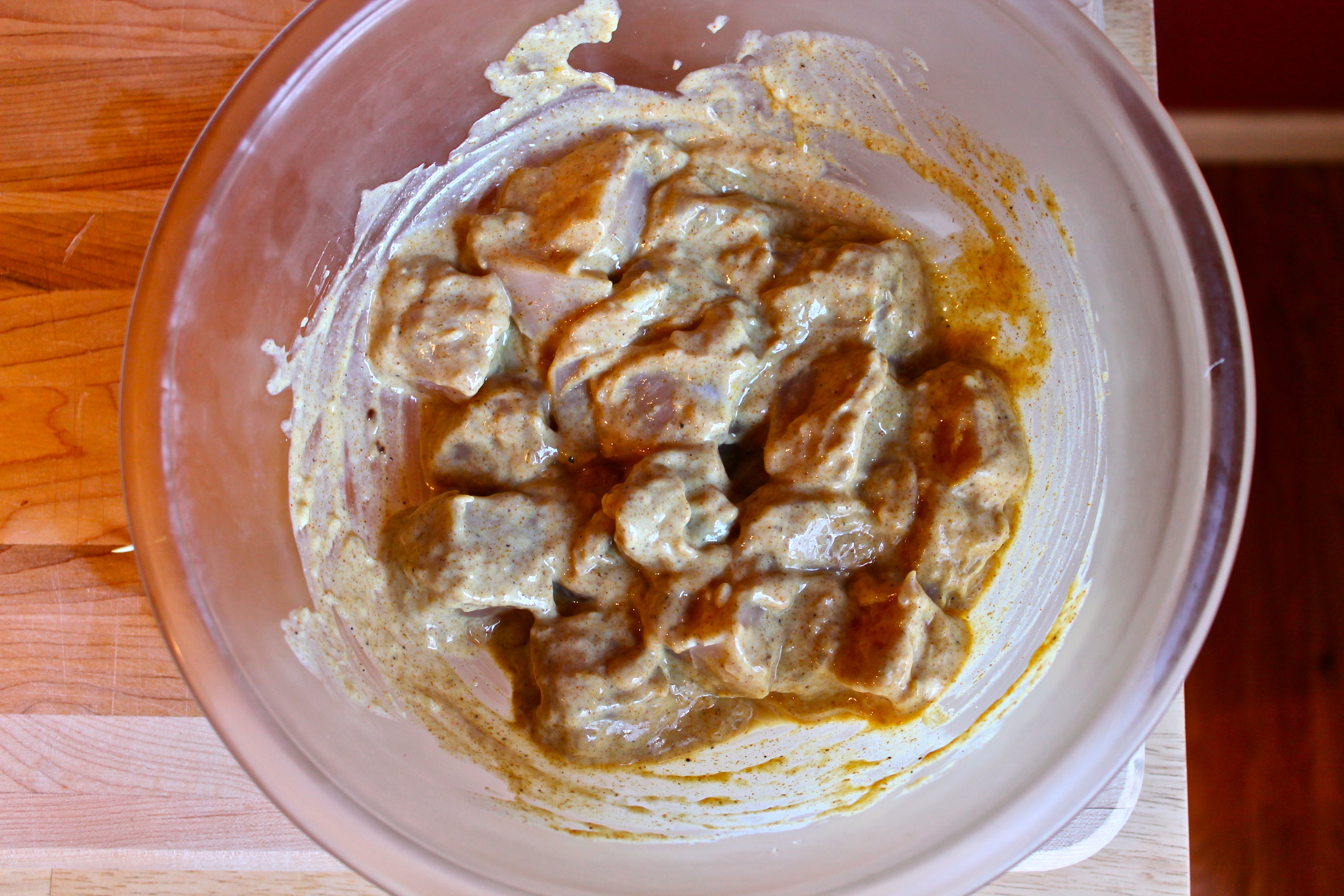
Rinse the chicken, then chop into 1-inch cubes.  In a large bowl, combine the grated garlic and ginger, then mash together using the back of a spoon.  Add the chicken cubes to the bowl with the garlic and ginger.  Add the coriander, cayenne, turmeric, garam masala, yogurt, and 1 teaspoon of the salt.  Stir to mix until everything is combined, then cover with plastic wrap and allow to marinate in the refrigerator for 2 to 4 hours.

While the chicken is marinating, rinse the rice in several changes of cold water.  Place in a bowl, cover with water, and allow to soak for about half an hour.

About 1 ½ hours before you want to serve the dish, place a rack in the center of the oven and preheat to 375 degrees Fahrenheit.

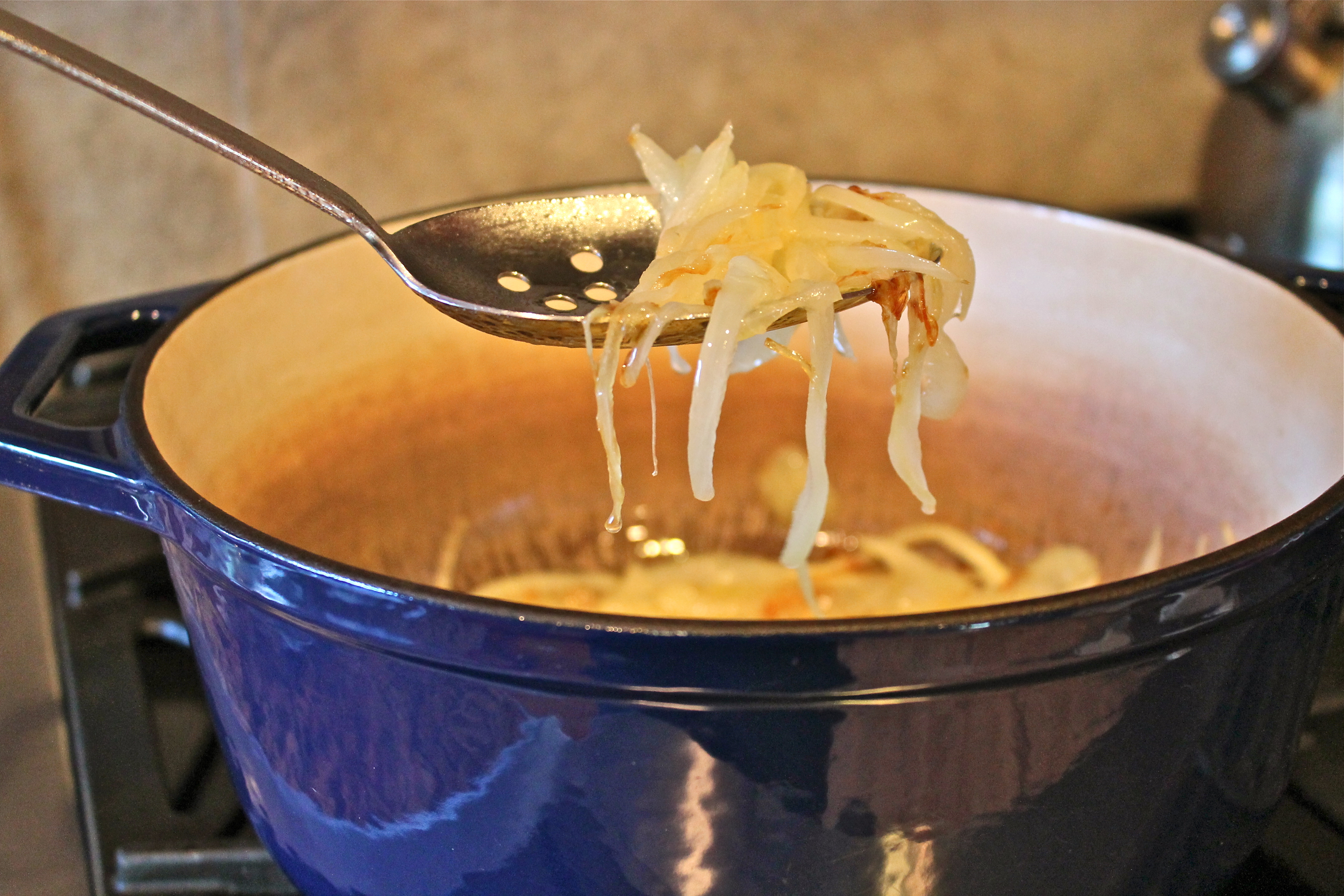
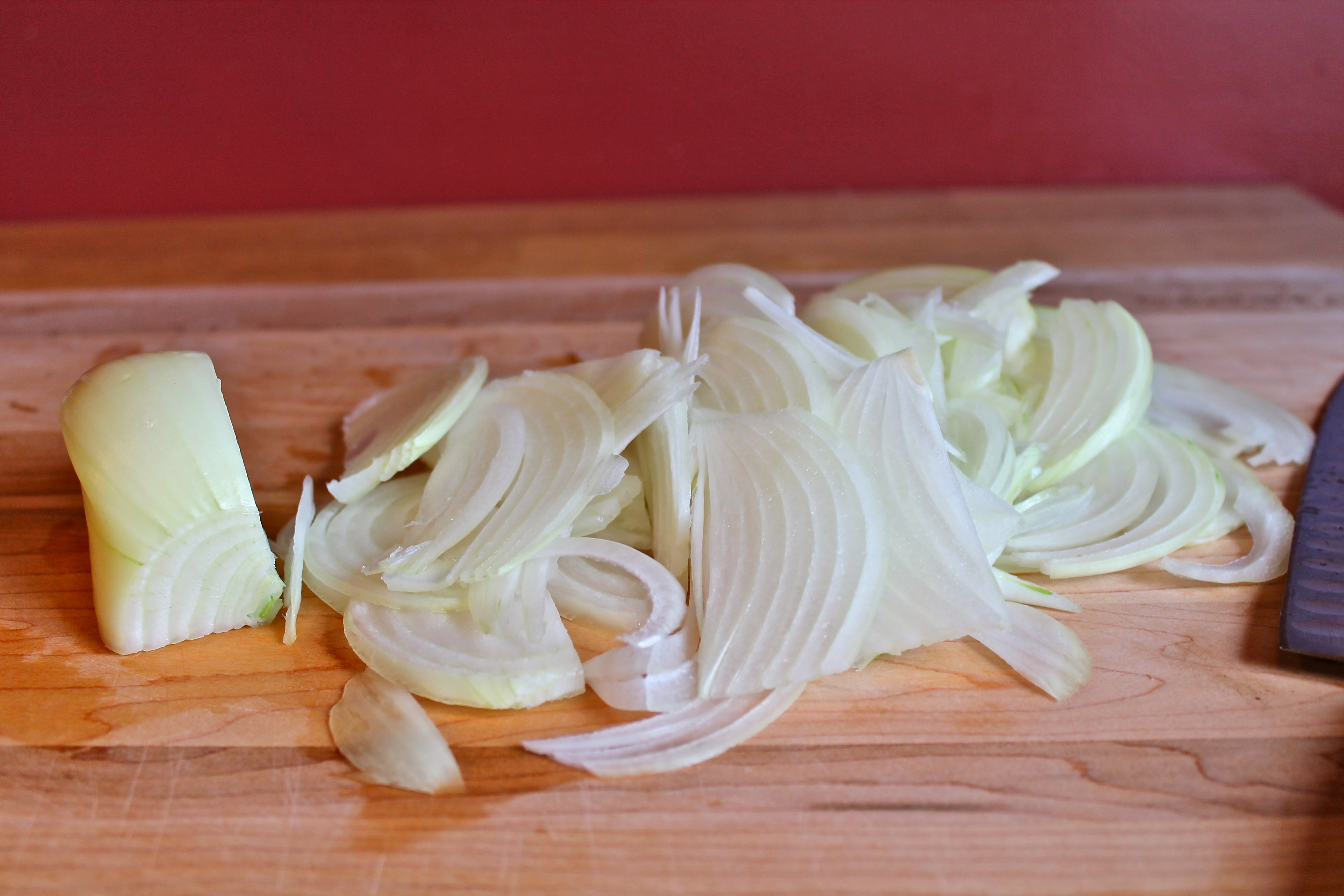
Slice the onions as fine as possible.  You will want about 3 cups of sliced onions.  Place a large heavy ovenproof pot with a tight-fitting lid over medium-high heat.  Add the oil and, when it is hot, add the onions.  Lower the heat to medium.  Cook until the onions are very soft, wilted, and just touched with golden brown (I love the way that is phrased), 12 to 15 minutes.  Lift the onions out of the hot oil and set aside.  There should be a little over ¼ cup of oil left in the pot.  Remove 2 tablespoons of oil from the pot and set aside for later.

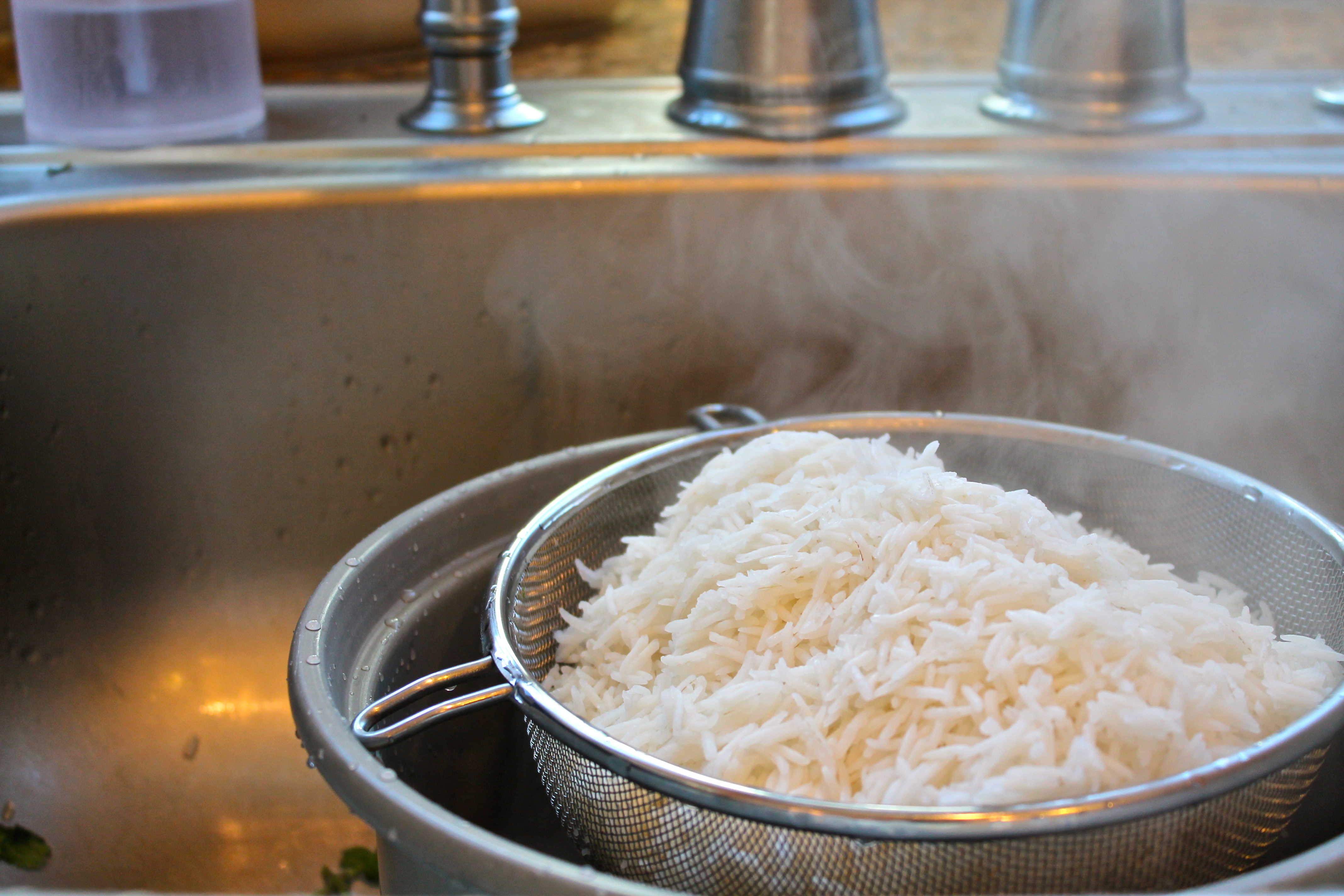
When the onions are cooking, precook the soaked rice.  Place about 8 cups of water in a large pot and bring to a boil.  Add the remaining 1 teaspoon of salt, and allow the water to come back up to a boil.  Sprinkle in the rice.  Allow rice to boil for 4 to 6 minutes, or until the rice is no longer brittle but still firm to the bite.  Drain in a colander and set aside.

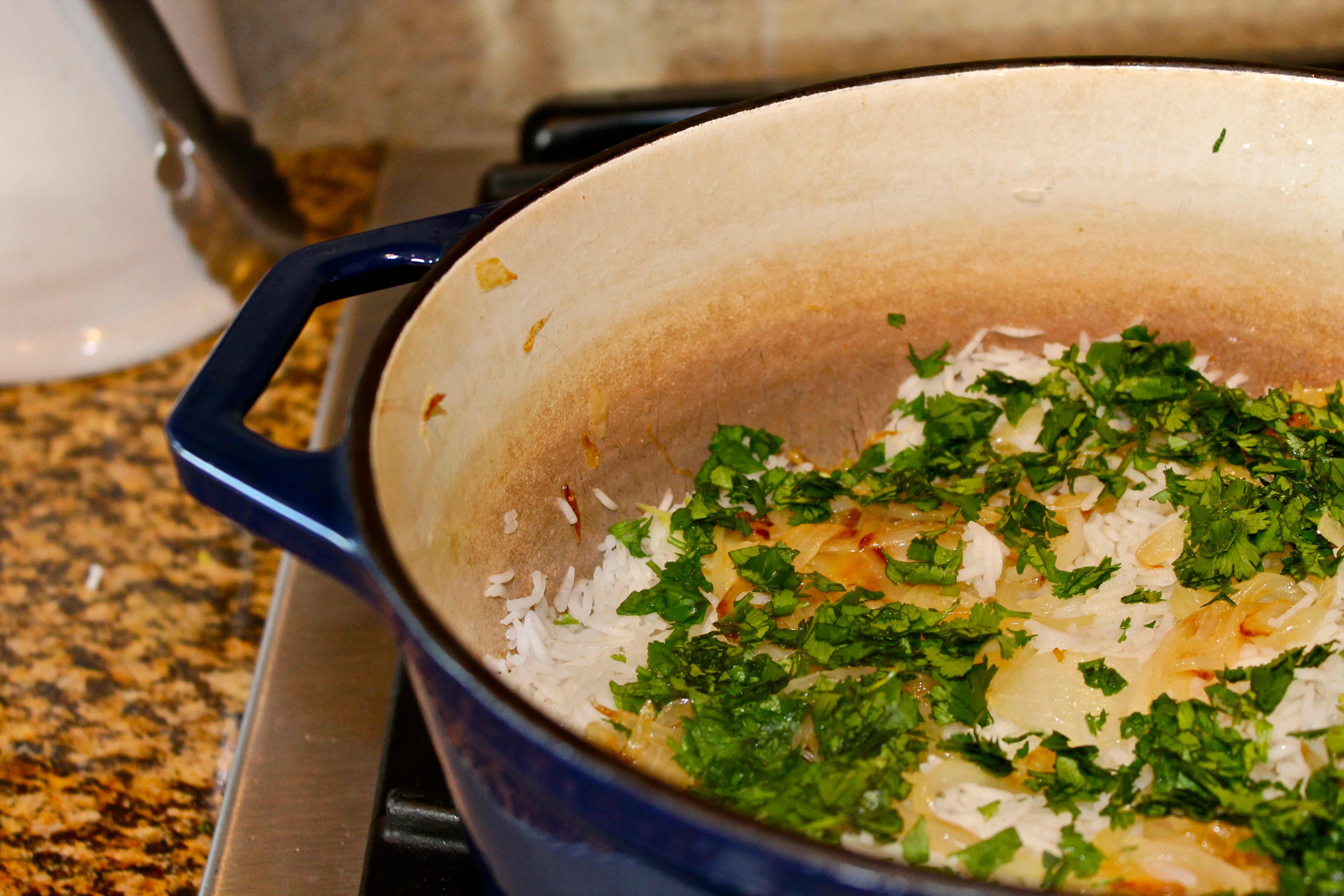
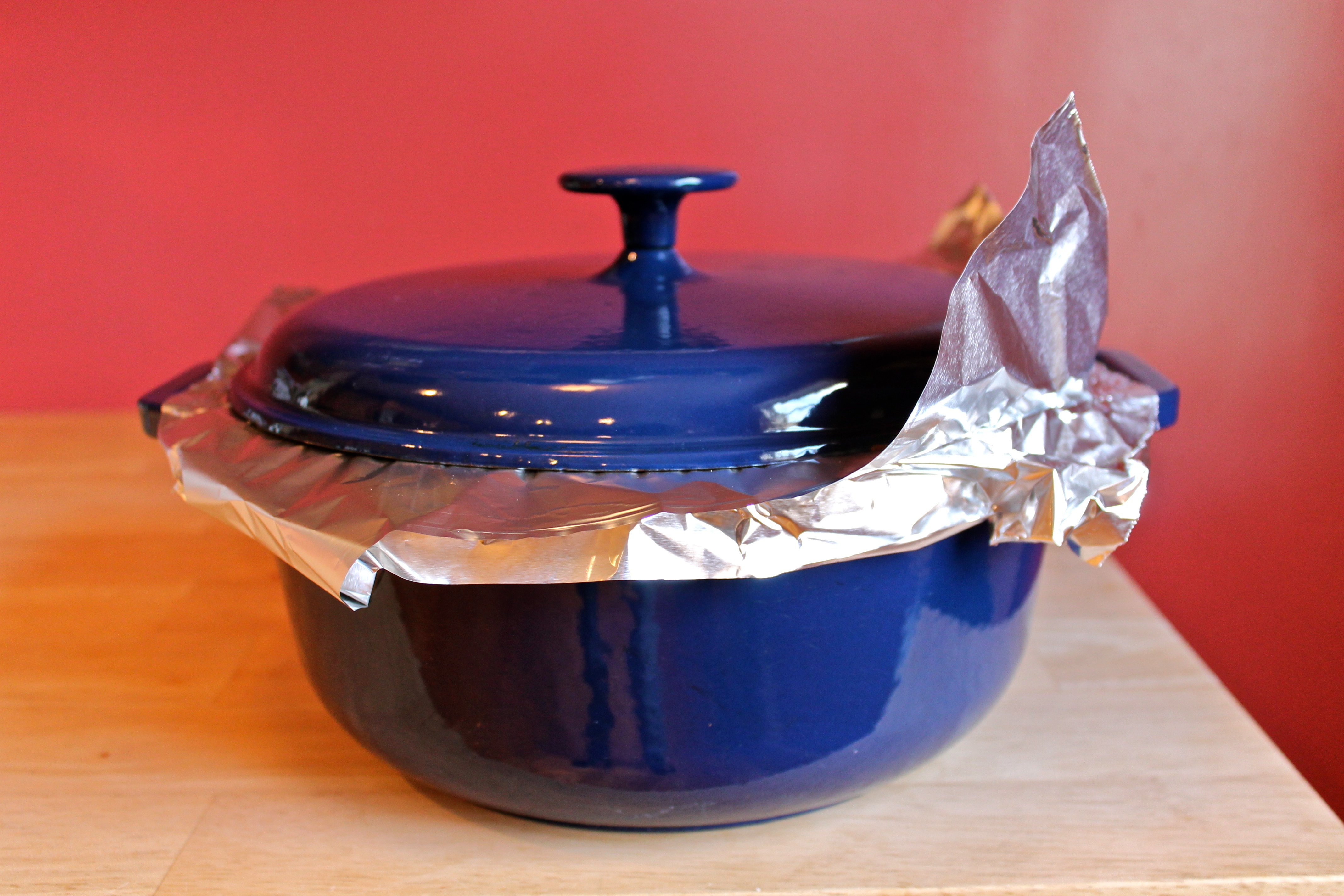
Place the heavy pot containing the oil over medium-high heat.  Distribute half of the chicken pieces over the bottom of the pot, then sprinkle on half the precooked rice.  Scatter half the cooked onions over the top, then sprinkle on half of the cilantro leaves.  Repeat with the remaining chicken, rice, onion, and cilantro.  Sprinkle on about 2 tablespoons of water, and drizzle on the reserved 2 tablespoons of oil.  Lay a sheet of aluminum foil over the top of the pot to cover it completely, then top with the lid.

Transfer the pot to the oven and bake for 1 hour.

Carefully remove the lid and the aluminum foil (the pot will emit a great deal of steam, so stand back and be careful to steer clear of the hot cloud).  Remove the biryani to a platter.  Scrape out the crusty layer of chicken and rice from the bottom of the pot, and lay it on top of the biryani.  Serve hot or warm.

Serves 6

Indian Spiced Smoked Spareribs

7 Jul

A few days ago, I picked up a book about slow barbecuing.  The book had been sitting on a dining room bookshelf for quite some time, having been brought home by my husband, a man with a deep interest in all varieties of meat preparation and consumption.  After glancing at the cover of the book for several weeks, I finally became curious as to what this book might offer in the way of secret insider barbecuing information, and sat down with the book with the intention of studying it.

Side note: Many years ago, I was convinced that every single book I started, I also had to finish.  No matter if I was enjoying the book or not, I felt, for reasons I am still unable to explain, compelled to slog through even the most boring and intolerable of books.  This went on for ages, until a coworker of mine happened to one day recommend to me a novel that involved cross-country travel on a bicycle, something in which I was, and still happen to be, interested.  So I started the book.  To get to the gist of what happened, I am going to edit out the slow and torturous ordeal of reading this book, and just tell you that, after all those years of practice of finishing books I did not enjoy, this particular book was so awful, so condescending in tone, and so ridiculous in character, that I, for the first time, was driven to not finish a book.  In fact, I not only didn’t finish that book, but I believe I may have, at one point, released an unpleasant and hearty groan as I chucked the book across the room and away from the earnest and somewhat tedious insistence of my prying eyes to keep chipping away at the book.

Aside from the part about rocketing the book away from my body, my reaction to that novel was pretty much a precursor to the reaction I had to reading the barbecuing book.

Why?  Why must people insist on making cooking into something that is inaccessible?  Why must cookbook writers look down upon their readers, and insist that their way, the intense, unbending way, is the only way?  Shouldn’t cooking be something that invites readers to share in a recipe?  Shouldn’t cooking be inspiring instead of belittling?  If you tell people, Mr. Barbecue Author, that the only way to make “real” barbecue is to buy a special smoker, only use lump charcoal, and never never use a gas grill while trying to make delicious barbecue, do you really think you are going to ignite a fire under people to go out and attempt your recipes?  And do you really think that I am going to read that, bend to your will, and forgo the 8 years of service that my gas grill has duly provided, just so I can tell people that I made barbecue the “right” way?

As you may have surmised, no, I did not follow the barking orders of Mr. Barbecue and his insufferable tome.  Instead, when hit by the urge to make smoked ribs for a small Independence Day celebration, I consulted with three different books about barbecuing that offered guidance and helpful tips, developed my own recipe based on flavors I thought would be interesting, then utilized a number of different barbecuing ideas that I thought would be a good fit.  And guess what?

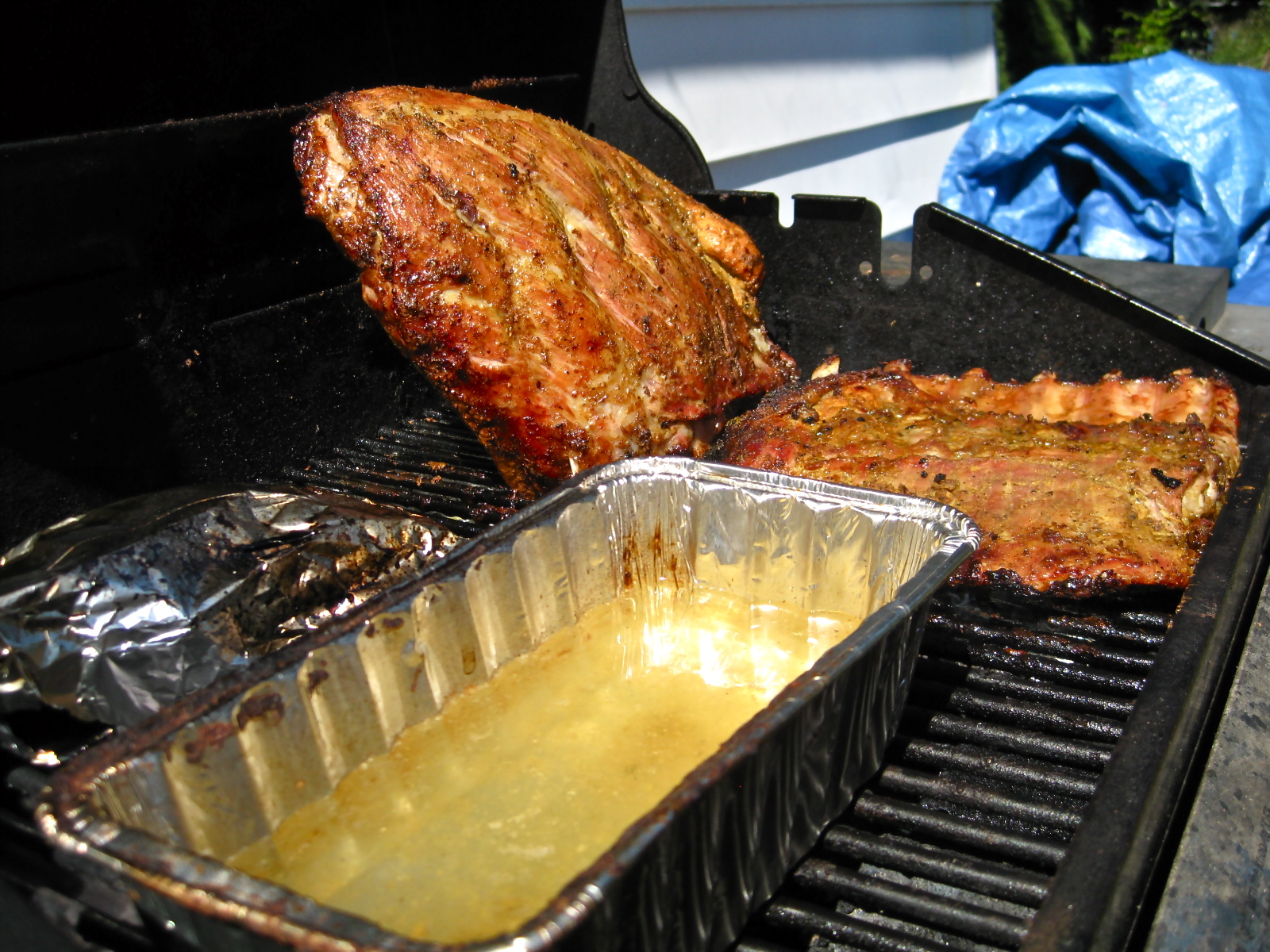
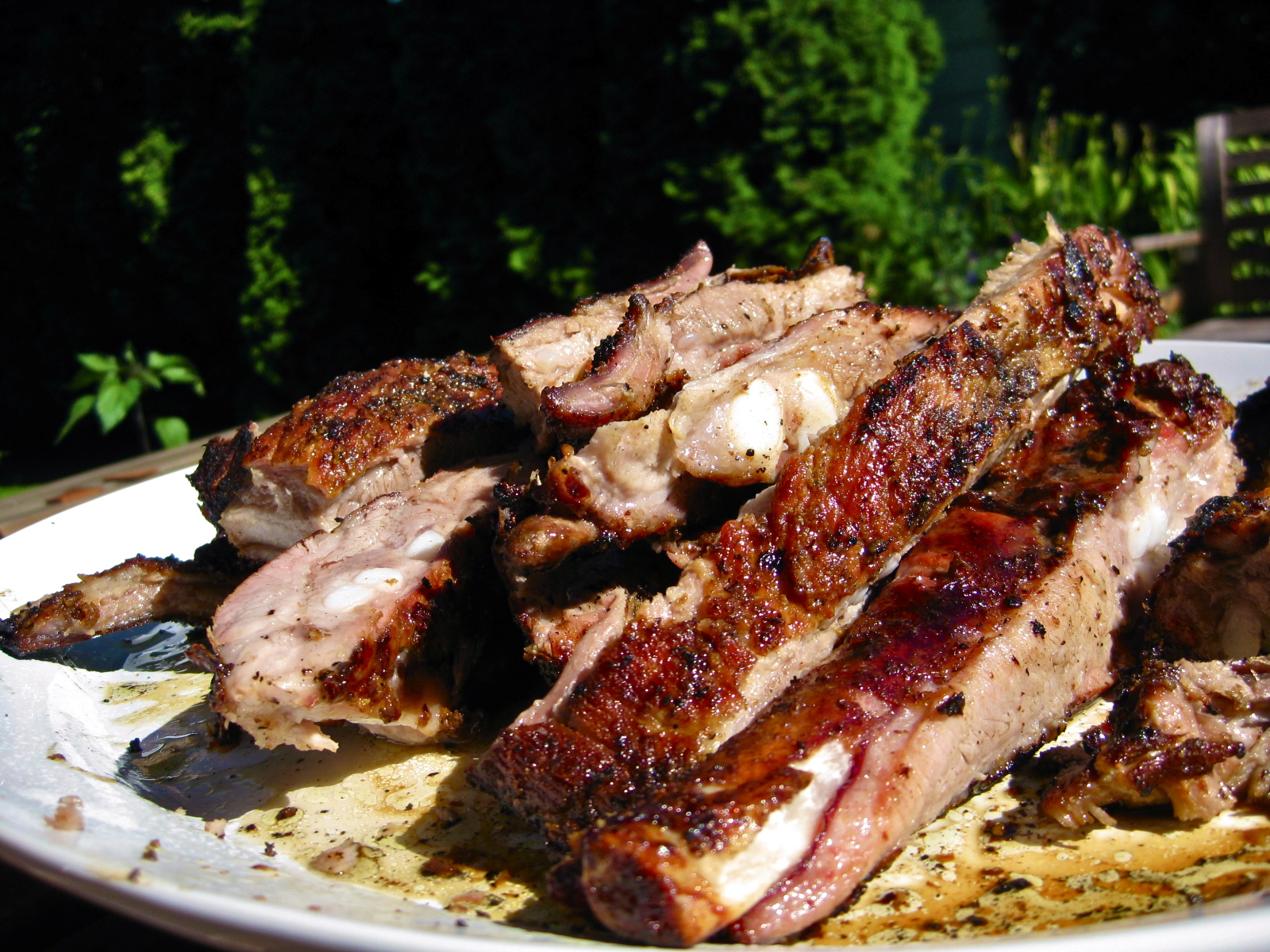
The ribs, after four hours of smoking on a gas grill, with wood chips left to smolder in both a small smoking box and a makeshift smoking pouch made of aluminum foil, and helmed by a person with absolutely zero previous experience dealing with ribs or rub, came out beautifully caramelized and tender.  The flavor of the rub, while subtle, provided an unexpected undertone to the smoky taste of the ribs, and, even though I broke every single rule that was dutifully laid out for me by the world’s most detestable barbecuing guide, my gas grill-smoked ribs still triumphantly emerged lightly tinged with a telltale pink smoke ring on the outside edges.

And so can yours!  Gas grill, charcoal grill, or even no grill (as featured in this New York Times Magazine tutorial about smoking ribs in your home oven), you can totally tackle your own smoked ribs, no matter what equipment you do or don’t have.  See?  See how encouraging I am being?  Are you listening Mr. Barbecue Tyrant?  (And, no, I won’t link to the book, because though I won’t tell you that in order to barbecue you will need special equipment, I will definitely tell you that in order to barbecue you most certainly do not need that book.)

Indian Spiced Smoked Spareribs

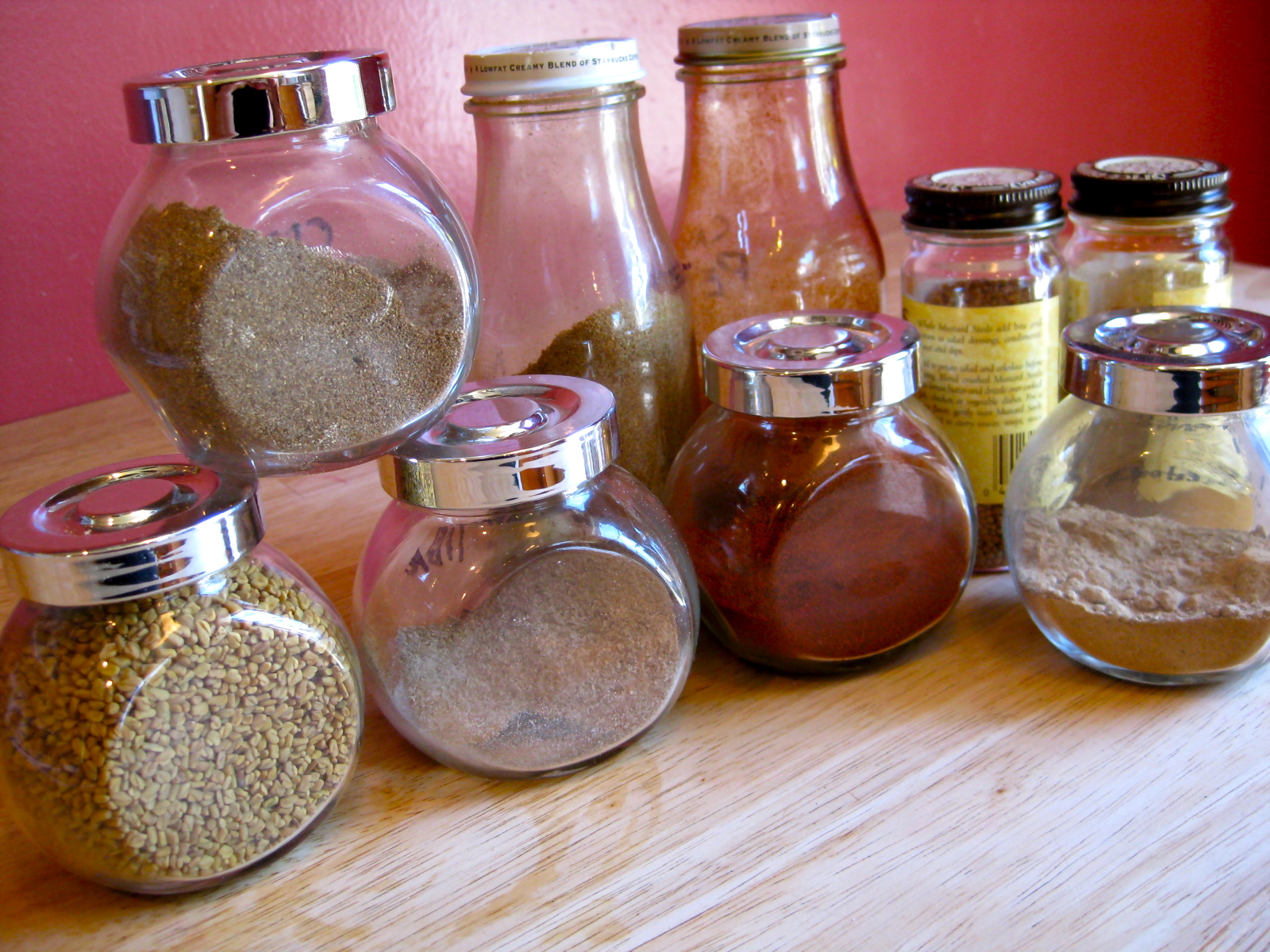
1 teaspoon mustard seeds

1/8 teaspoon fenugreek seeds

1 tablespoon ground cumin

1 tablespoon ground ginger

1 tablespoon ground coriander

2 teaspoons kosher salt

1 teaspoon black pepper

1 teaspoon onion powder

1 teaspoon garlic powder

½ teaspoon ground turmeric

¼ teaspoon cayenne pepper

¼ teaspoon ground cinnamon

5 pounds spareribs, cut into slabs that will comfortably fit into your grill (I cut this particular rib rack into two large slabs)

¼ cup yellow mustard

2 to 3 cups wood chips, soaked in water for 1 hour, then drained

1/3 cup apple cider (optional)

Combine mustard seeds and fenugreek seeds in a spice grinder or mortal and pestle and grind until a fine powder has been formed.

In a small bowl, combine ground mustard seeds and ground fenugreek seeds with other spices.  Mix to combine.

Rinse ribs, then pat dry.  Place ribs in a large, flat dish, or on a baking sheet that will fit into your refrigerator.  Brush both sides of your ribs with a light layer of yellow mustard (this will help your spice rub adhere to the ribs, and will also aid in the formation of a nice crust on the meat).  Sprinkle spice mixture over both sides of rubs, very gently patting into the meat (try not to pat too hard, however, or the rub will just stick onto your hands and pull off of the meat).  Place spiced ribs in the refrigerator to rest for at least 4 hours, preferably overnight.

At least 30 minutes before you are ready to cook your ribs, remove them from the refrigerator and allow them to come to room temperature.  Set up your grill for indirect grilling.  If you have a two burner gas grill, this will mean setting one burner on medium low heat and leaving the other burner off.  If you have a three burner gas grill, it will mean setting two burners on medium low heat and leaving the third burner off.  If you have a charcoal grill, you will be raking your hot coals into two piles on opposite sides of the grill, leaving an empty space in between.  After preparing whichever grill you have, place a drip pan in the portion of the grill that is not lit or covered with hot coals. Note: you can read more about direct vs. indirect grilling here.

Toss the pre-soaked wood chips onto hot coals (if using a charcoal grill), or, if using a gas grill, place wood chips in a smoker box made specifically for gas grills (such as this one), or wrap your wood chips in a tight pouch of aluminum foil with holes punched in the top (as demonstrated here), then place the box or pouch of wood chips under the grill grate, directly on top of a burner.  I ended up using both a smoker box placed under a grill grate and a foil pouch smoker placed on top of the grill grate.

Place a small pan of water, filled ¾ full, on the heated side of the grill.

Pour apple cider into a small spray bottle.

Place the ribs, meaty side up, on the hot grate, over the drip pan that has been placed away from the heat.  If your ribs do not fit flat on the grill, as ours did not, place one slab flat, and the other on its end, propped up on the wall of the grill, if necessary.  Lightly spray ribs with apple cider.  Close lid of grill and allow ribs to smoke for at least 3 to 4 hours on medium low heat (if you have a grill thermometer, the temperature will read somewhere between 200 degrees Fahrenheit and 250 degrees Fahrenheit, though do not rely entirely on your grill’s thermometer, since many things can influence an incorrect temperature reading—our grill was sitting in a sunny place and the temperature read between 350 and 400 degrees the whole time, which was obviously incorrect).  Every 30 minutes, open the grill, turn your ribs over, spritz them with apple cider, then close the lid of the grill.  If the water in the pan has reduced a great deal, replenish the water about ¾ of the way full.

You will know your meat is done with the meat has started to shrink back about ¼ of an inch from the ends of the rib bones, and a fork is able to easily penetrate the meat.  We smoked a heavy five pounds of meat and, with repeated spritzings of apple cider, the ribs took just shy of 4 hours to cook.

Indian Chicken Kebabs

27 Apr

When I was in India many years ago, I accompanied one of my cousins to the market so she could buy a chicken for that evening’s dinner.  She instructed me to wait for her in the car while she ran into the market, so I did.  Two minutes later, my cousin emerged from the market holding a plastic bag.  She set the bag on the floor in front of the seat next to her, and we started home.

Now, as an admission of my total ignorance, when my cousin told me that she was buying a chicken at the store, I very much imagined her buying what I knew as a market chicken: a headless, featherless, organless chicken that came in a shrink wrapped bag.  Keeping that in mind (and the fact that I was still a very dedicated vegetarian), you can imagine my alarm when the bag on the floor of the car began to softly and almost indiscernibly cluck.  No, I thought.  Clearly I am imagining that.  I watched the bag for a moment, wondering if the subtle crinkling of the bag’s sides was a product of the car’s bumping along a dirt road.  Um, is that chicken… I started to ask, when, as though sensing my mild horror (can chickens smell fear?) the bag started to freak out.  By the time we got home, the chicken bag was expanding from all directions.  My cousin grabbed the bag, holding it out to her side like, well, like a plastic bag with a frenzied chicken contained within, and hurried along to the backyard.

I didn’t see my cousin or the chicken again until about an hour later, when both emerged from the kitchen.  My cousin was holding a platter of fresh (no, really, I mean fresh) kebabs, which, moments after she set on the table, people began to rave about.  The perfect seasoning, the fresh spices, the juicy meat—I was the only person at the table not enraptured by the kebabs, because I was the only person at the table not eating the kebabs.  Vegetarianism aside, I could not help thinking of how quickly and matter-of-factly that chicken made its way to the table, and how impressed I was by the whole affair.  Forget buying a trussed and refrigerated organic chicken from Whole Foods, my cousin had just bought a chicken.

More than a decade later, now a beginning meat eater, I found myself telling that story to a friend.  After justifiably laughing at my discomfort, she then said, “I’ll bet those kebabs tasted fantastic.”  Weirdly, no one had ever brought that up before.  It seemed almost unbelievable that she was the first person to mention the actual kebab in the story.  Since it didn’t seem right to leave that part of the story unsolved, I felt it was my duty to dig up a recipe for chicken kebabs and see what all the fuss was about.

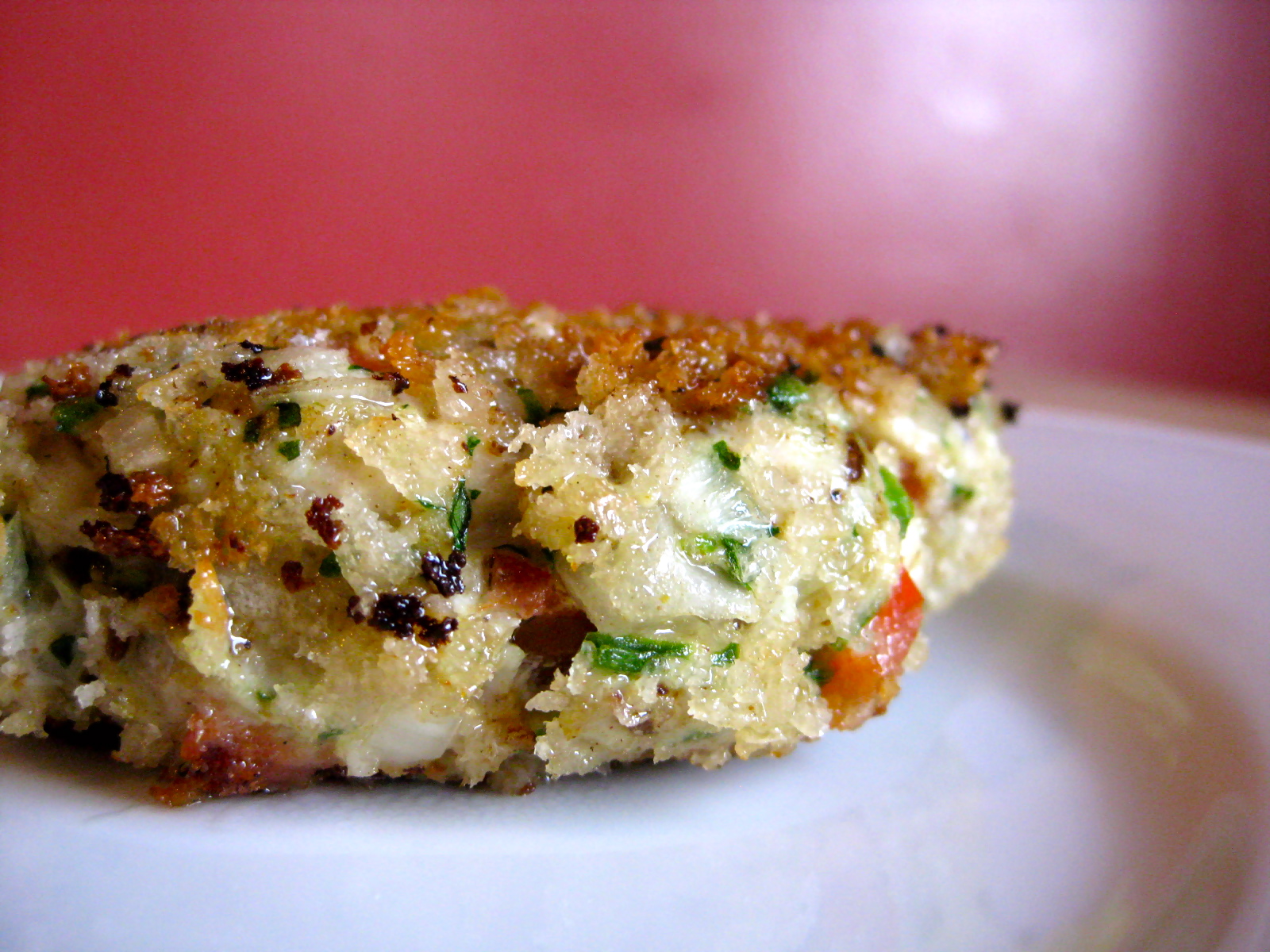
Though the chicken I used was nowhere near as fresh as the chicken in my cousin’s kebabs, I now understand the revelry that surrounded them. The chicken is moist while the outer breading is pleasingly crunchy, and the earthy spices combine with fresh green chilies to make a fantastic blend of lightly spicy and savory elements in each bite.  I may be many years late to this wonderful dish, but I feel that makes me uniquely qualified to insist that you not wait as long as I did to discover it.  Eat it now.

Indian Chicken Kebabs

Adapted from Madhur Jaffrey Indian Cooking

Jaffrey’s original recipe called for slightly different ingredients and yielded a smaller number of larger kebabs.  I prefer a daintier portion of meat, so I made each kebab smaller, but I think these kebabs would be even better if they were sized into two or three bite portions.  I served the kebabs with basmati rice and a bit of cucumber and yogurt sauce, but you could also tuck one into a bit of naan to make yourself a lovely light meal.

Makes 8 kebabs

1 lb finely ground chicken (I bought ground chicken and then pulsed it in the food processor to make it even finer)

12 tablespoons panko breadcrumbs, or another very fine, dry breadcrumb

3/4 teaspoon salt

3/4 teaspoon garam masala

1/2 teaspoon cumin seeds

1/2 teaspoon coriander seeds

1/2 cup finely chopped cilantro

2 tablespoons finely chopped fresh mint

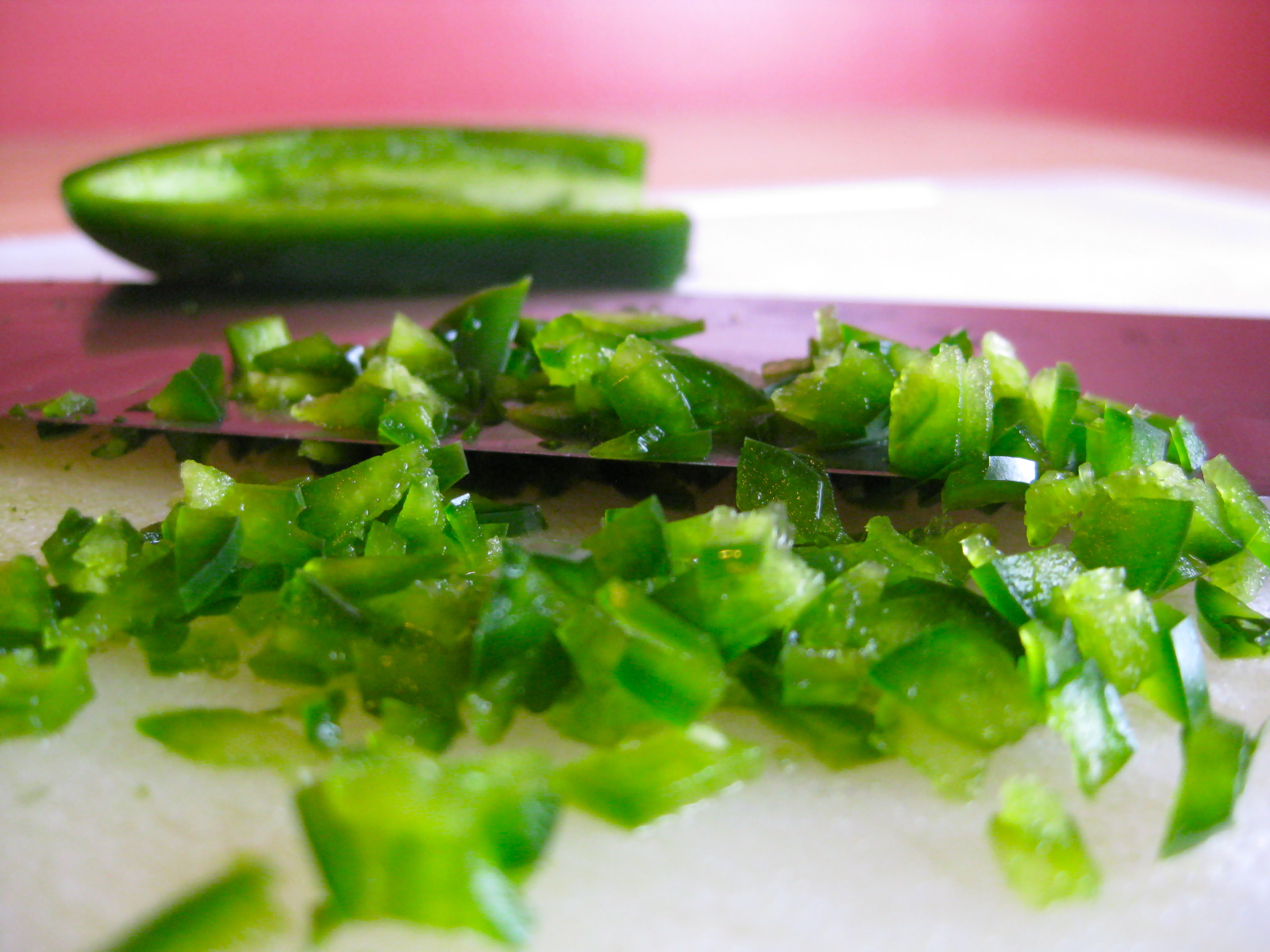
1 or 2 fresh, hot green chilies, finely chopped

1/2 medium onion, peeled and finely chopped

2 teaspoons peeled, finely grated fresh ginger

1/2 medium fresh tomato, finely chopped

1/4 teaspoon cayenne pepper

vegetable oil to line the bottom of a frying pan

lemon wedges

Preheat oven to 300 degrees F.

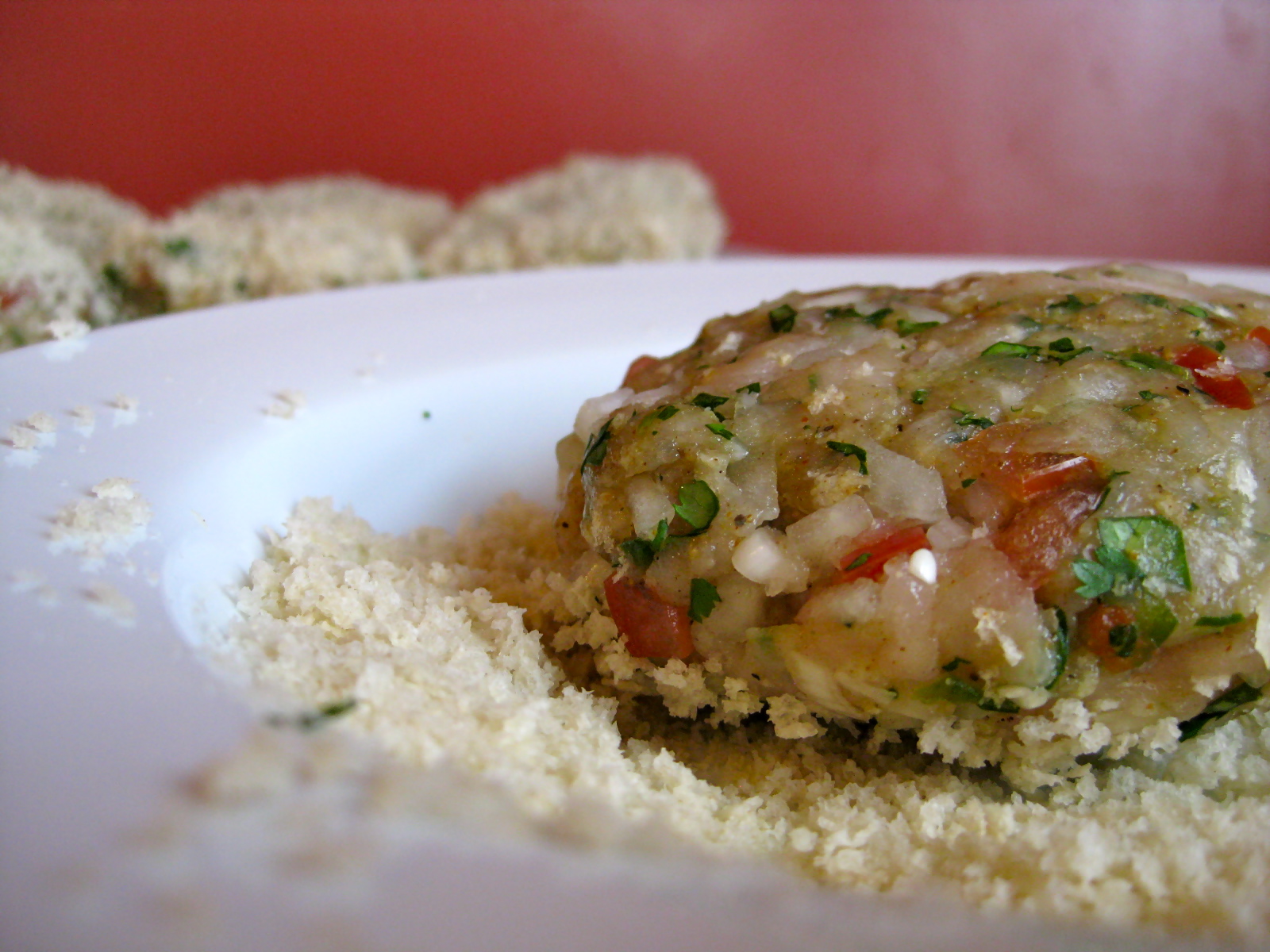
Combine the chicken, 4 tablespoons of the breadcrumbs, salt, garam masala, cumin seeds, coriander seeds, cilantro, mint, green chilies, onion, ginger, tomato, and cayenne in a bowl.  Mix well and form 8 patties.  Put the remaining 8 tablespoons breadcrumbs on a plate and dip each patty in them.  There should be a thin layer of breadcrumbs on all sides.  Cover and refrigerate the patties in a single layer until needed.

Put enough oil in a large frying pan to cover the bottom lightly and set over medium-high heat.  When hot, put in the patties–only as many as the pan will hold in a single layer.  Cook for 3 minutes on each side.  Turn heat to medium and cook for another 2-3 minutes on each side.  Place cooked patties on a large baking sheet and place in preheated oven for 5 minutes to keep warm and continue cooking all the way through.  If you make several very small patties instead of 8 medium ones, it will not be necessary to continue cooking the patties in the oven.

Before eating, top the patties with a generous squeeze of lemon juice.