Archive | Lemon RSS feed for this section

Roasted Broccoli Pasta Salad

18 Jun

Not too long ago, we attended our first potluck picnic of the season.  This, along with the season’s inaugural bike ride downtown to picnic on the waterfront, and the breaking down of my willpower when it comes to filling my belly with fresh strawberries and lemon cream, heralds the dawn of a new eating season in our household.  Summer foods are upon us.
Most summer foods can be easily spotted and categorized as such.  You have fruit (strawberries, blueberries, peaches, nectarines), you have picnic food (stuffed sandwiches, a simple baguette with a round of cheese to accompany it), and you have what is quite possibly the most misunderstood of summer foods, the pasta salad.
I know what you are thinking: Pasta salad is misunderstood?  And my answer is yes, horribly so.  Most pasta salads are improperly seasoned, unbearably bland, kept in the refrigerator until their starches seize and become unpleasantly pasty, and/or so inappropriately covered with mayonnaise that one can’t even begin to identify the flecks of vegetables that are hiding within.  Which brings me to another point of contention, that being the utterly unbalanced proportion of pasta to vegetables.  Look, I know it’s a pasta salad, but does that really mean that 90% of what comprises the salad really have to be just pasta?
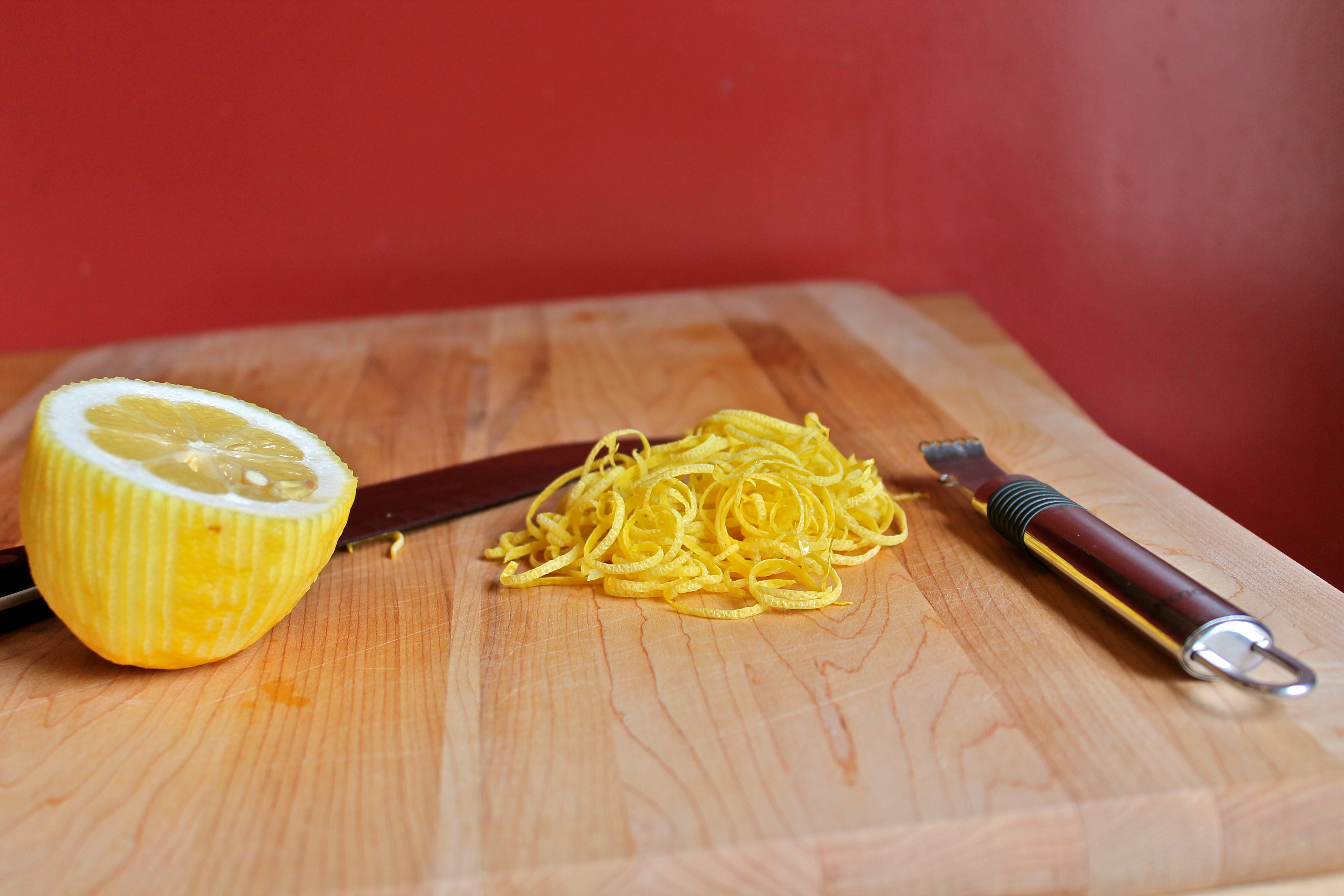
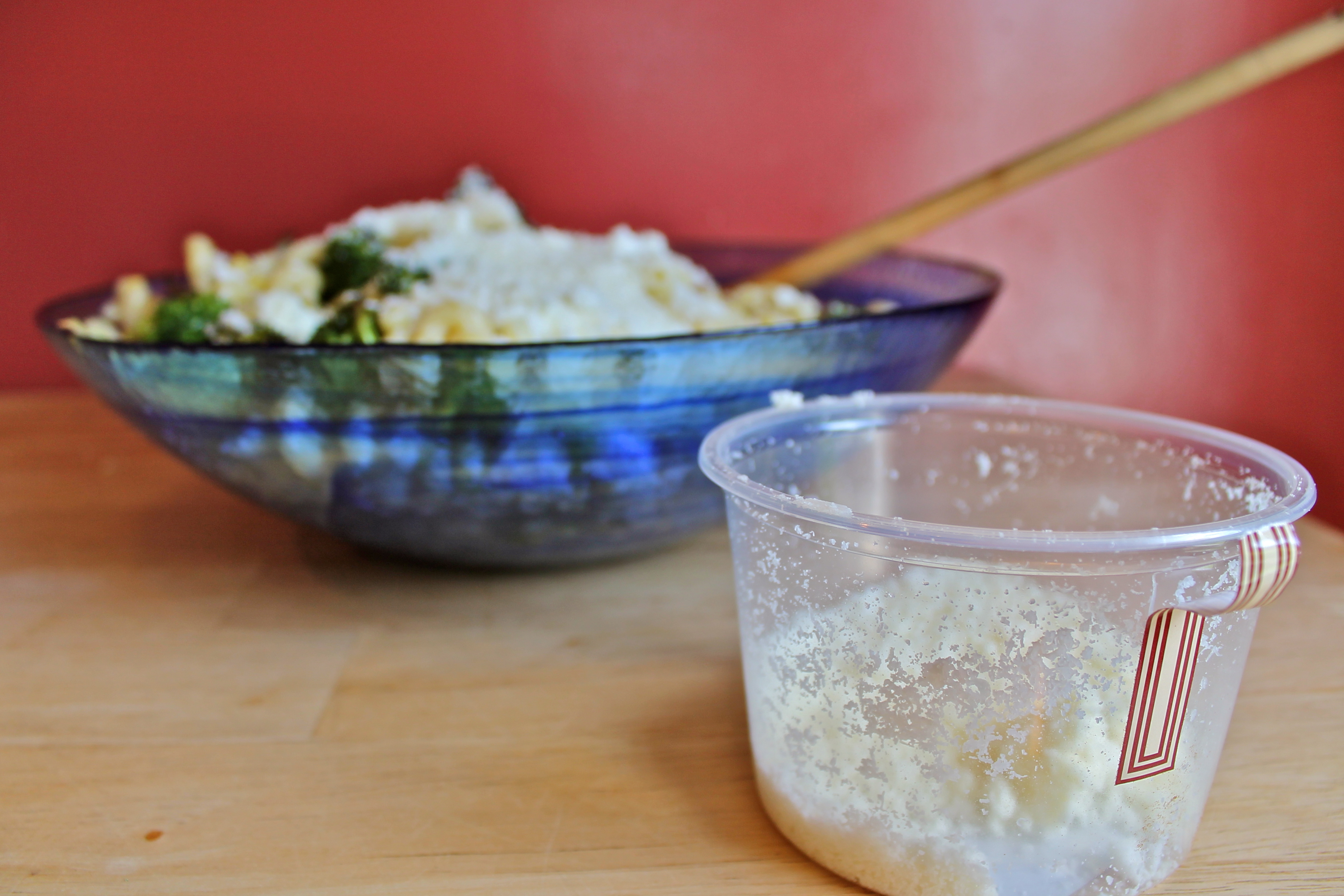
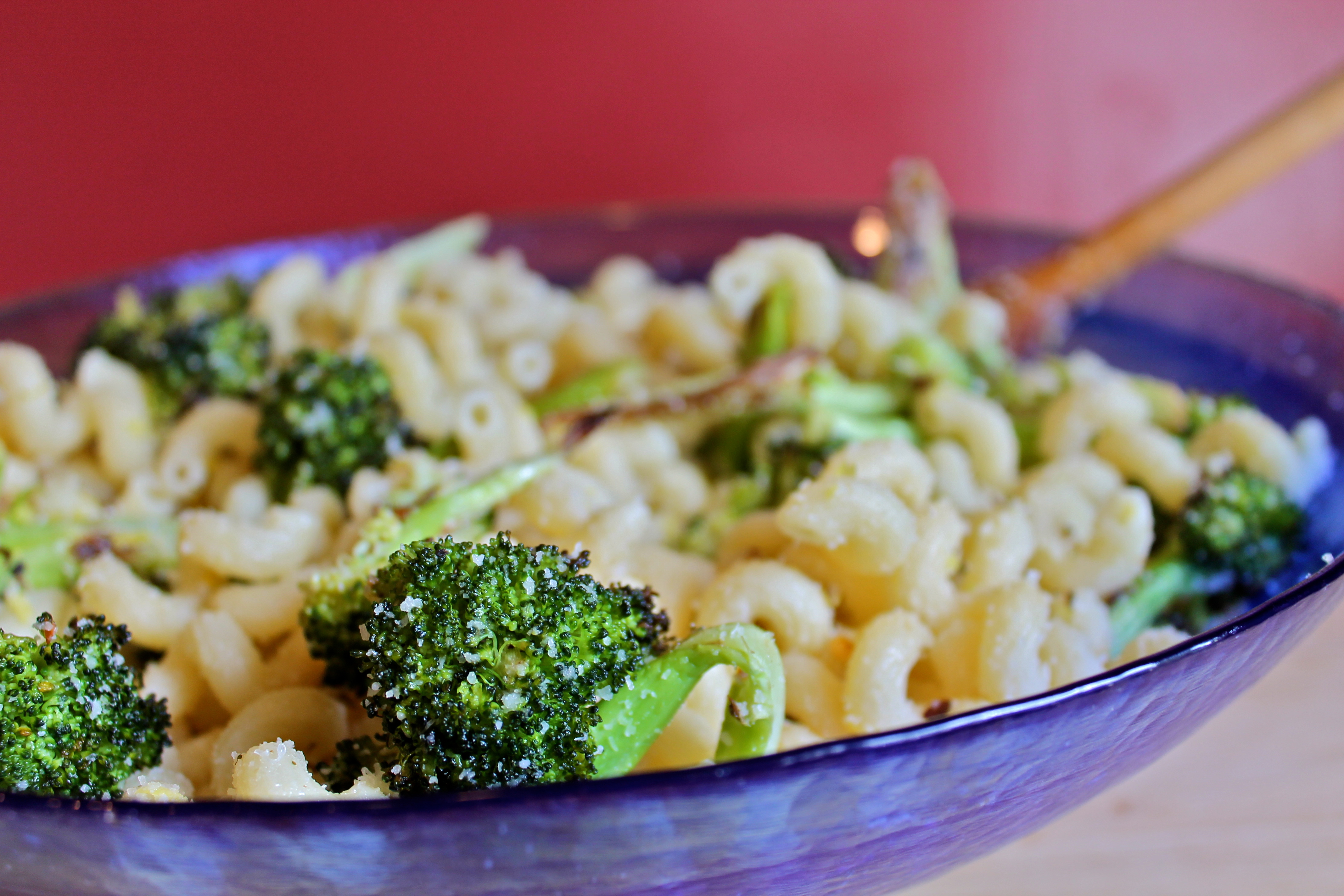
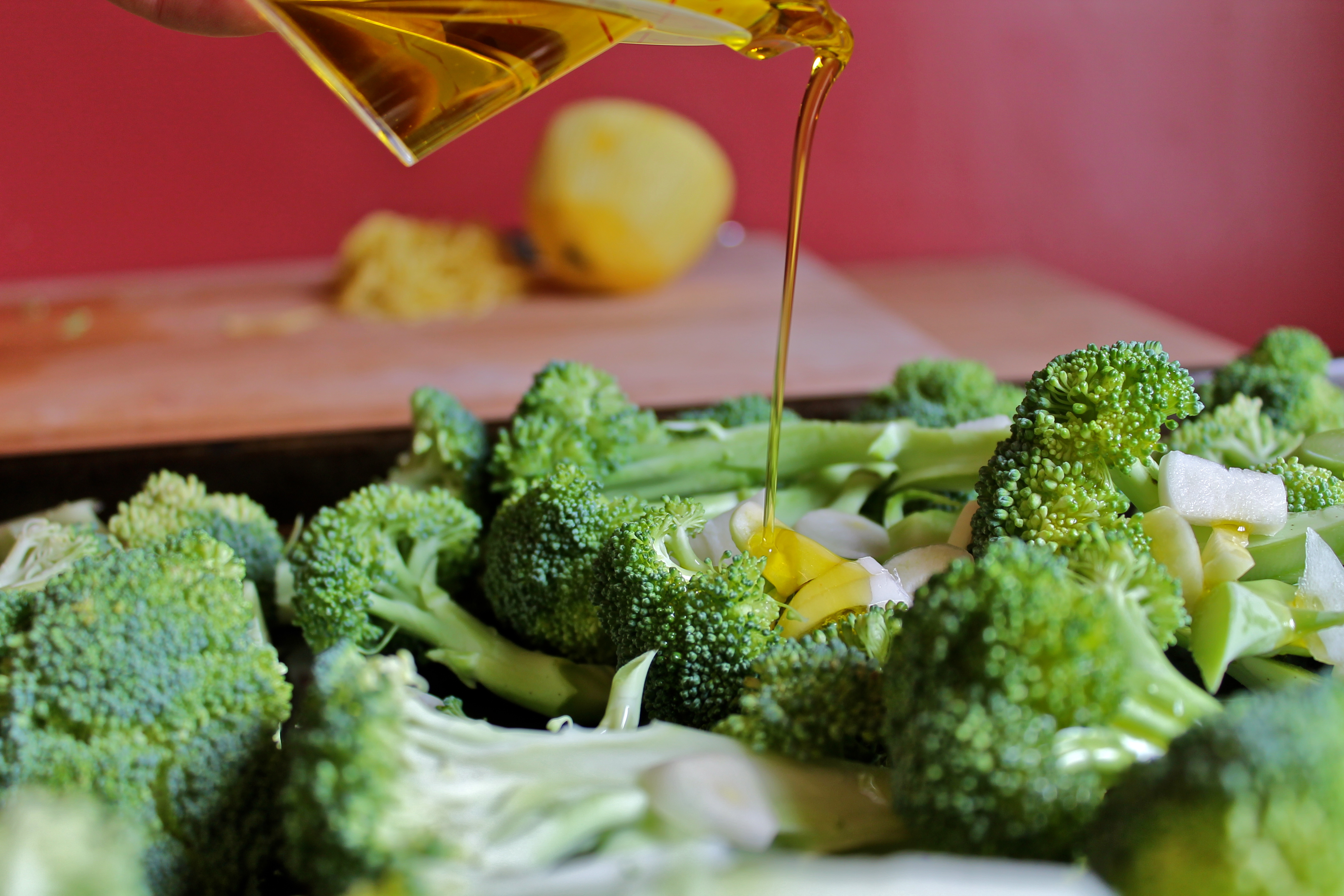
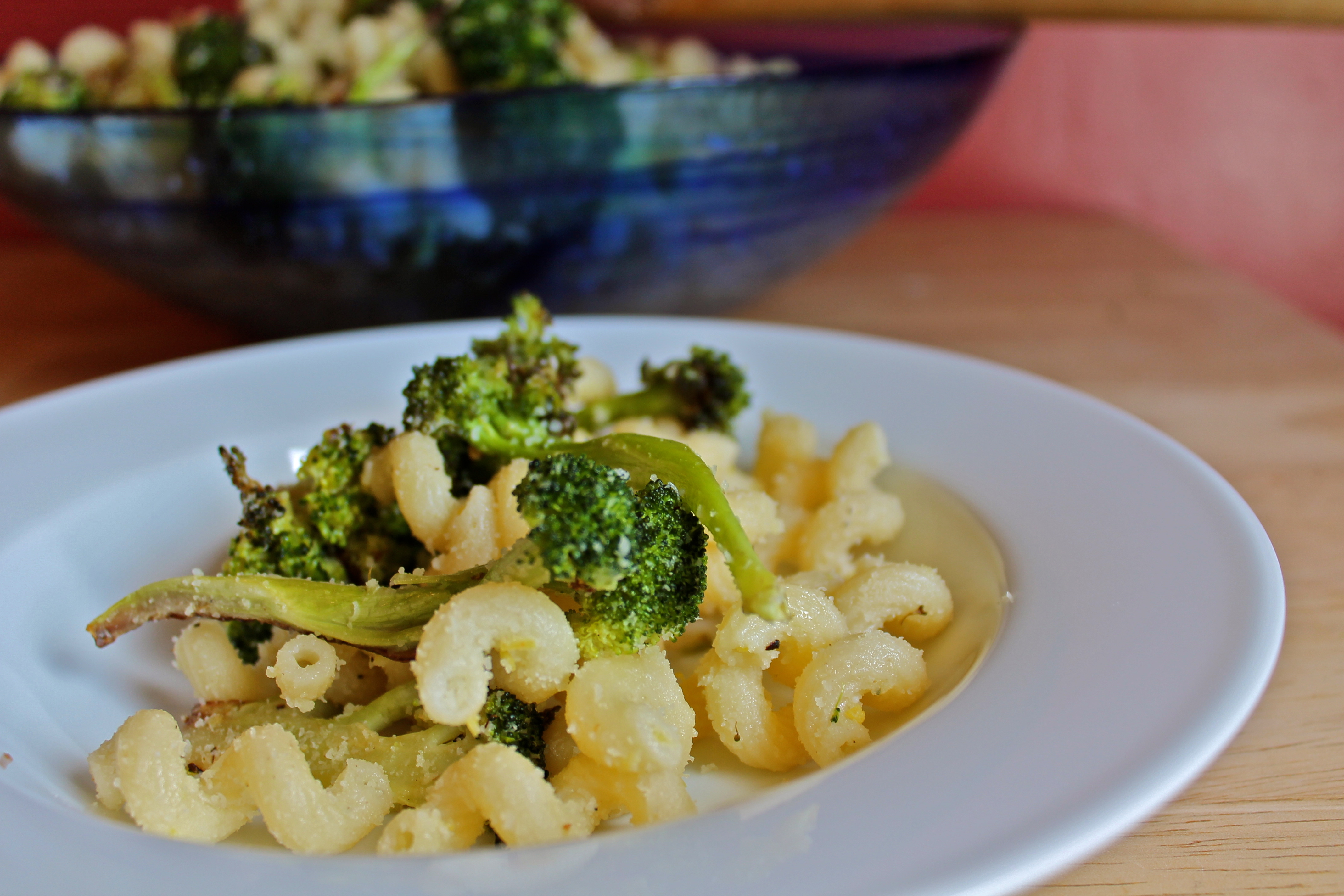
Perhaps I am alone in my displeasure, but, were it not for my feelings of malcontent, I never would have come up with the incredibly tasty and fulfilling pasta salad to see here.  In it, big chunks of broccoli get roasted in olive oil with generous slivers of garlic and a hearty pinch of red pepper flakes.  The pasta, before meeting up with the roasted broccoli, is bathed in a splash of lemon juice, soaking up the brightness as it cools to a perfectly toothsome texture.  A final toss with a confetti of lemon zest and a blizzard of finely grated, wonderfully sharp Pecorino Romano cheese, and it is done.  And, thankfully you are done—done eating dull, limp pasta salads, and done hunting for something delicious and new to take to a potluck and be welcomed with open arms.
Last Year: How to Make Smoked Salmon at Home–this is by far the most popular post on here, and for good reason.

Roasted Broccoli Pasta Salad Recipe

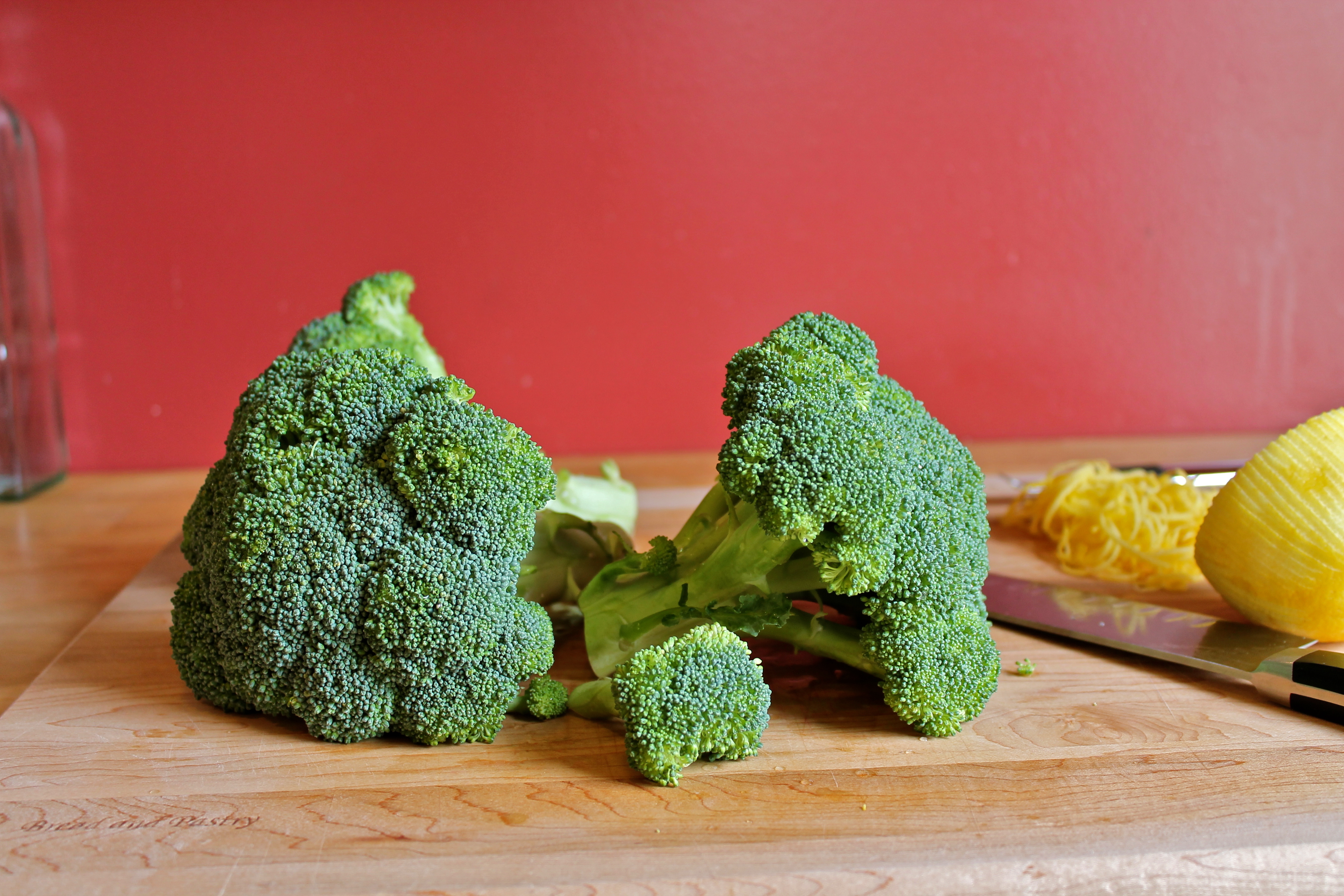
1 pound broccoli florets, trimmed into equally-sized pieces with a long portion of stems intact

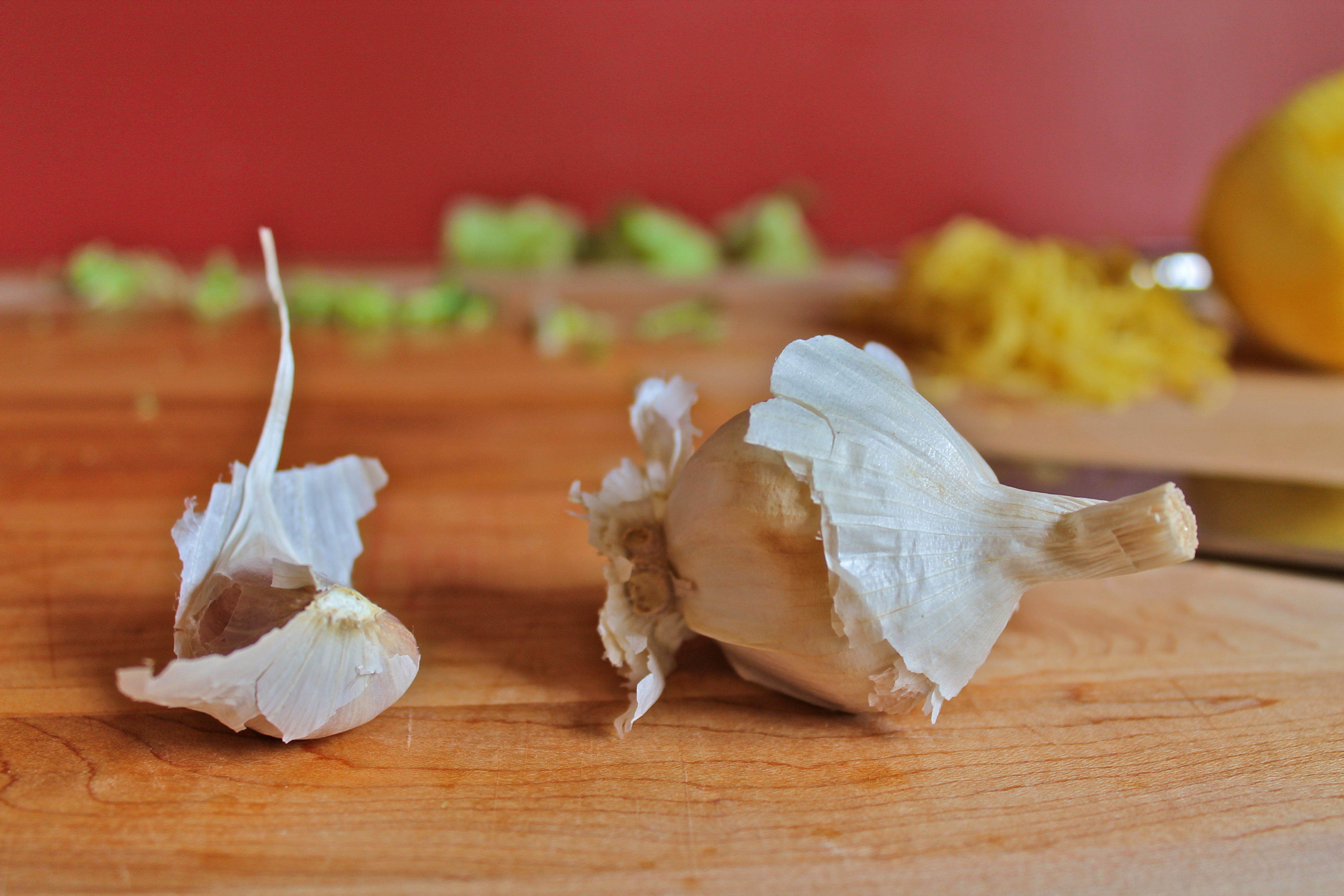
3 large cloves of garlic, cut into thin slices

¼ teaspoon red pepper flakes

¼ cup extra virgin olive oil

salt to taste

1 pound pasta

¼ cup finely grated or chopped lemon zest

2 tablespoons fresh lemon juice

1 cup finely grated Pecorino Romano cheese

Preheat oven to 425 degrees Fahrenheit.

On a large baking sheet, combine broccoli, sliced garlic, red pepper flakes, olive oil, and salt to taste.  Toss everything together until uniformly coated in olive oil.  Roast broccoli and garlic in the center of the oven for 20 minutes, until both the broccoli and garlic have developed a nice layer of caramelization.  Remove from oven, stir a bit, then set aside to cool slightly.

While the broccoli is roasting, cook the pasta in salted water until tender.  Drain pasta in a colander, then toss with lemon juice while still hot.  Allow to sit for 5 minutes to cool a bit, tossing frequently to aid in cooling and to keep the pasta from sticking together.

When both the pasta and broccoli are no longer piping hot, but still warm, pour the pasta into a large bowl.  Scrape the broccoli, along with every bit of olive oil and garlic left on the baking sheet, onto the pasta.  Add lemon zest and cheese, then toss thoroughly to combine.  Serve at room temperature.

Strawberry Lemon Cream Puffs

31 May

Though the arrival of our garden strawberries is still a few weeks away, it has proven difficult to resist the siren song of the plump, scarlet berries populating the market right now.  Even our local farmers markets have been showcasing some early strawberries, a feat that seems almost miraculous, what with the rather unstable weather we’ve been experiencing lately.  Or, more accurately, that we experience every year, though it has become very clear that, due to what I can only deem an effort of pure survival, I have apparently trained myself to forget every year.  This is the only logical explanation for why I still live in a place where 70 degrees is considered a warm and balmy June day.  But, let’s talk about something else

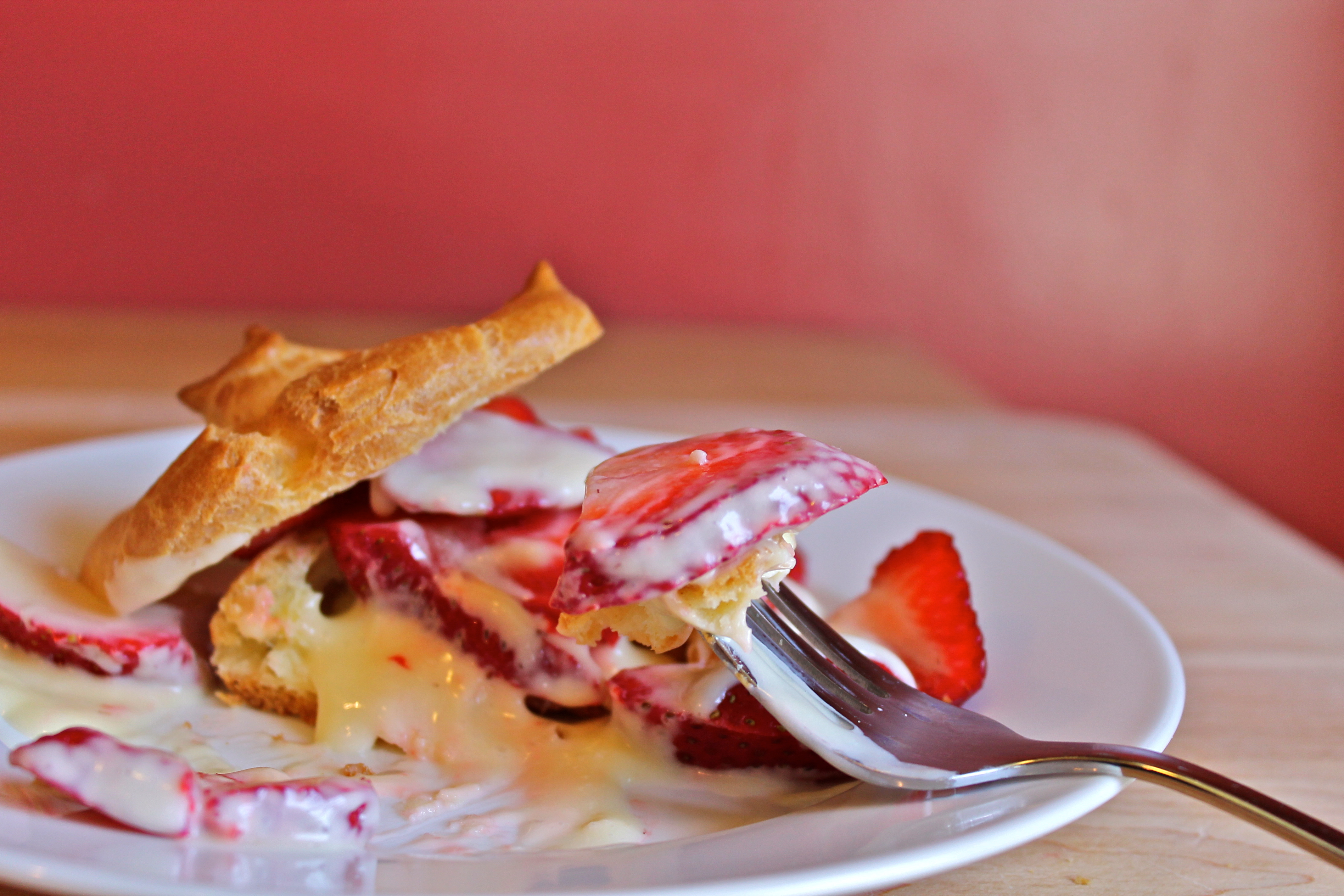
Specifically, let’s talk about strawberries, and how they seem to simply sing when matched with lemon.  This is not the first time I have decided to nestle some strawberries inside a cloud of lemon cream, and it is clear that there is good reason for my path back to this companionable flavor pairing.  The brightness of lemon brings out all the best notes of a sweet, dark berry, and the mellow smoothness of this particular lemon cream seems to make everything it touches transform into a soft, delicate dream.  Though the lemon cream is certainly not lacking in richness, it manages to maintain a lightness that belies its hefty butter content.

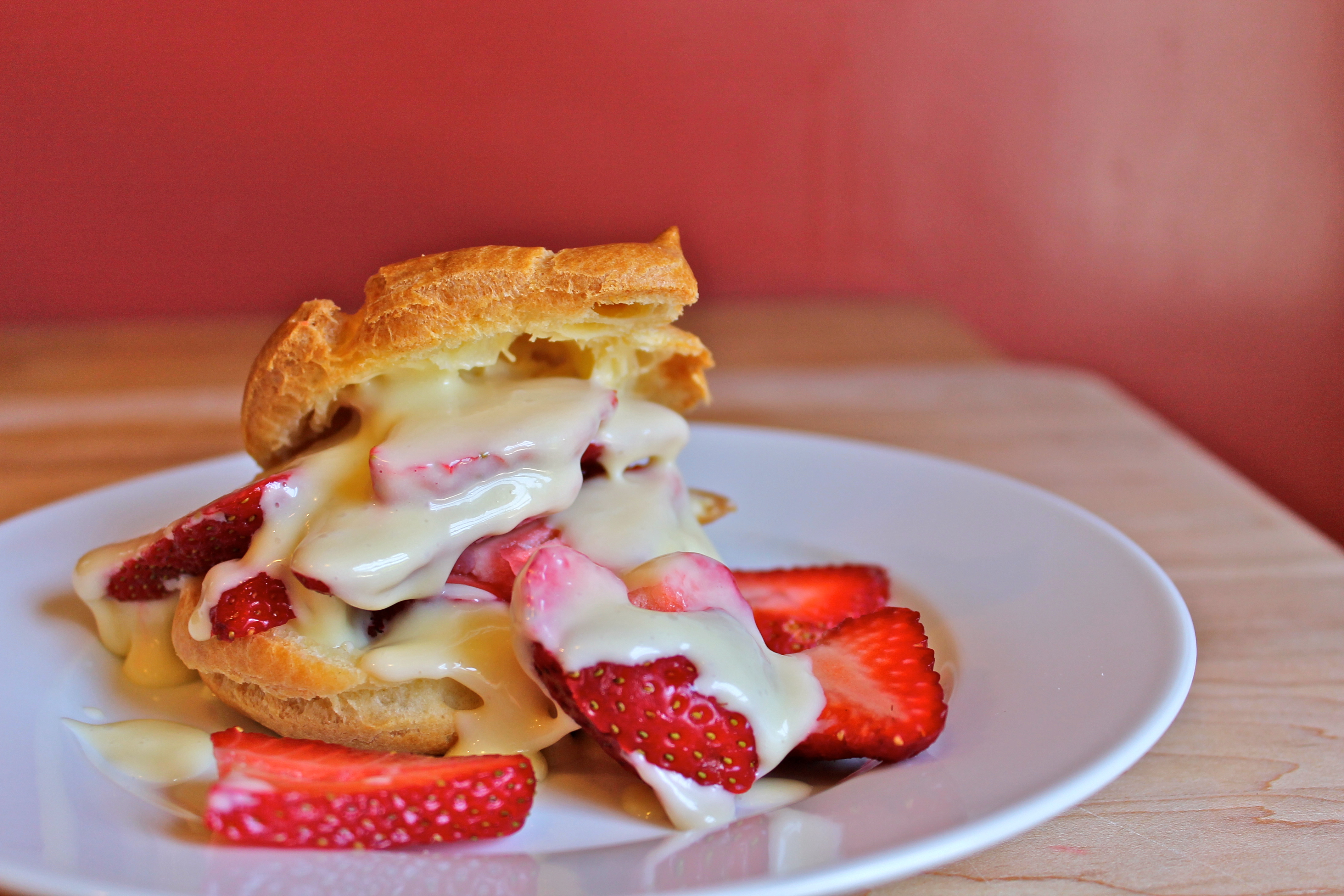
It was that exact lightness that led me to this riff on strawberry shortcake that was a bit less dense than the usual (and perfectly delightful) offering of a buttery biscuit topped with slices of berries.  When pastry is the topic at hand, you can’t get any lighter than a classic pâte à choux, and as soon as I envisioned a plate of airy cream puffs drizzled with tart lemon cream and piled high with ripe strawberries, there was no going back.  Unless, of course, you count going back for seconds, which I most certainly did.

Strawberry Lemon Cream Puffs Recipe

Cream Puffs

Pâte à choux

Adapted from Joy of Cooking

½ cup water

½ cup milk

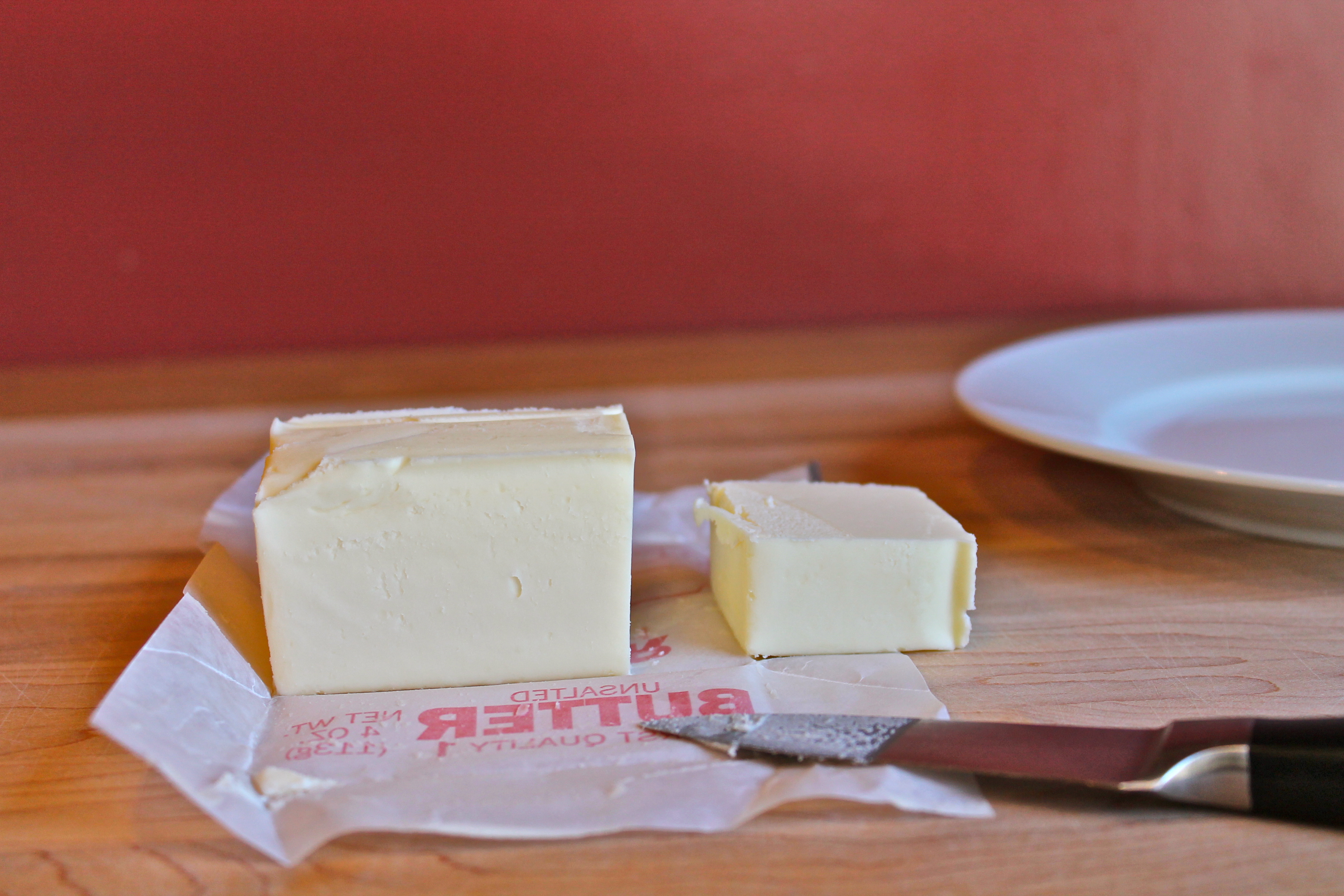
8 tablespoons (1 stick) unsalted butter, cut into small pieces

¼ teaspoon fine grain sea salt

1 cup unbleached all-purpose flour

4 large eggs

Preheat oven to 400 degrees Fahrenheit.  Position a rack in the lower third of the oven.  Line a large baking sheet with a piece of parchment paper.

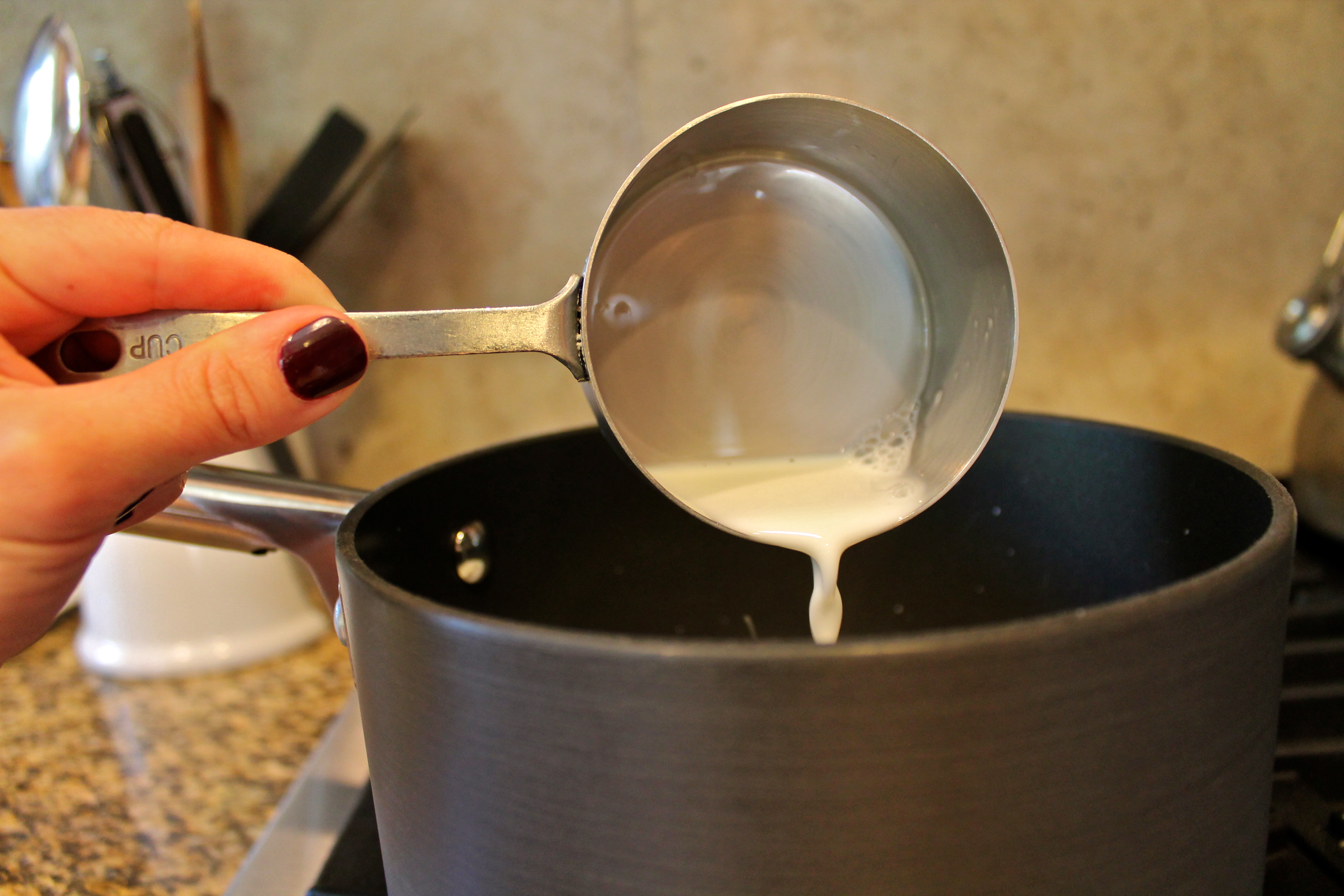
In a medium saucepan, combine water, milk, butter, and salt.  Bring to a full boil over medium heat.  Immediately add flour all at once and stir vigorously with a sturdy wooden spoon until the mixture pulls away from the sides of the pan.  Reduce heat to low and continue to stir the mixture over the heat for about 1 minute.  As the moisture in the mixture evaporates, a little bit of butter may begin to seep out, which is just fine.

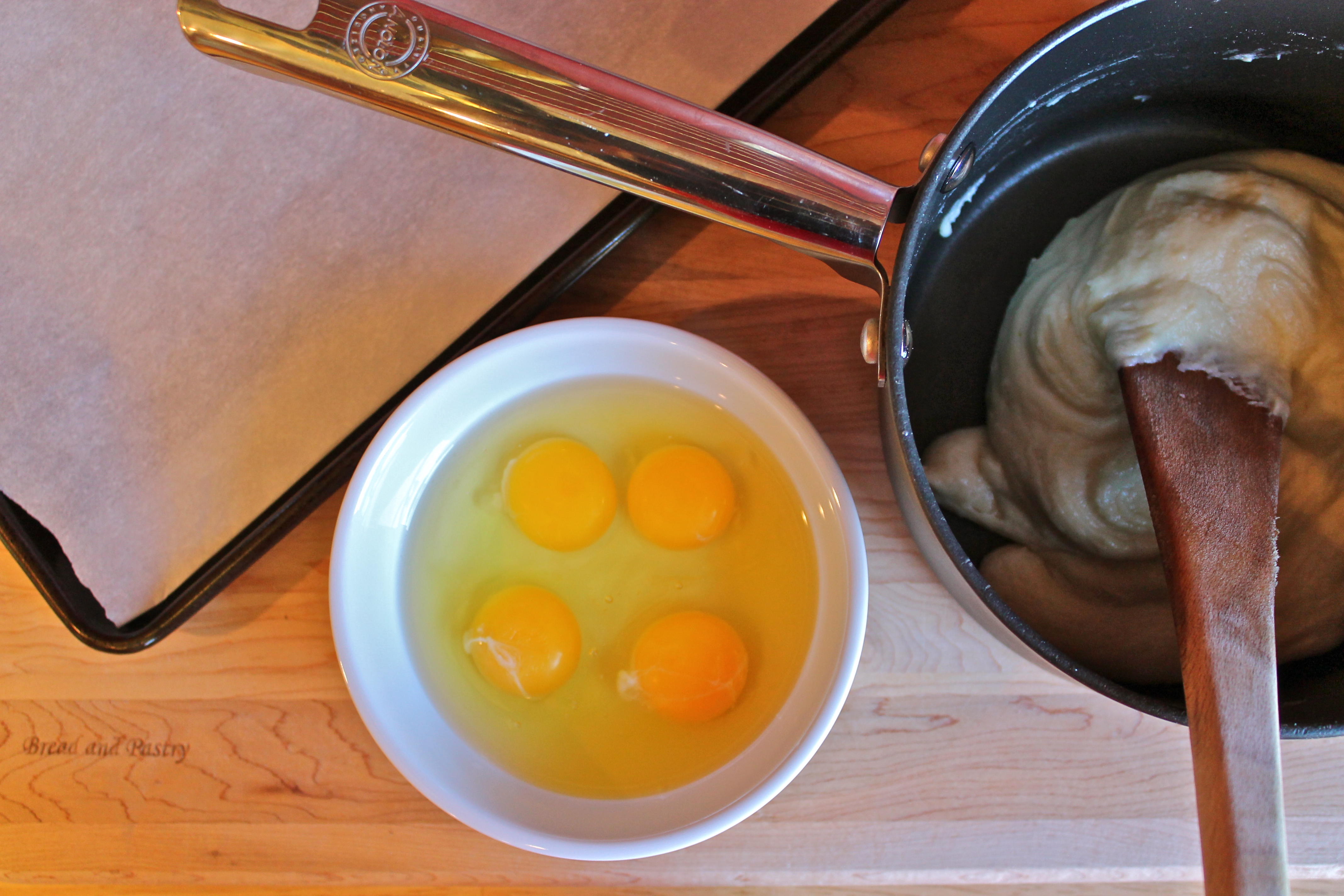
Transfer the mixture to a bowl and allow to cool for 5 minutes.  When the mixture has cooled a bit, beat in the eggs, one at a time, using a wooden spoon.  Beat the dough vigorously in between each egg, making sure each egg is incorporated before adding another.  The dough should end up looking quite smooth and shiny.

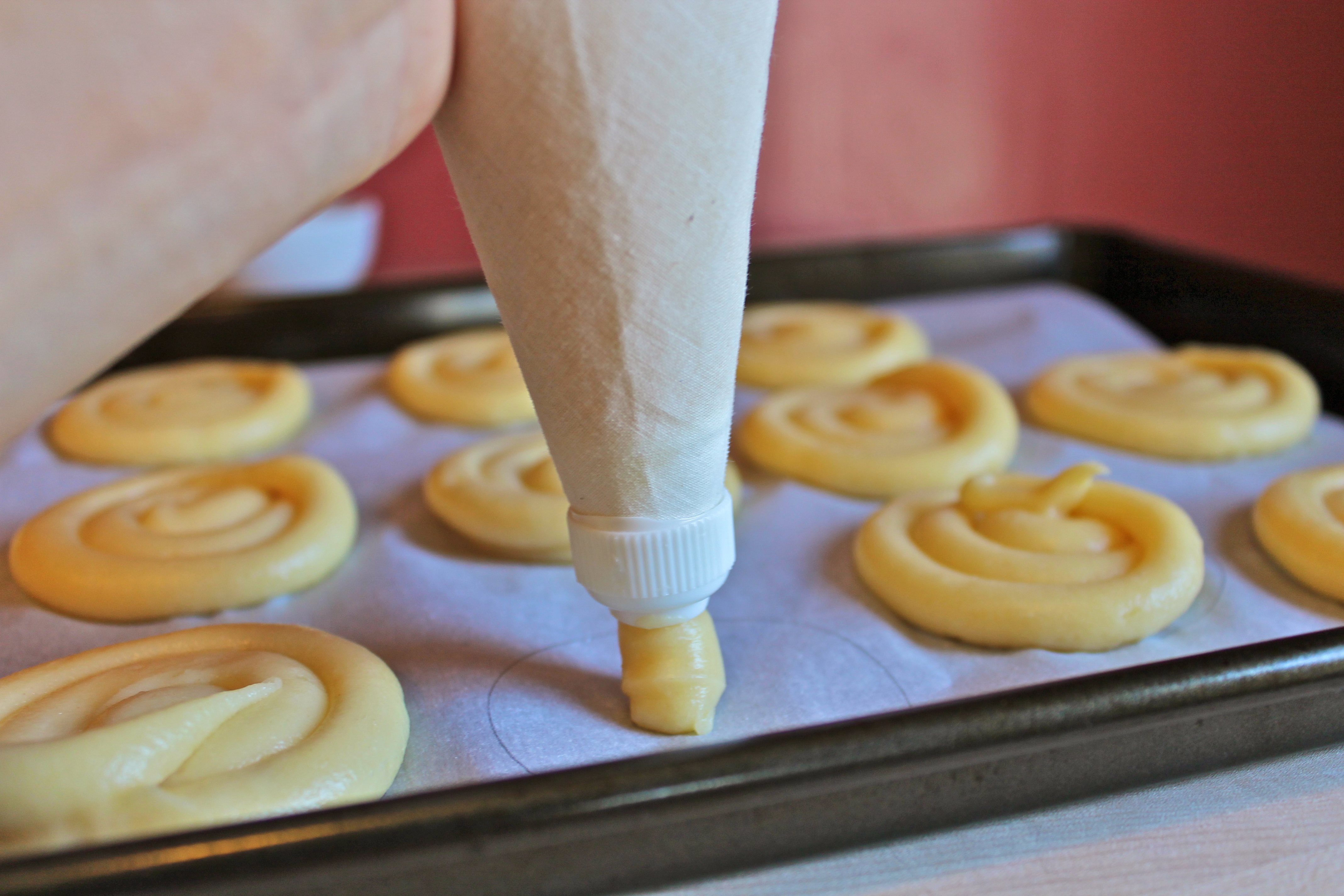
To form cream puffs, fill a pastry bag fitted with a plain, ½-inch tip with choux paste (alternately, you could fill a large Ziploc bag with choux paste, then clip off a corner of the bag with a petite, ½-inch cut).  On the prepared baking sheet, pipe the choux paste into tight swirls about 2 ½ to 3 inches in diameter.  I fit about 11 swirls on one large baking sheet, and had to bake two batches of cream puffs, with 5 swirls in the second batch.

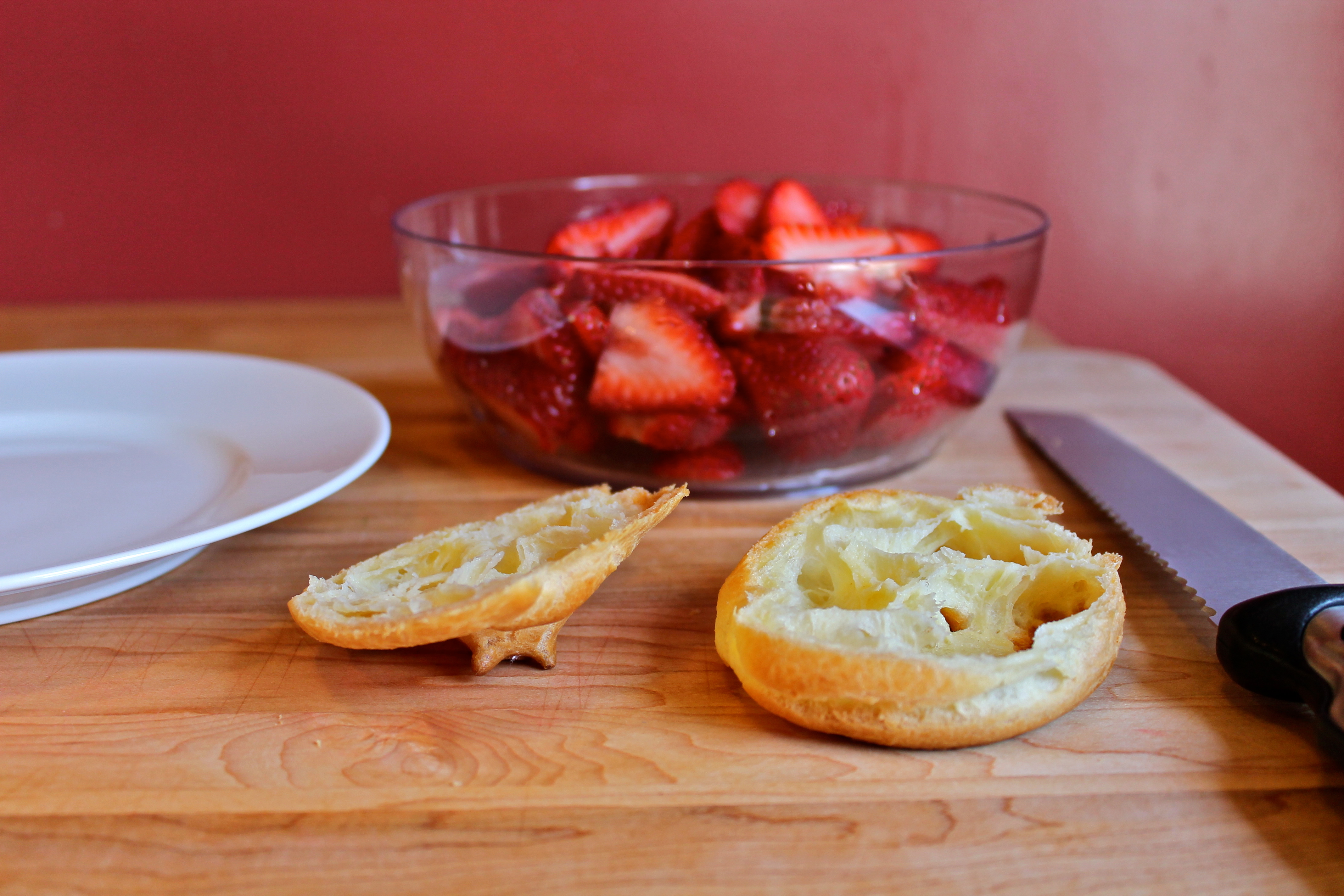
Bake the puffs for 15 minutes, then reduce the oven temperature to 350 degrees Fahrenheit and bake for an additional 20 to 25 minutes, until the puffs are golden brown and firm to the touch.  Turn off the oven, turn each puff upside down, poke a small hole in the bottom of each puff (this will allow steam to escape and keep your puffs from becoming soggy), and allow the puffs to dry in the oven for 10 minutes.  Remove the puffs from the oven, and allow to finish cooling on a wire rack.

Preheat oven to 400 degrees Fahrenheit, then repeat instructions to bake a second batch of cream puffs.

Makes 16 cream puffs.

Lemon Cream

Adapted from Tartine

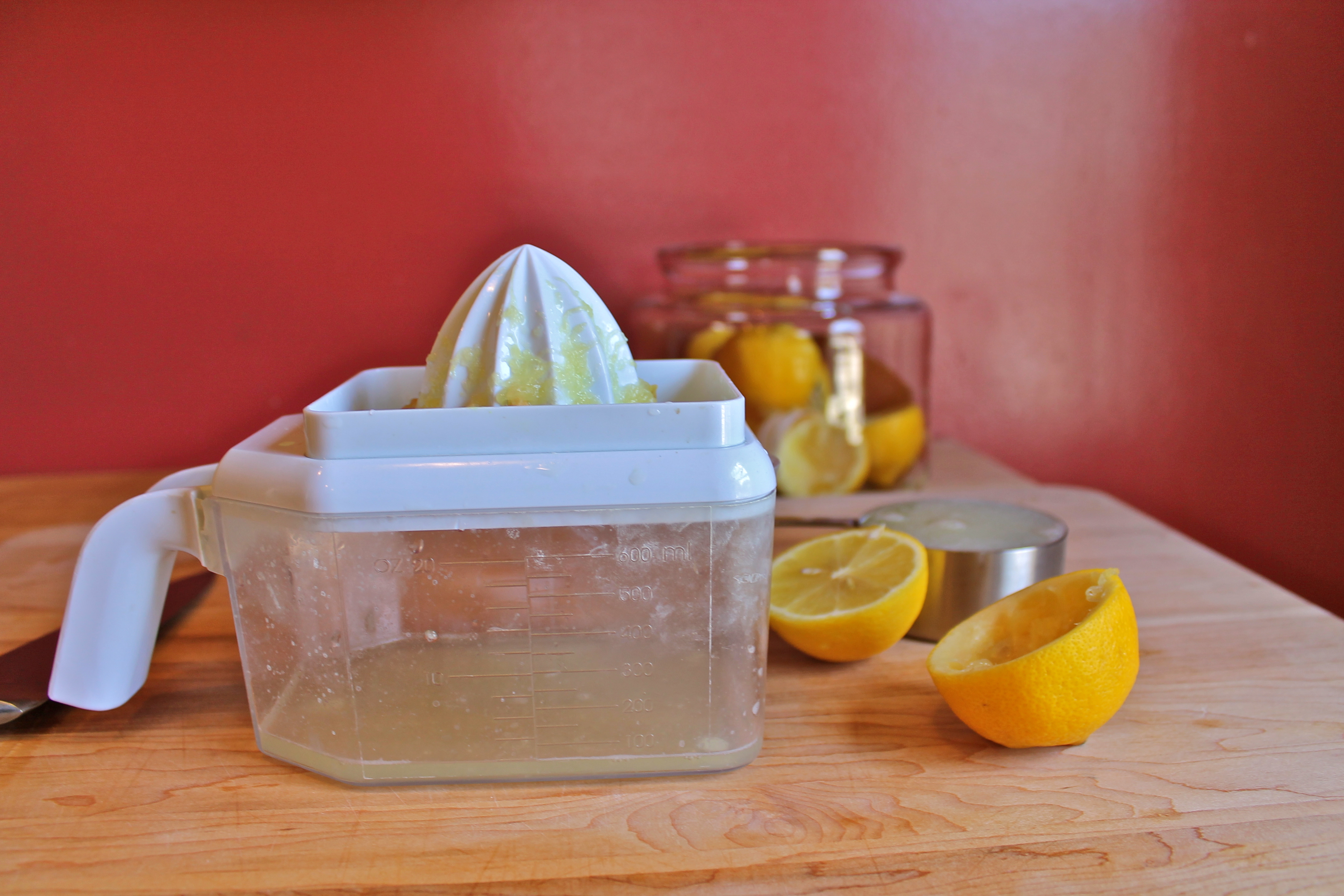
½ cup plus 2 tablespoons (5 ounces) of freshly squeezed lemon juice

3 whole large eggs

1 large egg yolk

¾ cup (6 ounces) sugar

pinch of salt

½ cup (4 ounces or 1 stick) cool unsalted butter, cut into 1 tablespoon pieces

Bring about 2 inches of water to a simmer in a saucepan set over medium heat.  In a non-reactive bowl that is able to rest securely in the rim of the saucepan without touching the water, combine lemon juice, whole eggs, egg yolk, sugar, and salt.  Whisk the ingredients together.  Do not allow the egg yolks and sugar sit together without being stirred constantly, as the sugar will react with the eggs and turn them granular.  Place the bowl over the saucepan of simmering water and continue to whisk for around 10-12 minutes, until the mixture thickens considerably and reaches a temperature of 180 degrees Fahrenheit.  Remove the bowl from above the water and allow the mixture to cool to 140 degrees Fahrenheit.  Stir from time to time to help the mixture cool and release its heat.

When the cream has reached 140 degrees, pour it into a blender, or leave it in the bowl if you will be using an immersion blender to mix the lemon cream.  Add the butter to the lemon cream, 1 tablespoon at a time, blending the mixture continuously until each piece of butter is completely incorporated before you add the next one.  The cream will be pale yellow and quite thick.

The lemon cream can be used immediately, or it can be made ahead and kept in the refrigerator, tightly sealed, for up to 5 days.  Makes about 2 cups of lemon cream.

3 pounds of strawberries, hulled and sliced

1 pint whipping cream

½ teaspoon sugar

½ teaspoon pure vanilla extract

Combine the whipping cream, sugar, and vanilla, and whip together until it forms soft peaks.

To assemble strawberry lemon cream puffs, slice off the top of a cream puff.  On the bottom of a puff, drizzle on a bit of lemon cream.  Pile strawberries on top of the cream, drizzle on a bit more cream, then top with a dollop of whipped cream.  Place the top of the cream puff on the pile, and serve.

Makes 16 cream puffs.

Ginger Cardamom Cake with Lemon Glaze

25 May

As my week-plus of Indian food postings comes to a close, it would seem only natural thing I take the time to focus on an Indian dessert offering.  The problem is, I am not the most ardent fan of Indian desserts.  Though there are exceptions, I find most Indian desserts to be unbearably sweet, unpleasantly textured, and nearly always containing golden raisins, of which I am no friend.  With apologies to half of my genetic make-up, here is the part where I admit that, after a nice, satisfying Indian meal, I am 100% more likely to be found going out for gelato than reaching for the Indian dessert menu.

It is not as though a petite cup of gelato after an Indian meal is a crime against humanity, but, unless I happen to order a bit of mango sorbet, it is not the smoothest bookend I can think of to complete my meal.  And so, my dislike of Indian sweets, embarrassing as it is to admit, only compelled me to come up with a dessert that is at least slightly related to Indian cuisine, one that could be served at the end of an Indian feast and carry on the tone of the meal.

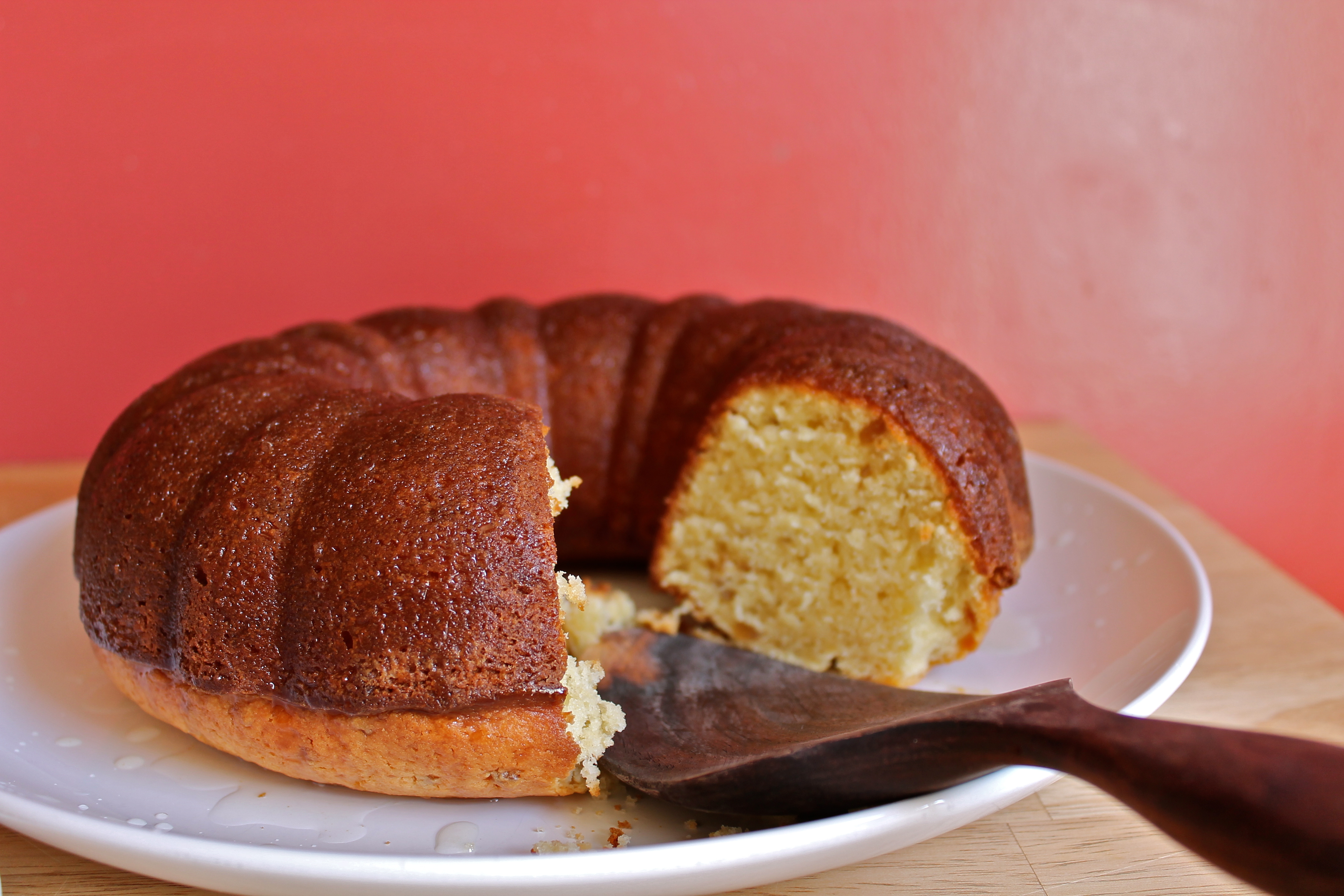
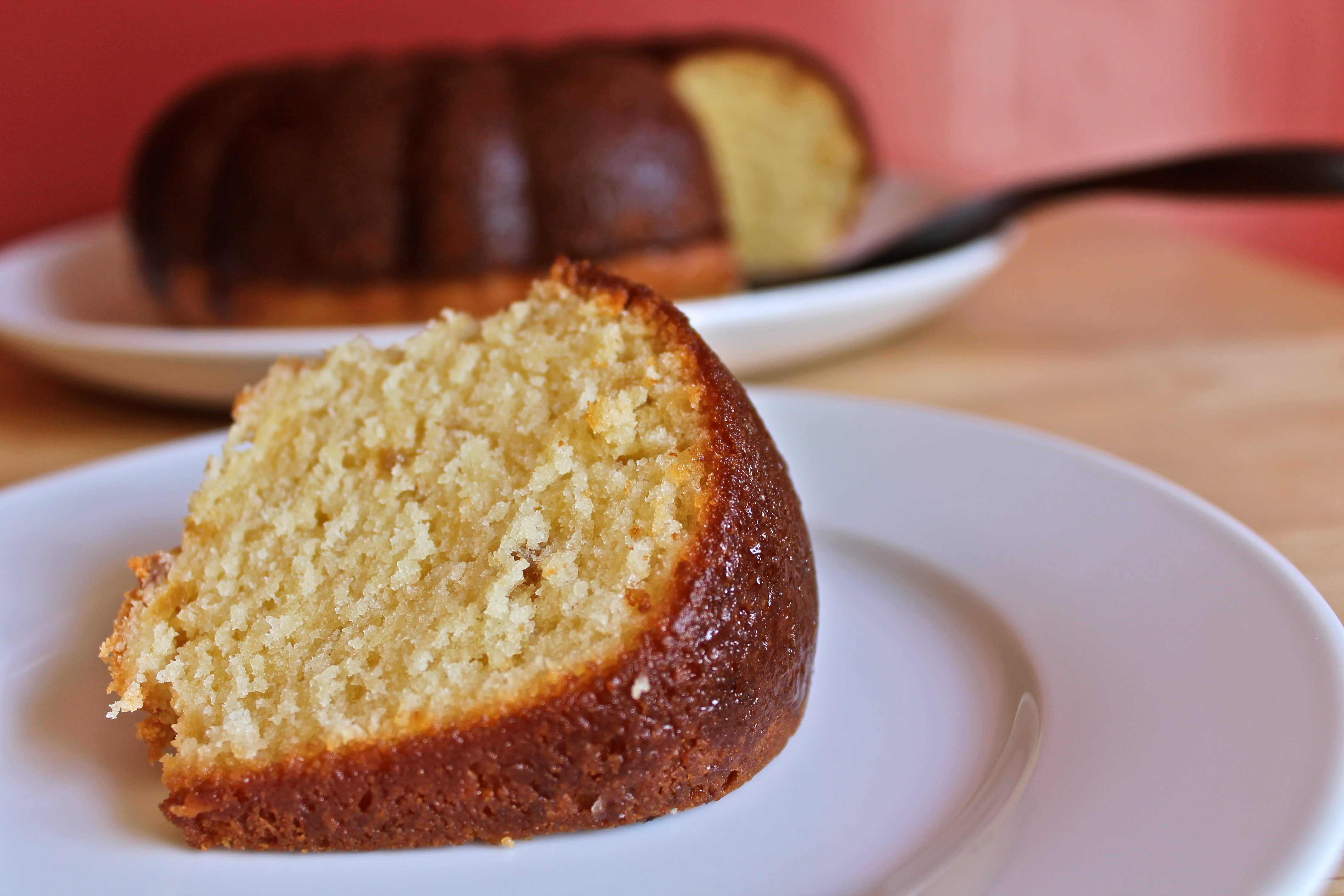
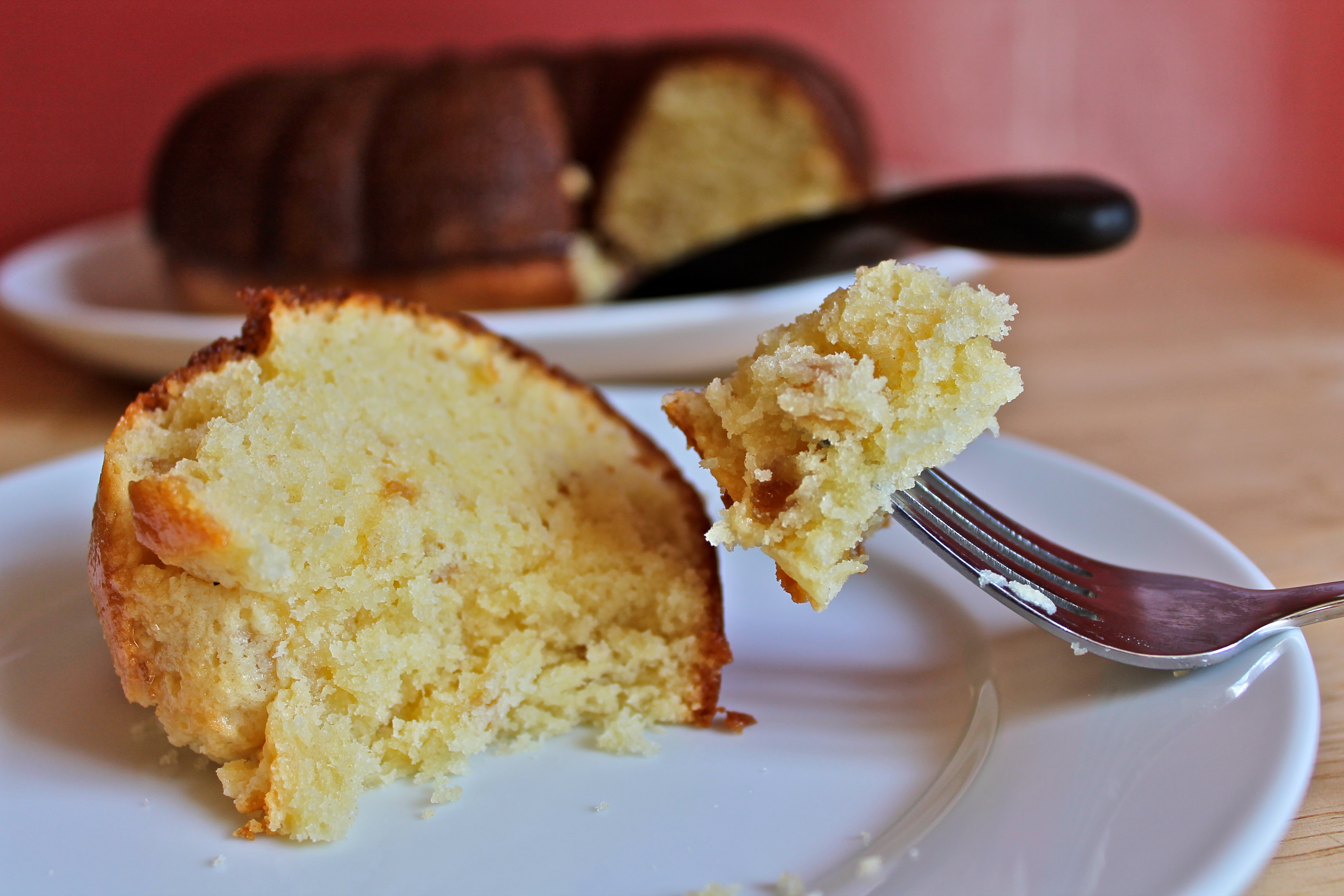
Though I can’t claim that this cake is in any way an actual Indian dessert, it is, at the very least, very much the type of dessert that makes for a satisfying end to an Indian meal.  Plumped up with three iterations of ginger (powdered, fresh, and crystallized), just barely scented with the aroma of cardamom, and brushed with a light, tart, lemony glaze, the flavor of the cake contains a subtle reminder of the savory foods that came before it.  If you are looking for something to bring your Indian meal to a gentle close, you should look no further.

You can, however, look beyond what I have initially come up with here.  Though a nice addition, the lemon glaze definitely takes this cake in a brighter direction than some people might like.  If you are looking for an even subtler presentation, omit the glaze and serve this cake with thin slices of ripe mango.  To make the ginger sit even more front and center, you can serve it with lightly whipped cream flavored with a bit of ginger extract.  No matter what you serve it with, you’re bound to be pleased with the result.

Last Year: Chocolate Cake with Coffee Frosting (and a Secret) This is one stand-out cake, my friends.

Ginger Cardamom Cake with Lemon Glaze Recipe

Ginger Cardamom Cake

2 1/4 cups all purpose flour

2 teaspoons ground ginger

½ teaspoon ground cardamom

2 teaspoons baking powder

1/2 teaspoon salt

1 cup (2 sticks) unsalted butter, room temperature

1 1/3 cups sugar

3 large eggs, at room temperature

2 teaspoons vanilla extract

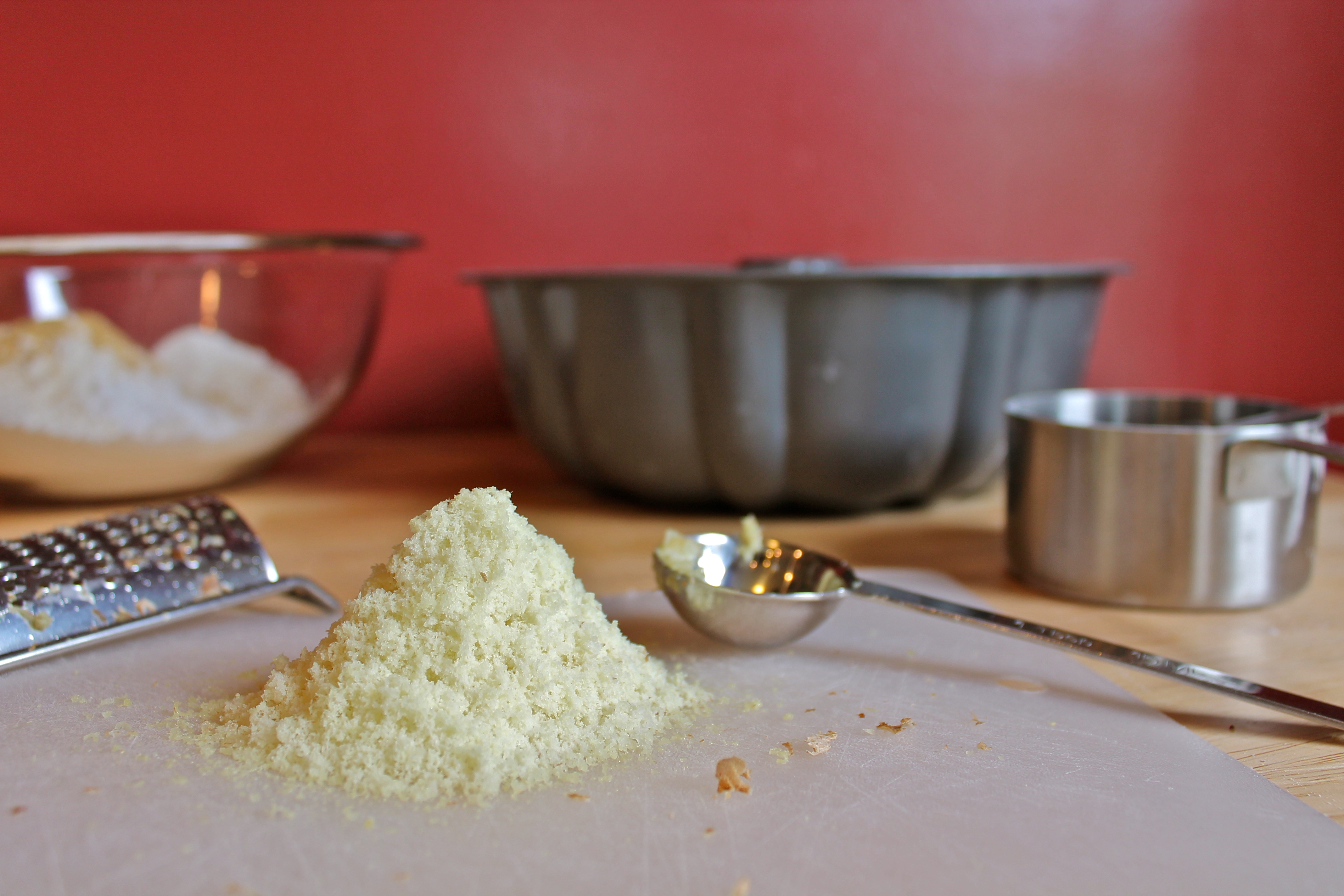
2 tablespoons finely grated fresh ginger

1 cup sour cream

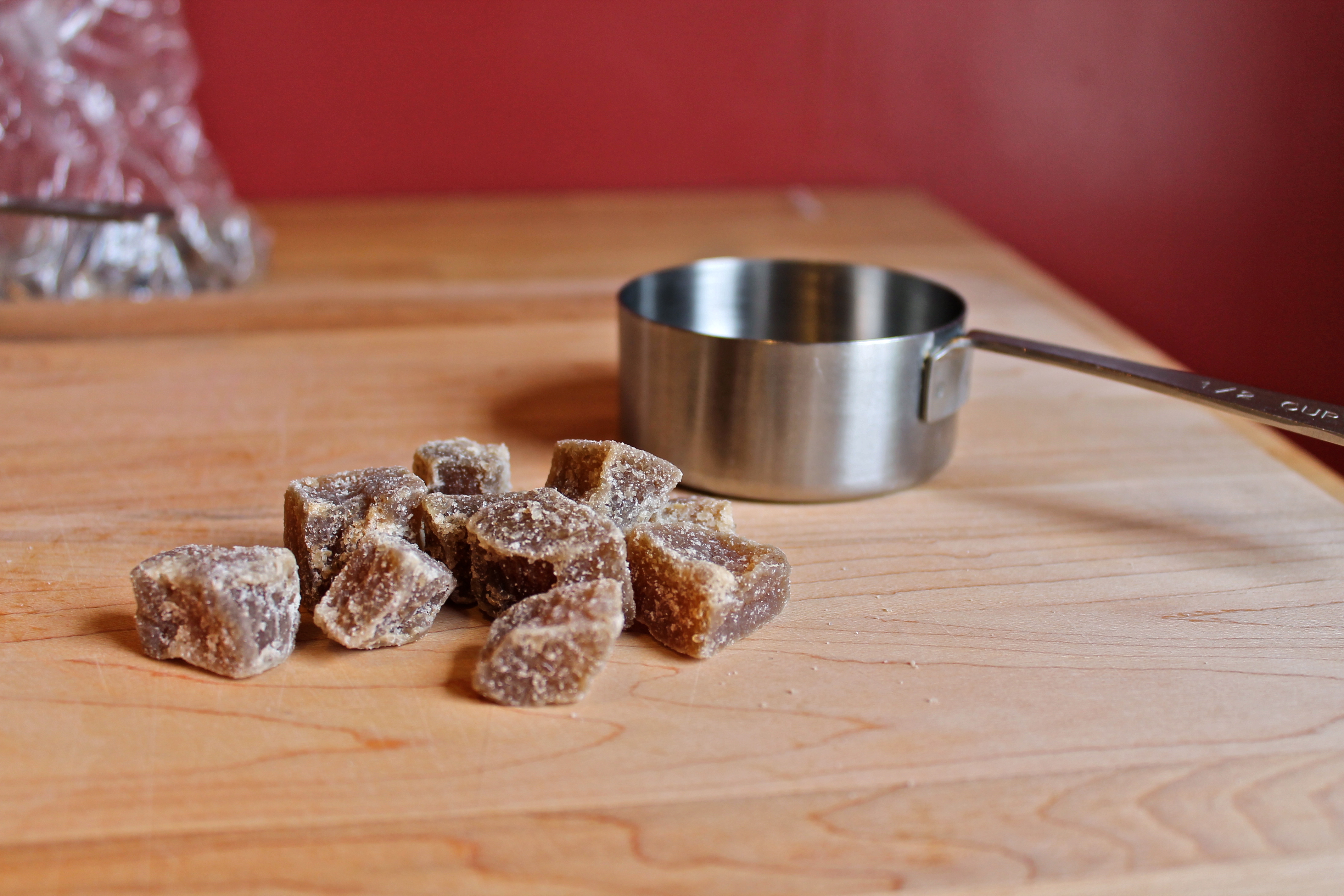
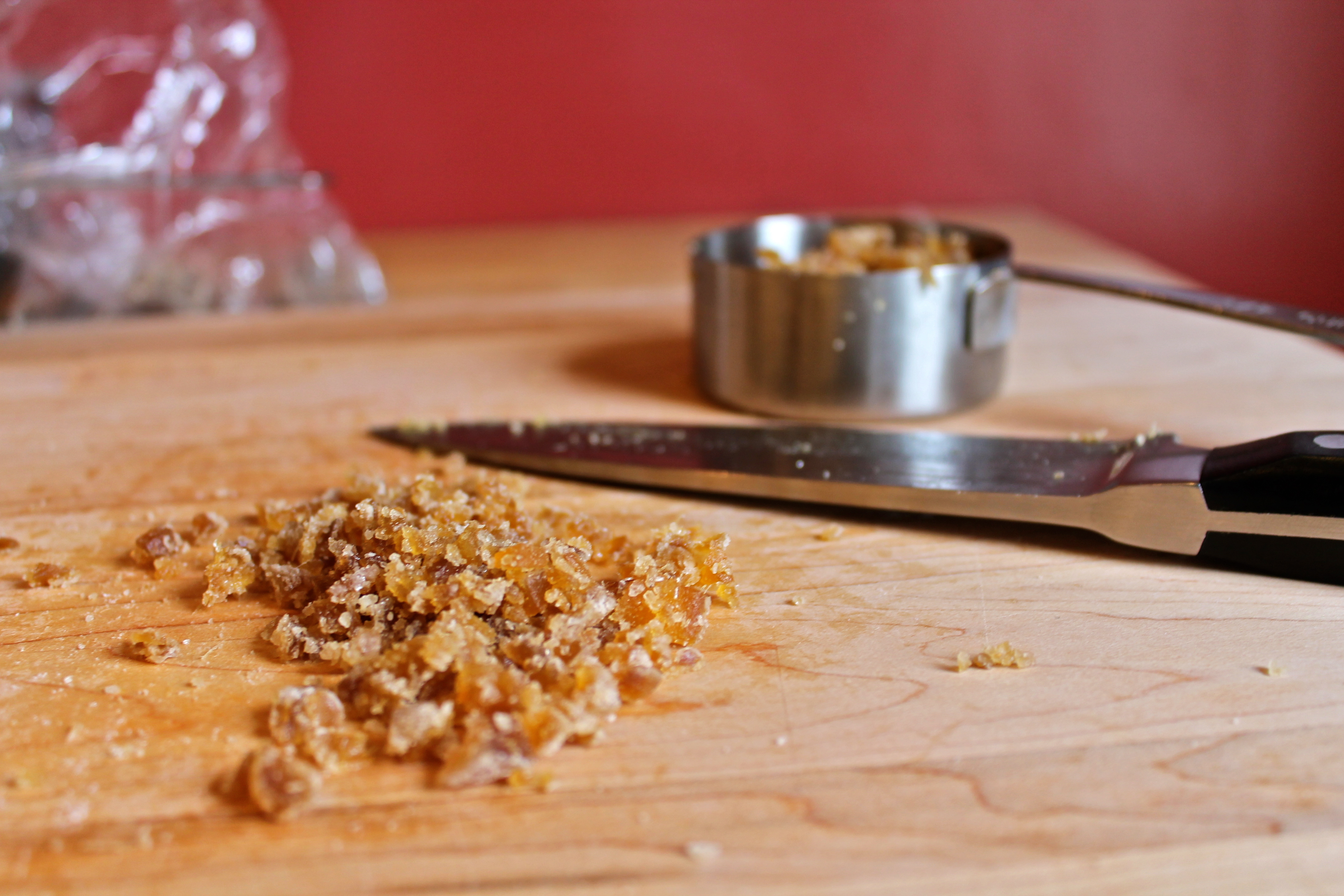
1/2 cup chopped crystallized ginger

Lemon Glaze

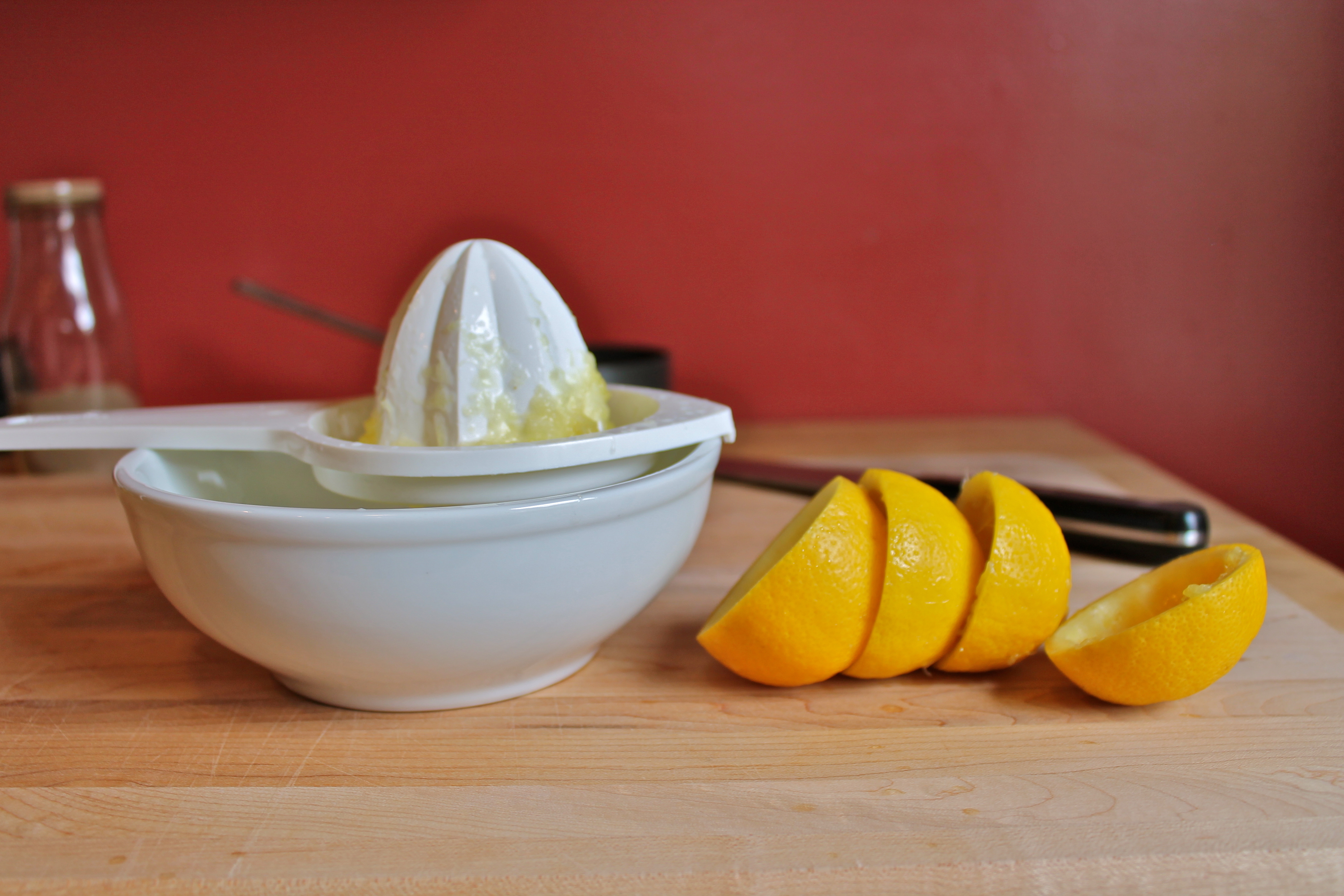
2 tablespoons freshly squeezed lemon juice

1/3 cup powdered sugar

Make the cake:

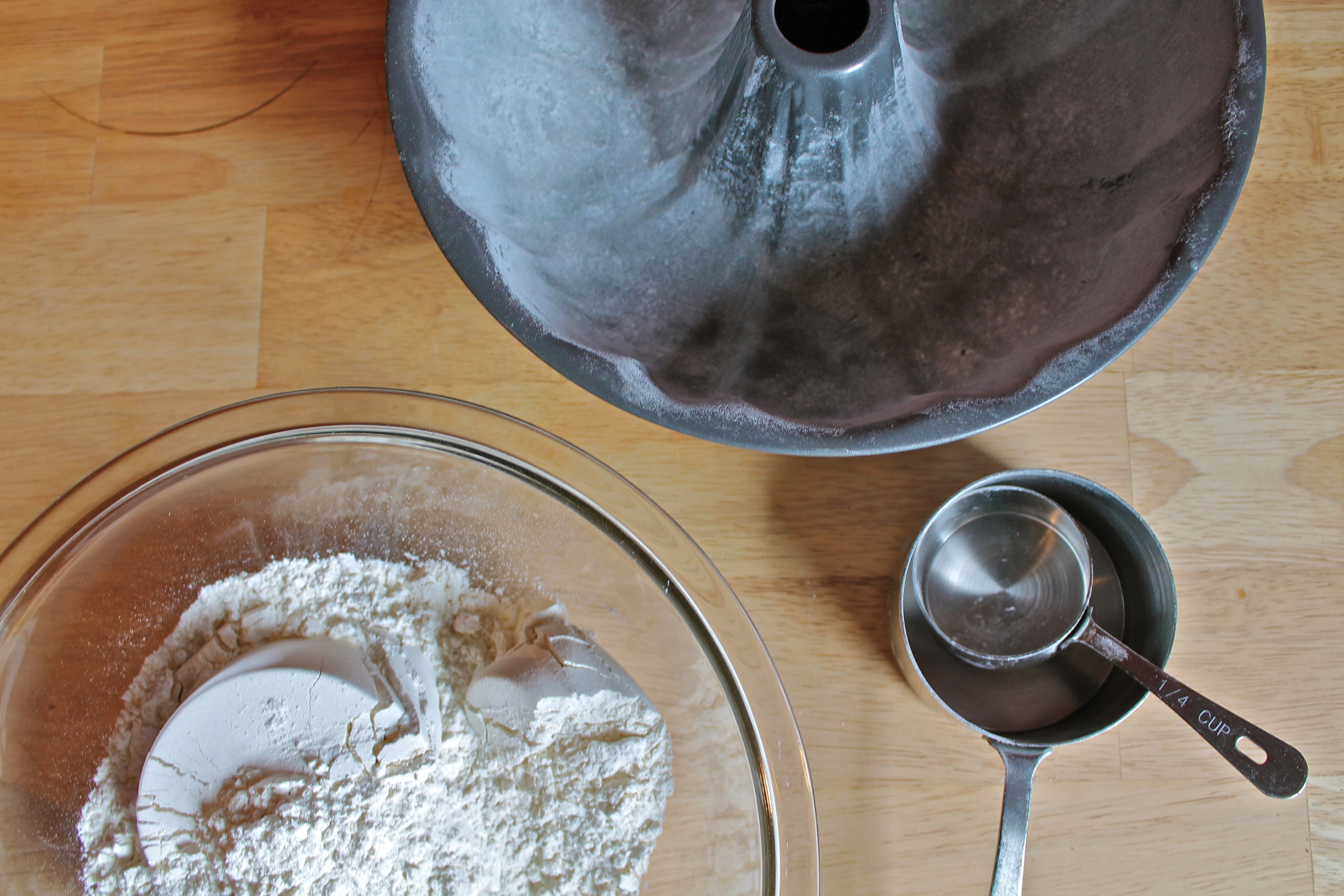
Preheat oven to 350 degrees Fahrenheit.  Place an oven rack in the middle position.  Thoroughly butter and flour a 12-cup bundt pan.

In a medium bowl, whisk together the flour, ground ginger, cardamom, baking powder, and salt.  Set aside.

In a large bowl, or in the bowl of a stand mixer fitted with the paddle attachment, beat the butter on high speed until light and creamy.  Add the sugar, and beat on medium-high speed until well blended, about 2 minutes.  Scrape down the sides of the bowl, then add the eggs, one at a time, blending well after each addition.  Add the vanilla and freshly grated ginger and beat until combined.

Scrape down the sides of the bowl, then add one third of the flour mixture and beat on low speed until just combined.  Add half of the sour cream, and beat until just combined.  Add half of the remaining flour mixture, beat until just combined, then add the remaining sour cream, mixing only until just combined.  Add the last of the flour mixture and beat until just combined.  Stir in crystallized ginger

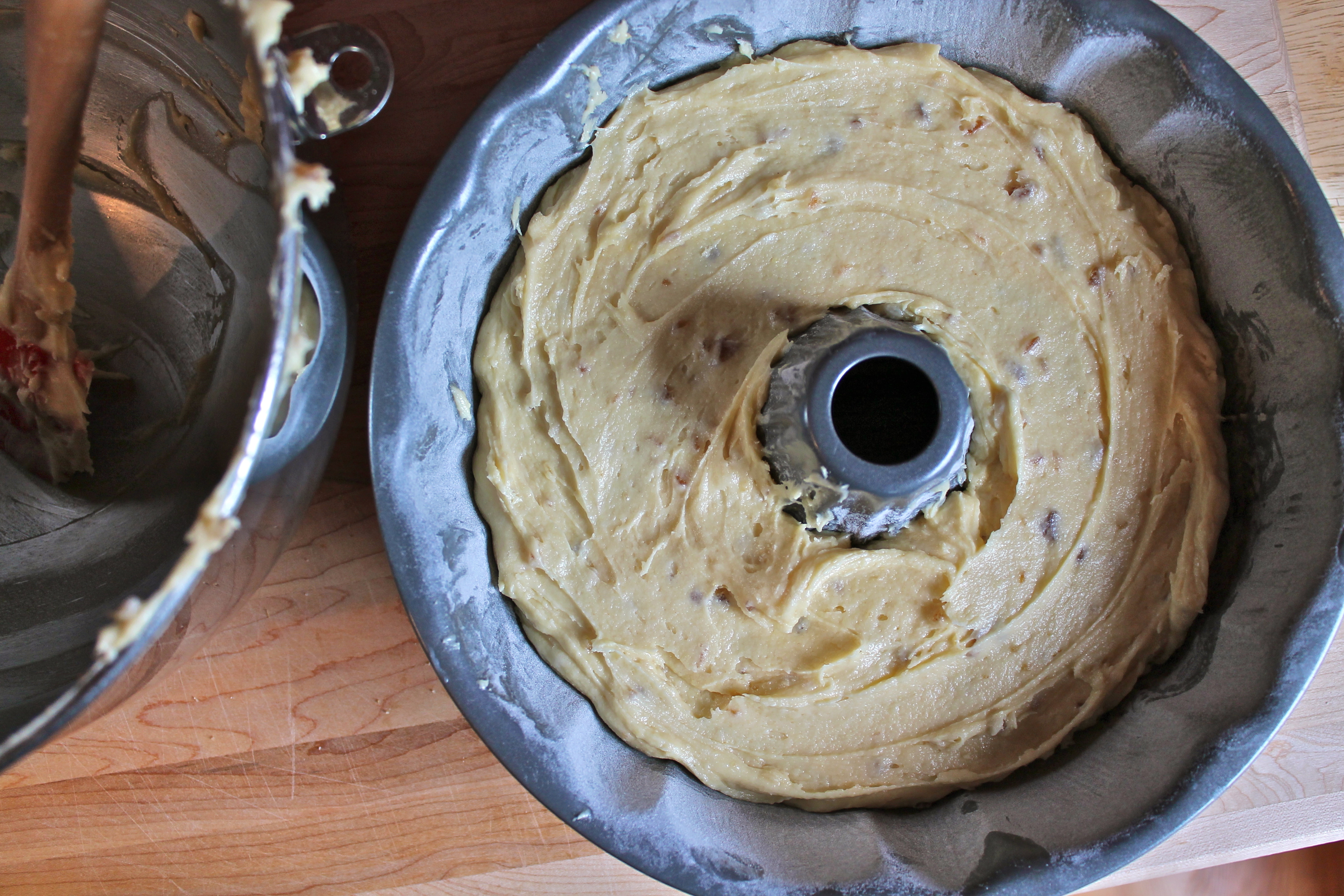
Spoon the batter into the prepared bundt pan, and bake for 50 to 55 minutes, until a cake tester inserted into the middle of the cake emerges with just a few moist crumbs attached, and the top of the cake is golden brown.  Cool the cake in its pan for 15 minutes, then invert onto a wire rack to cool.

To make lemon glaze, in a small saucepan, combine lemon juice and powdered sugar over low heat and stir to dissolve sugar completely.  Heat the mixture very gently and do not allow to boil.  When sugar is completely dissolved, remove mixture from heat and allow to cool for 5 minutes.

While cake is still slightly warm, brush all over with lemon glaze.