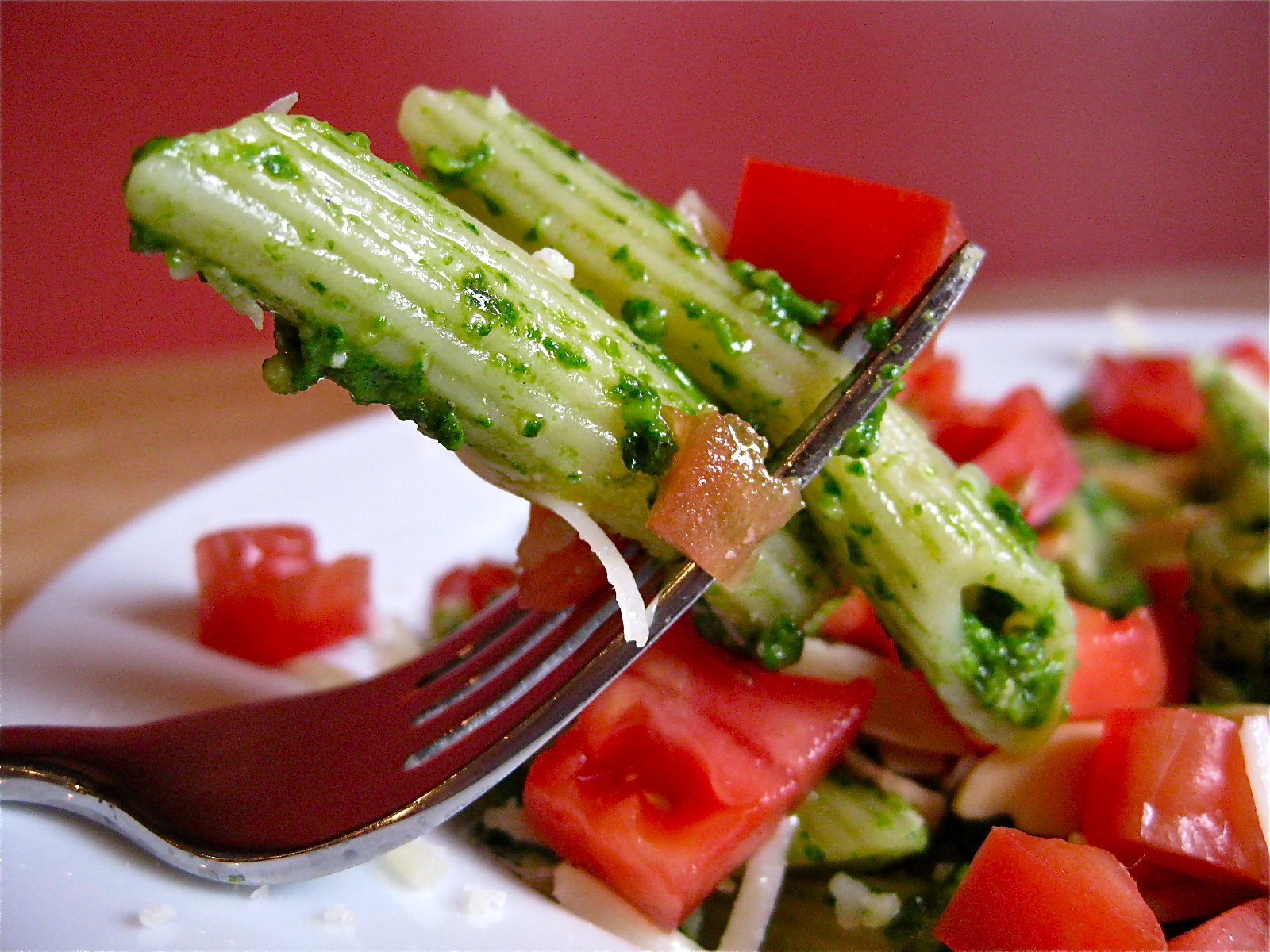
Archive | Lemon RSS feed for this section

Spinach Basil Pesto with Lemon and Almonds

23 Jun

Having a child who happens to absolutely love pesto is both a blessing and a curse.  On the one hand, it’s nice to have a child who will stick a toe in the pool of adventure and happily dig into a sauce that is not only bright green, but also more complex in flavor than the average preschooler’s preferred pasta dish of buttered noodles with cheese.  On the other hand, have you ever been driven to eating pesto three times a week because you live with a tiny person who is prone to bouts of tyrant-like behavior when it comes to food?  No matter what the food, if you are forced to eat it enough, its gloss will soon begin to fade.
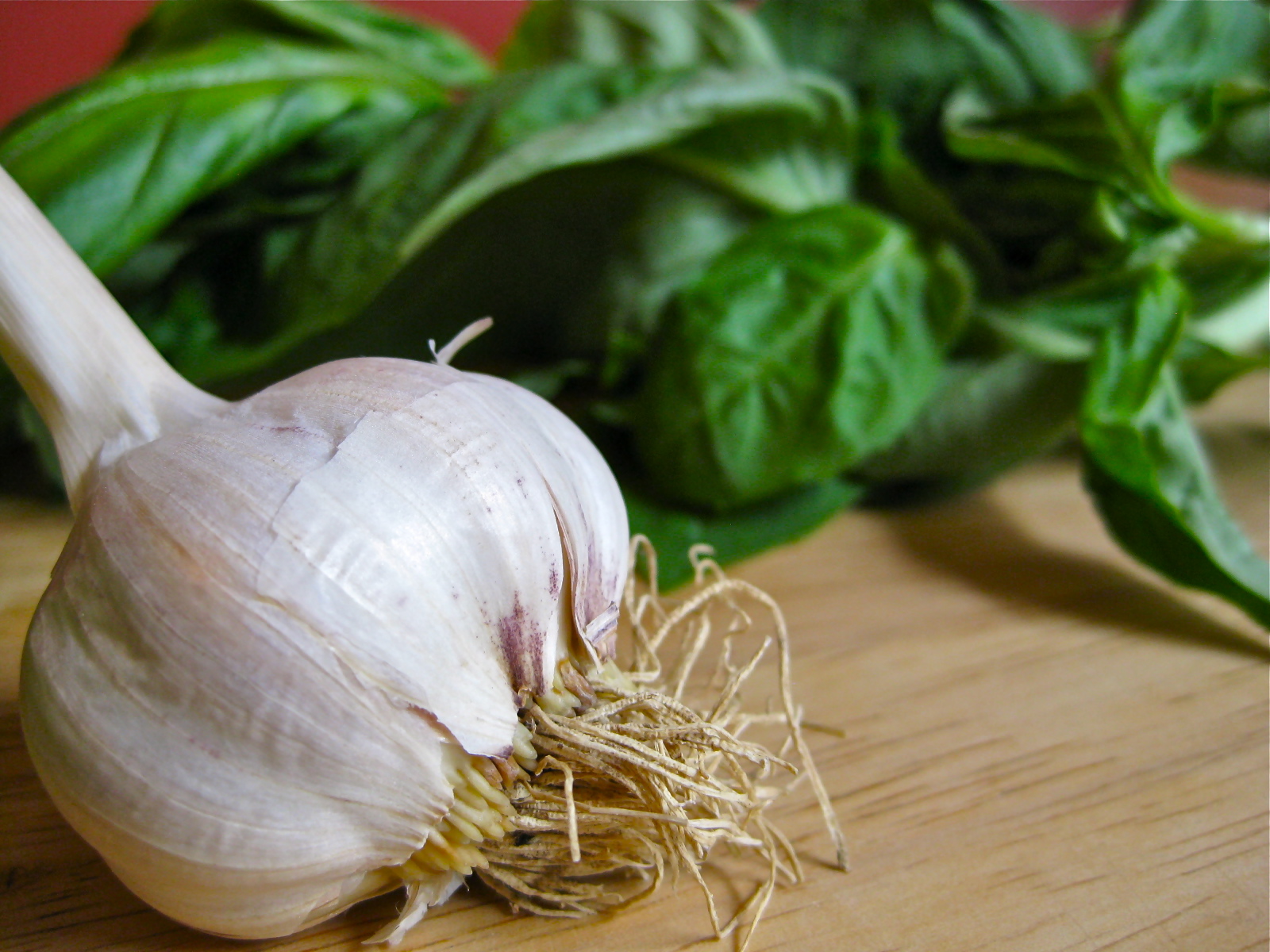
Maybe it’s just the repeat performances wearing me down, but I’ve long felt that pesto, that much-maligned sauce of the ‘90s, is in dire need of a makeover. Being a sauce of few ingredients, there are as many ways to make pesto shine as there are ways to make it dull and unexciting, and, much to the world’s misfortune, most pesto ends up suffering the latter lot rather than the former.  It’s too oily.  It’s garlicky enough so as to be considered borderline caustic.  It’s bland.  It’s boring.  It’s predictable.

Guess what?  It doesn’t have to be any of those things.  Breaking apart the simple components of pesto and then dressing them up as you put them back together can yield some fantastic results, and the seemingly endless ways one can Frankenstein together a new type of pesto are limited by only what you may or may not have in your refrigerator on a given day.  Starting from a very basic level of pesto-making, just changing up one or two ingredients can provide your standard recipe with a nice bit of change.  Arugula can get swapped for basil.  A handful of fresh mint can join in.  Fresh tomatoes and walnuts can be tossed into the blend.
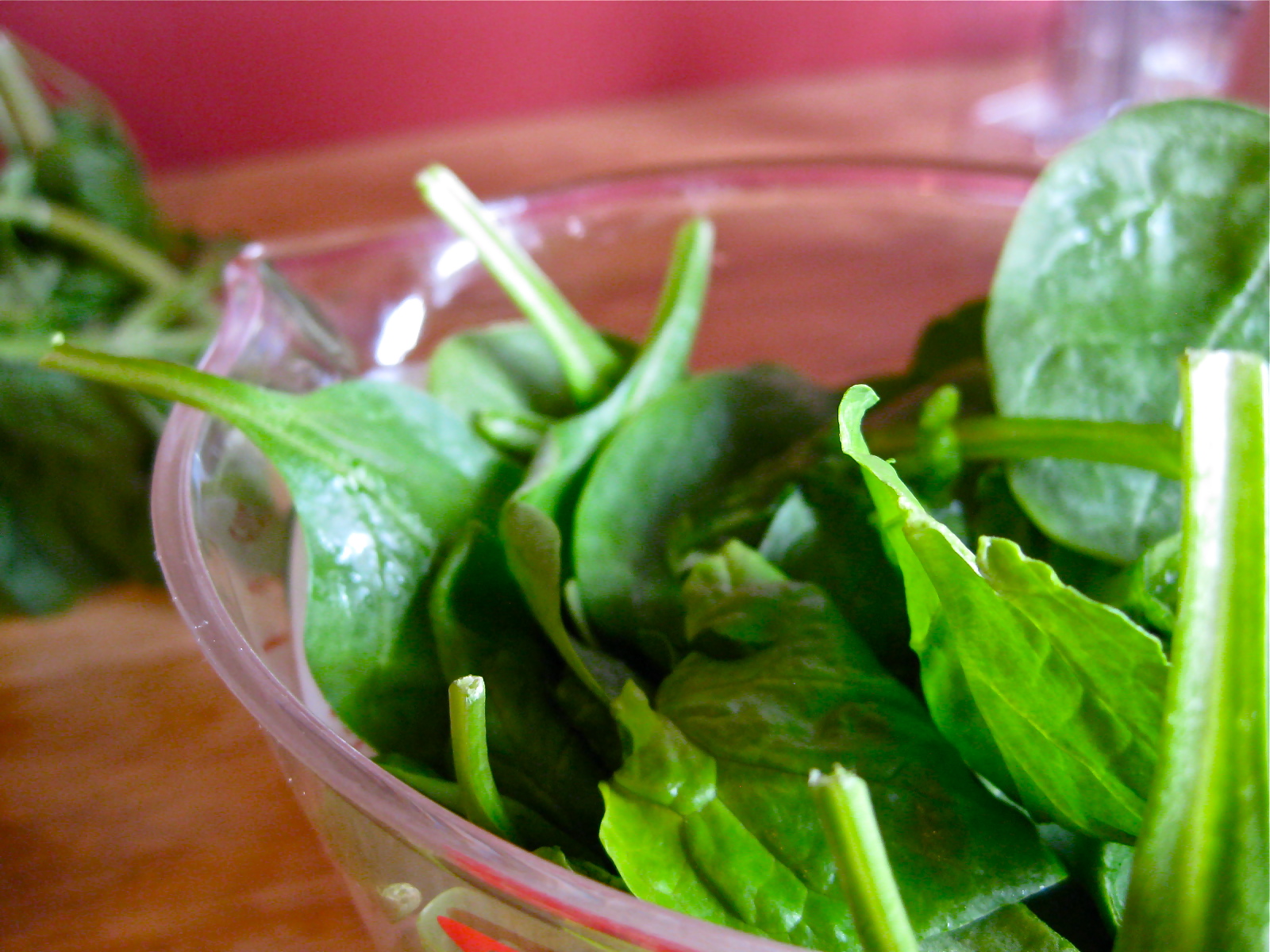
Though history may have proven that your kid will eschew spinach in its regular form, you can hide a ton of the vitamin and nutrient packed green in your sauce and, so long as you never let loose your secret, no child will ever be able to detect the difference between spinach pesto and regular pesto.  You know that as long as your pesto still looks like pesto, chances are your kid will never be the wiser.  To appease the adult palette, swapping out roasted almonds for pine nuts not only makes your frequent pesto consumption easier on the wallet, but the hearty taste of the almonds plays nicely off of the subtle nuttiness of the parmesan cheese.  Add in lemon zest for brightness, and you’re on your way to something reinvigorated and fantastic.
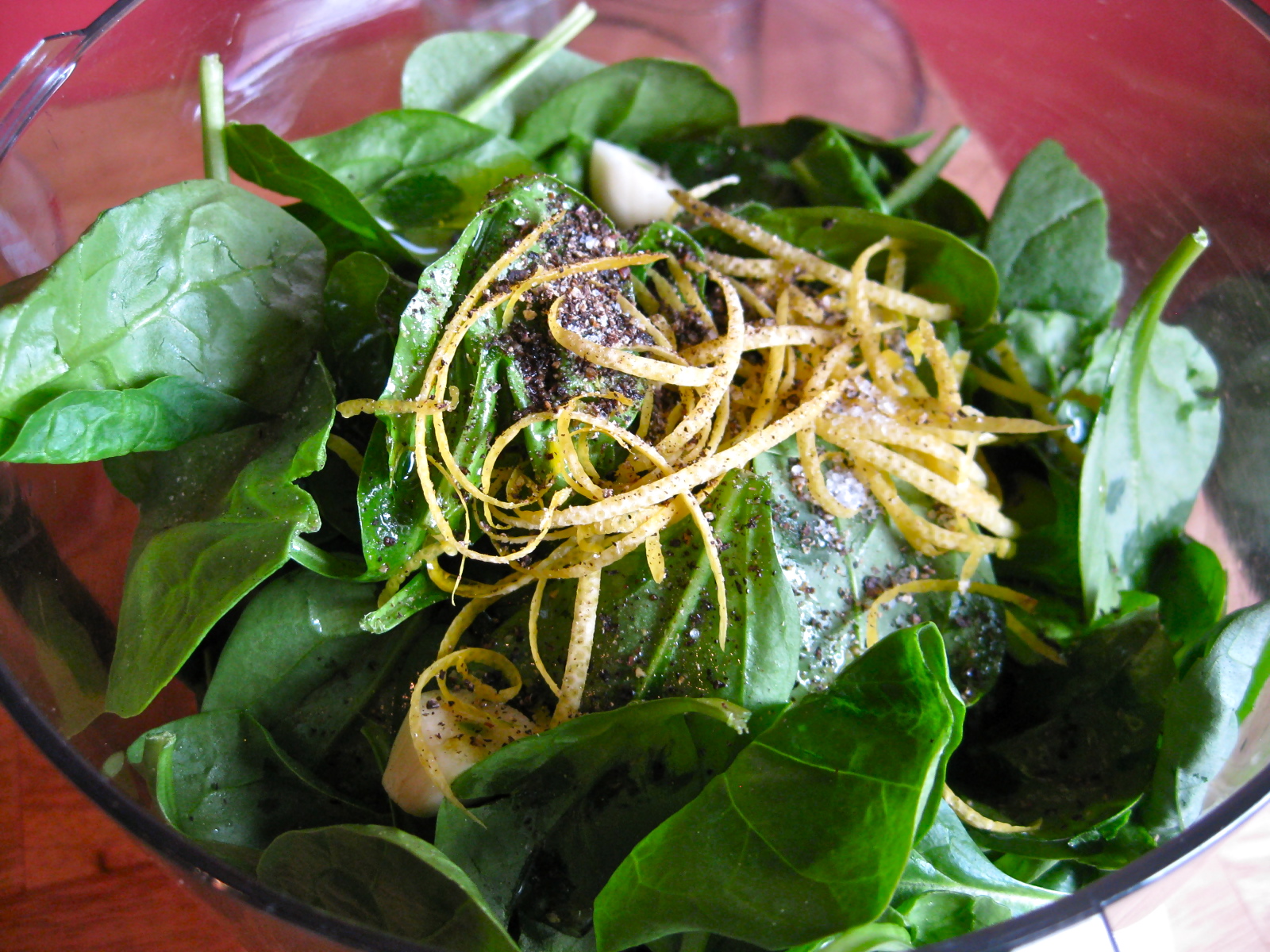
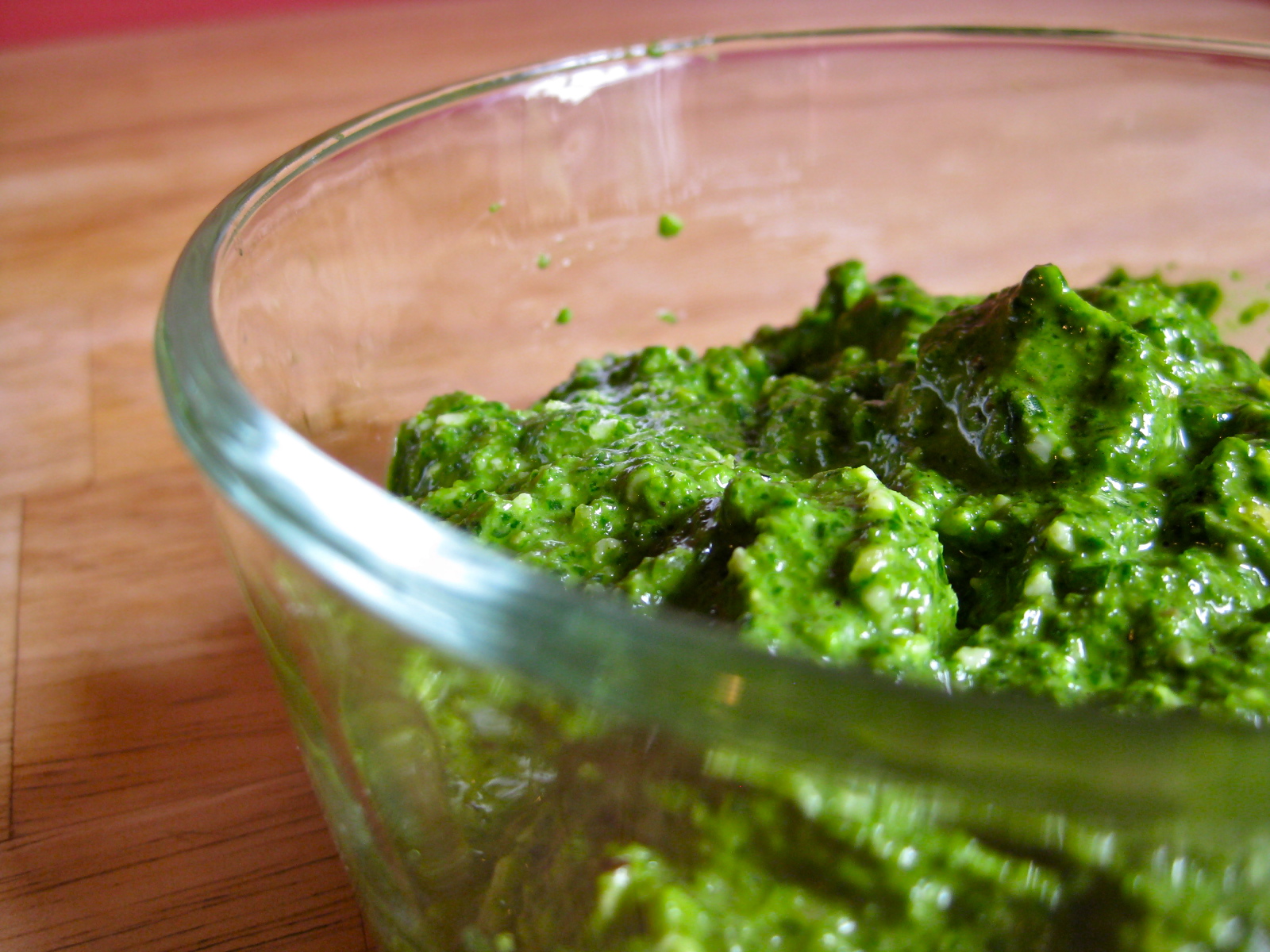
This is not pesto from a jar, or tired pesto from a restaurant that seemed to run out of menu ideas sometime during the Clinton administration.  This is pesto refreshed, yet still utterly recognizable as an old standby who you will always welcome, albeit now with a tad bit more enthusiasm.
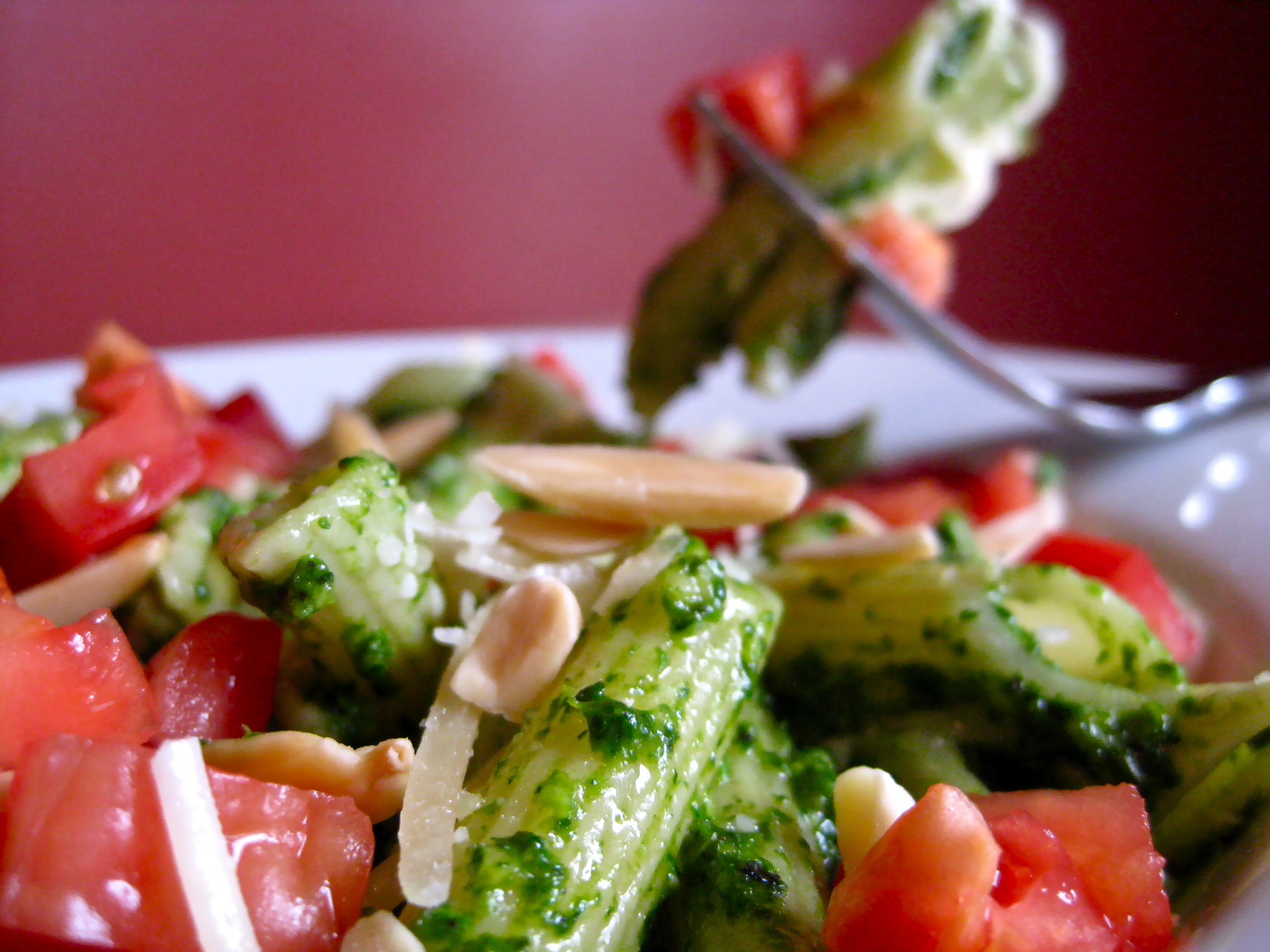
Bonus information!

This pesto freezes extremely well.  I have been known to make several enormous batches of this pesto at the end of our gardening season when I harvest all our greens.  After I make a huge batch (or two) of the sauce, I pour it into individual serving sizes and freeze it.  Though I have absolutely no recollection where it came from, this silicone baking mold is great for portioning out pesto for freezing:
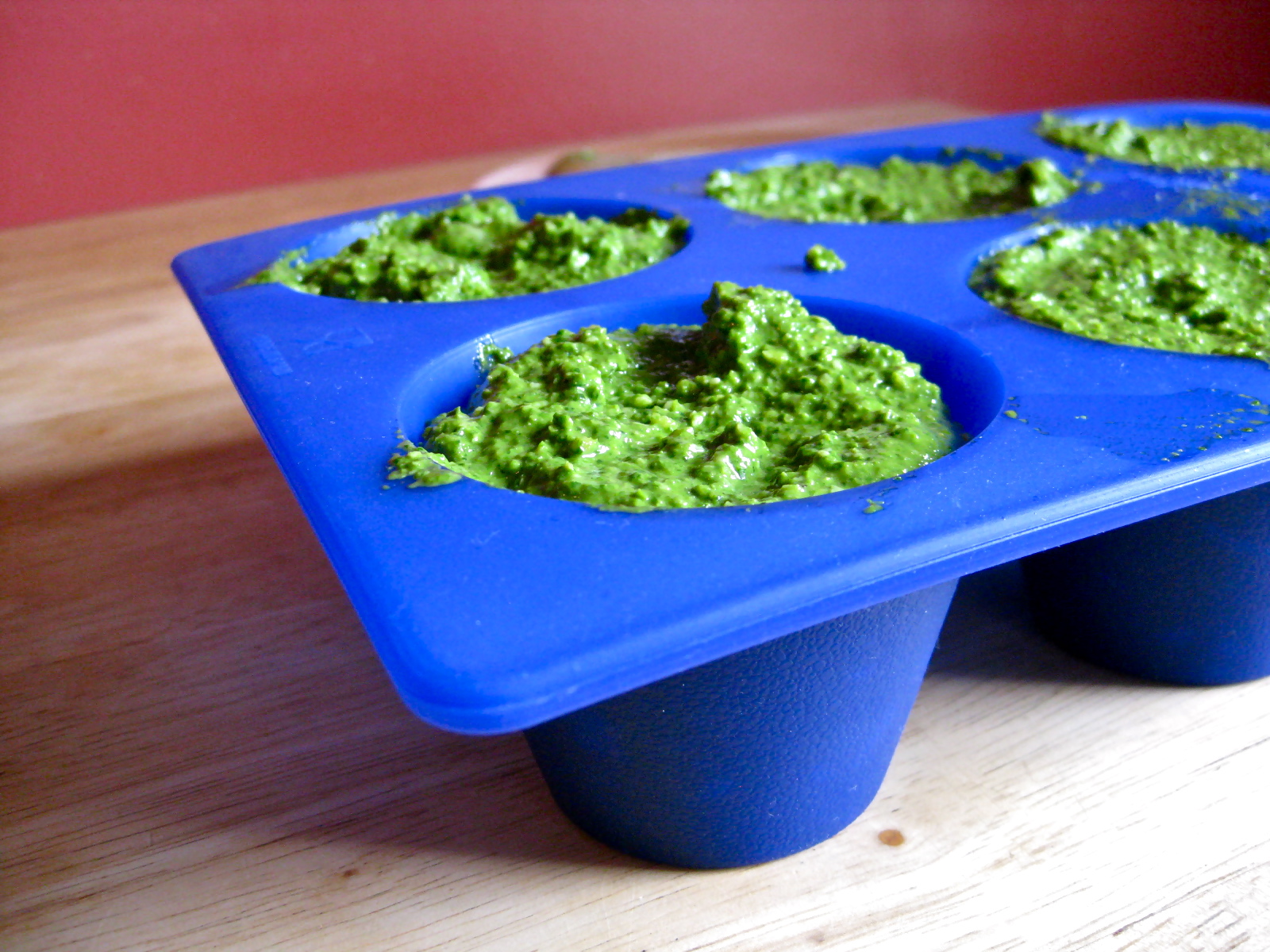
After the pesto has frozen (at least three hours, or up to overnight), I release the pesto from each cup (this process is super easy when using a silicone mold, by the way, because the silicone cups just peel back and pop the pesto right out), then place the pesto servings in a thick Ziploc freezer bag and toss them back into the freezer.
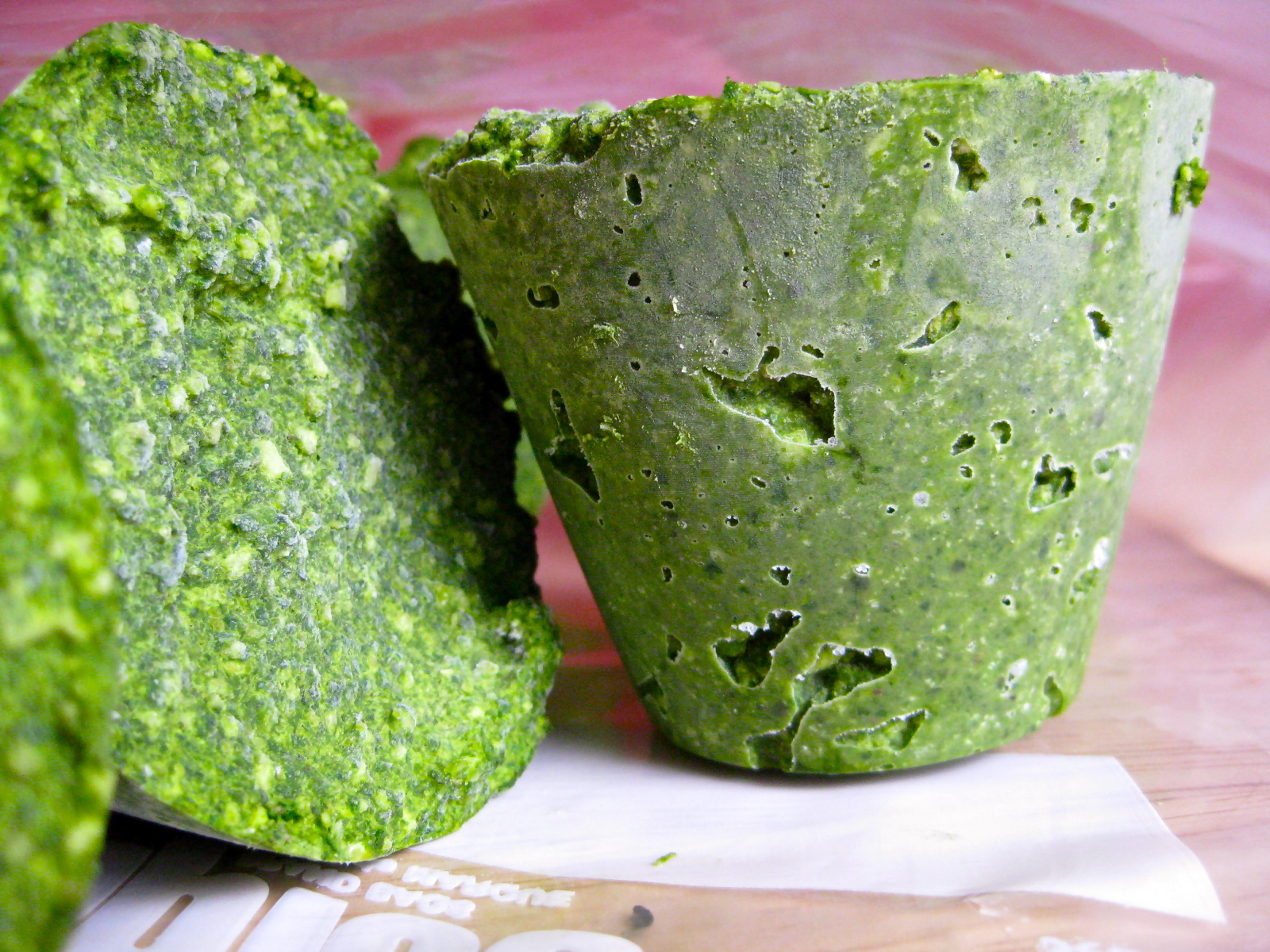
The pesto will last in the freezer for several months.  When you want to use a block of your pesto, just place one in a microwave safe bowl and defrost for about a minute on high heat.  Alternately, if you are good about planning ahead, you can just place one of your blocks in the refrigerator to defrost overnight for the next day’s meal.  The molds I have are able to hold just a smidge more than 2/3 of a cup of pesto each.  2/3 of a cup of pesto will coat a moderately dressed pound of pasta, or you can cook 3/4 of a pound of pasta and enjoy your pasta a bit more heavily dressed.

Spinach Basil Pesto with Lemon and Almonds

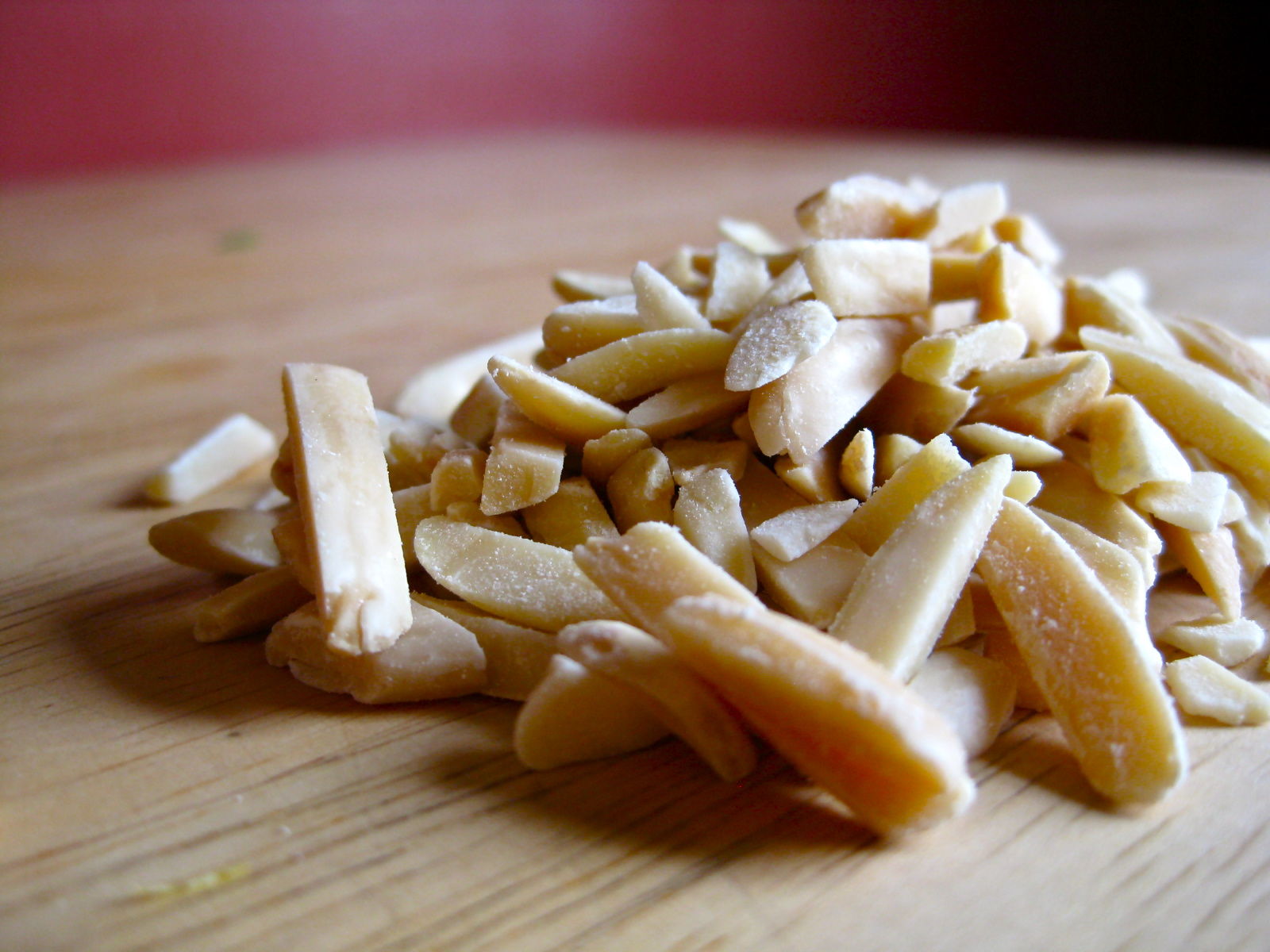
¼ cup slivered or sliced almonds

1 tightly packed cup of fresh basil leaves

2 tightly packed cups of fresh spinach leaves

2 large cloves of garlic, peeled and coarsely chopped

zest of 1 large lemon

¼ cup extra virgin olive oil

½ cup shredded or grated Parmesan cheese

salt and pepper to taste

In a dry pan, toast almonds over medium high heat until they are golden brown.  Remove from heat and set aside.

In the bowl of a food processor or blender, combine basil, spinach, garlic, lemon zest, and olive oil.  Process or blend for 15-20 seconds to combine and chop.  Scrape down the sides of the bowl, then add cooled almonds and Parmesan cheese.  Process or blend for another 20-30 seconds, scraping down as needed, until pesto is uniformly combined and no large chunks remain.  Add salt and pepper to taste.

Pour sauce over your favorite pasta and toss to coat.  Taste for seasoning.

If desired, top with chopped tomatoes, more Parmesan cheese, and additional toasted nuts.

Makes 1 cup of pesto, enough for 1 pound of pasta.

Six Threes Ice Cream

3 Jun

Dear Summer,

Did we do something to anger you?  I only ask because it seems as though you have been avoiding us.  Here we are, the first week of June, and you are nowhere in sight.  I can’t help but think that maybe you are feeling a bit hesitant about joining us this year.  Maybe you had a great time hibernating during the months you were not with us, making you decide that you’d rather stay asleep a few more weeks instead of prodding your good friend The Sun in the ribs and making a good argument for spending some time with us.  We’re pretty fun, you know.  We like going in the pool and hitting baseballs in the backyard while our skin warms in the heat of the afternoon, and the hammock is all cleaned off and good to go.  Basically, we’re ready whenever you are.

Look, I even made a little something to celebrate your arrival.  My husband’s family has this great ice cream recipe that I had been dying to make.  I first tasted it at a family reunion last summer—remember that?  You were sort of there, Summer, but mostly in name rather than in feel (it was extremely cold and wet last August, as you may recall, but I promise I am in no way holding that against you).  Anyhow, my husband’s family made a huge batch of this ice cream.  They took turns hand churning it, and when it was done they called to all of the children to come and have an inaugural taste of the ice cream straight from the dasher.  All of the children were feeling uncharacteristically shy, so I swiped my finger against the dasher and demonstrated how non-poisonous and definitely delicious the ice cream was.

As you may also recall, the children had a rather difficult time getting to the ice cream covered dasher after that, such was my devotion to gobbling that thing clean before anyone else could snitch a taste.  I wouldn’t say I went so far as to push any children aside while protecting my ice cream sample, but that was only because I happened to be taller than all the children, allowing me to conveniently hold the dasher up much higher than they could reach, rendering unnecessary any sort of pushing or jostling on my part.

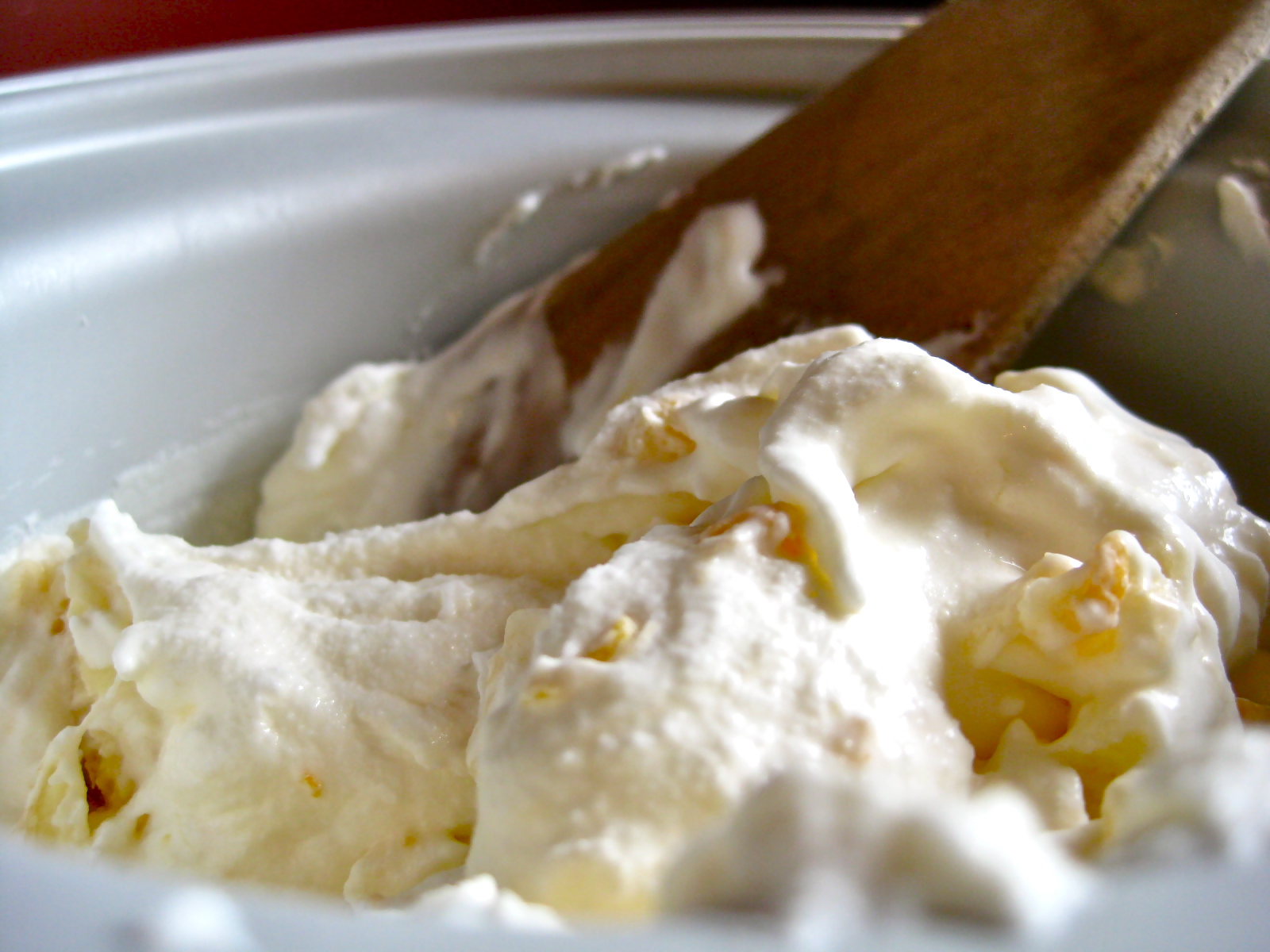
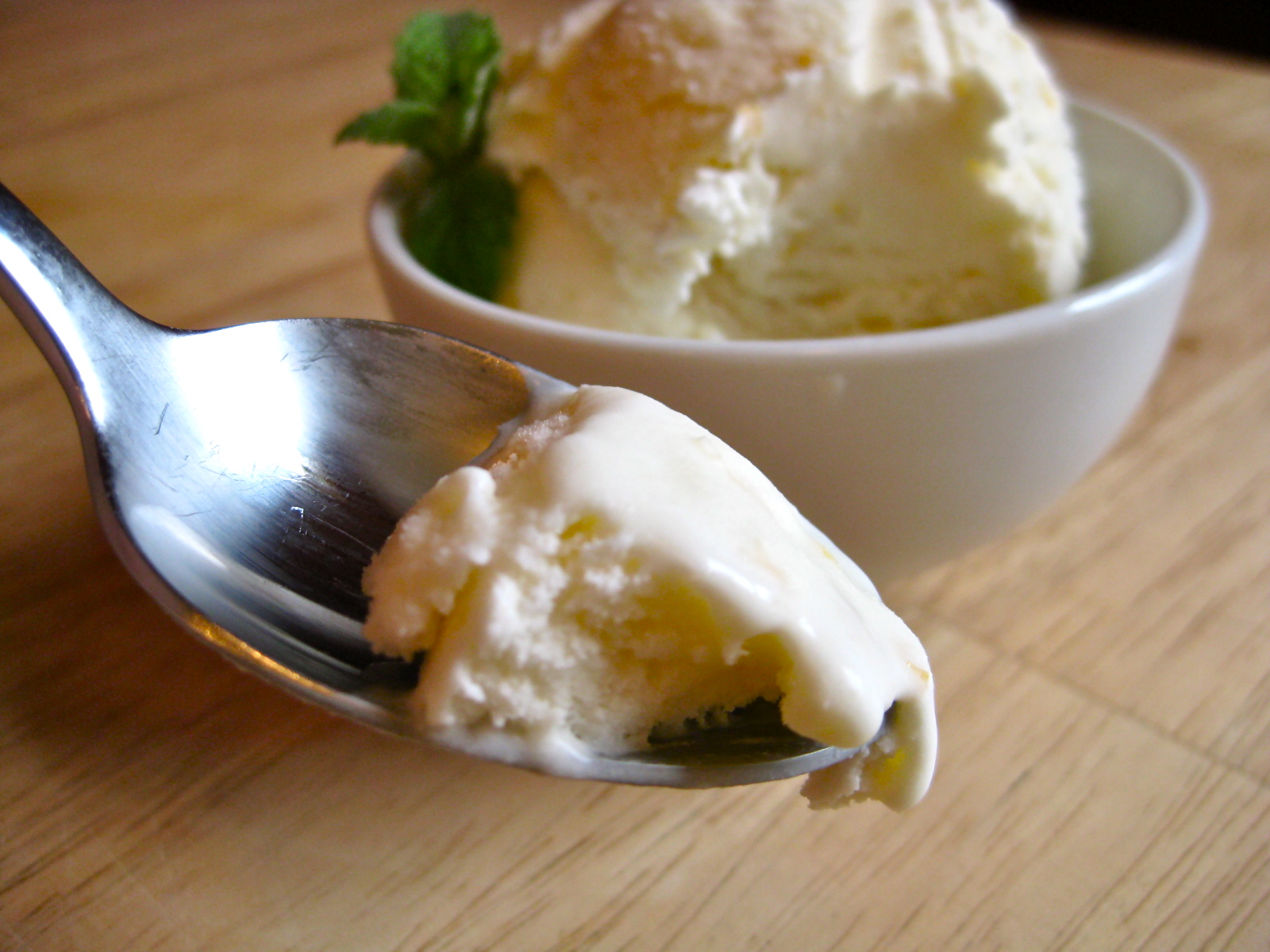
So, I decided that, in anticipation of your arrival, I would make some of this ice cream.  It is dead simple to assemble, and it tastes supremely fresh and cooling.  The ice cream is egg-free, but it has the smooth, soft, creamy texture of a custard-based ice cream. Do you know what the secret is, Summer?  It’s the banana.  The banana makes the ice cream so rich and luscious, you’d never know it was devoid of eggs.  I tell you, this is the perfect ice cream to start with if you’re feeling hesitant about making homemade ice cream.  It really is foolproof.  Plus, the taste bears a strong resemblance to that of a Creamsicle, which not only gives it points for childhood nostalgia, but also for maximum enjoyability.

I hope we see you soon, Summer.  Rumor has it you’re going to be making an appearance this weekend, but, quite honestly, I can’t really bring myself to believe that prediction, what with how little we’ve seen or sensed of you thus far.  Don’t get me wrong, I want to see you, but I don’t know if I can handle any more stilted anticipation.  If you do happen to show up, believe me, I’ll be more than happy to eat my words—right along, in fact, with a nice bowl of this delicious ice cream.

All the best,

EM from Savory Salty Sweet

Six Threes Ice Cream

The original recipe, which uses three of each measure of ingredients, makes enough ice cream to fill a very large hand cranked machine.  Since the ice cream machine I own only holds 1.5 quarts of finished product, I had to scale the recipe down by two thirds.  This, technically, does not make the ice cream I made a combination of six threes, but rather six ones.  However, since that name does not have nearly the clever ring to it as the original name, I have decided to just stick with calling it six threes ice cream.  Still delicious, just not as abundant.  If you have a larger ice cream maker, you should, by all means, scale the recipe up to make as much ice cream as you can.

Note: Be sure to follow the directions and keep the dairy and citrus ingredients separate until the dairy has been partially frozen in your ice cream machine.  If you add the citrus to the dairy beforehand, the acid in the citrus will cause your dairy to curdle.

1 ripe banana

1 lemon

1 orange, the zest finely grated or chopped

1 cup milk

1 cup cream

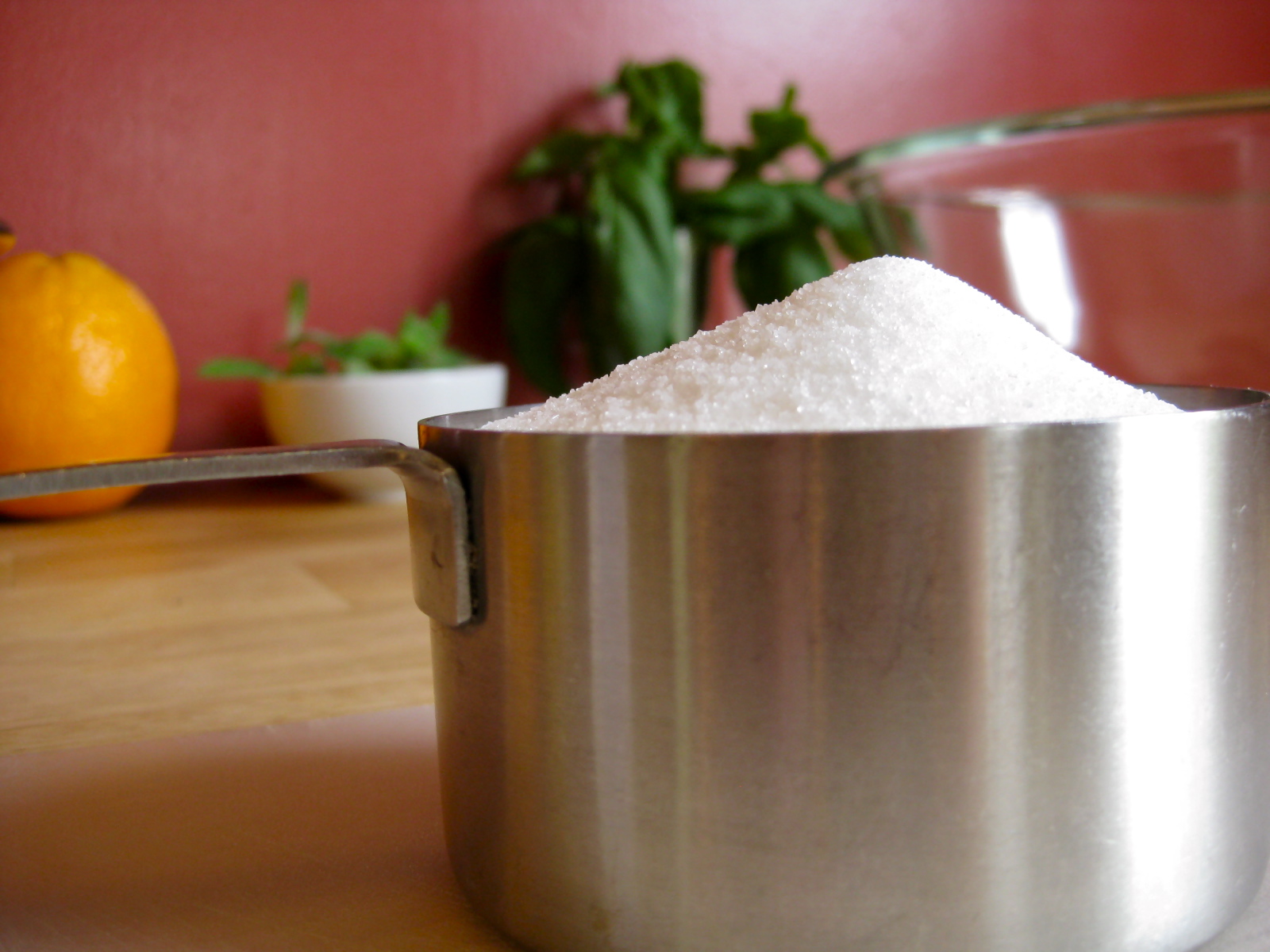
1 cup sugar

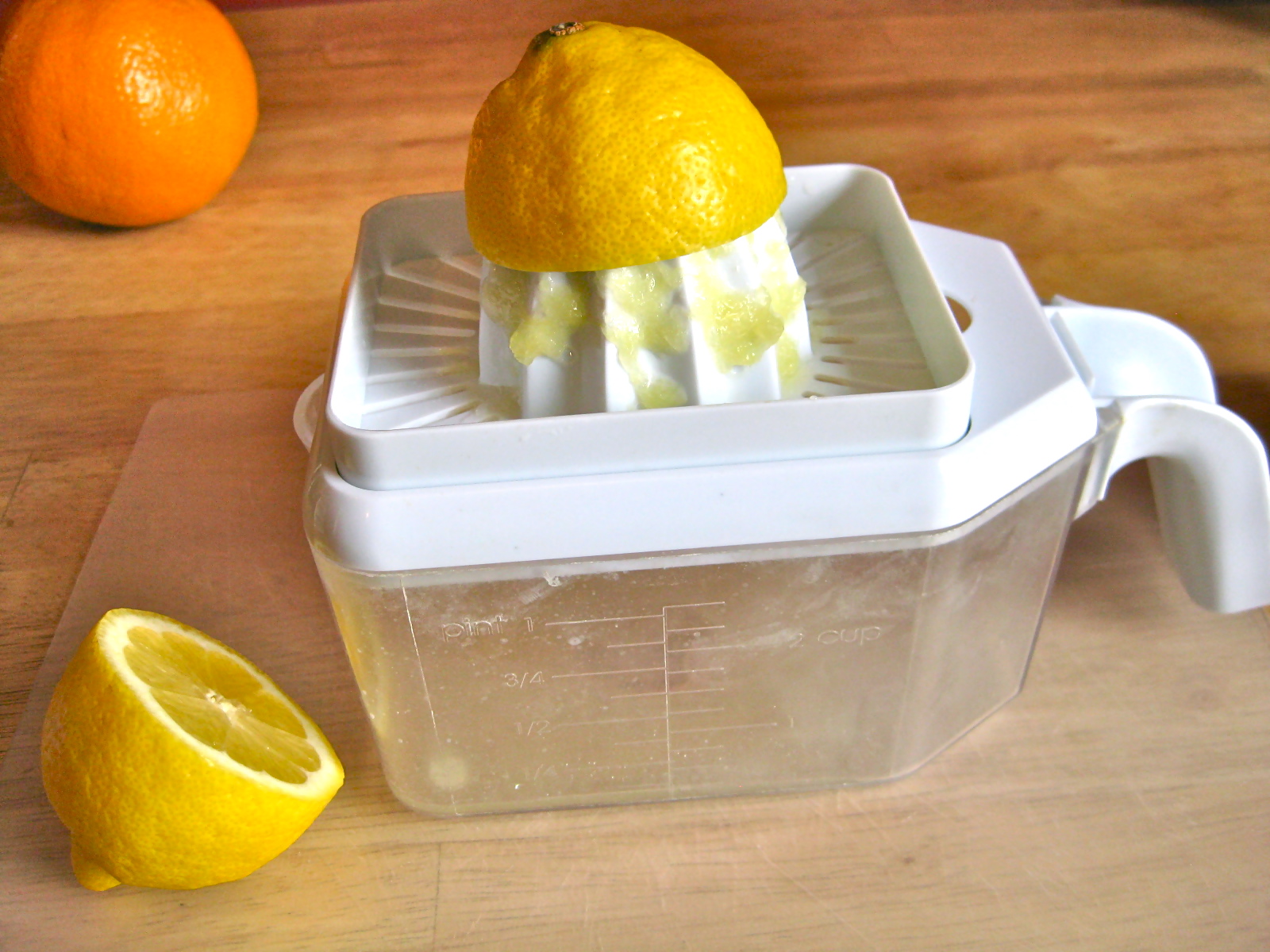
In a medium bowl, blend or mash the banana.  To this, add the finely grated or chopped zest of the orange.  Squeeze juice from lemon and orange, and combine with the mashed banana and orange zest.  Set aside.

In a large bowl, combine milk, cream, and sugar.  Whisk steadily until sugar is completely dissolved.

Add cream mixture to your ice cream maker, and allow to churn until it reaches the slush stage.

Add the fruit mixture to the slushy cream mixture, then churn according to manufacturer’s instructions (until, that is to say, you have ice cream).

Makes about 1.5 quarts of ice cream.

Meyer Lemon Whiskey Sour

20 May

While I would not classify myself as a collector of cookbooks, it cannot be denied that at least one of our dining room bookshelves has been noted to contain more cookbooks than books of a non-recipe variety.  Most of these cookbooks have been procured during the years that my husband and I have been married, with a few notable exceptions.  I brought into our marriage a half dozen or so vegetarian cookbooks and a couple of copies of Joy of Cooking, and my husband entered our union with this:

Ladies and gentlemen, I am here to tell you that, were there points awarded for most useful and interesting books brought into a dual partnership agreement, the tally of points at the end of the inaugural round would look something like this:

Me: 15 points

Husband: 1,000,000 points

This book is, in short, fantastic.  In addition to containing nearly 800 classic cocktail recipes, the book also contains a hefty 100 or so pages dedicated to the history, lore, and usage of different liquors, wines, beers, and accompaniments, and how those different items can be used to complement one another (totally useful). There is also an added hors d’oeuvres chapter, which includes separate sections on both caviar and foie gras (slightly less useful, but still appreciated).

Best of all, this book, written by Playboy’s longtime food and drink editor and culled from previously published articles dating back as far as 1955 (the book’s original publication date is 1971), reads like an instruction manual for those looking for tips on how to be a consummately urbane gentleman of the world—five decades ago.  You enjoy vodka and clear turtle consommé.  You serve daiquiris on your cabin cruiser, and precise and masterly cocktails at your June bachelor dinner.  You are a man of all seasons.  Not a conspicuous fusspot, the book clarifies, but a man of refined tastes.

Admittedly, not everyone will enjoy this book as much as I do, especially if one is offended by references to Canadian whiskeys having a strong appeal for the distaff side (it’s sweet and soft, you know, for the ladies), or is annoyed by a drink being classified as perfect “for unwinding after 18 holes on the fairway.”  While it’s true that those statements are mildly obnoxious, I have no problem reading past them.  Then again, any book that cautions a fellow against drinking for quantity rather than quality, and also takes the time to distinguish a drink as being a “postprandial” fit, is always going to be a winner by me.

Earlier this week, when the temperature hit 70 degrees for only the fourth time this year, I, fortified with knowledge about the mature American drinking man, and in possession of some dashing and petite Meyer lemons, decided to unearth the cocktail shaker and take my first step towards entering the “method school for the modern man at his drinking cabinet.”

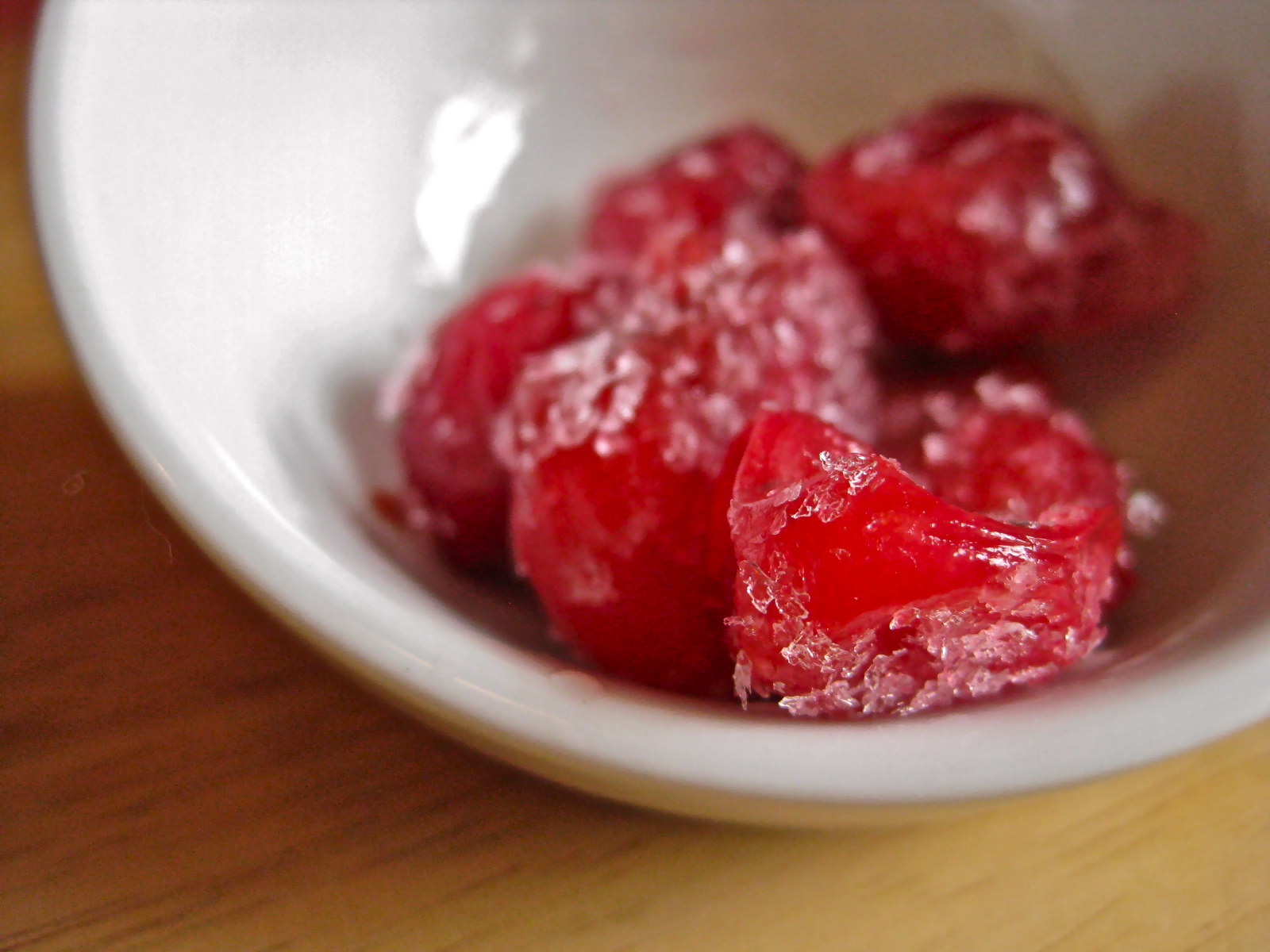
Not surprisingly, my education started with me completely blowing the recipe apart.  Not having blended whiskey or the required number of lemons, I improvised a bit.  When I found a nearly empty bag of frozen sour cherries in the freezer, there was no way I couldn’t include them.  The more ridiculous things I did to the standard cocktail, the more delicious it looked.  And, in the end, it was a delicious drink, though not exactly what I think Mr. Thomas Mario had in mind.

Meyer Lemon Whiskey Sour

Inspired by Playboy’s Host and Bar Book

I am not a huge fan of sweet drinks, so my version of this drink is on the tart side.  If you wish to make a sweeter drink, increase the amount of sugar as directed.  Alternately, I’ll bet that if you used all Meyer lemon juice, as opposed to the half-lemon-half-lime combination that I used, you’d end up with a drink that is much less tart (Meyer lemons are not nearly as sour as their standard lemon counterparts).  If you do this, dial back the sugar initially and see if your all Meyer lemon juice drink is sweet enough.  If it’s lacking the sweetness you desire, go ahead and add a bit more sugar, ¼ teaspoon at a time, then re-shake and re-taste until you find the drink acceptable.

1 large or 2 small Meyer lemons

1 lime

½ to 1 teaspoon sugar

3 sour cherries, fresh or frozen

2 ounces whiskey

ice

Juice your Meyer lemons and lime until you have a combination of ¾ ounces of freshly squeezed juice.  Combine juice, one half of an already squeezed Meyer lemon, your desired amount of sugar, and 2 sour cherries in a cocktail shaker.  Using the handle of a wooden spoon, muddle the citrus, sugar, and cherry mixture for roughly 10 seconds, until the sugar has been pulverized into the other ingredients.  Add whiskey and a handful of ice to the shaker, cover, and shake vigorously.  Taste to adjust sweetness.  For a less tart drink, add more sugar, re-shake, and taste again.

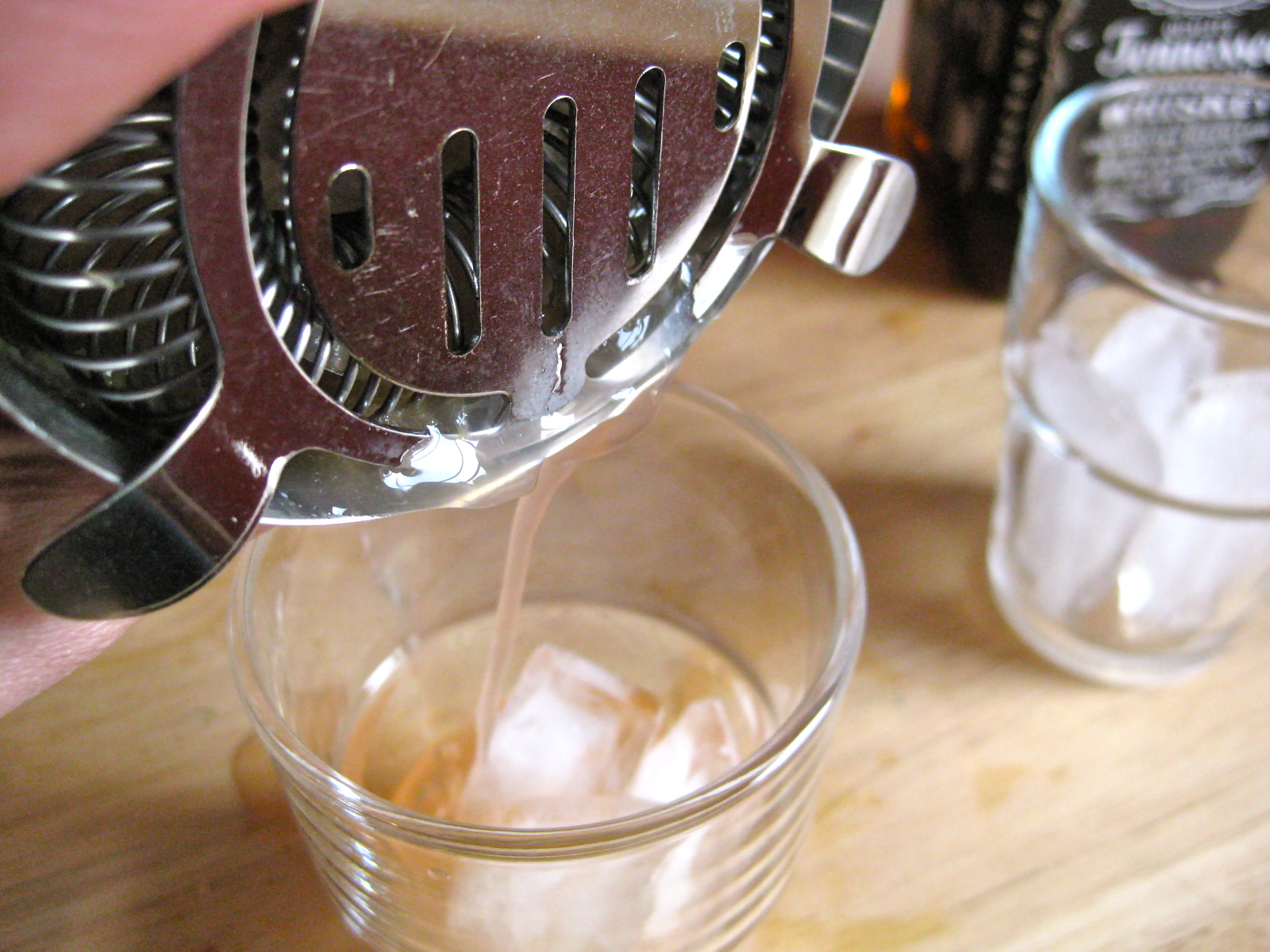
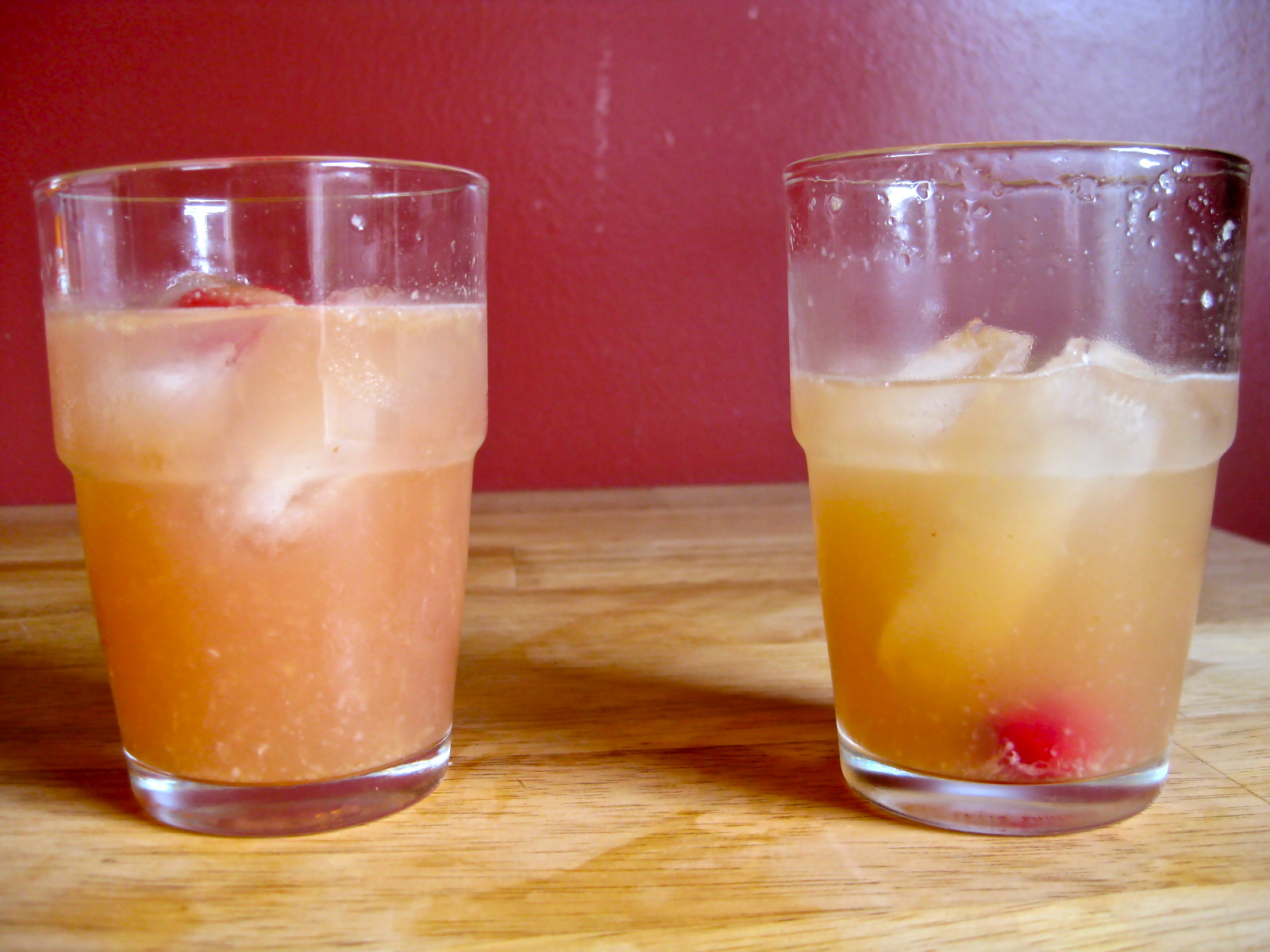
Strain into a short glass filled with ice.  Garnish with 1 sour cherry.

Makes 1 drink.