Archive | Meat RSS feed for this section

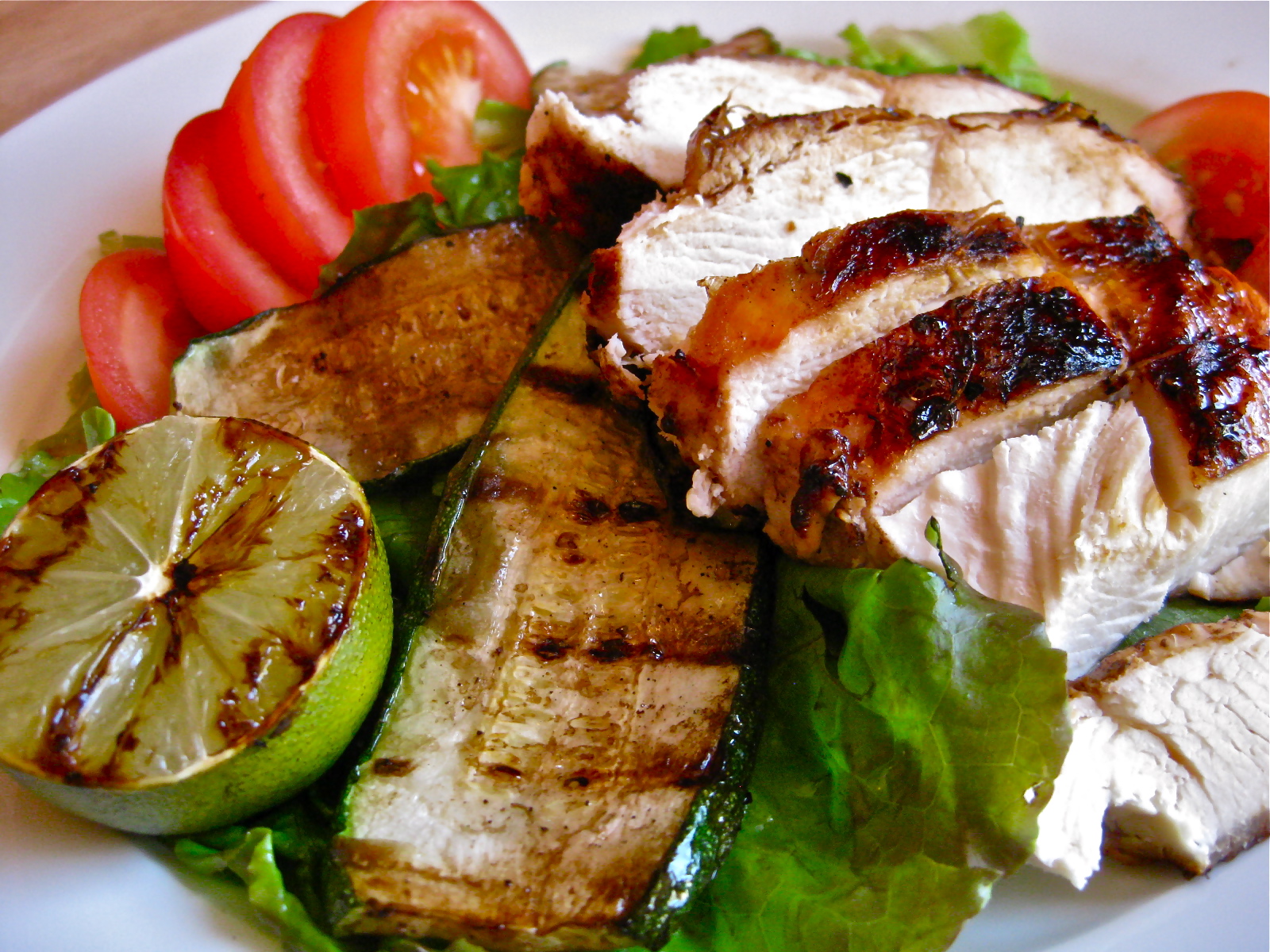
Balsamic-Glazed Chicken and Zucchini with Grilled Limes

30 Sep

It may seem a little late for a recipe centered around grilling, but summer came so late around here that we’ve been able to keep our grill working well into September.  It’s a good thing we took advantage of that long stretch of dry weather, too, for right now it is raining and I am wearing a scarf.  Over my sweater.  And crying.
But let’s not talk about that.  Let’s instead talk about something that I think everybody needs in their arsenal of quick meals: a fast weeknight dish.  It’s not the most exciting of topics, I know, but maybe pretend you are making this quick meal before you take off to meet some friends for drinks and then go to your favorite bar to see the Hold Steady.  Only that bar has closed down now, and the Hold Steady no longer plays in little bars anyhow, so you might have to see them play some big club with far too many beer-sodden patrons who think they should jump up and down in front of you like the (now departed) keyboardist in the Hold Steady used to do, only when the keyboardist did it it was charming, and when this dude in front of you does it it just blocks your view and makes you a little tired of being violently leaped on every two seconds.
I seem to have veered off course a bit.

So, chicken!  I know that boneless, skinless chicken breasts have a bad reputation, and I completely understand why.  It’s very easy to make something as simple as a chicken breast taste terrible, what with that portion of the chicken being so utterly plain, devoid of fat, and easy to overcook.  The other side of that equation is, it is also fairly easy to make a chicken breast shine, what with its versatility and unrivalled ability to absorb flavor.  With this simple balsamic glaze that requires very little action other than a periodic swipe across the chicken, you can produce a quick chicken dish that is flavorful, fast, and totally satisfying.

The greatest asset of the entire dish, however, lies not in the chicken, but in the grilled limes.

Just a couple of minutes on a hot grill will coax untold amounts of juice out of each lime, and with just a bit of the bright, caramelized fruit squeezed over each serving of chicken, you instantly add a layer of flavor to each bite that will make you wonder how you ever managed to produce such a fantastic meal in such a short amount of time.
Balsamic-Glazed Chicken and Zucchini with Grilled Limes

Hey, lady, why on earth are you giving us a recipe for grilled chicken when it’s no longer grilling season?  Because if you have a grill pan sitting in your kitchen, that grill pan will work just as well as an outside grill.  Good grill pans are available for as little as $19 on Amazon, and I’ve yet to enter a discount kitchen store that hasn’t had at least half a dozen grill pans sitting around looking all well-priced and ready to be taken home.

1/3 cup balsamic vinegar

3 tablespoons olive oil

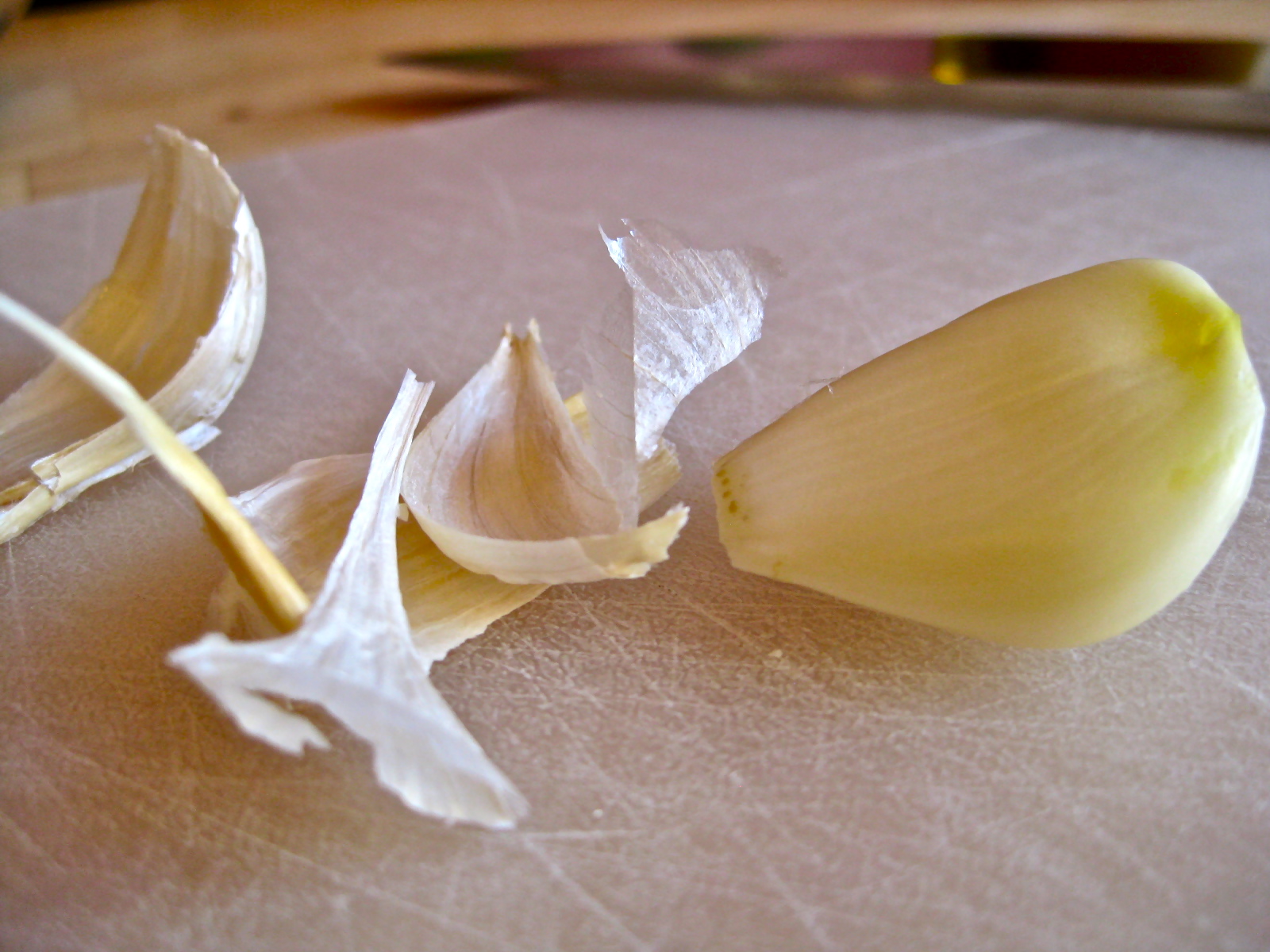
1 large garlic clove, crushed and finely chopped

salt and pepper

4 boneless, skinless, chicken breast halves

2 medium zucchini, sliced lengthwise into ¼-inch slices

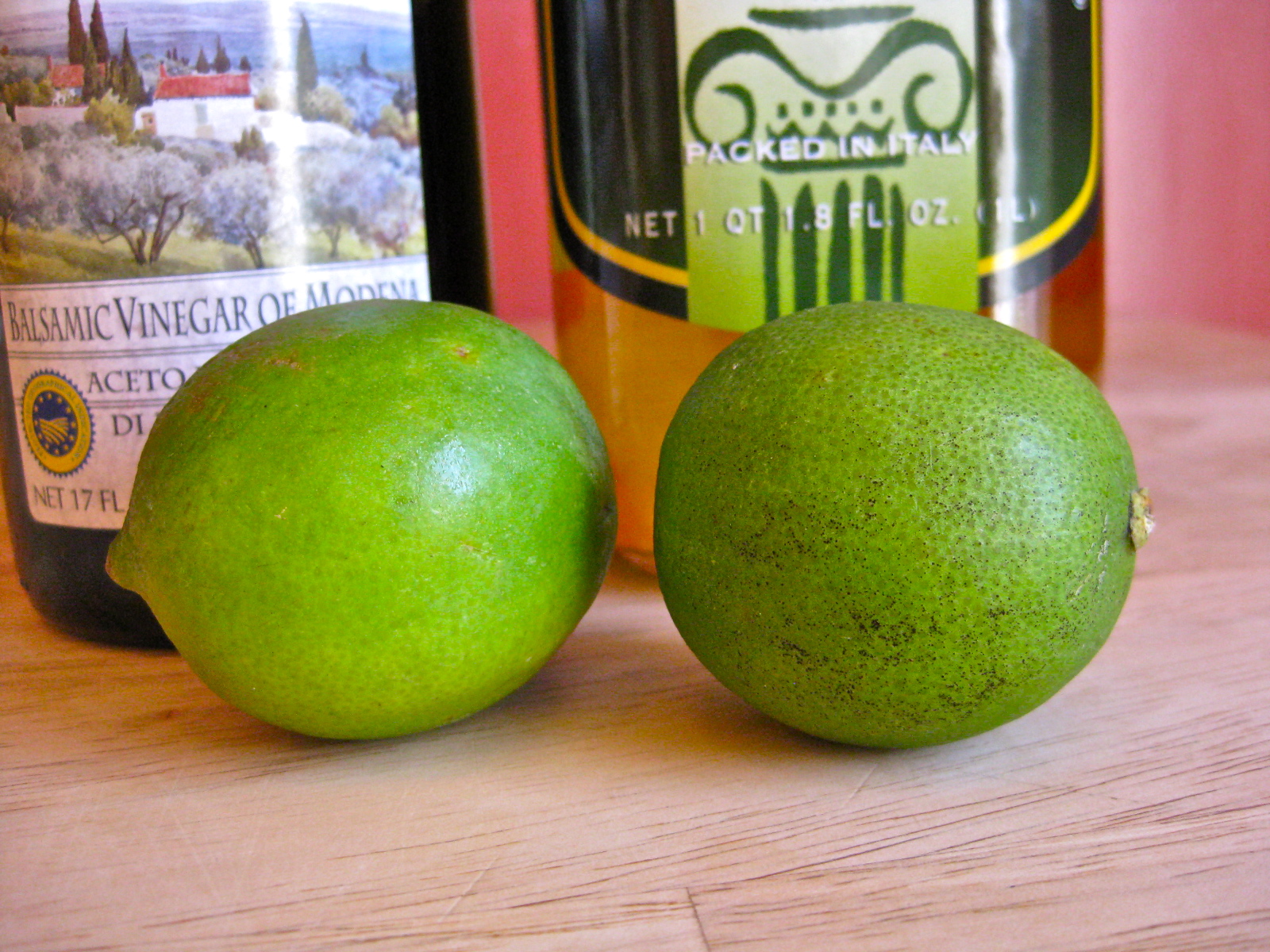
2 limes, sliced in half

In a medium bowl, whisk together balsamic vinegar, olive oil, chopped garlic, and salt and pepper to taste.  Add zucchini slices to glaze, toss to combine, and set aside.  The zucchini slices will only have to sit in the glaze for a minute or two.

Heat a grill or grill pan to medium high heat.  Place chicken breasts on grill.  Remove zucchini slices to a plate, and set aside.  Using a heatproof brush, brush a generous amount of the balsamic blaze on the exposed side of each chicken breast.  Cook the first side of the chicken breast for 4-5 minutes (until chicken has dark, visible grill marks), then flip chicken and brush glaze on the cooked side of the chicken.  After 4-5 more minutes, brush chicken with glaze again, flip again, then brush once more.  Cook chicken until done, occasionally brushing with more glaze. Chicken will be done when it reaches an internal temperature of about 160 degrees Fahrenheit.  When poked with a knife, the emitting juices should be clear, not tinged pink or yellow.

While the chicken finishes cooking, add the limes to the grill, cut side down.  Add the zucchini slices to the grill, and cook for 1-2 minutes on each side, until zucchini is soft but not mushy, and has visible grill marks on each side.

If you are using a grill pan instead of an outdoor grill and do not have enough room to cook chicken, zucchini, and limes all at once, cook the chicken first (for a total of about 7-10 minutes on each side, depending on how large the chicken breasts are), set aide, and then cook zucchini and limes.

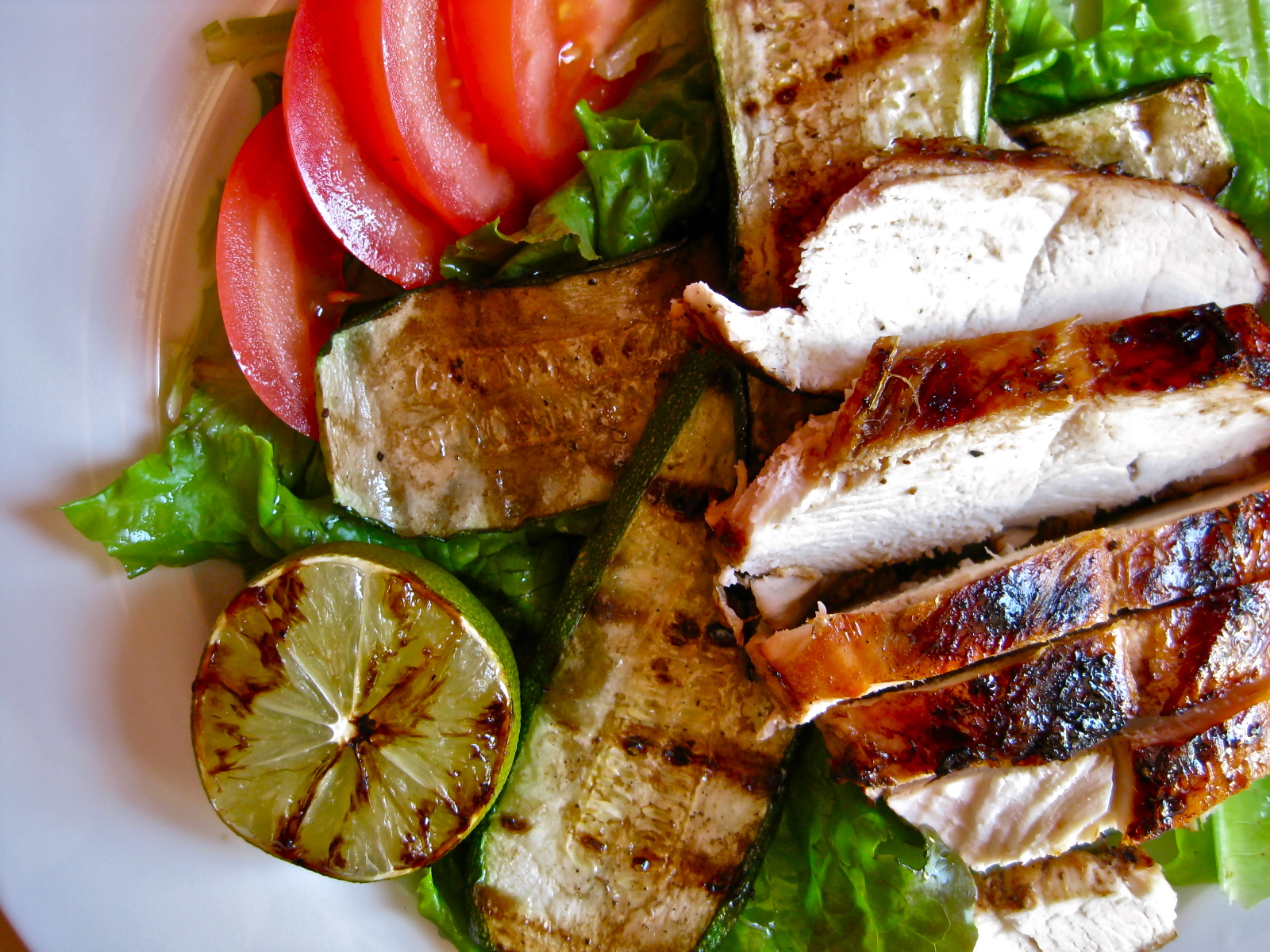
Serve each chicken breast sliced, accompanied by zucchini and half of a grilled lime.  I like to serve the chicken and zucchini on a bed of greens, often with slices of fresh tomato.  When ready to eat, squeeze the juice of the grilled lime over the chicken and vegetables.

Serves 4-6 people.

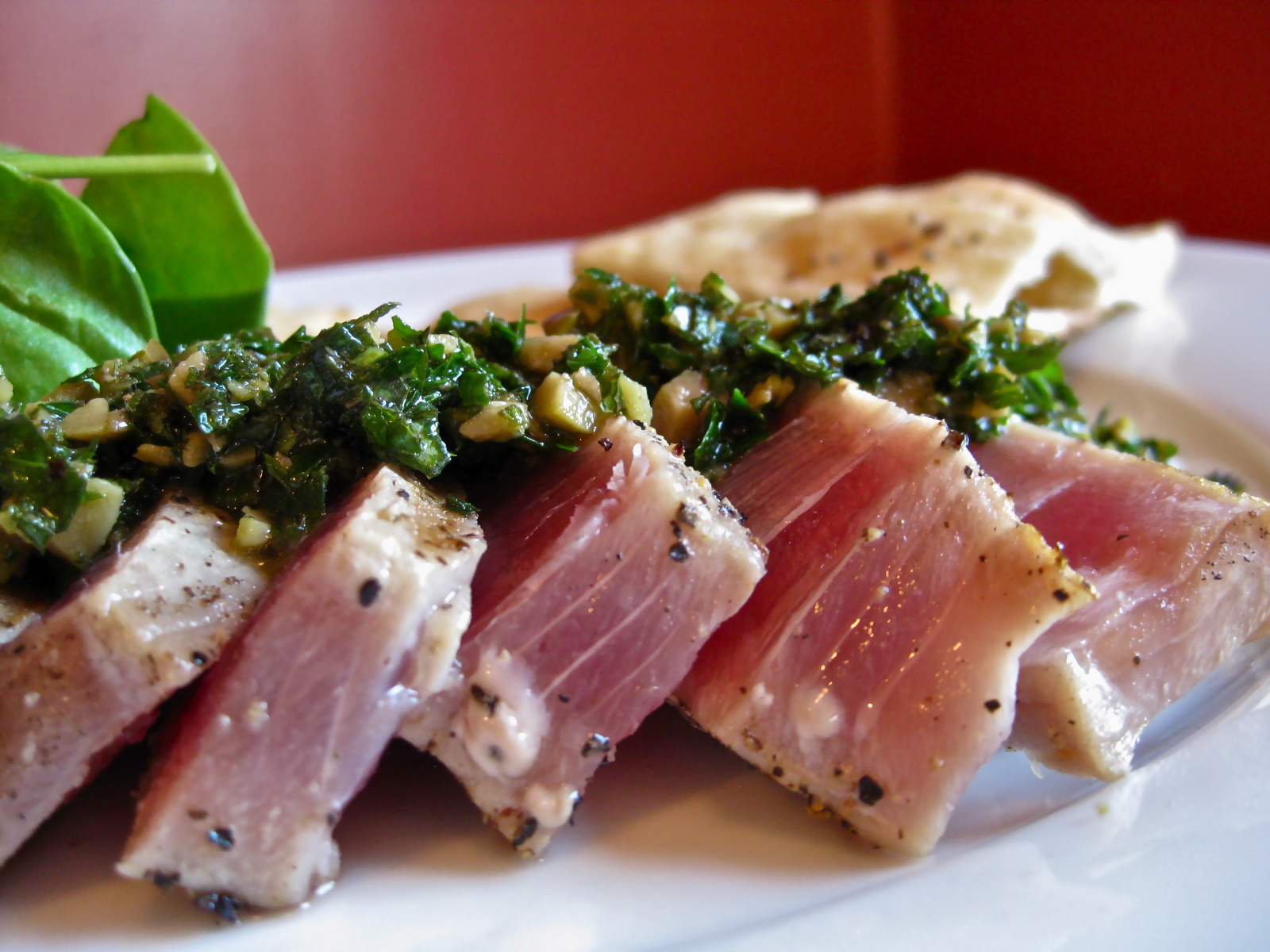
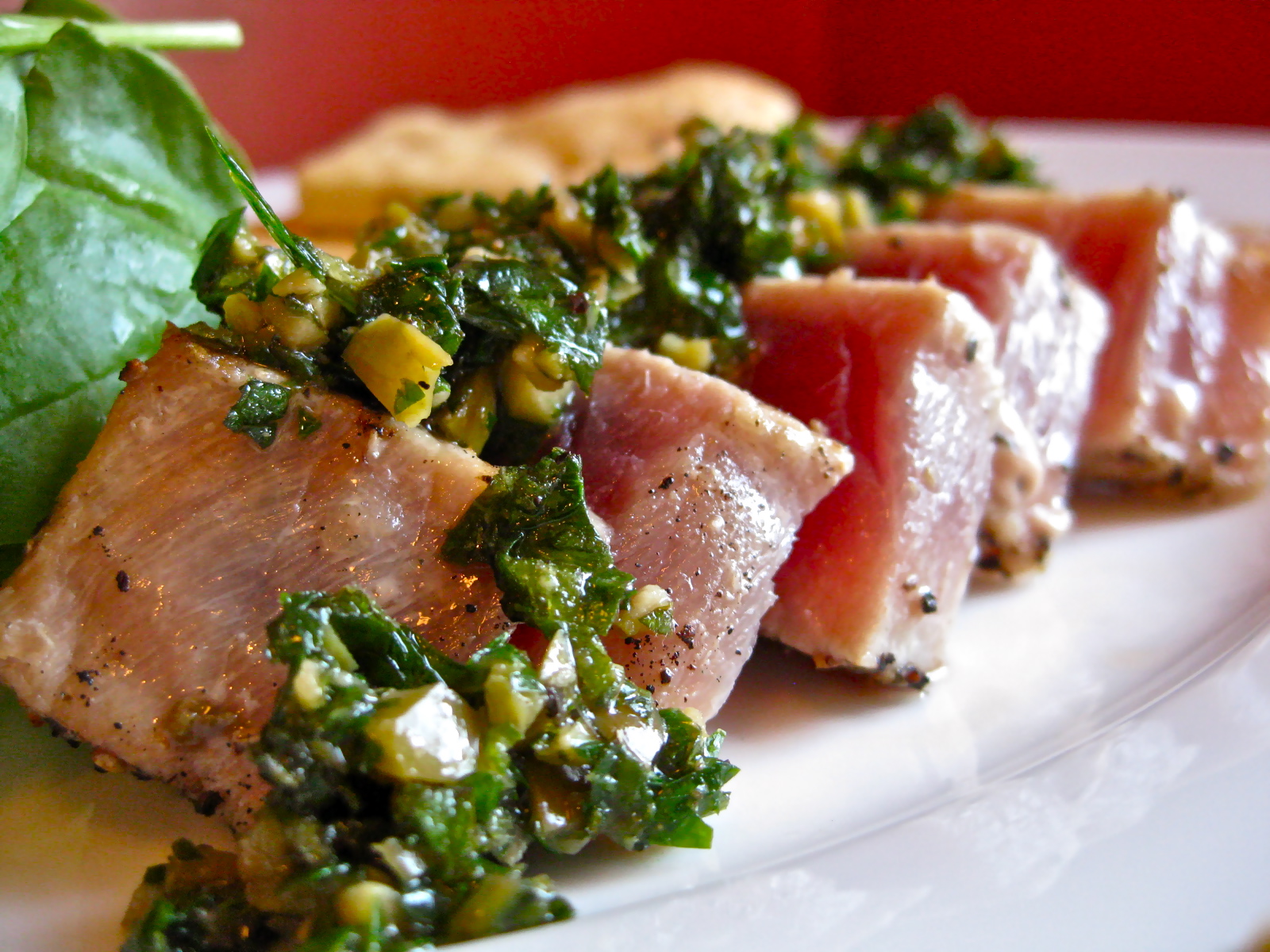
Seared Tuna Steaks with Salsa Verde

5 Sep

Sometimes it takes me a while to come around to certain foods.  For years I could not understand the logic behind combining sweet and savory foods, and then one day I ate a salad packed with huge chunks of watermelon tossed with deliciously salty squares of feta cheese and, oh, my lord, life had never been better.

Meats, however, are still a tough sell for me.  I’ve mentioned this before, but I just can’t get behind most meats, and, if I do decide to go near them, I am frequently struck with the terrible notion to instruct whoever is serving me said meat to just burn it, char it—do whatever is needed to make it seem less meaty and tendon-filled.  But then I’ll virtually inhale a plate of sushi and not flinch, which, I know, does not make any sense at all.

But to me, it sort of does.  Whereas rare meat seems, to me, utterly and unmistakably meaty, fish is so much less fishy when eaten either rare or simply raw.  Thus, I have arrived at the logic that, hey, if you just barely cook your fish at all, it’s somehow less meaty and weird.  At least, that’s where I arrive when I approach the cooking of a piece of fish, and, I admit, it’s an end point I’ve reached only after years of eating dry, hardened fish that I either purposely cooked until inedible or instructed others to do for me.  Over a decade ago, in a terrible fit of fear and squeamishness, I actually begged a friend of mine—who is a professional chef, I might add—to please, please char the daylights out of a tuna steak for me, as I was not feeling up to the task of tackling a meat that was left pink and soft.  To her credit, she complied with my request, and, boy, did I ruin that meal for myself.

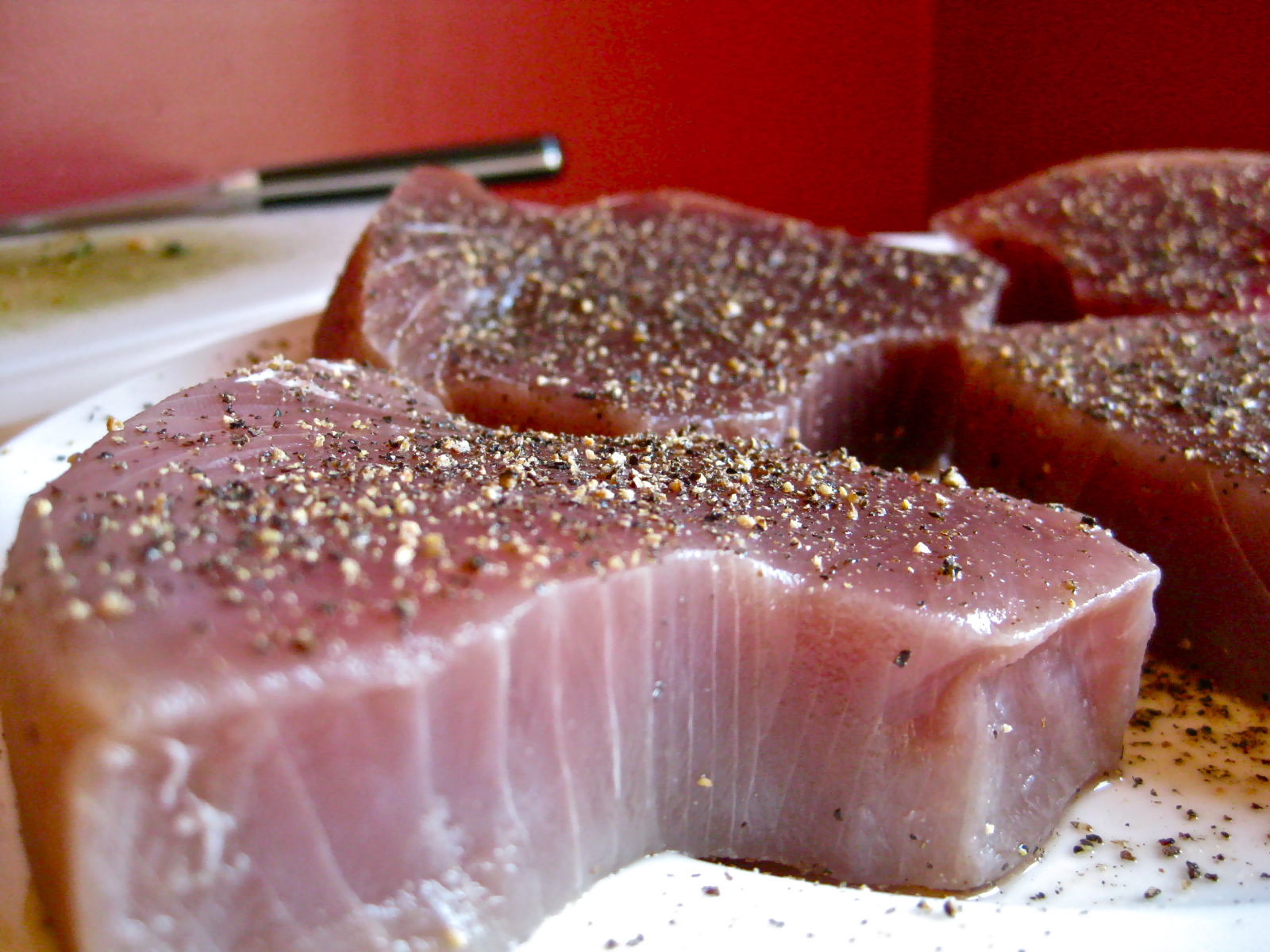
But years have passed, lessons have been learned, and now, aware of the myriad of ways I have managed to ruin countless meals for both myself and others, I have come around to the very wise notion that, when it comes to cooking fish, less is more.  Tuna steaks, in particular, can go from transcendent to terrible in just a matter of a minute or two, but when done right, the outside perfectly seared and the inside lustrous and bright, it’s tough to understand why anyone would ever want to subject their meal—and themselves—to a fate made deliberately less delicious.  Having become fully aware of this, I have now vowed to conquer a medium-rare steak. (Confession: I am not actually going to do that.)

Seared Tuna Steaks with Salsa Verde

4 tuna steaks, rinsed then patted dry

olive oil, for brushing

freshly ground black pepper

sea salt

Very lightly brush each tuna steak with olive oil, then generously salt and pepper both sides.  On a well-oiled, very hot grill or grill pan, sear tuna steaks for about 1 minute on each side.  Grill should be hot enough to make an audible sizzling noise when tuna steaks are laid on the hot grill.  If you desire a more heavily cooked tuna steak, sear it for up to 1 ½ minutes, but be cautious to not overcook your fish.  It gets dry and rubbery very quickly.

Salsa Verde

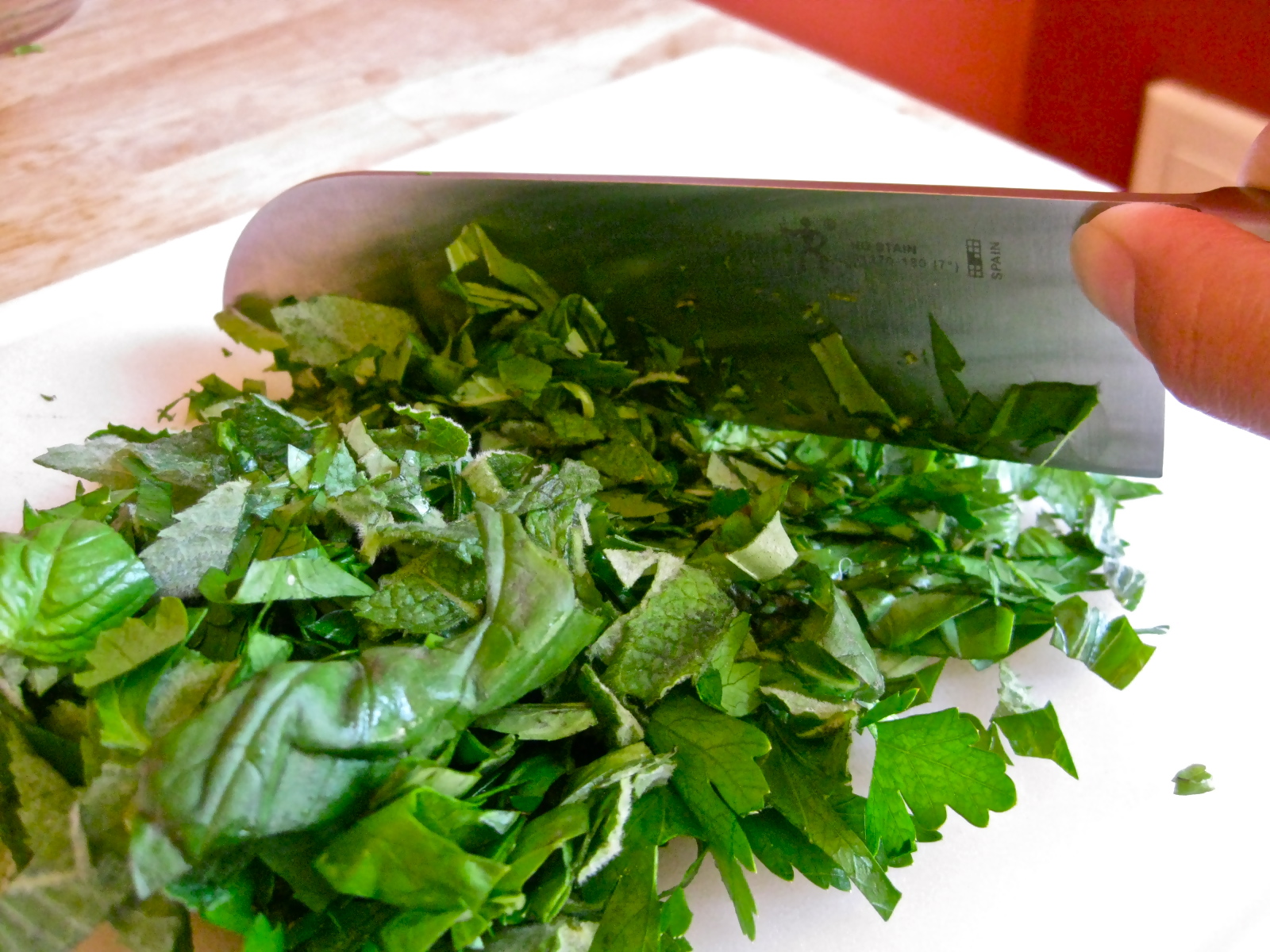
½ cup chopped fresh herbs (about 2 ½ large handfuls of whole herbs—I used basil, parsley, and mint)

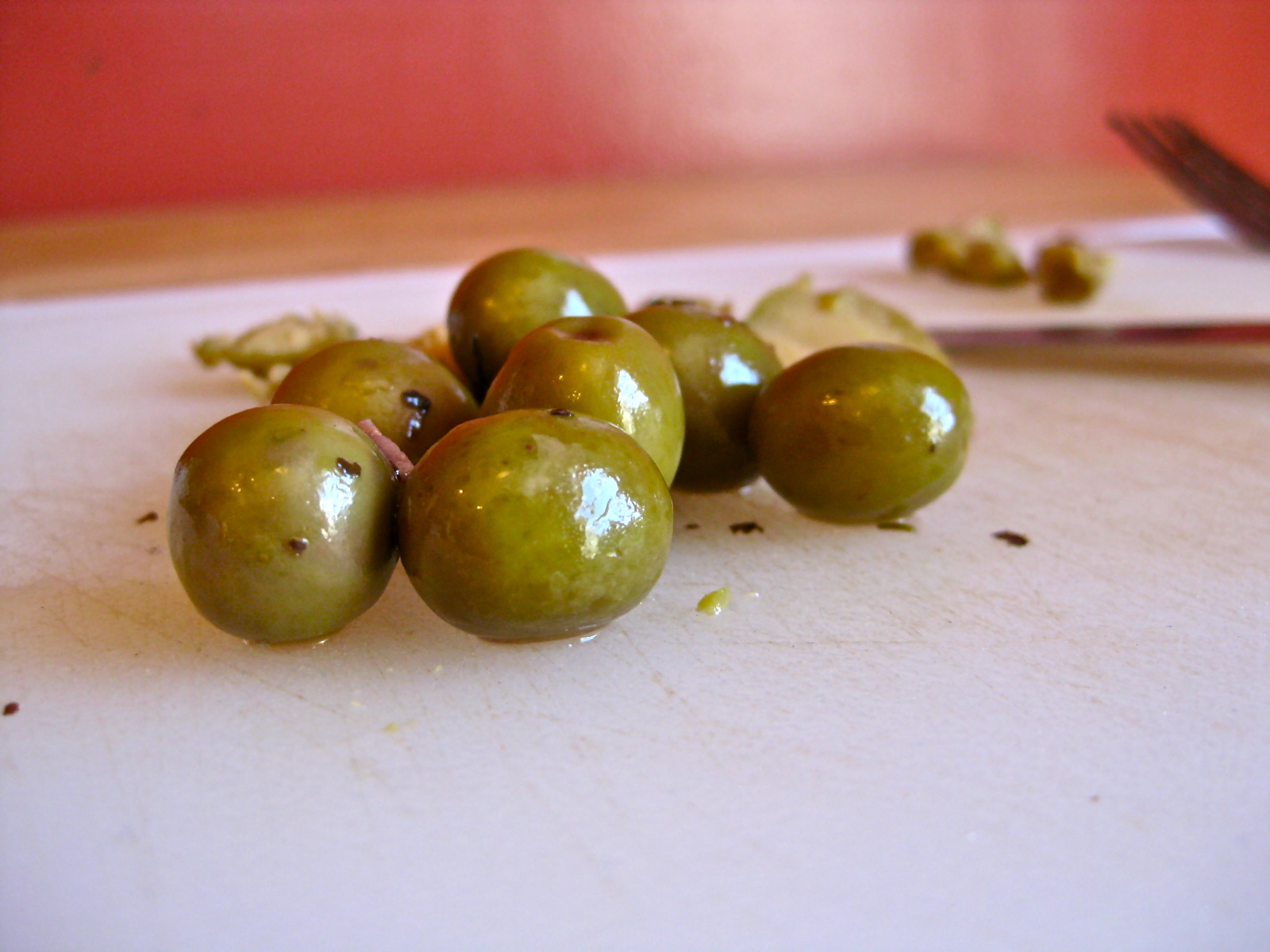
¼ cup pitted chopped green olives

3 tablespoons extra virgin olive oil

1 tablespoon red wine vinegar

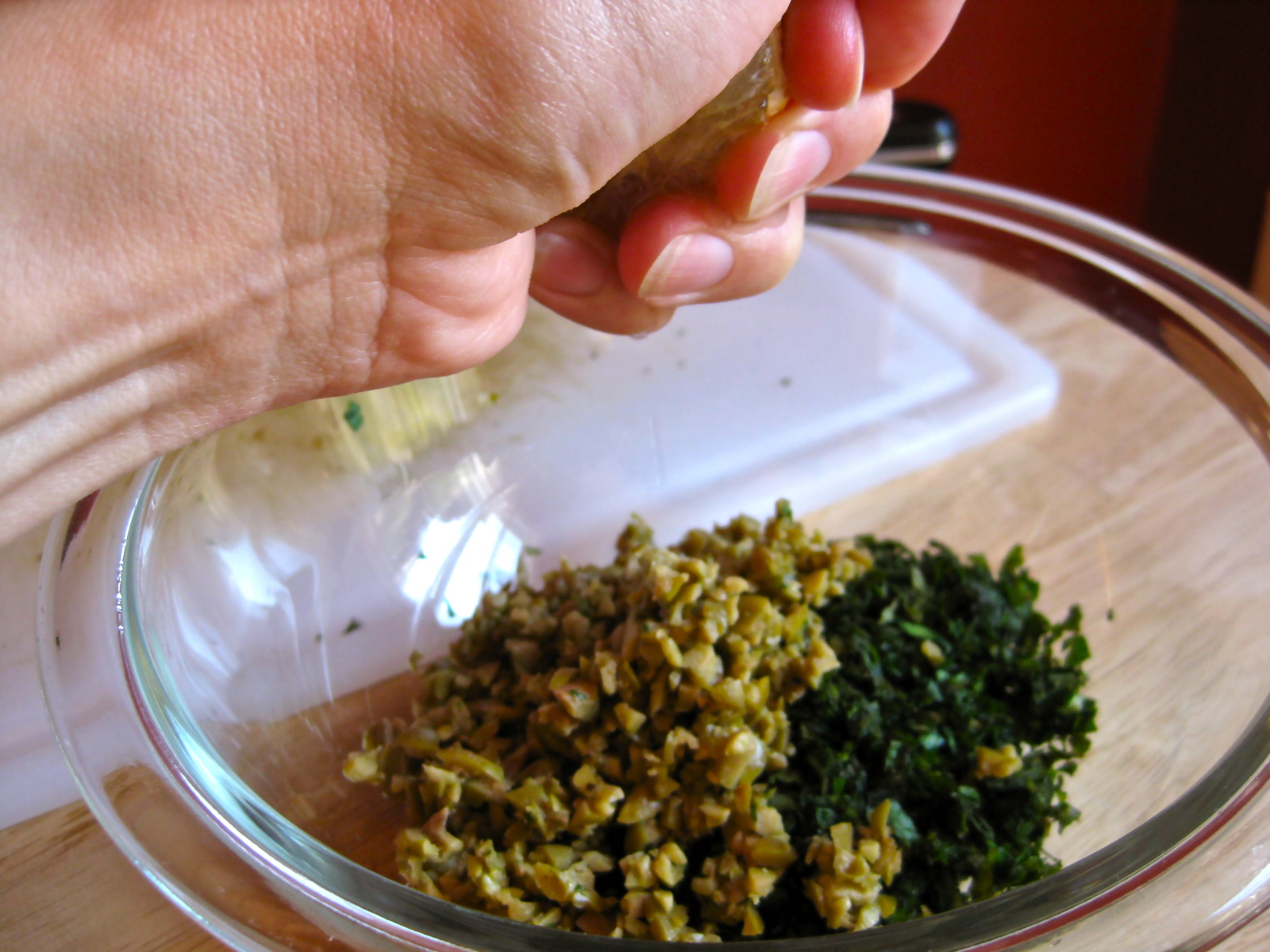
1 tablespoon freshly squeezed lemon juice

freshly ground black pepper

salt (optional)

To make salsa, combine all ingredients in a small bowl, and toss to combine.  If your olives are particularly salty, you will not need to add much, if any, additional salt to the mix.

To serve tuna, cut each steak, against the grain of the meat, into thin slices.  Top with salsa verde.

Serves 4

Grilled Peaches and Sausages with Almond Herb Bulgur

21 Jul

There is a fierce debate amongst people concerning whether or not sweet and savory foods belong together.  I imagine this debate is much like the fracas surrounding the polarizing opinions people have about cilantro (It tastes like soap!  No, it’s delightful!), and, to be completely honest, I totally understand why.

Up until a few years ago, I, too, was not a fan of mixing my sweet foods with my savory or salty foods.  Oh, sure, I was amenable to a nibbling of sweet and salty roasted nuts, but, really, who isn’t?  My aversion to sweet foods that mingled with savory foods was more an issue of one component of the meal taking precedent over every other flavor aspect.  Salted caramels were always too salty, and sprinkling brown sugar or maple syrup on winter squash always seemed like a bit much to me.  If you tried to talk to me about pairing fried chicken with waffles and maple syrup, you could be sure that I would shut you down immediately.  No.  Don’t even talk about it

Then, right around the end of 2005, newly pregnant and completely and wholly averse to all foods everywhere, something happened to my taste buds.  At first I was repelled by food, unable to glimpse any food at all without feeling like my stomach was going to violently force itself out of my body.  Then, after 100 solid days of nausea, I emerged from my unintentional fast as a timid and cautious eater.  Cut to around six months in, my taste buds all out of whack and not craving certain foods so much as certain sensations, and suddenly I could be found standing in the middle of the kitchen, spicy grilled chicken breast in once hand, bowl of vanilla yogurt in the other, dipping meat into what was essentially tart vanilla pudding and imploring people to try this new concoction of mine because, oh, man, it was so mind blowingly good, you just couldn’t believe it.  Sad to admit, I ended up enjoying that particular combination of foods on more than one occasion.

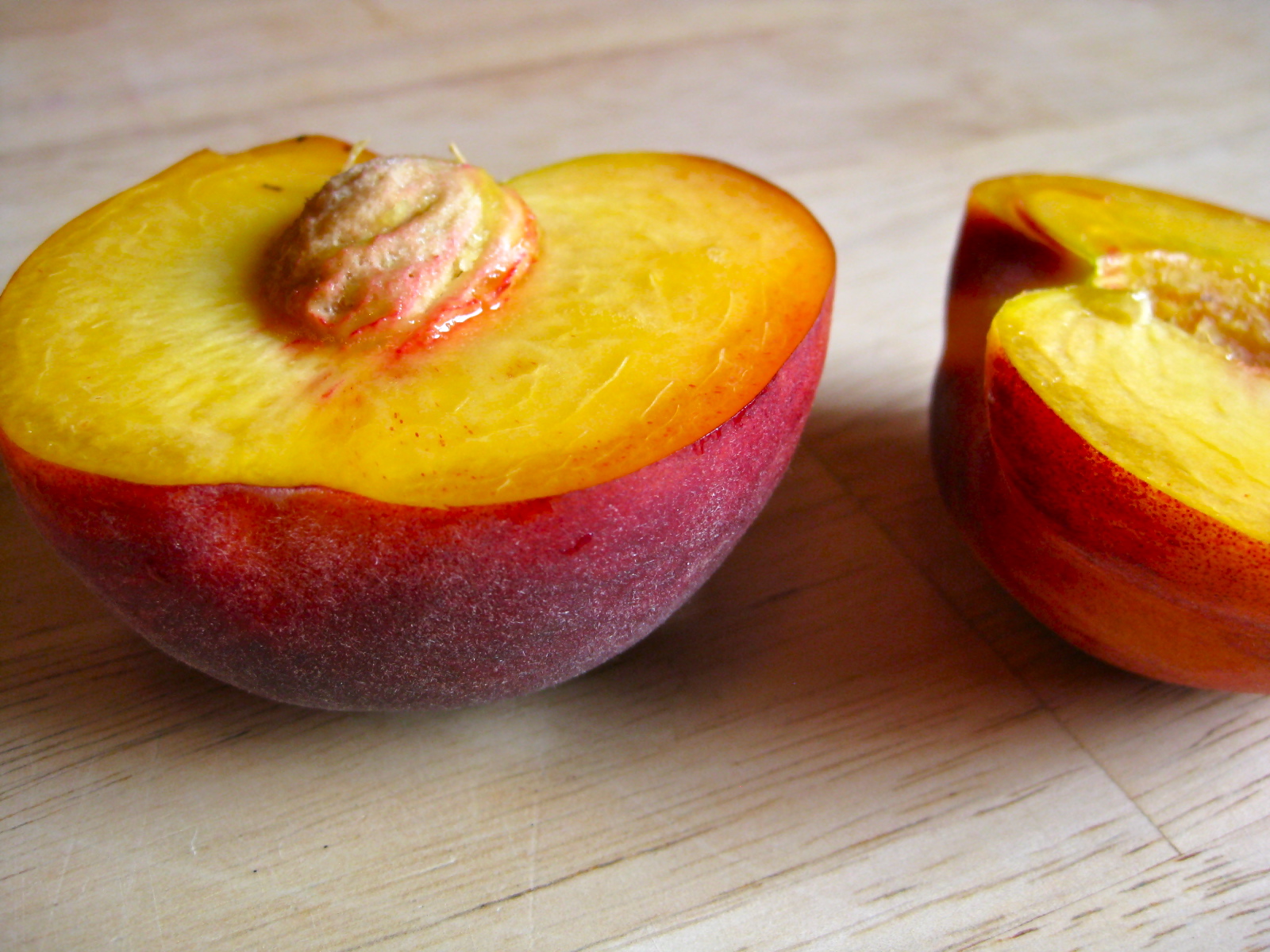
Five-plus years later, I’ve now developed quite an affinity for the savory and the sweet combined together, though in much subtler form.  Though I still don’t see the point of sweetening up a nice, innocent winter squash, I definitely see nothing wrong with letting the sweet mellowness of fruit sit alongside a piece of grilled meat.  Peaches, in particular, with their affinity for being grilled, are a perfect companion for savory grilled sausages, and, when sharing a plate with a light and herby side dish, it’s tough to imagine a more perfect combination of savory, salty, and sweet.  Well, unless you choose to eat this, of course.  Or this.

Grilled Peaches and Sausages with Almond Herb Bulgur

2 peaches, cut in half and the pits removed

4 link sausages (I used chicken fontina sausage, which was fantastic)

1 cup fine bulgur

2 ½ cups boiling water

½ cup gently packed fresh herbs of your choice (I used parsley, mint, and basil), finely chopped

¼ cup whole almonds, coarsely chopped

½ tablespoon butter

salt and pepper to taste

In a medium bowl, combine bulgur with boiling water.  Stir to combine, then cover tightly and allow to stand for 30 minutes.

Heat an outdoor grill or a grill pan on top of the stove to medium high heat.  Brush the surface of the grill with vegetable oil.  Place peaches on the grill, cut side down.  Place sausages on the grill.  After 3 minutes of grilling, gently turn over one peach to see if grill marks have formed.  If grill marks are visible, turn over the remaining peaches, and continue to grill for another 3-4 minutes, until peaches appear juicy  and soft.  Remove peaches from grill, and continue to grill sausages, turning occasionally, until they are cooked through.  After being cooked, both peaches and sausages should be removed to a plate and covered.

When bulgur has soaked for 30 minutes, fluff with a fork and taste for doneness.  Bulgur should be soft and fluffy in consistency.  Drain bulgur in a fine mesh sieve to remove any remaining water, then return to the bowl in which is soaked.  In a small pan, heat butter over medium low heat.  When butter has melted, add chopped almonds and gently fry in butter, stirring occasionally, until almonds have started to brown, about 3 to 5 minutes.  Add almonds to bulgur.  Add chopped herbs to bulgur.  Add salt and pepper to taste, and toss to combine.

To serve, slice each sausage on the diagonal into oval coins.  Slice each peach half into fifths.  Serve peaches and sausages on top of bulgur, pouring over any juices that collected on the bottom of the plate on which the peaches and sausages were resting.

Serves 4.