Archive | Pasta RSS feed for this section

Spinach Basil Pesto with Lemon and Almonds

23 Jun

Having a child who happens to absolutely love pesto is both a blessing and a curse.  On the one hand, it’s nice to have a child who will stick a toe in the pool of adventure and happily dig into a sauce that is not only bright green, but also more complex in flavor than the average preschooler’s preferred pasta dish of buttered noodles with cheese.  On the other hand, have you ever been driven to eating pesto three times a week because you live with a tiny person who is prone to bouts of tyrant-like behavior when it comes to food?  No matter what the food, if you are forced to eat it enough, its gloss will soon begin to fade.
Maybe it’s just the repeat performances wearing me down, but I’ve long felt that pesto, that much-maligned sauce of the ‘90s, is in dire need of a makeover. Being a sauce of few ingredients, there are as many ways to make pesto shine as there are ways to make it dull and unexciting, and, much to the world’s misfortune, most pesto ends up suffering the latter lot rather than the former.  It’s too oily.  It’s garlicky enough so as to be considered borderline caustic.  It’s bland.  It’s boring.  It’s predictable.

Guess what?  It doesn’t have to be any of those things.  Breaking apart the simple components of pesto and then dressing them up as you put them back together can yield some fantastic results, and the seemingly endless ways one can Frankenstein together a new type of pesto are limited by only what you may or may not have in your refrigerator on a given day.  Starting from a very basic level of pesto-making, just changing up one or two ingredients can provide your standard recipe with a nice bit of change.  Arugula can get swapped for basil.  A handful of fresh mint can join in.  Fresh tomatoes and walnuts can be tossed into the blend.
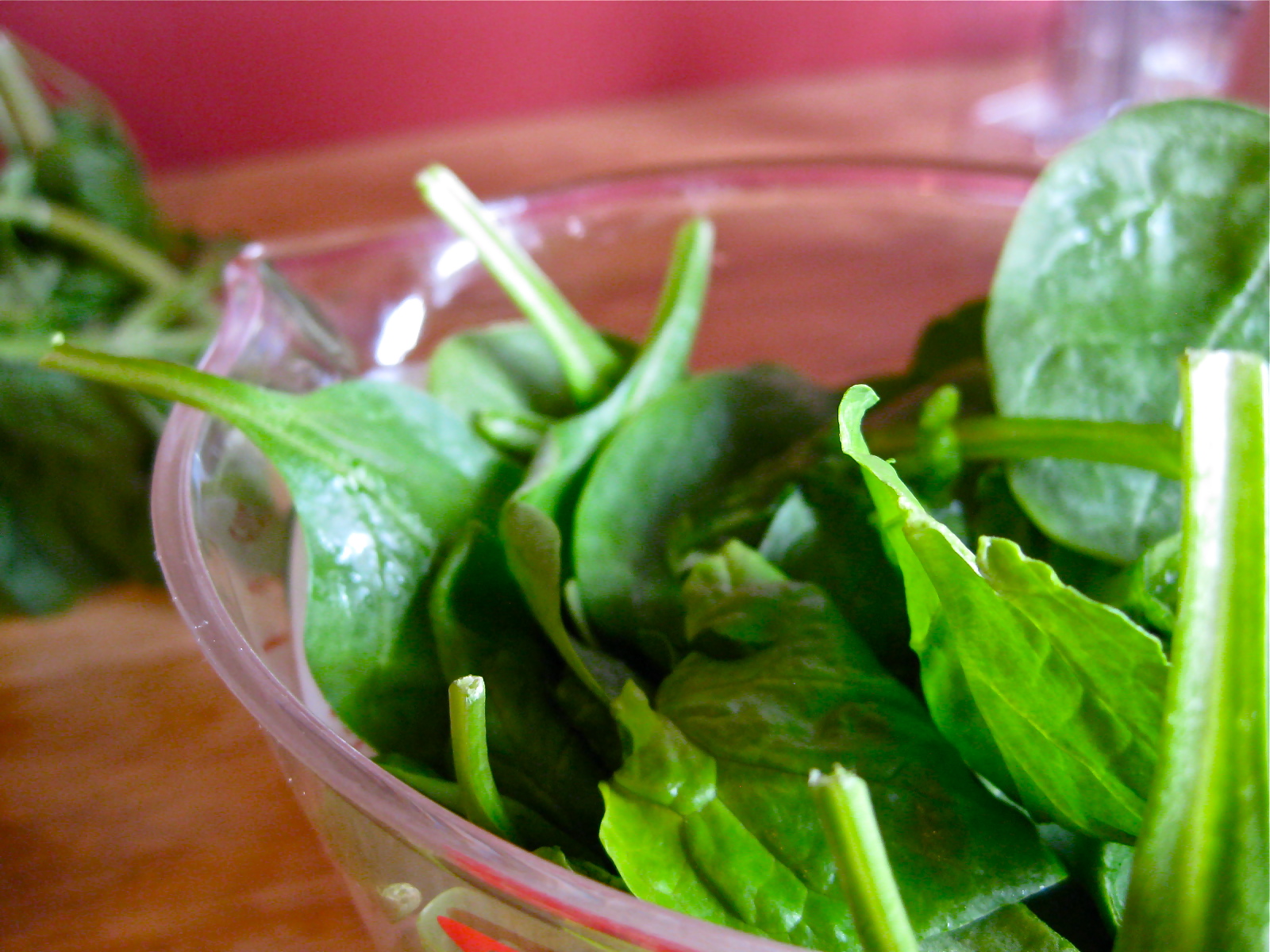
Though history may have proven that your kid will eschew spinach in its regular form, you can hide a ton of the vitamin and nutrient packed green in your sauce and, so long as you never let loose your secret, no child will ever be able to detect the difference between spinach pesto and regular pesto.  You know that as long as your pesto still looks like pesto, chances are your kid will never be the wiser.  To appease the adult palette, swapping out roasted almonds for pine nuts not only makes your frequent pesto consumption easier on the wallet, but the hearty taste of the almonds plays nicely off of the subtle nuttiness of the parmesan cheese.  Add in lemon zest for brightness, and you’re on your way to something reinvigorated and fantastic.
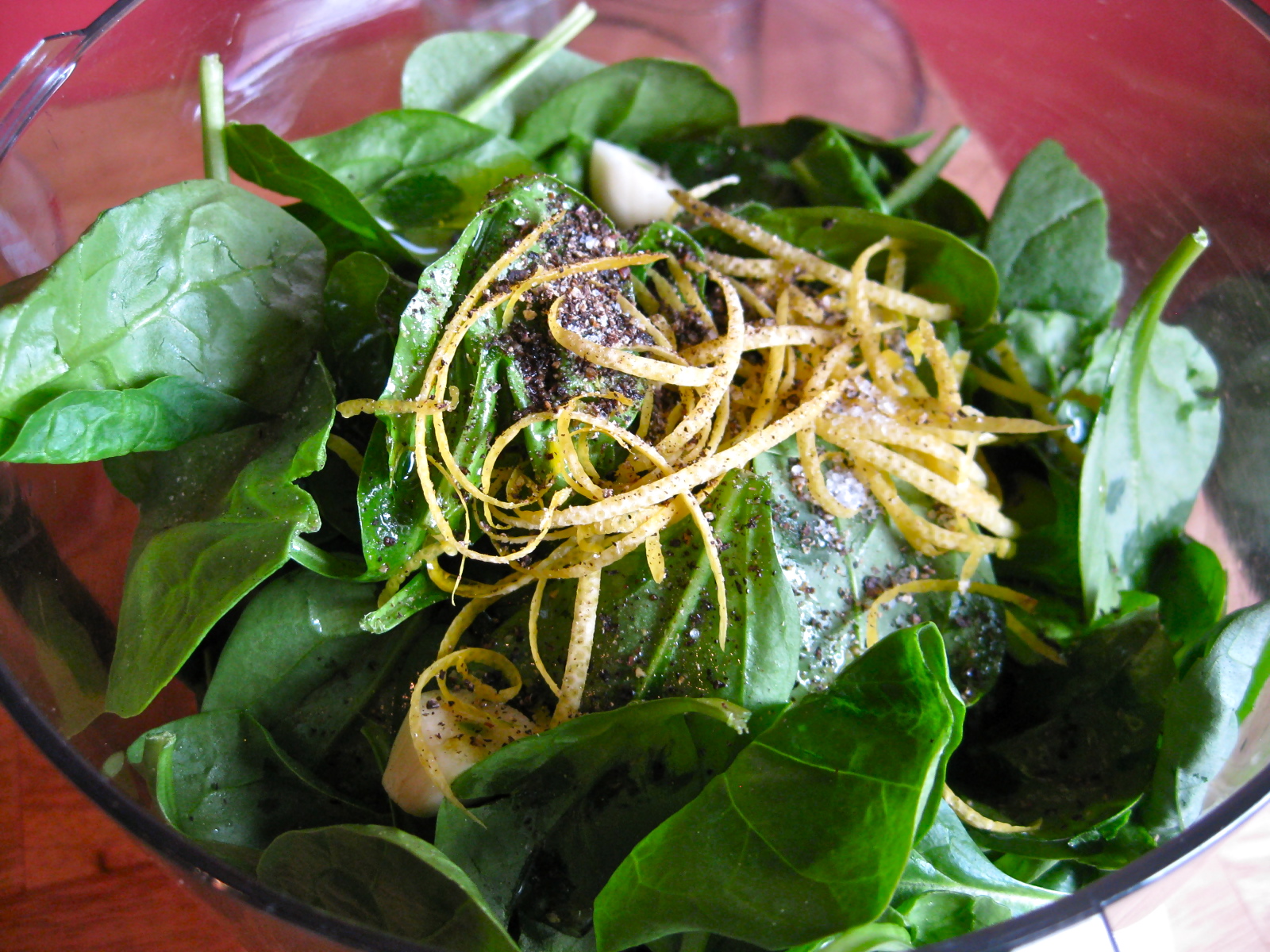
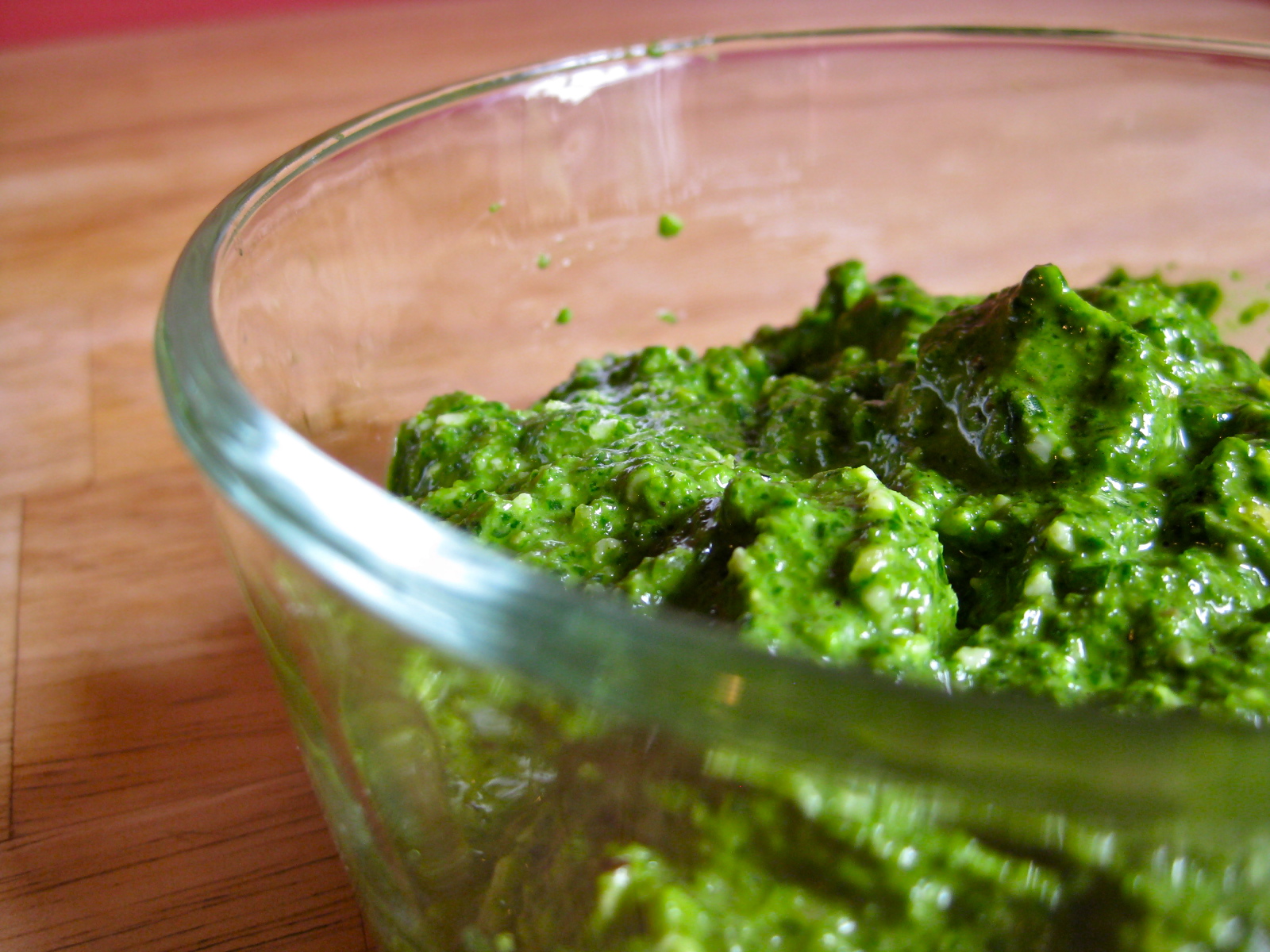
This is not pesto from a jar, or tired pesto from a restaurant that seemed to run out of menu ideas sometime during the Clinton administration.  This is pesto refreshed, yet still utterly recognizable as an old standby who you will always welcome, albeit now with a tad bit more enthusiasm.
Bonus information!

This pesto freezes extremely well.  I have been known to make several enormous batches of this pesto at the end of our gardening season when I harvest all our greens.  After I make a huge batch (or two) of the sauce, I pour it into individual serving sizes and freeze it.  Though I have absolutely no recollection where it came from, this silicone baking mold is great for portioning out pesto for freezing:
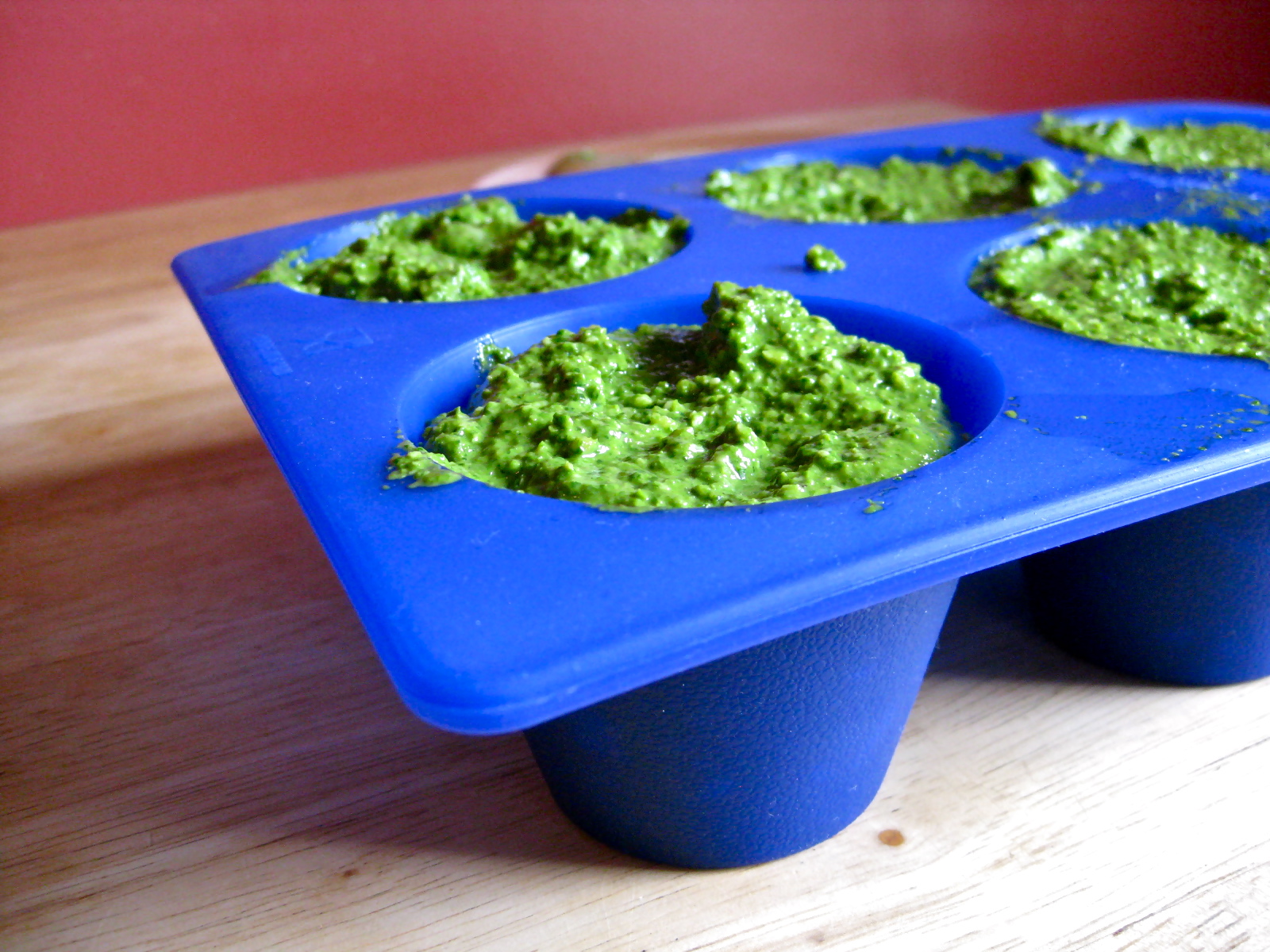
After the pesto has frozen (at least three hours, or up to overnight), I release the pesto from each cup (this process is super easy when using a silicone mold, by the way, because the silicone cups just peel back and pop the pesto right out), then place the pesto servings in a thick Ziploc freezer bag and toss them back into the freezer.
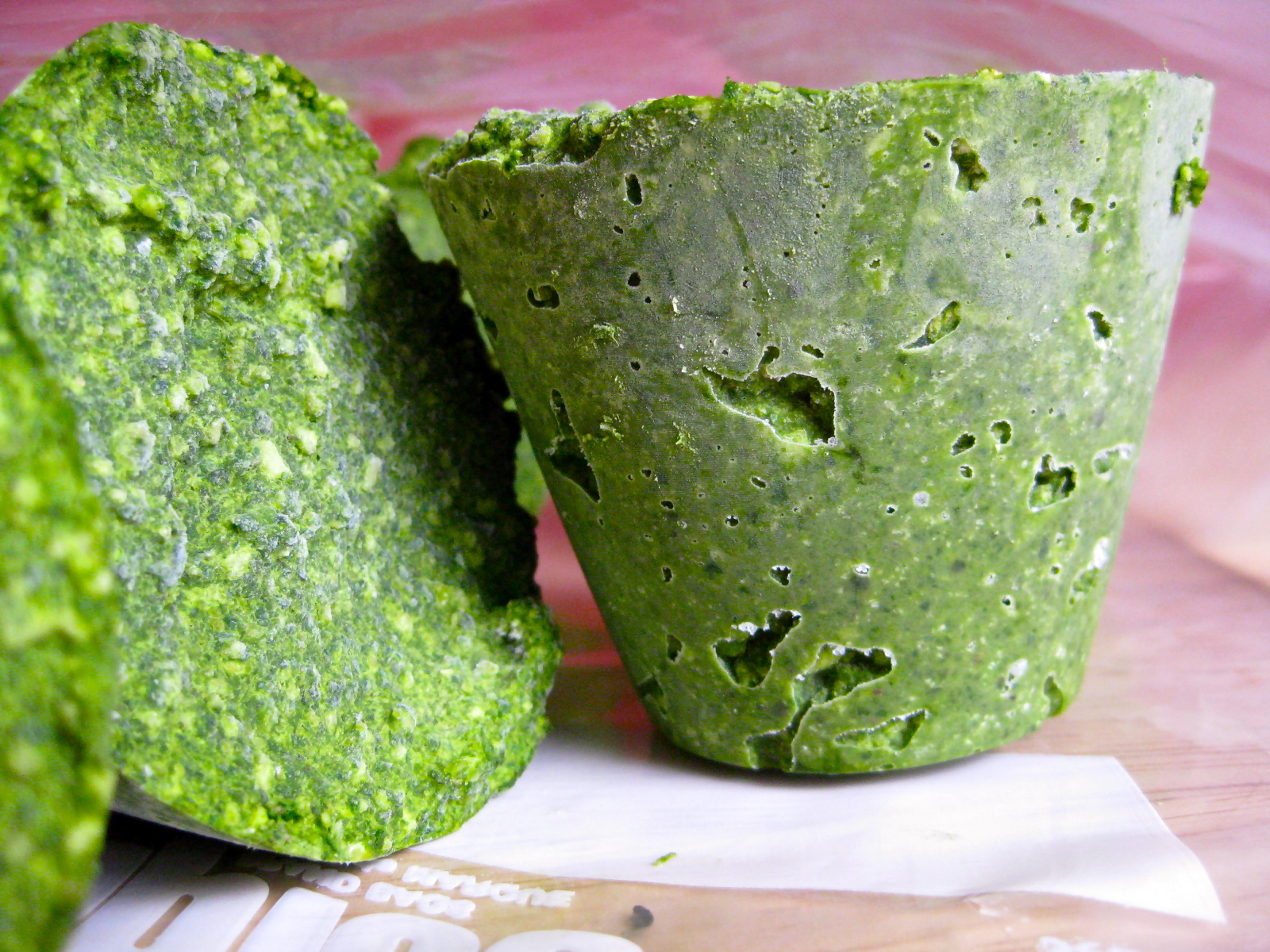
The pesto will last in the freezer for several months.  When you want to use a block of your pesto, just place one in a microwave safe bowl and defrost for about a minute on high heat.  Alternately, if you are good about planning ahead, you can just place one of your blocks in the refrigerator to defrost overnight for the next day’s meal.  The molds I have are able to hold just a smidge more than 2/3 of a cup of pesto each.  2/3 of a cup of pesto will coat a moderately dressed pound of pasta, or you can cook 3/4 of a pound of pasta and enjoy your pasta a bit more heavily dressed.

Spinach Basil Pesto with Lemon and Almonds

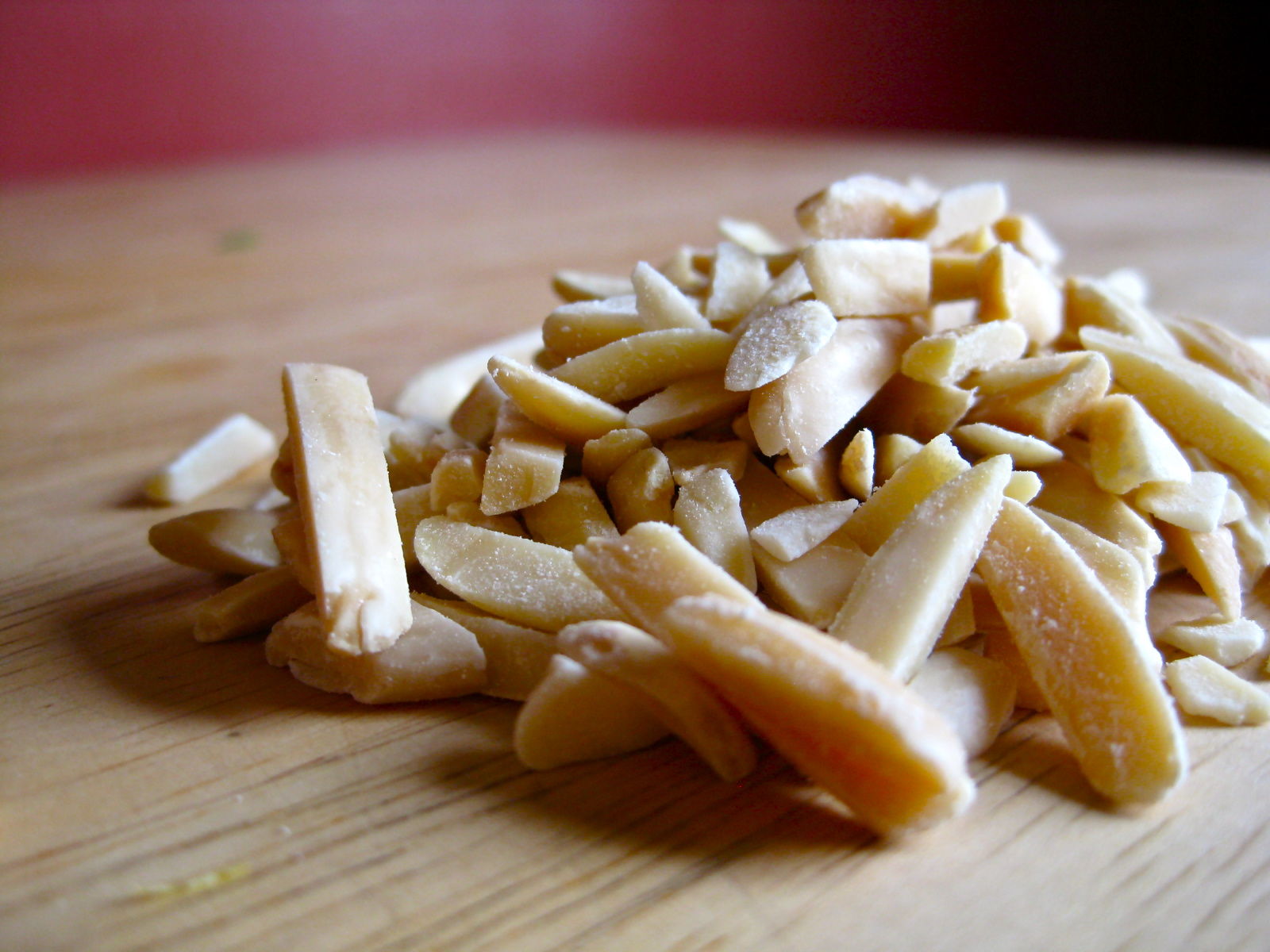
¼ cup slivered or sliced almonds

1 tightly packed cup of fresh basil leaves

2 tightly packed cups of fresh spinach leaves

2 large cloves of garlic, peeled and coarsely chopped

zest of 1 large lemon

¼ cup extra virgin olive oil

½ cup shredded or grated Parmesan cheese

salt and pepper to taste

In a dry pan, toast almonds over medium high heat until they are golden brown.  Remove from heat and set aside.

In the bowl of a food processor or blender, combine basil, spinach, garlic, lemon zest, and olive oil.  Process or blend for 15-20 seconds to combine and chop.  Scrape down the sides of the bowl, then add cooled almonds and Parmesan cheese.  Process or blend for another 20-30 seconds, scraping down as needed, until pesto is uniformly combined and no large chunks remain.  Add salt and pepper to taste.

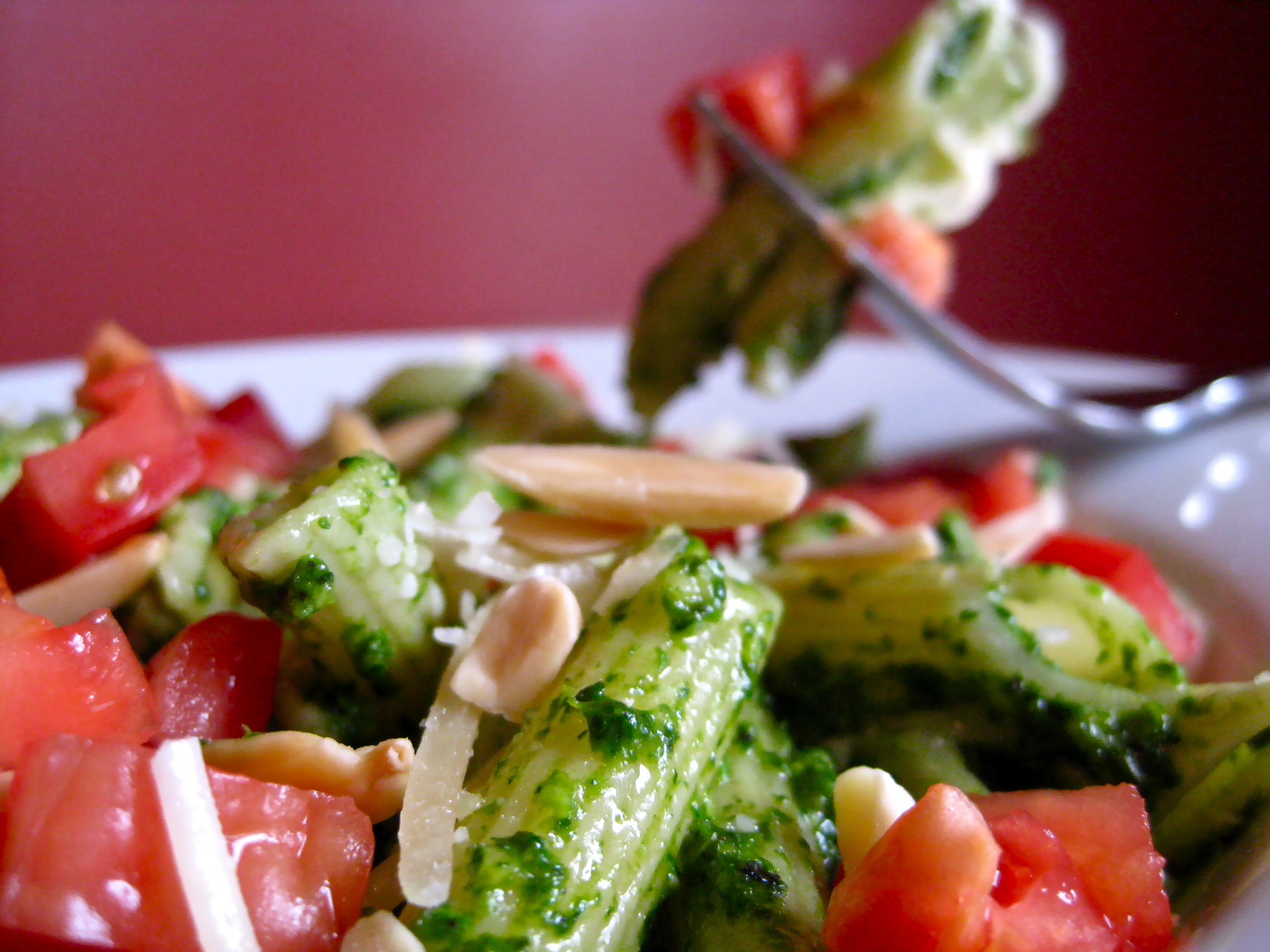
Pour sauce over your favorite pasta and toss to coat.  Taste for seasoning.

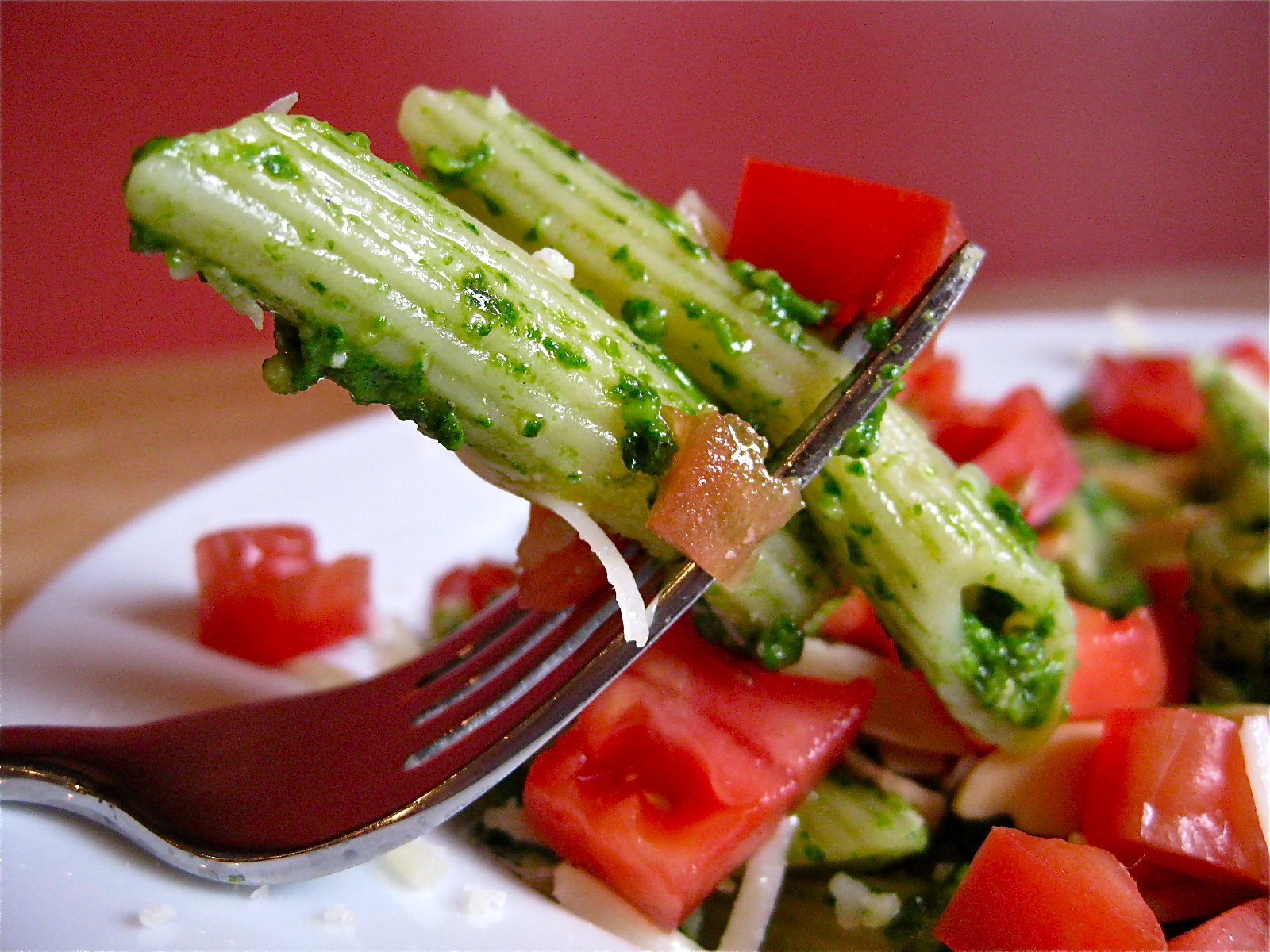
If desired, top with chopped tomatoes, more Parmesan cheese, and additional toasted nuts.

Makes 1 cup of pesto, enough for 1 pound of pasta.

Orecchiette with Grated Garlic and Tomato

28 May

When the sun comes out, we leave the house.  Not to, for the one millionth time, make mention of the abysmal weather we suffer through in the Pacific Northwest, but when May begins to draw to a close and June starts to creep up on us, we all start to feel a little cooped up from the previous seven months we’ve just spent trapped indoors by unrelenting rain and gloominess.  You can understand, then, why a rare glimpse of the sun during the month of May (or June, for that matter, because here summer likes to hang out in its pajamas and nurse a few beers on the couch for a while before it finally decides to emerge from its extended time off and finally get to work) will cause people to take to the streets of Portland in a pasty parade of boisterous revelry.

Because you’re contractually obligated to own a bicycle if you live here, we, not surprisingly, spend a lot of our outdoor time traveling by bike to various locations.  We bike to the park, we bike to the baseball field, we bike to the science museum, and we bike while running errands.  If the weather is truly wonderful, we pack a picnic and head downtown to have a picnic on the waterfront.  If the weather very suddenly stops being wonderful and forces us back home before we find ourselves biking through a rainstorm, we unexpectedly unload ourselves from our bikes to face dinnertime totally unprepared.  On the rare occasion that I don’t want to break down and just order Thai food (okay, so I always want to break down and just order Thai food, but budgetary constraints dictate that ordering Thai food several times a week is a ridiculous and ruinous financial strategy), I head into the kitchen and prepare what has become our quickest last minute dinner.

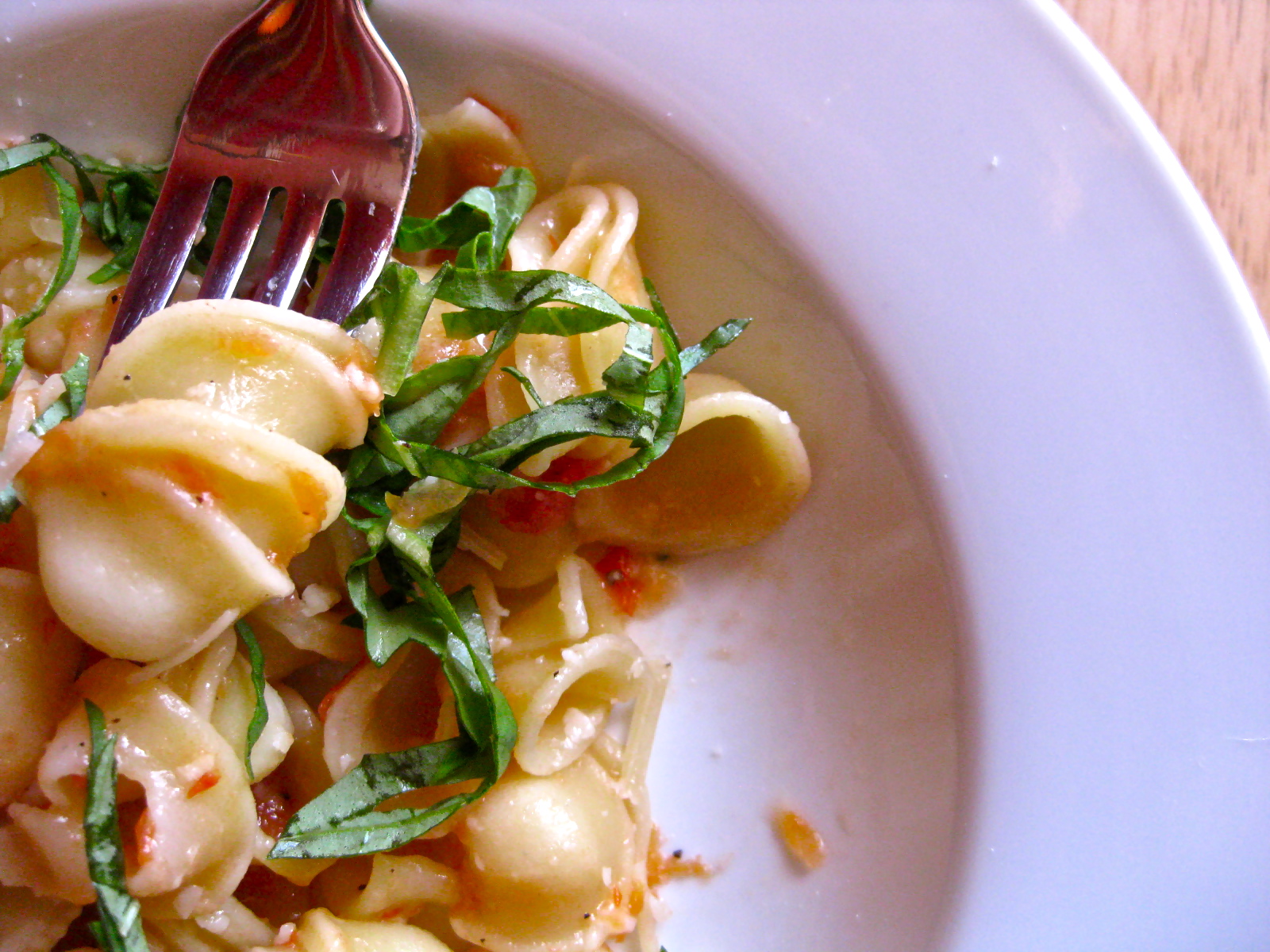
When the summer months actually arrive proper and the garden is bursting with tomatoes, this pasta dish sees a lot of action in our house.  More a handful of ingredients than an actual recipe, the technique (and I use that word very, very loosely here) of making this dish should serve as a nice base for creating a quick tomato pasta.  You boil your pasta water, throw in your pasta, then start on the sauce.  You put some fat (butter, olive oil, both) in a pan, allow it to gently melt, then grate in some garlic.  While the garlic simmers and melts into the fat, you grate up as many tomatoes as you can find, then add them to the garlic.  You simmer the sauce while the pasta cooks, you add some pasta water to the sauce, you drain and the pasta and combine the two, you stir in a bit of Parmesan, season everything, then you’re done.

If you think you’d want the sauce to be more garlicky, use more garlic.  If you want a looser sauce, add more pasta water. Add herbs, add red pepper flakes, add a sharper cheese–no matter what you want to do to this base recipe, it’s pretty difficult to render it inedible.  And, depending mainly on how fast your pasta water can come to a boil, you can have this dinner on the table in around 20 minutes.  Which will leave you plenty of time to, weather permitting, hop back on your bike after dinner and head out for some ice cream.

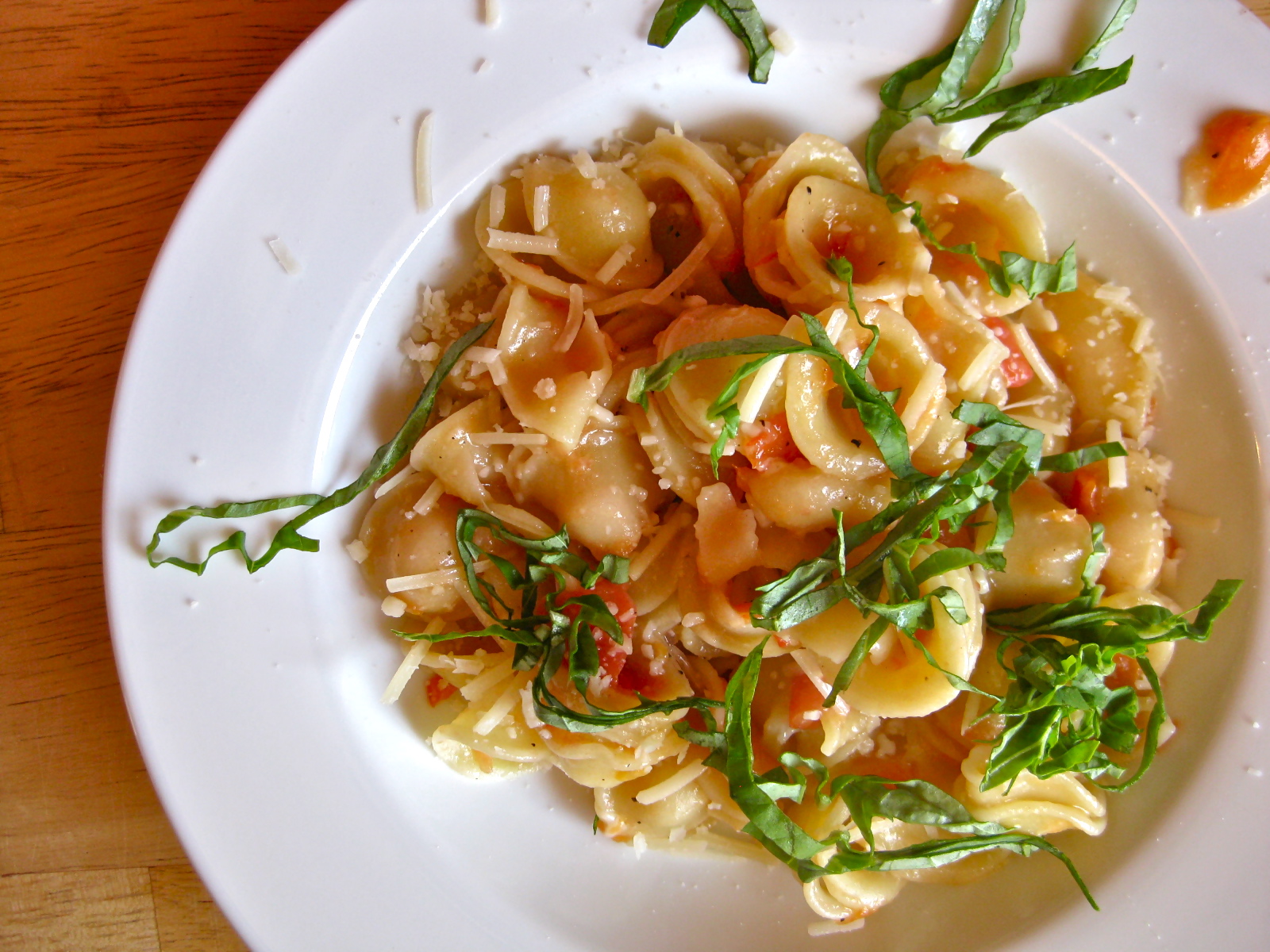
Orecchiette with Grated Garlic and Tomato

1 lb orecchiette, or another pasta of your choice (I find that the shape of orecchiette is perfect for cradling little bits of this sauce in each bite)

2 tablespoons of butter or olive oil (I like to use a mixture of both)

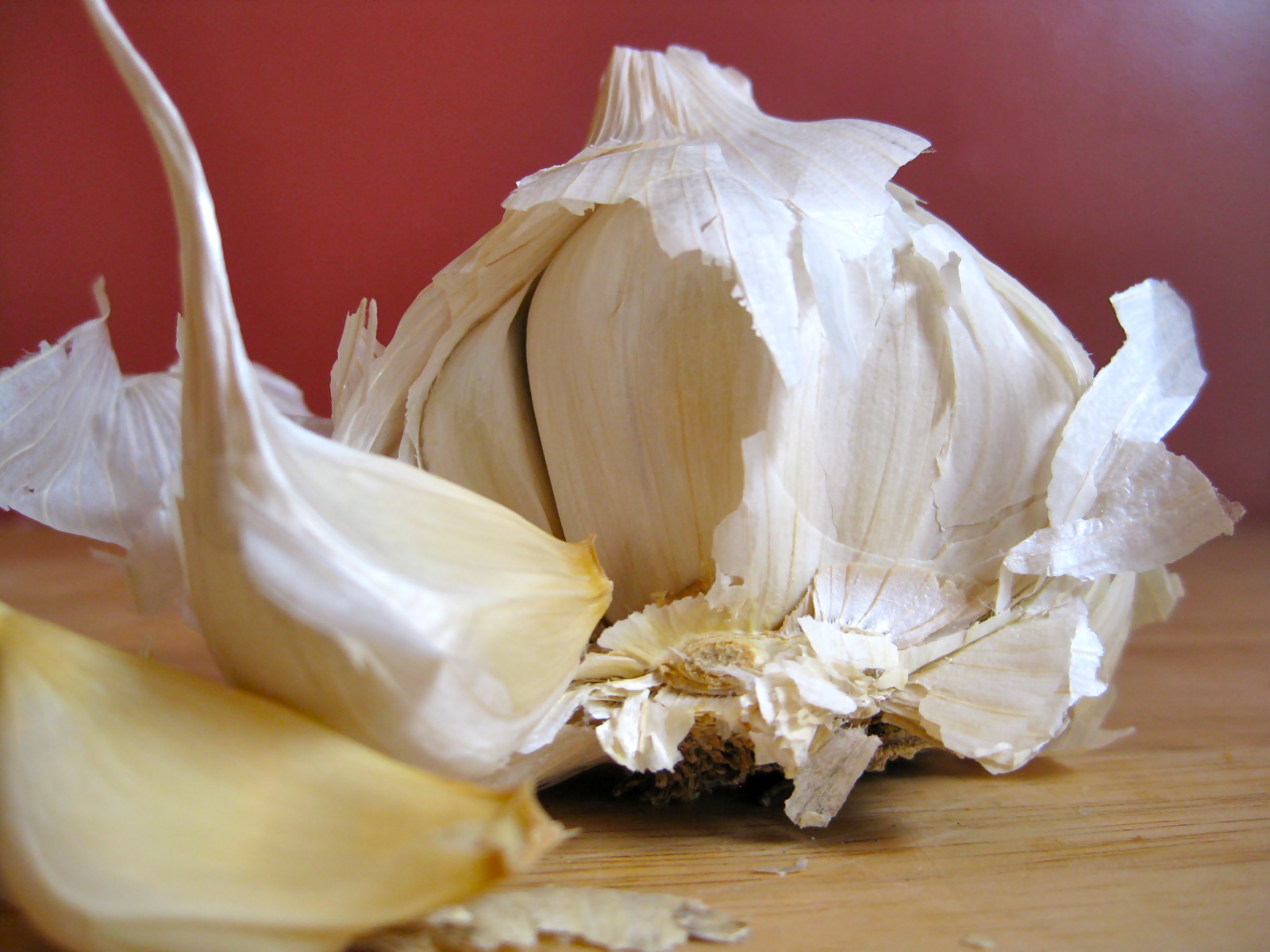
2 or 3 large cloves of garlic

3 or 4 large ripe tomatoes (or more, if you have them), cut in half and seeds removed

salt and pepper

Parmesan cheese

fresh herbs

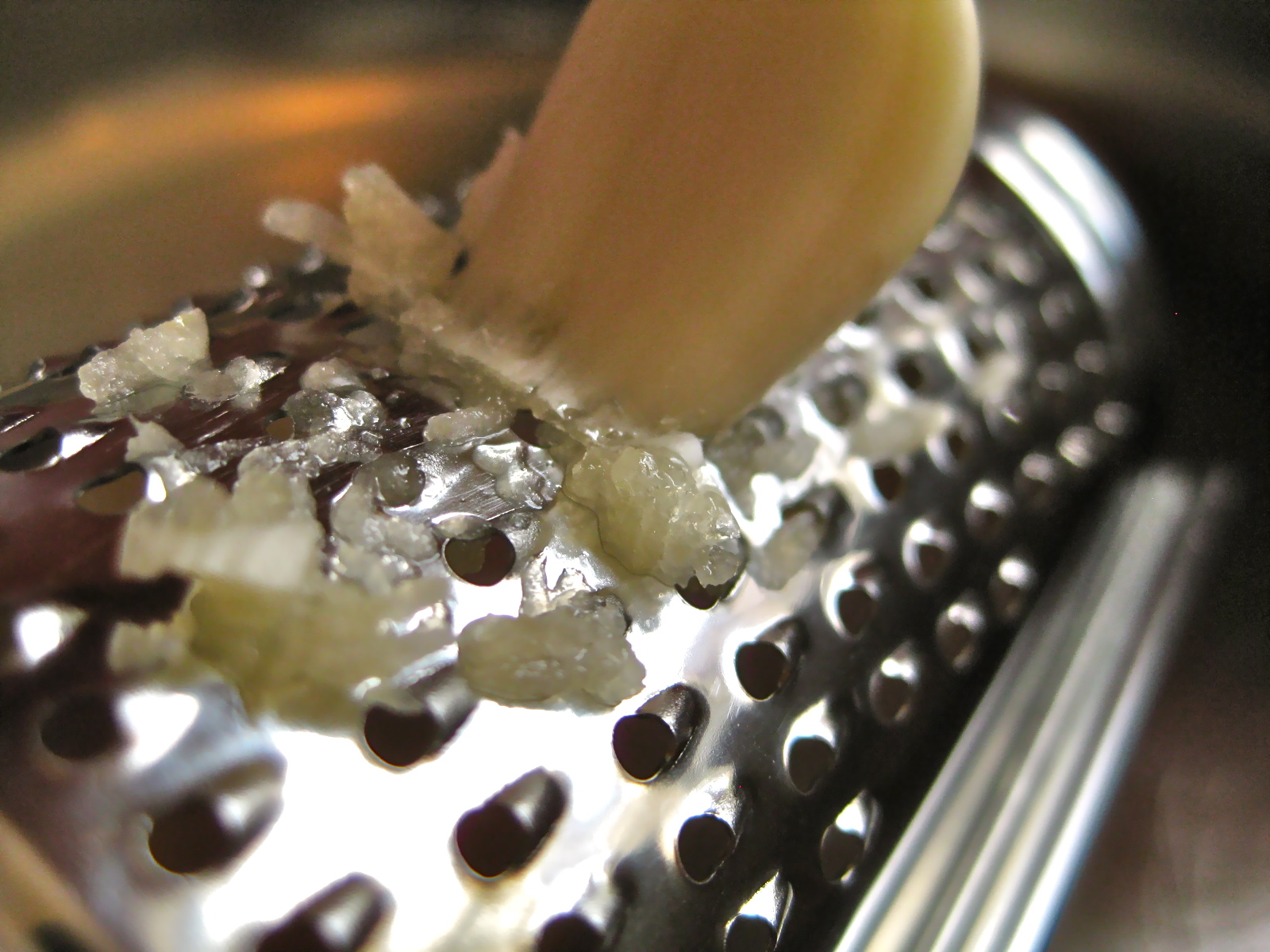
Cook pasta in salted water according to package directions.  While pasta cooks, heat butter or olive oil (or both) in a medium-sized pan over low heat.  When the butter/olive oil is heated, use a small grater or rasp grater to grate the garlic directly into the pan.  Gently saute the garlic over low heat, stirring occasionally, until it starts to melt into the butter/oil and become translucent (about 1 to 3 minutes).

Using the large holes on a box grater, grate all the tomatoes directly into the pan with the garlic.  (You can grate the tomatoes onto a cutting board the add them to the sauce, but, accounting for the juiciness of the tomatoes, it is actually easier and less messy to just grate them directly into the pan.)  Grate the cut side of the tomato, so you end up holding the empty skin of the tomato after all the flesh has been grated into the pan.  Discard the tomato skins.  After you have grated all the tomatoes, simmer sauce over low heat, stirring occasionally to prevent sticking and browning.  Right before you drain the pasta, scoop out 1 cup of pasta water and add it to the tomato sauce, stirring to combine.

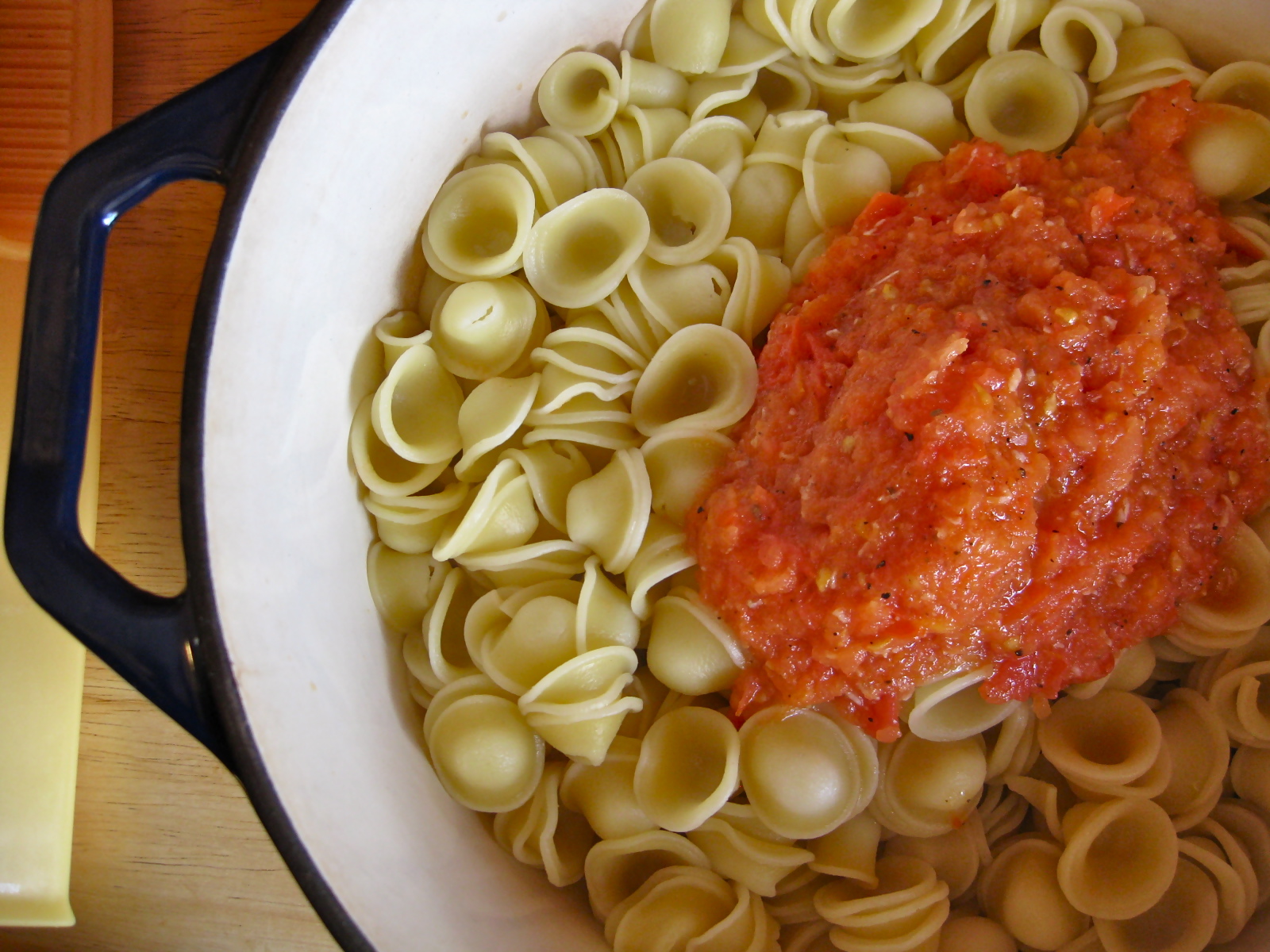
Drain the pasta, then return it to the cooking pot.  Add the tomato sauce to the pasta and stir to combine.  If desired, stir 1/2 a cup of grated Parmesan into the pasta while it is still in the pot, or reserve Parmesan to add later, when serving. Add salt and pepper to taste.

Top each serving of pasta with chopped fresh herbs (I used basil here, but any combination of fresh herbs is nice–basil, parsley, thyme, chives) and a sprinkling of Parmesan cheese.

Serves 4-6 people.

Garden Spaghetti in a Lemon Butter Sauce

25 Mar

There are only three people who live in my house, but all three of us have vastly different preferences when it comes to food.  One of us is a former nearly life-long vegetarian who has only conceded to eating meat if it a) hails from the sea, or b) does not in any way resemble something that was once attached to an animal (this means no bones, no skin, and no “chewy bits”).  Another one is a human food depository with the metabolic rate of a hummingbird, a person who, if pressed, will only list one single food that falls into the realm of being not entirely favorable (this food is water chestnuts and, really, it’s not that they are regarded as inedible so much as they are simply relegated to the bottom of the list of preferred foods).  The third person is a child, and this generally means that the foods most highly regarded by his palette fall into the category of being carbohydrates: bread, pasta, rice, crackers, and fruit.

So what’s a person to do, other than try and conjure up a dish that will be eaten—and, in hope, enjoyed—by all three people?  And how does one go about building such a dish?  I’ll give you a hint: the first step is pasta.

The second step is butter.

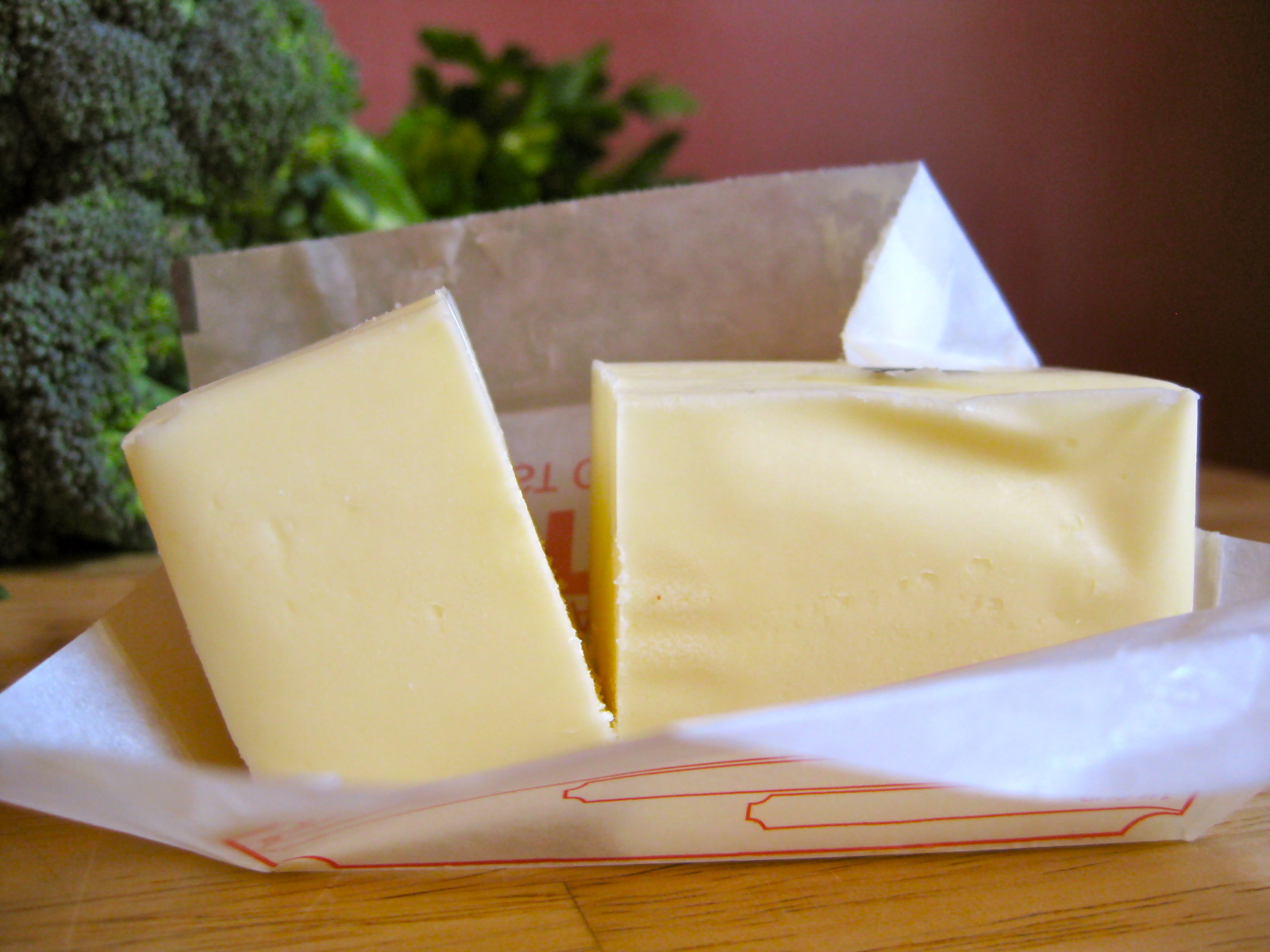
You’d be hard pressed to find a person who doesn’t enjoy the simple pleasures of a basic pasta tossed with a bit of butter, oil, and sharp parmesan cheese.  The best thing about pasta bianco (or bianca, depending on who you ask and how much he or she wants to show off a perceived prowess for Italian pronunciation) is that it’s like a building block for any number of dishes one might like to construct.

You start with pasta, cooked al dente with a little bit of the pasta water held off to the side.  The sauce starts as gently heated butter or olive oil (or both), perhaps with a bit of garlic and red pepper flakes thrown in.

You can stop there, tossing the pasta with the butter and oil and then adding a satisfying handful of parmesan cheese to the mix, or you can move on, adding flavors and bulking up the dish to see how far you can take things before you meet that good middle ground of having a dish that is still primarily made of pasta (child’s preference), but also bursting with fresh vegetables and crunchy textures (slightly meat-o-phobic former vegetarian’s preference).

The third person, of course, will most likely be happy no matter what, seeing as the dish is plentiful and, you know, made of food, therefore satisfying his basic list of requirements as related to meals and consumption.  The best part about this pasta, however, is the fact that it is highly delicious, which is arguably the most important element of any dish, no matter who is eating it.


Garden Spaghetti in a Lemon Butter Sauce

1 lb dried pasta (spaghetti, linguine, or another long variety)

1 lb broccoli, washed and trimmed into long-stemmed florets

1 tablespoon olive oil

3-4 tablespoons butter

2 cloves garlic, smashed and very finely minced

2 lemons, juiced and zested, the zest finely grated or chopped

optional: 1/4 teaspoon red pepper flakes

salt and pepper to taste

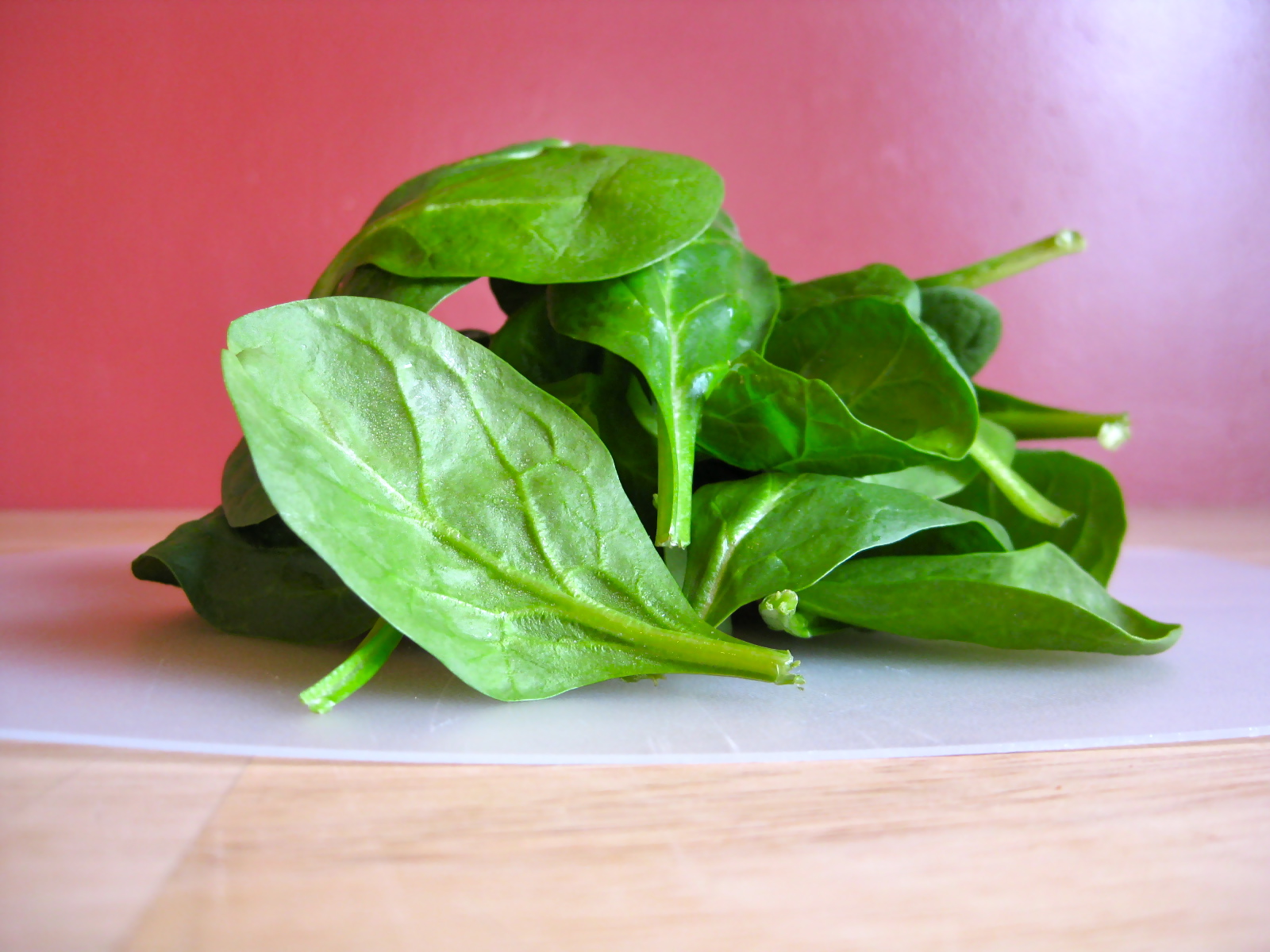
6-8 oz fresh spinach, washed and trimmed

1 large handful Italian parsley, trimmed and coarsely chopped

parmesan cheese, for sprinkling

Bring a pot of salted water to a boil, then cook pasta according to package directions.  During the last minute of cooking, drop in broccoli florets and briefly swirl around to allow for even distribution and cooking.  Drain pasta and broccoli, setting aside 1 cup of pasta cooking water.  Return pasta to cooking pot, toss with 1 tablespoon of olive oil to prevent sticking, and set aside.

While the pasta is cooking, melt butter in a small saucepan set over low heat.  When butter has melted, add in minced garlic and gently simmer for about one minute, allowing the garlic to release a lovely smell, but being careful not to let it brown.  Add in lemon juice and lemon zest, and, if using, red pepper flakes.  Carefully simmer for another minute, then remove from heat.  Carefully stir in reserved cup of pasta water.

Pour lemon and butter mixture over pasta and broccoli.  Toss well to mix.  Add salt and pepper to taste.

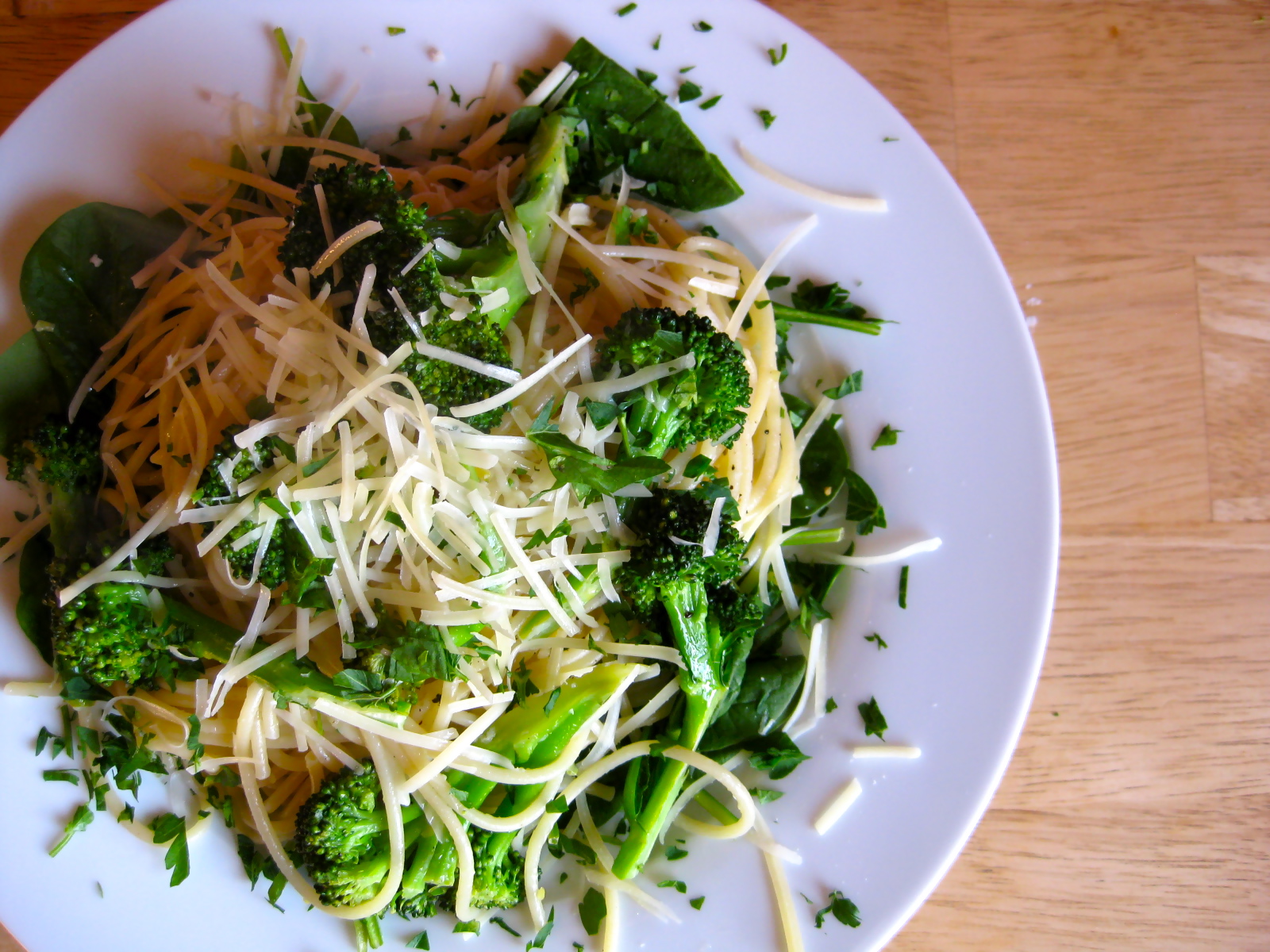
To serve, place a handful of spinach on a plate, place pasta over spinach, then sprinkle pasta with parmesan cheese and chopped Italian parsley.

This should make 6 large servings for 6 normal people.  In my house it serves one adult, one preschooler, and one Perfect Eating Machine, with a modest bit remaining for leftovers.