Archive | Seafood RSS feed for this section

Panko-Crusted Sole, a Dinner in 20 Minutes

17 Oct

Even though I work from home, there are still days when I find it inexplicably difficult to get dinner on the table at a reasonable hour.  Of course, you must realize that, having a child who wakes up at negative zero o’clock in the morning, we also have a child who must go to bed quite early in the evening, which means that our reasonable dinner time tends to occur at an hour when the only other people even considering a meal happen to be 80 years-old or, well, babies.

We are not, as you might have guessed, frozen pizza sort of people (and if you are a frozen pizza sort of person, please know that I hold no judgment against you), so when I need to get a meal on the table fast, I tend to look towards foods that are, on a basic level, fast cookers.  Sole, delicate as it is, falls wonderfully into this category.
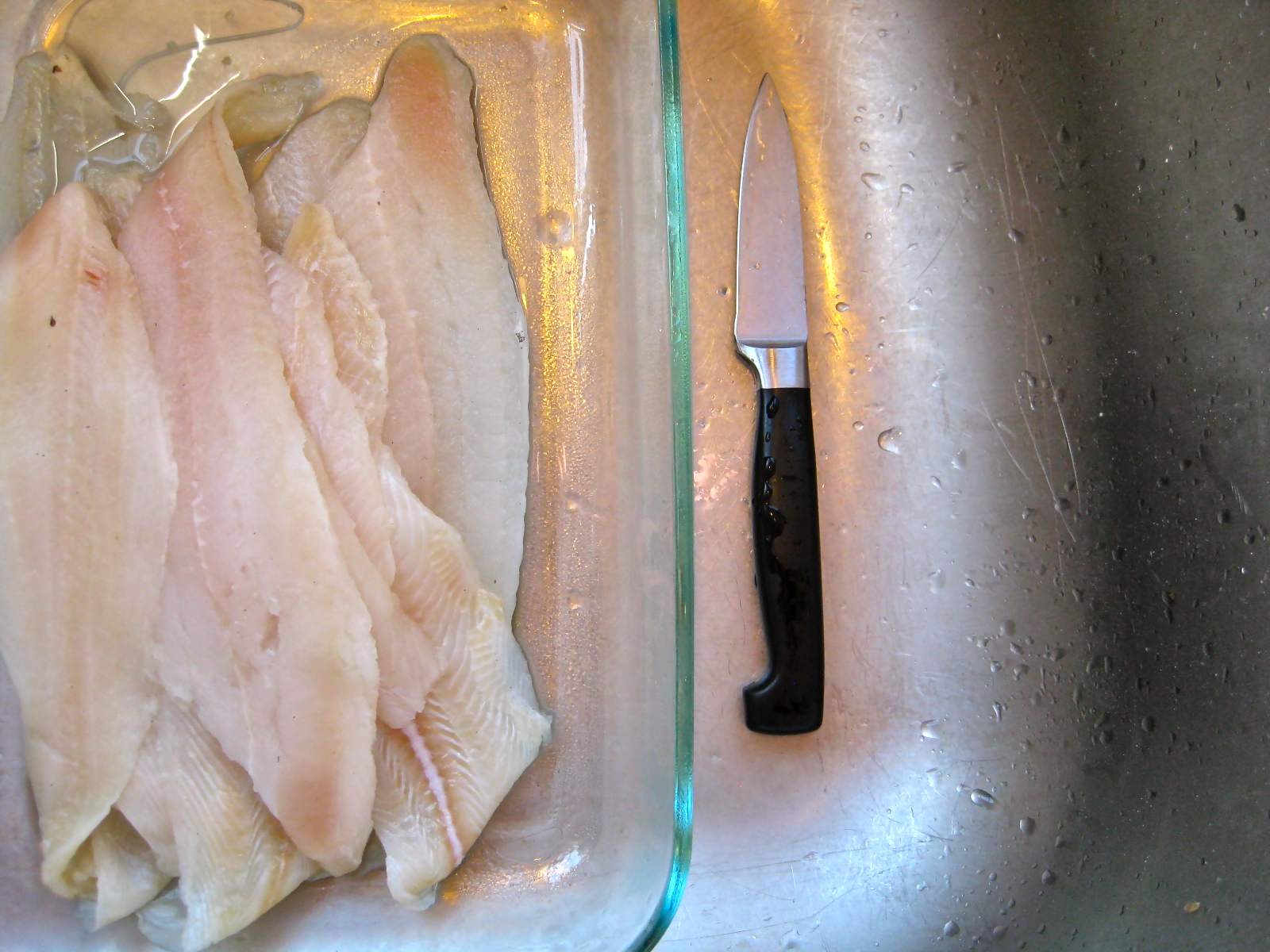
You may think that because this meal appears to use a great deal of dishes that means it is complicated or fussy.  Not the case.  The majority of the dishes used are plain old dinner plates, which can be rinsed off and dried in seconds flat, or, even easier, simply thrown in the dishwasher.  There is no real measuring involved, and no special tools.  The fish cooks in one pan, and it cooks for quite literally just a minute on each side until it is done.  Cooking frozen fish sticks in an oven takes longer to prepare than this meal, and I guarantee you these sole fillets are about a thousand time better than any frozen fish stick you’ll ever meet.
Most convenient of all, however, is the fact that both kids and adults love this meal.  A crispy fillet of panko-crusted sole, slices of avocado, and carrot sticks is a well-appreciated meal for the 5-and-under set.  For a more adult-centric presentation, I place the sole fillets on a pile of greens, slice up some tomatoes and avocados, then drizzle on a simple vinaigrette (one part balsamic vinegar to two parts olive oil, whisked with a fork until thick and then seasoned with salt and pepper).  We’re sitting at the table in twenty minutes, tops.  The food, fresh and crunchy, disappears even faster.

Panko-Crusted Sole

1 pound thin sole fillets

roughly 1 ½ cups unbleached all-purpose flour

2 large eggs

about 2 cups panko bread crumbs

salt and pepper

olive oil

Set three large dinner plates in a row.  Put the flour on the first plate, and season the flour with a generous amount of salt and pepper.  On the second plate, beat the eggs, and put half of the panko on the third plate.

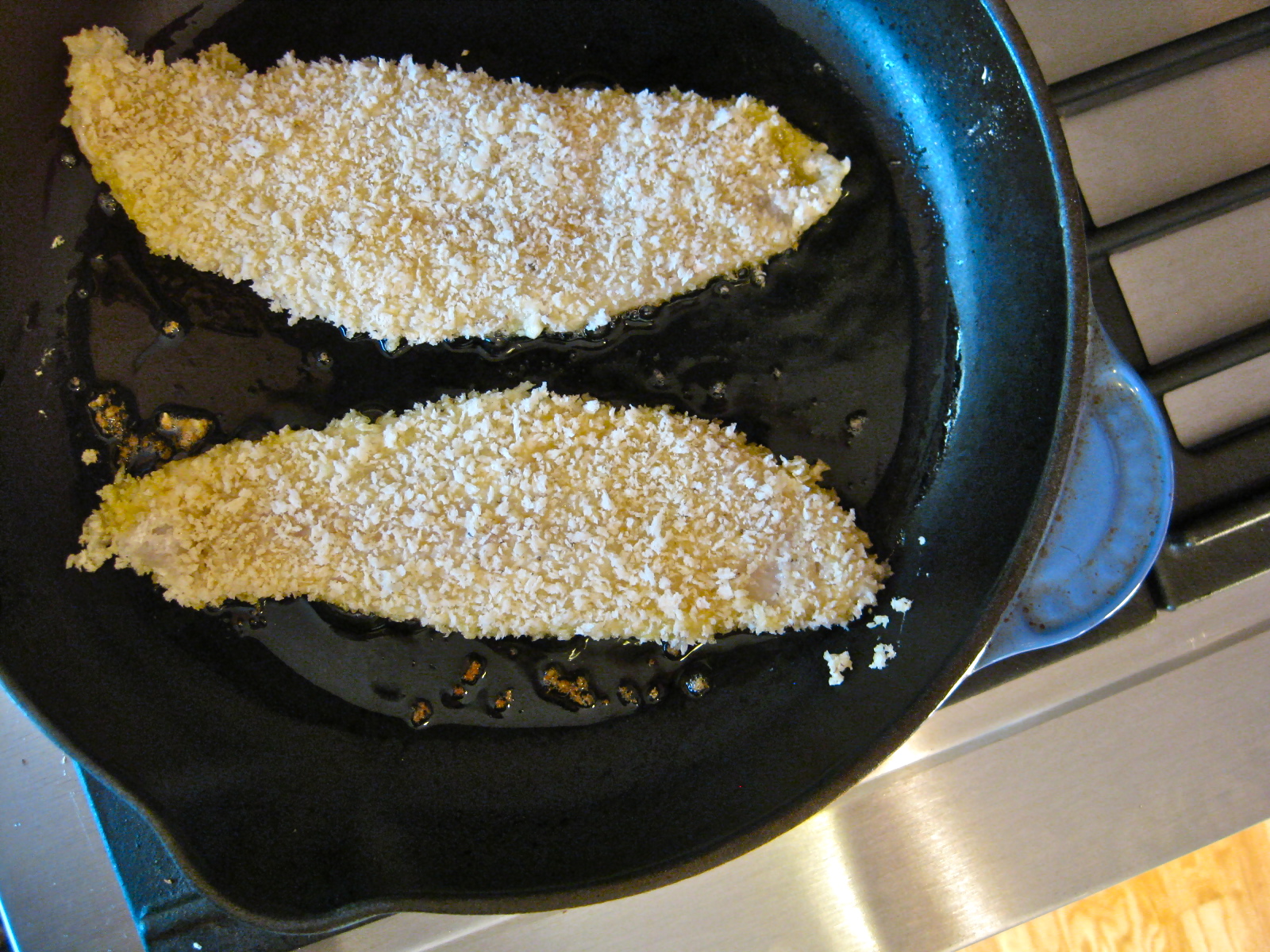
Heat a large skillet over medium heat (I use a cast iron skillet, but nonstick would also work).  Coat the pan with 1 tablespoon of olive oil (slightly more if you are using a very big pan) and heat until it is almost shimmering.  Take a sole fillet, lightly dip it on both sides in the plate of flour, shake off any excess flour, then wet both sides of the fillet in the beaten egg.  Dip both sides of the fillet in the panko, then place the coated filet in the hot pan.  The oil should be hot enough that your sole sizzles when it hits the pan, but you should not see any plumes of smoke.  Repeat with another fillet.  Depending on the size of your pan, you should be able to cook in batches of 2 or 3 fillets at once.  Cook each fillet for 1 minute on each side.  Sole is very delicate and thin, so it needs to cook for hardly any time at all until it is done.  Heat up one tablespoon more oil in between each batch.

If your cooking pan is littered with a lot of panko crumbs, wipe it out with a paper towel in between cooking each batch of fish, before you add more olive oil.  When you have used up most of the panko on the third plate, add the remainder of the panko to the plate and proceed (adding all the panko at once can sometimes cause it to clump after repeated fillet dippings).

When each sole fillet is done cooking, place it on a wire rack until you are ready to serve.

Serve sole with sliced vegetables, or on top of a salad, with lemon wedges for squeezing.

Seared Tuna Steaks with Salsa Verde

5 Sep

Sometimes it takes me a while to come around to certain foods.  For years I could not understand the logic behind combining sweet and savory foods, and then one day I ate a salad packed with huge chunks of watermelon tossed with deliciously salty squares of feta cheese and, oh, my lord, life had never been better.

Meats, however, are still a tough sell for me.  I’ve mentioned this before, but I just can’t get behind most meats, and, if I do decide to go near them, I am frequently struck with the terrible notion to instruct whoever is serving me said meat to just burn it, char it—do whatever is needed to make it seem less meaty and tendon-filled.  But then I’ll virtually inhale a plate of sushi and not flinch, which, I know, does not make any sense at all.

But to me, it sort of does.  Whereas rare meat seems, to me, utterly and unmistakably meaty, fish is so much less fishy when eaten either rare or simply raw.  Thus, I have arrived at the logic that, hey, if you just barely cook your fish at all, it’s somehow less meaty and weird.  At least, that’s where I arrive when I approach the cooking of a piece of fish, and, I admit, it’s an end point I’ve reached only after years of eating dry, hardened fish that I either purposely cooked until inedible or instructed others to do for me.  Over a decade ago, in a terrible fit of fear and squeamishness, I actually begged a friend of mine—who is a professional chef, I might add—to please, please char the daylights out of a tuna steak for me, as I was not feeling up to the task of tackling a meat that was left pink and soft.  To her credit, she complied with my request, and, boy, did I ruin that meal for myself.

But years have passed, lessons have been learned, and now, aware of the myriad of ways I have managed to ruin countless meals for both myself and others, I have come around to the very wise notion that, when it comes to cooking fish, less is more.  Tuna steaks, in particular, can go from transcendent to terrible in just a matter of a minute or two, but when done right, the outside perfectly seared and the inside lustrous and bright, it’s tough to understand why anyone would ever want to subject their meal—and themselves—to a fate made deliberately less delicious.  Having become fully aware of this, I have now vowed to conquer a medium-rare steak. (Confession: I am not actually going to do that.)

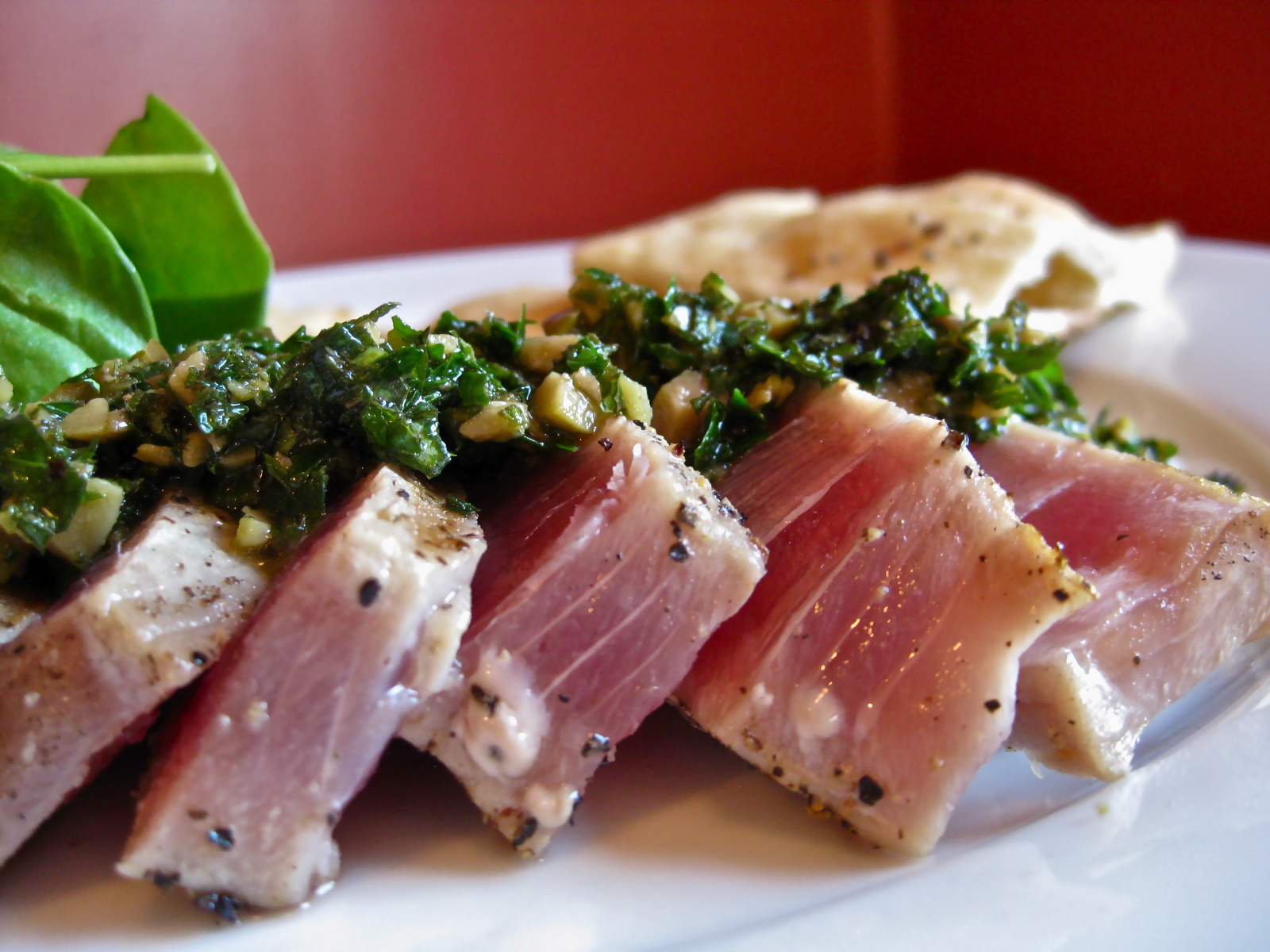
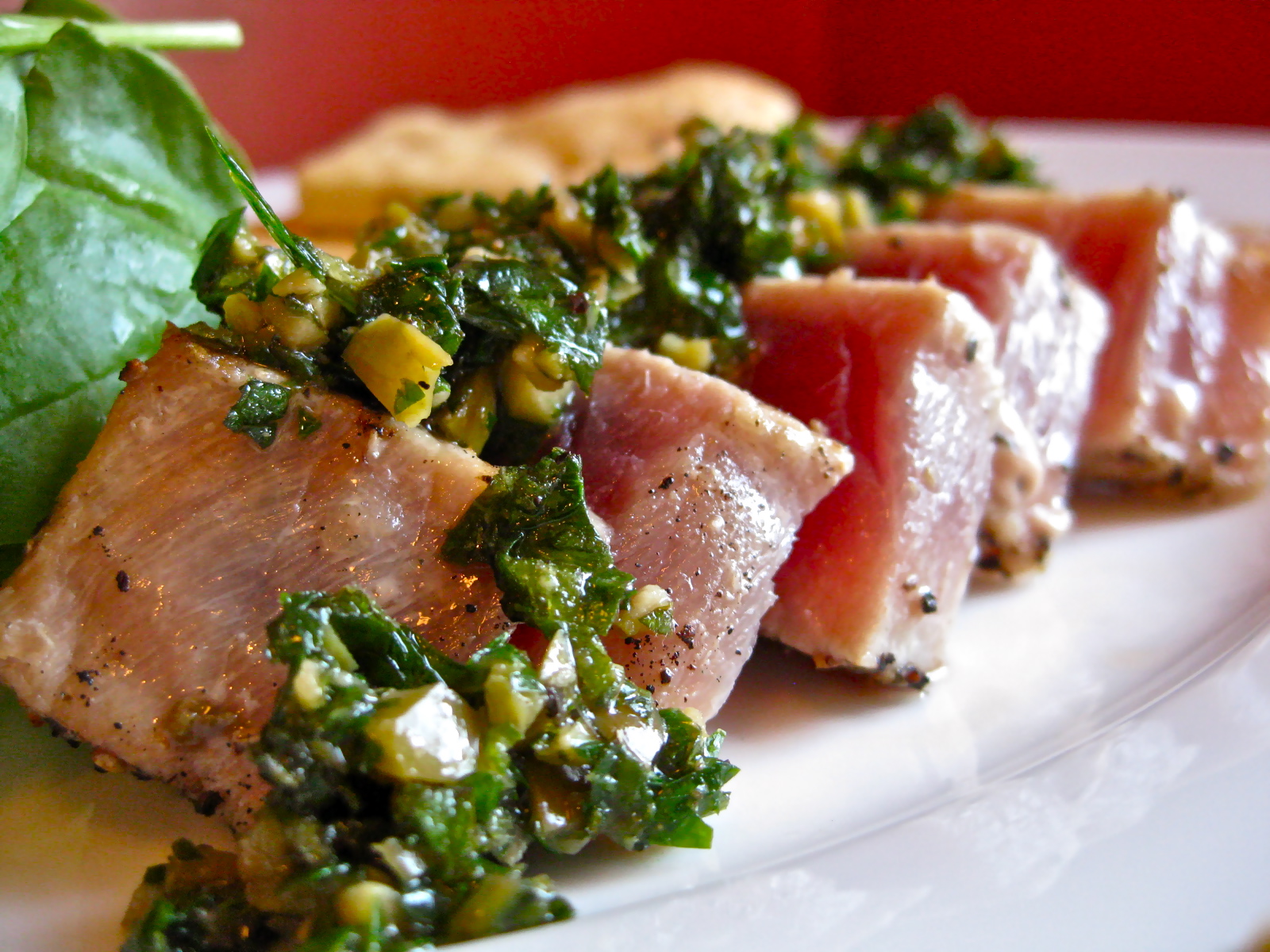
Seared Tuna Steaks with Salsa Verde

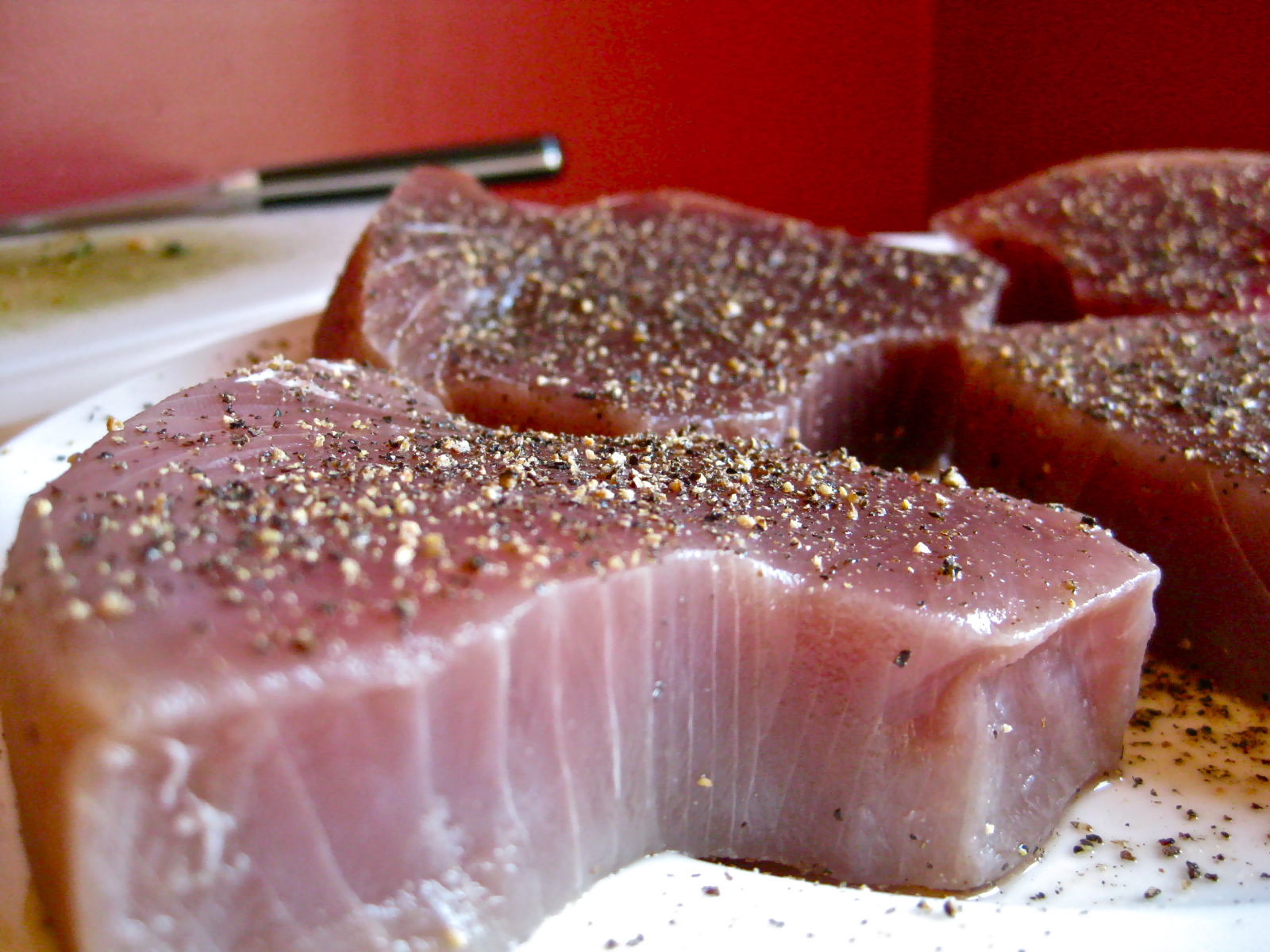
4 tuna steaks, rinsed then patted dry

olive oil, for brushing

freshly ground black pepper

sea salt

Very lightly brush each tuna steak with olive oil, then generously salt and pepper both sides.  On a well-oiled, very hot grill or grill pan, sear tuna steaks for about 1 minute on each side.  Grill should be hot enough to make an audible sizzling noise when tuna steaks are laid on the hot grill.  If you desire a more heavily cooked tuna steak, sear it for up to 1 ½ minutes, but be cautious to not overcook your fish.  It gets dry and rubbery very quickly.

Salsa Verde

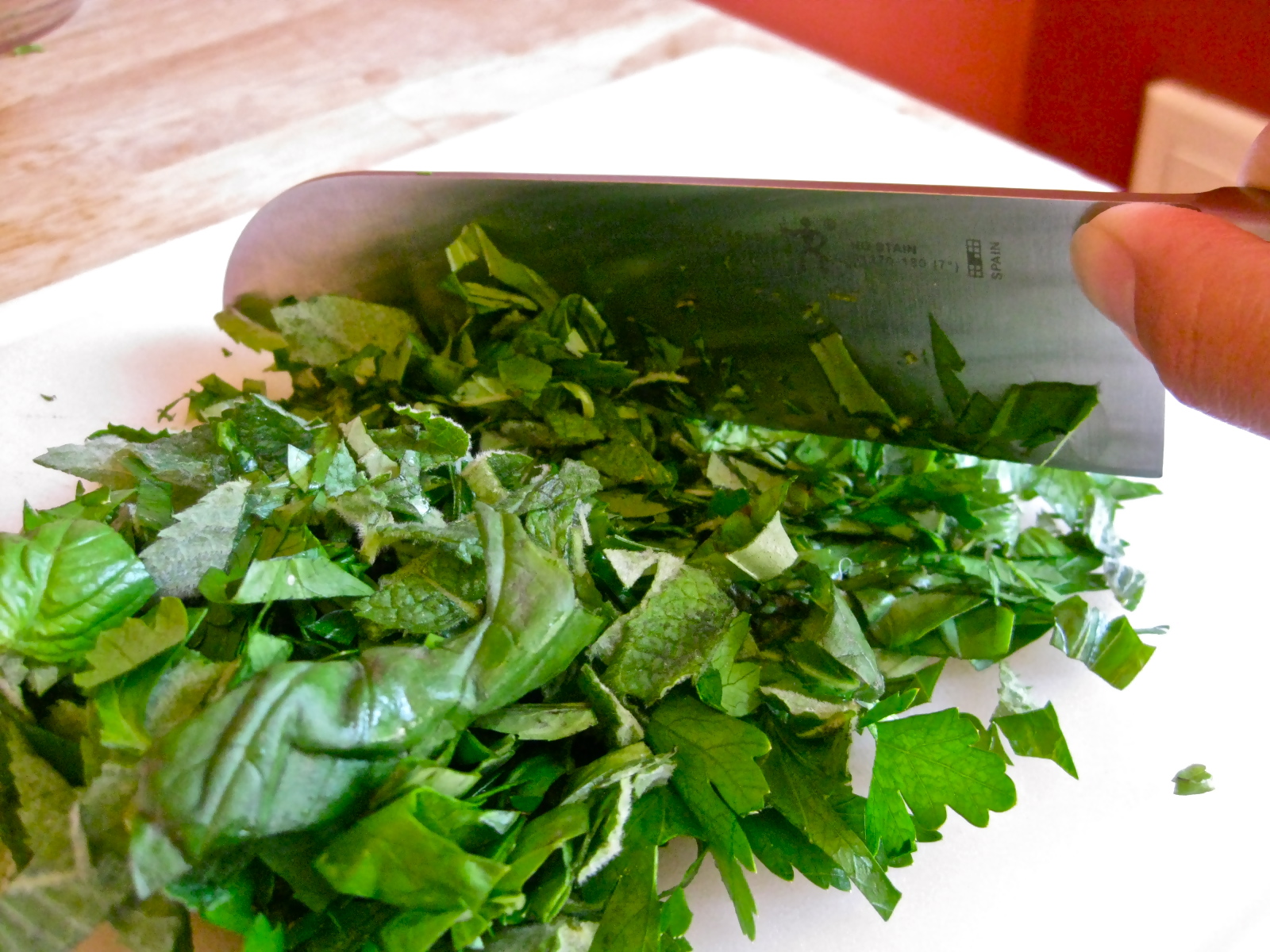
½ cup chopped fresh herbs (about 2 ½ large handfuls of whole herbs—I used basil, parsley, and mint)

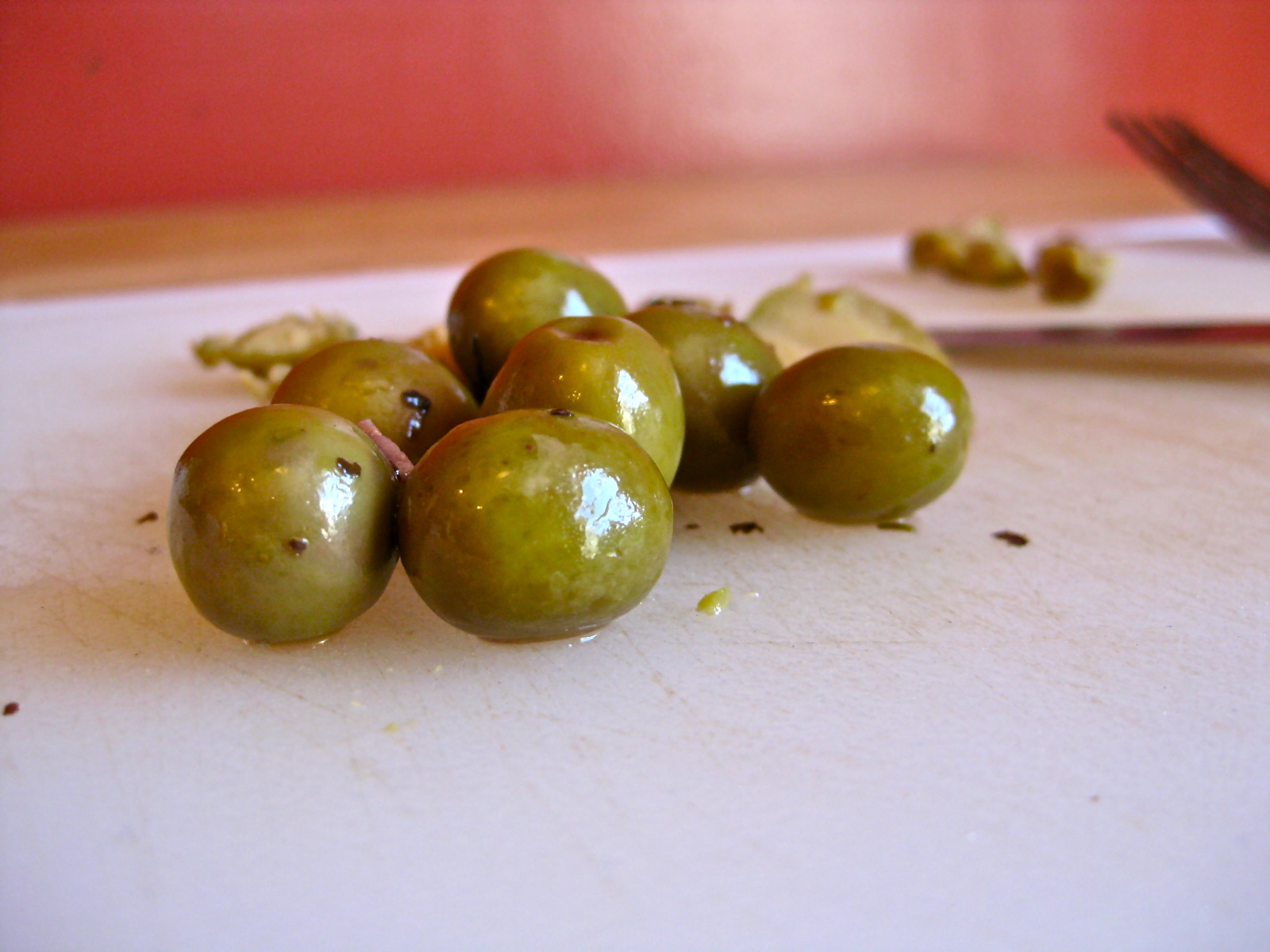
¼ cup pitted chopped green olives

3 tablespoons extra virgin olive oil

1 tablespoon red wine vinegar

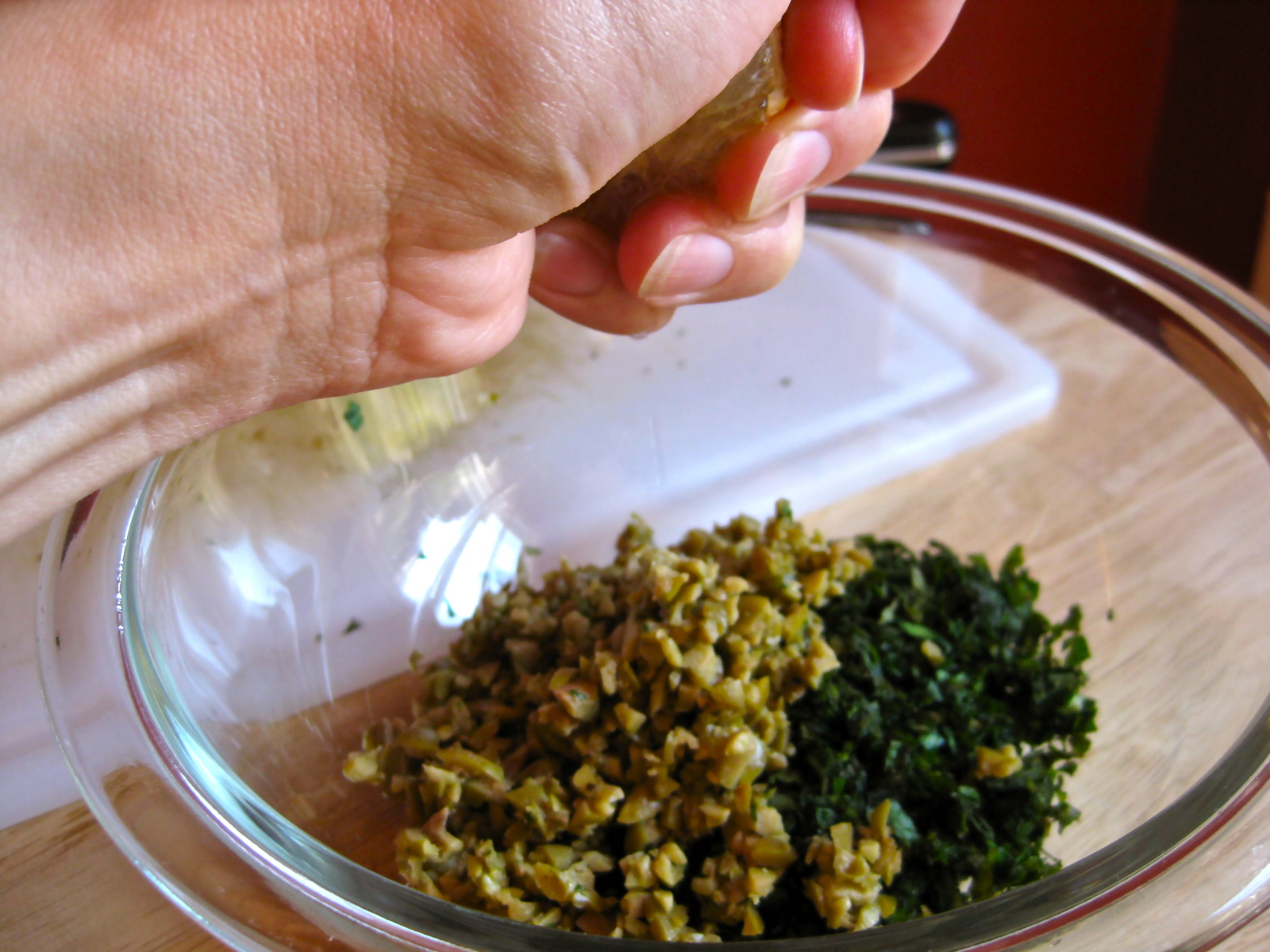
1 tablespoon freshly squeezed lemon juice

freshly ground black pepper

salt (optional)

To make salsa, combine all ingredients in a small bowl, and toss to combine.  If your olives are particularly salty, you will not need to add much, if any, additional salt to the mix.

To serve tuna, cut each steak, against the grain of the meat, into thin slices.  Top with salsa verde.

Serves 4

How to Make Smoked Salmon at Home

16 Jun

Meat and I, we have a complicated relationship.  The enjoyment I derive from testing out new meat-centric recipes and learning about various techniques and processes in regard to cooking meat tends to oftentimes far outweigh any desire I might have to actually eat what I am making.  Last winter I had a great time braising short ribs for four hours in a red wine and balsamic reduction, but when it came to actually eating the short ribs, I have to admit that I was decidedly lacking in enthusiasm.  Slow roasting a salt-crusted pork tenderloin on the grill is a fascinating operation, so long as I will not be made to actually eat the pork when I am done fussing with it.  Meats get stuffed, marinated, and rolled, and then I foist them on my husband.  Not that he minds.  More realistically, I do not foist them upon him so much as I generously heap them upon his willing plate.

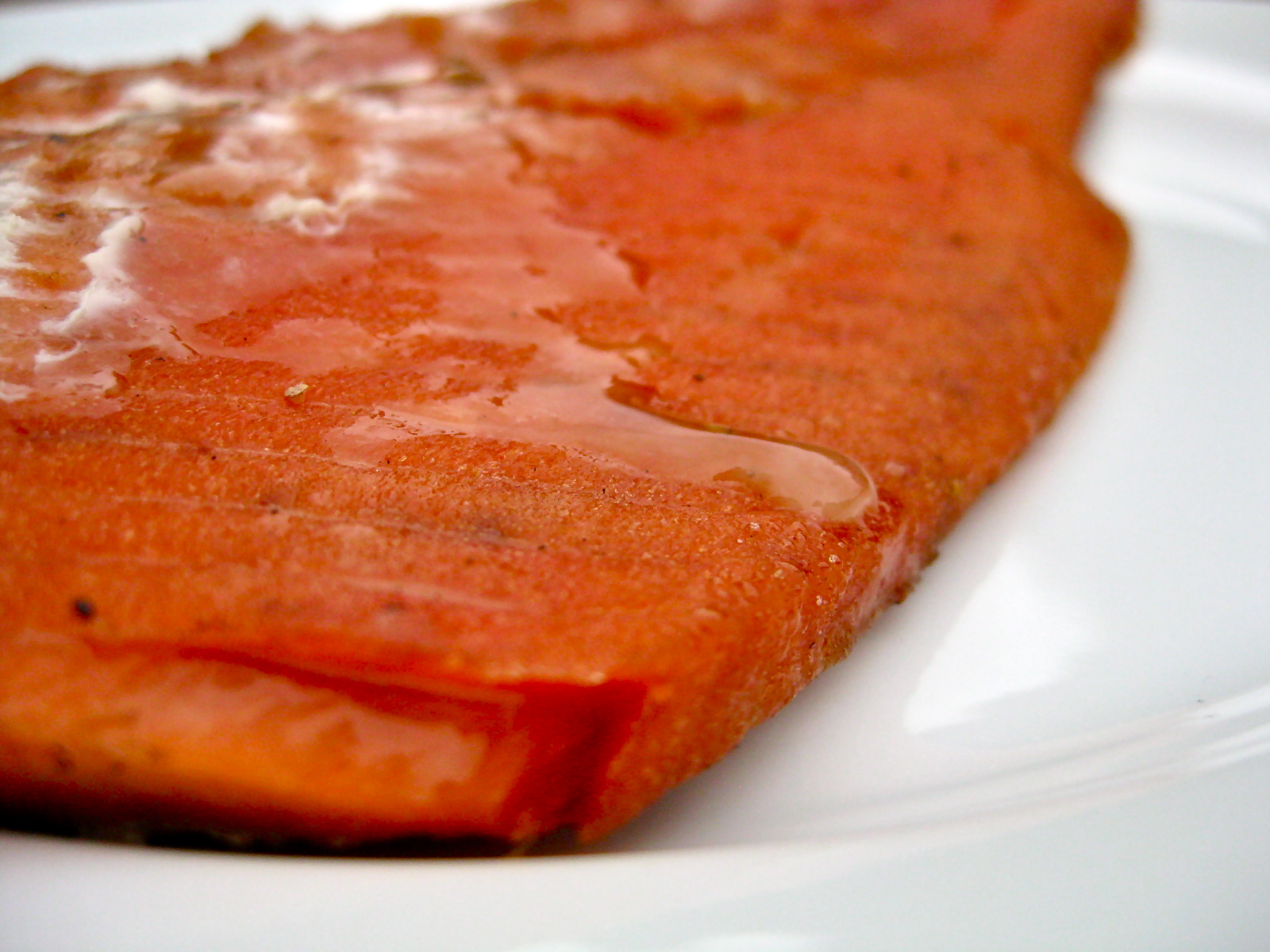
This trend, however, might have just come to an end.  Please, everyone, let me introduce you all to my new best friend: whiskey soaked applewood smoked salmon.

First of all, allow me to admit that, up until last year, I was not aware of the fact that making smoked salmon at home was even a possibility.  I thought that smoking meats involved special canisters or barrels, or perhaps some sort of high-tech equipment that only very dedicated meat-eating people knew how to find.  Not surprisingly, I was dead wrong.  To smoke salmon at home, you need little more than an outdoor grill, some wood chips, salt, and sugar.  That’s it.

If you want to get a little fancier, you can briefly marinate your salmon in a bit of whiskey or bourbon, like we did here, or perhaps a bit of rum, if you’d prefer your salmon to be a bit sweeter.  No matter which you choose, after 4 hours of curing the salmon to draw out the liquid, it takes only 20 short minutes to smoke this salmon to a delicious and robust finish.

You can eat this smoked salmon on a salad, you can pile it on top of a bagel, or you can flake it into some pasta.  There is no wrong way to eat this, and the only known way to stop enjoying it is to eat it until it is gone.  You might want to immediately make more, but that’s all right.  If nothing else, you can just use my excuse, and tell people that you are making up for meats long ago left unenjoyed.

Whiskey Soaked Applewood Smoked Salmon

Adapted only slightly from Steven Raichlen’s How to Grill

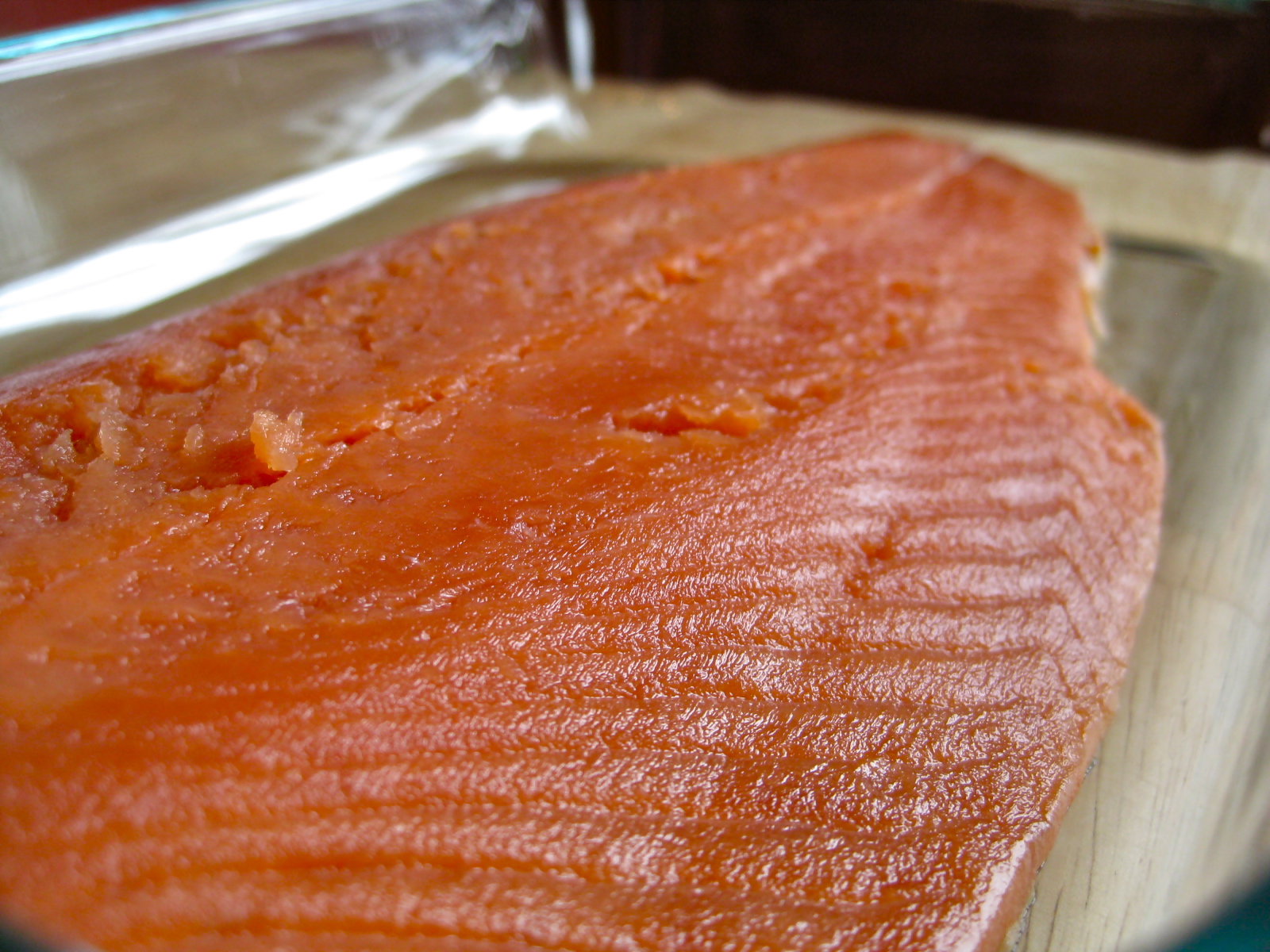
1 salmon fillet, about 1 pound

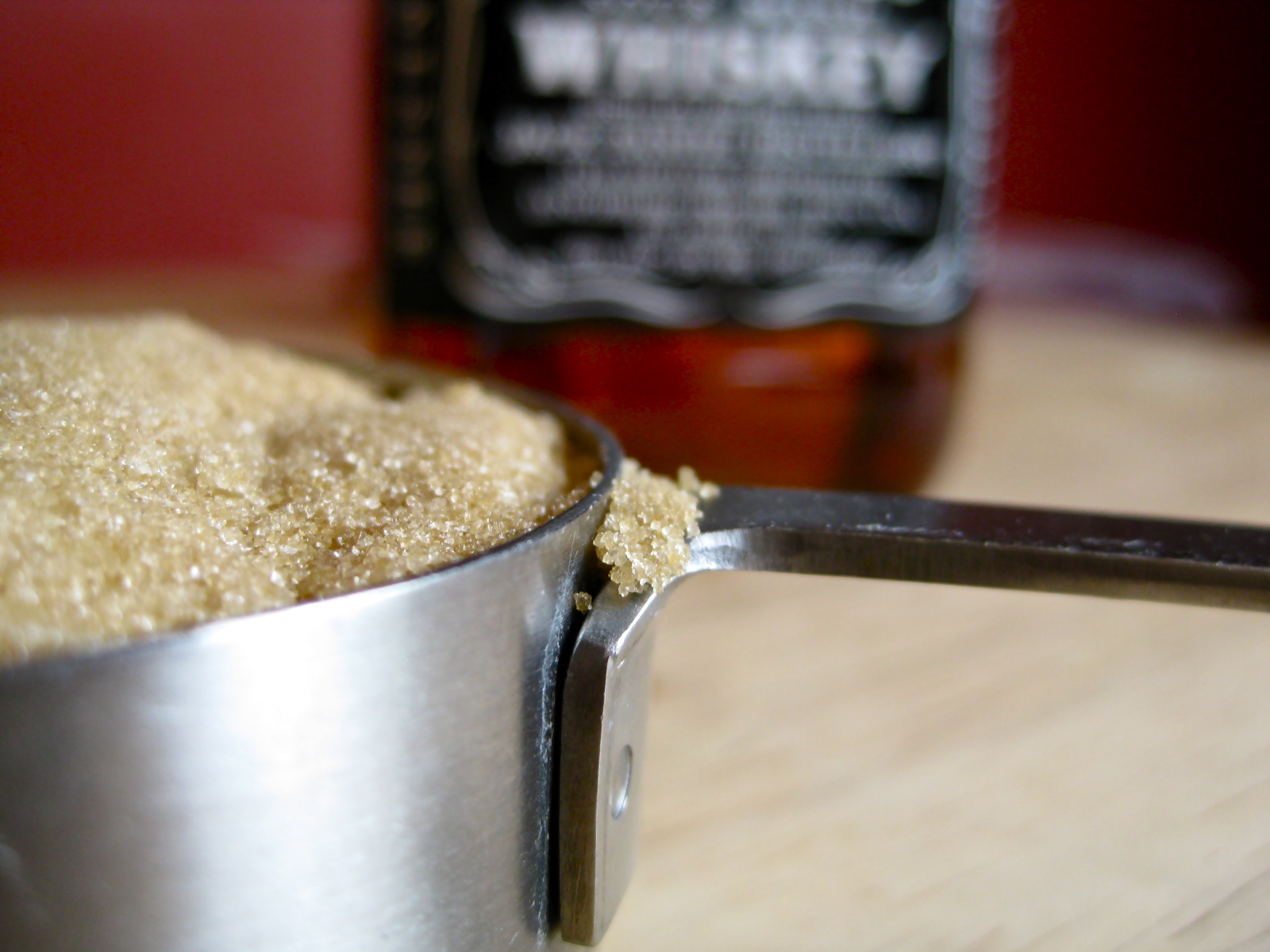
½ cup whiskey, bourbon, or rum

½ cup firmly packed brown sugar

¼ cup coarse salt*

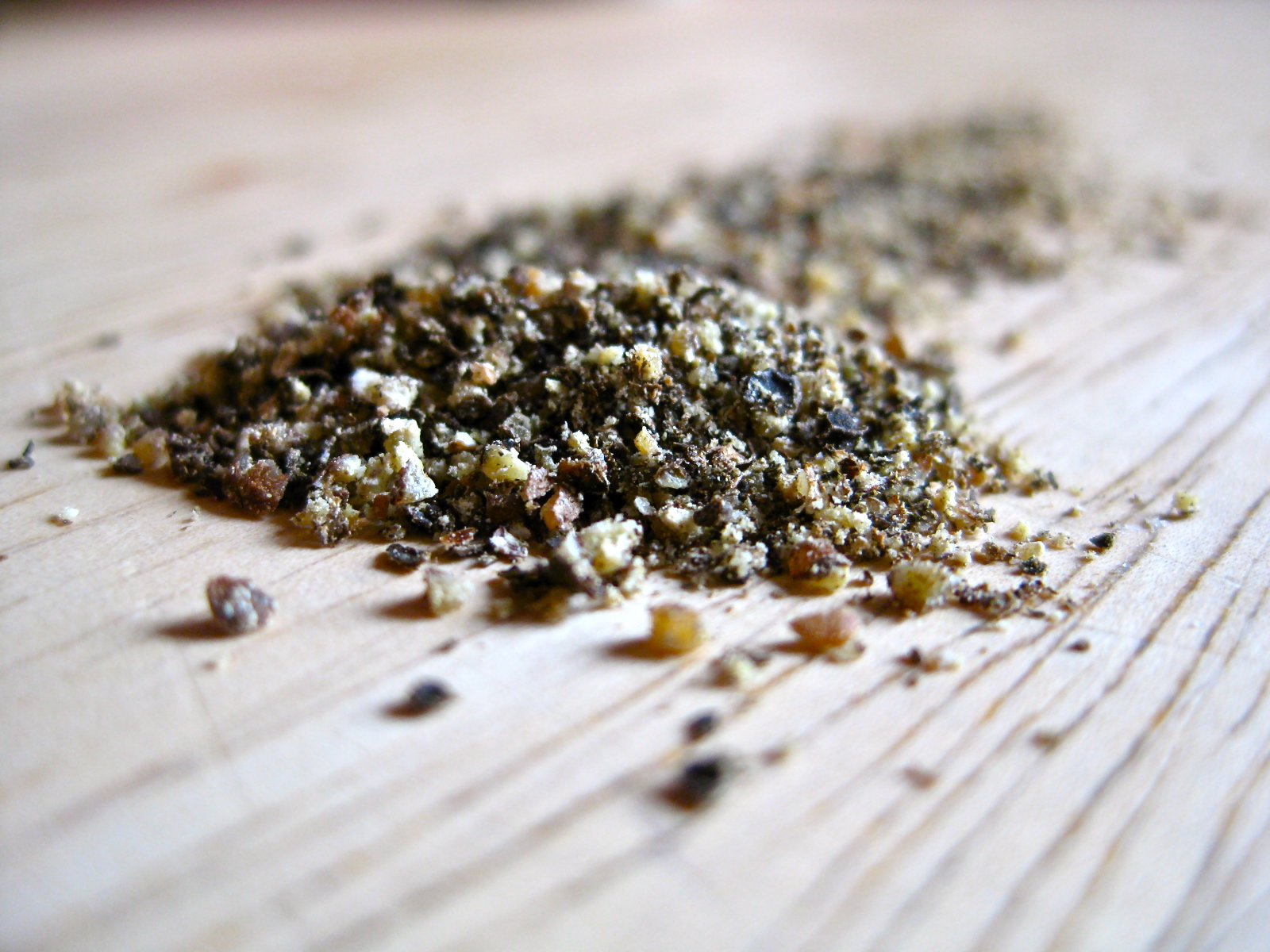
2 teaspoons freshly ground black pepper

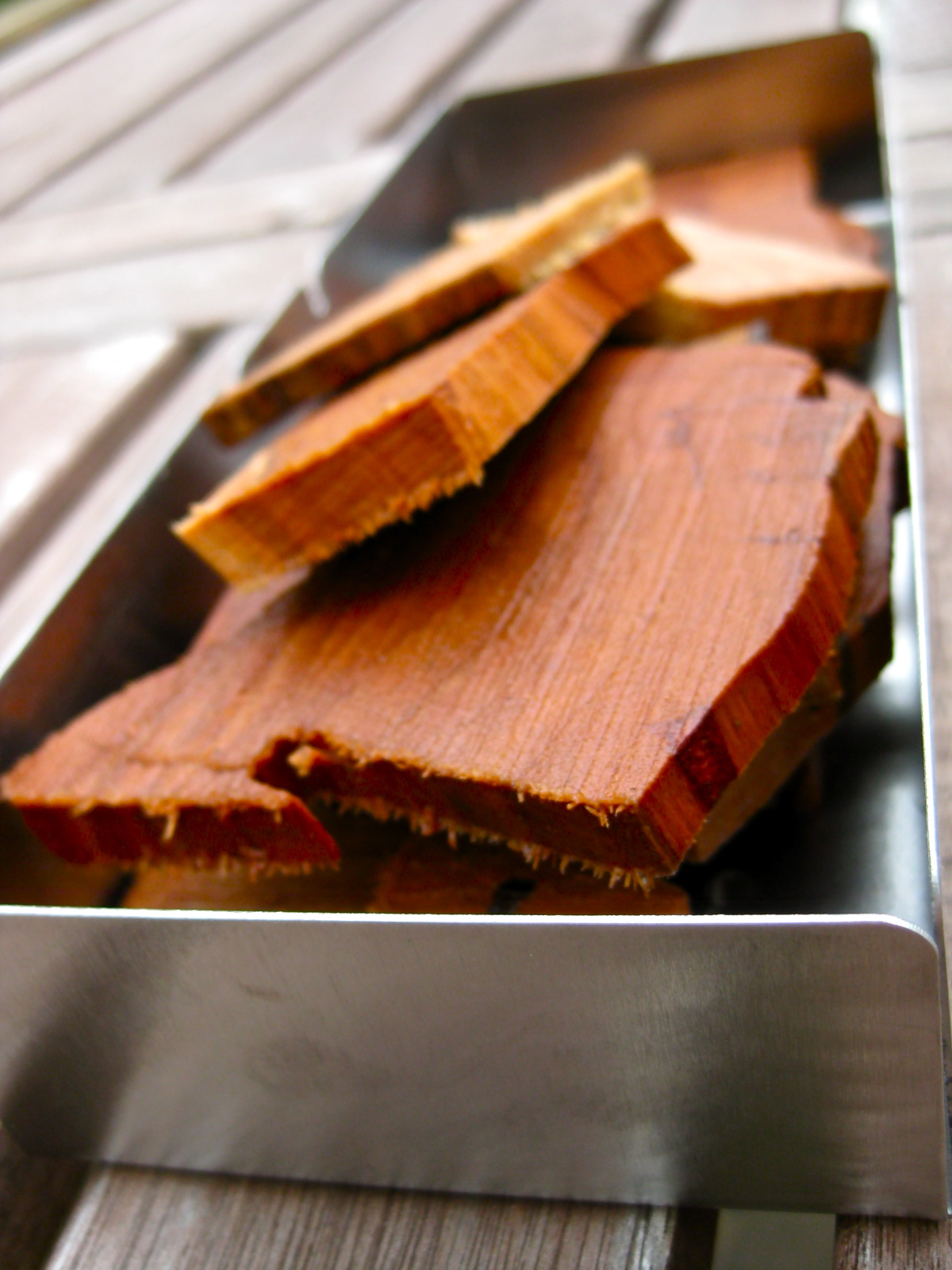
2 cups wood chips, soaked in cold water for 1 hour, then drained (Raichlen recommends using alder wood chips, but we used apple wood because we had easy access to it, courtesy of a recently-felled apple tree and, man, don’t we sound all self sufficient and rustic right now?)

Skin the salmon fillet and remove any bones.  Rinse the salmon under cold running water, then blot dry.  Place the salmon in a baking dish just large enough to hold it, and pour the whiskey, bourbon, or rum over it.  Allow to marinate for 15 minutes, then drain the salmon and blot dry once more.  Wipe out the baking dish.

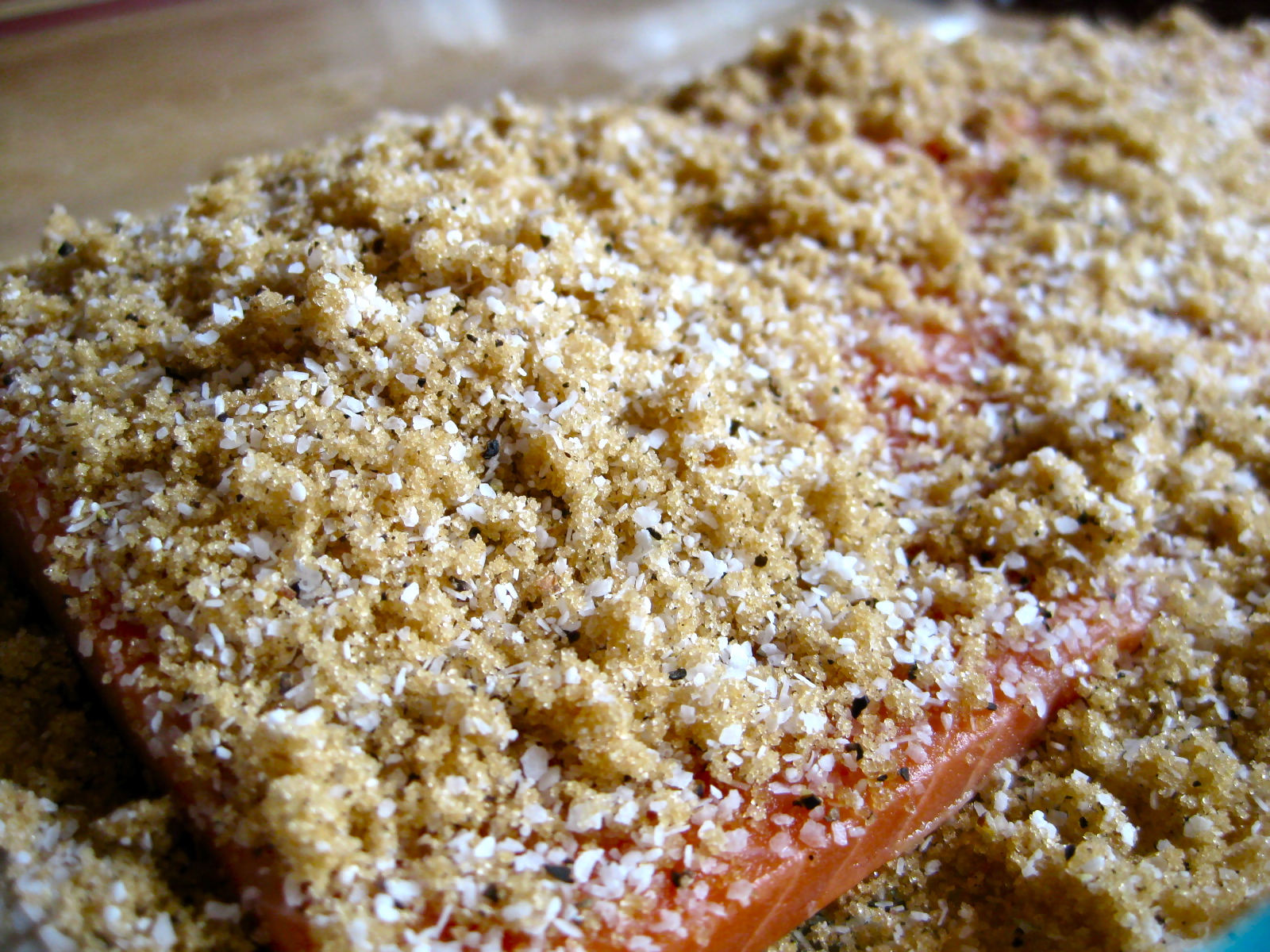
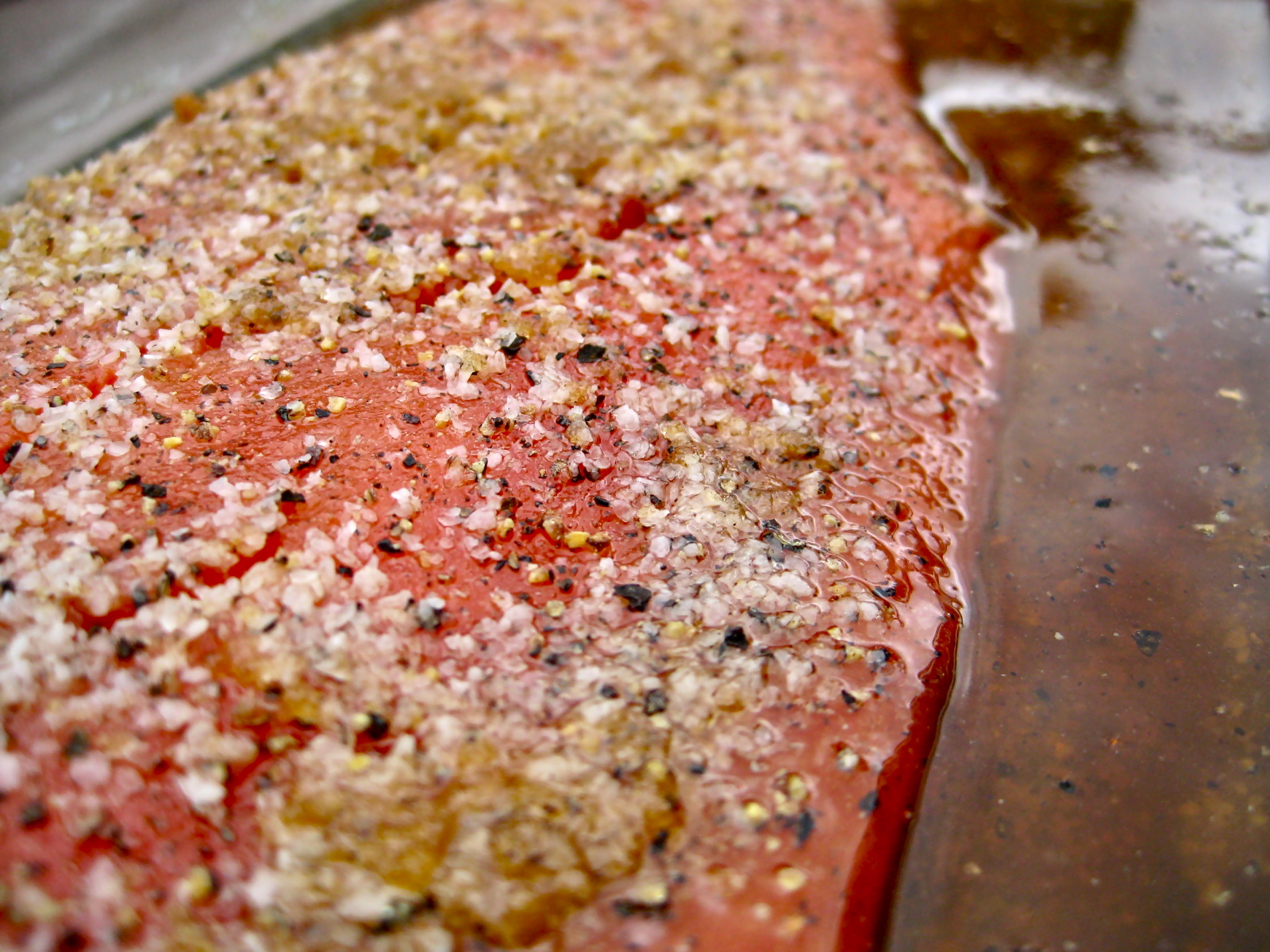
Combine the brown sugar, salt, and pepper in a mixing bowl and mix well with your fingers.  Spread 1/3 of the mixture over the bottom of the baking dish.  Lay the salmon on top of the mixture, skinned-side down.  Cover salmon with remaining 2/3 of brown sugar mixture, patting it onto the fish with your fingertips.  Cover the salmon with plastic wrap and allow to cure in the refrigerator for 4 hours.  The salt in the cure will draw out the moisture in the salmon.

Set up your grill for indirect grilling.  If you have a two burner gas grill, this will mean setting one burner on medium high heat and leaving the other burner off.  If you have a three burner gas grill, it will mean setting the two outermost burners on medium high heat and leaving the middle burner off.  If you have a charcoal grill, you will be raking your hot coals into two piles on opposite sides of the grill, leaving an empty space in between.  After preparing whichever grill you have, place a drip pan in the portion of the grill that is not lit or covered with hot coals.

Thoroughly rinse the brown sugar mixture off of the salmon with cold running water, then blot dry once more.  Discard liquid that has been extracted from the salmon.

Toss the pre-soaked wood chips onto hot coals (if using a charcoal grill), or, if using a gas grill, place wood chips in a smoker box made specifically for gas grills (such as this one), or wrap your wood chips in a tight pouch of aluminum foil with holes punched in the top (as demonstrated here), then place the box or pouch of wood chips under the grill grate, directly on top of a burner.

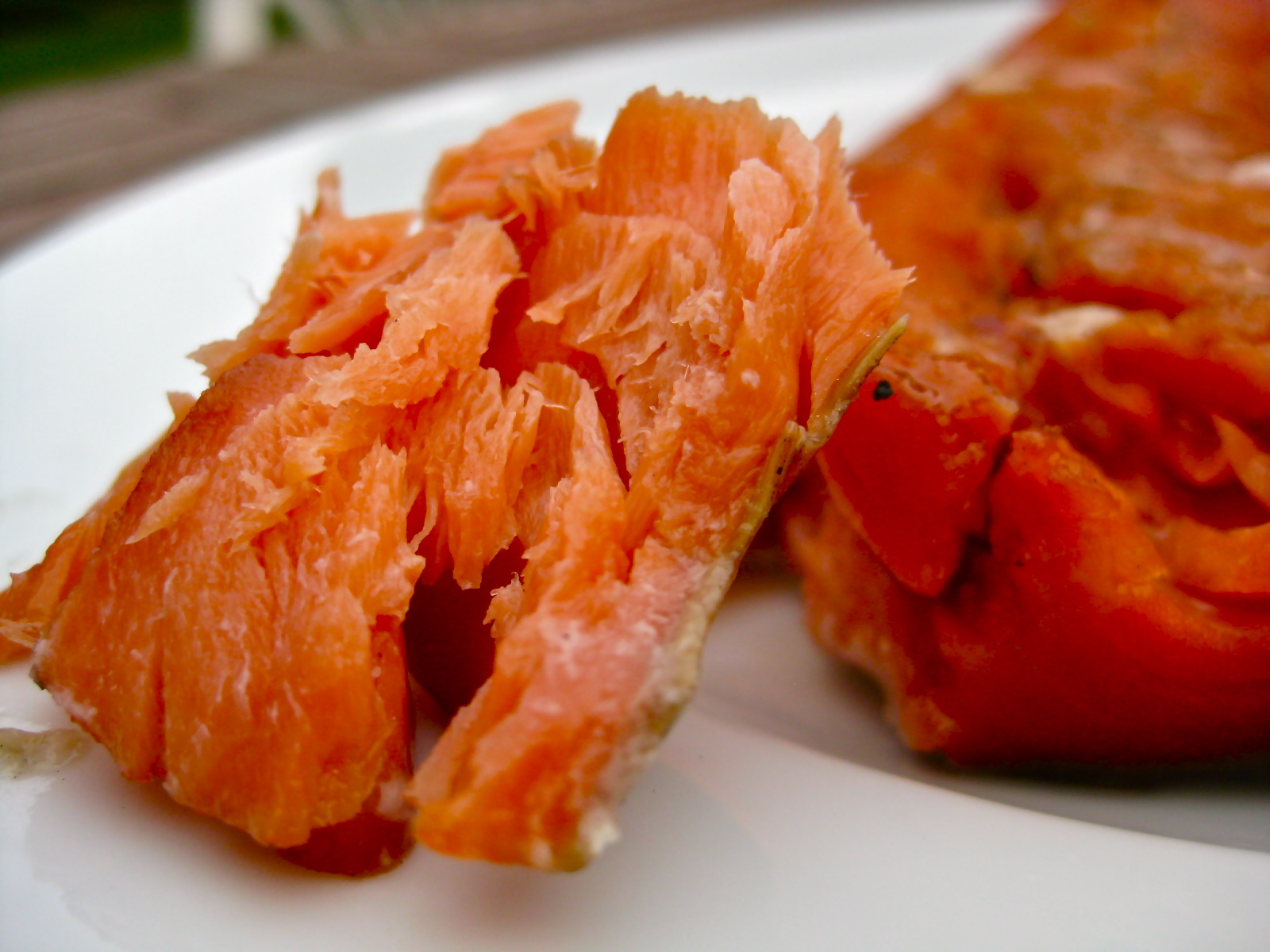
Brush and oil grill grate.  Place the salmon in the center of the hot grate, over the drip pan that has been placed away from the heat.  Completely close the lid of the grill.  Smoke the fish until cooked through, about 20 minutes.  To test for doneness, press the top of the salmon with your finger and test for firmness.  The salmon should feel firm and break into clean flakes.

Cool the salmon, then wrap it in aluminum foil and refrigerate until cold.  Serve warm or at room temperature.  Tightly wrapped, the smoked salmon will keep in the refrigerator for 3-5 days.

*A note about coarse salt:  Coarse salt, which is often found in the form of kosher salt, comes in varying degrees of saltiness.  The two most widely found brands of kosher salt, Morton and Diamond, are no exception.  Morton kosher salt is known for being exceedingly salty, while Diamond kosher salt is decidedly less salty.  If using Diamond kosher salt, I recommend you go ahead and use the full amount of salt called for.  If you are using Morton kosher salt, reduce the amount of salt by one heaping tablespoon, then proceed with the recipe as usual.