Archive | Side Dishes RSS feed for this section

Escarole, Leek, and White Bean Panzanella

5 Oct

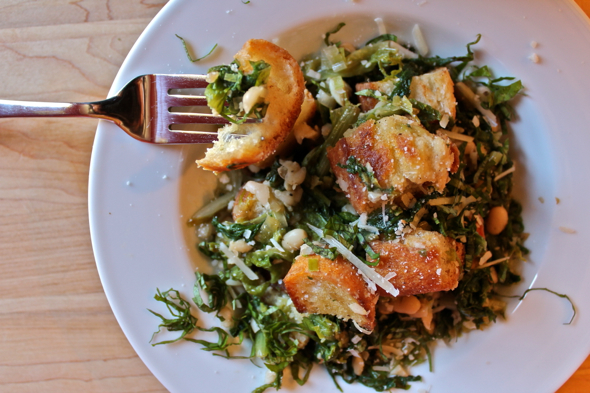
This is the type of food that could be considered a kid-repellent. It boasts a combination of punchy bitter greens, smooth leeks, and the kick of red pepper flakes. However, it also contains white beans, crisp, sautéed bread, and parmesan cheese, three things for which, in my experience, children tend to go completely nuts. As you might sense, these discrepancies combine to make one very interesting conundrum.

It’s not really a conundrum, of course. The answer to the question of, How do I make a kid like this? is simple: I don’t feed this to my kid. The bigger question, I think, would be this: Does any kid like this? Does anyone, anywhere, ever somehow get a kid to eat a dish like this? A dish so delicious in its complexity of flavor, so pleasing in its collection of textures, that I could not stop myself from eating almost the entire thing over the span of a single afternoon?

Some friends of mine once had a great Ethiopian lunch with some Ethiopian friends of theirs. Their friends’ children were in attendance, and they were happy to sit down and tuck into plate after plate of spicy lentils, spice-filled stews, and, of course, injera, the fantastic Ethiopian flatbread that is used to scoop up bites of intensely flavorful food. My friends, watching the kids devour the food with aplomb, could not help but wonder how many American kids could be led to eat such food if only they were presented it at the right time, meaning, when they were babies and just discovering the joys of solid food

Sadly, I have no answer to their query. I have tried for years to get my kid to eat all types of foods, to no avail. Indian food? No (which breaks my half-Indian heart with great sorrow). Spicy food of any sort? No. Braised greens? No. Visible strands of onions, whether caramelized or crisp? No and no. I could go on, but I’ll resist. I know that my kid has a slightly more adventurous palate than many other kids (slight—not monumental), so I’ll take whatever vegetable or Thai food consumption I can get out of him. Until he learns to appreciate more foods, I’ll just have to keep doing what I have been doing for the past several years now. This means making foods like this wonderful panzanella for myself, and finding a slight bit of pleasure in knowing that, hey, if I’m the only person who will eat this, at least that means I get to enjoy every last bite of it on my own. It’s a paper-thin silver lining, but I’ll take it.

Last Year: Heirloom Tomato Cobbler with Cheddar and Scallion Biscuit Topping

Escarole, Leek, and White Bean Panzanella Recipe

3 cups torn or cubed crusty bread

4 tablespoons olive oil, divided

1 medium leek, dark green end removed and light green/white end sliced in half lengthwise and then chopped into thin half-moons

4 large cloves of garlic, roughly chopped

1/8 teaspoon red pepper flakes

1 very large head escarole, coarsely chopped

1 cup cooked white beans

salt and pepper to taste

optional: 2 to 4 tablespoons grated Parmesan cheese

¼ cup chopped fresh basil leaves

In a large skillet set over medium-low heat, heat 1 tablespoon of olive oil. When oil is just beginning to shimmer, add bread cubes in a single layer and allow to crisp on one side (this should take anywhere from 2 to 4 minutes). Turn bread cubes over, then allow to crisp some more, shaking the skillet ever now and again to keep the bread moving around in the oil just a tad. Remove bread cubes and set aside.

Wipe any bread crumbs from the skillet, then heat the remaining 3 tablespoons of olive oil over medium-low heat. Add chopped leeks, garlic, and red pepper flakes and sauté, stirring frequently, until the leeks begin to soften, about 4 to 5 minutes. Add the chopped escarole, stir and toss to combine, then reduce the heat to low, cover the pan, and allow to cook for 5 minutes, until the escarole is wilted and has released some of its juices. Remove the lid from the pan, and continue to sauté, stirring occasionally, until the juices have evaporated a bit, about 3 minutes. Add beans to skillet, stir to combine, and allow beans to cook with greens for about a minute. Add salt and pepper to taste.

Turn the heat off under the skillet. Add the toasted bread cubes and toss to combine thoroughly. Taste for seasoning.

Divide the panzanella amongst 2 or 4 plates, depending on how hearty to want your servings to be. Sprinkle Parmesan cheese (if using) over the servings, then sprinkle over chopped basil.

Serves 2 as a meal, or 4 as a starter.

Perfect Oven Fries with Truffle Salt

13 Sep

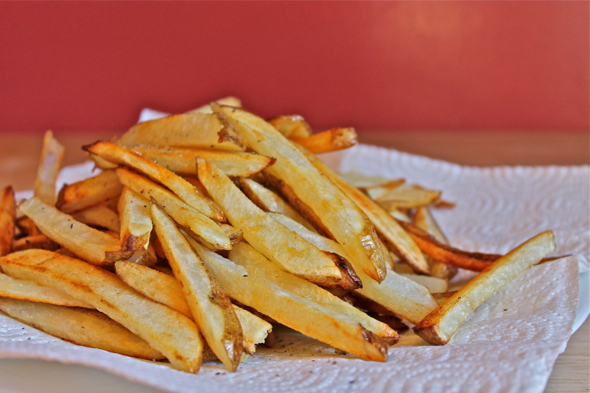
There is a burger place two blocks from our house that makes the most incredible french fries imaginable. Perfectly crisp, these fries are quickly tossed with just a hint of truffle oil when they emerge, piping hot, from a deep fryer, and if there was ever a time that I thought I sounded like a complete loon when discussing a food idea I enjoyed, now would be it: I am raving about fried food that is spritzed with oil. Whatever has happened to me?

As some of you may recall, I am a french fry devotee, by which I mean that when I am looking for a rare treat or a counterbalance to a bad day, my thoughts turn to french fries. (Note: When I say that I am looking for a “rare” treat, I do not mean that I rarely partake in treats, but rather that, when partaking in this particular treat, it is a rare occurrence. French fries and I only come into contact about six times a year, so we’re not nearly as cozy as one might suspect. Cake and I, on the other hand…) One might think that, being a french fry fanatic, I will eat any french fry, without discrimination, and declare it to be wonderful. Not so. Too often, I have eaten french fries that are intensely greasy, sadly soggy, or obviously just fried sticks of previously-frozen potatoes that are lacking in any sort of notable flavor or positive qualities. I don’t love all french fries. I only love really, really good french fries.

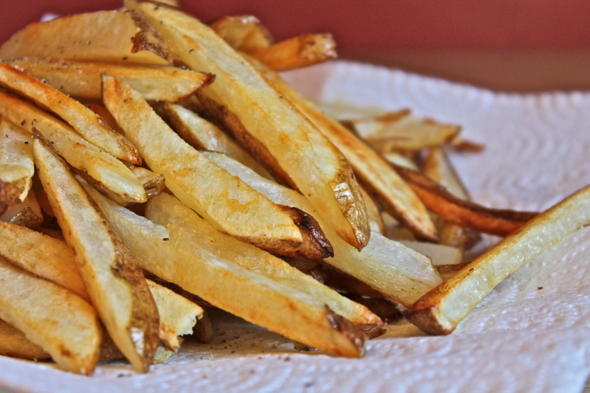
This is why, at the risk of sounding ridiculous, it is such a joy for me to announce that, at long last, I think I have perfected the art of making french fries at home. Not just that, I have perfected a recipe for making super crisp and flavorful baked french fries, which is like the Holy Grail of homemade french fry making. No vat of scorching hot oil, my friends. No lingering scent of old grease. Just three ingredients (four, if you count an optional sprinkling of black pepper), a couple of baking sheets, and a hot oven are all that lie between you and the most delicious oven fries—perhaps even the most delicious french fries, period—you’ve ever made. The secret, if one can even call it that, lies in soaking your potato slices in a bowl of warm water before you toss them with oil and salt and then roast them in the oven. That’s it. I know. I know. A few tablespoon of oil, a bit of truffle salt, and you’re in. I’ll stop talking now so we can get right to it.

Last Year: The best wine opener I’ve ever owned

Perfect Oven Fries with Truffle Salt Recipe

It just so happens that two different people have given me truffle salt this year, so I happen to have an abundance of it lying around. If you’re wondering how to find some for yourself, I found a few listings on Amazon that were not too expensive. I also found some listings that were outlandishly expensive, so please do keep in mind that a little bit of this stuff goes a long way, so you certainly don’t need to buy more than an ounce or so of it in order to have a good supply.

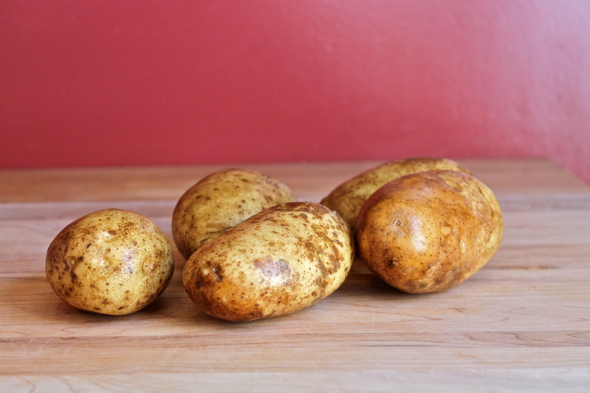
About 2 pounds medium-sized russet potatoes

4 tablespoons vegetable oil

1 teaspoon truffle salt, divided

optional: freshly ground black pepper

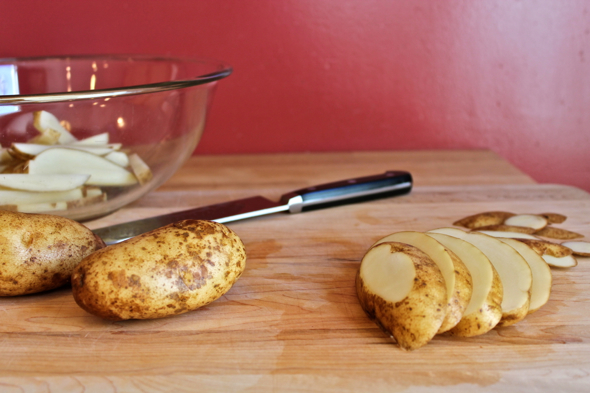
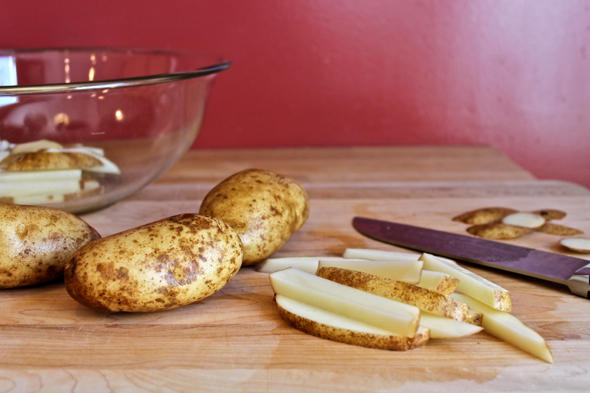
Slice the short ends off of the potatoes, then slice off just a bit of the long sides, creating a somewhat flat surface on either side. Cut the potatoes lengthwise into ¼-inch slices, then cut those long slices into ¼-inch strips.

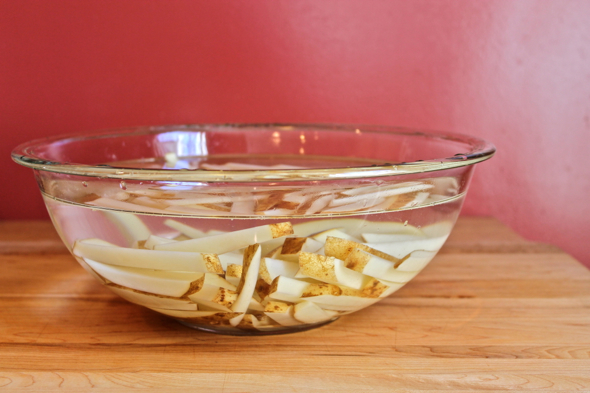
Place the potato strips in a large bowl of lukewarm water, then gently swish the potatoes around until the water becomes quite cloudy. Drain the water from the bowl, refill with lukewarm water once more, then swish the potatoes around again until the water is again cloudy. Drain the water from the bowl, then fill a third time with lukewarm water, and allow the potatoes to sit in the water for at least 30 minutes, or up to 1 hour.

While the potatoes are soaking, preheat your oven to 475 degrees Fahrenheit. Place an oven rack in the lowest position, and another oven rack in the second-lowest position.

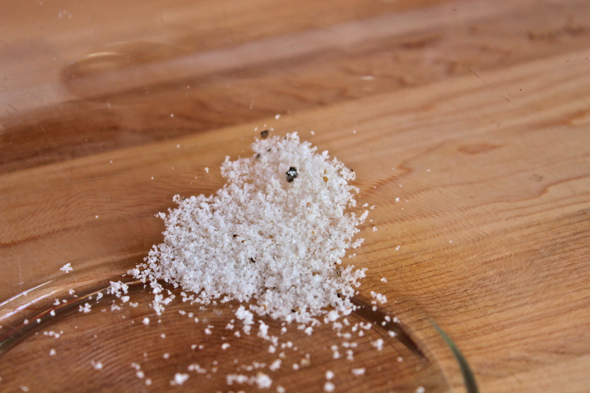
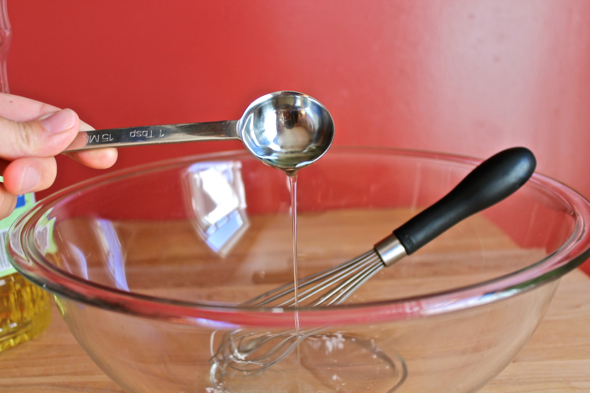
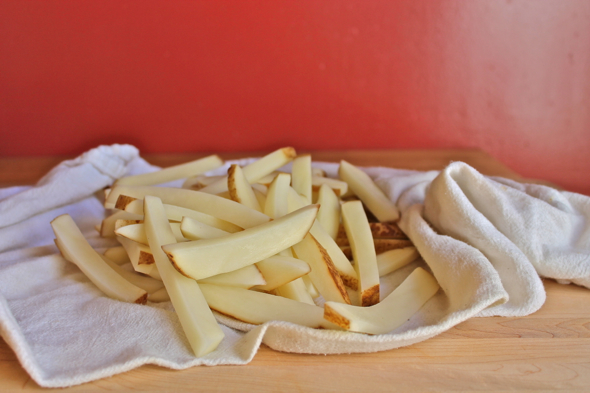
After the potatoes have soaked, thoroughly drain them in a colander. Wipe dry the large bowl in which the potatoes were soaking. In the bowl, combine the vegetable oil with ½ teaspoon of the truffle salt. Whisk the salt into the oil until it has dissolved as much as possible (you will still be able to see many grains of salt after whisking for a minute or so, but that is all right—you just want to thoroughly infuse the oil with the seasoning). Leave the oil and salt together while you finish drying the potatoes by thoroughly blotting them in a large dishtowel.

Place the dry potatoes in the bowl with the oil and salt. Using your hands, toss everything together until all of the potatoes are thoroughly coated in the oil and salt. Divide the potatoes amongst two large, heavy duty baking sheets, making sure the potatoes are arranged in a single layer. Tightly cover the baking sheets with foil, then place one batch of potatoes on the lowest oven rack, and the other batch on the second-lowest rack. Bake the potatoes for 15 minutes, exchanging the positions of the two baking sheets halfway through.

Remove the foil from the baking sheets, then return sheets to the oven, one sheet on the lowest rack, the next sheet on the second-lowest rack. Bake for 10 minutes. Remove baking sheets from oven, carefully flip over the potatoes, again arranging them in a single layer, and return to the oven to finish baking, reversing their positions for the final baking (so the sheet that was just one the lowest level is now on the second-lowest level, and vice versa). Bake for an additional 15 minutes, until the potatoes are a deep golden brown and crisp all over.

Remove potatoes to a plate lined with a layer of paper towels. Sprinkle potatoes with the remaining ½ teaspoon of truffle salt, and, if you desire, a light sprinkling of freshly ground black pepper. Serve piping hot.

Grill-Roasted Lemon Rosemary Potatoes

30 Aug

I seem to have started something I am currently unable to quit. Remember when I made this chicken? And then this dessert? And how, before that, my husband made this? And even farther before that, I made this? I know it’s summer and all, but, man, I just can’t seem to stop grilling everything in sight.

As I may have mentioned a million or more times in the past year or so, Portland is not known for its particularly hot weather. On the rare occasion the temperature rises towards the upper-90s, it seems as though everyone in the city leaves their kitchens and heads outdoors to do their cooking. I am guilty of the same, but now, having grilled my fair share of meals so far this summer, I can’t seem to walk away from the grill. It’s not even that hot outside anymore. I just like grilling.

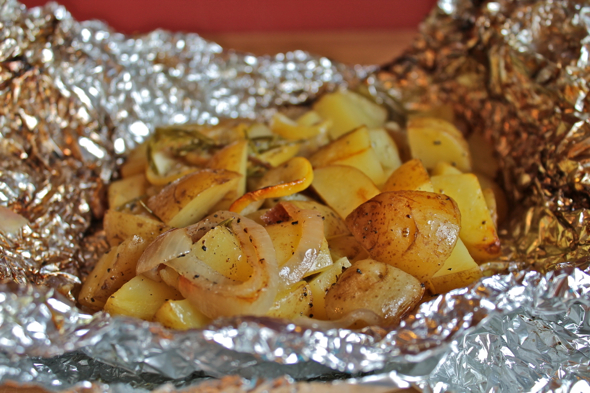
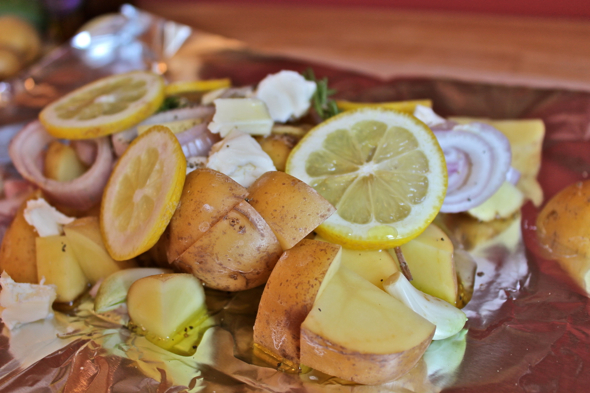
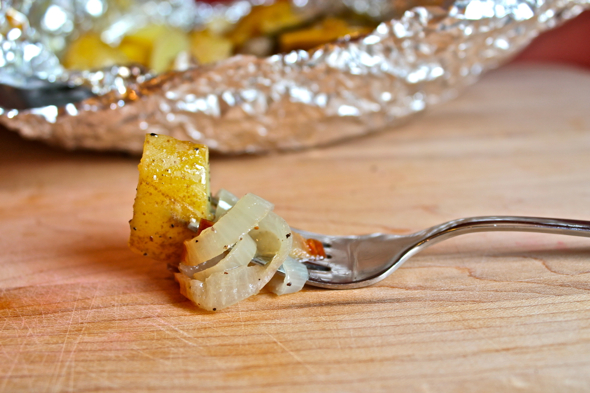
As my summer of grilling rolls along, I am reminded of things that I have eaten over the years, all lovingly prepared on a grill. Untold numbers of grilled vegetables, a foray into beer can chicken, and this, a dish I seem to throw together several times a summer, yet never really bothered to write down, such is its simplicity and limitless propensity for adaptation and transformation. You start with a large piece of foil, add some sort of root vegetable—potatoes, sweet potatoes, carrots, what have you—then throw on some sliced onions or shallots, toss on some cloves of smashed garlic, nestle in some fresh herbs, then dab on a bit of butter or oil (or both), perhaps some lemon slices, maybe something spicy, sprinkle on salt and pepper, then wrap it up, leave it on the grill, and walk away. 30 or 40 minutes later, after doing virtually nothing, you’ve got this: a pouch of steaming, slightly crisp vegetables, caramelized onions and garlic, and a pool of juices meant to be poured over whatever else you’ve got going on your grill. It’s a dead simple dish, and one that I consider a summer standard. I invite you to make it one of yours as well.

Grill-Roasted Lemon Rosemary Potatoes Recipe

Like I said, this dish is great at being adapted. Sometimes I start with potatoes, onions, and garlic, then add turmeric, cumin, and coriander instead of fresh herbs. Sometimes I use fresh fennel instead of onions. Sometimes I use sweet potatoes, sometimes I use Yukon Gold potatoes. Whatever you can dream up, I swear this dish can only shine brighter.

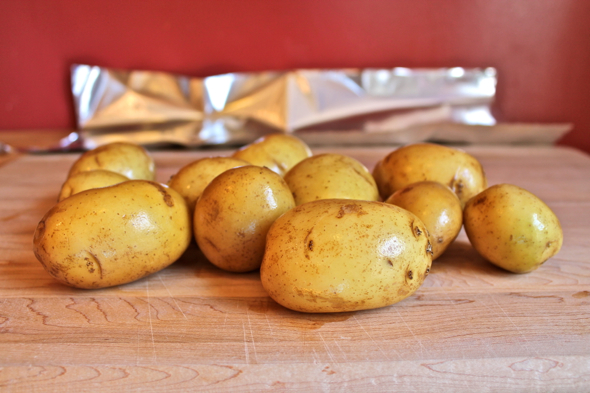
1 pound red or Yukon Gold potatoes, cut into uniform size

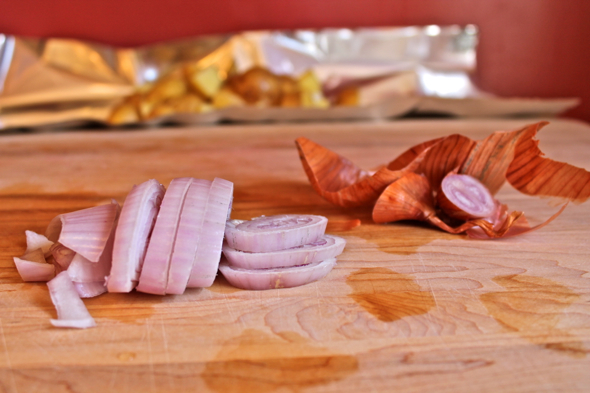
1 large shallot, sliced into rings

4 or 5 large garlic cloves, peeled and smashed

1 rosemary stem, about 4 inches long

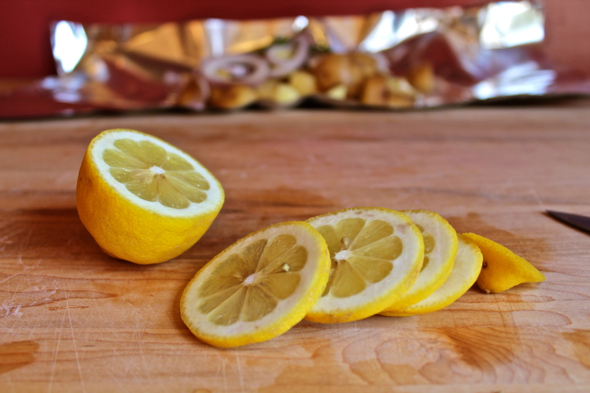
½ large lemon, sliced into thin rounds

1 tablespoon unsalted butter

1 tablespoon olive oil

salt and pepper to taste

Preheat an outdoor grill to medium high.

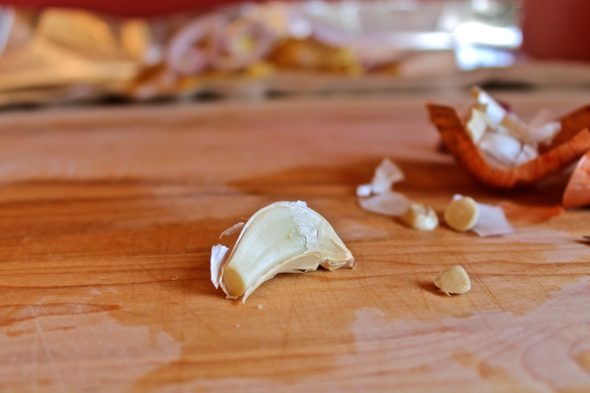
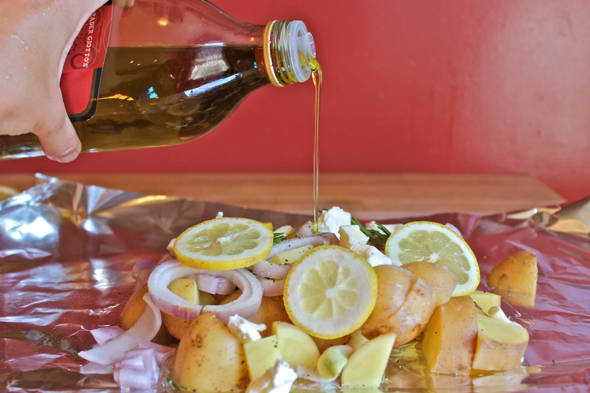
Lay out a large piece of heavy aluminum foil. Add potatoes, shallot slices, garlic, rosemary, and lemon slices. Pinch off pieces of the butter and place on top. Drizzle over the olive oil. Add salt and pepper.  Tightly fold and close the foil over the mixture, adding a second layer of foil if your first one does not quite close all the way.

Grill the potatoes, grill lid down, over direct, medium-high heat. Turn once or twice to aid in even cooking (although, to be perfectly honest, I have, on more than one occasion, forgotten to do this and the potatoes turned out just fine). Cook for 30 to 40 minutes, until the potatoes are cooked through and the shallots are meltingly soft and sweet.

Be exceptionally careful when opening the foil pouch to check your potatoes, as the escaping steam is dangerously hot. Discard lemon slices and rosemary stem, then serve.