Archive | Vegetarian RSS feed for this section

Roasted Broccoli Pasta Salad

18 Jun

Not too long ago, we attended our first potluck picnic of the season.  This, along with the season’s inaugural bike ride downtown to picnic on the waterfront, and the breaking down of my willpower when it comes to filling my belly with fresh strawberries and lemon cream, heralds the dawn of a new eating season in our household.  Summer foods are upon us.
Most summer foods can be easily spotted and categorized as such.  You have fruit (strawberries, blueberries, peaches, nectarines), you have picnic food (stuffed sandwiches, a simple baguette with a round of cheese to accompany it), and you have what is quite possibly the most misunderstood of summer foods, the pasta salad.
I know what you are thinking: Pasta salad is misunderstood?  And my answer is yes, horribly so.  Most pasta salads are improperly seasoned, unbearably bland, kept in the refrigerator until their starches seize and become unpleasantly pasty, and/or so inappropriately covered with mayonnaise that one can’t even begin to identify the flecks of vegetables that are hiding within.  Which brings me to another point of contention, that being the utterly unbalanced proportion of pasta to vegetables.  Look, I know it’s a pasta salad, but does that really mean that 90% of what comprises the salad really have to be just pasta?
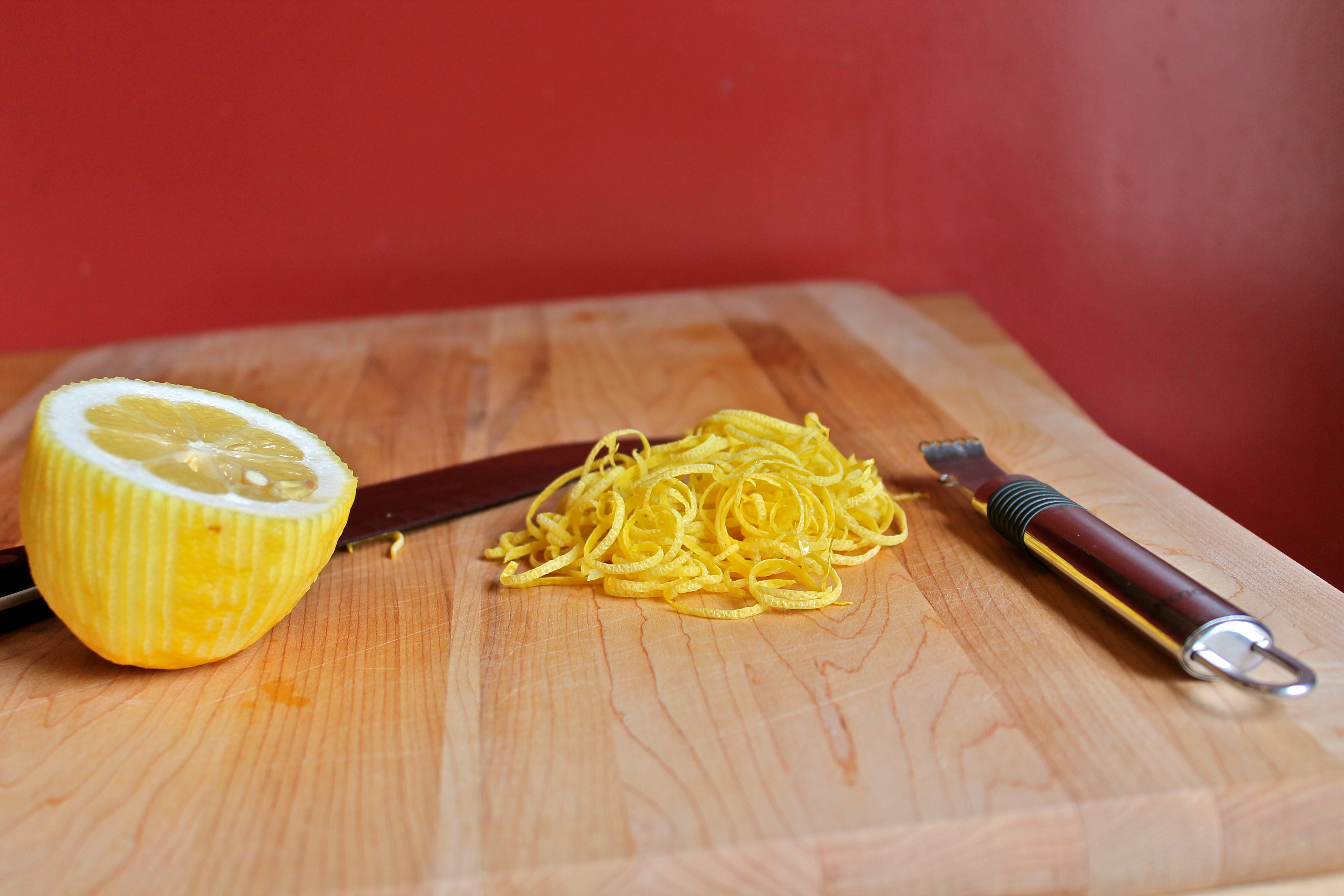
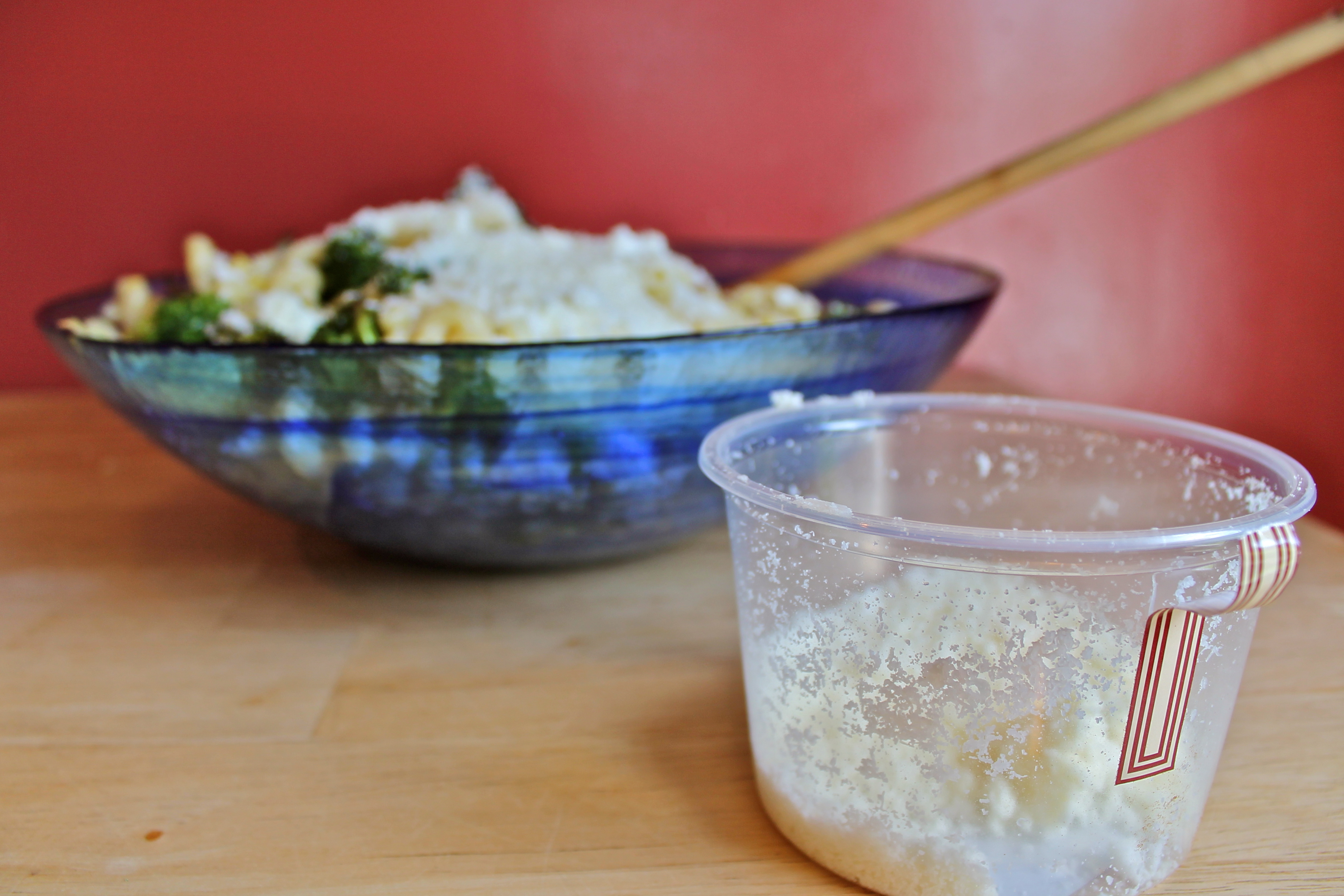
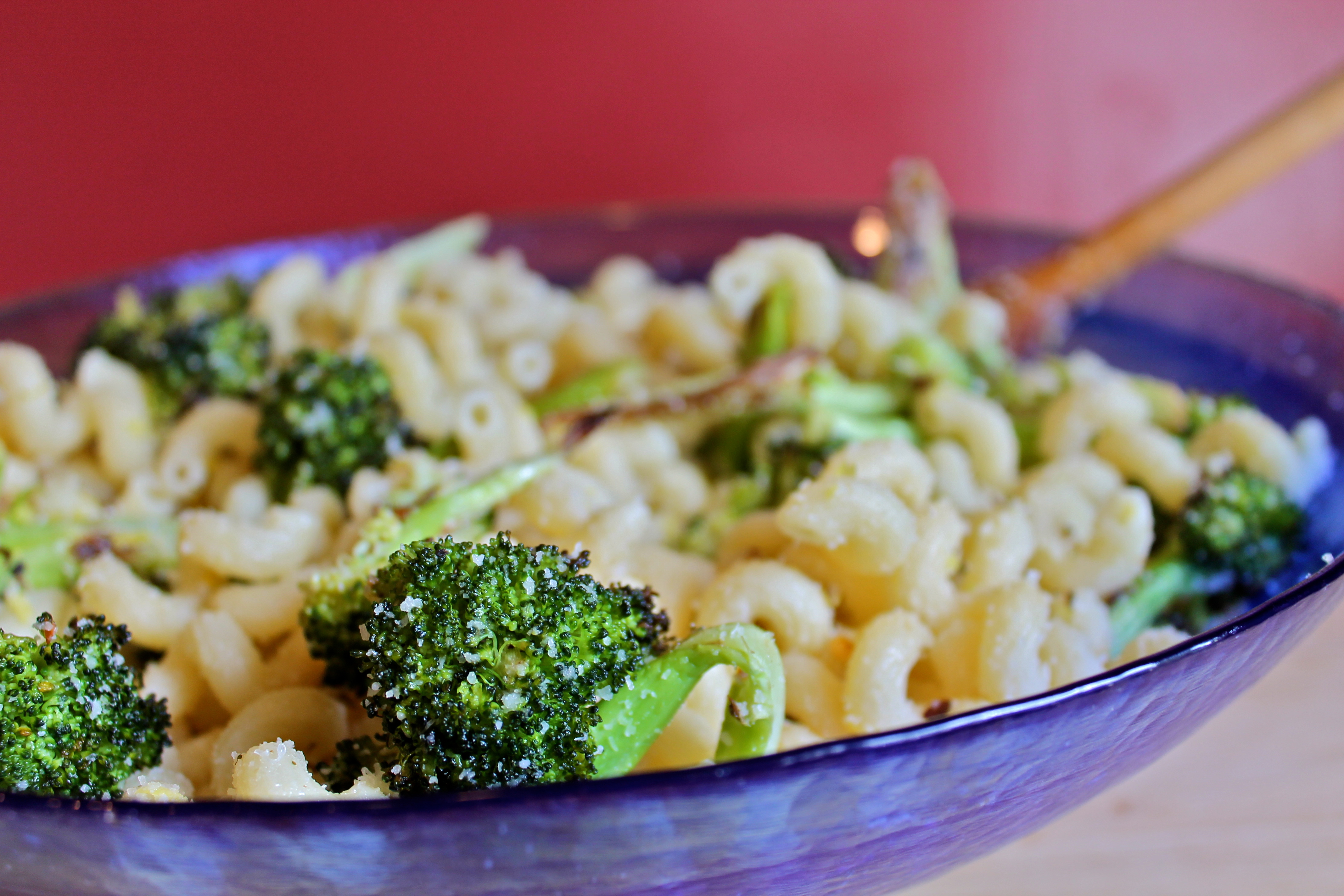
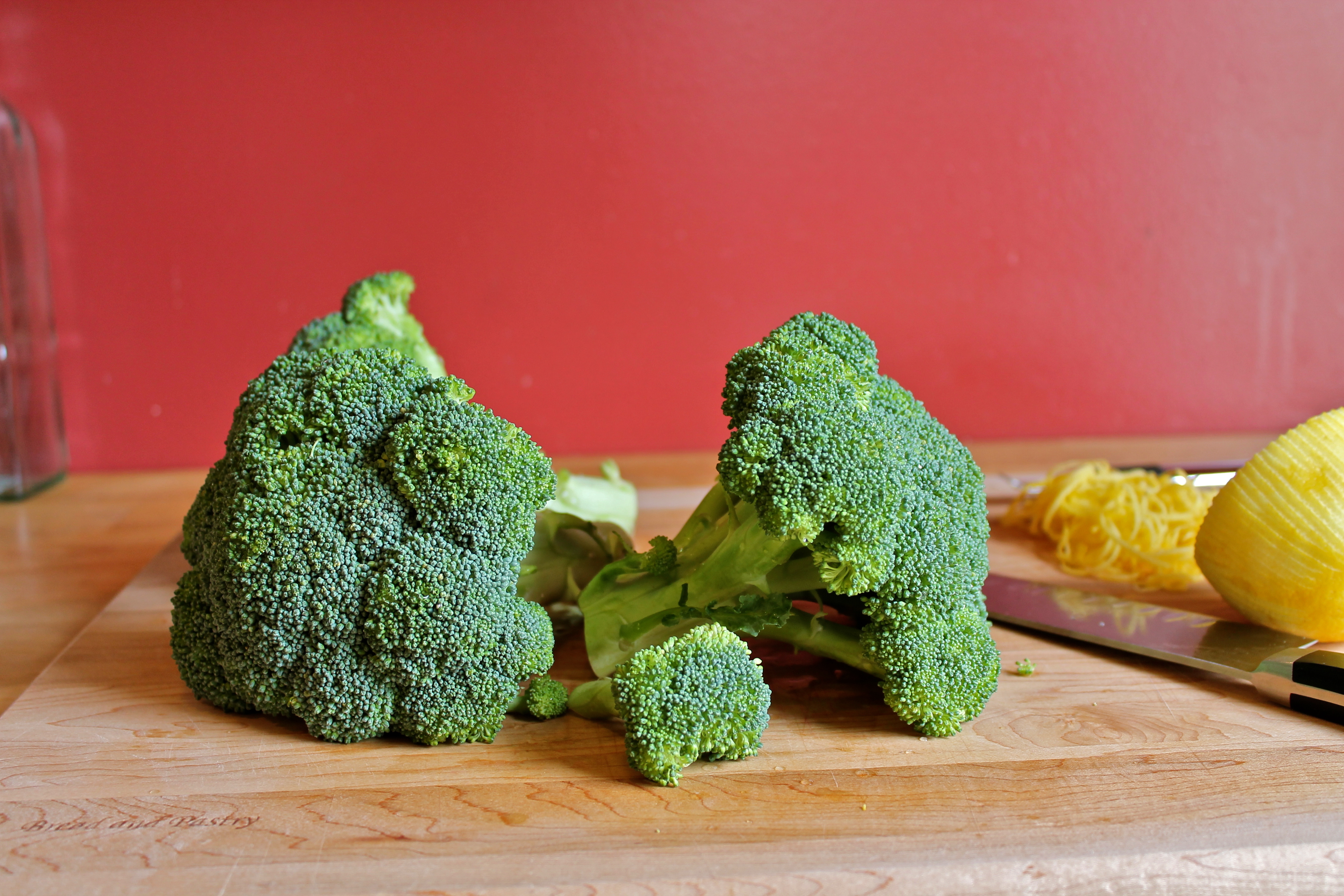
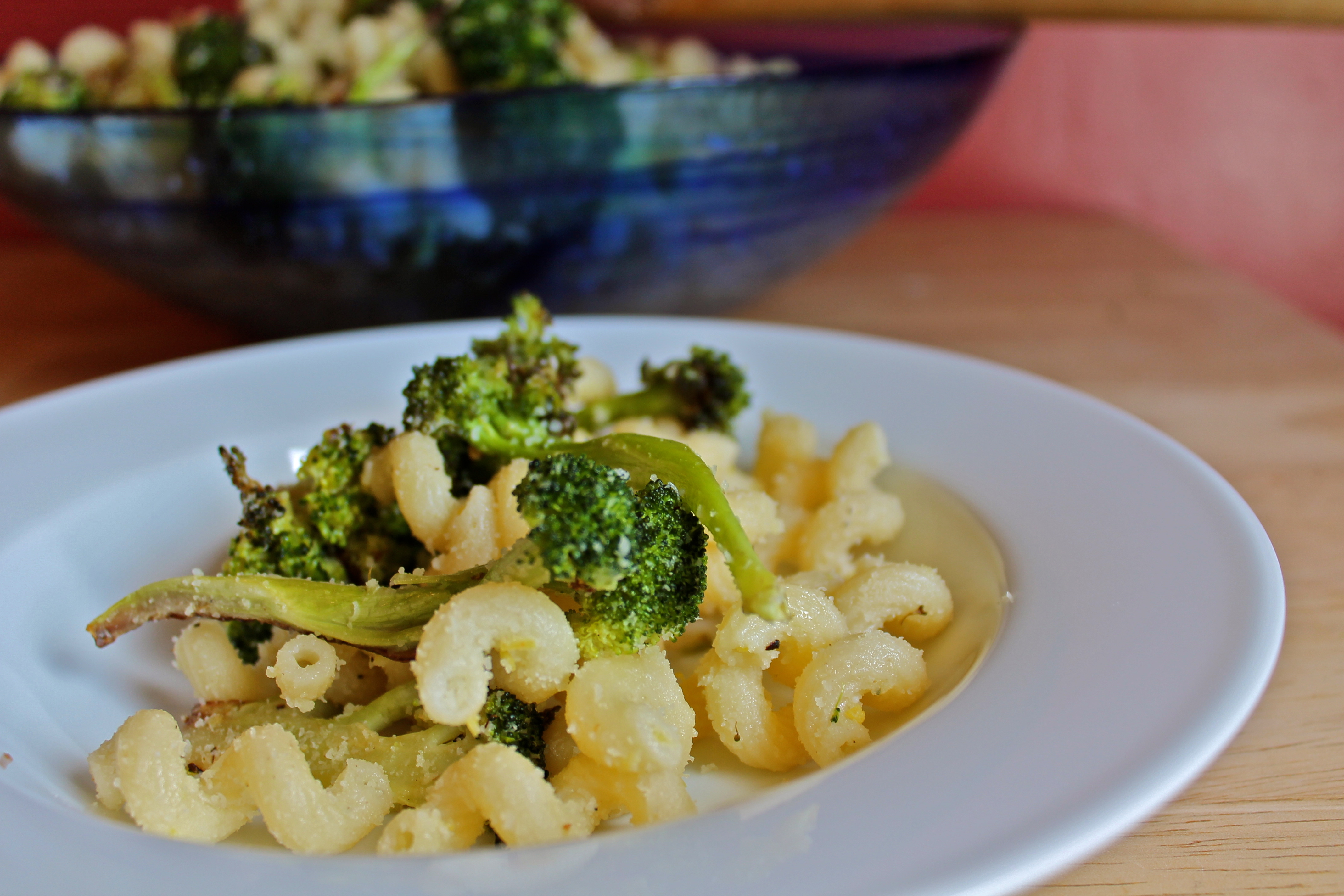
Perhaps I am alone in my displeasure, but, were it not for my feelings of malcontent, I never would have come up with the incredibly tasty and fulfilling pasta salad to see here.  In it, big chunks of broccoli get roasted in olive oil with generous slivers of garlic and a hearty pinch of red pepper flakes.  The pasta, before meeting up with the roasted broccoli, is bathed in a splash of lemon juice, soaking up the brightness as it cools to a perfectly toothsome texture.  A final toss with a confetti of lemon zest and a blizzard of finely grated, wonderfully sharp Pecorino Romano cheese, and it is done.  And, thankfully you are done—done eating dull, limp pasta salads, and done hunting for something delicious and new to take to a potluck and be welcomed with open arms.
Last Year: How to Make Smoked Salmon at Home–this is by far the most popular post on here, and for good reason.

Roasted Broccoli Pasta Salad Recipe

1 pound broccoli florets, trimmed into equally-sized pieces with a long portion of stems intact

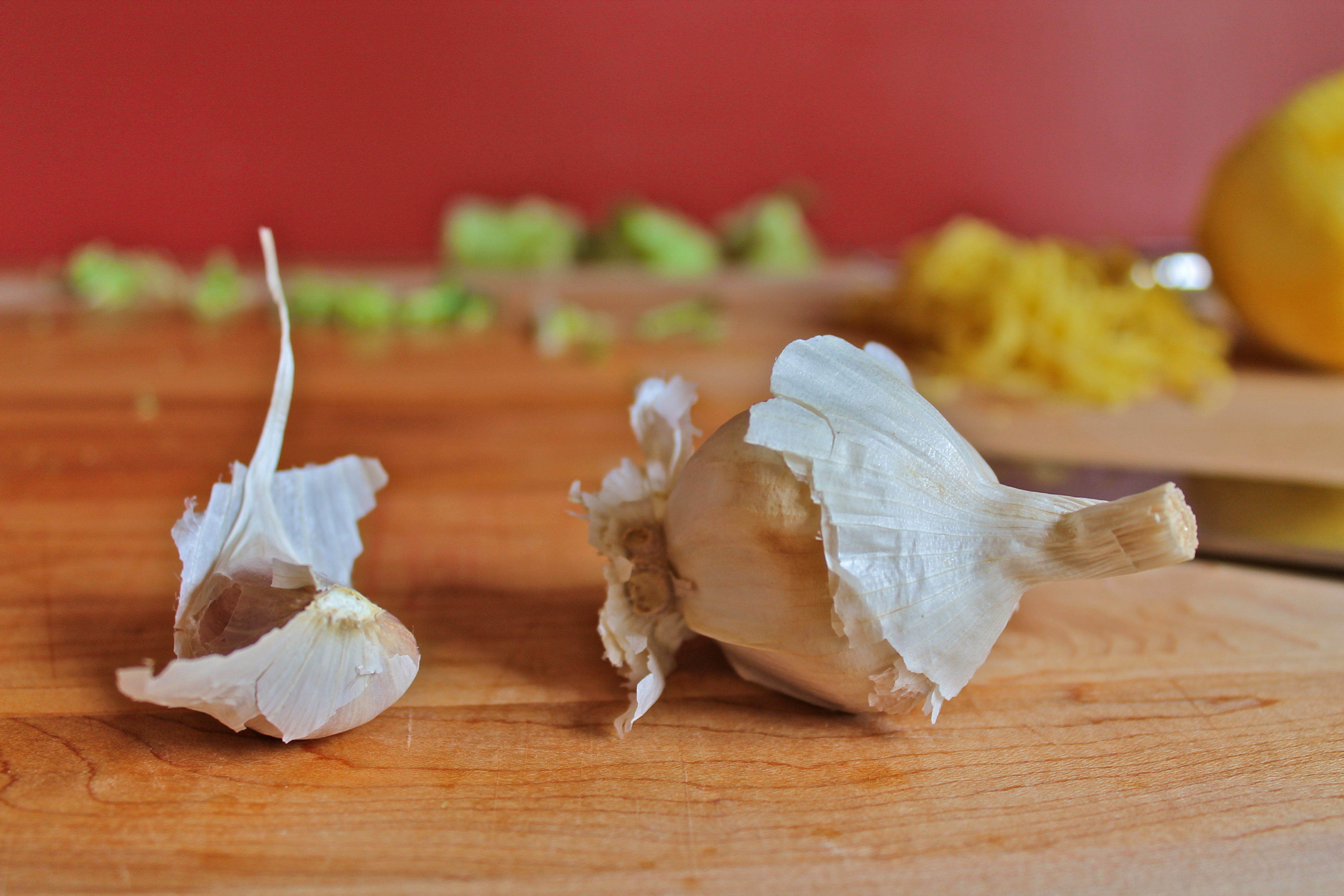
3 large cloves of garlic, cut into thin slices

¼ teaspoon red pepper flakes

¼ cup extra virgin olive oil

salt to taste

1 pound pasta

¼ cup finely grated or chopped lemon zest

2 tablespoons fresh lemon juice

1 cup finely grated Pecorino Romano cheese

Preheat oven to 425 degrees Fahrenheit.

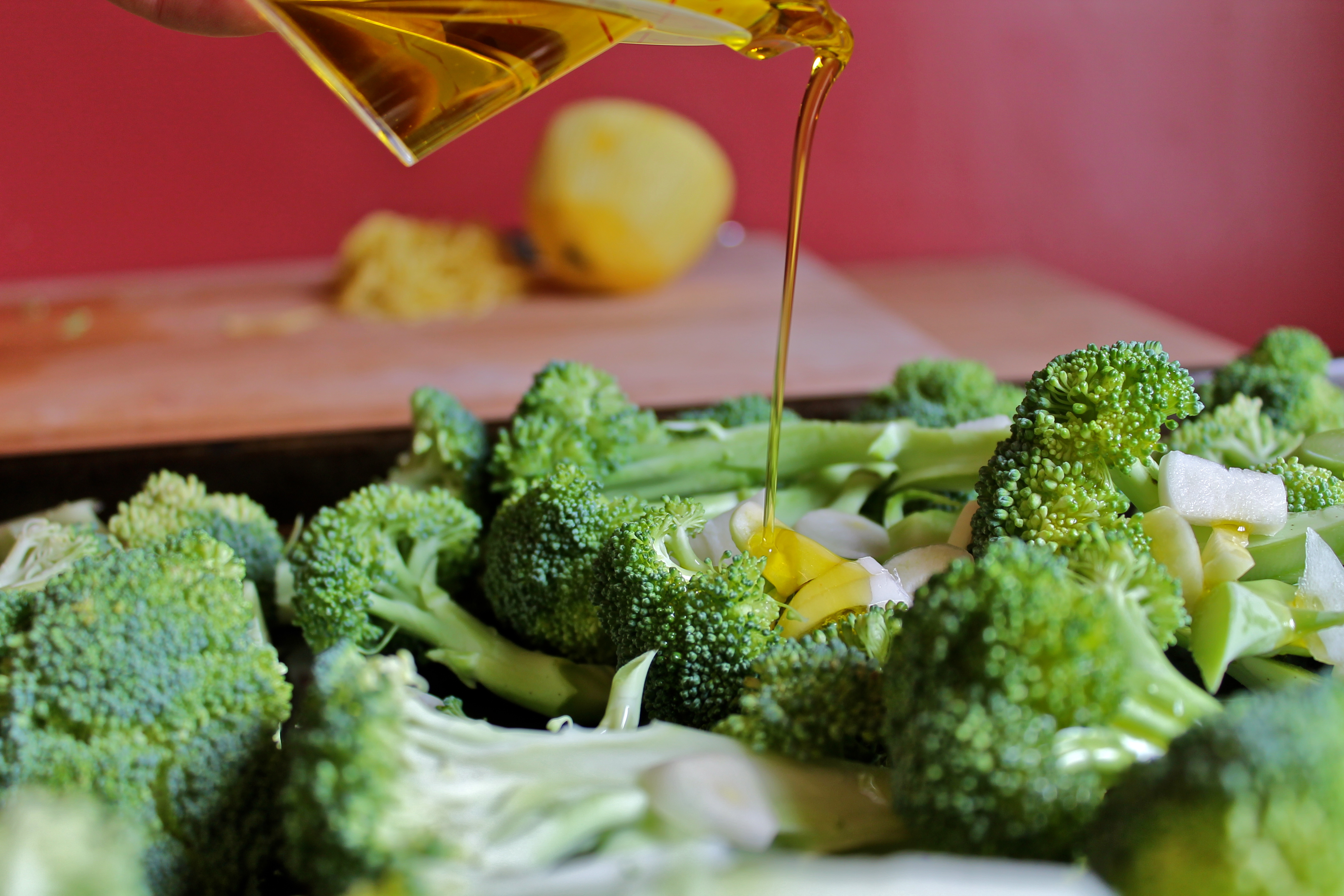
On a large baking sheet, combine broccoli, sliced garlic, red pepper flakes, olive oil, and salt to taste.  Toss everything together until uniformly coated in olive oil.  Roast broccoli and garlic in the center of the oven for 20 minutes, until both the broccoli and garlic have developed a nice layer of caramelization.  Remove from oven, stir a bit, then set aside to cool slightly.

While the broccoli is roasting, cook the pasta in salted water until tender.  Drain pasta in a colander, then toss with lemon juice while still hot.  Allow to sit for 5 minutes to cool a bit, tossing frequently to aid in cooling and to keep the pasta from sticking together.

When both the pasta and broccoli are no longer piping hot, but still warm, pour the pasta into a large bowl.  Scrape the broccoli, along with every bit of olive oil and garlic left on the baking sheet, onto the pasta.  Add lemon zest and cheese, then toss thoroughly to combine.  Serve at room temperature.

Vegetable Biryani, or What to Make When Your Kid Decides to Become a Vegetarian

4 Jun

Remember when I said that I was done with my frenzy of Indian food posts?  That Indian Food Week-Plus had drawn to a close?  Well, it turns out that I wasn’t being entirely truthful.  My duplicitousness was not purposeful, I promise.  I was all set to close the door on this cooking run of mine until my friend Mike, one of the most dedicated dads I know, who also happens to be one of the most dedicated carnivores I know, happened to mention that his daughter had decided to become a vegetarian.

Upon hearing that this young lady was weighing a switch to vegetarianism, the vegetarian-centric cooking node in my mind went into overdrive.  I was a vegetarian for most of my life, and many of those years were spent in the company of people who weren’t familiar with, and didn’t care to be familiar with, a balanced vegetarian diet.  As a result, I became what one might call a little bit slack in my own eating habits, and spent the better part of five or six years constructing my meals around a basic principle of cheese + carbs = not hungry anymore.  Obviously, it was not the healthiest thing I could have done, but since I never became lethargic from hunger or developed scurvy, I assumed, at the time, that whatever I was doing was fine.

Maybe it was, for a time, but, in the long term, that’s just no way to live.  Food, no matter if it contains meat or not, should be an experience that provides you with something more than just nourishment.  Food can be an adventure, a chance to learn, an opportunity for discovery, and when you’ve decided to make a huge change in the structure of your diet, there is no better time to start seeking out new frontiers in food and cooking.  And when you’re going vegetarian, there is no better place to focus than India.  I’ve written about this before, but one of the most notable things about Indian vegetarian cuisine is the fact that when food is made to focus on things other than meat, there is never a sense of something being missing.  There is no effort to make up for a lack of meat, and thus your experience eating a truly fine vegetarian meal is one of satisfaction and comfort rather than of substitution.

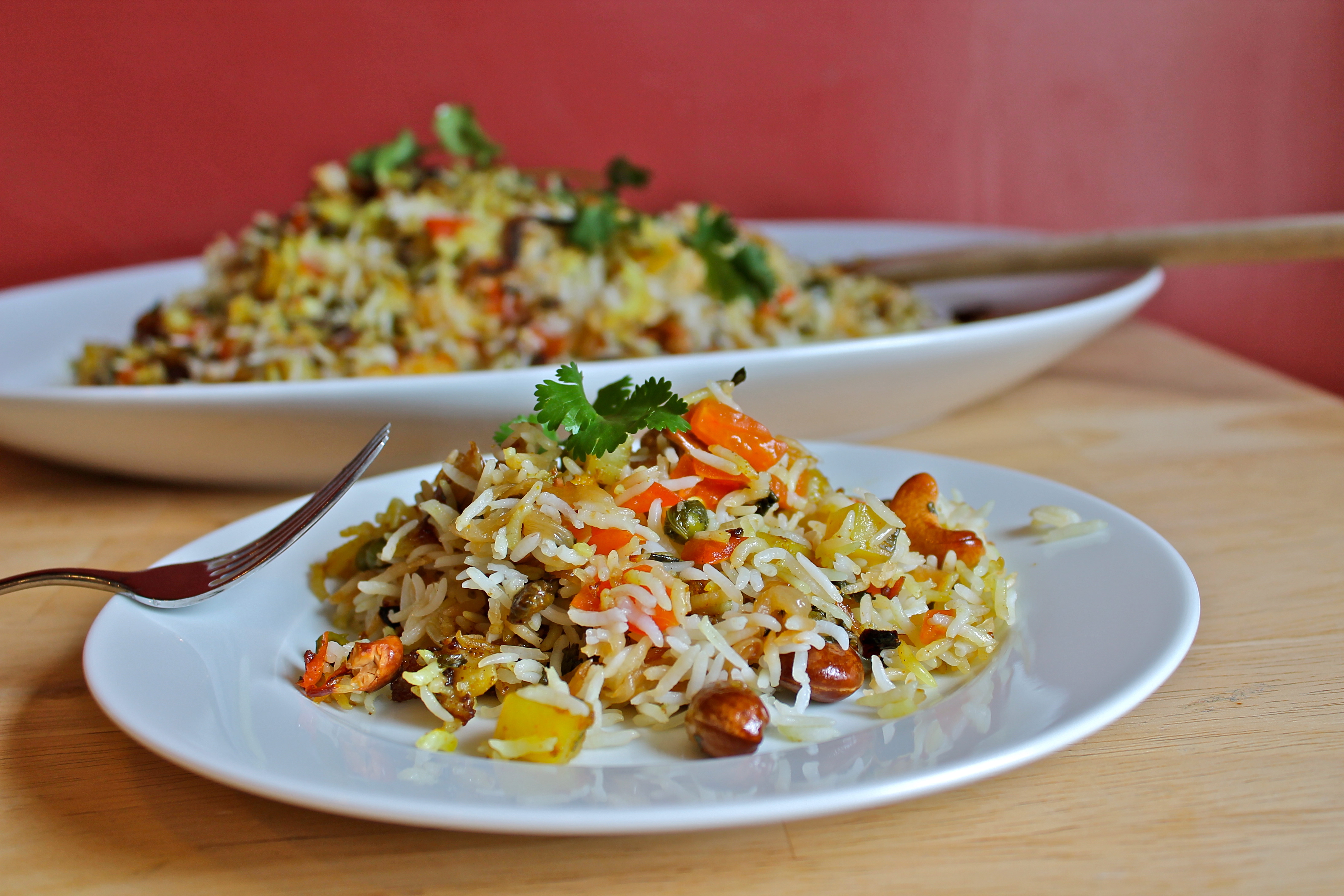
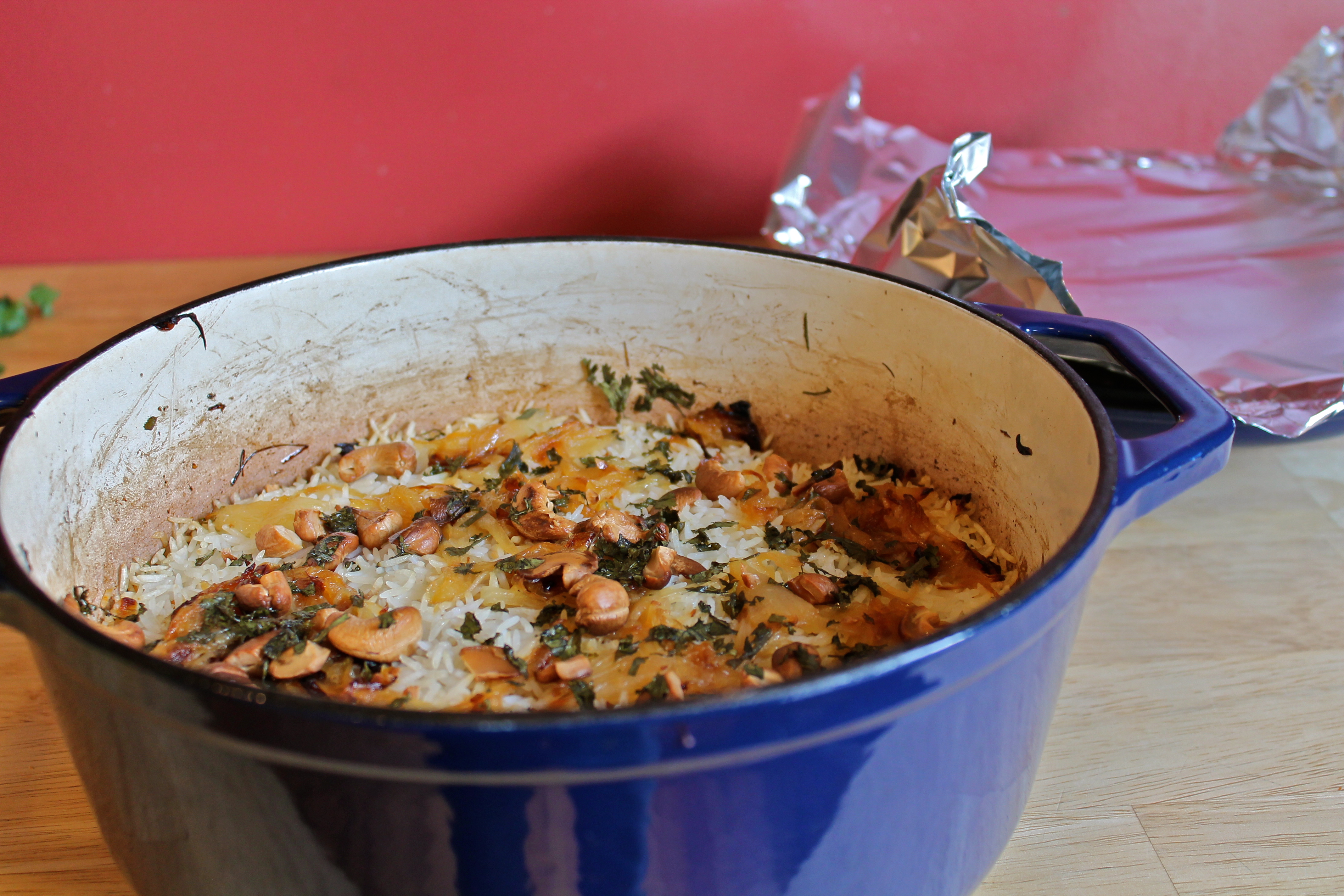
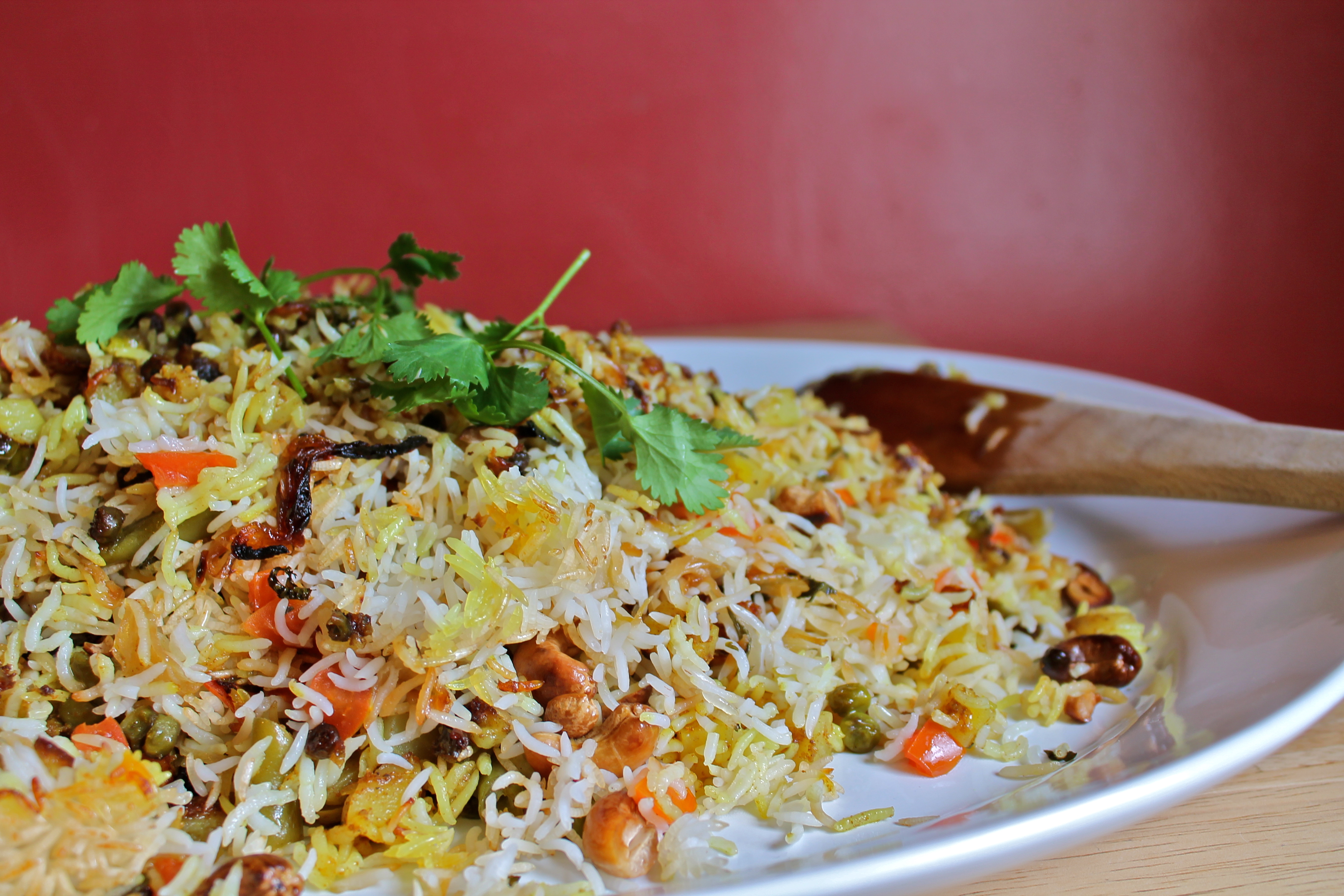
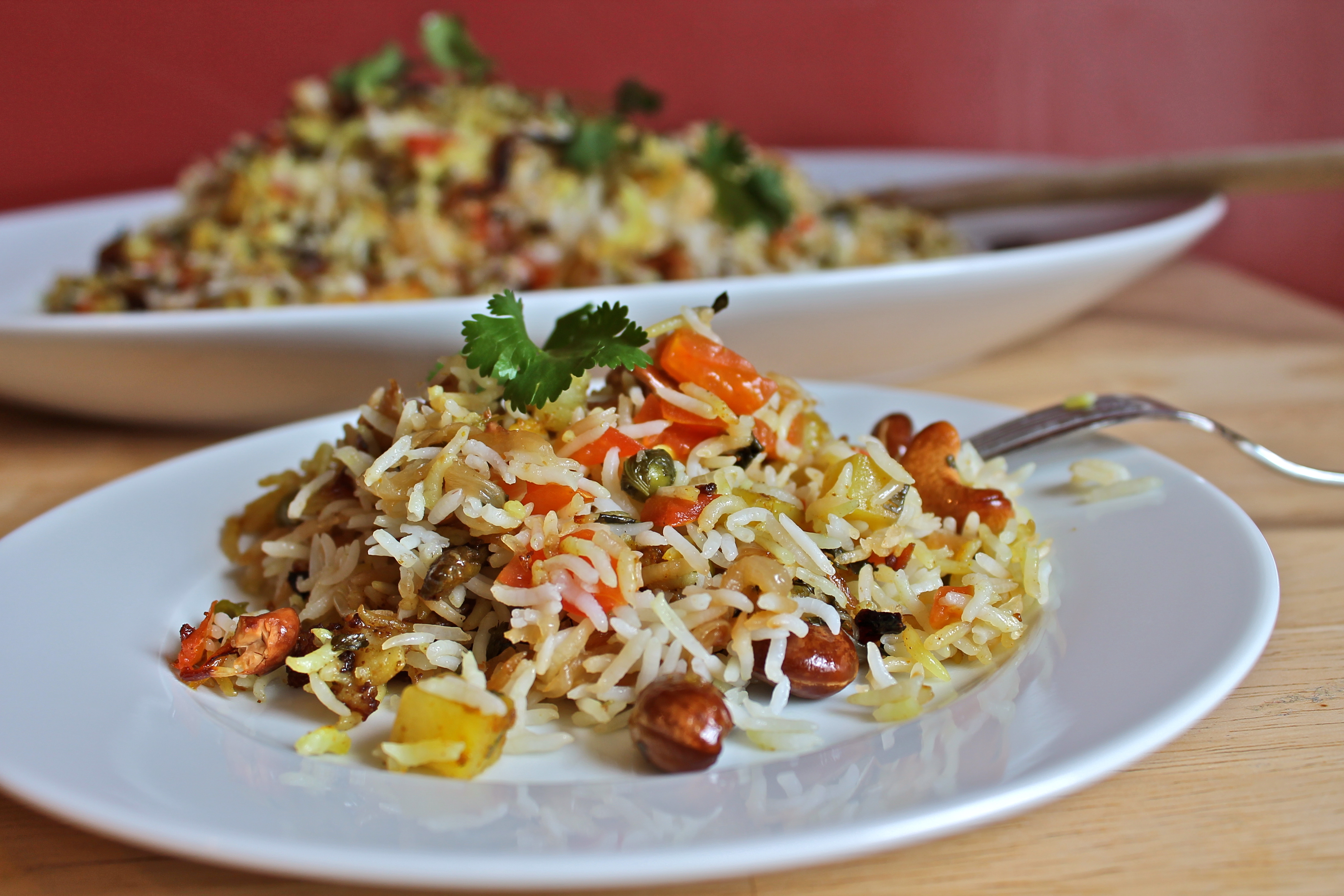
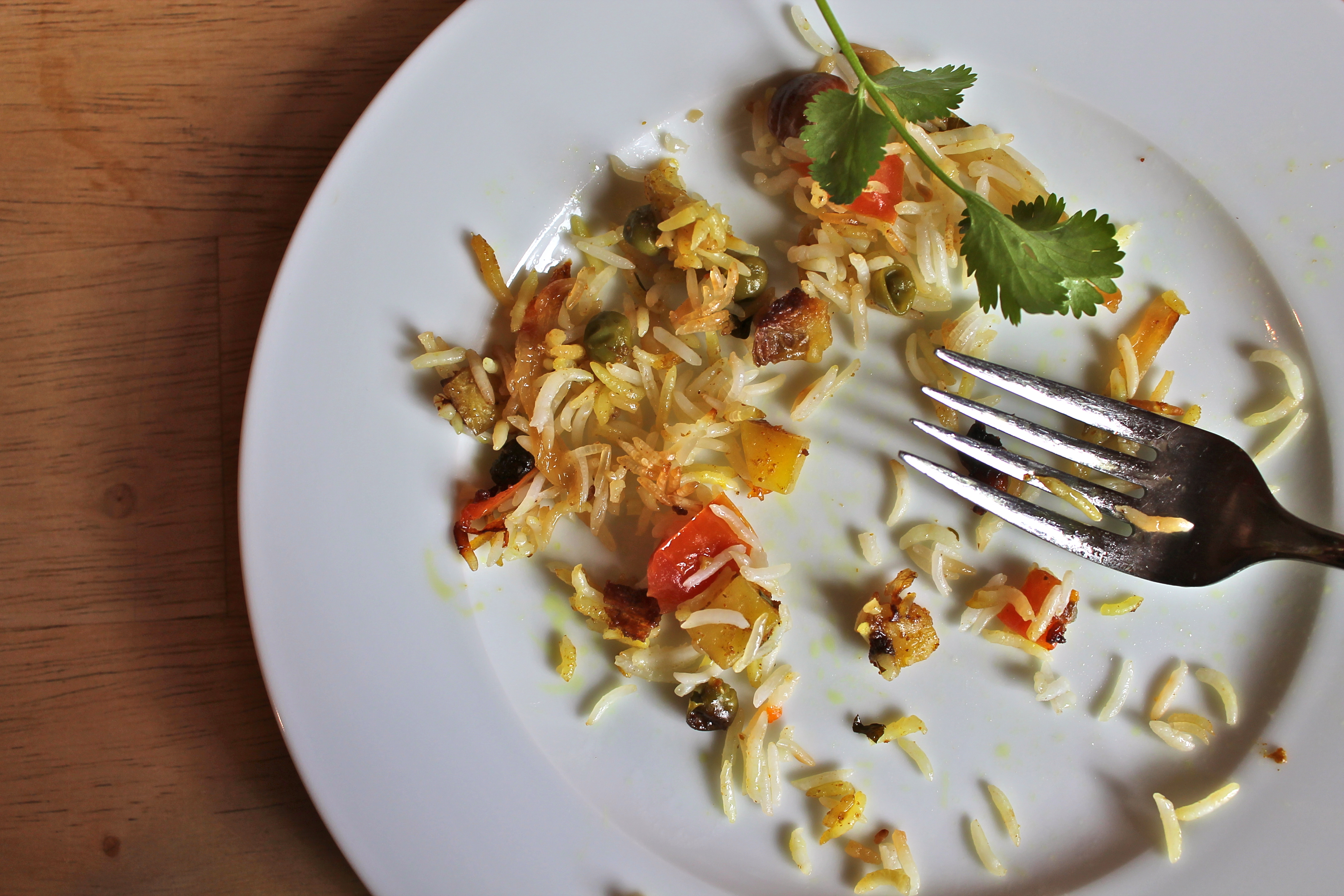
Thus, it is rather ironic that when I wanted to develop a great Indian dish for Mike’s daughter to try out, it ended up being based on a favorite chicken dish.  However, personal contradictions aside, this really is a phenomenal meal for anyone looking to develop a nice repertoire of vegetarian meals.  The perfect blend of spices adapts well to any vegetables you choose to include, and if you throw in a cup of cooked chickpeas to accompany the toasted cashews, you’ve got a one pot rice dish that also happens to be a source of complete protein.  Not that you have to utilize the old battering ram of healthfulness in order to get people to eat this.  I made this biryani last night, and, at the evening’s end, three people (two adults, one kindergartener) had eaten nearly every last grain.  With its mix of savory Indian flavors and perfectly roasted vegetables, I think your greatest challenge with this dish is making sure there is enough to go around.

Last Year: Six Threes Ice Cream

Dozens more vegetarian recipes can be found right here in the archives.

Vegetable Biryani Recipe

Heavily adapted from a non-vegetarian recipe in Mangoes and Curry Leaves

3 large cloves of garlic, grated finely (you want to end up with about 2 teaspoons total)

1 teaspoon finely grated fresh ginger

1 large Yukon gold potato, or 1 medium russet potato, diced into ¼-inch cubes

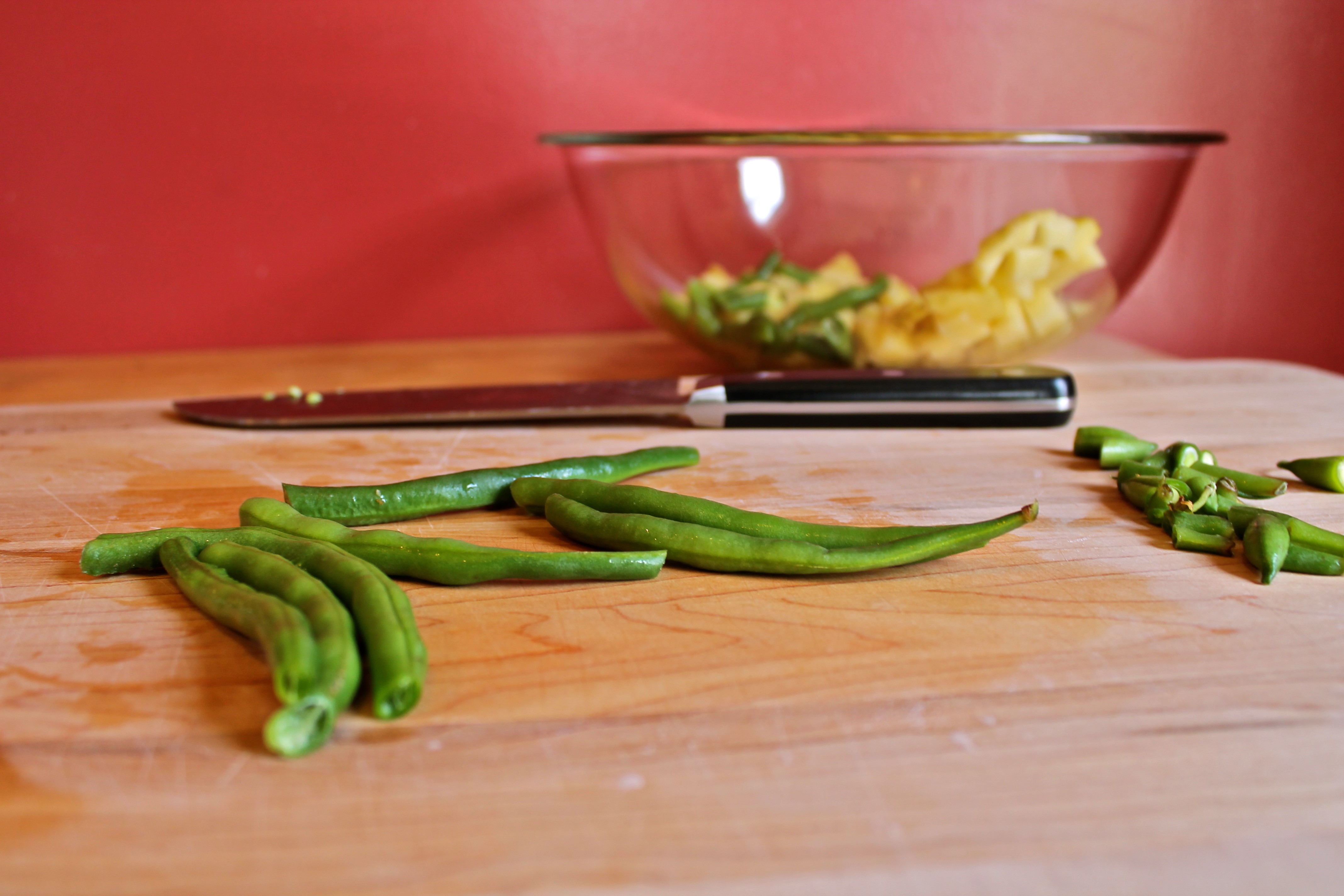
about 12 fresh green beans, chopped into 1-inch pieces (you should end up with ½ cup pieces)

½ cup frozen peas

1 ½ teaspoons ground coriander

½ teaspoon cayenne

¼ teaspoon turmeric

¼ teaspoon garam masala

2 teaspoons salt

2 cups basmati rice

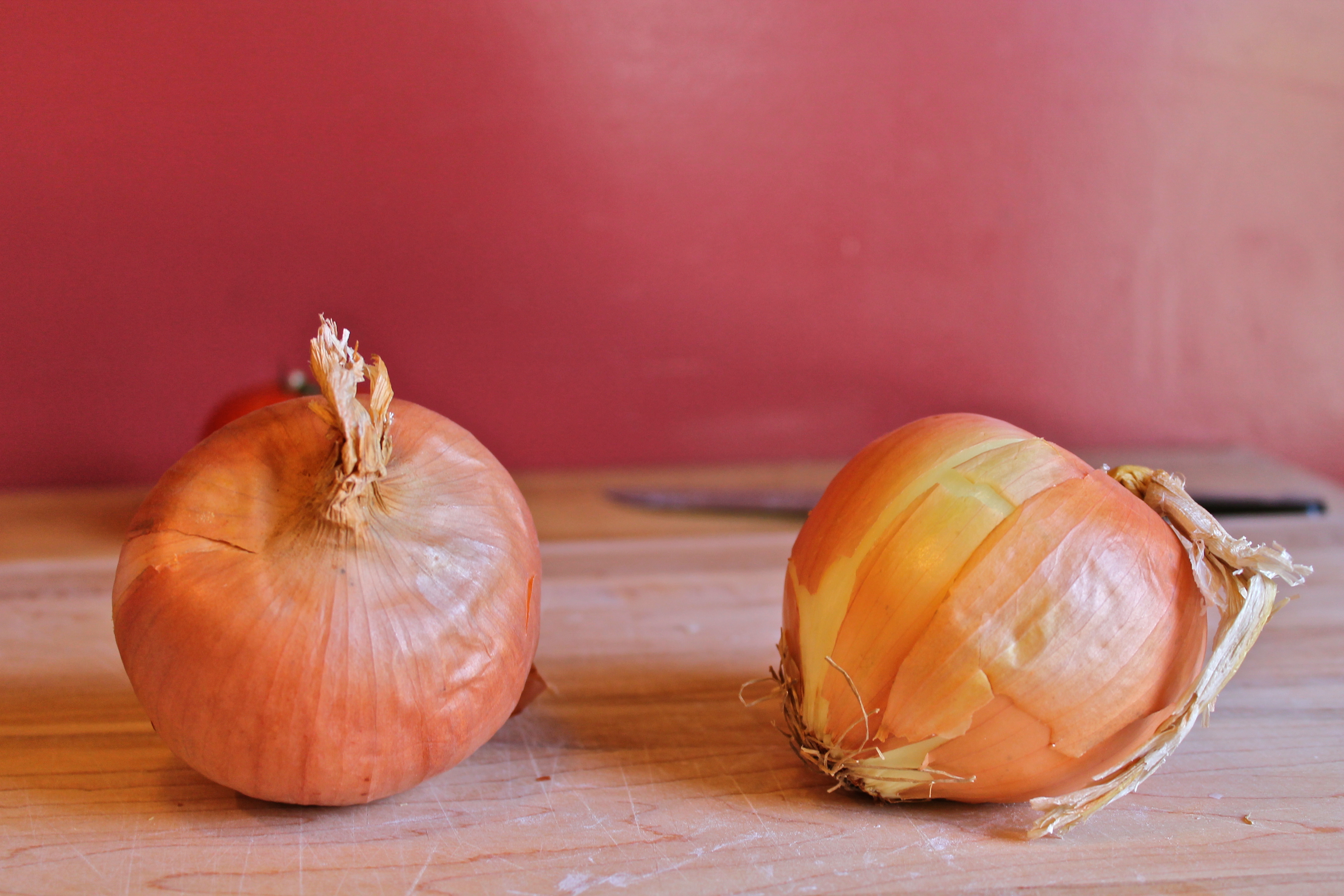
3 medium-large onions (about 1 pound)

½ cup vegetable oil

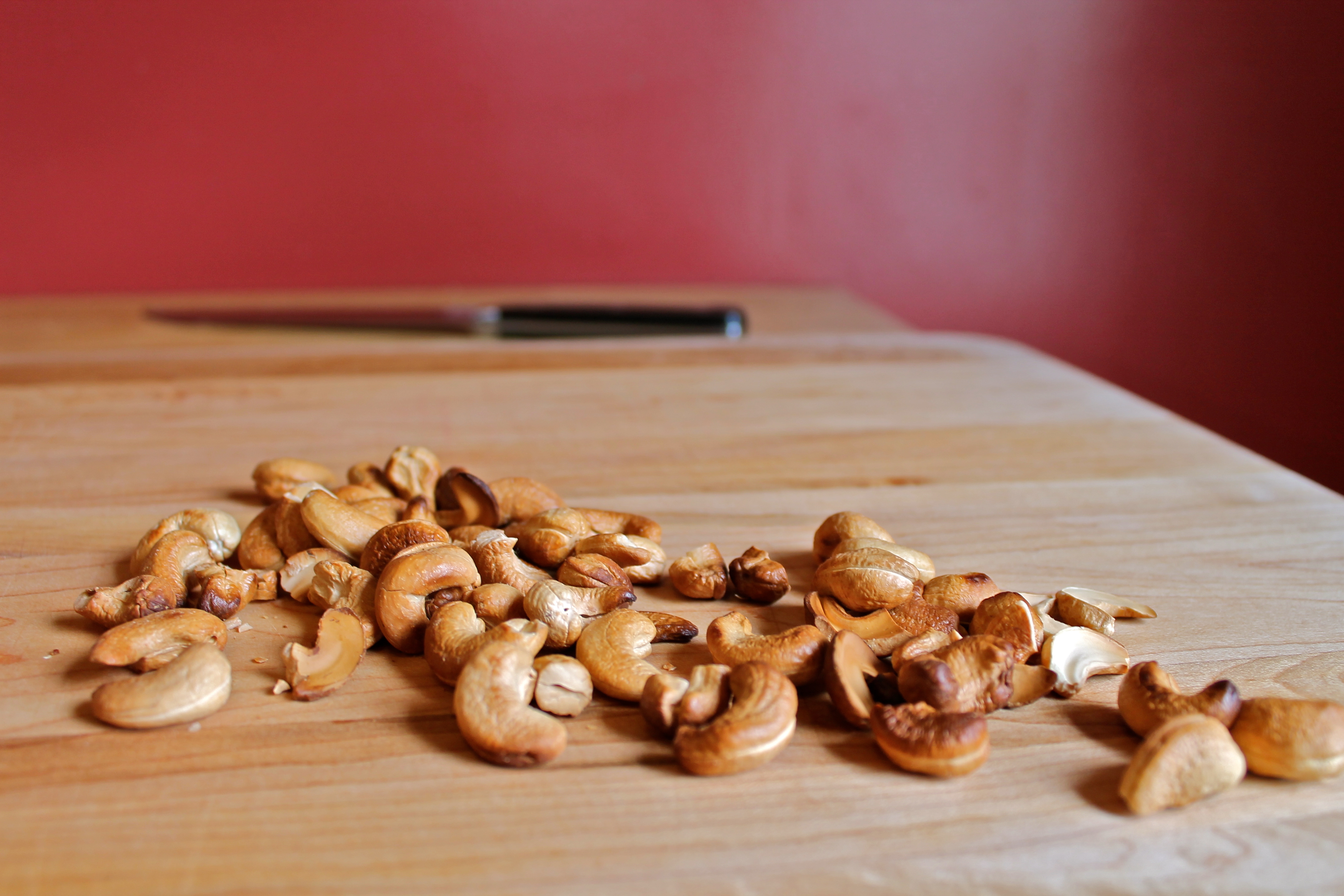
½ cup lightly toasted, unsalted cashews

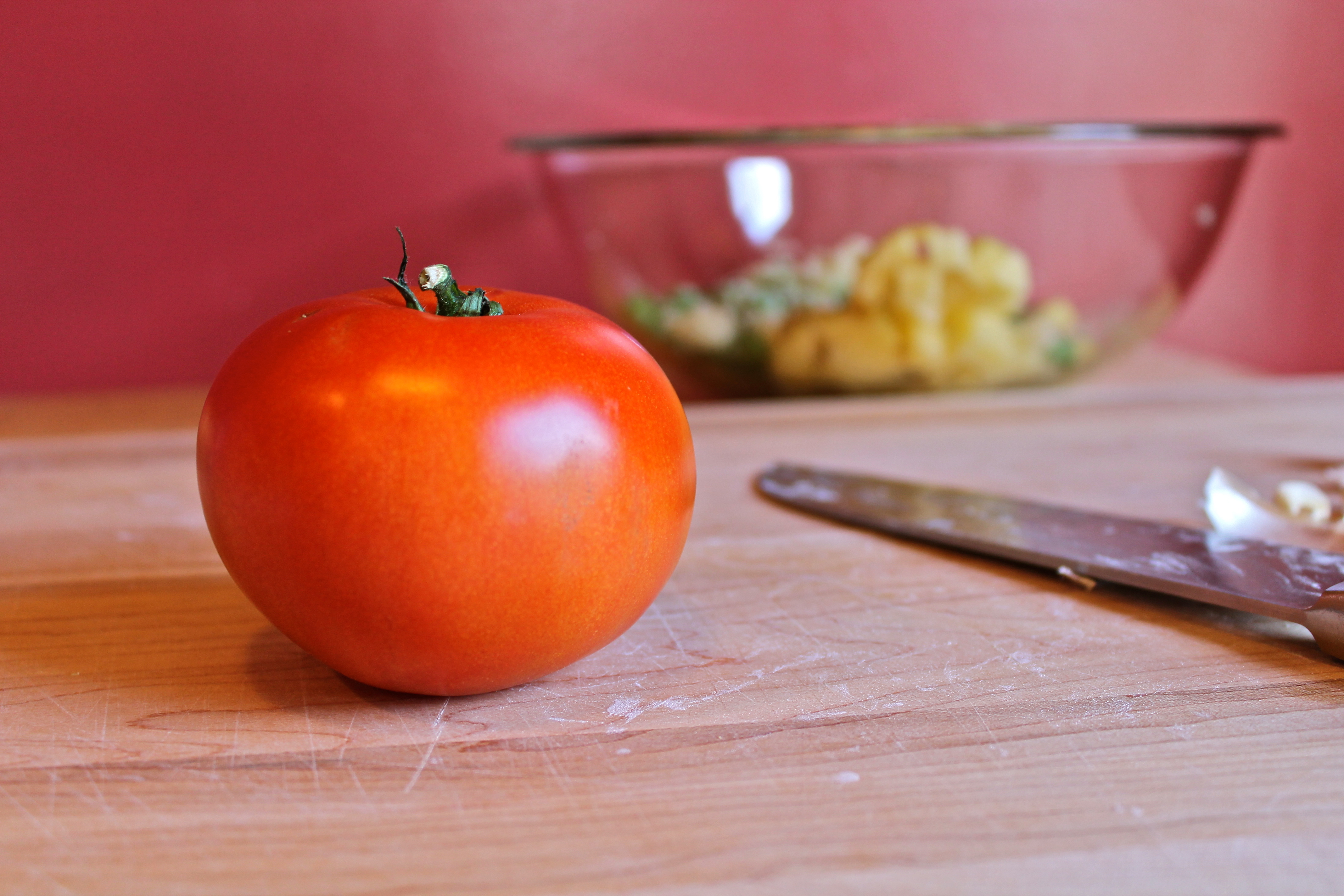
1 large tomato, diced into ½-inch pieces

1 cup minced cilantro leaves

2 tablespoons of water

About 1 hour before you want to serve the dish, place a rack in the center of the oven and preheat to 375 degrees Fahrenheit.

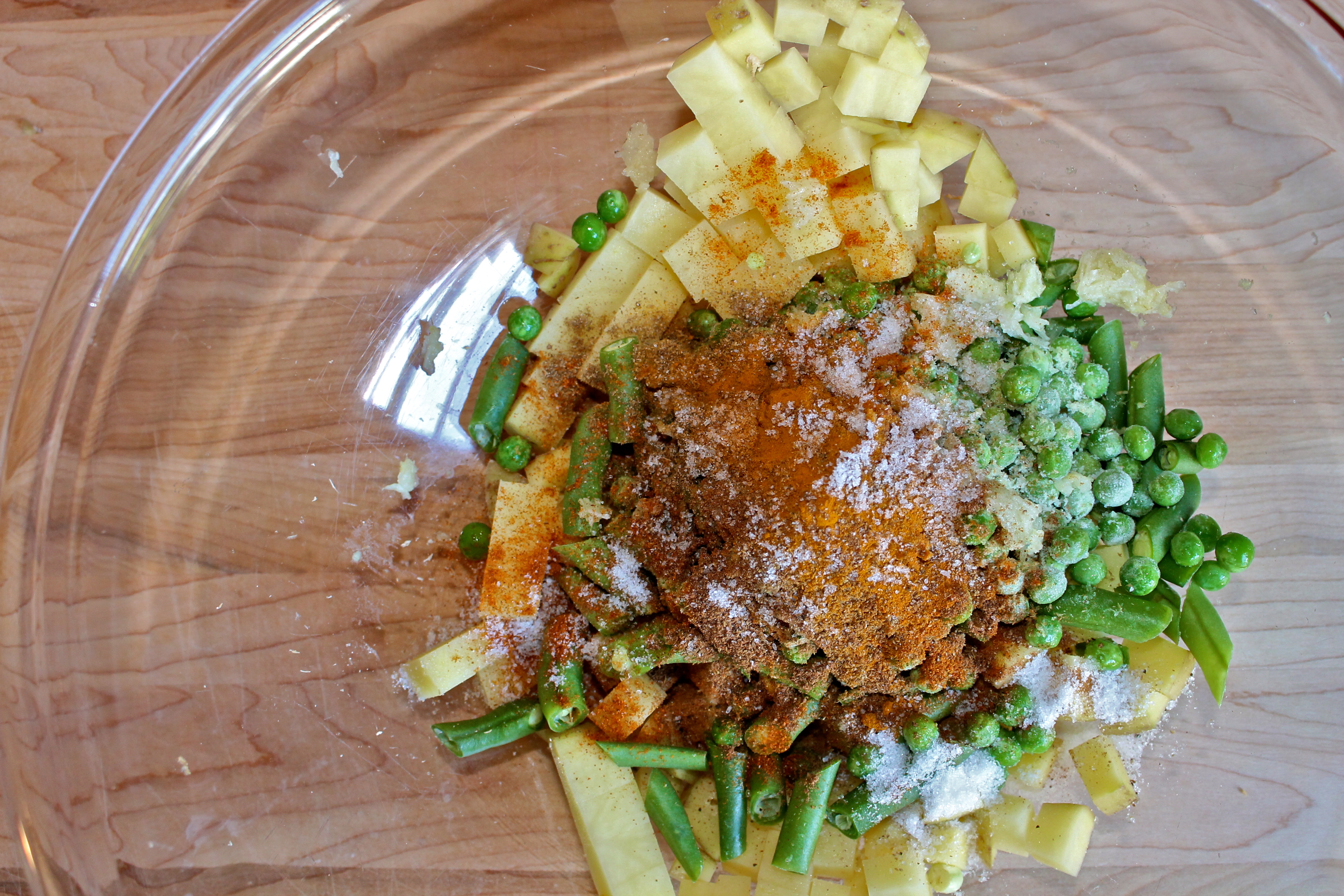
In a large bowl, combine the grated garlic and ginger, then mash together using the back of a spoon.  Add the diced potatoes, sliced green beans, and peas to the bowl with the garlic and ginger.  Add the coriander, cayenne, turmeric, garam masala, and 1 teaspoon of the salt.  Stir to mix until everything is combined, then cover with plastic wrap and allow vegetables to marinate while you prepare the other ingredients.

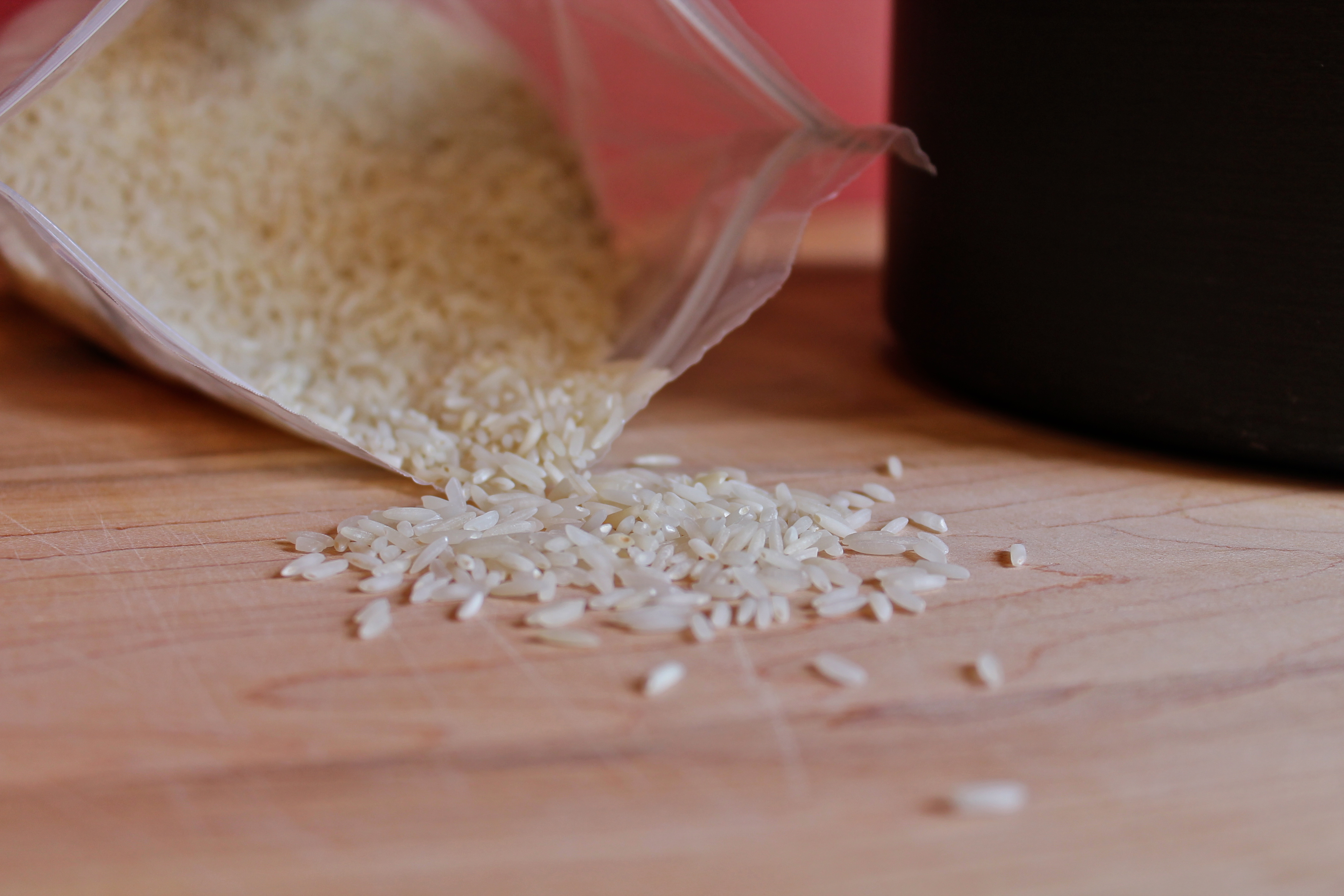
While the vegetables are marinating, rinse the rice in several changes of cold water.  Place in a bowl, cover with water, and allow to soak for about half an hour.

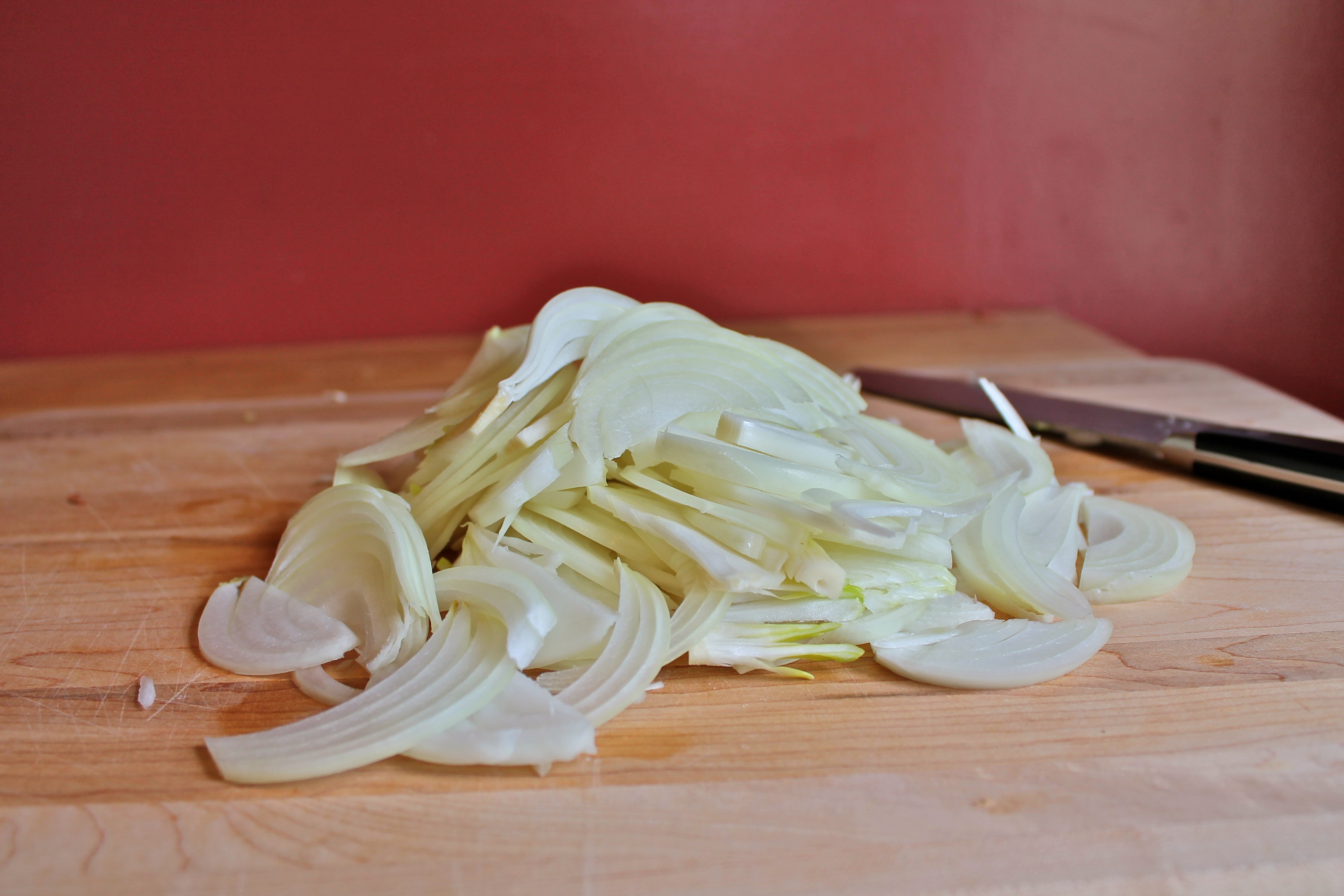
Slice the onions as fine as possible.  You will want about 3 cups of sliced onions.  Place a large heavy ovenproof pot with a tight-fitting lid over medium-high heat.  Add the oil and, when it is hot, add the onions.  Lower the heat to medium.  Cook until the onions are very soft, wilted, and just touched with golden brown, 12 to 15 minutes.  Lift the onions out of the hot oil and set aside.  There should be a little over ¼ cup of oil left in the pot.  Remove 2 tablespoons of oil from the pot and set aside for later.

When the onions are cooking, precook the soaked rice.  Place about 8 cups of water in a large pot and bring to a boil.  Add the remaining 1 teaspoon of salt, and allow the water to come back up to a boil.  Sprinkle in the rice.  Allow rice to boil for 4 to 6 minutes, or until the rice is no longer brittle but still firm to the bite.  Drain in a colander and set aside.

Place the heavy pot containing the oil over medium-high heat.  Distribute half of the marinated vegetables over the bottom of the pot, then sprinkle on half the precooked rice.  Scatter half the cooked onions over the top, then sprinkle on half of the diced tomato, half of the cashews, and half of the cilantro leaves.  Repeat with the remaining marinated vegetables, rice, onion, tomato, cashews, and cilantro.  Sprinkle on about 2 tablespoons of water, and drizzle on the reserved 2 tablespoons of oil.  Lay a sheet of aluminum foil over the top of the pot to cover it completely, then top with the lid.

Transfer the pot to the oven and bake for 1 hour.

Carefully remove the lid and the aluminum foil (the pot will emit a great deal of steam, so stand back and be careful to steer clear of the hot cloud).  Remove the biryani to a platter.  Scrape out the crusty layer of vegetables and rice from the bottom of the pot, and lay it on top of the biryani.  Serve hot or warm.

Garlic Naan

21 May

When anyone, anywhere, talks to me about Indian food, it is almost guaranteed that within the first two minutes of the conversation I will be asked whether or not I know how to make naan.  This, of course, is understandable.  Is there any Indian food more cherished than warm, soft, pillowy naan?  Sure, people may love spicy sauces, savory grilled meats, and crisply seasoned vegetables, but what is the one thing that every single person—regardless of their age or fondness for Indian food—reaches for when faced with a huge spread of Indian food?  Yeah.  They reach for the naan.  It is, in essence, soft and chewy buttered white bread, which, no matter who you are, you are almost guaranteed to love.

The interesting thing about me and my history of making Indian food is that for years I did not make naan.  Call it lack of investigation or intuitiveness in regard to technique, but I always thought that making naan meant having to build your own tandoor and, come on, even I know where to draw the line when it comes to cooking fanaticism.  Luckily, my interest in making naan eventually got the best of me and I started looking up ways to make naan at home without the aid of a clay oven that is required to heat up to a balmy 1000 degrees Fahrenheit.  Because having that sort of thing at home?  Yeah, that’s insane.

After years of trial and error, I believe I have come up with two fairly foolproof methods of making naan at home.  The dough, for those yeast-phobes out there, is the simplest part of the process.  You just mix, knead, then wait.  The cooking can happen one of two ways.  You can either cook each naan on top of a pizza stone that has been left to heat in your kitchen’s oven for about 30 minutes or so, or you can grill the flatbreads on an outdoor grill that has been heated as hot as it can possibly get without causing itself to melt.  I favor the grill method, but either one will work beautifully.

Last Year: Meyer Lemon Whiskey Sour

Looking for something to go with this naan? Peruse the Savory Salty Sweet Indian food archives to find a selection of delicious Indian recipe.

Garlic Naan Recipe

When I make naan with children, it is great fun to have each kid roll out his or her own naan, then watch me place it on the grill, close the lid, and eventually pull out a fresh, bubbly piece of perfectly cooked flatbread.  Though I have yet to convince every kid in my neighborhood (or even in my own house), that Indian food is delicious, it takes absolutely no effort at all to get kids to enjoy naan.

1 cup warm water

2 ¼ teaspoons active dry yeast

1 tablespoon sugar

1 large egg

¼ cup plain yogurt

4 cups bread flour

1 teaspoon sea salt

1 tablespoon finely minced garlic

4 tablespoons melted unsalted butter

optional: toasted cumin seeds, coarsely chopped cilantro

In a large bowl, or in the bowl of a standing mixer, combine the warm water, yeast, and sugar.  Stir to combine, then allow yeast to bloom and foam (this should take no more than 5 minutes).  In a small bowl, combine the egg and yogurt and beat together.  Set aside.

When the yeast has foamed up a bit, slowly stir in the yogurt and egg mixture.  Slowly add the flour, ½ a cup at a time, until the mixture starts to come together.  Add the salt.

On a well floured surface, or in a standing mixer fitted with the dough hook, knead dough for 5 to 7 minutes, until it forms a smooth, elastic ball.  Shape dough into a tight ball, and allow to rise in a covered, well-oiled bowl for 2 to 2 ½ hours, until the dough has doubled in size and is quite soft and pillowy.

Gently punch down dough, then knead in the minced garlic.  Divide the dough into 8 pieces.  Form each piece into a tight round ball, then place on a well-floured baking sheet.  Cover dough balls with a lightly floured or oiled dish towel or sheet of plastic wrap, and allow dough to rise for 30 minutes.

While the dough is rising a second time, preheat your oven or grill as high as it will go (500 degrees is a good temperature for which to shoot).  If using an oven, place a pizza stone in the oven to preheat.

When the dough balls have doubled in size and the oven or grill is extremely hot, roll out one ball of dough at a time into a rough oval.  Right before you place the rolled dough onto the pizza stone or in the grill, use both hands to stretch the dough lengthwise just a tad.  Place the dough on the baking stone or in the hot grill, close the oven or grill, and allow the dough to cook for 3 to 4 minutes, until it is bubbly on top and golden brown beneath.  Quickly and carefully flip the dough over, brush the top with melted butter, and cook for an additional 1 to 2 minutes, until speckled with golden brown all over.

Place cooked naan on a large platter,  then cover with a large piece of foil or a dishtowel.  Continue cooking all the naan in this manner, covering each one after it has cooked.  If you wish, you can sprinkle each naan with a pinch of toasted cumin seeds and chopped cilantro.

Makes 8 very large and pillowy naan.