Nun’s Puffs

6 Nov

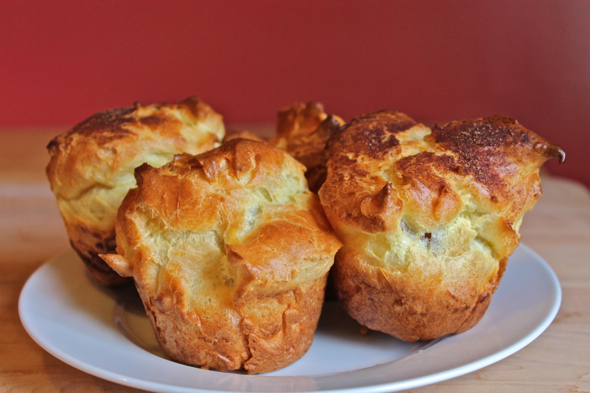
Let’s start with the name, shall we? After much searching, I am still completely clueless as to how these delightful little pastries came to gain their rather fetching name. We can speculate, of course, but that’s all we’d be doing, and it seems almost beside the point to try and create a juicy backstory for these little numbers. Especially when, instead of looking around for naming clues, you should be spending your time baking up a batch of nun’s puffs. No, like right now.
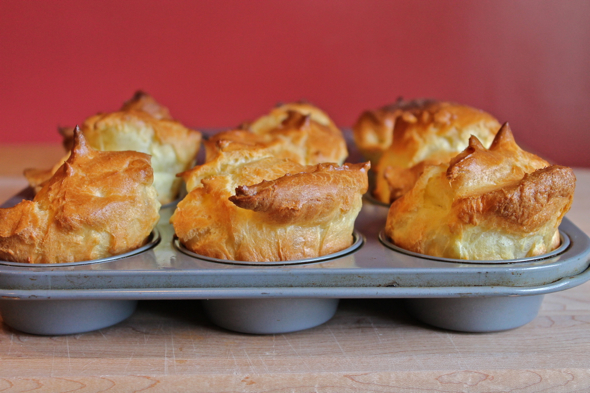
With a texture poised somewhere between a choux pastry puff and a popover, only less crisply dry and more eggy in the middle, the nun’s puff might be my new favorite breakfast treat. Because of their relative simplicity, ingredient-wise, they are prime candidates for dressing up in any manner you choose. The richness of the butter, combined with the slight custardy flavor of the eggs, is the prefect backdrop for both savory and sweet applications. The outsides, so crisp and light, mingle delightfully with the airy and soft middle, because of the relative hollowness of the pastry’s middle, you can fill them with any number of things. I stuffed my serving with scrambled eggs, topped with a nice scoop of fried apples’n’onions (thank you, Almanzo Wilder), while my son slathered his with raspberry preserves. Both were absolutely delicious. I also sprinkled half of the puffs with cinnamon sugar before I baked them, and the resulting puffs emerged with a lovely lid of cinnamon crunch perched on top.
For as splendid as these puffs look, they are a cinch to make. Because they are baked in a common muffin pan, you don’t need a special pan, as you do with popovers, and you don’t need to fuss around with the oven, as you do with cream puffs. You mix, portion out, then bake. What greets you after 30 minutes is a dozen of the most spectacular baked goods you’ve ever seen straight from the oven, craggly, tall, and light as a feather.

Last Year: Sweet and Spicy Popcorn

Nun’s Puffs Recipe

From Better Homes and Gardens New Cookbook

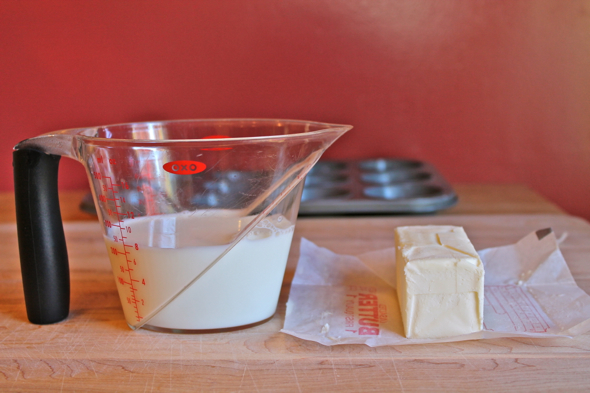
½ cup (1 stick) unsalted butter

1 cup milk

¾ cup unbleached all-purpose flour

4 large eggs

optional: 2 teaspoons sugar mixed with ½ teaspoon cinnamon

Preheat oven to 375 degrees Fahrenheit. Thoroughly butter a 12-portion muffin pan, being sure to butter the edges of the cups and around the top.

In a medium saucepan, melt butter over medium-low heat. When butter had melted, stir in milk and raise heat to medium.. Bring the mixture to a light boil, then add the flour all at once, stirring vigorously. Continue to cook and stir the mixture until it comes together in a cohesive ball. Remove from heat, transfer dough to a mixing bowl or the bowl of a stand mixer, and allow to cool for at least 5 minutes.

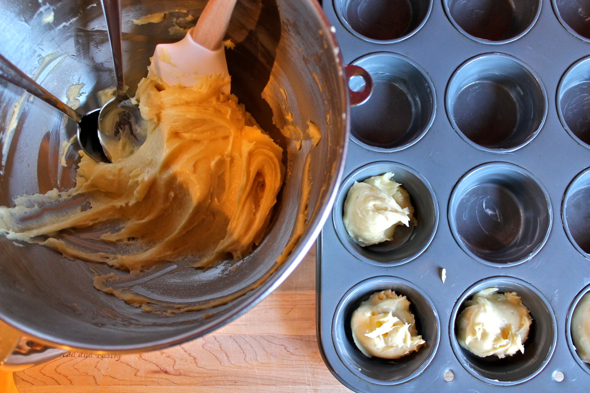
When dough has cooled a bit, add the eggs, one at a time, beating for about a minute after each addition. You can beat the egg into the dough with a wooden spoon, a handheld mixer on medium speed, or a stand mixer fitted with the flat beater attachment on medium-low speed. After the last egg has been beaten in, the mixture should resemble an extremely thick, stiff cake or muffin batter.

Divide the dough evenly among the prepared muffin cups, filling each cup about 2/3 full. If using, sprinkle the tops of the dough with cinnamon sugar.

Bake in center of oven for about 30 minutes, or until the puffs are tall, golden brown, craggly on top, and very puffy. Remove each puff from the pan immediately, and allow to cool slightly on a wire rack. Serve while still hot or warm.

Roasted Cauliflower and Black Bread Gratin

1 Nov

It’s autumn in Portland, and that means it’s time to break out the gratin dishes.

Not that one is prohibited from eating a warm, crisp-yet-soft gratin in the summertime, but a gratin in autumn is just so much more fitting than a gratin in the summertime. Traditionally, a gratin is a dish with a crunchy lid baked on top, that lid being, more often than not, bread crumbs, cheese, or a combination of both. The word gratin itself refers specifically to the crisp, crunchy bits left behind in a pan after baking, but, as most of us know a gratin, it means a baked dish topped with something crunchy or cheesy, then baked into a state of complete heavenly bliss.

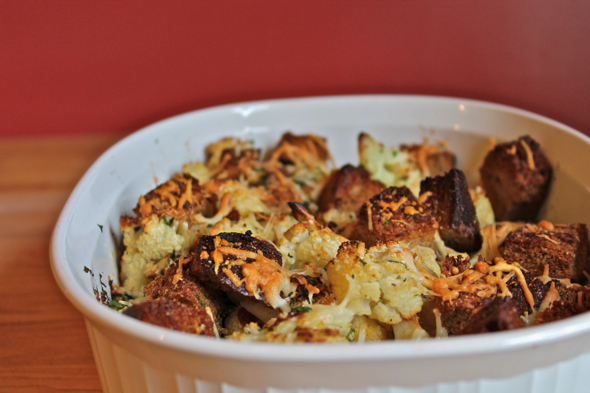
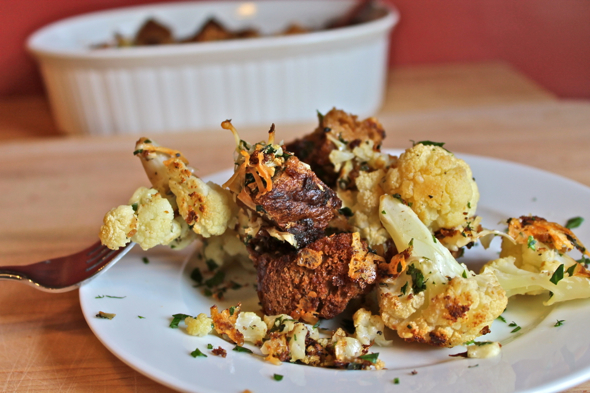
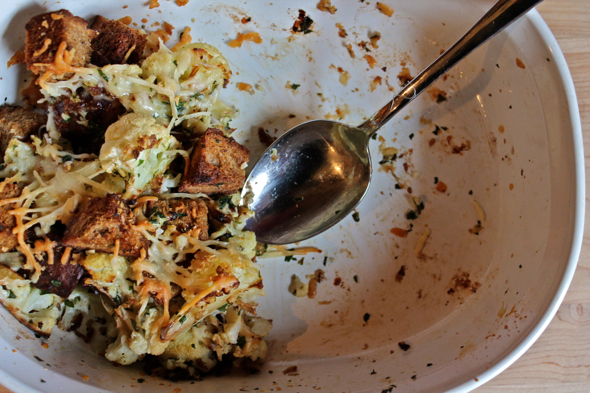
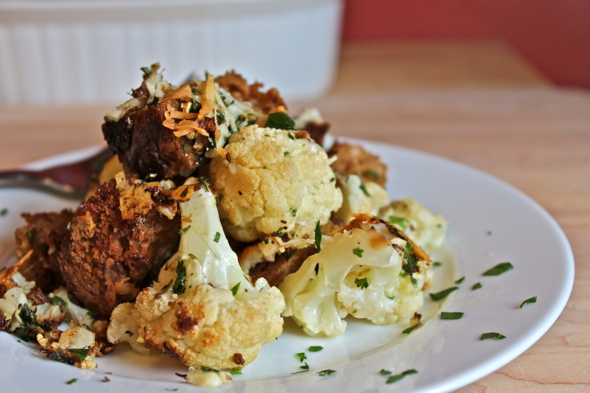
As far as gratins go, this one is low on the cheesy scale, but high on the crunchy bread factor. Big chunks of crisp, dense black bread get folded amongst roasted cauliflower, speckled with Parmesan cheese, and dotted with garlic, then baked into a warm, crisp mass of perfect autumn eating. If you’re in the mood for something a bit more decadent, you can up the cheese presence, even using something a bit more melty and gooey, like fontina. As it appears here, however, this gratin is a great balance of autumn comfort and roasted vegetable goodness.

Last Year: Ranchero Sauce and Mexican Rice, plus a few words on my unparalleled admiration of Tamra Davis

Roasted Cauliflower and Black Bread Gratin Recipe

3 tablespoons extra virgin olive oil, divided

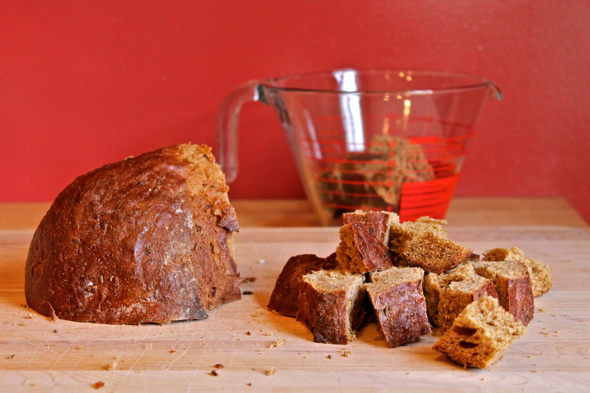
4 cups cubed black bread (the densest, most flavorful black bread you can find–I used the leftovers from this enormous loaf of black bread)

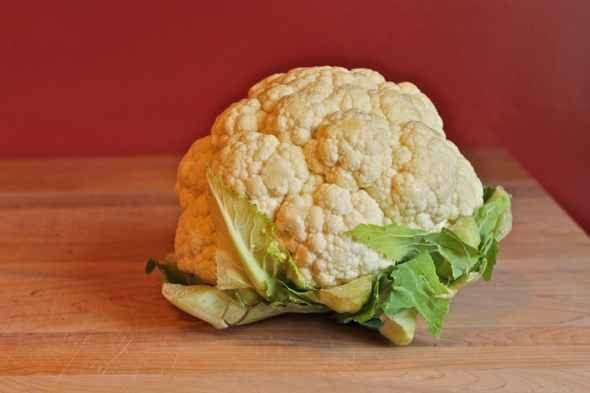
1 large head cauliflower, core removed, head cut into medium-small florets

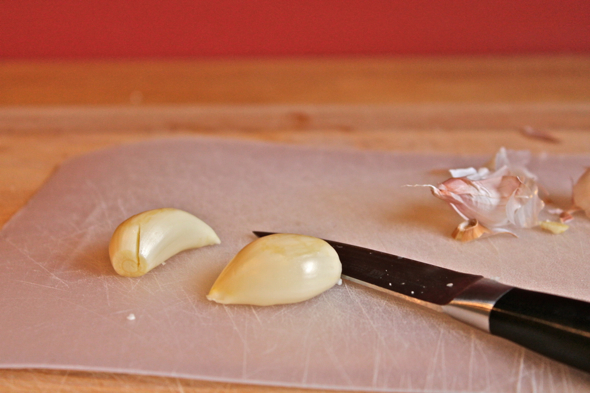
2 large cloves of garlic, finely chopped

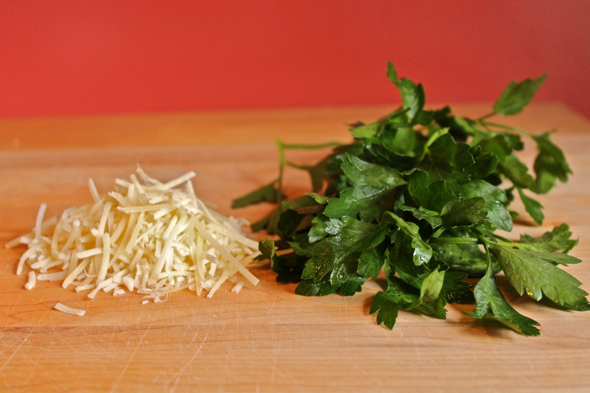
¼ cup chopped Italian parsley

¾ cup shredded or grated Parmesan cheese

salt and pepper to taste

Preheat oven to 425 degrees Fahrenheit.

On a large baking sheet, combine bread cubes with 2 tablespoons of the olive oil. Toss the bread cubes to thoroughly coat with olive oil. Bake bread cubes in center of oven for 5 to 8 minutes, until the bread is crisp, but not hard. Remove bread crumbs from baking sheet and set aside.

On the same baking sheet, combine cauliflower florets with remaining 1 tablespoon of olive oil. Add salt and pepper, and toss everything to combine. Roast cauliflower in center of oven for 15 to 20 minutes, until the undersides are well-browned and the tops are golden.

Remove cauliflower from oven, then, while still on the baking sheet, combine with toasted bread cubes, chopped garlic, and chopped Italian parsley. Carefully toss together to combine. Add salt and pepper to taste.

Lower temperature of oven to 350 degrees Fahrenheit.

Lightly spray or brush a casserole dish or baking dish (9” by 13” would be a good size, but I used one that was 10” by 7.5” and it worked out wonderfully) with olive oil. Add half of the cauliflower and bread mix, then sprinkle with ½ cup of the Parmesan cheese. Add remaining cauliflower and bread mixture, sprinkle with remaining Parmesan cheese, then bake in center of oven for 35 to 40 minutes, until the top of the gratin is crisp and golden brown.

Serve hot or warm, sprinkled with more chopped Italian parsley. Serves 6 to 8 people as a side dish, or 4 people as a main dish.

The Biggest Bread

31 Oct

Last week I baked the most enormous loaf of bread I’ve ever seen. It looked like the tire of a Smart Car. I kept trying to take a picture of the bread that would truly capture its incredible size, but, for some reason, every picture I took made the bread look simply normal-sized. So then I thought that if I placed regular kitchen items next to the bread and took a photo, maybe the juxtaposition of the bread next to the commonly-sized item would accurately portray its largess.

First I tried putting the bread next to an apple:

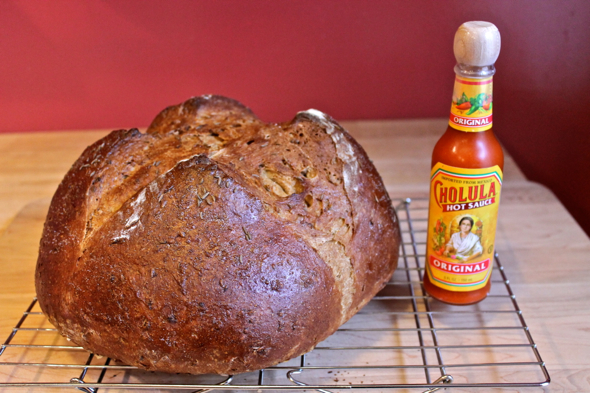
The bread still looked pretty normal, so I tried something else. Behold, bread with Cholula:

That didn’t work at all–somehow the bread came out looking even smaller, which was weird. So then I moved on to what I was sure would be a surefire winner, bread with an egg:

Still not working. Bread with a dinosaur?

Still no good.

And then it hit me. Maybe the trick to really showcasing the bread’s hugeness was to place the bread next to something animate that could truly–with emotion–display just how large the loaf of bread really was. So then there was this:

Now do you see what I mean? Huge. That bread is huge.

Bread recipe can be found here.