Tag Archives: food

Multigrain Sandwich Bread

11 Jun

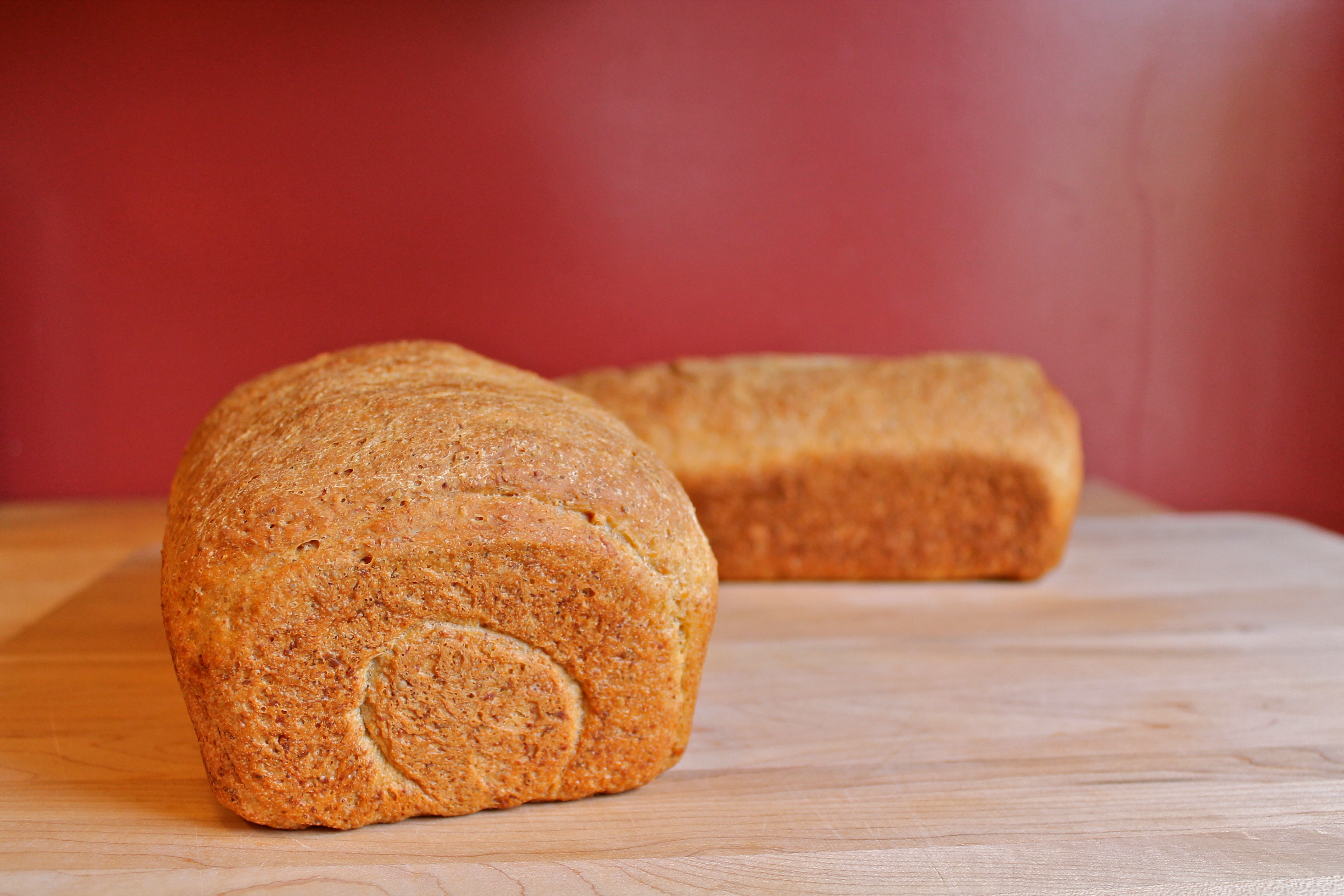
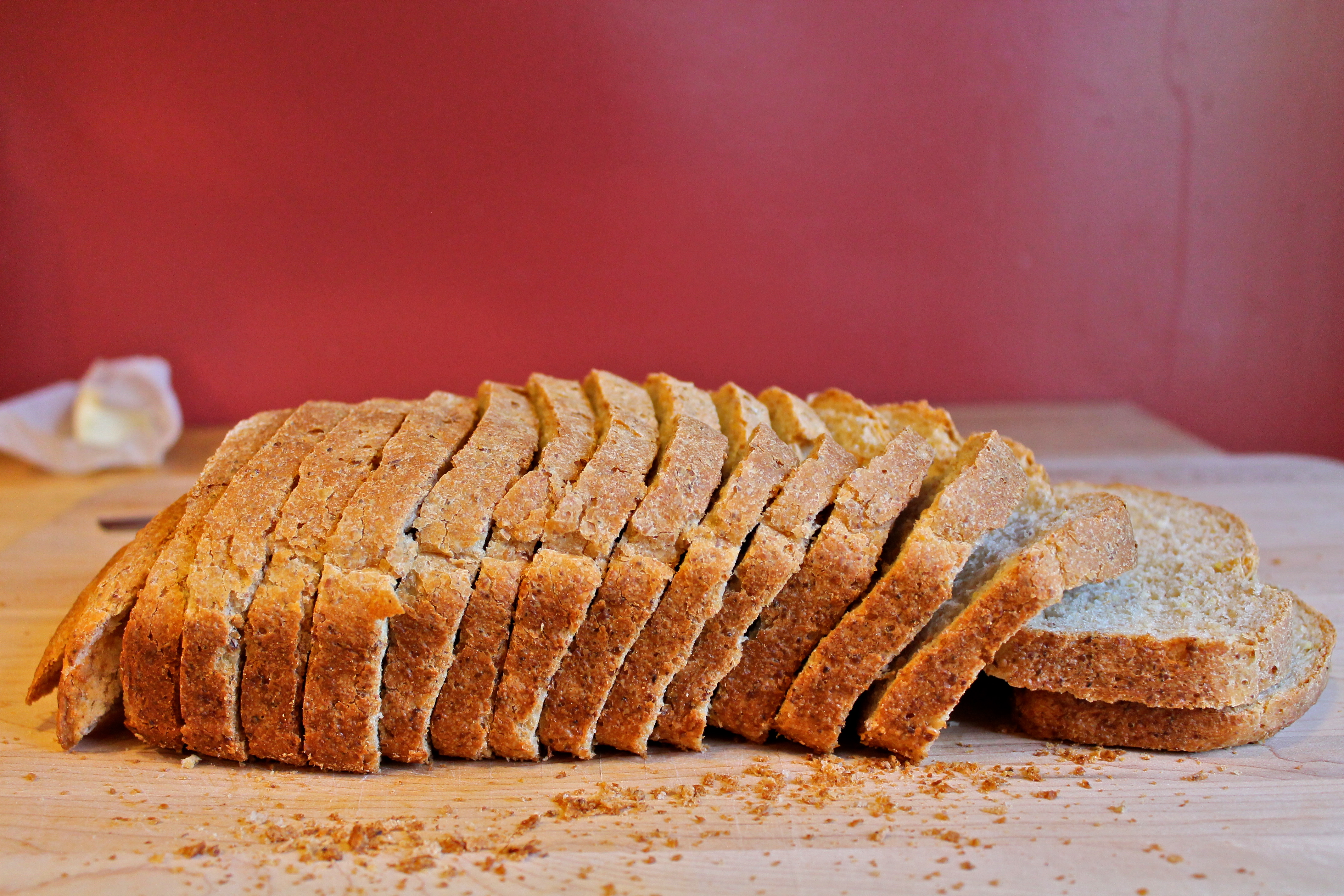
Since September, I’ve been baking bread for my son’s school.  I make two loaves of bread for his class, and the bread gets used throughout the week for work projects (in a Montessori school, activities that involve bread are the basis for learning, which should make obvious the variety of reasons I am a fan of a Montessori education), snacks, and the occasional almond butter sandwich that a kid will receive for lunch when his or her intended lunch ended up on the floor or, occasionally, in another child’s mouth.  It happens.
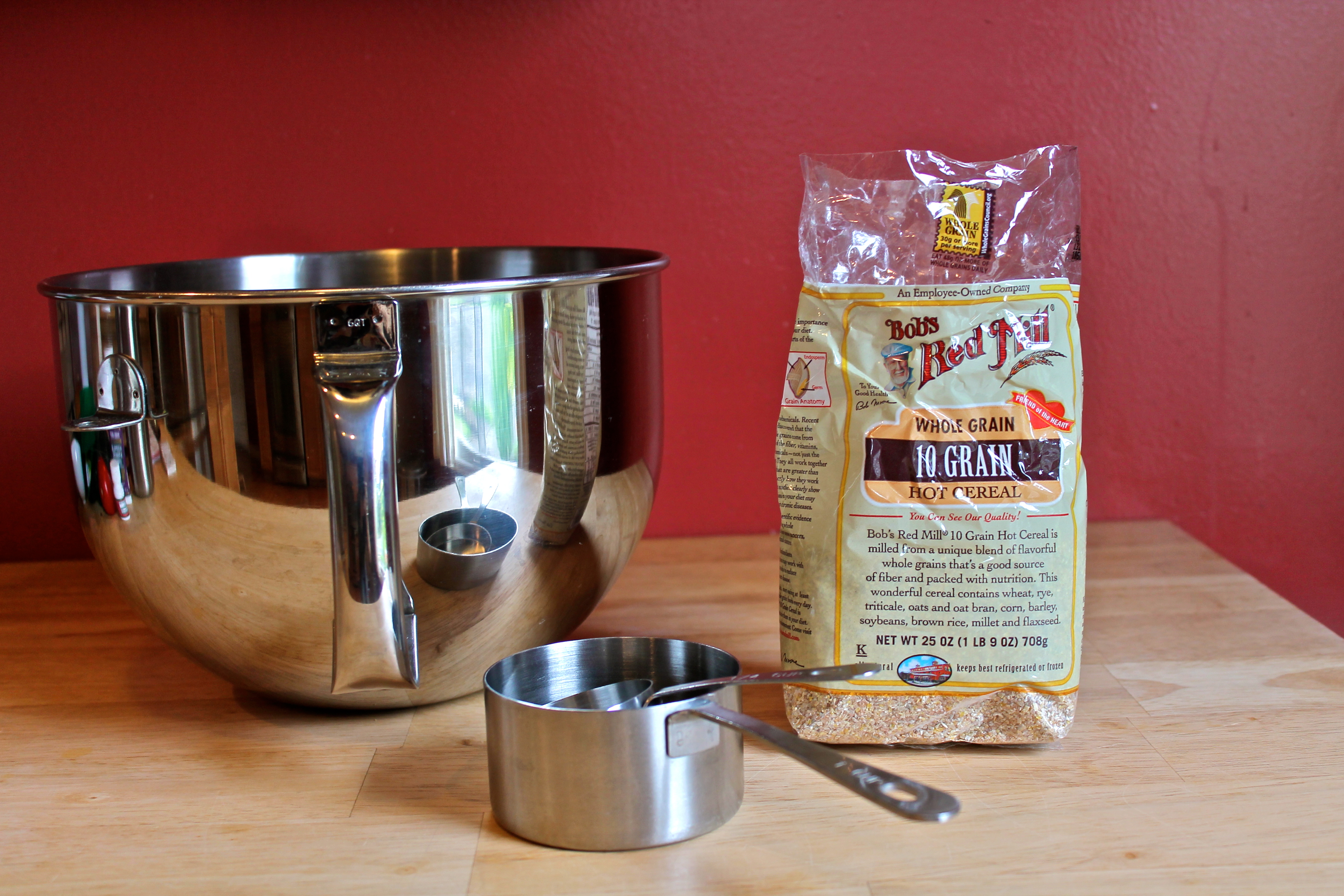
Before the start of the school year, I spent a lot of time working on a suitable bread recipe for my son’s school.  It was preferable to everyone involved that the bread be whole grain or whole wheat, and, because of the dietary restrictions of some students, the bread had to be vegan.  It also, most importantly, had to be something that a child would want to eat.  Knowing full well about children and their preference for foods that do not contain too many surprises or unexpected textures, the bread had to be on the soft side, with no big chunks of seeds or nuts that might possibly repel an unsuspecting child.  And, of course, it had to be delicious, because who am I to foist healthfulness upon a child without the added promise of tastiness?
This week I made the last two loaves of bread that I will ever bring to his school.  School ends this week and my son will leave kindergarten and enter a new school in the fall, a grade school, where children eat en masse in a cafeteria, sit at assigned desks, and intermingle with other students who are twice their age.  It’s all a bit overwhelming, I would think.  I don’t say this to my son, of course.  Instead, there is a lot of talk of how great the garden is at the new school, how big the playground is, how nice the teachers are.  I want my son to transition as seamlessly as possible when he enters his new school, and it would be preferable that I instill him with a sense of confidence about his new surroundings, rather than a sense of doom concerning the fact that, dude, did you see that fifth grader?  He looked like he was one growth spurt away from needing a shave.
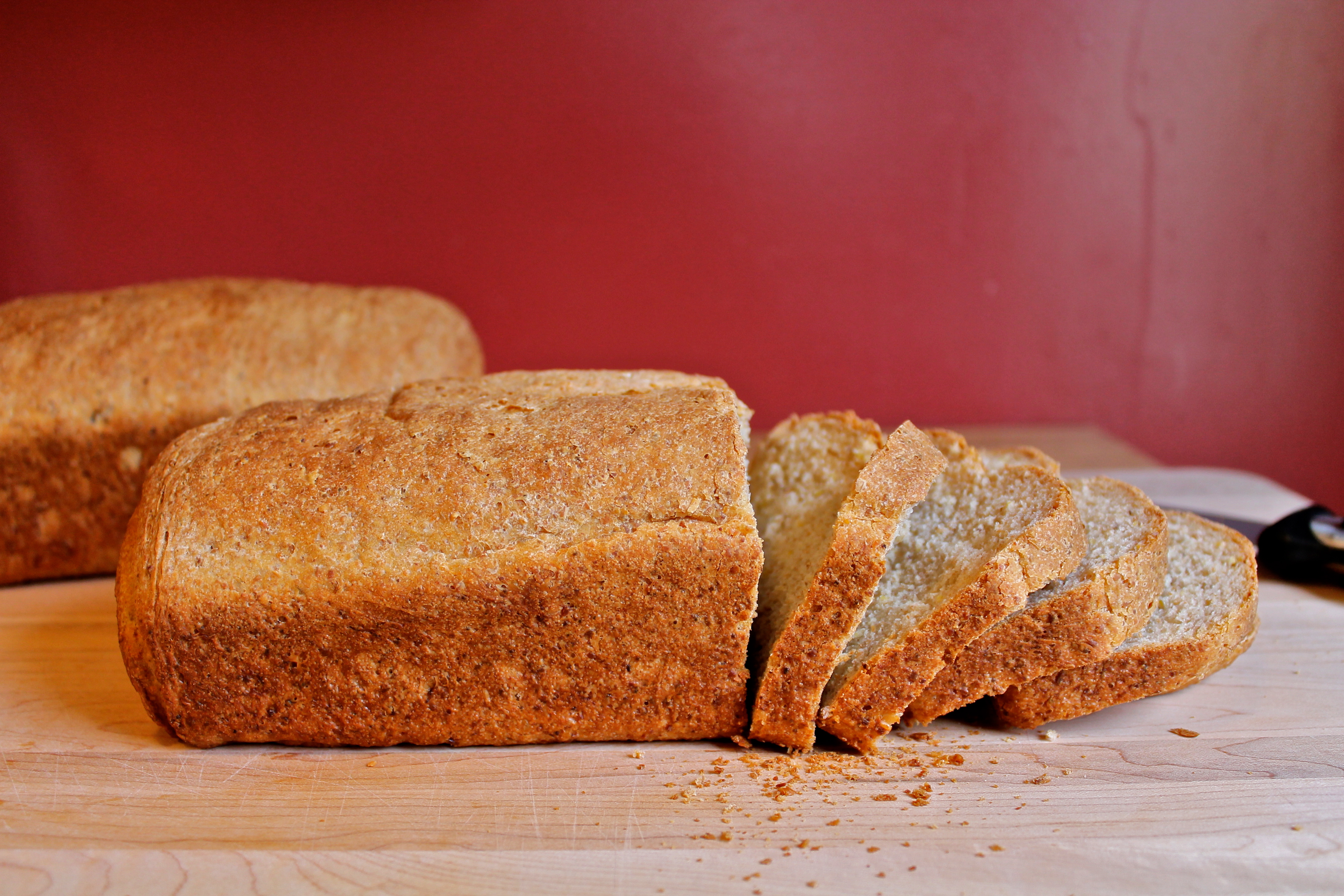
I’ll be making this bread for just us now.  The recipe makes two loaves, which is enough to last a family of three quite some time.  The funny thing is, even though I’ve made this bread so many times that I now have the recipe memorized, there has never been a time when both loaves turned out the same.  No amount of practice or repetition could ever remedy the fact that, no matter what I did, one loaf was always larger than the other.  Or sometimes one loaf rose faster than the other, resulting in some craggy tears along the top.  One time the loaves almost scorched on the sides, even though I baked them at the same temperature I always do, in the same pans I always do, in the same oven I always do.  It’s a mystery, really.  One entire school year, and I still manage to be a little bit surprised by this bread every time I make it.  I imagine I’ll continue to be surprised by it as the years go on, much like I’ll continue to be surprised by my son and the fact that, no matter how many times he tells me that he wants to be a whale-watching bunny farmer when he grows up, he is getting older, wiser, and ever more interesting every single day, right before my eyes.
Last Year: Pizza with Chicken Sausage, Fennel, and Spinach

Multigrain Sandwich Bread Recipe

Adapted from America’s Test Kitchen

1 ¼ cups Bob’s Red Mill 10 grain cereal mixture

2 ½ cups boiling water

2 tablespoons vegetable oil

2 tablespoons olive oil

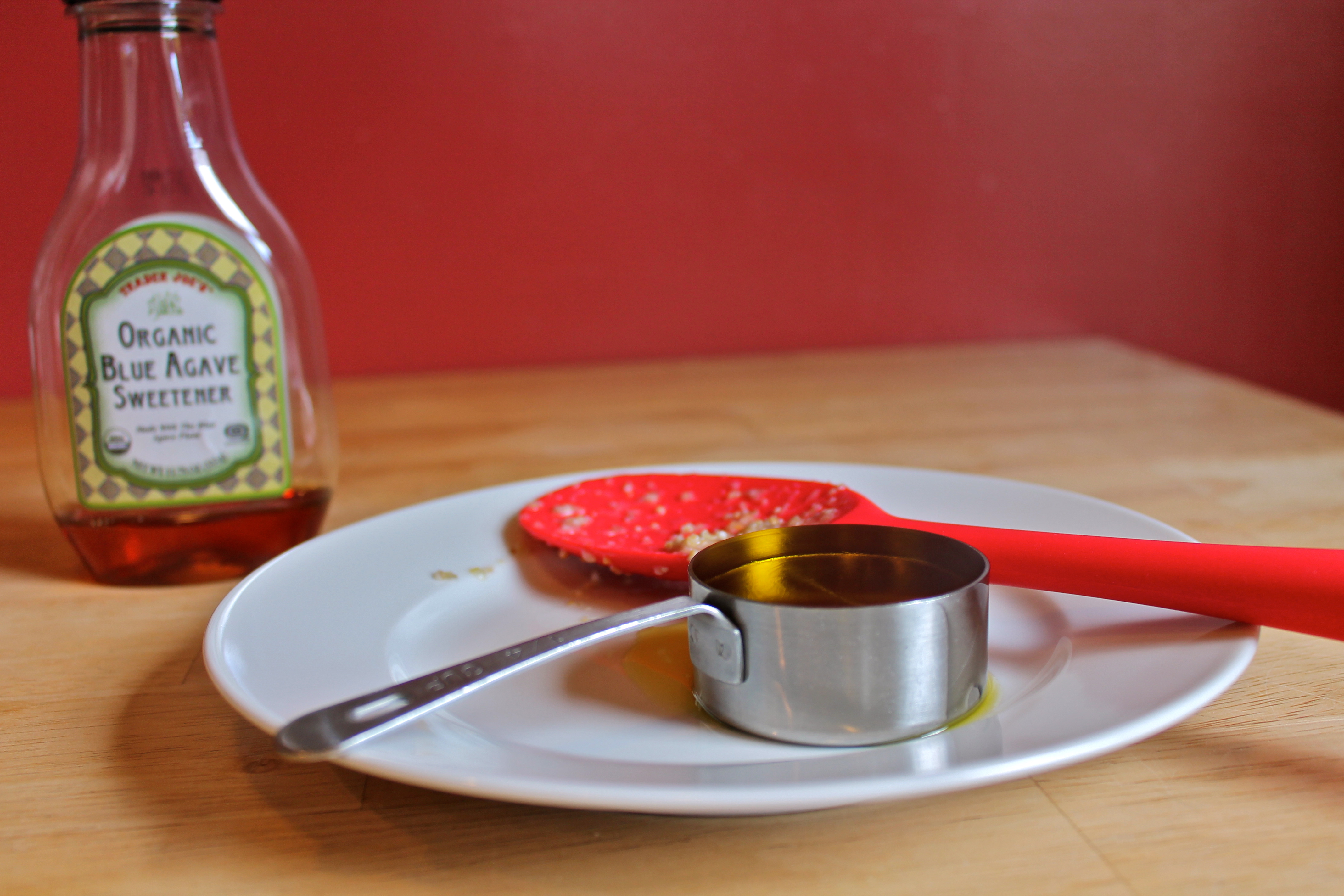
¼ cup agave nectar (if you don’t need the bread to be vegan, you can use honey instead)

2 ½ teaspoons instant rapid-rise yeast

3 cups (15 ounces) unbleached all purpose flour

1 ½ cups (7.5 ounces) whole wheat flour

1 teaspoon fine grain sea salt

In a large bowl, or in the bowl of a stand mixer, combine cereal mixture and boiling water.  Stir thoroughly, then allow to sit, stirring occasionally, until the cereal has absorbed the water and cooled to a temperature of around 110 degrees Fahrenheit (this should take anywhere from 40 minutes to an hour).

In a medium bowl, whisk together all purpose flour and whole wheat flour.

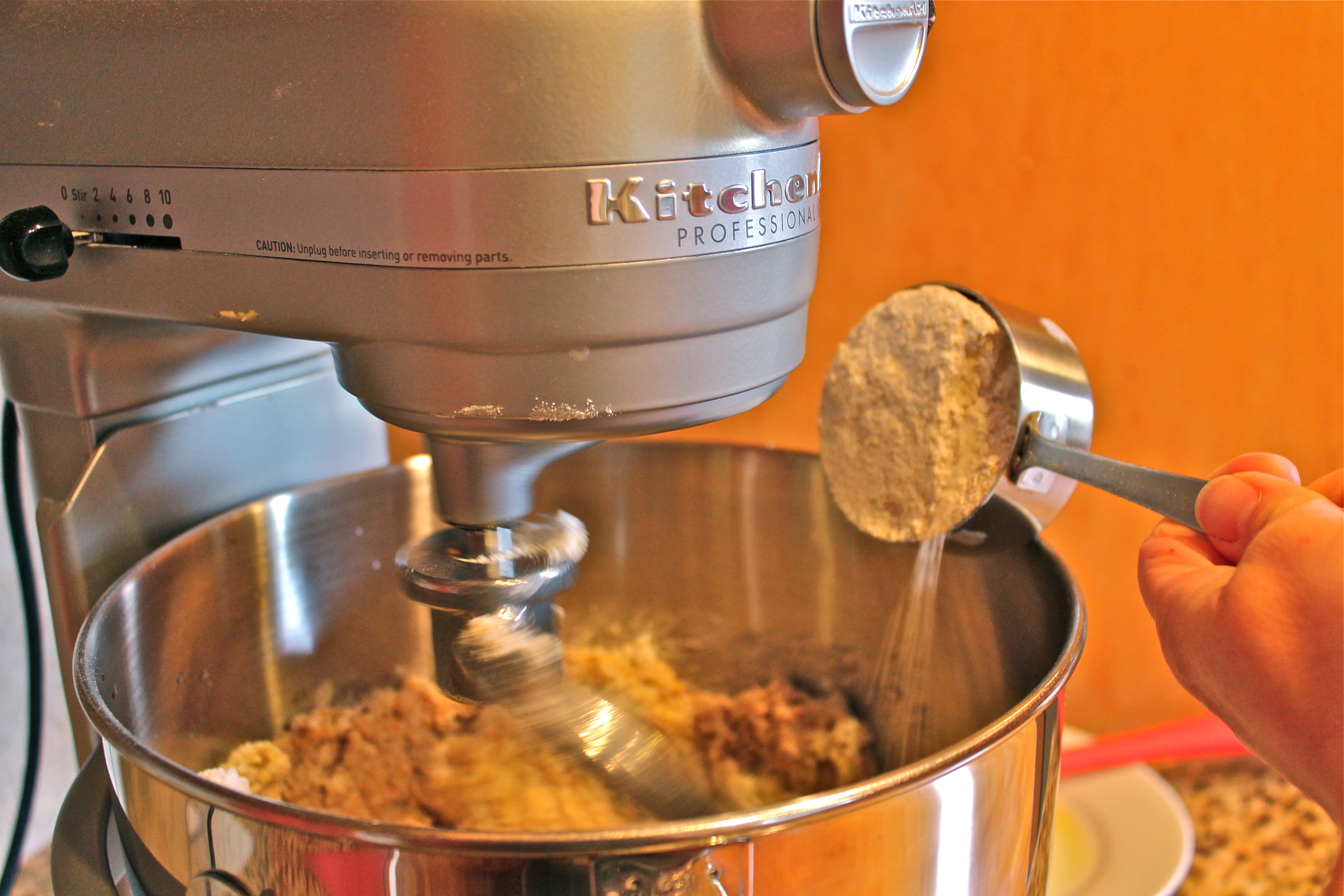
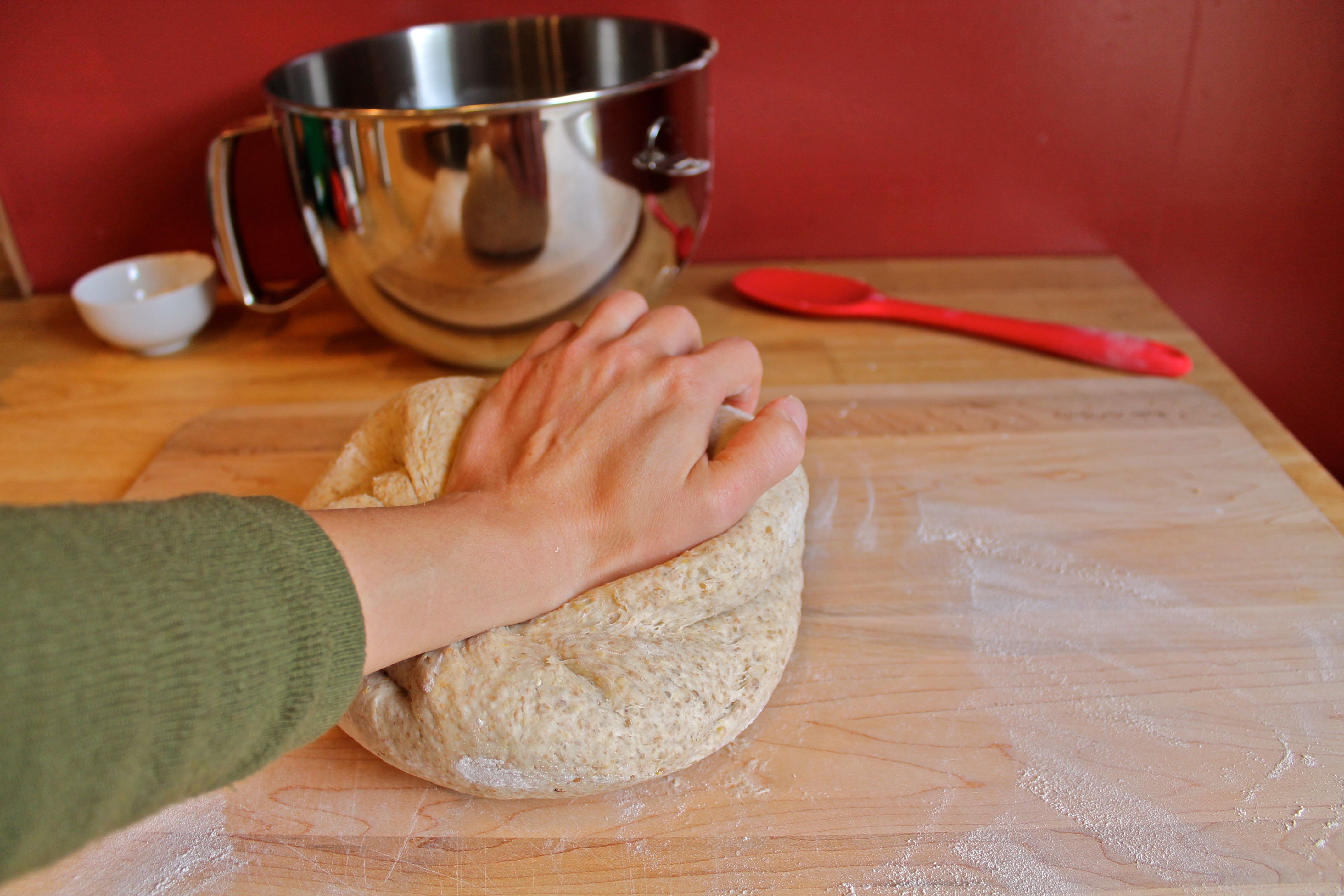
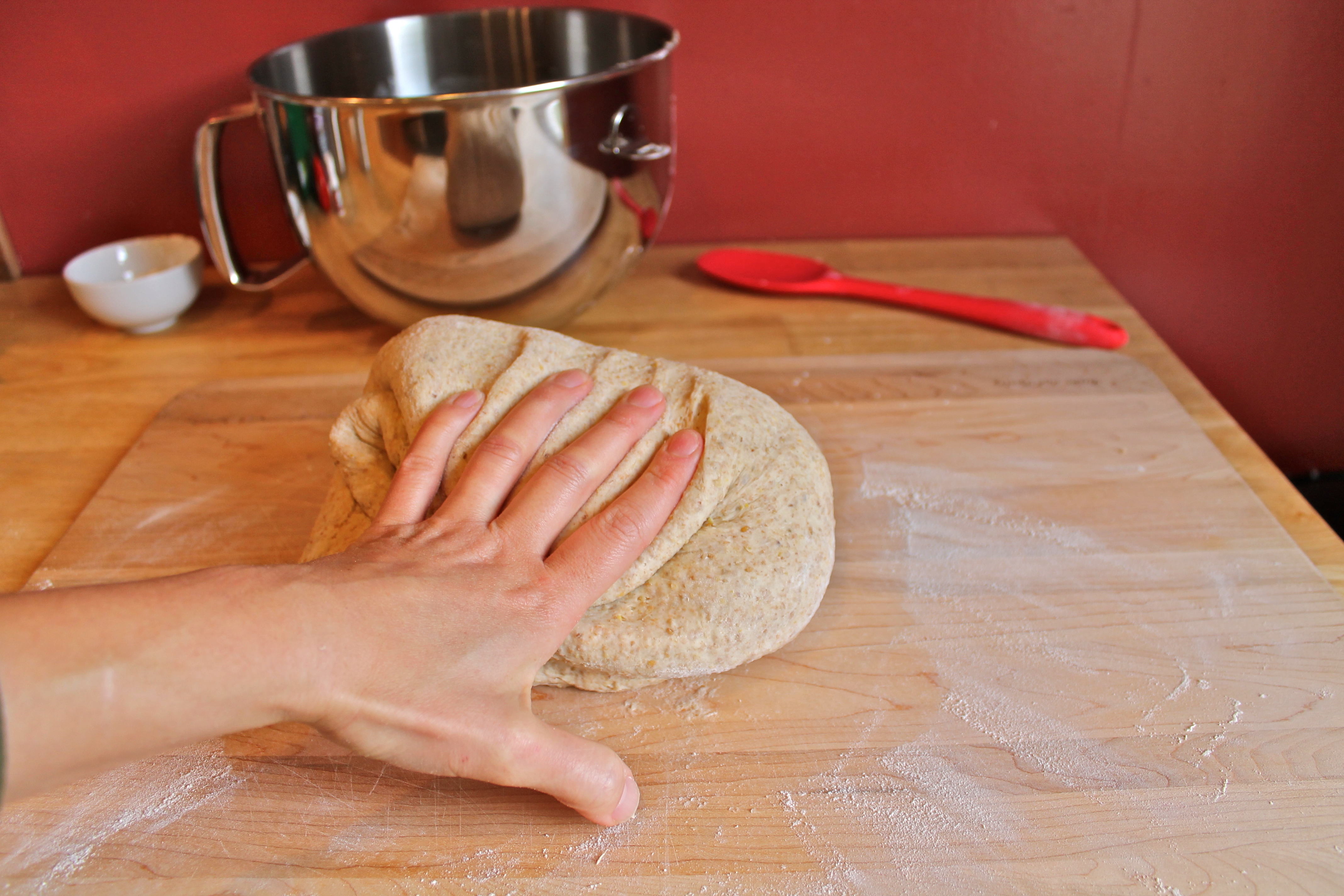
When cereal mixture has cooled, stir in vegetable oil, olive oil, agave nectar, and yeast.  Stir until ingredients are fully incorporated.  If using a stand mixture, attach the dough hook to the mixer.  Slowly, about ½ cup at a time, add the flour mixture to the cereal mixture, mixing all the while.  If using a stand mixer, use only the first speed for this.  If using your hands, stir with a sturdy wooden spoon.  When the flour mixture has been added in its entirety, turn the stand mixer to the second speed and knead the dough for about 1 minute.  If using your hands, stir the mixture with a sturdy wooden spoon until all ingredients are completely combined, about 1 to 2 minutes.  Cover the bowl with plastic wrap and allow dough to rest for 20 minutes.

After 20 minutes, add the sea salt to the dough and knead the dough until it is smooth and shiny (5 to 6 minutes on level 2 for a stand mixer, and 7 to 8 minutes if kneading by hand).  The dough will be a bit sticky, but that is normal.

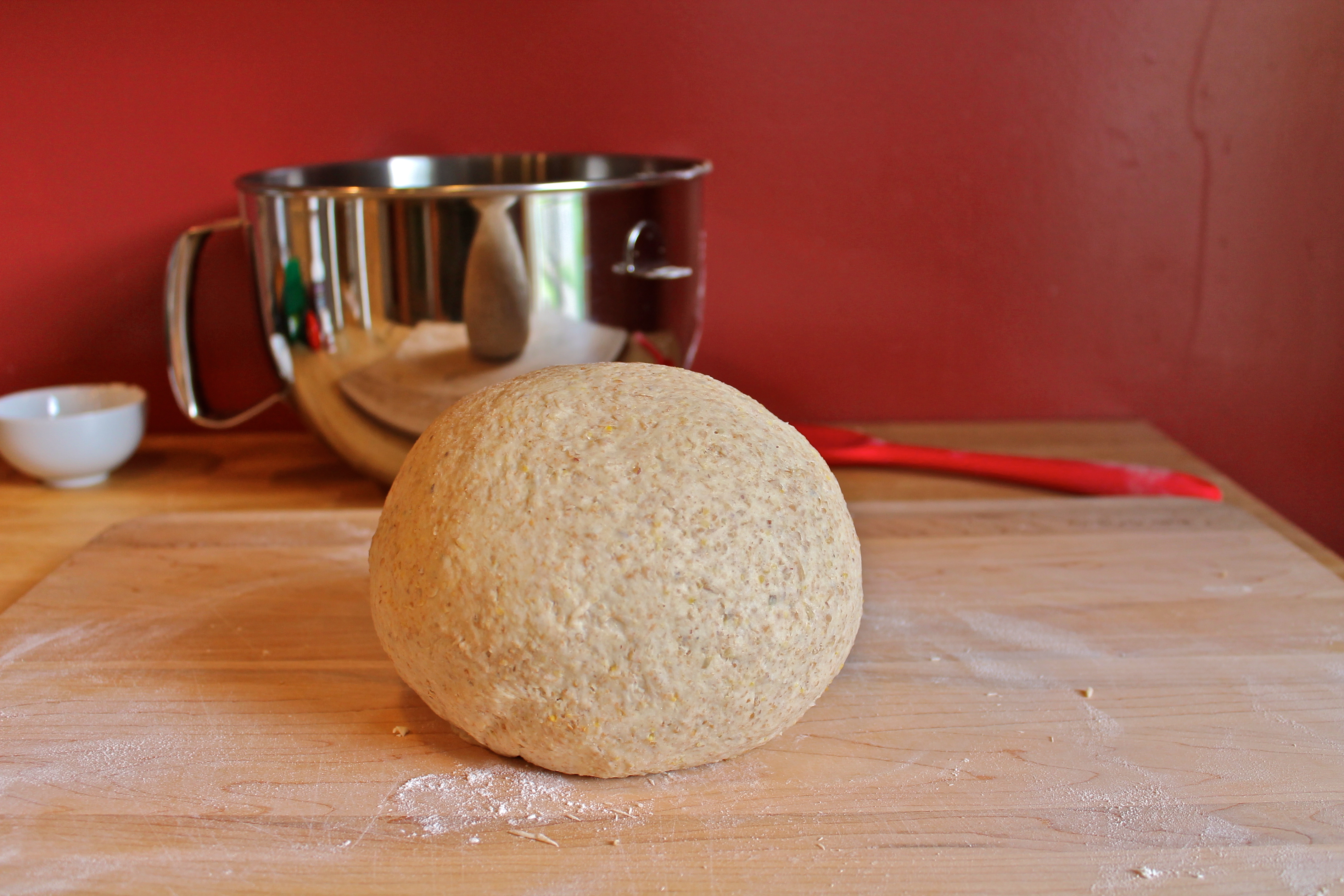
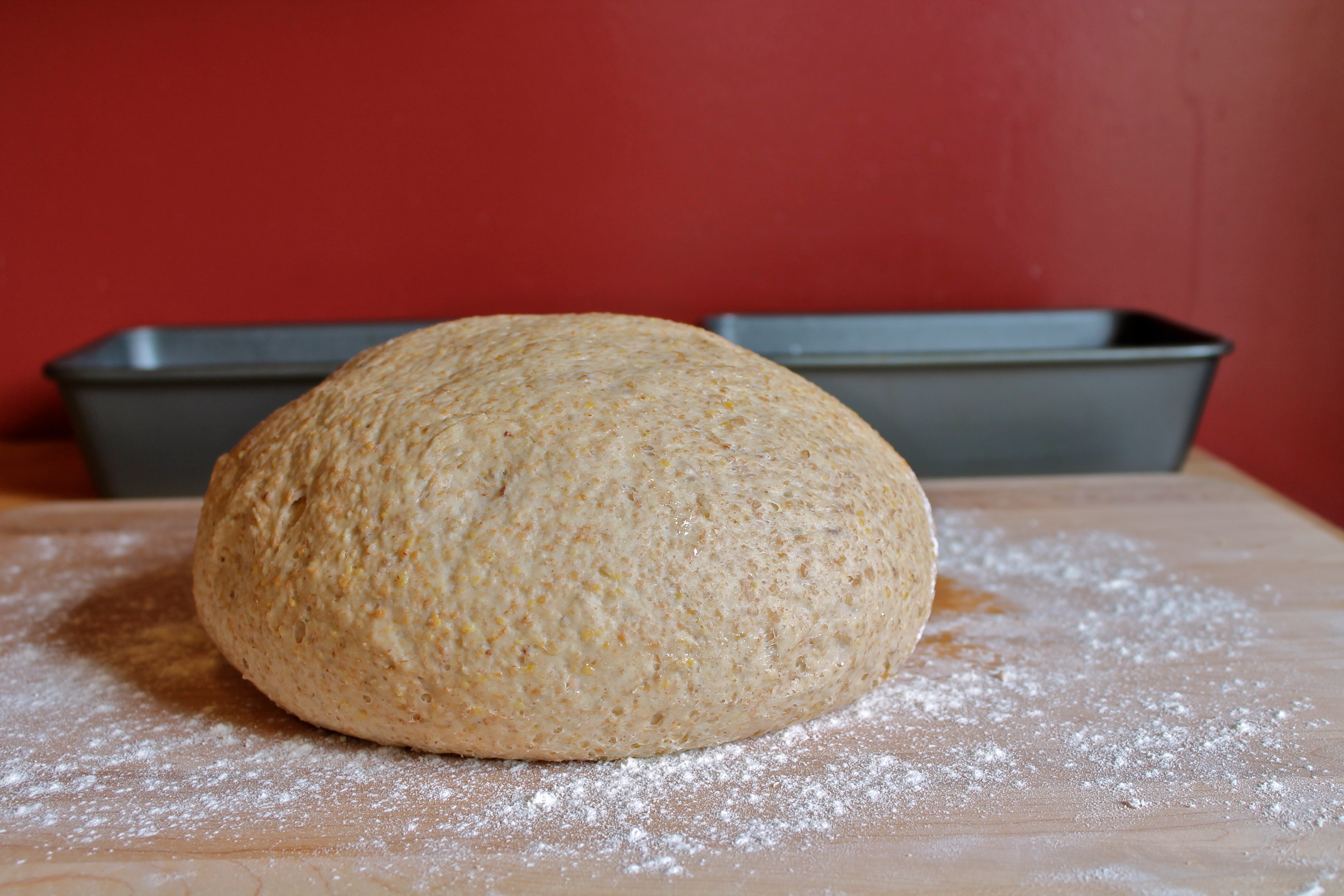
On a well-floured surface, shape the dough into a tight ball.  Lightly oil a large bowl, then place the dough in the bowl, turning the dough to completely coat it in oil.  Cover tightly with plastic wrap or a tight-fitting lid, then allow dough to rise until doubled in size.  This can take anywhere from 40 minutes to a little over an hour, depending on the temperature of your kitchen.

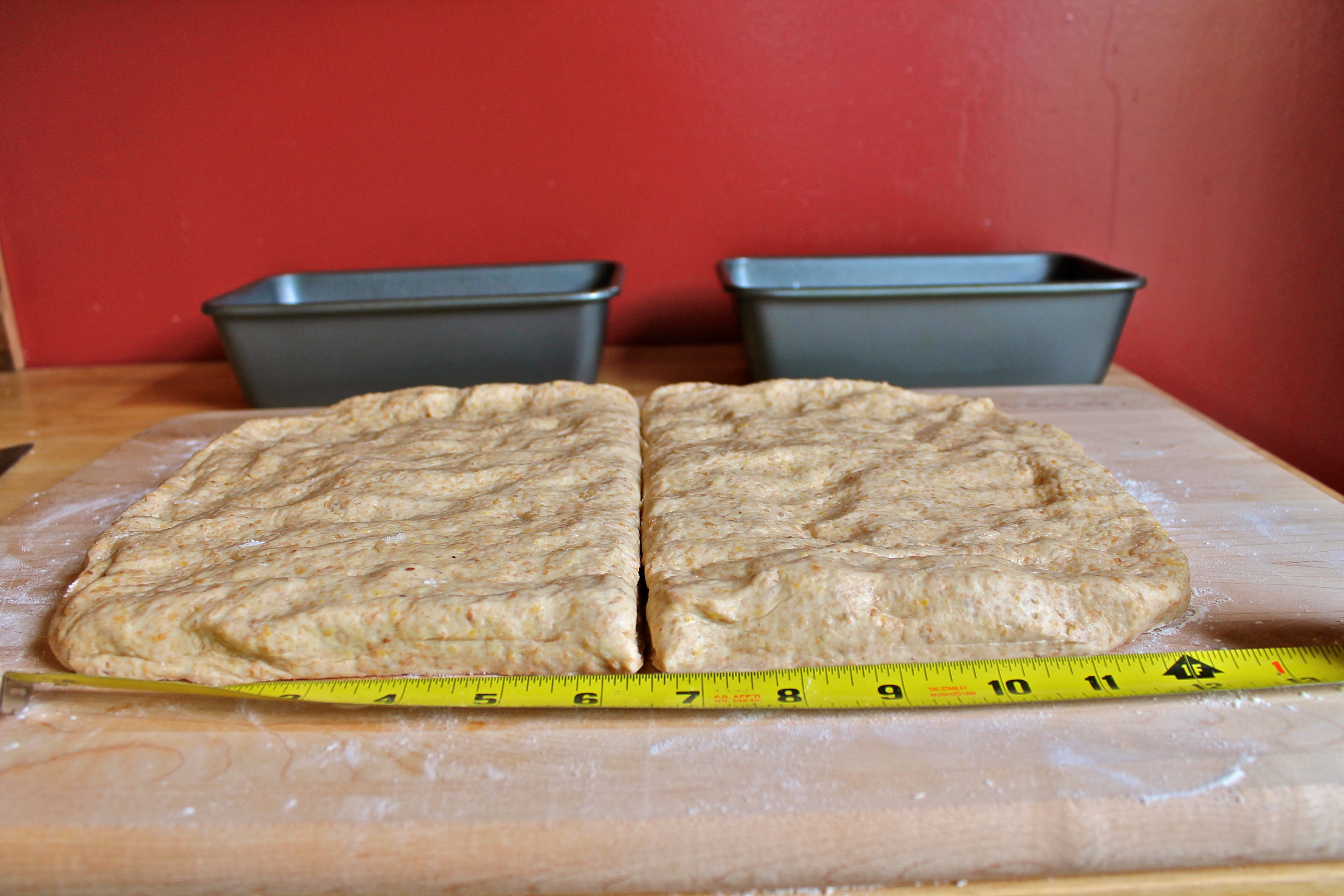
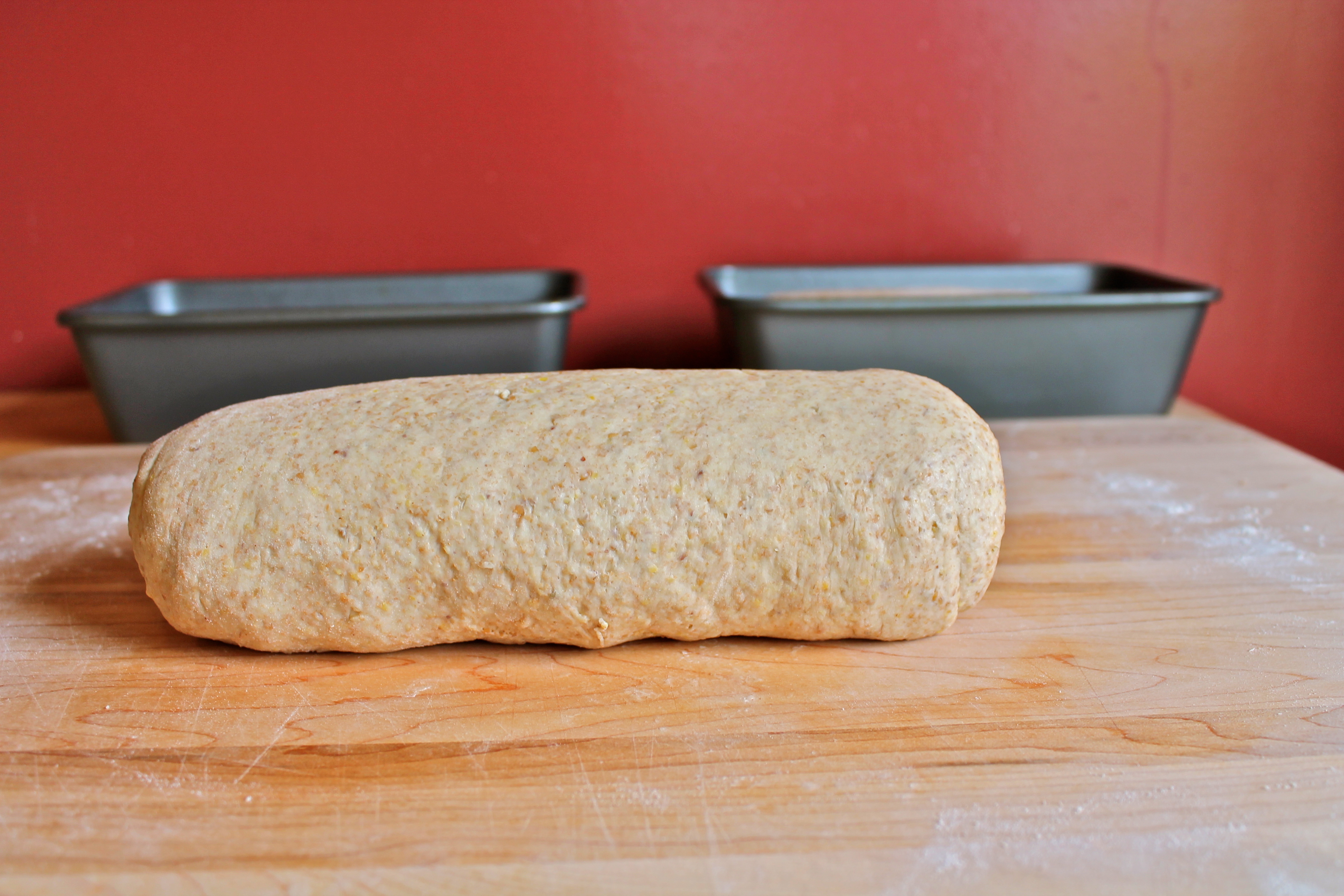
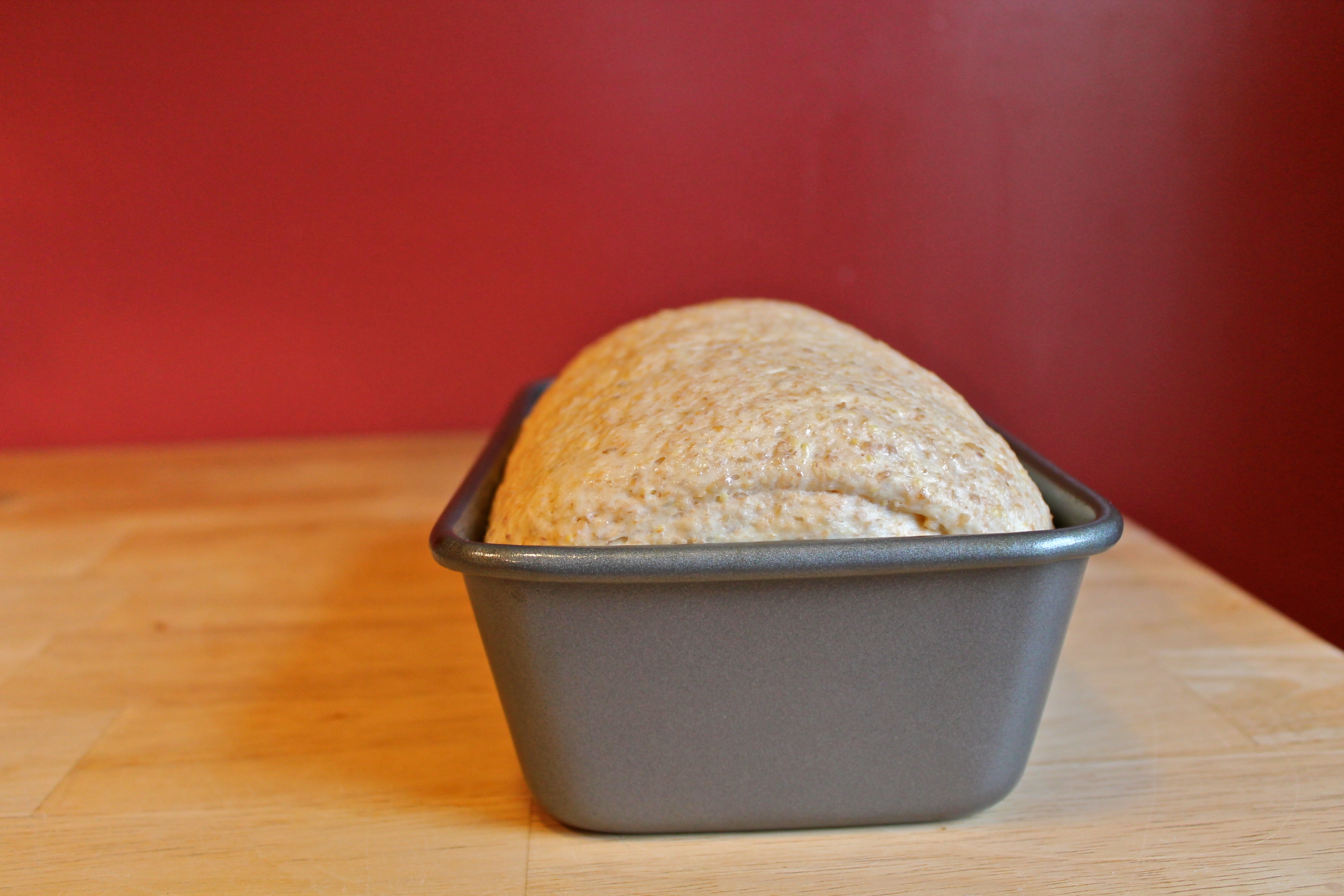
When the dough has doubled in size, turn it out onto a well-floured surface.  Using your hands, pat the dough into a 9” by 13” rectangle, with the long side facing you.  Cut the dough in half to make two 9” by 6 ½” pieces.  Starting at one 6 ½” end, roll one piece of dough into a tight log, pinching the seam closed at the end.  Place the dough in a lightly-oiled 9” by 5” loaf pan.  Repeat with other piece of dough.  Lightly brush or spray the tops of the loaves with oil, then cover with plastic wrap and allow to rise in a warm place until doubled in size.  This can take anywhere from 1 hour to 1 hour and 45 minutes, depending on how warm your kitchen is.

About 20 minutes before it appears as though your loaves might be done rising, preheat the oven to 375 degrees Fahrenheit.  When loaves are done rising, remove plastic wrap and bake loaves in the center of the oven for 35 to 40 minutes, rotating loaves after about 20 minutes.  The loaves are done when the tops are a deep golden brown and the bread has an internal temperature of about 200 degrees Fahrenheit.

Turn loaves out onto a wire rack to cool completely.

Makes 2 loaves.

Baked Brown Butter Oatmeal with Blueberries and Pears

7 Jun

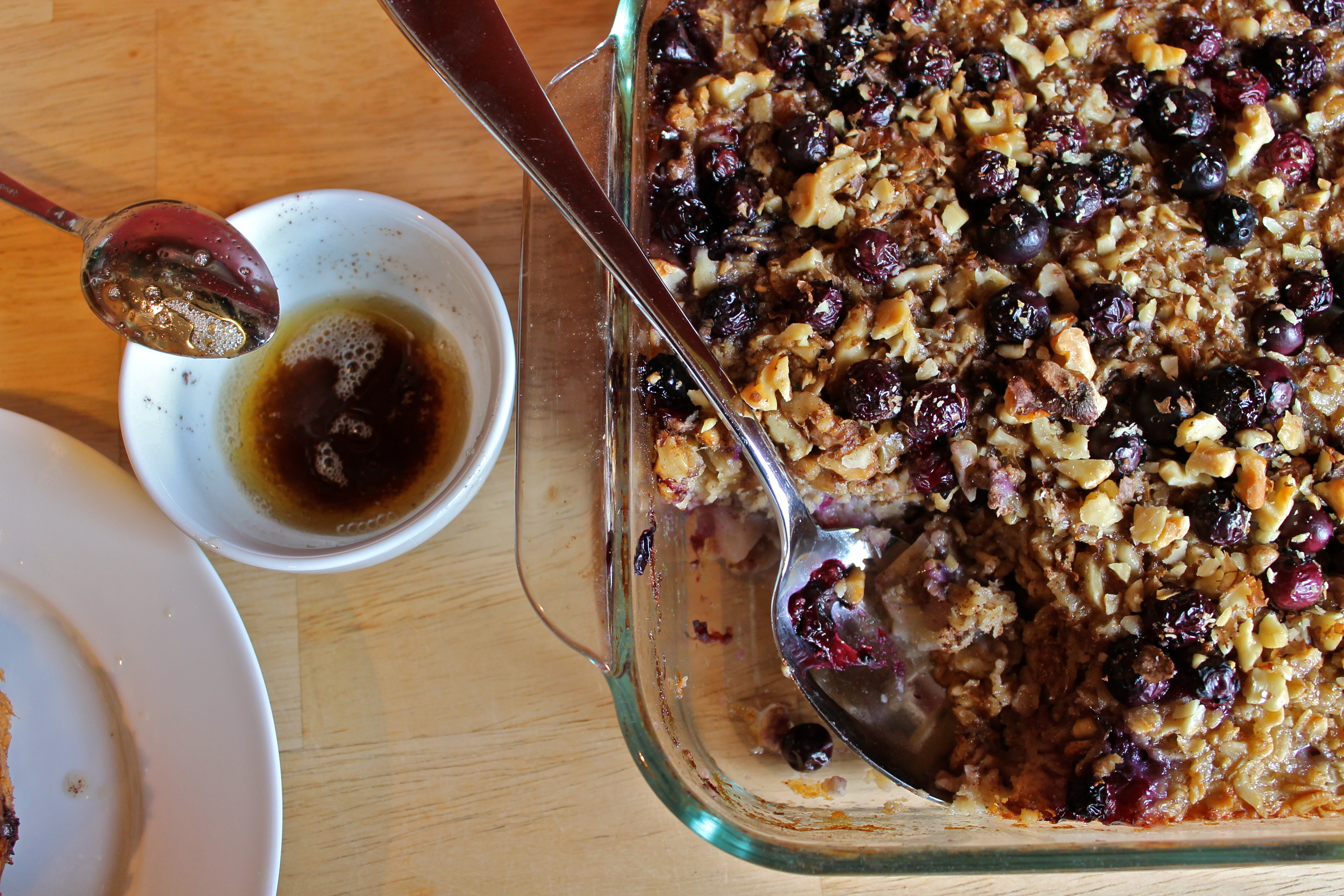
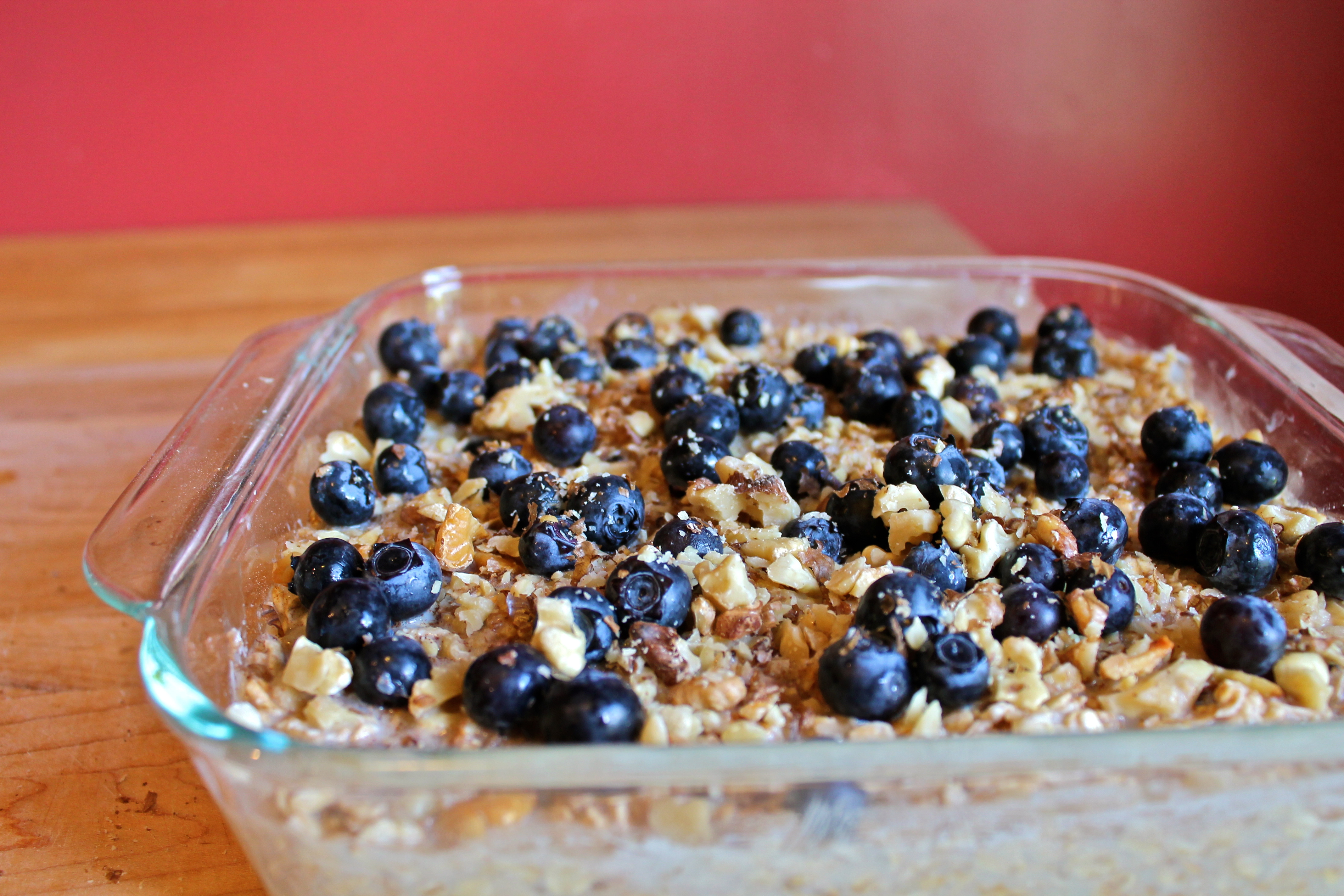
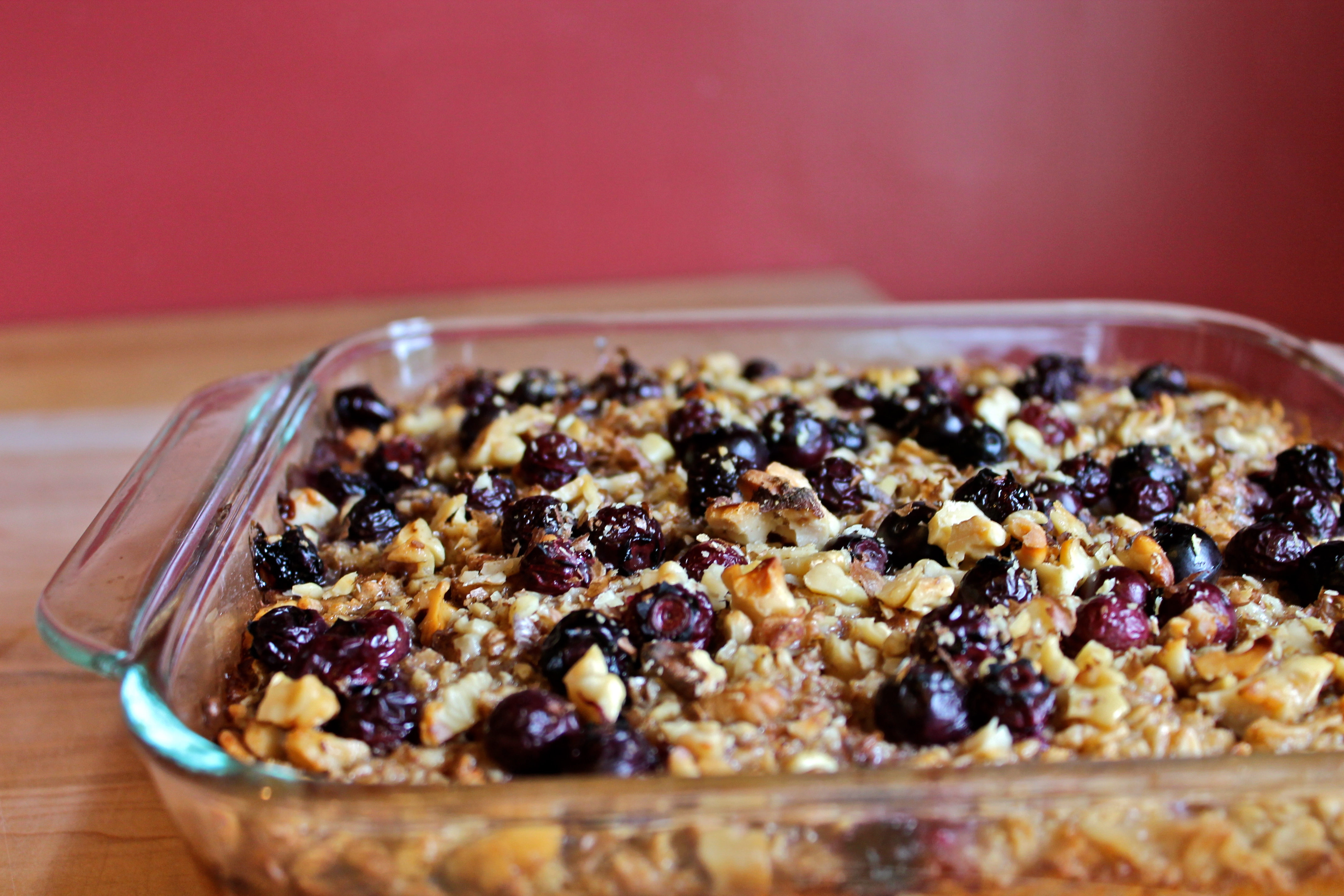
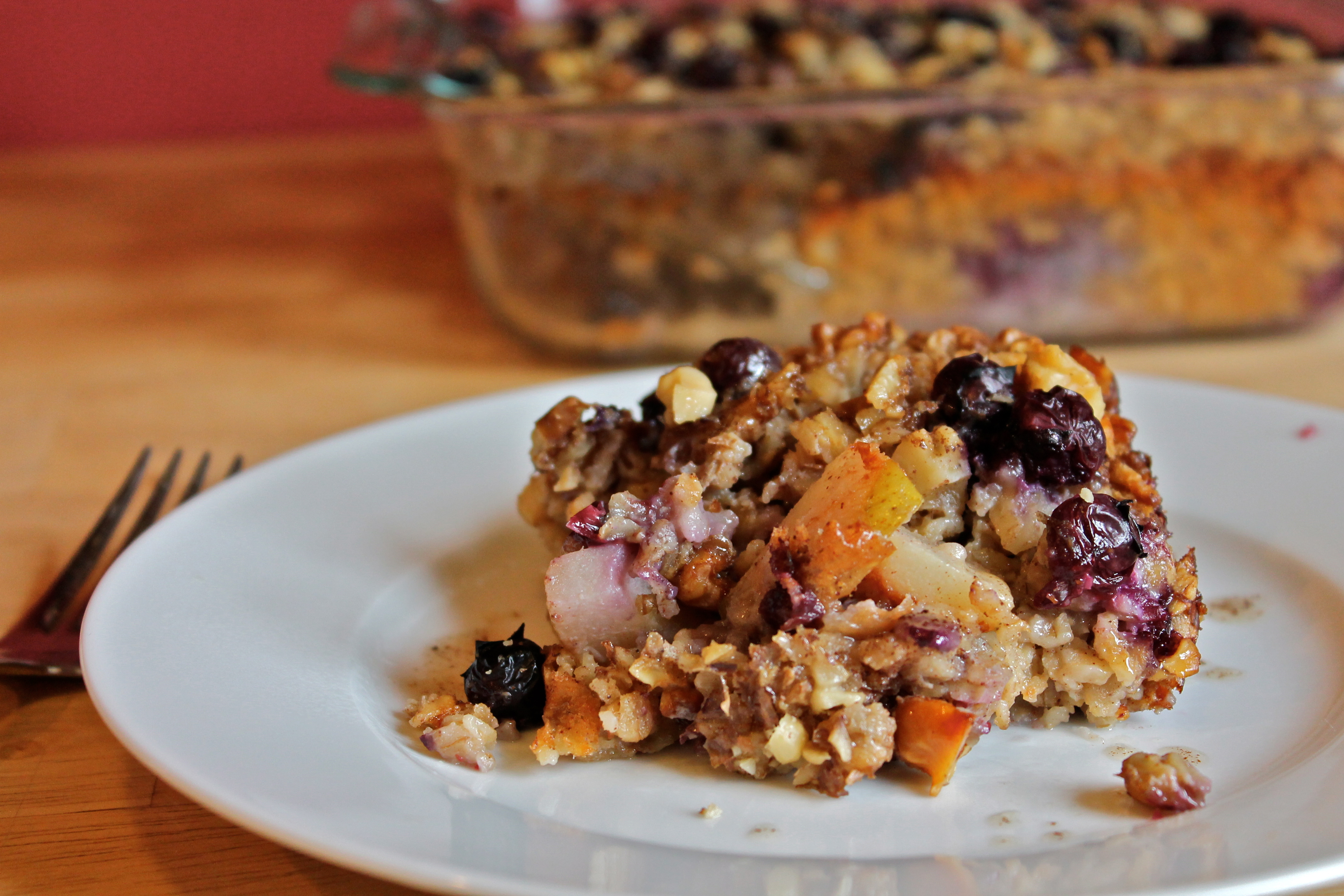
I am, as I write this, eating a plate of what you see above: the most wonderful oatmeal imaginable.  Oatmeal that is almost unrealistically delicious, and oatmeal that, as I mentioned in the previous sentence, is eaten on a plate, not a bowl, and with a fork, not a spoon.  Not that you have to eat it on a plate with a fork, of course.  If you wish, you can most certainly eat it in a bowl, and with a spoon, but my point is that this heavenly oatmeal, warmly spiced, barely sweetened, and studded with big bursts of fresh fruit, is unlike any oatmeal I’ve previously encountered.

But first, a confession: I am not a big fan of oatmeal.  I like oats, and I adore homemade granola, but oatmeal, boiled into a porridge for breakfast, has never appealed to me.  The texture is troublesome, the odd odor is off-putting, and, there just isn’t enough going on, flavor-wise, to entice me into eating it.

But if you take those oats and bake them?  Then you’ve got something.  In Heidi Swanson’s enormously popular (and for good reason) cookbook, Super Natural Every Day, a recipe for baked oatmeal has been calling my name ever since I first laid eyes on it.  With layers of fresh fruit baked into a lightly sweetened bed of oats, milk, and spices, it’s the sort of breakfast dish that perfectly straddles the line between indulgent and healthful.  And though Swanson’s recipe is nearly perfect as is, I fiddled with it here and there—swapping out some spices, reducing the sweetness, changing the fruit selection, browning the butter—and came up with something that might be a slightly different beast than the original, but it’s still quite a sight to behold.  Baked into a toothsome treat, bursting with fruit, and spiked with a shot of brown butter, it’s a whole new kind of oatmeal.

Last Year: Best Pizza Dough–it really is the best, and there is no kneading involved!

Baked Brown Butter Oatmeal with Blueberries and Pears Recipe

Adapted from Super Natural Every Day, by Heidi Swanson

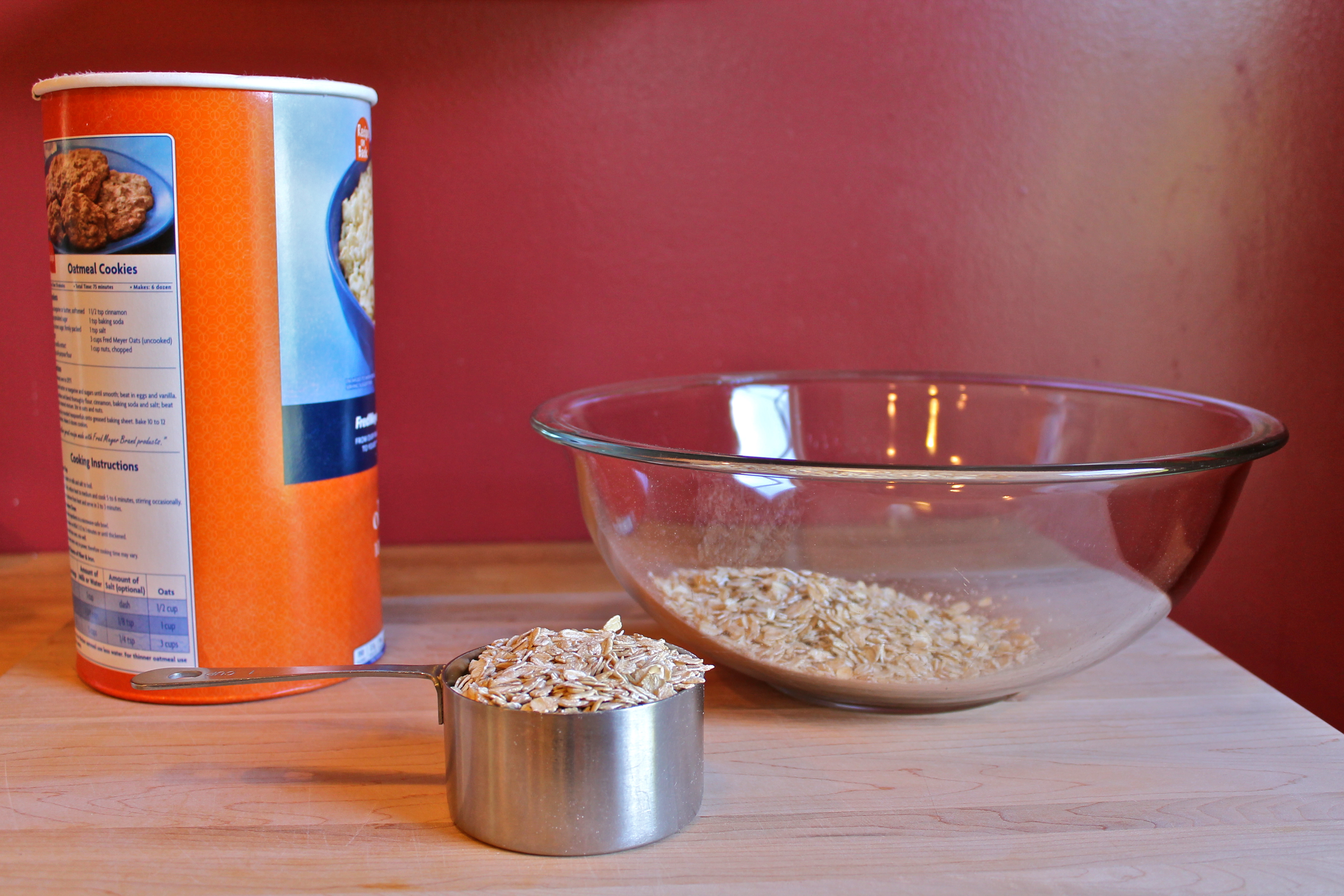
2 cups oats, not quick-cooking

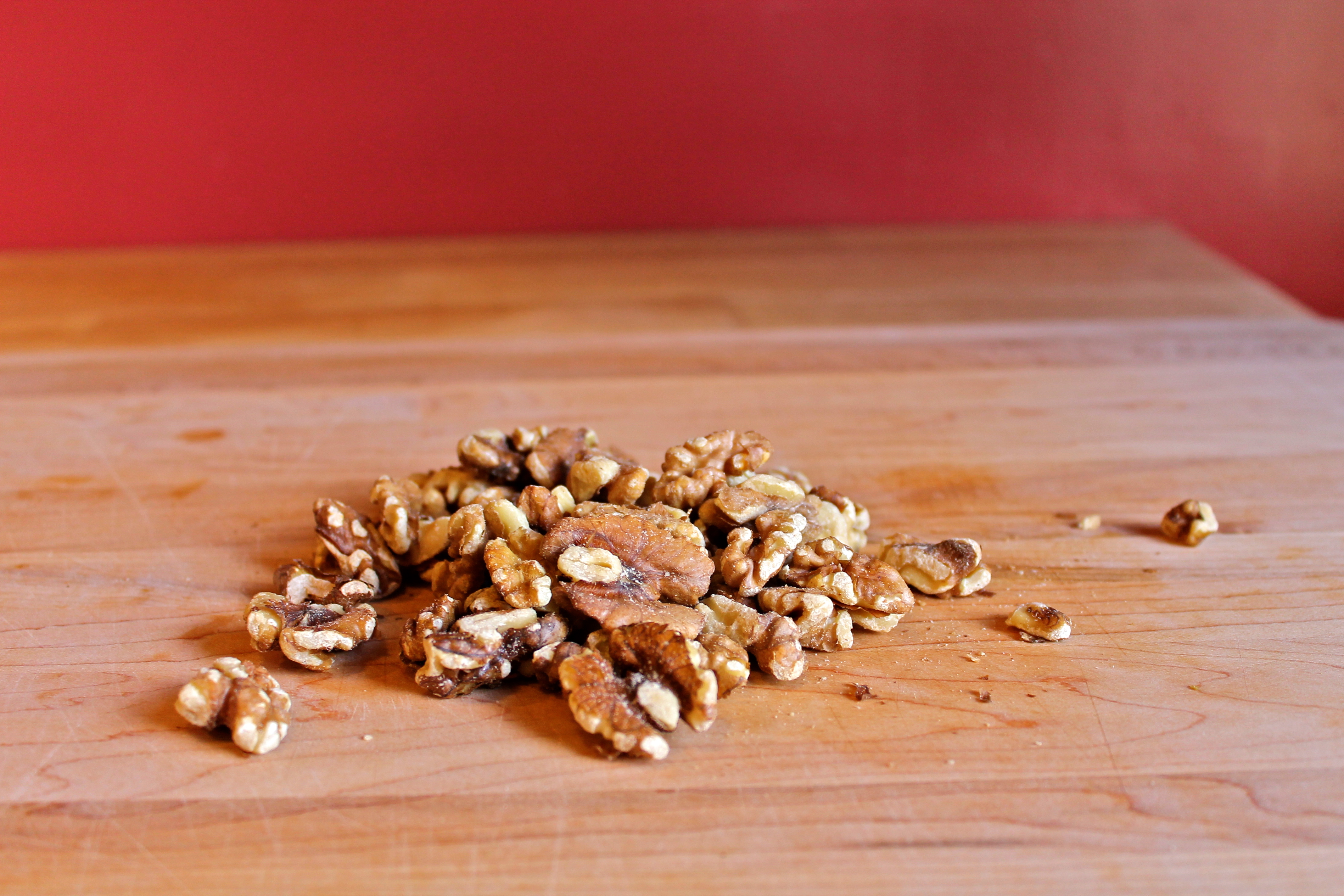
½ cup toasted walnut pieces, coarsely chopped

1 teaspoon baking powder

1 teaspoon ground cinnamon

¼ teaspoon ground ginger

big pinch of cardamom

small pinch of nutmeg

¼ teaspoon fine grain sea salt

3 tablespoons unsalted butter

2 cups milk

1 large egg

¼ cup pure maple syrup

2 teaspoons pure vanilla extract

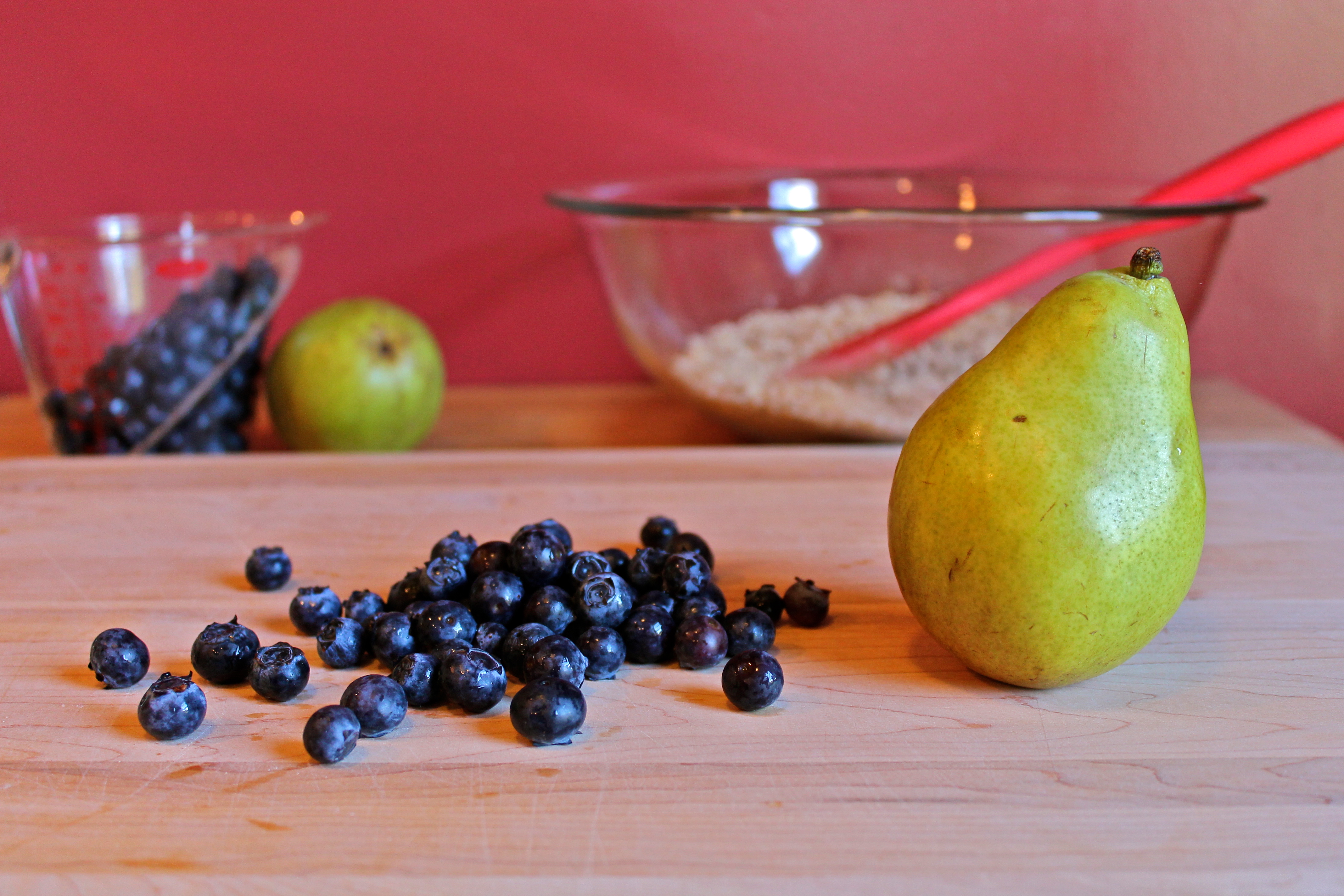
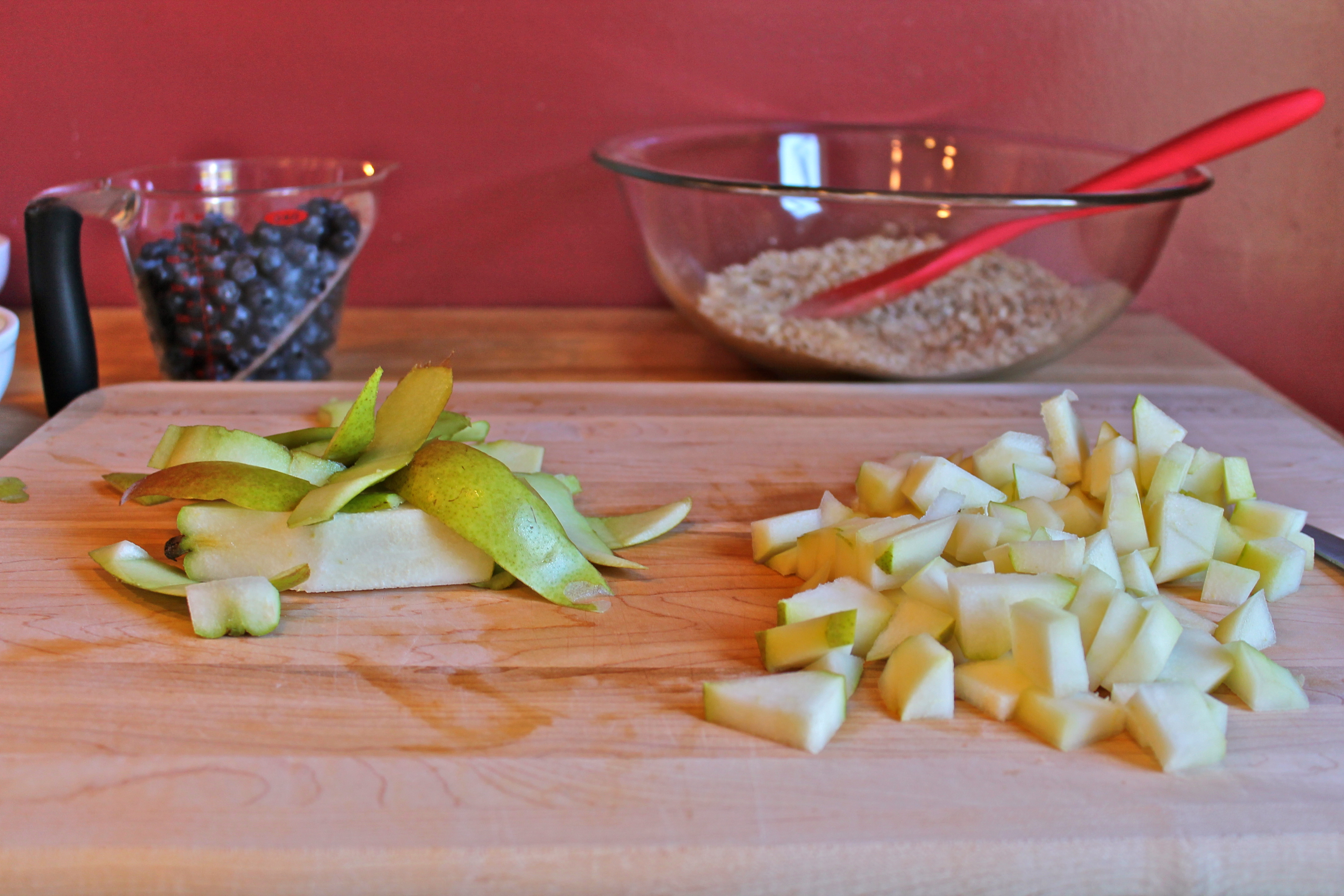
2 pears, peeled, cored, and cut into ½-inch chunks

1 ½ cups fresh blueberries

Preheat oven to 375 degrees Fahrenheit.  Arrange an oven rack in the upper third of the oven.  Butter an 8” by 8” baking dish and set aside.

In a large bowl, combine the oats, ¼ cup of walnut pieces, baking powder, cinnamon, ginger, cardamom, nutmeg, and salt.  Whisk to combine.

In a small saucepan, heat the butter over medium heat until it melts, then foams.  When the butter begins to smell quite nutty and develop small brown bits on the bottom of the pan, remove from heat and pour into a separate bowl.  Allow to cool slightly.

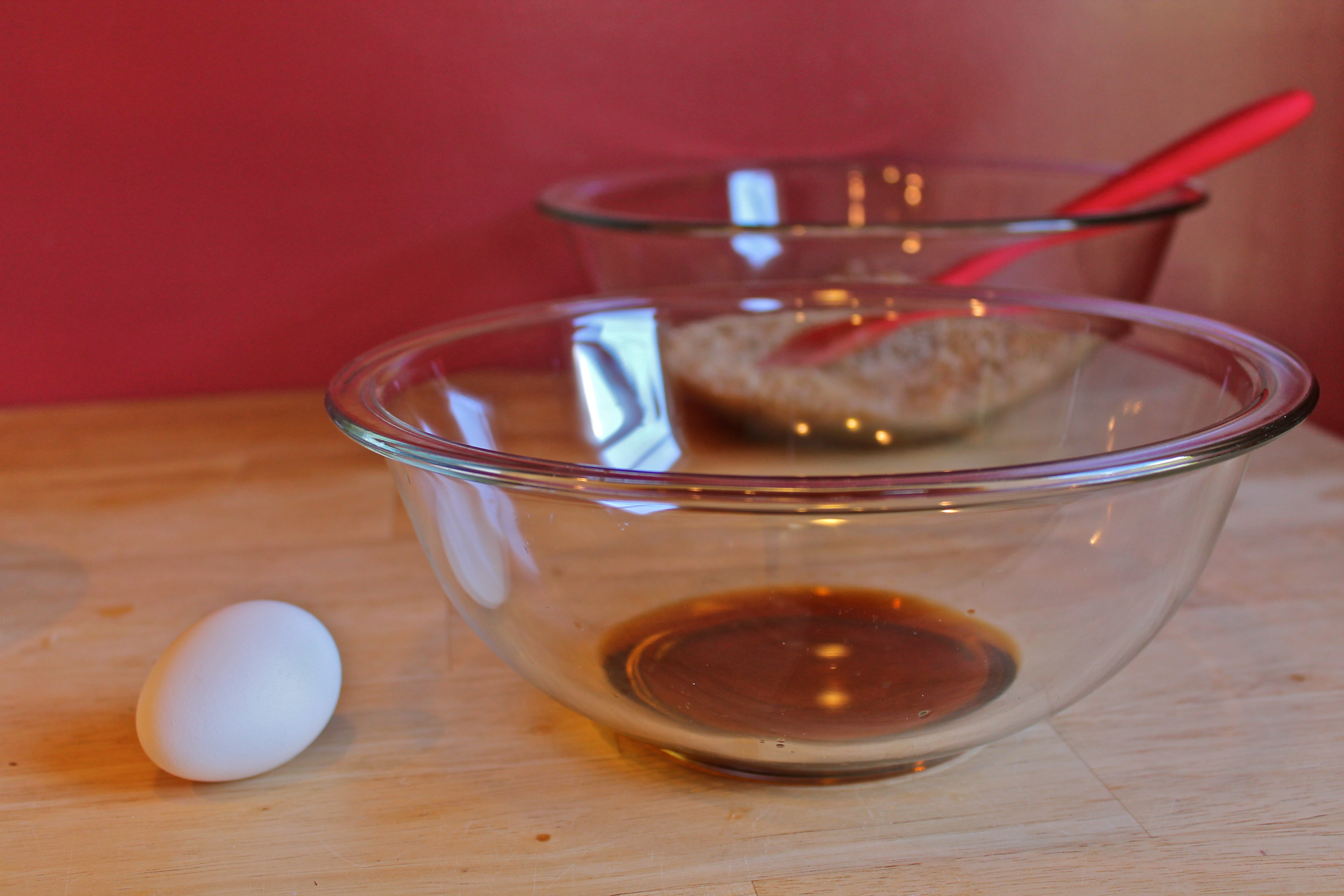
In a medium bowl, whisk together milk, egg, maple syrup, vanilla, and half of the browned butter.

Arrange the pear pieces in a single layer in the prepared baking dish.  Cover with 1 cup of the blueberries.  Sprinkle the oat mixture over the fruit.  Drizzle the milk mixture over the oats, then gently tap the baking dish on the counter to make sure the milk mixture settles all the way to the bottom of the dish.  Sprinkle on the remaining blueberries and walnut pieces.

Bake the oatmeal in the upper third of the oven for 40 to 45 minutes, until the top of the oatmeal is dark golden brown.  Remove from oven and allow to rest for 10 to 15 minutes before serving.  Drizzle each serving with the remainder of the brown butter.  Out of this world.

Serves 6-10 people.

Vegetable Biryani, or What to Make When Your Kid Decides to Become a Vegetarian

4 Jun

Remember when I said that I was done with my frenzy of Indian food posts?  That Indian Food Week-Plus had drawn to a close?  Well, it turns out that I wasn’t being entirely truthful.  My duplicitousness was not purposeful, I promise.  I was all set to close the door on this cooking run of mine until my friend Mike, one of the most dedicated dads I know, who also happens to be one of the most dedicated carnivores I know, happened to mention that his daughter had decided to become a vegetarian.

Upon hearing that this young lady was weighing a switch to vegetarianism, the vegetarian-centric cooking node in my mind went into overdrive.  I was a vegetarian for most of my life, and many of those years were spent in the company of people who weren’t familiar with, and didn’t care to be familiar with, a balanced vegetarian diet.  As a result, I became what one might call a little bit slack in my own eating habits, and spent the better part of five or six years constructing my meals around a basic principle of cheese + carbs = not hungry anymore.  Obviously, it was not the healthiest thing I could have done, but since I never became lethargic from hunger or developed scurvy, I assumed, at the time, that whatever I was doing was fine.

Maybe it was, for a time, but, in the long term, that’s just no way to live.  Food, no matter if it contains meat or not, should be an experience that provides you with something more than just nourishment.  Food can be an adventure, a chance to learn, an opportunity for discovery, and when you’ve decided to make a huge change in the structure of your diet, there is no better time to start seeking out new frontiers in food and cooking.  And when you’re going vegetarian, there is no better place to focus than India.  I’ve written about this before, but one of the most notable things about Indian vegetarian cuisine is the fact that when food is made to focus on things other than meat, there is never a sense of something being missing.  There is no effort to make up for a lack of meat, and thus your experience eating a truly fine vegetarian meal is one of satisfaction and comfort rather than of substitution.

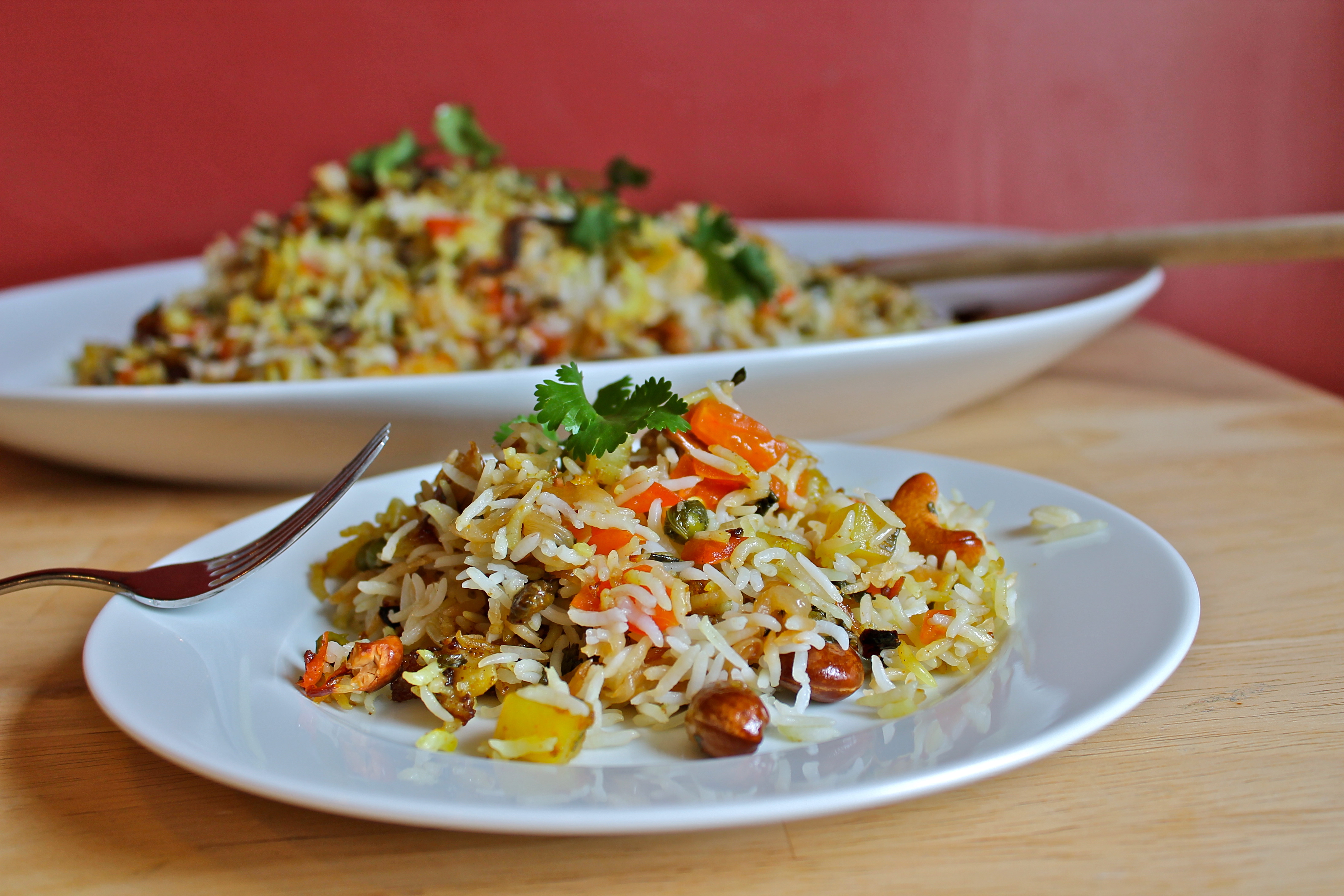
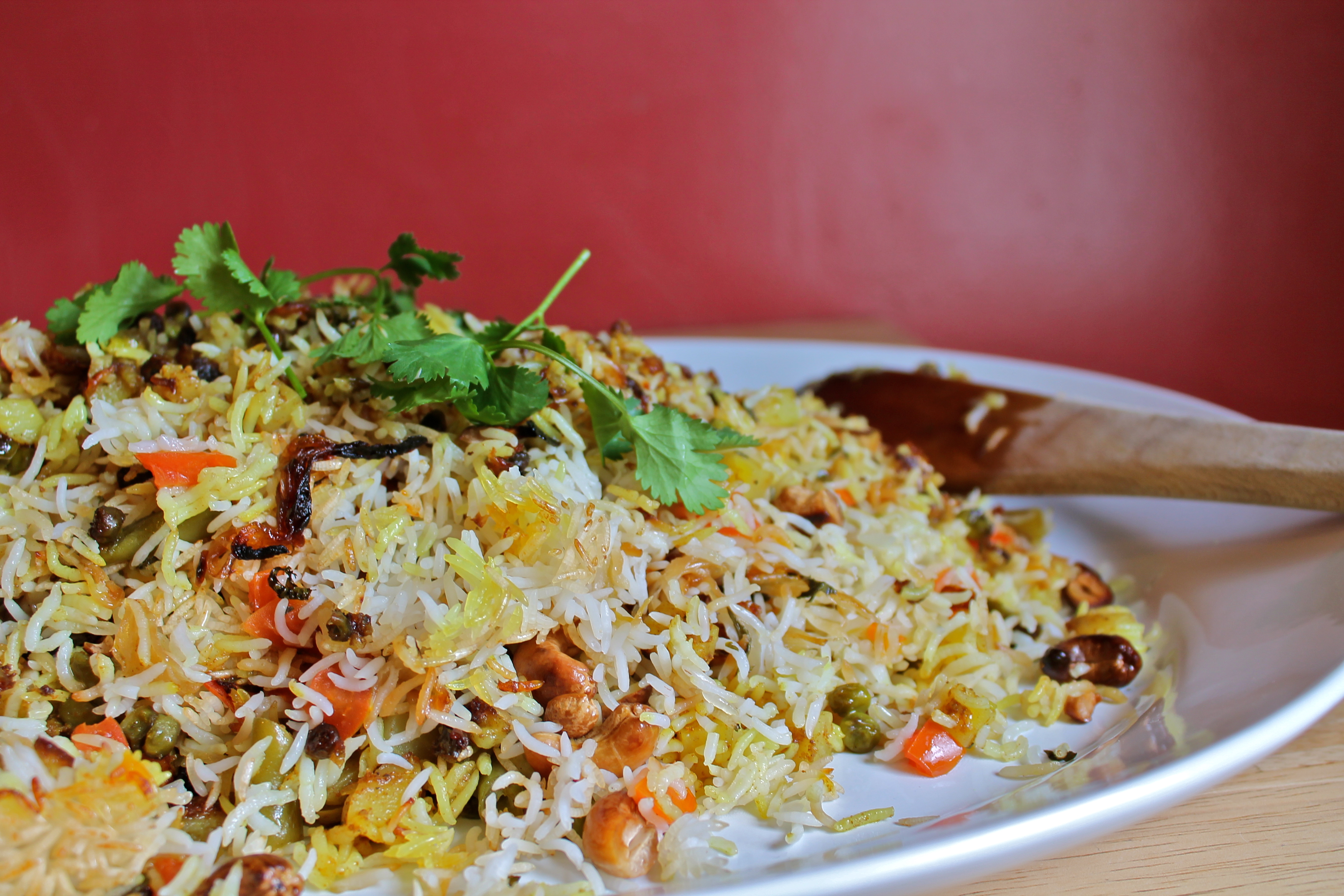
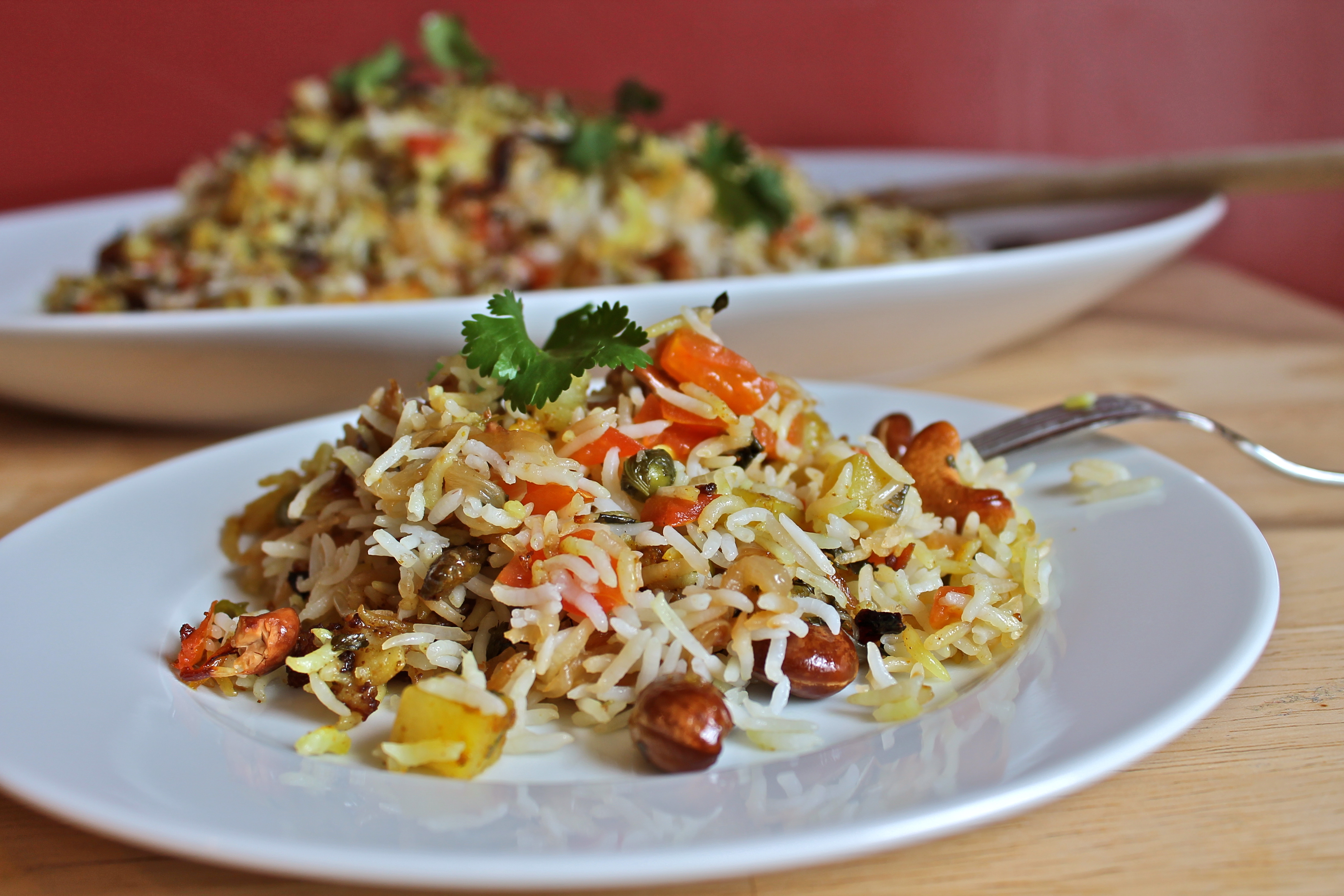
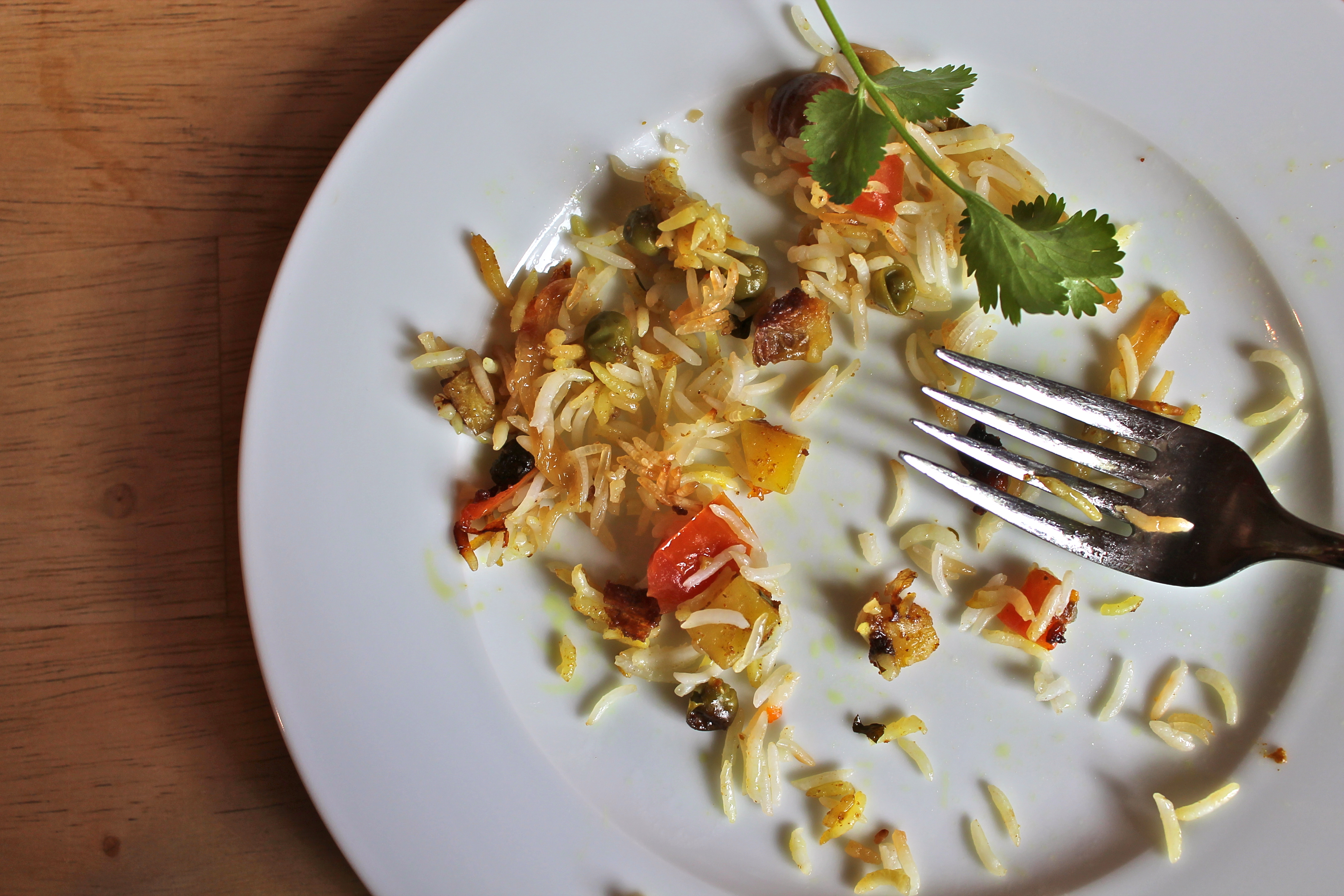
Thus, it is rather ironic that when I wanted to develop a great Indian dish for Mike’s daughter to try out, it ended up being based on a favorite chicken dish.  However, personal contradictions aside, this really is a phenomenal meal for anyone looking to develop a nice repertoire of vegetarian meals.  The perfect blend of spices adapts well to any vegetables you choose to include, and if you throw in a cup of cooked chickpeas to accompany the toasted cashews, you’ve got a one pot rice dish that also happens to be a source of complete protein.  Not that you have to utilize the old battering ram of healthfulness in order to get people to eat this.  I made this biryani last night, and, at the evening’s end, three people (two adults, one kindergartener) had eaten nearly every last grain.  With its mix of savory Indian flavors and perfectly roasted vegetables, I think your greatest challenge with this dish is making sure there is enough to go around.

Last Year: Six Threes Ice Cream

Dozens more vegetarian recipes can be found right here in the archives.

Vegetable Biryani Recipe

Heavily adapted from a non-vegetarian recipe in Mangoes and Curry Leaves

3 large cloves of garlic, grated finely (you want to end up with about 2 teaspoons total)

1 teaspoon finely grated fresh ginger

1 large Yukon gold potato, or 1 medium russet potato, diced into ¼-inch cubes

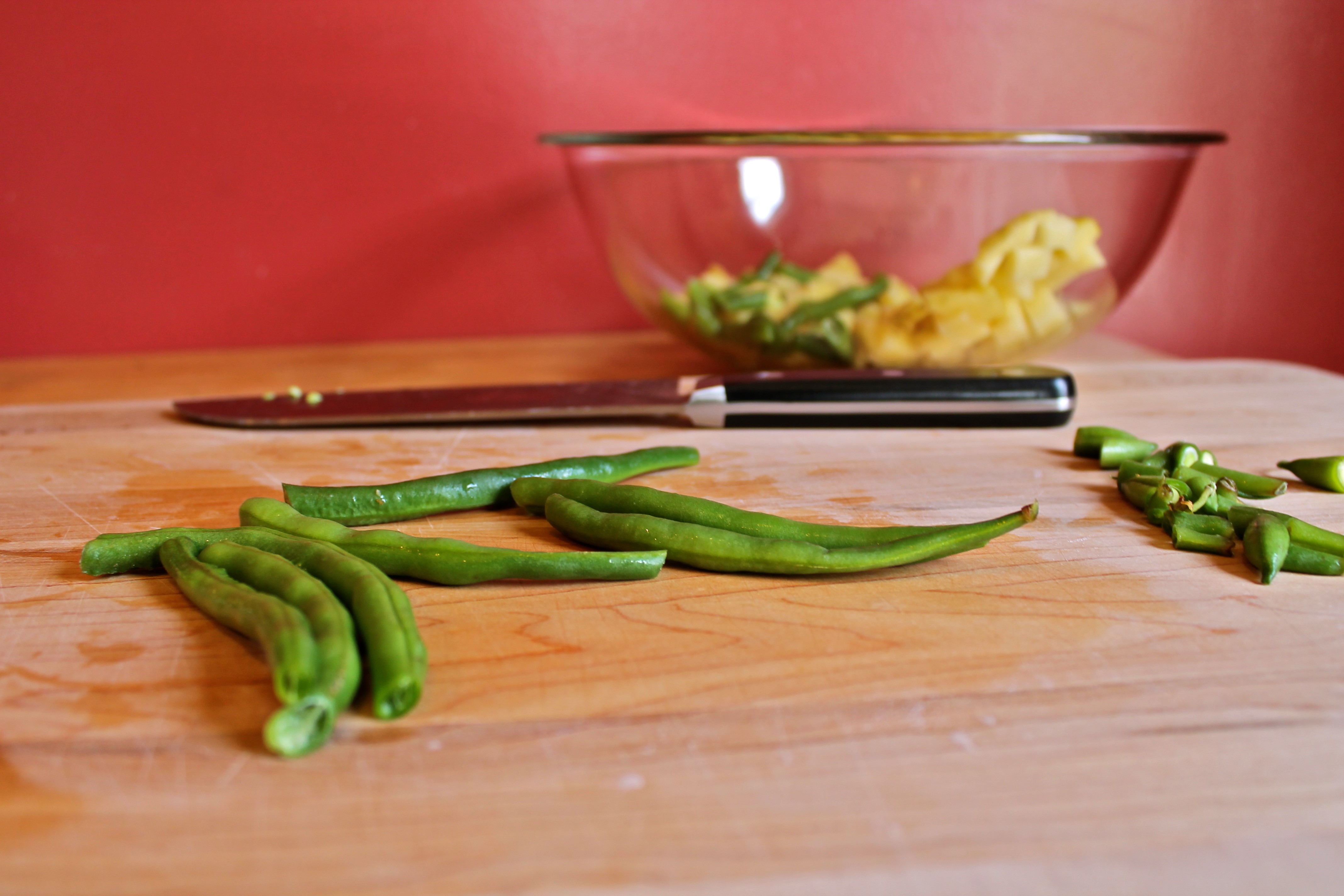
about 12 fresh green beans, chopped into 1-inch pieces (you should end up with ½ cup pieces)

½ cup frozen peas

1 ½ teaspoons ground coriander

½ teaspoon cayenne

¼ teaspoon turmeric

¼ teaspoon garam masala

2 teaspoons salt

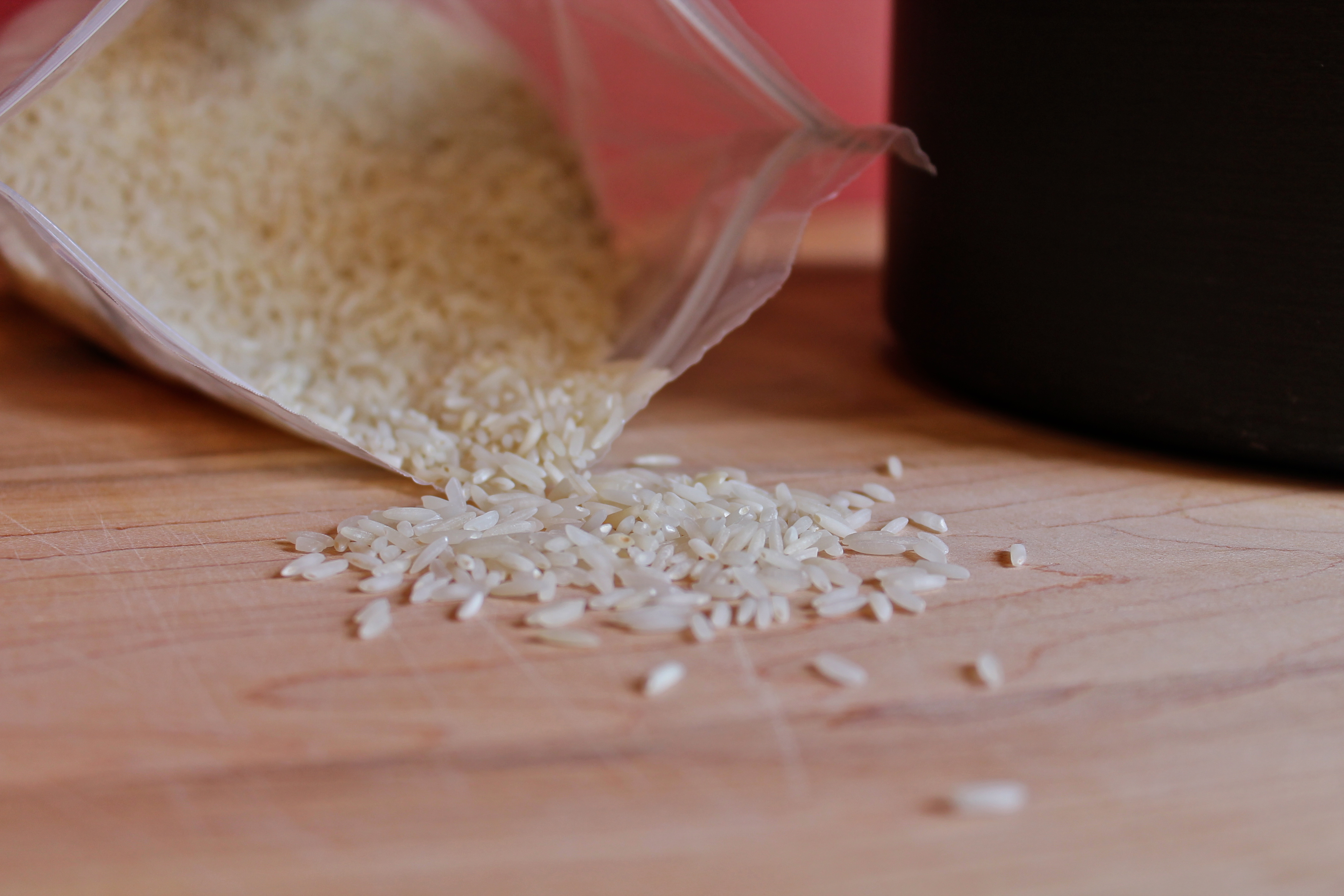
2 cups basmati rice

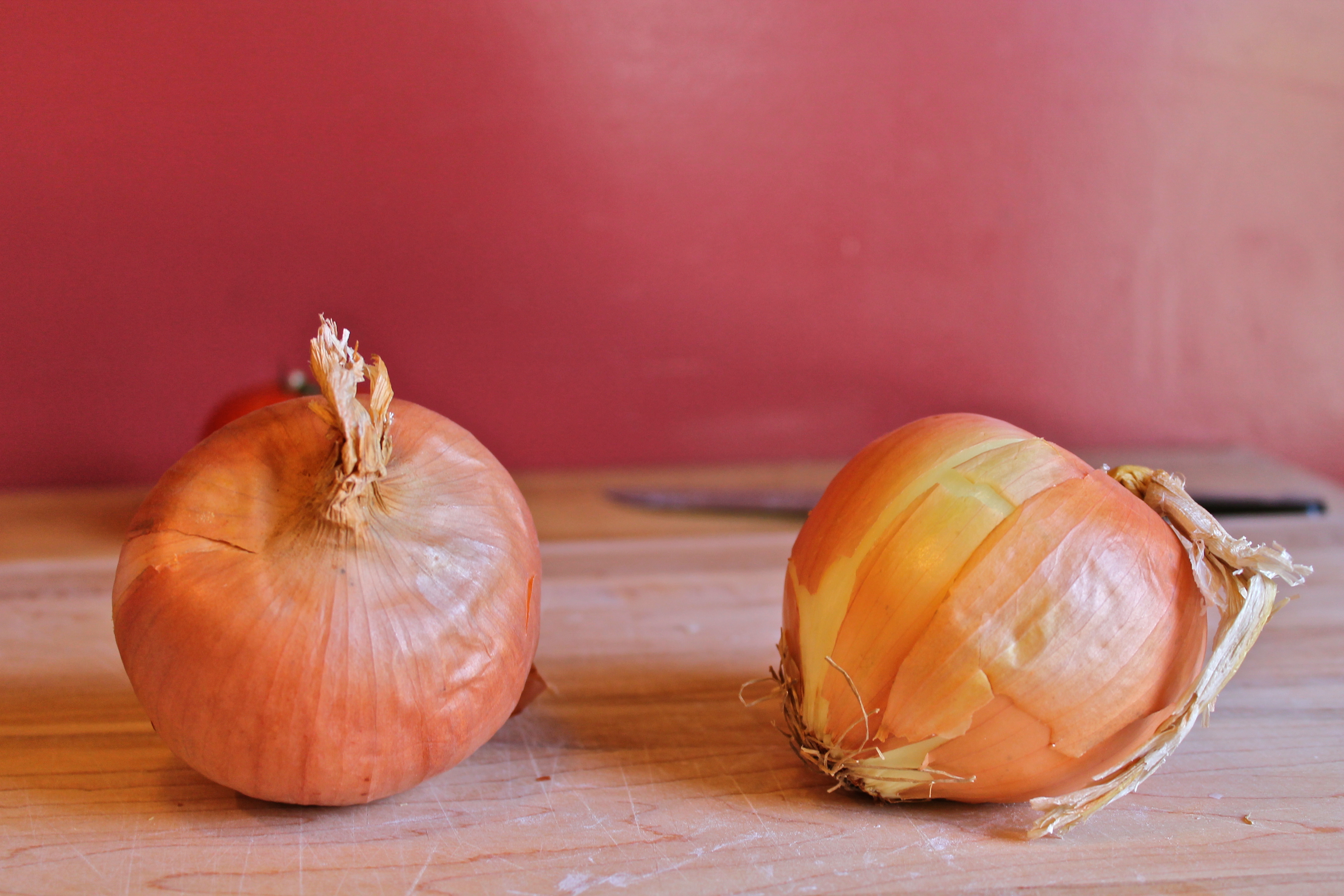
3 medium-large onions (about 1 pound)

½ cup vegetable oil

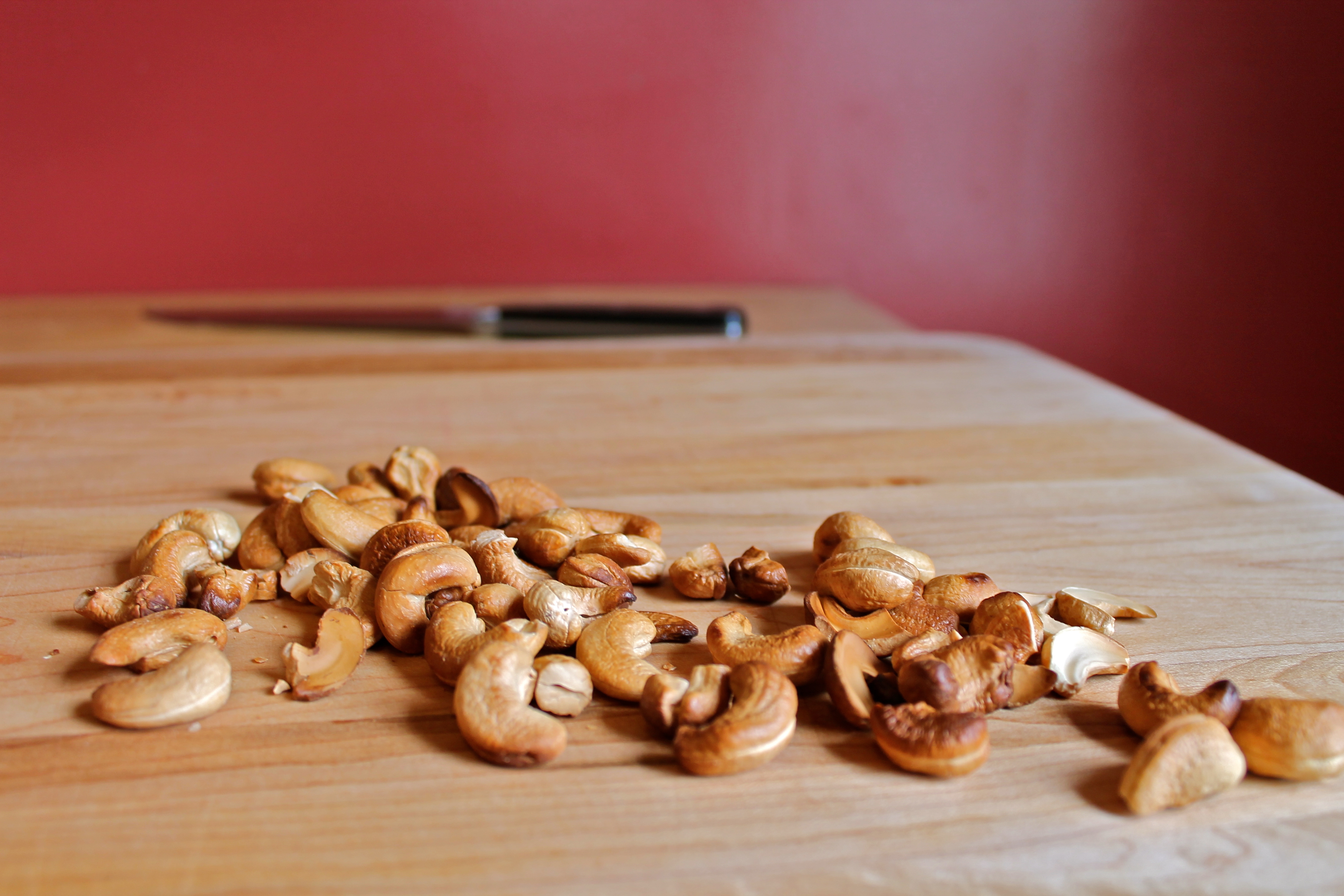
½ cup lightly toasted, unsalted cashews

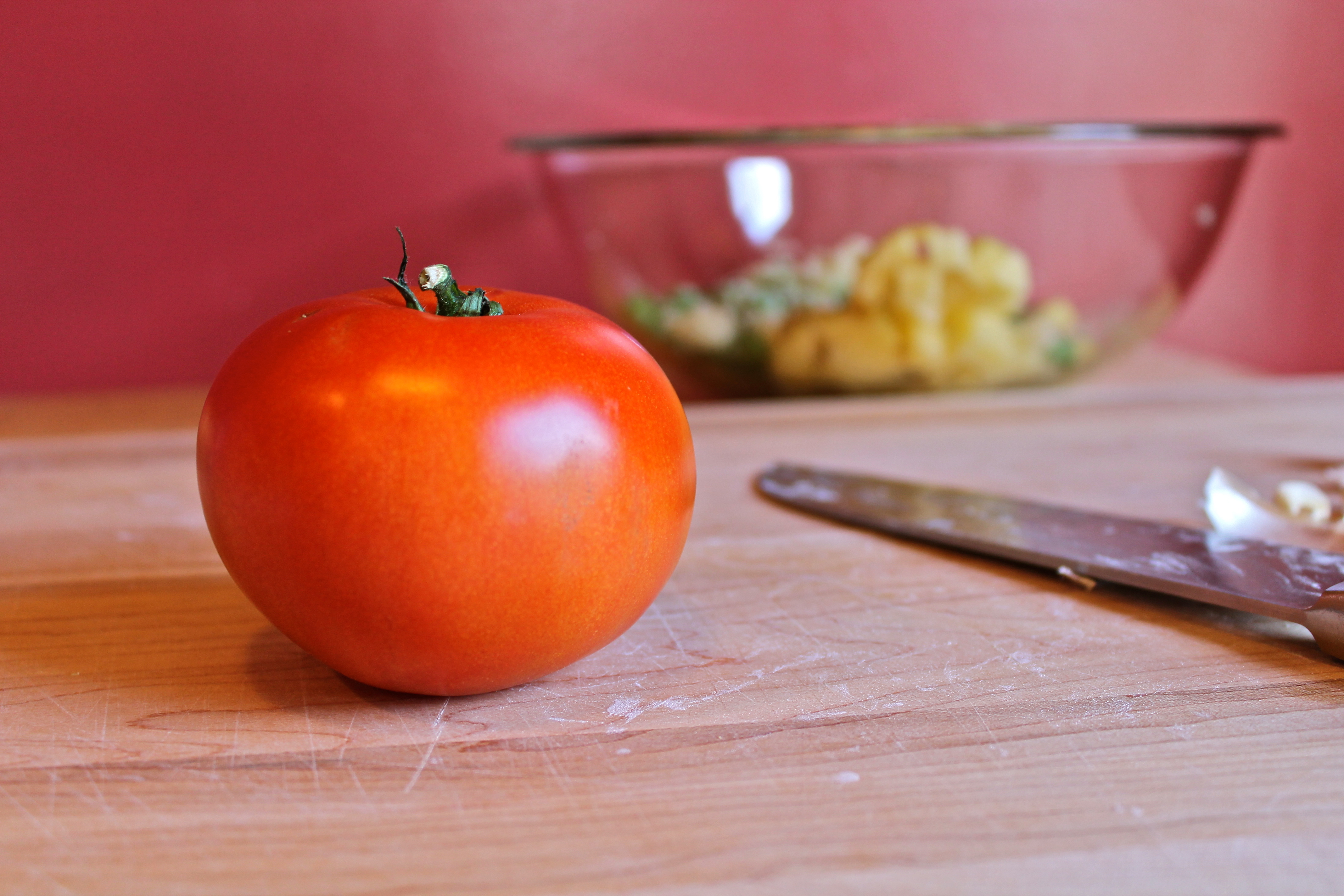
1 large tomato, diced into ½-inch pieces

1 cup minced cilantro leaves

2 tablespoons of water

About 1 hour before you want to serve the dish, place a rack in the center of the oven and preheat to 375 degrees Fahrenheit.

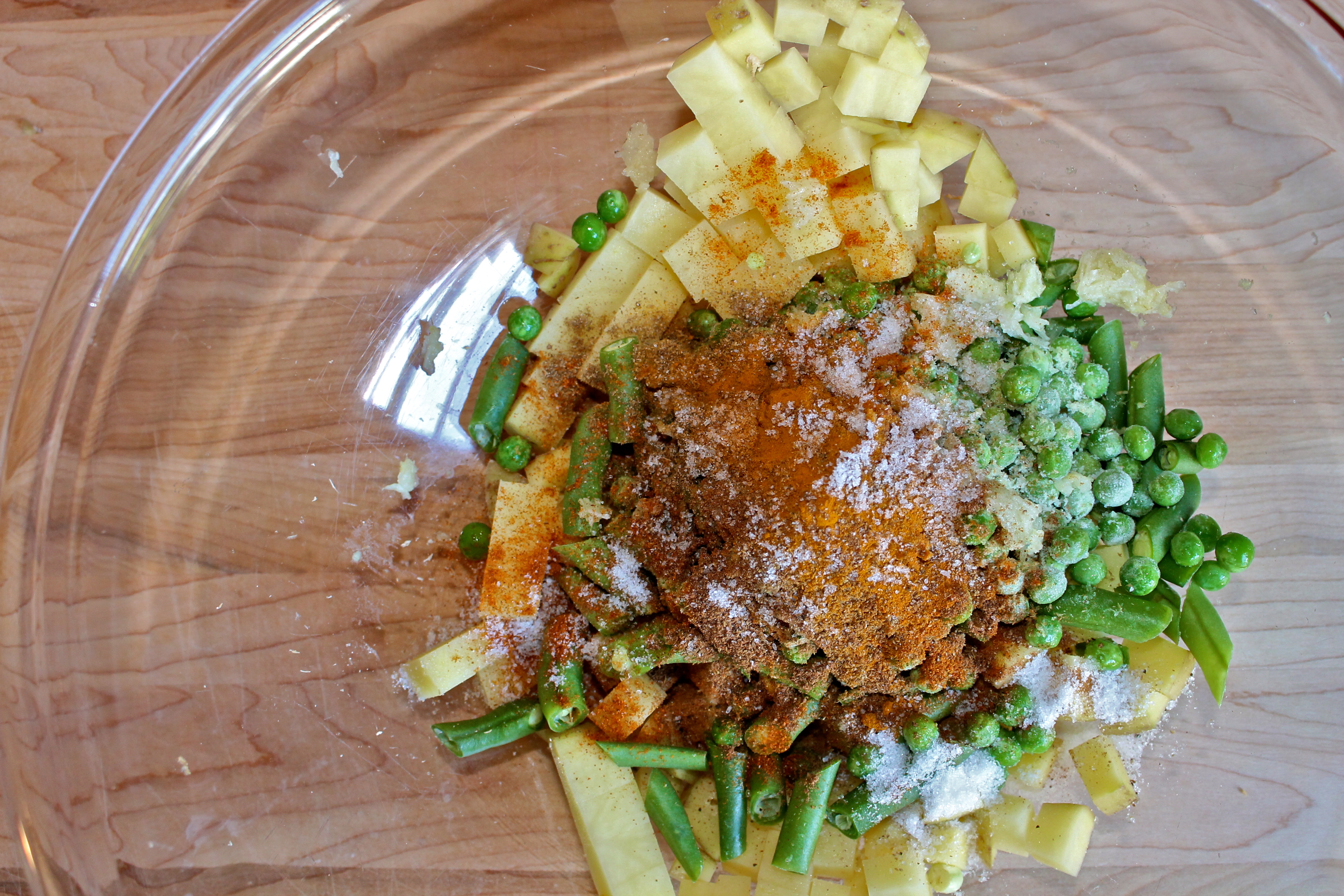
In a large bowl, combine the grated garlic and ginger, then mash together using the back of a spoon.  Add the diced potatoes, sliced green beans, and peas to the bowl with the garlic and ginger.  Add the coriander, cayenne, turmeric, garam masala, and 1 teaspoon of the salt.  Stir to mix until everything is combined, then cover with plastic wrap and allow vegetables to marinate while you prepare the other ingredients.

While the vegetables are marinating, rinse the rice in several changes of cold water.  Place in a bowl, cover with water, and allow to soak for about half an hour.

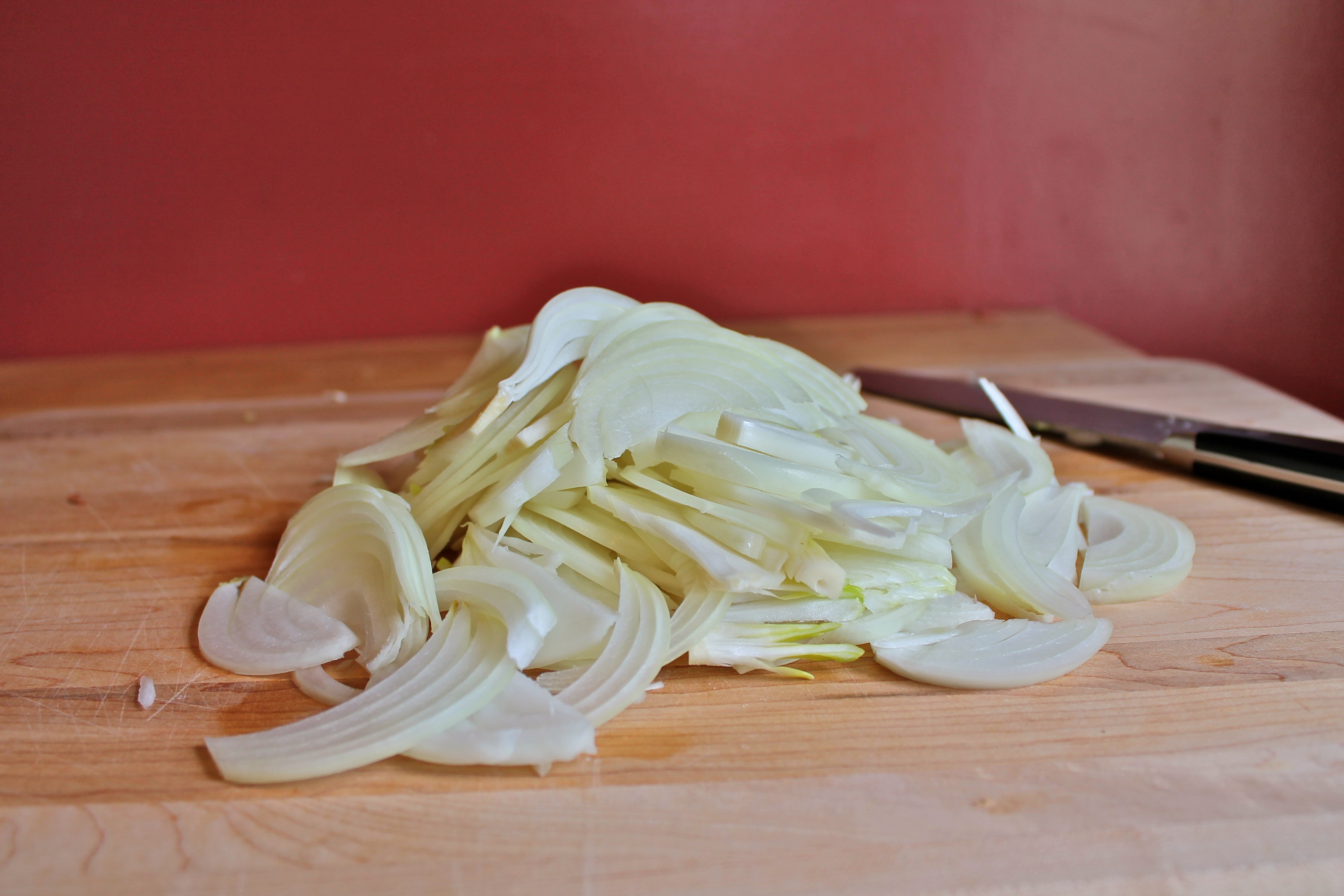
Slice the onions as fine as possible.  You will want about 3 cups of sliced onions.  Place a large heavy ovenproof pot with a tight-fitting lid over medium-high heat.  Add the oil and, when it is hot, add the onions.  Lower the heat to medium.  Cook until the onions are very soft, wilted, and just touched with golden brown, 12 to 15 minutes.  Lift the onions out of the hot oil and set aside.  There should be a little over ¼ cup of oil left in the pot.  Remove 2 tablespoons of oil from the pot and set aside for later.

When the onions are cooking, precook the soaked rice.  Place about 8 cups of water in a large pot and bring to a boil.  Add the remaining 1 teaspoon of salt, and allow the water to come back up to a boil.  Sprinkle in the rice.  Allow rice to boil for 4 to 6 minutes, or until the rice is no longer brittle but still firm to the bite.  Drain in a colander and set aside.

Place the heavy pot containing the oil over medium-high heat.  Distribute half of the marinated vegetables over the bottom of the pot, then sprinkle on half the precooked rice.  Scatter half the cooked onions over the top, then sprinkle on half of the diced tomato, half of the cashews, and half of the cilantro leaves.  Repeat with the remaining marinated vegetables, rice, onion, tomato, cashews, and cilantro.  Sprinkle on about 2 tablespoons of water, and drizzle on the reserved 2 tablespoons of oil.  Lay a sheet of aluminum foil over the top of the pot to cover it completely, then top with the lid.

Transfer the pot to the oven and bake for 1 hour.

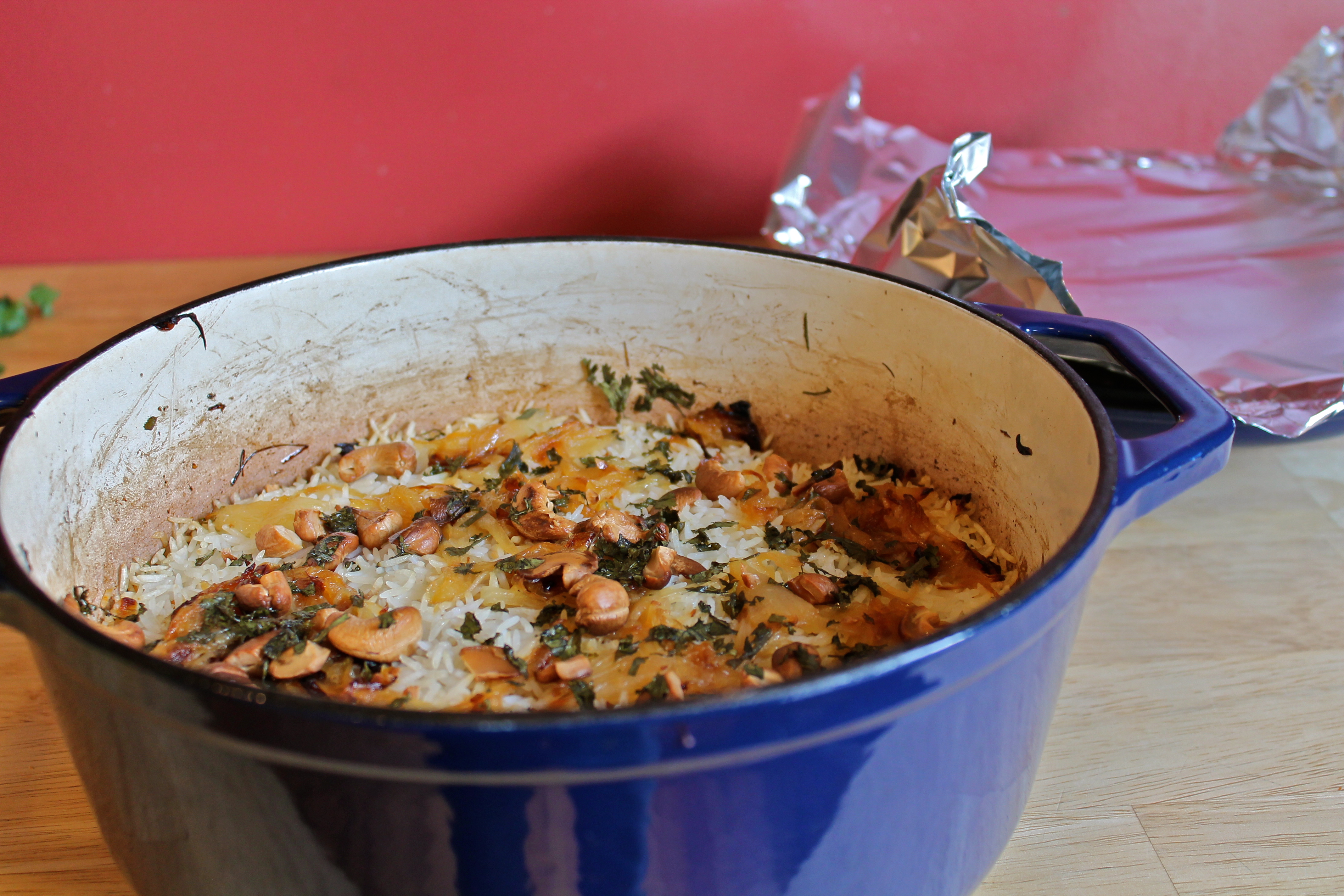
Carefully remove the lid and the aluminum foil (the pot will emit a great deal of steam, so stand back and be careful to steer clear of the hot cloud).  Remove the biryani to a platter.  Scrape out the crusty layer of vegetables and rice from the bottom of the pot, and lay it on top of the biryani.  Serve hot or warm.