Tag Archives: recipe

Crispy Sweet Potato Oven Fries

9 Oct

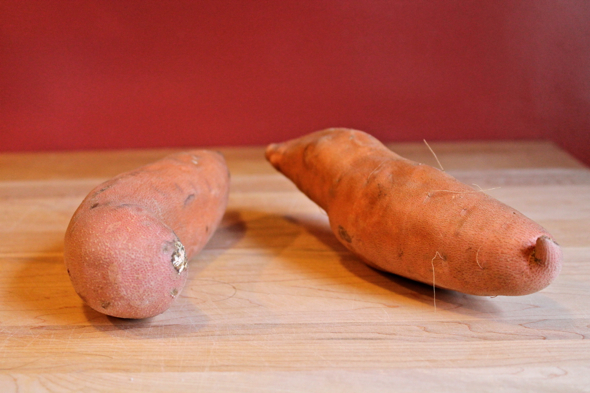
For today’s game, my black and orange food will consist of these wonderfully crisp sweet potato fries.

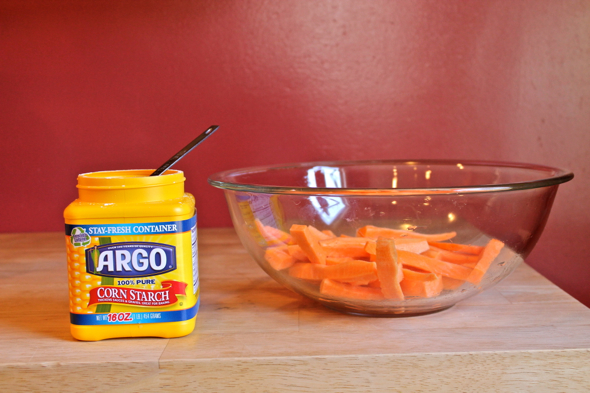
The last time I shared an oven fry recipe here, a very nice reader asked me if the same recipe and technique could be used to make sweet potato fries. It was a good question. I’d tried making sweet potato oven fries before, but the softer nature of a sweet potato just wasn’t conducive to creating a crisp, non-soggy fry. However, I had recently read about the magic of cornstarch being added to fried or oven-fried foods (cornstarch is often used in Asian cooking to achieve light and crisp results when frying things), so I thought I might apply the technique to making sweet potato oven fries.

To my utter delight, it absolutely worked. Just a light coating of cornstarch on the sticks of sweet potato ensured a crisp bite, and with just a minimal amount of oil added, the fries turned out perfectly french-fry-like without being at all greasy. I’ll definitely be holding onto this technique.

But, what of the black food to pair with this orange food? Today it’s going to be Panda licorice, and those of you who also happen to be San Francisco Giants fans will understand why this licorice is so perfectly fitting in more than one way.

Crispy Sweet Potato Oven Fries Recipe

1 large or 2 small sweet potatoes, peeled and cut into medium-thin strips

2 tablespoons cornstarch

2 tablespoons vegetable oil

salt and pepper to taste

Place peeled and cut sweet potatoes in a large bowl, then cover with warm water. Swish the potatoes around in the water, then drain the bowl and fill it with cold water. Leave the sweet potatoes in the water to soak for at least 1 hour. After soaking, drain the potatoes and pat completely dry with paper towels or a dishtowel.

Preheat oven to 400 degrees Fahrenheit. Adjust an oven rack to the lowest level.

In a large bowl, combine completely dried sweet potatoes with cornstarch. Using your hands, toss to thoroughly coat the potatoes. Pour vegetable oil onto a large, heavy baking sheet. Place cornstarch-coated potatoes on the oiled baking sheet, then toss potatoes in the oil to coat completely. Arrange potatoes in a single layer on the baking sheet.

Bake sweet potatoes for 15 minutes on the lowest rack of the oven. Remove baking sheet, carefully turn over each sweet potato fry, then return to the oven to bake for an additional 5 to 10 minutes, until the fries are dark golden brown and crisp.

Remove from oven, place fries on a paper towel-lined plate to drain off any excess oil, then add salt and pepper to taste.

Makes 2 servings, or 1 large serving.

Escarole, Leek, and White Bean Panzanella

5 Oct

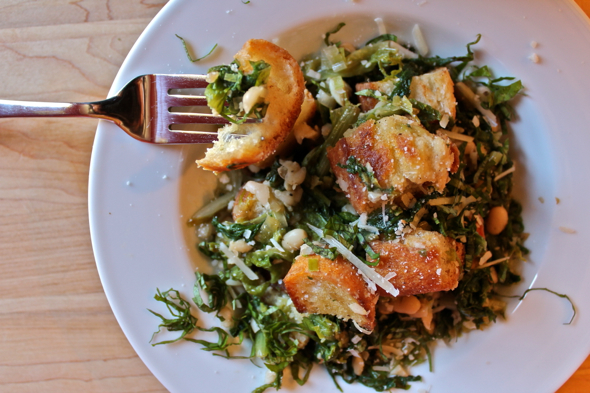
This is the type of food that could be considered a kid-repellent. It boasts a combination of punchy bitter greens, smooth leeks, and the kick of red pepper flakes. However, it also contains white beans, crisp, sautéed bread, and parmesan cheese, three things for which, in my experience, children tend to go completely nuts. As you might sense, these discrepancies combine to make one very interesting conundrum.

It’s not really a conundrum, of course. The answer to the question of, How do I make a kid like this? is simple: I don’t feed this to my kid. The bigger question, I think, would be this: Does any kid like this? Does anyone, anywhere, ever somehow get a kid to eat a dish like this? A dish so delicious in its complexity of flavor, so pleasing in its collection of textures, that I could not stop myself from eating almost the entire thing over the span of a single afternoon?

Some friends of mine once had a great Ethiopian lunch with some Ethiopian friends of theirs. Their friends’ children were in attendance, and they were happy to sit down and tuck into plate after plate of spicy lentils, spice-filled stews, and, of course, injera, the fantastic Ethiopian flatbread that is used to scoop up bites of intensely flavorful food. My friends, watching the kids devour the food with aplomb, could not help but wonder how many American kids could be led to eat such food if only they were presented it at the right time, meaning, when they were babies and just discovering the joys of solid food

Sadly, I have no answer to their query. I have tried for years to get my kid to eat all types of foods, to no avail. Indian food? No (which breaks my half-Indian heart with great sorrow). Spicy food of any sort? No. Braised greens? No. Visible strands of onions, whether caramelized or crisp? No and no. I could go on, but I’ll resist. I know that my kid has a slightly more adventurous palate than many other kids (slight—not monumental), so I’ll take whatever vegetable or Thai food consumption I can get out of him. Until he learns to appreciate more foods, I’ll just have to keep doing what I have been doing for the past several years now. This means making foods like this wonderful panzanella for myself, and finding a slight bit of pleasure in knowing that, hey, if I’m the only person who will eat this, at least that means I get to enjoy every last bite of it on my own. It’s a paper-thin silver lining, but I’ll take it.

Last Year: Heirloom Tomato Cobbler with Cheddar and Scallion Biscuit Topping

Escarole, Leek, and White Bean Panzanella Recipe

3 cups torn or cubed crusty bread

4 tablespoons olive oil, divided

1 medium leek, dark green end removed and light green/white end sliced in half lengthwise and then chopped into thin half-moons

4 large cloves of garlic, roughly chopped

1/8 teaspoon red pepper flakes

1 very large head escarole, coarsely chopped

1 cup cooked white beans

salt and pepper to taste

optional: 2 to 4 tablespoons grated Parmesan cheese

¼ cup chopped fresh basil leaves

In a large skillet set over medium-low heat, heat 1 tablespoon of olive oil. When oil is just beginning to shimmer, add bread cubes in a single layer and allow to crisp on one side (this should take anywhere from 2 to 4 minutes). Turn bread cubes over, then allow to crisp some more, shaking the skillet ever now and again to keep the bread moving around in the oil just a tad. Remove bread cubes and set aside.

Wipe any bread crumbs from the skillet, then heat the remaining 3 tablespoons of olive oil over medium-low heat. Add chopped leeks, garlic, and red pepper flakes and sauté, stirring frequently, until the leeks begin to soften, about 4 to 5 minutes. Add the chopped escarole, stir and toss to combine, then reduce the heat to low, cover the pan, and allow to cook for 5 minutes, until the escarole is wilted and has released some of its juices. Remove the lid from the pan, and continue to sauté, stirring occasionally, until the juices have evaporated a bit, about 3 minutes. Add beans to skillet, stir to combine, and allow beans to cook with greens for about a minute. Add salt and pepper to taste.

Turn the heat off under the skillet. Add the toasted bread cubes and toss to combine thoroughly. Taste for seasoning.

Divide the panzanella amongst 2 or 4 plates, depending on how hearty to want your servings to be. Sprinkle Parmesan cheese (if using) over the servings, then sprinkle over chopped basil.

Serves 2 as a meal, or 4 as a starter.

Classic Bialys

1 Oct

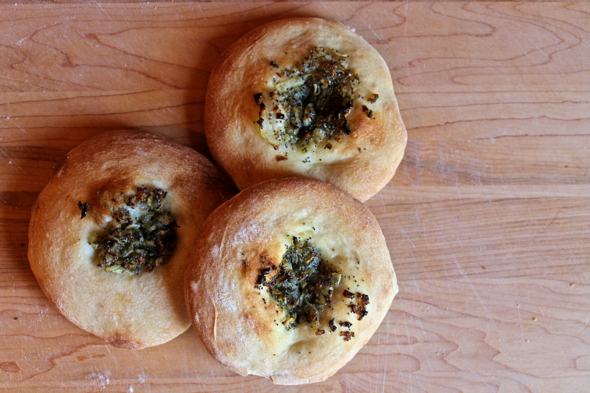
The bialy is an elusive creature. Most bialys I have encountered have been less than stellar, with a large number of them falling into the category of actually being just flat out terrible. It’s a lot like the search for a good bagel (at least, the search for a good bagel here in the Pacific Northwest). Mass produced grocery store bagels are just awful, let’s admit it. And grocery store bialys…well, so there are really no such things as grocery store bialys, since a bialy is not nearly as well known a commodity as a bagel, which actually has the benefit of saving the bialy from a fate as sad as that known by most bagels.
What I am saying is, a good bialy is hard to find. When I worked at a coffeehouse many years ago (as the vast majority of people who moved to Portland in the ‘90s were contractually obligated to do), I was always tasked with explaining to customers what those flat things covered with cheese that sat next to the bagels were. It’s a bialy, I would say, and then I would launch into an explanation of what a bialy was, only to end up having to close the speech by then warning whomever I was talking to that the bialys sold by that particular coffeehouse were not, sad to say, very good. They were, in fact, terrible. (Tangent: With the exception of some truly incredible cinnamon rolls and the twice-weekly batch of fresh shortbread cookies that I always made on my shift, the majority of the baked goods offered at this coffeehouse were just horrible. In particular, I will never forget the shamefully bad scones we sold there: chewy, tough little numbers flavored with almond extract and seemingly made by someone who had never, ever encountered an actual scone before in his or her entire life—seriously, these things were like tiny little loaves of flat, stale bread, and I never understood how the bakery we got them from was even allowed to call them scones.)
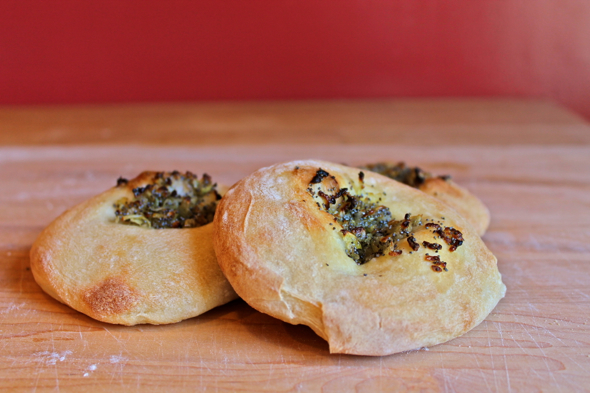
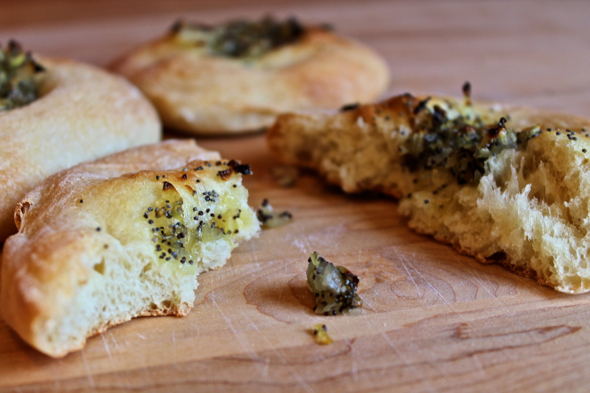
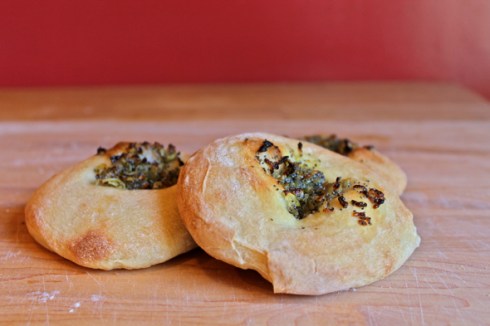
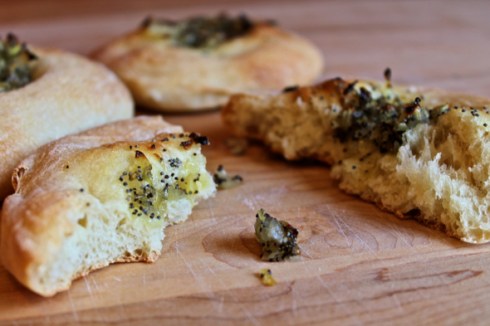
A good bialy is crisp on the outside, slightly chewy in the middle, and light throughout. The dough should have a deep flavor, like good artisan bread. The filling should be a nice dollop of sweetly sautéed onions and a touch of poppy seeds. That’s it. Those simple elements combined make one of the most pleasing savory baked goods known to all of humankind, which is why, I believe, the bialy tends to be grossly mishandled most of the time. Each element of a bialy needs to be top notch, giving every bite a component of flavor that stands strong with its companions to complete the overall taste experience.
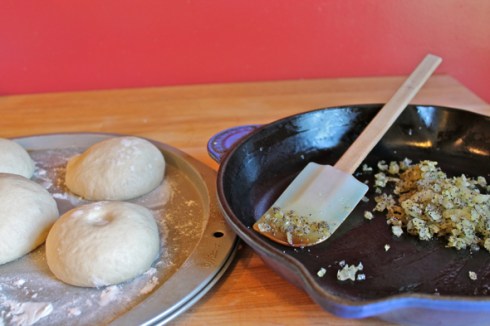
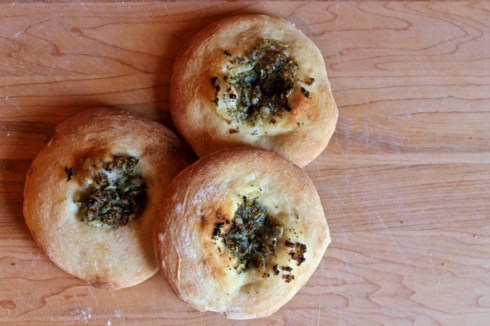
These bialys, from Rose Levy Beranbaum, do just that. They are perfect in every way, from their chewiness to their strong flavor profiles. If I could go back in time and swap these into the pastry case at my old job, I totally would, just so people could have a proper bialy experience instead of the weird, bland, cheesy one that was sadly offered. Having not mastered the art of time travel, however, I shall simply keep making these lovely little bialys at home, sharing with you and everyone else I know the delights of a classic, delicious bialy.
Last Year: Roasted Eggplant and Tomato Tart

Classic Bialys Recipe

Adapted slightly from Rose Levy Beranbaum’s Bread Bible

For the bialy dough:

2 cups bread flour

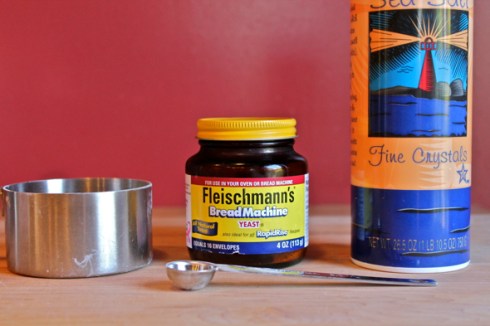
½ teaspoon instant, rapid-rise yeast

1 teaspoon salt

¾ cup plus 2 tablespoons (7 fluid ounces) warm water

For the bialy filling:

1 tablespoon olive oil

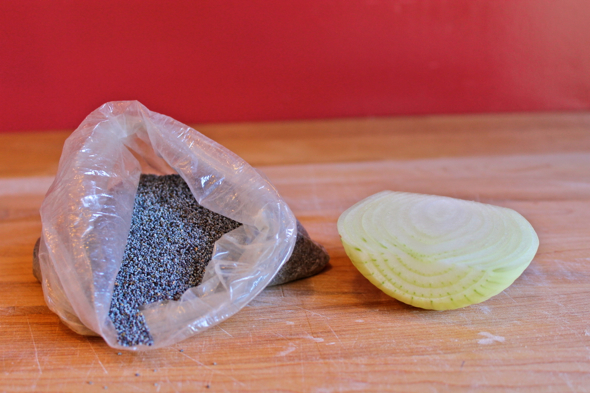
½ cup finely chopped onion

pinch of sea salt

1 teaspoon poppy seeds

generous pinch of black pepper

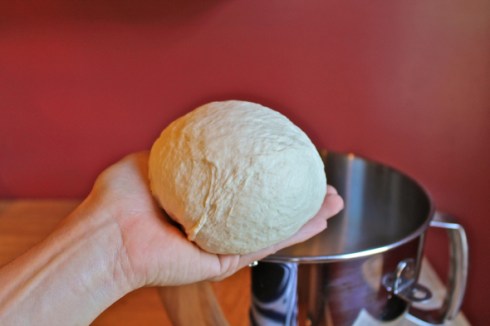
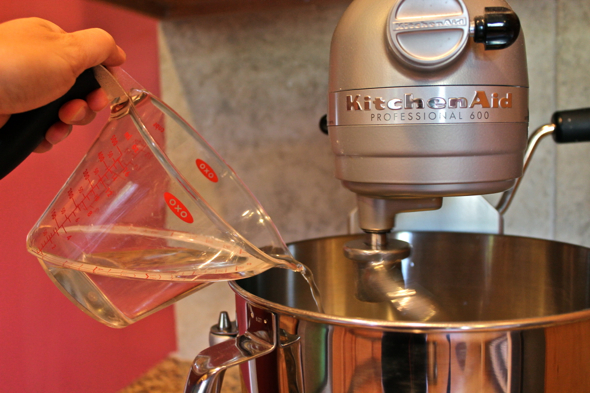
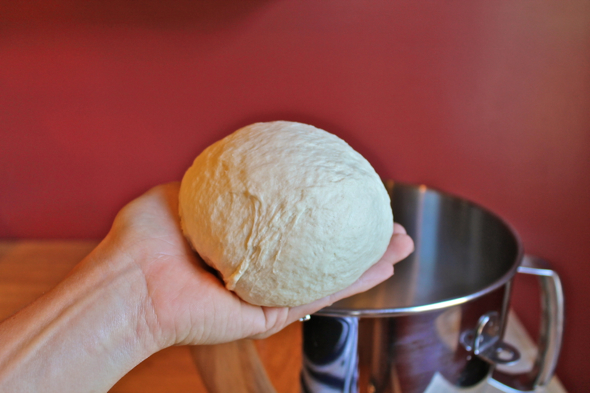
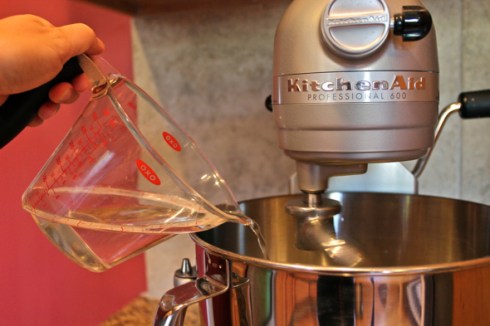
To make the bialy dough, in a large bowl, whisk together the flour and yeast, then whisk in the salt (keeping the salt from coming into direct contact with the yeast as much as possible). If using a stand mixer, fit the machine with the dough hook and turn the speed to low. Kneading on low speed, gradually pour in the water, mixing for about 1 minute until the flour mixture is moistened. Increase the mixer speed to medium, and knead for 7 minutes. If kneading by hand, once the flour mixture is moistened, turn dough out onto a floured surface and knead for 8 to 10 minutes. The fully kneaded dough should be soft and elastic, and should not stick to the bowl or surface when being kneaded.

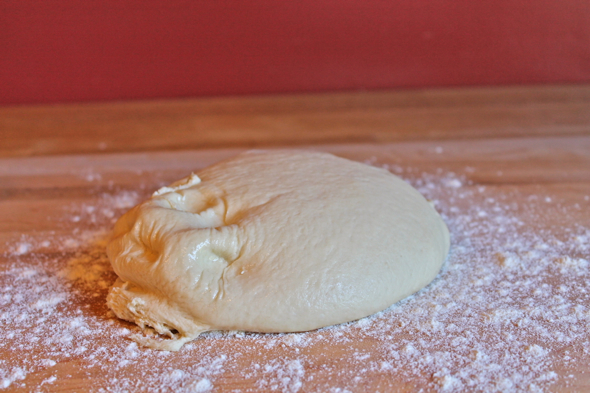
Place dough in a lightly oiled bowl, turn to coat with oil, then cover with a lid or plastic wrap and allow to rise for about 2 hours, or until the dough has doubled in size.

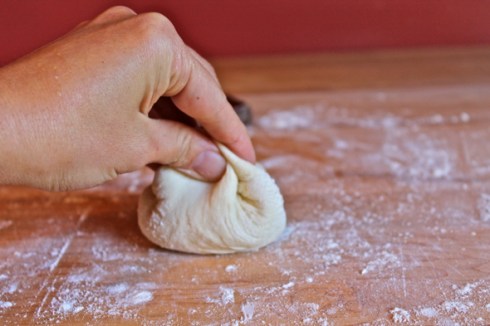
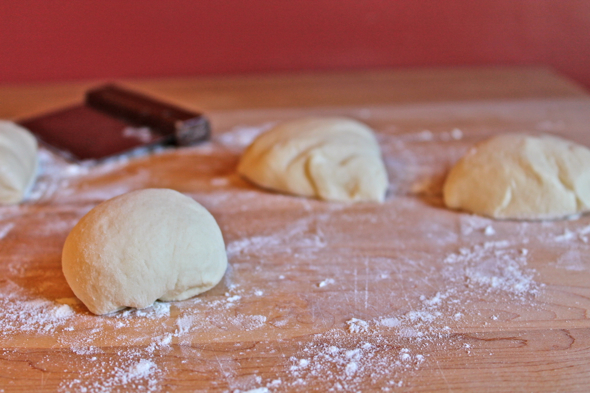
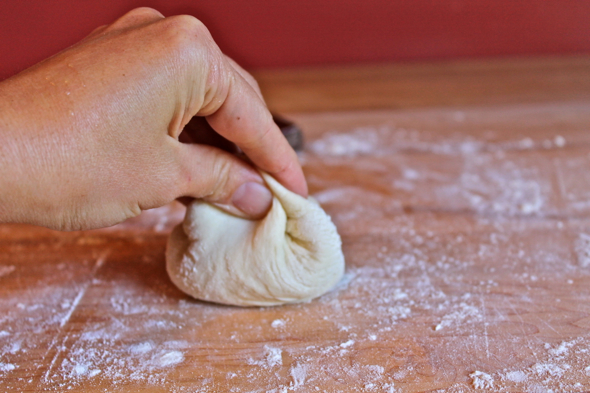
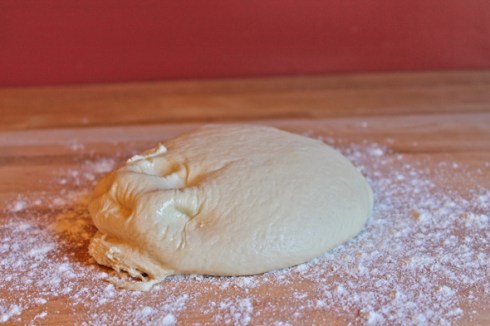
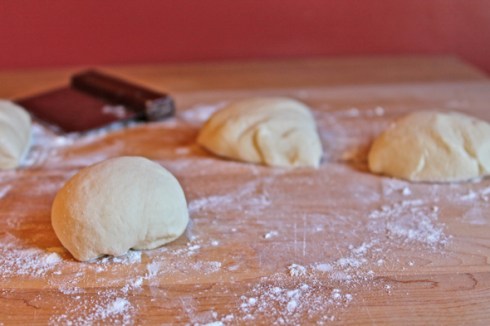
Firmly press on the dough to deflate it, then transfer it to a floured counter. Cut the dough into 6 equal pieces. Working with one piece of dough at a time, keeping the remaining dough covered, round each piece of dough by pulling the dough together to form a pouch, stretching it make a smooth skin, then pinching it together where the edges meet. Set each round on a floured baking sheet or tray, pinched side down. Lightly flour the tops and cover with plastic wrap.

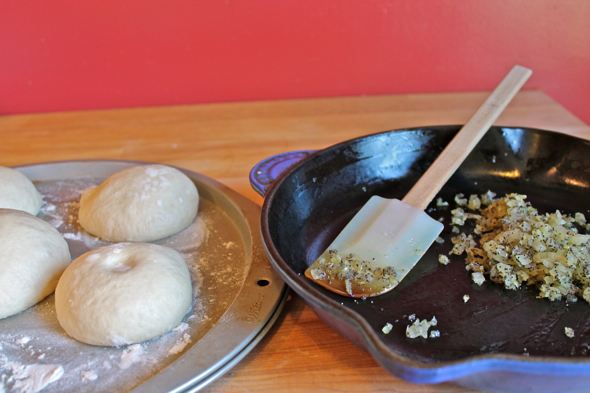
Allow bialys to rise for around 2 hours, or until almost doubled in size. When pressed lightly in the center, the bialy should keep the impression.

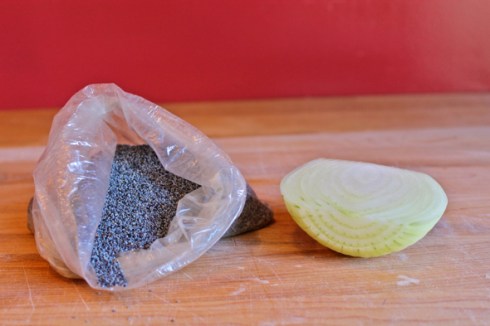
While the bialys are rising for the second time, make the filling. In a small sauté pan, heat the olive oil. Add the onion, add the pinch of salt, then sauté over medium heat, stirring often, for about 5 minutes, or until translucent. Remove from heat, add the poppy seeds and pepper, then stir to combine. Set aside to cool.

Preheat oven to 475 degrees Fahrenheit. Before preheating, place a heavy sheet pan on the floor of the oven. Adjust an oven rack to the lowest level, and place a heavy baking sheet or baking stone on the rack to preheat along with the oven. Line a rimless or overturned baking sheet with a piece of parchment paper, and set aside.

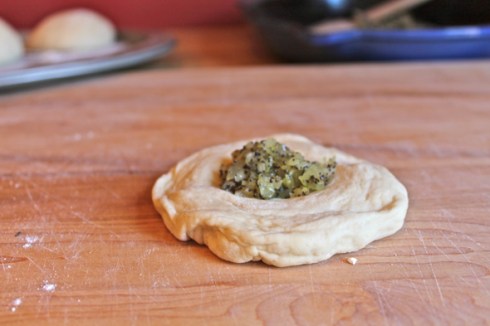
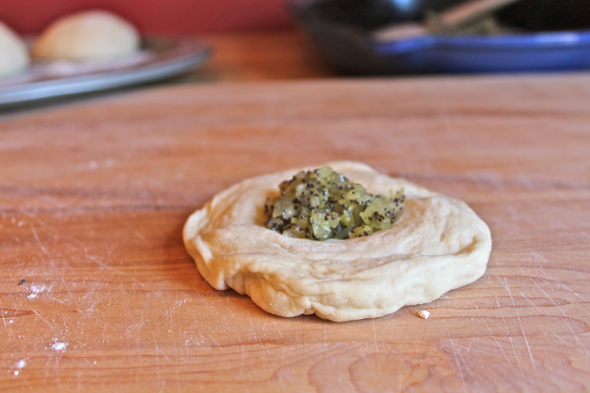
Working with one piece of dough at a time, hold a piece of dough with both hands. With your thumbs in the middle and almost touching, pinch the center of the dough tightly between your thumbs and first two fingers and stretch the dough to around 5 inches in diameter, forming a crater in the center. Place the shaped dough on the parchment-lined baking sheet. In the center crater of the bialy, spoon a heaping teaspoon of the onion-poppy seed filling. I made three bialys at a time, since I only wanted to bake three bialys at a time.

To bake the bialys, slide the parchment with the bialys directly onto the hot baking stone or heavy baking sheet. Toss a handful of ice cubes onto the hot baking sheet placed on the oven floor (or, if you are way of misplacing the ice cubes, carefully tip the ice cubes from a small plate onto the hot baking sheet placed on the oven floor), then immediately shut the oven door. Bake the bialys for 8 to 10 minutes, or until golden and mottled with brown spots.

Remove the bialys from the oven on their parchment, then discard parchment paper and place bialys on a wire rack to cool until just warm.

Bialys will keep for a day at room temperature, but they are best (read: super phenomenally good) eaten the day they are made.

Makes 6 bialys.