Tag Archives: recipe

Lemon Pancakes with Blueberry Sauce

17 Sep

How many pancake recipes does one person really need to have? If I were to nail things down to their very basic elements, maybe my answer would be that a person only needs one single pancake recipe, that recipe being this one, which never fails to produce the most perfect pancakes every single time. Then again, if you’re in the mood for a slightly more health-conscious pancake, a pancake fortified with multiple grains, no refined sugar, and no saturated fat, perhaps you’d prefer to only have on hand a recipe like this one, a multi-grain blueberry pancake that never fails to please. Would that be all? Does anyone really need anything else in the way of pancakes?
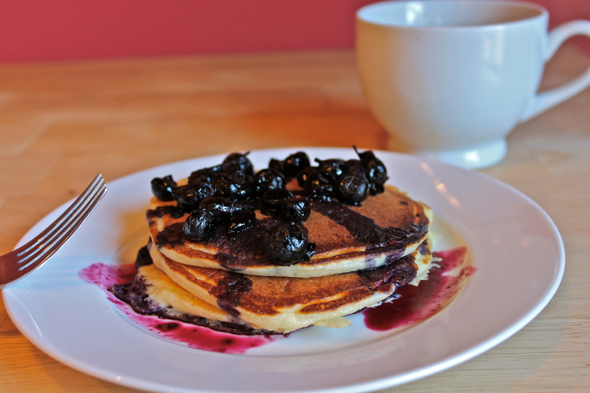
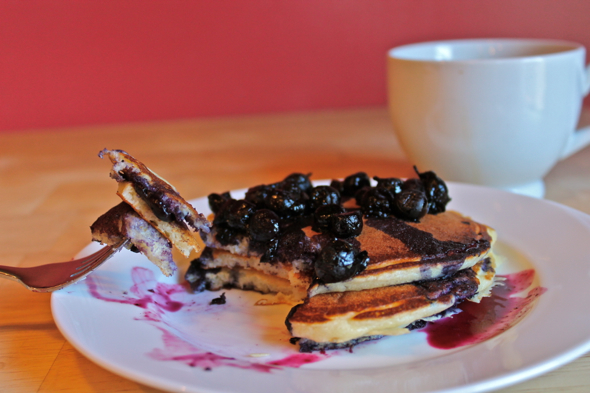
Having just made these unbelievably wonderful lemon pancakes, my answer would definitely have to be a resounding yes. Dear lord, yes. Intensely lemony, perfectly light, and punched up with the brightest blueberry sauce you can imagine, these pancakes are giving my previous standbys a run for their money.
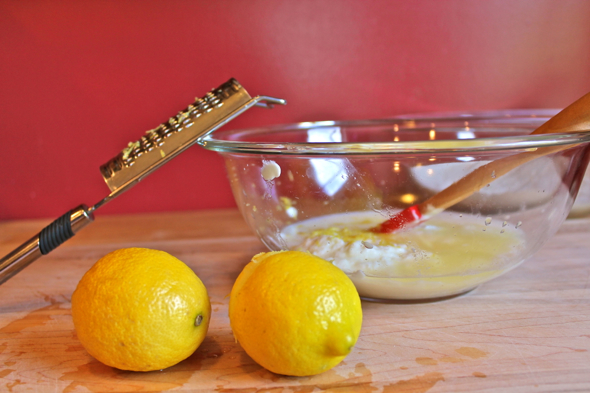
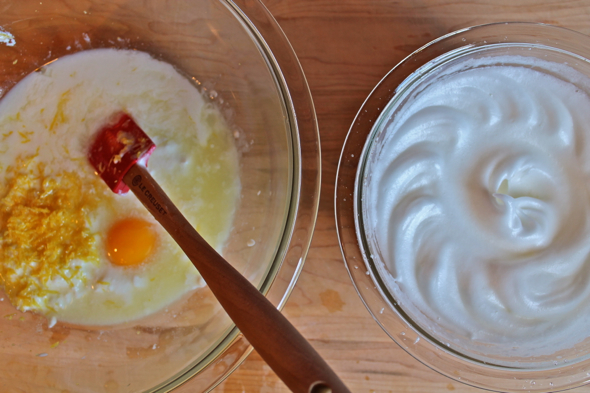
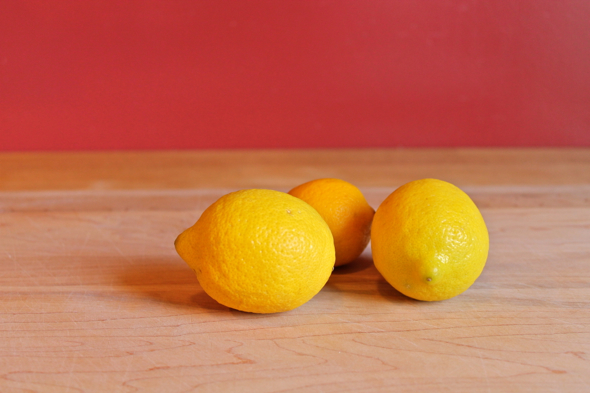
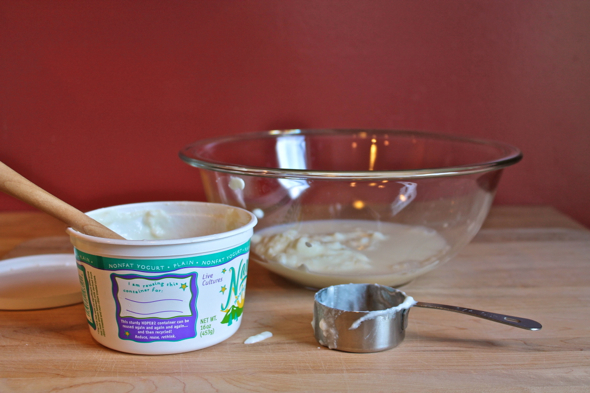
Of course, these pancakes satisfy a different element of pancake worthiness. Whereas the pancakes I usually favor are a simple affair that are comprised of standard pantry and refrigerator staples, these pancakes are a slightly fancier endeavor. Loads of lemon zest, a good dose of yogurt, and fluffy egg whites make these pancakes a special treat, something with the taste characteristics of a lemony muffin, but with a heavenly lightness. Their front and center lemon flavor just begs to be paired with a fresh dose of berries, so I complied by topping everything off with a dead-simple berry sauce that brings out all the right notes of what just might be my new Saturday morning breakfast treat. These are pancakes, stepped up, and you definitely don’t want to miss out.
Last Year: Black Pepper Buttermilk Biscuits

Lemon Pancakes with Blueberry Sauce Recipe

1 cup unbleached all-purpose flour

2 tablespoons sugar

1 ½ teaspoons baking powder

½ teaspoon baking soda

¼ teaspoon salt

¾ cup plain yogurt

1/3 cup milk

finely grated zest of 2 lemons

¼ cup freshly squeezed lemon juice

3 tablespoons unsalted butter, melted then cooled slightly

1 teaspoon pure vanilla extract

1 large egg, separated

1 large egg white

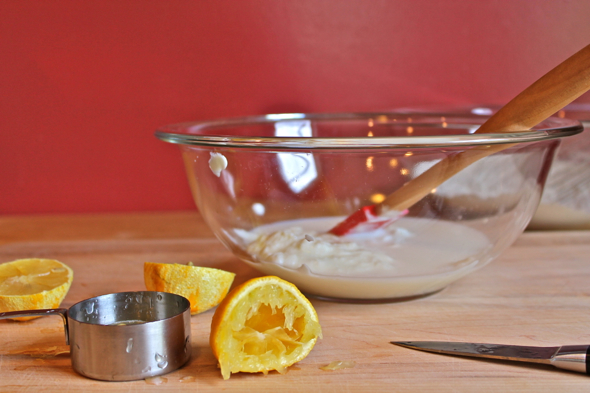
In a medium bowl, whisk together flour, sugar, baking powder, baking soda, and salt. In a large bowl, whisk together the yogurt, milk, lemon zest, lemon juice, melted butter,  vanilla, and 1 egg yolk. Add the dry ingredients to the wet ingredients, and gently whisk together until just barely combined.

Now would be a good time to start heating a cast iron skillet or nonstick skillet over low heat.

In a separate bowl, whisk the 2 egg whites together until they form soft peaks. Gently fold the egg whites into the batter, mixing until just combined.

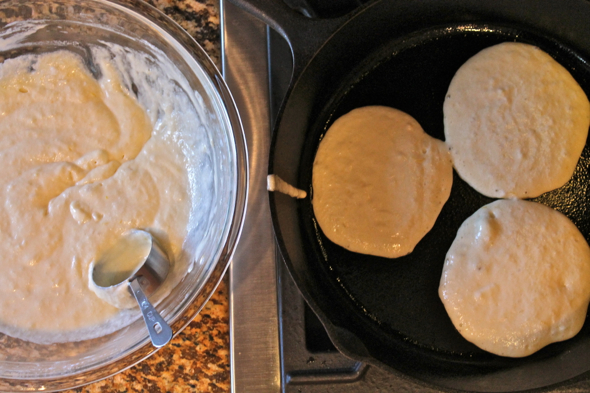
In a skillet that has been preheated over low heat (if you have a well-seasoned cast iron skillet, you should not have to oil it prior to cooking the pancakes, but if your skillet tends to allow food to stick, very lightly oil the skillet with a tiny bit of vegetable oil), drop batter ¼-cup at a time, onto the skillet. Cook pancakes on one side until they have risen a bit and appear somewhat dry at the edges, with numerous deflating bubbles on the surface (this can take anywhere from 2-5 minutes for the first batch of pancakes). Flip pancakes over and cook for an additional 2-3 minutes, until golden brown.

Remove cooked pancakes to individual plates to be covered with berry sauce and eaten immediately, or place pancakes on a wire rack set on a baking sheet, then keep pancakes warm in a 200-degree oven until you are ready to serve them. In any case, eat the pancakes as soon as possible, for maximum deliciousness.

Blueberry Sauce

3 cups blueberries, fresh or frozen are both fine

1 teaspoon sugar

1/4 cup freshly squeezed orange juice

2 tablespoons freshly squeezed lemon juice

Combine all ingredients in a saucepan and place over medium heat.  Cook, stirring constantly, until the fruit just softens, roughly five minutes. Transfer mixture to a blender or food processor and puree until about half of the mixture is blended into a liquid and the other half remains slightly chunky.  If you are not a fan of textured sauce, feel free to puree the sauce until it is completely smooth, or until your desired texture has been reached. I wanted a super textured sauce, so I hardly pureed this batch at all.

Perfect Oven Fries with Truffle Salt

13 Sep

There is a burger place two blocks from our house that makes the most incredible french fries imaginable. Perfectly crisp, these fries are quickly tossed with just a hint of truffle oil when they emerge, piping hot, from a deep fryer, and if there was ever a time that I thought I sounded like a complete loon when discussing a food idea I enjoyed, now would be it: I am raving about fried food that is spritzed with oil. Whatever has happened to me?

As some of you may recall, I am a french fry devotee, by which I mean that when I am looking for a rare treat or a counterbalance to a bad day, my thoughts turn to french fries. (Note: When I say that I am looking for a “rare” treat, I do not mean that I rarely partake in treats, but rather that, when partaking in this particular treat, it is a rare occurrence. French fries and I only come into contact about six times a year, so we’re not nearly as cozy as one might suspect. Cake and I, on the other hand…) One might think that, being a french fry fanatic, I will eat any french fry, without discrimination, and declare it to be wonderful. Not so. Too often, I have eaten french fries that are intensely greasy, sadly soggy, or obviously just fried sticks of previously-frozen potatoes that are lacking in any sort of notable flavor or positive qualities. I don’t love all french fries. I only love really, really good french fries.

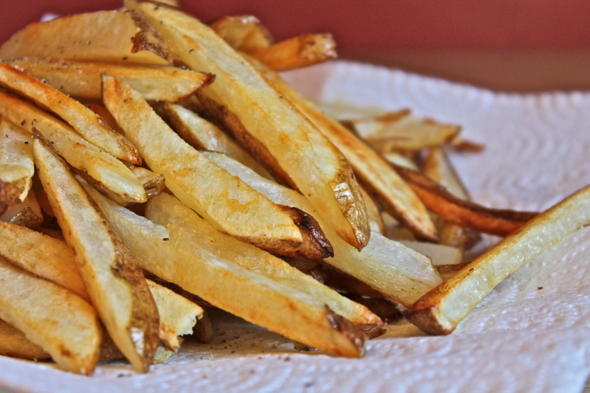
This is why, at the risk of sounding ridiculous, it is such a joy for me to announce that, at long last, I think I have perfected the art of making french fries at home. Not just that, I have perfected a recipe for making super crisp and flavorful baked french fries, which is like the Holy Grail of homemade french fry making. No vat of scorching hot oil, my friends. No lingering scent of old grease. Just three ingredients (four, if you count an optional sprinkling of black pepper), a couple of baking sheets, and a hot oven are all that lie between you and the most delicious oven fries—perhaps even the most delicious french fries, period—you’ve ever made. The secret, if one can even call it that, lies in soaking your potato slices in a bowl of warm water before you toss them with oil and salt and then roast them in the oven. That’s it. I know. I know. A few tablespoon of oil, a bit of truffle salt, and you’re in. I’ll stop talking now so we can get right to it.

Last Year: The best wine opener I’ve ever owned

Perfect Oven Fries with Truffle Salt Recipe

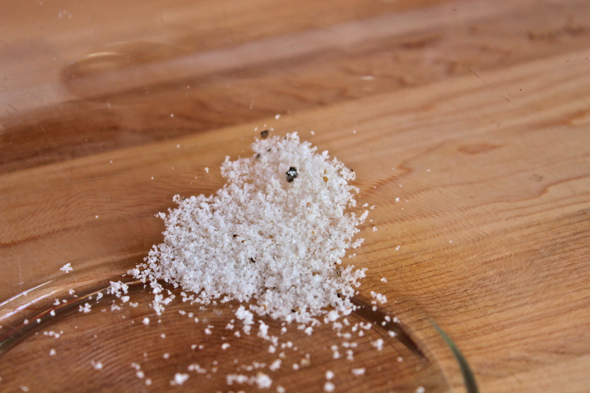
It just so happens that two different people have given me truffle salt this year, so I happen to have an abundance of it lying around. If you’re wondering how to find some for yourself, I found a few listings on Amazon that were not too expensive. I also found some listings that were outlandishly expensive, so please do keep in mind that a little bit of this stuff goes a long way, so you certainly don’t need to buy more than an ounce or so of it in order to have a good supply.

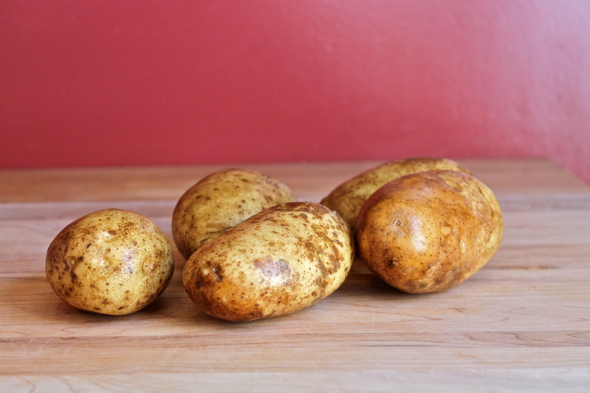
About 2 pounds medium-sized russet potatoes

4 tablespoons vegetable oil

1 teaspoon truffle salt, divided

optional: freshly ground black pepper

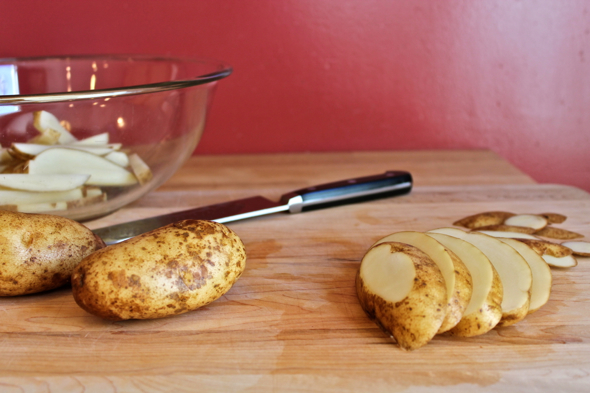
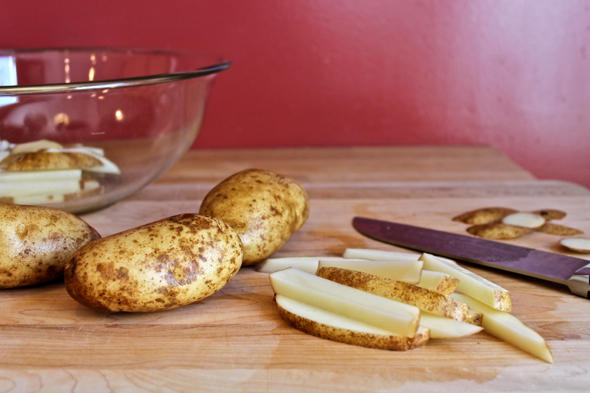
Slice the short ends off of the potatoes, then slice off just a bit of the long sides, creating a somewhat flat surface on either side. Cut the potatoes lengthwise into ¼-inch slices, then cut those long slices into ¼-inch strips.

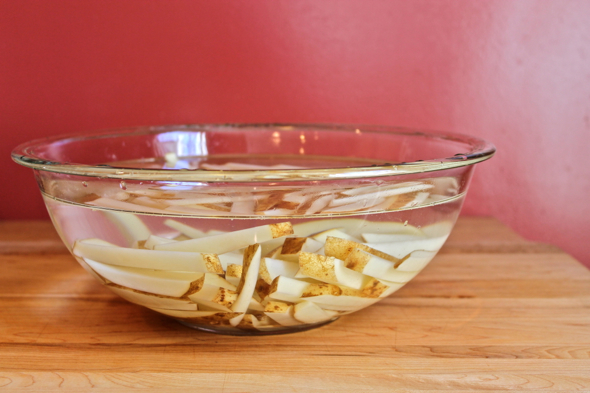
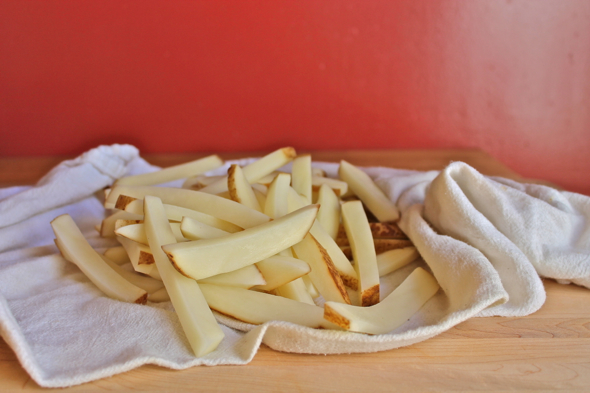
Place the potato strips in a large bowl of lukewarm water, then gently swish the potatoes around until the water becomes quite cloudy. Drain the water from the bowl, refill with lukewarm water once more, then swish the potatoes around again until the water is again cloudy. Drain the water from the bowl, then fill a third time with lukewarm water, and allow the potatoes to sit in the water for at least 30 minutes, or up to 1 hour.

While the potatoes are soaking, preheat your oven to 475 degrees Fahrenheit. Place an oven rack in the lowest position, and another oven rack in the second-lowest position.

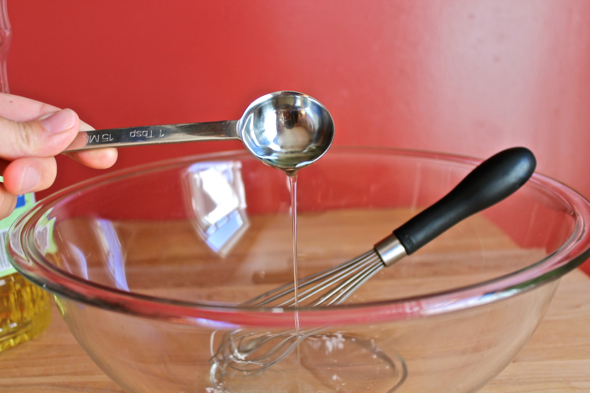
After the potatoes have soaked, thoroughly drain them in a colander. Wipe dry the large bowl in which the potatoes were soaking. In the bowl, combine the vegetable oil with ½ teaspoon of the truffle salt. Whisk the salt into the oil until it has dissolved as much as possible (you will still be able to see many grains of salt after whisking for a minute or so, but that is all right—you just want to thoroughly infuse the oil with the seasoning). Leave the oil and salt together while you finish drying the potatoes by thoroughly blotting them in a large dishtowel.

Place the dry potatoes in the bowl with the oil and salt. Using your hands, toss everything together until all of the potatoes are thoroughly coated in the oil and salt. Divide the potatoes amongst two large, heavy duty baking sheets, making sure the potatoes are arranged in a single layer. Tightly cover the baking sheets with foil, then place one batch of potatoes on the lowest oven rack, and the other batch on the second-lowest rack. Bake the potatoes for 15 minutes, exchanging the positions of the two baking sheets halfway through.

Remove the foil from the baking sheets, then return sheets to the oven, one sheet on the lowest rack, the next sheet on the second-lowest rack. Bake for 10 minutes. Remove baking sheets from oven, carefully flip over the potatoes, again arranging them in a single layer, and return to the oven to finish baking, reversing their positions for the final baking (so the sheet that was just one the lowest level is now on the second-lowest level, and vice versa). Bake for an additional 15 minutes, until the potatoes are a deep golden brown and crisp all over.

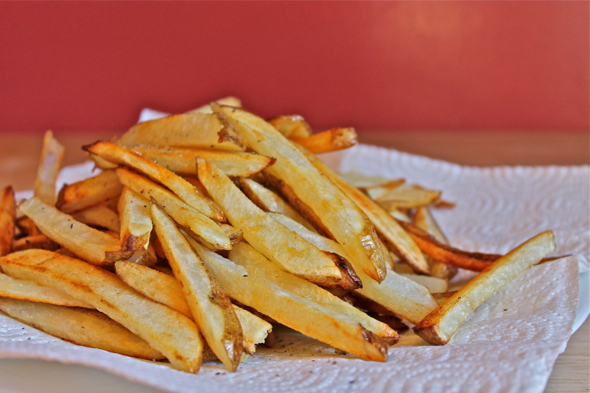
Remove potatoes to a plate lined with a layer of paper towels. Sprinkle potatoes with the remaining ½ teaspoon of truffle salt, and, if you desire, a light sprinkling of freshly ground black pepper. Serve piping hot.

Spice Cake with Salted Brown Butter Frosting

10 Sep

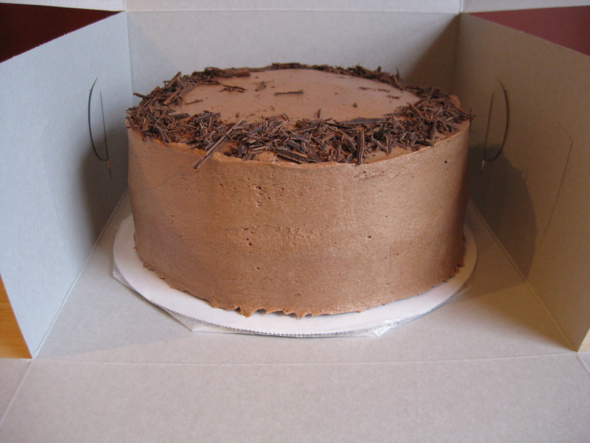
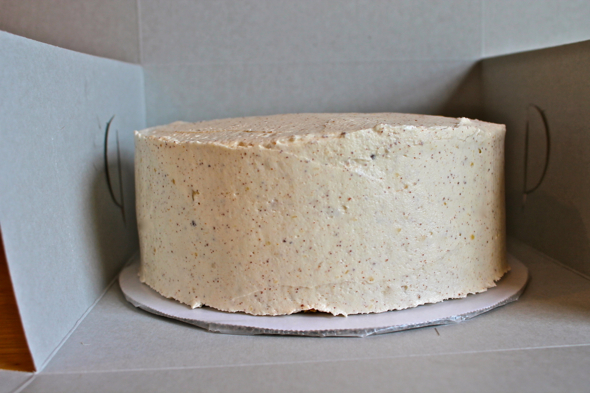
A few months ago, I made a bunch of cakes for a friend’s Kickstarter campaign. To me, this was a task on par with that of an artist being commissioned to paint a fine portrait. I took it very, very seriously. I bought bakery boxes in which to present the cakes. I made house calls to each and every cake recipient, making sure to describe, in fine detail, the nuances of not only the cakes, but also their frostings and/or garnishes. I shaved chocolate to decorate the cakes, I made special cardboard cake stands on which to sit each cake in its box, and then I hand-stamped my name, along with the name of this very website, onto each cake box. Like I said, I took my task very, very seriously. Behold:

Remind me to tell you about this cake at another time.

Though I have encountered many people who simply cannot believe that I would go to such great cake-making lengths and not get paid a penny to do so, the fact remains that, incomprehensible as it may seem, I really enjoy making cakes. I also enjoy making salads, Indian food, bread, and…well, food. Just in general, I enjoy making food.

A couple of years ago, I agreed to make an enormous spread of food for my son’s school open house, and when, on the afternoon of the open house, it began to snow (which, just to be clear, rarely happens here), I was struck with both parts panic and delight when I realized that, my lord, what happens if the open house gets canceled and I get stuck with all this food. And then I realized that, hey, if the open house gets canceled, we get stuck with all this food. The samosas, the smoked salmon bruschetta, the caramelized onion flatbread, the lemon bergamot bars, the spicy brownies—all of it would have been ours and ours alone. Most of the time, when I prepare food in this manner, I never get to actually eat it. I just drop it off, then come back later on to retrieve the empty platters. For the first time ever, I was faced with the possibility of actually being able to eat the food I had spent the past two days making. It was equal parts exciting and confusing.

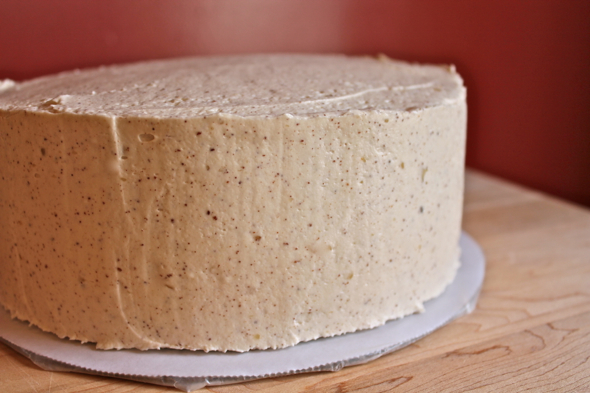
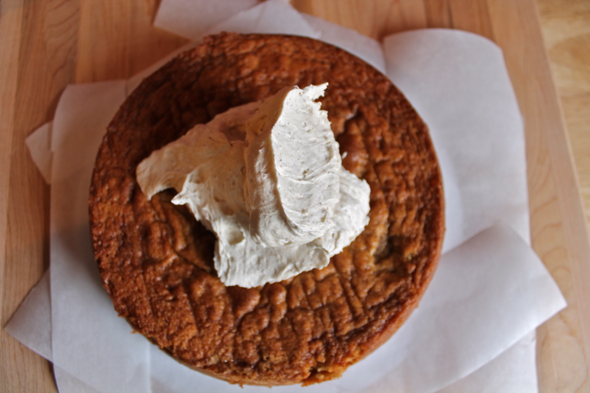
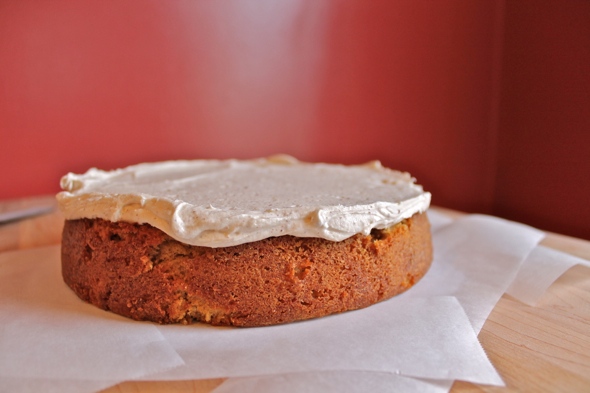
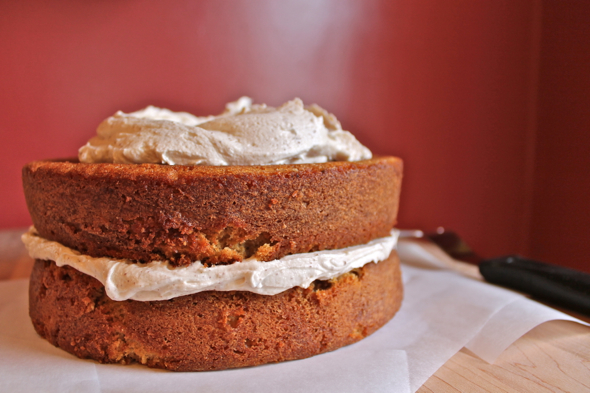
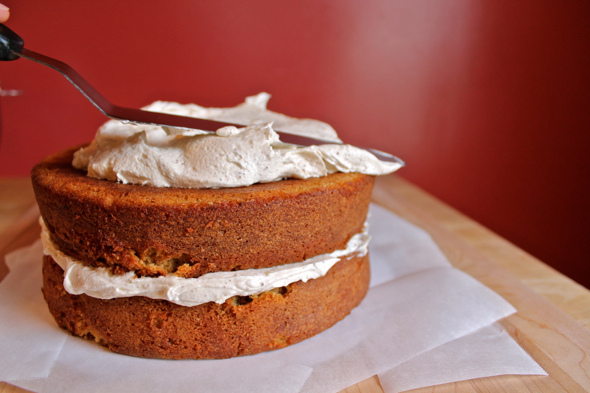
This is basically what happens when I make cakes for people, as well. I lovingly prepare the cake, frost it with the gentlest of care, then nestle it into a special box, never to be seen again. I suppose that is why, when I was scrolling through some old photos from the beginning of the year, I almost could not remember making this spice cake. The spice cake recipe from America’s Test Kitchen, packed with spices that get bloomed in brown butter, then perked up with a shot of fresh ginger, is an old favorite of mine. The frosting, dreamed up when I was looking for a way to really punch up the cake, is a new favorite.

The brown butter in this frosting is the perfect compliment to the brown butter in the cake, and the hit of sea salt contained within supplies the most wonderful undertone to the warm sweetness of the cake. How do I know this, having just admitted that I never had the chance to taste this cake, as it was meant for someone other than me? Well, I may have never tasted this particular cake you see in the picture, but you’d better believe that, as soon as I was able, I took the time to make another one of these cakes. And the second time, it never had a chance to leave the house.

Last Year: Green Beans with Cherry Tomatoes Caramelized Lemon-Balsamic Onions

Spice Cake with Salted Brown Butter Frosting Recipe

Spice Cake

Adapted from The America’s Test Kitchen Family Baking Book

1 tablespoon ground cinnamon

¾ teaspoon ground cardamom

½ teaspoon ground allspice

¼ teaspoon ground nutmeg

16 tablespoons (2 sticks) unsalted butter, cut into 16 pieces and softened

2 ¼ cups unbleached all-purpose flour

½ teaspoon baking powder

½ teaspoon baking soda

½ teaspoon salt

2 large eggs, room temperature

3 large egg yolks, room temperature

1 teaspoon pure vanilla extract

1 ¼  cups granulated sugar

2 tablespoons light or mild molasses

1 tablespoon grated fresh ginger

1 cup buttermilk, room temperature

Adjust an oven rack to the middle position. Preheat oven to 350 degrees Fahrenheit. Grease and flour 2 9-inch round cake pans, then line the bottoms with rounds of parchment paper.

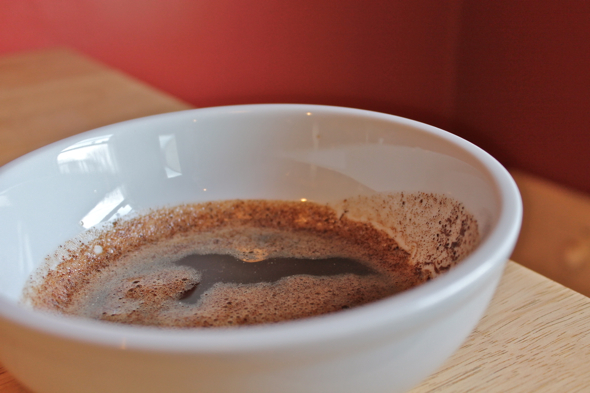
In a small bowl, combine cinnamon, cardamom, allspice, and nutmeg. In a small skillet, melt 4 tablespoons of the butter over medium heat and continue to cook, swirling the pan constantly, until the butter turns light brown (this should take anywhere from 3 to 6 minutes). Stir in the spice mixture and quickly cook until fragrant, about 15 seconds. Remove from heat and pour the mixture into a bowl to cool slightly.

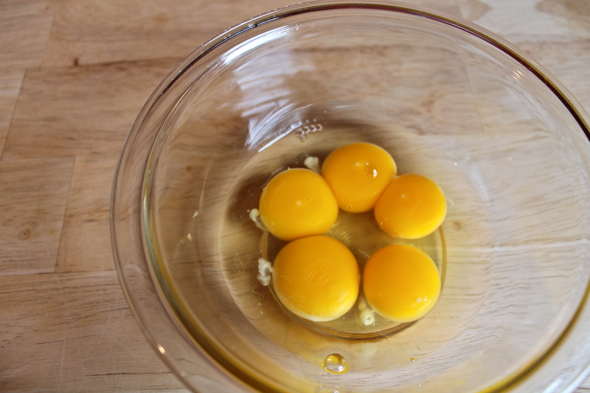
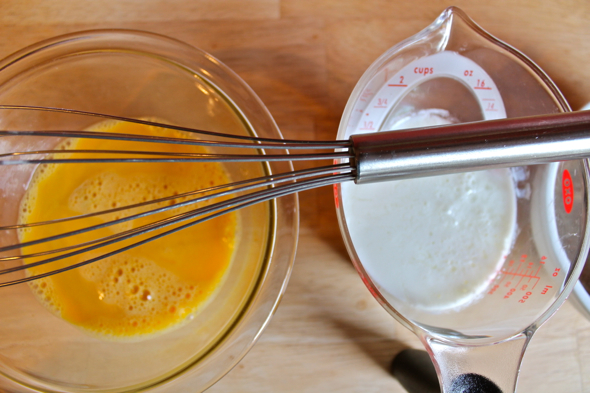
In a medium bowl, whisk together the flour, baking powder, baking soda, and salt. In a small bowl, whisk together the eggs, egg yolks, and vanilla.

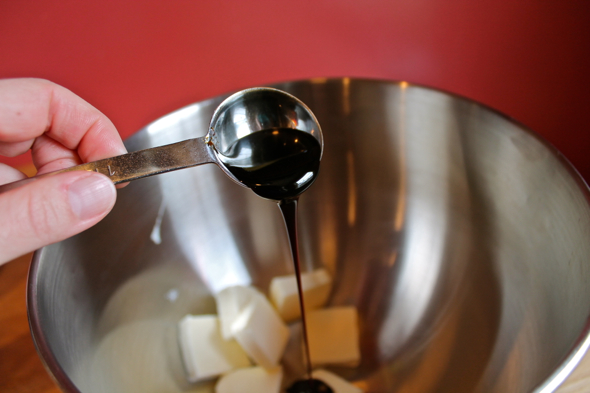
In a large bowl, or in the bowl of a stand mixer, beat the remaining 12 tablespoons of butter with the sugar and molasses. Beat on medium-high speed until the mixture is light and fluffy, about 3 to 6 minutes. Scrape down the sides of the bowl, then beat in the ginger, the cooled butter-spice mixture, and half of the egg mixture until combined, about 30 seconds. Beat in the remaining egg mixture until combined, about 30 more seconds.

Reduce the mixer speed to low, scrape down the sides of the bowl, and beat in one-third of the flour mixture, followed by half of the buttermilk. Repeat with half of the remaining flour mixture and the remaining buttermilk. Beat in the remaining flour mixture until just combined.

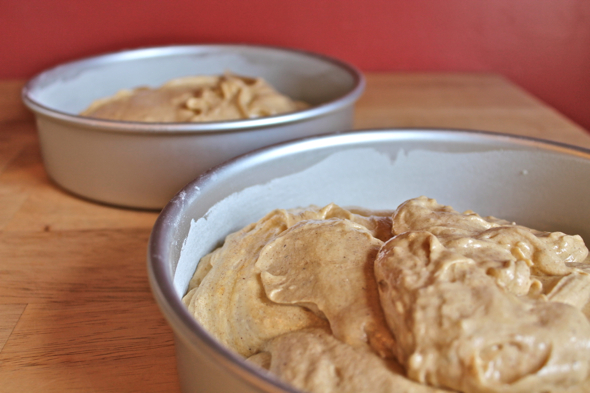
Give the batter a final stir with a rubber spatula to make sure it is thoroughly combined and there are no unmixed bits at the bottom of the bowl. Scrape the batter into the prepared pans, smooth the tops, and gently tap the pans on the counter to settle the batter. Bake the cakes until a toothpick inserted in the center comes out clean with a few moist crumbs attached, about 20 to 25 minutes, rotating pans halfway through baking.

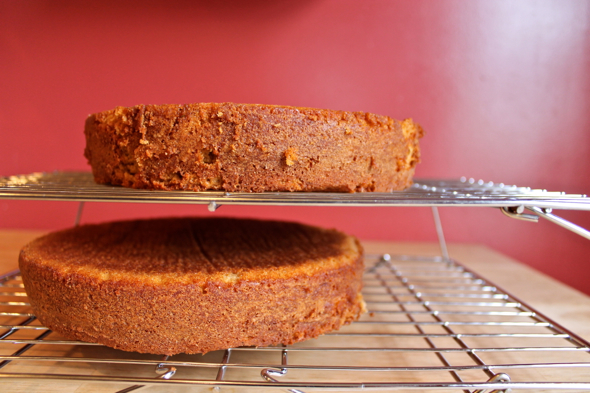
Allow the cakes to cool in their pans for 10 to 15 minutes, then run a small knife around the edges of the cakes and flip them out onto a wire rack to finish cooling completely. Peel off the parchment paper and allow cakes to cool for at least 2 hours.

Salted Brown Butter Frosting

3 sticks unsalted butter, cut into chunks and softened

2 tablespoons milk or cream

2 teaspoons pure vanilla extract

heaping ¼ teaspoon sea salt

3 cups confectioners’ sugar

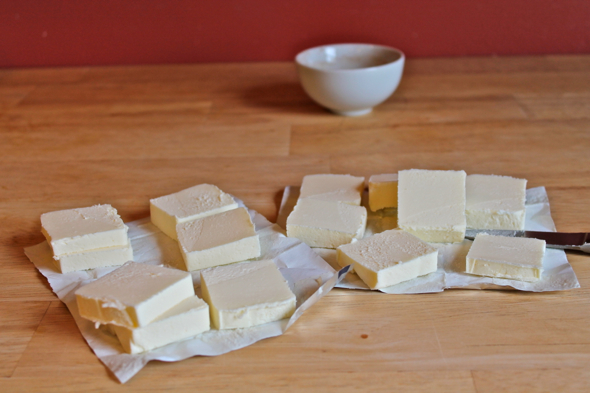
In a large skillet set over medium heat, melt 2 sticks of the butter, then cook, swirling constantly, until the butter turns light brown and just begins to release a nutty aroma. Remove from the heat, then transfer to a medium bowl. Place the bowl in the refrigerator, and cool the browned butter for 30 to 45 minutes, stirring every 10 minutes, until the browned butter reaches the consistency of softened, room temperature butter.

Remove cooled browned butter to a large bowl, or the bowl of a standing mixer. Add the remaining stick of butter, milk or cream, vanilla, and salt. Beat together at medium-high speed until smooth, about 1 to 2 minutes.

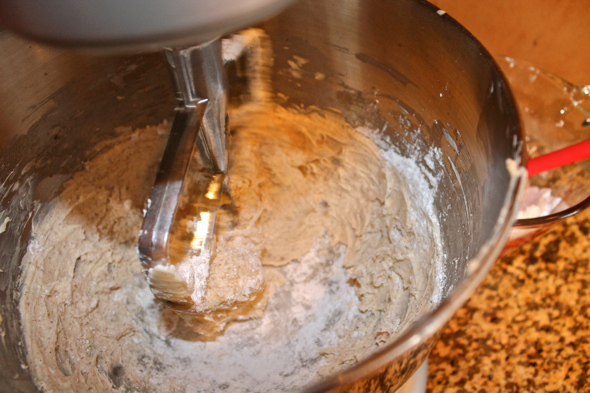
Reduce mixer speed to medium-low, then slowly add the confectioners’ sugar and beat until smooth and incorporated, about 5 minutes. Increase mixer speed to medium-high and beat until the frosting is light and fluffy, which can take anywhere from 5 to 10 minutes, depending on the power of your mixer.

Makes about 4 cups of frosting, enough to frost a 2-layer cake or one large sheet cake.