Archive | June, 2011

Pizza with Chicken Sausage, Fennel, and Spinach

8 Jun

Having just shared with you my favorite recipe for pizza dough, it seems only natural that I should then share with you what currently holds court as my most favorite pizza.  As you may have guessed, it involves a lot of vegetables.

I have no idea if this is actually true, but a friend of mine who hails from a long line of Italian descendants once told me that, in Italy, one is more likely to spot a great deal of vegetables on a pizza than a great deal of meat.  Toppings are sparse, he told me, and slices are not meant to be weighted down with a heavy pile of cheeses and meats.  Again, I have no idea if this is actually true, but I was intrigued to hear it.  Not being Italian, and having never been to Italy, I can only venture a guess as to what the Italian pizza-eating experience is like, and I would never judge what someone did or did not want on a pizza.  I am Indian, for heavens sake.  My people put mutton and peas on pizza.  That right there disqualifies me from passing judgment on any and all matters related to pizza toppings.
What I feel I can do, however, is at least make a valid statement concerning what I think is the best way to handle and cook pizza dough.  In my mind there are two very important steps that one can follow and be almost guaranteed a flawless pizza experience.

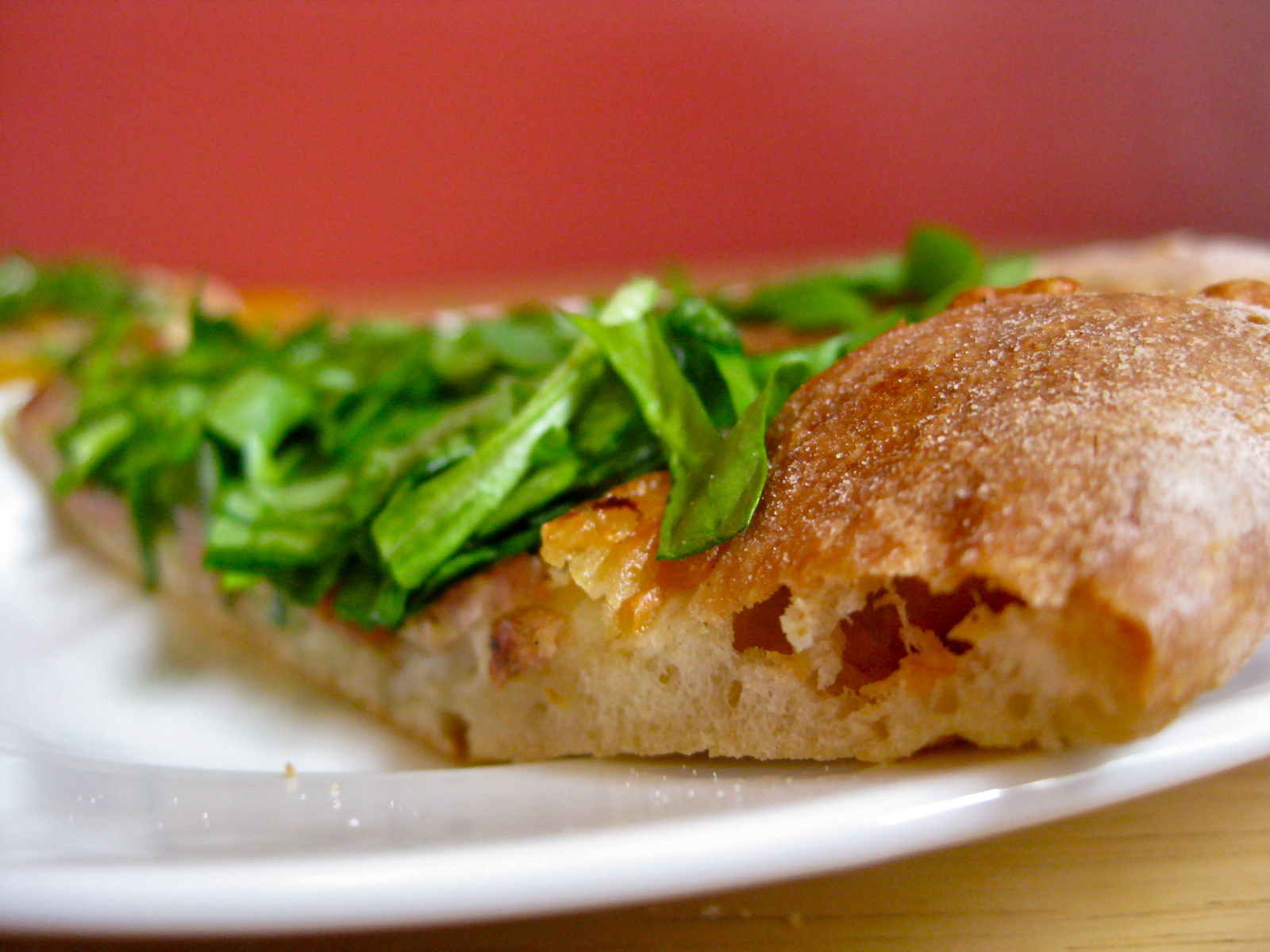
1) Hand stretching dough, though it takes marginally more time than using a rolling pin, produces a light and bubbly crust with plenty of stretch and chew.  The heat from your hands helps the dough to relax, and you don’t end up toughening the dough and forcing out all the air like you do when you flatten out a disc of dough with a rolling pin.  Take the extra four minutes and hand stretch your dough.  You won’t regret it.

2) Bake your pizza on the lowest oven rack possible, at the highest temperature possible.  You don’t need a pizza stone to get a great crunch on your pizza dough, but you do need to create a bit of auxiliary heat under your pizza.  Placing a heavy baking sheet in the oven, on the lowest rack possible, while your oven preheats, will help crisp up the bottom crust of your pizza.  The heat from the hot pan will work its way up through the crust of your pizza while the cheese on top melts and the top crust browns.  Ever make a pizza with crisp edges and a soft and gummy middle?  Using a preheated pan in the lower portion of your oven will solve that problem.
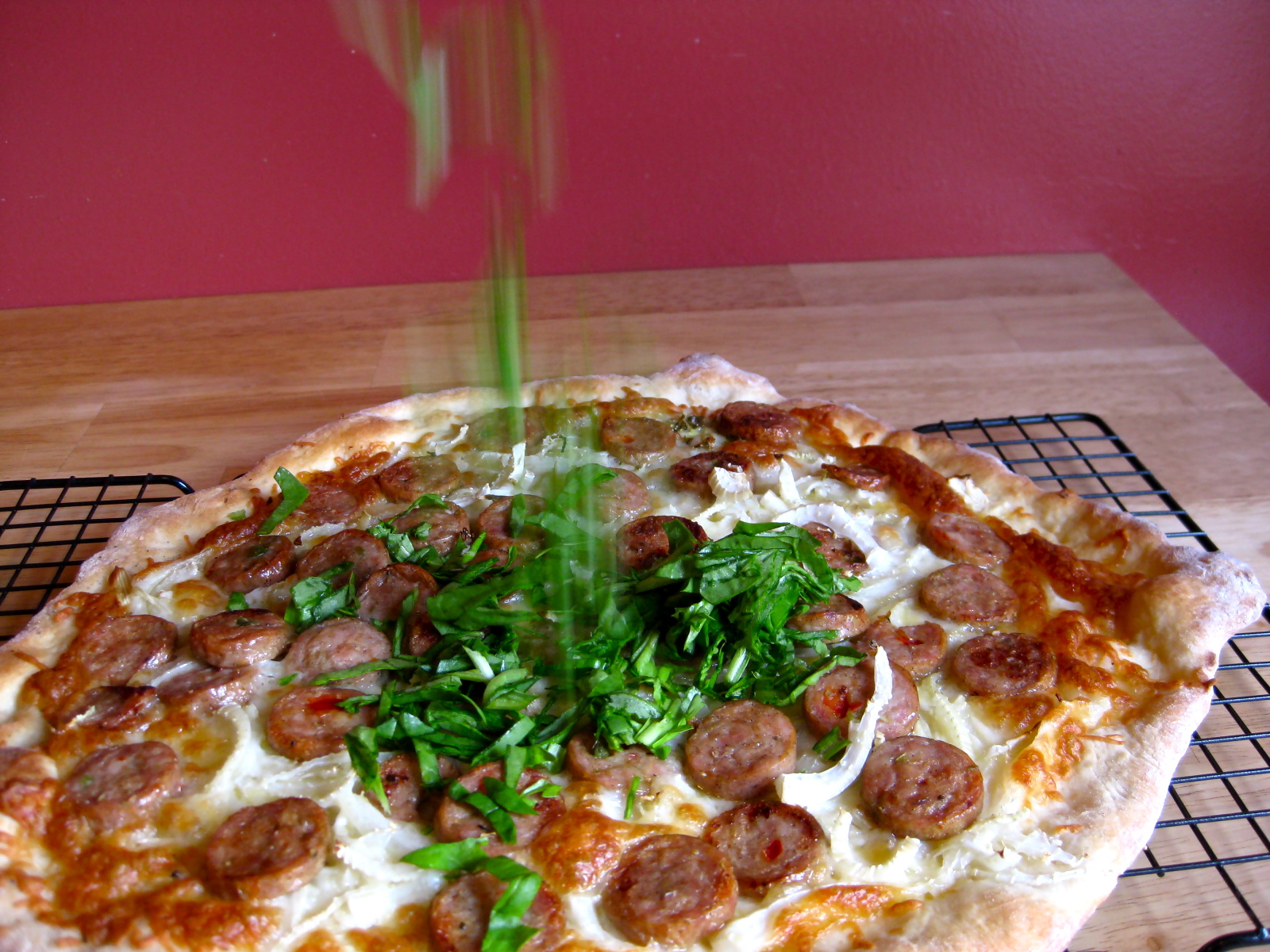
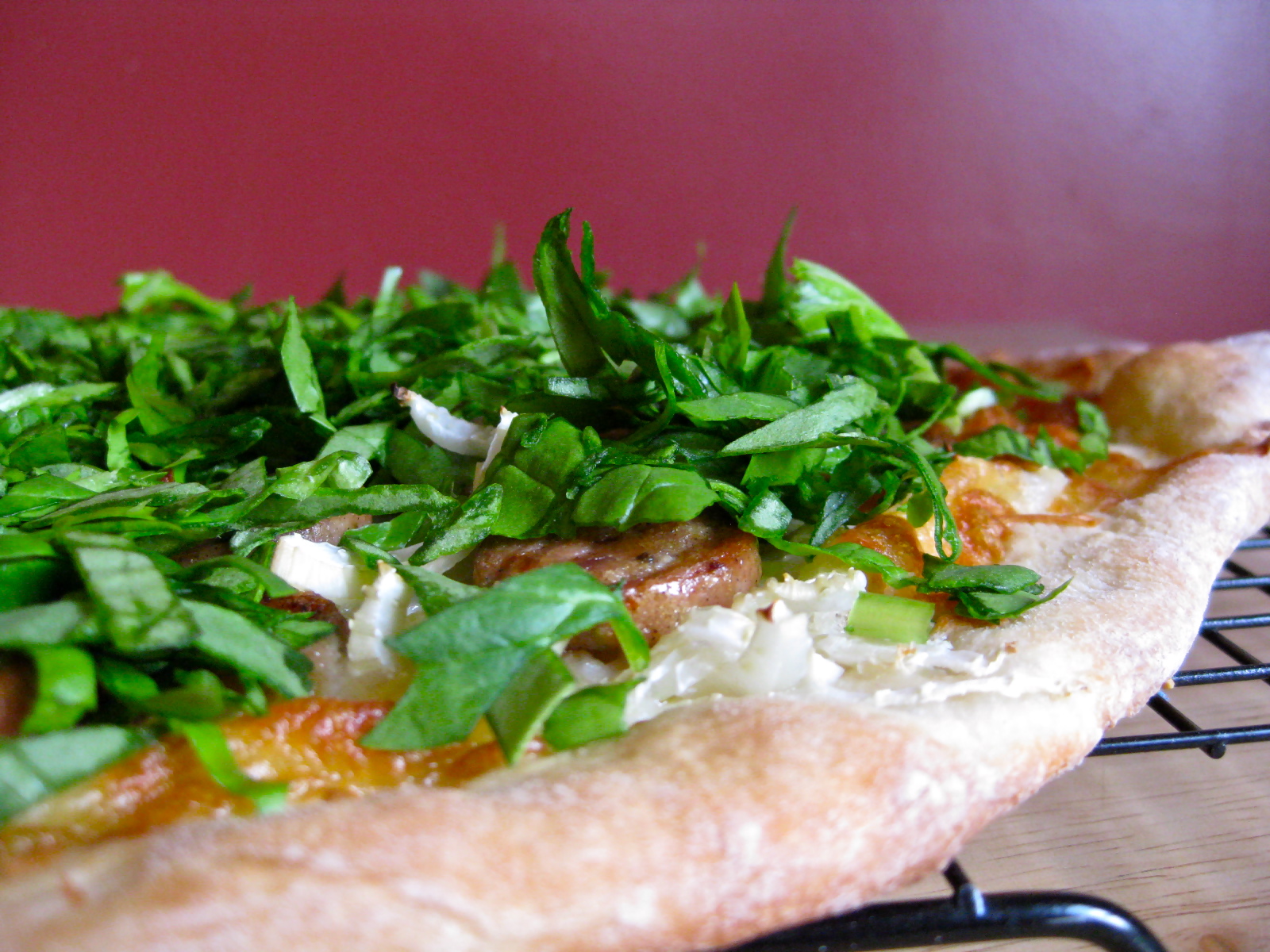
This particular pizza, while featuring a bit of meat, is heavy on vegetables without being heavy itself.  It is also extremely satisfying.  Thin slices of Italian chicken sausage add a slightly salty bite, and the fresh slices of fennel give the pizza a fresh crunch.  In bypassing red sauce all together, the gentle taste of the toppings really have a chance to stand out against the mellow flavor of the garlic and olive oil base.  Authentic?  I have no idea.  But delicious?  Definitely.

Pizza with Chicken Sausage, Fennel, and Spinach

pizza dough for 1 pizza

2 cloves of garlic, minced and then smashed into a paste with a pinch of salt

fresh ground pepper

1 tablespoon plus 1 teaspoon of extra virgin olive oil

6 ounces Italian chicken sausage

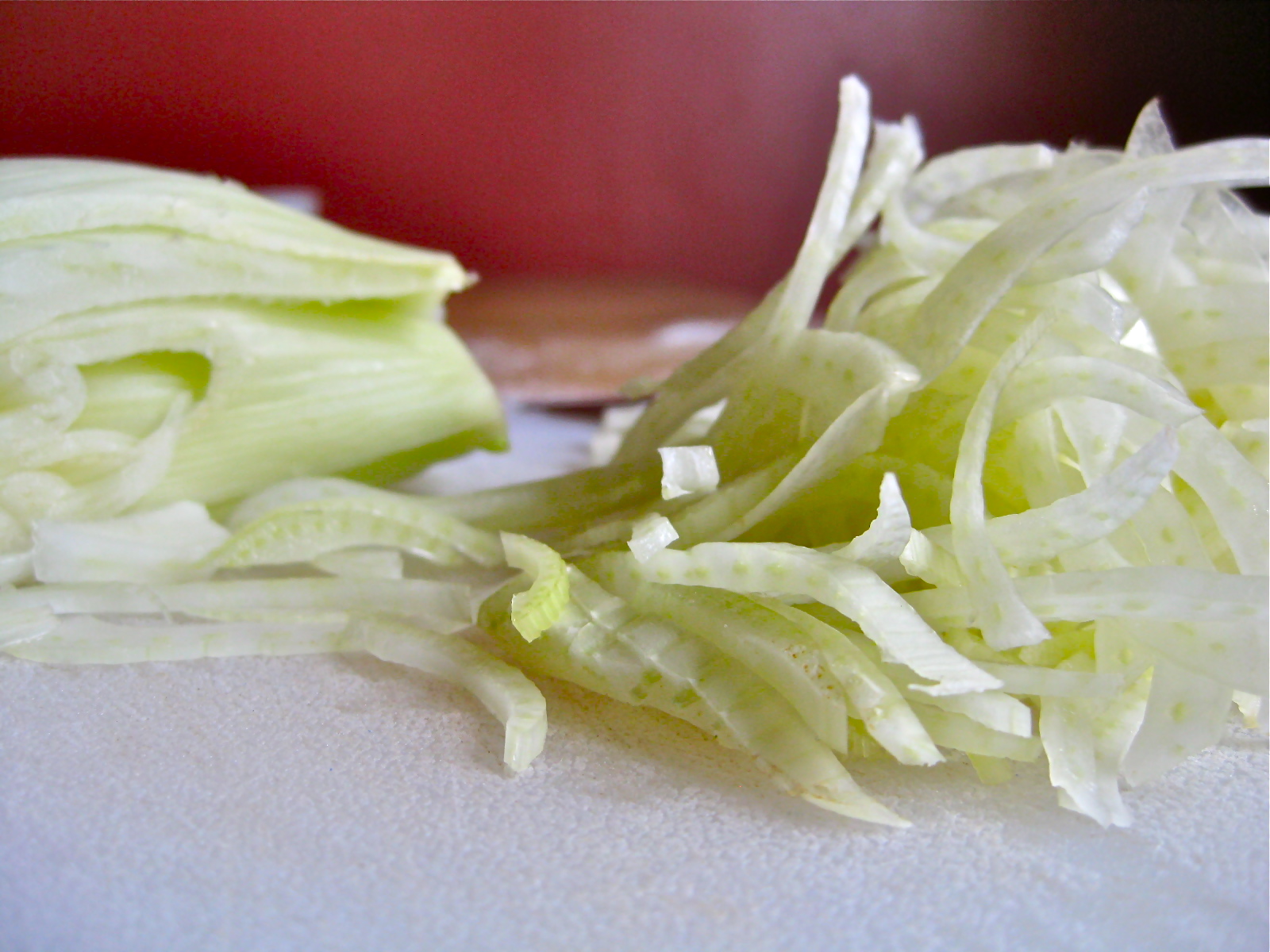
1/2 bulb of fennel, sliced into thin ribs

8 ounces of shredded mozzarella cheese

4 ounces chopped fresh spinach

Preheat oven to 500 degrees F, or as high as your oven will go.  Set an oven rack on the lowest level or second lowest level (the heat zones of every oven are different, so, to exercise caution, start with baking your first pizza on the second lowest level of your oven then, if your pizza does not get sufficiently crisped on the bottom, you’ll know to move your oven rack one level lower the next time you bake pizza), and place a heavy baking sheet on the rack to preheat along with the oven.

In a very small bowl, combine smashed garlic with 1 tablespoon of olive oil and set aside.

Slice chicken sausage into small coins or, if you are using bulk chicken sausage, break it up into small, nickel-sized pieces. Heat 1 teaspoon of olive oil in a medium pan and briefly cook chicken sausage in oil until sausage just begins to brown slightly.  Remove from heat and set aside.

On a lightly floured surface, using your hands, shape pizza dough into a 14-inch round.  The more you handle the dough, the more the heat of your hands will warm the dough and make it more pliable.

Place the shaped dough on a piece of parchment paper.  Place parchment paper and dough on a rimless baking sheet or a rimmed baking sheet that has been overturned.

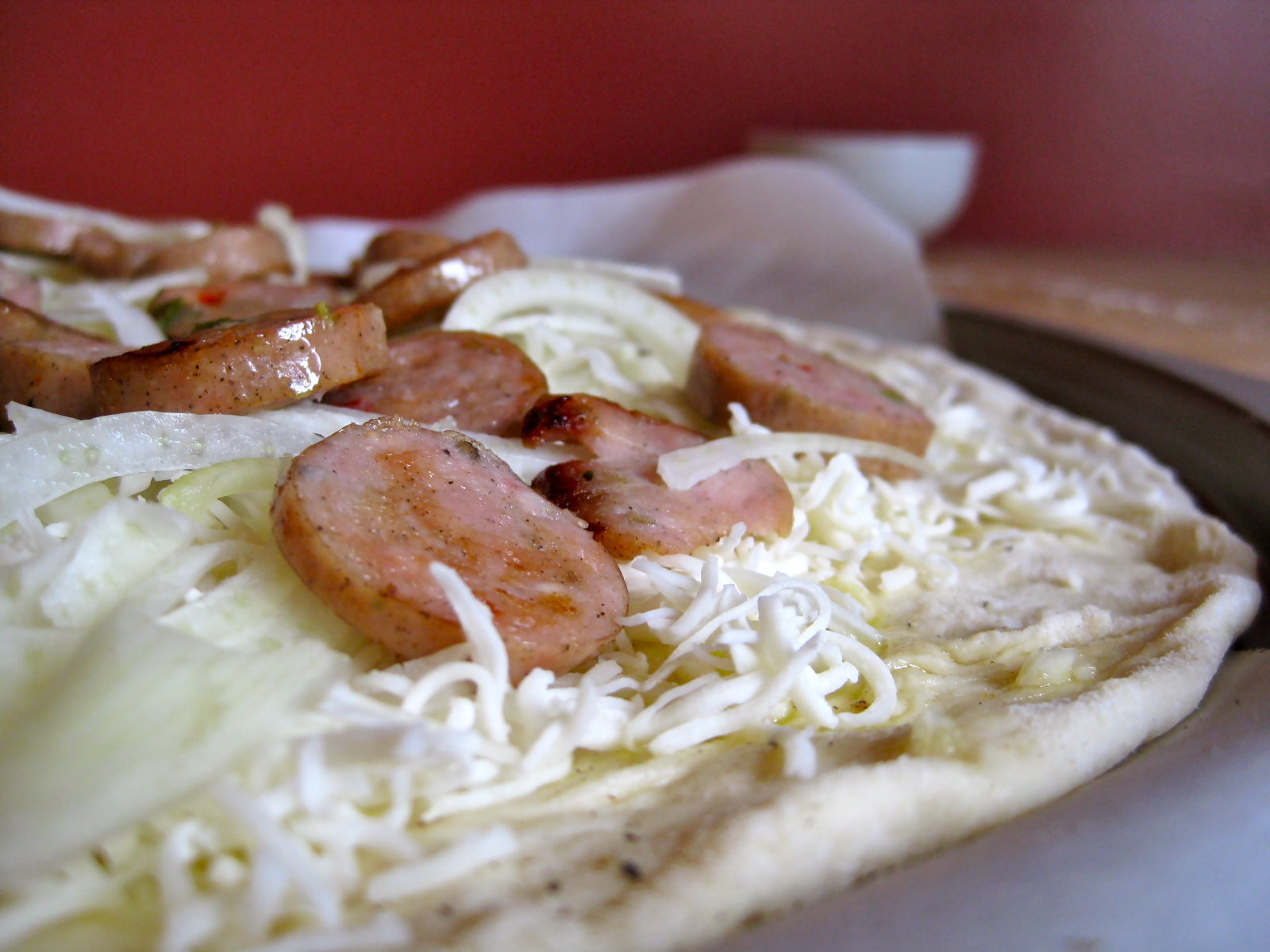
Spoon garlic and olive oil mixture over the surface of the pizza dough.  Sprinkle with fresh ground pepper to taste.  Top with cheese, then add the sliced fennel and browned sausage.

Slide the uncooked pizza, still on the parchment paper, from the rimless baking sheet to the preheated baking sheet in the oven. Bake pizza for 8 to 12 minutes, until the crust is puffed and browned at the edges and the cheese has melted and just started to turn slightly brown in places.

Remove pizza from oven and sprinkle with chopped spinach.  The spinach will wilt ever so slightly.

Best Pizza Dough

7 Jun

Among the growing list of foods I can no longer bring myself to purchase because I’d much rather just make them myself (chief among which are both cake and pie), none have brought me as much satisfaction as homemade pizza.  I could credit this satisfaction to my slightly Pollyanna-ish tendency to get all excited about the fact that I can make a pizza at home for roughly one sixth the cost of buying one, but, truthfully, there is simply more to it than that.  More than anything, being excited about making really good homemade pizza is a direct result of spending many, many years making totally subpar and underwhelming pizza at home.

To cut directly to the problem, I am going to go ahead and blame the crust.  Preferring a thin crust on pizza, I was always convinced that making a really complexly flavored, bubbly pizza crust meant that I had to use superfine Italian 00 flour and fresh, not dried, yeast.  I also thought that it meant I was going to have to spend an ordinate amount of time kneading my dough, since most pizza dough recipes that promise fantastic results are really into chaining people to the kitchen with instructions that require you to knead the dough, set it aside, knead it again, shape it, rest it, shape it again, and oh, lord, it just goes on forever.

I should clarify here that, for certain foods, I have no problem being tethered to my kitchen.  I will tackle layered pastry dough and I will baby-sit a dish that requires four hours of braising, but, in my mind, making pizza should be a laid back and casual affair.  It’s pizza, not puff pastry.

So, over the years, I tried out many, many recipes for pizza dough.  I made very complicated pizza dough that required two separate kneading and resting periods.  I made pizza dough that was kneaded once and then simply set aside.  I made pizza dough from semolina flour.  I made pizza dough with cornmeal.  I cooked everything on a pizza stone, and then my pizza stone cracked, so I bought another one and then it cracked too.  Every time, after every pizza, I had the same basic result.  The pizza was all right (it’s bread and cheese, for goodness sake, so how bad can it really be?), but certainly nothing special.

Then, while mixing a sponge for a loaf of bread, I started to wonder if I could apply a similar procedure to the making of pizza dough.  Meaning, if I made a simple pizza dough and then left it in the fridge to proof overnight, would I achieve a similarly deep flavor and chewy texture that I get from making a bread with a sponge that is left to sit overnight?  Intrigued, I mixed up a batch of the simplest pizza dough imaginable, put it in the refrigerator, then went to bed.

The verdict?  I will never, ever make pizza dough another way.  This method is simple, the work is done while you sleep (then head off to work the next day), and the finished product is unparalleled.  Are you looking for crisp, yet with a sight chew?  Are you looking for an incredible artisan flavor?  Are you into pizza that is light, with a bubbly crust?  It’s right here, and it’s dead simple.

Today I’ll post the specific pizza dough we love to use, and throughout the rest of the week I’ll post a few examples of things you can do with this wonderful dough.  Warning: I have been known to use this dough in both savory and sweet applications.  Because if there’s one thing I like to do, it’s turn non-dessert items into desserts.

Best Pizza Dough

Adapted mightily from The America’s Test Kitchen Family Baking Book

The flavor and texture of this dough only grows better the longer it rests in the refrigerator.  Since this recipes makes enough dough for three large pizzas, we frequently make one or two pizzas at a time, then put the remaining dough in a very lightly oiled, tightly sealed Ziploc bag and leave it in the refrigerator for a few days until we are ready to use it up. We’ve never had leftover dough in the refrigerator for longer than five days, but I’ll bet it will last at least a week and still remain fresh.

4 to 4 1/2 cups bread flour

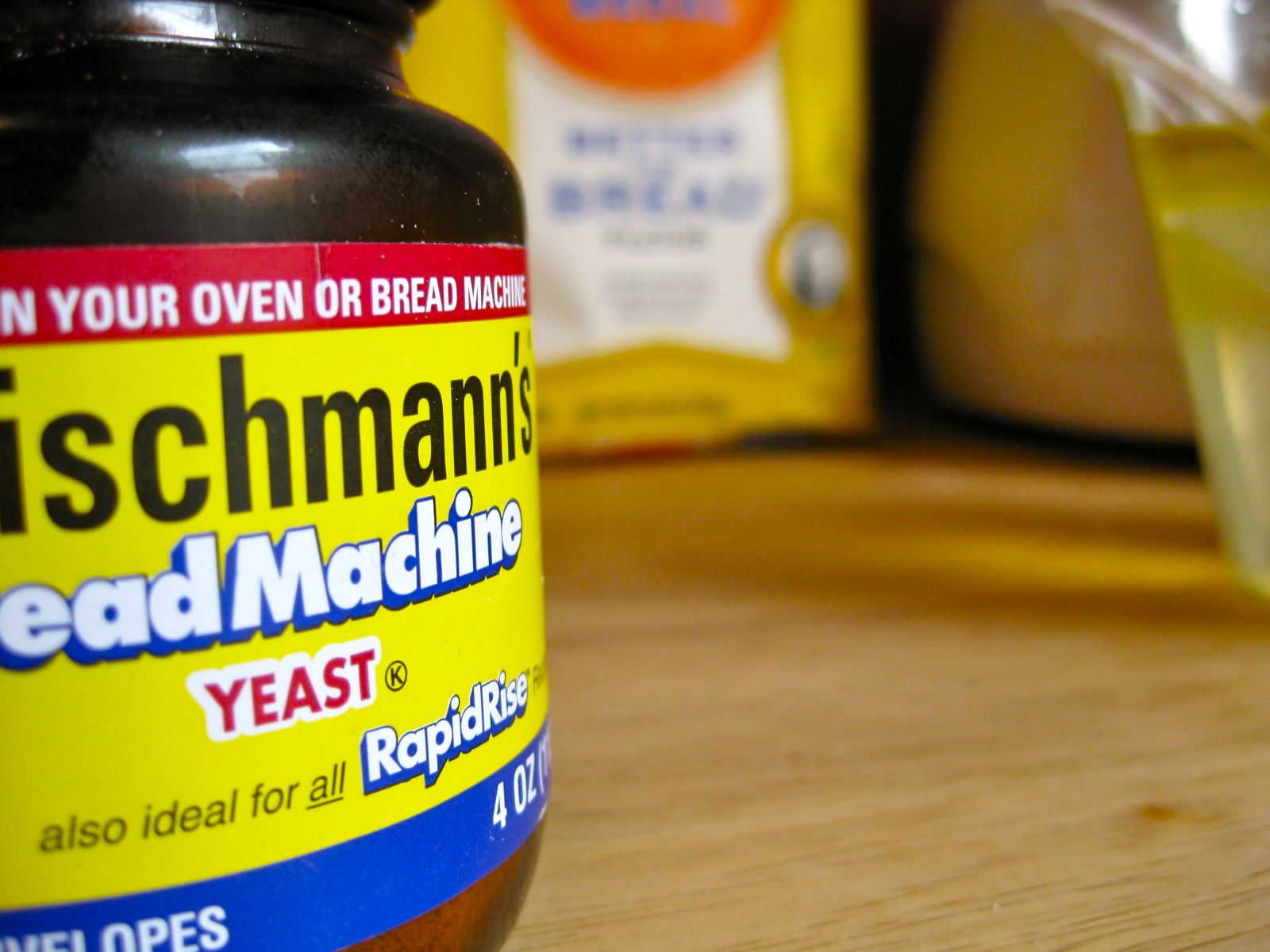
1 envelope (2 1/4 teaspoons) instant or rapid-rise yeast

1 teaspoon sea salt

2 tablespoons olive oil

1 tablespoon honey

1 1/2 cups very warm water

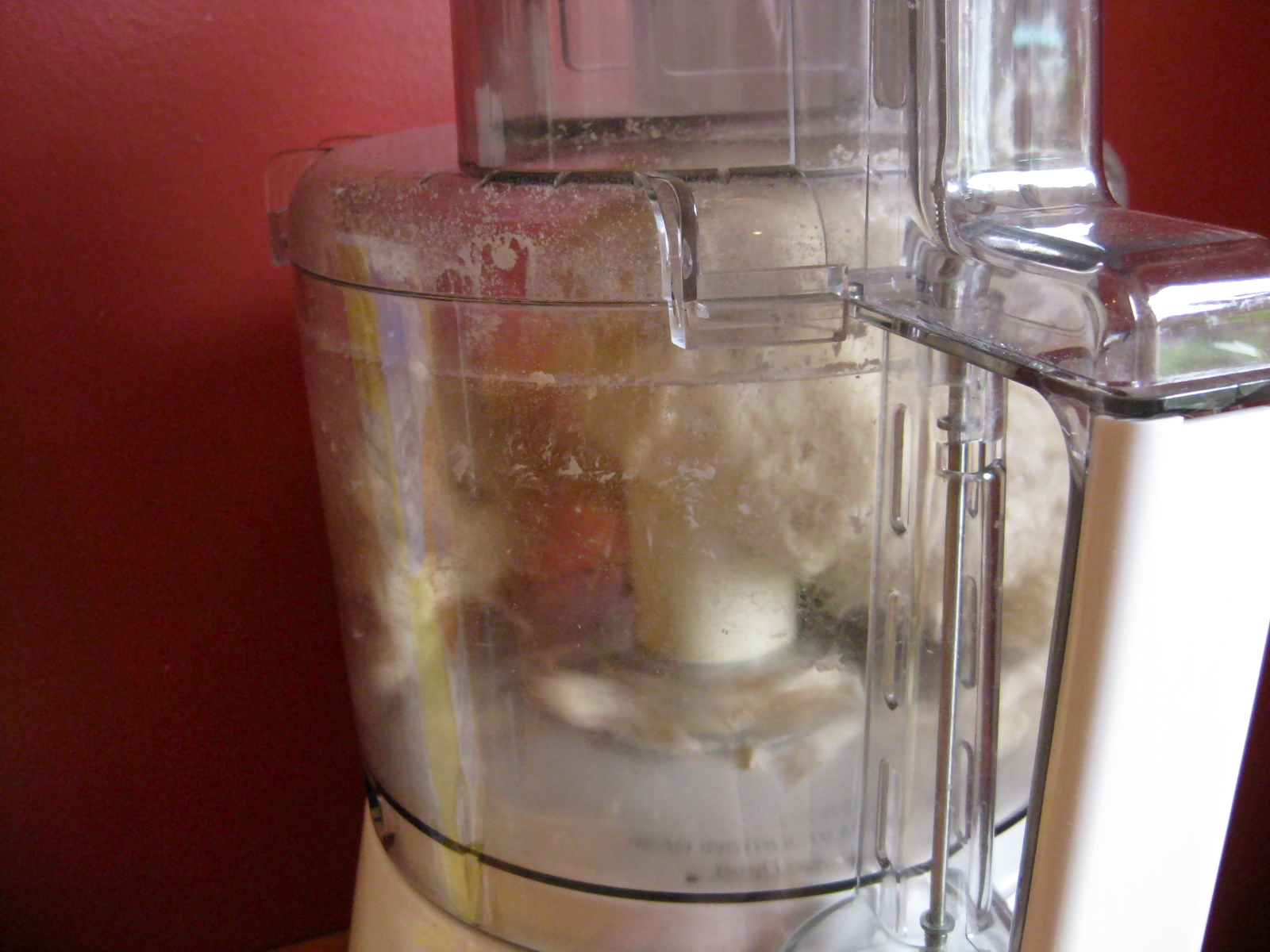
Pulse 4 cups of flour and the yeast together in a food processor (though ATK recommends you use the dough blade, I’ve always used the regular blade and my results have been just fine) until combined.  Add the salt, then pulse again (adding the yeast separately from the salt will reduce the possibility that the salt will come in direct contact with the yeast and kill it).

Combine the warm water with the oil and honey, and mix to combine.  With the food processor running, pour the water mixture through the feed tube and and process until a rough ball forms, about 30 seconds.  Let the dough rest for 2 minutes, then process the dough for another 30 seconds.  If the dough appears to be too sticky and is clinging to the blade, add the remaining 1/4 cup of flour, 1 tablespoon at a time, and process until the dough clears the blade.

Lightly oil a large bowl.  Remove the dough from the food processor, shape into a rough ball shape with your hands, then place in the oiled bowl.  Cover tightly with greased plastic wrap and place in refrigerator to rest overnight, or until ready to use.

When ready to use the pizza dough, remove from refrigerator while you are preheating your oven and preparing your topping ingredients.  Allow dough to warm from refrigerated temperature for at least 30 minutes before you shape and cook the dough.

Makes enough dough for three large pizzas.

Six Threes Ice Cream

3 Jun

Dear Summer,

Did we do something to anger you?  I only ask because it seems as though you have been avoiding us.  Here we are, the first week of June, and you are nowhere in sight.  I can’t help but think that maybe you are feeling a bit hesitant about joining us this year.  Maybe you had a great time hibernating during the months you were not with us, making you decide that you’d rather stay asleep a few more weeks instead of prodding your good friend The Sun in the ribs and making a good argument for spending some time with us.  We’re pretty fun, you know.  We like going in the pool and hitting baseballs in the backyard while our skin warms in the heat of the afternoon, and the hammock is all cleaned off and good to go.  Basically, we’re ready whenever you are.

Look, I even made a little something to celebrate your arrival.  My husband’s family has this great ice cream recipe that I had been dying to make.  I first tasted it at a family reunion last summer—remember that?  You were sort of there, Summer, but mostly in name rather than in feel (it was extremely cold and wet last August, as you may recall, but I promise I am in no way holding that against you).  Anyhow, my husband’s family made a huge batch of this ice cream.  They took turns hand churning it, and when it was done they called to all of the children to come and have an inaugural taste of the ice cream straight from the dasher.  All of the children were feeling uncharacteristically shy, so I swiped my finger against the dasher and demonstrated how non-poisonous and definitely delicious the ice cream was.

As you may also recall, the children had a rather difficult time getting to the ice cream covered dasher after that, such was my devotion to gobbling that thing clean before anyone else could snitch a taste.  I wouldn’t say I went so far as to push any children aside while protecting my ice cream sample, but that was only because I happened to be taller than all the children, allowing me to conveniently hold the dasher up much higher than they could reach, rendering unnecessary any sort of pushing or jostling on my part.

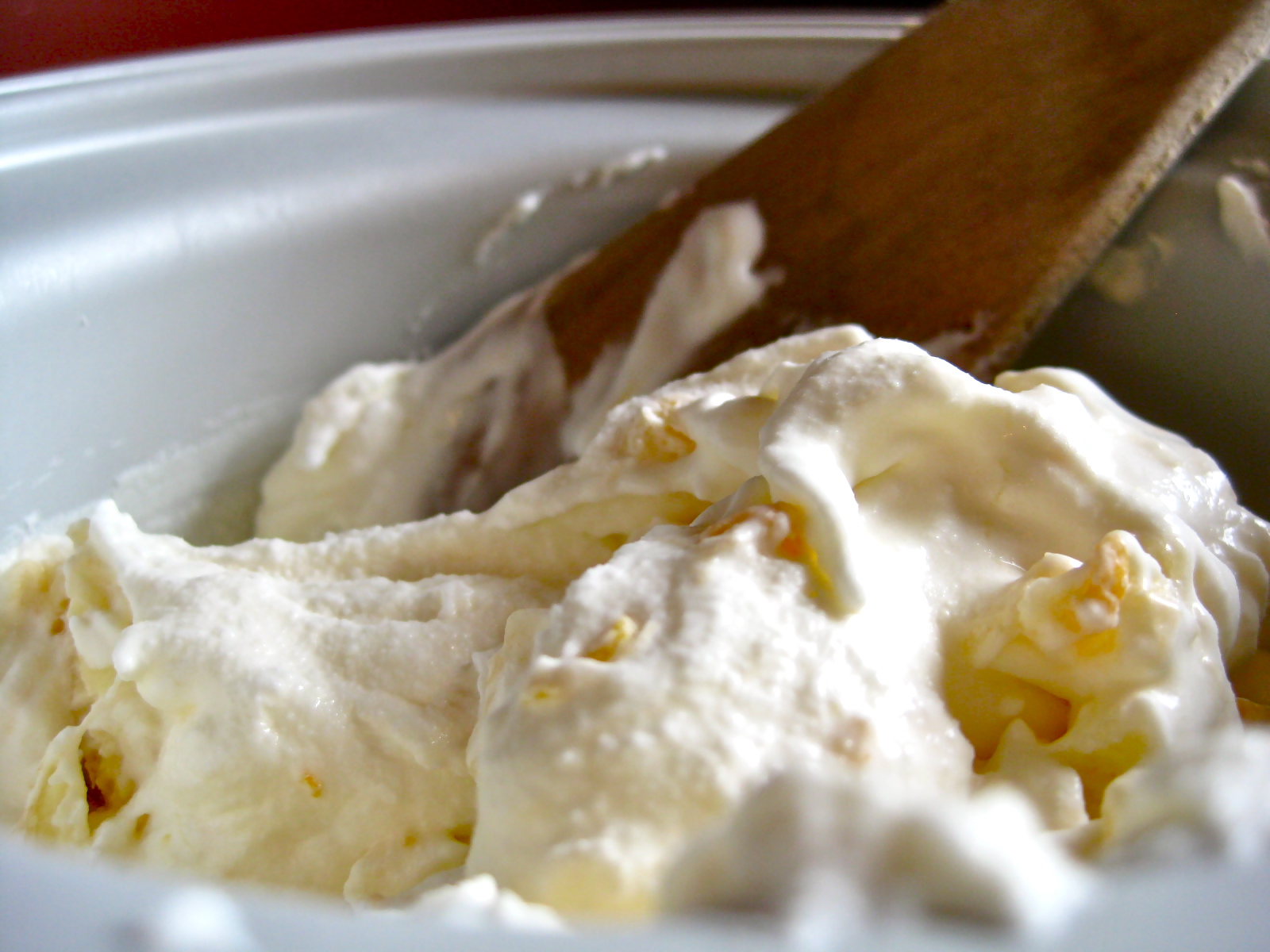
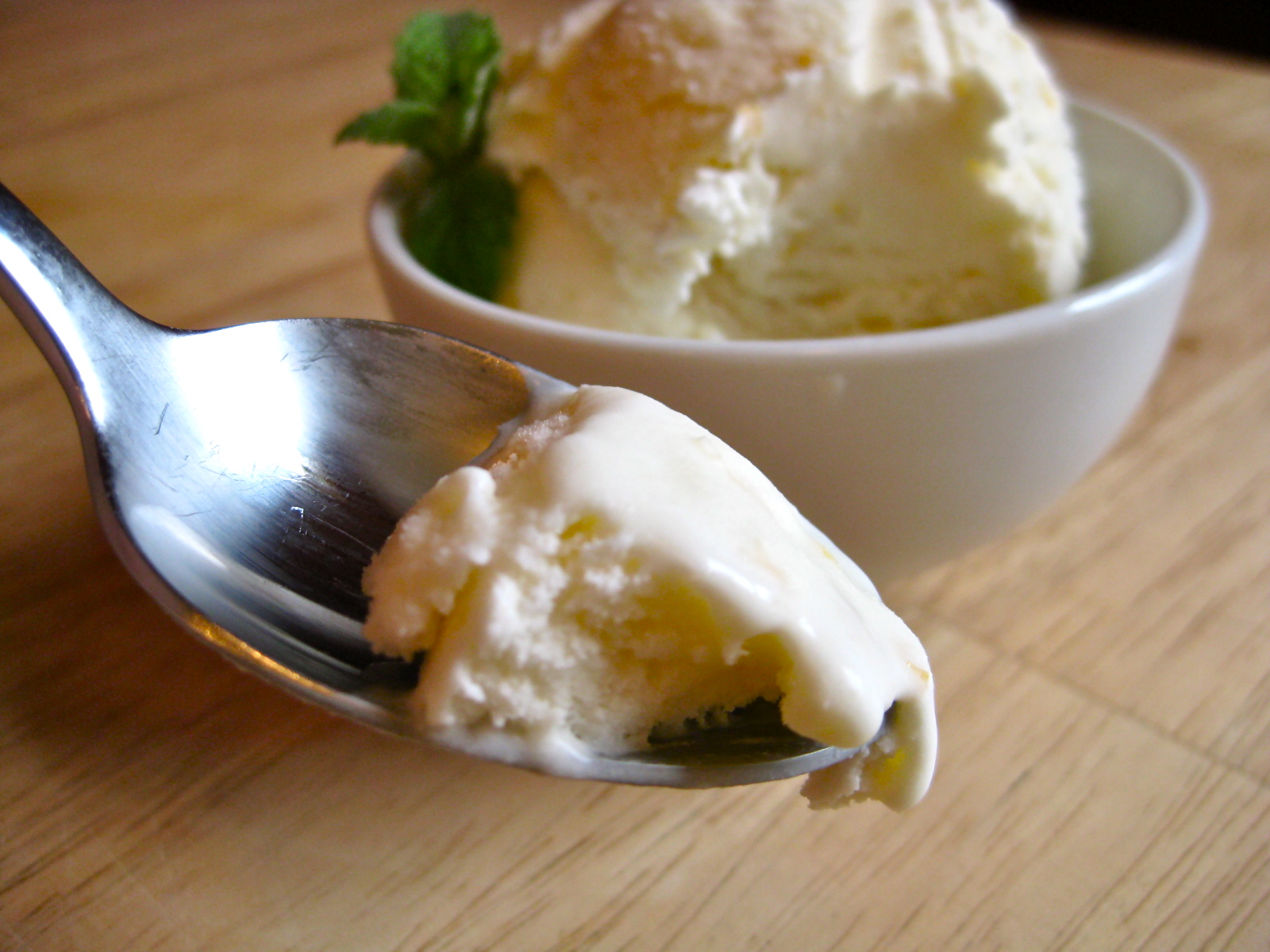
So, I decided that, in anticipation of your arrival, I would make some of this ice cream.  It is dead simple to assemble, and it tastes supremely fresh and cooling.  The ice cream is egg-free, but it has the smooth, soft, creamy texture of a custard-based ice cream. Do you know what the secret is, Summer?  It’s the banana.  The banana makes the ice cream so rich and luscious, you’d never know it was devoid of eggs.  I tell you, this is the perfect ice cream to start with if you’re feeling hesitant about making homemade ice cream.  It really is foolproof.  Plus, the taste bears a strong resemblance to that of a Creamsicle, which not only gives it points for childhood nostalgia, but also for maximum enjoyability.

I hope we see you soon, Summer.  Rumor has it you’re going to be making an appearance this weekend, but, quite honestly, I can’t really bring myself to believe that prediction, what with how little we’ve seen or sensed of you thus far.  Don’t get me wrong, I want to see you, but I don’t know if I can handle any more stilted anticipation.  If you do happen to show up, believe me, I’ll be more than happy to eat my words—right along, in fact, with a nice bowl of this delicious ice cream.

All the best,

EM from Savory Salty Sweet

Six Threes Ice Cream

The original recipe, which uses three of each measure of ingredients, makes enough ice cream to fill a very large hand cranked machine.  Since the ice cream machine I own only holds 1.5 quarts of finished product, I had to scale the recipe down by two thirds.  This, technically, does not make the ice cream I made a combination of six threes, but rather six ones.  However, since that name does not have nearly the clever ring to it as the original name, I have decided to just stick with calling it six threes ice cream.  Still delicious, just not as abundant.  If you have a larger ice cream maker, you should, by all means, scale the recipe up to make as much ice cream as you can.

Note: Be sure to follow the directions and keep the dairy and citrus ingredients separate until the dairy has been partially frozen in your ice cream machine.  If you add the citrus to the dairy beforehand, the acid in the citrus will cause your dairy to curdle.

1 ripe banana

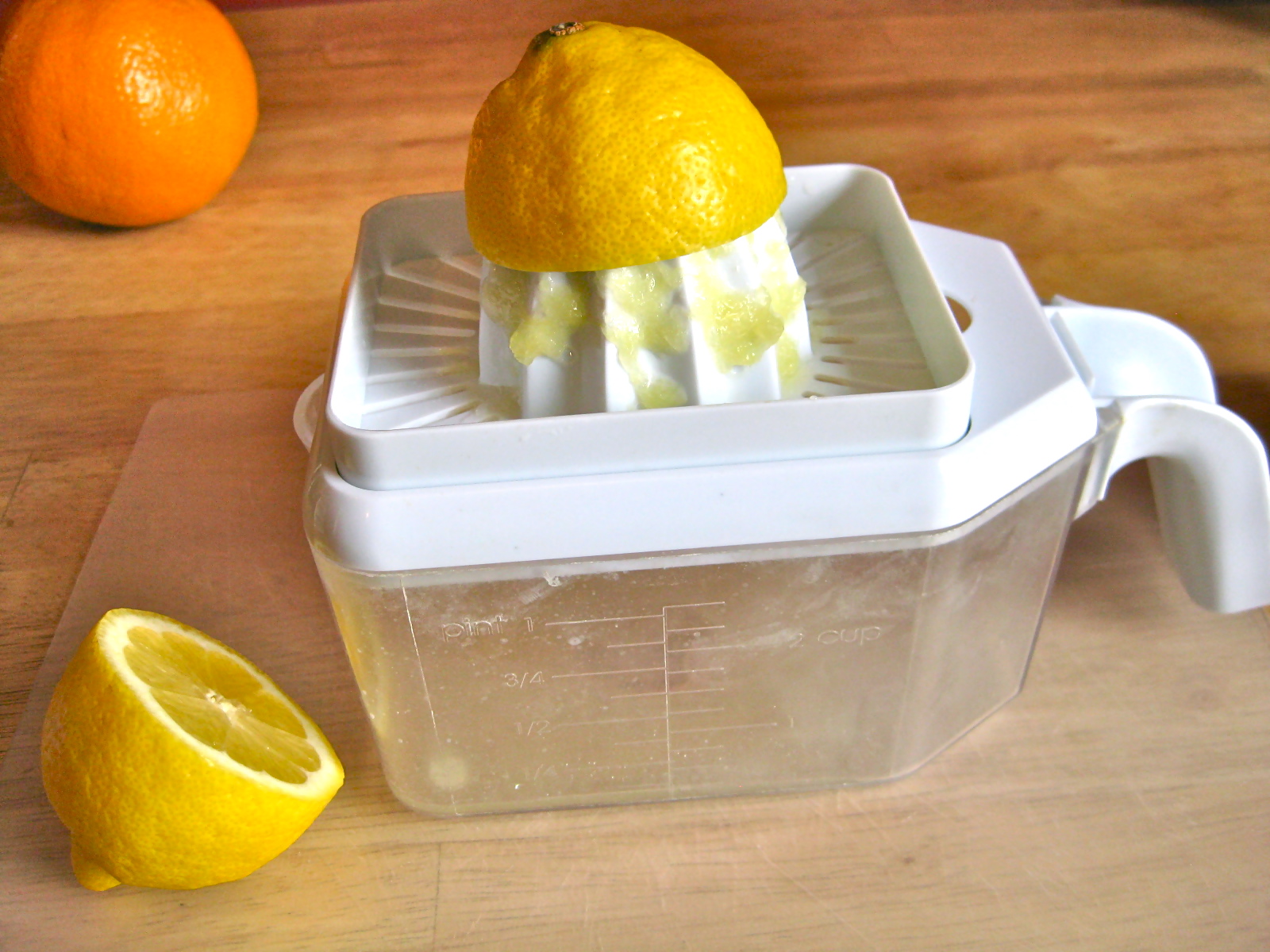
1 lemon

1 orange, the zest finely grated or chopped

1 cup milk

1 cup cream

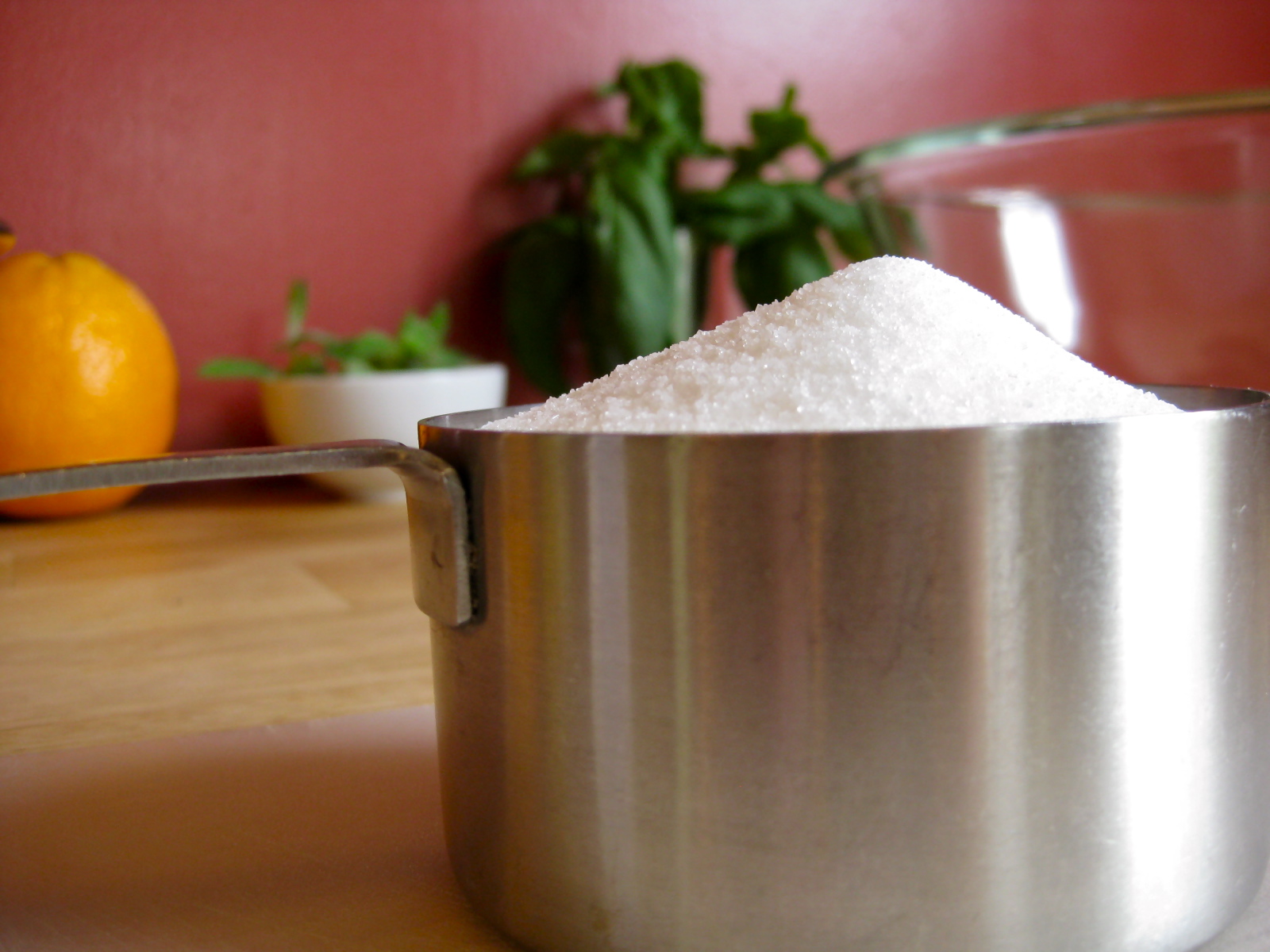
1 cup sugar

In a medium bowl, blend or mash the banana.  To this, add the finely grated or chopped zest of the orange.  Squeeze juice from lemon and orange, and combine with the mashed banana and orange zest.  Set aside.

In a large bowl, combine milk, cream, and sugar.  Whisk steadily until sugar is completely dissolved.

Add cream mixture to your ice cream maker, and allow to churn until it reaches the slush stage.

Add the fruit mixture to the slushy cream mixture, then churn according to manufacturer’s instructions (until, that is to say, you have ice cream).

Makes about 1.5 quarts of ice cream.