Archive | Bread RSS feed for this section

Gingerbread Waffles

2 Feb

Last Christmas I was gifted a wonderfully dog-eared and loved copy of The Joy of Cooking from 1936.  The pages, delicate as pressed flowers, are filled with treasures from the previous owner—cooking notes written in delicate cursive script, tiny strips of newspaper recipes taped onto the margins, enormous fold-out newspaper articles on roasting a whole turkey or making the best sugar cookies, and, my favorite, specific care instructions for what were obviously very special cooking tools purchased by the cookbook’s owner (egg poacher, Household Institute sauce pans).

As an avid appreciator of old cookbooks, I am always eager to see what long-forgotten dishes I might be able to ogle and puzzle over while flipping through a collection of aging recipes.  You can imagine my delight upon receiving this cookbook, I am sure, but then imagine my shock at discovering how surprisingly tame its recipes happened to be.  There are no instructions on how to make roasted raccoon or squirrel stew, no vague recollections of having once made some biscuits that are then passed off as an actual recipe.  Sure, this book boasts some truly horrifying recipes for things like a dip made out of mayonnaise, chopped pecans, olives, and hard boiled eggs, but that’s not so much culturally interesting as it is just plain revolting.  For the most part, the recipes in this edition (the fourth edition of the legendary tome) are actually quite charming, and often times even tantalizing.  When idling flipping through the book after I had first opened it, the pages, as if by magic, opened straight away to the breakfast section and, front and center, there before me sat a recipe for gingerbread waffles that seemed to be calling out my name.  Sensing danger, I quickly closed the book, abruptly silencing the siren song of the waffles.

Why so hasty to retreat from the waffles?  Because, not so long ago, I stopped eating maple syrup (or, as spelled in the 1936 edition of The Joy of Cooking, sirup).  This act was not so much a calculated decision, but more of a realization that whenever I ate something that was drenched in syrup, there soon followed a nearly immediate need to lie down and take a nap.  While I can confess to liking naps as much as the next person, it is not always convenient to fall into a near coma shortly after the start of the day.  In an effort to keep myself from doing a Rip Van Winkle impersonation after every weekend breakfast, in lieu of maple syrup I began to top my waffles, french toast, or pancakes with yogurt, sometimes lemon yogurt if I am feeling frisky.  Though this trick of mine works exceptionally well with standard, buttery waffles, would the magic be lost on a waffle with a completely different flavor?  As luck would have it, no.  These gingerbread waffles, so warm and spicy, pair up wonderfully with lemon yogurt, so much so that it almost seems as though they were made to go together.  Syrup danger averted!

Even if I was still able to handle a nice long pour of maple syrup, I doubt I’d get the bottle near these waffles.  The dark spices might play well with the syrup, but when paired with a scoop of cool lemon yogurt, everything really seems to come together in a more interesting and contrasting way.  Also, because I am now apparently one of those people, I drastically reduced the sugar in these waffles, but you’d never be able to tell with their comforting scent of molasses and brown sugar.  These waffles are a treat of the best sort, the type to start your day off right, sans fear of extended napping (unless, of course, your plans for the day already include a generous nap allowance, in which case I salute you and also, can I come over?).

Gingerbread Waffles

Adapted from The Joy of Cooking, 1936

As a former copyeditor, it behooves me to point out that I refer to this book as “The Joy of Cooking” here, but it other posts reference it as simply “Joy of Cooking.”  This is because, in later editions, the book drops the “The” from the title, and I would be betraying the persnickety editor in me if I chose to add “The” to the title on my own accord.  Is anyone actually reading this explanation?  Because I am slightly embarrassed (okay, not really, which is, itself, slightly embarrassing) to be writing it, though that has apparently not stopped me from actually forging on with it.

1 ½ cups unbleached all-purpose flour

1 teaspoon ground powdered ginger

¼ teaspoon cinnamon

½ teaspoon salt

1 teaspoon baking soda

1 teaspoon baking powder

3 large eggs, yolks and whites separated

2 tablespoons dark brown sugar

1/3 cup molasses

1 cup buttermilk or sour milk

1/3 cup (roughly 5 ½ tablespoons) melted butter

In a large bowl, sift together the flour, ginger, cinnamon, salt, baking soda, and baking powder.  In a medium bowl, combine the egg yolks, sugar, molasses, milk, and melted butter, and beat until well combined.  In a separate bowl, beat the egg whites until they form stiff peaks.  Add the egg yolk mixture to the flour mixture, and stir just to combine.  Add the egg whites to this mixture, gently folding until the whites are incorporated and the batter is light and airy.

Pour batter onto a greased, heated waffle iron and cook according to waffle iron’s instructions.  Makes 6-8 waffles, depending on how large your waffle iron is, and how much batter each waffle will necessitate.

Top with lemon yogurt.

Apple Cinnamon Crumb Bread

26 Jan

It has been raining.  The sun has disappeared, the clouds are looming in a rather ominous fashion, everything is absolutely soaked, and there is water where there is not supposed to be water.  Meaning, inside our house.  Clearly, it is time for some cake.

What’s that?  The name of this recipe does not indicate that one would be making cake, but rather bread?  Yes.  Yes, this is true.  But, in the interest of maintaining complete honesty, I could not in good conscience continue to call this baked treat a bread when, butter and sugar and cake flour, oh my, it is clearly nothing so innocent.

What it is is utterly delicious.  I’ve been eyeing this bread (cake) for years, stopping at its lovely and drool-inducing photo every time I flipped through Rose Levy Beranbaum’s Bread Bible, but it was only during a recent bout of rather soggy weather that I was finally persuaded (by myself, and my woe over not being able to see the sun) to make it.  Predictably, I have been cursing myself ever since for the long wait I endured before tasting this bread (cake), as it turns out that this bread (cake) just so happens to be perfect in every way.

Buttery crumb topping?  Perfectly spiced slices of apple waiting beneath the crumb topping?  An unbelievably moist and perfectly textured bread (cake) propping everything up?  Do you like any of these things?  If so, let me know, because I might be compelled to bring you some of this the next time I make it.  When I first made this bread (cake), I was immediately struck with the realization that, alone at home, I could not be trusted to be in the same house with it.  After wrapping it up and practically forcing my son’s kindergarten teacher to take it from me (and subsequently spoiling the children’s heretofore unfettered streak of receiving purely healthy afternoon snacks while at school), I decided that, if I were to make this bread (cake) again, it would have to be while surrounded by a ravenous horde who would be certain to devour the treat before I was able to stuff it down my own gullet.

This is a rather inelegant way of saying my friends, this is a baked good of legend.  I highly recommend you make it, but I also advise you to do so at your own risk of overindulging to the point of shame.  If you are not prone to such behavior, I can only say good for you, and how in the world did we ever come to be friends?

Apple Cinnamon Crumb Bread

From The Bread Bible, by Rose Levy Beranbaum

Crumb Topping and Filling

¼ cup firmly packed light brown sugar

1 ½ tablespoons (or, 1 tablespoon plus 1 ½ teaspoons) granulated sugar

¾ cup walnuts (I used walnuts and pecans, and it was fantastic)

1 teaspoon cinnamon

¼ cup plus 2 tablespoons unsifted cake flour

3 tablespoons unsalted butter, melted

¼ teaspoon pure vanilla extract

Apple Filling and Batter

1 small tart apple (I used a Granny Smith), sliced into 1 heaping cup of slices

2 teaspoons lemon juice

1 large egg

2 large egg yolks

½ cup sour cream

1 teaspoon pure vanilla extract

1 ½ cups sifted cake flour

¾ cup granulated sugar

¼ teaspoon baking powder

3/8 teaspoon (or a scant ½ teaspoon) baking soda

scant ¼ teaspoon salt

9 tablespoons unsalted butter, at room temperature

Preheat the oven to 350 degrees Fahrenheit.  Adjust an oven rack to the middle level.  Grease and flour a 9”x5” loaf pan.

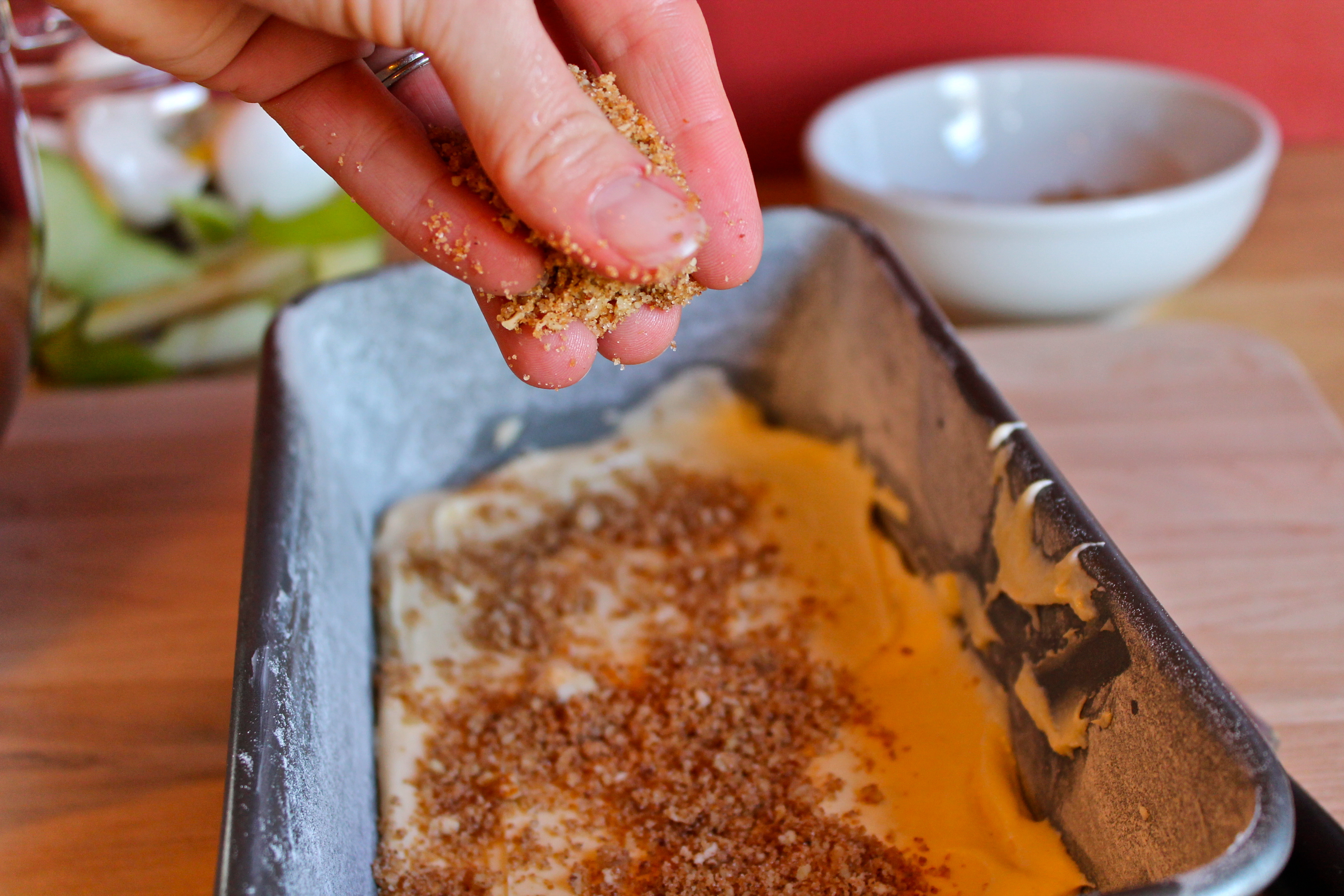
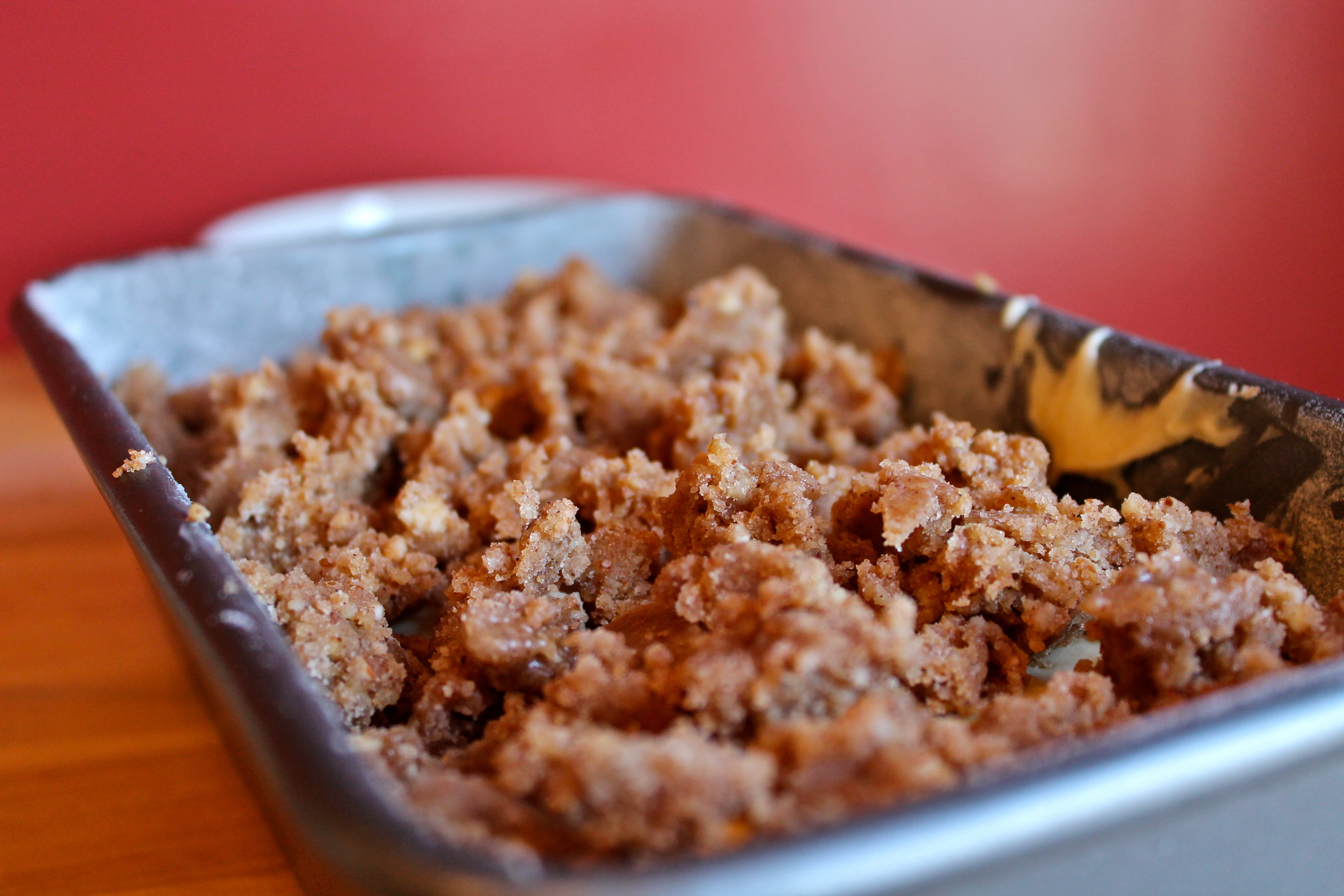
In a food processor fitted with the metal blade, pulse the sugars, nuts, and cinnamon until the nuts are coarsely chopped.  Reserve ½ cup for the filling.  Add the flour, butter, and vanilla to the remainder and pulse briefly just until the butter is absorbed. Alternately, if you do not have a food processor, you can chop the nuts by hand and then mix everything together using a fork.  Empty the mixture into a bowl and refrigerate for about 20 minutes to firm up, then break up the mixture with your fingers to form a coarse, crumbly mixture for the topping.

Just before mixing the batter, peel and core the apple, then cut it into ¼-inch thick slices.  Toss slices with lemon juice.

In a medium bowl, combine the egg, egg yolks, about ¼ of the sour cream, and the vanilla.

In a mixer bowl, or other large bowl, combine the cake flour, sugar, baking powder, baking soda, and salt.  Mix for 30 seconds on low speed using a hand-held mixer or the paddle attachment of a stand mixer.  Add the butter and remaining sour cream and mix until the dry ingredients are moistened.  Increase speed to medium if using a stand mixer or high speed if using a hand-held mixture, and beat for 1 minute to aerate and develop the structure.  Scrape down the sides of the bowl.  Gradually add the egg mixture in two batches, beating for 20 seconds after each addition to incorporate the ingredients and strengthen the structure.  Scrape down the sides of the bowl.

Scrape about 2/3 of the batter into the prepared pan.  Smooth the surface, then sprinkle with the reserved ½ cup crumb mixture.  Top with the apple slices, arranging them in rows of overlapping slices.  Drop the reserved batter in large blobs over the fruit and spread it evenly using a small offset spatula or the back of a spoon.  The batter should be ¾-inch from the top of the pan.  Sprinkle with the crumb topping.

Bake the bread for 50-60 minutes or until a wooden toothpick inserted in the center comes back clean and the bread springs back when pressed lightly in the center.  If tested with an instant-read thermometer, the center of the bread should read 200 degrees Fahrenheit.  Tent the bread loosely with buttered foil after 45 minutes to prevent overbrowning.

Remove the bread from the oven and set it on a wire rack to cool for 10 minutes.  Place a folded kitchen towel on top of a flat plate and cover it with plastic wrap.  Oil the plastic wrap.  Loosen the sides of the bread with a small metal or plastic spatula, and invert it onto the plate.  Grease a wire rack and reinvert the bread onto it, so that it is right side up.  Cool completely, about 1 ½ hours, before wrapping airtight

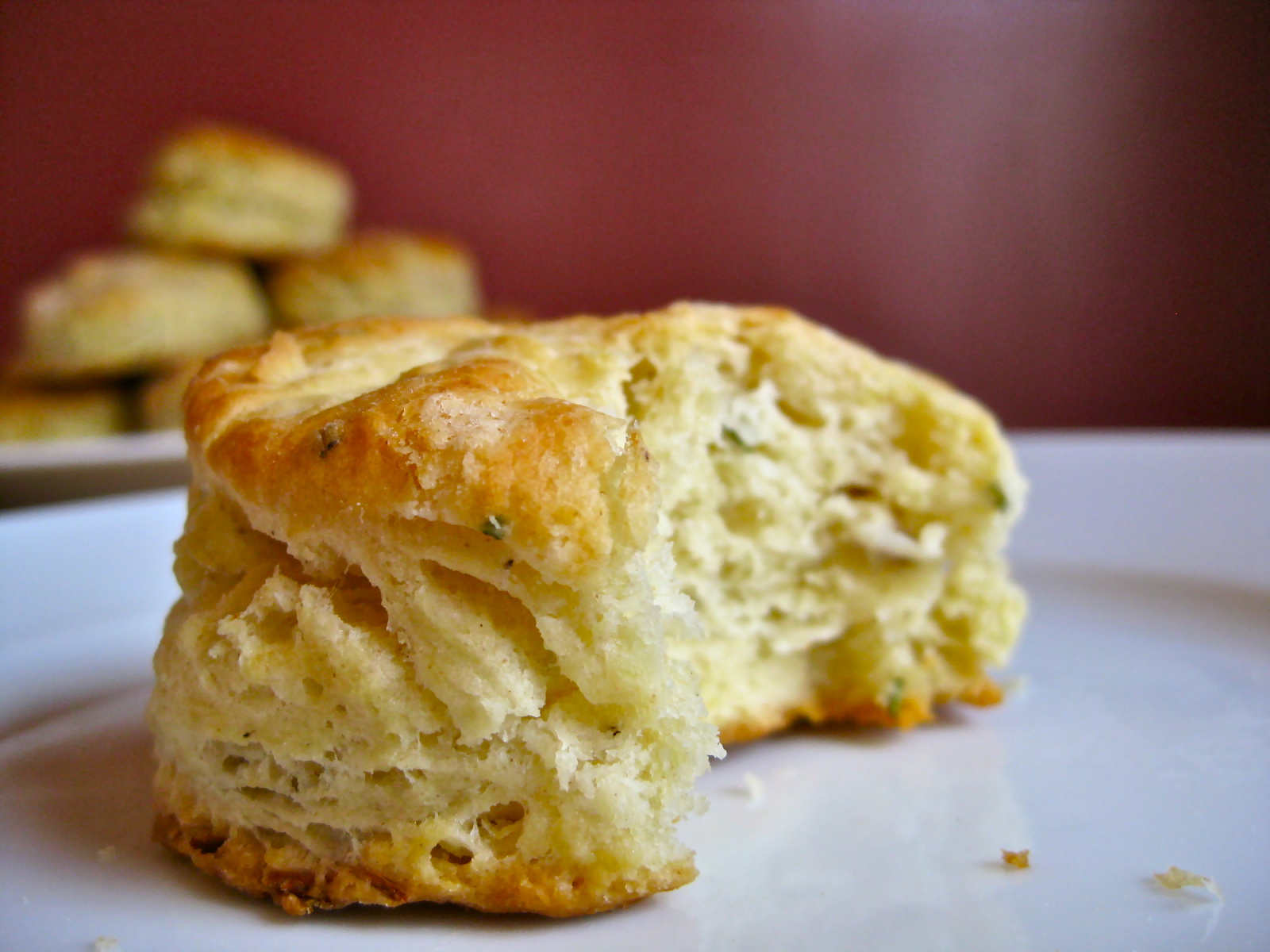
Shallot and Herb Biscuits

16 Jan

When the weather is cold, I admit to being guilty of using the kitchen stove as an additional heat source.  No, not in the super dangerous way of leaving the oven door open while I blast 400 degrees of power into the room and slowly poison myself with carbon monoxide (even typing that made me feel nervous), but in the super delicious way of throwing together a simple biscuit or muffin recipe so that I may not only boost the heat in the kitchen, but also perfume the entire house with the alluring scent of freshly baked treats.

Biscuits are some of my most favorite throw-together baked goods.  They are super fast, I always have the basic ingredients on hand, and there are few things I can think of that are more comforting than fresh, hot biscuits taken and eaten straight from the oven.  Why someone would eat biscuits from a tube, I’ll never know.  A fresh biscuit require minimal work, and when it comes to flavor?  Don’t even get me started.  You can’t even compare the two.

These biscuits are made with what I consider to be my standard biscuit recipe, amended over the years from a Beth Hensperger recipe that I have tweaked and customized over the years into something that I now consider to be almost like a base recipe, a launching pad for whatever flavor combination you might be interested in trying out in a biscuit.

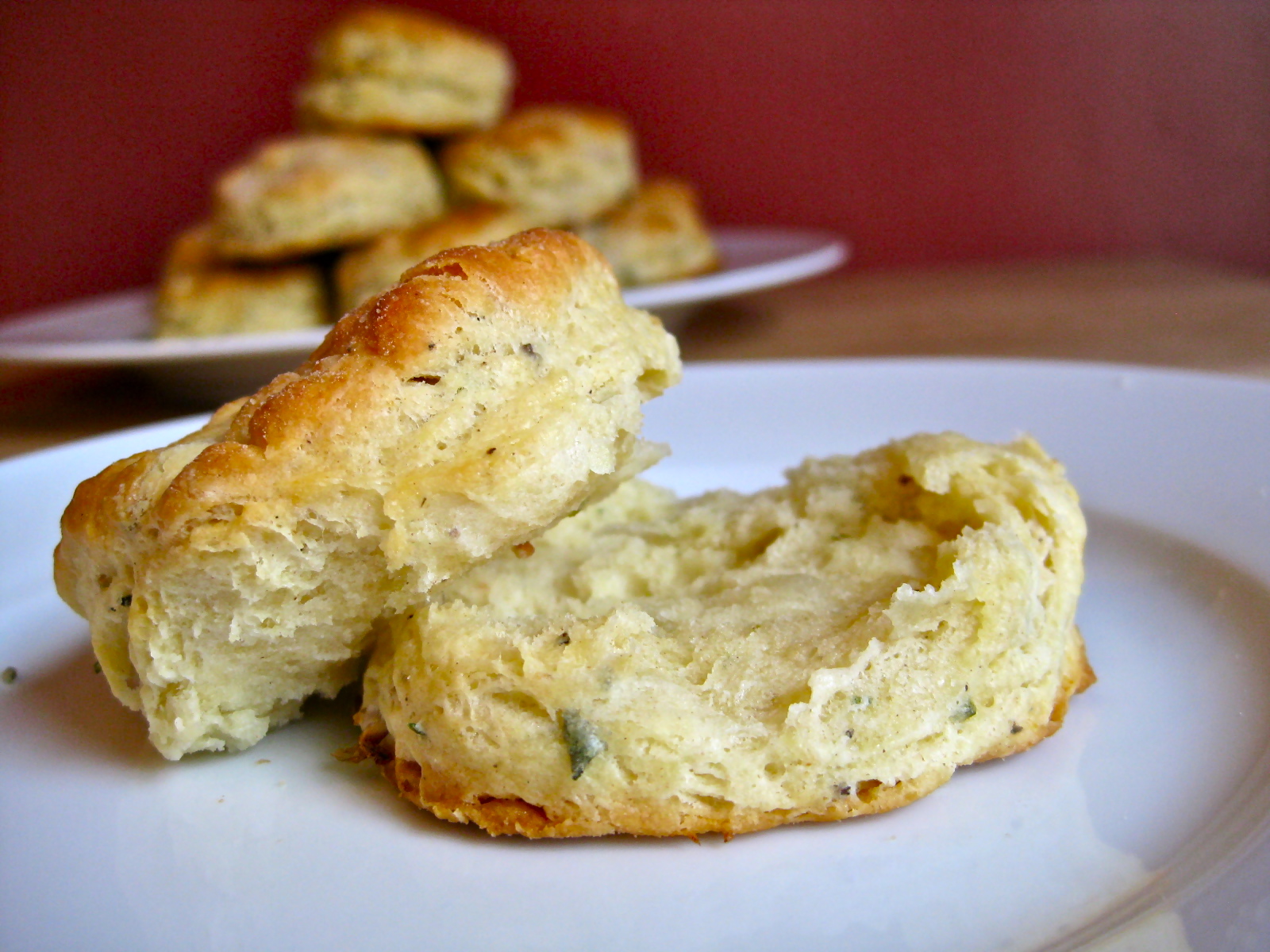
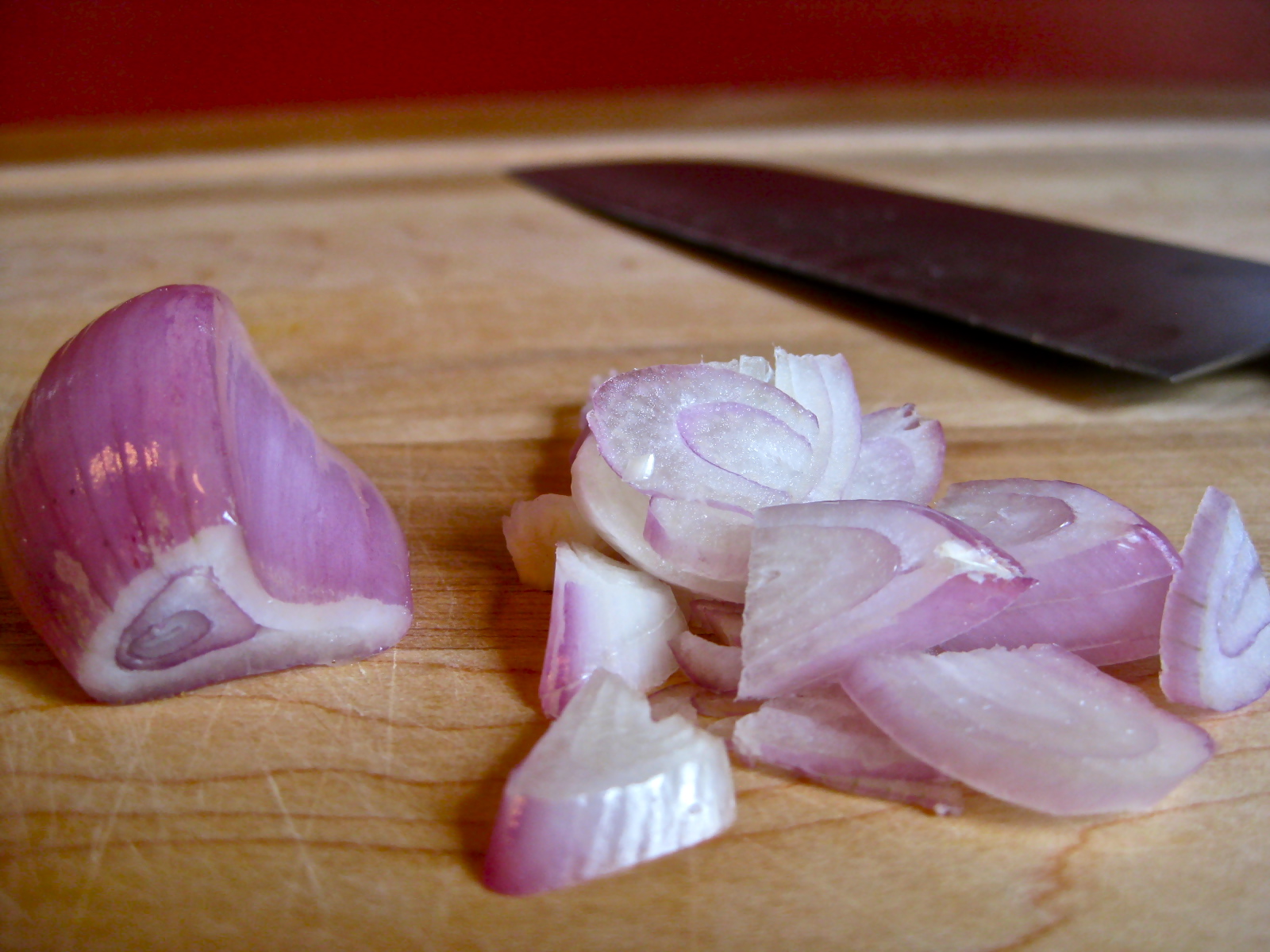
Previously, I have used this base recipe to make blueberry biscuits, a perfect snack or breakfast treat, but the last time I made biscuits, I was in the mood for something a bit more savory.  I threw in what were quite literally some leftover items sitting on a kitchen counter (half a large shallot, some stray herbs), and in just a few minutes I was pulling a pan of delicious biscuits out of the oven.  My kitchen was cozy and warm, the biscuits flaky and satisfying.  Who needs to turn up the thermostat when you’ve got fresh biscuits?

Shallot and Herb Biscuits

Adapted from The Bread Bible, by Beth Hensperger

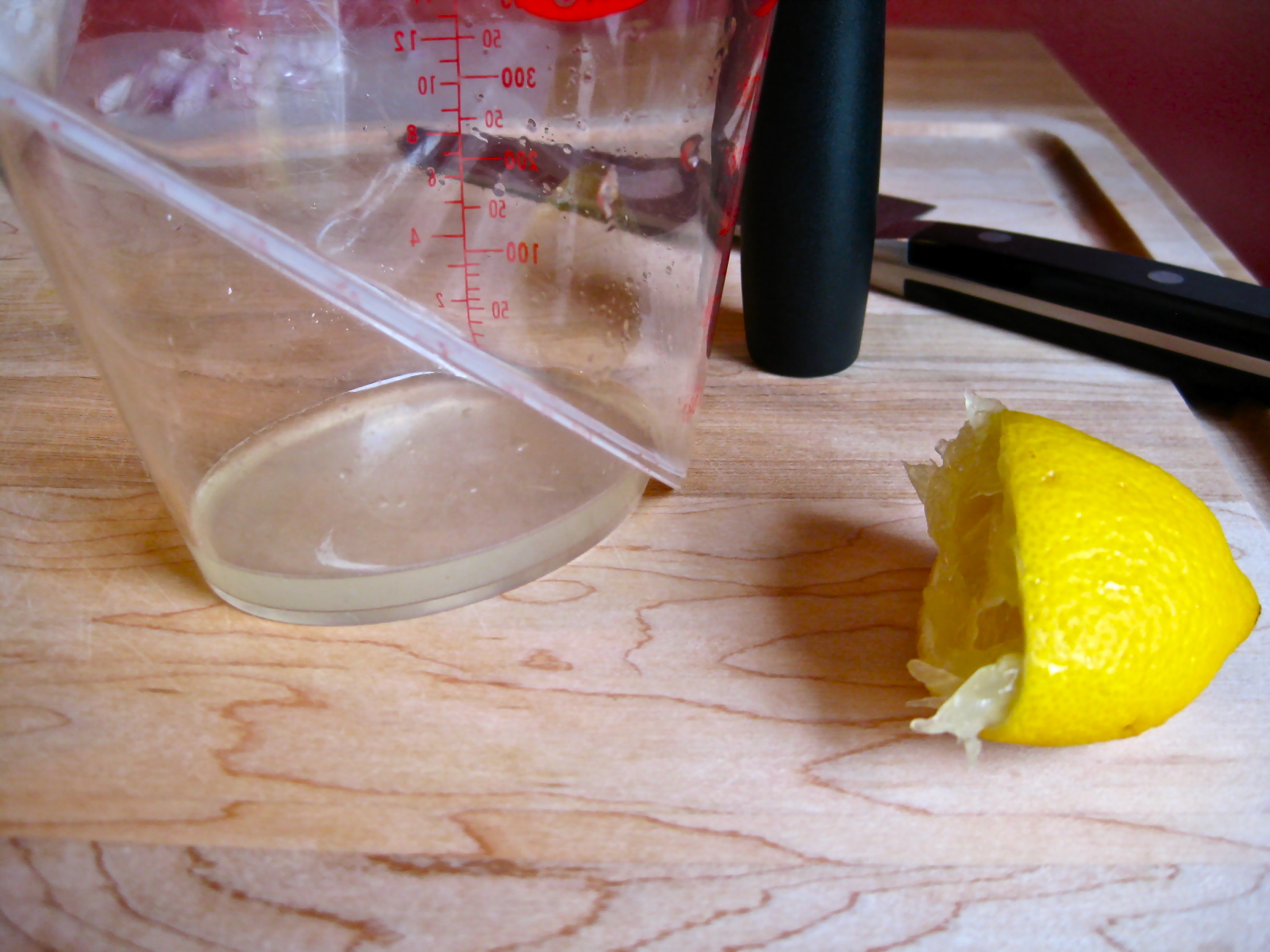
Because I rarely have buttermilk on hand, I have taken to almost exclusively using sour milk in any recipe that calls for buttermilk.  To make sour milk, just add 1 heaping tablespoon of vinegar (cider vinegar or white vinegar) or lemon juice to a measuring cup, then top off with milk until you reach 1 cup.  If you need two cups of sour milk, use twice as much vinegar or lemon juice, if you need less sour milk, adjust the other way.  Allow the sour milk to stand for about 10 minutes before adding to a recipe.  This substitution works like a dream in baked goods, but  I would never use soured milk in a recipe that called for buttermilk as a main component (buttermilk ice cream, buttermilk dressing, etc.).

2 cups unbleached all-purpose flour

2 teaspoons baking powder

¼ teaspoon baking soda

¼ teaspoon salt

6 tablespoons (3/4 stick) cold unsalted butter, cut into pieces

3 tablespoons finely diced shallots

1 tablespoon finely chopped fresh herbs (I used thyme and rosemary), or 1 ½ teaspoons dried herbs (thyme, rosemary, savory, or dill would all work well here)

½ teaspoon black pepper

1 large egg

¾ cup cold buttermilk or sour milk

Preheat oven to 425 degrees Fahrenheit.  Line a baking sheet with parchment paper and set aside.

Add the egg to the buttermilk or sour milk, and beat just to combine.  Set aside.

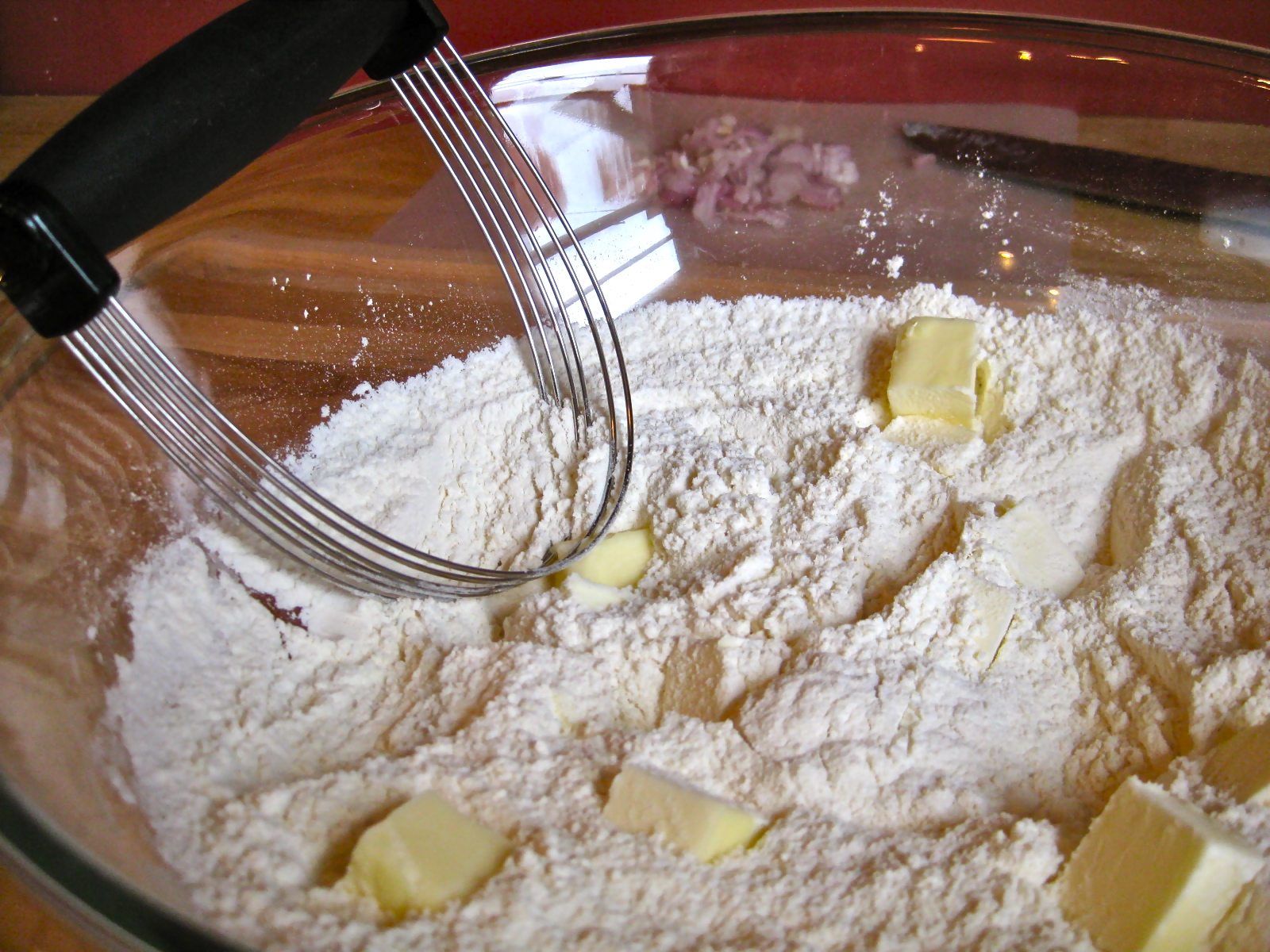
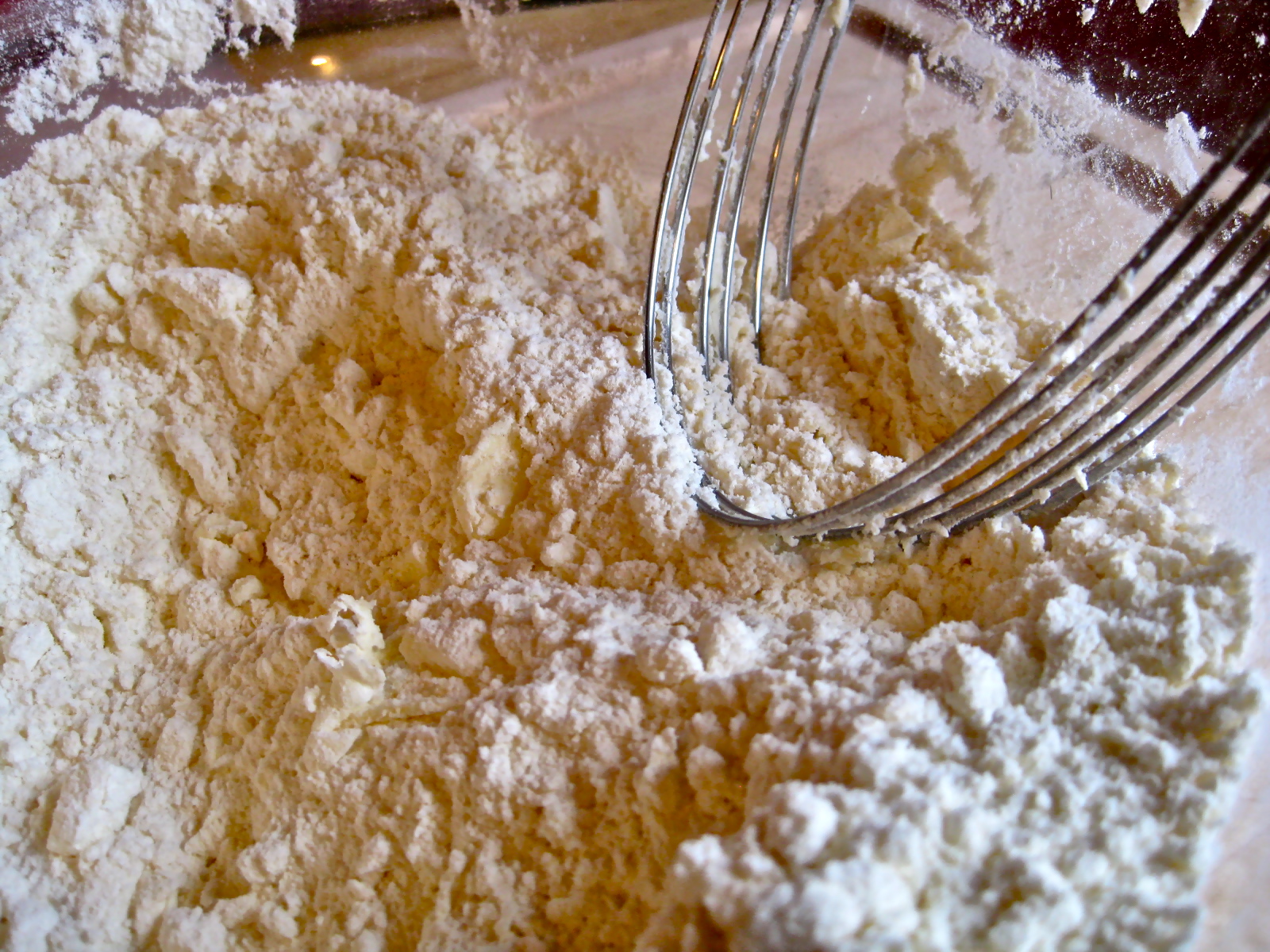
In a large bowl, whisk together the flour, baking powder, baking soda, and salt.  Add the butter to the dry ingredients.  Using a pastry blender or two knives, cut the butter into the flour mixture until the mixture resembles coarse crumbs with no large chunks remaining.  If the mixture appears too soft, refrigerate for 15 minutes to allow it to re-chill.  Whisk the shallots, herbs, and pepper into the flour and butter mixture.

Add the egg and buttermilk mixture to the flour and butter mixture, stirring just to moisten the ingredients.  The dough should appear shaggy, but not sticky.

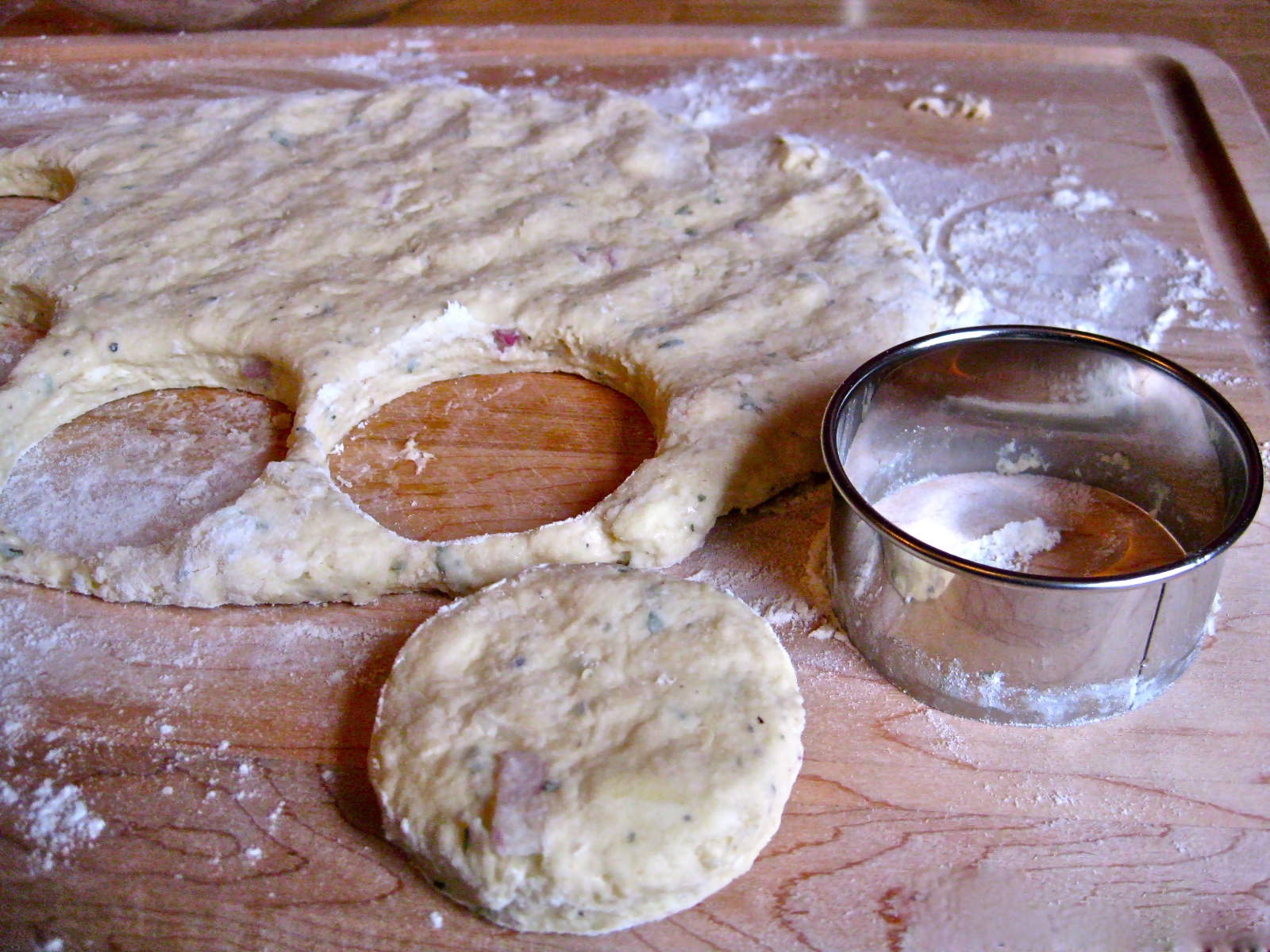
Turn the dough out on to a well-floured surface.  Knead gently about 6 times, or until the dough just holds together.  Roll or pat the dough into a rectangle about ¾-inch thick.  Do not overwork the dough or add too much additional flour at this point, or the biscuits will become quite tough.  Cut the dough into rounds using a floured 2 ½-inch biscuit cutter (or the rim of a drinking glass that is approximately the same size).  Try to push straight down when cutting, making sure not to twist the cutter, and cut the rounds as closely together as possible to minimize scraps.  Gently roll together any scraps and cut into additional rounds.

Place the biscuits ½ inch apart on the prepared baking sheet.  Bake in the center of the oven for 15-18 minutes, or until the biscuits are golden brown.  Serve hot or warm.