Archive | Breakfast RSS feed for this section

Blueberry Biscuits

17 May

I am going to tell you a story about what it’s like to live in Portland, OR.

Last week, an absolutely lovely family moved in down the street from us, taking the place of the absolutely lovely family who lived there before them.  When I stand at my kitchen sink, I have a direct sight line down the street to the house that was being inhabited by the new family.  After I had spent the better part of a day going back and forth to the kitchen sink (you may wonder why I visit my sink so much, and my only answer to you is this: I have a preschool-aged child), watching the new family’s moving fan becoming emptier and emptier, I made the decision to bring the new family a little breakfast treat to greet them the next morning, their first morning in their new house.
Not being a huge fan of eating anything tooth-achingly sweet first thing in the morning, I opted to hunt down a recipe for a nice savory biscuit.  Thinking of the children in the house, it seemed as though something would be needed to make the biscuit a bit more enticing.  I settled on adding blueberries to the biscuits, and began to assemble my ingredients.

I measured, I mixed, and I cut.  As the biscuits were just about to go into the oven, I made the mistake of asking my husband whether or not he thought blueberry biscuits were an acceptable welcome-to-your-new-house gift for a young family.
“Sure,” he said.  “Who doesn’t like blueberries?”

I was about to nod along in agreement when it occurred to me that, you know, someone in that house might not like blueberries.  I hesitated slightly before putting the biscuits in the oven.

“Do you think they might not like blueberries?” I asked him.

Sensing that he may have mistakenly set the terrible wheels of my mind into high gear, my husband backpedaled.  “No.  Everyone likes blueberries.  Everyone.  They’re good.  Always good.”
But then, the path horribly, unrelentingly forged, I began to wonder about other possible problems with the biscuits.  What if someone in the family was gluten intolerant?  Or allergic to dairy?  Or what if the family was vegan?  I could definitely start over and make a vegan biscuit (I’ve lived in Portland for 15 years, so it’s almost a given that I’ve learned how to make delicious vegan biscuits by now), but what if they were non-gluten-eating vegans?  Or what if they only ate organic food?  I had organic blueberries, but I didn’t know if I would be able to find organic non-gluten flour.  This was getting complicated.  I should head to the store and check out the gluten-free flour selection.  I would also need to buy soy milk.  But what if they were allergic to soy?  Okay, I’d buy almond milk.  But what if they were allergic to nuts?  Rice milk?  Hemp milk?

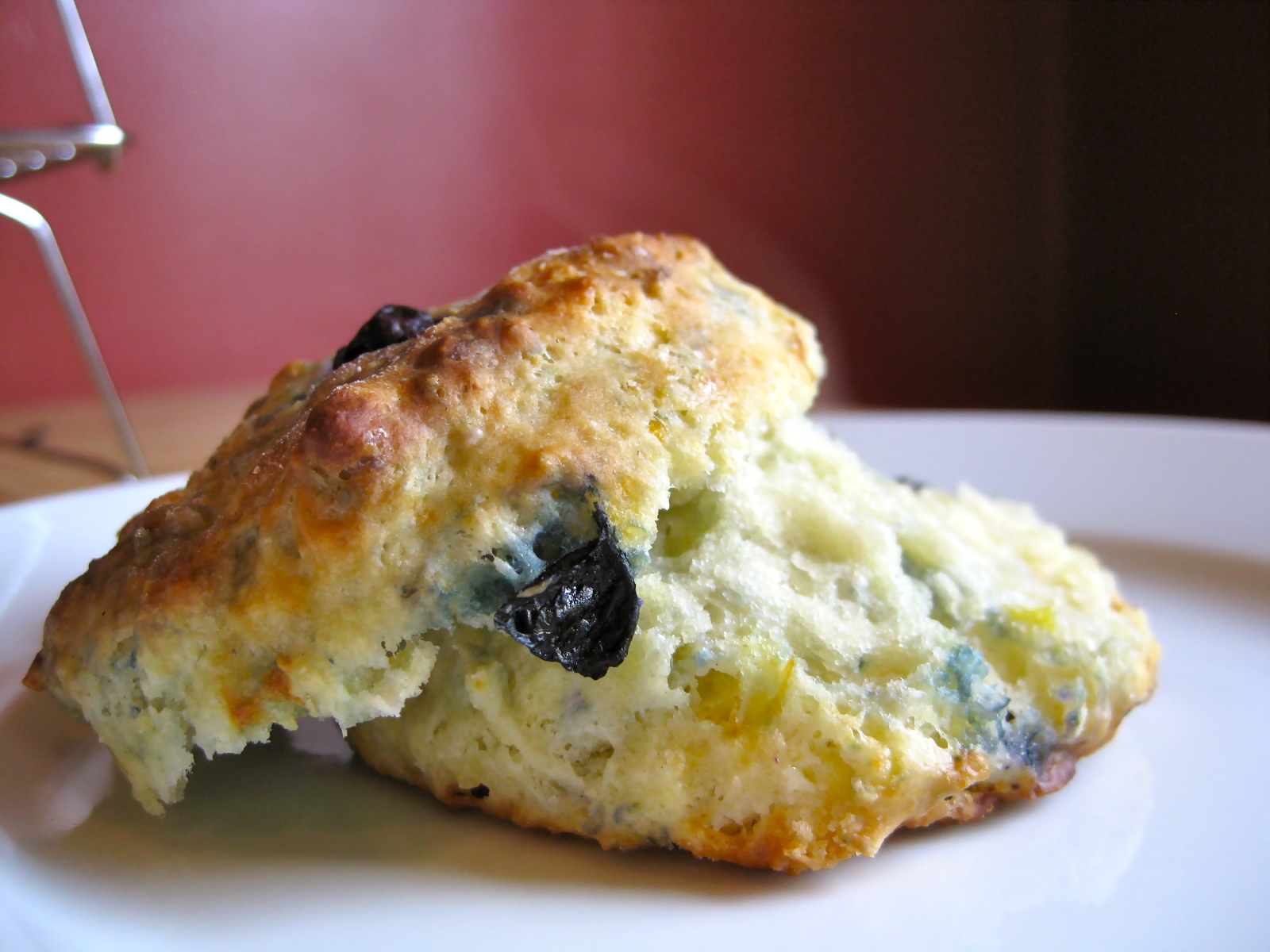
It was right about then that the oven timer went off, effectively causing the hamster wheel that is my brain to come to an abrupt stop.  I took the biscuits out of the oven, admiring the lovely golden-hued tops that were studded with plump indigo berries.
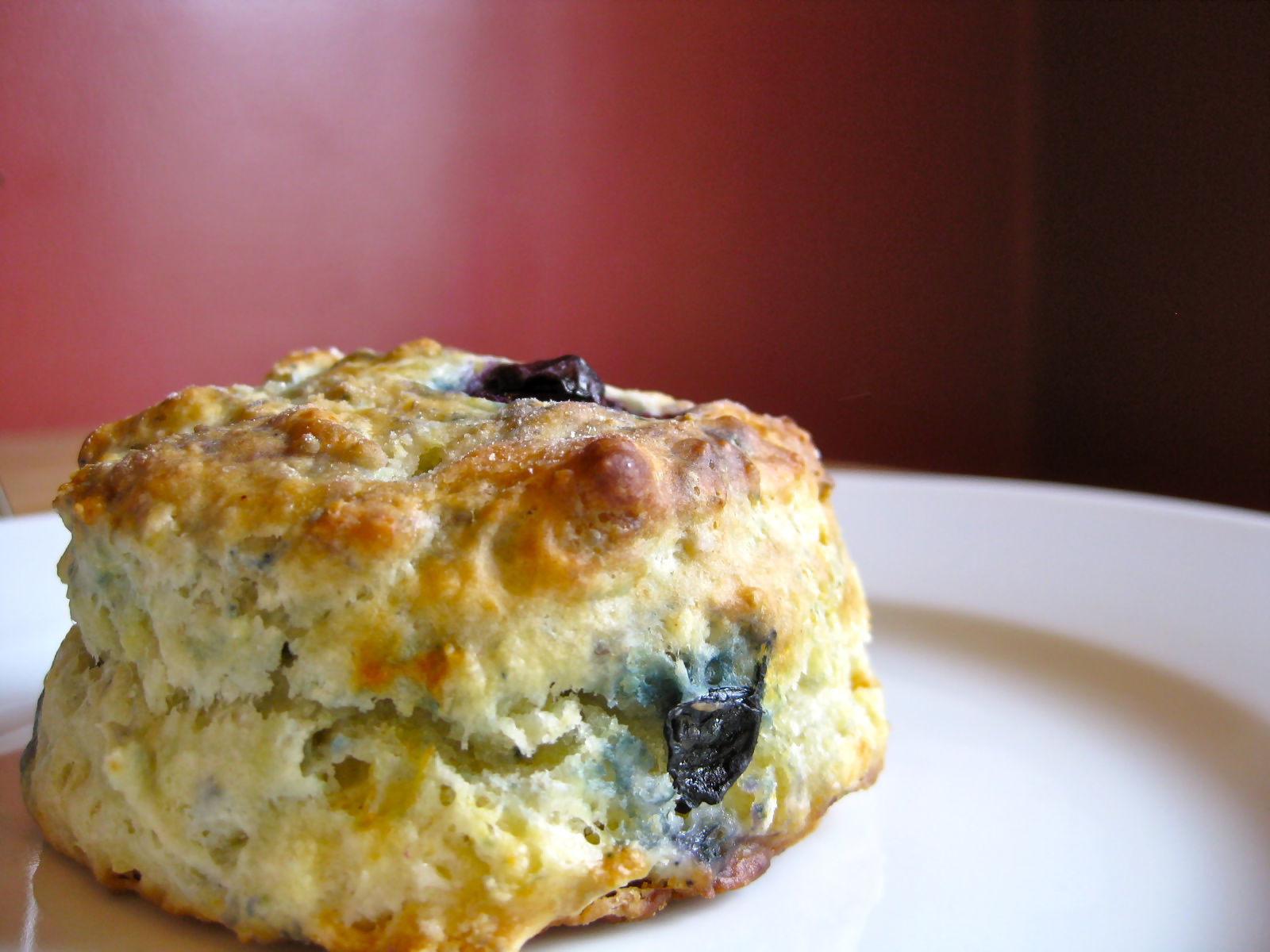
The biscuits were as delicious as they looked, a fact that our new neighbors, unfortunately, never had the chance to learn.  I have a feeling it will take a few more weeks before I am comfortable bringing them any surprise baked goods.  Weeks that I will no doubt spend trying to work subtle food-related questions into everyday conversation without sounding like an absolute loon.

“Yes, the weather is lovely today.  It’s a good day for ice cream.  Ice cream made with milk and cream and probably even eggs.  Real ice cream.  Wouldn’t you agree it’s a good day for real ice cream?”
Blueberry Biscuits

Adapted from Beth Hensperger’s The Bread Bible

2 cups unbleached all-purpose flour

2 teaspoons baking powder

1/4 teaspoon baking soda

1/4 teaspoon salt

2 tablespoons sugar

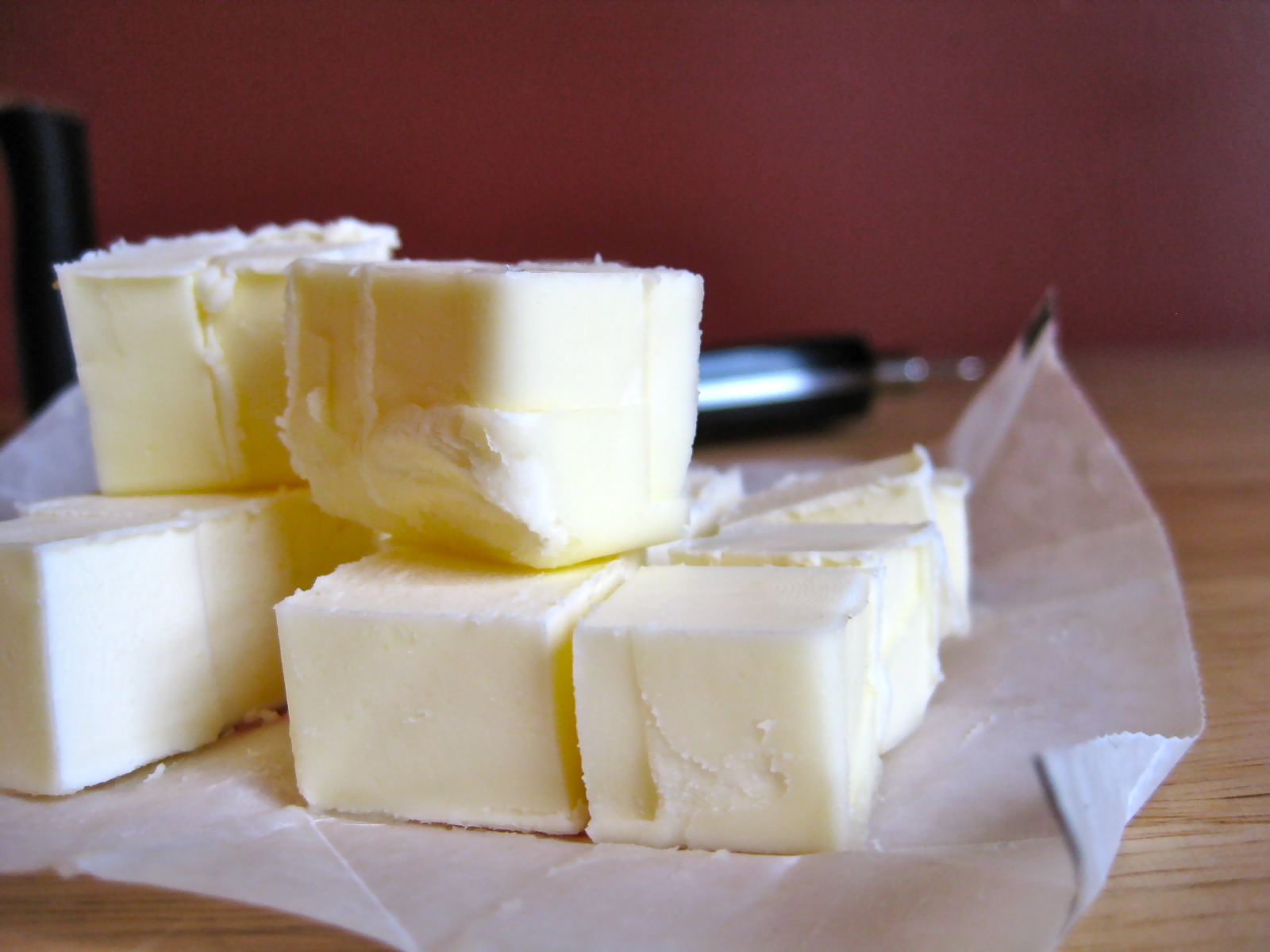
6 tablespoons (3/4 stick) cold unsalted butter, cut into pieces

1 large egg, lightly beaten

3/4 cup cold buttermilk, or cold soured milk

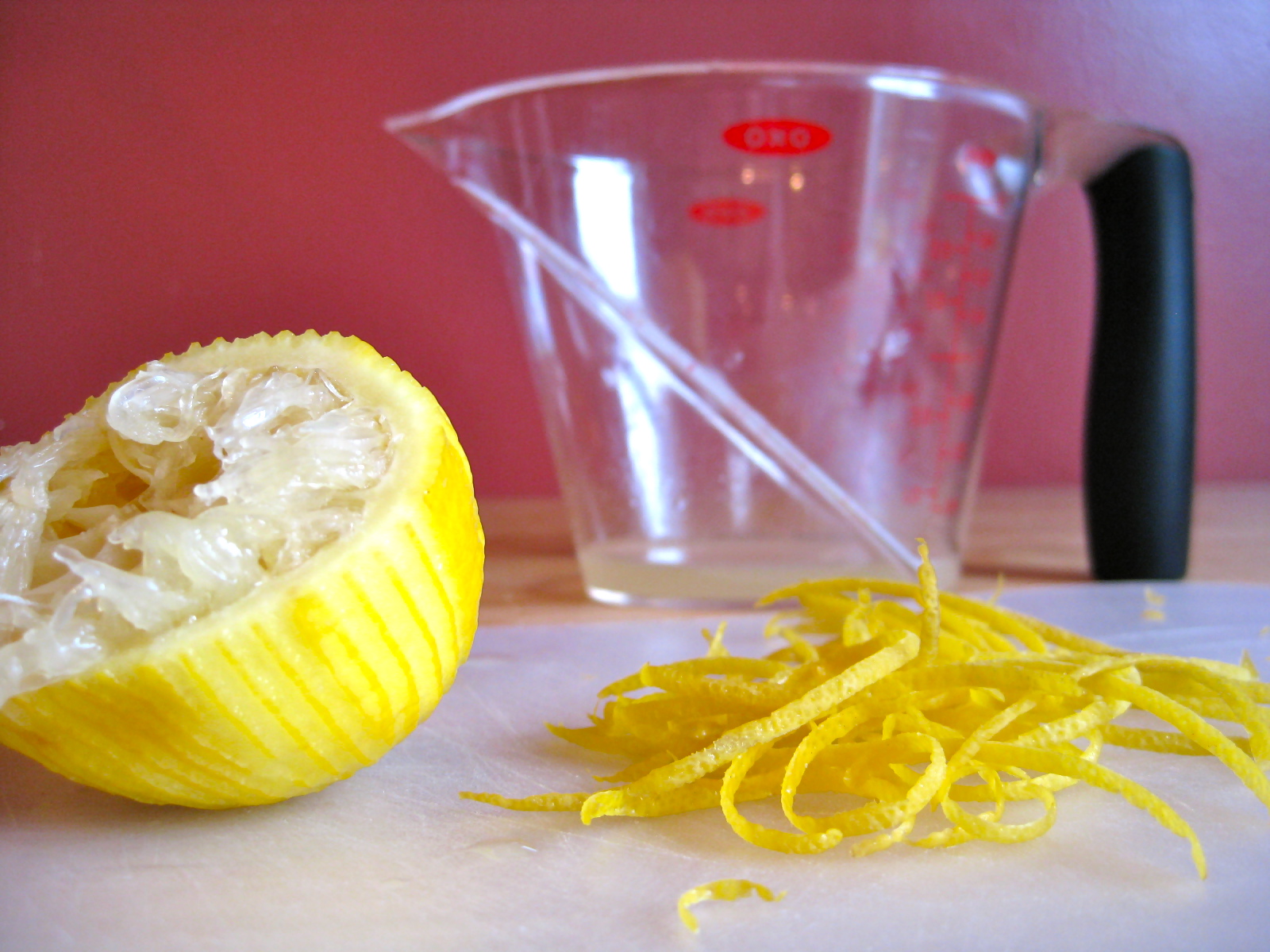
finely grated zest of 1 lemon

3/4 cup blueberries, fresh or frozen (unthawed)

Preheat oven to 425 degrees F.

Line a baking sheet with parchment paper, or grease a baking sheet and sprinkle it lightly with 1 tablespoon of cornmeal (to prevent biscuits from sticking).

In a large bowl, combine flour, baking powder, baking soda, salt, and sugar.  Whisk to combine.  Alternately, you can combine the dry ingredients in the bowl of a food processor and pulse a few times to aerate.

Using a pastry cutter, two knives, or in the bowl of the food processor, cut the butter into the dry ingredients until the mixture resembles coarse crumbs and there are no large butter pieces remaining.  This will take a minute or two if using a pastry cutter, but only a handful of pulses if using the food processor.

Add the buttermilk or soured milk, the egg, and the lemon zest to the flour mixture.  Stir just enough to moisten everything, until the batter just begins to stiffen.  Gently fold in blueberries.  If using the food processor, add the milk, egg, and lemon zest through the feed tube, and pulse just until the dough comes together and it begins to form into one mass.  Knead in the blueberries once the dough has been removed from the food processor.  It should go without saying that you should not pulse the blueberries in the food processor.

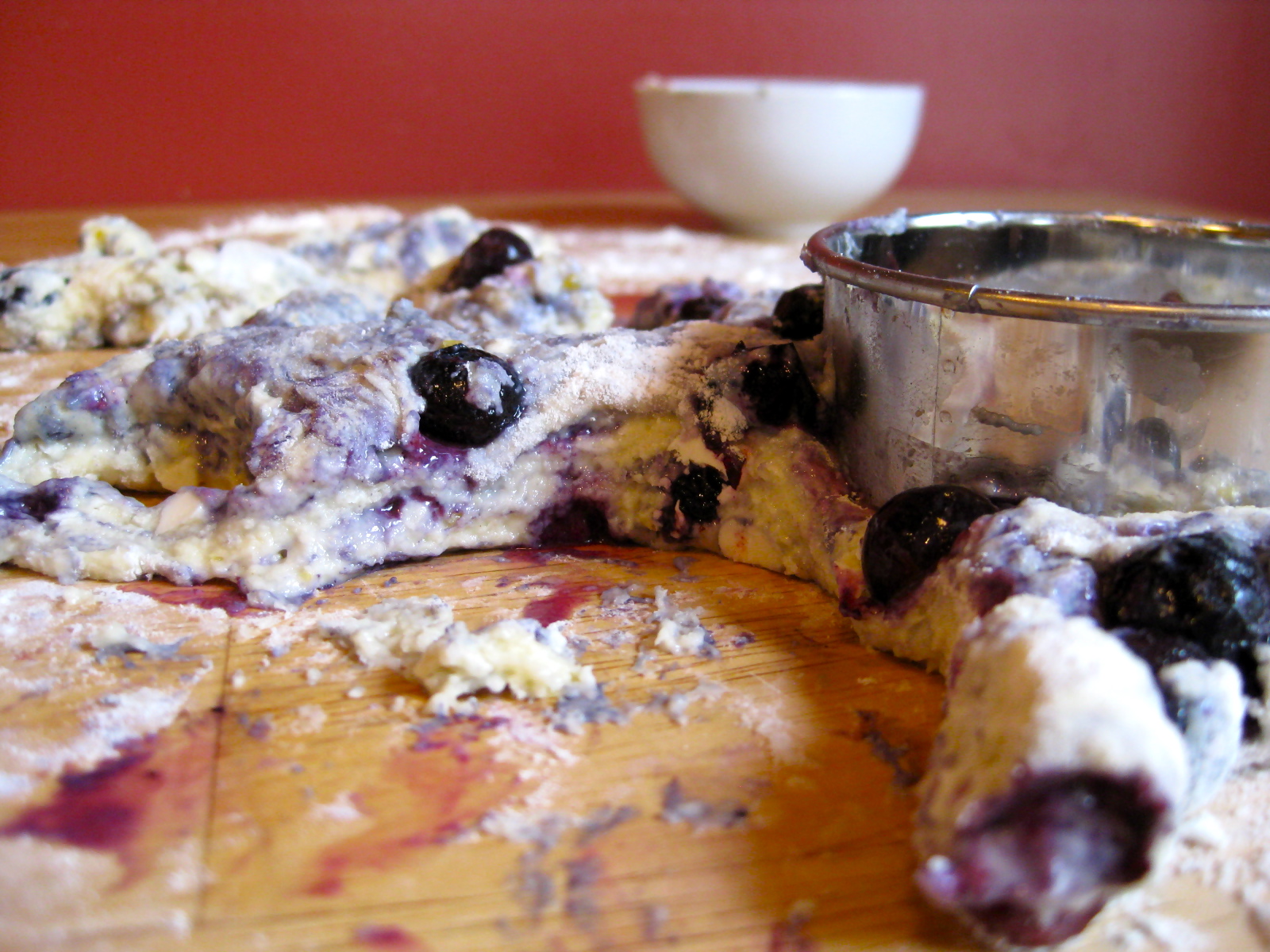
Turn the dough out onto a floured work surface.  Gently knead a few times until the dough just begins to come together.  The dough will still be slightly sticky, but do not handle the dough too much or add too much additional flour, lest you make the dough tough.  Pat the dough into a rectangle roughly 3/4 of an inch thick.

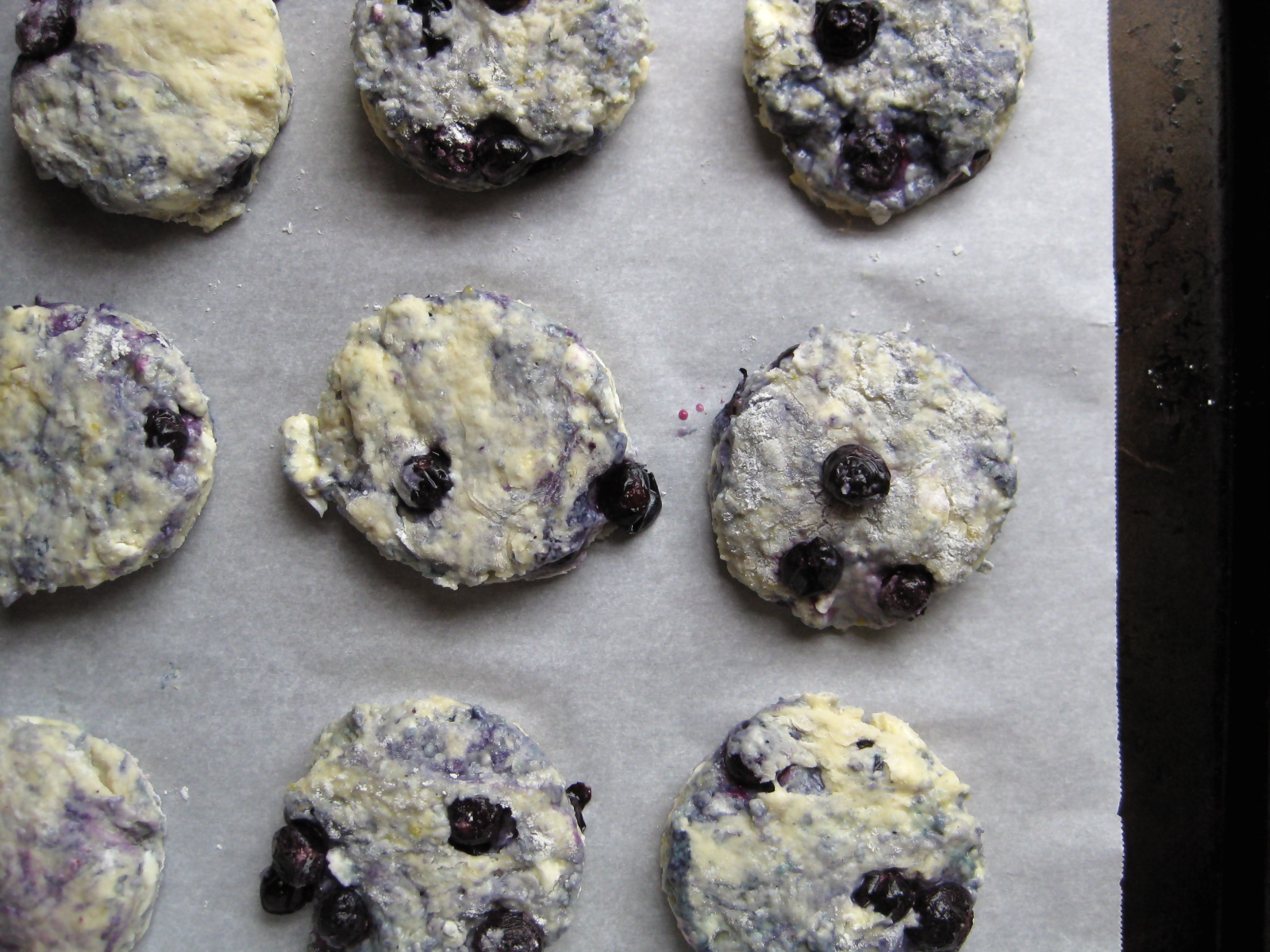
Cut the dough into 2 1/2 inch rounds, using a floured biscuit cutter.  Gently pat scraps of dough together to continue cutting, eventually yielding 12 biscuits.  My cutting sequence produced 7 biscuits from the first rectangle, 3 from the first batch of scraps, then 2 final (slightly misshapen) biscuits from the last of the reformed scraps.

Place biscuits on the prepared baking sheet about 1/2 inch apart.  Bake in the center of a preheated oven for 15 to 18 minutes, until tops have turned golden brown.  Eat hot or slightly cooled.

Makes 12 biscuits.

Quick and Easy Citrus Crepes with Berry Sauce

6 May

While I am no stranger to the concept of tackling a recipe that may require what seems to some people a ridiculous or unreasonable amount of wait time (although I will defend to the death the argument that granola really does taste best when baked at a low heat for two hours, and that the flavor of bread really does rocket to a whole new level of tasty when started with a sponge), there are times when even I look at a recipe and think, “You want me to set this batter aside for 6 hours before I use it?  Are you kidding me?”

Such was my reaction when trying to hunt down a simple and satisfying recipe for crepes one weekend morning.  Logic may dictate that the more intelligent thing to do would have been to look for an appropriate recipe the evening before (when resting crepe batter in the fridge coincides with resting yourself in bed), but, and I am sure I am not alone when I say this, I didn’t know I wanted crepes for breakfast when I went to bed.  Since, however, I certainly knew I wanted crepes for breakfast right then, I quickly hit our cookbook shelves and started the process of rapidly finding and rejecting recipes.

Alice Waters wanted me to add beer to my batter and let it rest overnight.  Deborah Madison wanted the batter to rest for at least two hours.  Another recipe chided the reader to never—EVER—make a crepe with regular flour, because only buckwheat flour would produce a worthy and authentic crepe.  All of the recipes implored the potential crepe-maker to cook their crepes in a special crepe pan or, at the very least, in a nonstick skillet, neither of which I happen to own.

That’s right.  No nonstick cookware.  I won’t bore you with the reasons why, but about three or four years ago we retired our last nonstick pan and it’s a decision we’ve never regretted.  We have two cast iron skillets (one of which is enameled) and one stainless steel-clad sauté pan and we have yet to find the need for anything else.  But moving on.

Eventually, my crepe saving grace was found in the pages of Joy of Cooking.  Another admission: I have two copies of Joy of Cooking, one from 1985 and one from 1999.  Why, you ask?  Well, because between the years 1985 and 1999, ideas in cooking underwent a huge change, as they are wont to do in any given 14 year period.  The two version of what are seemingly the same cookbook are fantastically different, and there are recipes in both copies that are unique to those particular editions.  Not surprisingly, the crepe recipe in the 1985 version was decidedly less fussy than the one in the 1999 version so, in the end, that’s where I found the winner.

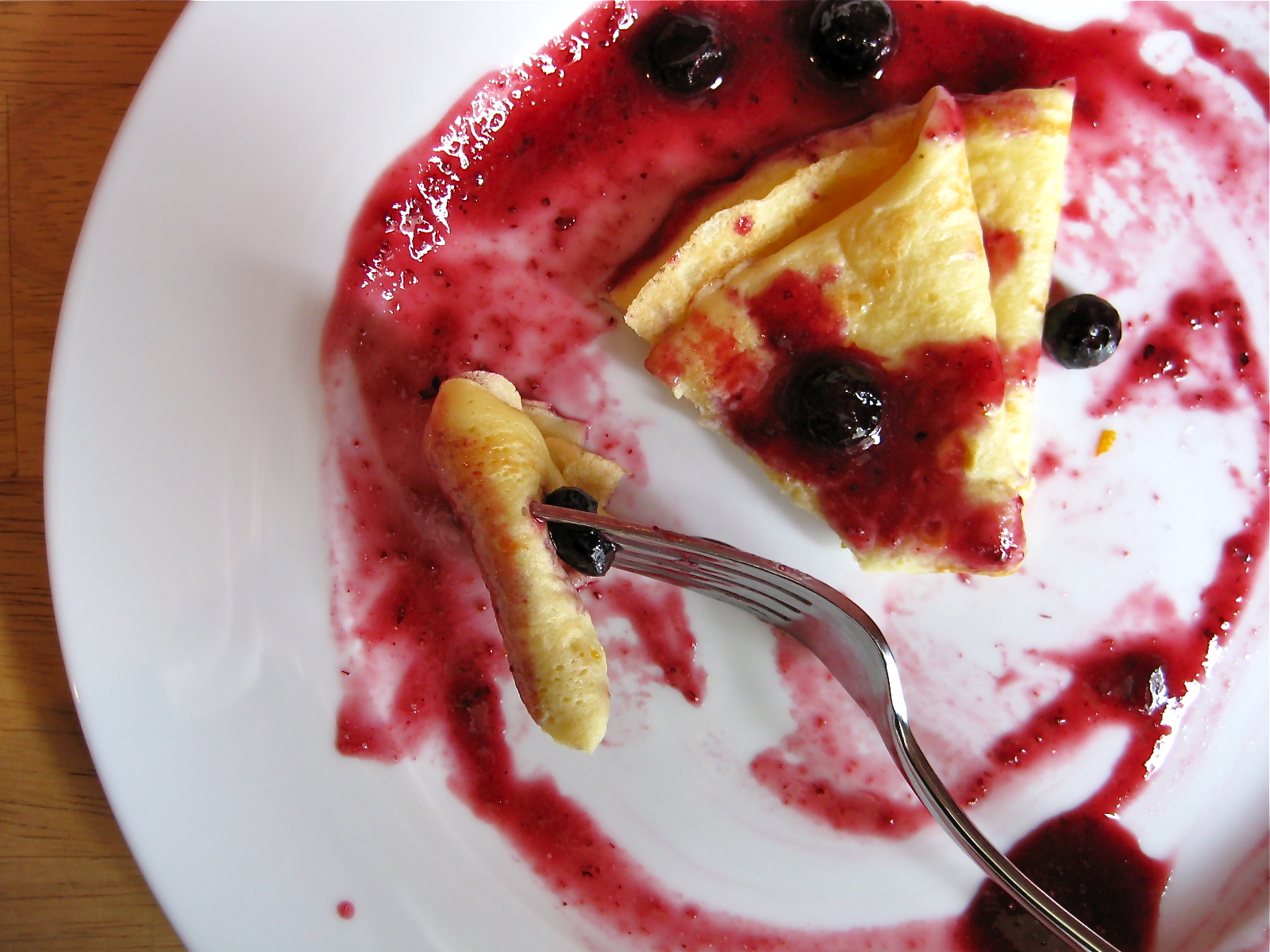
Which is not to say I didn’t still feel the need to do a bit of tweaking.  The recipe you see below is a super simplified version of the one I eventually decided to use as inspiration.  It produces crepes that are light, delicious, and infinitely adaptable.  We ate the crepes with a simple sauce made from a mix of frozen berries unearthed from our freezer, but I would imagine there is no bad way to dress these fellows up—lemon curd, lightly sweetened mascarpone cheese, unadulterated fresh berries, cinnamon sugar, the list of possibilities is nearly endless.  All that time you won’t spend waiting for your crepe batter to rest, you can instead spend thinking up any number of wonderful ways to fill and dress your next special breakfast, which might perhaps happen to fall this Sunday for a certain lady in your life who goes by the name Mom.

Quick and Easy Citrus Crepes with Berry Sauce

Partially adapted from Joy of Cooking 

Crepes

3/4 cup all-purpose flour

1/2 teaspoon salt

1 teaspoon baking powder

2 tablespoons powdered sugar

2 eggs, beaten

2/3 cup milk

1/3 cup water

1/2 to 1 teaspoon finely grated lemon or orange zest

Vegetable oil, for brushing the skillet

Place flour in the bowl of a food processor and pulse half a dozen time to aerate the flour.  Add salt, baking powder, and powdered sugar to the food processor and pulse half a dozen more times to combine.

In a medium bowl, add beaten eggs, milk, water, and lemon zest, and mix to combine.  With the food processor running, slowly pour the milk and egg mixture into the flour mixture.  Allow the mixture to process until combined, about 5 to 10 seconds total.  If you spot a few lumps, don’t worry.  Don’t try to keep processing the batter in order to eliminate all lumps–that will just make the batter tough.

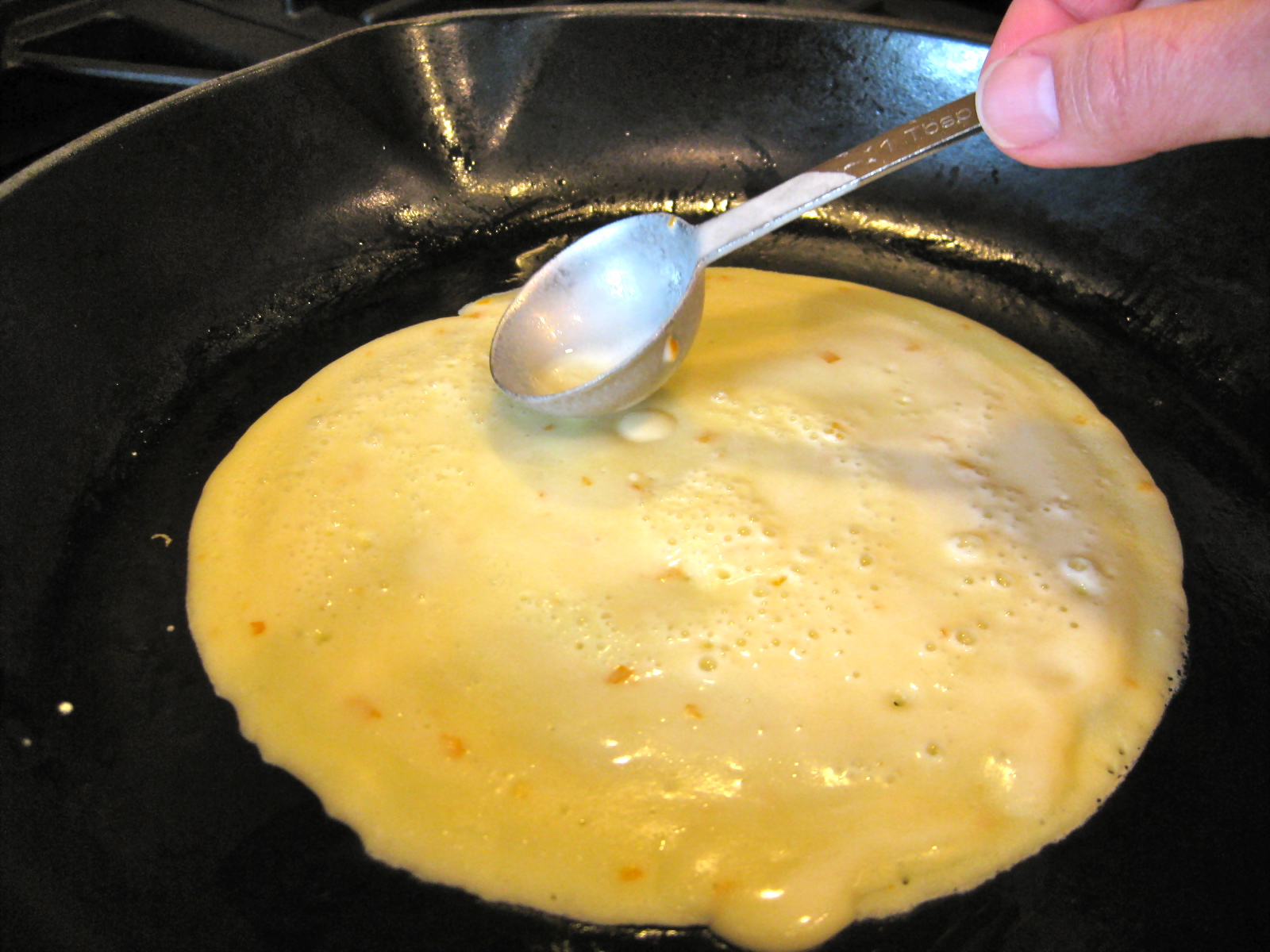
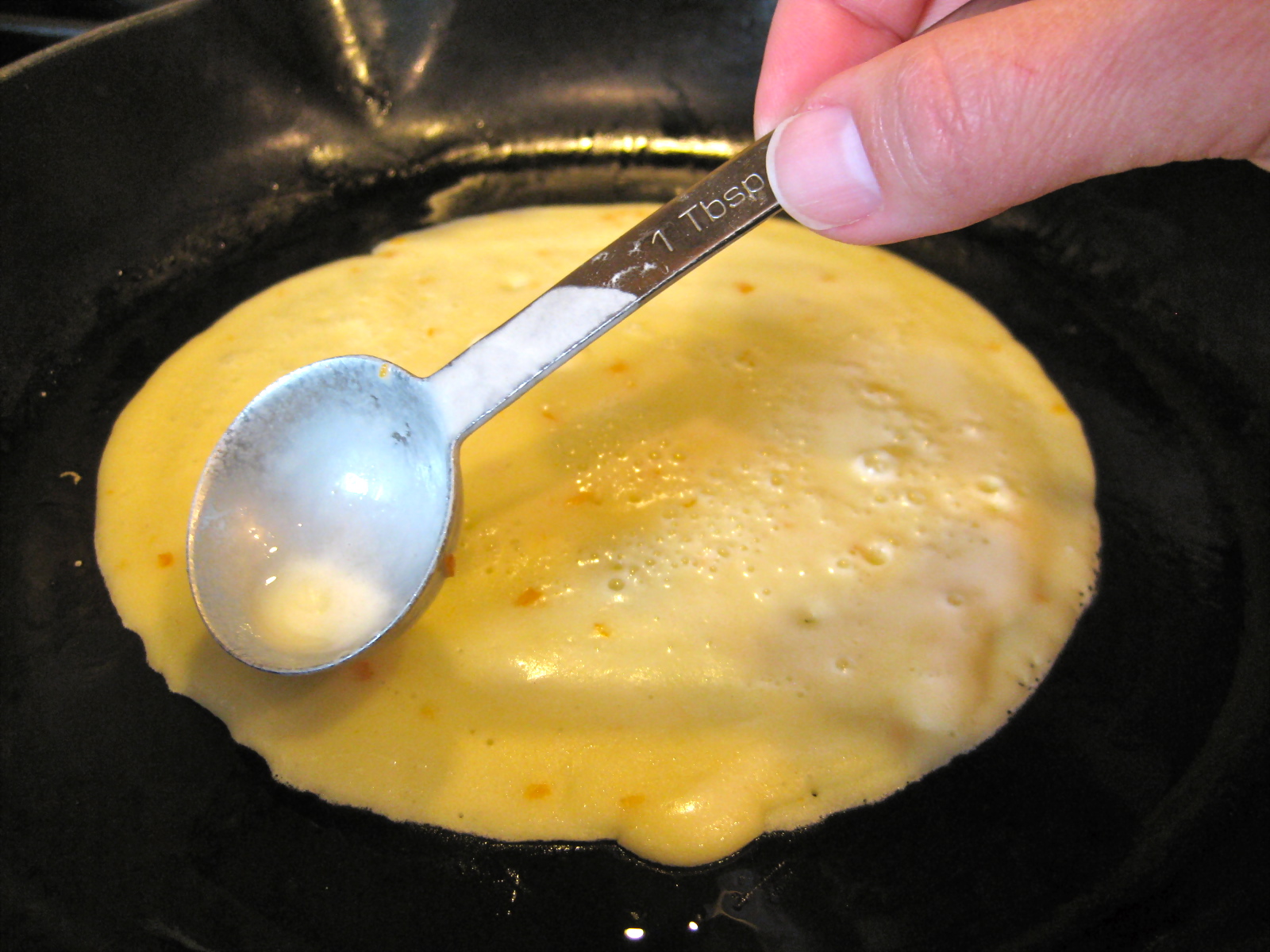
Thoroughly heat a small or medium skillet over medium-low heat.  Lightly brush the pan with a small amount of vegetable oil.  Add a small amount of batter (about 3 tablespoons), pouring it directly from the bowl of the food processor.  Tip the skillet and let the batter spread over the bottom, or use a spoon to very gently coax the batter out into a wide circle.  Cook the crepe until tiny bubbles begin to form and pop on the surface of the crepe.  Flip crepe and cook until underside is lightly browned.

Repeat process with remaining batter, making sure to lightly brush the pan with oil before cooking each crepe.  Crepes can be stacked and set aside, covered lightly with foil, while the whole batch cooks.

Berry Sauce

3 cups mixed berries, fresh or frozen (we used a mixture of strawberries, blueberries, and raspberries)

3 tablespoons sugar

1/4 cup freshly squeezed orange juice

2 tablespoons freshly squeezed lemon juice

Combine all ingredients in a saucepan and place over medium heat.  Cook, stirring constantly, until the fruit just begins to fall apart, roughly five minutes.  Transfer mixture to a blender or food processor and puree until about half of the mixture is blended into a liquid and the other half remains slightly chunky.  If you are not a fan of textured sauce, feel free to puree the sauce until it is completely smooth, or until your desired texture has been reached.

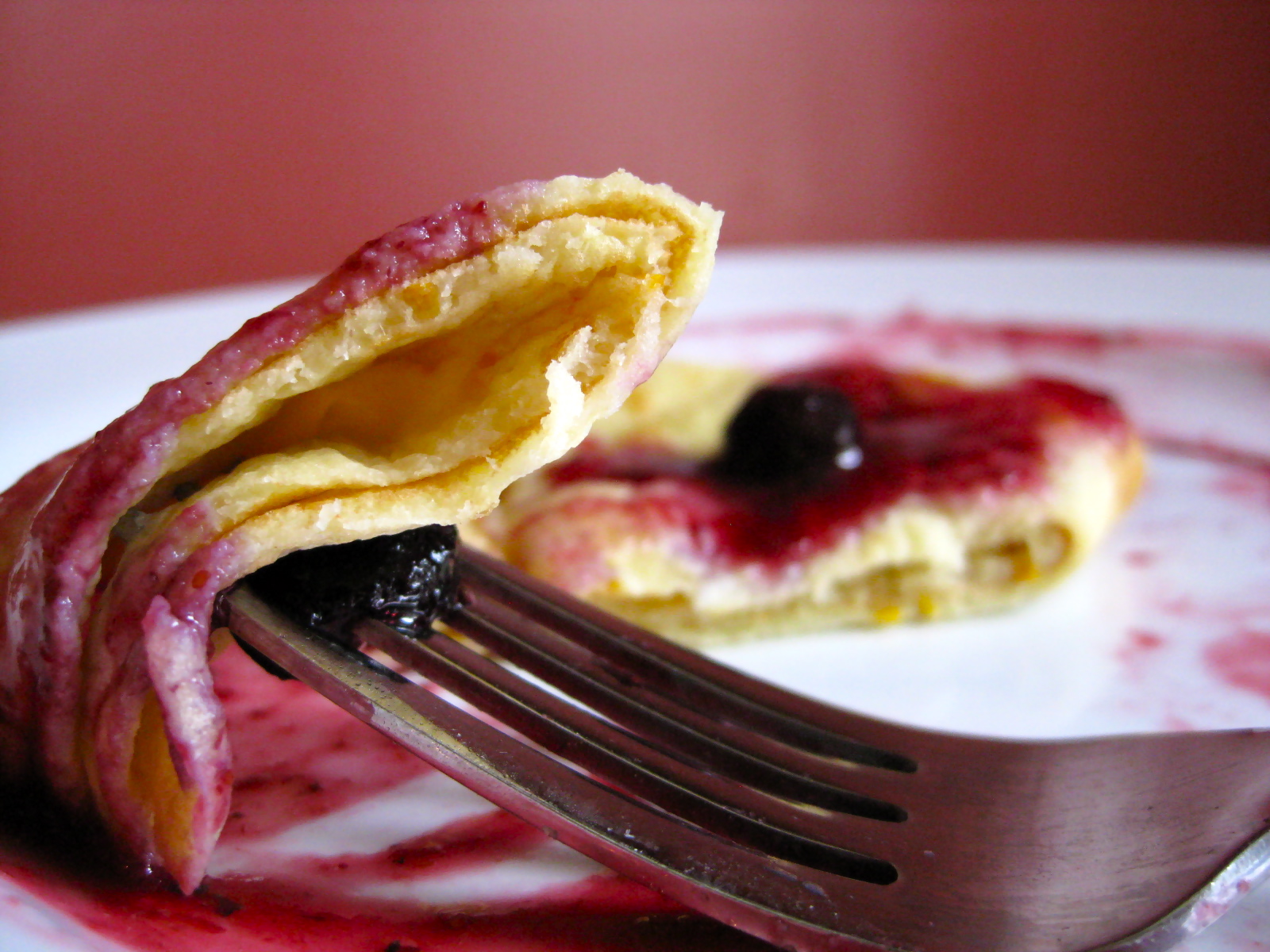
To serve crepes as shown, lightly butter each crepe (we used these orange and mint butters), then fold twice into quarters.  Arrange crepes on a plate and drizzle with berry sauce.

Yeasted Buttermilk Biscuits

22 Apr

In the past ten years, I can recall a total of one single Easter that did not suffer a torrential downpour of spring rain.  Spring (and autumn…and winter) puts forth a formidable battle in the Pacific Northwest, challenging trees and flowers to bloom, then pounding them with the type of rain that can oftentimes only be described as being vaguely menacing.  Easter egg hunts will be completed by children wearing heavy raingear, and casual brunches will be held indoors while a fireplace roars with every effort to try and stave off the soggy chill of the morning.

The upside to steeling oneself for a brisk and sodden Easter is the still welcome addition of piping hot baked goods.  It’s not that warm days do not allow for steaming hot treats that come straight from the oven, but it’s not difficult to notice that such things are greeted with a higher level of affection when presented on a chilly, wet day.  The only downside to making a baking commitment on Easter morning is the inevitable time crunch that will inhibit your productivity and, unfortunately, raise your crabbiness level to DEFCON 5.  Because the Easter Bunny waits for no one.

To remedy this problem, I have come up with the ridiculously simple time saving solution of merely spending the previous evening completing 50% of what needs to be done.  If it sounds totally over simplified, it’s because it is.  You are not, collectively, doing any less work, but you are managing your time in a way that makes it feel like you are getting away with something.  You can crack your eggs into a big bowl and leave them covered in the refrigerator to no ill effect.  You can slice bread for French toast, chop vegetables for a frittata, measure out dry and wet ingredients for pancakes or waffles, or you can whip up a batch of what has become my most favorite addition to any brunch or breakfast: yeasted buttermilk biscuits.

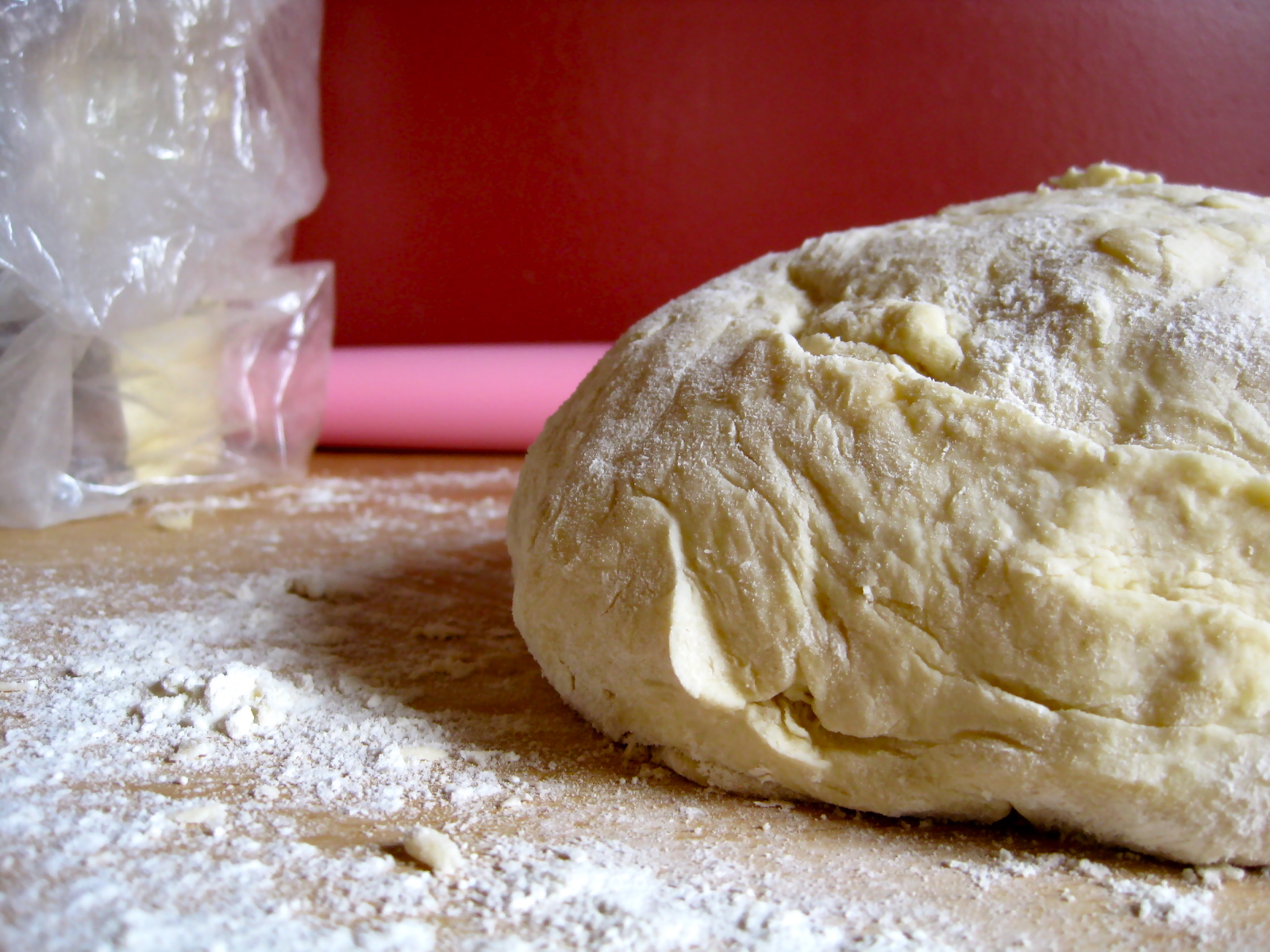
Allowed to sit in the refrigerator overnight, the dough for these biscuits has time to develop a fantastically light texture and flavor.  The mixing of the dough is simple to the point of being almost unbelievable, and the next morning’s work involves nothing more than a couple of passes kneading the dough, a quick roll and cut (assisted, in my case, by an eager preschooler), then a short rise while the oven preheats.  15 minutes in the oven later, you’ve got rich, flaky biscuits that are just waiting to be paired up with some tart jam or a selection of delicious flavored butters.

If you are in the presence of an Easter ham, word has it that these biscuits are amenable to being utilized as a soft and pillowy vehicle for ham consumption.  Brought while still warm to a recent to a potluck, these biscuits were received with great joy.  They were eaten outside, in a newly planted garden, while a soft rain fell.  An experience joining belly-warming sustenance with the damp shiver of the season, it was the perfect signifier of spring’s arrival in the Pacific Northwest.

Yeasted Buttermilk Biscuits

From that old standby, James McNair’s Breakfast 

It’s worth noting that this dough keeps in the refrigerator for several days.  This means that you can keep a batch in the fridge, then cut off, roll, and bake however much you want, whenever you want.  This realization–that I could bake fresh yeasted buttermilk biscuits every morning, several days in a row–was nothing short of magical for me.

1 package (2 1/4 teaspoons, or 1/4 ounce) quick-rising active dry yeast

5 tablespoons warm water (110 degrees to 115 degrees F)

5 cups all-purpose flour

5 teaspoons baking powder

1/2 teaspoon baking soda

3 tablespoons sugar

1 teaspoon salt

1 cup canola or other high-quality vegetable oil

2 cups buttermilk

In a small bowl, sprinkle the yeast over the water, stir to dissolve, and let stand until soft and foamy, about 5 minutes.  (Discard the mixture and start over with a fresh batch of yeast if bubbles have not formed in 5 minutes.)

In a bowl or food processor, combine the flour, baking powder, baking soda, sugar, and salt.  Cut the oil into the mixture with a pastry blender or the steel blade of the food processor until the mixture is the texture of coarse cornmeal.  If using a food processor, transfer the mixture to a large bowl (I recommend a very large bowl, because this mixture will expand a great deal more than you think).  Pour in the buttermilk and softened yeast.  Stir the mixture quickly to combine the liquid ingredients with the dry ingredients.  Cover and refrigerate for at least 1 hour, or preferably overnight.

Lightly grease baking sheets, or line with parchment paper, and set aside.

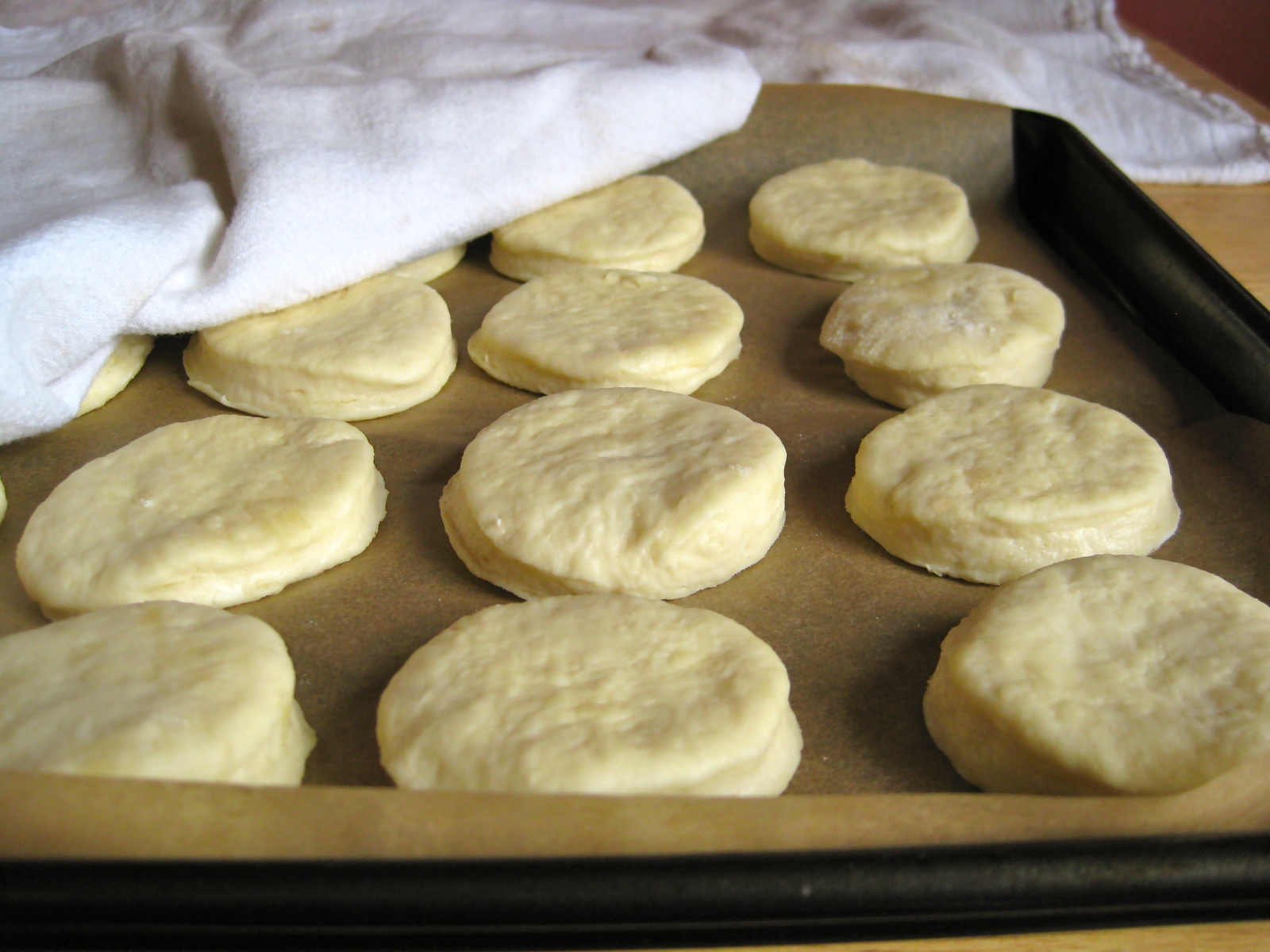
Form the risen dough into a ball and turn out onto a generously floured surface.  Knead lightly and quickly, about 1 minute.  Roll out with a lightly flour rolling pin to about 1/2 inch thick.  Cut with a floured 2 1/2 round cutter and place barely touching on the prepared sheets.  Cover with a kitchen towel and set aside to rise just until puffy, 20 to 30 minutes.

While the biscuits are rising, preheat the oven to 400 degrees F.  Bake until lightly browned, 10 to 15 minutes.  I bake two sheets of biscuits at a time, placing one sheet on the upper-middle shelf and one on the lower-middle shelf, then swapping the two sheets’ positions halfway through baking.

Makes about 48 biscuits.