Archive | Breakfast RSS feed for this section

Esquire Pancakes

29 Mar

Many years ago, I was a longtime subscriber to Esquire Magazine.  This was while I was also a longtime subscriber to the New Yorker, as well as a subscriber to both Harper’s and the Atlantic.  For those of you counting, that totals four magazine subscriptions, one of which is a weekly with which, as I have mentioned before, I have an extremely difficult time keeping current.  In an effort to stop the ominous growth of the pile of unread magazines growing higher and higher each month, like bricks in the wall of my own magazine prison, I had to start letting magazine subscriptions lapse.  Esquire was the first to go.
It’s not that I didn’t appreciate Esquire.  It’s just that, overall, the other magazines in my arsenal happened to speak more clearly to my own interests and concerns.  I showed an at least passing interest reading about mail-order meat, or the intricacies of what men think about what women think about underpants, or $12,000 suits made to order by a 75 year-old tailor in Italy, but it’s just that Esquire seemed to contain content that I found interesting, say, 50% of the time, whereas the other magazines I received tended to hover around a more respectable 70%-90%.  This is not a slam against Esquire, of course.  I am clearly not in their target demographic, so our parting was really just a matter of time.

There is, however, one item from Esquire for which I will be forever grateful.  About five years ago, Ryan D’Agostino wrote an article for Esquire about his favorite recipe, written on a slip of German hotel stationery, that he carries around in his wallet.  It was a simple recipe for pancakes, but it was also D’Agostino’s signature recipe, the one he made at a friend’s vacation house, and the one he made for his wife before she was his wife.  The pancake recipe was simple, but surefire.  And I am here to attest that, without fail, they are indeed the best pancakes I have ever eaten.
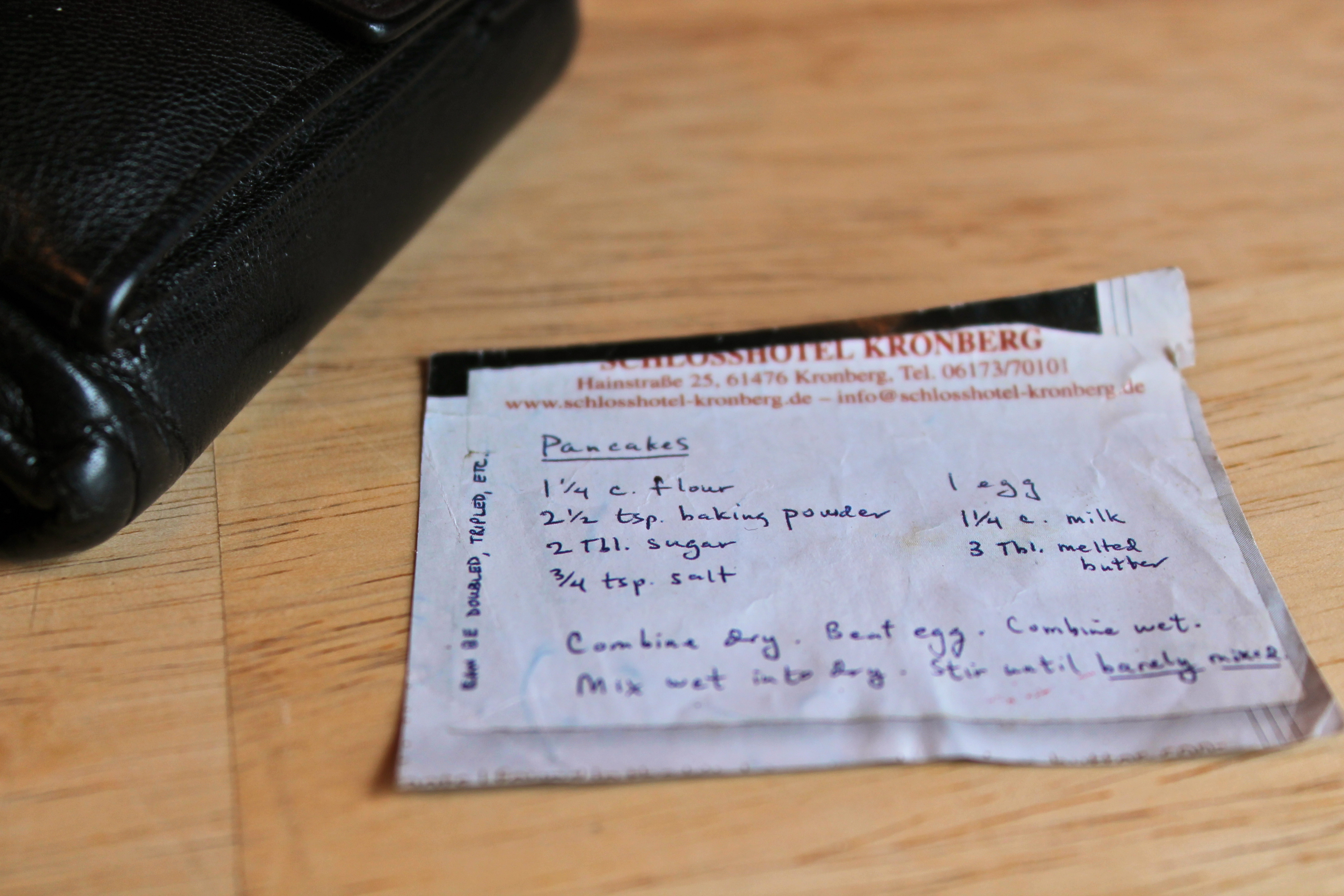
Taking a cue from D’Agostino, I cut out the picture of his recipe and put the slip of paper in my own wallet.  I have made his pancakes while on vacation, while visiting family, and while camping (I just put the liquid ingredients in one container, the dry in another, then combine them when breakfast calls—which is another point I’d like to make: these pancakes, cooked in a cast iron pan over a campfire?  Unbeatable).  I have at least seven other cookbooks with basic, no-frills pancake recipes in them, and not one of those other recipes even comes close to being as perfect as this one.  For a recipe gleaned from a magazine I stopped receiving two or three years ago, that’s a pretty good track record. I can’t say I’ve gotten that much mileage out of that one article I read in the Atlantic about Mexican drug cartels but, you know, there’s still time.
Last Year: Black Bread Rolls and Food for Traveling

Esquire Pancakes Recipe

Adapted from Ryan D’Agostino in Esquire

Keen observers will note that the one change I have made in D’Agostino’s recipe is in regard to the amount of sugar in the pancakes.  I prefer a less-sweet pancake, so I make these with 2 teaspoons of sugar, rather than D’Agostino’s suggested 2 tablespoons.  You can use whichever you please, to no ill effect.

1 ¼ cups all-purpose flour

2 ½ teaspoons baking powder

2 teaspoons sugar

¾ teaspoon salt

1 large egg

1 ¼ cups milk

3 tablespoons melted butter

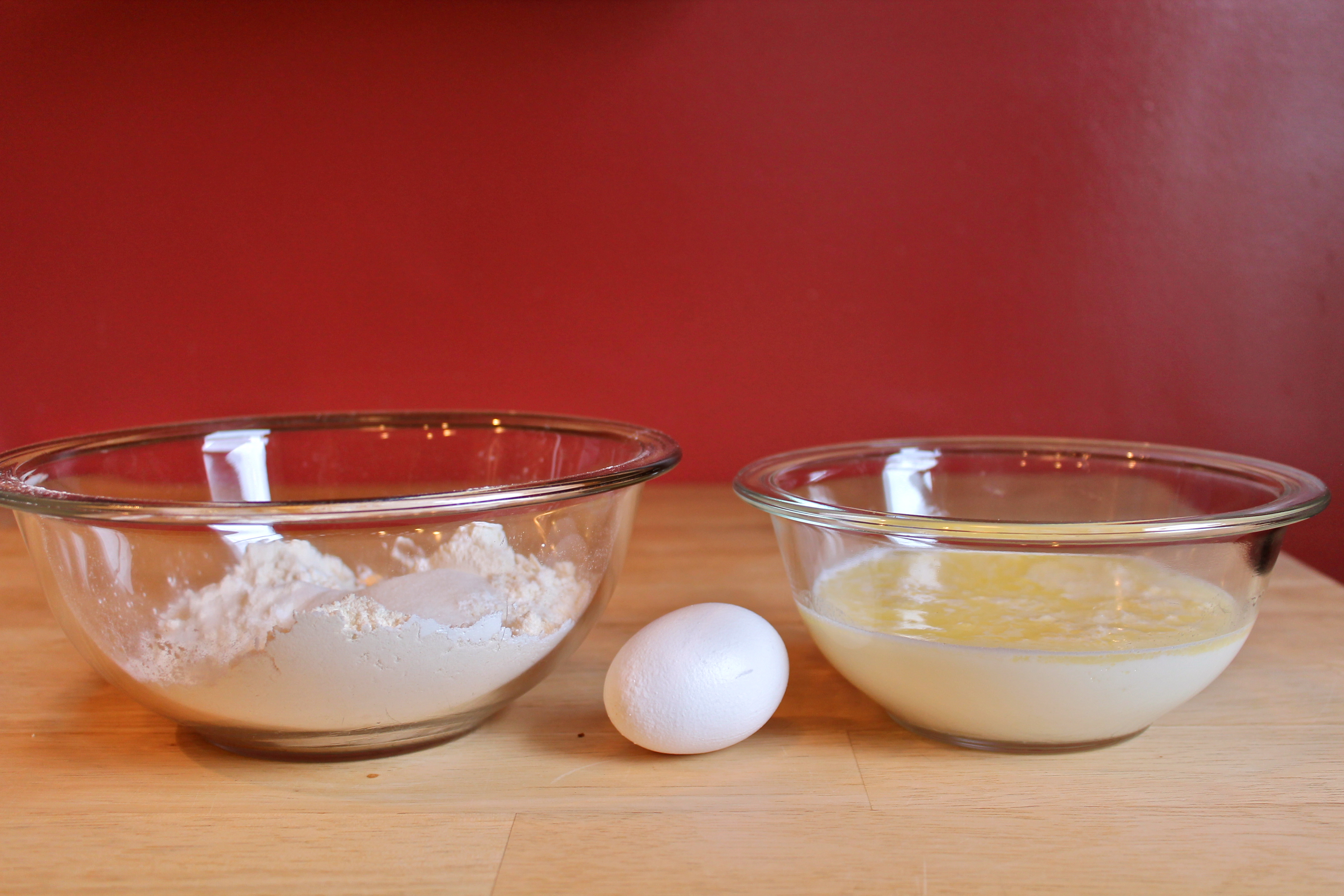
Combine dry. Beat egg. Combine wet. Mix wet into dry. Stir until barely mixed. Can be doubled, tripled, etc.

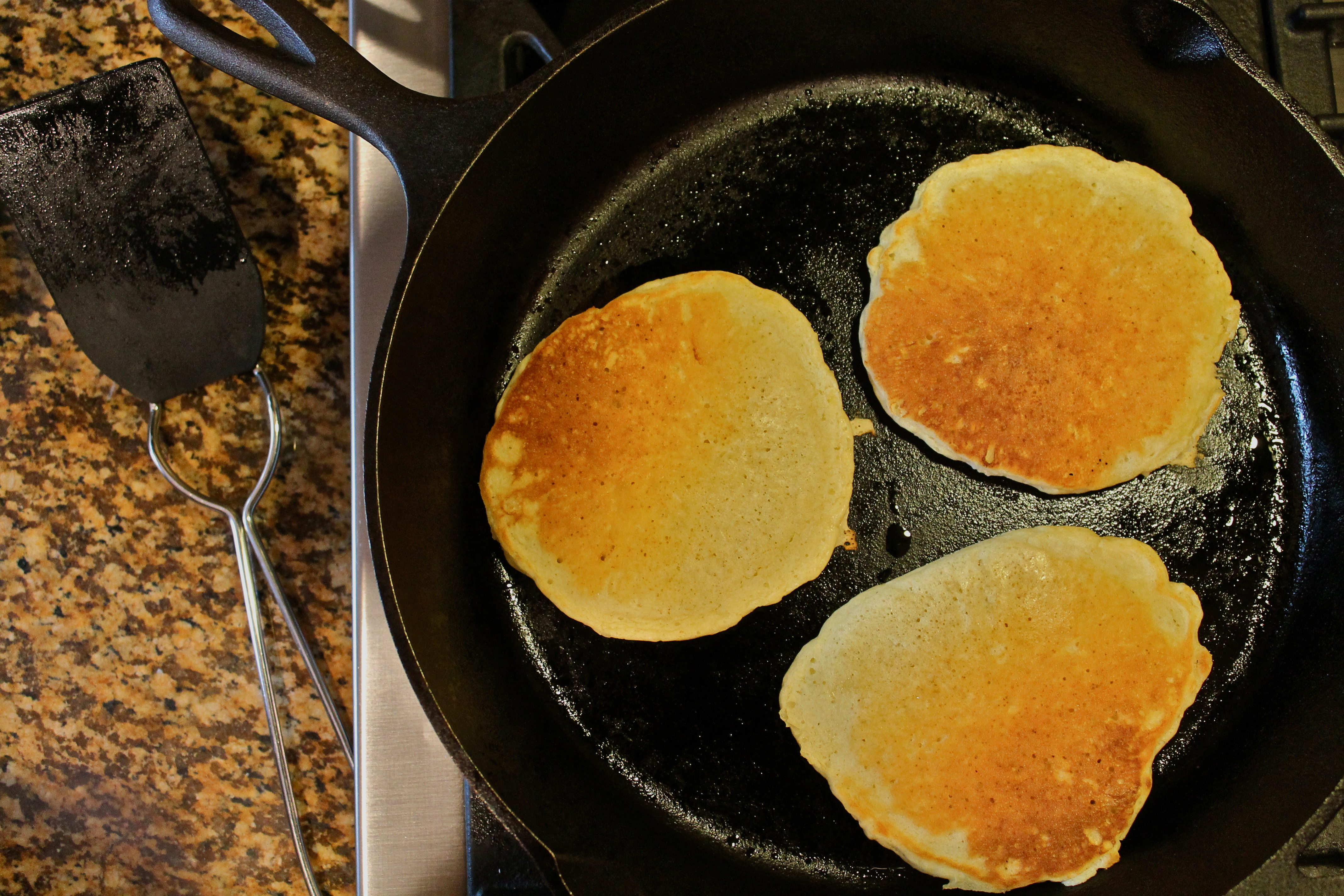
Cook pancakes, ¼ cup of batter at a time, on a well-oiled or seasoned skillet set over medium low heat.  Flip pancakes when bubbles on surface begin to pop, and the edges of the pancakes are just beginning to appear dry.

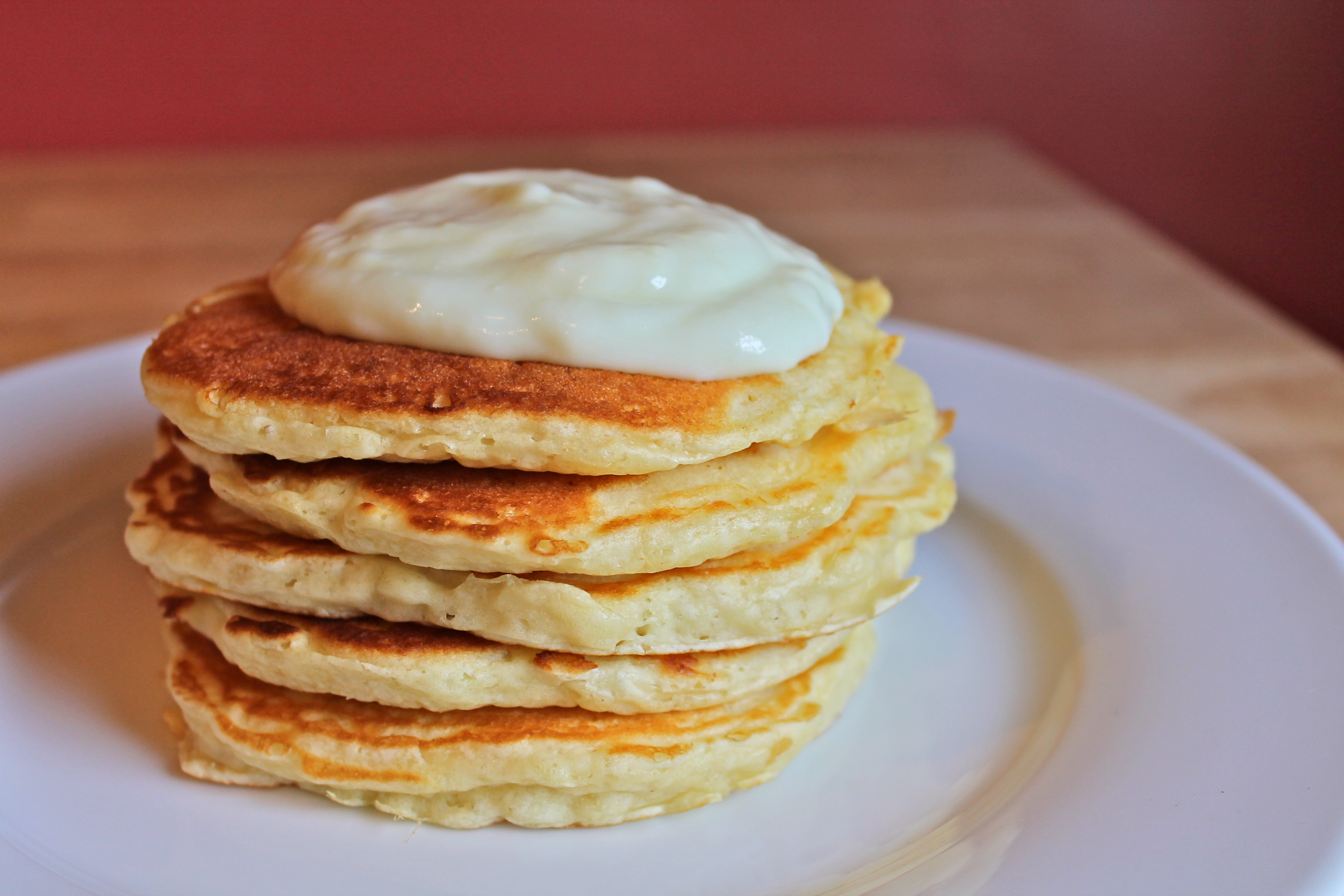
Top with maple syrup or lemon yogurt.

Makes 8 pancakes of medium-large size.

Polenta Toast with Roasted Asparagus and Fried Eggs

22 Mar

Most people, I assume, remember the joy of being a child and getting to indulge in the rare treat of breakfast-dinner.  This, of course, was a dinner made up entirely of breakfast foods, from pancakes to scrambled eggs and toast, or, for the luckiest among us, waffles and fruit.  As an adult, I still love eating breakfast-dinner, only now, much to the disappointment of my younger self, my idea of breakfast-dinner seems to have reversed itself.  My preferred breakfasts are now decidedly more dinner-like, making my breakfast-dinners only slightly so.

The turning point for my love of a dinner-breakfast (it only seems right to reverse it while discussing how it came to be) was an absolutely delightful breakfast I had at a French place a few blocks away from my house.  The breakfast consisted of risotto cakes, topped with poached eggs, accompanied by a side of roasted butternut squash.  Aside from the eggs, it was not what I would have previously considered a particularly breakfasty breakfast, but I count it among one of the best breakfasts I have ever eaten (many times, for now I find myself unable to order anything else whenever I set foot in that restaurant during breakfast hours).  Something about that meal set my breakfast notions in a different direction, and now the place where my idea of breakfast meets my idea of dinner is all shadowy and muddled.  Basically, they’ve become one in the same.

It was in this shadowy place that I became a huge fan of making both breakfast-dinner and dinner-breakfast into a showcase for crisp squares of polenta that were topped with whatever I could find in the fridge, then finished with a fried or poached egg.  If I have spare greens in the fridge, I sauté them with a bit of garlic and throw them over the polenta.  Roasted summer squash is a fine addition here, and a lot can be said for simply sautéing some onions and bell peppers with a generous pinch of red pepper flakes, slathering the end product with a stream of hot sauce, and starting your day (or ending it) with a bit of a kick.  If you desire a simple accompaniment to a light meal, I am very fond of toasting individual slices of polenta, topped with a bit of Parmesan cheese, under the broiler.

Right now, I am loving the tender asparagus that has just started showing up at the market, and I am convinced that there are no better friends to that asparagus than crisp polenta squares and soft-cooked eggs.  Together, they make what currently stands as my favorite breakfast, my favorite lunch, and, yes, my favorite dinner.

Polenta Toast with Roasted Asparagus and Fried Eggs Recipe

Polenta Toast

Adapted from James McNair’s Breakfast

4 cups water

1 1/3 cups polenta

¼ teaspoon salt

¼ teaspoon freshly ground black pepper

2 tablespoons unsalted butter

Generously butter the sides and bottom of an 8.5” by 4.5” loaf pan, and set aside.

In a medium saucepan, bring the water to a rapid boil over high heat.  Pour the polenta into the boiling water in one continuous stream, stirring with a long-handled wooden spoon as you pour.  Turn the heat down to low, and stir, stir, stir the polenta until it is smooth, thick, and yields a lot of resistance against the spoon.  This should take between 15 and 20 minutes of continuous stirring, being always careful to keep the polenta at a low simmer so as not to allow roiling polenta bubbles to pop up and burn your stirring hand. When the polenta is soft and thick, remove from heat and stir in the salt, pepper, and butter.

Pour the cooked polenta into the prepared loaf pan, then tap the loaf pan gently on the counter to help settle the polenta.  Place a piece of plastic wrap over the top of the polenta, then place it in the refrigerator to firm up.  You could conceivably retrieve your polenta after 5 or 6 hours, but I think it is best to allow the polenta to cool in the refrigerator overnight.

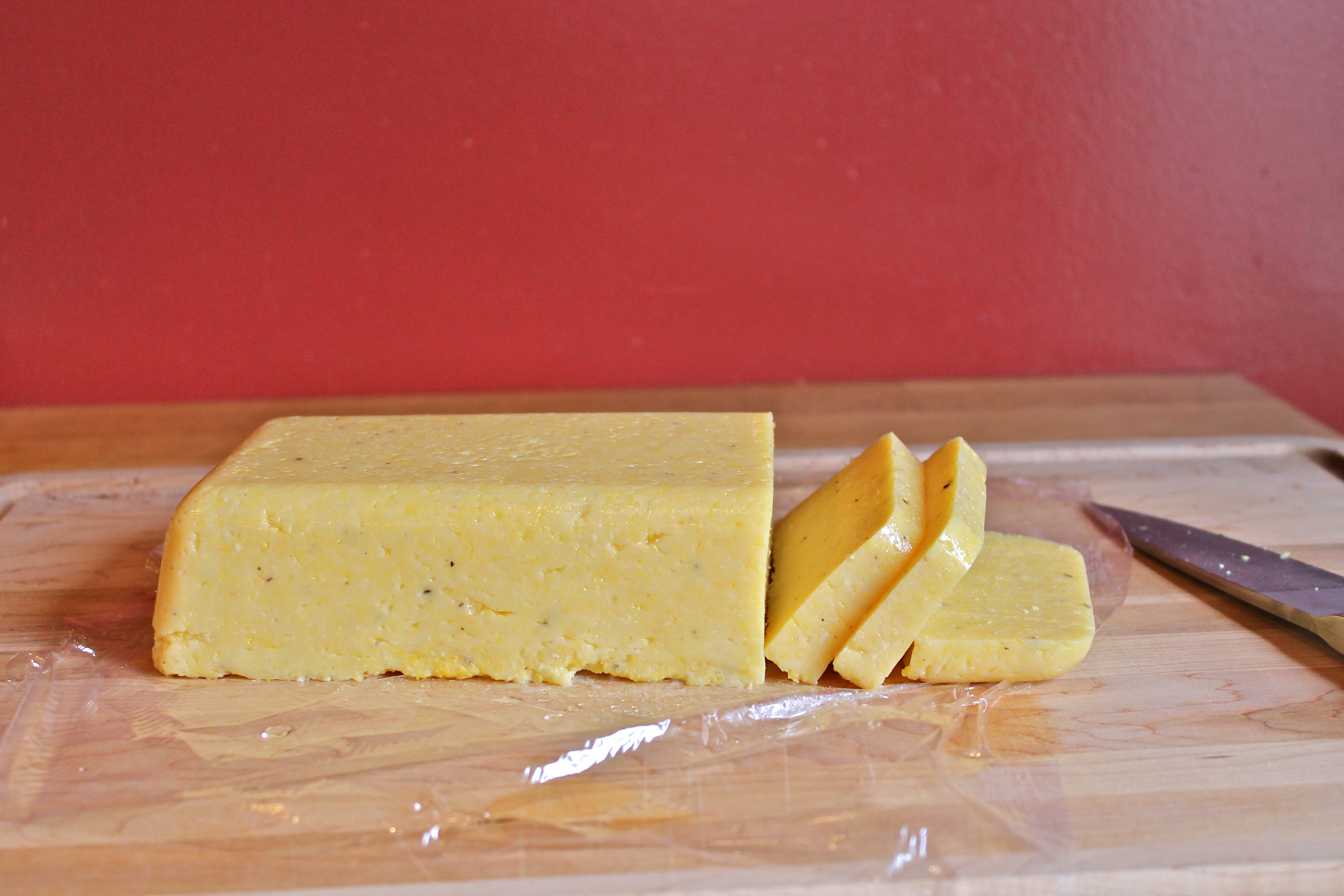
When the polenta is completely cool, gently run a thin spatula or knife around the edges of the loaf to separate it from the pan, then invert the polenta loaf onto a cutting board.  If the polenta remains firmly stuck in the pan, submerge the bottom ¾ of the pan in a pool of warm water, and allow the pan to heat up a bit and help loosen the polenta.

Cut the polenta loaf into slices of your desired thickness.  In a medium skillet, heat a pat of butter over medium heat until it just starts to sizzle.  Add 3 or 4 polenta slices to pan at a time, making certain not to crowd them, and gently sauté on each side until lightly browned (about 3-5 minutes per side).

Top with whatever you desire.

Roasted Asparagus and Fried Eggs

1 pound of asparagus, large ends snapped off

2 tablespoons olive oil

salt and pepper to taste

1 tablespoon unsalted butter

4 large eggs

2 tablespoons water

Preheat oven to 400 degrees Fahrenheit.

On a large baking sheet, combine asparagus, olive oil, salt, and pepper.  Using your hands, toss everything together until uniformly coated with olive oil, then arrange asparagus in a single layer.  Roast the asparagus in the oven for 15 to 20 minutes, until the tips are crisp and browned.

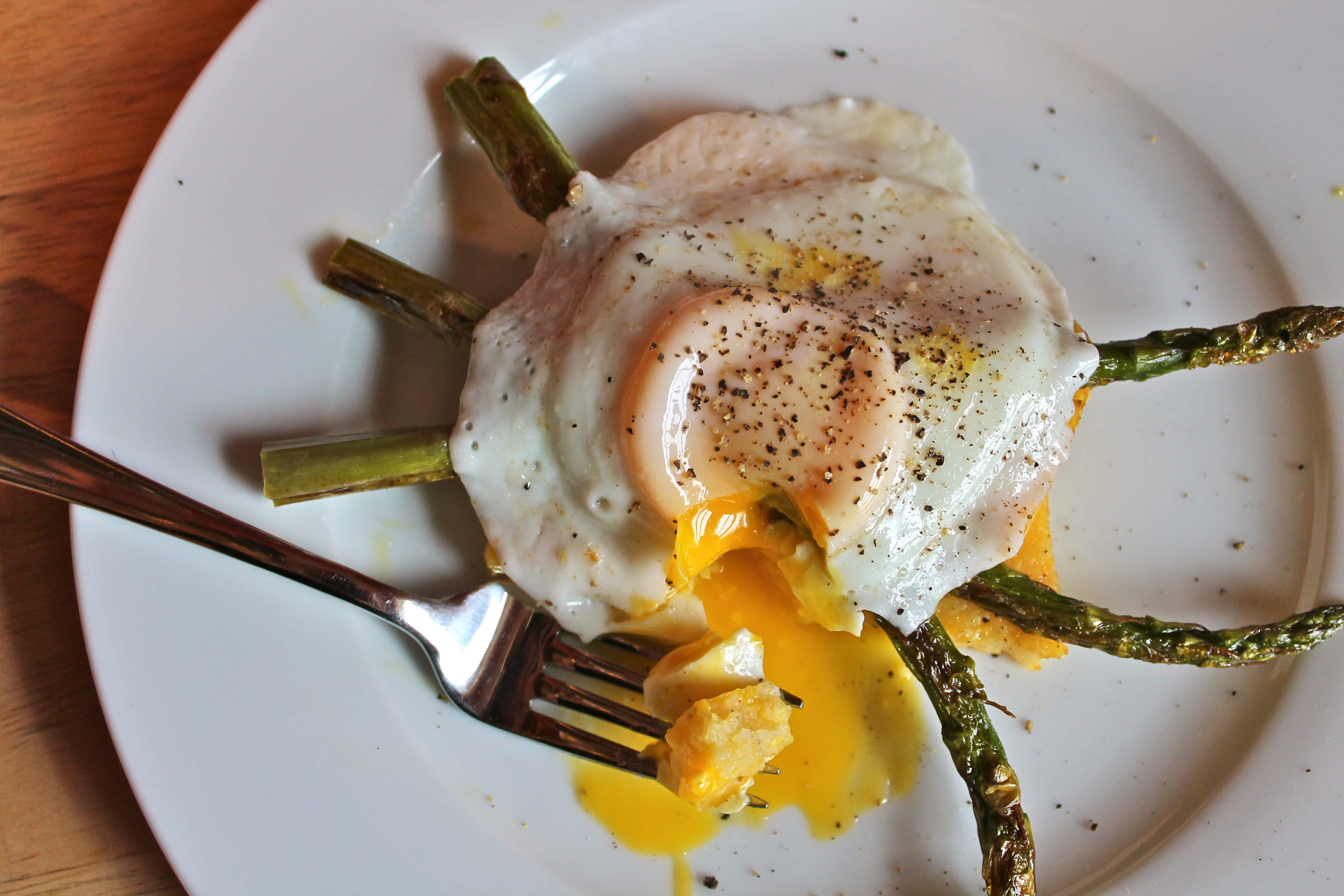
Just before the asparagus has finished roasting, heat the butter in a medium to large skillet over medium-low heat.  When the butter just begins to sizzle, crack the eggs into the pan.  Cook the eggs until the whites begin to firm up but the yolks are still soft, then carefully pour the two tablespoons of water around the eggs and then very quickly place a lid firmly over the pan.  The eggs will sizzle and splatter for another 1 to 2 minutes, until the whites are completely cooked, but the yolks are still runny.  If you prefer a firmer egg, cook it a tad longer.

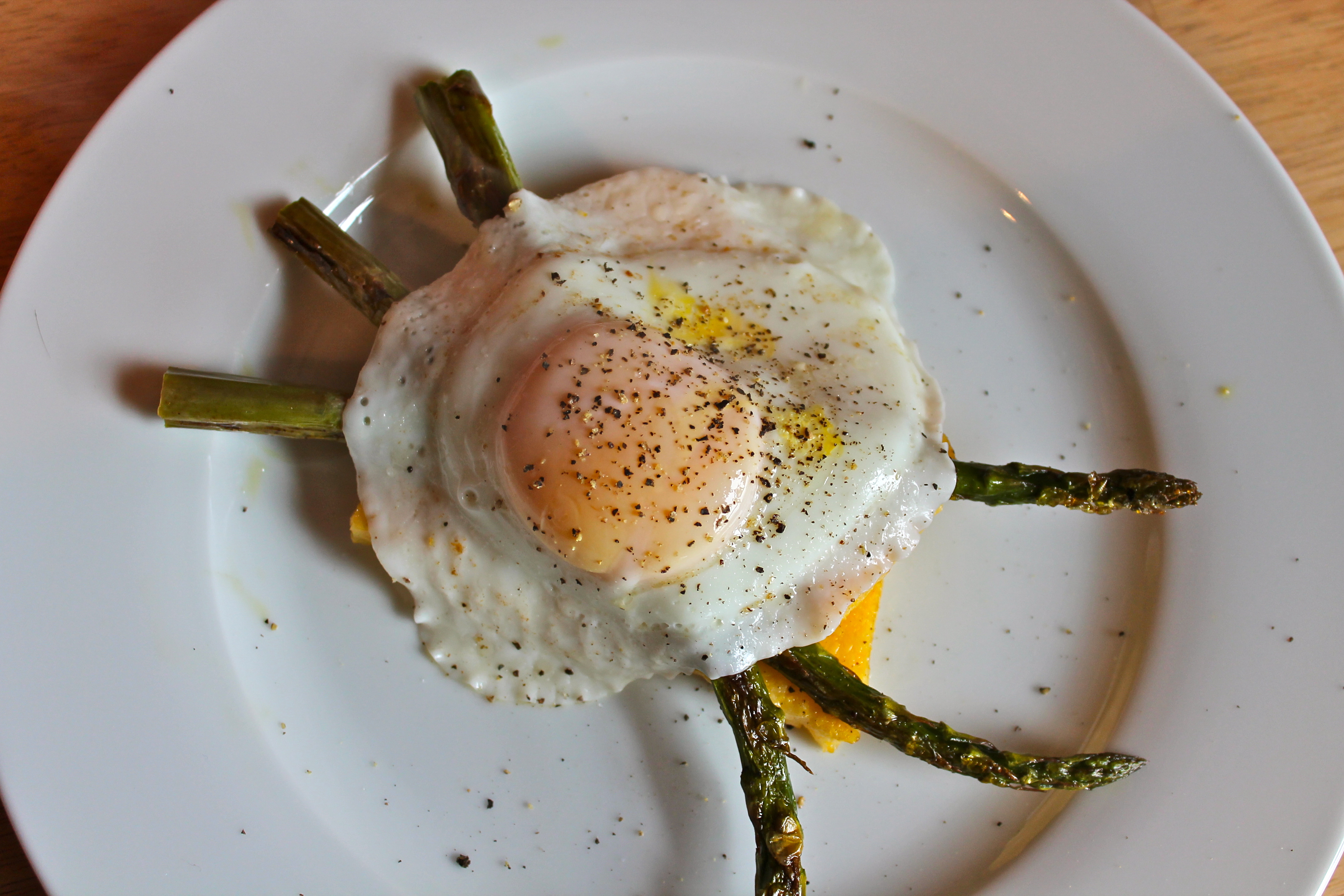
Place asparagus spears over slices of sauteed polenta toast, then top asparagus with a fried egg.  Add more salt and pepper to taste.

Serves 4, with extra polenta toast left over.

Crisp and Hearty Homemade Granola Bars

13 Feb

There are some things people just do not expect you to make at home.  No one gives you funny looks when you bake a cake from scratch or make pizza at home, or even when you admit one day that you’ve taken to smoking your own salmon.  Tell people that you’ve developed a keen interest in making your own granola bars, however, and all of a sudden you’re regarded as some sort of competitive cooking snob, someone who has crossed the line of cooking for pleasure and entered into the territory of cooking in order to prove something.

It’s tough to explain to people who do not regard cooking as a pastime, a hobby, or even a treat, that when I want to make something new—no matter how silly it might seem to make it at home—it is because I like the time it allows me to spend in the kitchen.

My husband and I are both really, really into skateboarding (one of the many reasons we are married—because there were no other rational, responsible adults around to tolerate our interests), and we often talk about the time, sweat, and agony it sometimes used to take to learn a new skate trick (I speak in the past tense here because, though we are still into skating, neither of us is in any sort of position in life to be spending hours a day on a skateboard trying to will our bodies to complete a new trick that some kid less than half our age just thought up).  The focus you develop when you’ve just spent two solid days trying to land a fakie 360 flip (a trick that babies can now somehow learn straight from the womb, but back in the early ‘90s THAT TRICK WAS HARD) becomes almost maniacal, and two days start to seem like nothing if it begins to appear as though it might take another two days to finally land the trick without injuring yourself.

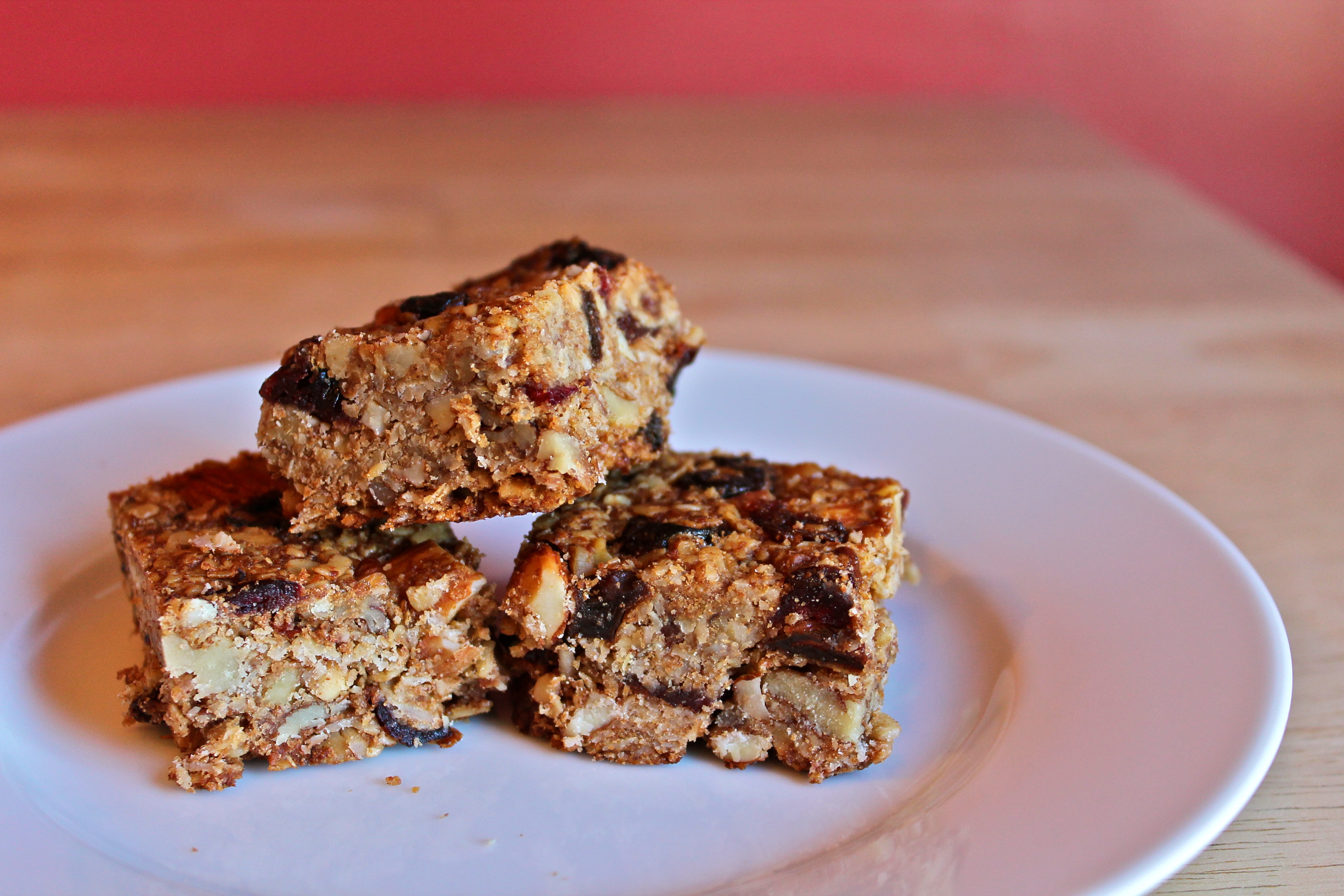
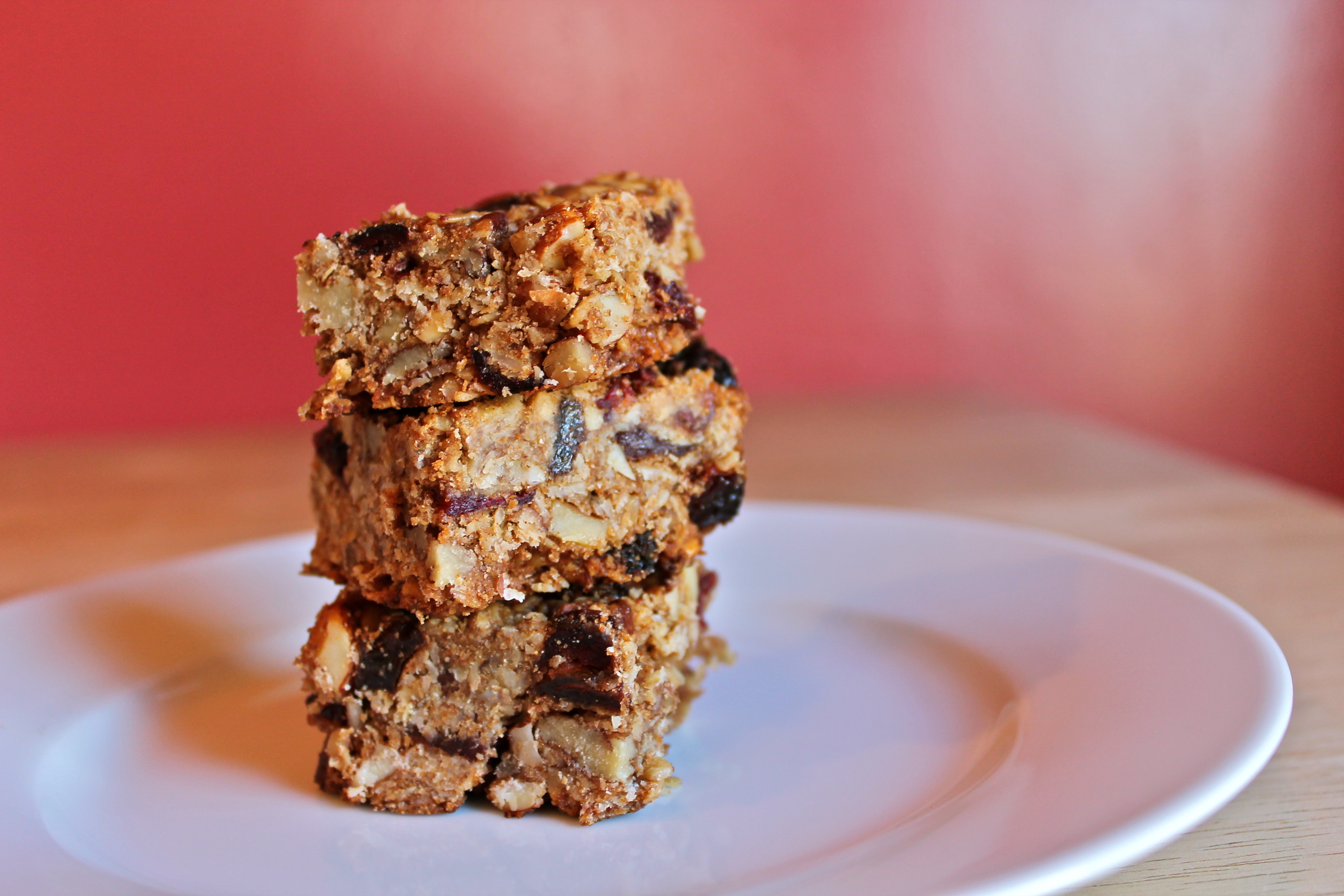
And this relates to making homemade granola bars how?  Because it’s the same dedication, the same enjoyment, that makes me want to get something right in the kitchen.  It may seem delusional to spend three days perfecting a granola bar recipe, but I swear to you, take one taste of these granola bars and you’ll immediately reverse that opinion.  Big bursts of dried fruit play against the hearty crunch of crisp nuts and lightly sweetened oats, while the subtle spices tie everything together with a pleasant mellowness.

These are no store bought granola bars, overly sweetened and packed with mystery additives.  These are a healthy, nutritious treat that belie the virtuousness of their ingredients by being utterly, fantastically delicious.  Because of their belly-filling goodness, these granola bars would make a great fortifying snack to take along on a hike, or perhaps a long ride on your bike (because apparently I am now channeling Dr. Seuss—you can eat them as a snack, just pop one into your backpack).  Right now, as I type this, I am eating one of these granola bars for lunch.  When I am done with lunch and typing, I will probably take a tiny little break to watch this, because now that the granola bars have been conquered, I have a bit of time left to devote to my other interests.

Crisp and Hearty Homemade Granola Bars

1 3/4 cups rolled oats

¼ cup dark brown sugar

¼ cup graham flour (graham flour has a great nutty taste, but you could also use whole wheat pastry flour or another mild whole grain flour, e.g. not rye flour)

½ cup wheat germ

½ teaspoon sea salt

½ teaspoon ground cinnamon

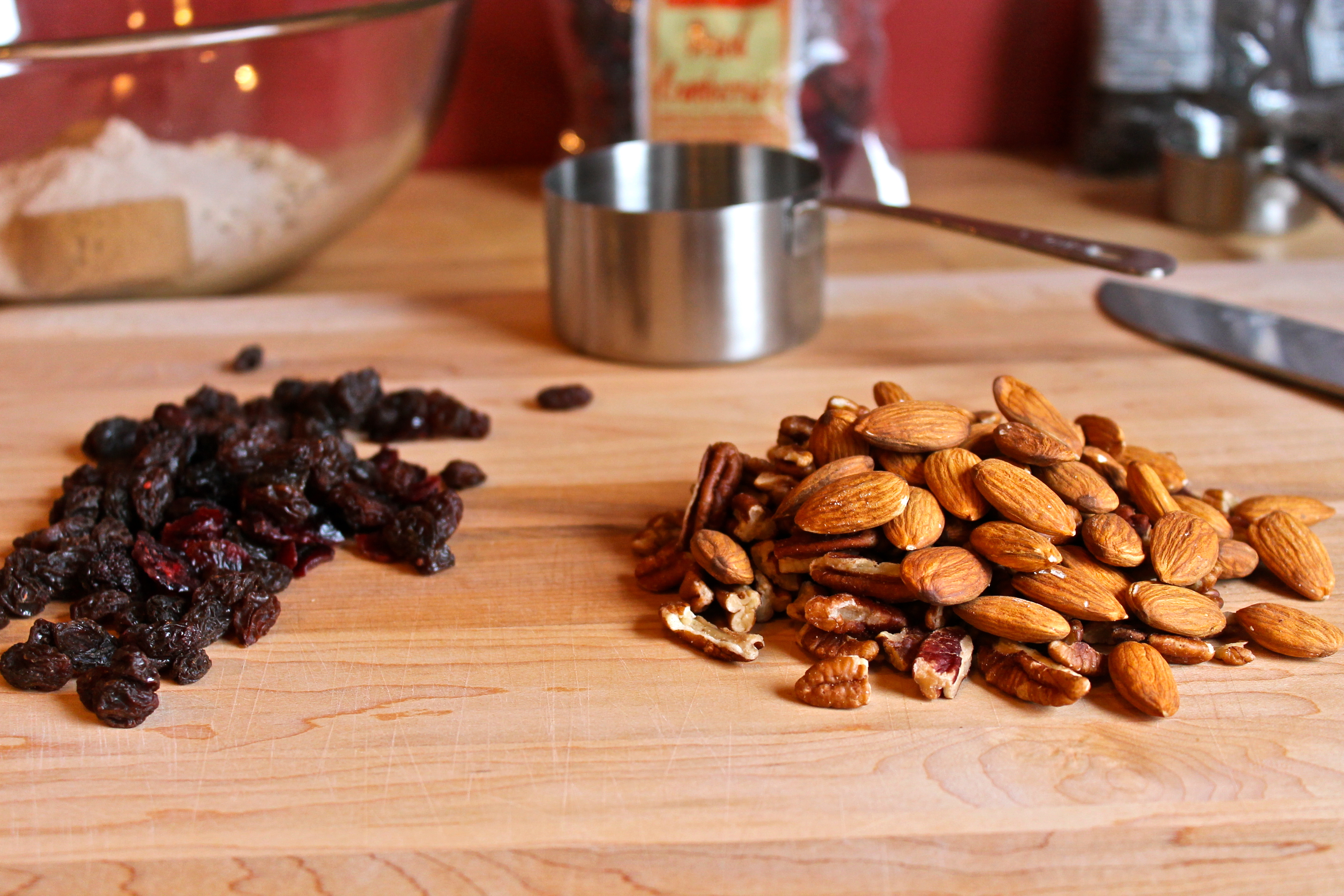
1 cup dried fruit, chopped into a uniform size if pieces are large (apricots, apples, etc.)—I used dried cherries, dried cranberries, and raisins, so no chopping was required

1 cup coarsely chopped nuts (I used almonds, walnuts, and pecans)

¼ cup vegetable oil

3 tablespoons unfiltered apple cider

2 tablespoons honey, agave, or maple syrup

1 teaspoon pure vanilla extract

1/3 cup unsweetened almond butter

Preheat oven to 350 degrees Fahrenheit.  Line an 8”x8” baking pan with a parchment paper sling (this can be accomplished by trimming your parchment paper into a long rectangle that will line neatly against the bottom of the pan and drape over the sides.  In the pictures above, my parchment paper sling is not nearly wide enough, on account of the fact that I inconveniently ran out of parchment paper and was using the last 4 inches of the roll), then lightly grease both the pan and the parchment paper with vegetable oil or nonstick cooking spray.

In a large bowl, combine the oats, brown sugar, flour, wheat germ, sea salt, cinnamon, dried fruit, and nuts.  Toss to combine.  In a small bowl, combine the oil, apple cider, honey, vanilla, and almond butter.  Whisk to combine.  Pour the wet ingredients over the dry ingredients.  Using your hands or a fork (but hands work best), thoroughly stir the ingredients together until it is uniformly wet and it wants to clump together.

Pour the granola mixture into the prepared pan.  Using your hands, firmly press the mixture into the pan, flattening the top, the edges, and the corners (it helps to have slightly wet hands when doing this, as the mixture is quite sticky).

Bake on the center rack of the oven for 30 to 40 minutes, until the edges are brown and the middle is golden.

Cool for at least 1 hour before attempting to cut.  Remove granola bars from the pan by lifting them up using the parchment paper sling.  A serrated knife works best to cut these, and I have found that popping the granola into the freezer for 15 minutes to slightly harden them before cutting makes the process even easier.

Makes 16 2-inch granola bars.