Archive | Dessert RSS feed for this section

Chewy Ginger Thins

31 Oct

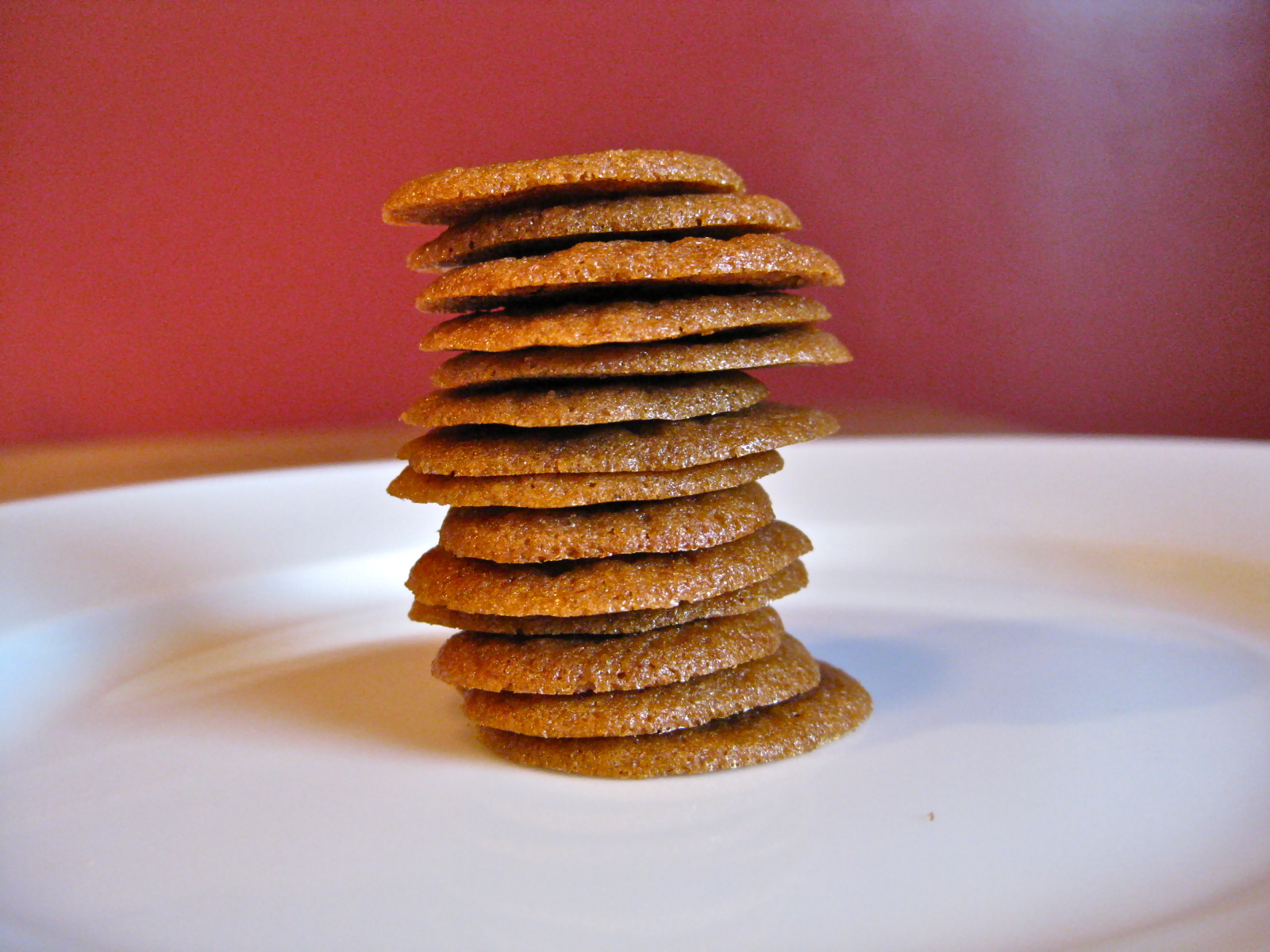
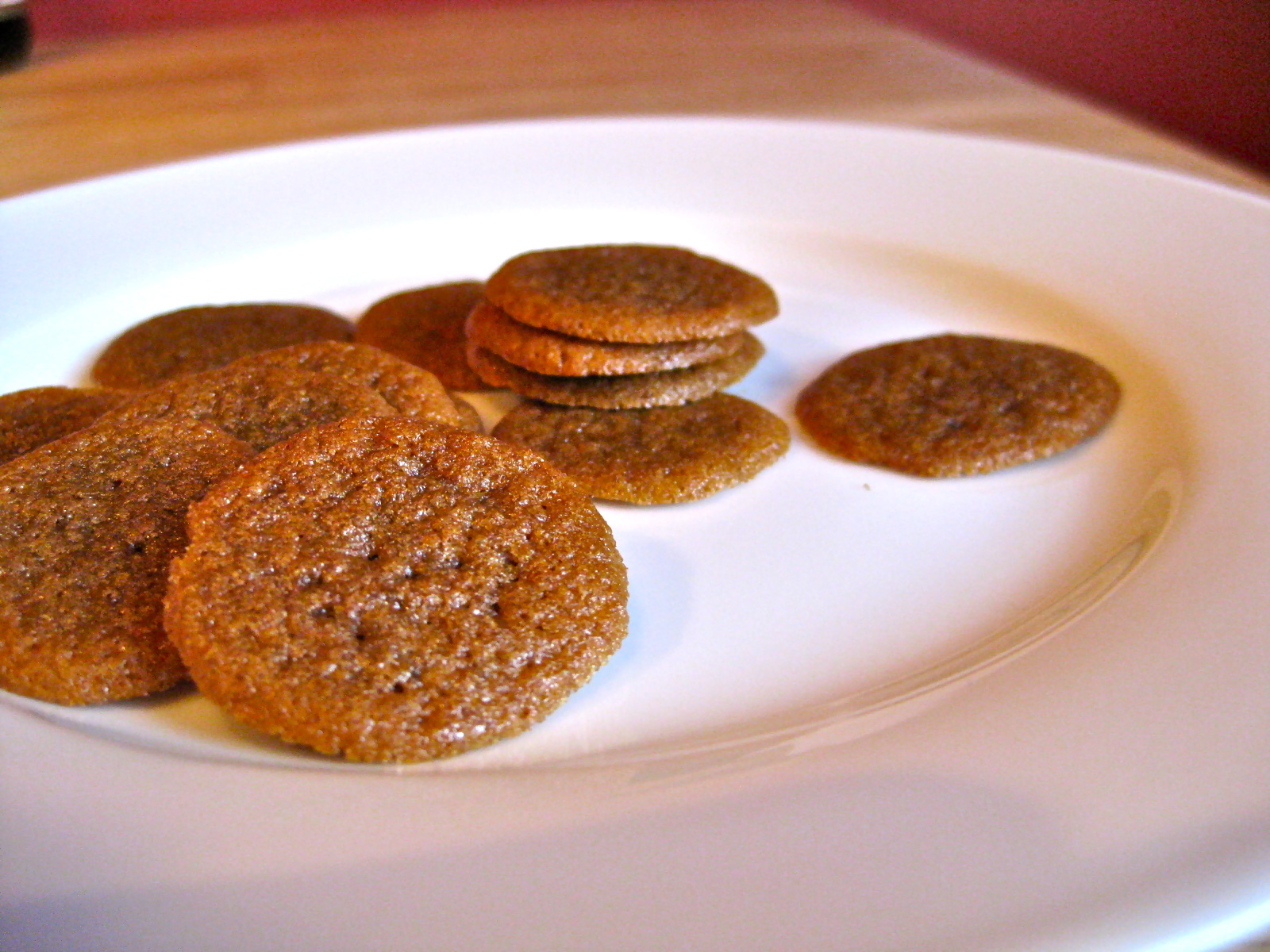
Every so often, after I have spent the better part of a day trying out recipes and washing pan after pot after bowl several times over in an effort to keep the kitchen from looking as though it suffered through some sort of highly site-specific typhoon, I start to wonder what is wrong with me.  Is it really necessary to test out five different variations of a muffin recipe just to get one that I think smells as good as it tastes (don’t even get me started on that one…it seemed really important at the time)?  Does it really matter if the squash suffers a crack on one side when roasted if it also happens to taste like a heavenly dream?  And do those positively delicious cookies really have to be the size of a quarter, just because when I pictured them in my head they were that small, but, dear lord, it turns out that making them that small will necessitate the forming of, let’s see…200 COOKIES?
That’s right.  I made a cookie recipe that yielded 200 individual cookies.  Why?  Because they were delicious.  Because making them any larger would have made them hard and crisp, and hard and crisp was not what I wanted the cookies to be.  Because eating tiny cookies makes me happy, makes the people around me happy, and, well, because I sort of began to enjoy making tiny little cookies (after the third or fourth batch) in lieu of regular sized ones.  Or, maybe it’s all because of the query I posited in the previous paragraph.  Could there be something wrong with me?
The answer is that, yes, there probably is something wrong with me.  Of course, it mustn’t be forgotten that there is generally something wrong with everybody, and rather than be upset or bewildered by that fact, I think it behooves us all to relish, rather than reject, that fact.  Mild obsession is oftentimes what fuels intense creativity, and, though I would not call my insistence on developing the best bite-sized chewy ginger cookie an incredible feat of genius or inventiveness, it does point to what I believe is an at least mildly admirable trait to possess while in the kitchen: persistence.  And not just any kind of persistence, but cookie persistence.  That’s what I have, and this is what it lead to—the chewiest, most flavorful bite-sized ginger cookie in all the land.
Chewy Ginger Thins

Adapted from Joy of Cooking 

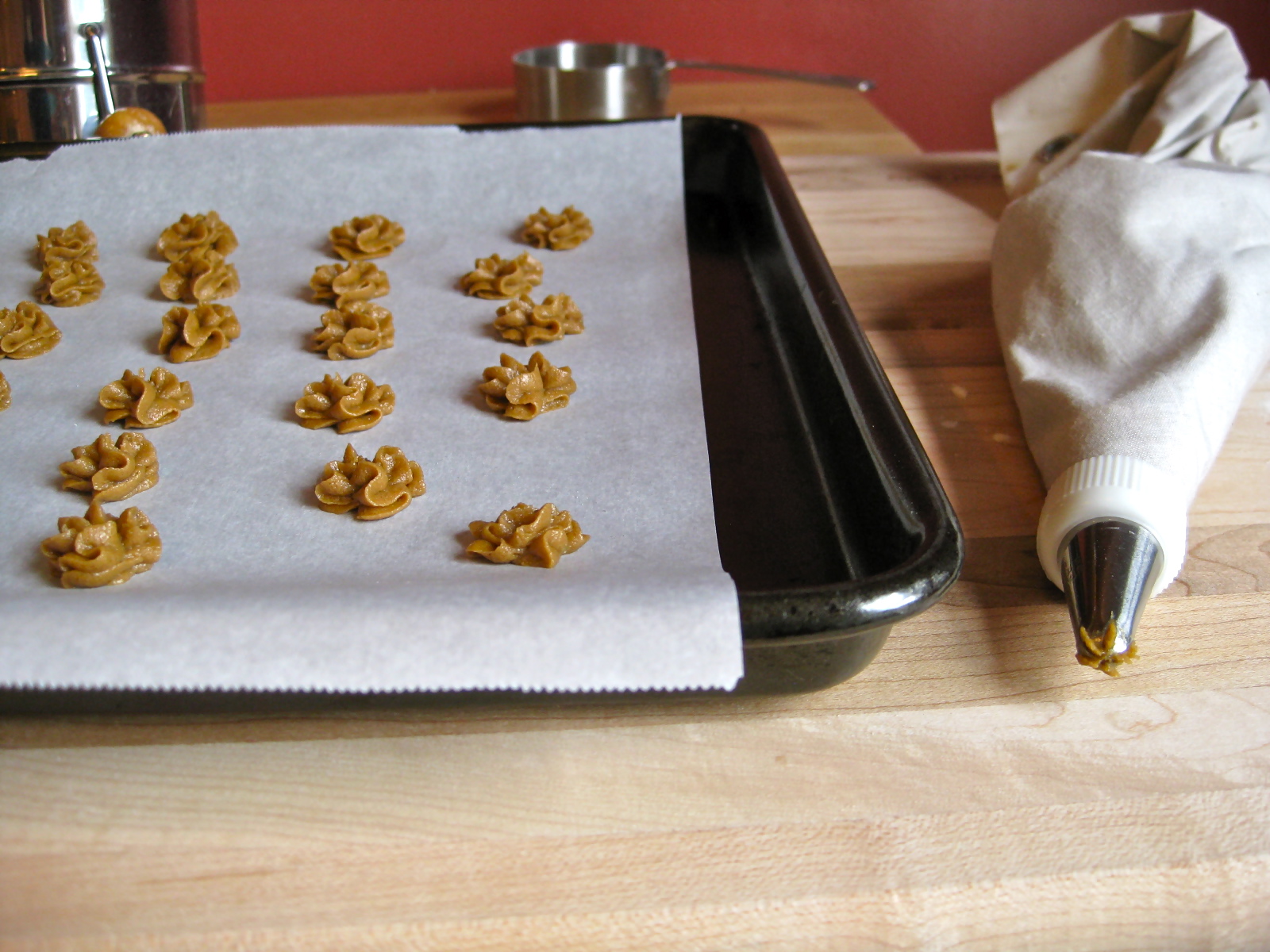
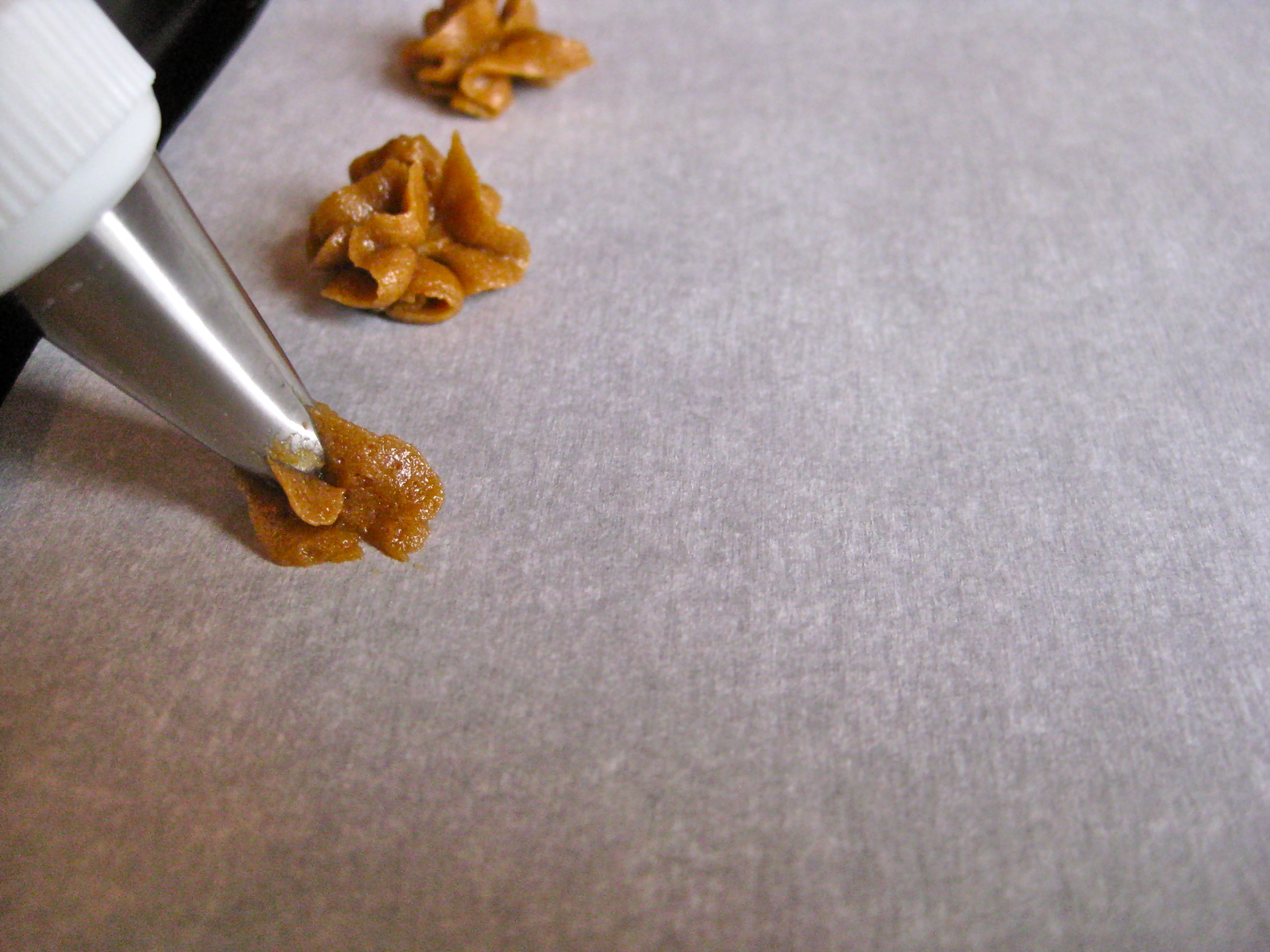
As previously mentioned, these cookies are bite-sized.  Each cookie is formed from about ¼ to ½ teaspoon of dough.  While this may sound completely insane and like a total waste of time to make, hear me out on this.  Forming these cookies is as simple as filling a pastry bag (fitted with a large-ish star tip) with dough and then piping out simple stars of dough on your baking sheet.  It takes between 30 and 45 seconds to form roughly 35 cookies on a baking sheet (yes, I timed it), which is substantially less time than it takes to form a similar number of regular sized cookies.  Forming these cookies is simple and nearly effortless, so making such a large number of them is hardly more noticeable than forming regular-sized cookies.  Don’t have a pastry bag?  No problem.  Just scoop the dough into a large Ziploc bag, cut off the very tip of one of the bottom corners of the bag, and squeeze out your dough using the Ziploc bag as a pastry bag.  Your dough won’t come out in stars, but that’s not a problem since the dough is meant to flatten out when baked.

¾ cup (12 tablespoons) unsalted butter

1 cup dark brown sugar

1 beaten egg

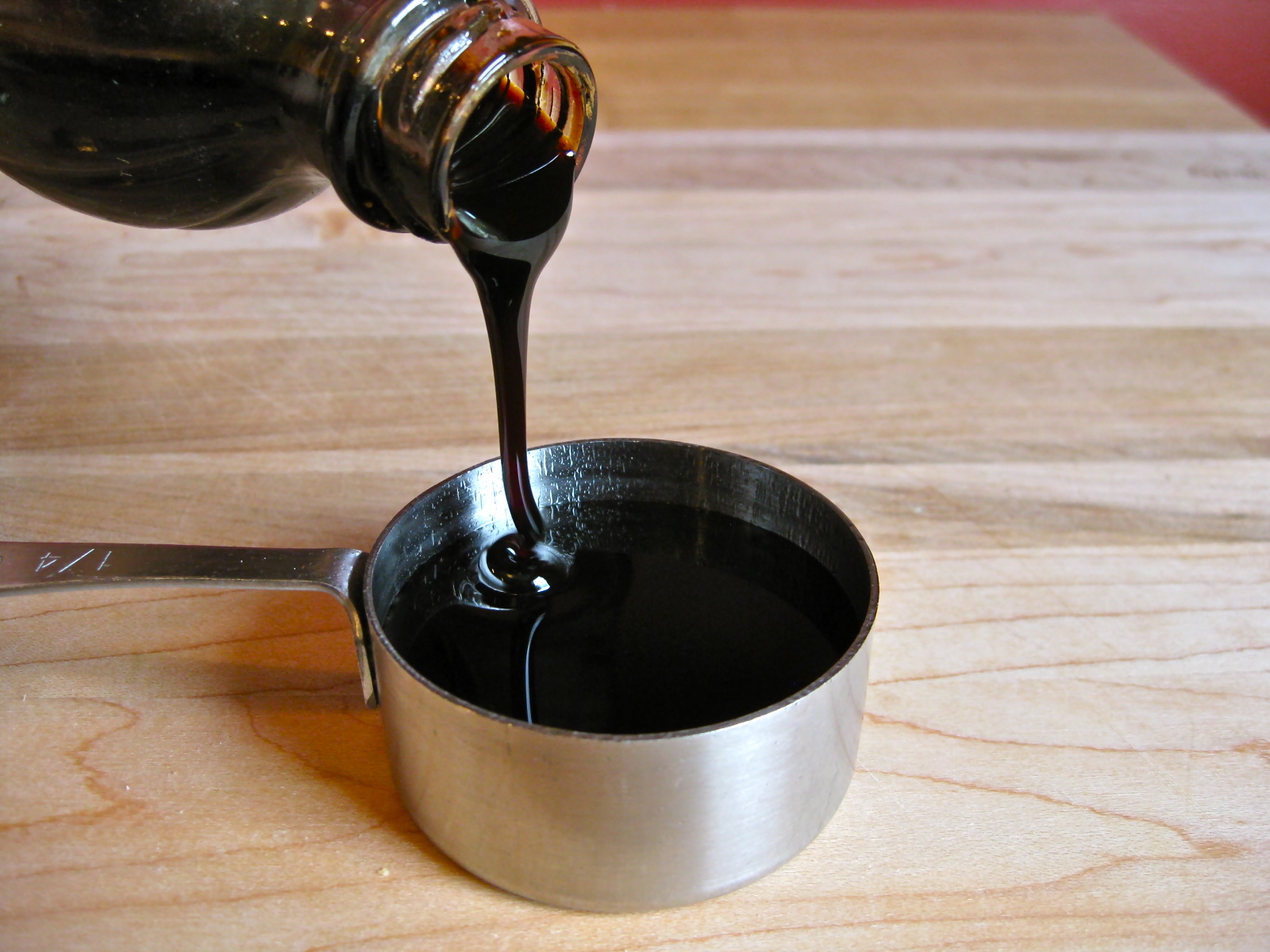
¼ cup molasses (dark or light are both fine)

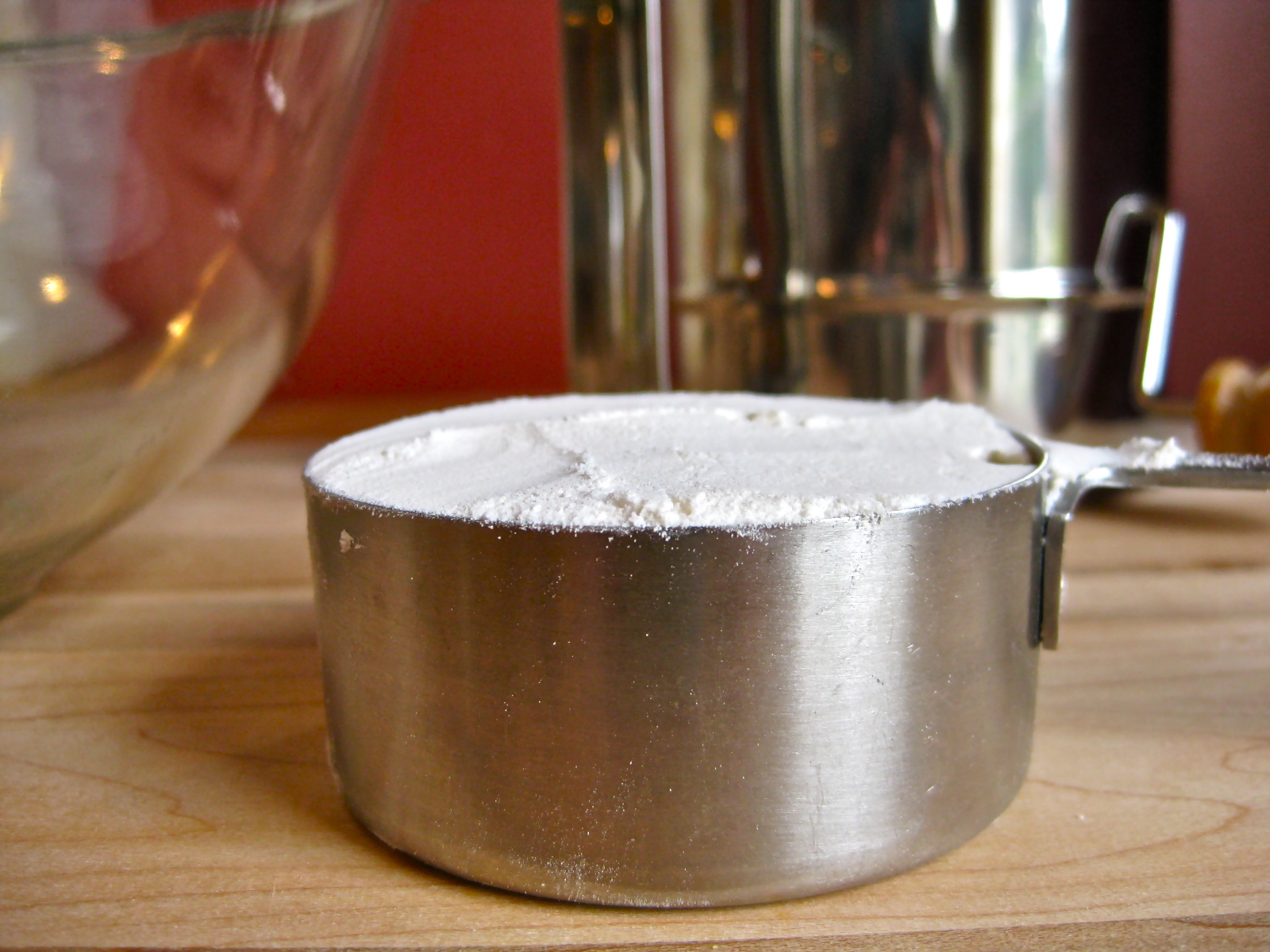
1 ½ cups sifted unbleached all-purpose flour

¼ teaspoon salt

½ teaspoon baking soda

½ teaspoon ground cinnamon

½ teaspoon ground powdered ginger

pinch nutmeg

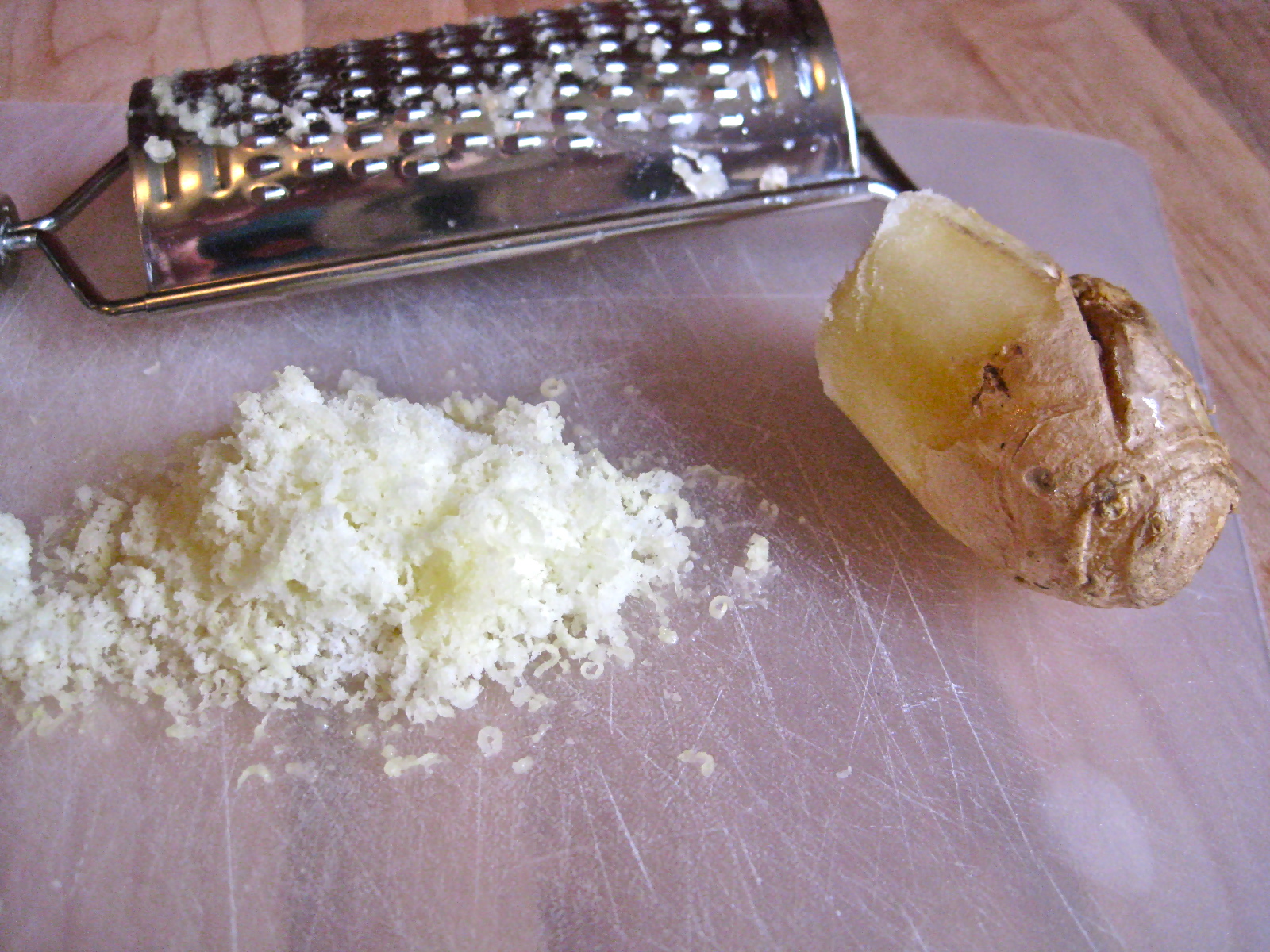
1 teaspoon grated fresh ginger

Preheat oven to 325 degrees Fahrenheit.  Line two baking sheets with parchment paper and set aside.

In a large bowl, cream together the butter, brown sugar, egg, and molasses.  Combine the flour, salt, baking soda, cinnamon, powdered ginger, and nutmeg, and sift together directly onto the butter mixture.  Stir until smooth.  Add the fresh ginger, then mix to combine.

Using a pastry bag or a Ziploc bag with a bottom corner cut off, pipe or squeeze out cookies onto a parchment-lined baking sheet in approximately ¼ teaspoon portions (if your squeezes turn out marginally larger, don’t worry).  Place each cookie about 1 inch apart, lest they stick together as they spread during baking.

Bake cookies on the center rack of the oven for 7 to 8 minutes, until the edges of the cookies have just begun to appear slightly darkened and dry.  While the cookies are baking, pipe another batch of cookies onto your second prepared baking sheet.

Cool baked cookies on their parchment sheet placed on a wire rack.  When cookies have cooled on a rack for about 5 minutes are and no longer gooey, you can slip the cookies right off of the parchment and reuse the parchment for another batch of cookies.

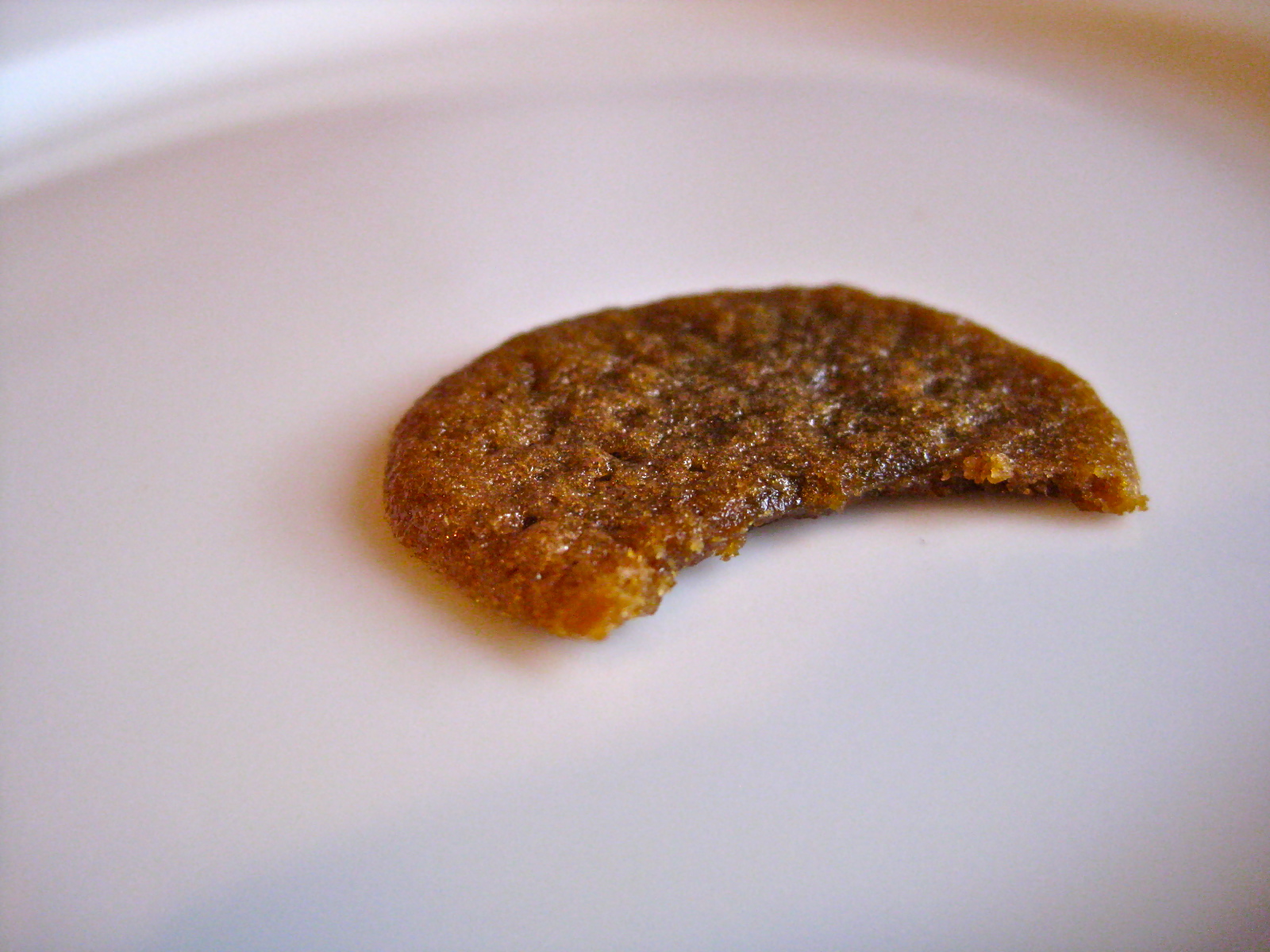
The desired consistency for these cookies is super chewy but ever-so-slightly firm (they will be very bendy when they come out of the oven, and will become soft-firm when cooled).  If you find your cookies are persistently floppy even after having sufficiently cooled, increase the baking time of subsequent batches by 1 minute.  The size of these cookies is meant to be small, so keep in mind that making the cookies much larger than called for will substantially change their outcome.

Makes roughly 200 cookies that are the size of a quarter.

Cider Pressing and Two Kinds of Cupcakes

20 Oct

A few weeks ago, when summer had let us know it was over by summoning its friend autumn to release the Portland rains, we celebrated the beginning of fall by hosting a cider pressing at our house.  I say that casually, as though we’re used to doing such things, but, for us, having a large group of people over is about as common as having a large group of bears over.  (Okay, so maybe people coming over just marginally wins over bears coming over, being as though we’ve had a bunch of bears over, let’s see, never, and we tend to have people over to our house at a rate of about one instance per year.  So, fine.)

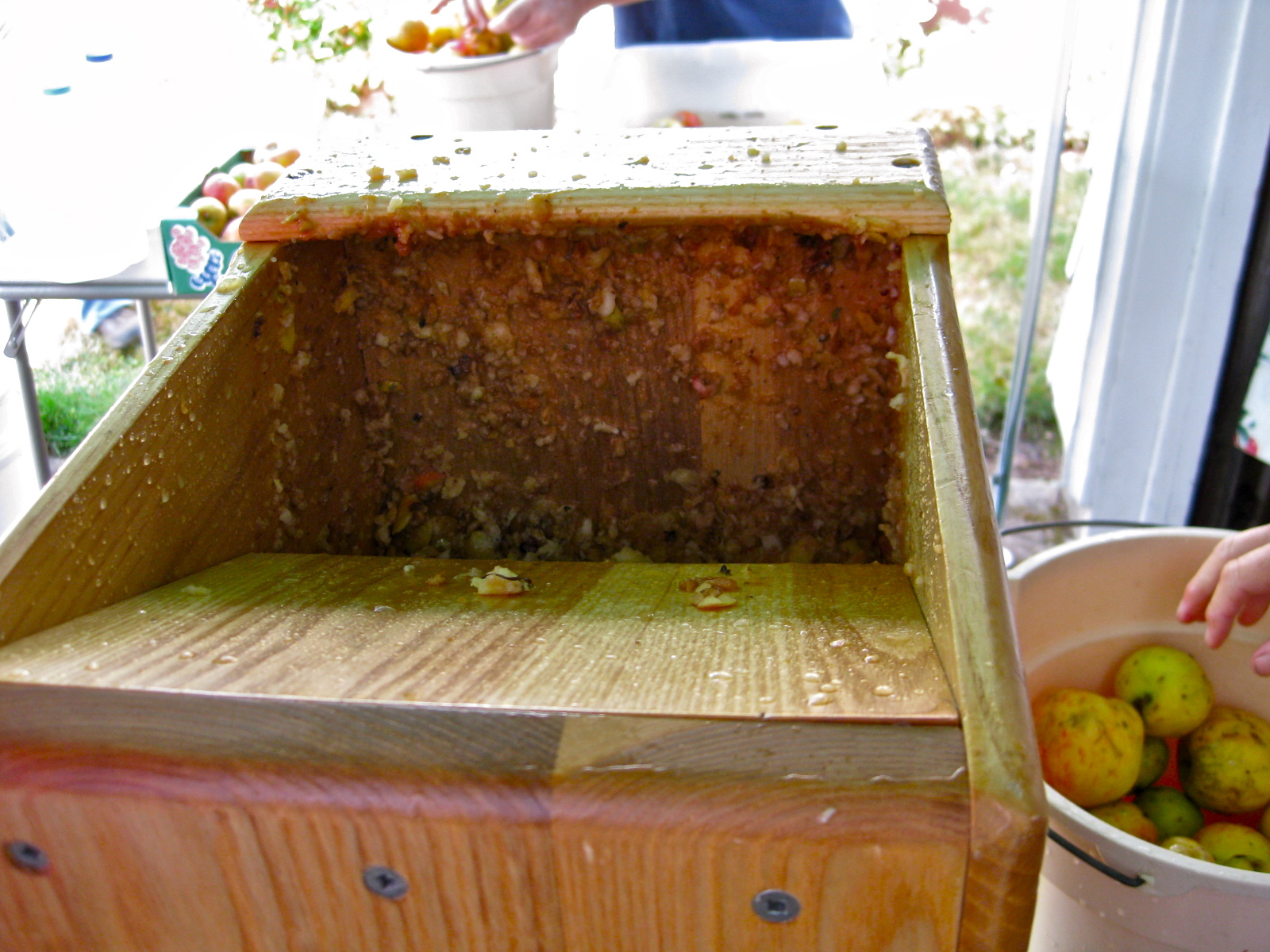
Aversions to entertaining aside, the cider pressing was a huge success.  My husband’s aunt and uncle drove out from the coast with their cider pressing machine, set it up just outside our garage, and, as if by magic, hordes of people began to appear with apples and pears aplenty.  Hordes of people we had invited, but, still, hordes in any case.  One cousin of my husband’s brought several hundred pounds of pears from his own tree.  That’s tree, singular, not plural.  His truck, back bumper slung low to the ground, was filled with bin after bin of pears, and I could hardly believe that one tree had managed to produce so much fruit.  The kicker was, he said the tree had actually produced a fairly low yield that year.  Those hundreds of pounds of pears were a small harvest.

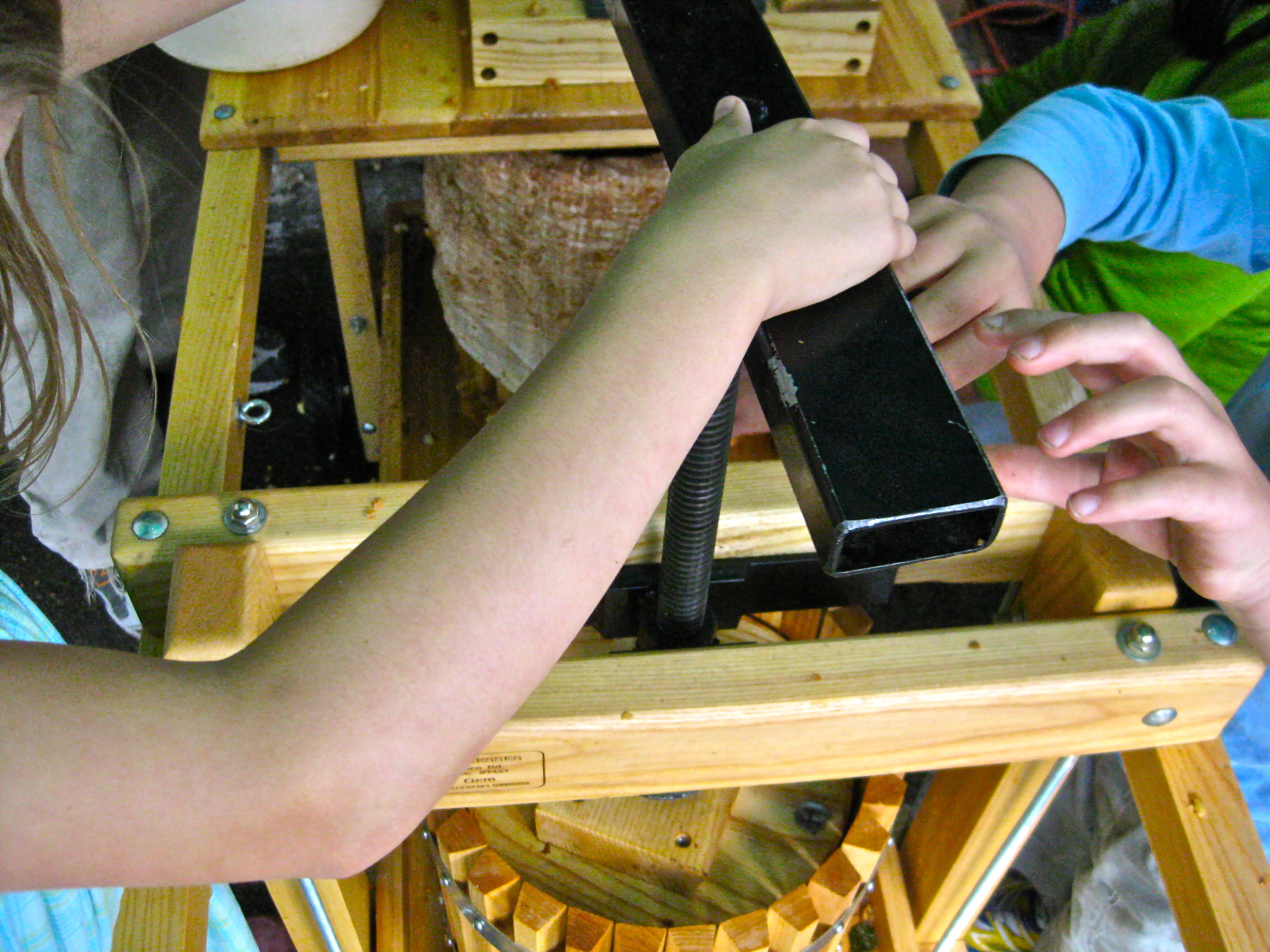
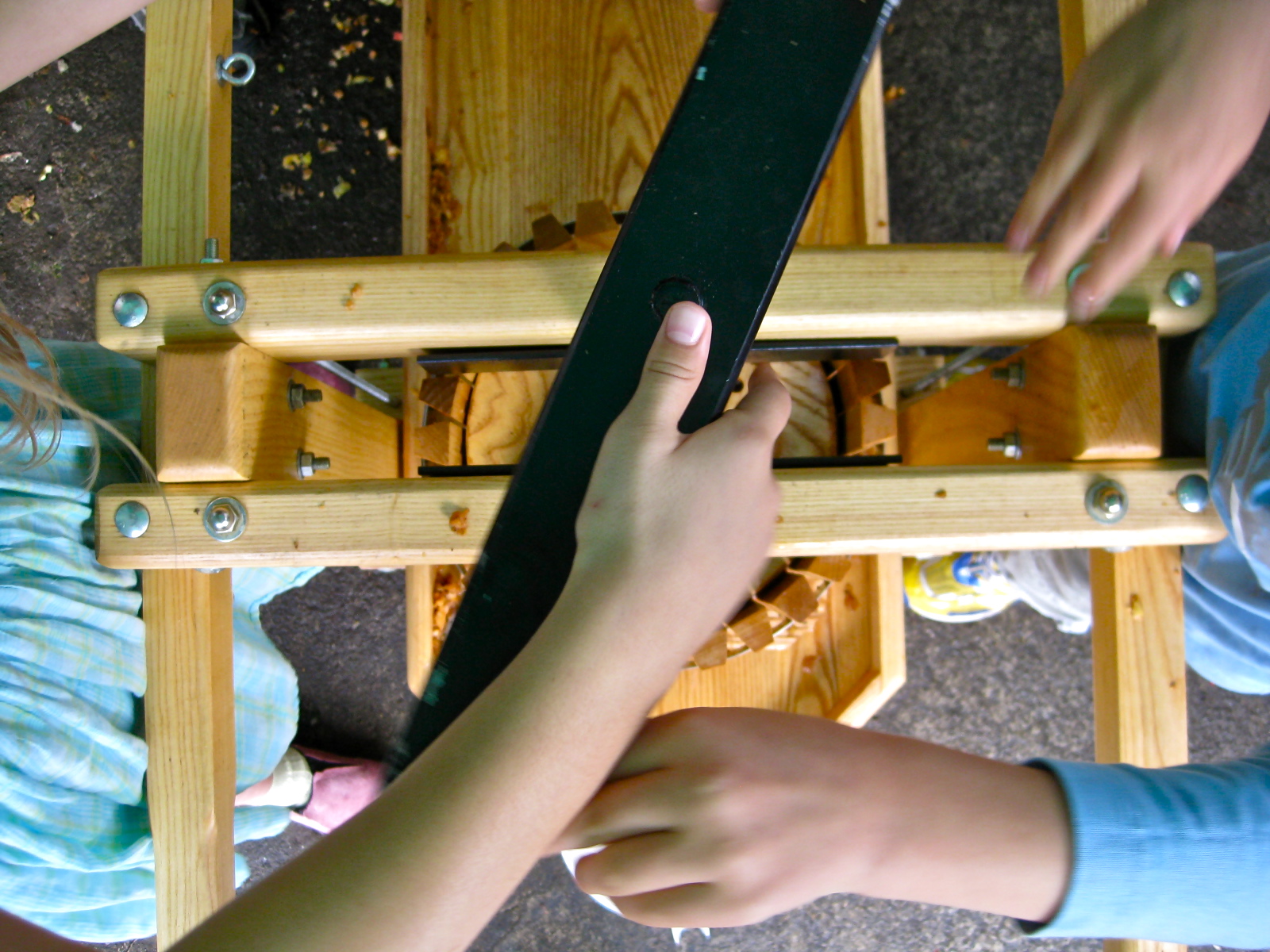
The pears, combined with apples of all sorts, made incredible cider.  Tart and sweet, it was the freshest beverage I think I’d ever had.  The biggest hit of all, however, might have been the cider press itself.  With its efficient design and wonderfully growling motor, it attracted people of all ages.  No matter if you were a child or an adult, there was no better place to be than standing at the helm of the press, feeding it with whole apples and pears, watching the press rapidly shred and pulp the fruit, then slowly and satisfyingly hand cranking the actual pressing plate down upon the pulp, squeezing out the fresh juice.

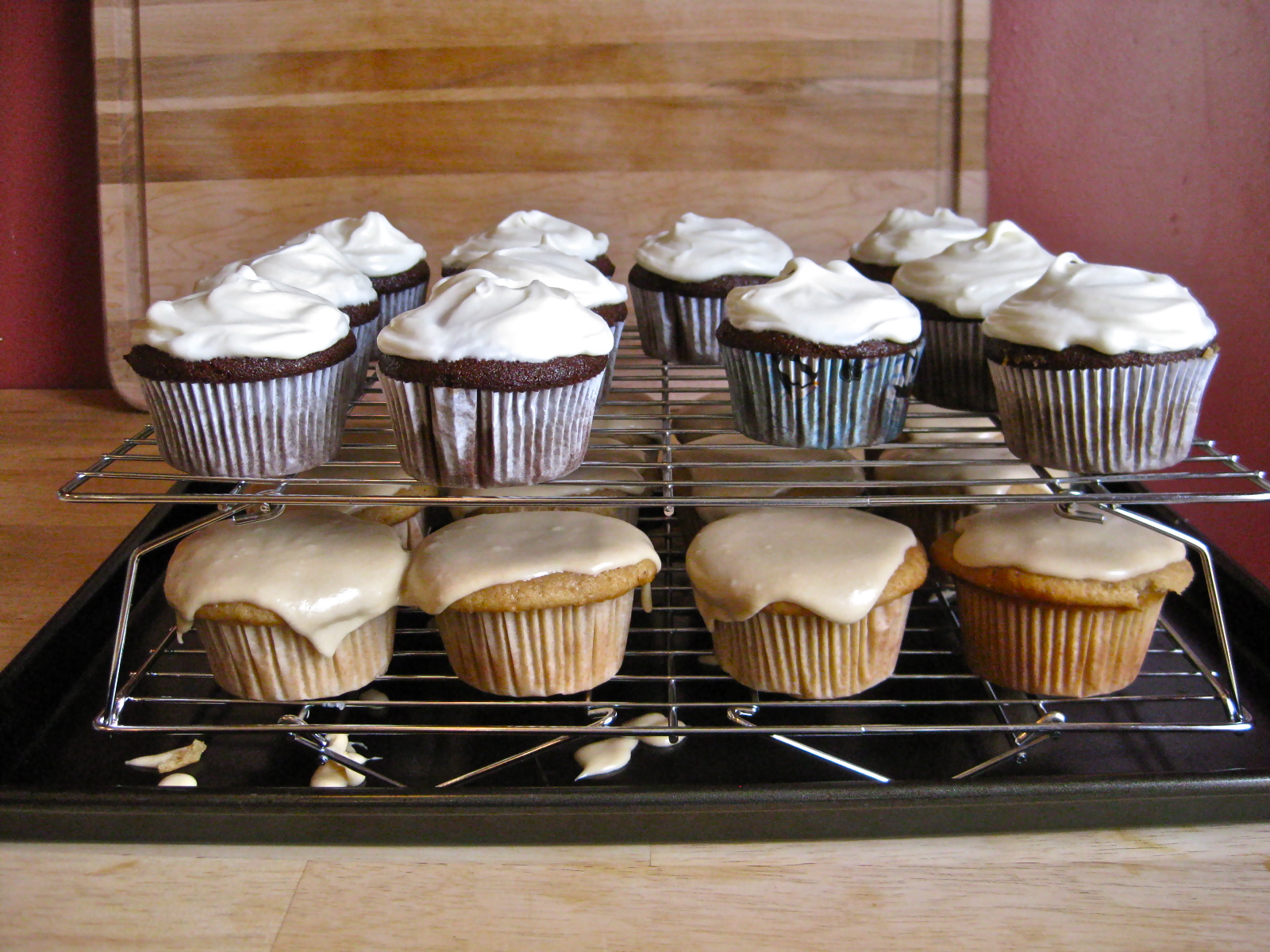
As the machine was starting to slow its production, we all convened in the kitchen to dish out an enormous potluck meal.  There was a fresh tomato tart, a selection of several incredible salads, grilled sausages, a baked polenta dish, macaroni and cheese made in a crock pot (seriously, did you know you could do that?  ‘Cause I didn’t and now I kind of feel like I’ve been missing out), pesto pasta, smoked salmon, Indian food, a peach cobbler, one gigantic chocolate cake, and, because I like no better excuse to bake than having the promise of many mouths to feed, two types of very fall-themed cupcakes.

Let’s be honest, even before cupcakes became the dessert de rigueur, then quickly became the most maligned and passé dessert on the planet (oh, how quickly food trends come and go), I think everyone could appreciate how wonderfully portable, casual, and delicious cupcakes are.  You don’t need a plate and fork when you eat a cupcake.  You don’t even need a table or chair, since you can eat a cupcake while walking around, kicking a soccer ball, or simply standing in one place and enjoying the company of friends.  But even better than the fact that cupcakes are handy, simple to make, and adored by children every where, is the realization that when you make cupcakes, you can make many types at a time, which means you can then eat many types, which I totally did, with no shame whatsoever.

Applesauce Cupcakes with Penuche Frosting

Applesauce Cupcakes

2 cups unbleached all-purpose flour

1 ½ teaspoons baking powder

1 teaspoon ground cinnamon

¼ teaspoon ground nutmeg

¼ teaspoon ground powdered ginger

¼ teaspoon salt

2/3 cup unsalted butter, at room temperature

1 cup packed light brown sugar

2 large eggs

1 teaspoon pure vanilla extract

¾ cup unsweetened, unfiltered apple juice

1 cup unsweetened applesauce

Preheat oven to 350 degrees Fahrenheit.  Line a muffin tin with 12 paper liners, or grease and flour the tin.

Sift together the flour, baking powder, cinnamon, nutmeg, ginger, and salt, then set aside.  With an electric mixer, cream the butter and brown sugar until fluffy.  Beat in the eggs one at a time, then add the vanilla.  Alternate adding the juice and the flour mixture, beating well after each addition.  Fold in the applesauce.

Spoon the batter into the prepared muffin tin.  The cups will be very full.  Bake for 25 to 30 minutes, until a cake tester inserted into a cupcake comes out clean.  Remove the cupcakes from the tin (if they are too hot and delicate to handle at first, you can allow them to cool for 10 minutes before attempting to remove them from the tin) and cool completely on a rack before frosting.

Penuche Frosting

Adapted from Pillsbury: Best Cookies Cookbook

3 tablespoons unsalted butter

½ cup firmly packed light brown sugar

¼ cup milk

2 to 2 ½ cups powdered sugar

In a medium saucepan, combine butter and brown sugar and bring to a boil over medium heat.  Cook at a light boil for 1 minute, stirring frequently, until mixture has thickened.  Remove from heat and cool for 10 minutes.  Add milk to cooled mixture and beat until smooth.  Beat in enough powdered sugar to reach desired frosting consistency (start with 2 cups, beat for a few minutes, then add more powdered sugar if you find your frosting is too runny).  Frosting will remain somewhat loose, as it is not meant to be fluffy.

Gingerbread Cupcakes with Lemon Cream Cheese Frosting

Adapted from Moosewood Restaurant Book of Desserts

Gingerbread Cupcakes

¼ cup unsalted butter, at room temperature

½ cup sugar

½ cup unsulphured molasses

1 large egg

1 ½ teaspoons ground powdered ginger

1 teaspoon ground cinnamon

½ teaspoon ground allspice

½ teaspoon ground nutmeg

1 ¼ cups unbleached all-purpose flour

1 teaspoon baking soda

½ cup boiling water

Preheat oven to 350 degrees Fahrenheit.  Line a muffin tin with 12 paper liners, or grease and flour the tin.

Using an electric mixer, cream the butter and sugar until light.  Add the molasses and egg and beat until smooth.  Add the ginger, cinnamon, allspice, nutmeg, and flour, and beat until well blended.  In a small bowl, dissolve the baking soda in the boiling water (the mixture will foam up).  Add the baking soda and water mixture to the batter and mix until smooth.

Spoon the batter into the prepared muffin tin.  Bake for 20 minutes, until the cupcakes spring back when lightly touched.  Cool cupcakes for 5 minutes, then remove from tin and set on a rack to cool completely before frosting.

Lemon Cream Cheese Frosting

2 tablespoons unsalted butter, at room temperature

2 ounces cream cheese (a generous ¼ cup), at room temperature

2/3 cup powdered sugar

½ teaspoon finely chopped or grated lemon zest

½ teaspoon fresh lemon juice

Using an electric mixer, cream the butter and cream cheese together until smooth.  Beat in the powdered sugar until fluffy.  Add the lemon zest and lemon juice and beat until smooth.

Pear Cake

14 Oct

As much as I will miss the fruits of summer, the juicy berries, melons, and stone fruits that are so willing to be made into pies, galettes, and anything else the heart desires, it cannot be denied that fall fruits definitely offer their own merits.  Apples straight from a garden tree are as crisp and fresh as they come, and when baked in a quiche or pie (or cake or turnover or Danish or strudel or…where was I going with this?), there is no better way to usher the newness of autumn into your home.

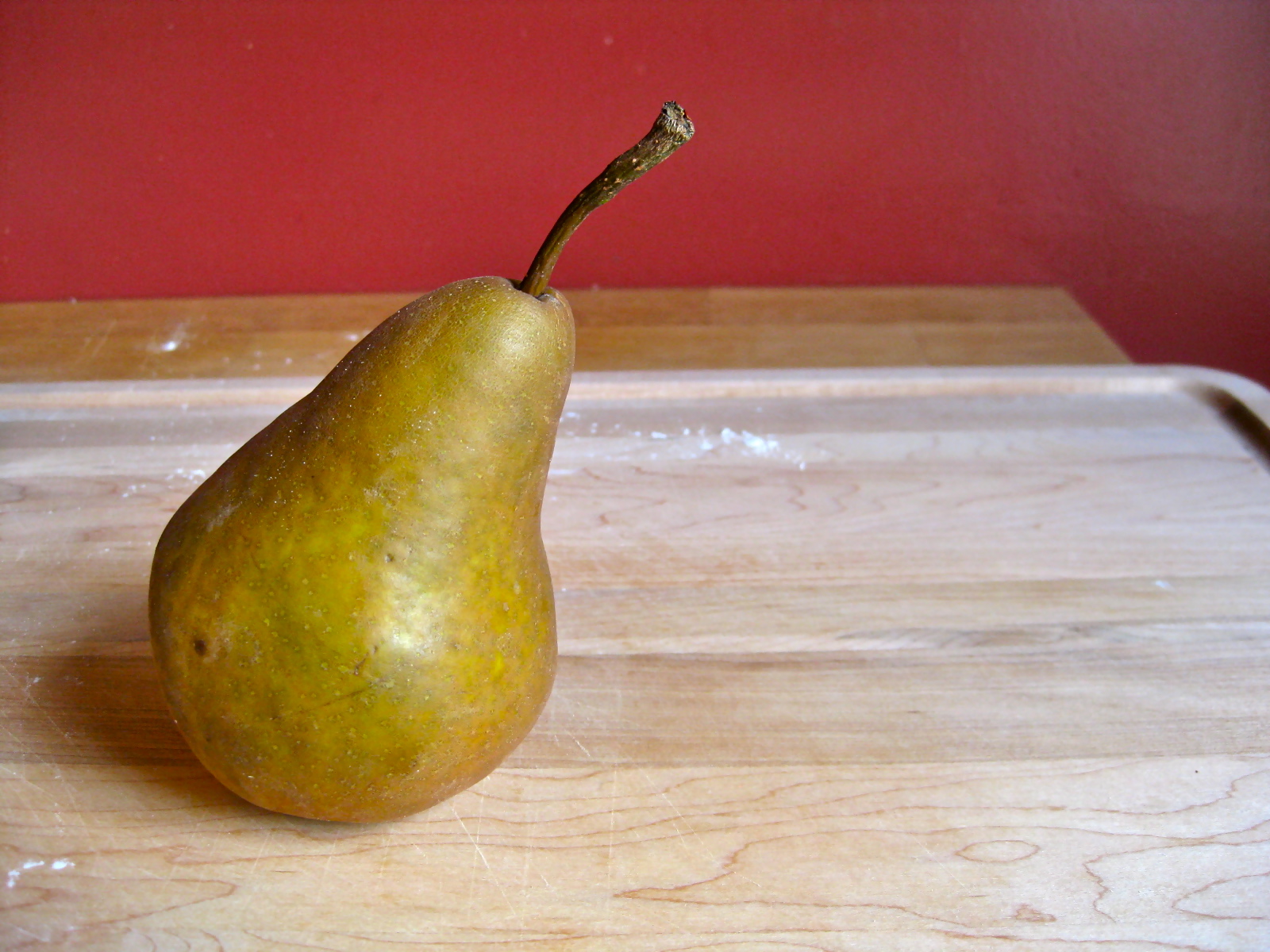
Unless, that is, you make this pear cake.  As much as I adore apples, I love pears even more.  Whereas the crispness of an autumn apple seems so bright and friendly, a ripe pear, with its delicate softness and perfume-like juice, is understated, almost modest.  I’ve been wanting to make a pear cake for ages, not just in the interest of, well, eating cake, but also because there seem to be dozens of recipes around that involve baking with apples, but not enough that encourage people to bake with pears.

Because ripe pears are so much softer than apples, I knew that no matter what I chose to do with the pears before folding them into a cake, they would most likely melt away when baked.  Using this to my advantage, I took the added juiciness of the pears as a hint to explore another lesser-seen tactic in the world of cakes: I decided to make this cake vegan.

I am not a vegan (this should be obvious to anyone who has spent any time at all on this site), but I have spent a great deal of time in the company of vegan housemates, co-workers, and now, fellow kindergarten families.  It has always seemed like a crying shame that there are so few recipes for vegan baked goods that don’t involve simple pantry ingredients.  Whereas a vegan is wary of dairy and eggs, I am equally as wary of “natural” margarine and fake sour cream, so I figured I’d reach across the aisle here and create a vegan recipe that called for simple, basic ingredients.

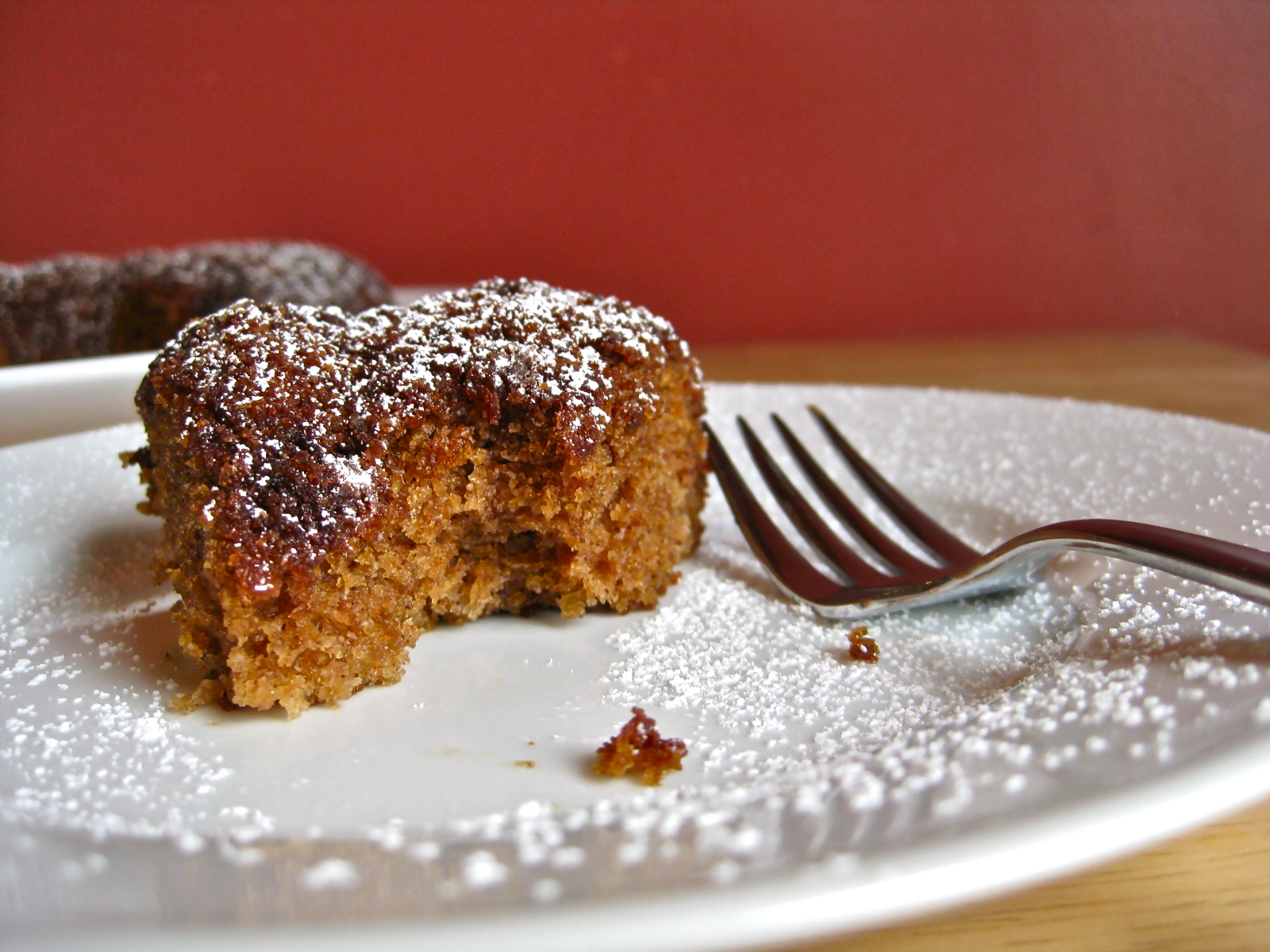
It was not so surprising to discover that it was not at all difficult, and I think you’ll soon see that the result is not lacking in any way.  To be completely honest, the fact that this cake is vegan is the least of its accomplishments.  The cake flour gives the cake an incredibly delicate crumb, and the brown sugar bakes into a deep toffee flavor that hits all the right notes when combined with the shredded pears.  This is a tender, moist cake that is perfect for showcasing the joys of autumn fruit, and regardless of whether you prefer Rice Dream to ice cream, it’s a solid addition to any recipe collection.

Pear Cake

I auditioned two versions of this recipe, and the results were exactly the same.  I am not sure why I am even mentioning that I tried out two different versions of this cake, except perhaps to stress the point that I really did want to make this cake as simple and delicious as possible, and, even when fiddling around with the ingredients and baking times, I found it impossible to make this cake taste bad.  If you don’t have cake flour on hand and don’t feel like going out and buying some, I recommend you use unbleached all-purpose flour that has been sifted two times, rather than once, before being measured.

1 ¾ cups sifted cake flour

½ teaspoon salt

2 teaspoons baking soda

1 teaspoon cinnamon

pinch of nutmeg

½ cup vegetable oil

1 cup lightly packed light brown sugar

1 cup lightly packed shredded pear, juice included (I got this much shredded pear from 2 medium-sized pears)

2 teaspoons cider vinegar

Preheat oven to 350 degrees Fahrenheit.  Grease and flour a 9 or 10-inch bundt pan.

In a medium bowl, sift together flour, salt, baking soda, cinnamon, and nutmeg.  In a large bowl, mix together oil and brown sugar until smooth.  Fold in shredded pears.  Add the dry ingredients to the wet, and mix until just combined.  Add the vinegar, and mix quickly to incorporate.  The batter will foam a bit when the vinegar reacts with the baking soda.

Pour the batter into the prepared bundt pan.  Bake in the center of the oven for 30 to 35 minutes, until the top of the cake appears no longer liquid, and is spongy-firm to the touch.  Do not insert a cake to test for doneness until at least 30 minutes of cooking time have elapsed.  The cake is rather delicate, and poking it prematurely will cause it to deflate.  When you do insert a cake tester for doneness (after 30 minutes), the cake tester should emerge with just a few moist crumbs attached.

Cool cake in pan for 10 minutes, then invert onto a cooling rack to cool completely.  The cake will be extremely delicate when still warm, so handle with care.  Serve warm or at room temperature.