Archive | Dessert RSS feed for this section

Nectarine and Raspberry Galette in a Cornmeal Crust

11 Jul

Supposedly, hot weather makes people less likely to pine for baked goods than cold weather.  Or so I hear.  I can only assume that it is the act of turning on and, thusly, heating an oven that makes baking more of a welcome winter affair than a summer one, because, and this should come as absolutely no surprise whatsoever, I’ve never known a season that was unfit for baking.

Summer baking is, of course, different from winter baking, but really only by virtue of what you choose to be the star of your recipe.  Winter definitely makes me feel more inclined to fuss over things that fall into the category of being rich and chocolatey, but the main attraction of my favorite summertime desserts almost always lean towards being fresh and fruit-filled.  Sure, fall is a haven of fruity desserts as well—with pears and apples galore just begging to be caramelized or topped with a crispy and nutty blanket—but summer fruits differ from autumn fruits in that the choice of baking them will always be up to the dessert maker’s whim.

Cream tarts and trifles (and a wonderful pie that I will be sharing with you soon) are a great way to showcase uncooked fruit in a dessert that shares the spotlight with several different elements (lemon cream, semolina cake, whipped cream, lemon-scented yogurt and cream cheese, etc.), but one should never be discouraged from taking a stab at baking the plethora of summertime fruit that is available and ready to be found and adorned with such ease.
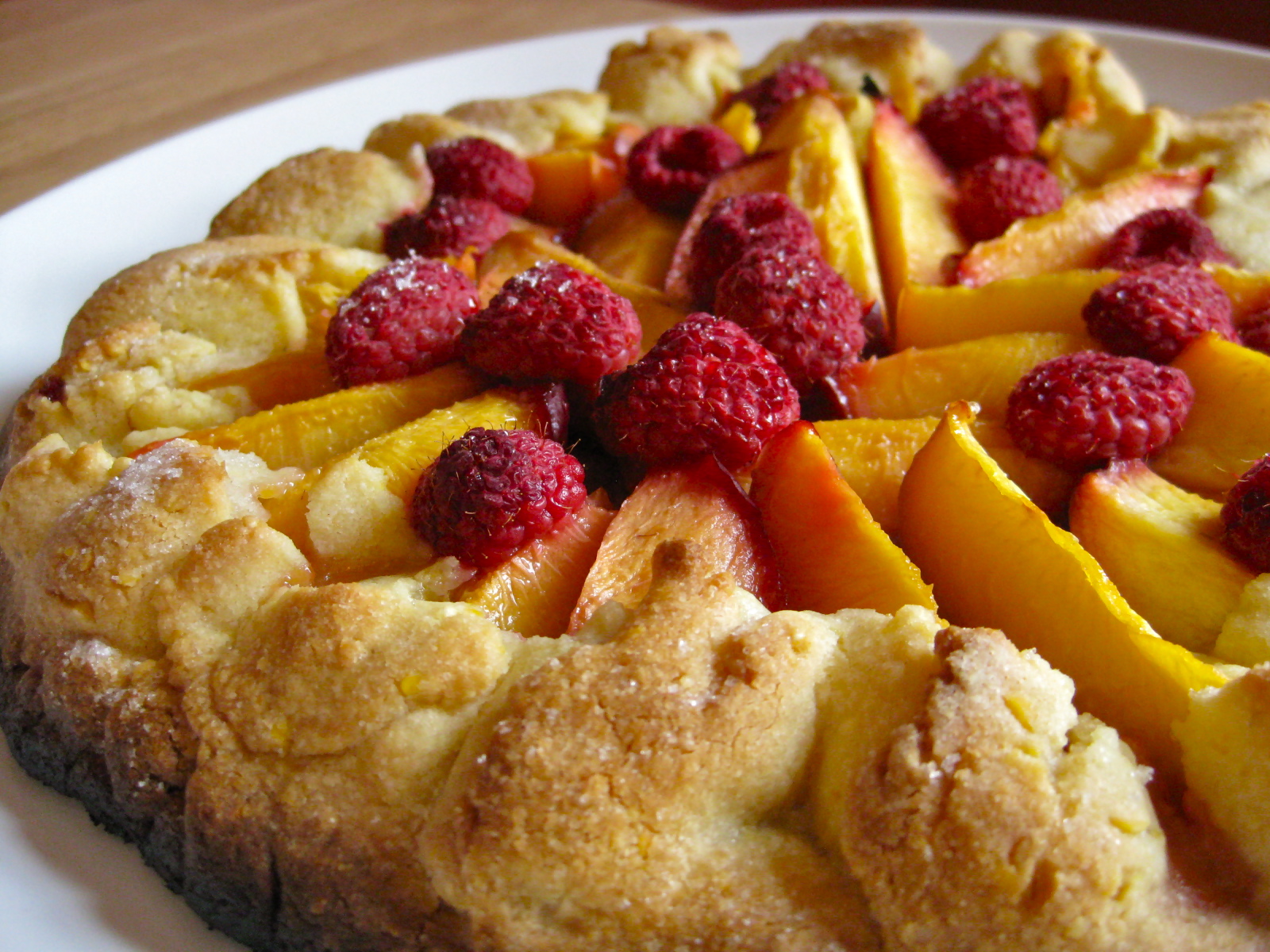
This galette, featuring heavenly scented nectarines and plump raspberries, is a great place to start investigating the benefits of summertime baking.  The fruit, barely sweetened, gets enveloped in a fantastically crunchy and buttery cornmeal crust that provides a perfectly crisp, almost cookie-like contrast to the fruit.  Beneath the fruit lies a light and surprising dusting of ground almonds that contributes a slight sturdiness to the dessert without leaving any trace of heaviness.  Eaten alone, or with a generous dollop of very lightly sweetened whipped cream, it’s a fantastic introduction to summertime baking, and, I hope, an encouragement to never shy away from baking, no matter the season.

Nectarine and Raspberry Galette in a Cornmeal Crust

Cornmeal Dough

This wonderful dough recipe was adapted from The Italian Baker, by Carol Field, by way of Alice Waters’ Chez Panisse Fruit

10 tablespoons (1 stick plus 2 tablespoons) unsalted butter, room temperature

¾ cup sugar

3 egg yolks

1 ½ cups unbleached, all-purpose flour

½ cup yellow cornmeal

¾ teaspoon salt

½ teaspoon vanilla extract

Filling

1 pound nectarines

4 ounces fresh raspberries

2 tablespoons ground almonds or almond meal

3 teaspoons sugar, divided

1 tablespoon flour

Make the dough:

In a large mixing bowl, cream together the butter and sugar.  Add the egg yolks one at a time, mixing thoroughly after each addition.  Sift the flour, cornmeal, and salt directly into the mixture.  Add the vanilla and stir until the dough is thoroughly mixed.  Divide the dough in half and gather into 2 balls.  Wrap the balls in plastic, press them into discs, and refrigerate for at least 30 minutes.  Since you will need only 1 disc of dough for this recipe, feel free to freeze or refrigerate the other disc until you are ready to use it.  The wrapped dough will keep in the refrigerator for up to 2 weeks, or in the freezer for up to 2 months.

Assemble the galette:

Preheat the oven to 400 degrees Fahrenheit.

To roll out the dough, cut out a 14-inch square piece of parchment paper.  Dust the parchment paper with flour.  Take a disc of dough out of the refrigerator, unwrap it from the plastic wrap, and place on the flour parchment.  Lightly flour the dough then place the plastic wrap on top of the disc of dough.  Rolling on top of the plastic wrap, roll out the disc into a 13-inch circle.

Remove the plastic wrap from the top of the circle of dough.  Place the rolled-out dough, still on the parchment paper, on a baking sheet and refrigerate while you prepare the filling ingredients.

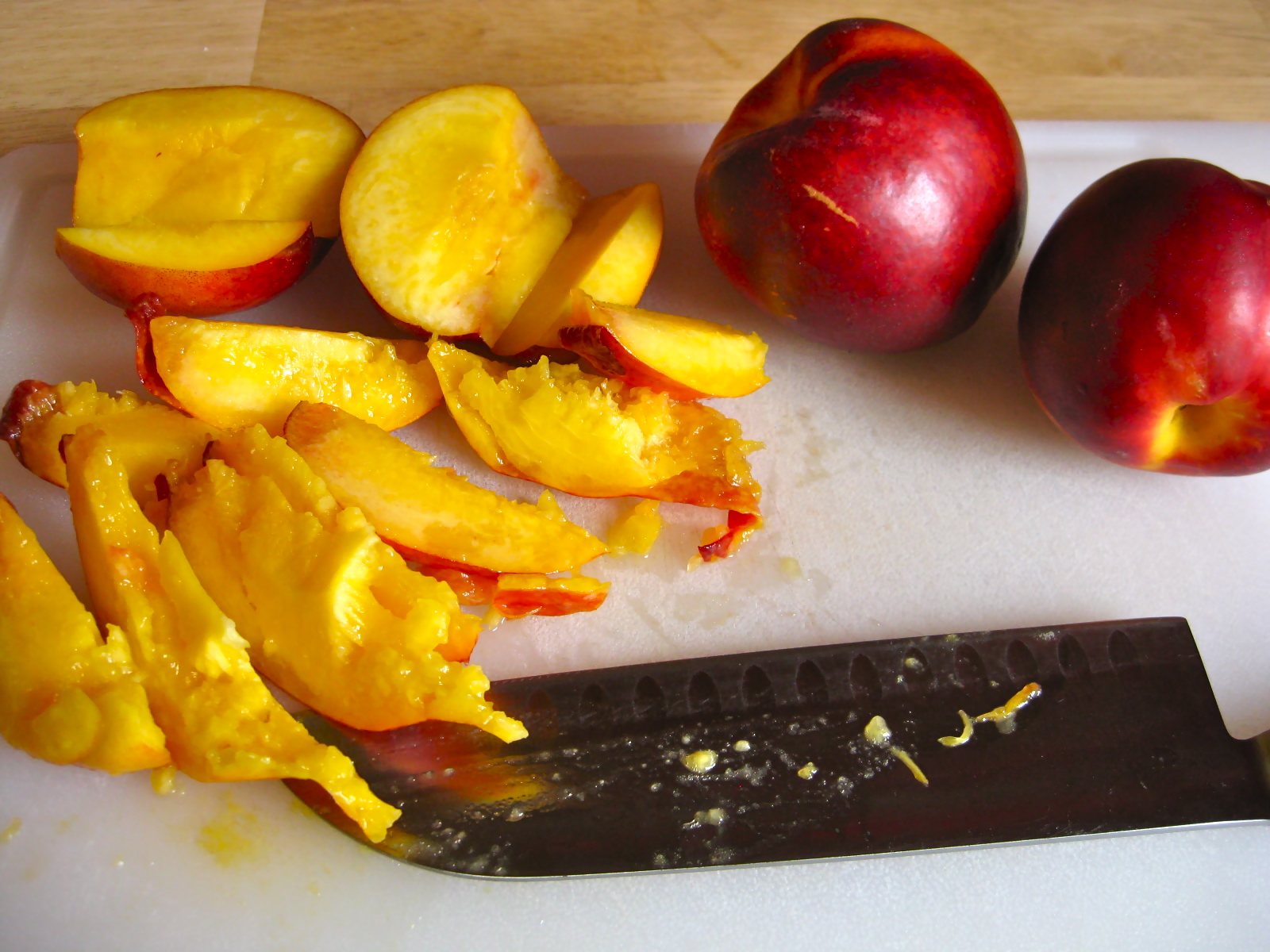
Cut each nectarine in half, remove the pit, and each half cut into 4 wedges.

In a small bowl, combine ground almonds, 2 teaspoons of the sugar, and flour.

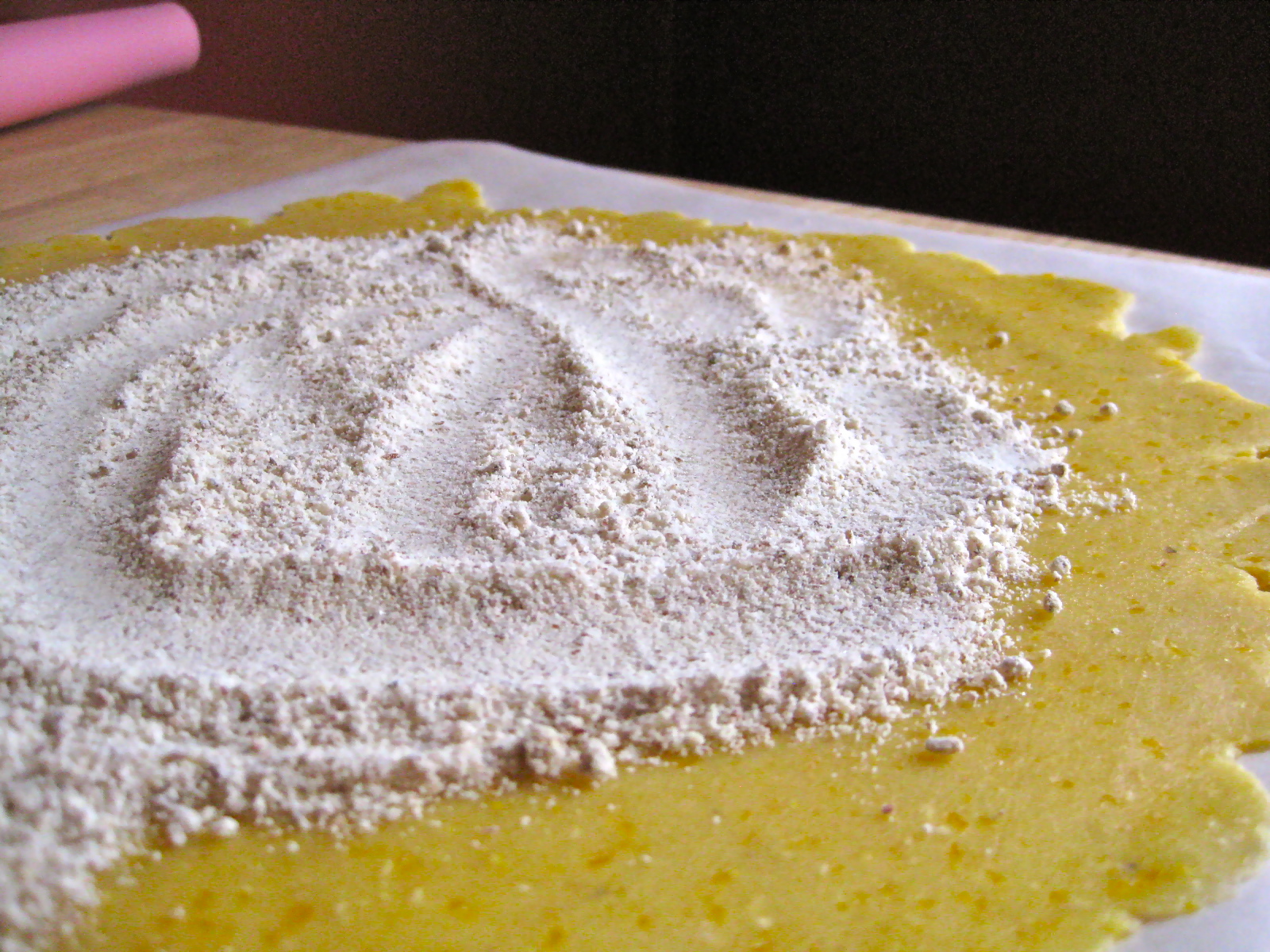
Remove the chilled, rolled-out dough from the refrigerator.  Sprinkle the almond mixture over the top of the dough, leaving uncoated a 1 ½ inch border at the edges.  Place nectarines, skin side down, in a single layer on top of the almond mixture, still leaving empty the uncoated edges.  Place raspberries on top of the nectarines, nestling the berries into any open crevices in between the nectarines.

While rotating the tart, fold the border of exposed dough up and over itself at regular intervals, crimping and pushing it up against the fruit. Pinch closed any breaks or cracks in the dough.  Sprinkle the remaining 1 teaspoon of sugar over the top of both the fruit and the folded-over edges of dough.

Bake on the center rack of the oven for 30 minutes, or until the crust is golden brown and the edges of the fruit have started to caramelize.

Cool for at least 20 minutes before eating, so as to allow the hot fruit juices to stabilize a bit.

Lemon Cream and Strawberry Trifle

30 Jun

Summer fruit in this area of the country is a long time coming.  Sure, we’ve had rhubarb for a few weeks now, but can rhubarb, in all its puckery a tart glory, really be counted as a summer fruit?  If you toss rhubarb with a lot of sugar, it can do some mighty fine things, but, straight from the ground, eating it is going to cause you some serious malcontent.  With those parameters in mind, I am sorry to say that I just don’t think rhubarb is going to make the cut.  So what do we do here in Portland when we want to eat our first local summer fruit?  We wait for the strawberries.

It’s been a cold, wet, and (let’s be honest) semi-miserable spring and summer, but our fortitude seems to have paid off.  Fresh strawberries began to show up at the farmers market just a few short weeks ago and, just last week, strawberries made their arrival in our home garden.  Despite the slow start our garden suffered in its beginning stages, a very short burst of warm weather seems to have coaxed some of our fruit into vibrant life, rewarding us with, upon our first harvest, 3 pounds of strawberries.  Not a typo.  3 pounds.

And then, four days later, we harvested another 3 pounds.  Two days after that came another 2 pounds.  We are swimming in sweet, juicy berries, and I could not be happier.

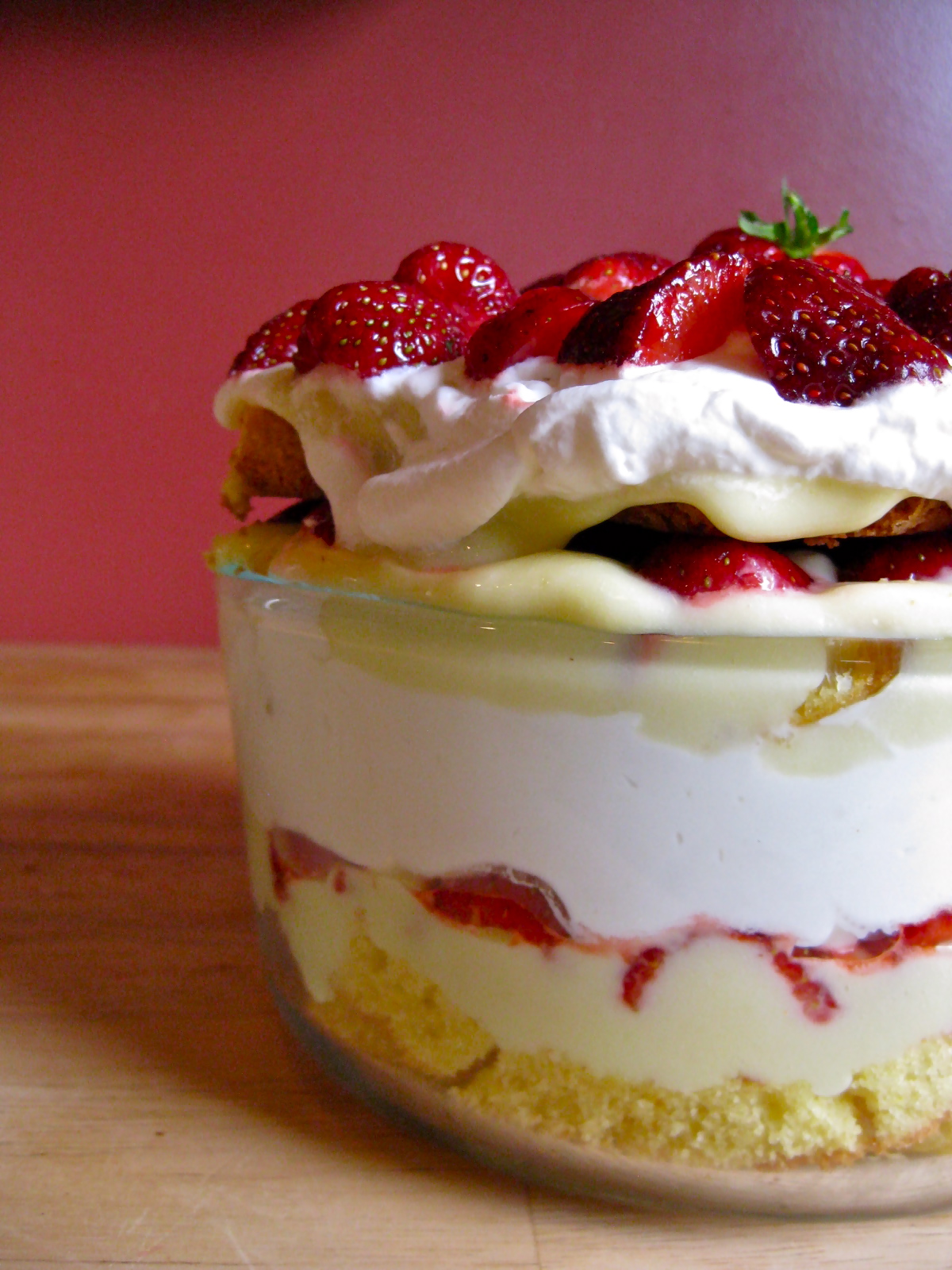
There have been strawberries in our granola, strawberries in our yogurt, strawberries straight from the plant, strawberries on leftover biscuits, and, in what I now realize I subconsciously created as a bit of a strawberry coming out celebration after we harvested our first basket of berries, this astonishingly good strawberry and lemon cream trifle, which, besides tasting somewhat like a heavenly dream, also happens to look quite like one.

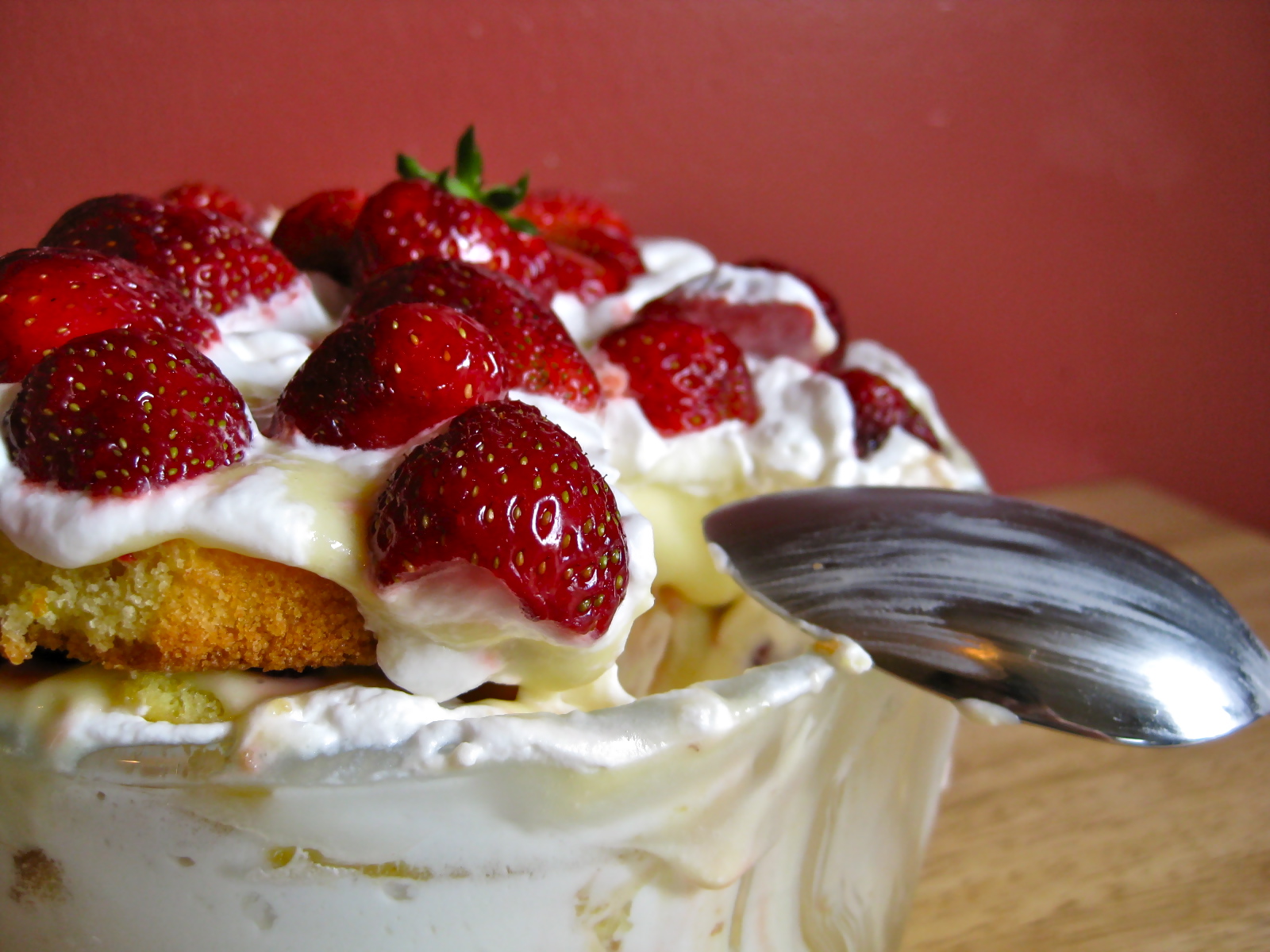
Until it comes time to serve it, that is.  Upon being released from its pristine confines, this wonderful dessert morphs into a sloppy, goopy mess that, were one determining dessert worthiness purely by looks alone, certainly would not be in the running to win any beauty pageants.

But, if we are to continue with this pageant metaphor, let us all remember that true beauty is not represented by what one sees on the outside, but rather what one possess on the inside, which in this case happens to be fresh garden strawberries, lush lemon cream, and soft peaks of whipped cream, all nestled in between layers of a delectable semolina cake that, unlike the cake layers in many a trifle I have eaten, will not succumb to a soggy and spongy fate when inundated with a veritable flood of delicious creams.  Combine those virtues, and you’ve got what I consider to be a dessert that qualifies as a true and deserving winner.

Strawberry and Lemon Cream Trifle

Orange Semolina Cake

If you want to go all lemon with this trifle, you can certainly swap out freshly squeezed lemon juice for the orange juice, though I find that the subtle orange flavor of this cake is a welcome addition to the overall composition of the trifle. (I previously wrote about this cake recipe here.)

2/3 cup all-purpose flour

½ teaspoon baking powder

2 cups fine semolina

¾ cup sugar

2 tablespoons grated orange zest

4 eggs, separated

¼ cup olive oil

¼ cup vegetable oil

½ cup orange juice

Preheat oven to 350 degrees F.

Grease and flour an 8” x 8” square cake pan.  Place flour, baking powder, and semolina in a bowl and mix to combine.  Combine sugar and orange zest in the bowl of a food processor or in a blender, and pulse to combine thoroughly.  Place egg yolks, orange-sugar mixture, and oils in a bowl and beat until well combined.  Fold egg yolk mixture into flour mixture with orange juice.

Place egg whites in a bowl and beat until soft peaks form.  Fold egg whites into flour and egg yolk mixture and pour into prepared pan.  Bake in preheated oven for 25-30 minutes, or until cake is lightly browned on top and a wooden skewer inserted into center of cake comes out clean.  Cool cake in pan for ten minutes, then release onto a wire rack to cool completely.

Lemon Cream

Adapted from Tartine

½ cup plus 2 tablespoons (5 ounces) of freshly squeezed lemon juice

3 whole large eggs

1 large egg yolk

¾ cup (6 ounces) sugar

pinch of salt

½ cup (4 ounces or 1 stick) cool unsalted butter, cut into 1 tablespoon pieces

Bring about 2 inches of water to a simmer in a saucepan set over medium heat.  In a non-reactive bowl that is able to rest securely in the rim of the saucepan without touching the water, combine lemon juice, whole eggs, egg yolk, sugar, and salt.  Whisk the ingredients together.  Do not allow the egg yolks and sugar sit together without being stirred constantly, as the sugar will react with the eggs and turn them granular.  Place the bowl over the saucepan of simmering water and continue to whisk for around 10-12 minutes, until the mixture thickens considerably and reaches a temperature of 180 degrees F.  Remove the bowl from above the water and allow the mixture to cool to 140 degrees F.  Stir from time to time to help the mixture cool and release its heat.

When the cream has reached 140 degrees, pour it into a blender, or leave it in the bowl if you will be using an immersion blender to mix the lemon cream.  Add the butter to the lemon cream, 1 tablespoon at a time, blending the mixture continuously until each piece of butter is completely incorporated before you add the next one.  The cream will be pale yellow and quite thick.

The lemon cream can be used immediately, or it can be made ahead and kept in the refrigerator, tightly sealed, for up to 5 days.  Makes about 2 cups of lemon cream.

Whipped Cream

1 cup (8 ounces) heavy whipping cream

½ teaspoon sugar

¼ teaspoon pure vanilla extract

Combine whipping cream, sugar, and vanilla in a medium bowl.  Using an electric mixer, whip on low speed until sugar and vanilla have dissolved.  Increase mixer speed to high, and whip until cream forms soft peaks.

Assemble the Trifle

You will need 1 pound of strawberries, each berry hulled and sliced in half from top to bottom.

When cake has cooled, cut it in half so you have two pieces that measure 8” x 4.”  You will only need half of the cake, so tightly wrap the unused half and store it for later use or enjoyment.  Then cut the remaining 8” x 4” piece in half horizontally, separating the top from the bottom.

Line the bottom of a trifle dish, or a similarly-sized glass bowl with a flat bottom (I used a 1.75 quart Pyrex storage dish, and found that I could have benefited from a dish that was taller and allowed for a bit more security of the top layers) with 1/3 of the cake layers, cutting the cake into strips and pieces as needed to fill in as much of the bottom space as possible.  Spoon 1/3 of the lemon cream mixture on top of the cake layer.  Spoon 1/3 of the strawberries on top of the lemon cream.  Spoon 1/3 of the whipped cream on top of the strawberries.  Repeat layering process one more time.  When you get to the third layer, deviate slightly from the layering order by first making a cake layer, followed by a lemon cream layer, then a whipped cream layer, then a strawberry layer.  Laying the strawberries on top of the cake, rather than under a layer of whipped cream, simply looks prettier.

Chill the trifle well before serving.  Trifle can be made ahead and left to wait in the refrigerator, fully assembled, for up to 1 day.

This trifle should serve at least 10 people very generously.  I’d tell you how long leftovers can last in the refrigerator, but ours was completely demolished within 2 days, leaving me to only guess as to how long it could last past that.  I’d say no longer than 3 or 4 days, but I’ll bet yours will be gone long before that as well.

Pear and Mascarpone Pizza

13 Jun

There is pretty much no end to the dedication I will show in order to cobble together a dessert.  If I can make this dessert by mining the depths of my refrigerator, even better.  There is satisfaction to be found in saving food from eminent disposal, sure, but one can definitely intensify the delight of that satisfaction by churning out a dessert so unexpectedly fantastic, so effortlessly decadent, you might just have trouble believing that this delicious thing you just Frankenstein-ed into existence is a hodgepodge of leftover bits and pieces from other meals.

While it’s true that this recipe is based on using up a bit of leftover pizza dough (and by based, I mean that both literally and figuratively, since the pizza dough provides a crispy base for the pears and mascarpone, but also serves as a nice method for utilizing the last third of a batch of this dough), it by no means tastes like a second rate dessert.  That a very simple combination of ingredients can be joined together to make something this incredible seems almost unfathomable.

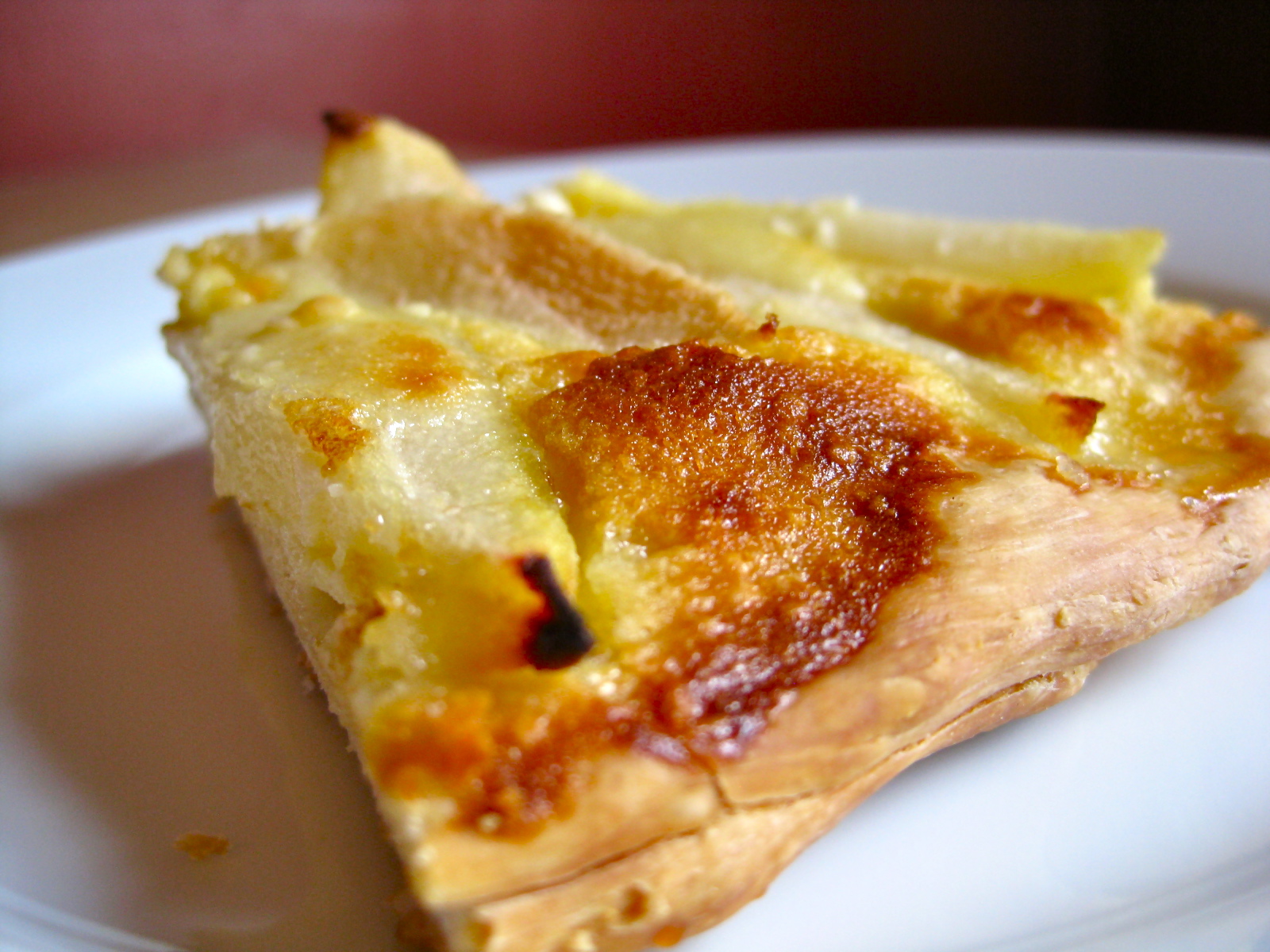
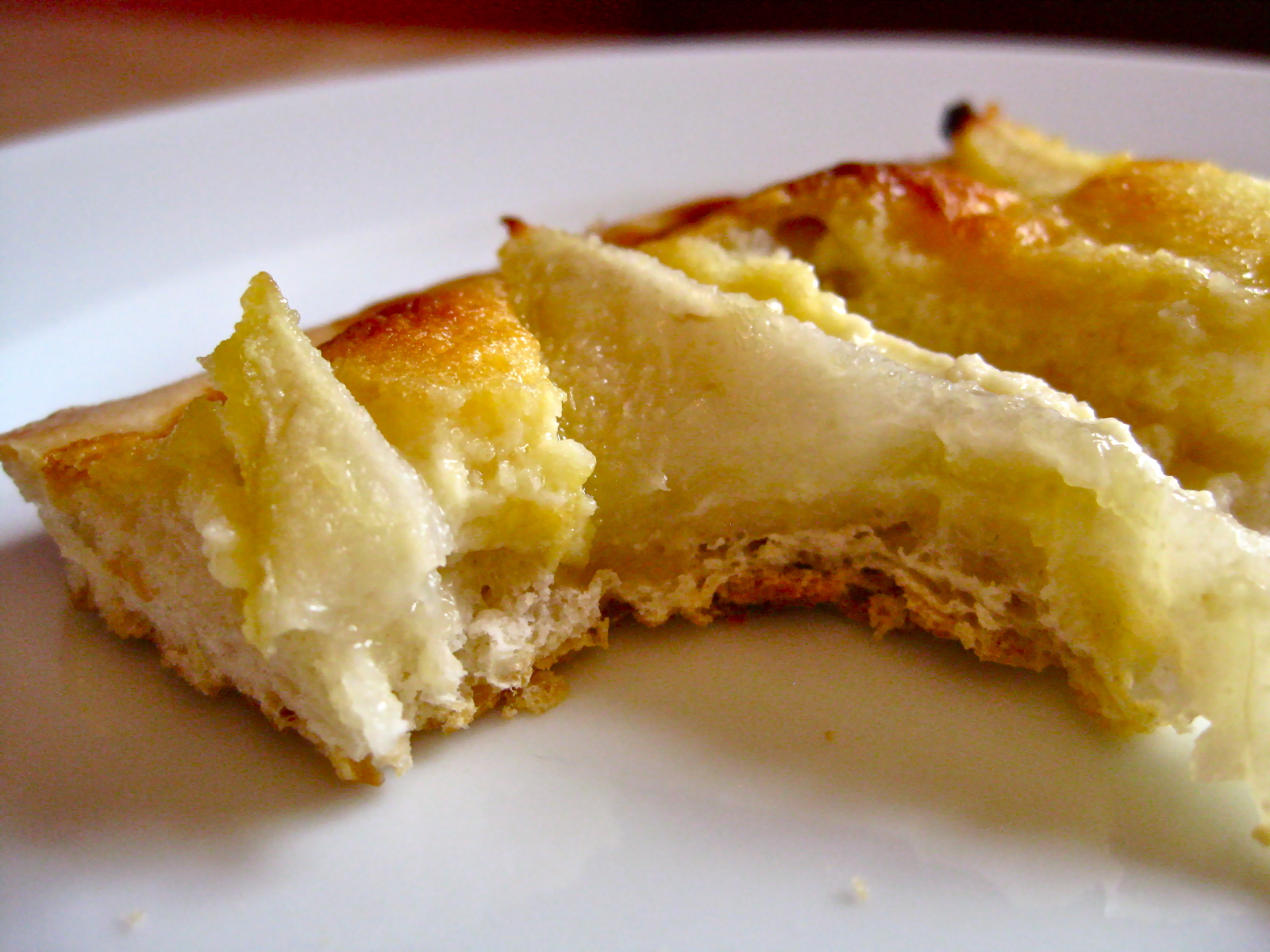
Softly sweet mascarpone cheese is baked into a deep, caramelized custard while it sits atop a bed of simple, fresh pears.  The humble pizza dough base, previously left to rest in the refrigerator for several days, transforms into a flaky, crispy pastry that achieves all the flavor of a Danish pastry dough, only with none of the work involved.  To top off the list of this dessert’s nearly unbelievable attributes, the entire thing, luscious and toothsome as it is, is made with a total of only three tablespoons of sugar.

Truthfully, I am finding it exceptionally difficult to do anything other than gush about this luxurious pastry concoction, because, to be quite honest, I had no idea it would turn out this good.  When I took a bite of it, I actually froze a little and thought, “What IS this?”  Even though I knew exactly what it was, since I had just taken the time to make it.  Now, one week later, having worked my way through several bites, I feel a bit more prepared to answer my own question.  What is this?  It is simple, it is delightful, and it is not to be missed.

Interested in more ways to use up refrigerator leftovers?  Here is another scavenger recipe of mine that was posted on Indie Fixx, where I write a regular food and cooking column called Melting Pot.

Pear and Mascarpone Pizza

If I were to make one very important suggestion about this dessert, it would be that you use a very well-rested pizza dough that has had time to ripen in the refrigerator.  What do I mean by ripen?  Well, the longer you let your dough rest in the refrigerator, the more time you are giving the enzymes in the flour to convert to sugar.  This extra bit of natural sweetness in the dough not only gives it a great flavor, but it also allows the dough to caramelize a bit while baking in the oven, giving the dessert base a much more intense flavor and pronounced crispness without the need for added butter or sugar.

Pizza dough (preferably aged in the refrigerator for 2-3 days) for 1 pizza

2 pears, peeled, cored, and cut into thin slices

1 tablespoon turbinado or raw sugar

4 ounces mascarpone cheese

1 large egg

2 tablespoons white sugar

1 tablespoon freshly squeezed lemon juice

1 teaspoon pure vanilla extract

Preheat oven to 400 degrees F.

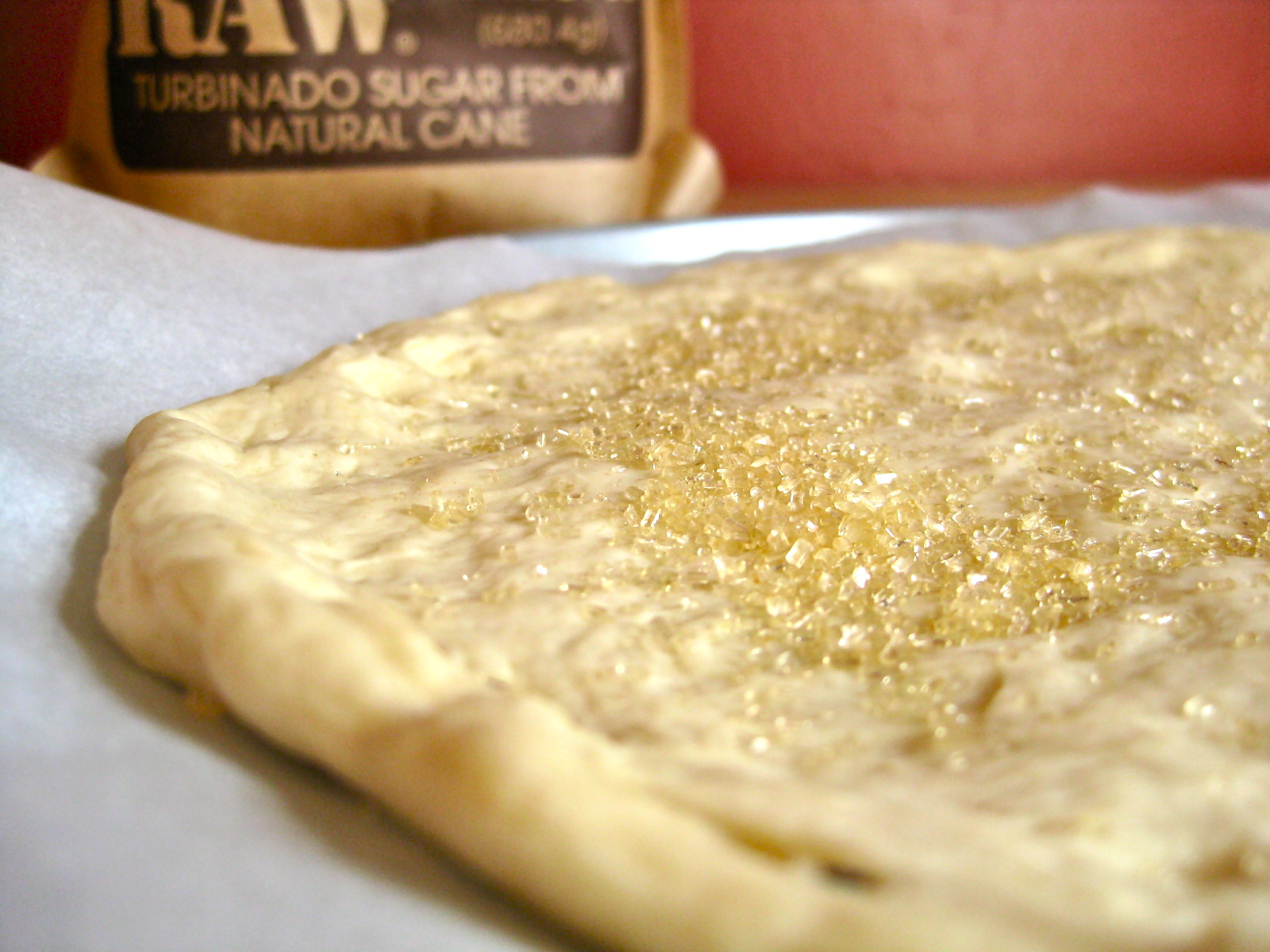
Hand stretch dough into a 12-14 inch round.  Place dough on a parchment-lined baking sheet.  Sprinkle half a tablespoon of turbinado sugar over the surface of the dough.  Reserve the remaining half tablespoon of turbinado sugar and set aside.

Arrange the sliced pears over the top of the sugar-sprinkled dough.  I found it very easy to fit all the slices neatly on the round by arranging them in concentric circles, but you may arrange the pears however you want.

Combine the mascarpone cheese, egg, white sugar, lemon juice, and vanilla.  Whisk thoroughly to combine.

Drizzle the mascarpone mixture evenly over the pears, covering as much of the surface as possible, but leaving a 1/2 inch of dough uncovered at the edges.  Sprinkle the pears and cheese with the remaining half tablespoon of turbinado sugar.

Bake pizza for 25-30 minutes, until the cheese has caramelized in places and the edges of the dough have turned golden.  Cool slightly before eating.