Archive | Fast RSS feed for this section

Cider-Braised Greens

9 Apr

If it were up to me (and it is somewhat puzzling that it is not, considering the fact that I do all the cooking around here), every dinner I served would include these greens.  Lightly garlicky, slightly bitter, and mildly sweet with just a flash of spice, these are the greens that I turn to when I want to whip up something to accompany a basic meal of protein + carbohydrates.  Unfortunately, since many of my house’s food choices are not left entirely up to me, I don’t get to eat these greens all that often.  I could try and be polite about this, but there’s just no skirting the issue.  My kid, he hates leafy greens.

Many years ago, I was sitting in a Thai restaurant with my husband, pre-child years.  We were watching a family of four, two parents, two children, eat their dinner, and I was pleased to see that both kids in the family were happily tucking in pile after pile of sautéed greens, spicy green beans, and grilled tofu.  I watched and admired the family for quite some time, soaking in the spicy, vegetable-laden inspiration of their dining choices.  So, I thought, kids will eat greens and spicy food.  As it turns out, I was only half correct.  Those kids will eat greens and spicy food.
For a long time, I thought that the secret to getting kids to like a certain food was just offering that food to a kid many times (the rumored magic number of offerings before a kid will accept a rejected food is 20—that is, your kid has to taste and reject the food on 20 separate occasions before he or she will finally accept it, which is, to put it simply, disheartening and somewhat ridiculous) until the kid just breaks down and finally decides to eat whatever you are shoving at him.  I now know that the secret to getting your kid to eat food he claims he doesn’t like is…wait, there is no secret.  At least, I haven’t discovered it.  It seems as though the choices many kids make concerning the foods they will and will not eat are completely random.  My son will demolish an entire avocado that has been bathed in fresh lime juice and cracked black pepper, but his friend down the street suffers from a distaste of avocados that is so intense, he has taken to telling people that he is actually allergic to avocados and can’t even be around them.  My son loves salmon, but won’t go near prawns.  He will graze through our garden in the summer, stuffing handfuls of basil, parsley, and mint into his mouth, but if you try and offer him a lettuce leaf, he will back away as though you are waving an angry cobra at his face.
Maybe it’s not really a problem.  Maybe, because he is five, he is just being contrary.  Maybe one day, when he has outgrown his fear of leafy greens and is interested in exploring the world of cooked greens, he will appreciate a recipe like this.  There is not much I can do to in the meantime, save for offering him a tiny bite of my greens each time I make them, waiting in earnest for that magical 21st offering when he will fold under my persistence and finally give in.  If I am really persistent, I could have this nailed by the time he is six.  Maybe seven.  Okay, fine.  Twenty-seven.

With quinoa and grilled salmon

Cider-Braised Greens Recipe

2 tablespoons extra-virgin olive oil

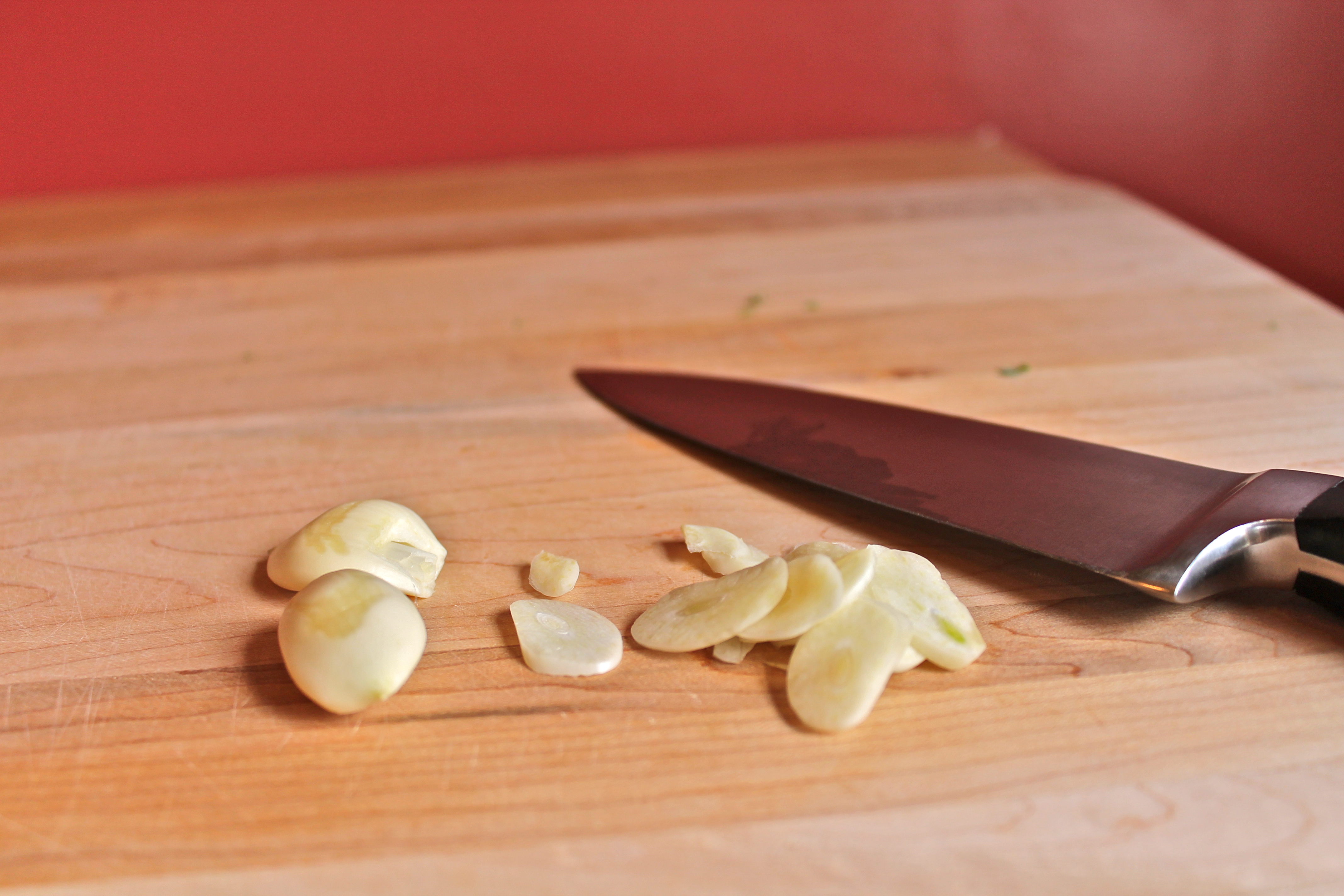
3 large garlic cloves, cut into thin slices

large pinch of red pepper flakes

8 ounces of greens, rinsed and coarsely chopped (I used turnip greens, kale, and chard, but you can also use beet greens, collard greens, mustard greens, spinach, or whatever other cooking greens you have on hand)

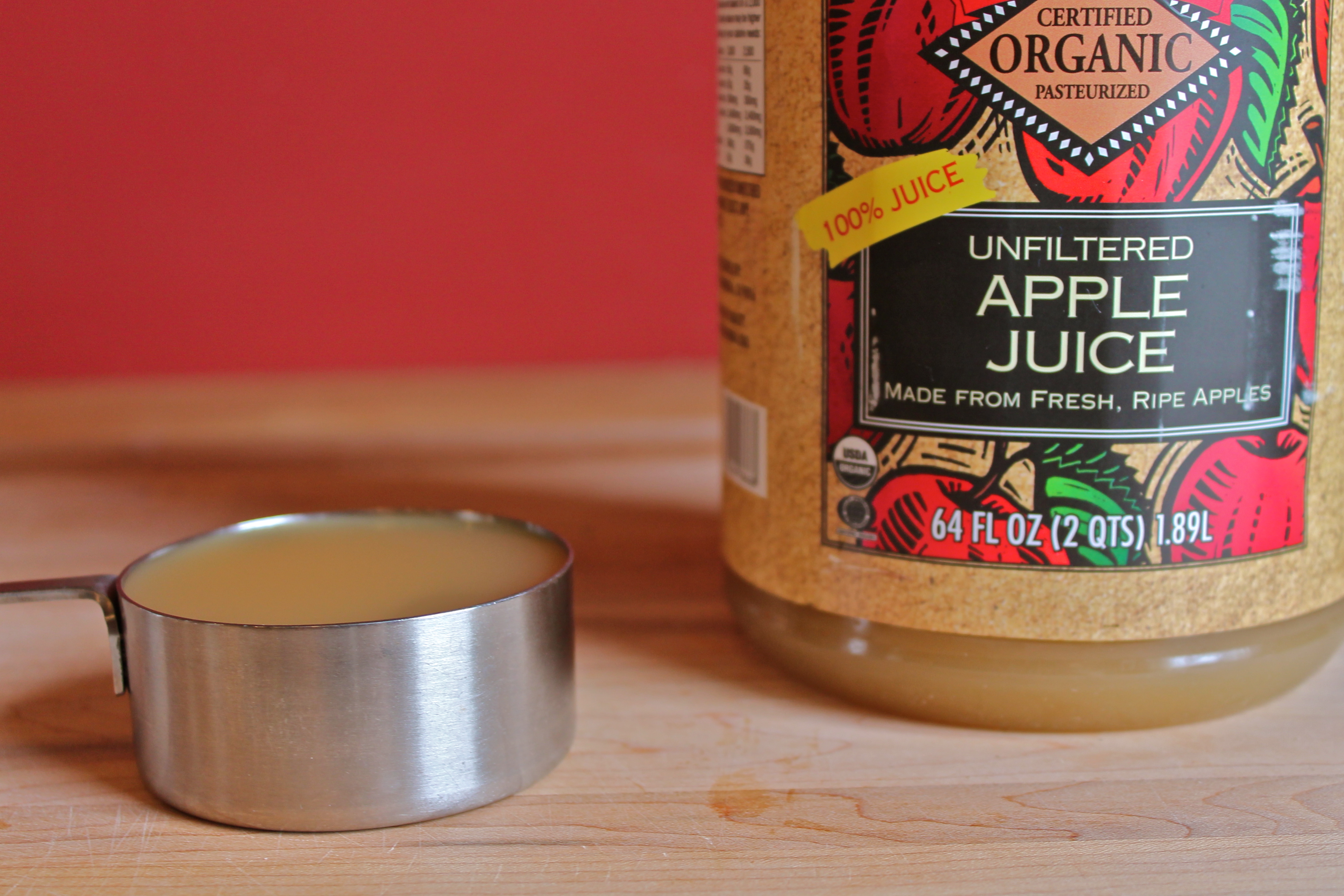
½ cup unfiltered apple cider

salt and pepper to taste

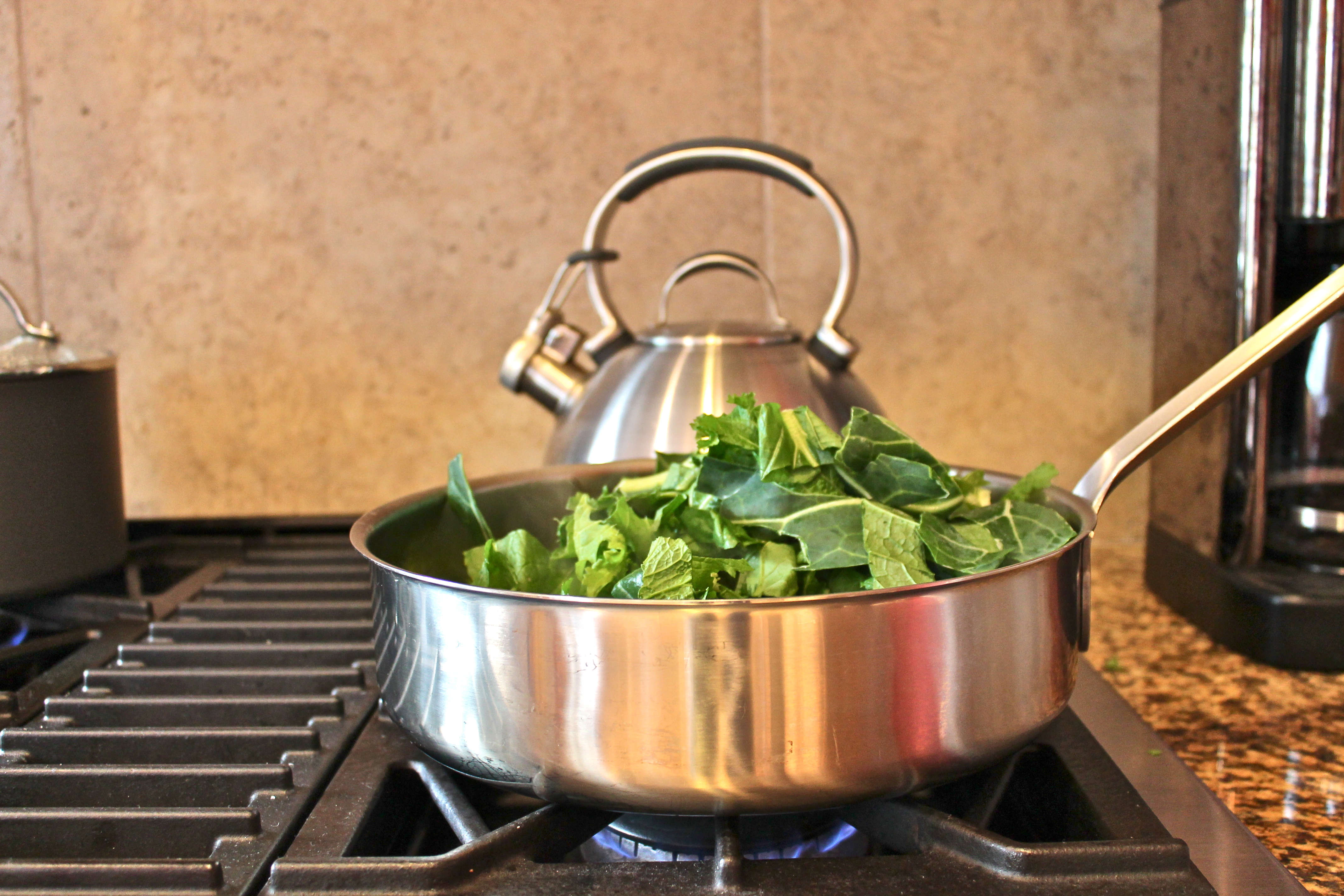
In a large skillet, heat olive oil over medium-high heat.  Add sliced garlic and pinch of red pepper flakes, and sauté, stirring frequently, for 10 to 15 seconds, until the garlic starts to release its aroma.  Add the greens all at once, stirring to coat the greens in the garlicky oil.  Sauté, stirring frequently, until the greens have wilted, about 3 to 4 minutes.  Pour the cider over the greens, stir to combine, place a lid tightly over the pan, and lower heat to medium-low.  Braise the greens for five minutes, until the cider has mostly reduced and the greens are tender.  Remove lid, stir in salt and pepper, and sauté for an additional minute until only a trace of the cider remains.

Serves 2.

Esquire Pancakes

29 Mar

Many years ago, I was a longtime subscriber to Esquire Magazine.  This was while I was also a longtime subscriber to the New Yorker, as well as a subscriber to both Harper’s and the Atlantic.  For those of you counting, that totals four magazine subscriptions, one of which is a weekly with which, as I have mentioned before, I have an extremely difficult time keeping current.  In an effort to stop the ominous growth of the pile of unread magazines growing higher and higher each month, like bricks in the wall of my own magazine prison, I had to start letting magazine subscriptions lapse.  Esquire was the first to go.

It’s not that I didn’t appreciate Esquire.  It’s just that, overall, the other magazines in my arsenal happened to speak more clearly to my own interests and concerns.  I showed an at least passing interest reading about mail-order meat, or the intricacies of what men think about what women think about underpants, or $12,000 suits made to order by a 75 year-old tailor in Italy, but it’s just that Esquire seemed to contain content that I found interesting, say, 50% of the time, whereas the other magazines I received tended to hover around a more respectable 70%-90%.  This is not a slam against Esquire, of course.  I am clearly not in their target demographic, so our parting was really just a matter of time.

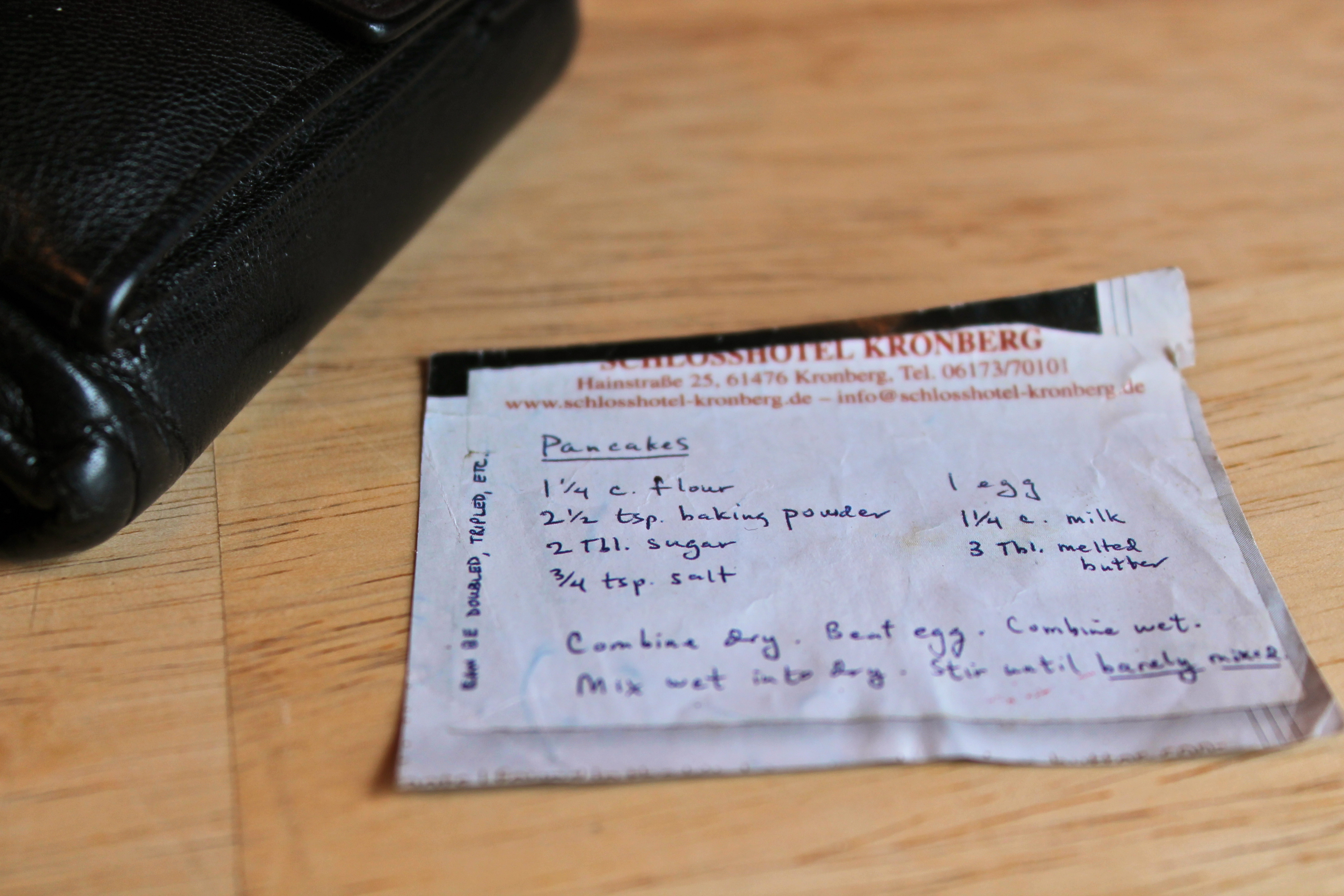
There is, however, one item from Esquire for which I will be forever grateful.  About five years ago, Ryan D’Agostino wrote an article for Esquire about his favorite recipe, written on a slip of German hotel stationery, that he carries around in his wallet.  It was a simple recipe for pancakes, but it was also D’Agostino’s signature recipe, the one he made at a friend’s vacation house, and the one he made for his wife before she was his wife.  The pancake recipe was simple, but surefire.  And I am here to attest that, without fail, they are indeed the best pancakes I have ever eaten.

Taking a cue from D’Agostino, I cut out the picture of his recipe and put the slip of paper in my own wallet.  I have made his pancakes while on vacation, while visiting family, and while camping (I just put the liquid ingredients in one container, the dry in another, then combine them when breakfast calls—which is another point I’d like to make: these pancakes, cooked in a cast iron pan over a campfire?  Unbeatable).  I have at least seven other cookbooks with basic, no-frills pancake recipes in them, and not one of those other recipes even comes close to being as perfect as this one.  For a recipe gleaned from a magazine I stopped receiving two or three years ago, that’s a pretty good track record. I can’t say I’ve gotten that much mileage out of that one article I read in the Atlantic about Mexican drug cartels but, you know, there’s still time.

Last Year: Black Bread Rolls and Food for Traveling

Esquire Pancakes Recipe

Adapted from Ryan D’Agostino in Esquire

Keen observers will note that the one change I have made in D’Agostino’s recipe is in regard to the amount of sugar in the pancakes.  I prefer a less-sweet pancake, so I make these with 2 teaspoons of sugar, rather than D’Agostino’s suggested 2 tablespoons.  You can use whichever you please, to no ill effect.

1 ¼ cups all-purpose flour

2 ½ teaspoons baking powder

2 teaspoons sugar

¾ teaspoon salt

1 large egg

1 ¼ cups milk

3 tablespoons melted butter

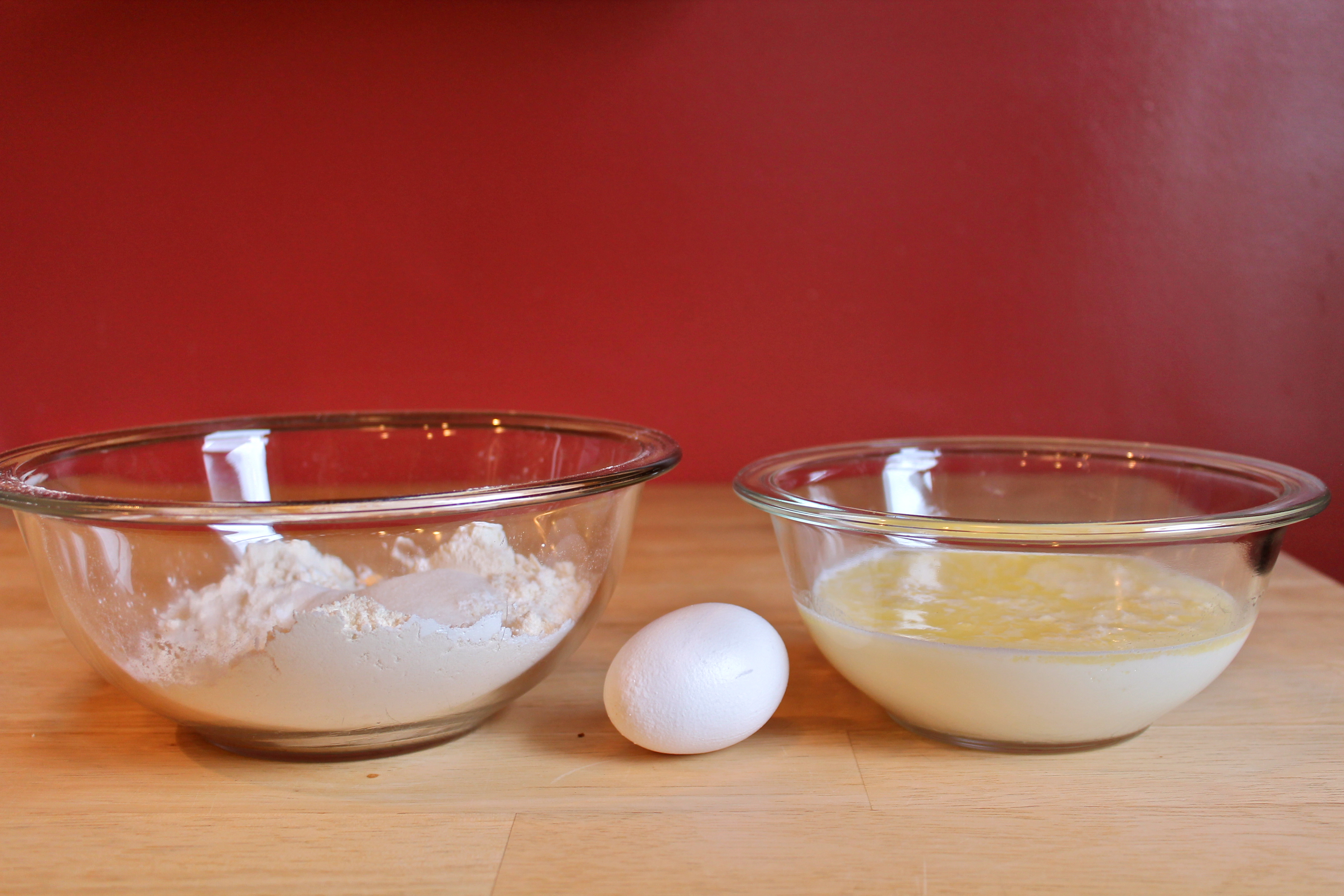
Combine dry. Beat egg. Combine wet. Mix wet into dry. Stir until barely mixed. Can be doubled, tripled, etc.

Cook pancakes, ¼ cup of batter at a time, on a well-oiled or seasoned skillet set over medium low heat.  Flip pancakes when bubbles on surface begin to pop, and the edges of the pancakes are just beginning to appear dry.

Top with maple syrup or lemon yogurt.

Makes 8 pancakes of medium-large size.

Sweet and Spicy Popcorn

8 Nov

A couple of summers ago, we happened upon a summer festival in the small coastal town where we were vacationing.  Though we were delighted by the showcase of old (and still functioning) steam engine trains, the thing that piqued my interest the most was the huge man with the even huger beard making old-fashioned kettle corn over a roaring pile of burning logs.

The kettle being stirred by the man was enormous, I swear you could have fit both me and my son inside of it and still had room for some popcorn.  When the fellow first dropped some handfuls of popcorn and sugar into the kettle, he kept the lid on top, flipping his stir stick around inside as best he could while still making certain to hold the lid close enough to the top of the kettle so the sizzling hot kernels of popcorn wouldn’t jump out and singe him.  As the pile of popped corn began to grow, the man dispensed with the lid all together, stirring the contents of the kettle as they grew taller and fluffier, the popped kernels on top keeping the actively popping kernels on the bottom from leaping out of the kettle.

Call me naïve, but this process had me enraptured.  Not because it seemed intoxicatingly complex, mind you (though that raging fire burning beneath the popcorn kettle presented many a challenge, I am sure), but rather because the opposite was very quickly becoming clear to me.  I could totally make that at home, I thought, and as soon as we get home, I am so going to do it.

Cut to over a year later, and we get to the part of the story where I realize that, though I have certainly contemplated the making of kettle corn ever since I saw it being made right before my eyes, I never actually got around to tackling the experiment.  Interestingly enough, in the intervening months of thinking about kettle corn, I had actually started to wonder if I could dress up the snack a bit, give it a bit more kick to offset the basic components of popcorn, oil, and sugar.  Kettle corn was all right, but somehow all those months of thinking about making it had made me realize that what I really wanted to make was something still related to kettle corn, but stepped up a tad.

So, please allow me to introduce you to my new friend, kettle corn’s cousin, sweet and spicy popcorn.  A tiny bit of cinnamon and nutmeg add a warm and savory touch to the taste of the lightly sweet and buttery popcorn, while the chipotle powder creeps in with a small punch of heat to keep every bite interesting.  The flavor profile of this popcorn is simply a delight.  There is a little bit of everything going at once, but not so much that it overwhelms your palette and exhausts your taste buds.  Sometimes, because I am nothing if not super classy (what now?), I’ll pair this popcorn with a nice, crisp glass of white wine.  And sometimes, because I am also a small child passing as an adult, I will eat this very combination of foods for dinner.  Oops.  I think I just killed the classy part.

Sweet and Spicy Popcorn

If you are making this treat for children or people who do not enjoy spicy food, feel free to omit the chipotle powder from the cooking process.  You can, as I do when eating this with my son, keep some chipotle powder handy and sprinkle it on your own individual portion, leaving the master batch unspicy.

¼ teaspoon cinnamon

1/8 to 1/4 teaspoon chipotle powder or hot chili powder, adjusted according to your preference for spicy foods

pinch nutmeg

2 tablespoons sugar

1 tablespoon vegetable oil

1 tablespoon butter

½ cup popcorn kernels

½ teaspoon sea salt

Combine cinnamon, chipotle powder, nutmeg, and sugar in a small bowl and set aside.  In a large pot, heat butter and oil over medium low heat until the butter has melted.  Add popcorn and sugar/spice mixture to the hot oil and butter, stir to combine, then place a lid on top of the pot.

Wearing oven mitts so as not to run the risk of burning yourself, gently shake and swirl the pot on top of the stove to keep the kernels moving around in the hot oil and butter.  When the kernels begin to pop, continue to gently shake the pot until you can hear the popping subside.  Immediately empty the popped corn into a large bowl, then sprinkle with salt.

Makes one very large bowl of popcorn.