Archive | Pizza RSS feed for this section

How to Cook Pizza on the Grill

18 Aug

Summer is limping along here (it is currently 63 degrees and cloudy), but I remain determined to make the most of whatever warm weather we are granted over the next month or so.  Though I have yet to really feel as though we have experienced a proper summer thus far, I have, at least, done a good job of pretending it’s truly summer by grilling as much of our food as humanly possible.

I’ve always been a fan of grilling, but this summer has been a particularly active one in terms of experimentation and learning.  In just a couple of months we’ve tackled smoking both salmon and ribs, and we’ve taken to grilling fruit, corn, and, most recently, pizza.

In yet another story of I Was Told This Would Be Difficult, grilling pizza was always presented to me as a specialized activity that would require the use of either a pizza stone (which we no longer have), or a cast iron pan (which we do have, and I did try, but, um, let’s just say that while I am a fan of blackened catfish, I am not, as it turns out, a fan of blackened pizza).  I think the problem with many grilled pizza tutorials is that the end result is meant to mimic that of a wood-fired pizza oven, and, though admirable in its reach, that’s one extremely tall order that might be best left to real, actual wood-fired pizza ovens.

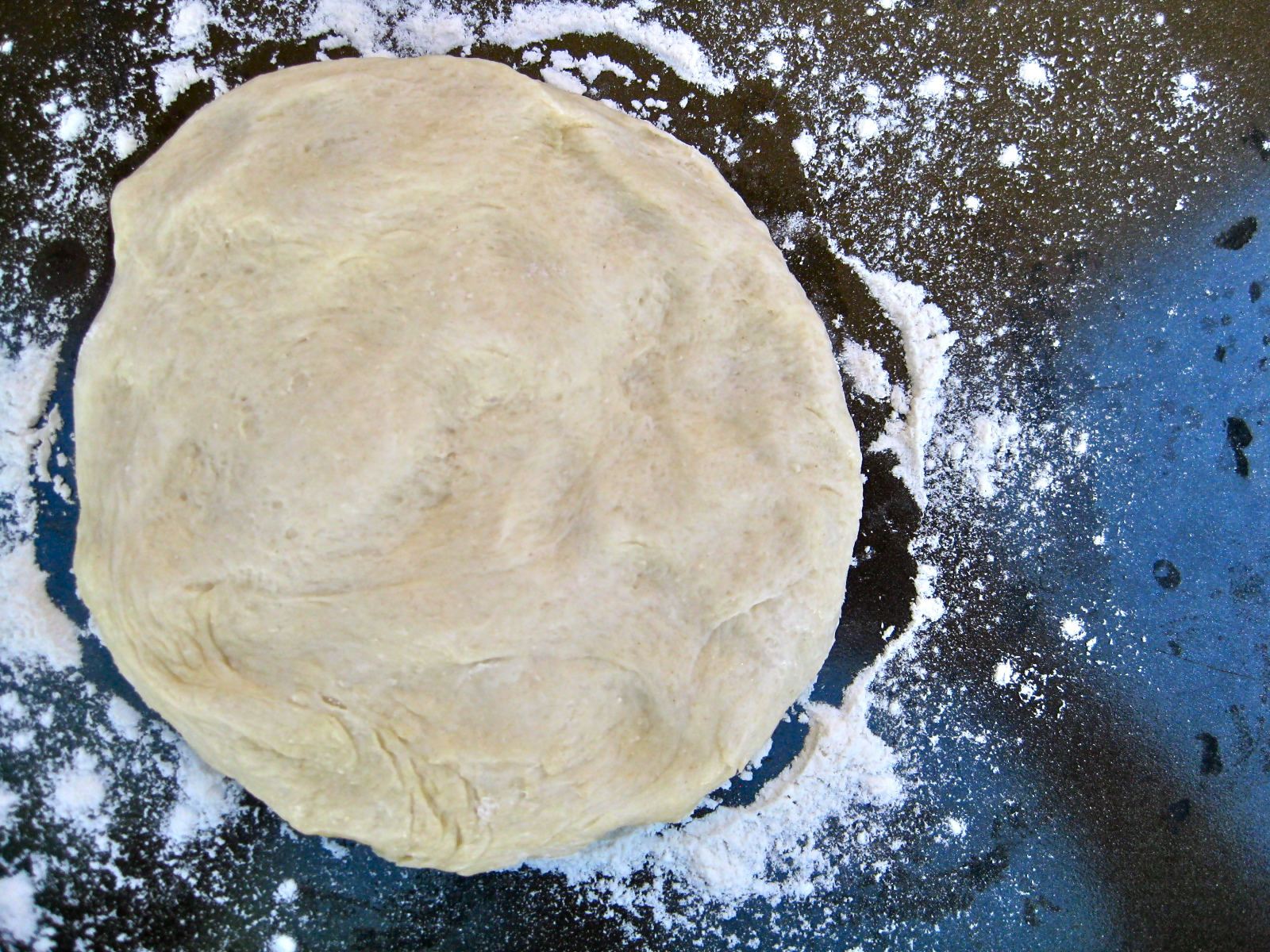
In more heartening news, I have discovered that grilling a pizza is not so different from grilling naan, which I always, weather permitting, prefer to cook on a screaming hot outdoor grill rather than in a screaming hot oven in my kitchen (where my child loves to run around, throw things, and—dear lord, I can taste the danger just typing this).  As with smoking things on a grill, the secret to grilling a perfect pizza lies in the utilization of indirect heat.  Once you initially cook one side of your pizza dough on the heated side of the grill, giving the dough a great crunch, you flip your dough over onto the unheated side of the grill, load the dough up with toppings (less is always better here, since the logistics of grilling a pizza are a bit fussier than just cooking a pizza in your oven), then wait a short 5 minutes, slide the dough back over to the heated side for a final blast of heat (this ensures a fantastic crispness), and you’re done.
Standing outside, in front of your grill, the scent of browning dough wafting through the air, you really feel the essence of summer’s casual buzz.  In reality, grilling a pizza takes just about the same amount of time, give or take a minute or two, as cooking a pizza in the oven, but the end result is something a bit more rustic, a bit more special.  Your pizza will have a fantastic flavor, your dough an unparalleled crispness, and your summer a little more pleasure.
How to Cook Pizza on the Grill

Makes 1 Pizza Margherita

Dough for 1 pizza (This is my favorite pizza dough, and I really think that if you try it out, it will fast become your favorite as well.)

1 clove of garlic, smashed and finely minced

2 tablespoons extra virgin olive oil

4 ounces fresh mozzarella cheese

1 Roma tomato (or another similarly fleshy plum tomato), thinly sliced

handful of fresh basil leaves

vegetable oil, for oiling the grill

Set up your grill for indirect cooking.  I talk a bit more about indirect grilling here, but basically what you want to do is heat one side of your grill on high heat, and leave the other side unheated.

Thoroughly oil the grates of your grill.

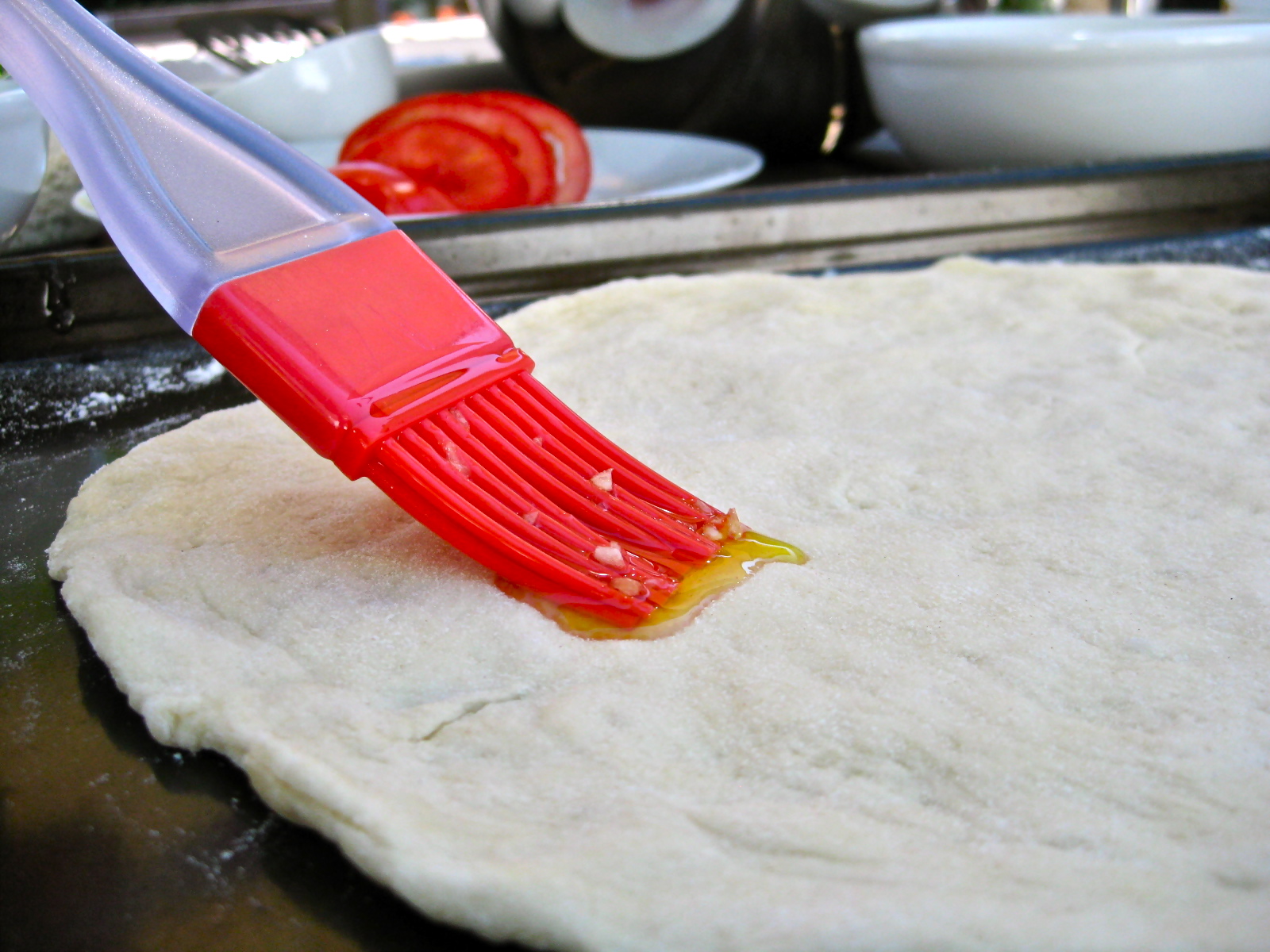
Combine the garlic clove and olive oil and set aside.  Prepare all of your ingredients and have them set up within close proximity to your grill.

Using your hands, never a rolling pin (flattening out pizza dough with a rolling pin forces all the air out of the dough and makes it tough), stretch out your pizza dough until it resembles a circle roughly 12 inches across (if it’s not a perfect circle, don’t worry).  When making a pizza outside on the grill, I like to stretch my dough out on a well-floured baking sheet, as it contains the flour mess and helps make clean up exceptionally easy.

Brush the top of the dough with your garlic and olive oil mixture.  Place your dough, garlic and oil side down, on the heated side of the grill.  Allow the dough to cook for 1 to 2 minutes, until the dough starts to bubble and the bottom, when lifted, has visible grill marks.

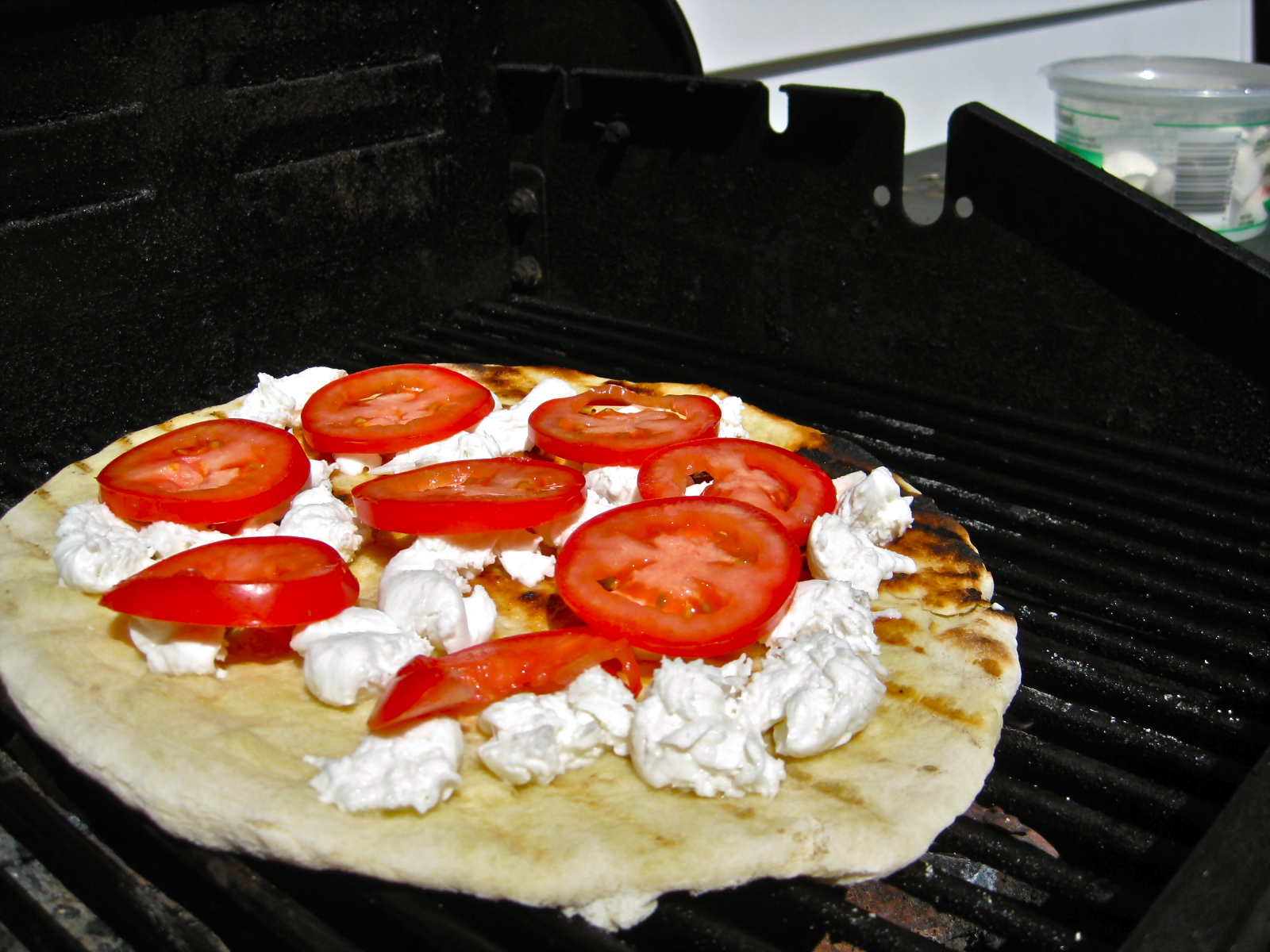
Using a metal spatula, flip your dough over, garlic and olive oil side up, onto the non-heated side of the grill.  Pinch off pieces of fresh mozzarella and place them onto the top of the dough, then intersperse tomato slices around the mozzarella.  Close the lid of the grill and allow the pizza to cook for 5 minutes.  After 5 minutes, open the lid of the grill and check on the pizza.  The cheese should be melted (keep in mind that it will not be slightly browned as when you cook a pizza in your oven), and the edges of the dough should look dry and crisp.  If the cheese has not melted or the pizza looks especially wet, close the lid once more and allow the pizza to cook for another 1 to 2 minutes.

When the cheese has melted, slide the pizza back onto the heated portion of the grill.  Let the pizza cook for 1 minute, until the underside is super crisp and just on the verge of turning black.  This will give your pizza crust an incredible crispness and deep flavor.

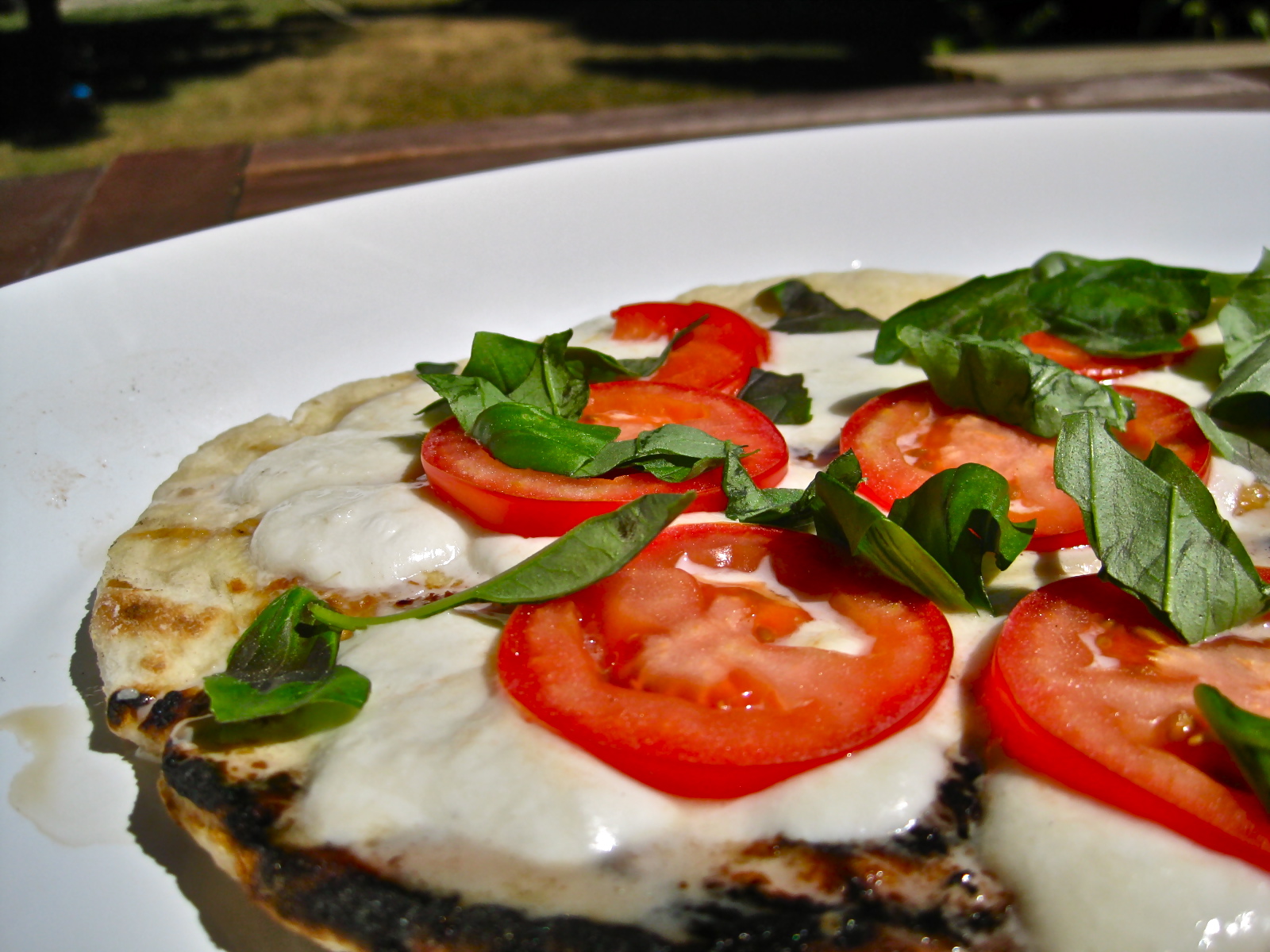
Remove the pizza from the grill.  Tear up the basil leaves and scatter them on top of the pizza.  Cut pizza into slices and serve immediately.

Pear and Mascarpone Pizza

13 Jun

There is pretty much no end to the dedication I will show in order to cobble together a dessert.  If I can make this dessert by mining the depths of my refrigerator, even better.  There is satisfaction to be found in saving food from eminent disposal, sure, but one can definitely intensify the delight of that satisfaction by churning out a dessert so unexpectedly fantastic, so effortlessly decadent, you might just have trouble believing that this delicious thing you just Frankenstein-ed into existence is a hodgepodge of leftover bits and pieces from other meals.

While it’s true that this recipe is based on using up a bit of leftover pizza dough (and by based, I mean that both literally and figuratively, since the pizza dough provides a crispy base for the pears and mascarpone, but also serves as a nice method for utilizing the last third of a batch of this dough), it by no means tastes like a second rate dessert.  That a very simple combination of ingredients can be joined together to make something this incredible seems almost unfathomable.

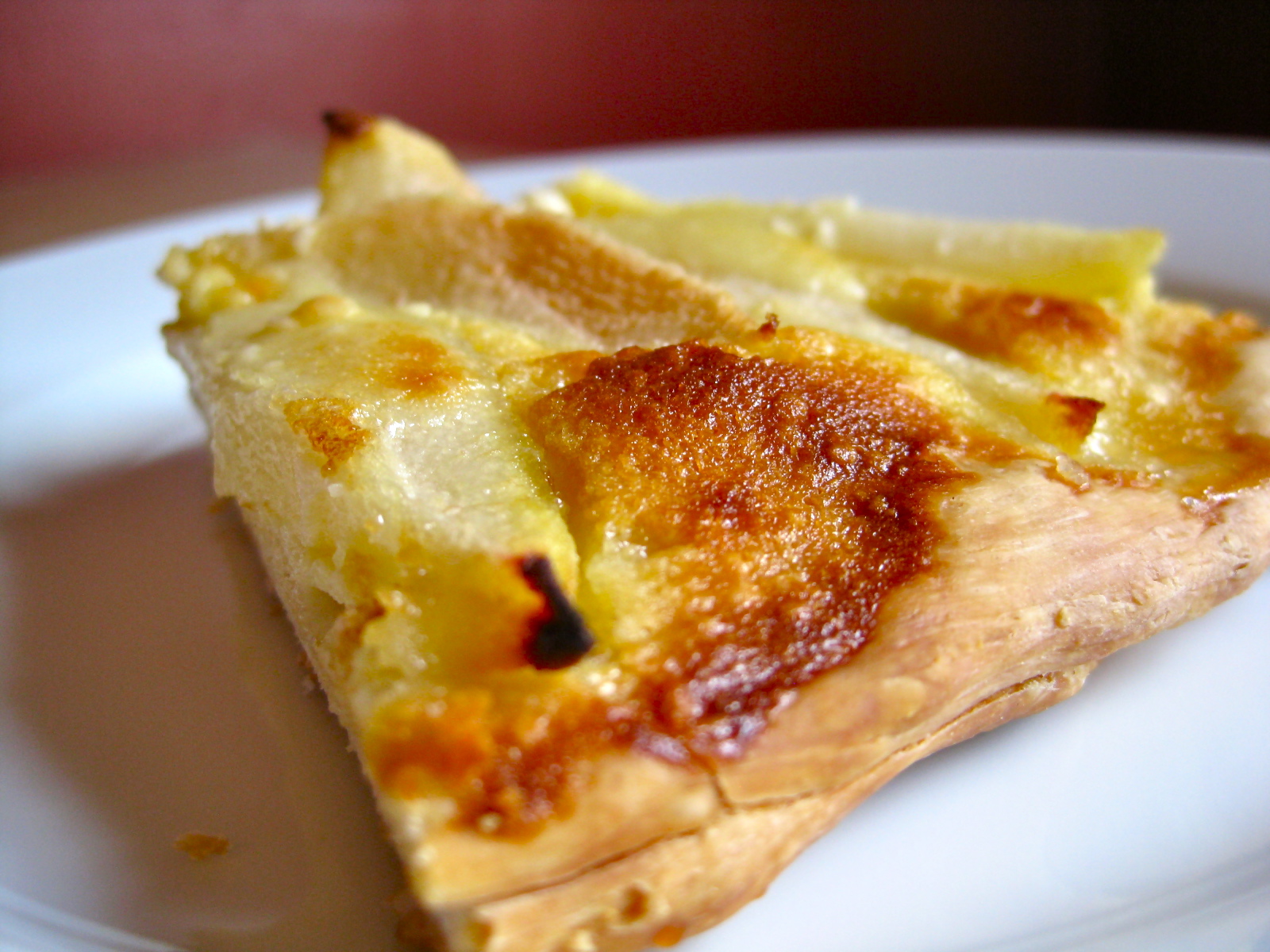
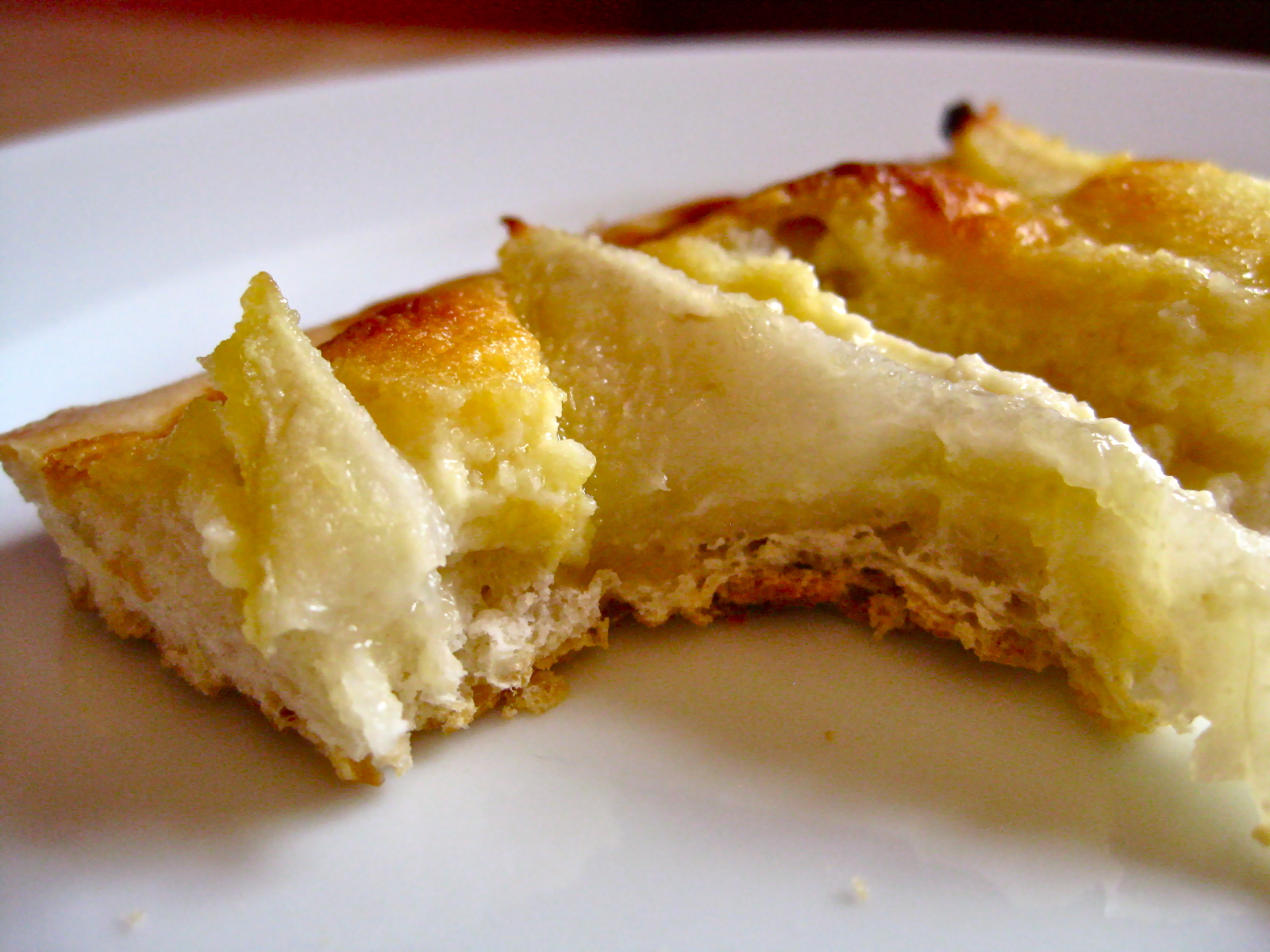
Softly sweet mascarpone cheese is baked into a deep, caramelized custard while it sits atop a bed of simple, fresh pears.  The humble pizza dough base, previously left to rest in the refrigerator for several days, transforms into a flaky, crispy pastry that achieves all the flavor of a Danish pastry dough, only with none of the work involved.  To top off the list of this dessert’s nearly unbelievable attributes, the entire thing, luscious and toothsome as it is, is made with a total of only three tablespoons of sugar.

Truthfully, I am finding it exceptionally difficult to do anything other than gush about this luxurious pastry concoction, because, to be quite honest, I had no idea it would turn out this good.  When I took a bite of it, I actually froze a little and thought, “What IS this?”  Even though I knew exactly what it was, since I had just taken the time to make it.  Now, one week later, having worked my way through several bites, I feel a bit more prepared to answer my own question.  What is this?  It is simple, it is delightful, and it is not to be missed.

Interested in more ways to use up refrigerator leftovers?  Here is another scavenger recipe of mine that was posted on Indie Fixx, where I write a regular food and cooking column called Melting Pot.

Pear and Mascarpone Pizza

If I were to make one very important suggestion about this dessert, it would be that you use a very well-rested pizza dough that has had time to ripen in the refrigerator.  What do I mean by ripen?  Well, the longer you let your dough rest in the refrigerator, the more time you are giving the enzymes in the flour to convert to sugar.  This extra bit of natural sweetness in the dough not only gives it a great flavor, but it also allows the dough to caramelize a bit while baking in the oven, giving the dessert base a much more intense flavor and pronounced crispness without the need for added butter or sugar.

Pizza dough (preferably aged in the refrigerator for 2-3 days) for 1 pizza

2 pears, peeled, cored, and cut into thin slices

1 tablespoon turbinado or raw sugar

4 ounces mascarpone cheese

1 large egg

2 tablespoons white sugar

1 tablespoon freshly squeezed lemon juice

1 teaspoon pure vanilla extract

Preheat oven to 400 degrees F.

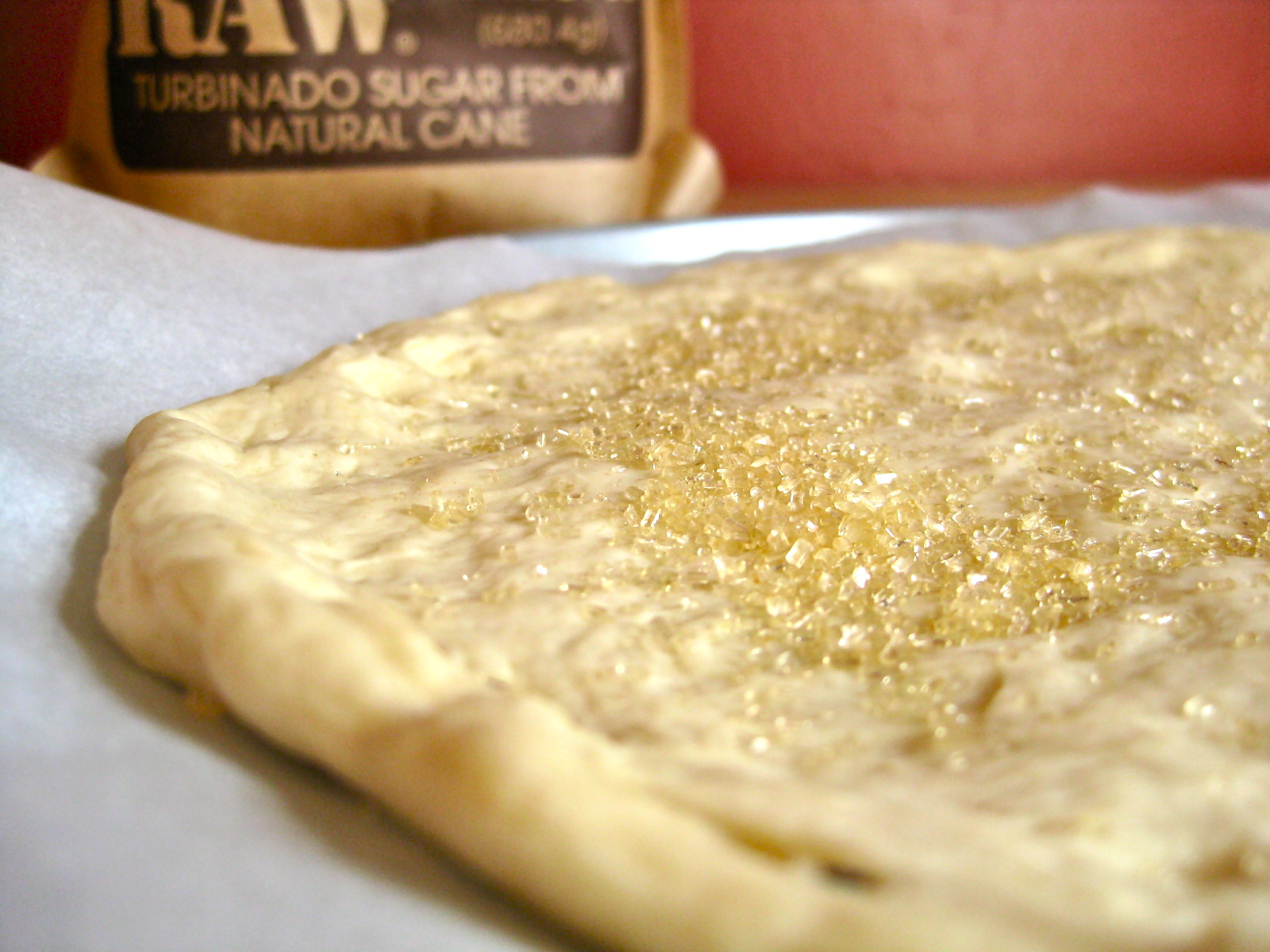
Hand stretch dough into a 12-14 inch round.  Place dough on a parchment-lined baking sheet.  Sprinkle half a tablespoon of turbinado sugar over the surface of the dough.  Reserve the remaining half tablespoon of turbinado sugar and set aside.

Arrange the sliced pears over the top of the sugar-sprinkled dough.  I found it very easy to fit all the slices neatly on the round by arranging them in concentric circles, but you may arrange the pears however you want.

Combine the mascarpone cheese, egg, white sugar, lemon juice, and vanilla.  Whisk thoroughly to combine.

Drizzle the mascarpone mixture evenly over the pears, covering as much of the surface as possible, but leaving a 1/2 inch of dough uncovered at the edges.  Sprinkle the pears and cheese with the remaining half tablespoon of turbinado sugar.

Bake pizza for 25-30 minutes, until the cheese has caramelized in places and the edges of the dough have turned golden.  Cool slightly before eating.

Pizza with Chicken Sausage, Fennel, and Spinach

8 Jun

Having just shared with you my favorite recipe for pizza dough, it seems only natural that I should then share with you what currently holds court as my most favorite pizza.  As you may have guessed, it involves a lot of vegetables.

I have no idea if this is actually true, but a friend of mine who hails from a long line of Italian descendants once told me that, in Italy, one is more likely to spot a great deal of vegetables on a pizza than a great deal of meat.  Toppings are sparse, he told me, and slices are not meant to be weighted down with a heavy pile of cheeses and meats.  Again, I have no idea if this is actually true, but I was intrigued to hear it.  Not being Italian, and having never been to Italy, I can only venture a guess as to what the Italian pizza-eating experience is like, and I would never judge what someone did or did not want on a pizza.  I am Indian, for heavens sake.  My people put mutton and peas on pizza.  That right there disqualifies me from passing judgment on any and all matters related to pizza toppings.

What I feel I can do, however, is at least make a valid statement concerning what I think is the best way to handle and cook pizza dough.  In my mind there are two very important steps that one can follow and be almost guaranteed a flawless pizza experience.

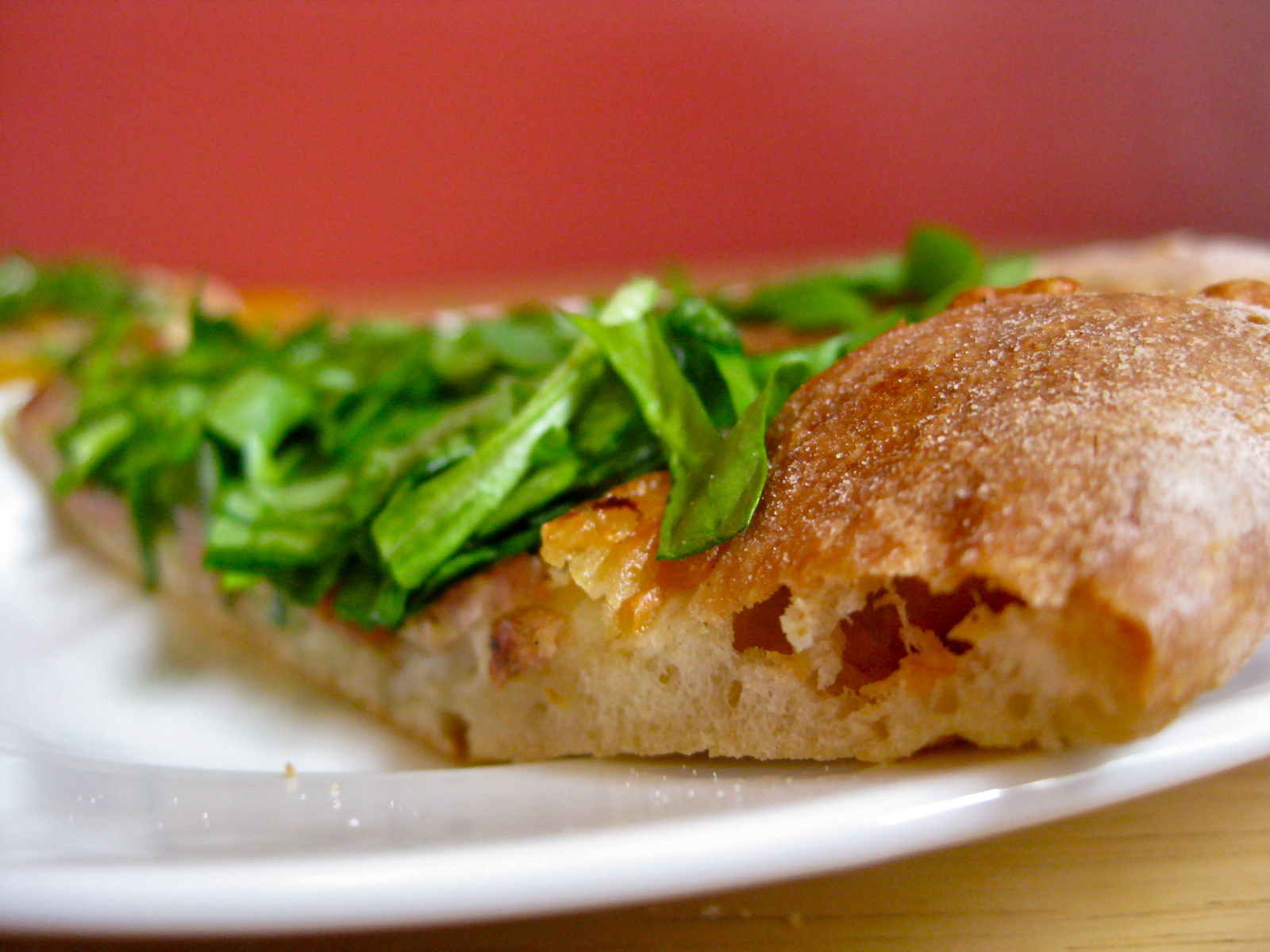
1) Hand stretching dough, though it takes marginally more time than using a rolling pin, produces a light and bubbly crust with plenty of stretch and chew.  The heat from your hands helps the dough to relax, and you don’t end up toughening the dough and forcing out all the air like you do when you flatten out a disc of dough with a rolling pin.  Take the extra four minutes and hand stretch your dough.  You won’t regret it.

2) Bake your pizza on the lowest oven rack possible, at the highest temperature possible.  You don’t need a pizza stone to get a great crunch on your pizza dough, but you do need to create a bit of auxiliary heat under your pizza.  Placing a heavy baking sheet in the oven, on the lowest rack possible, while your oven preheats, will help crisp up the bottom crust of your pizza.  The heat from the hot pan will work its way up through the crust of your pizza while the cheese on top melts and the top crust browns.  Ever make a pizza with crisp edges and a soft and gummy middle?  Using a preheated pan in the lower portion of your oven will solve that problem.

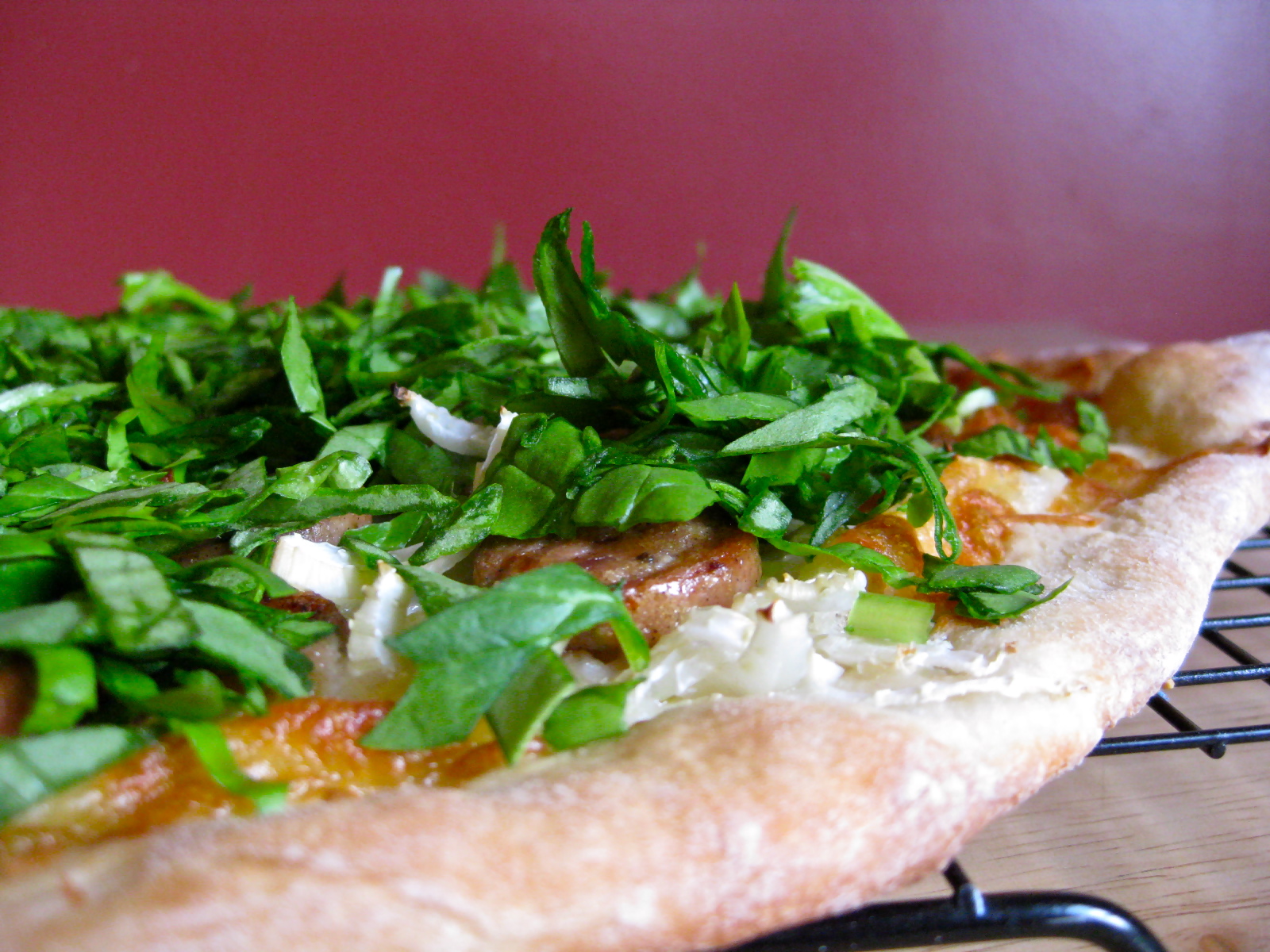
This particular pizza, while featuring a bit of meat, is heavy on vegetables without being heavy itself.  It is also extremely satisfying.  Thin slices of Italian chicken sausage add a slightly salty bite, and the fresh slices of fennel give the pizza a fresh crunch.  In bypassing red sauce all together, the gentle taste of the toppings really have a chance to stand out against the mellow flavor of the garlic and olive oil base.  Authentic?  I have no idea.  But delicious?  Definitely.

Pizza with Chicken Sausage, Fennel, and Spinach

pizza dough for 1 pizza

2 cloves of garlic, minced and then smashed into a paste with a pinch of salt

fresh ground pepper

1 tablespoon plus 1 teaspoon of extra virgin olive oil

6 ounces Italian chicken sausage

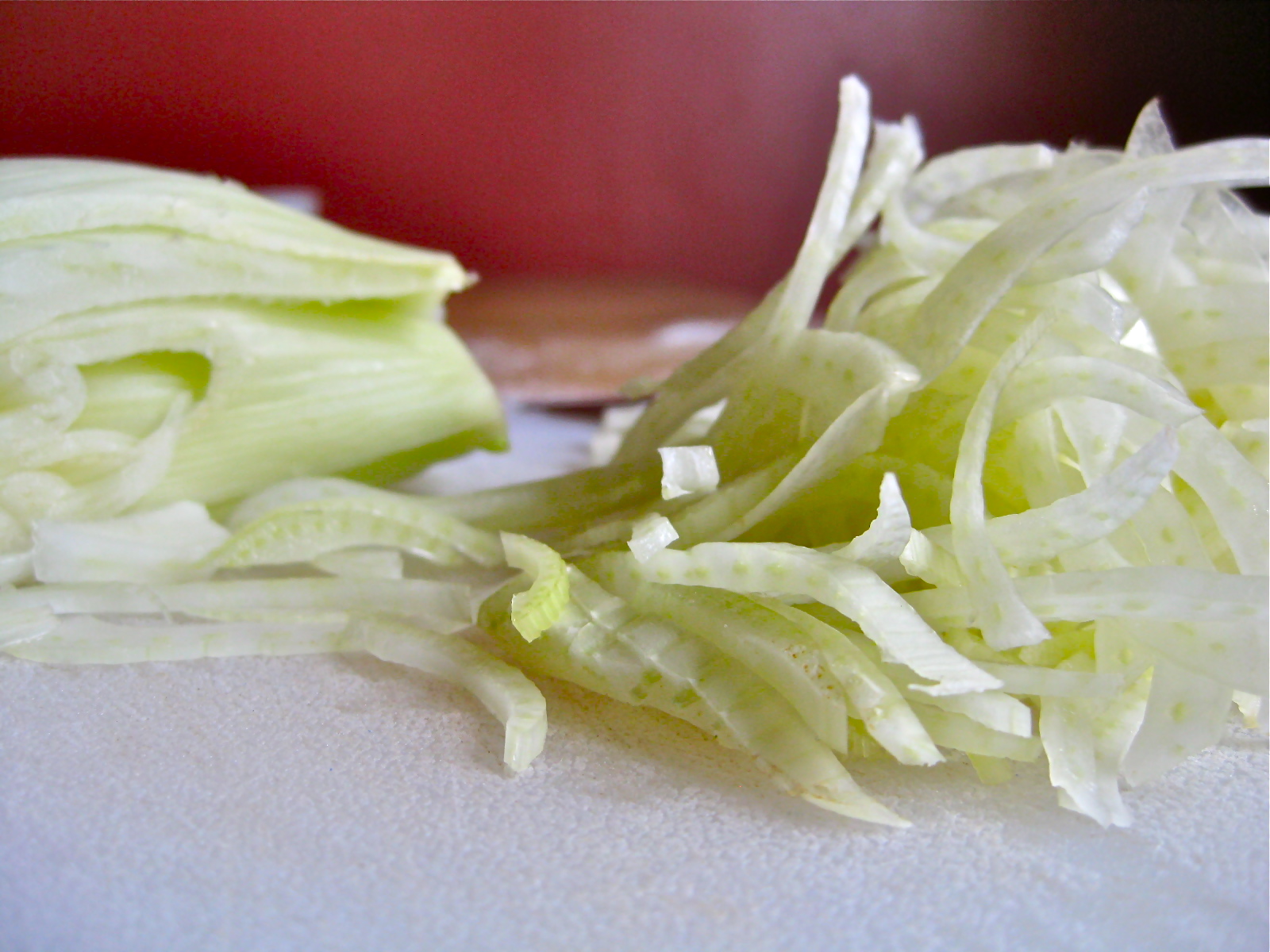
1/2 bulb of fennel, sliced into thin ribs

8 ounces of shredded mozzarella cheese

4 ounces chopped fresh spinach

Preheat oven to 500 degrees F, or as high as your oven will go.  Set an oven rack on the lowest level or second lowest level (the heat zones of every oven are different, so, to exercise caution, start with baking your first pizza on the second lowest level of your oven then, if your pizza does not get sufficiently crisped on the bottom, you’ll know to move your oven rack one level lower the next time you bake pizza), and place a heavy baking sheet on the rack to preheat along with the oven.

In a very small bowl, combine smashed garlic with 1 tablespoon of olive oil and set aside.

Slice chicken sausage into small coins or, if you are using bulk chicken sausage, break it up into small, nickel-sized pieces. Heat 1 teaspoon of olive oil in a medium pan and briefly cook chicken sausage in oil until sausage just begins to brown slightly.  Remove from heat and set aside.

On a lightly floured surface, using your hands, shape pizza dough into a 14-inch round.  The more you handle the dough, the more the heat of your hands will warm the dough and make it more pliable.

Place the shaped dough on a piece of parchment paper.  Place parchment paper and dough on a rimless baking sheet or a rimmed baking sheet that has been overturned.

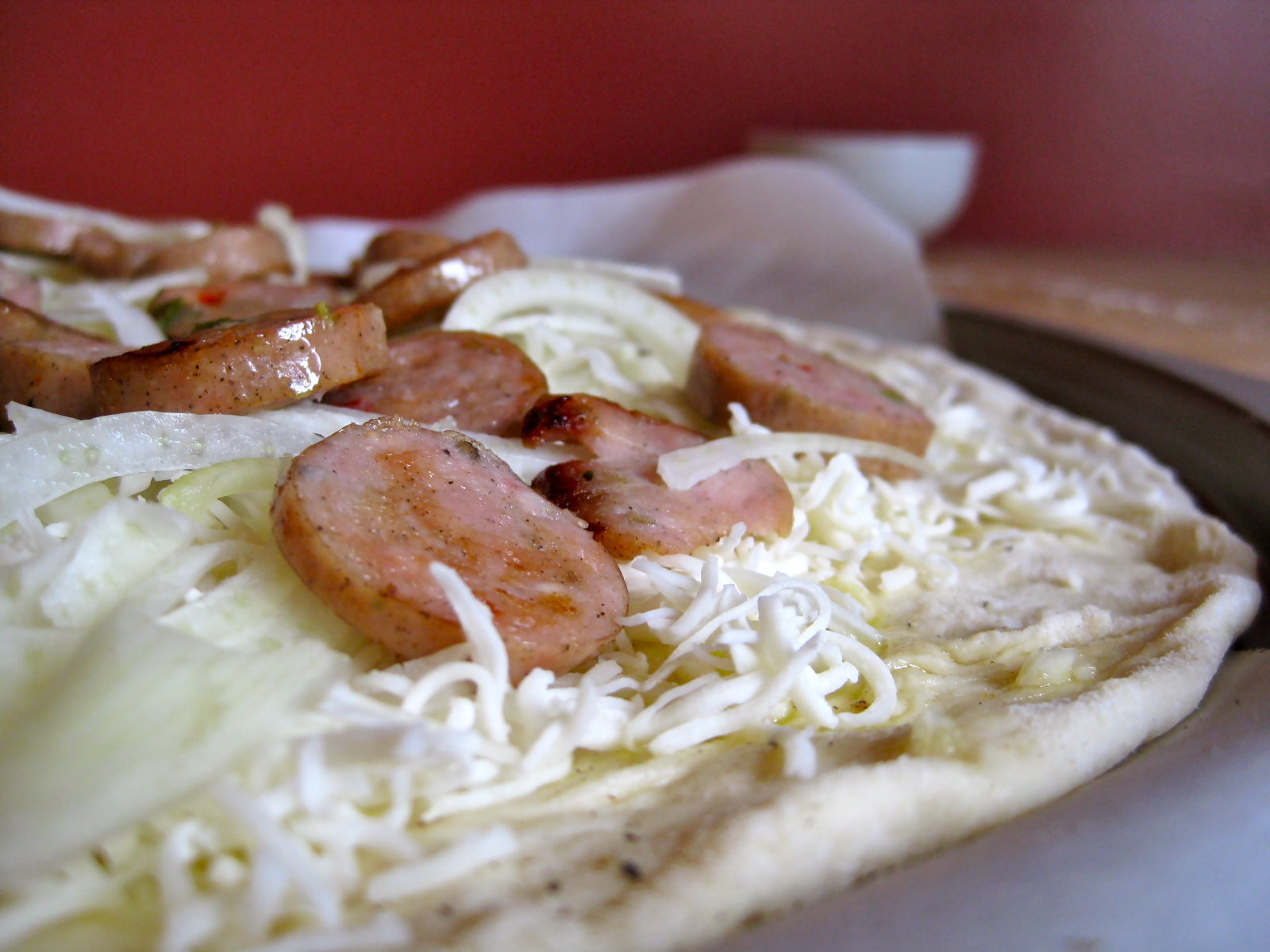
Spoon garlic and olive oil mixture over the surface of the pizza dough.  Sprinkle with fresh ground pepper to taste.  Top with cheese, then add the sliced fennel and browned sausage.

Slide the uncooked pizza, still on the parchment paper, from the rimless baking sheet to the preheated baking sheet in the oven. Bake pizza for 8 to 12 minutes, until the crust is puffed and browned at the edges and the cheese has melted and just started to turn slightly brown in places.

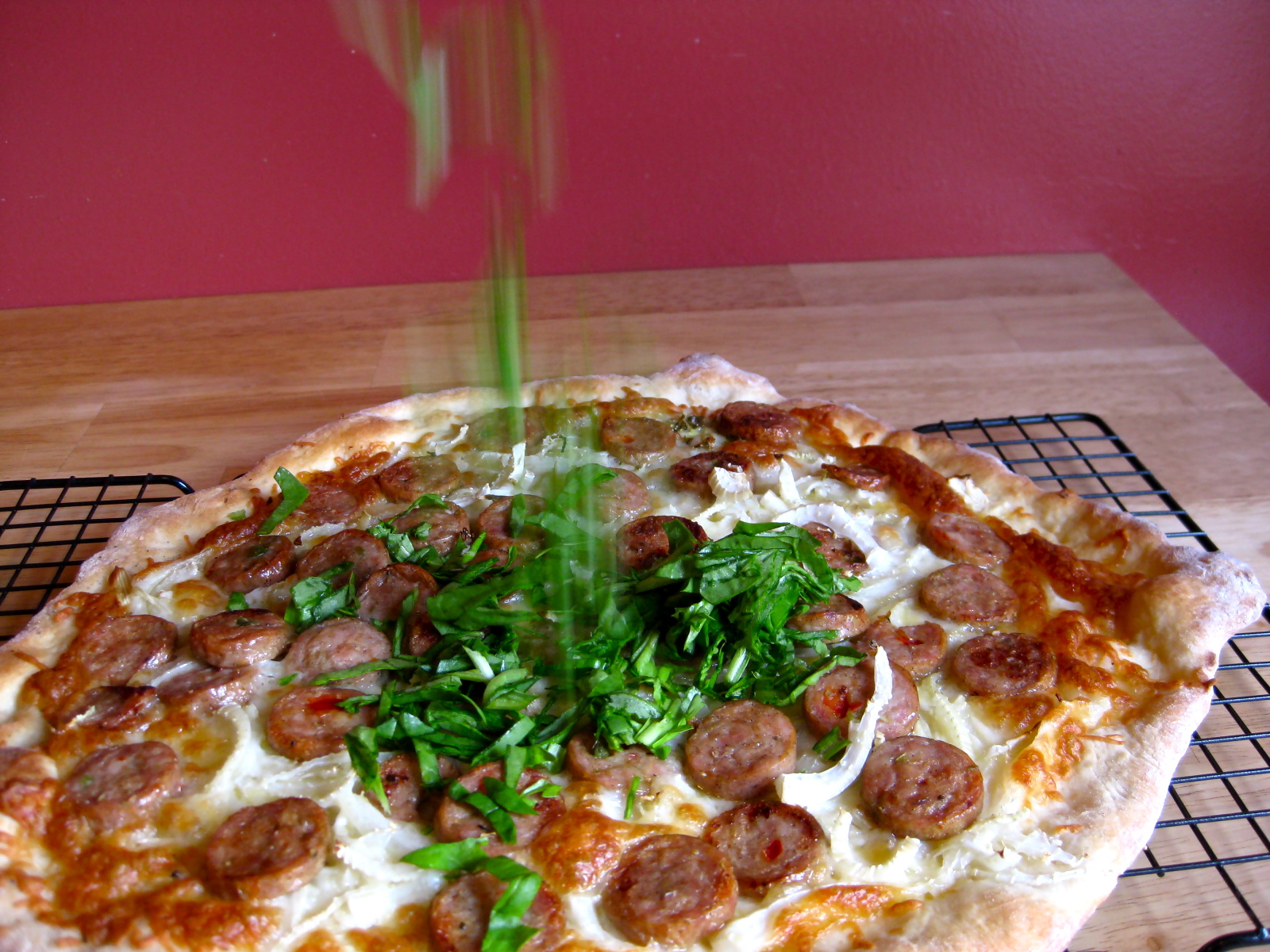
Remove pizza from oven and sprinkle with chopped spinach.  The spinach will wilt ever so slightly.