Archive | Tarts and Pies RSS feed for this section

Sky-High Apple Pie

11 Oct

Curious as to just how many apples I might be able to jam into a single pie, a few days ago I started yanking apples off of our tree in the name of kitchen experimentation.

When I had filled a colander with apples, I stopped picking and came inside to weigh my bounty. It turned out that I had picked almost exactly six pounds of apples. Six pounds of apples? I could totally fit that into a pie.

Until now, I have never really bothered to write down a recipe for apple pie. Apple pie is one of those pies that, being a pie baker, I always just sort of whipped together when I felt the urge. This time around, having taken the time to actually make notes about what I was doing, it turns out that I do, actually, have an apple pie technique.
Precooking the apples is part of that technique, as it keeps the apples from losing their shape and volume while they cook in the oven (a sad fate that results in a rather large empty space forming between your pie’s filling and your pie’s dough). A quick simmer allows the apples to slump just enough to eliminate the possibility of pulling a nearly hollow crust of shell from the oven later on. This may seem like a rather fussy and step to have to add in, but it really does produce the best pie possible.

As an added benefit, when simmered on the stove with a sprinkling of dark brown sugar, a kiss of cinnamon, a squeeze of lemon juice, and a pinch of sea salt, the apples produce pool of apple juice that then gets reduced on the stove and drizzled over the filling before you bake the pie. This step is nothing short of a secret weapon. This whole pie contains only ½ a cup of sugar, but by rendering the apples and caramelizing their juice, you’re creating a richness of flavor that belies even a hint of missing sweetness.

Last Year: Apple Cheese Quiche (my son made up this recipe!), and a peek into the Sarah Daft Home Cookbook

Sky-High Apple Pie Recipe

Flaky Tart and Pie Dough

From Tartine

1 teaspoon salt

2/3 cup (5 ½ ounces) very cold ice water

3 cups plus 2 tablespoons (1 pound) unbleached all-purpose flour

1 cup plus 5 tablespoons (10 ½ ounces) very cold unsalted butter

In a small bowl, add the salt to the water and stir to dissolve. Place in the freezer to keep super cold until ready to use.

Place the flour in the bowl of a food processor, or in a large bowl. Cut the butter into 1-inch pieces, then scatter over the flour. If using a food processor, pulse the mixture briefly until it forms into large crumbs and some of the pieces of butter remain pea-sized. If making the dough by hand, cut the butter into the dough using a pastry cutter. You will want the dough to have the same crumb-like look with some large pea-sized chunks of butter throughout.

Drizzle the salt and water mixture over the dough and, if using a food processor, pulse until the dough comes together into a ball but is not completely smooth. You should still see visible butter chunks. If mixing the dough by hand, drizzle the salt and water mixture over the dough while tossing with a fork. The dough should come together in a shaggy mass. Gently mix the dough together until it comes together in a ball but is not completely smooth. As with the food processor dough, you should still see visible butter chunks.

Divide the dough into 2 equal balls on a lightly floured surface. Shape each ball into a disk about 1 inch thick. Wrap each disk in plastic wrap and refrigerate at least 2 hours, preferably overnight.

When you are ready to make your pie, on a floured surface, roll out one disk of chilled pie dough into a circle about 1 inch larger than a 9-inch pie dish. Gently transfer the dough to the pie dish, easing it into the bottom and sides, and pressing gently into place.  Using a sharp knife, trim the dough so it hangs over the pie dish by ½ inch, or, using your fingers, tuck the scraggly edges of the dough under itself and lightly press to adhere. Place the formed dough in the freezer for 30 minutes to 1 hour (this ensures the flakiest dough possible).

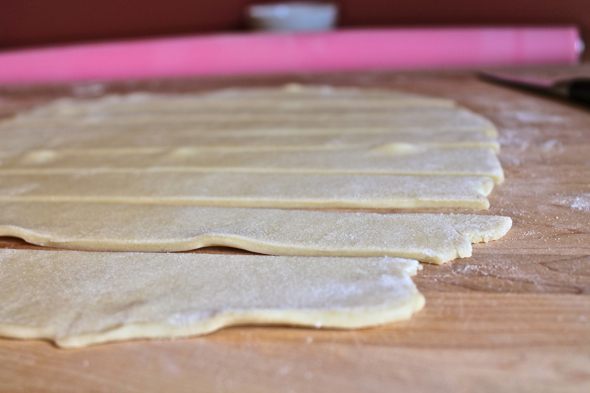
To prepare the other disk of dough to form the lattice pie top, on a lightly floured surface, roll the other disk of dough into a roughly 13 by 10-inch rectangle. Cut the rectangle lengthwise into 8 strips that are 13 inches long. Place strips of dough on a baking sheet and refrigerate while you prepare the pie filling.

Apple Pie Filling

6 pounds tart or tart-sweet apples

juice of 1 lemon

½ cup firmly-packed dark brown sugar

½ teaspoon cinnamon

pinch of salt

1 teaspoon pure vanilla extract

1 egg white, lightly beaten

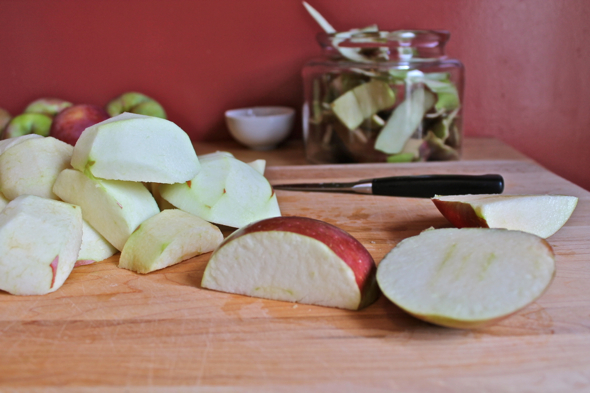
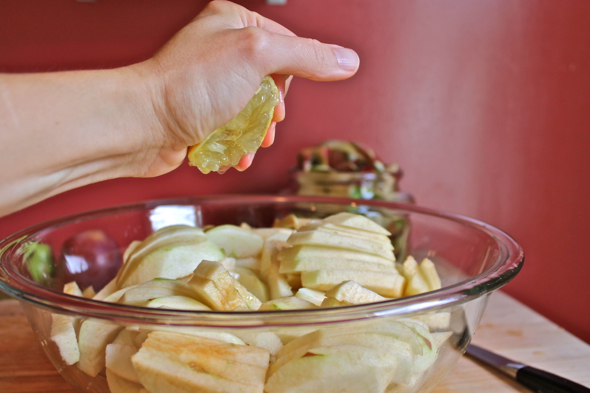
Peel, core, and slice apples into ¼-inch slices. In a large Dutch oven or similarly heavy-bottomed pot, combine sliced apples, lemon juice, dark brown sugar, cinnamon, and salt. Stir to combine, then cook apples at a low simmer over medium-low heat. Cook for about 15 minutes, stirring frequently, until apples are barely fork-tender and have released quite a bit of their juices. Using a slotted spoon, remove apples from Dutch oven, leaving the juice in the pot. Set aside the apples to cool.

With the heat still set at medium-low, bring the rendered apple juice to a simmer. Stirring frequently, allow the juice to simmer until it has thickened quite a bit and reduced to about 1/3 of a cup of liquid. Stir in vanilla extract. Pour into a small bowl and set aside to cool a bit.

Preheat oven to 425 degrees Fahrenheit. Adjust an oven rack to the lowest position, and place a foil-lined baking sheet on the rack.

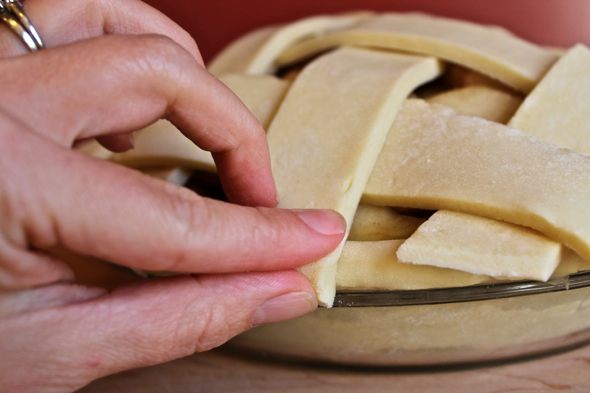
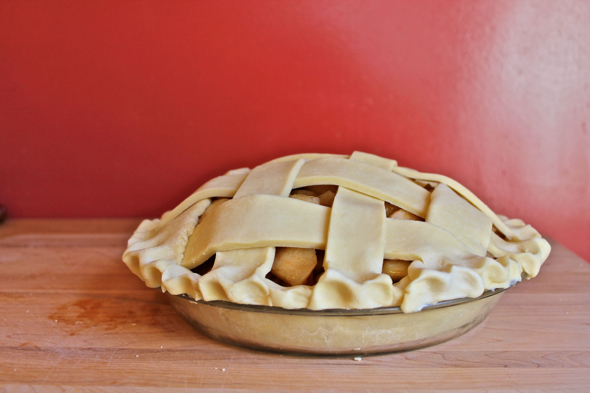
Place the slightly-cooled apples in the dough-lined pie pan. Mound the apples up in the middle, as there are a lot of apples to fit into this pie. Drizzle the apples with the slightly-cooled caramelized apple juice. Weave the long strips of refrigerated pie dough over the top in a lattice pattern. (There is a good tutorial on how to do this here but keep in mind that you will, obviously, be using fewer strips of dough.) Trim the edges of the lattice even with the lower crust, then fold under the edges and crimp into place using your fingers.  Brush the top crust of the pie with the beaten egg white.

Place the pie on the heated baking sheet and bake until the crust is golden, about 25 to 30 minutes. Reduce the oven temperature to 375 degrees, rotate the baking sheet, and continue to bake the pie until the juices are bubbling and the crust is a deep golden brown, about 30 to 35 minutes longer.

Remove the pie from the oven and allow to cool on a wire rack for at least two hours. The pie will set up much better and slice much more neatly if it is not served piping hot.

Honey Cream, Strawberry, and Chocolate Pizza

16 Apr

Perhaps it is not entirely honest to refer to this as a pizza, since, barring the fact that it is pizza-shaped and utilizes a crust that is quite fitting for savory pizza applications, it is quite clear that if something contains strawberries, cream, and chocolate, it’s probably not really a pizza, per se.

But, in yet another example of how I like to turn non-dessert foods into dessert, when I had a leftover pizza crust laying around last week, it just seemed wrong to let it live out the last of its days as something not sweet.  Plus, I had leftover strawberries sitting around.  And leftover cream.  And chocolate.  And also, I am not actually trying to justify what I have done, and I hope I am making that painfully obvious right now.

For something so simple to make, this dessert is a real showstopper.  Not only do the honey cream and strawberries go together like, well, strawberries and cream, but the light drizzle of chocolate at the end provides a finish that is as delicious as it is easy on the eyes.  If you want to be really cheeky, you can serve this pizza as a dessert on pizza night, whipping up this pizza dough the night before, allowing it to rest overnight in the refrigerator, then using 2/3 of the dough for dinner pizzas, the last 1/3 for this dessert pizza.  Resting the dough in the refrigerator overnight is not a necessity, but in my years of pizza making (the last year being the most intensive and experimental), I have discovered that a long-rested dough develops an unbeatable flavor and texture that is difficult to approximate with a dough that has rested at room temperature for a couple of hours.  You’ll have to plan ahead a bit, but it is so worth it.

Plenty more recipes for pizza can be found here.  Also, last year on Indie Fixx I published one of my most favorite pizza recipes, which can be found here.

Last Year: A Trio of Flavored Butters

Honey Cream, Strawberry, and Chocolate Pizza Recipe

Pizza dough for 1 pizza, or 1/3 of this dough, rested in the refrigerator overnight for maximum flavor

¼ cup heavy cream

2 tablespoons honey

12 ounces of strawberries, de-stemmed and sliced

2 ounces bittersweet chocolate, roughly chopped

Preheat oven to 500 degrees Fahrenheit.  Place a baking stone or a heavy sheet pan on the second to lowest shelf in the oven.  Line a rimless baking sheet or an overturned sheet pan with parchment paper, and set aside.

On a lightly floured surface, stretch and push the pizza dough with your hands, coaxing, poking, and punching it until it forms a roughly 12-inch circle.  Place the dough on the parchment-lined baking sheet.

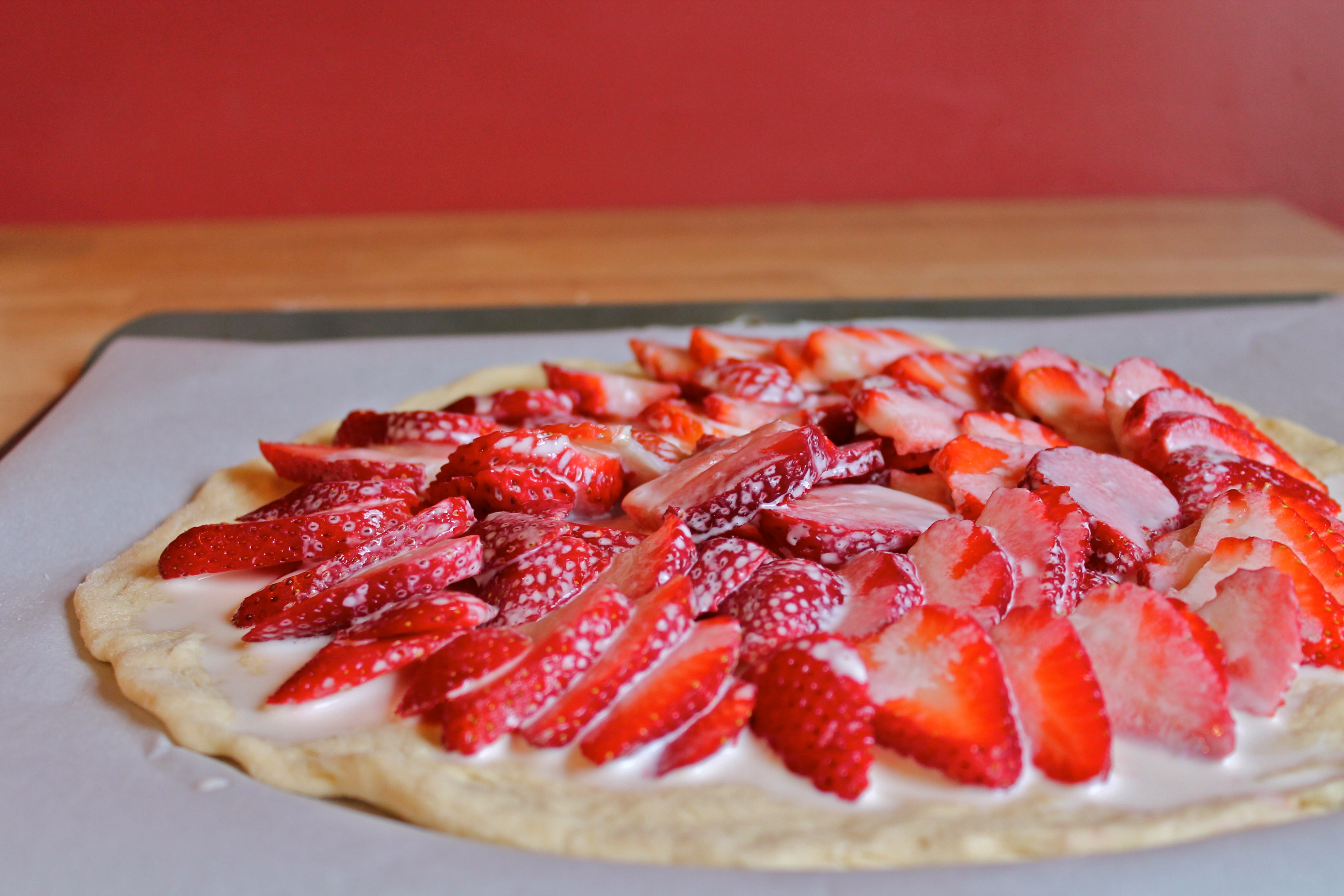
In a small bowl, whisk together the cream and honey until the honey has dissolved.  Brush ¾ of the cream mixture over the pizza dough.  Arrange the strawberries over the cream, trying your best to lay them in concentric circles.  Brush the remaining ¼ of the cream mixture over the tops of the strawberries.

Gently slide the pizza—still on its parchment paper—onto the preheated baking stone or sheet pan.  Bake pizza for 10 to 12 minutes, until the edges of the pizza are dark golden brown and bubbly.

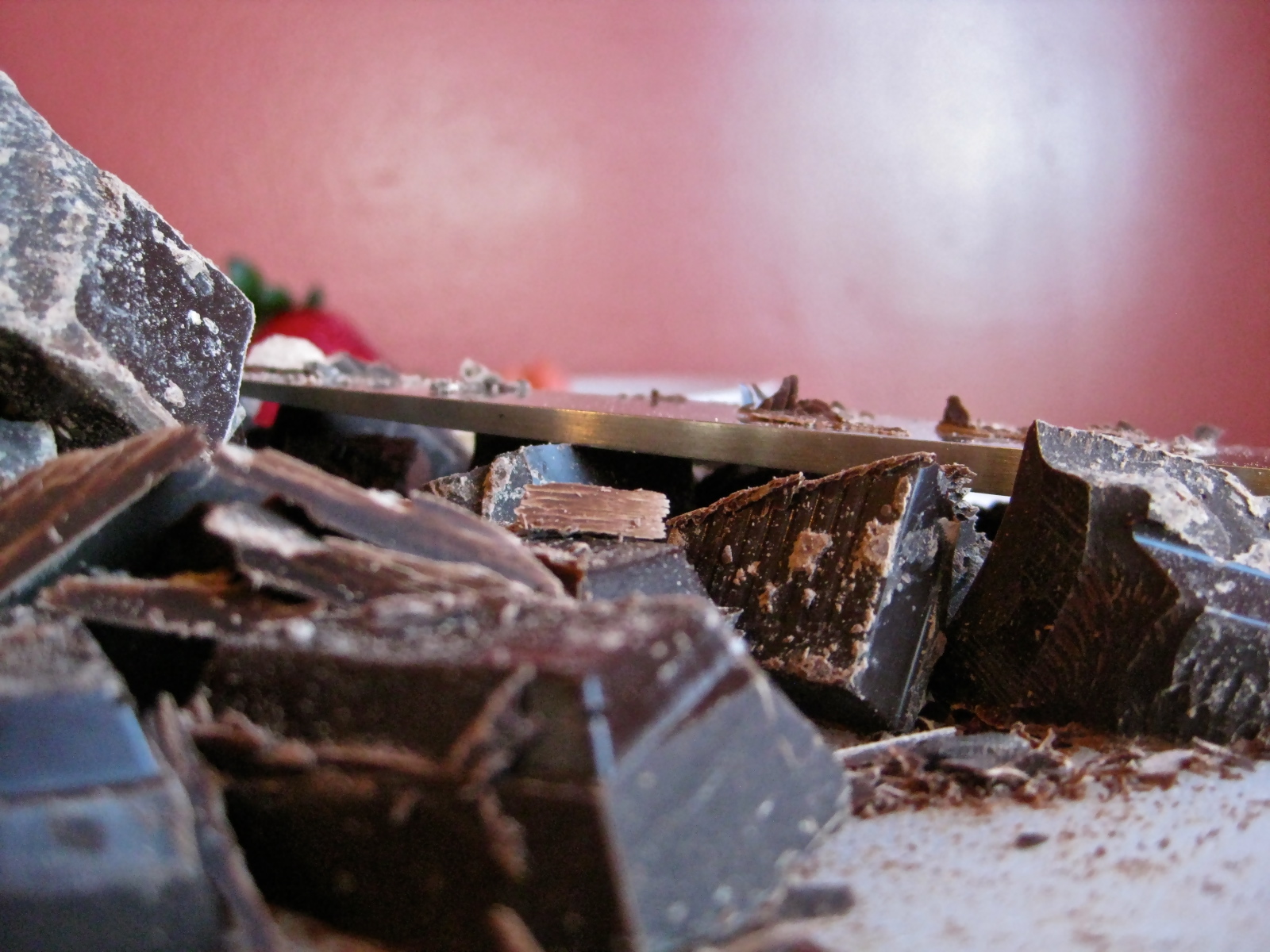
Remove pizza to a rack to cool a bit.  While the pizza is cooling, melt the chopped chocolate in a double boiler or in the microwave on low heat, stirring frequently in both cases.  Melt the chocolate just until it still has come visible chunks, then remove from the heat and stir until the chunks have melted and the chocolate is glossy and smooth.

Drizzle the chocolate over the cooling pizza.  You can eat it while both the pizza and the chocolate are still warm, or you can allow both the pizza and chocolate to cool and firm up before eating.  Either way, it’s delicious.

Beet Greens and Chèvre Quiche

5 Mar

There is often discussion of people possessing “Yankee thrift,” but never do you really hear of people being blessed with (or should I say “saddled with”) West Coast thrift.  I make the distinction here between being blessed and being somewhat cursed, because, not being a Yankee, I possess whatever the West Coast version of nearly unreasonable thrift might be, and sometimes it seems like my propensity for using every part of the buffalo can reveal some fraying at the edges of my reasoning.

Right now our freezer is packed with a bag filled with the green ends of leeks that I plan on turning into vegetable stock.  Also in the freezer is a small container filled with approximately ¼ cup of mushroom broth, because after I used what broth came before that last ¼ cup, it seemed flat-out wrong to waste what was left over.  I have been known to hoard separated egg whites after making ice cream that calls for half a dozen yolks, and then go on a baking spree just to use up those egg whites, and then resort to getting rid of what I have just baked because there is no way possible that the three of us can pack away that many of whatever it was I decided to make in order to “not waste” the egg whites.  Do you see where this is going?  When you save things in order to make things in order to not waste things, but then you have no used for those things, are you not then merely wasting your own time and money in an effort to not waste another product of your time and money?

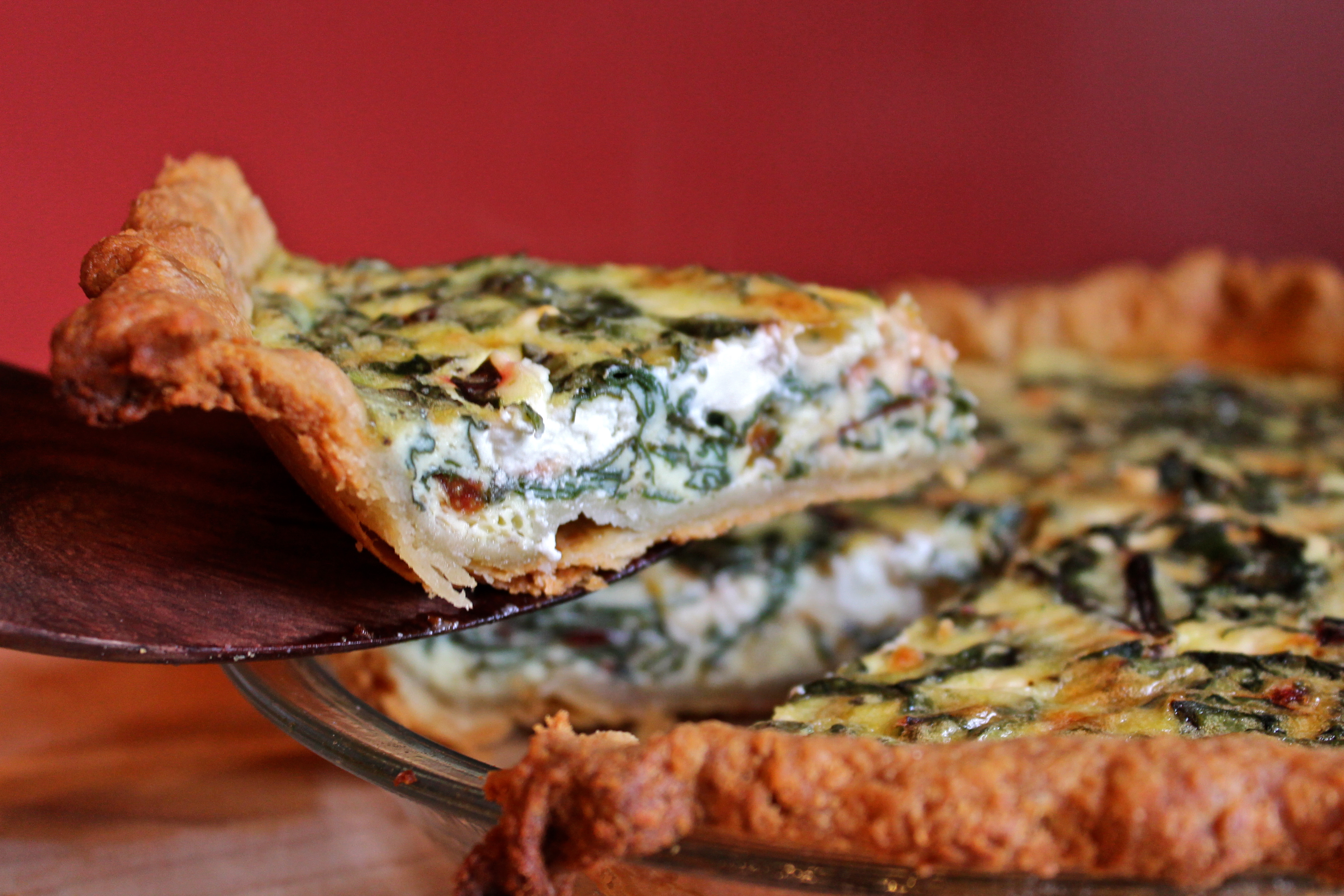
It’s a slippery slope. However, it can also be a delicious and inventive slope, and that’s where this quiche comes in.  Using a bit of leftover this and that from this and THAT (link), we were rewarded with a lovely—and highly adaptable—dinner.  As noted, I used sautéed beet greens that remained from a previous day’s salad, but any greens you have lying around (spinach, chard, kale) will serve this quiche well.  Chevre adds a wonderfully rich tanginess to the body of the quiche, but, if you don’t have it, a bit of Parmesan, Pecorino Romano or Gruyere would also provide a nice, though very different, flavor profile.  The idea here is to use whatever you have staring at you from the fridge, and it’s almost guaranteed that you’ll love the result.

Beet Greens and Chevre Quiche

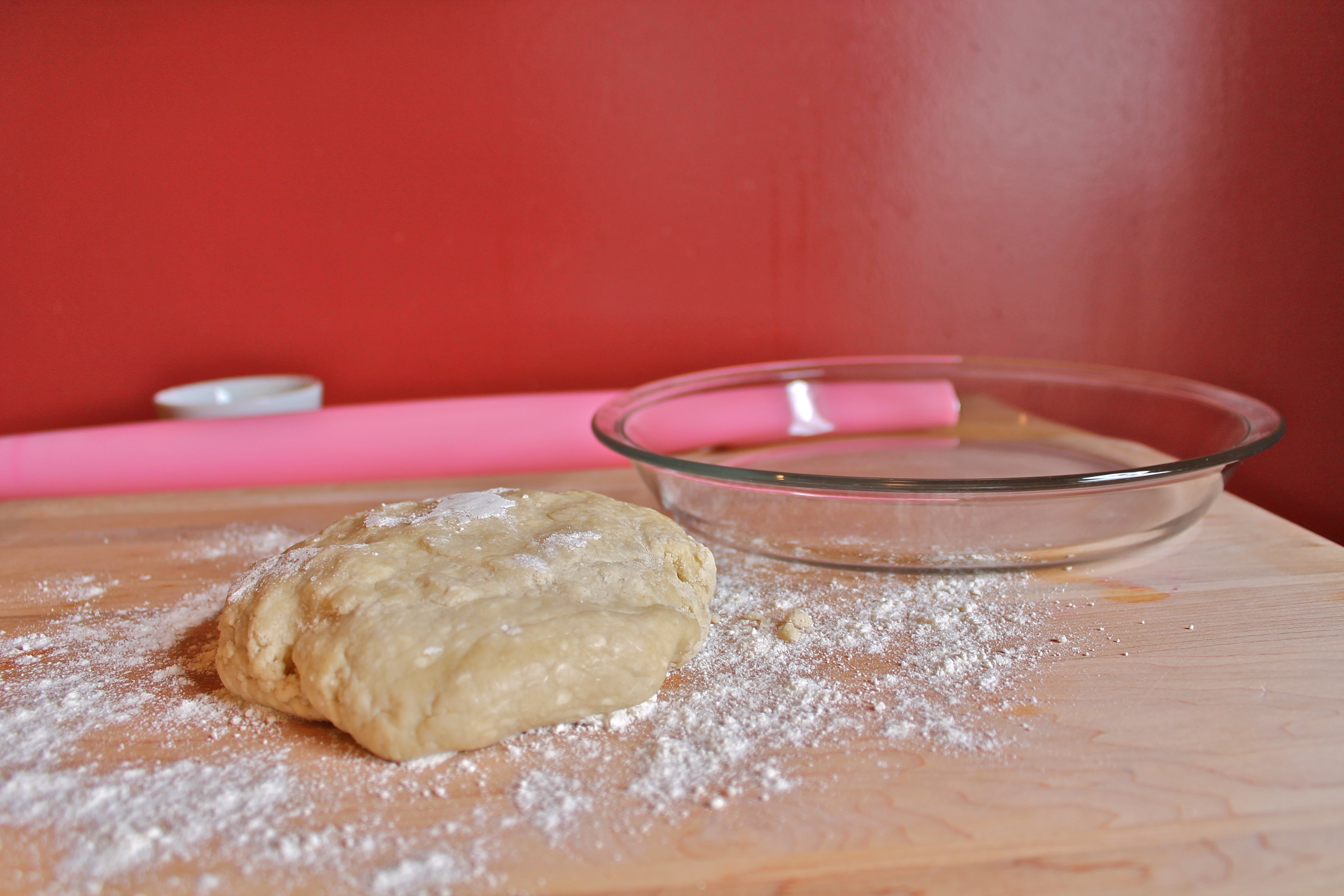
1 9-inch pie crust (my absolute favorite recipe for flaky pie and tart dough can be found here–the recipes makes enough dough for two single crust pies or tarts, but the unused dough can be wrapped tightly in plastic wrap and kept in the freezer for two to three weeks)

1 tablespoon olive oil

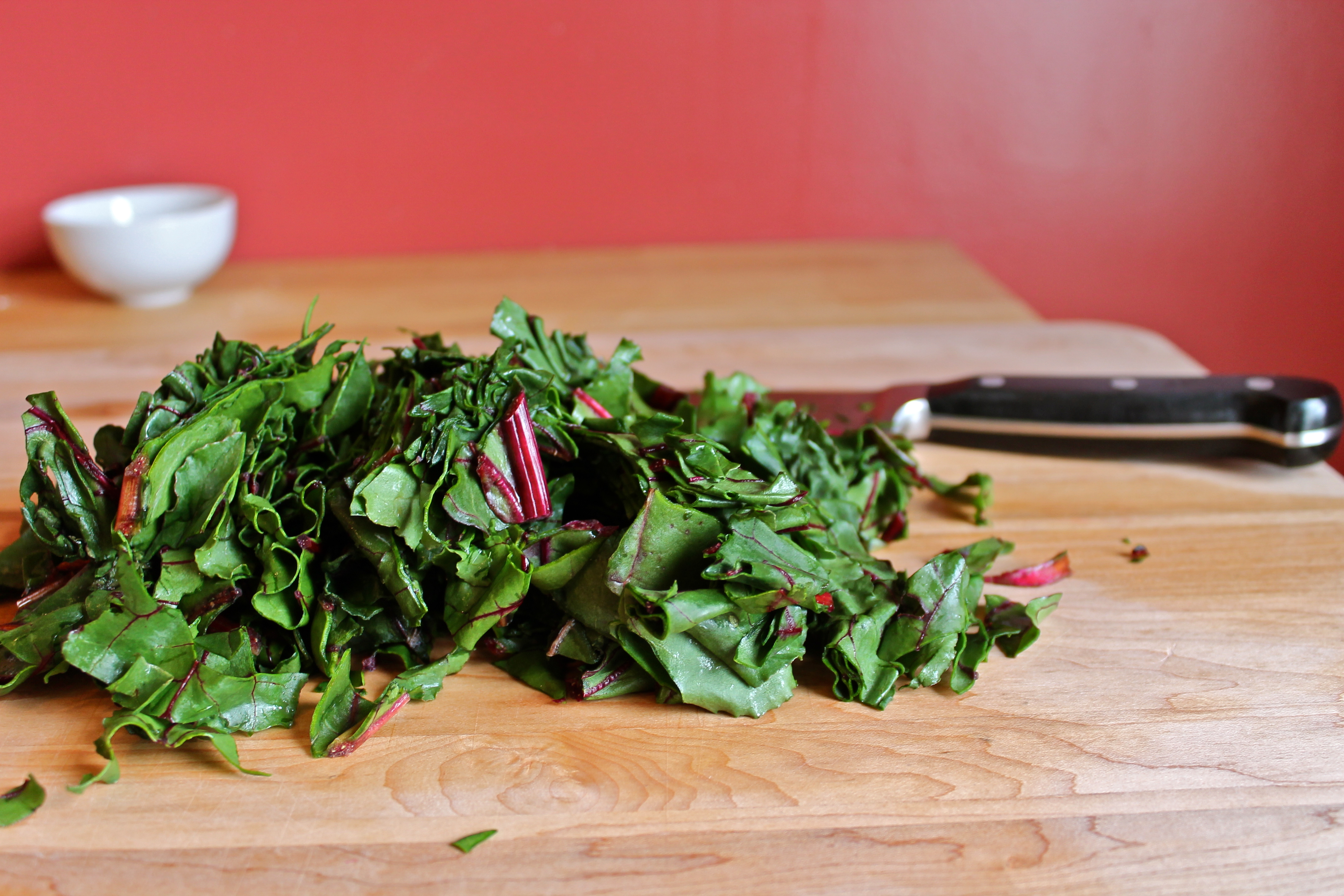
2 cups lightly packed coarsely chopped beet greens (or other green of your choice), tough stems removed

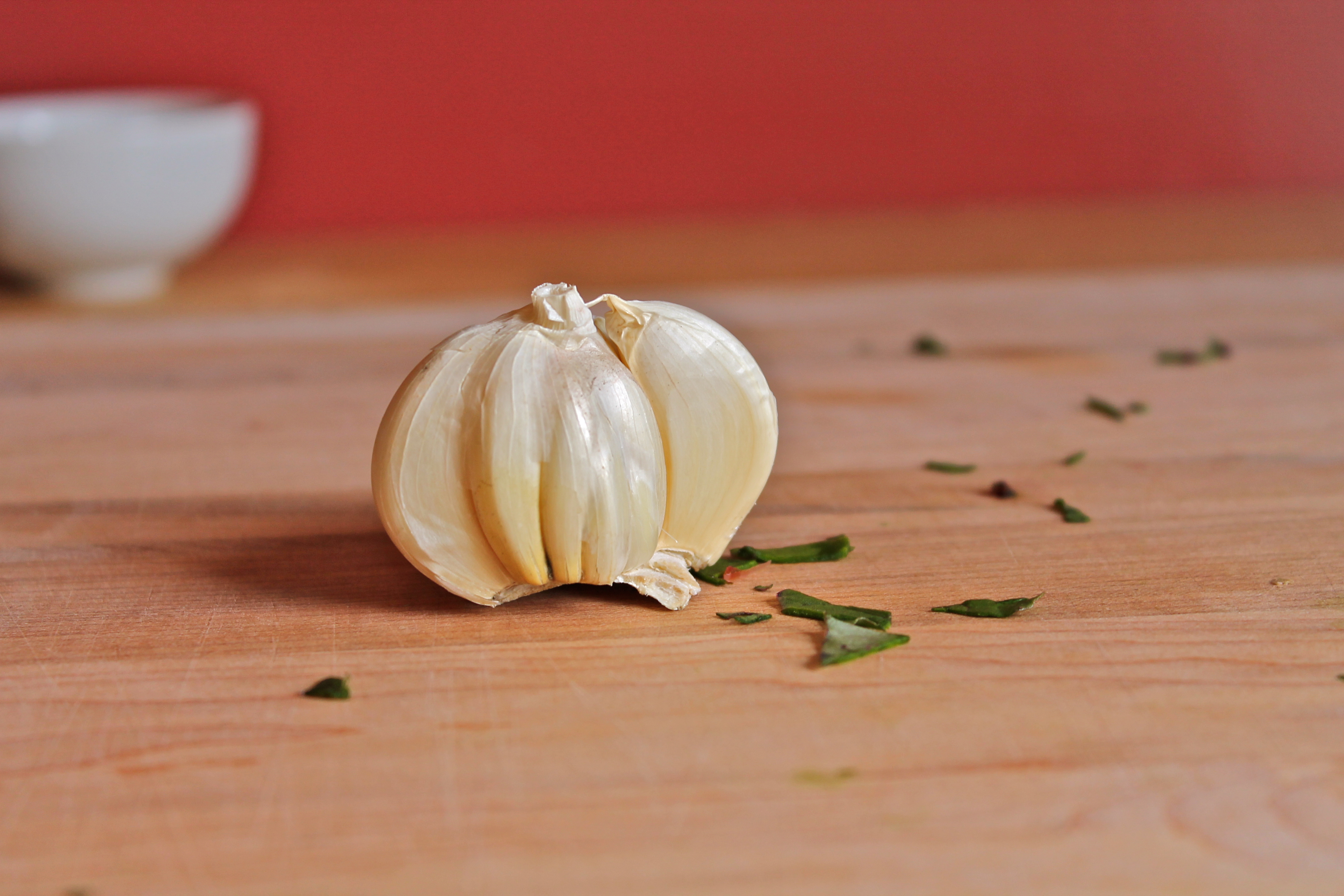
1 large garlic clove, minced

3 large eggs

1 cup milk

4 ounces crumbled chevre

salt and pepper

Preheat oven to 375 degrees Fahrenheit.

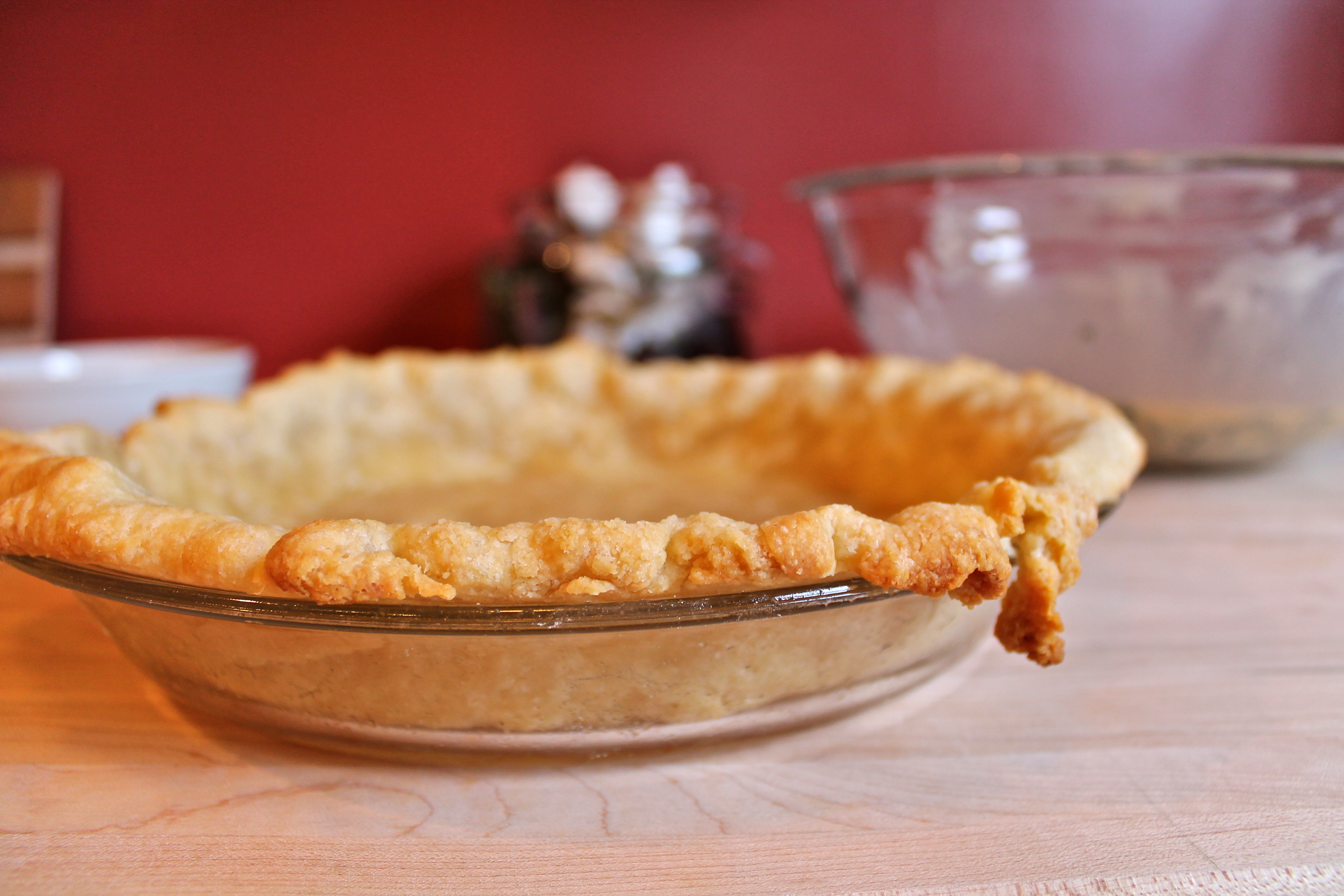
Roll out crust and shape into a 9-inch pie pan.  Line the crust with foil and fill with pie weights (or dried beans or pennies).  Bake crust for 15-20 minutes, until the edges appear dry and the bottom of the crust is sizzling.  Remove crust from oven, remove foil and pie weights, then set aside.

In a medium skillet, heat olive oil over medium heat.  Add chopped greens and sauté until wilted and reduced in size, about 3 minutes.  Add garlic and stir to combine.  Saute, stirring occasionally to keep the garlic from browning, until most of the moisture has been cooked from the greens, about 5 minutes.  Add salt and pepper to taste.  Remove greens from heat and set aside to cool slightly.  You should have roughly 1 cup of cooked greens.

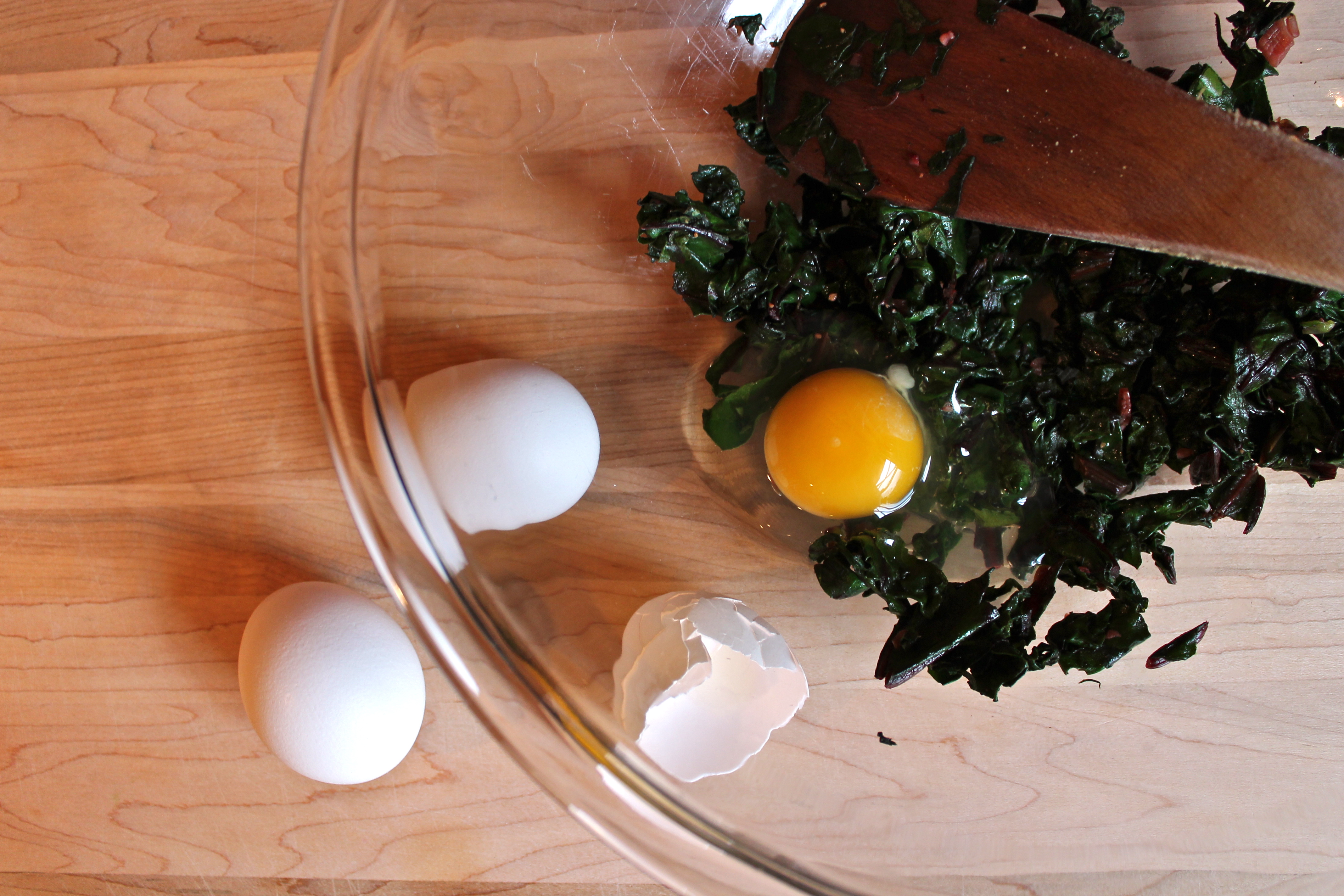
In a large bowl, combine eggs, milk, and chevre.  Whisk to combine.  Add cooled sautéed greens and whisk to combine.  Add salt and pepper to taste.

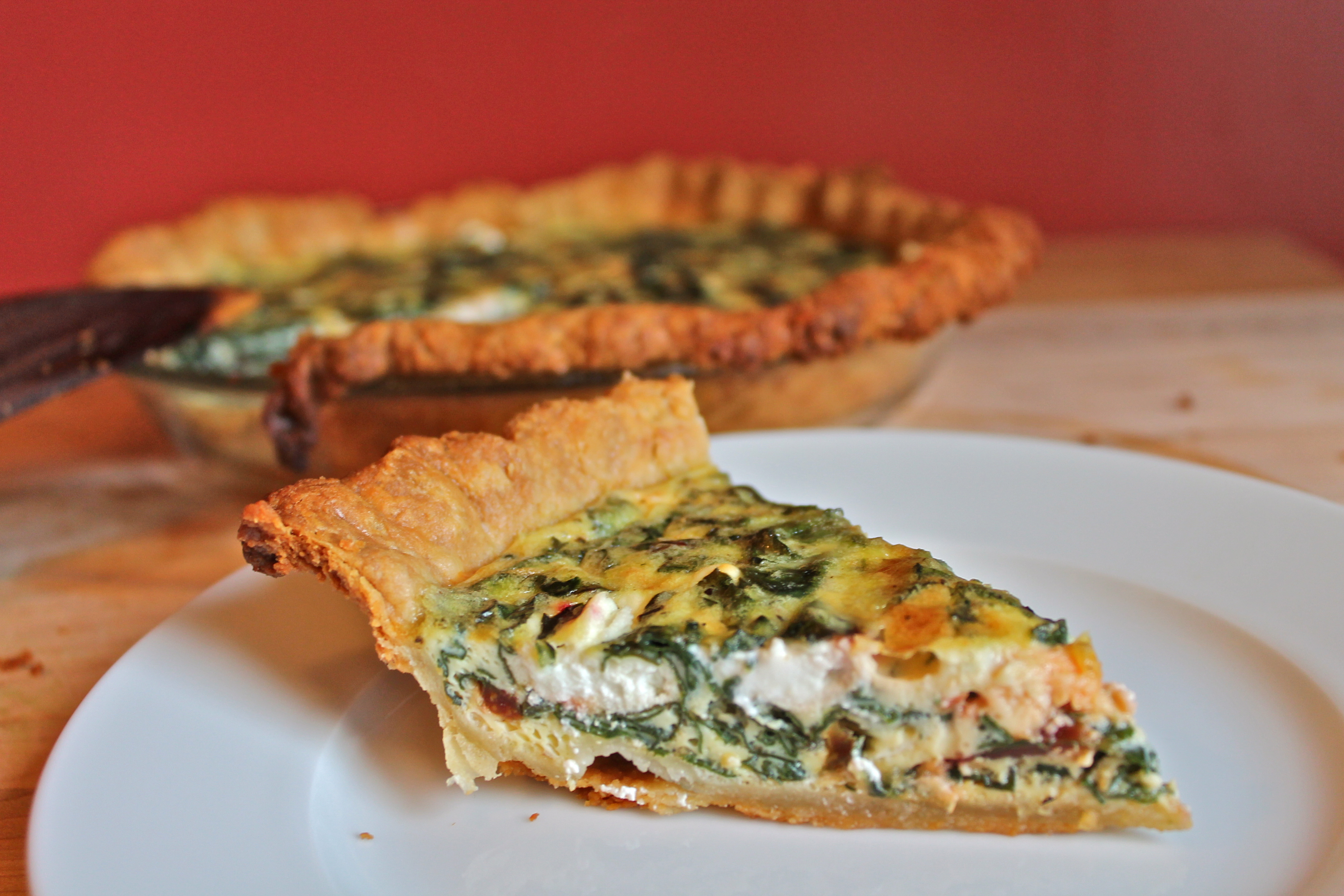
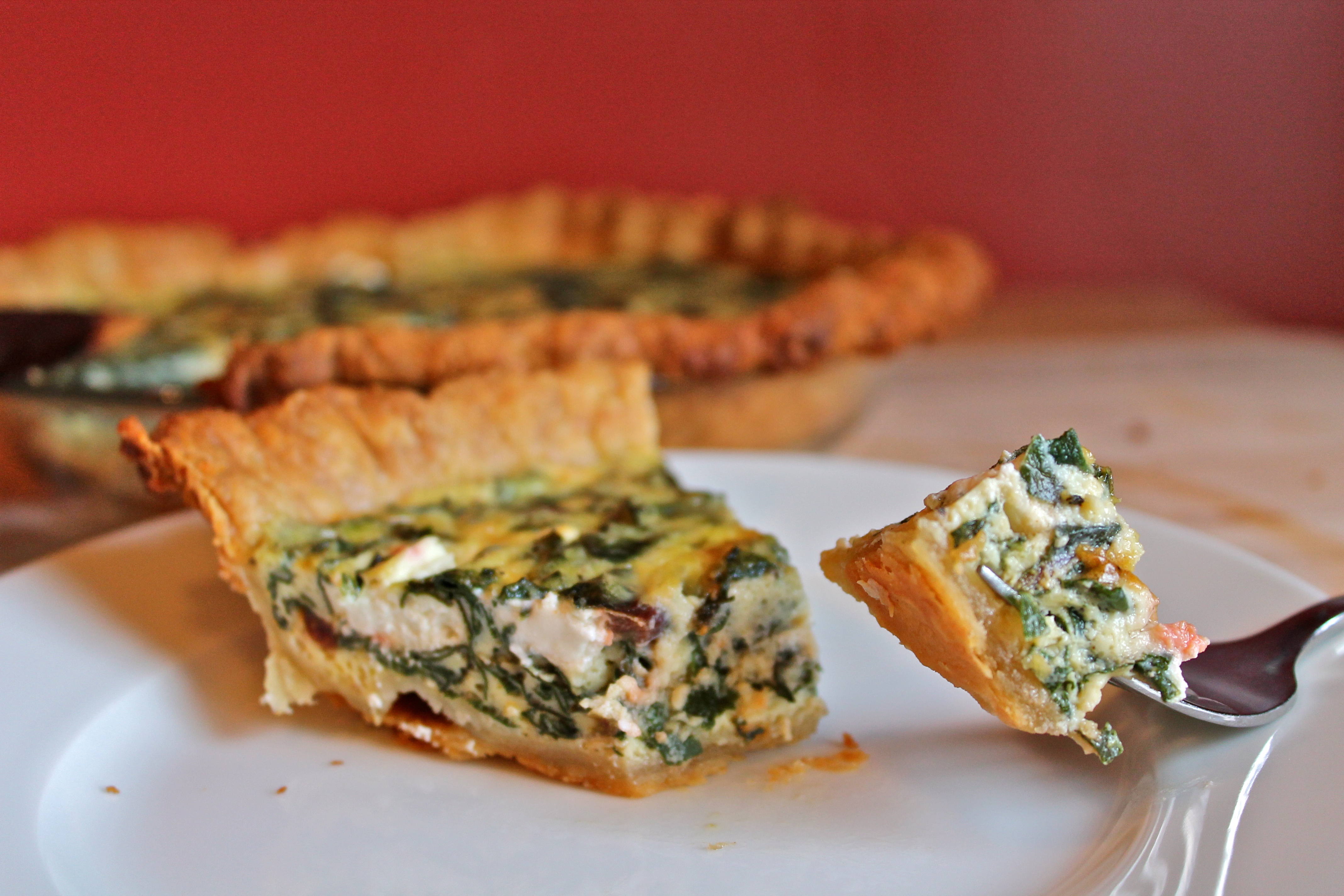
Pour the egg mixture into the parbaked crust.  Return to oven and bake for 35-40 minutes, until the quiche is puffed on top and the middle is set.  If the edges of the crust begin to brown too rapidly during baking, wrap the edges of the crust with a protective layer of aluminum foil.

Allow to cool for at least 10 minutes before serving.