Archive | Tarts and Pies RSS feed for this section

Pear Nougatine Tart

21 Dec

Overlooking the obvious can lead to rather surprising results.  Sometimes those surprising results are of the pleasing variety, like when you realize that the only reason you get food from an otherwise sub-par taqueria is because of the fact that they have a salsa bar that offers the world’s most incredible habanero salsa.  When you realize this, you then go home and make your own batch of habanero salsa, freeing you from the clutches of the not-so-great Mexican food you’ve been eating just to serve as a base for the salsa in question.  Problem solved!  (And the you in question is, in fact, actually me, in case anyone didn’t pick up on that right away.)
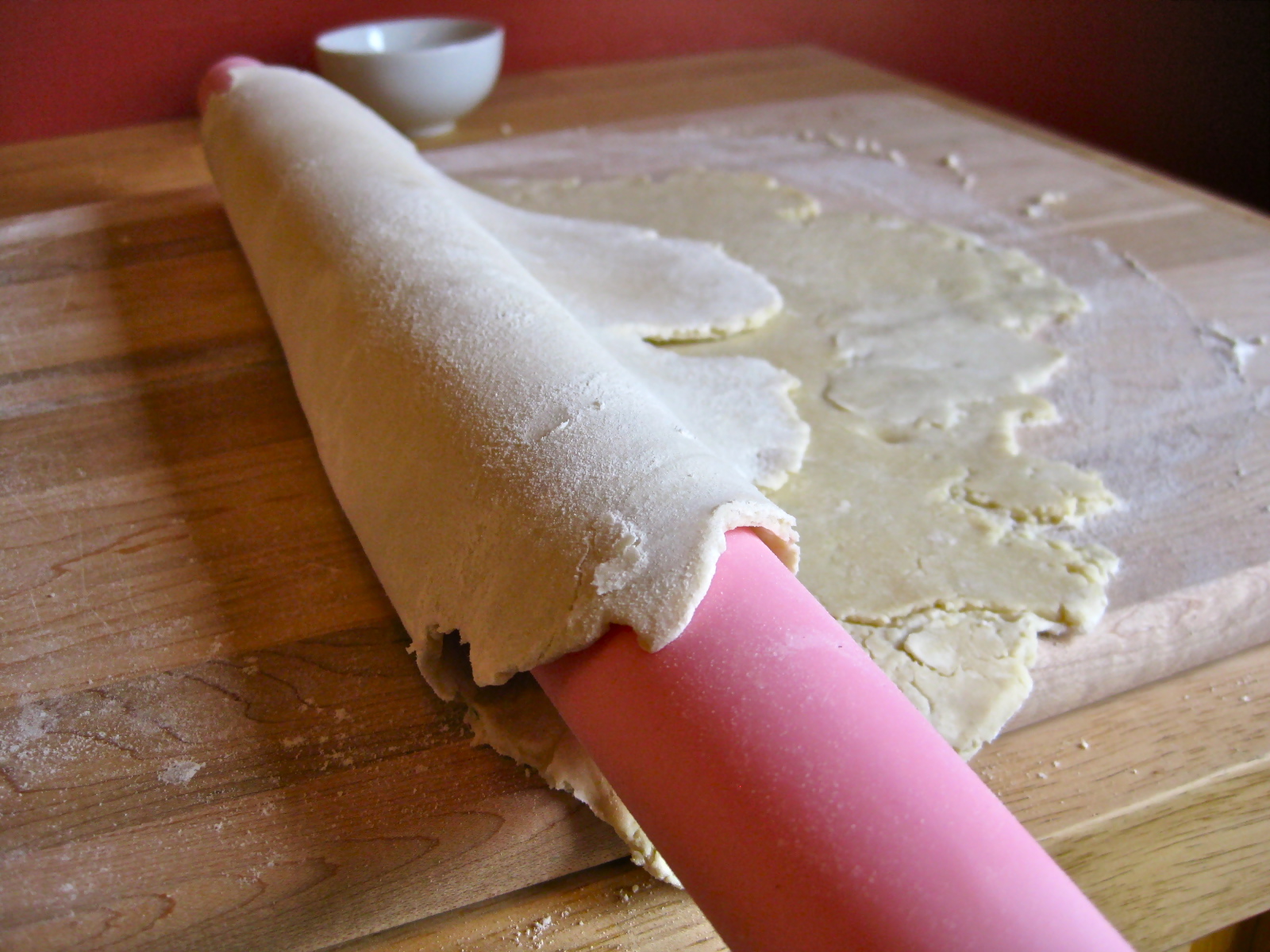
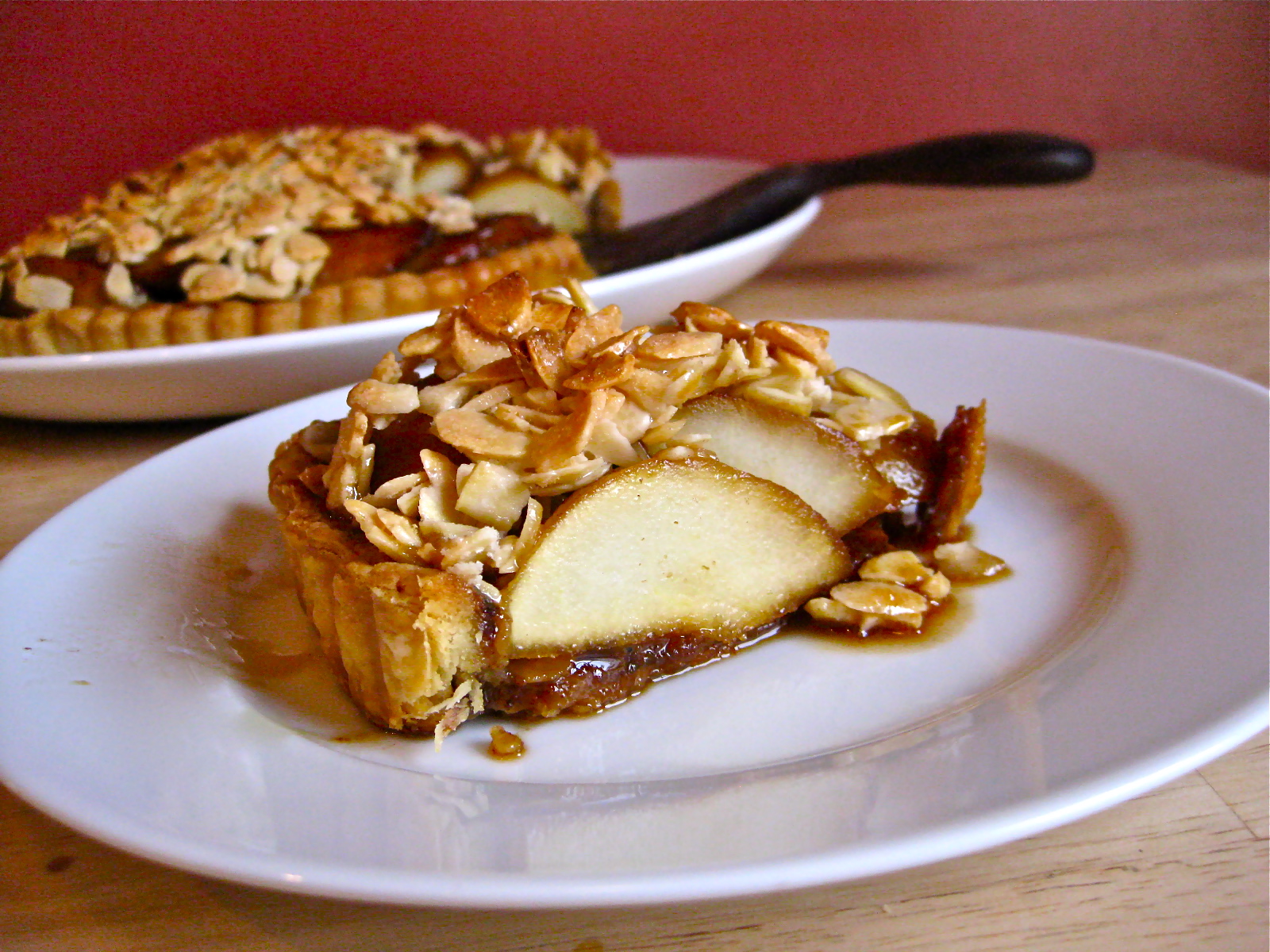
Other times, overlooking the obvious can lead to surprisingly disappointing results, like when I decided to make a particular tart that was so named for the fact that it was topped with candy, not fully realizing that, lady, you’re about to top a tart with candy, which means that things are going to get really, really sugary around here.
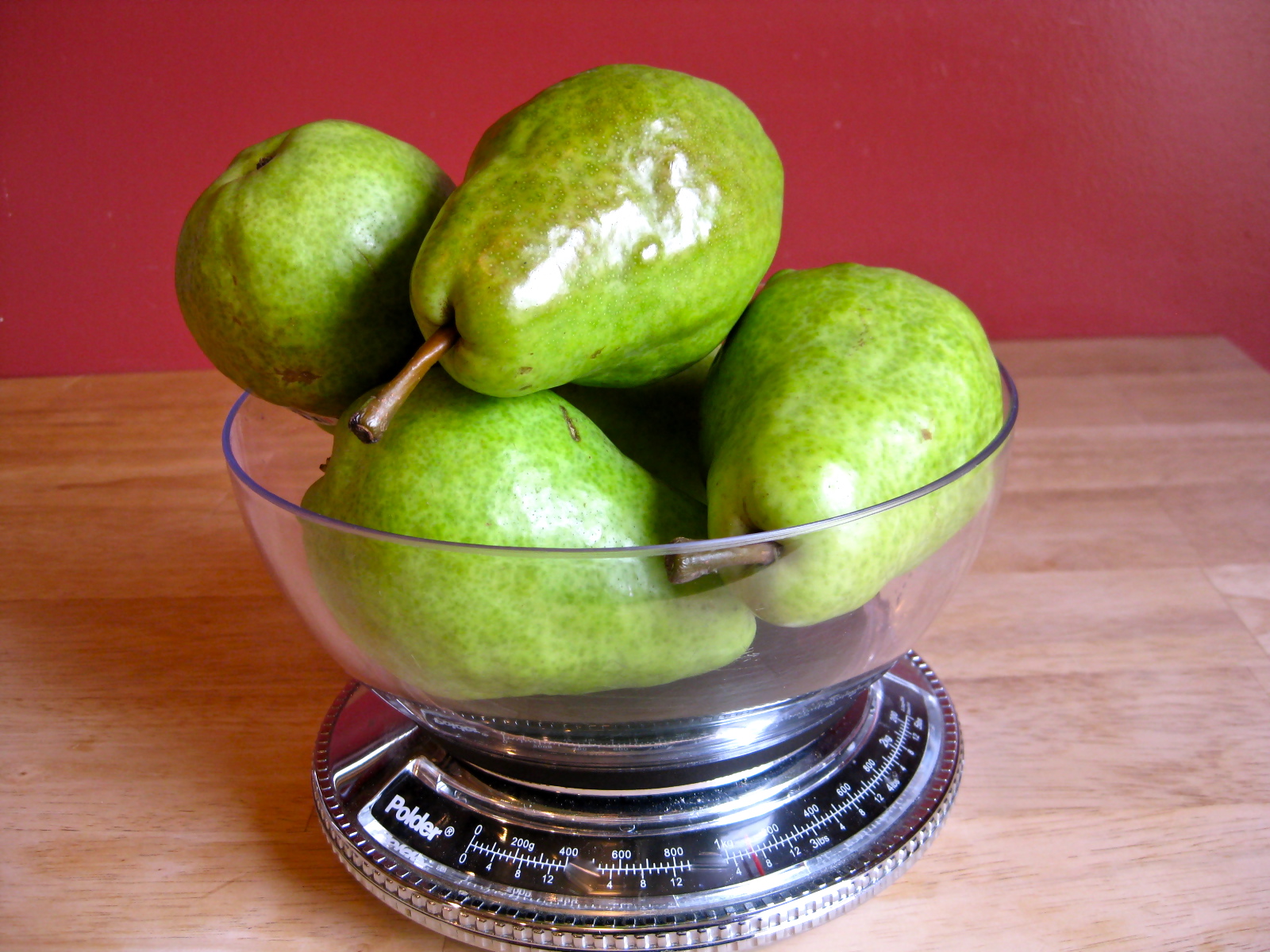
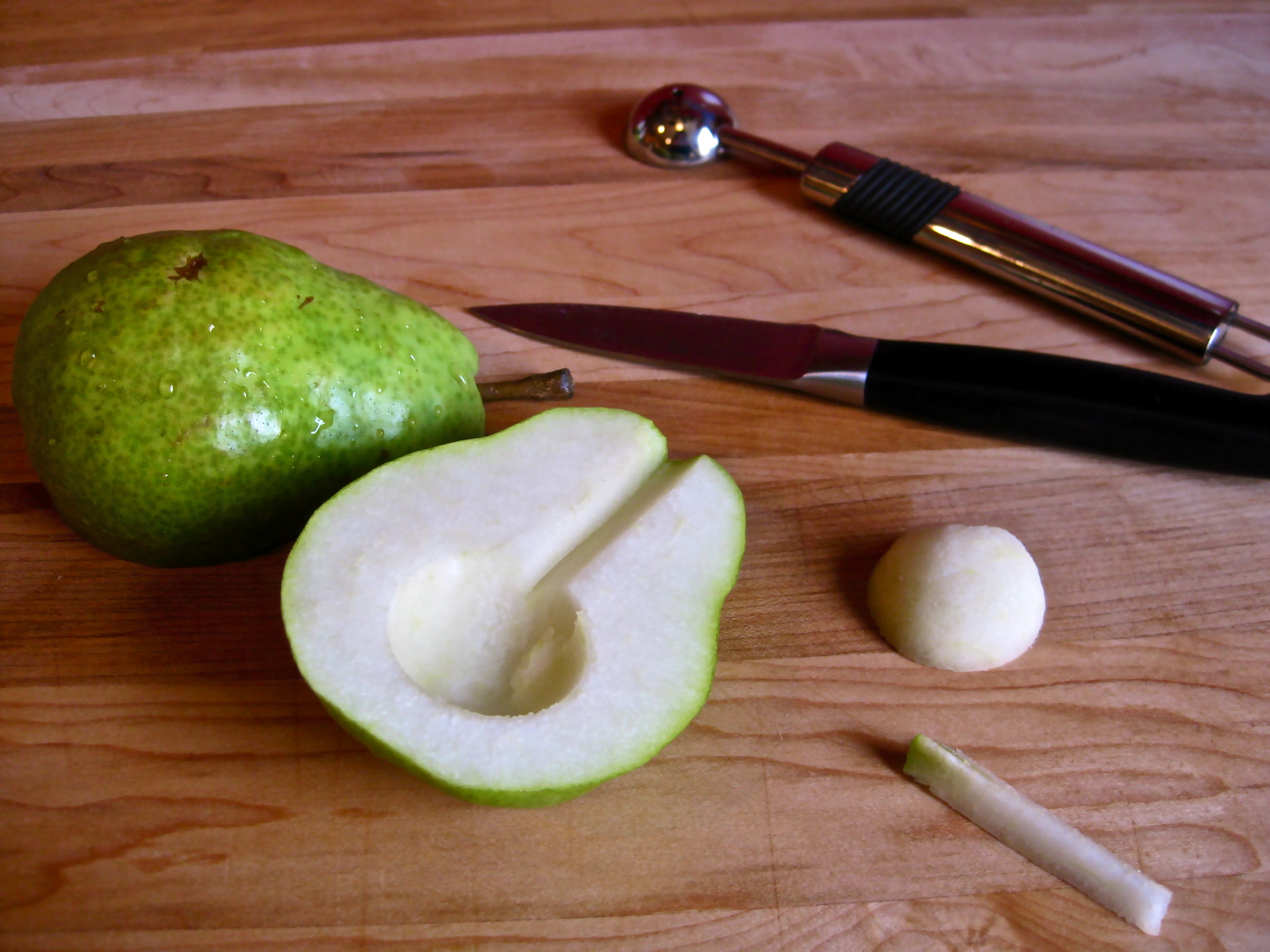
Yes, when I first made this tart, I lamented the fact that it was far, far too sweet for my tastes.  At first I couldn’t figure out why, because I was too focused on the tart’s other, more pleasing, qualities (like, for instance, the shot of lemon that wakes up every other flavor, or the small splash of cream that I added to the pear caramel to round everything out), but then, looking back on the recipe, and, you know, its name, it suddenly occurred to me that I had just made a tart topped with candied nuts.  So, that’s going to be sort of sweet.
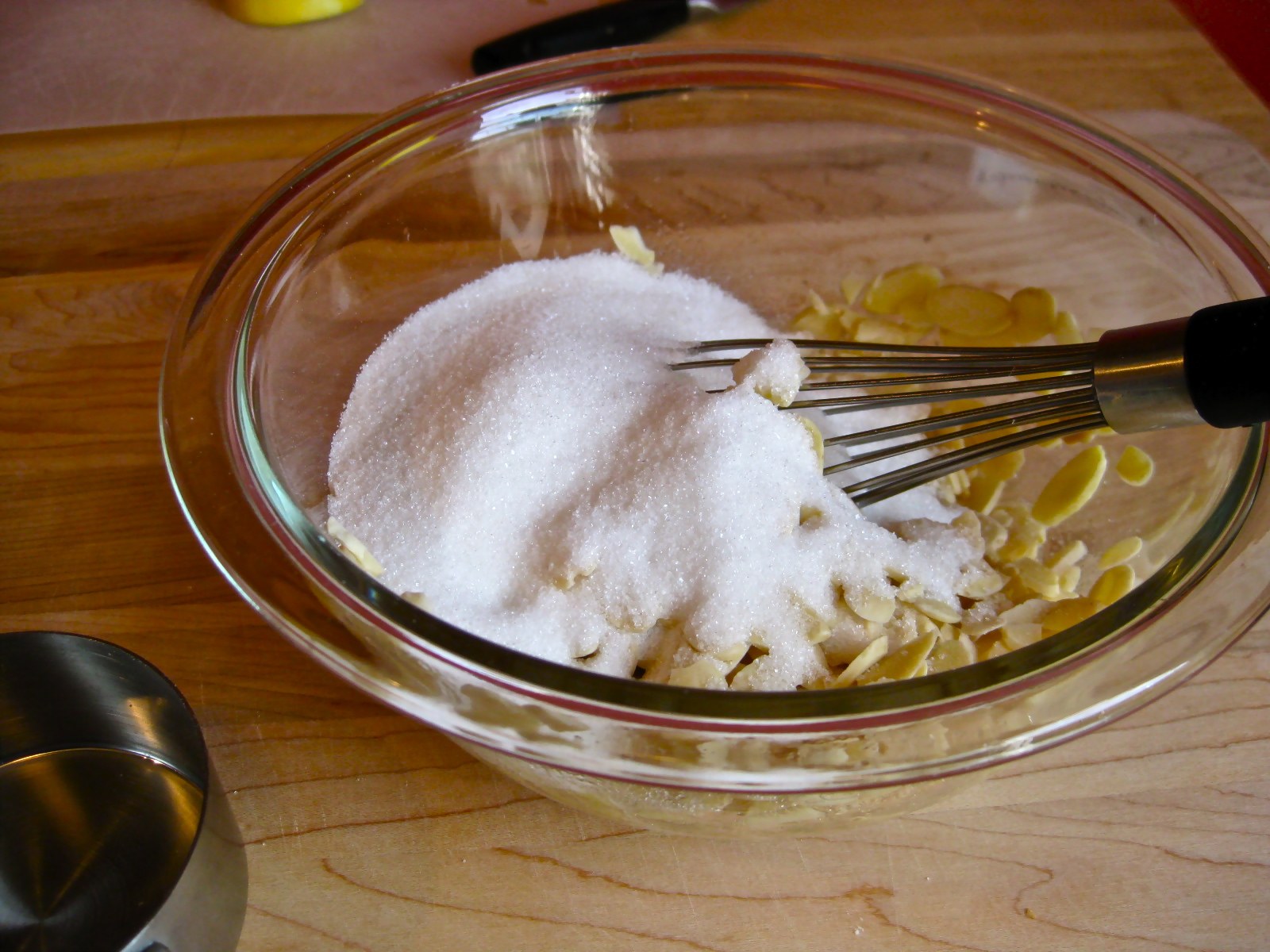
Because of this, I actually debated whether or not to share my experience with this recipe, not being sure if I wanted to highlight something that I thought needed its sweetness dialed back so severely.  In the end, realizing that the rest of the recipe is fairly delightful, it seemed like the recipe did need to be shared, albeit in a somewhat less-sweetened form.  And even though I swapped out the original recipe’s call for apples with my own penchant for pears, and I ever-so-slightly altered the pears’ cooking method in order to get a more usable sauce in the end.  Okay, so there is a fair amount that I changed about this recipe, but only because I had a hunch that what I found to be almost perfect could, with a bit of fiddling, be made to shine.  And at the risk of sounding like a weird pageant mom, I think that bit of polishing has rendered this tart now ready for its close-up.
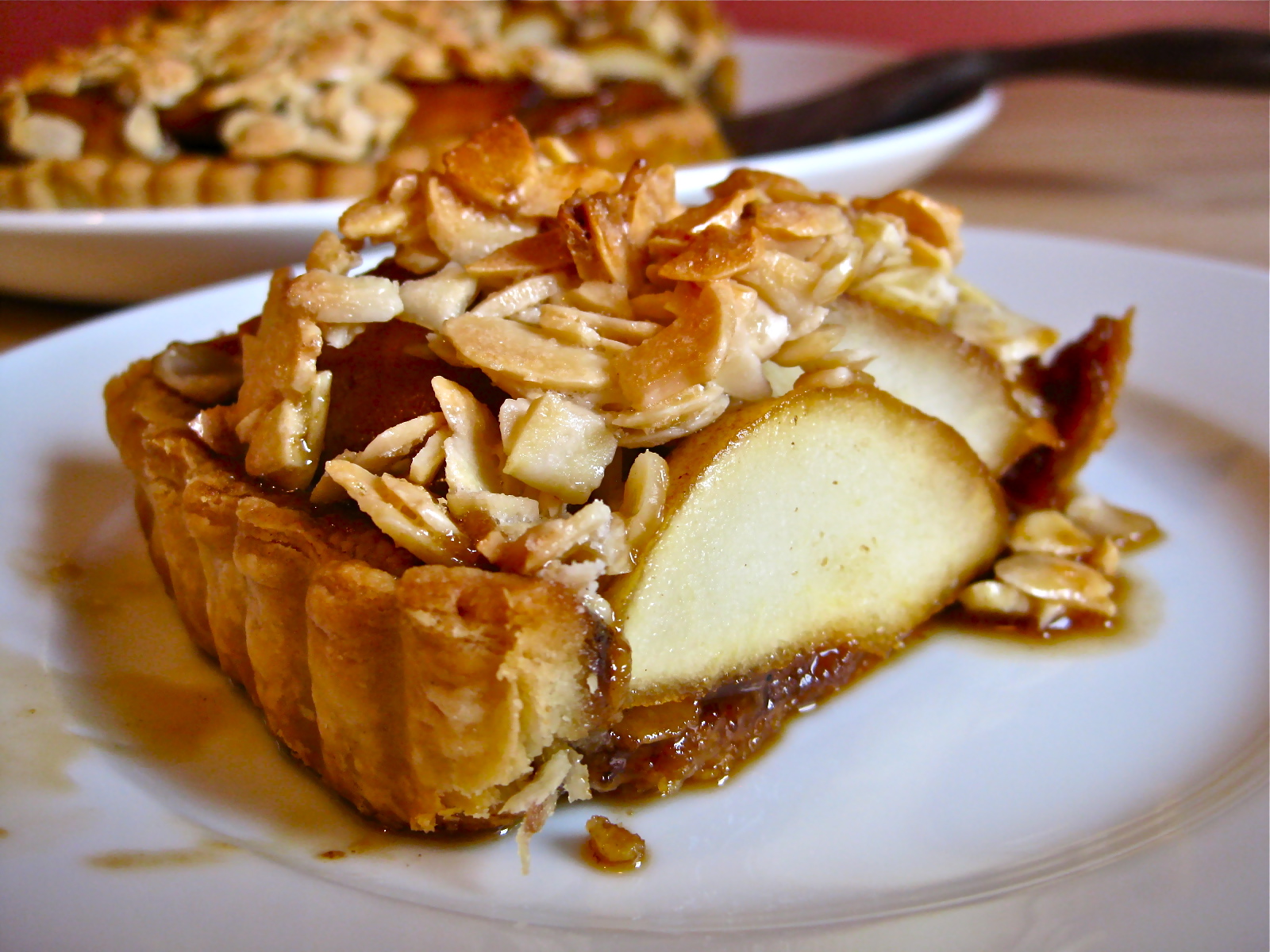
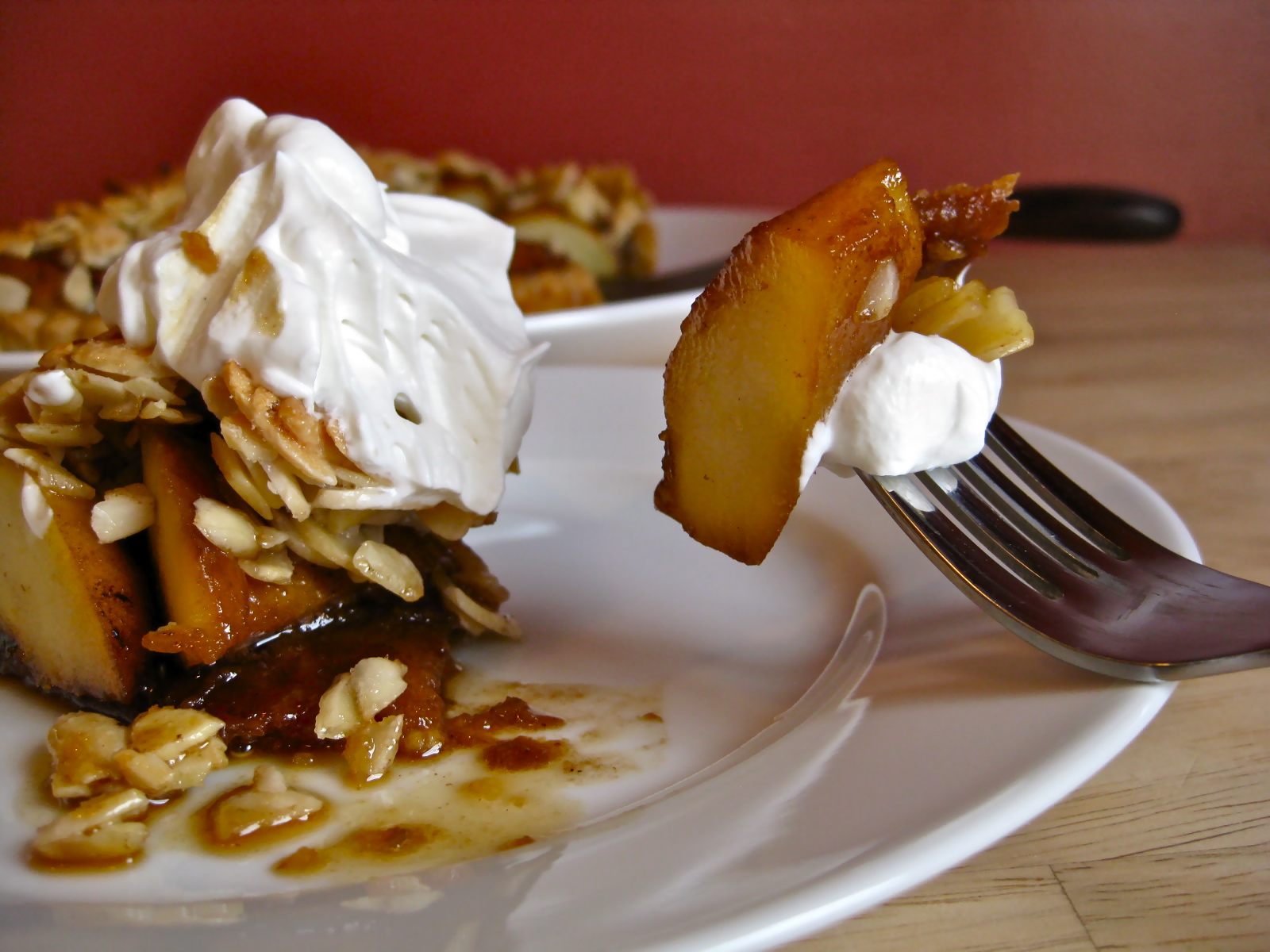
Pear Nougatine Tart

Adapted from Tartine

Fully baked 10-inch tart shell (recipe here, only for a fully baked tart shell, bake the shell for a total of 30-35 minutes, 20 minutes with pie weights, and 10-15 minutes with the foil and weights removed, until the crust is golden brown)

Pear filling:

3 pounds just ripened pears (over-ripe pears will fall apart when cooked, so make sure your pears still have a bit of firmness to them), peeled, cored, and sliced into quarters

¼ cup (4 tablespoons, or 2 ounces) unsalted butter

¼ cup (4 tablespoons) sugar

pinch of salt

2 tablespoons heavy cream

lemon juice and grated zest of ½ a medium lemon

Topping:

1 cup sliced almonds

¼ cup sugar

2 large egg whites, lightly beaten

pinch of salt

Preheat oven to 350 degrees Fahrenheit.  Place fully baked tart shell on a baking sheet and set aside.

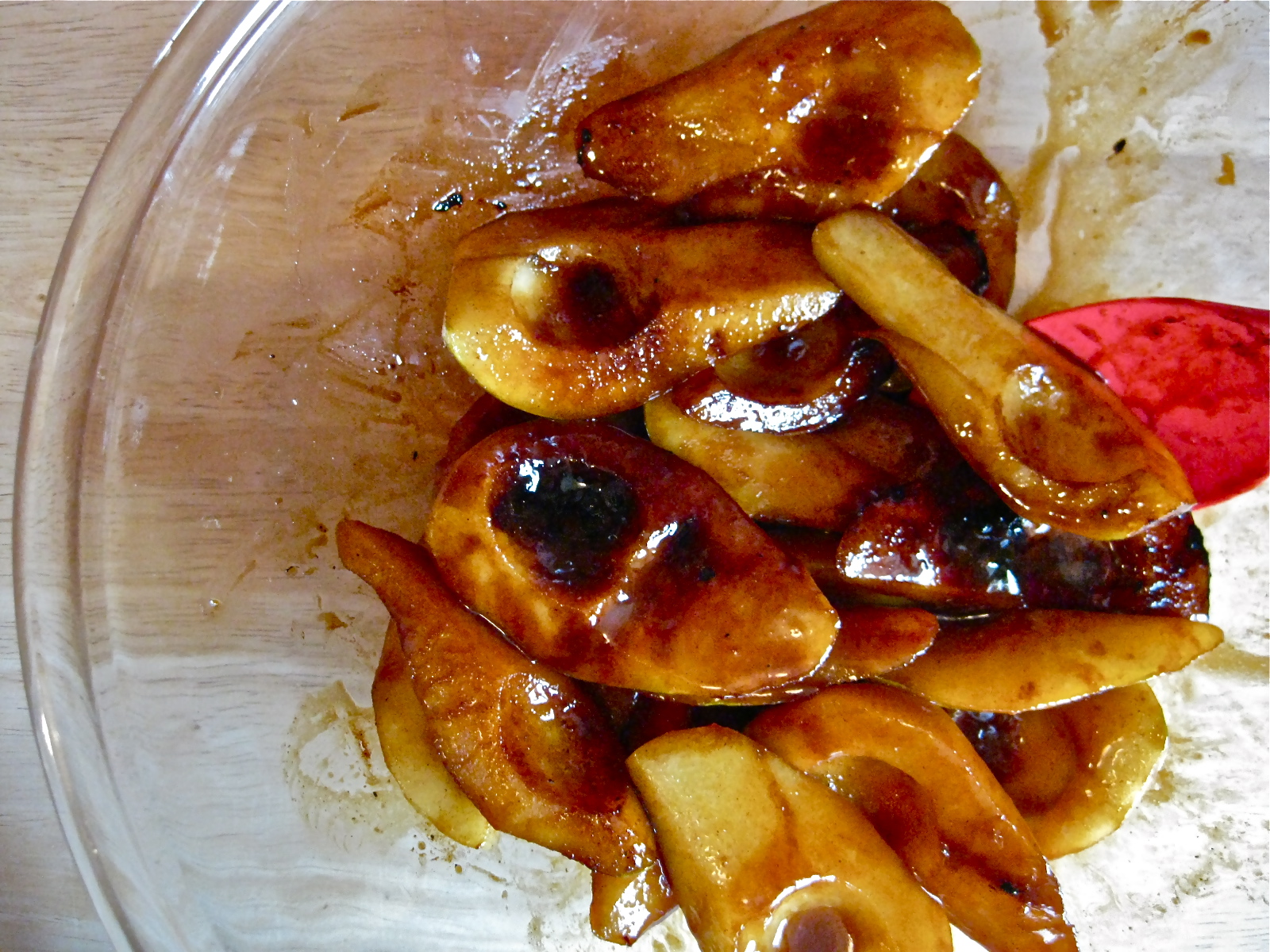
Have a large bowl ready to hold the sautéed pears.  You will be sautéing the pears in 4 batches, so divide the pears as needed.  In a heavy sauté pan, melt 1 tablespoon butter over medium heat.  Add 1 tablespoon of sugar and allow it to just caramelize with the butter, turning a medium brown.  Add 1 batch of the pears to the pan in a single layer.  Saute until soft, turning a few times with a spoon.  If the sugar begins to darken too dramatically, reduce the heat to low.  The pears should become quite soft and caramelized as they cook, but still hold their shape.  The timing of this will depend on the ripeness of your pears, but it should not take more than 5 minutes.  When the pears are caramelized and soft, transfer them to the waiting bowl.  Add another tablespoon of butter and sugar to the pan, not cleaning the pan between batches.  Add another batch of pears, and cook as you did the first batch.  The second batch should not take as long as the first.  Continue with the remaining batches of butter, sugar, and pears, adjusting the heat as necessary to keep the caramel in the pan from burning.

When all of the pears have cooked, the caramel remaining in the pan should be quite dark.  Increase the heat under the pan to medium high, then deglaze the pan with 3 tablespoons of water, scraping up the bubbling caramelized bits with a wooden spoon or a wire whisk.  When most of the bits from the pan have been loosened, add the heavy cream and continue to stir or whisk until the liquid has reduced by about 1/3.

Pour the reduced caramel and cream mixture over the sautéed pears, then toss to combine.  Add the lemon juice, lemon zest, and salt to the pears, then toss once more.  Pile the pears into the baked tart shell.

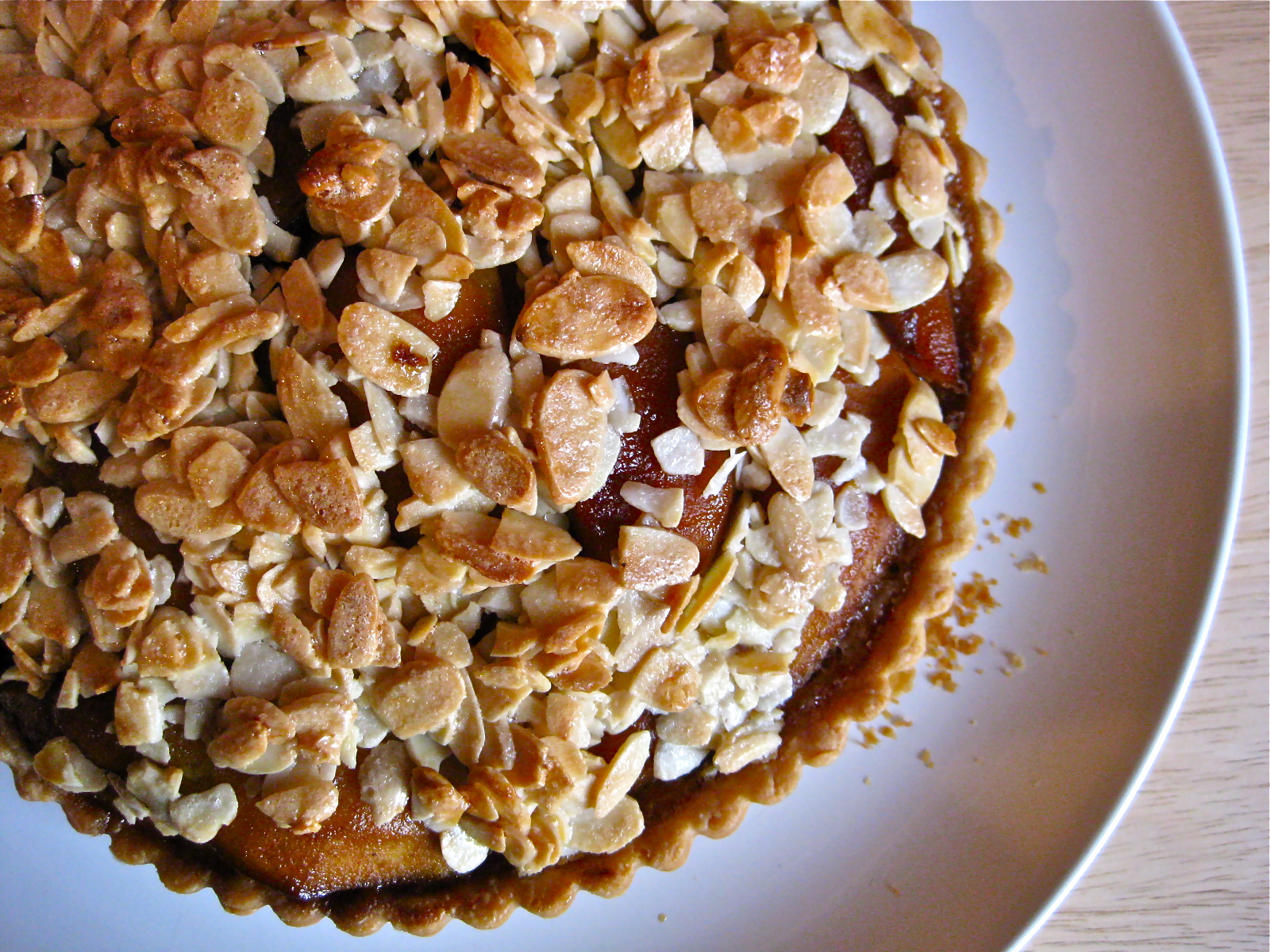
To make the topping, combine the almonds, sugar, egg whites, and salt in a small bowl.  Stir well to combine.  Spread the almond mixture evenly over the pears, extending the topping all the way to the edges of the tart.

Bake the tart on a baking sheet, in the middle of the oven, until the topping is browned, about 30 minutes.  Transfer to a wire rack to cool completely before serving.

Salted Chocolate Hazelnut Tart

19 Dec

Sometimes the best gifts arrive before Christmas.  My husband’s auntie and uncle, they of the cider press, are in the habit of buying large quantities of hazelnuts.  They are also in the habit of sharing their haul of hazelnuts, which is one of the many qualities they possess that I greatly enjoy.

You may notice that when I get my hands on a certain ingredient, recipes that involving that ingredient tend to take over the site for a while.  When the strawberries start producing, the tomatoes ripen, and markets everywhere start offering fresh pears, I tend to focus pretty hard.  Garden fresh vegetables and fruit are only available for a short period of time, so why not settle down with them for a bit?  Predictably, things were no different with me this time around, so as soon as I opened the big tin of nuts and saw what was inside, my mind immediately began to buzz with possibilities.

I’ve never been great at meal planning, and I think the creation of this tart points towards one of the main reasons I struggle so much to look an entire week or more ahead when it comes to thinking about what I am going to cook.  I like inspiration, and when every time I have sat down to plan a week’s worth of meals, my plans undoubtedly become derailed by the spotting of something at the market that just called to be brought home.  Maybe delicata squash wasn’t on my grocery list, but when I see the first fall squash of the season, chances are I am going to go all swoony and buy it.  While I wasn’t anticipating having a large amount of hazelnuts sitting around my house, I sure was glad to see them when they arrived.

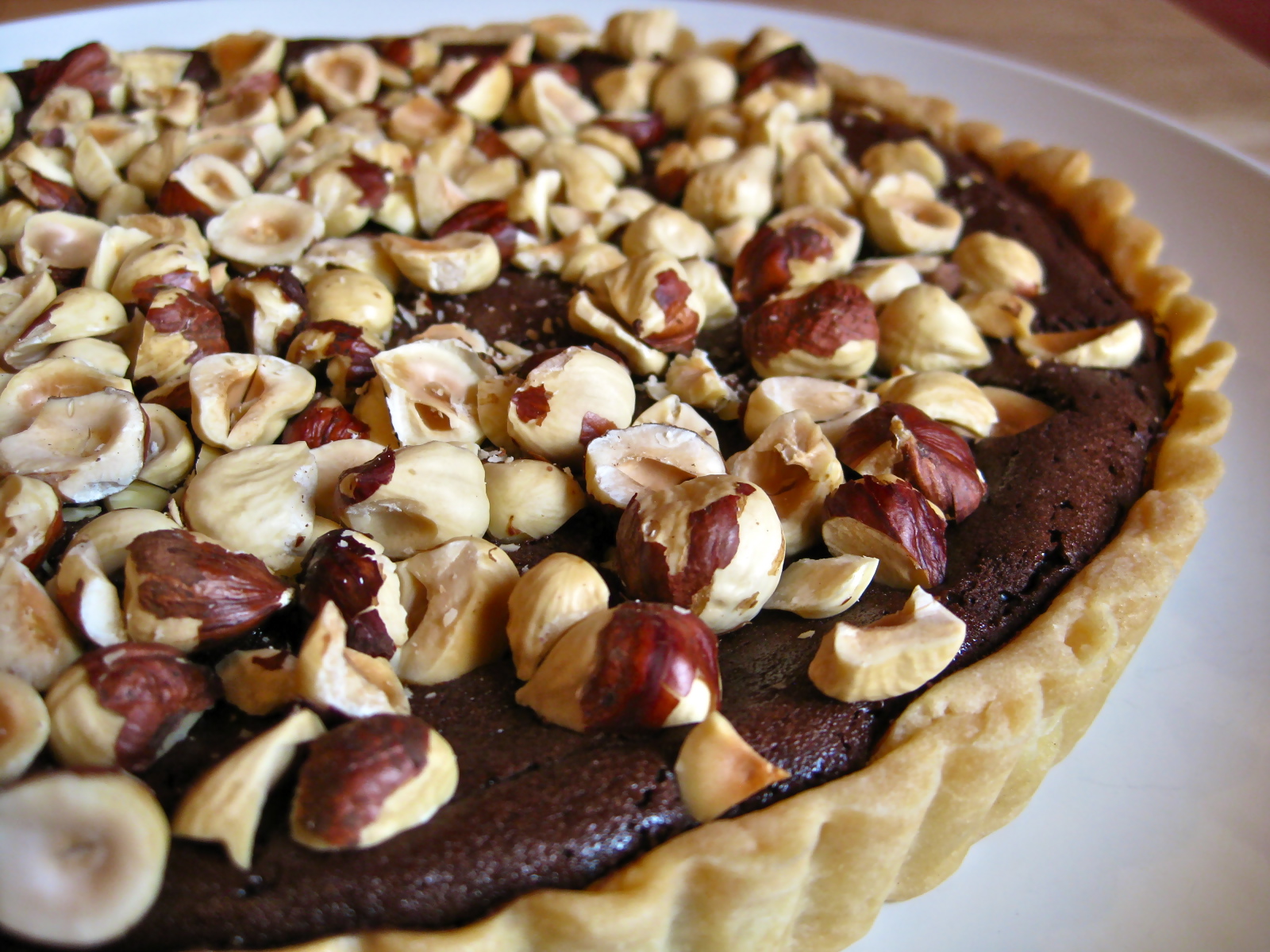
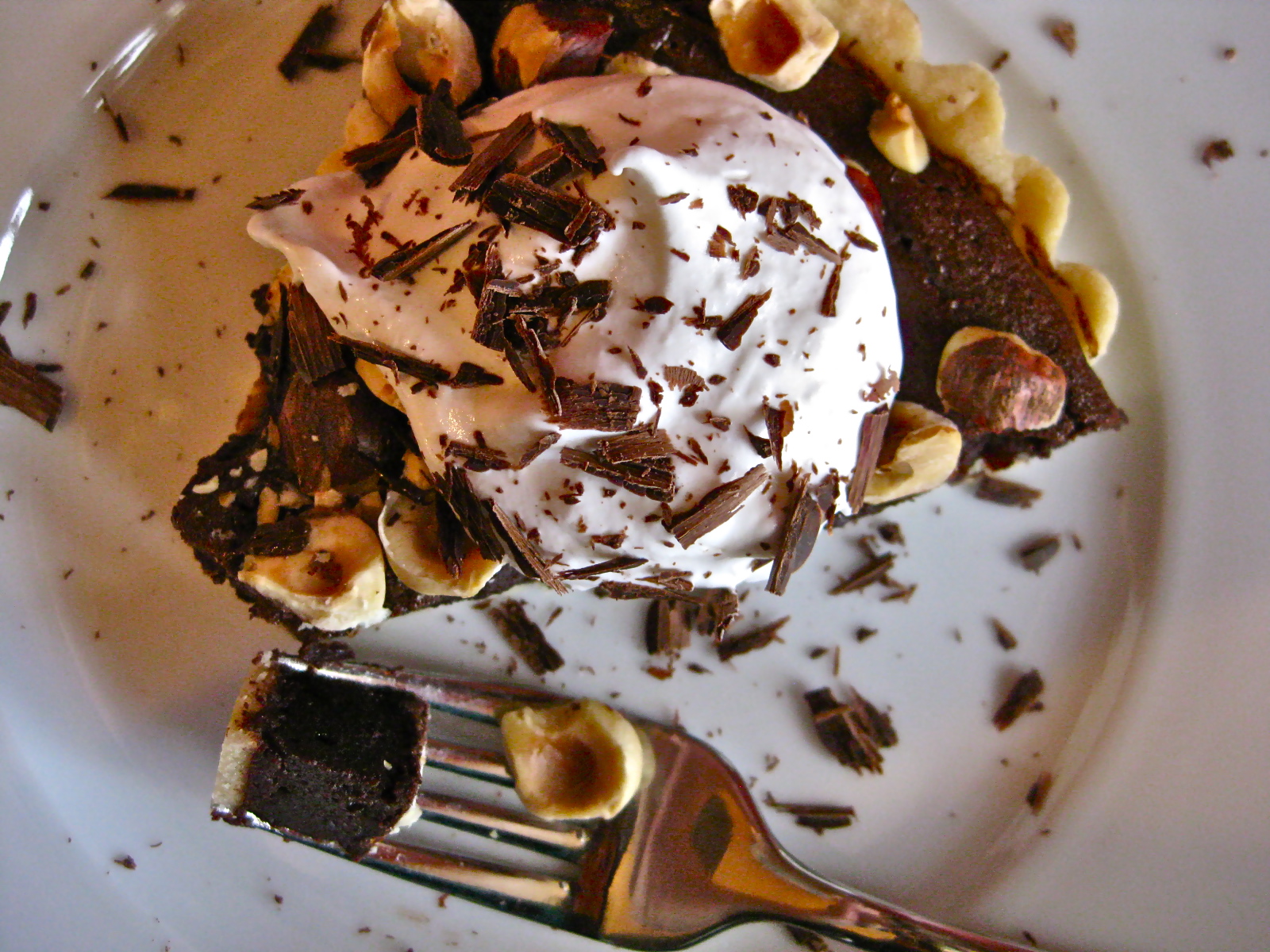
And while I subsequently may not have known at the time that I really, really wanted to make a baked chocolate tart topped with flakes of sea salt and savory hazelnuts, I sure was pleased to see it come together a few days later while I literally made things up as I went along, led by the promise of something incredible.

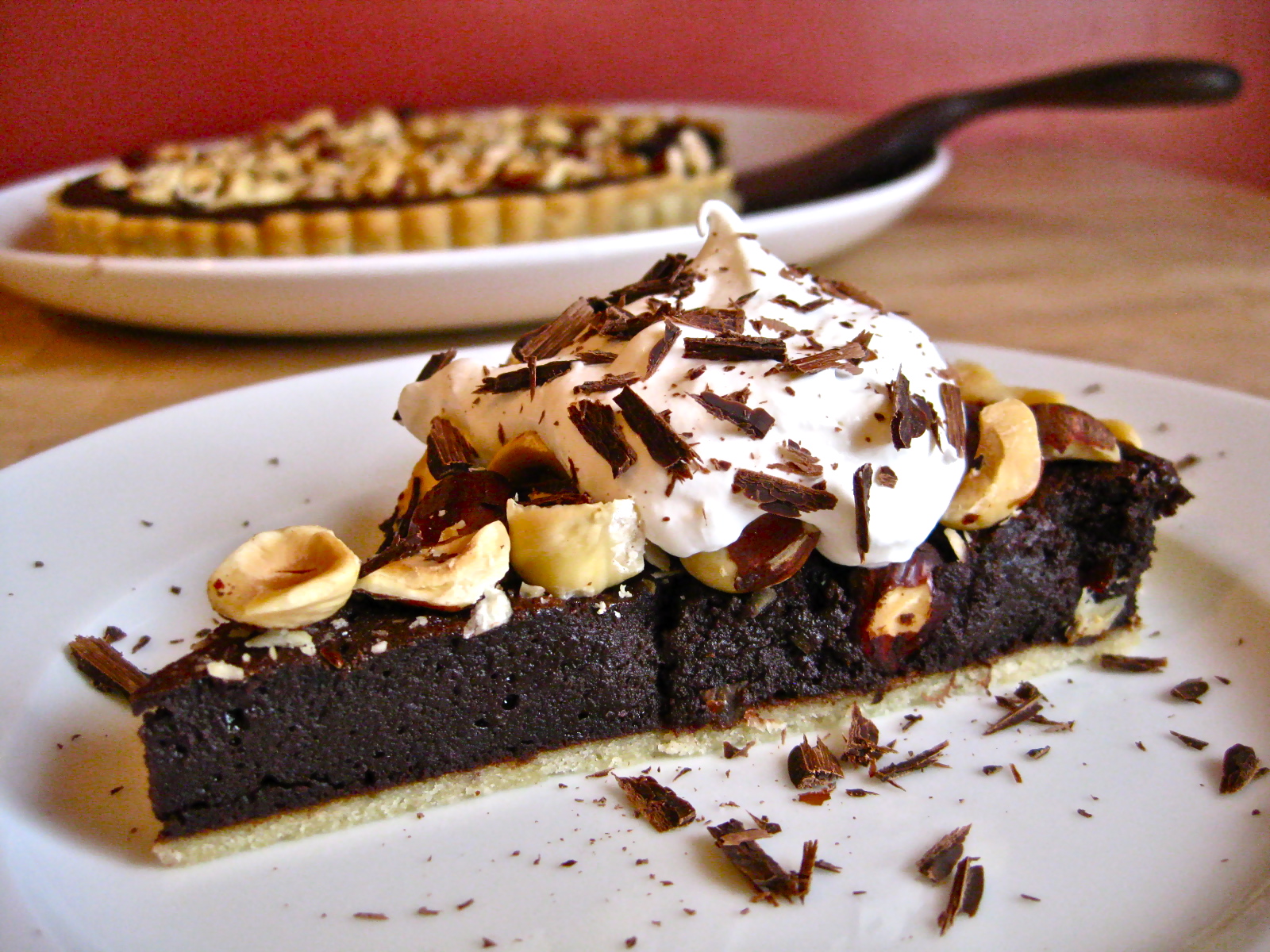
Some of you may recall that I have very recently made another chocolate hazelnut tart.  That tart, with its creamy, pudding-like filling made from hazelnut milk, is an entirely different animal.  The heft in that tart comes from its graham flour crust, while the filling is soft, light, and faintly scented of hazelnuts.  This tart almost functions as the reverse of that tart, with the buttery shortbread crust serving as the crisp counterpart to the dark, deep, bittersweet chocolate filling topped with flavorful toasted hazelnuts and the unexpected bite of sea salt.  While I might be tempted to call the previous chocolate hazelnut tart subtle, I would never even think of accusing this tart of being as such.  It’s CHOCOLATE and HAZELNUTS rendered BOLD, in ALL CAPS, and it demands your attention, straightaway.

Salted Chocolate Hazelnut Tart

I like a lightly salted bite, so I sprinkle only a modest amount of sea salt on this tart.  If you are in search of a more pronounced salty flavor, by all means, add a bit more.  I have included options for  both less salty and more salty preferences in the recipe.

1 partially baked sweet tart shell (this is a great sweet tart crust that I love to pair with this type of tart)

1 cup whole hazelnuts

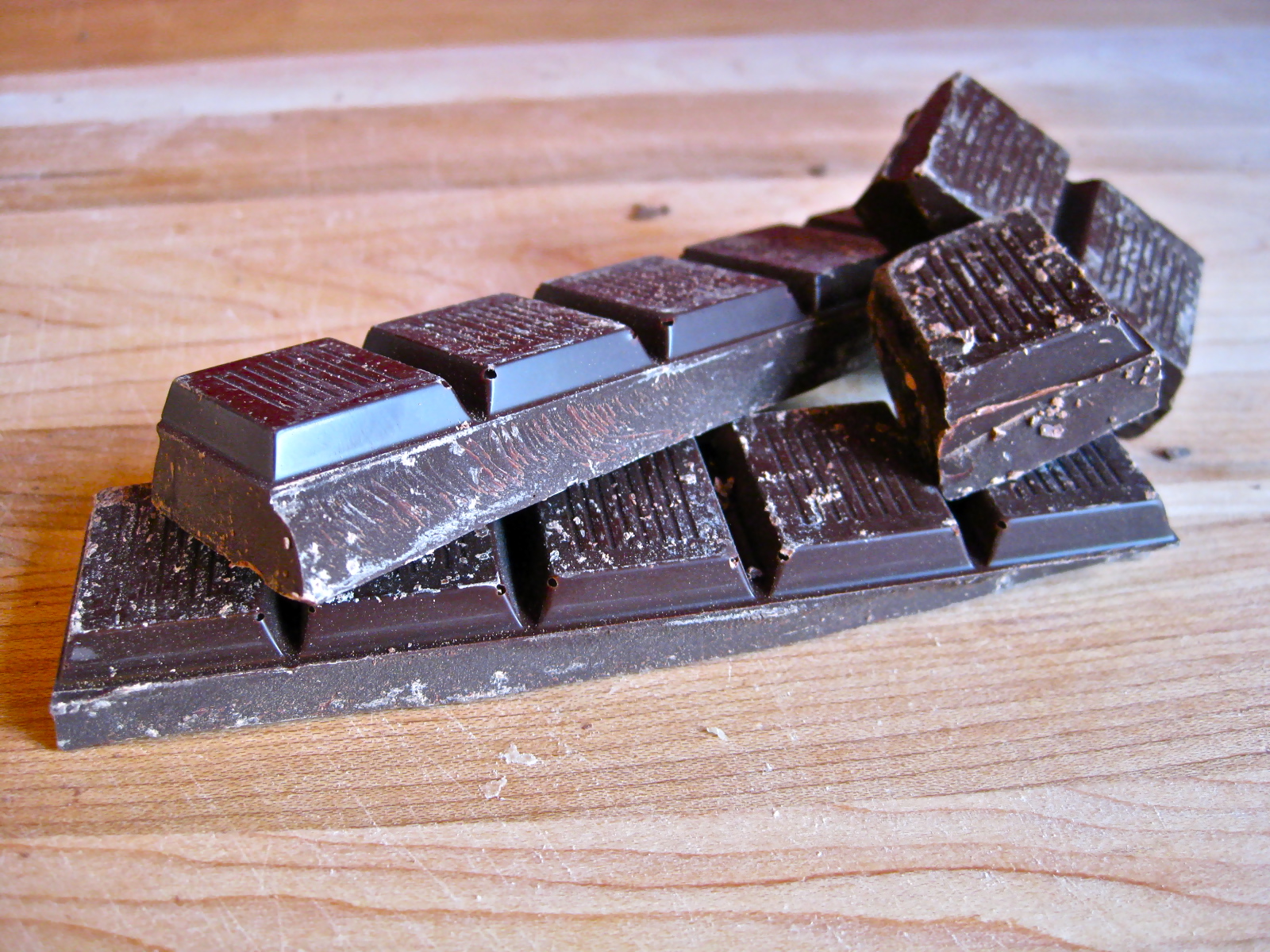
5 ounces bittersweet chocolate, coarsely chopped

½ cup (1 stick) unsalted butter, cut into 1-inch chunks

¼ cup Dutch processed cocoa powder

pinch salt

1 teaspoon pure vanilla extract

3 tablespoons heavy cream

3 large eggs

1/3 cup sugar

1/8-¼ teaspoon flakey sea salt

Preheat oven to 325 degrees Fahrenheit.

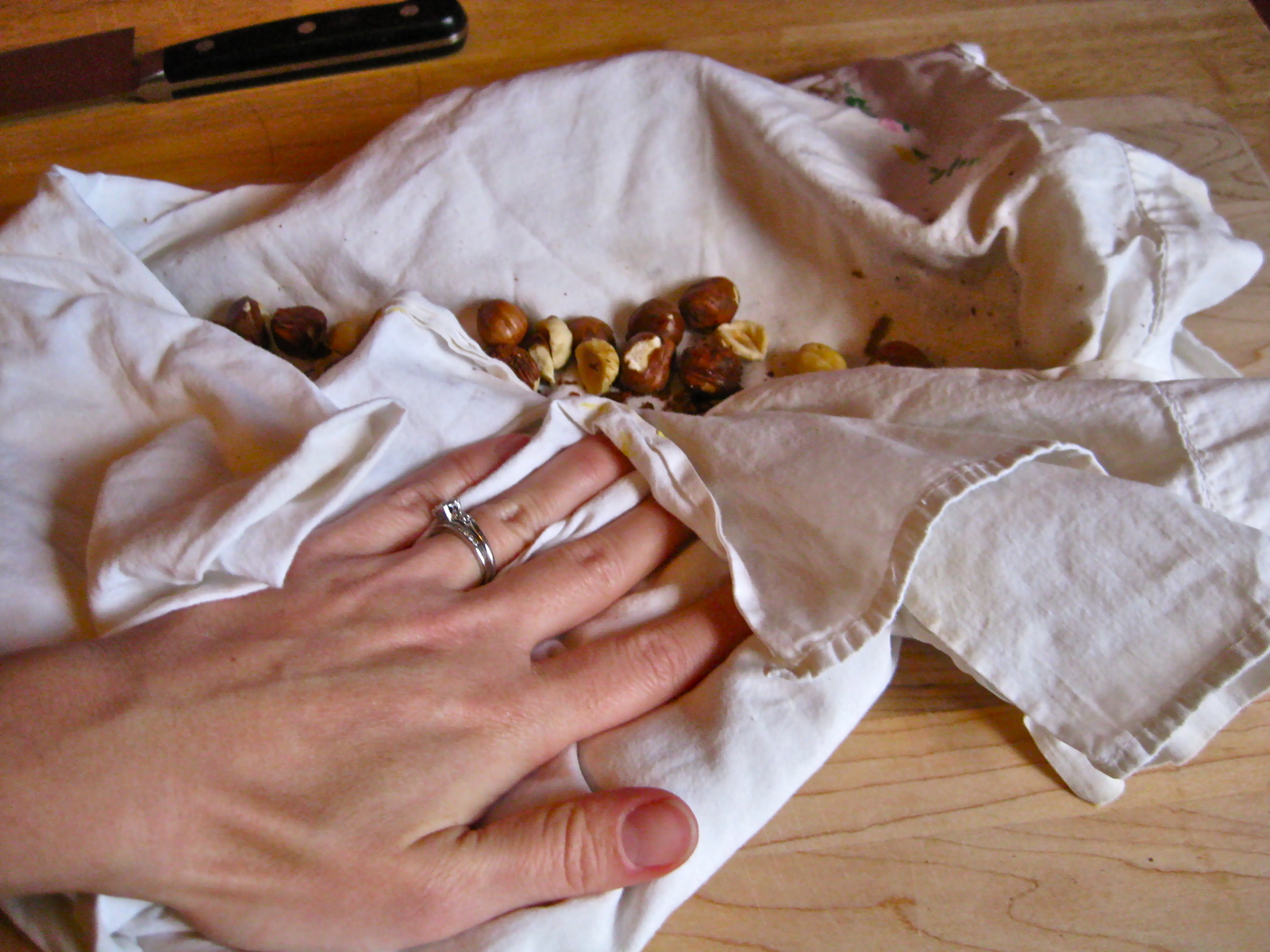
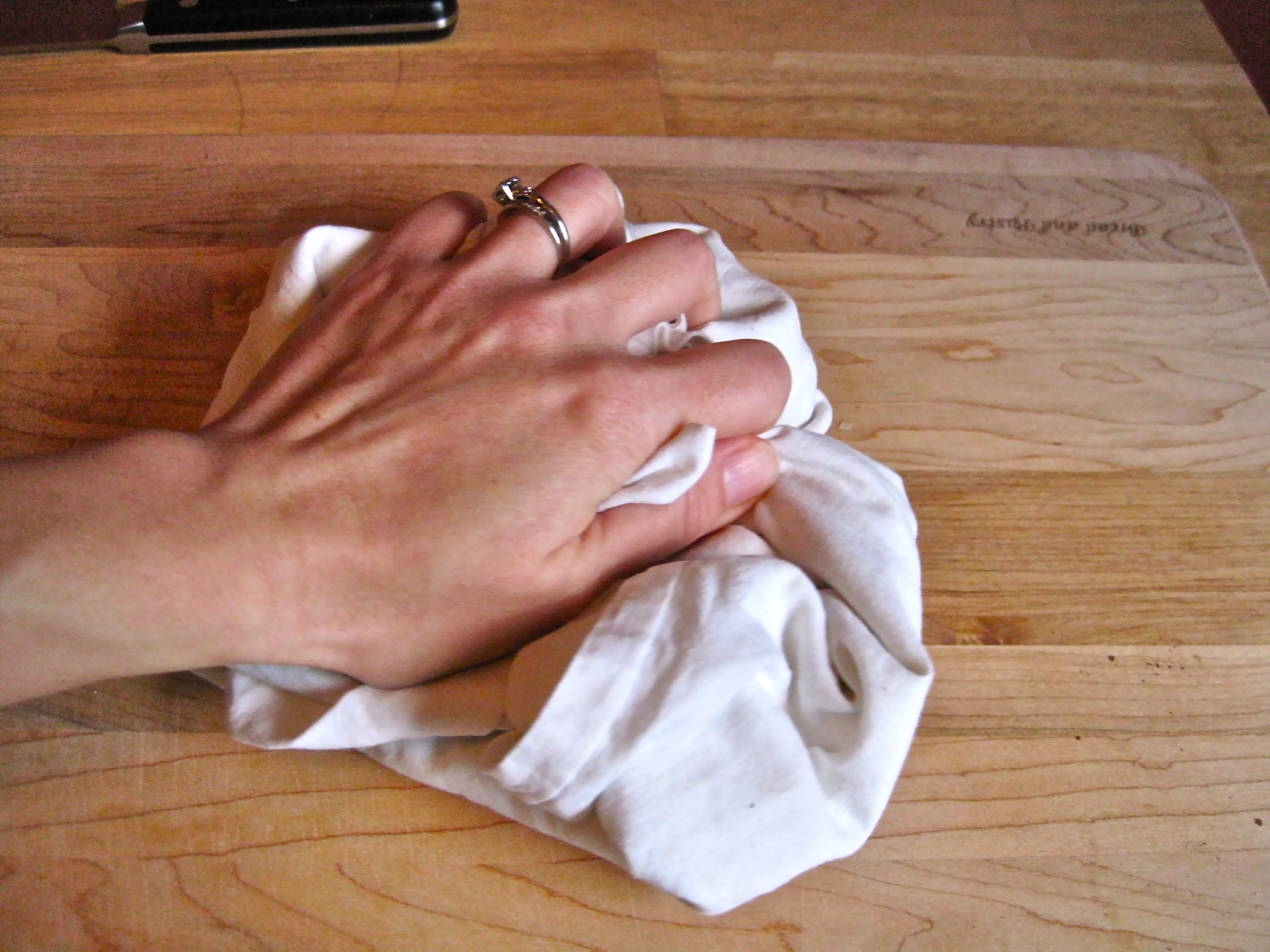
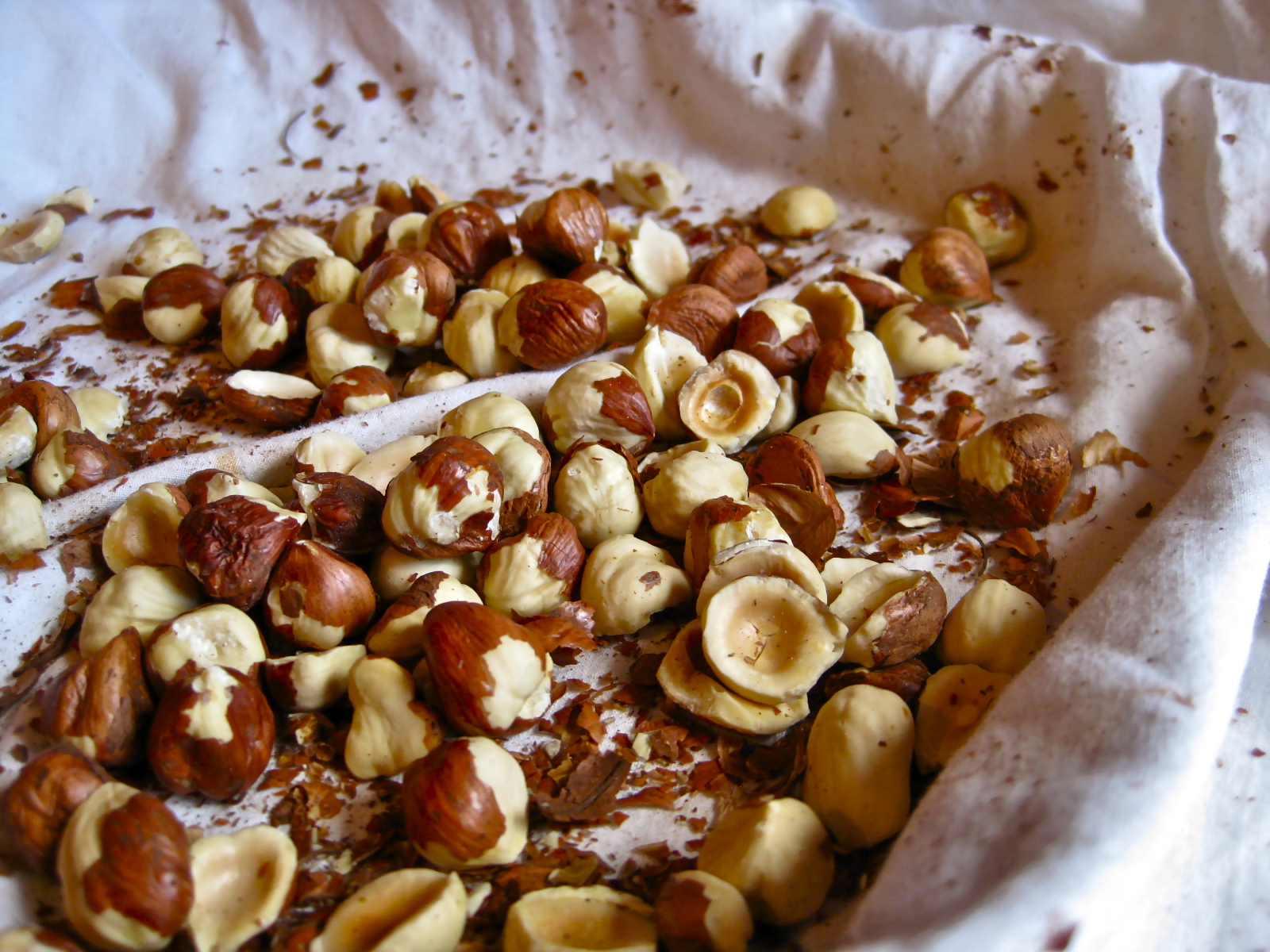
Place hazelnuts on a baking sheet, and toast for 10 to 15 minutes, until you see the skins begin to curl up slightly and come loose.  Place the nuts in a clean dish towel, fold the towel over the nuts, and vigorously rub the towel around, sloughing loose the hazelnut skins.  Continue to rub the hazelnuts in the towel until most of the skins have come free.  It is perfectly fine if some skins remain intact.  Very coarsely chop hazelnuts, mostly to cut them in half, then set aside.

In a double boiler, or in a heat-proof bowl set over a pot of simmering water, combine the chopped chocolate, butter, cocoa powder, and pinch of salt.  Slowly stir until the ingredients have melted together, then stir until well mixed.  Remove from heat and stir in the vanilla and heavy cream.

In a large bowl, or in the bowl of a stand mixer, beat the eggs and sugar until light and ribbony, about 3-5 minutes.  Very slowly pour the slightly cooled chocolate mixture into the egg mixture, beating as you pour.  Beat for 1 minute to combine completely.

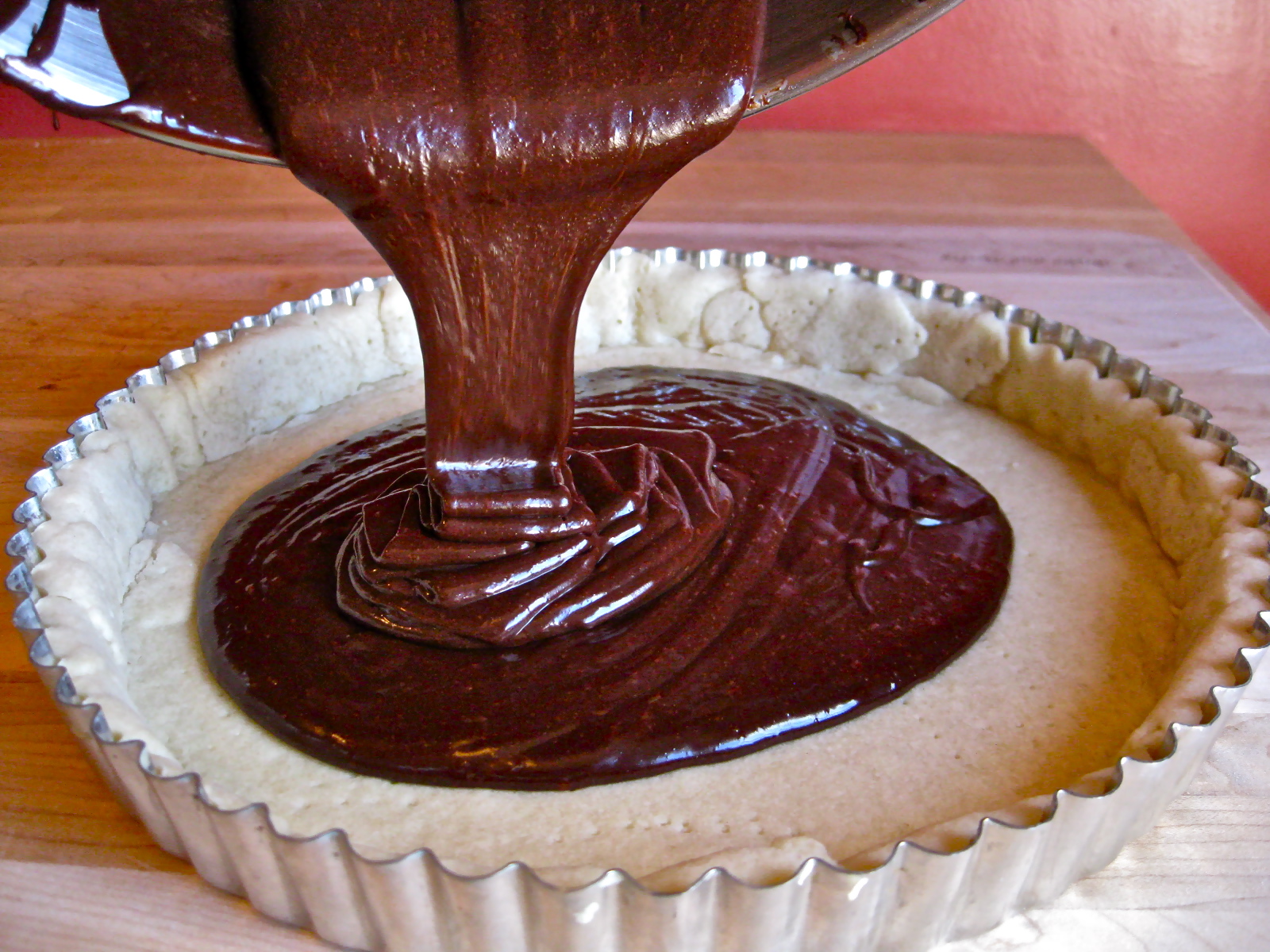
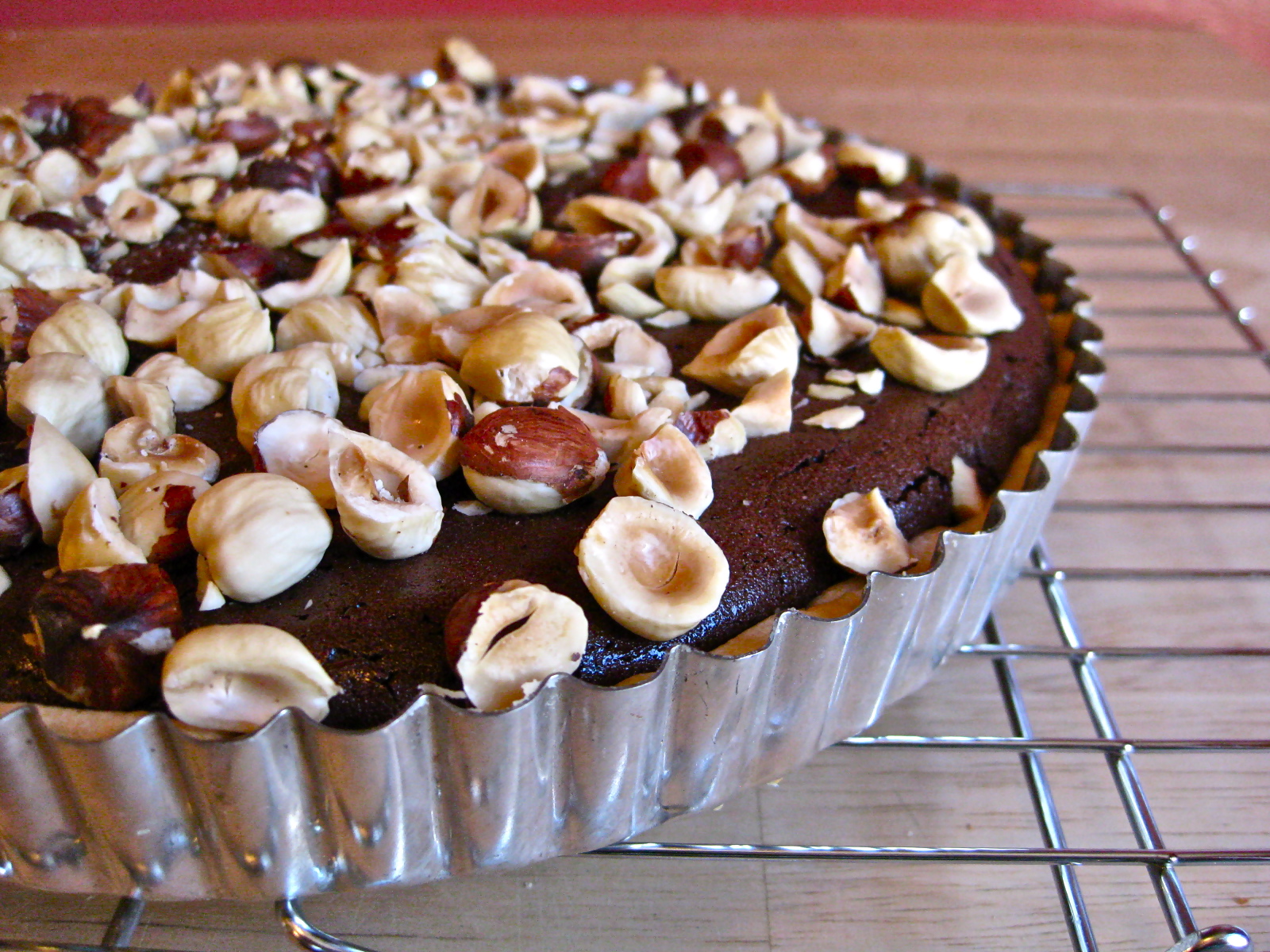
Pour chocolate mixture into the parbaked tart shell.  Place tart on a baking sheet, and bake in the middle of the oven for 20 minutes, until the chocolate filling has just begun to set.  Remove the tart from the oven while still on the baking sheet, scatter the hazelnuts over the top of the partially baked tart, press them very gently into the filling, then return to the oven to bake an additional 15 minutes, until the edges of the tart appear a bit dry and have started to crack.

Remove tart from oven.  Sprinkle your desired amount of sea salt evenly over the top of the tart.  Cool on a wire rack for at least 45 minutes.  The tart will appear quite puffed up when you first remove it from the oven, but it will sink as it cools, allowing the hazelnuts to nestle in quite nicely.

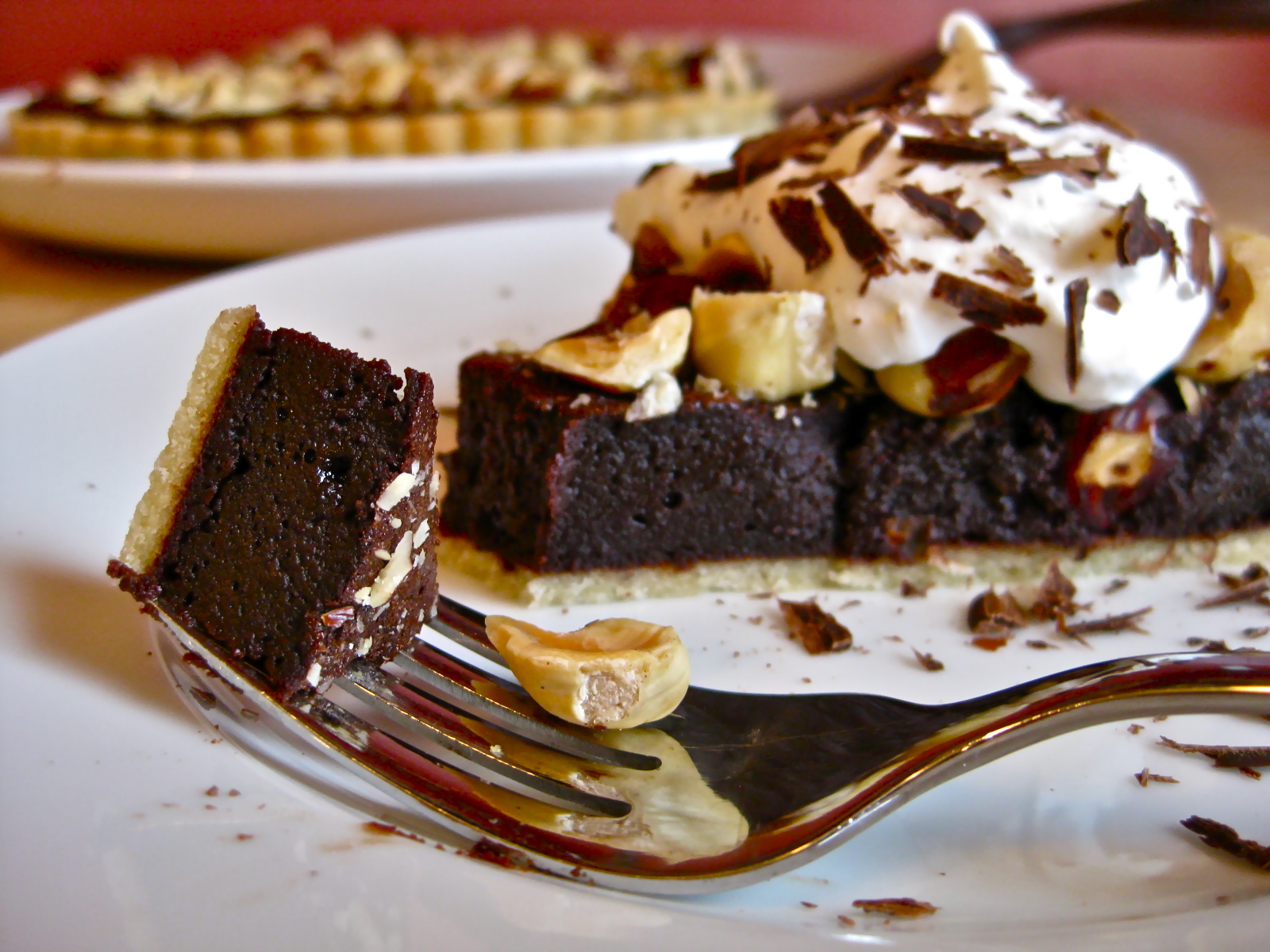
If desired, top with unsweetened whipped cream flavored with just a hint of vanilla.

Dutch Apple Pie

5 Dec

For a very long time, I thought I had come up with the greatest pie dough recipe I’d ever had the pleasure of working with, and subsequently eating.  It was flaky, it behaved well, and the end product was always a delight.  My pie dough recipe had a squeeze of lemon juice in it, which aided the goal of keeping the gluten in the flour undeveloped and, as an end result, the dough never turned out tough.  My only complaint, small as it was, was that the dough never really developed the dozens of flaky layers that I always wanted to see in my pie dough.  Sure, there were layers of crisp flakiness, but not innumerable layers (like I said, small complaint).

Last Thanksgiving, I decided to try out a different pie dough.  Turning to my bible of all things pastry, I settled on using Tartine’s flaky tart dough, an unsweetened, highly buttery dough that I already knew I absolutely loved in savory applications.  Now, here comes the part where I instruct you all to recite with me the discovery I made about this dough when used in a pie, because, by now, you all know what I am going to say when it comes to Tartine and the food it produces: This, my friends, is the greatest pie dough in all the land.

So buttery, so simple to work with, and so unbelievably flaky, this is the very pie dough I have been looking for my entire life.  The best part is, there is no secret to the dough.  There are four ingredients, there is a standard mixing method, and then there is a nice long resting period in both the refrigerator and the freezer.  If I were to really take a stab at what I think makes this dough so fantastic, I’d have to go with three possible suspects.

First of all, the proportion of butter to flour is marginally larger than my former favorite recipe, and it is absolutely perfect.  Second, giving the dough a long resting period in the refrigerator before rolling it out and forming it seems to add a particularly fine texture to the dough, as you are allowing the butter, water, and flour to adhere to one another better without coaxing them along with your hands or a food processor and working the flour’s gluten too long, thus making the dough tough.  A well-chilled dough also allows the small, pea-sized chunks of butter to firm up slightly, which makes the flour and water form tiny little pockets around the butter pieces, which results in a super tender and flaky crust when baked.  I rested this pie dough in the refrigerator overnight and it was simply dreamy.

Third: no sugar.  No sugar.  So simple, right?  For some reason I always thought that I had to add a tiny shot of sugar to my sweet pie and tart dough, but, now that I think of it, that makes absolutely no sense.  If you pie’s filling is going to be sweetened, why gild the lily and sweeten up your dough as well? The lack of sugar in this dough allows the flavor of the butter to really shine in a glorious and uncomplicated way, which bodes well for the dough’s richly sweet filling.

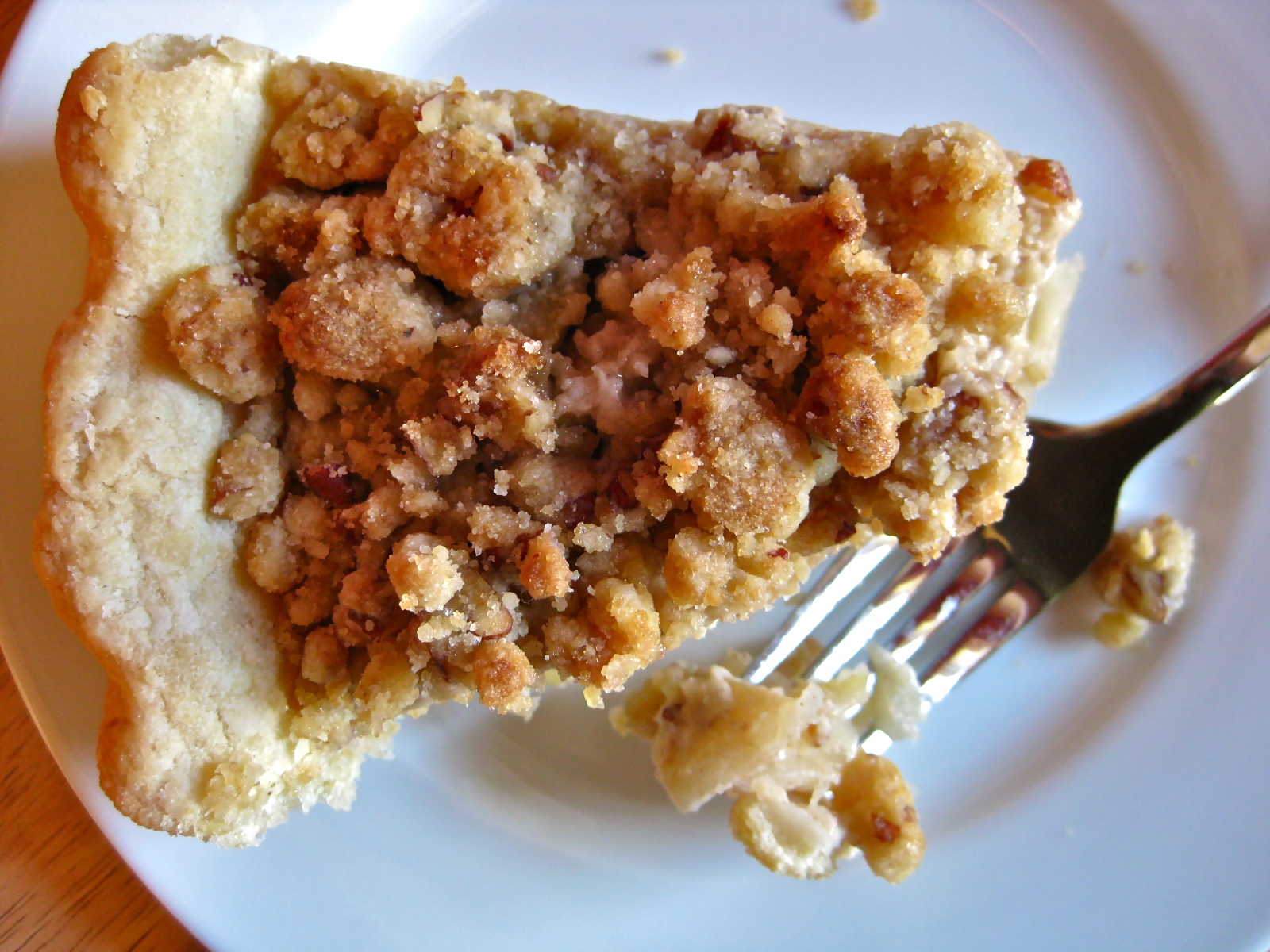
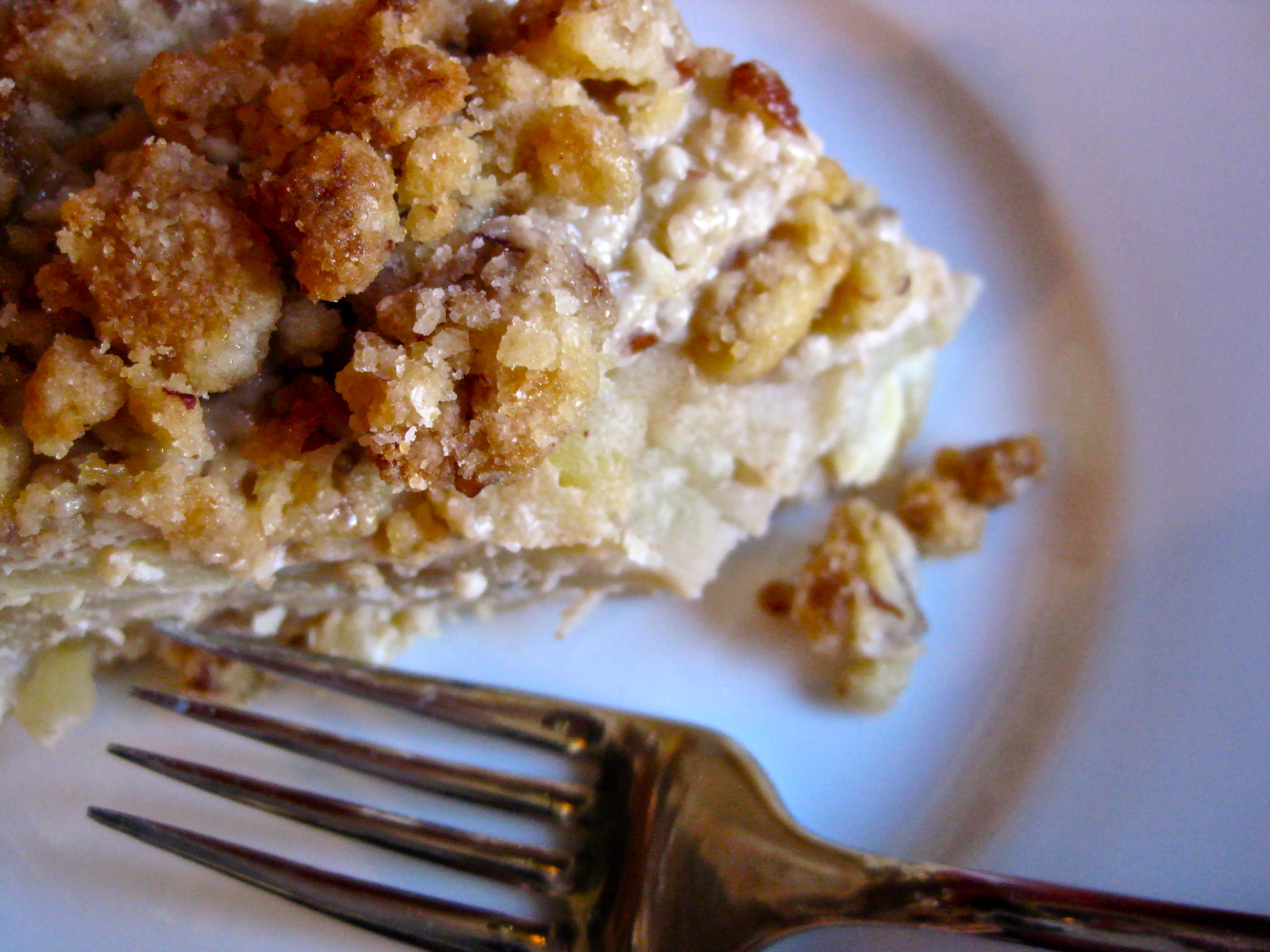
Which brings me, finally, to the rest of the recipe.  A hybrid of a Cook’s Illustrated recipe and what I remember about the Dutch apple pie at the restaurant where I worked as a teenager (which called the pie a French apple pie, as there seems to be quite a bit of overlap concerning what people consider a French apple pie and a Dutch apple pie), the pie I ended up making is stuffed with sautéed tart apples and topped with a hearty, crumbly, pecan-crunchy lid.  When baked, the crisp topping settles into the nooks and crannies left open by the baking apples, leaving no space unoccupied by tasty, cinnamon-laden glory.  At the risk of making two loud proclamations in one post, dare I say that this apple pie is the best apple pie I’ve ever had?  For now, yes.  But only time will tell if its throne will one day be conquered.  Tartine, it’s your move.

Flaky Tart and Pie Dough

From Tartine

1 teaspoon salt

2/3 cup (5 ½ ounces) very cold ice water

3 cups plus 2 tablespoons (1 pound) unbleached all-purpose flour

1 cup plus 5 tablespoons (10 ½ ounces) very cold unsalted butter

In a small bowl, add the salt to the water and stir to dissolve.  Place in the freezer to keep super cold until ready to use.

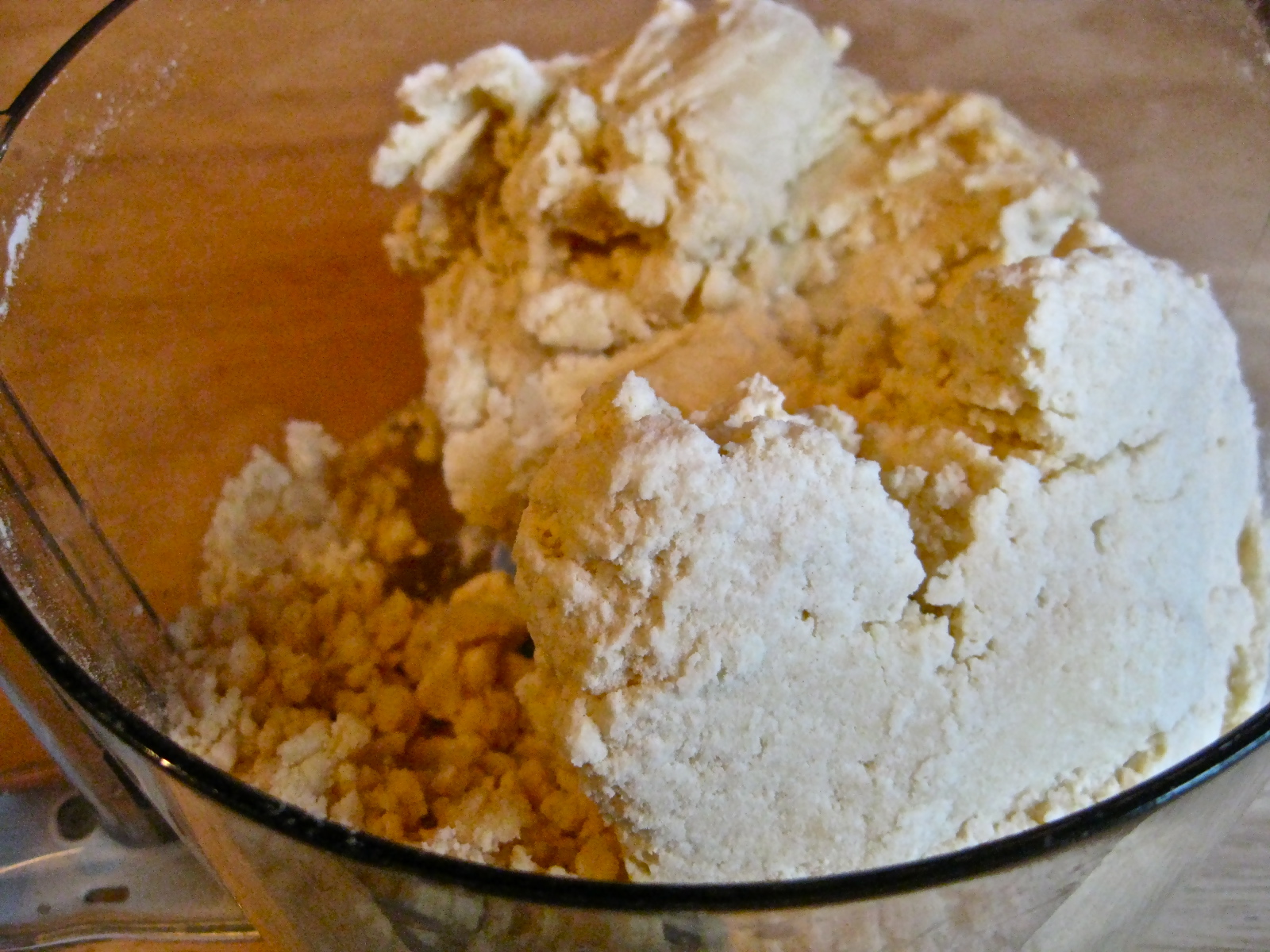
Place the flour in the bowl of a food processor, or in a large bowl.  Cut the butter into 1-inch pieces, then scatter over the flour.  If using a food processor, pulse the mixture briefly until it forms into large crumbs and some of the pieces of butter remain pea-sized.  If making the dough by hand, cut the butter into the dough using a pastry cutter.  You will want the dough to have the same crumb-like look with some large pea-sized chunks of butter throughout.

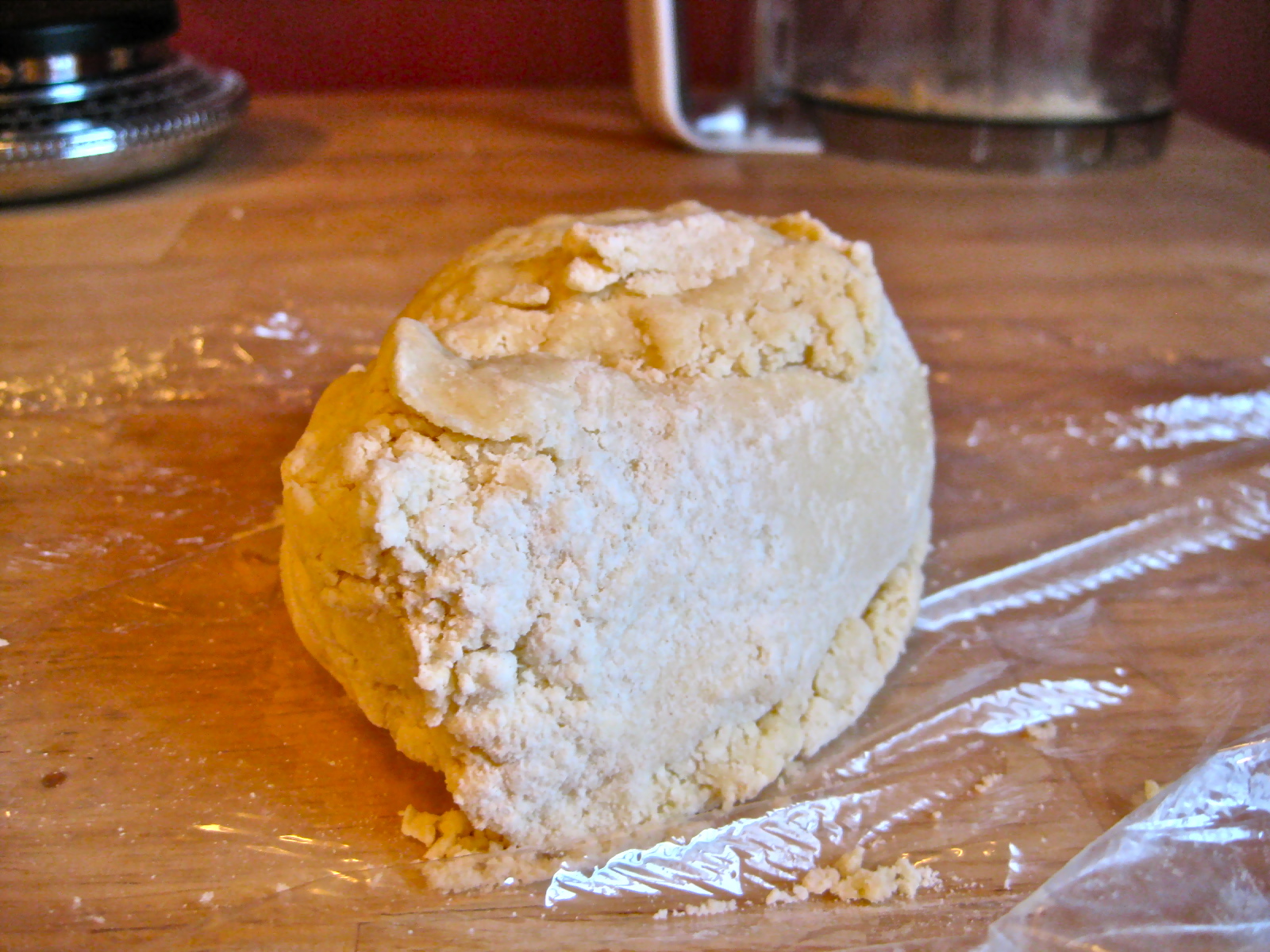
Drizzle the salt and water mixture over the dough and, if using a food processor, pulse until the dough comes together into a ball but is not completely smooth.  You should still see visible butter chunks.  If mixing the dough by hand, drizzle the salt and water mixture over the dough while tossing with a fork.  The dough should come together in a shaggy mass.  Gently mix the dough together until it comes together in a ball but is not completely smooth.  As with the food processor dough, you should still see visible butter chunks.

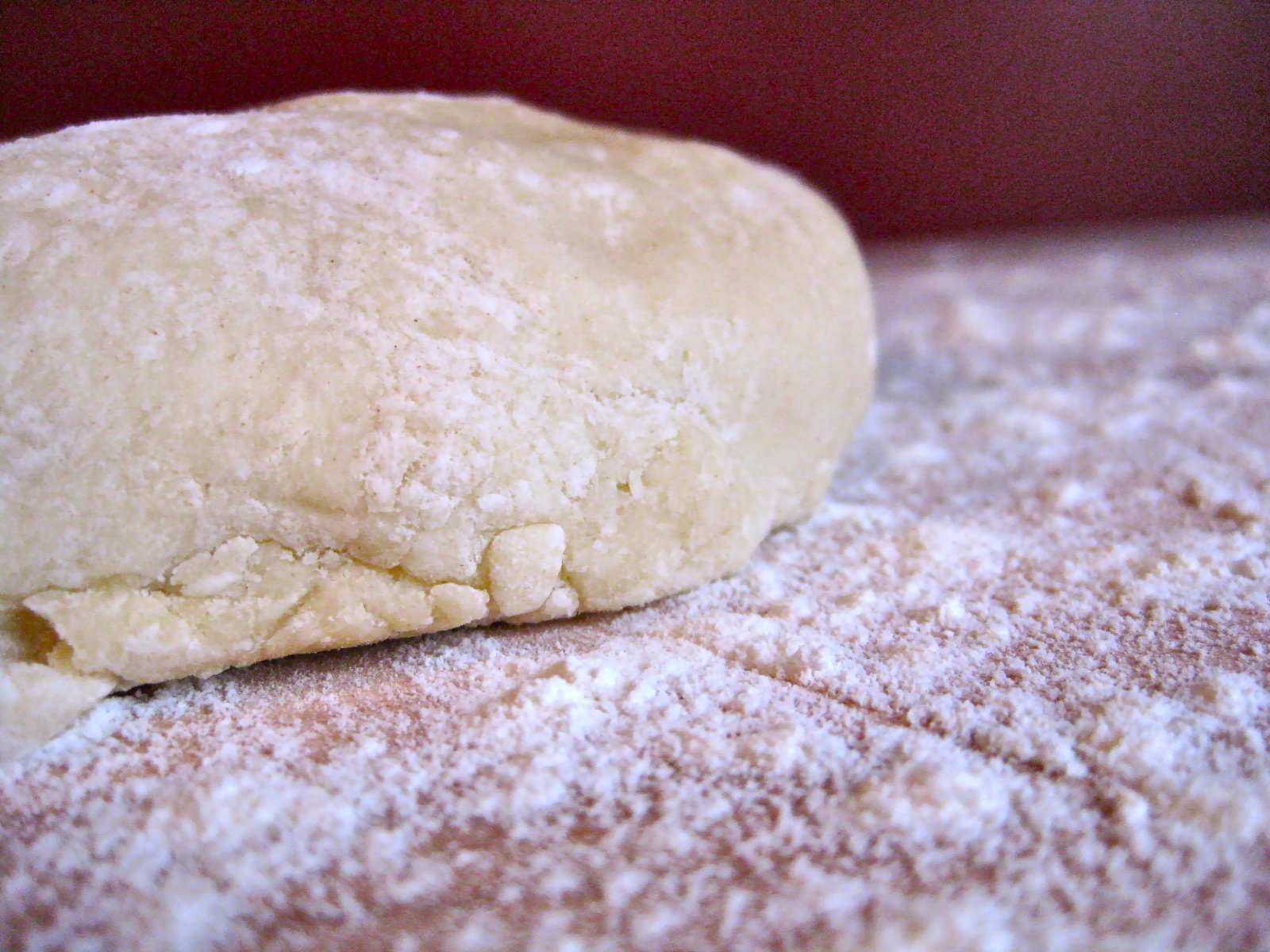
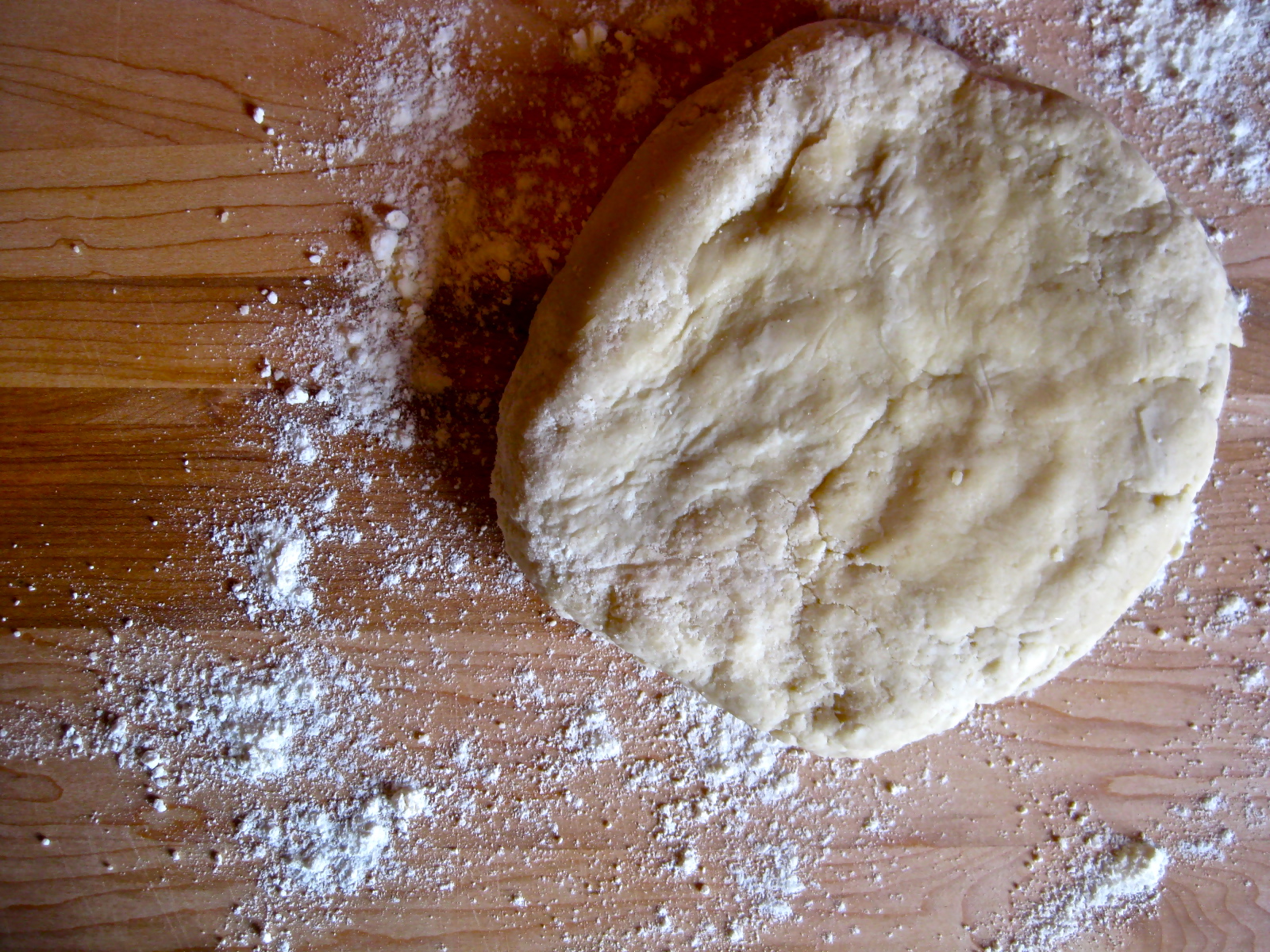
Divide the dough into 2 equal balls on a lightly floured surface.  Shape each ball into a disk about 1 inch thick.  Wrap each disk in plastic wrap and refrigerate at least 2 hours, preferably overnight.

Makes 2 9-inch or 10-inch tart or pie shells, enough for 2 single-crust pies or tarts, or 1 double-crust pie.

Dutch Apple Pie

I have seen many apple pie recipes that call for a mix of tart and sweet apples, and I never understand why.  Tart apples, in addition to holding their shape so much better than sweet apples, provide the best flavor balance for the sweetness of a pie’s sugar and spice.  I know I tend to err on the side of less sweetened desserts these days, but, trust me, tart apples are the way to go with this recipe, or any other apple pie recipe, for that matter.

You will need:

Dough for 1 single-crust pie shell

Streusel

1 cup (5 ounces) unbleached all-purpose flour

1/3 cup (2 1/3 ounces) granulated sugar

1/3 cup packed (2 1/3 ounces) light brown sugar

¼ cup pecans, chopped medium-fine

pinch of salt

6 tablespoons (¾ stick) unsalted butter, melted and cooled

Filling

2 tablespoons unsalted butter

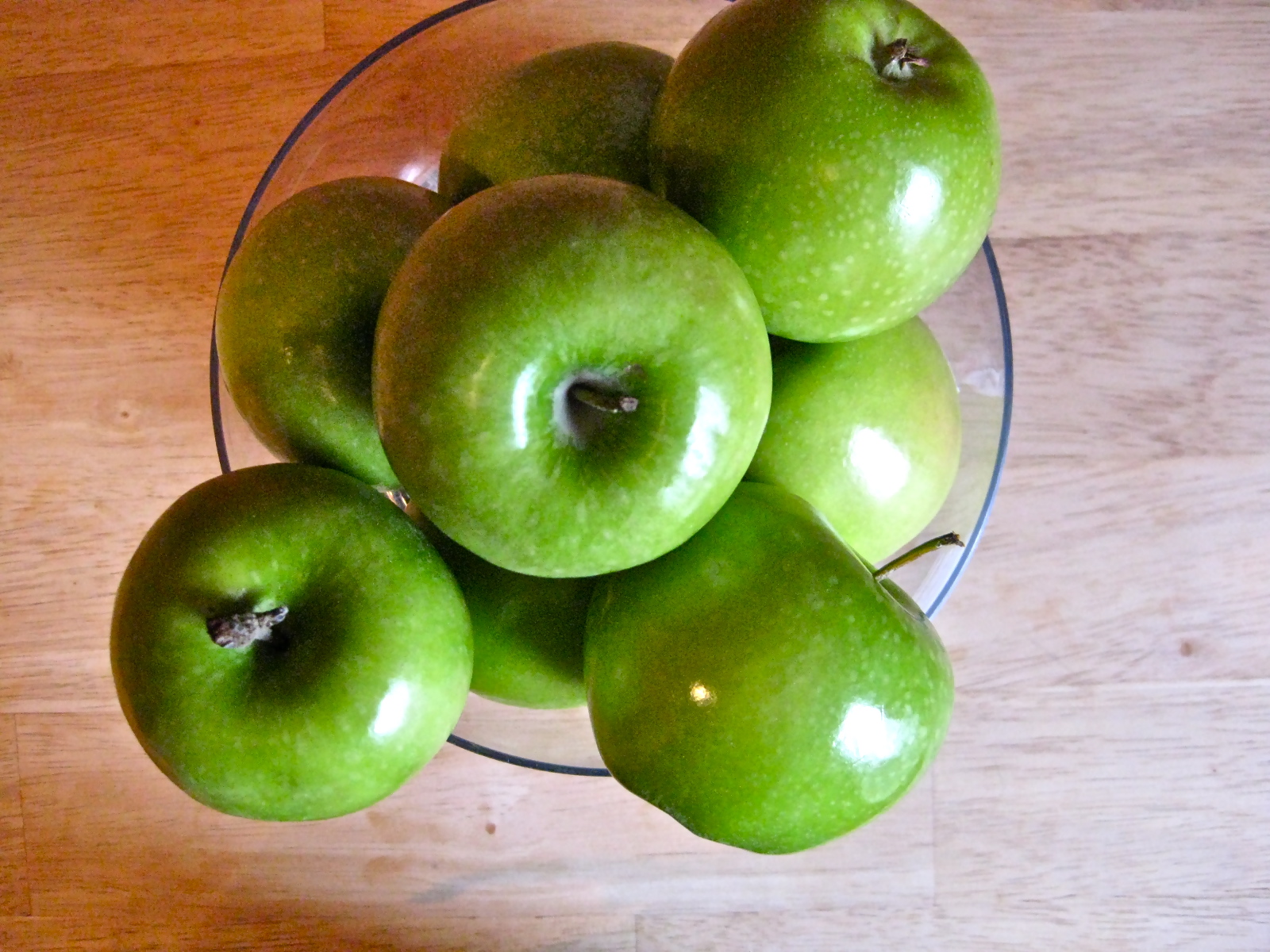
4 pounds firm tart apples (I used Granny Smith, the tartest, firmest apples I know), peeled, cored, and slice ¼ inch thick

¼ cup (1 ¾ ounces) granulated sugar

½ teaspoon ground cinnamon

1/8 teaspoon salt

½ cup heavy cream

Parbake the crust:

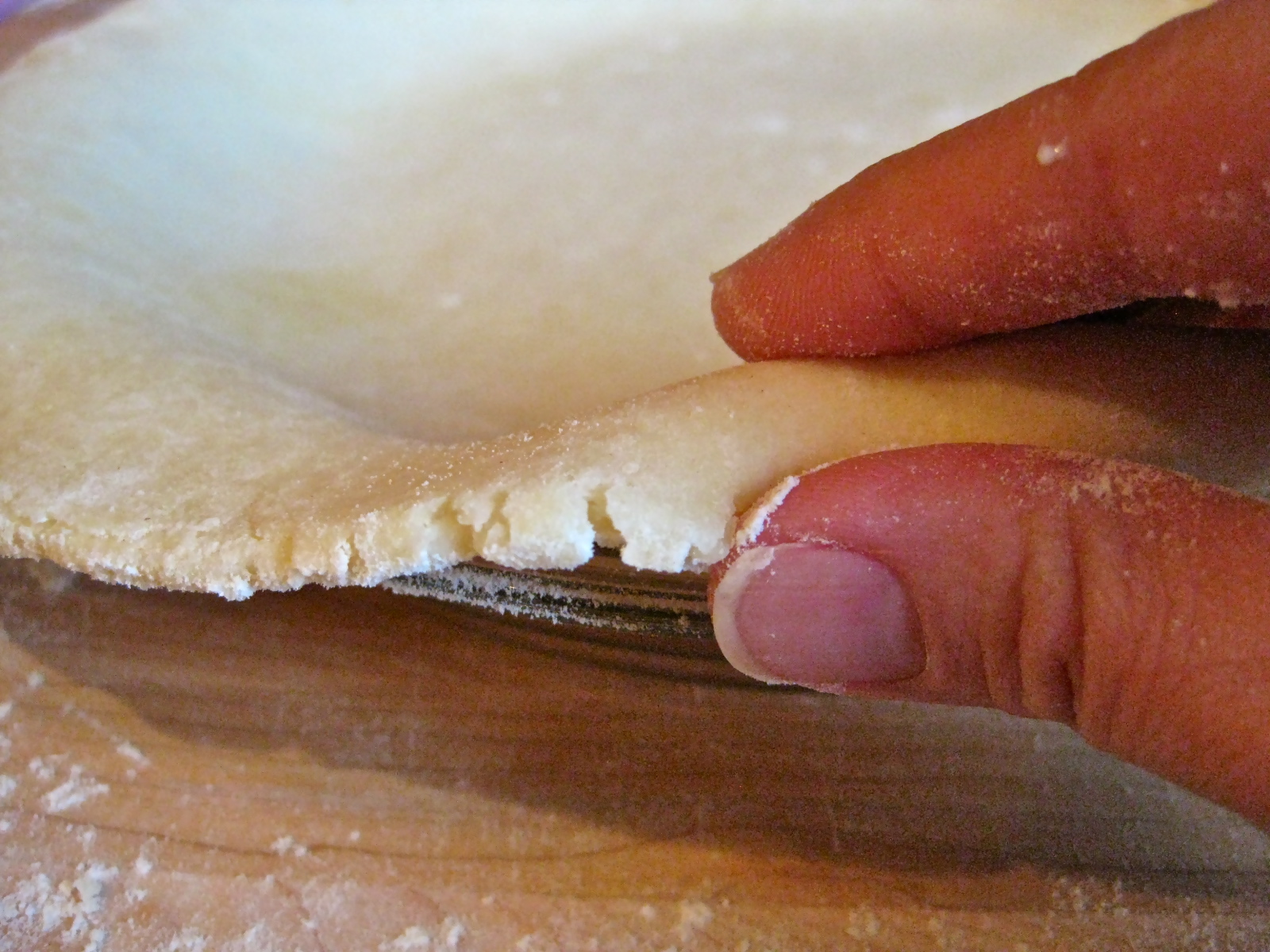
On a lightly floured surface, roll out your disk of chilled pie dough into a circle about 1 ½ inches larger than your 9-inch pie dish.  Gently transfer the dough to the pie dish, easing it into the bottom and sides, and pressing gently into place.  Using a sharp knife, trim the dough so it hangs over the pie dish by ½ inch, or, using your fingers, tuck the scraggly edges of the dough under itself and lightly press to adhere.  Using your fingers, crimp the edges of the dough to make a fluted edges, or using the tines of a fork, press the edges of the dough to flatted it against the rim of the dish.  Place the formed dough in the freezer for 30 minutes to 1 hour (this ensures the flakiest dough possible).

While the dough is chilling, preheat the oven to 375 degrees Fahrenheit and adjust an oven rack to the middle position.

When the dough is chilled and the oven preheated, line the chilled crust with a double layer of foil and fill with pie weights.  Bake until the pie dough looks dry and is light in color, 25 to 30 minutes.  Transfer the pie plate to a wire rack and remove the weights and foil.  With the oven still heated to 375 degrees, adjust an oven rack to the lowest position, and place a foil-lined baking sheet on the rack.

Make the Streusel:

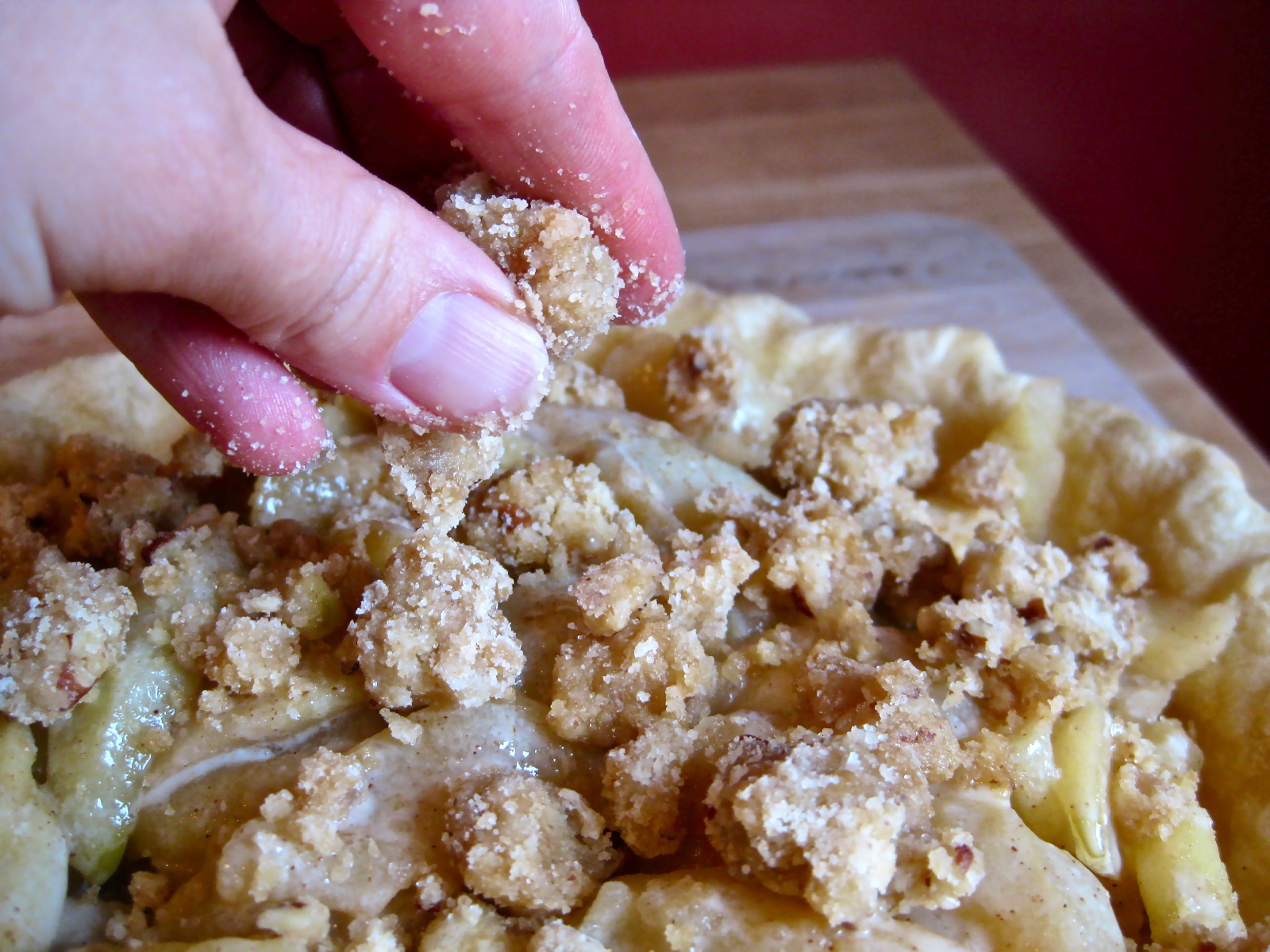
In a medium bowl, mix together the flour, sugars, pecans and salt.  Drizzle with the melted butter, and stir the streusel with a fork until roughly combined.  Set aside.

Make the Filling:

Melt the butter in a large Dutch oven over medium-high heat.  Stir in the apples, cinnamon, sugar, and salt.  Cover and cook, stirring occasionally, for about 10 to 12 minutes, until the apples have just started to soften, and some of the apples have just begun to break down.

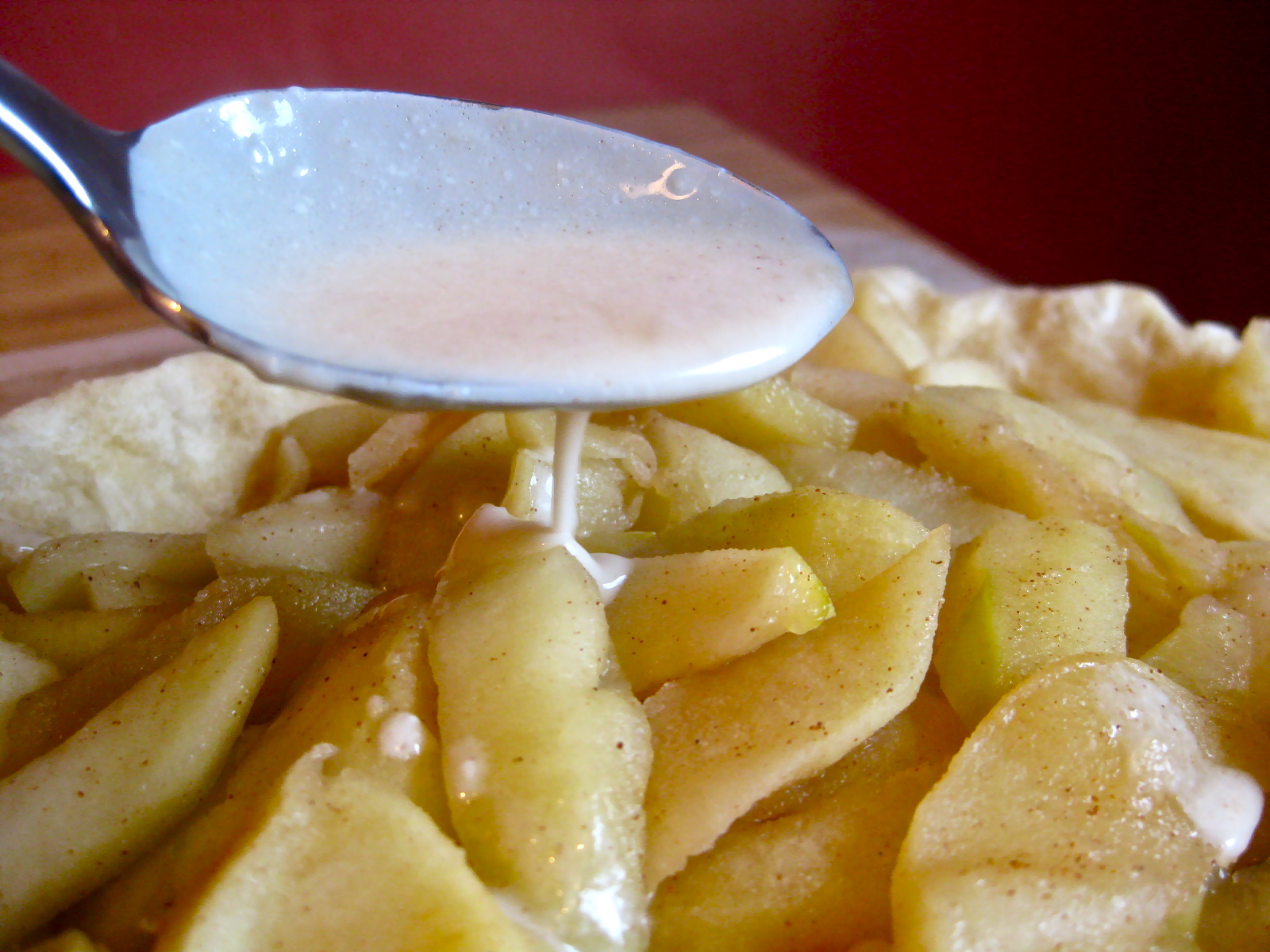
Set a large bowl under a colander.  Pour the cooked apples into the colander, allowing the juice to thoroughly drain into the large bowl set underneath.  In a small saucepan, combine the drained juice from the bowl with the heavy cream.  Cook over medium-high heat until thick and reduced by roughly half, about 3 minutes.

Spread the apples into the parbaked pie crust.  Drizzle with the reduced cream mixture.  Sprinkle the streusel evenly over the top (there will be some large pieces of streusel and some small pieces—this is exactly what you want, as the variation in texture makes for a great bite).  Place the pie on the heated baking sheet and bake until the crust and streusel have browned, about 25 minutes.  Allow the pie to cool on a wire rack until the filling has set, about 2 hours.

Serve slightly warm or at room temperature.