Archive | Vegetarian RSS feed for this section

Homemade Multigrain Crackers

20 Sep

Is it odd to admit that, though I will never bat an eye when it comes to baking my own bread, it never really occurs to me to make my own crackers? In our house, at least, there is not much separating a cracker from a slice of bread in terms of utilization. Both crackers and bread get topped with some sort of cheese, or eaten with fruit, or spread with almond butter. Crackers, though more crisp and tiny, are, like bread, a combination of flours, a leavening agent, and some liquid, so why my indifference about making them at home?
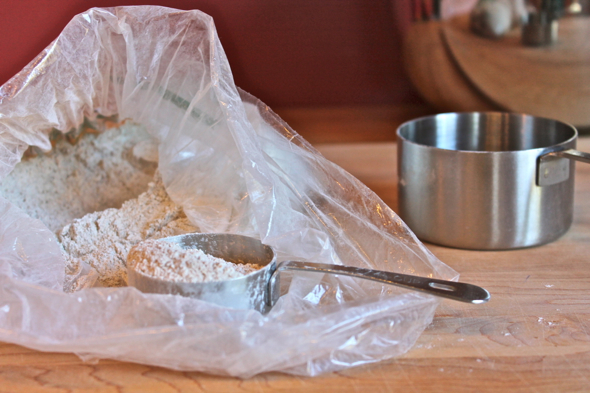
To be quite honest, I rarely make crackers at home because, unlike homemade bread, I have a difficult time making homemade crackers taste as good as crackers I buy. Homemade bread is always a treat, even if I end up making a loaf (or two) that ends up sort of squat or misshapen, the bread always tastes phenomenal, and the experience of making bread always makes me feel soothed and comforted. Making crackers just makes me want to get back all the time I just spend laboring over something that tastes underwhelming, with a texture that is never quite cracker-ish enough.

You know where this is going, right? You can all stop the presses, because here, right now, I have for you the very best homemade cracker recipe you’ll ever find. With a magical combination of rye flour, whole wheat flour, and wheat bran, the texture of these crackers is just about perfect. The taste, slightly nutty from the mixture of flours, is pumped up ever-so-slightly with a dose of light brown sugar, a spoonful of tiny seeds, and a nice undertone of butter. The dough is a dream to work with, and it comes together to form the most perfectly crisp, yet sturdy, crackers that make a delightful pairing with cheese, nut butter, or even just a cup of hot tea. As an added bonus, these crackers are a huge hit with kids. Formed into many an animal shape, the crackers are a perfect weekend afternoon project for kids and adults alike, and, though I am not the type to shoo a child away from a cookie, making crackers and eating them is, if you’re looking for some encouragement, a slightly more virtuous endeavor than turning out a few sheets of cookies. Not that it will matter, though. These crackers, I swear, are just about good enough to choose over a cookie, any day of the week.

Last Year: Tomato Tartlets with Rosemary

Homemade Multigrain Crackers Recipe

Inspired by a recipe in Vegetarian Cooking for Everyone, by Deborah Madison

¾ cup unbleached all-purpose flour

1 cup whole wheat flour

½ cup dark rye flour

½ cup wheat bran

1 teaspoon baking powder

½ teaspoon baking soda

½ teaspoon sea salt

¼ cup lightly packed light brown sugar

1 stick (8 tablespoons) cold unsalted butter, cut into small pieces

1 large egg

½ cup buttermilk or soured milk

1 teaspoon sesame seeds

1 teaspoon poppy seeds

Preheat oven to 375 degrees Fahrenheit.

In a large bowl, or in the bowl of a stand mixer, combine the flours, wheat bran, baking powder, baking soda, salt, and brown sugar.

In a small bowl, beat the egg into the buttermilk, then set aside.

Add the butter to the dry ingredients and mix it in using your mixer’s paddle attachment, or by rubbing the butter into the dry ingredients using your fingers. Stir in the egg and buttermilk mixture until evenly distributed. The dough should be quite combined and sticky at this point, but if it appears to be a bit dry and crumbly, add in a few more drops of buttermilk and continue to mix the dough until it clings together. Stir in the sesame seeds and poppy seeds. Shape the dough into a disc, wrap in plastic wrap, and refrigerate for 10 minutes.

On a lightly floured surface, roll the slightly chilled dough until it is about 1/8-inch thick. Cut out the crackers using a 2-inch biscuit cutter, or several cookie cutters. Combine, reroll, and recut any remaining scraps of dough. Prick the tops of each cracker with a fork, then place on an ungreased baking sheet and bake, one sheet at a time, in the center of the oven for 12 to 15 minutes, until they are lightly browned. If you have cut your crackers into very small shapes, bake them for only 10 minutes at first, then check them for doneness.

Makes about 5 dozen 2-inch round crackers. Makes substantially more crackers if you cut them using tiny cookie cutters.

Perfect Oven Fries with Truffle Salt

13 Sep

There is a burger place two blocks from our house that makes the most incredible french fries imaginable. Perfectly crisp, these fries are quickly tossed with just a hint of truffle oil when they emerge, piping hot, from a deep fryer, and if there was ever a time that I thought I sounded like a complete loon when discussing a food idea I enjoyed, now would be it: I am raving about fried food that is spritzed with oil. Whatever has happened to me?

As some of you may recall, I am a french fry devotee, by which I mean that when I am looking for a rare treat or a counterbalance to a bad day, my thoughts turn to french fries. (Note: When I say that I am looking for a “rare” treat, I do not mean that I rarely partake in treats, but rather that, when partaking in this particular treat, it is a rare occurrence. French fries and I only come into contact about six times a year, so we’re not nearly as cozy as one might suspect. Cake and I, on the other hand…) One might think that, being a french fry fanatic, I will eat any french fry, without discrimination, and declare it to be wonderful. Not so. Too often, I have eaten french fries that are intensely greasy, sadly soggy, or obviously just fried sticks of previously-frozen potatoes that are lacking in any sort of notable flavor or positive qualities. I don’t love all french fries. I only love really, really good french fries.

This is why, at the risk of sounding ridiculous, it is such a joy for me to announce that, at long last, I think I have perfected the art of making french fries at home. Not just that, I have perfected a recipe for making super crisp and flavorful baked french fries, which is like the Holy Grail of homemade french fry making. No vat of scorching hot oil, my friends. No lingering scent of old grease. Just three ingredients (four, if you count an optional sprinkling of black pepper), a couple of baking sheets, and a hot oven are all that lie between you and the most delicious oven fries—perhaps even the most delicious french fries, period—you’ve ever made. The secret, if one can even call it that, lies in soaking your potato slices in a bowl of warm water before you toss them with oil and salt and then roast them in the oven. That’s it. I know. I know. A few tablespoon of oil, a bit of truffle salt, and you’re in. I’ll stop talking now so we can get right to it.

Last Year: The best wine opener I’ve ever owned

Perfect Oven Fries with Truffle Salt Recipe

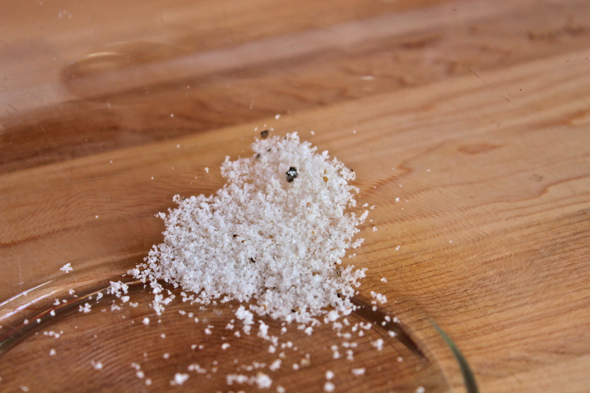
It just so happens that two different people have given me truffle salt this year, so I happen to have an abundance of it lying around. If you’re wondering how to find some for yourself, I found a few listings on Amazon that were not too expensive. I also found some listings that were outlandishly expensive, so please do keep in mind that a little bit of this stuff goes a long way, so you certainly don’t need to buy more than an ounce or so of it in order to have a good supply.

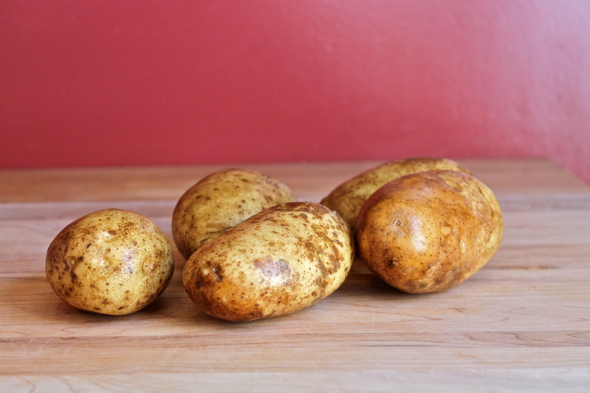
About 2 pounds medium-sized russet potatoes

4 tablespoons vegetable oil

1 teaspoon truffle salt, divided

optional: freshly ground black pepper

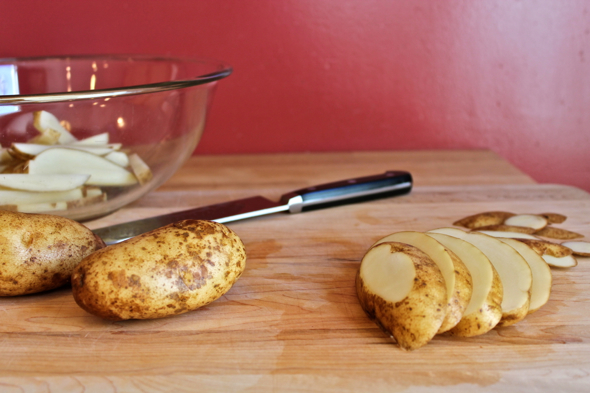
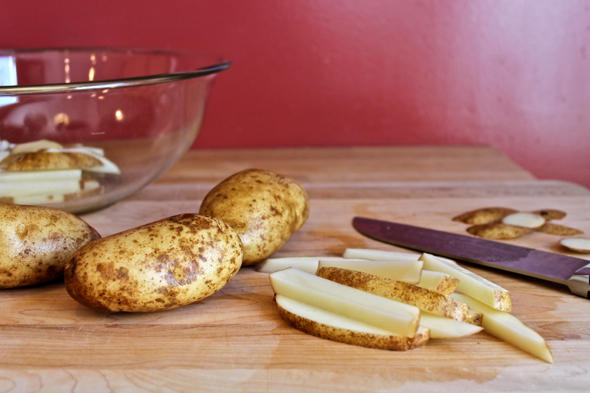
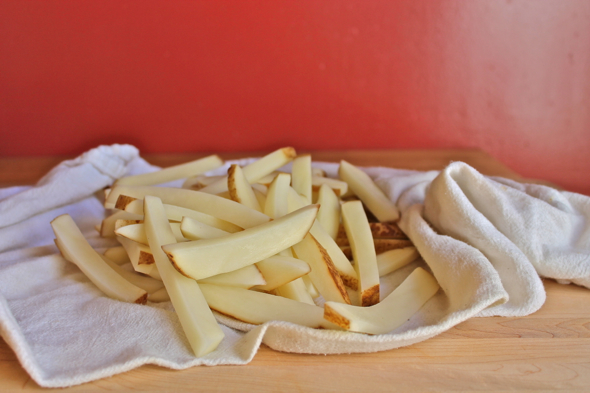
Slice the short ends off of the potatoes, then slice off just a bit of the long sides, creating a somewhat flat surface on either side. Cut the potatoes lengthwise into ¼-inch slices, then cut those long slices into ¼-inch strips.

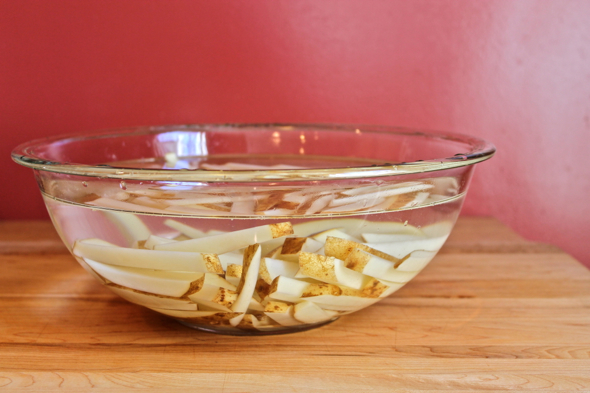
Place the potato strips in a large bowl of lukewarm water, then gently swish the potatoes around until the water becomes quite cloudy. Drain the water from the bowl, refill with lukewarm water once more, then swish the potatoes around again until the water is again cloudy. Drain the water from the bowl, then fill a third time with lukewarm water, and allow the potatoes to sit in the water for at least 30 minutes, or up to 1 hour.

While the potatoes are soaking, preheat your oven to 475 degrees Fahrenheit. Place an oven rack in the lowest position, and another oven rack in the second-lowest position.

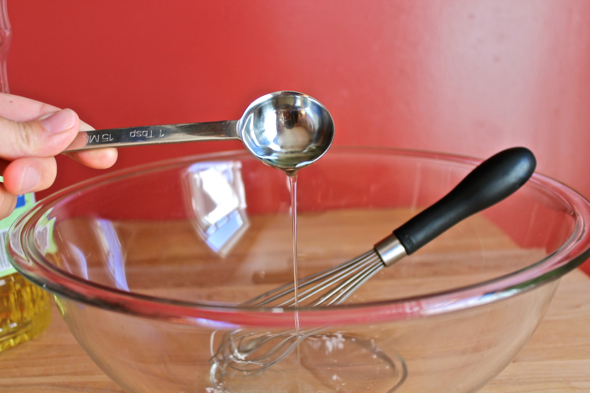
After the potatoes have soaked, thoroughly drain them in a colander. Wipe dry the large bowl in which the potatoes were soaking. In the bowl, combine the vegetable oil with ½ teaspoon of the truffle salt. Whisk the salt into the oil until it has dissolved as much as possible (you will still be able to see many grains of salt after whisking for a minute or so, but that is all right—you just want to thoroughly infuse the oil with the seasoning). Leave the oil and salt together while you finish drying the potatoes by thoroughly blotting them in a large dishtowel.

Place the dry potatoes in the bowl with the oil and salt. Using your hands, toss everything together until all of the potatoes are thoroughly coated in the oil and salt. Divide the potatoes amongst two large, heavy duty baking sheets, making sure the potatoes are arranged in a single layer. Tightly cover the baking sheets with foil, then place one batch of potatoes on the lowest oven rack, and the other batch on the second-lowest rack. Bake the potatoes for 15 minutes, exchanging the positions of the two baking sheets halfway through.

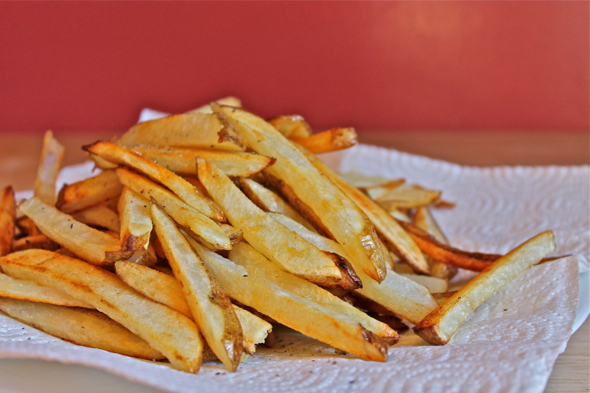
Remove the foil from the baking sheets, then return sheets to the oven, one sheet on the lowest rack, the next sheet on the second-lowest rack. Bake for 10 minutes. Remove baking sheets from oven, carefully flip over the potatoes, again arranging them in a single layer, and return to the oven to finish baking, reversing their positions for the final baking (so the sheet that was just one the lowest level is now on the second-lowest level, and vice versa). Bake for an additional 15 minutes, until the potatoes are a deep golden brown and crisp all over.

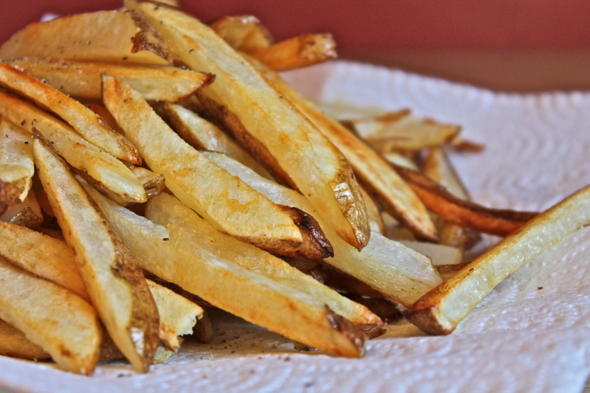
Remove potatoes to a plate lined with a layer of paper towels. Sprinkle potatoes with the remaining ½ teaspoon of truffle salt, and, if you desire, a light sprinkling of freshly ground black pepper. Serve piping hot.

Tzatziki Biscuits with Caramelized Shallot Butter

6 Sep

September is an odd time for cooking. Summer is still clinging on for dear life, and in Portland we often get more warm days in September than we do in June. On the other hand, the warmth we feel in the air is always undercut with a cool, crisp feeling, a sign that no matter how many days we get to experience the glory of 90 degrees in September, autumn is, in fact, on its way. September really may be Portland’s prettiest month, offering sunshine, late summer flowers, warm days, and crisp nights. As I mentioned before, however, with weather like this, what’s a person to cook?

You see, part of me wants to stretch out summer as long as possible, grilling things, eating outside, and comprising meals of light, flavorful bites, as is befitting of summer. Another part of me, craving the comforts of autumn food, wants to turn on the oven, roast things, bake things, and take advantage of the season’s newest crops of apples and pears. For as much as I love summer food, I might actually like autumn food more, what with its ability to straddle the line between fresh and light (tomatoes, berries, grilled corn), and soothing comfort (apples, roasted anything).

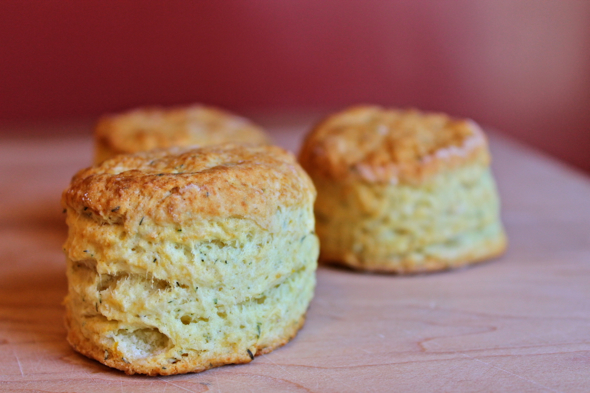
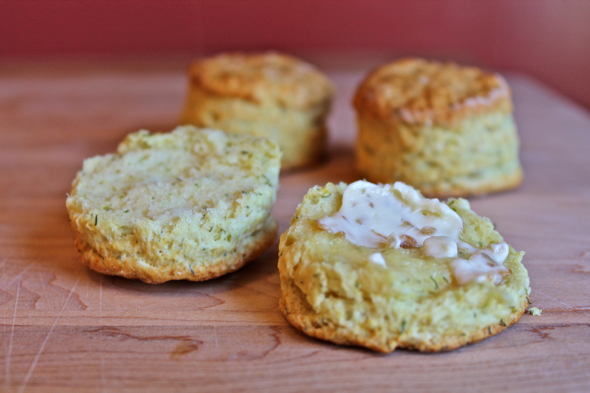
To bridge the gap between the two seasons, I often find myself coming up with meals that can celebrate the best of both summer and autumn. These lovely, light biscuits manage to do just that. With a nod to cool and refreshing tzatziki, the biscuits are punched up with dill, olive oil, creamy yogurt, and a nice dose of lemon zest. Paired with an utterly autumn-inspired caramelized shallot butter, you’ve got a great combination of flavors. To bring this pairing home even more, slip a thick slice of cucumber into a biscuit and crunch down into the companionable world of summer freshness melting into crisp autumn.

Tzatziki Biscuits with Caramelized Shallot Butter Recipe

Tzatziki Biscuits

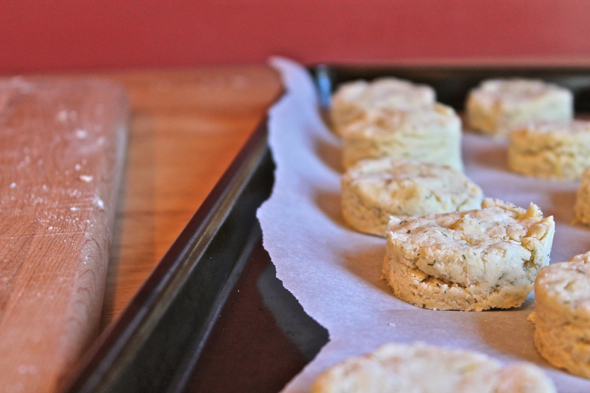
Preheat oven to 450 degrees Fahrenheit. Line a baking sheet with parchment paper and set aside.

2 ¼ cups unbleached all-purpose flour

1 tablespoon baking powder

1 teaspoon baking soda

1 teaspoon dried dill

½ teaspoon sea salt

½ cup plain yogurt

½ cup milk

1 teaspoon finely grated lemon zest

1 large clove of garlic, peeled and mashed or grated into a fine paste

2 tablespoons olive oil

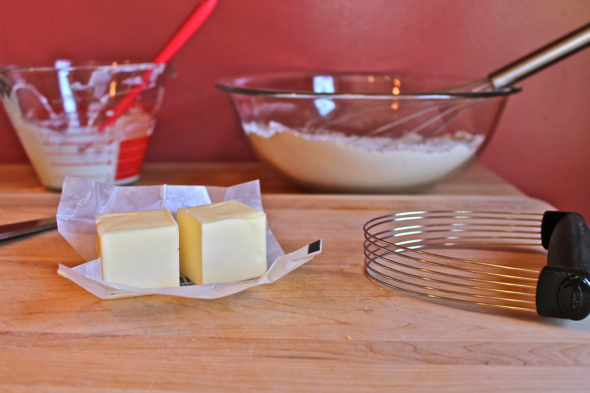
4 tablespoons unsalted butter, cut into 1-inch chunks

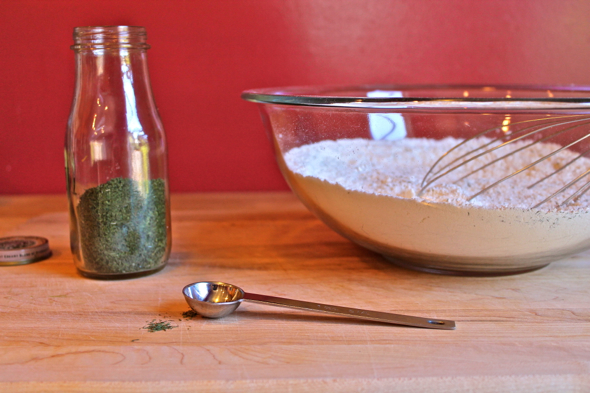
In a large bowl, whisk together 2 cups plus 2 tablespoons of the flour, baking powder, baking soda, dill, and sea salt.

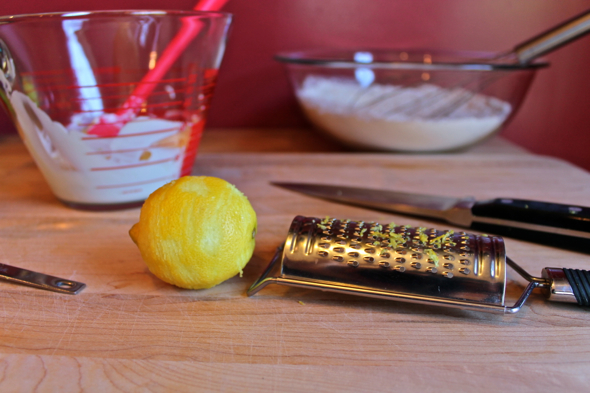
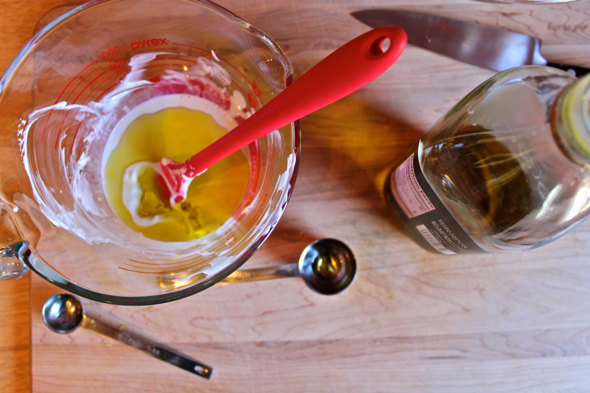
In a small bowl, whisk together the yogurt, milk, lemon zest, garlic, and olive oil.

Add the cold butter to the flour mixture and, using a pastry cutter, cut the butter into the flour until the mixture resembles coarse crumbs with a few pea-sized chunks of butter strewn throughout. Pour the yogurt mixture into the flour and butter, and use the pastry cutter to mix the liquid ingredients into the dry. Mix just until the ingredients come together and form a somewhat shaggy mass. If the mixture is unbearably sticky, add in the remaining flour, 1 tablespoon at a time, mixing with the pastry cutter until everything comes together in a workable mass.

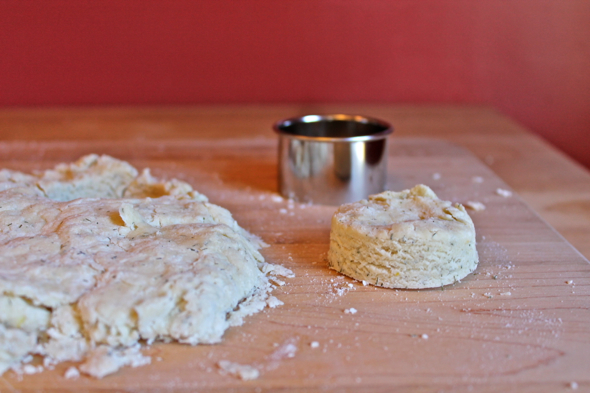
Turn the dough out onto a floured surface. Gently flatten out the dough a bit, then fold it over on itself and pat down to adhere the dough together. Gently flatten out the dough again, fold it over again, then gently flatten and fold once more. Pat the dough into a rough 10-inch oval then, using a 1-inch biscuit cutter, cut out rounds of dough, placing each one on the prepared baking sheet. Cut the rounds as close together as possible, ensuring that you are using as much of the dough as possible during this first cutting. Piece and pat together any remaining scraps, then cut out the remaining biscuits. The less you handle the dough, the lighter your biscuits will be, so be judicious with your cutting.

Bake the biscuits in the center of the oven for 12-14 minutes, until the bottoms are dark brown and the tops are a deep golden color. Remove from baking sheet to cool slightly before eating. Eat while still warm.

Makes about 20 biscuits.

Caramelized Shallot Butter

1 teaspoon olive oil

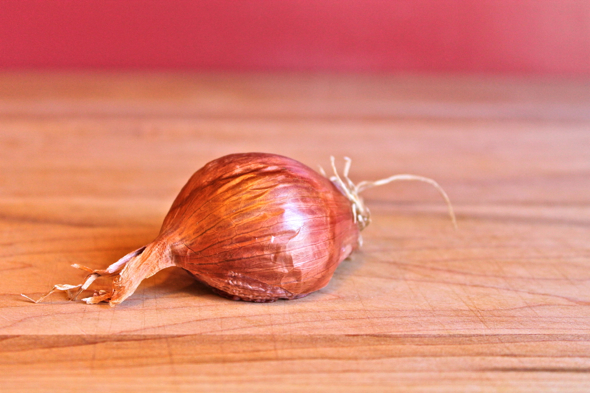
1 large shallot, sliced into medium-thin rings

pinch of sea salt

4 tablespoons unsalted, room temperature butter

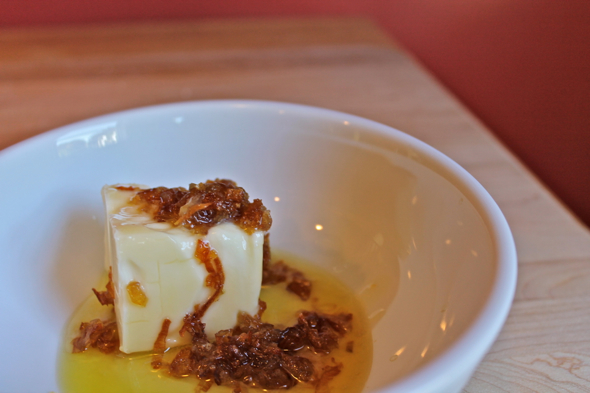
In a small pan, heat the olive oil over medium heat. Add the sliced shallots and allow to sizzle gently for a couple of minutes, then add the sea salt and reduce heat to low. Cook over low heat, stirring occasionally, until shallots are deeply browned and very limp, about 15 to 20 minutes. Remove from heat and allow to cool for 10 minutes or so, until it reaches room temperature.

In a small bowl, pour the shallots and any remaining olive oil over the butter. Mash the shallots into the butter, then, using a fork, whip the butter up a bit until it has lightened just a tad.