Italian-Style Herb Bread

8 Mar

This started out as a recipe that was not at all mine.  Spotted in Beth Hensperger’s Bread Bible, the original bread featured a wholly different selection of herbs, a nice dose of white wine, and a hearty stuffing of Italian sausage.  But then, as these things so often happen, when I wanted to make the bread I found that I was not in possession of the particular herbs Ms. Hensperger called for.  I was also out of wine.  And sausage (because who just keeps a spare supply of sausage lying around the house?  Or maybe people actually do that and I just don’t know it?  I must research this further).
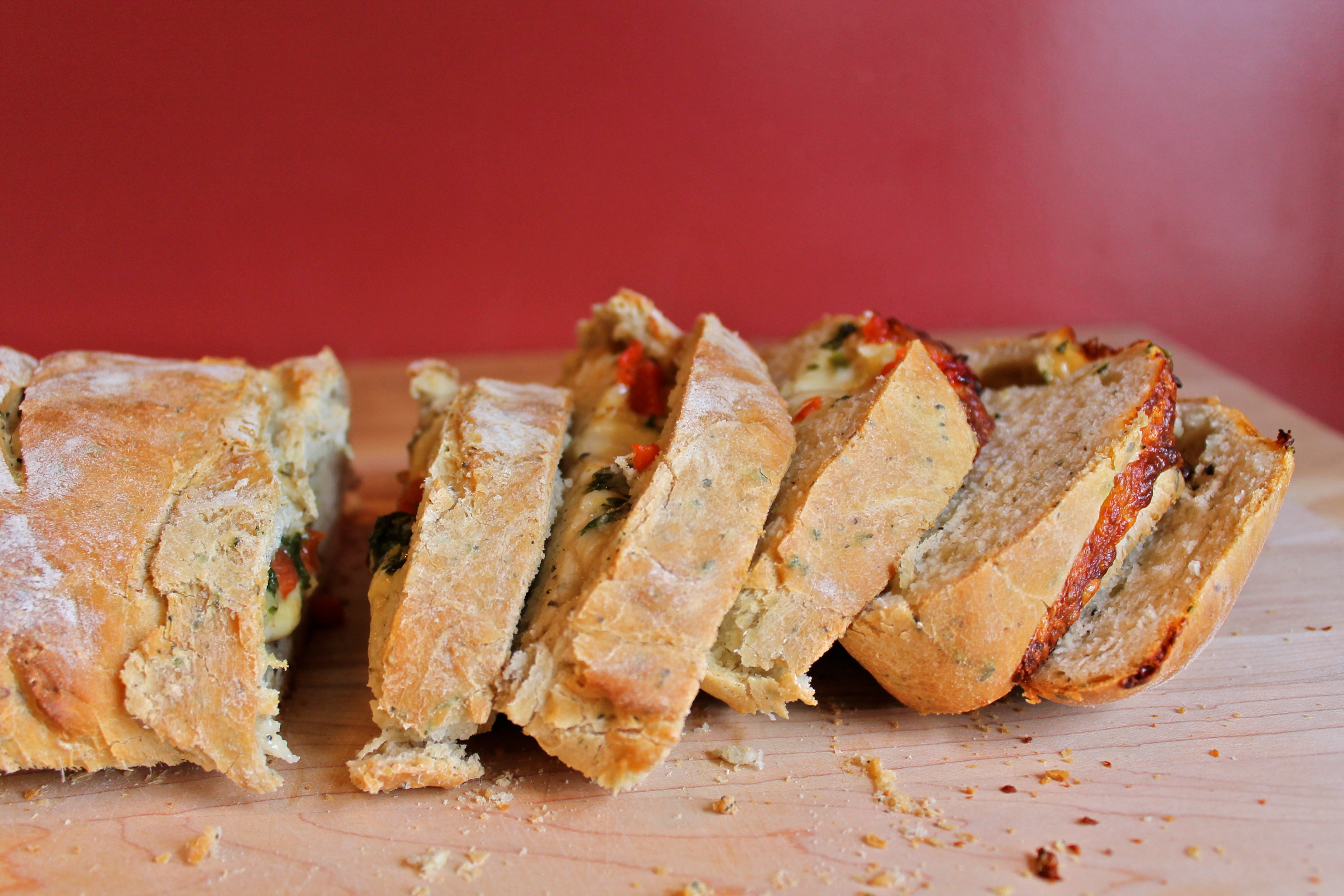
So I made do.  The herbs were a bit different, the wine was swapped out with warm water and a generous glug of balsamic vinegar, and the stuffing changed from sausage to a lovely layer of roasted red pepper and sautéed spinach.  The end result, though not much like the one intended by Hensperger, was wonderful.  But now, sitting down to type this, I am beginning to wonder if the two recipes can rightfully be called the same thing.
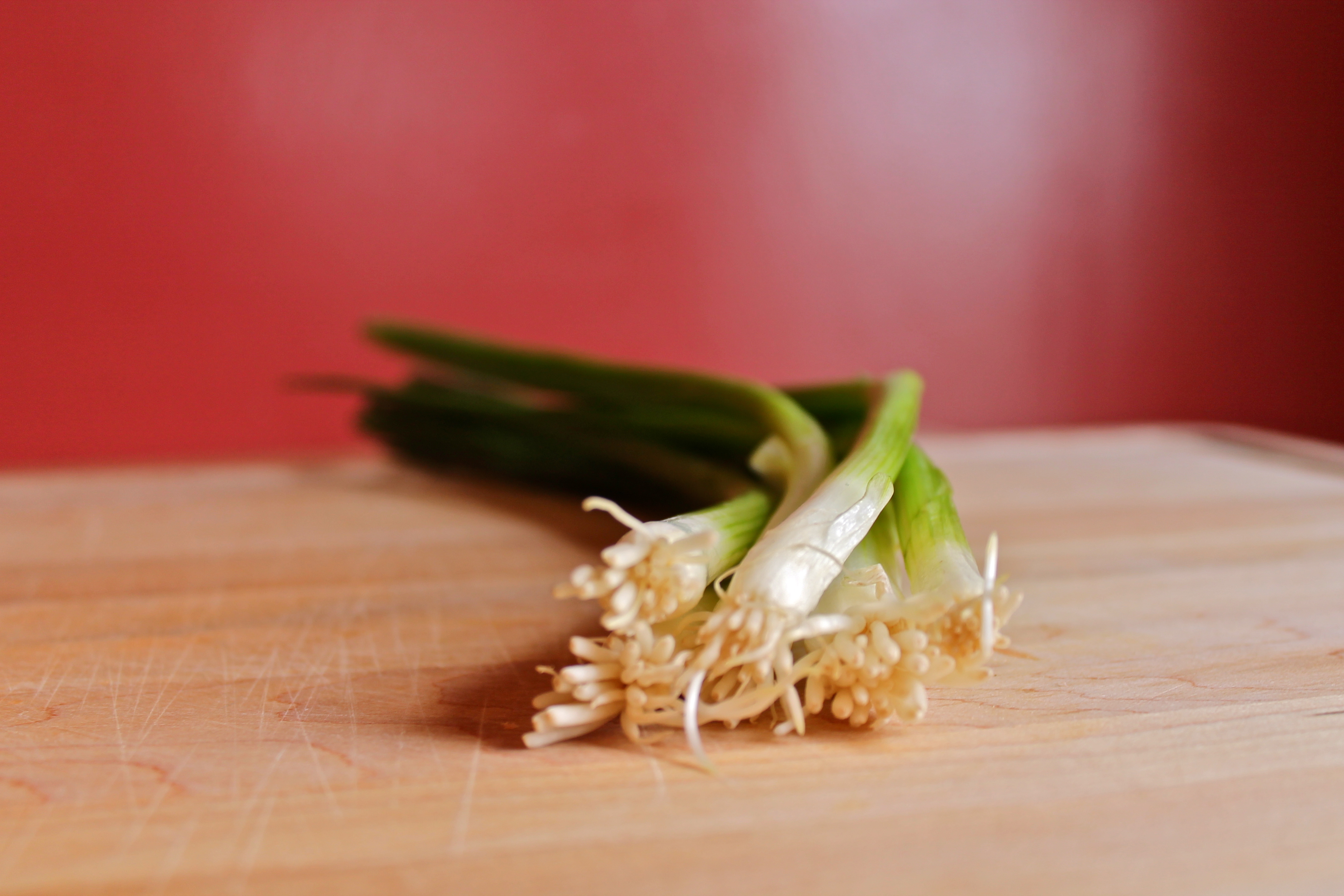
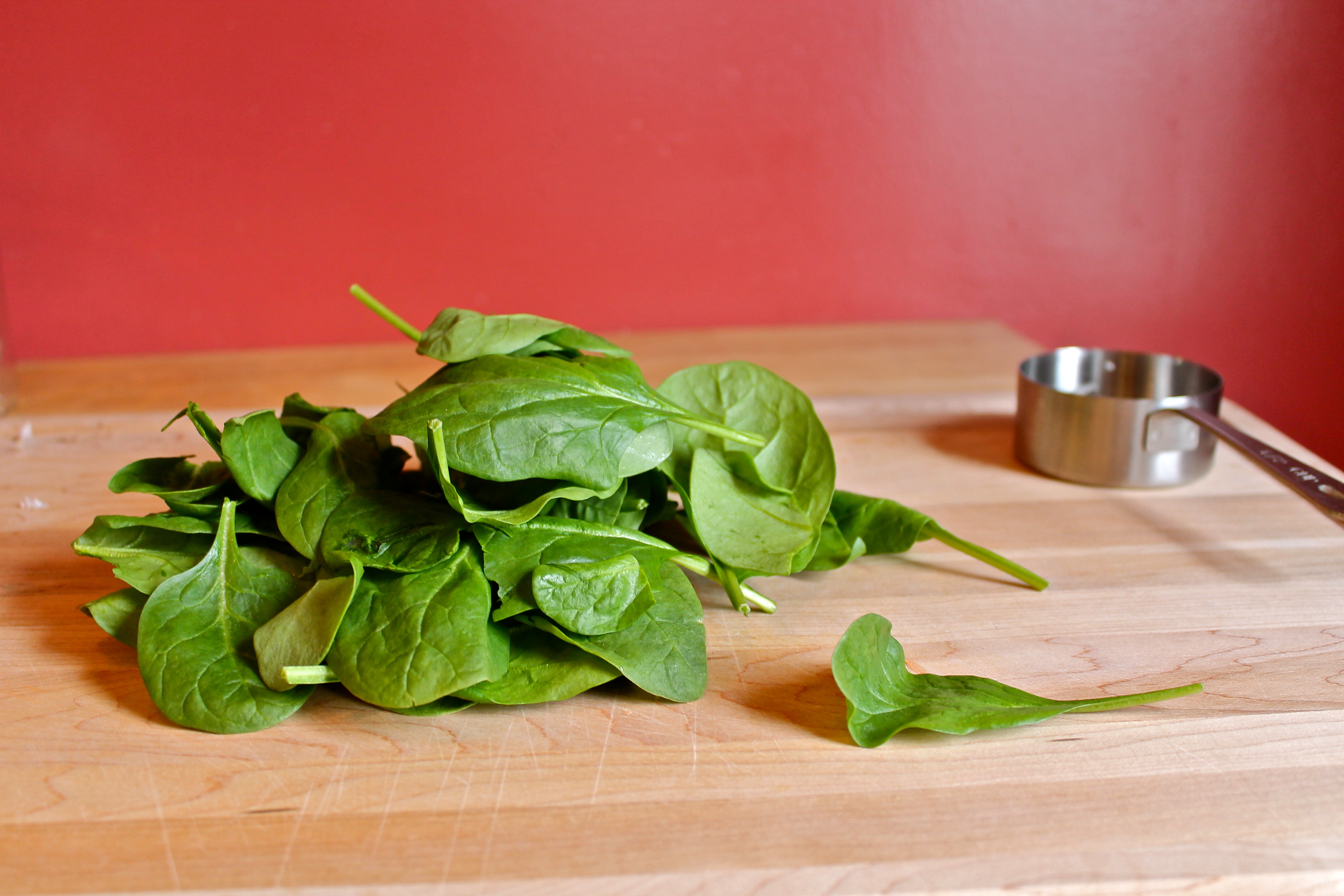
The idea came from Hensperger, of course, and the method is all hers, but the ingredients are a far stretch from those so dutifully printed in her cookbook.  Can a recipe that started as a vision for one thing and then eventually morphed into another be given the distinction of being one in the same?

I suppose not.  However, it would be incredibly wrong of me to claim this recipe as my own creation, as the heart of it lies, I believe, with Hensperger.  Well, maybe not the geographical heart, since the middle (the stuffing) is composed of something almost entirely different than what was originally intended, but, you know, the soul of the recipe lies with Hensperger.
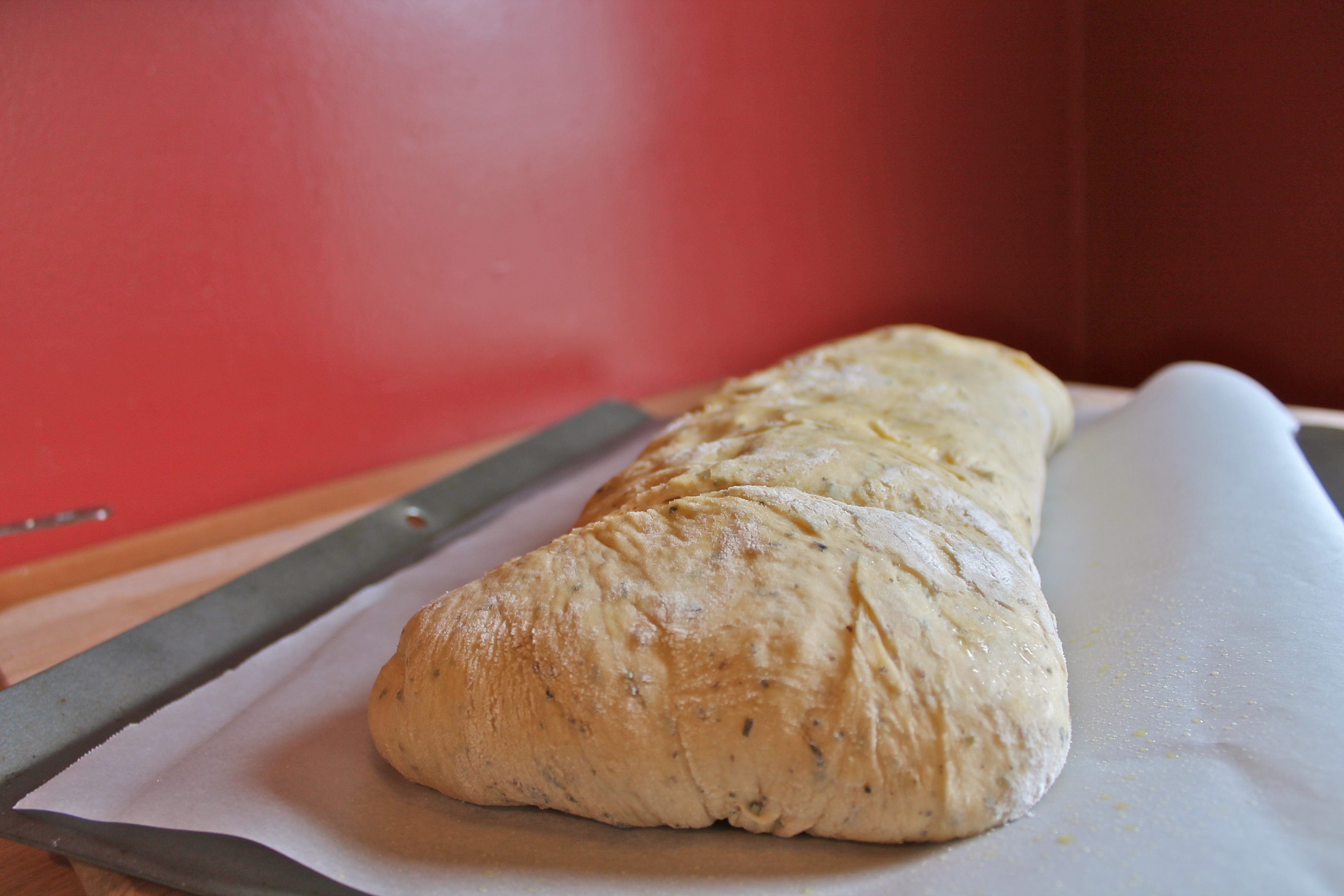
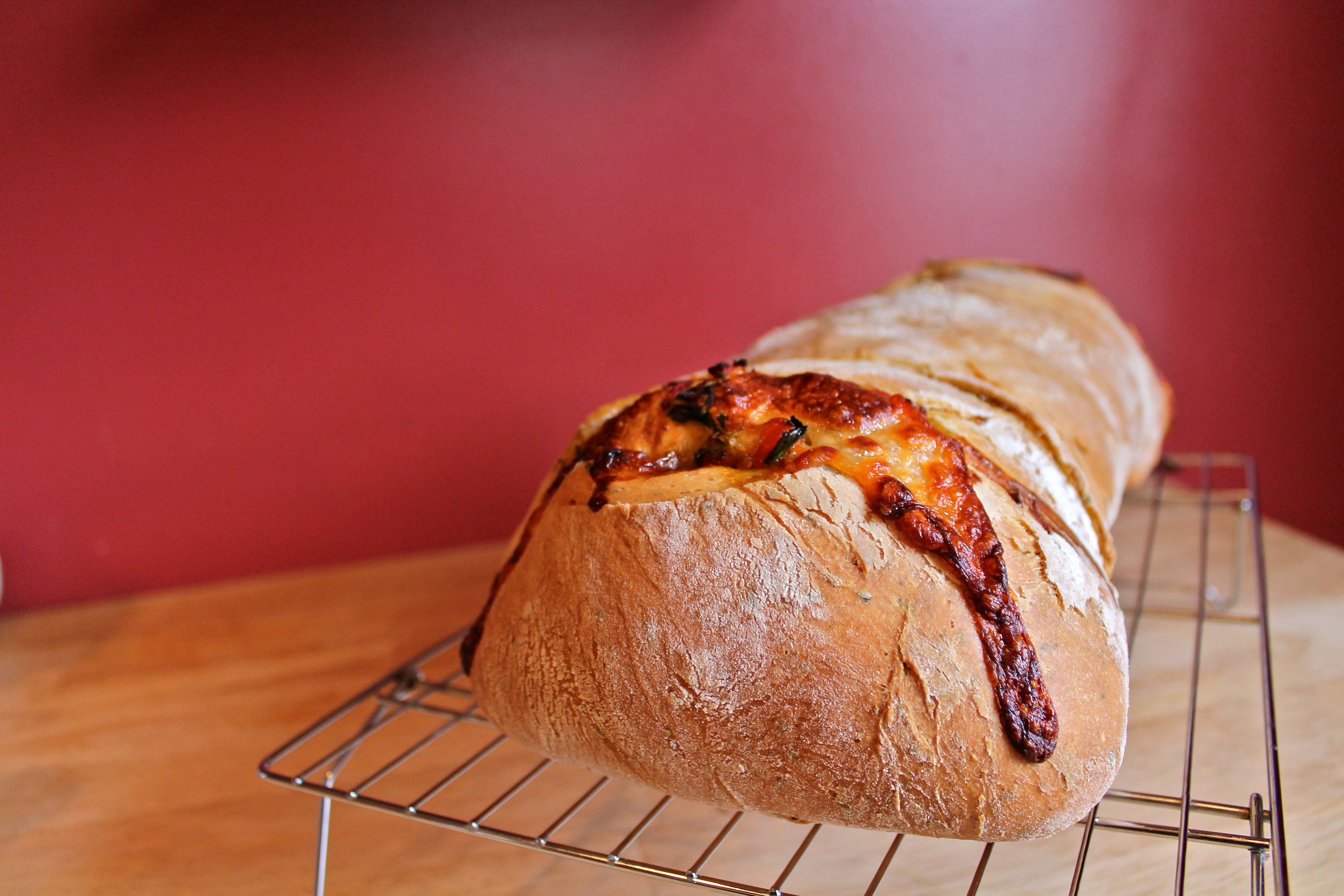
I do not believe this recipe could ever be called my own, but I also don’t believe that Hensperger would look at it and recognize it as hers, either.  So, where does this leave us?  I am delighted to report that this, of course, leaves us in the realm of food, cooking, and the inspiration that the two can bring.  This is an amalgamation, a recipe borne from inspiration.  It’s a little bit my own, a larger bit Beth Hensperger’s, and entirely the result of the creativity and imagination that food can inspire.
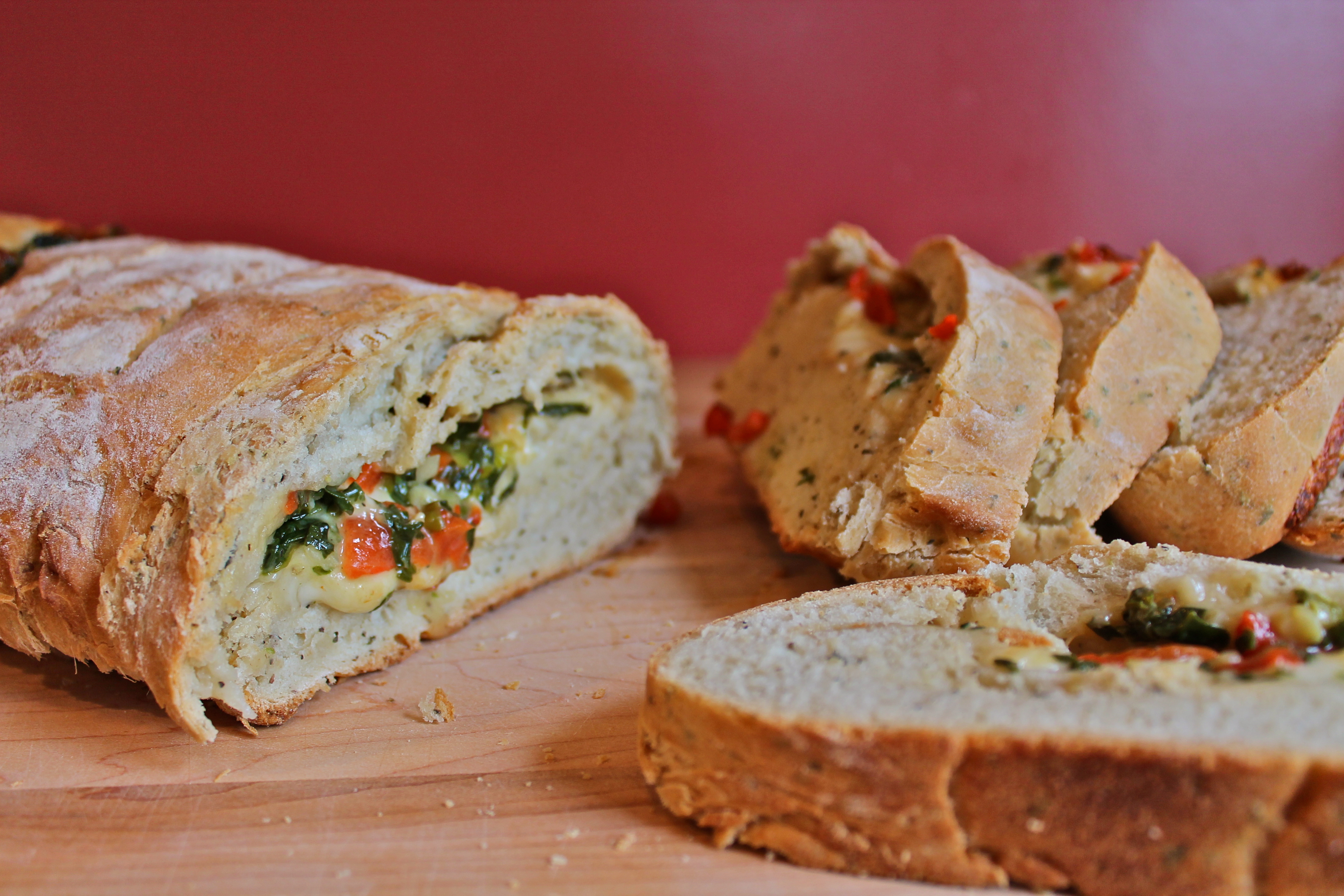
Italian-Style Herb Bread

Adapted heavily from Beth Hensperger’s Bread Bible

1 ½ teaspoons freshly ground black pepper

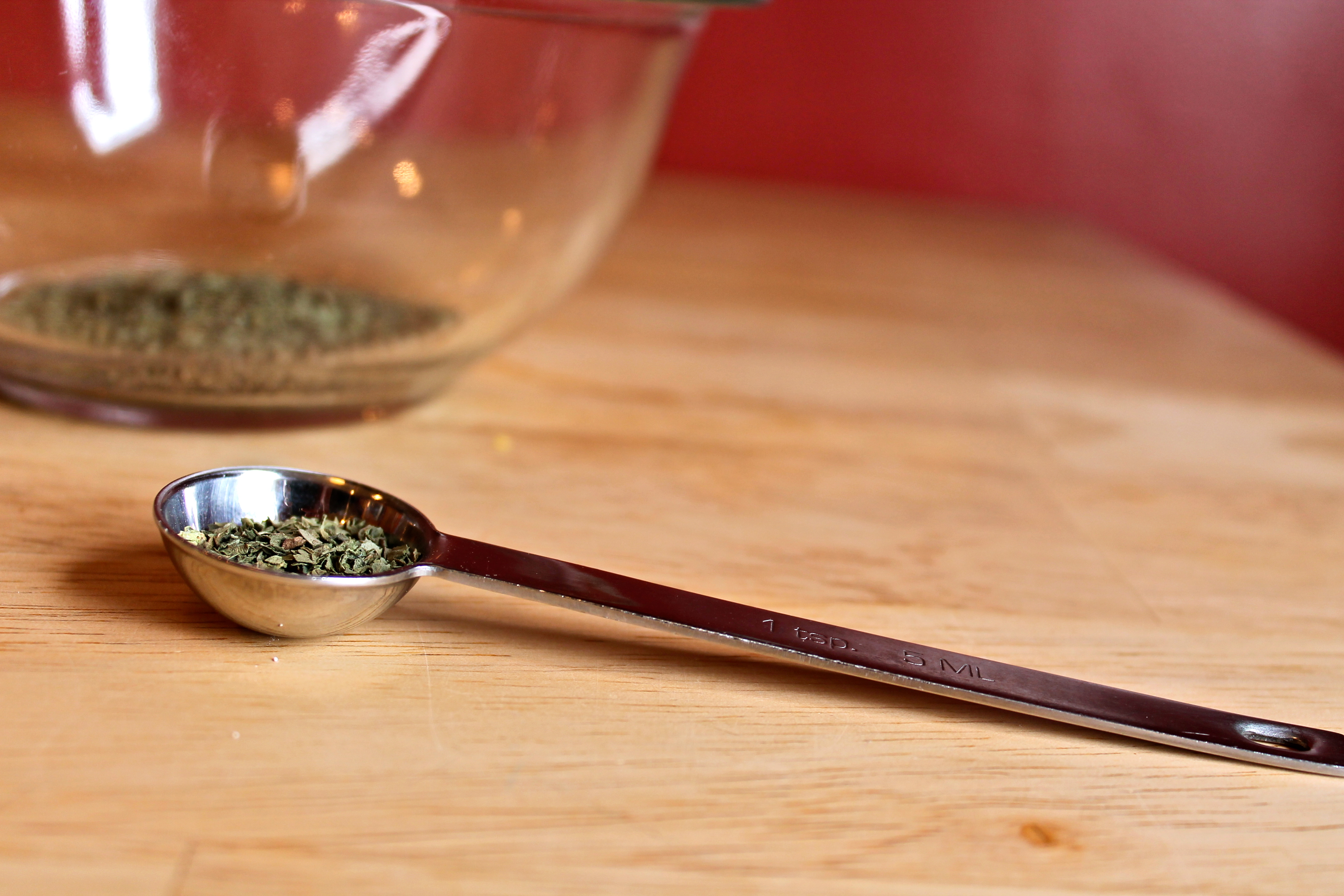
2 teaspoons dried basil

2 teaspoons dried marjoram

½ teaspoon chopped fresh rosemary, or ¼ teaspoon dried rosemary

1/3 cup olive oil

2 cups warm water

1 ½ tablespoons active dry yeast

pinch of sugar

1 teaspoon sea salt

1 tablespoon balsamic vinegar

5 to 5 ½ cups unbleached all-purpose flour

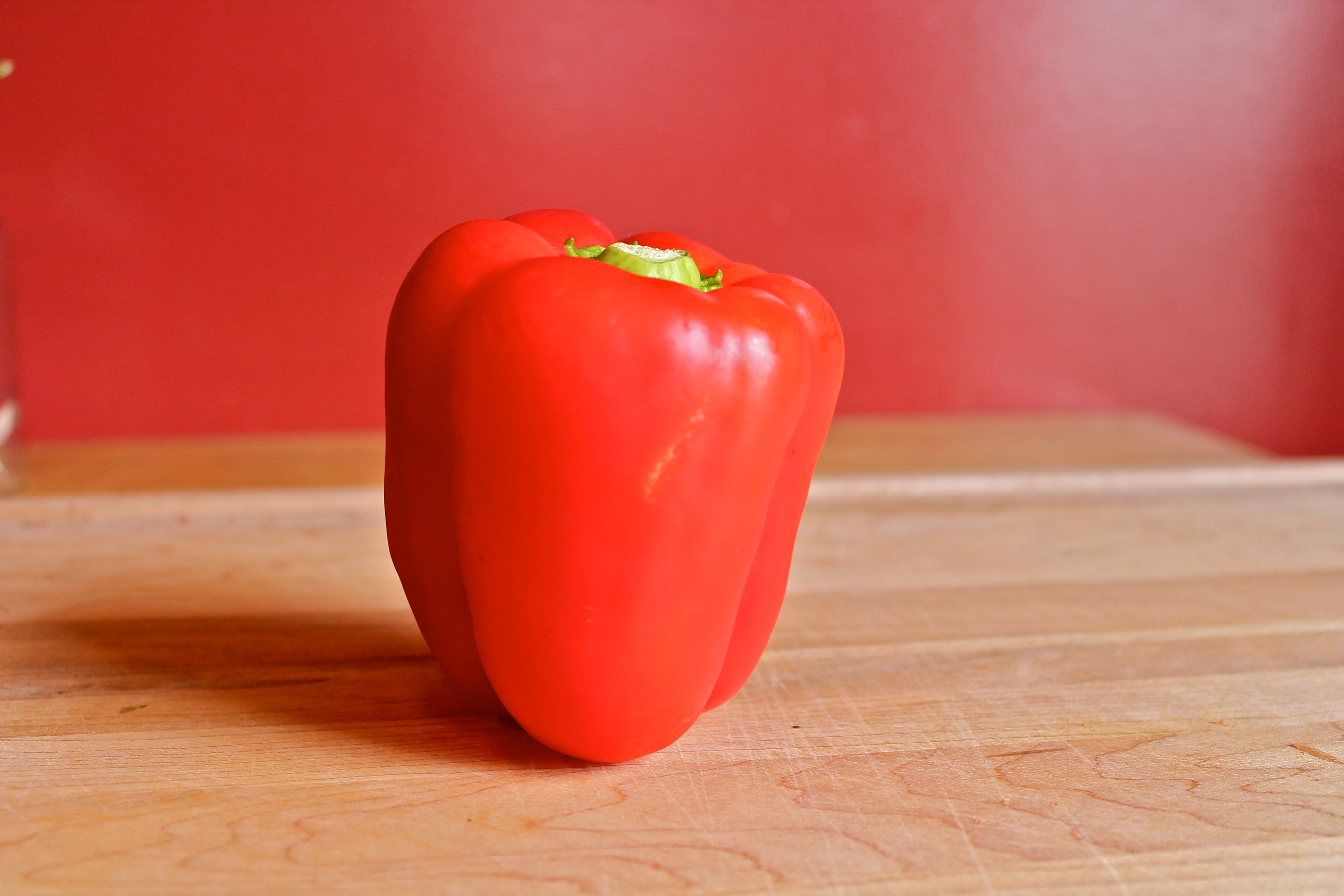
1 large red bell pepper

1 tablespoon olive oil

½ cup chopped scallions

2 cloves garlic, roughly chopped

2 cups roughly chopped spinach

salt and pepper

8 ounces of fresh, whole milk mozzarella cheese, diced

In a small bowl, combine pepper, herbs, and olive oil, and let sit for at least 1 hour at room temperature.

Pour the warm water into a small bowl.  Sprinkle the yeast and pinch of sugar over the water.  Stir to dissolve, then let sit at room temperature until foamy, about 10 minutes.  In a large bowl, or in the bowl of a stand mixer, combine the yeast mixture, salt, balsamic vinegar, and herb-oil mixture.  Beat until foamy.  Add in 5 cups of the flour, 1 cup at a time, stirring with a wooden spoon (or, if you are using a stand mixer, the paddle attachment) to make a soft dough.

Turn the dough out onto a lightly floured work surface and knead until springy, smooth, and resilient, about 5 minutes.  Dust with the remaining ½ cup of flour, 1 tablespoon at a time, if the dough is too wet and resistant to kneading.  If kneading with a stand mixer, replace the paddle attachment with the dough hook and knead as instructed for only 3 or 4 minutes.

Place the dough in a greased bowl.  Grease the top of the dough, then cover with plastic wrap.  Let rise at room temperature until doubled in size, about 1 hour.

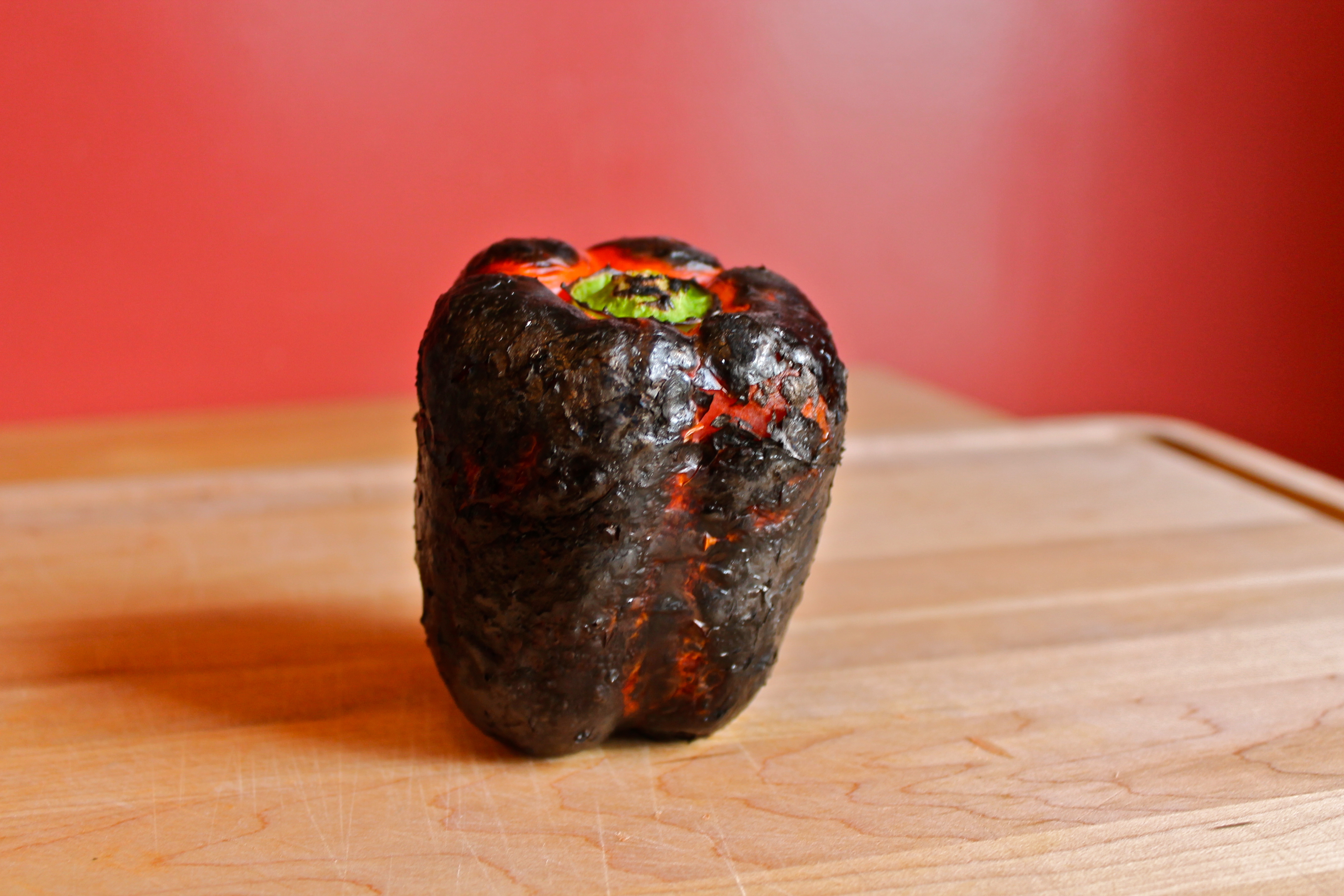
While the dough is rising, preheat your oven’s broiler and arrange an oven rack to the highest position.  Place the bell pepper on a heavv baking sheet, then place the sheet on the highest oven rack, directly under the hottest part of the broiler.  Roast pepper, turning frequently, until the skin is uniformly blackened all over.  Remove blackened pepper to a plate, then cover with foil and let rest for 10 minutes to allow the skin to begin steaming loose.

Meanwhile, in a large skillet, heat the 1 tablespoon of olive oil over medium heat.  Add the scallions and garlic and sauté, stirring frequently to keep the garlic from browning, until the scallions have started to soften, about 3 minutes.  Add the chopped spinach and sauté, stirring frequently, for an additional 5 to 8 minutes, until the spinach has released its liquid.  Remove from heat and allow mixture to cool to room temperature.

Peel the blackened skin from the roasted pepper.  Remove and discard the seeds and core of the pepper.  Roughly dice the roasted, peeled pepper, then set aside.

20 minutes before baking, preheat oven to 400 degrees Fahrenheit.  Place an oven rack in the middle position, then place a heavy baking sheet or a baking stone on the rack.

Place a sheet of parchment paper on a rimless baking sheet, or on an overturned baking sheet.

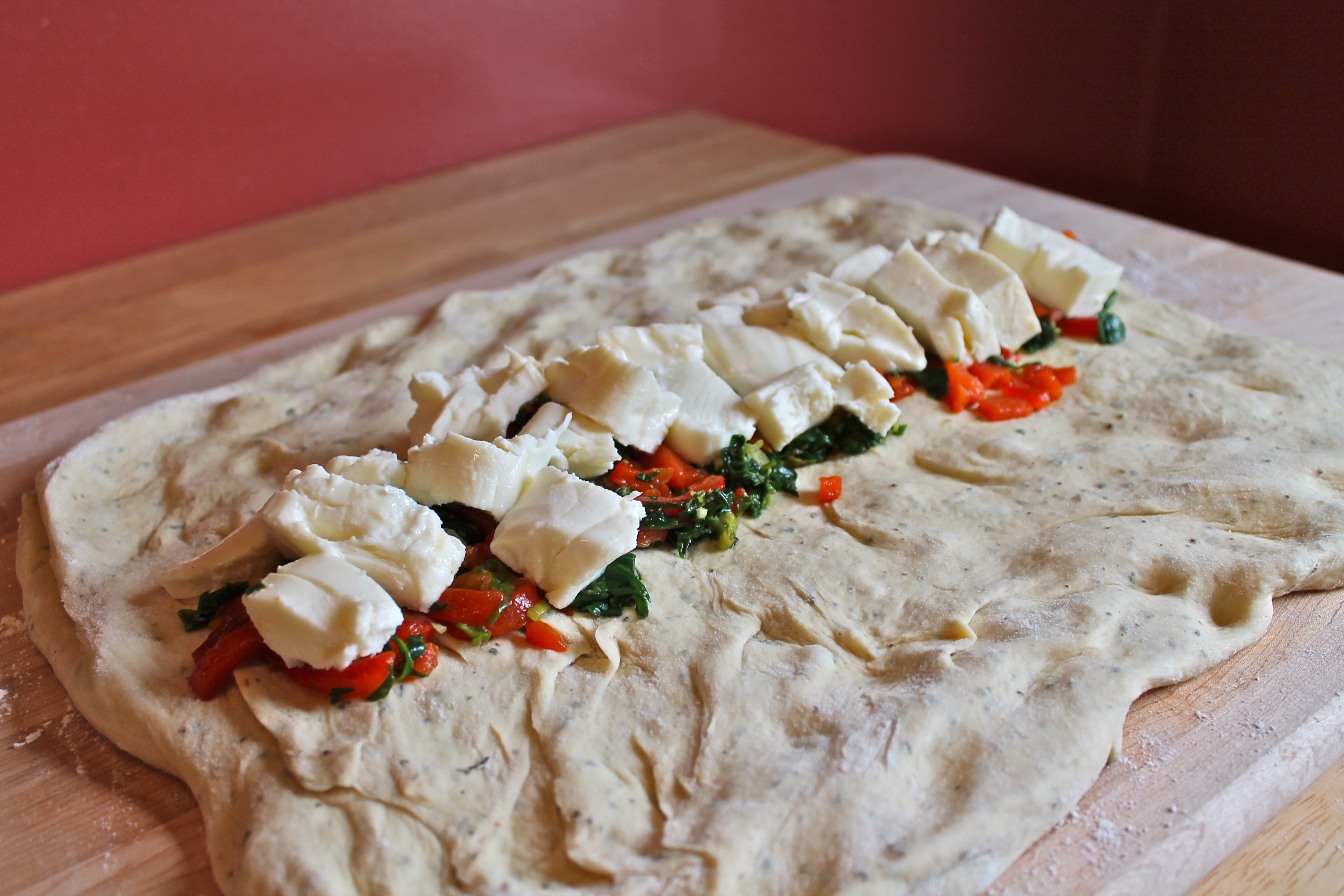
Gently deflate the dough and turn it out onto a lightly floured surface.  Pat the dough into a 14” by 10” rectangle, with the long side facing you.  Spread the cooled spinach mixture lengthwise along the middle third of the dough, then sprinkle with the roasted pepper, then the cheese.  Fold the dough into a smaller rectangle by bringing the two long ends together, then pinch to close.  Fold each short end over by about 1 inch, then pinch each end closed.  Lay the dough, seam side down, on the parchment-lined baking sheet.  Using a sharp knife, make several diagonal slashes on top of the dough.  Allow dough to rest for 10 minutes.

Slide the dough, still resting on the parchment paper, onto the heated baking sheet or baking stone.  Bake for 40 to 50 minutes, until the dough is brown and it emits a hollow sound when tapped with a finger.  Transfer immediately to a cooling rack and allow to cool completely before slicing.

Beet Greens and Chèvre Quiche

5 Mar

There is often discussion of people possessing “Yankee thrift,” but never do you really hear of people being blessed with (or should I say “saddled with”) West Coast thrift.  I make the distinction here between being blessed and being somewhat cursed, because, not being a Yankee, I possess whatever the West Coast version of nearly unreasonable thrift might be, and sometimes it seems like my propensity for using every part of the buffalo can reveal some fraying at the edges of my reasoning.

Right now our freezer is packed with a bag filled with the green ends of leeks that I plan on turning into vegetable stock.  Also in the freezer is a small container filled with approximately ¼ cup of mushroom broth, because after I used what broth came before that last ¼ cup, it seemed flat-out wrong to waste what was left over.  I have been known to hoard separated egg whites after making ice cream that calls for half a dozen yolks, and then go on a baking spree just to use up those egg whites, and then resort to getting rid of what I have just baked because there is no way possible that the three of us can pack away that many of whatever it was I decided to make in order to “not waste” the egg whites.  Do you see where this is going?  When you save things in order to make things in order to not waste things, but then you have no used for those things, are you not then merely wasting your own time and money in an effort to not waste another product of your time and money?

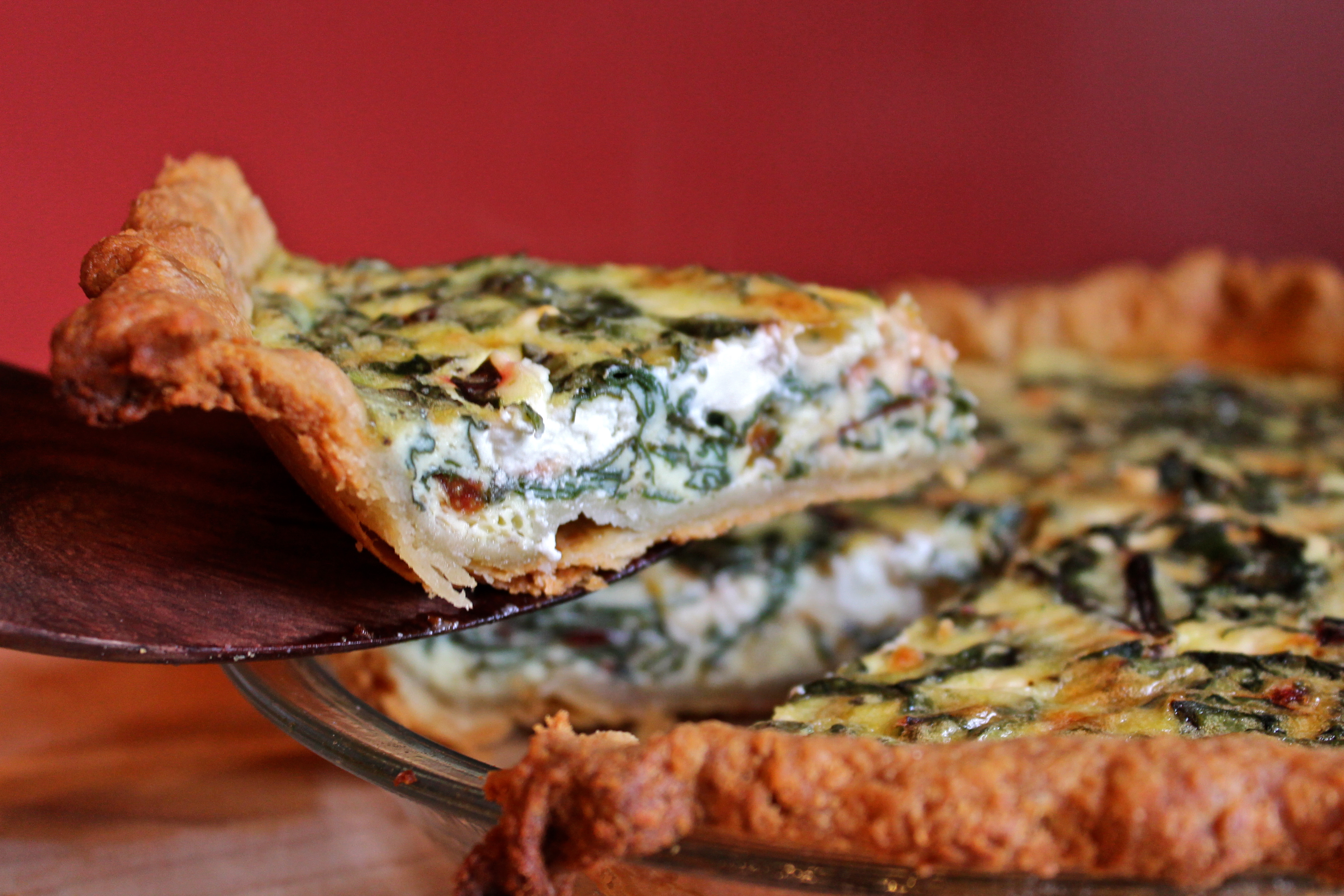
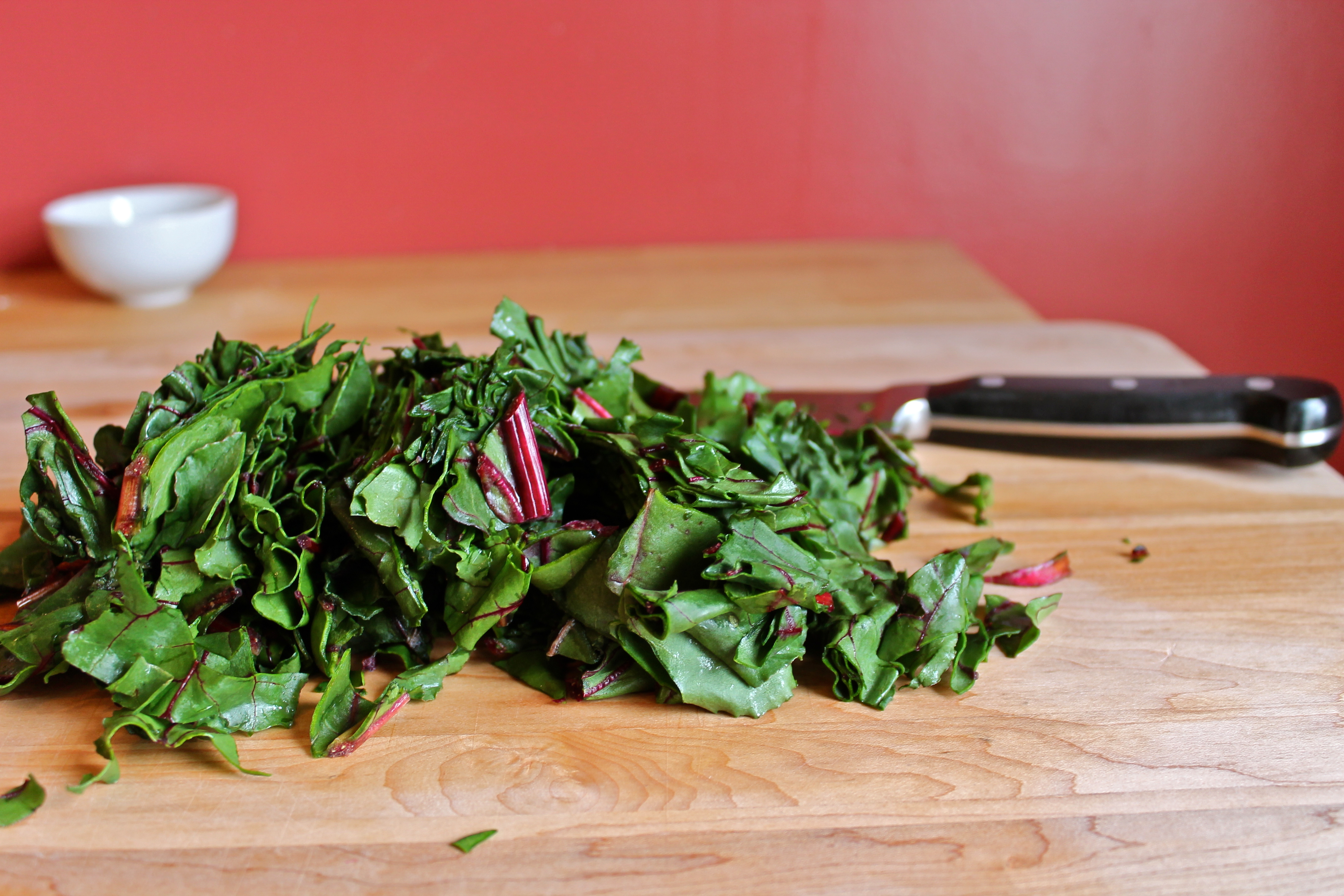
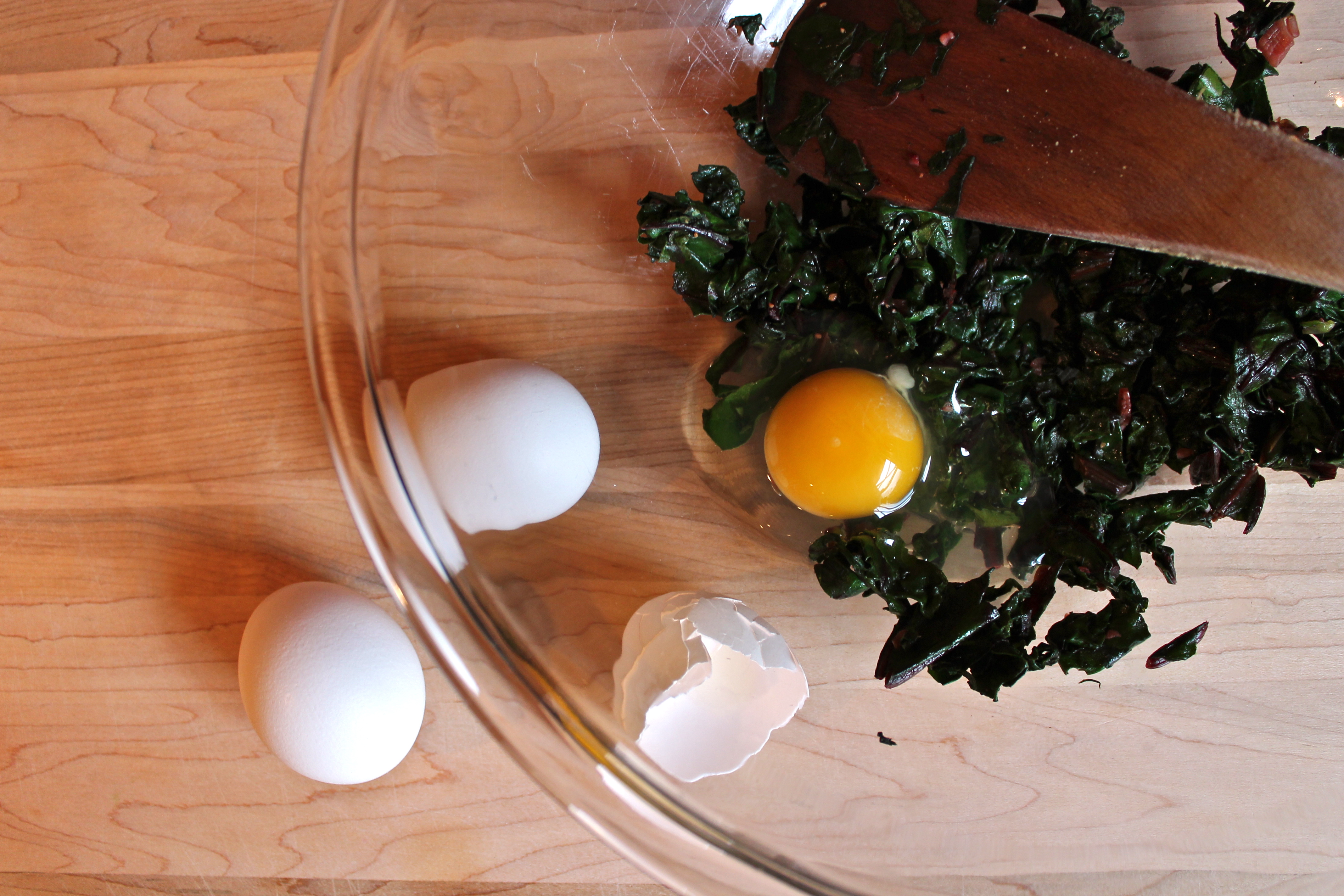
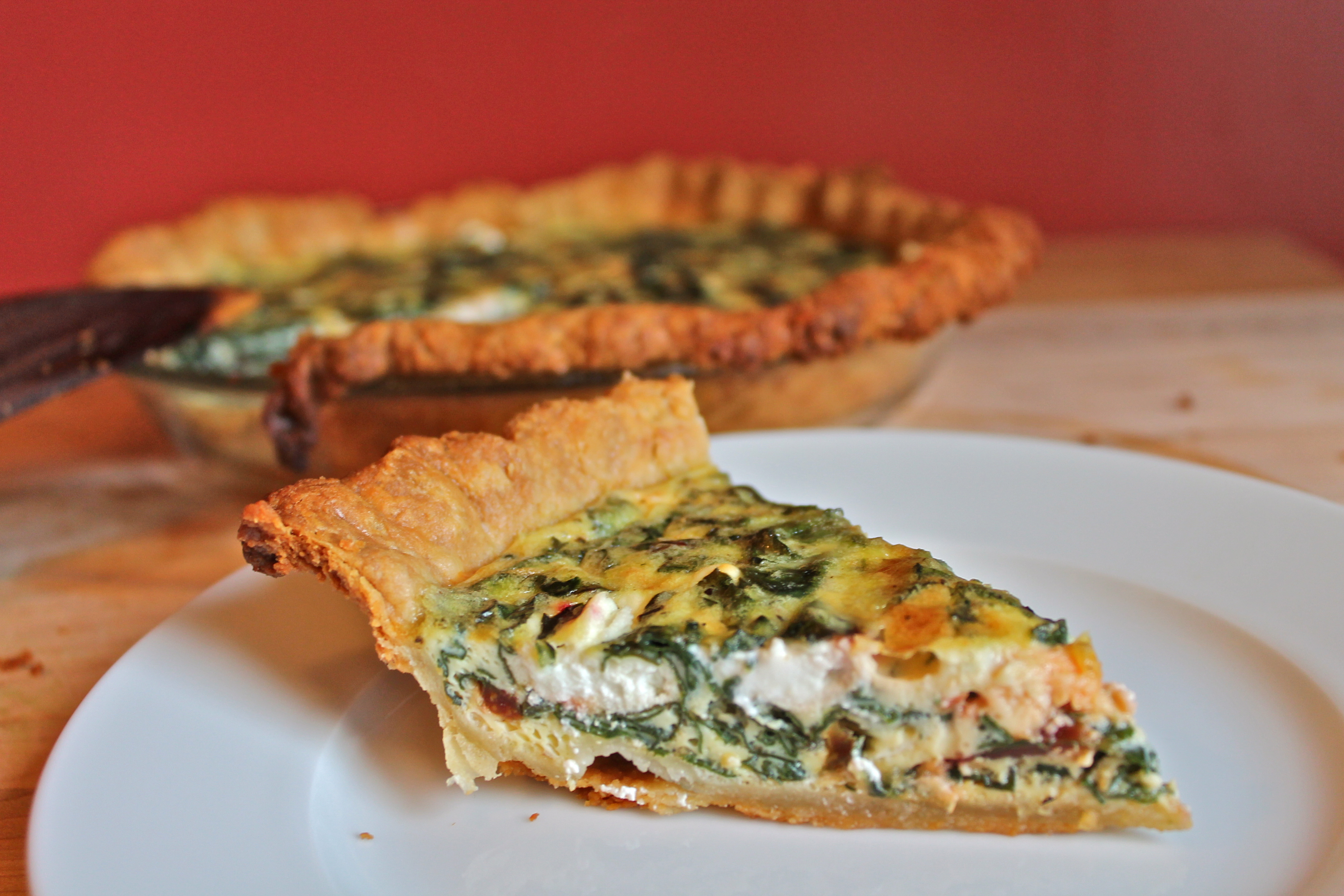
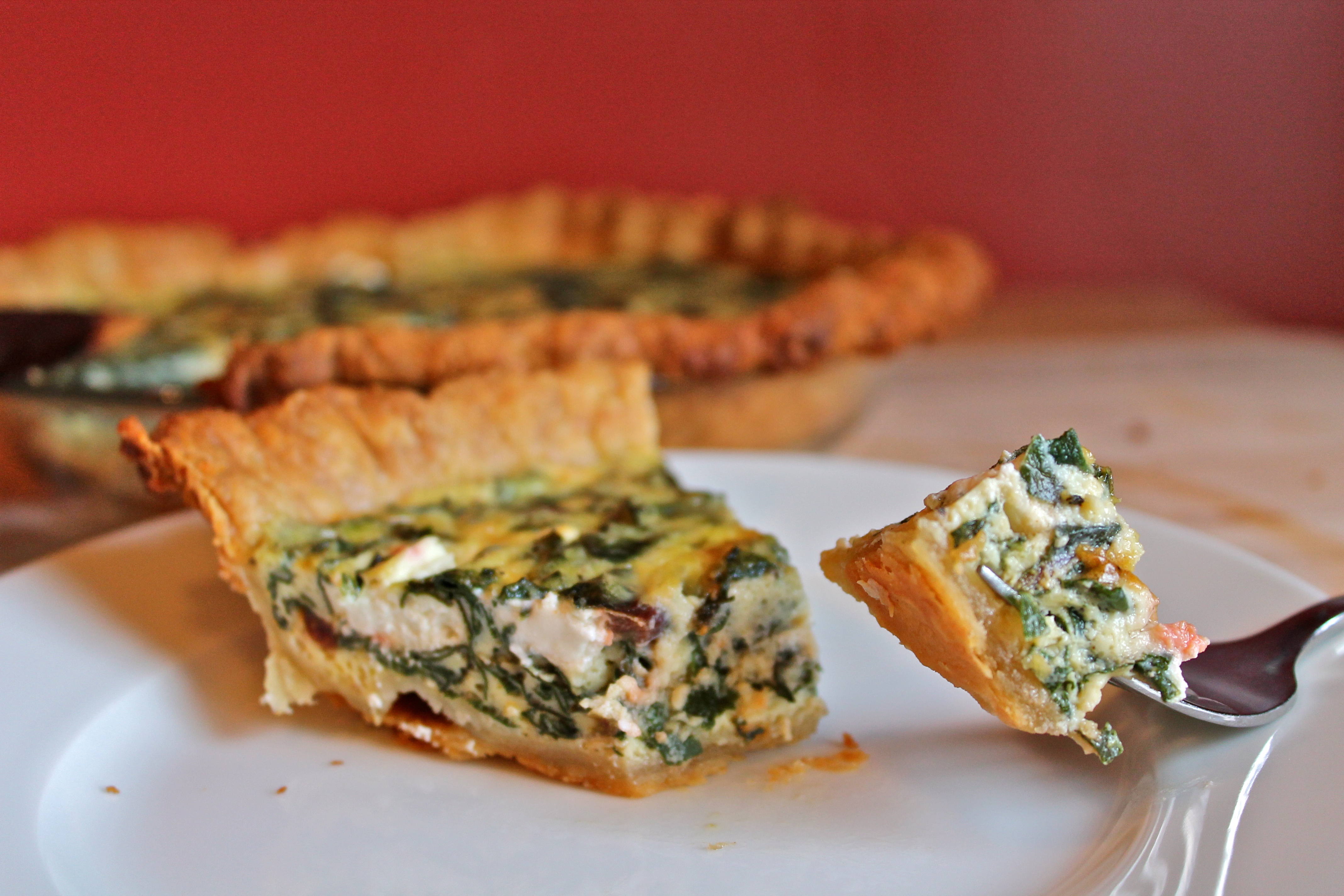
It’s a slippery slope. However, it can also be a delicious and inventive slope, and that’s where this quiche comes in.  Using a bit of leftover this and that from this and THAT (link), we were rewarded with a lovely—and highly adaptable—dinner.  As noted, I used sautéed beet greens that remained from a previous day’s salad, but any greens you have lying around (spinach, chard, kale) will serve this quiche well.  Chevre adds a wonderfully rich tanginess to the body of the quiche, but, if you don’t have it, a bit of Parmesan, Pecorino Romano or Gruyere would also provide a nice, though very different, flavor profile.  The idea here is to use whatever you have staring at you from the fridge, and it’s almost guaranteed that you’ll love the result.

Beet Greens and Chevre Quiche

1 9-inch pie crust (my absolute favorite recipe for flaky pie and tart dough can be found here–the recipes makes enough dough for two single crust pies or tarts, but the unused dough can be wrapped tightly in plastic wrap and kept in the freezer for two to three weeks)

1 tablespoon olive oil

2 cups lightly packed coarsely chopped beet greens (or other green of your choice), tough stems removed

1 large garlic clove, minced

3 large eggs

1 cup milk

4 ounces crumbled chevre

salt and pepper

Preheat oven to 375 degrees Fahrenheit.

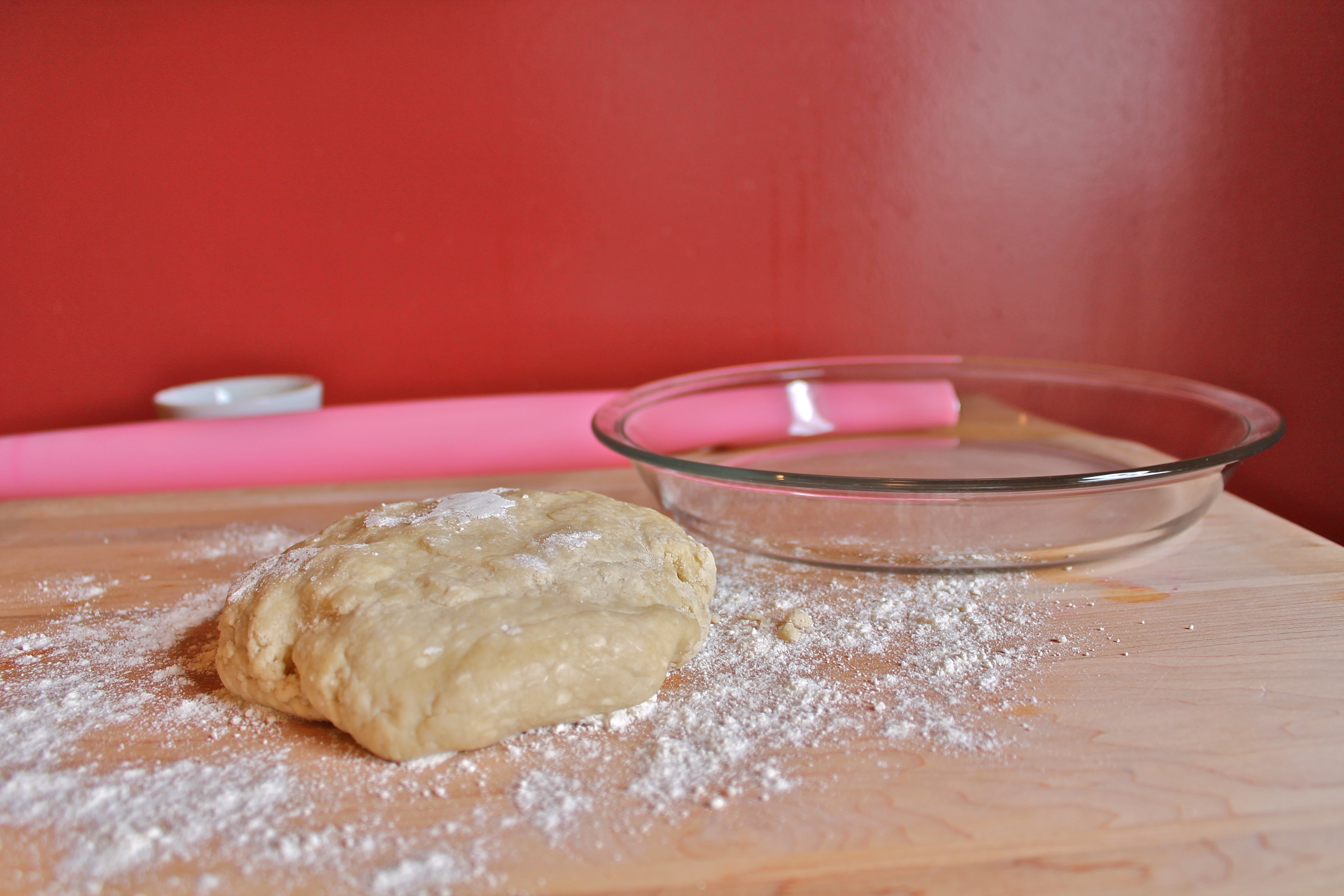
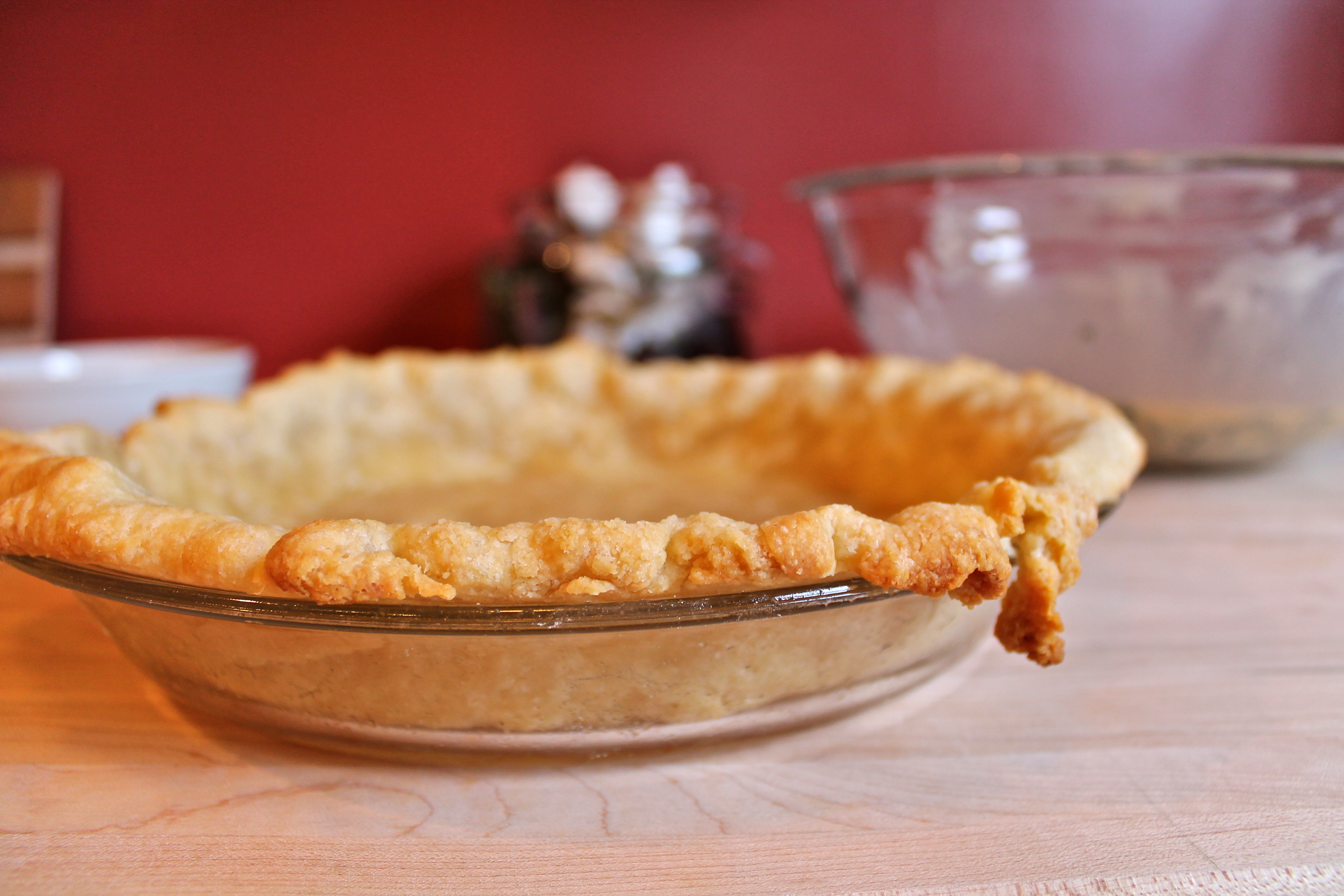
Roll out crust and shape into a 9-inch pie pan.  Line the crust with foil and fill with pie weights (or dried beans or pennies).  Bake crust for 15-20 minutes, until the edges appear dry and the bottom of the crust is sizzling.  Remove crust from oven, remove foil and pie weights, then set aside.

In a medium skillet, heat olive oil over medium heat.  Add chopped greens and sauté until wilted and reduced in size, about 3 minutes.  Add garlic and stir to combine.  Saute, stirring occasionally to keep the garlic from browning, until most of the moisture has been cooked from the greens, about 5 minutes.  Add salt and pepper to taste.  Remove greens from heat and set aside to cool slightly.  You should have roughly 1 cup of cooked greens.

In a large bowl, combine eggs, milk, and chevre.  Whisk to combine.  Add cooled sautéed greens and whisk to combine.  Add salt and pepper to taste.

Pour the egg mixture into the parbaked crust.  Return to oven and bake for 35-40 minutes, until the quiche is puffed on top and the middle is set.  If the edges of the crust begin to brown too rapidly during baking, wrap the edges of the crust with a protective layer of aluminum foil.

Allow to cool for at least 10 minutes before serving.

Quinoa, Arugula, and Roasted Beet Salad with Ginger Sesame Dressing

1 Mar

One of the least exciting aspects of my eating habits is my propensity to want to eat salad for every meal.  Not with every meal, for every meal.  I find this desire of mine to be no less normal than the desires of those who insist on eating meat with every meal, only, when I admit to people that, in my mind, salad is no less important than meat, I tend to be the recipient of a lot of quizzical looks.

Sometimes I wonder if this response is based on a very demure idea of what constitutes a salad.  To be honest, I am not entirely sure myself what magically transforms a mixture of several ingredients into something that one could call a salad.  To me, a salad is a bunch of fresh vegetables—some cooked, some not—a bit of protein, a lot of texture, and some sort of dressing or citrus drizzled over the top.  Or, rather, those are the qualities I look for in a salad of my own (not to totally exclude those salads that might boast a creamy dressing, a ton of protein, and perhaps even no vegetables—see how confusing this can get?).

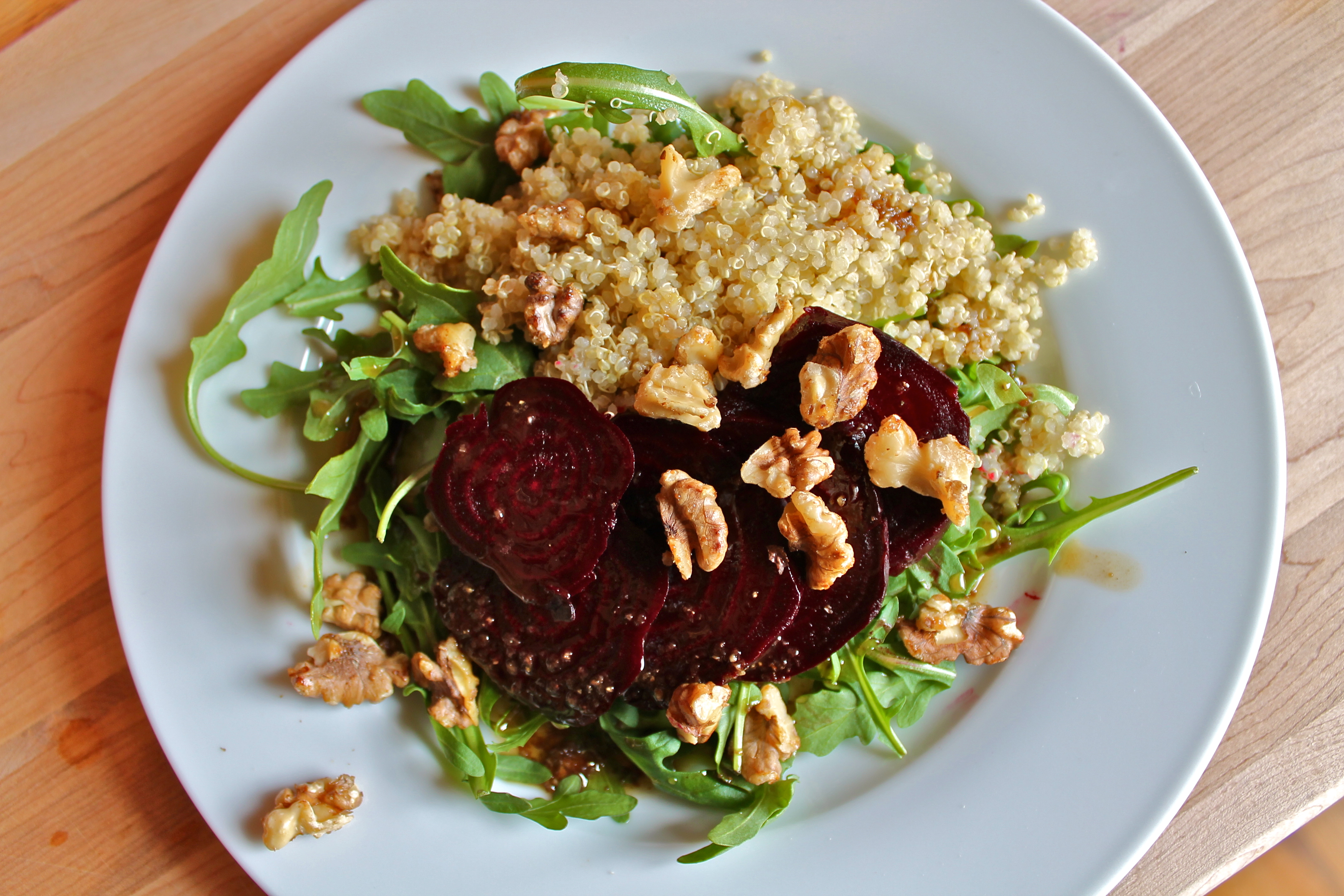
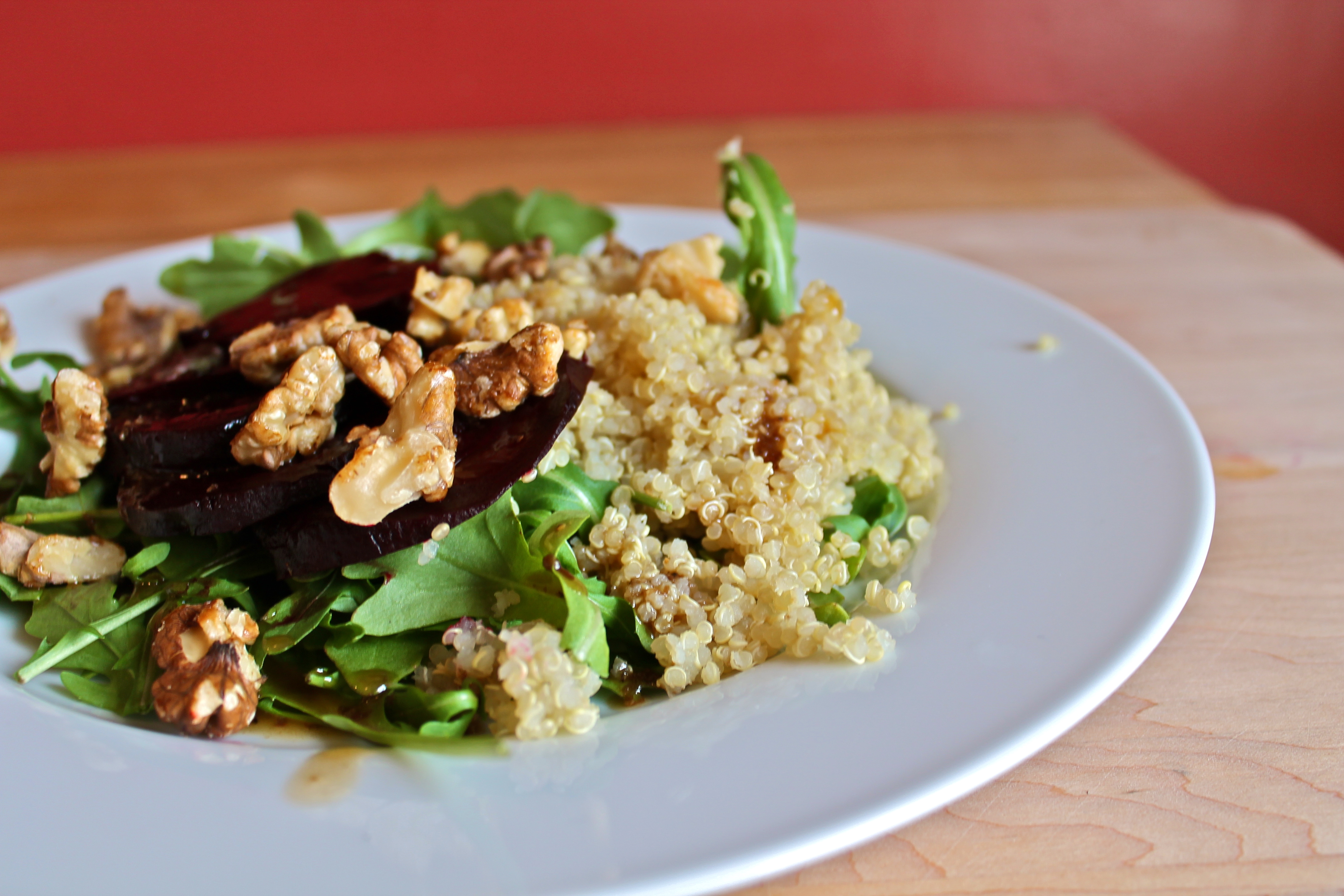
If I were to choose a salad to eat every day, perhaps even at every meal, it would be this one.  Nutty quinoa piled on top of crunchy, spicy arugula, earthy roasted beets, a handful of toasted nuts with just a hint of sweetness, and a kicky, citrusy dressing, all together on one plate.  This is my favorite whole-meal salad.  Unfortunately, it is also the salad that contains every single ingredient that my son finds absolutely repellant (save for the sweetened walnuts), so it is a salad that I tend to consume only when I know that I will be eating alone, and thus in charge of pleasing only myself.  It is my hope that my son will one day discover the joys of beets and quinoa (or, shall I say, rediscover, since that kid ate both of those things when he was a baby, but won’t go within five feet of them now, of course—not that I am trying to make him feel guilty or bad or…where was I going with this?), but if he does not, maybe that’s not entirely awful since, of course, less salad for him logically means more salad for me.

Quinoa, Arugula, and Roasted Beet Salad with Ginger Sesame Dressing

These ingredients, as listed, will make two large, whole-meal salads.  If you wish, you can also make four smaller side salads with this amount of ingredients.

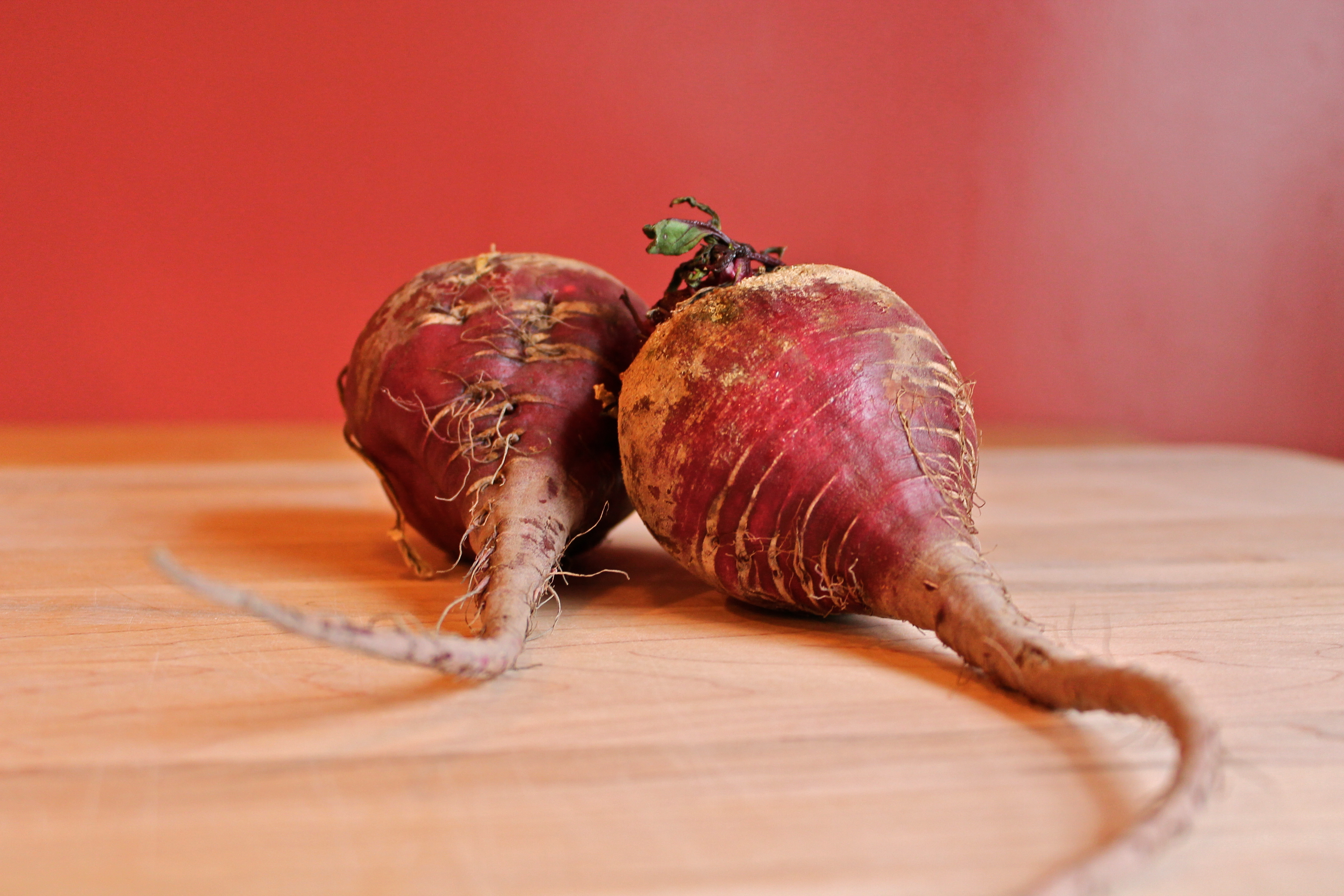
2 beets, trimmed, with leafy tops removed and reserved for another use

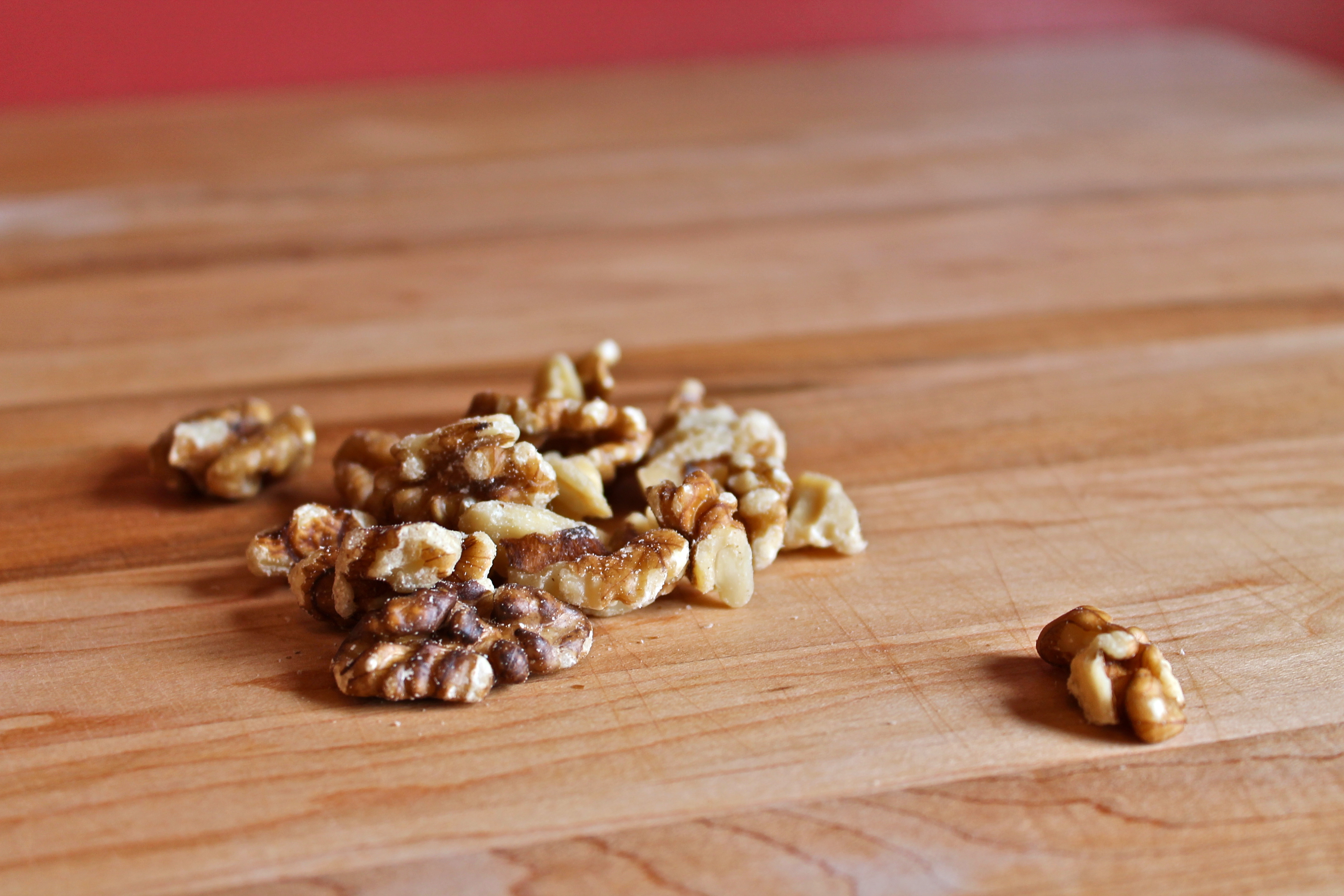
1/3 cup walnuts

½ teaspoon granulated sugar

2 cups cooked quinoa (tip: quinoa is most delicious when cooked in a 50/50 mixture of vegetable stock and water), warm or at room temperature

2 or 3 large handfuls of arugula

Dressing:

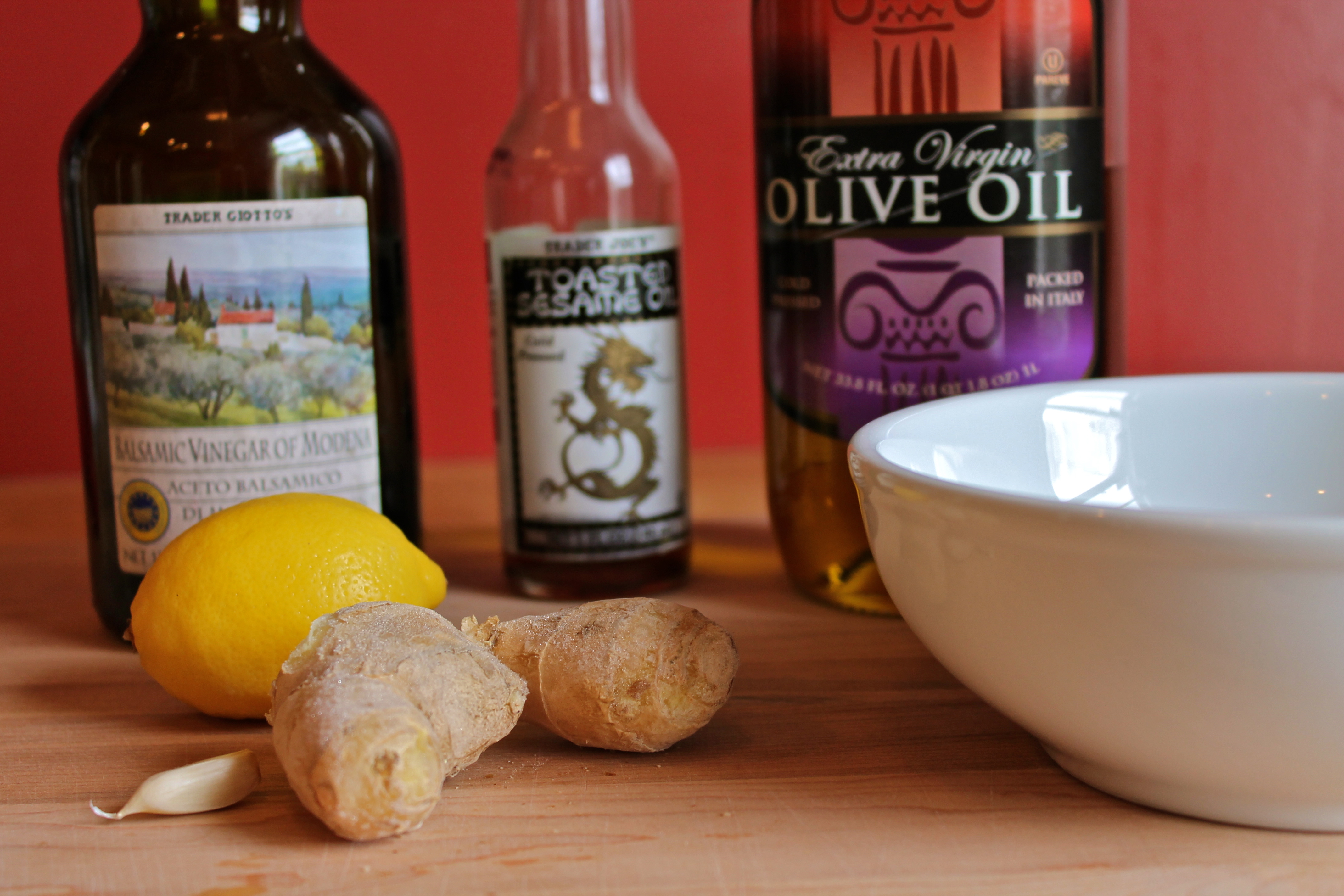
¼ teaspoon finely grated or mashed garlic

1 teaspoon finely grated fresh ginger

1 teaspoon lemon juice

½ teaspoon toasted sesame oil

1 tablespoon balsamic vinegar

3 tablespoons extra-virgin olive oil

salt and pepper to taste

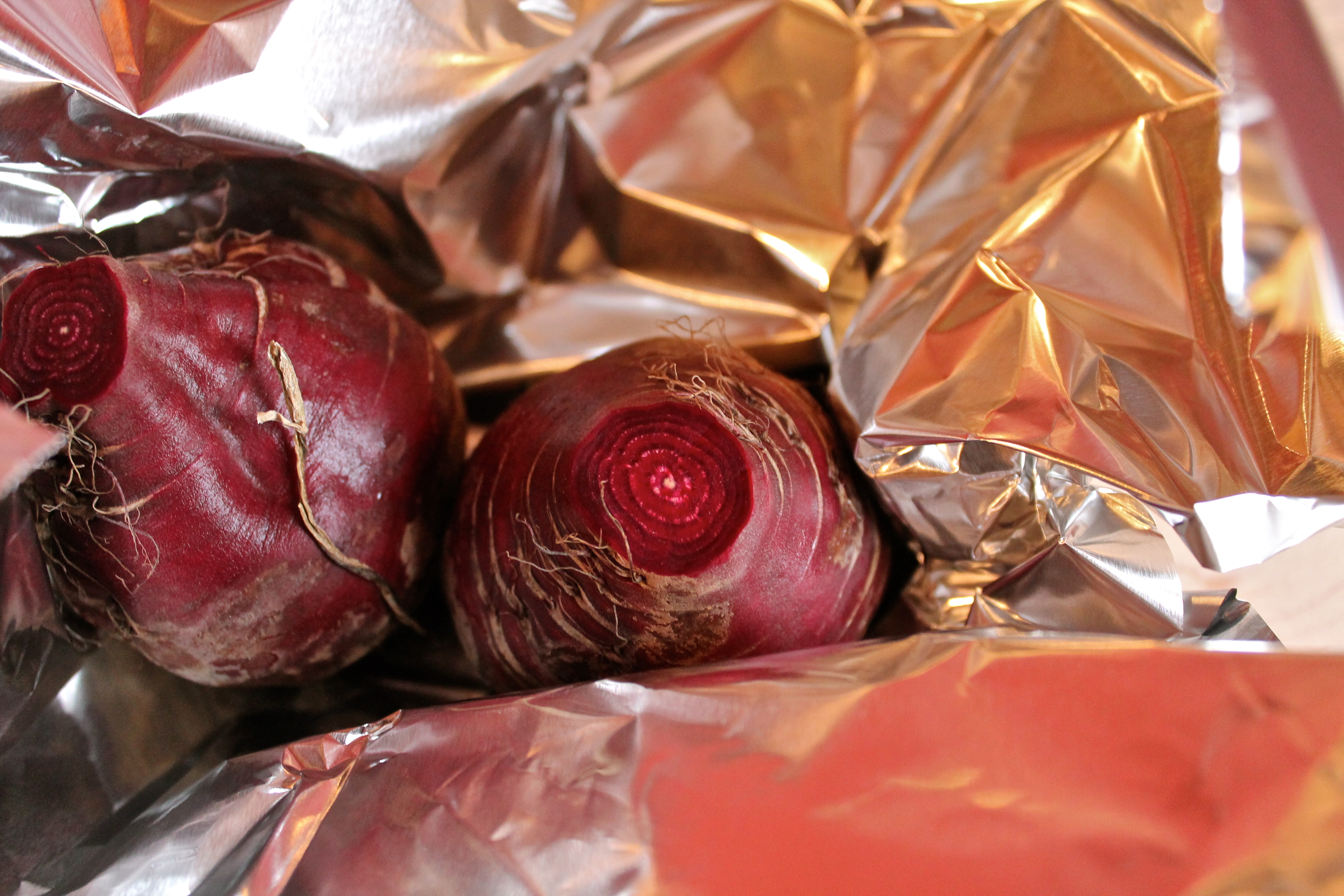
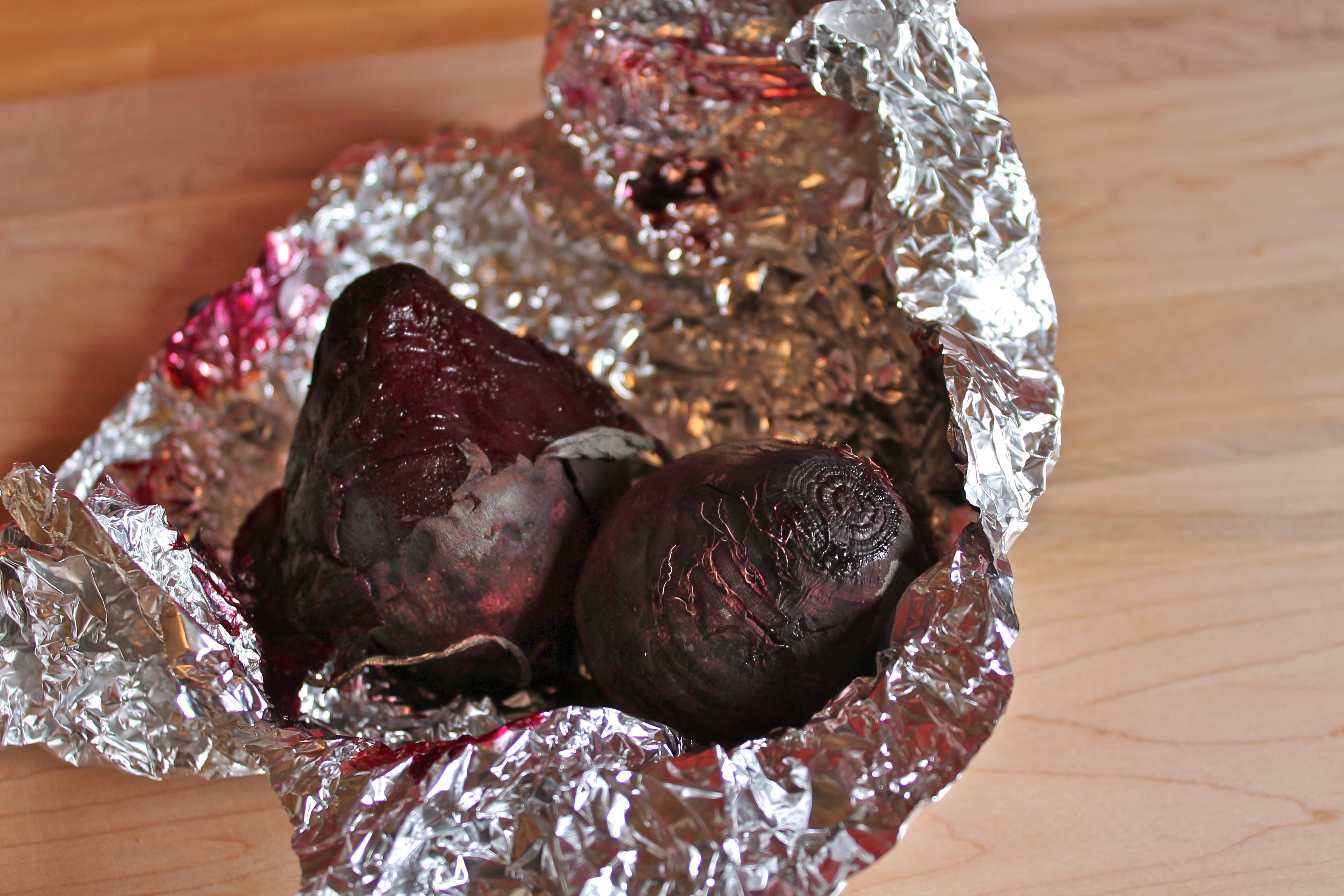
Preheat oven to 375 degrees Fahrenheit.  Wrap beets tightly in foil.  Roast beets for 40 minutes, until cooked completely through.  Remove from oven and carefully unwrap to allow steam to escape, then leave beets—still in foil—to cool.  When beets have cooled enough to touch (about 15 minutes) rub the beets in their foil wrapper to remove skins.  Voila—you have just avoided staining your hands with the diabolically stubborn juice of your beets.

While the beets are roasting, place the walnuts in a pan set over medium heat.  Toast the walnuts for 2 or 3 minutes, until they just begin to emit a nutty aroma.  Sprinkle the sugar around the walnuts, allowing as much of the sugar as possible to sit on the bottom of the pan.  Watch the sugar carefully as it begins to melt, then just begins to turn amber.  Stir the nuts and sugar together, then immediately remove from heat and pour onto a plate to cool.

To make dressing, combine all ingredients in a small bowl and whisk together until thick and emulsified.  Taste for seasoning, and adjust salt and pepper to taste.

Place a large handful of arugula on a plate.  Place 1 cup of cooked quinoa on one side of the arugula.  Slice the beets into rounds and place beet slices on the other side of the arugula.  If desired, generously pepper the beets (this is what I always do, because I like the beets extra peppery).  Drizzle the dressing over the arugula, quinoa, and beets.  Top with toasted walnuts.  If desired, sprinkle with a bit of sea salt.