Dal with Coconut Milk

16 Feb

When I was in India, I ate lentils everyday.  Actually, that’s not true.  At first I ate lentils everyday, but towards the end of my trip I started to revolt against the lentils.  I don’t know if it was the fact that eating dal at every meal—breakfast, lunch, and dinner—was starting to make me crazy, or the fact that by that point I hadn’t had a decent cup of coffee in a month and, pleasant attributes of tea aside, when you are a coffee fan who is deprived of coffee for weeks at a time, life starts to fray around the edges a little.
Now, back in America for many years, I can’t seem to get enough of dal.  We don’t eat Indian food in our house as much as I would like to (see: five year-old child who can’t handle spicy food), but when we do, I like to make the meal a real occasion by not just making a standard main dish and side dish, but also making naan or parathas, a few condiments, some pickles, and, most of the time, a different dal, depending on my mood.  Madhur Jaffrey has several fantastic dal variations that involve yellow split peas, sautéed cabbage, and sometimes just a few chiles and a bit of garlic oil, and for years I faithfully made any one of those dals whenever I was in the mood for some pulses to accompany my Indian meals.

Changing up the game, however, comes this coconut milk dal from Naomi Duguid and Jeffrey Alford.  As simple as can be, it is, once again, a perfect dish from two people who really seem to have a rock solid grasp of flavors and spices, and how one can highlight the best of both by using ingredients that nudge one another towards a grand conclusion.  The coconut milk is an unexpected treat here, and not something I usually see in dal.  Duguid credits this dish as being more prominent in Southern India—it is actually something she remembers eating quite a bit in a Tamil restaurant—which makes sense, considering the common appearance of coconut and coconut milk in the dishes of Southern India, but not so much in the cuisine found in Northern India (where my family is from).   No matter its origin, this dal is a fantastic addition to any Indian meal, large or small, elaborate or simple.  I’ve taken to eating it with this new favorite cauliflower dish, and I think it would be a wonderful pairing with this delightful chicken biryani.  Really, you could just eat it over plain old basmati rice and it would be a staggeringly good meal.  I suggest you get right on it.
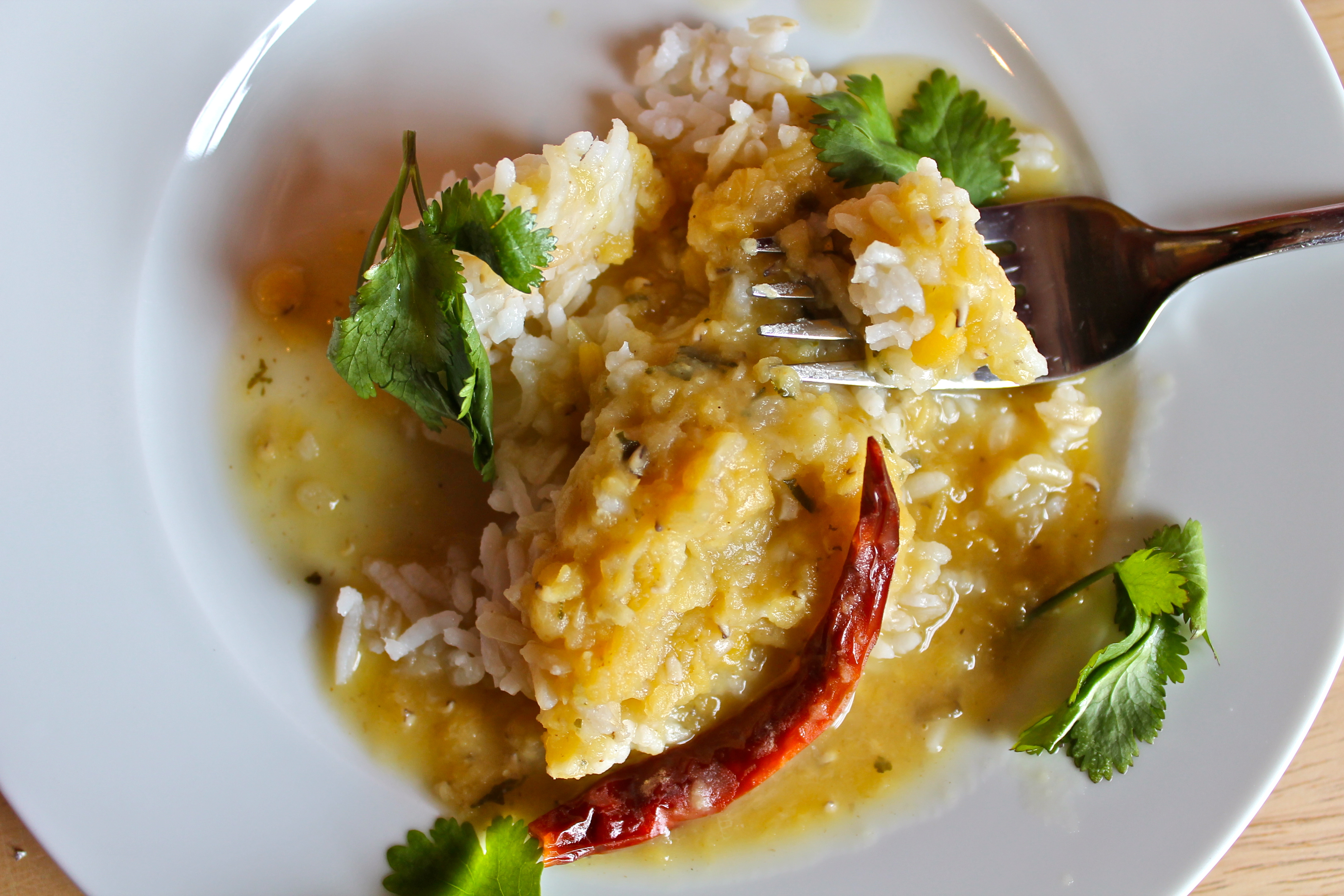
Dal with Coconut Milk

From Mangoes and Curry Leaves, by Naomi Duguid and Jeffrey Alford

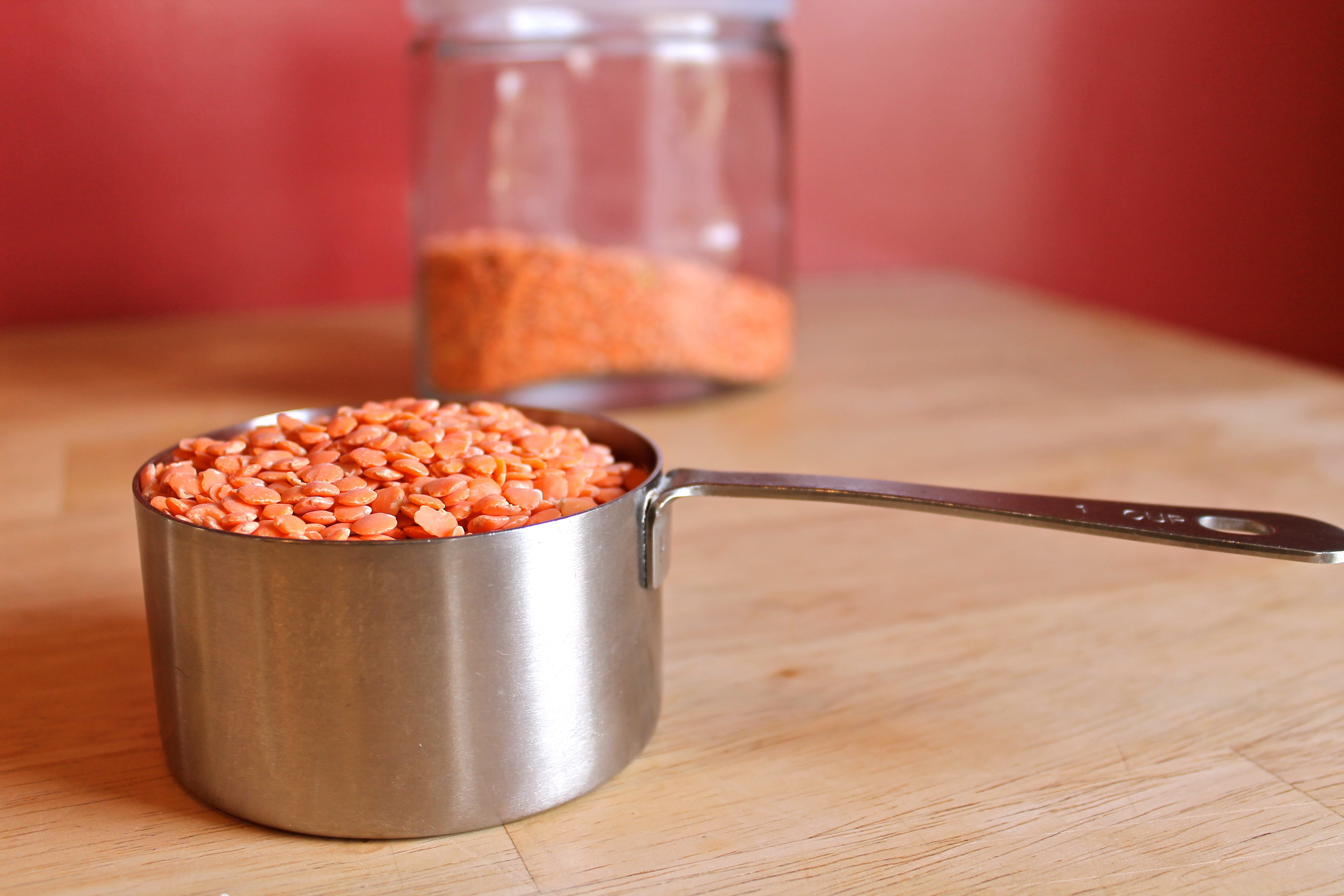
1 cup masoor dal (red lentils)

5 cups water

1 tablespoon vegetable oil

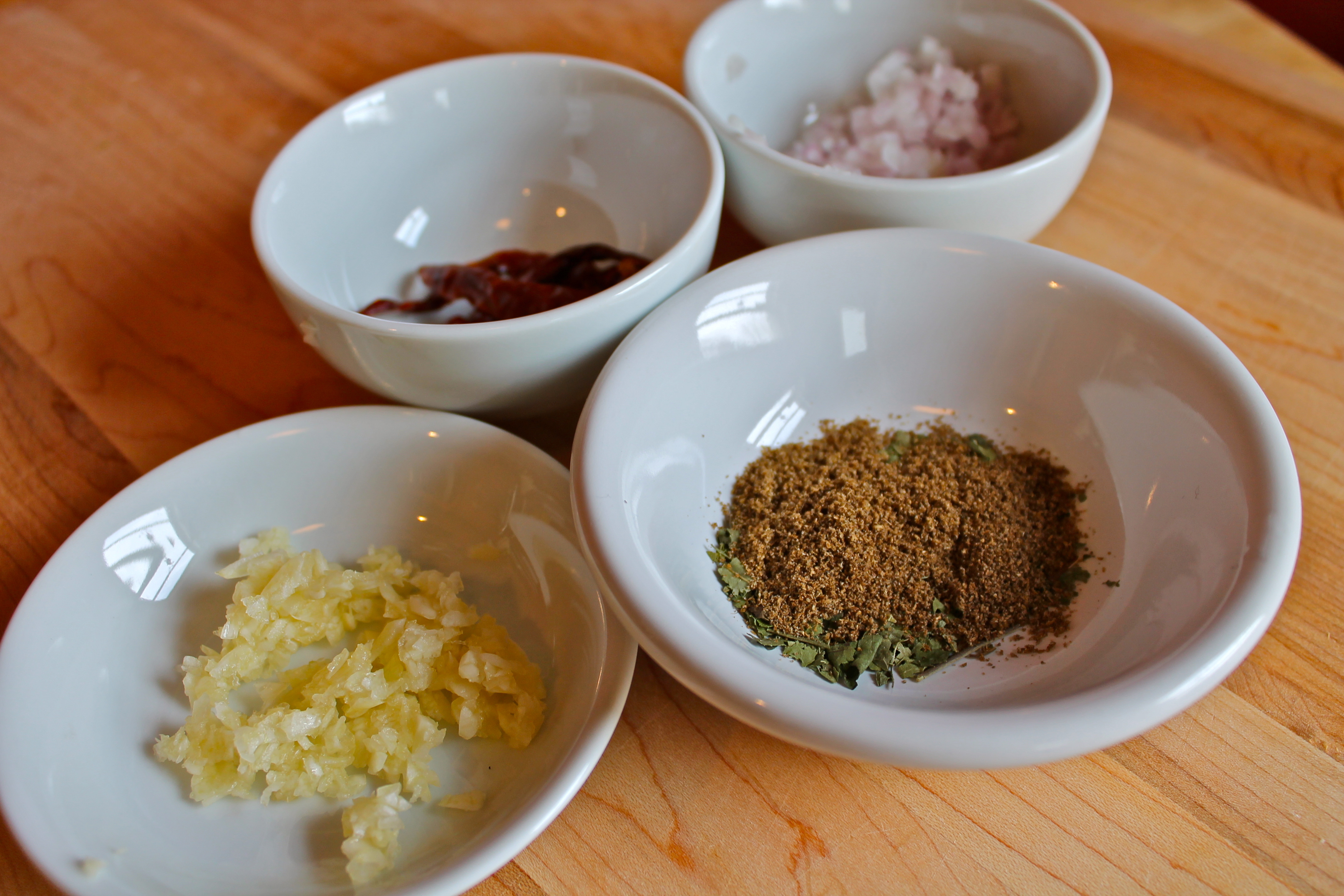
1 tablespoon of minced garlic, mashed to a paste

2 tablespoons minced shallots

6 or 8 fresh or frozen curry leaves (my Asian market was all out of whole curry leaves, so I used 1 heaping teaspoon of crushed dried curry leaves instead)

2 or 3 dried red chiles

1 teaspoon ground coriander

1 teaspoon salt

1 cup canned or fresh coconut milk

Put the dal in a medium pot with the water.  Bring to a boil, reduce the heat to a low simmer, then cook for 20 minutes.  Keep warm over low heat.

Heat a wok or a heavy skillet over medium-high heat, then add the oil.  Toss in the garlic and shallots and stir fry for 2 minutes.  Add the curry leaves, chiles, and ground coriander.  Mix well and cook for another 2 minutes.  Stir in the salt and coconut milk, then lower the heat and simmer for 5 minutes.

Add the coconut milk mixture to the hot dal and simmer for a few minutes to blend the flavors.  The longer you cook the mixture, the thicker it will get.  Serve hot.

Crisp and Hearty Homemade Granola Bars

13 Feb

There are some things people just do not expect you to make at home.  No one gives you funny looks when you bake a cake from scratch or make pizza at home, or even when you admit one day that you’ve taken to smoking your own salmon.  Tell people that you’ve developed a keen interest in making your own granola bars, however, and all of a sudden you’re regarded as some sort of competitive cooking snob, someone who has crossed the line of cooking for pleasure and entered into the territory of cooking in order to prove something.

It’s tough to explain to people who do not regard cooking as a pastime, a hobby, or even a treat, that when I want to make something new—no matter how silly it might seem to make it at home—it is because I like the time it allows me to spend in the kitchen.

My husband and I are both really, really into skateboarding (one of the many reasons we are married—because there were no other rational, responsible adults around to tolerate our interests), and we often talk about the time, sweat, and agony it sometimes used to take to learn a new skate trick (I speak in the past tense here because, though we are still into skating, neither of us is in any sort of position in life to be spending hours a day on a skateboard trying to will our bodies to complete a new trick that some kid less than half our age just thought up).  The focus you develop when you’ve just spent two solid days trying to land a fakie 360 flip (a trick that babies can now somehow learn straight from the womb, but back in the early ‘90s THAT TRICK WAS HARD) becomes almost maniacal, and two days start to seem like nothing if it begins to appear as though it might take another two days to finally land the trick without injuring yourself.

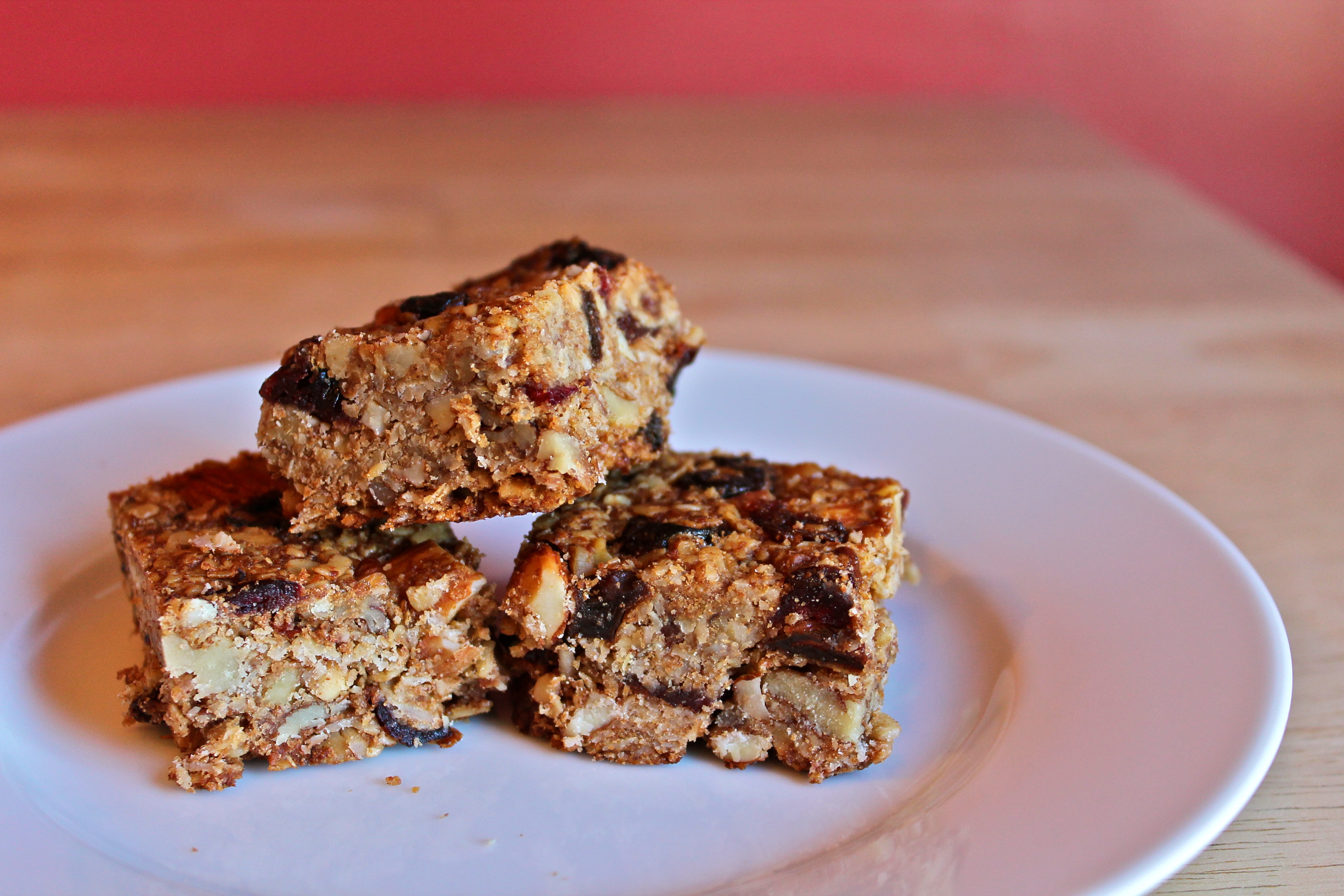
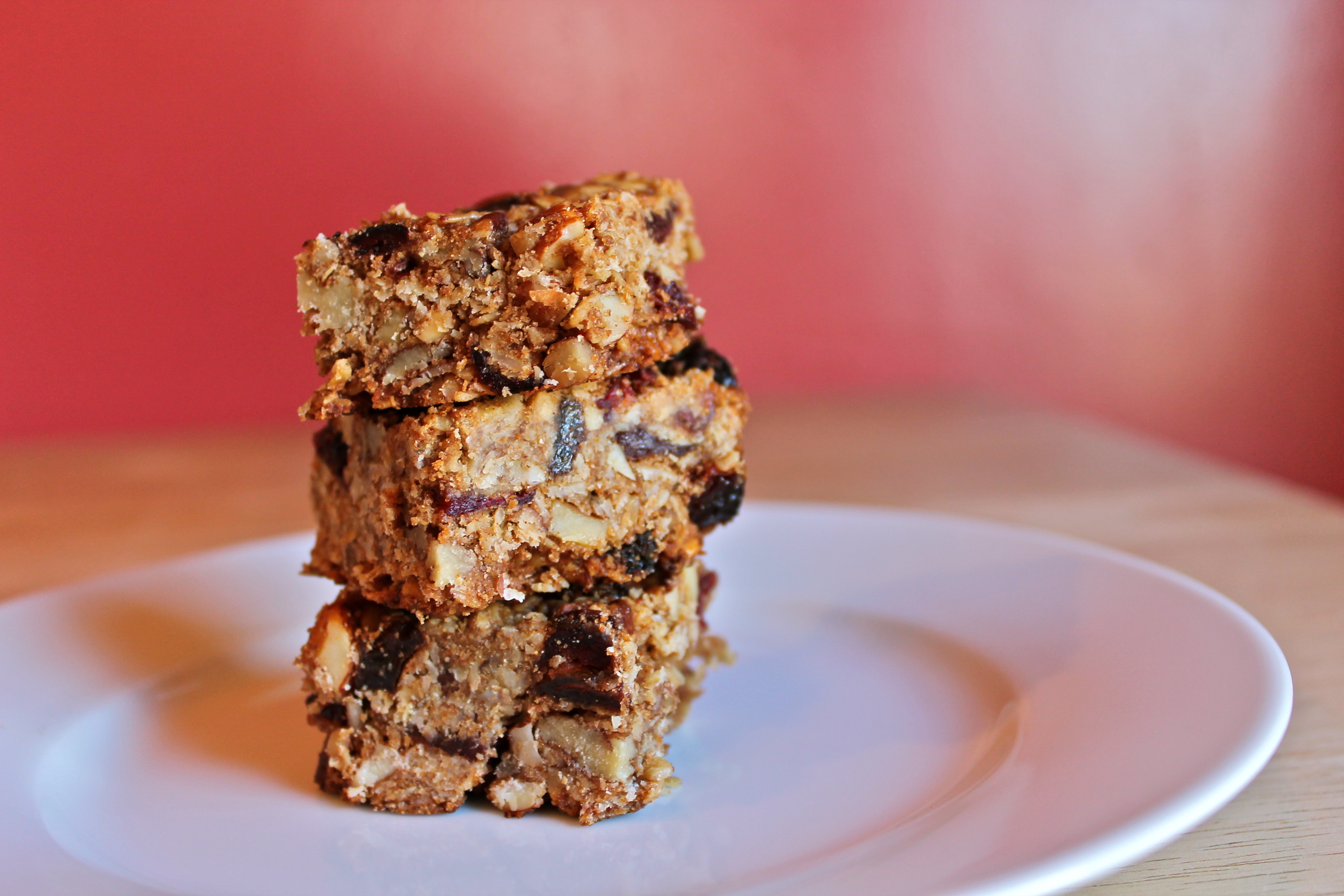
And this relates to making homemade granola bars how?  Because it’s the same dedication, the same enjoyment, that makes me want to get something right in the kitchen.  It may seem delusional to spend three days perfecting a granola bar recipe, but I swear to you, take one taste of these granola bars and you’ll immediately reverse that opinion.  Big bursts of dried fruit play against the hearty crunch of crisp nuts and lightly sweetened oats, while the subtle spices tie everything together with a pleasant mellowness.

These are no store bought granola bars, overly sweetened and packed with mystery additives.  These are a healthy, nutritious treat that belie the virtuousness of their ingredients by being utterly, fantastically delicious.  Because of their belly-filling goodness, these granola bars would make a great fortifying snack to take along on a hike, or perhaps a long ride on your bike (because apparently I am now channeling Dr. Seuss—you can eat them as a snack, just pop one into your backpack).  Right now, as I type this, I am eating one of these granola bars for lunch.  When I am done with lunch and typing, I will probably take a tiny little break to watch this, because now that the granola bars have been conquered, I have a bit of time left to devote to my other interests.

Crisp and Hearty Homemade Granola Bars

1 3/4 cups rolled oats

¼ cup dark brown sugar

¼ cup graham flour (graham flour has a great nutty taste, but you could also use whole wheat pastry flour or another mild whole grain flour, e.g. not rye flour)

½ cup wheat germ

½ teaspoon sea salt

½ teaspoon ground cinnamon

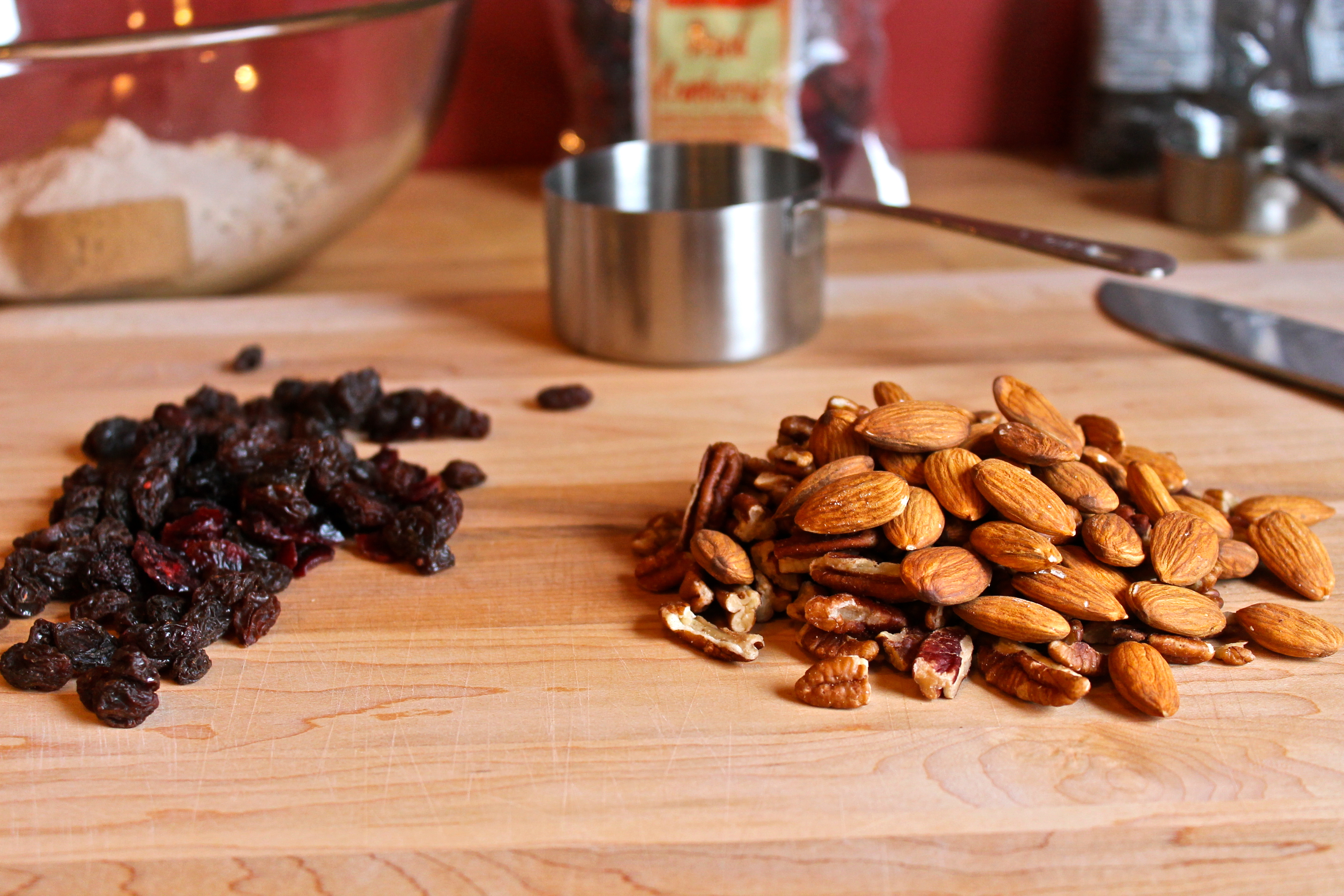
1 cup dried fruit, chopped into a uniform size if pieces are large (apricots, apples, etc.)—I used dried cherries, dried cranberries, and raisins, so no chopping was required

1 cup coarsely chopped nuts (I used almonds, walnuts, and pecans)

¼ cup vegetable oil

3 tablespoons unfiltered apple cider

2 tablespoons honey, agave, or maple syrup

1 teaspoon pure vanilla extract

1/3 cup unsweetened almond butter

Preheat oven to 350 degrees Fahrenheit.  Line an 8”x8” baking pan with a parchment paper sling (this can be accomplished by trimming your parchment paper into a long rectangle that will line neatly against the bottom of the pan and drape over the sides.  In the pictures above, my parchment paper sling is not nearly wide enough, on account of the fact that I inconveniently ran out of parchment paper and was using the last 4 inches of the roll), then lightly grease both the pan and the parchment paper with vegetable oil or nonstick cooking spray.

In a large bowl, combine the oats, brown sugar, flour, wheat germ, sea salt, cinnamon, dried fruit, and nuts.  Toss to combine.  In a small bowl, combine the oil, apple cider, honey, vanilla, and almond butter.  Whisk to combine.  Pour the wet ingredients over the dry ingredients.  Using your hands or a fork (but hands work best), thoroughly stir the ingredients together until it is uniformly wet and it wants to clump together.

Pour the granola mixture into the prepared pan.  Using your hands, firmly press the mixture into the pan, flattening the top, the edges, and the corners (it helps to have slightly wet hands when doing this, as the mixture is quite sticky).

Bake on the center rack of the oven for 30 to 40 minutes, until the edges are brown and the middle is golden.

Cool for at least 1 hour before attempting to cut.  Remove granola bars from the pan by lifting them up using the parchment paper sling.  A serrated knife works best to cut these, and I have found that popping the granola into the freezer for 15 minutes to slightly harden them before cutting makes the process even easier.

Makes 16 2-inch granola bars.

Indian Cauliflower Rice

9 Feb

I am not generally one to eavesdrop, but I am also not one to hear whisperings of what sounds like an incredible meal and then walk away.  This is how I found myself pretending to read messages on my phone while I stealthily listened to two people waiting for coffee talk about a dish involving fried rice made out of cauliflower, as in, the rice being fried was not rice at all, but rather finely chopped cauliflower.  It involved ginger, green onions, and then something-something that I could not hear, on account of the steady coffee shop din of sputtering milk steaming wands and a slightly-too-loud-for-eavesdropping playing of the Replacements (Let It Be).

I thought about the dish, and the concept of the dish, during the entirety of my walk home.  By some heretofore unseen miracle of refrigerator preparedness, I actually had cauliflower on hand (which never happens, ever, even though, I know, I am Indian and I like to make Indian food and Indian food means cauliflower and potatoes but, still, MIRACLE), but I was mildly flummoxed about what should come after finding the cauliflower in the refrigerator and marveling at my good fortune (it apparently does not take much to impress me).  Since I was receiving all the information about this new recipe via an unsanctioned source, there was very little required of me in the way of actually following a recipe.  Really, I was in this position on account of a concept, which meant that whatever I wanted to do with the cauliflower could probably not mess things up too badly.

So I went with what I know.  The cauliflower rice, originally conceived as a Chinese fried rice-type dish, became an Indian dish.  Toasted spices joined a healthy dose of grated fresh ginger, and a tiny bit of heat was added to keep things interesting.  What came together was a pleasant, delicious surprise, and one I don’t think that, left to my own devices, I would have ever happened upon myself.  Though I can’t condone eavesdropping on a regular basis (I suspect that most topics of private conversation probably involve things a lot more spicy than this dish), I have to admit that, used sparingly, a little nosiness can sometimes result in a lot of deliciousness.

Indian Cauliflower Rice

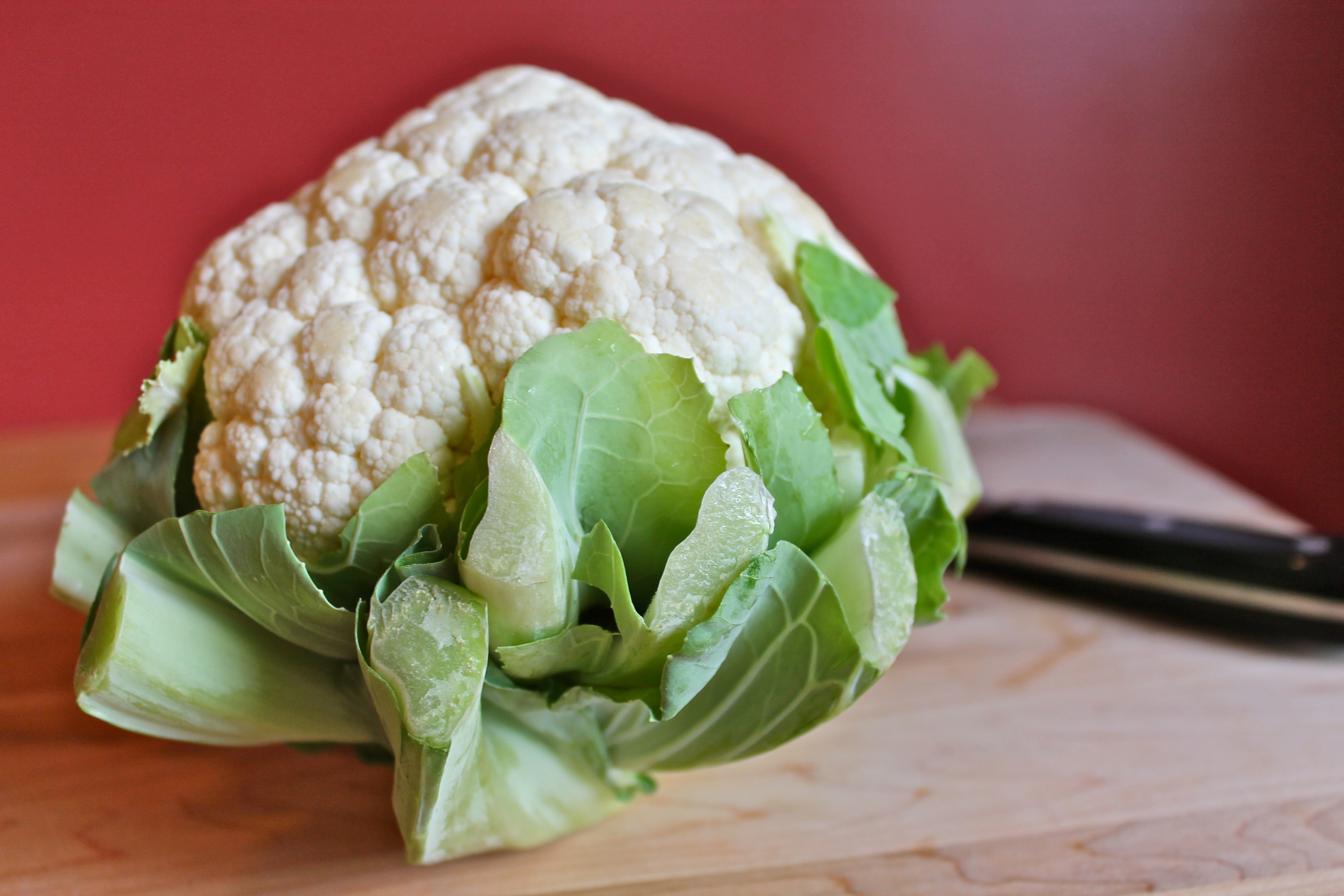
1 large head cauliflower, leaves and core removed

2 tablespoons vegetable oil

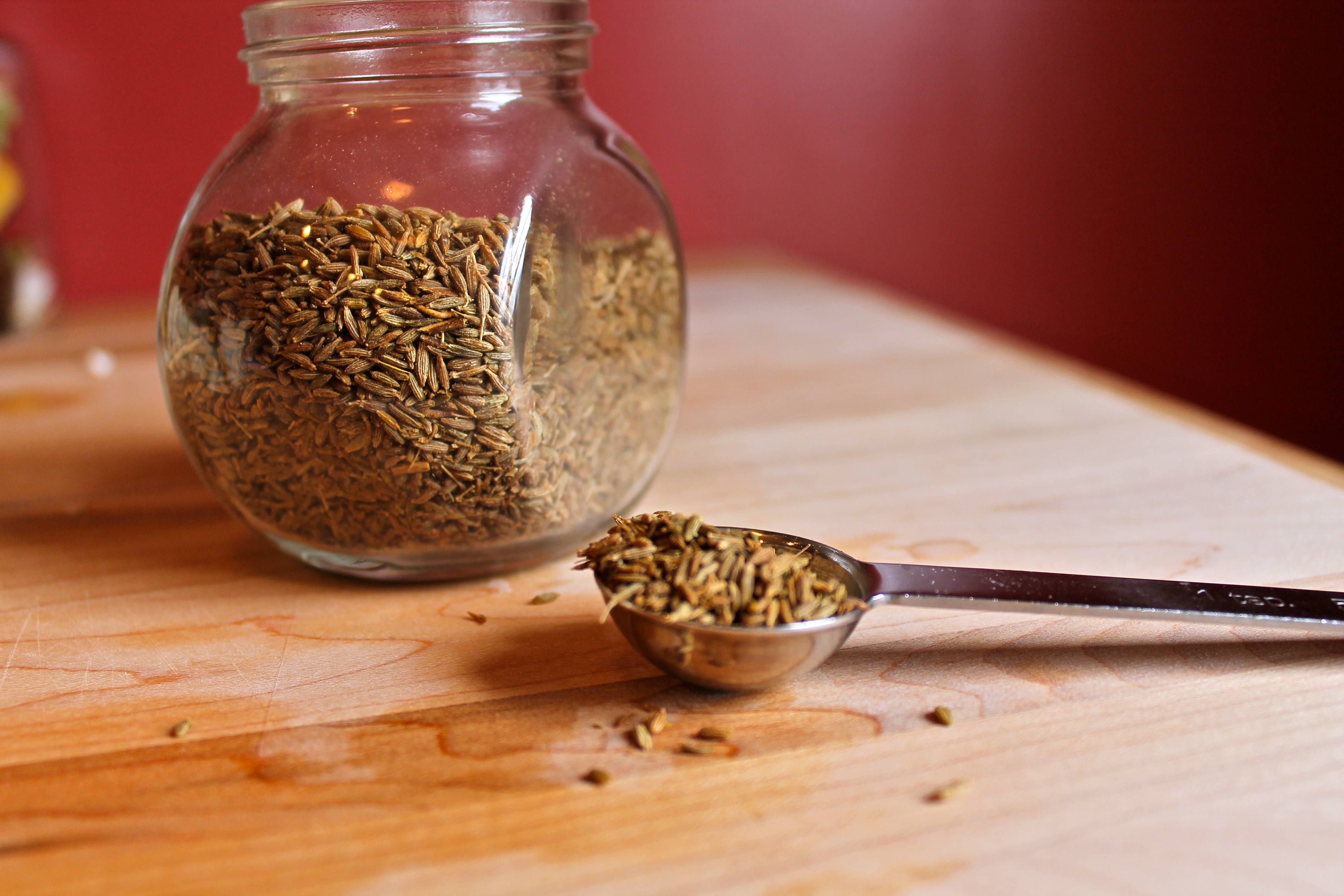
1 teaspoon whole cumin seeds

1 bay leaf

1 teaspoon minced garlic

2 teaspoons freshly grated ginger

½ medium yellow onion, finely diced

¼ teaspoon garam masala

¼ teaspoon turmeric

¼ teaspoon cayenne pepper

½ teaspoon coriander

salt to taste

¼ cup fresh cilantro (optional)

Cut the cauliflower into large florets.  In a food processor, pulse about 1/3 of the cauliflower until it is uniformly chopped into very small, rice-sized pieces.  Repeat with the remaining cauliflower, working in small batches and being careful to pulse the cauliflower only until it is chopped (over-chopping the cauliflower in the food processor will turn the cauliflower into a mushy paste).  When you have chopped all the cauliflower, set it aside.

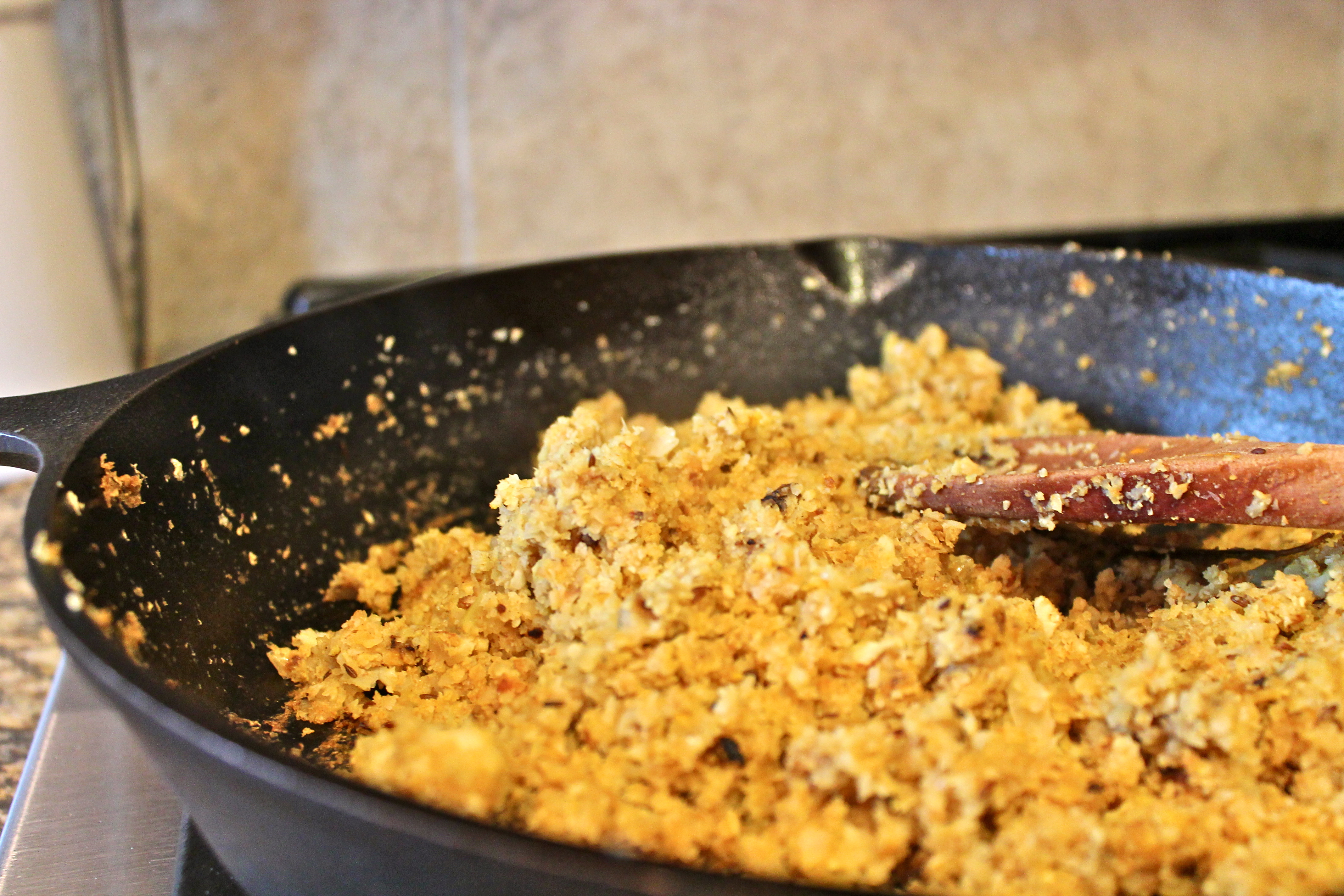
In a large skillet, heat the vegetable oil over medium-high heat.  When the oil has just started to shimmer, add the cumin seeds and bay leaf, stirring constantly to keep them from burning.  When the seeds start to sputter and pop (this should take just a few seconds), add the garlic, ginger, and onion.  Cook, stirring frequently, until the onions are softened and just beginning to brown, about 8 minutes.  If your onions and garlic begin to brown too quickly, turn the heat down to medium.  Add the chopped cauliflower to the pan, and stir fry for 2 to 3 minutes, until the cauliflower just begins to turn slightly golden at the edges.  Add the garam masala, turmeric, cayenne pepper, and coriander.  Cook for an additional 7 to 10 minutes, until the cauliflower is golden and the spices smell toasty.  Add salt to taste.

Garnish with fresh cilantro, if desired.

Serves 3-4 people as a main dish, twice as many as a side dish.