Hazelnut Orange Pesto

5 Jan

For fifteen years now, I have been subscribing to the New Yorker.  During that span of time, there have been maybe three instances—four, tops—in which I have not greeted the arrival of yet another issue of the magazine by plopping the new week’s issue upon a vast pile of previous weeks’ issues.  A very good friend of mine, who, at the time, was also a longtime subscriber to the New Yorker, and also, incidentally, unable to keep up with the barrage of unstoppable arrivals flooding his mailbox, once began to refer to every new issue of the New Yorker as “the dead rat,” due to its unassailable, somewhat onerous presence in his mailbox.  Plang!  The flap of the mailbox just slammed shut.  What’s new?  Oh, yes.  The dead rat has arrived.  Add it to the pile.

Other people I know who subscribe to the New Yorker are perfectly fine with the sight of piles of unread magazines littered about their home.  Perhaps it speaks of a more developed sense of ease on their part when it comes to matters of reading materials that those people can accumulate back issues of the New Yorker and never blink an eye.  I get more than three weeks behind and I start to develop cold sweats.  Maybe because of that fellow I read about who was something like a year and a half behind on the New York Times, a newspaper he read every single day, though not in its entirety every single day, which meant that when it took him a couple of days to make his way through a copy of the Times, he’d be a couple of days behind, well, the Times, when he finished.  Take too long to read the paper over a long enough period of time and, look, there you are, reading an issue of the New York Times from 2007 as you ride the subway to work in 2009.  Sometimes it feels like a slippery slope between getting a couple of weeks behind on the New Yorker and becoming that man and his archive of New York Times reading matter, perpetually living in the past just so he can leisurely work his way towards the future.  (Also, it bears mentioning that the story about the man and the New York Times?  Yeah, I read about it in the New Yorker.)

The main culprit in my chronic struggle to maintain a current reading schedule with the New Yorker is the fact that I insist on reading every single thing in the magazine, cover to cover.  I read the listings for what bands are playing at what clubs, what new building by what new architect is currently being built to house what new condo complex, and what new restaurants are opening.  You may think I am insane to take on such a seemingly worthless endeavor, but let me tell you something.  Had I not insisted on reading a review of a new restaurant that opened up in the West Village, I would have never read about that restaurant’s offering of a small, delicious plate of crusty bread topped with hazelnut orange pesto.  Not helping my reading situation at all, as soon as I read about the combination, I put down my magazine to make it.

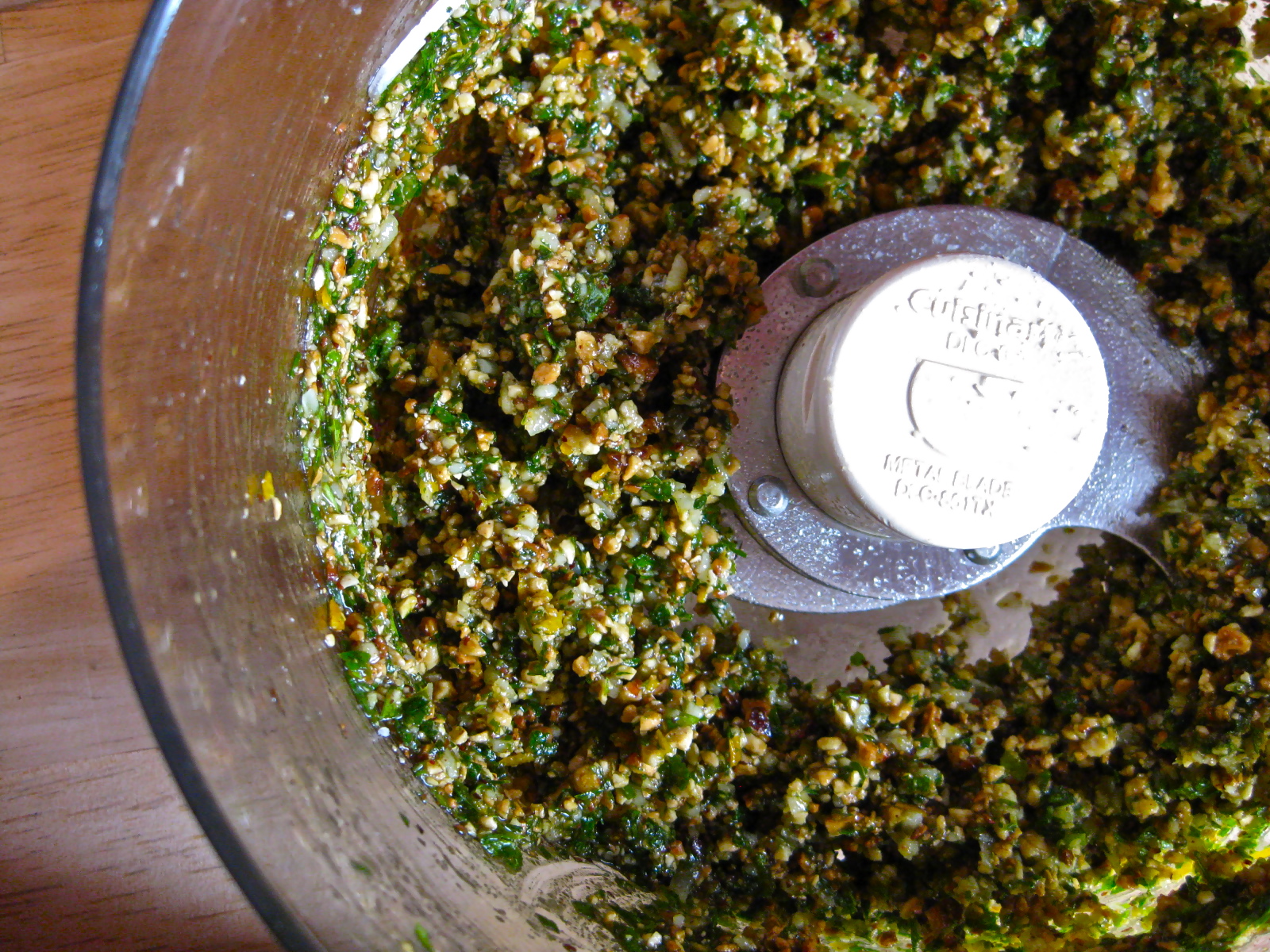
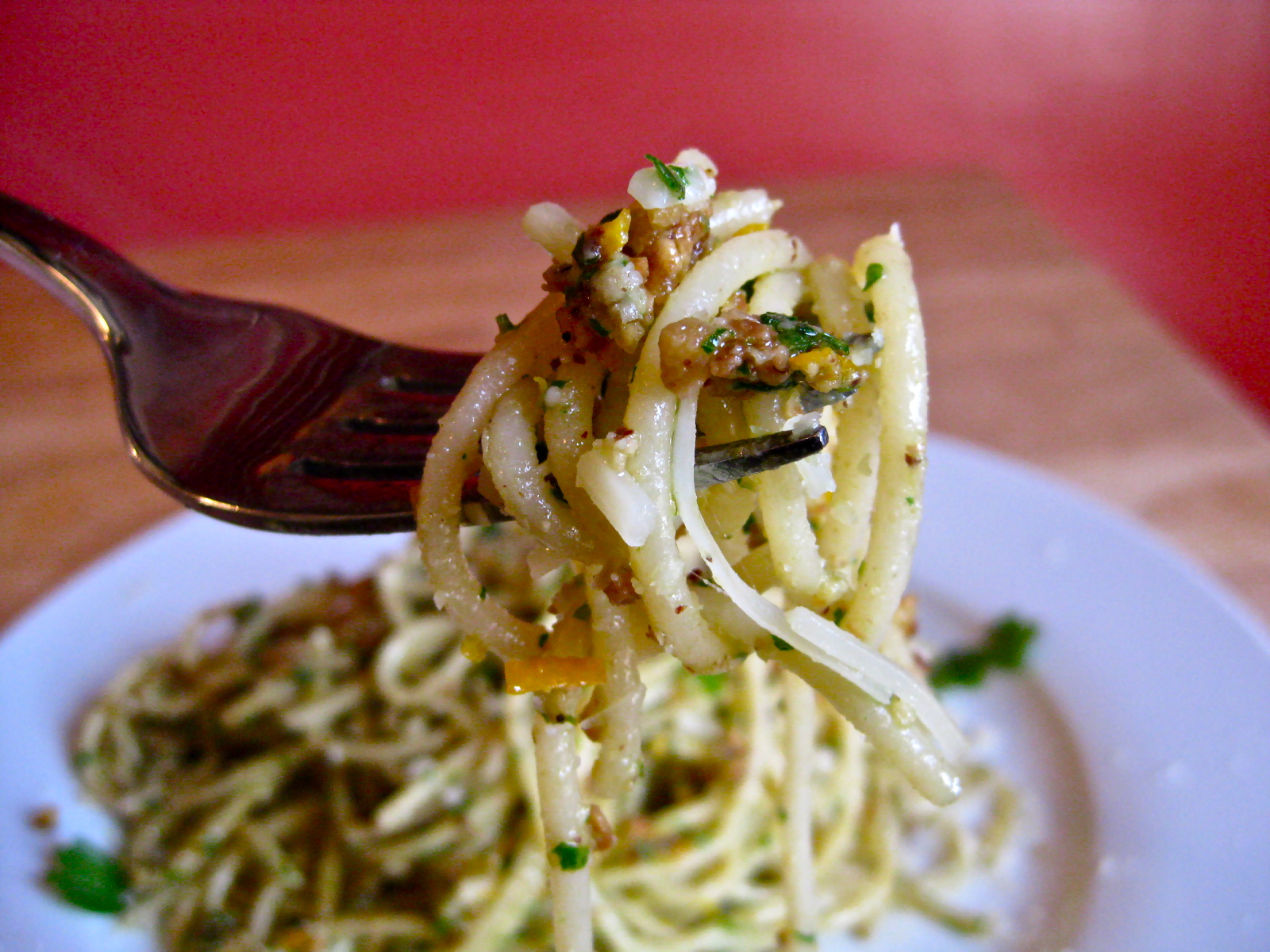
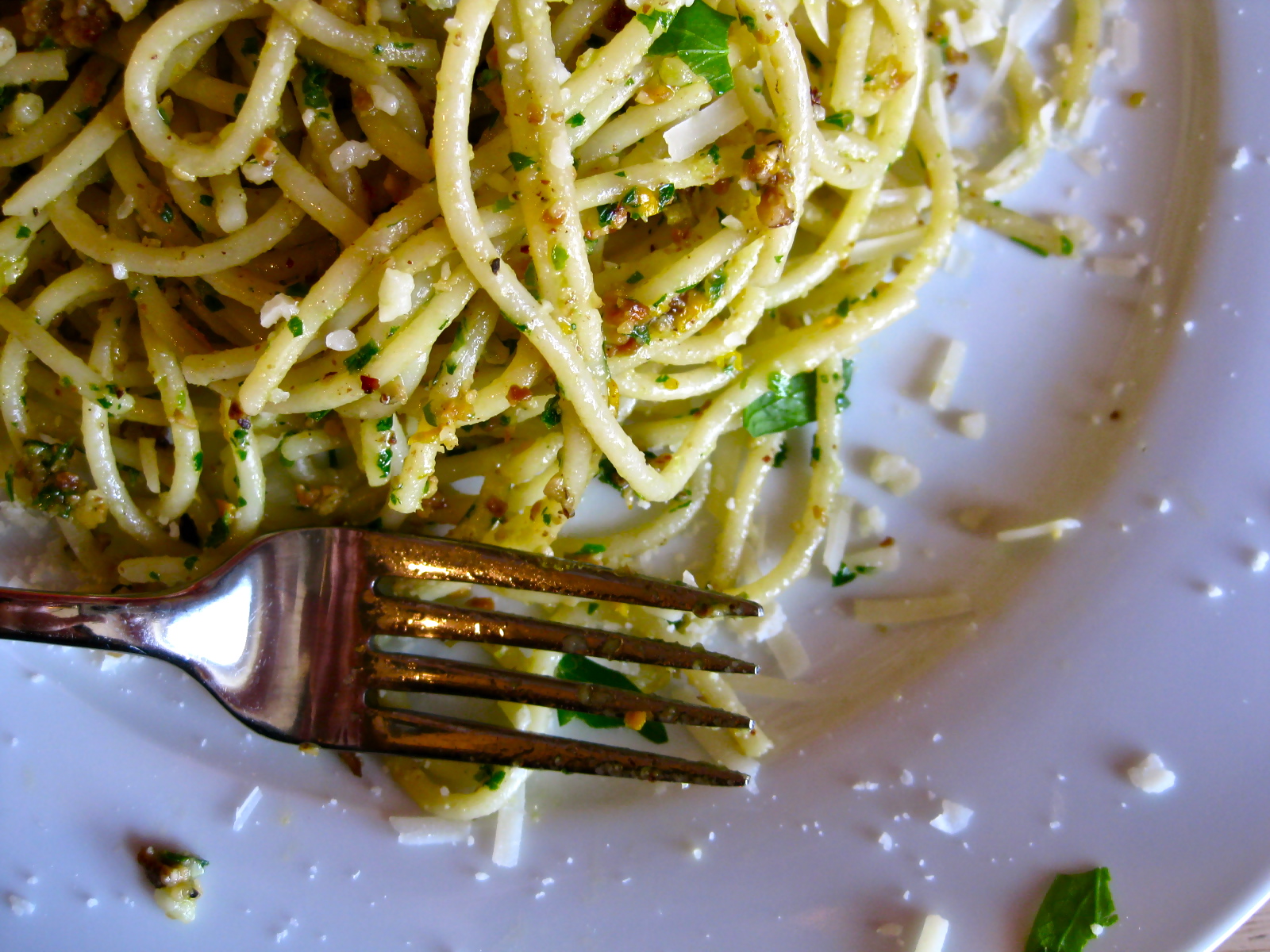
Not surprisingly, the pairing of the two elements is absolutely fantastic.  The robust flavor of the toasted hazelnuts gets a nice brightness from the orange zest, and when whirled together with a generous glug of olive oil and a large handful of Italian parsley, the pesto comes together as a well-rounded, satisfying sauce for pasta, topping for crostini, or even a nice embellishment to a pile of sautéed greens rested upon a bed of thick, belly-warming polenta.  I savored each bite of this warm, filling meal, and I am not the least bit ashamed to admit that while eating it, I cracked open an old back issue of the Atlantic.  From September 2010.  Don’t worry.  I’ve let that subscription lapse.

Hazelnut Orange Pesto

If you are going to make this pesto as a sauce for pasta, reserve about ½ a cup of the pasta’s cooking water to add into the pesto when you toss it with the pasta.  This will help the pesto loosen up a bit and maintain more of a sauce-like consistency.

1 cup hazelnuts

1 cup loosely packed Italian parsley leaves

1 large clove of peeled garlic

2 tablespoons grated orange zest

¼ cup grated Parmesan cheese

¼-1/3 cup olive oil

salt and pepper

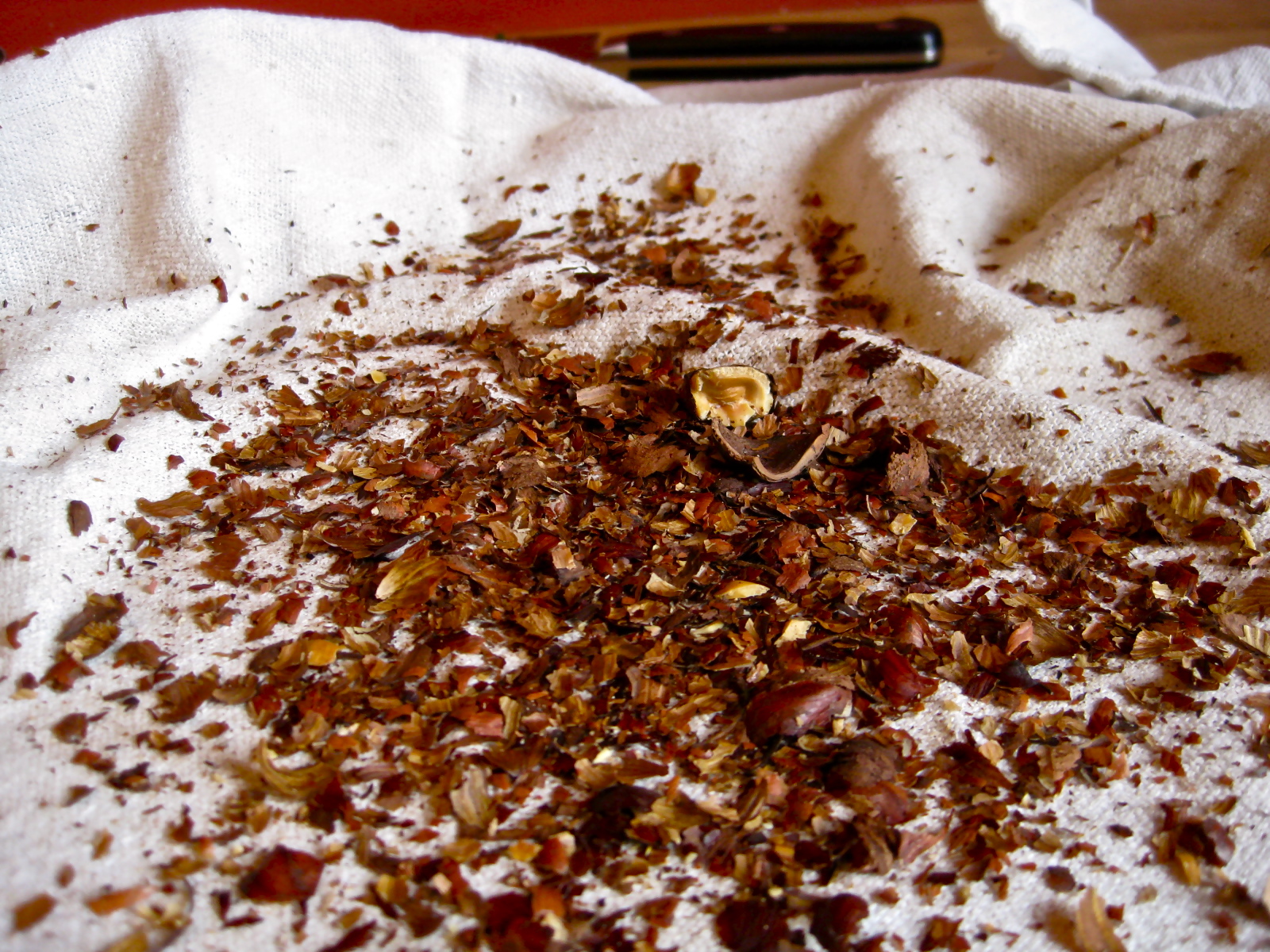
Preheat oven to 350 degrees Fahrenheit.  Place hazelnuts on a baking sheet, and toast for 15 minutes, until the nuts are golden brown and the skins are beginning to peel free.  Remove the toasted nuts to a clean dishtowel.  Fold the dishtowel over the hazelnuts, and vigorously rub the towel around to slough the skins off of the nuts.  If you don’t remove all of the skins, don’t worry.  You just want to remove enough of the skins to ensure that your nuts won’t taste too bitter.

In the bowl of a food processor, combine the nuts, parsley, garlic, orange zest, Parmesan cheese, and ¼ cup of olive oil.  Pulse the mixture for about 20 seconds, until the ingredients are chopped and the nuts still have a good amount of texture (if you process the mixture too long, the hazelnuts run the risk of turning into a paste).  If the mixture looks a bit too sturdy, add in the remaining olive oil, one tablespoon at a time, pulsing briefly after each addition until the pesto reaches your desired consistency.  Add salt and pepper to taste.

Use as a topping for crostini, a sauce for pasta, a dressing for greens, etc.  I’ll bet this would taste great dolloped on top of a nice firm piece of white fish.

Recipe Roundup

2 Jan

I am still happily writing for both Indie Fixx and Portland Farmers Market.  Here is a roundup of my newest articles and recipes (just click on the name of a recipe to be taken directly to it).

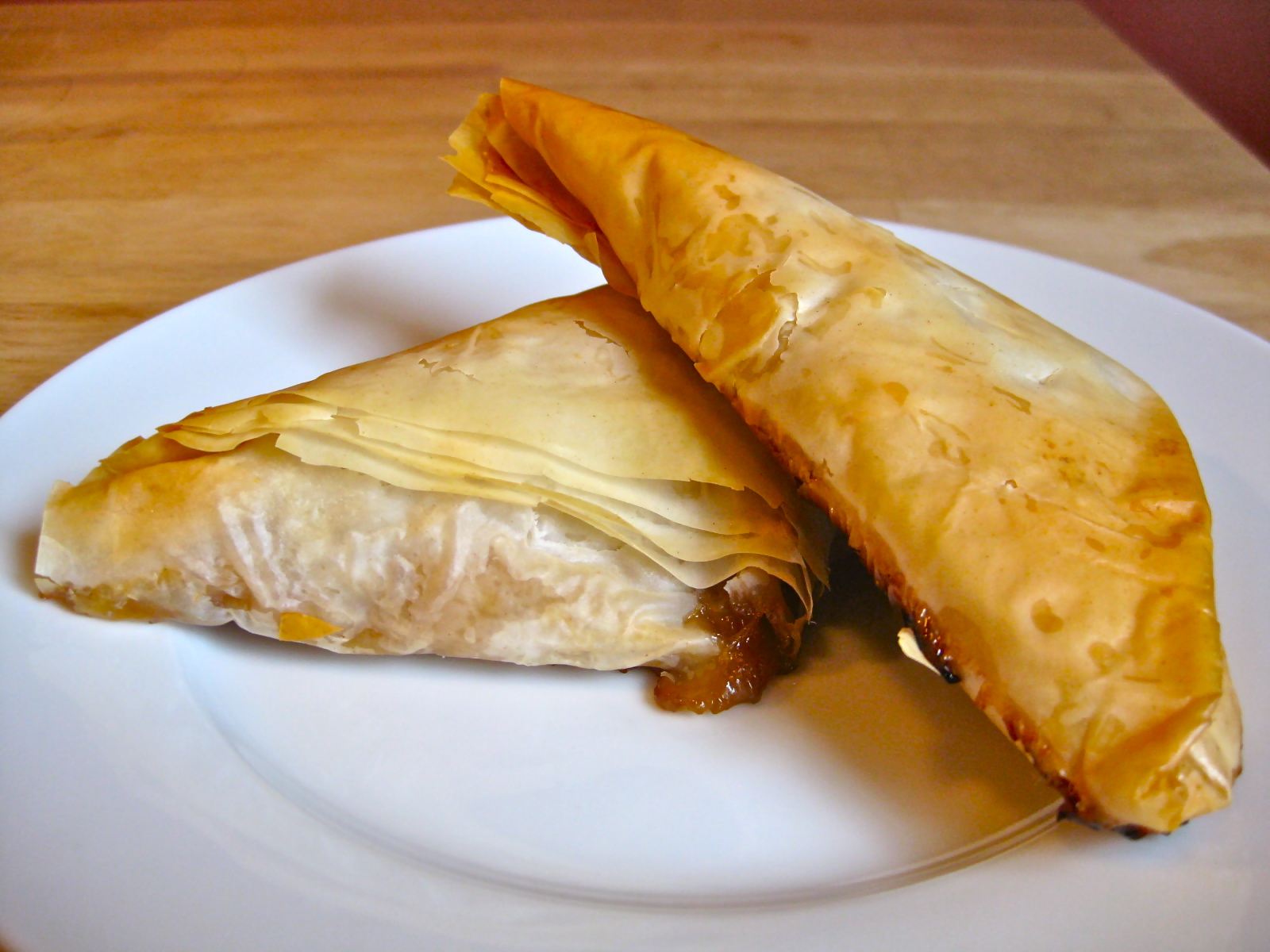
Turnovers in Phyllo

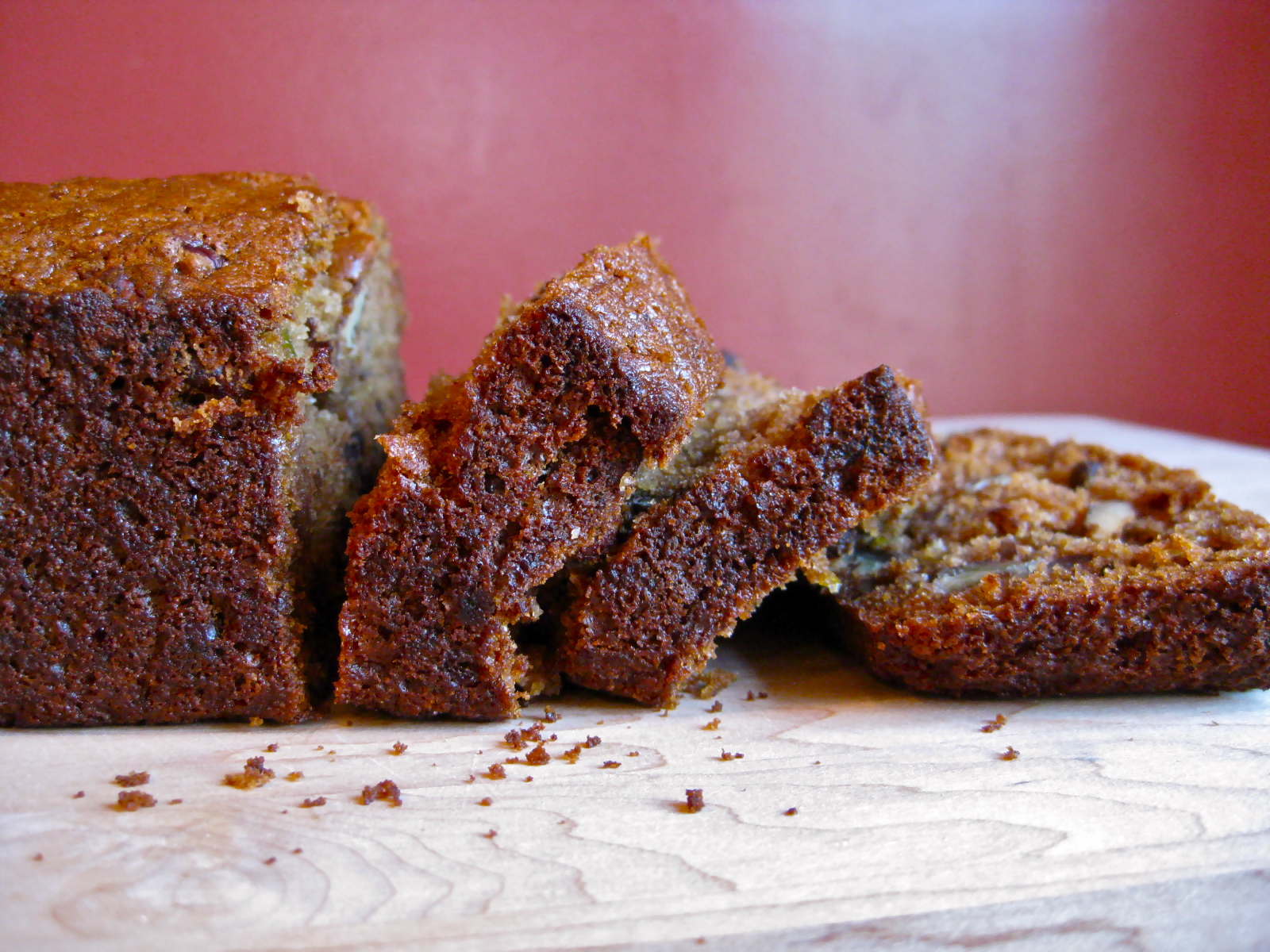
Pear and Pecan Bread

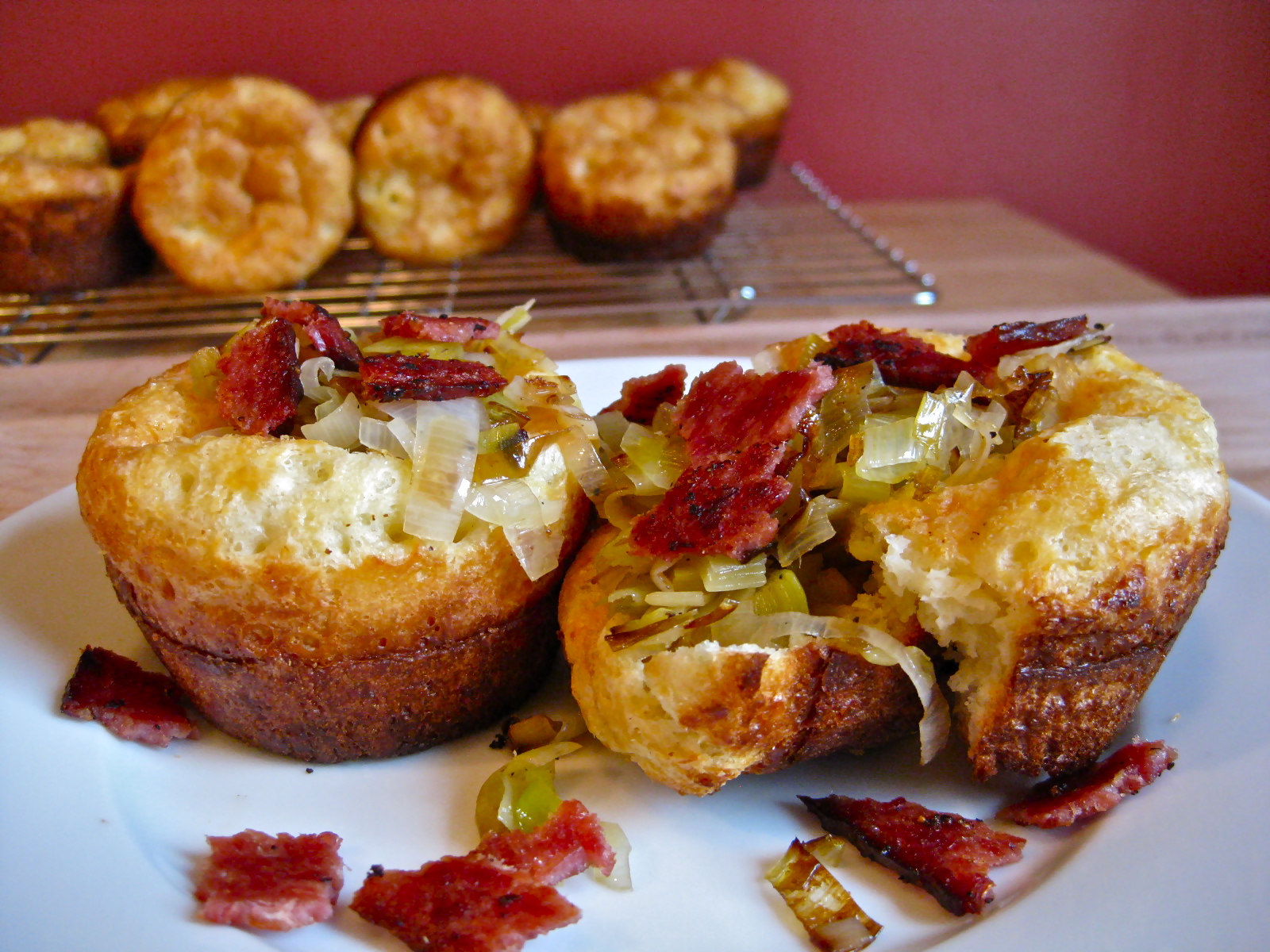
Popovers with Braised Leeks

Portland Farmers Market will be in hibernation for the next few weeks, but they will emerge soon after with a brand new winter market.  This was my last post from their regular market season, and I definitely closed out the year with a bang (hello, cheese and heavy cream).

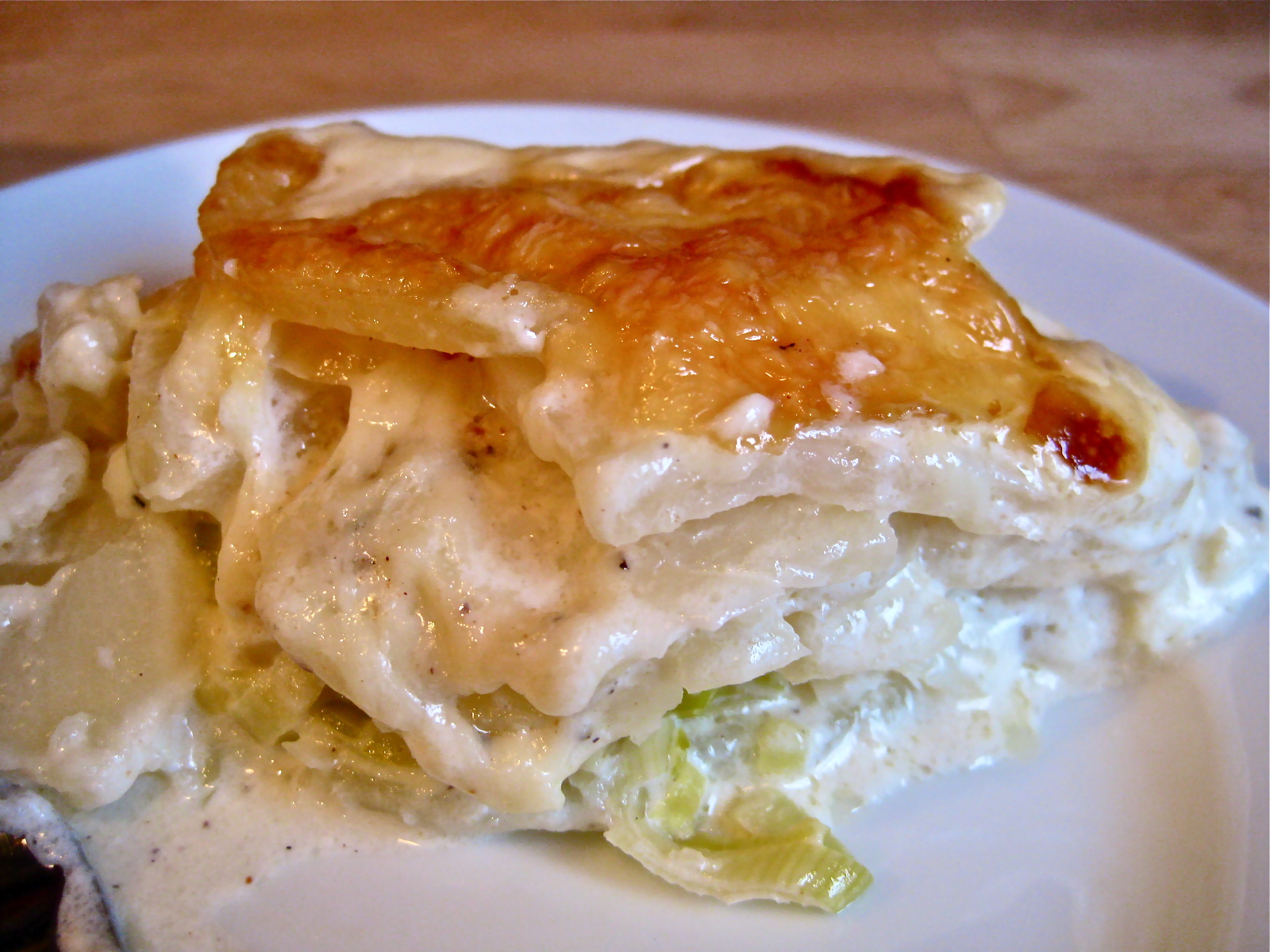
Root Vegetable Gratin

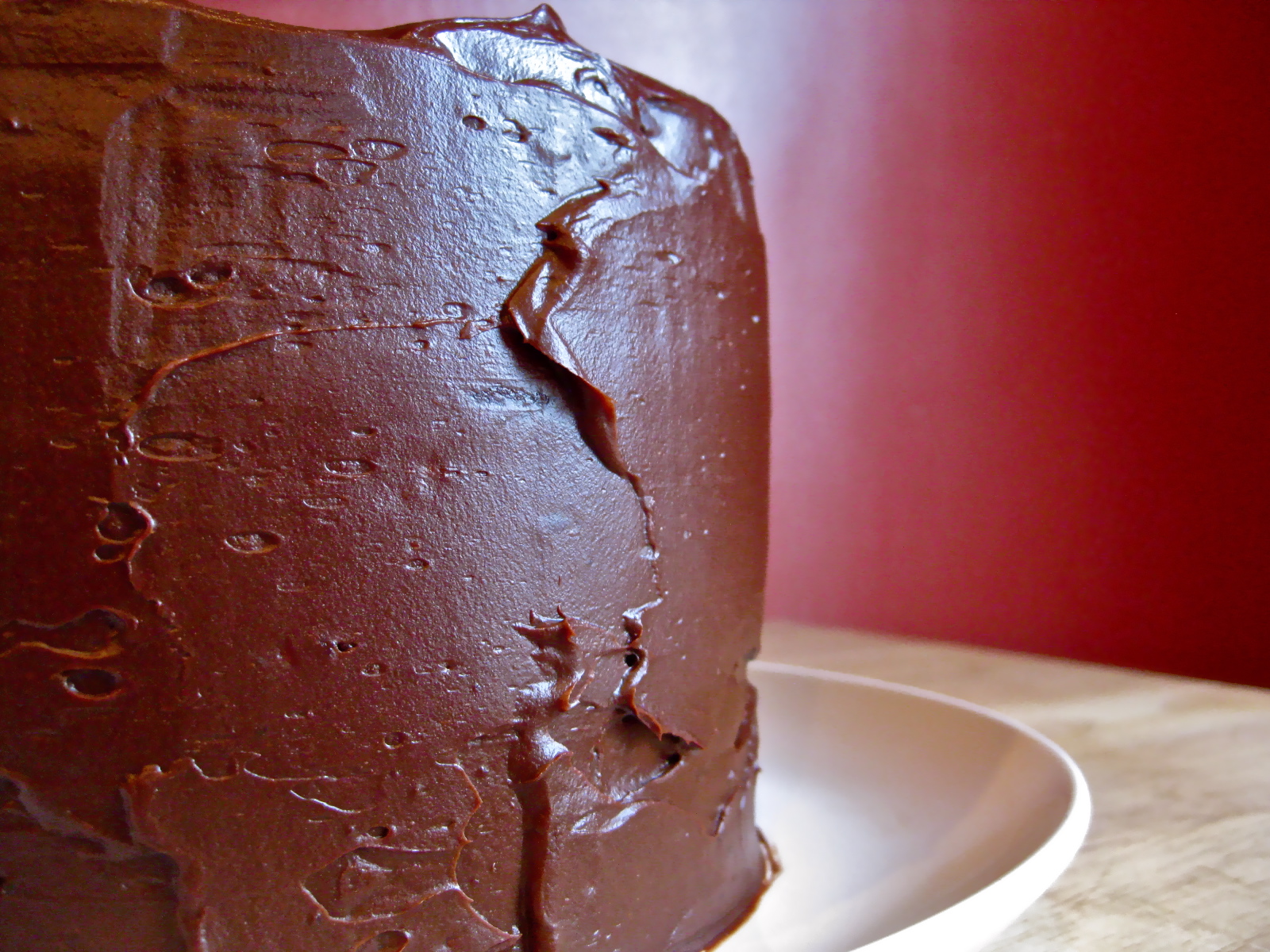
Also, last year I made this cake, but then I never told you about it.  Maybe I should do that, because it was really freakin’ good.

Smoked Salmon Canapés on Potato Crisps

27 Dec

It’s been a literal number of years since my husband and I have done anything at all to celebrate New Year’s Eve.  The last time we agreed to venture out on that particular evening, we were holed up at the house of some people we knew, constantly checking the clock to see how much time had passed since we got there, and if it would be terribly rude for us to bid a hasty retreat, let’s see…right now.

It’s not that we are averse to spending time with other people, and it’s not as though we hold any particular grudge against New Year’s Eve as a concept, but it’s just that, in a celebratory sense, I think New Year’s Eve is one of those holidays that sets people up to feel disappointed.  Much like Valentine’s Day, the only holiday I think should be actually stricken from existence (seriously—kids not getting Valentine’s Day cards, people thinking their significant other is duty-bound to shower them with trinkets, the horrible, terrible movies—intentionally or not, it’s just designed to make people feel bad about themselves), there seems to be an unnaturally high amount of expectation surrounding New Year’s Eve.  As the calendar year begins anew, people are led to believe that so go their lives, their opportunities, and their accomplishments.

It is understandable that some people may find it helpful to assign a specific day as the starting point for their goals, but why resign yourself to thinking that there is only one day a year that allows you to make decisions regarding how you’d like your life to change?  If you’re going to develop resolve to become a more invested parent, why wait until a particular day to begin that challenge?  If you want to become more involved in charity work, it seems wise to start offering your time sooner rather than later.  Do you want to save more money?  Start now.  Go back to school?  Okay, so you’ll have to wait until the start of a new term, but, still, if you want to go back to school, go back to school.

My feelings about certain foods fall very much in line with my feelings about holidays that are meant to boss people around.  I know that Thanksgiving is the holiday of eating turkey and giving thanks, but, really, can’t I have turkey and feel thankful year round?  I think I can.  And, being as though I hold a particularly strong affection for what my husband refers to as “little bites” (tiny sandwiches, tiny cookies, tiny pies, cracker bites, you get the idea), I think that, cocktail/holiday/New Year’s Eve party be damned, if I want to eat canapés for dinner and ponder the myriad of ways I’d like to help make the world a better place for my son, his son (or daughter) and all those who come before and after, I should go ahead and do so whenever I please.

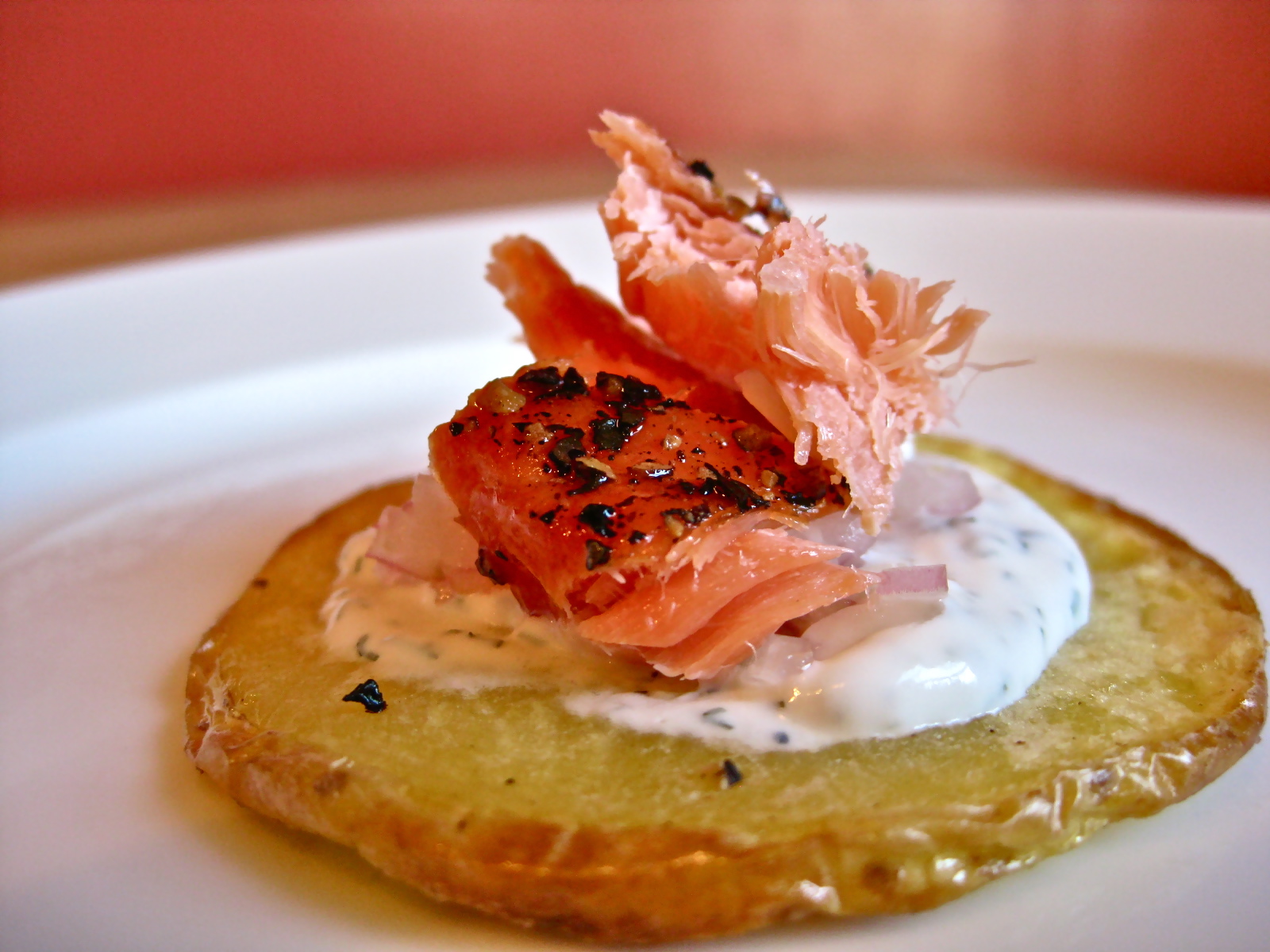
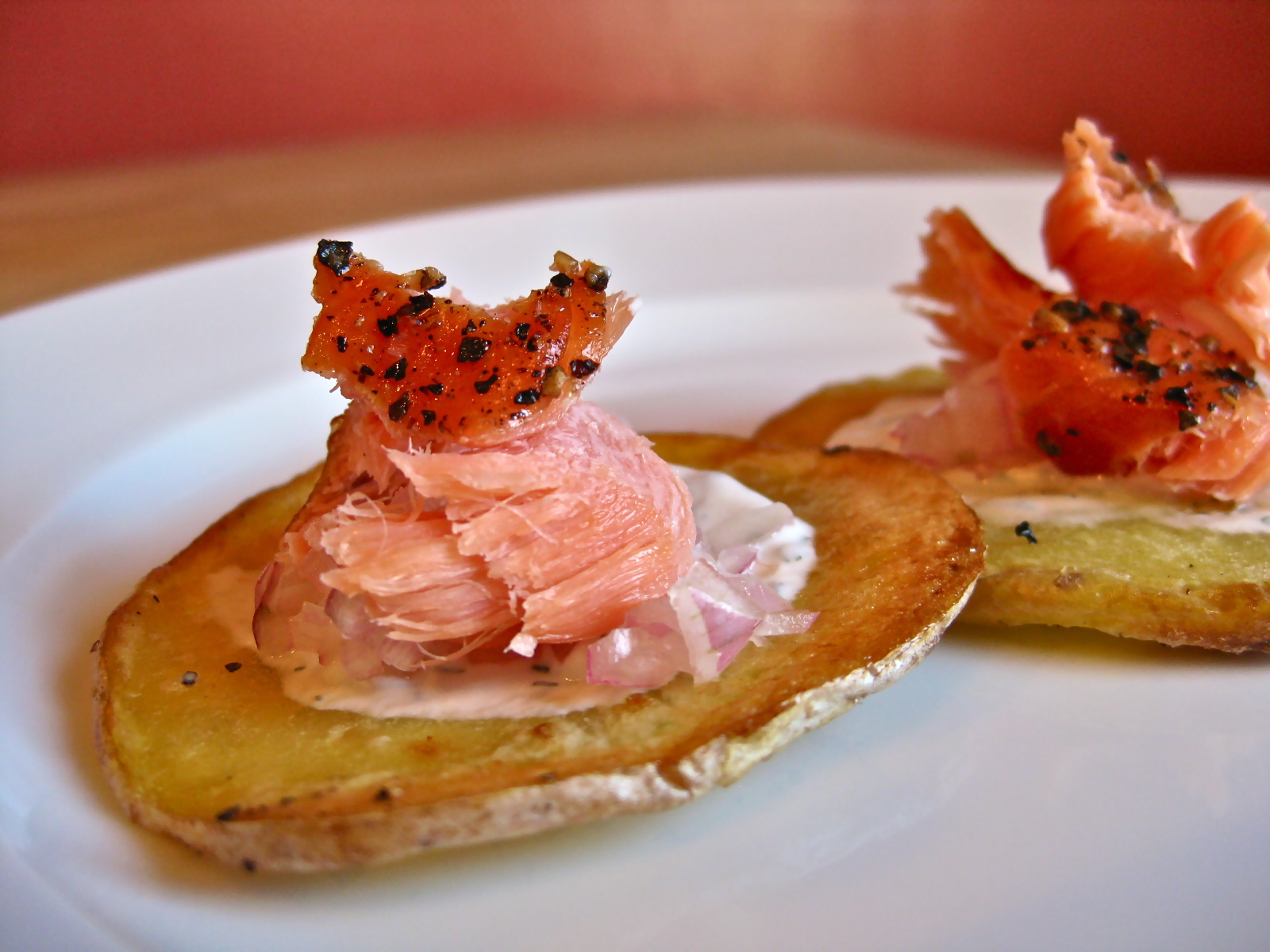
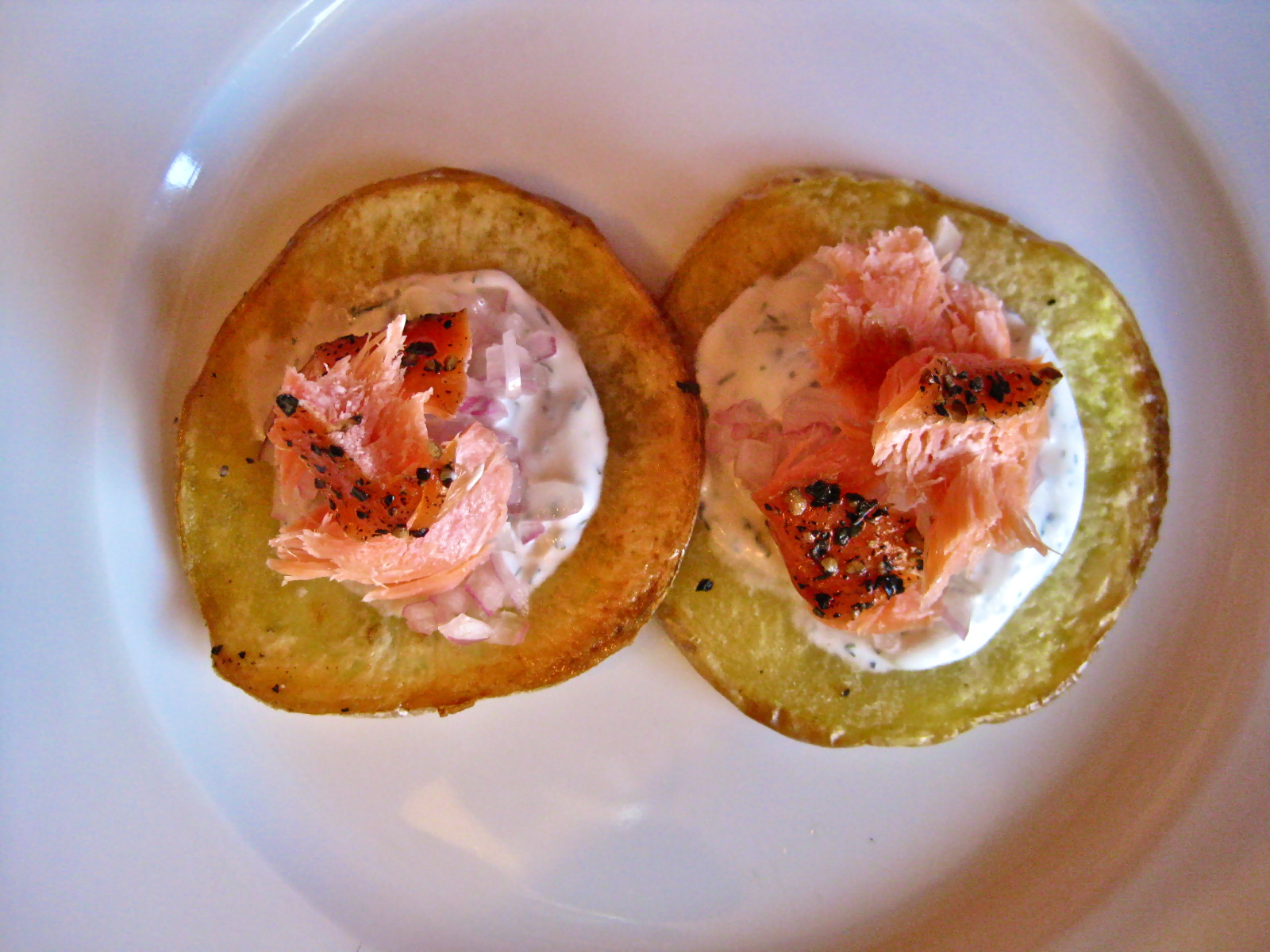
So here’s to the start of not just a new year, but a new way of thinking about the new year and what it means.  Your new year can start any time you want it to.  And your dinner of smoked salmon on crisp discs of olive oil roasted potatoes, joined by a creamy dill spread that’s topped with an absolutely heavenly relish of shallots and rice vinegar?  Yeah, that can start at any time.

Smoked Salmon Canapés on Potato Crisps

Potato Crisps

1 pound Yukon gold potatoes, which generally works out to 2 large potatoes

4 tablespoons olive oil

salt and pepper

Shallot Relish

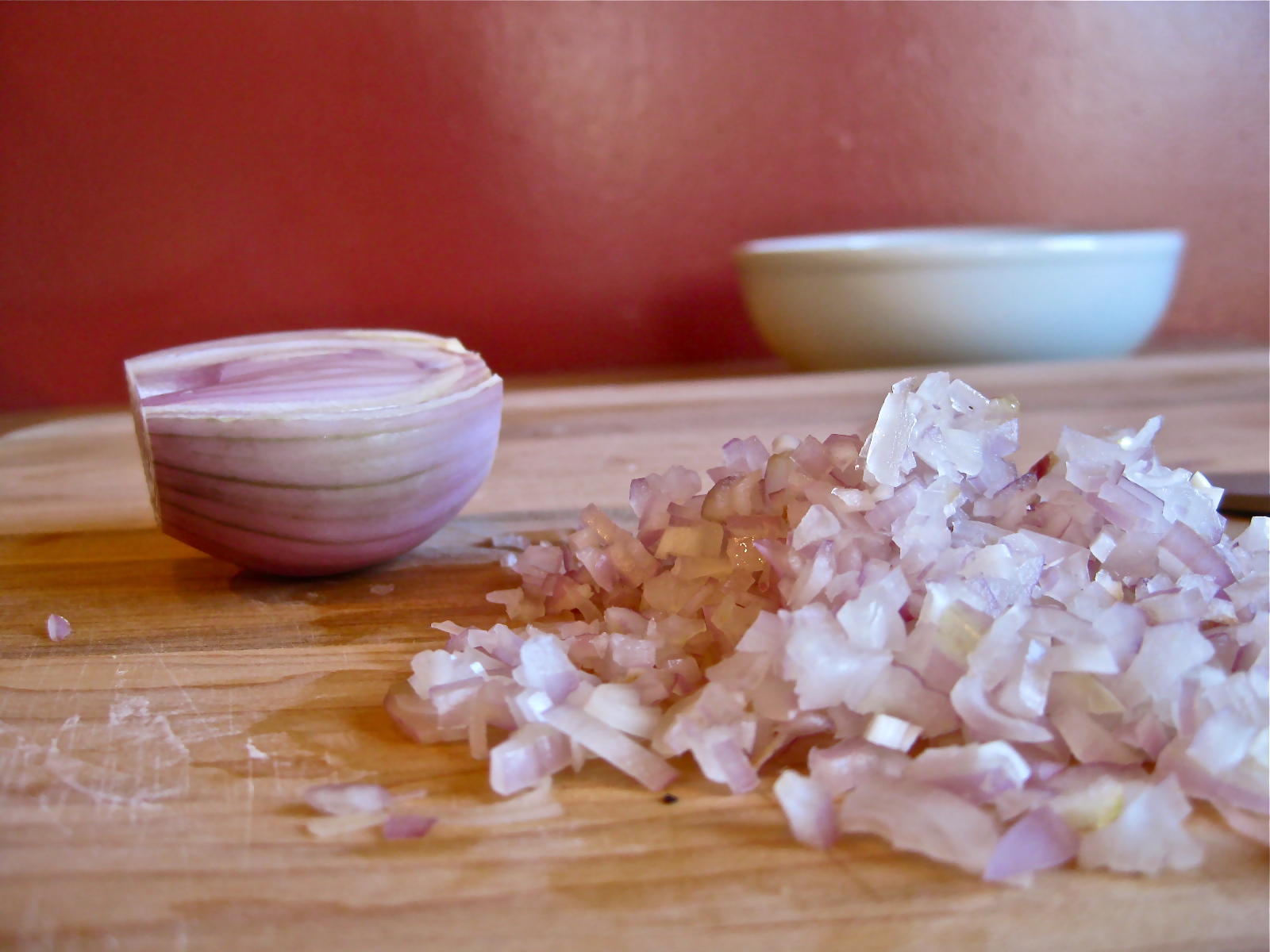
¼ cup finely chopped shallots

heaping ¼ teaspoon sugar

2 teaspoons rice vinegar

Creamy Dill Spread

2 tablespoons cream cheese

3 tablespoons sour cream or crème freche

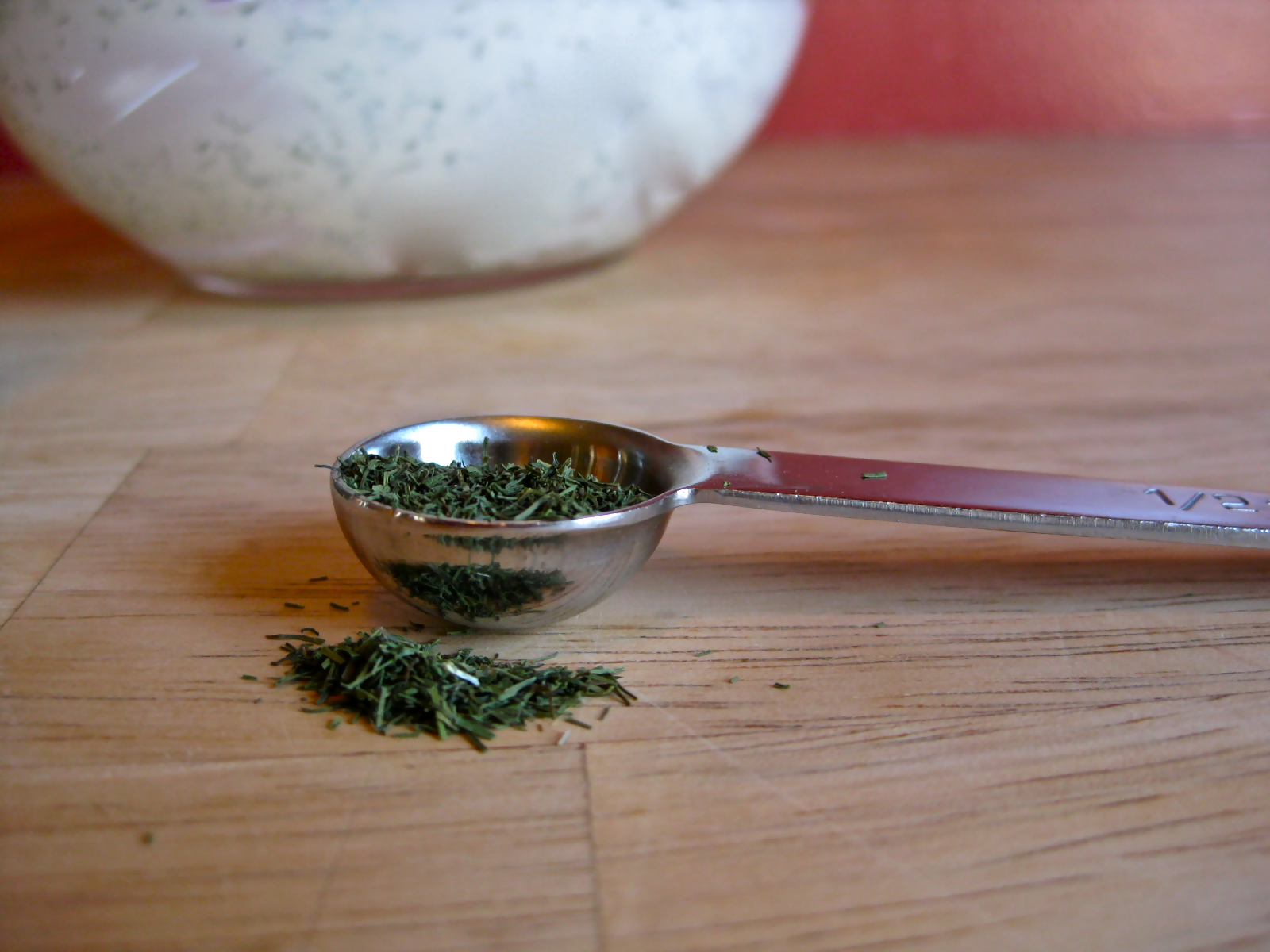
½ teaspoon dried dill

pinch of salt

Plus:

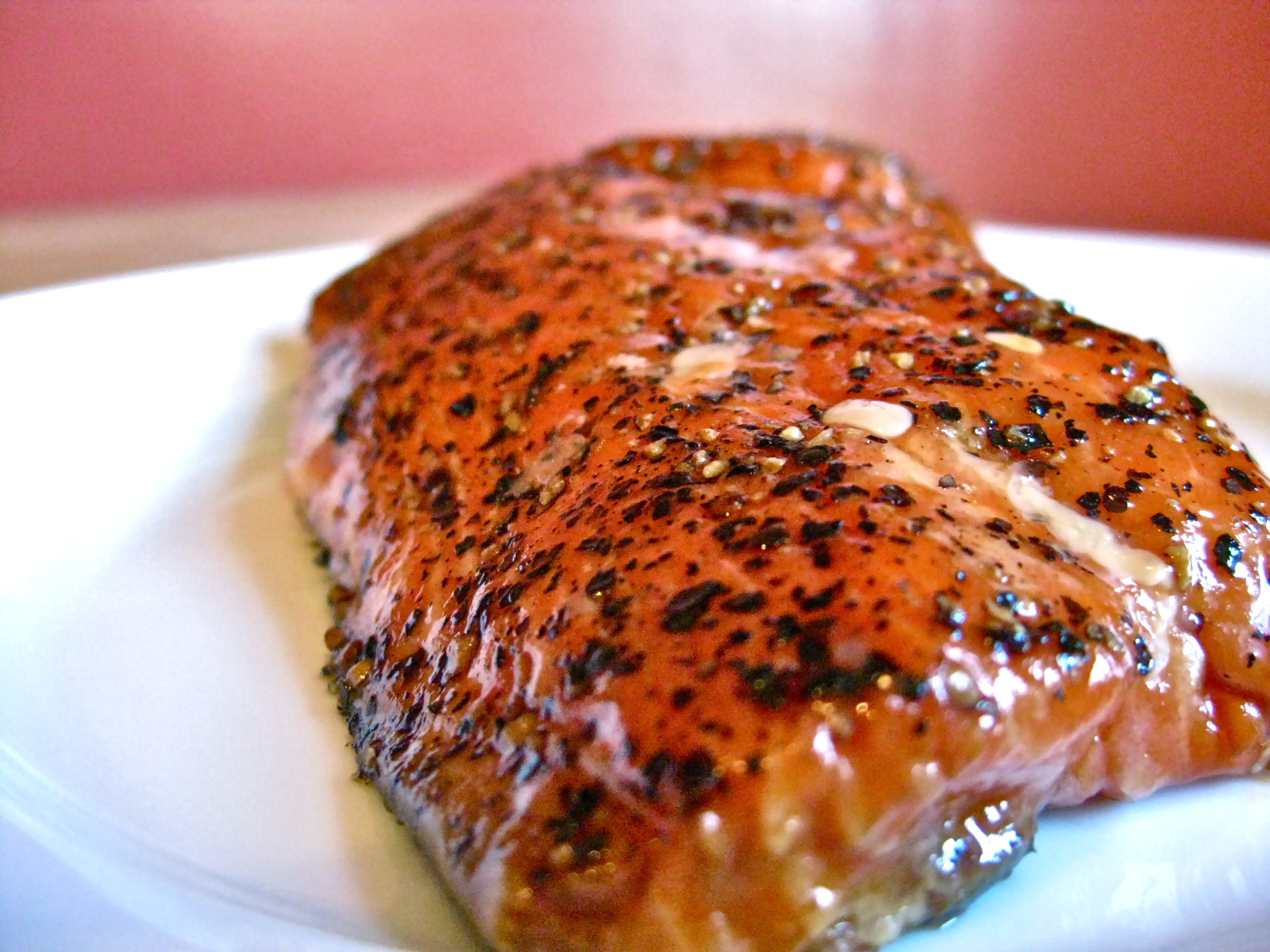
8 ounces smoked salmon (you can make your own!)

To make the potato crisps, preheat oven to 400 degrees Fahrenheit.  Move one oven rack to the upper third position, and one rack to the lower third.

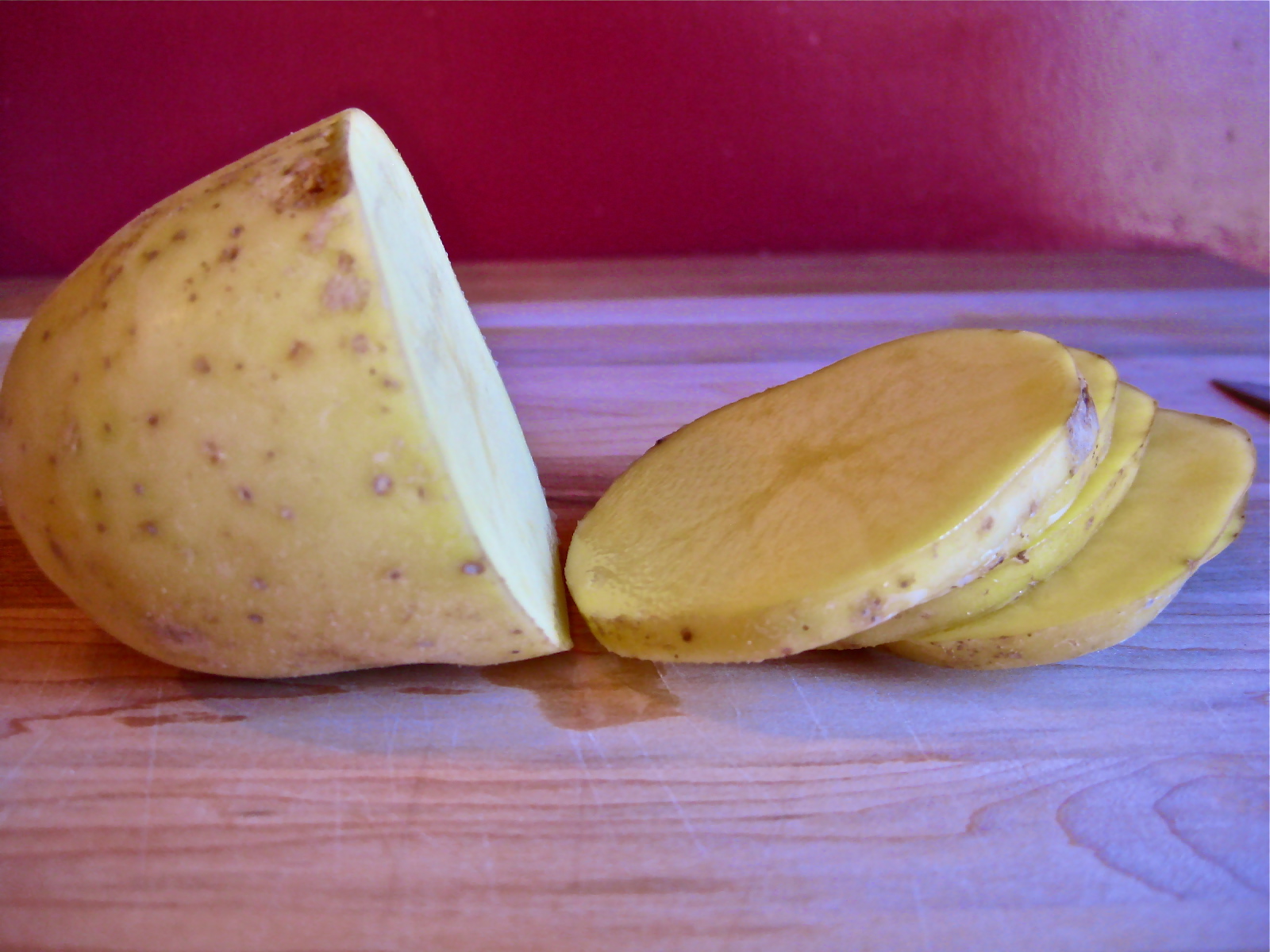
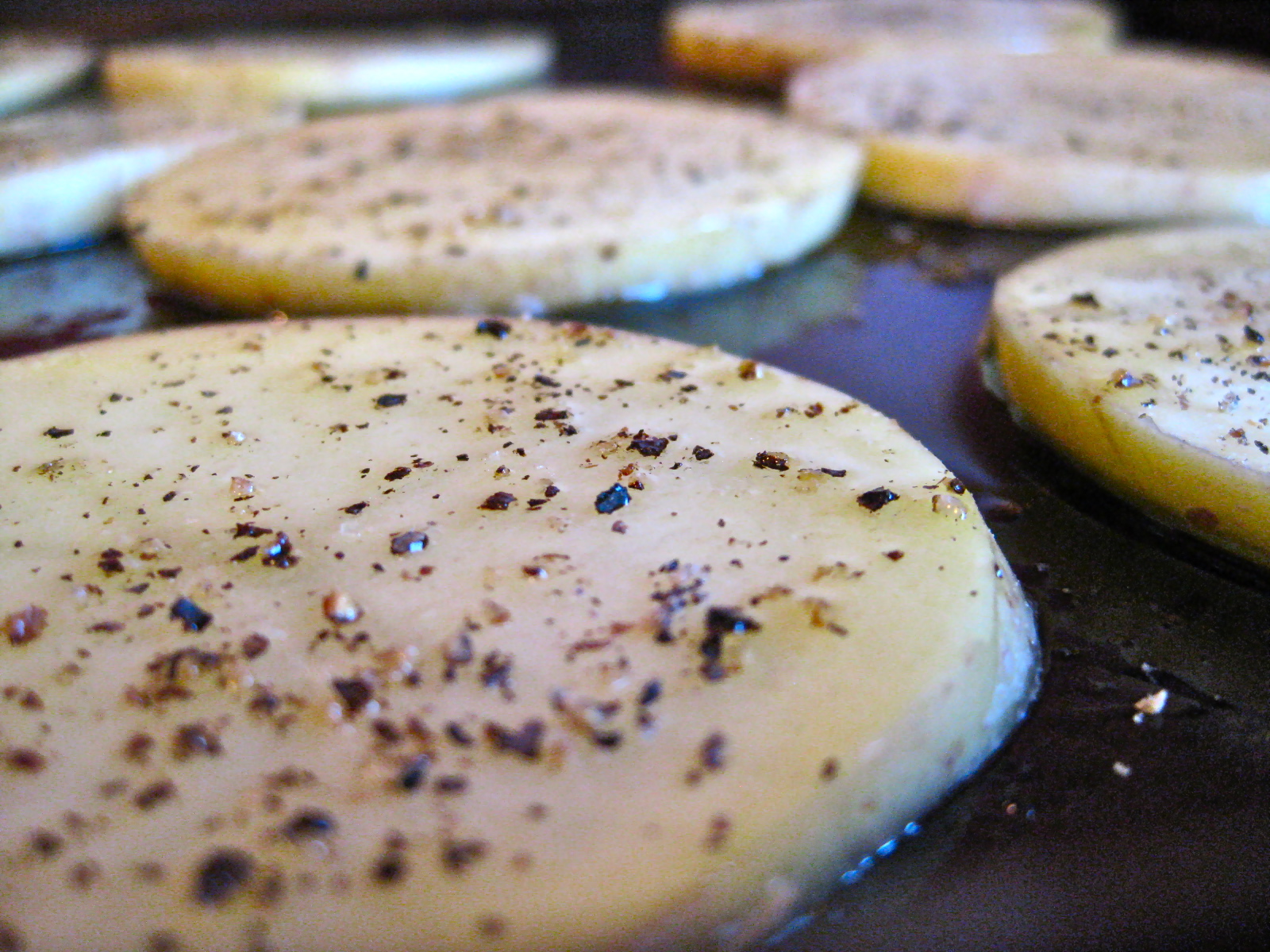
Slice potatoes into ¼-inch rounds.  You can use a mandoline slicer to do this, but I find that a very sharp knife works just fine.  Divide the olive oil between two baking sheets, drizzling the oil over as much of the surface as possible.  Arrange the potato slices on the oil baking sheets, turning the potato slices over and moving them along the surface of the baking sheet to make sure each slice is well oiled on each side.  Sprinkle the potatoes with salt and pepper.  Bake the potato slices for 25 minutes, flipping each potato slice halfway through, and also swapping the positions of the baking sheets (so the bottom one is now on top, and vice versa).

When the edges of the potatoes are crisp, browned, and sizzling, remove the potatoes to a paper towel-lined plate and set aside to cool.

To make the shallot relish, combine all the ingredients in a small bowl, mix thoroughly, then set aside for at least 15 minutes.

To make the dill spread, combine all the ingredients in a small bowl, and mix thoroughly.

To assemble a canapé, place a small amount of dill spread on top of a cooled potato crisp.  Top the dill spread with a small dollop of shallot relish.  Place a chunk of smoked salmon on top of the relish.

Makes about 24 canapés.