Slow-Cooked Beans and Huevos Rancheros

28 Nov

Do you have room in your hearts for yet another recipe from my home’s recent Mexican food bender?  Being fairly certain that there was no one left who wanted to hear about my intense, heated affair with making Mexican cuisine at home, I was all set to keep this recipe to myself.  Enough with the Mexican food, I thought, and, besides, do people really need instructions on how to cook a pot of beans?

Well, maybe.  Because it occurs to me that, most of the time, when people want to cook a pot of beans, they do so with a minimal amount of thought in regard to how one can take something as unromantic as dried beans and turn them into a truly savory and pleasing meal.  It might have something to do with the fact that, being a simple food, beans are not generally thought of as being a particularly exciting food, which I completely understand.  Beans are humble, and definitely fall low on the flash and glitter scale.

So I propose a bit of a redo when it comes to thinking of beans.  How about we treat them like the unfettered palette they are, and, much like we are prone to do with a potato or a batch of plain pasta, put a little extra love into making them shine?  Add some spices, chop some onion, and let those beans slowly simmer until they are soft, flavorful, and satisfying.  I have a friend who makes the best chili in the known universe, and one of his not-so-secret secrets is to add a bit of Mexican chocolate to his pot of chili.  Chocolate and beans go together like, well, beans and rice, and, with a touch of cinnamon and ginger added into the fold, you can give your beans a subtle hit of the unexpected that, trust me, you’ll want to replicate time and time again.
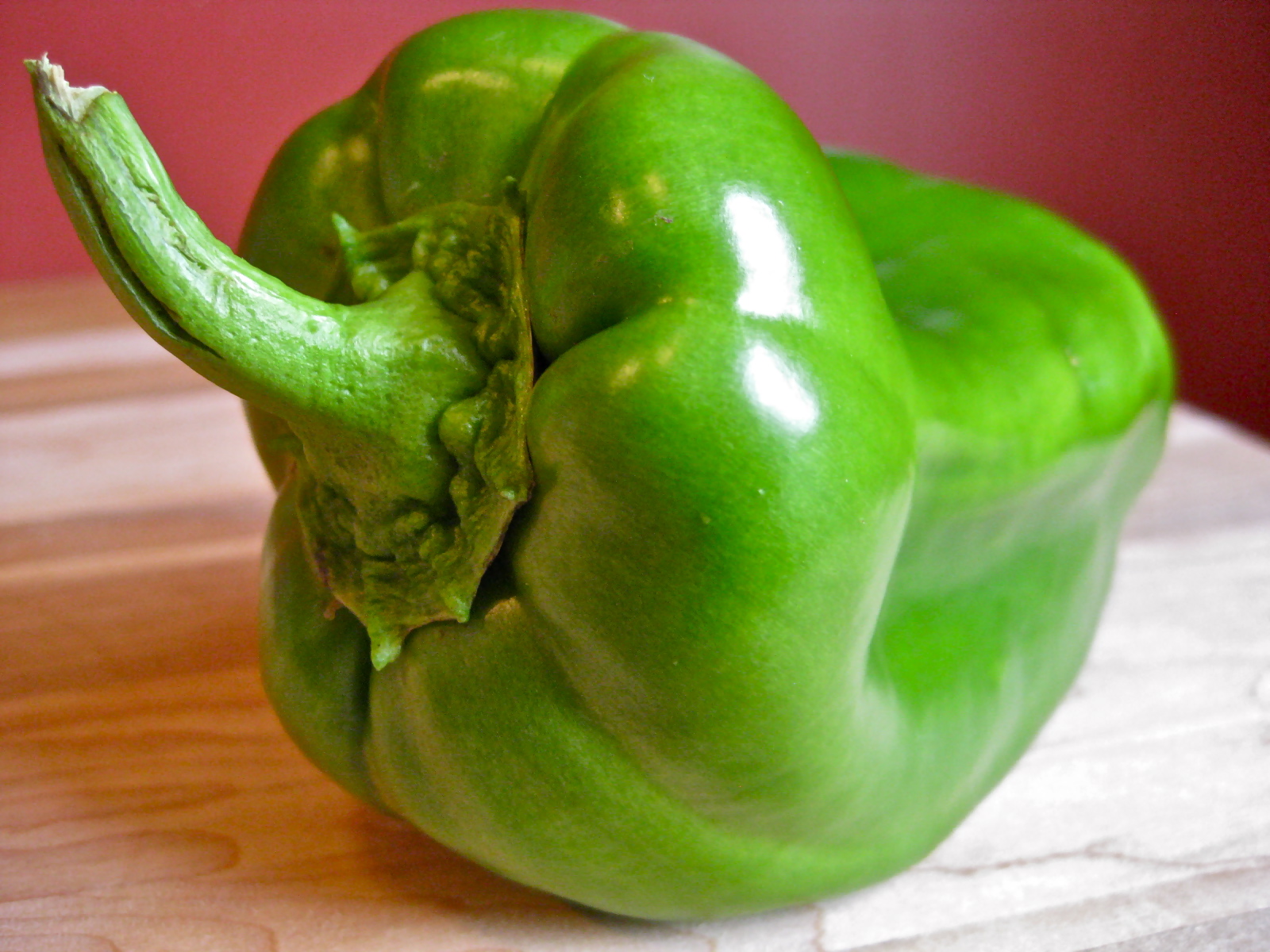
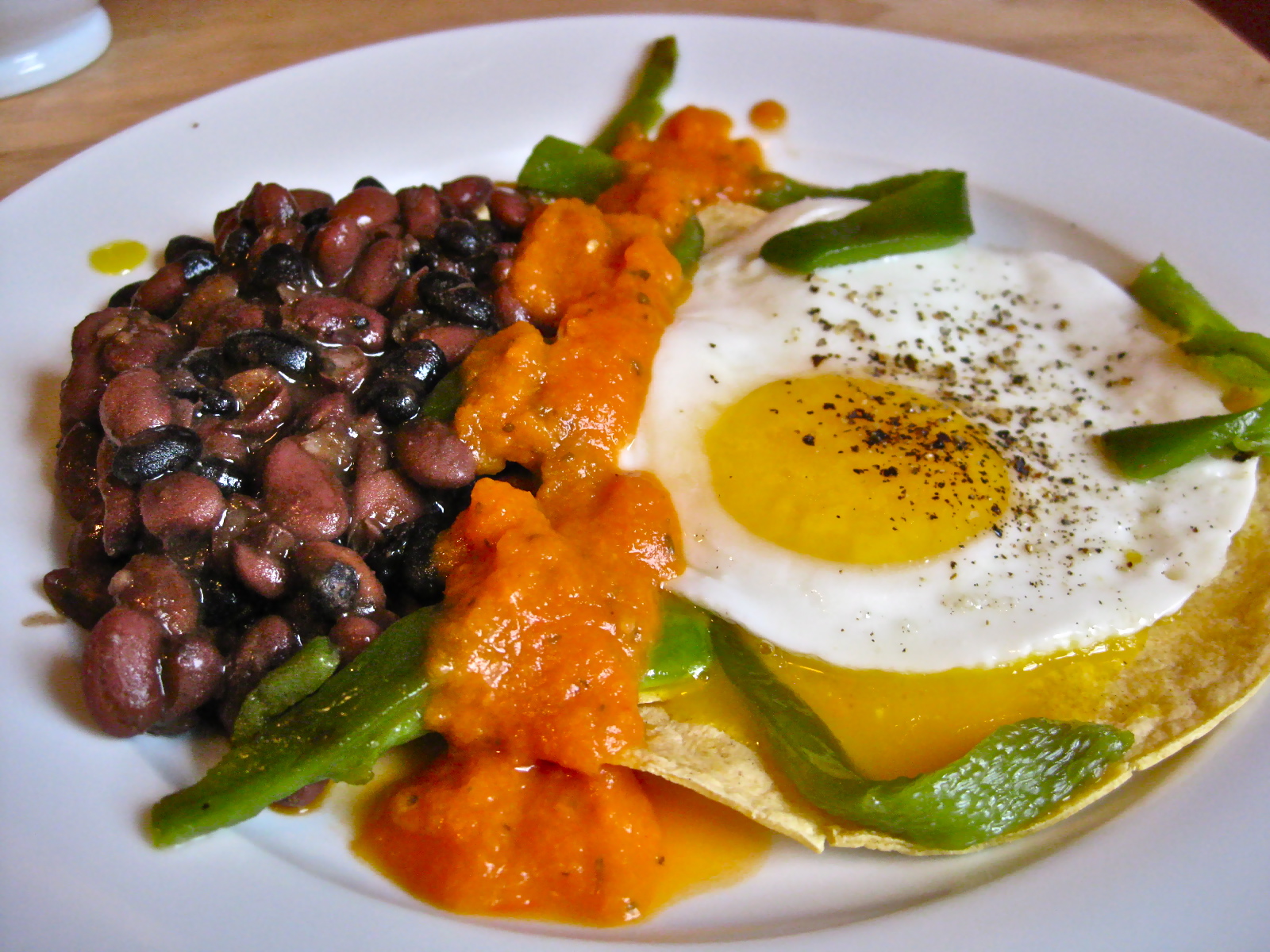
Another tip?  Think beyond a plate of beans and rice (though, as I have mentioned, we certainly don’t turn up our noses at beans and rice), and use your slow cooked beans to build a delicious plate of huevos rancheros.  A little roasted pepper here, a bit of ranchero sauce there, and you’ve got the makings of one special breakfast (or lunch…or dinner…I mentioned that I was on a huge Mexican food kick, right?).
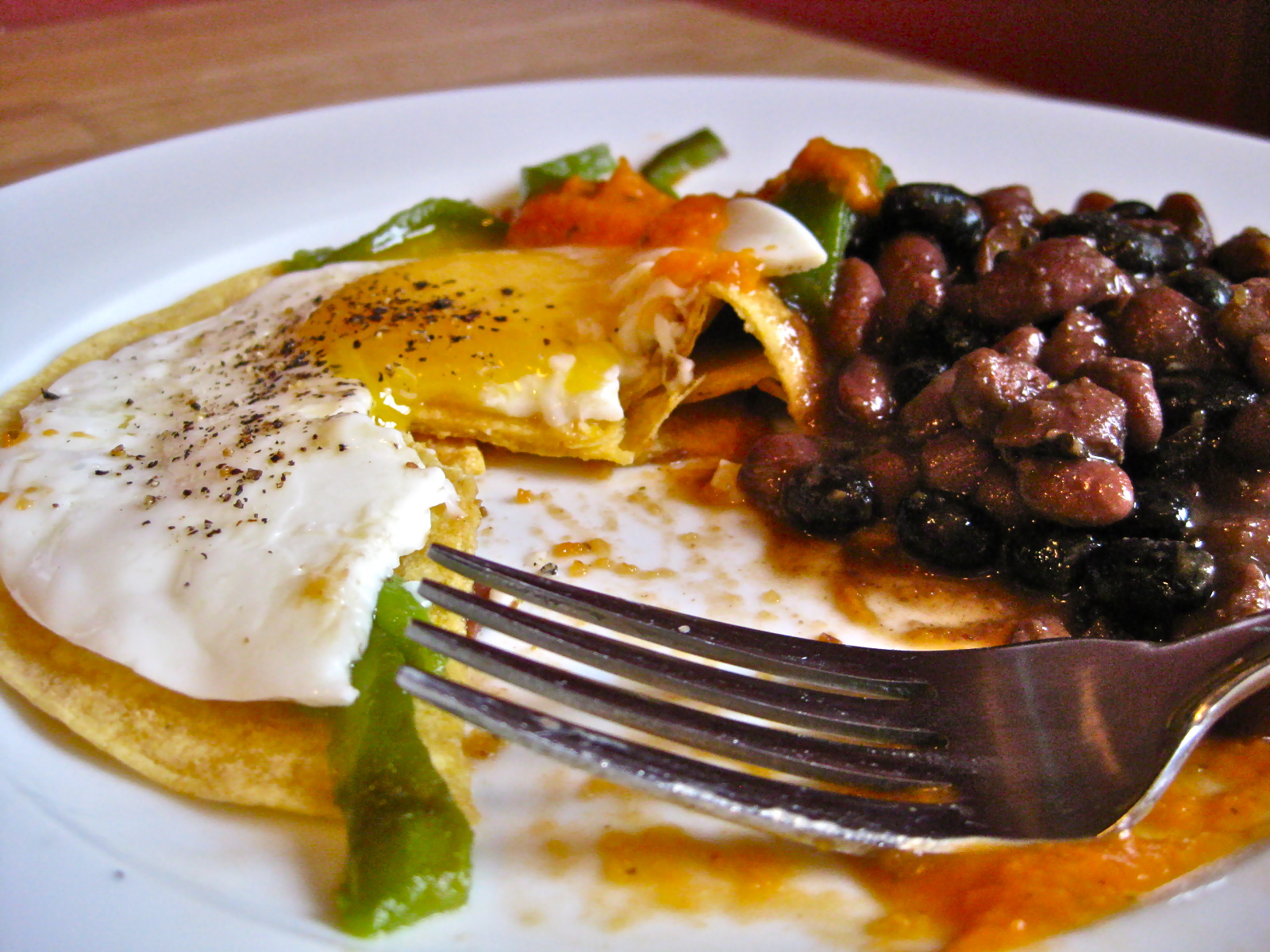
Slow-Cooked Beans and Huevos Rancheros

Slow-Cooked Beans

I learned a little while ago that the secret to really soft beans with no disagreeable after effects (ahem) is to add a bit of baking soda to the beans while they are cooking.  The baking soda breaks down the skins of the beans, making everything incredibly soft without being mushy.  As an added bonus, adding baking soda to your beans will eliminate the need to soak the beans overnight, which I am terrible at remembering to do, so I never do it.  Also, I don’t have a slow-cooker, but I’ll bet this recipe could easily be adapted to one so you could toss everything in first thing in the morning and then have everything read to go by the time you get home from work.  If anyone tries it out, let me know how it goes.

2 cups dry beans, rinsed well (we like a mixture of black beans and red beans)

2 quarts of water

½ teaspoon baking soda

½ cup finely chopped yellow onion

2 cloves garlic, finely minced

2 teaspoons ground cumin

1 teaspoon chili powder

1/8 teaspoon ground ginger

1/8 teaspoon cayenne pepper

2 teaspoons unsweetened cocoa powder

pinch Mexican oregano

pinch cinnamon

½ teaspoon salt

½ teaspoon black pepper

In a large pot, combine beans and water.  Bring to a rapid boil.  Lower the heat to a simmer, then stir in baking soda.  The water will foam up vigorously.  Keep stirring until the foaming subsides, then add the onions, garlic, cumin, chili powder, ginger, cayenne pepper, cocoa powder, Mexican oregano, and cinnamon.  Stir to combine.

Bring mixture up to a simmer, then cover and cook for 1 ½ to 2 hours hours, stirring occasionally.  Add salt and pepper, stir to combine, and taste for softness.  If you find that you want your beans softer, cook for an additional 30 minutes.

Huevos Rancheros

This is our basic method for making 1 serving of huevos rancheros.  You can, of course, double or triple it as you wish.

1 green bell pepper or poblano pepper

1 or 2 corn tortillas

1 egg

1 teaspoon vegetable oil

salt and pepper

Extras: ranchero sauce, salsa, shredded cheese

Heat your oven’s broiler on high, and place an oven rack on the highest setting.  Place pepper on a baking sheet.  When the broiler is hot, place the baking sheet and pepper directly under the broiler, and roast the pepper until the skin is uniformly blistered and blackened, turning the pepper for even roasting, about 5-7 minutes.

Remove the pepper from the oven, place it on a plate, and cover the plate tightly with foil, allowing the pepper’s skin to steam free while it cools.  When the pepper has cooled enough to handle, peel off the blackened skin, remove the stem and seeds, and slice the pepper into narrow strips.  Set aside.

In a small skillet, heat oil over medium low heat.  When oil is hot, gently fry the corn tortillas, one at a time, until it is soft and pliable, about 20-30 seconds.  Remove tortilla to a plate, and crack the egg into the pan.  Fry the egg until it is as done as you like it (I like a runny yolk but a firm white).  Place cooked egg on top of the heated tortilla, and sprinkle with roasted pepper.

Adorn your huevos rancheros with slow-cooked beans, ranchero sauce, or salsa.  Good to eat at any time of the day.

Pear and Chocolate Bread Pudding

21 Nov

Do you believe that the subconscious can really drive one’s actions?  That inclinations deep inside you can dictate your unwitting behavior?  Sometimes I really do wonder, most pointedly because lately, completely contrary to what had previously passed as the norm around here, I have been leaving loaves of delicious, crusty bread out on the counter, allowing them to become stale beyond the limits of standard consumption.  But then, stale and slightly dry, what do they then magically transform into?  Perfect bread for bread pudding, that’s what.

I will eat bread pudding in any form.  Made with brioche, a baguette, or, as is the standard at the legendary Heathman Restaurant and Bar, lightly drizzled with warm caramel sauce, I do not believe that there is a bread pudding I would not eat, love, and cherish to the very end.  (Except perhaps for that one horrifying recipe I once saw that made bread pudding with Krispy Kreme doughnuts, sweetened condensed milk, and a couple of tins of fruit cocktail.  No.  Just no.)

My preferred bread pudding is decidedly mellow on the sweetness front, but high on soft bites of custardy bread with lightly crisp edges.  Sure, I’ve made highly sweetened bread pudding before, but that sweetness seemed awfully fitting in order to offset the decidedly puckery effects of fresh rhubarb.  Though I loved that bread pudding more than I think I could ever be able to fully explain (the self-forming sauce it made was, in a word, magical), I think I have finally come up with another bread pudding that just might have a fighting chance of dethroning the reigning rhubarb champ.

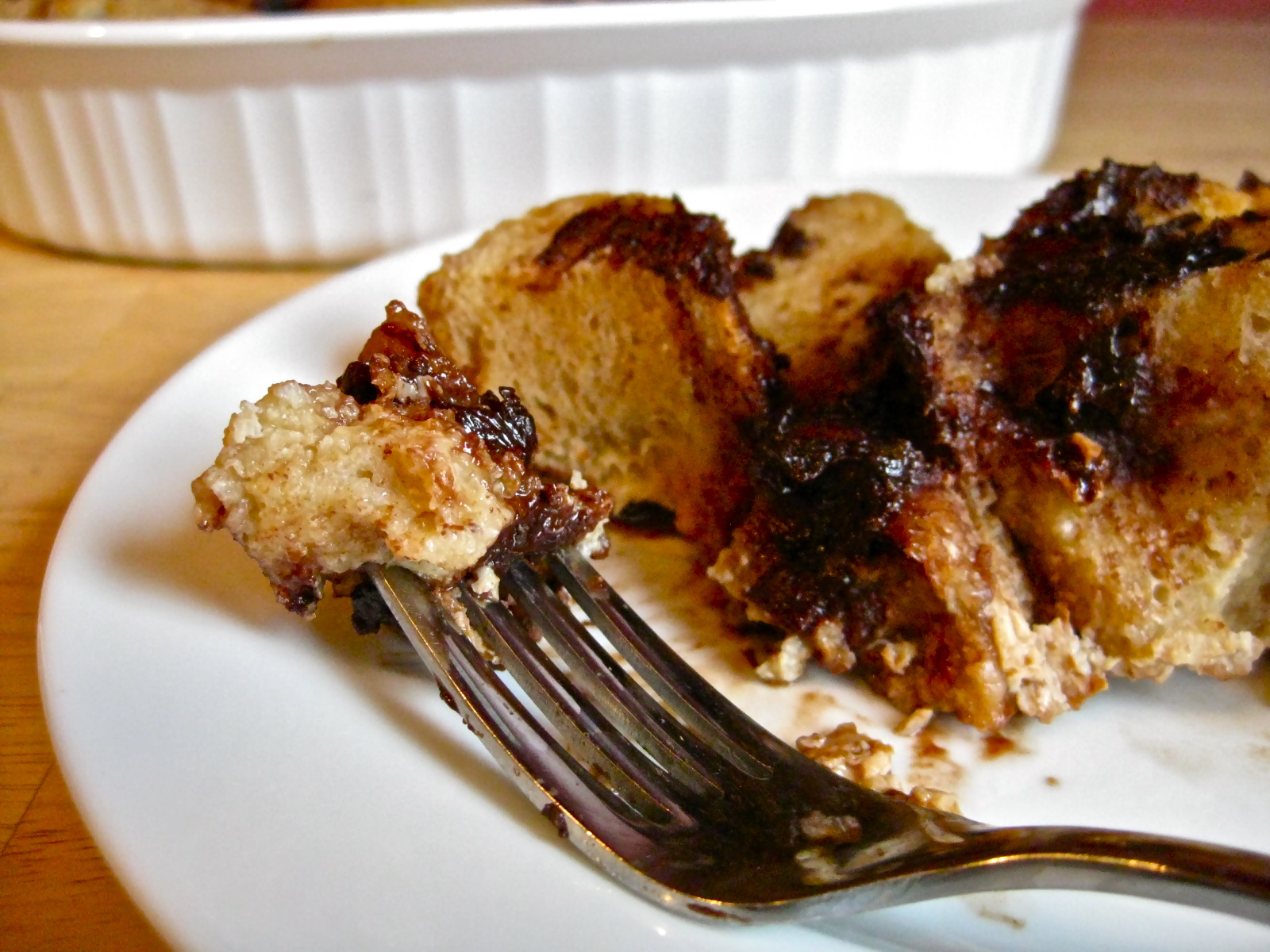
Studded with chunks of pear, streaked with bittersweet chocolate, and only lightly sweetened with a dark brown sugar custard, this is a bread pudding that comforts without overwhelming the senses.  With a snap of pear and a rich hit of chocolate in each bite, you are able to savor each forkful without wondering if you will ever be able to walk again, button your trousers again, survive without supplemental insulin again.  I am not sure how it is possible, but this dessert manages to be somehow both subtle and attention-commanding at the same time.  It’s a rare feat, but surely one you won’t forget or regret.

Pear and Chocolate Bread Pudding

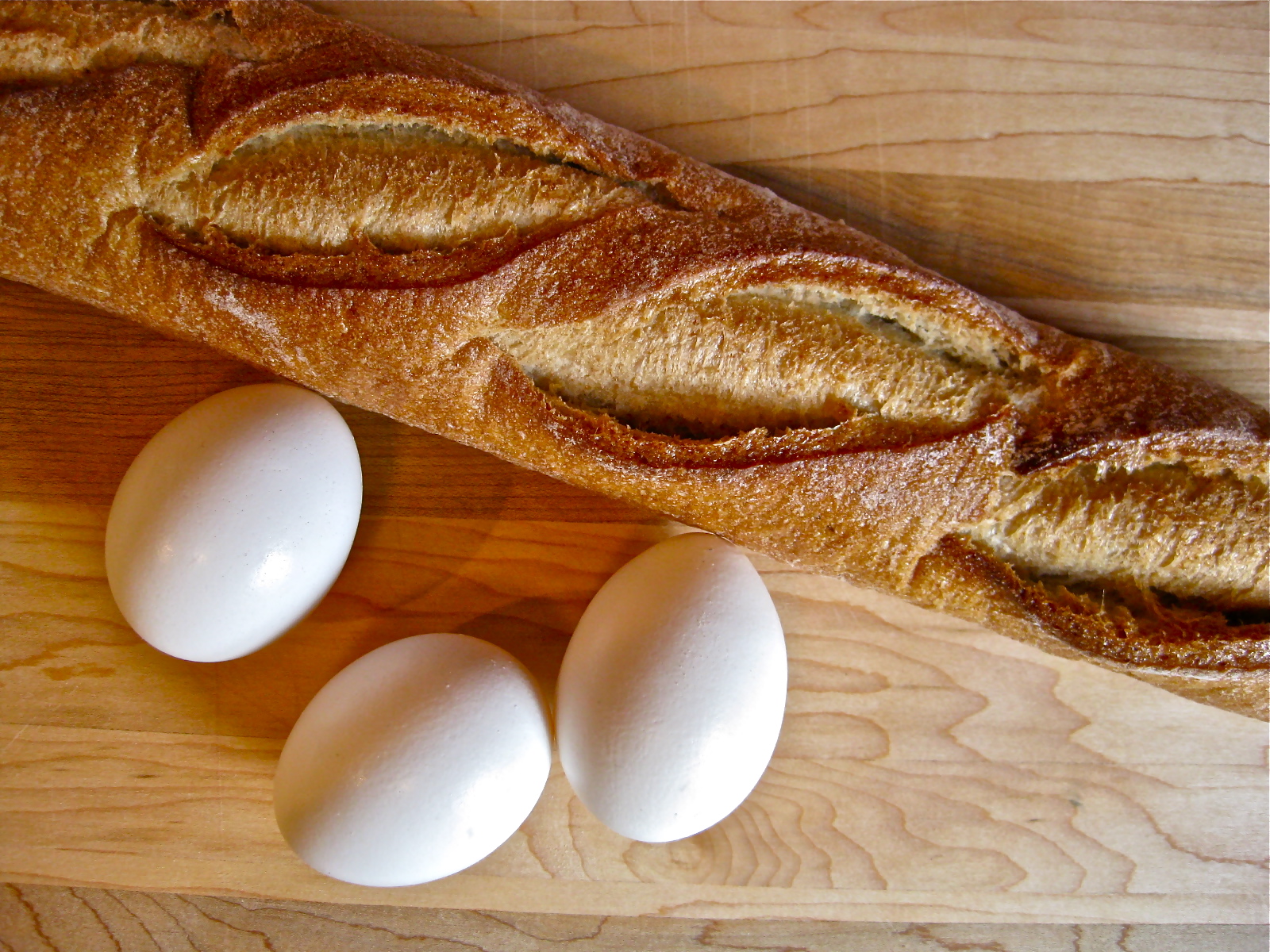
1 French baguette, cut or torn into 1-inch chunks and allowed to become slightly stale, or toasted very lightly to dry them out just a tad (you should have about 5 cups of bread chunks total)

1 pear, peeled, cored, and chopped into ½-inch chunks

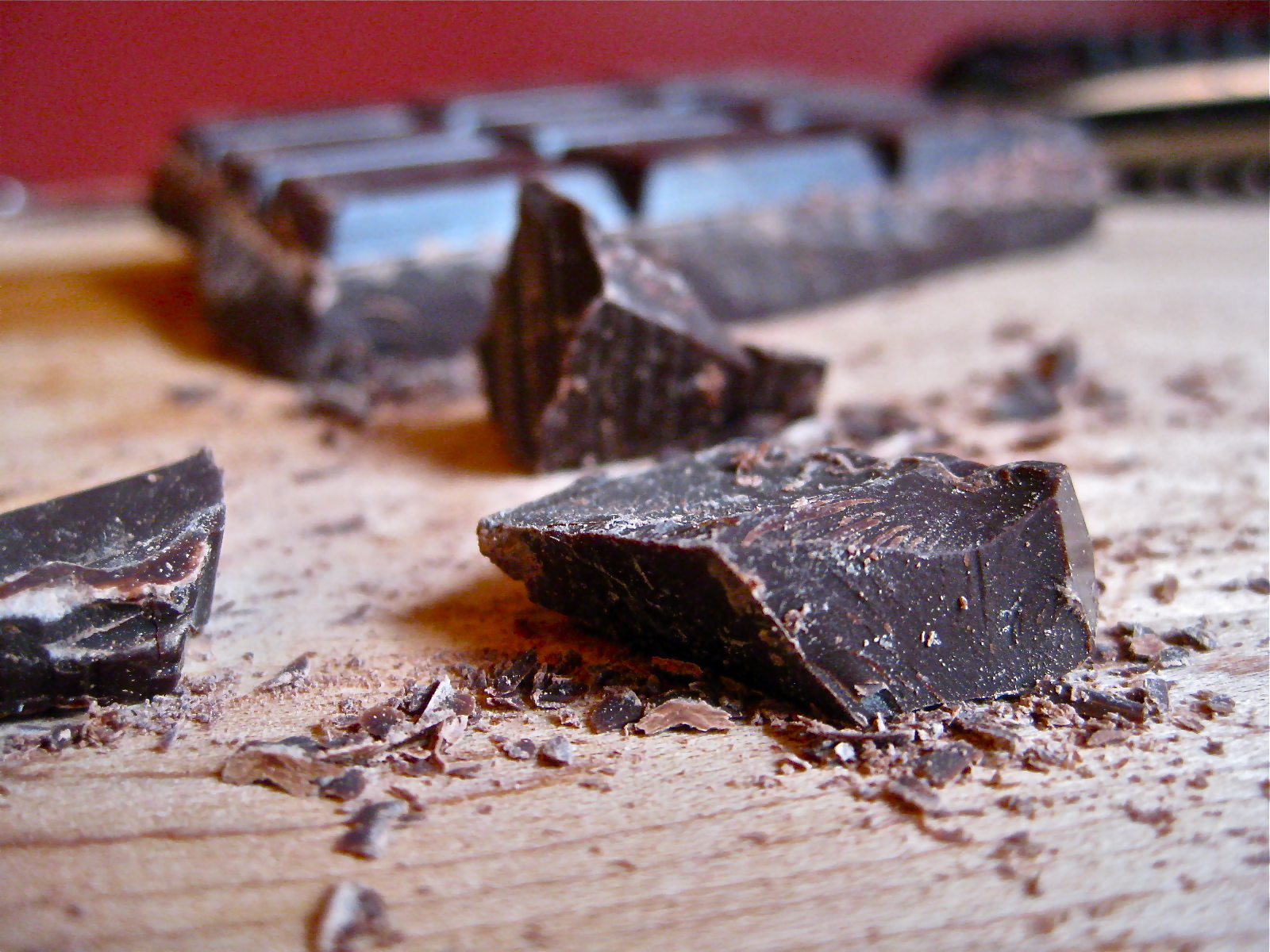
½ cup coarsely chopped bittersweet chocolate chunks

3 large eggs, lightly beaten

2 cups milk

¼ cup dark brown sugar

1 teaspoon pure vanilla extract

pinch of cinnamon

pinch of nutmeg

pinch of salt

Preheat oven to 350 degrees Fahrenheit.  Lightly butter a 13” x 8” baking dish and set aside.

In the buttered baking dish, combine the bread chunks, pear chunks, and chopped chocolate.

In a medium pot set over low heat, combine the milk and sugar and whisk together until the sugar has dissolved.  Slowly pour in the beaten eggs, whisking as you pour.  Add the vanilla, pinch of cinnamon, and pinch of salt.  The heat should stay on low, and the mixture should never come close to boiling.

Remove the pot from the heat.  Carefully pour the heated milk mixture over the bread and pear mixture, being sure to coat and soak every piece of bread.  If necessary, lightly press the bread chunks down with the back of a spoon, coaxing the bread into the milk mixture in the bottom of the baking dish.

Tightly cover the dish with foil and bake for 30 minutes.  Remove the foil, then bake for an additional 10-20 minutes, until the bread is puffed up with golden edges, but the middle of the bread pudding is moist and the custard has been absorbed.

Salsa Roja

17 Nov

Do you ever get into a cooking rhythm that leads you in one direction, and one direction only?  Like, say, south, to Mexico?  And all you want to cook are luscious sauces, flavorful side dishes, and a variety of salsas?  Yeah, I’ve been there.  I am there.  All I want to eat is Mexican food, all the time, every single day.  And with a couple of incredible Mexican food cookbooks at my disposal, this little habit of mine could go on for quite some time

This salsa is a direct recipe from Rick Bayless, he of the encyclopedic knowledge of all things related to the cuisines of Mexico.  So embroiled in the specifics of the foods is Bayless, I admit that I am actually somewhat intimidated by a large chunk of his recipes.  I have to roast that thing for how long?  And then find fat from what animal?  And do WHAT with it?  That’s the part where I close the book and walk away, wondering for the tenth time that week if it’s possible to actually hurt yourself by eating too many corn tortillas.

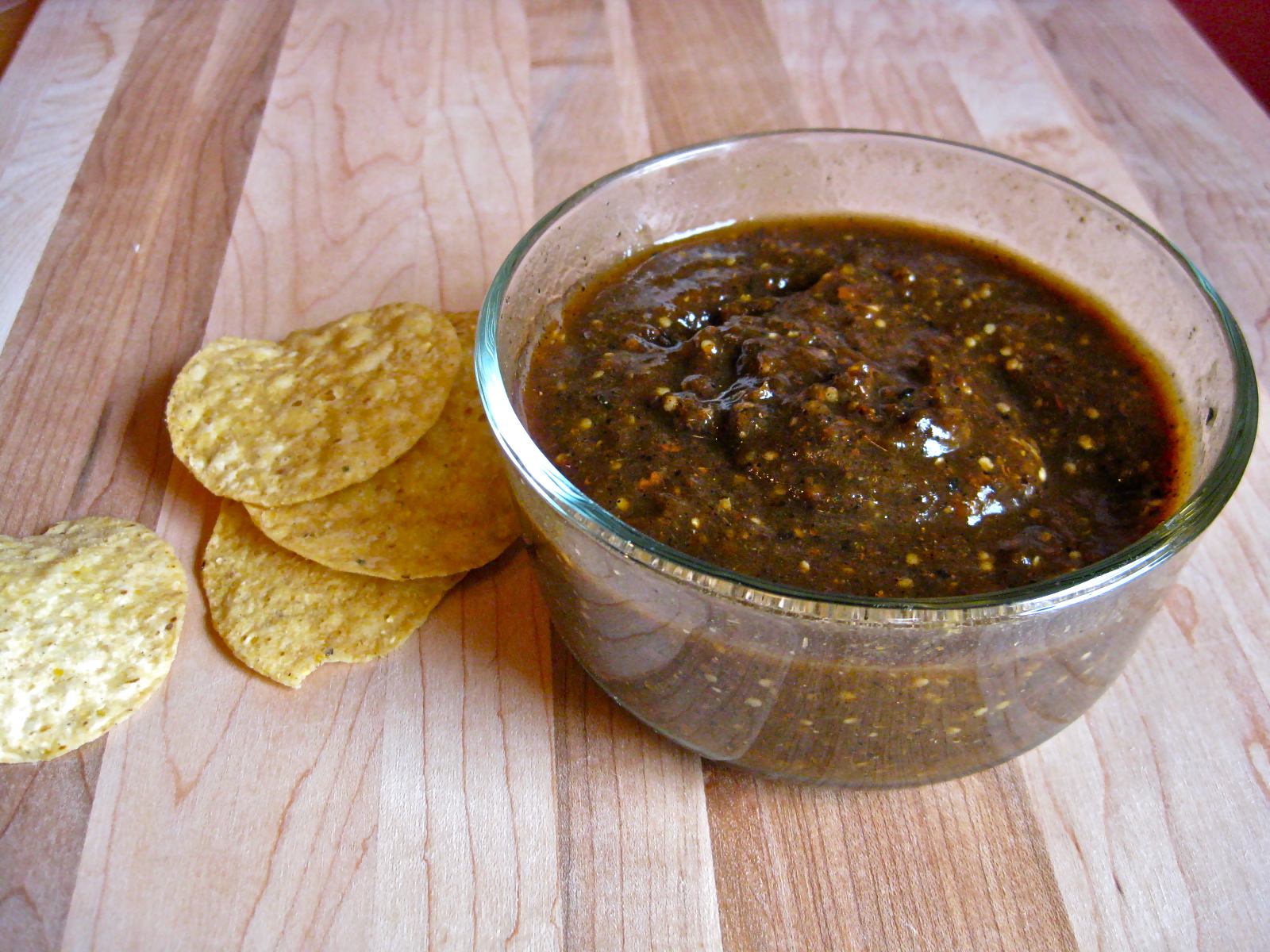
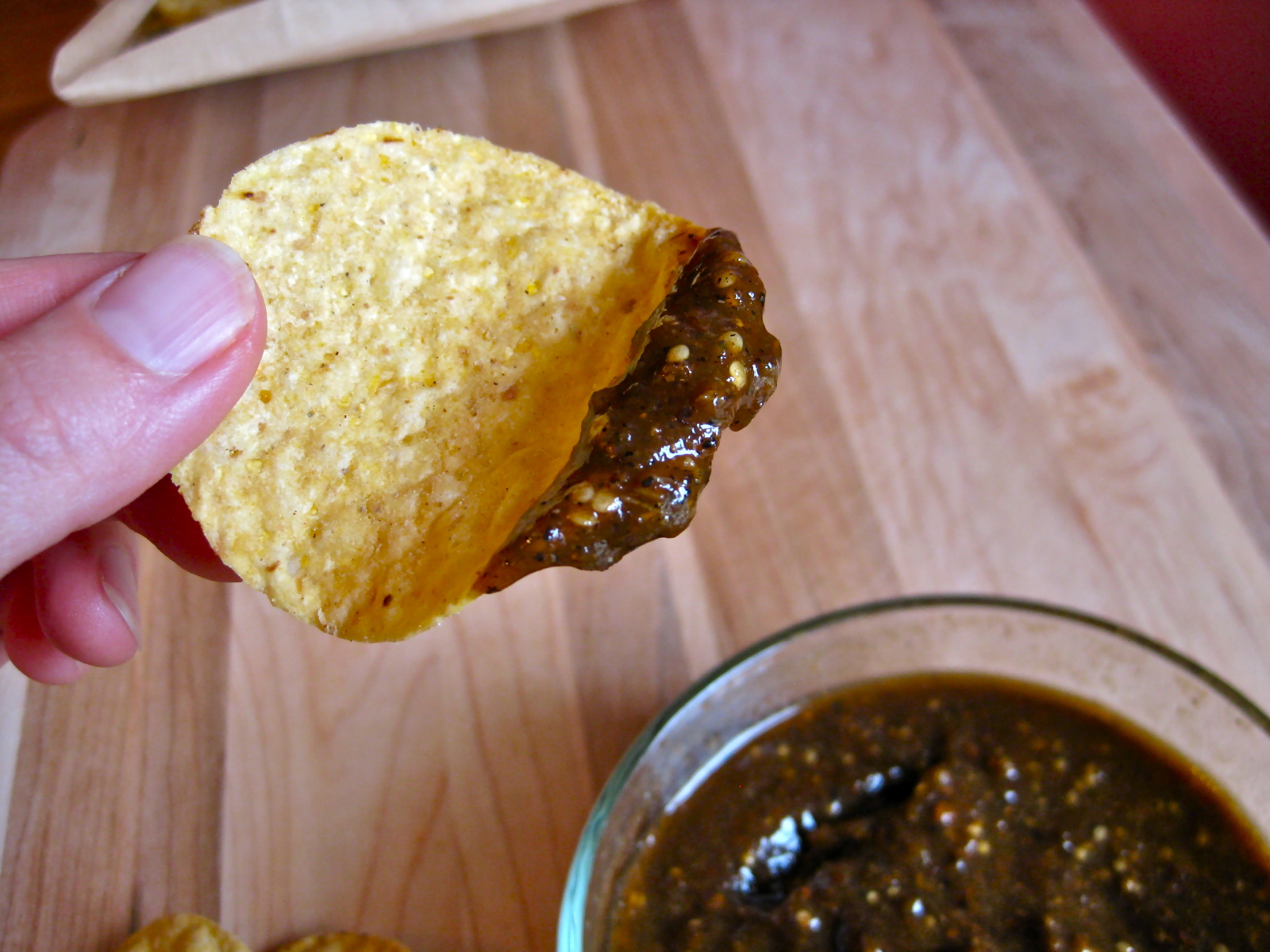
Now that I have thoroughly scared you away from Mr. Bayless, allow me to attempt to reel you back in.  Not all the recipes in his books are head-spinningly complex.  Bayless, though unfailing in his ability to bring authentic Mexican foods to the American masses, is also a great source for recipes that are simple, straightforward, and utterly delicious.  His salsa roja (red chile and tomatillo salsa) is one of my favorite basic salsa recipes, and it’s a great addition to anyone’s Mexican cooking repertoire.  Last year I used this salsa to flavor some flank steak for my husband’s birthday dinner, and it was a mighty fine success.  Paired with some slices of crisp red peppers and cool, creamy avocado, it made tacos that were deemed some of the best to ever cross one’s plate.

Slowly and steadily, with this salsa as my entry point, I plan on tackling more of Bayless’ catalog.  Perhaps I’ll baby-step my way there, sitting calmly at my dining room table while I peruse some books and eat this salsa.

Salsa Roja (Red Chile and Tomatillo Salsa)

From Mexico One Plate at a Time, by Rick Bayless

You can use any variety of small hot dried chile in the recipe.  I used dried chipotle peppers, since I happened to have some on hand.  Bayless specifies that you can also use cascabel, arbol, piquin, and many others.  If you don’t have a kitchen scale, Bayless helpfully mentions that ½ ounce of dried chiles corresponds to 6 red chipotles, 4 tan chipotles, 16 arbols, 3 cascabels, or ¼ cup piquin.

½ ounce small hot dried chiles, stemmed

6 large garlic cloves, unpeeled

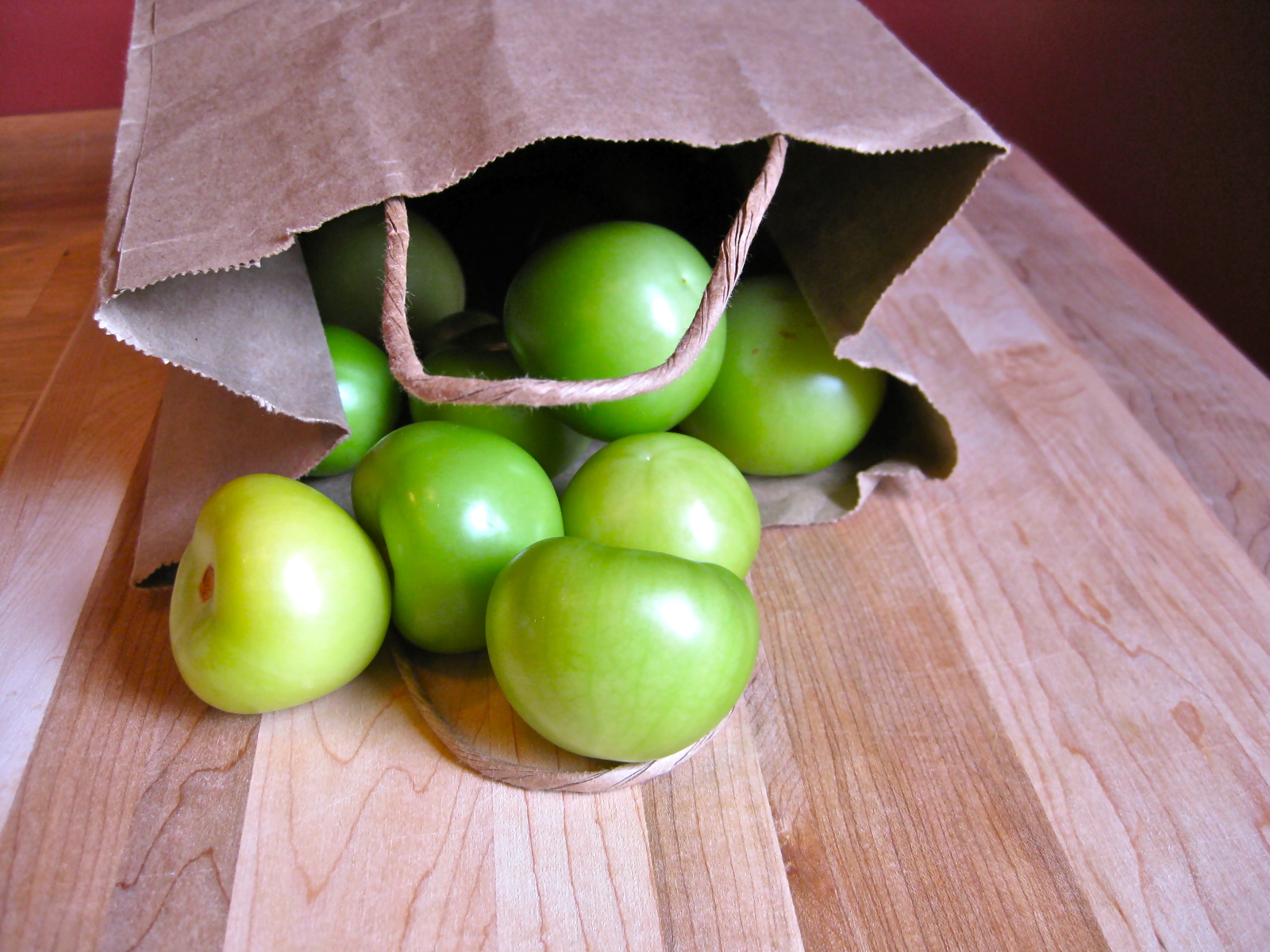
1 pound tomatillos (about 10-12 medium), husked and rinsed

½ to 1 teaspoon salt

about ½ teaspoon sugar (optional)

In an ungreased skillet set over medium heat, toast the chiles, stirring for a minute until they are aromatic and start to develop little darkened spots on them.  Transfer to a bowl, cover with very hot water, and rehydrate the chiles for 30 minutes.

In the same skillet, roast the garlic, turning frequently, until soft and blackened in places, about 15 minutes.  Allow to cool slightly, then remove the papery skins.

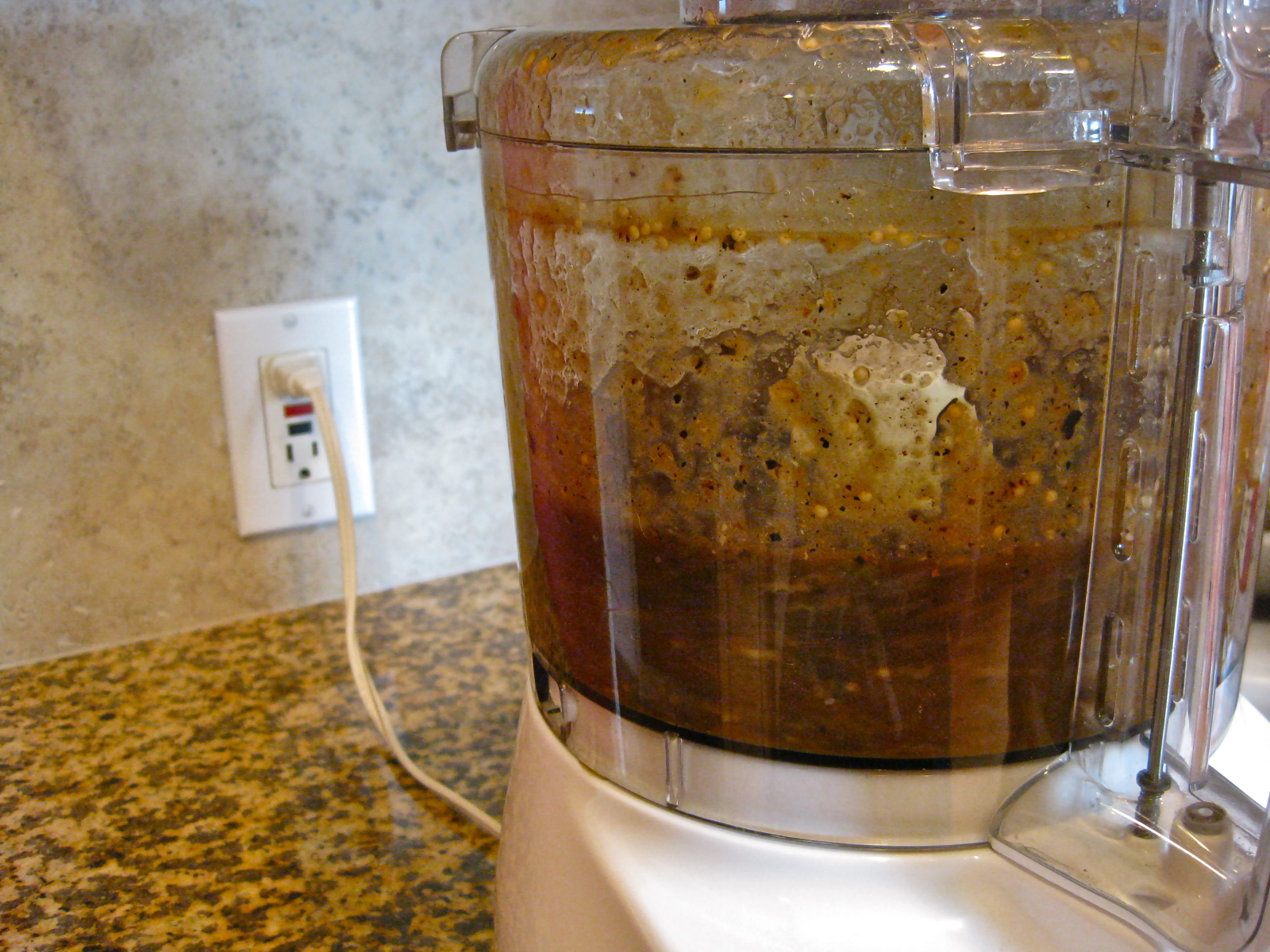
Roast the tomatillos on a baking sheet set 4 inches below a very hot broiler.  Roast until the tomatillos are soft and slightly blackened, about 5 minutes on each side.  Cool the tomatillos, then transfer them, along with any juices that were released during the roasting process, into a blender or food processor.

Drain the chiles and add them to the tomatillos, along with the garlic.  Puree, then pour into a serving dish.  Stir in enough hot water to give the salsa a spoonable consistency, about ¼ cup.  Add salt to taste, then, if desired, add in a small amount of sugar (I never add the sugar, but I like the tartness of tomatillos).

Salsa will keep in the refrigerator for several days.

Makes about 1 ¾ cups.