Pear Cake

14 Oct

As much as I will miss the fruits of summer, the juicy berries, melons, and stone fruits that are so willing to be made into pies, galettes, and anything else the heart desires, it cannot be denied that fall fruits definitely offer their own merits.  Apples straight from a garden tree are as crisp and fresh as they come, and when baked in a quiche or pie (or cake or turnover or Danish or strudel or…where was I going with this?), there is no better way to usher the newness of autumn into your home.
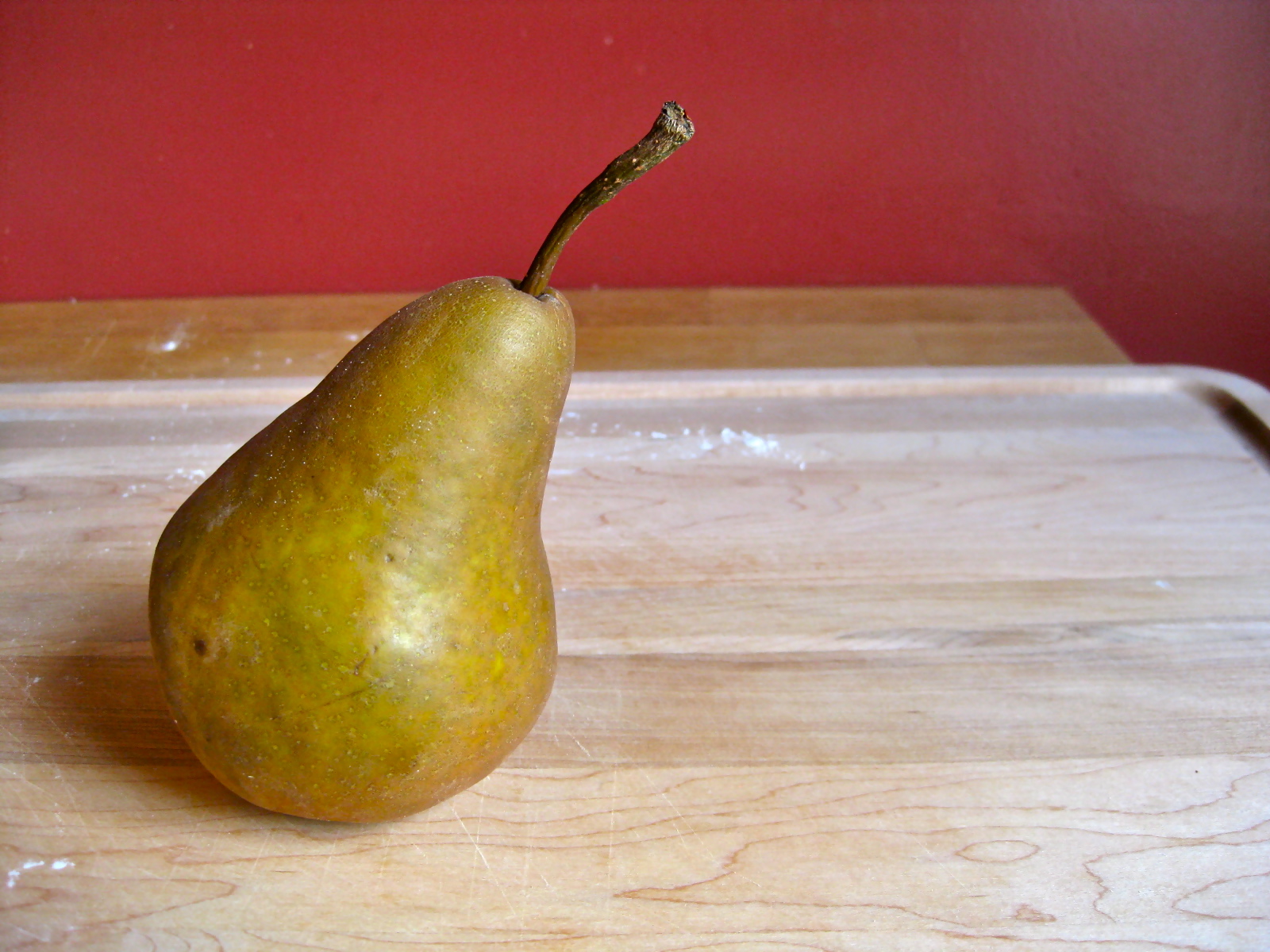
Unless, that is, you make this pear cake.  As much as I adore apples, I love pears even more.  Whereas the crispness of an autumn apple seems so bright and friendly, a ripe pear, with its delicate softness and perfume-like juice, is understated, almost modest.  I’ve been wanting to make a pear cake for ages, not just in the interest of, well, eating cake, but also because there seem to be dozens of recipes around that involve baking with apples, but not enough that encourage people to bake with pears.

Because ripe pears are so much softer than apples, I knew that no matter what I chose to do with the pears before folding them into a cake, they would most likely melt away when baked.  Using this to my advantage, I took the added juiciness of the pears as a hint to explore another lesser-seen tactic in the world of cakes: I decided to make this cake vegan.

I am not a vegan (this should be obvious to anyone who has spent any time at all on this site), but I have spent a great deal of time in the company of vegan housemates, co-workers, and now, fellow kindergarten families.  It has always seemed like a crying shame that there are so few recipes for vegan baked goods that don’t involve simple pantry ingredients.  Whereas a vegan is wary of dairy and eggs, I am equally as wary of “natural” margarine and fake sour cream, so I figured I’d reach across the aisle here and create a vegan recipe that called for simple, basic ingredients.

It was not so surprising to discover that it was not at all difficult, and I think you’ll soon see that the result is not lacking in any way.  To be completely honest, the fact that this cake is vegan is the least of its accomplishments.  The cake flour gives the cake an incredibly delicate crumb, and the brown sugar bakes into a deep toffee flavor that hits all the right notes when combined with the shredded pears.  This is a tender, moist cake that is perfect for showcasing the joys of autumn fruit, and regardless of whether you prefer Rice Dream to ice cream, it’s a solid addition to any recipe collection.
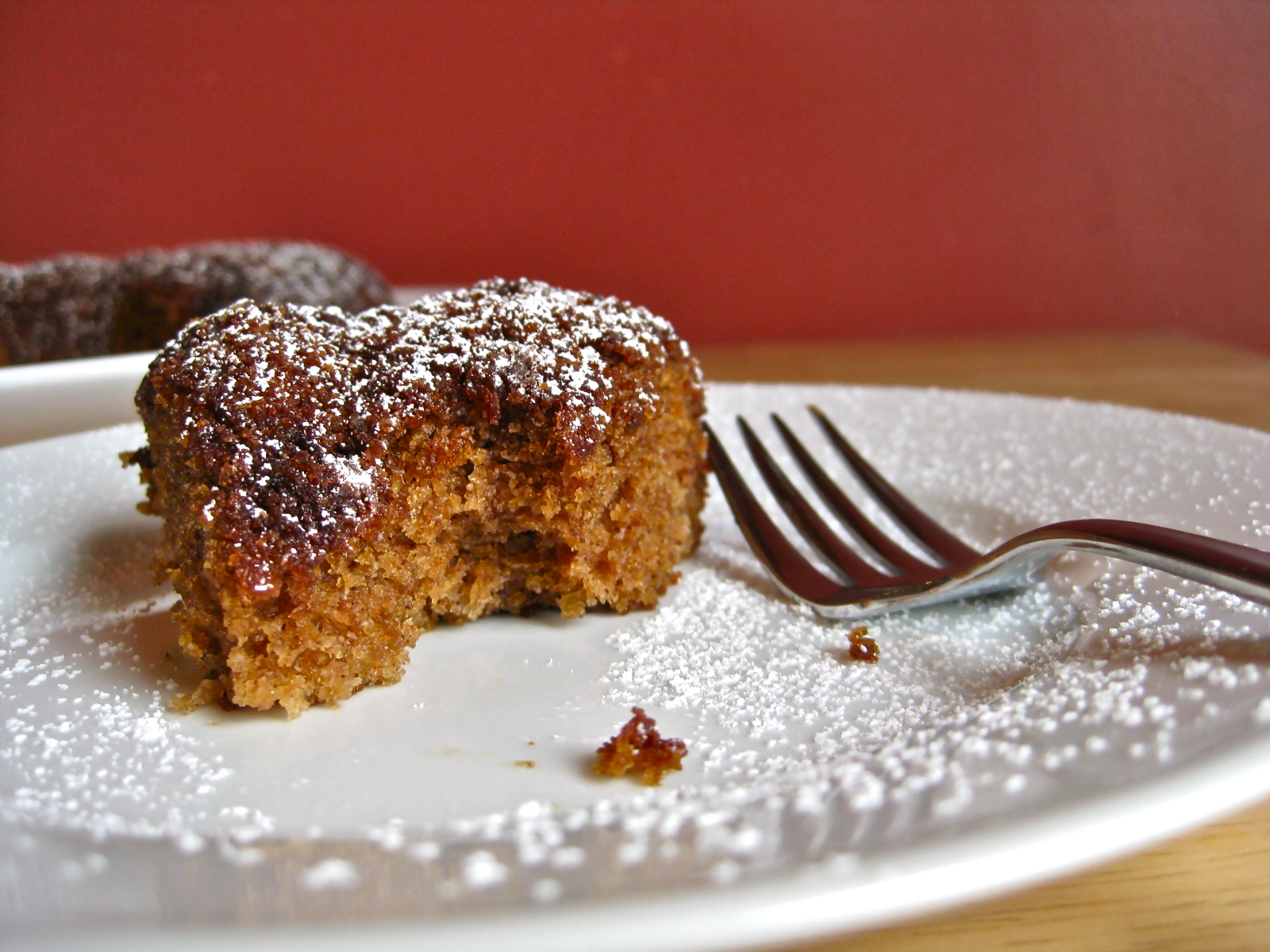
Pear Cake

I auditioned two versions of this recipe, and the results were exactly the same.  I am not sure why I am even mentioning that I tried out two different versions of this cake, except perhaps to stress the point that I really did want to make this cake as simple and delicious as possible, and, even when fiddling around with the ingredients and baking times, I found it impossible to make this cake taste bad.  If you don’t have cake flour on hand and don’t feel like going out and buying some, I recommend you use unbleached all-purpose flour that has been sifted two times, rather than once, before being measured.

1 ¾ cups sifted cake flour

½ teaspoon salt

2 teaspoons baking soda

1 teaspoon cinnamon

pinch of nutmeg

½ cup vegetable oil

1 cup lightly packed light brown sugar

1 cup lightly packed shredded pear, juice included (I got this much shredded pear from 2 medium-sized pears)

2 teaspoons cider vinegar

Preheat oven to 350 degrees Fahrenheit.  Grease and flour a 9 or 10-inch bundt pan.

In a medium bowl, sift together flour, salt, baking soda, cinnamon, and nutmeg.  In a large bowl, mix together oil and brown sugar until smooth.  Fold in shredded pears.  Add the dry ingredients to the wet, and mix until just combined.  Add the vinegar, and mix quickly to incorporate.  The batter will foam a bit when the vinegar reacts with the baking soda.

Pour the batter into the prepared bundt pan.  Bake in the center of the oven for 30 to 35 minutes, until the top of the cake appears no longer liquid, and is spongy-firm to the touch.  Do not insert a cake to test for doneness until at least 30 minutes of cooking time have elapsed.  The cake is rather delicate, and poking it prematurely will cause it to deflate.  When you do insert a cake tester for doneness (after 30 minutes), the cake tester should emerge with just a few moist crumbs attached.

Cool cake in pan for 10 minutes, then invert onto a cooling rack to cool completely.  The cake will be extremely delicate when still warm, so handle with care.  Serve warm or at room temperature.

From the Depths of the Cookbook Shelves

12 Oct

The Sarah Daft Home is an assisted living facility for the elderly in Utah.  The Sarah Daft Home Cookbook is quite possibly the most enjoyably dated and delightfully unappealing cookbook I’ve ever had the pleasure of perusing.  As someone who is endlessly fascinated by the used-to-be-relevant content of old cookbooks (warning: that link right there will take you directly to a tutorial on how to cook and eat a porcupine), the Sarah Daft Home Cookbook has provided me with an almost embarrassing amount of amusement.

The book starts things off right with a few advertisement for local businesses.  This particular ad has the unfortunate effect of seeming as though it was written in the voice of Norman Bates:

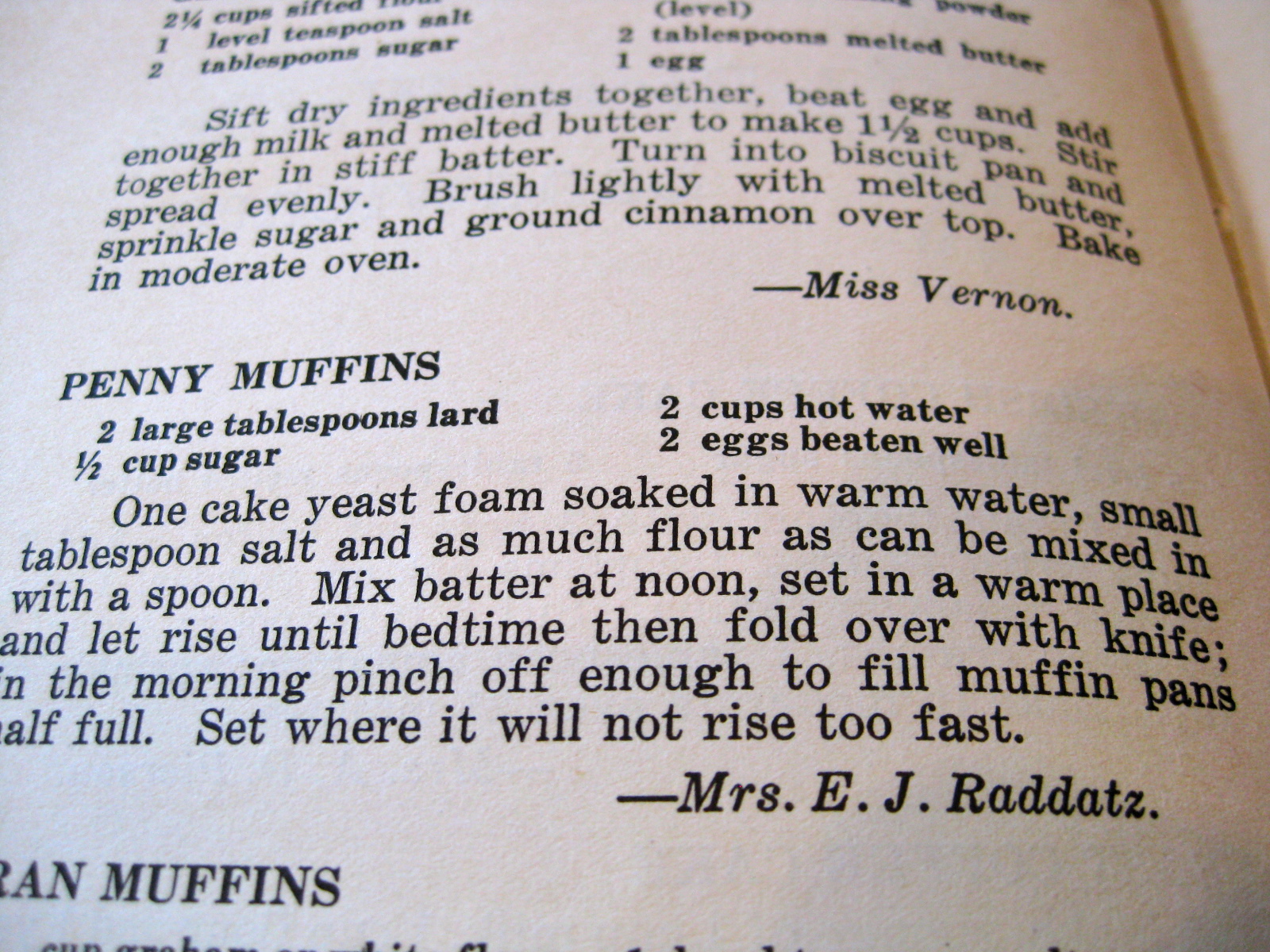
The recipes in the book read like they were written by two ladies sitting around and talking to one another about what they like to cook.  Take, for example, this recipe for something called penny muffins:

Okay, so then you set them aside to rise and then…?  Did Mrs. E. J. Raddatz have to excuse herself to go answer a knock at the door?  WHERE IS THE REST OF THE RECIPE?  I mixed my batter at noon, just like you told me to, but then what?

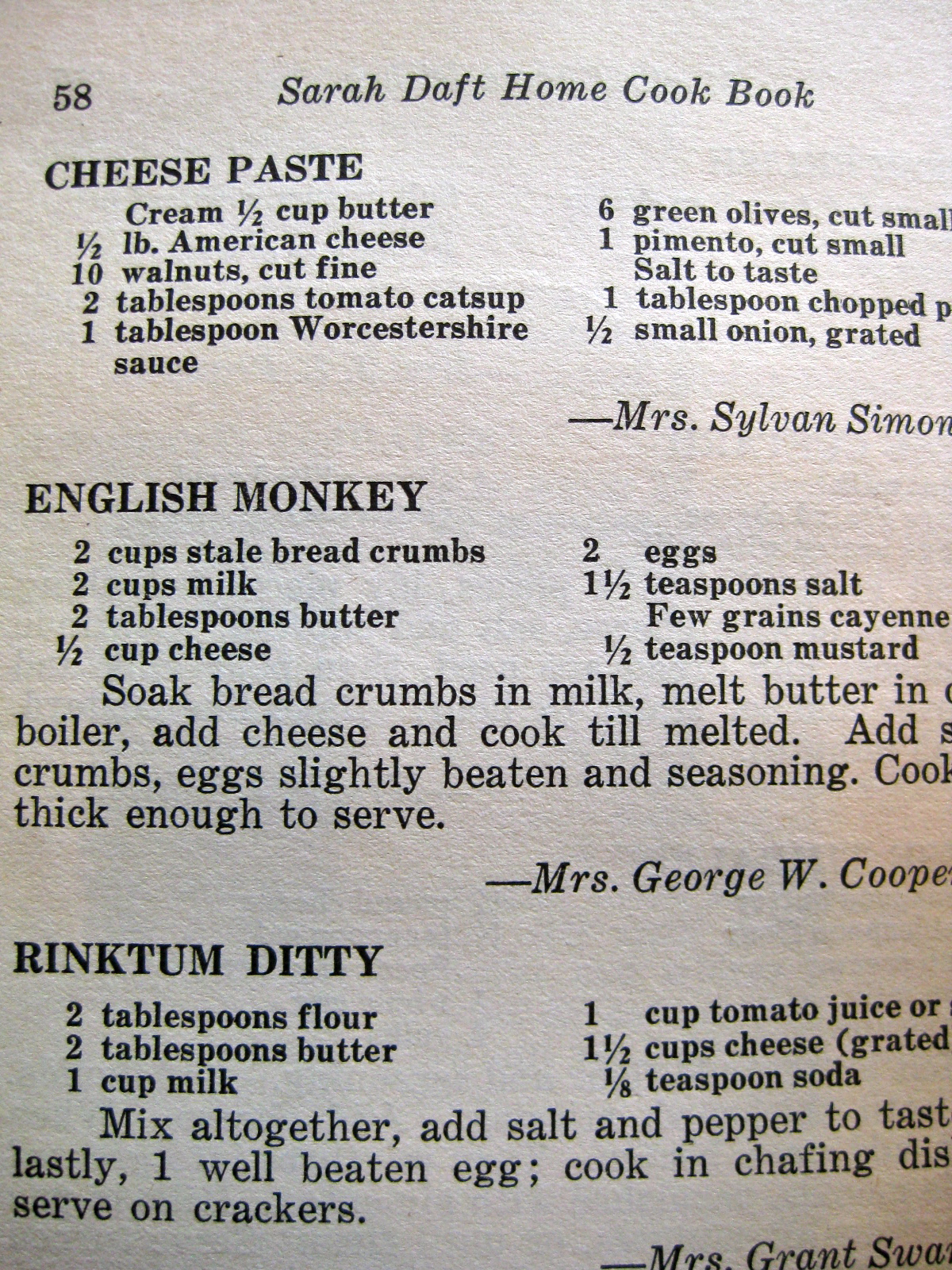
Mrs. Charles Wilkes seems to suffer a similar predilection for intrigue when it comes to her recipe for delta gamma muffins:

That’s it.  There is nothing else written about those muffins.  At least the woman above her, Mrs. H. N. Mayo has the decency to at least suggest mixing and then cooking the ingredients, albeit somewhat mysterously in an oven that is described as being nothing other than “slow.”

Some recipes seem to be so popular, more than one lady chose to submit her favored recipe, as in the case of these competing recipes for the attractively named shrimp wiggle:

This recipe for Japanese salad seems to be an effort in composing a dish made entirely of items one would never, ever encounter while in Japan, but might possibly encounter if forced to create a dish while blindfolded and harvesting ingredients from a cartoon cat’s shopping cart:

Many of the recipes in my copy of the book have been marked by the previous owner.  Some notations seem to be indications of a successful effort (lots of underlining and a small, modest check mark), while others speak volumes with the simplicity of their verdict:

Pork cake and burnt leather cake?  Inexplicably, both get a yes.

Bread crumb pudding?  No.

Brain timbale?  Let me see what I will need to make this.  Oh, yes, now I see: brains.

I like how this page starts off with a recipe that seems like it could be a real thing, but then the rest of the page just seems to give up as it goes along, eventually descending into gibberish:

If you are looking for a copy of this cookbook to claim as your own, I am sorry to inform you that it is long out of print. My copy was gifted to me by a friend (on account of the fact that the author of the cookbook shares the exact same name as me, down to the same middle initial), but I did find one copy available on Etsy.

Apple and Cheese Quiche

10 Oct

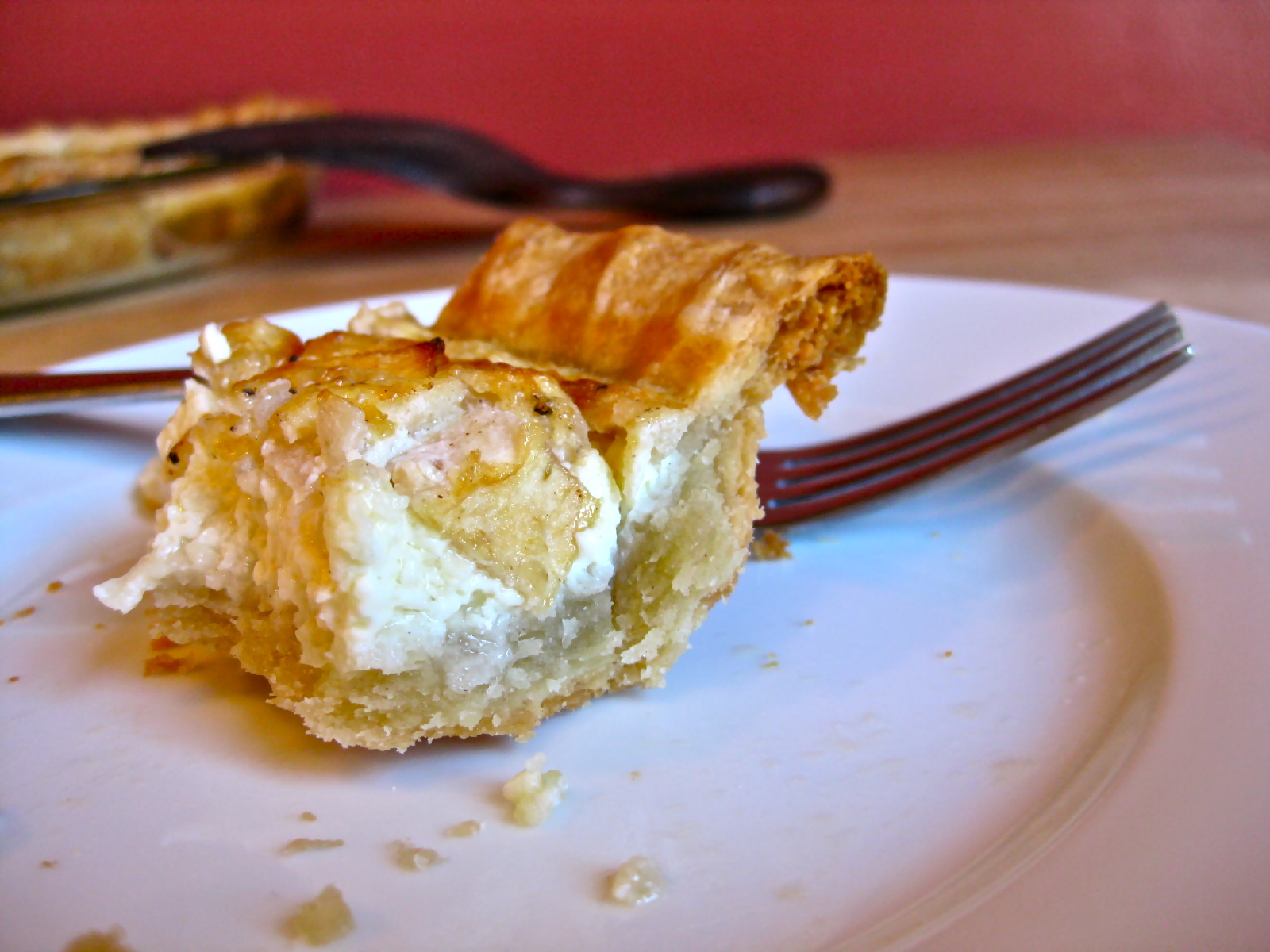
My son came up with the idea for this quiche.  No, really.  He came to it completely on his own, with no prodding whatsoever from his food-centric mother.  This may not sound all that impressive to a lot of people, but considering the fact that most dishes invented by children tend to be either a) deliberately revolting (mud pie with worm sauce, or the ubiquitous poo sandwich), or b) something Willy Wonka would have for breakfast (chocolate chip chocolate cake pancakes with chocolate sauce and chocolate whipped cream), I think my son’s rather creative, yet entirely edible, recipe idea is fairly admirable.  Cheese and apples are a classic pairing, and when combined in the custardy filling of a quiche, they’re the perfect savory end to a chilly fall day.

I once read that kids are 65% more likely to eat food that they have helped make.  Though I find most statistics or factoids about children and their habits to be largely misleading (because if there is one thing you never, ever want to do, it’s read up on how old “most” other children are when they master toilet usage or stop lisping the sound of the letter s), my experiences with cooking with the help of children has proven this statistic to be almost universally true.

Kids like to help.  They may not be very good at it (I am being honest here, so try not to gasp too loudly when I say that, look, kids are messy and uncoordinated, so when you cook with them, things are not going to look like they emerged from a professional cooking show), but allowing them to take part in an adult’s everyday activities gives them the confidence to tackle their own activities with a bit more focus and interest.  Even though my kid tends to drop most items I hand him in the kitchen, splash the contents of a bowl against the wall whenever he attempts to handle a whisk, and grow incredibly tired of my repeated reminders to keep his hands away from the burners on the stove, he’s also comfortable in the kitchen and eager to assist.

I am generally loathe to dole out advice regarding the raising of a child (because there are more types of kids than there are varieties of apples and types of cheeses, and what works for a Brie will most likely not apply to a Manchego, if that makes any sense at all) but I will say that leaving a door open for your kid to explore his food, where it comes from, and how it gets made is an invaluable step towards developing a healthy and realistic relationship with food.

This is not to say that we walk around all day harvesting kale and churning our own butter.  We do, however, have a kid who will approach food with creativity, and who will (as this point, at least) agree to take at least one bite of whatever new item shows up on his dinner plate.  Sometimes he never gets past that first bite (sorry, green beans), but other times, as in the case of this quiche, he eats the entirety of his portion, then asks for more.

Apple and Cheese Quiche

1 parbaked single tart or savory pie crust (the recipe for my favorite savory tart and pie dough can be found here, and you can find further information in that same post about parbaking the crust)

3 large eggs

1 cup milk

1 cup shredded sharp cheddar cheese

½ cup shredded or grated Parmesan cheese

1 medium apple (a somewhat firm variety works best here, but I’d stay away from a super tart variety like a Granny Smith), chopped into ¼ inch chunks, about 1 generous cup

pinch cinnamon

pinch nutmeg

salt and pepper to taste

Preheat oven to 375 degrees Fahrenheit.

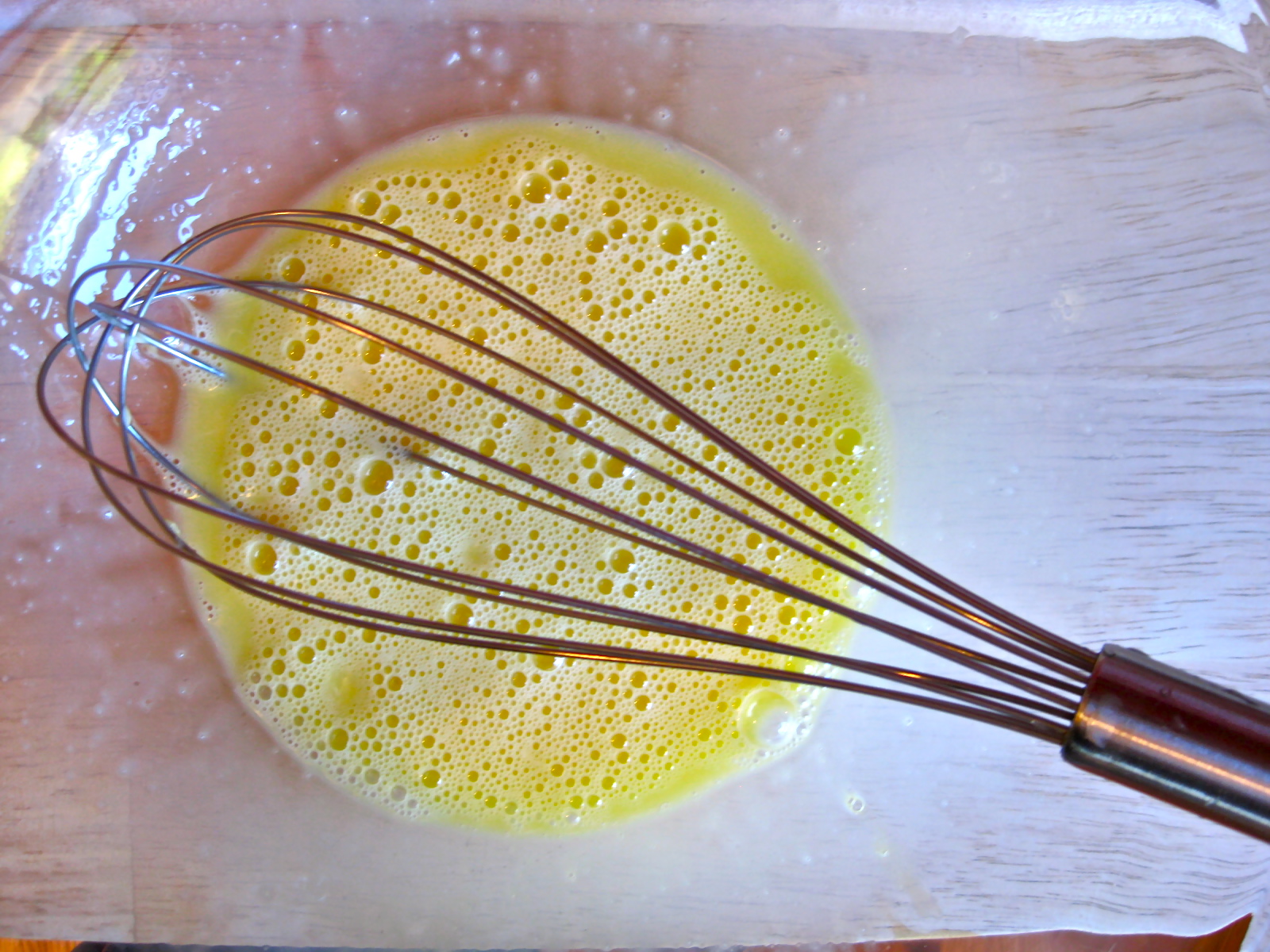
In a large bowl, whisk together eggs and milk until thoroughly combined.  Add in cheeses, apple, and spices, and stir to combine.  Pour filling into a parbaked pie crust set on top of a baking sheet.

Bake quiche on the center rack of the oven for 35-45 minutes, until the center has set and the top of the quiche is puffed up and golden brown.

Allow to cool for 5-10 minutes before serving.