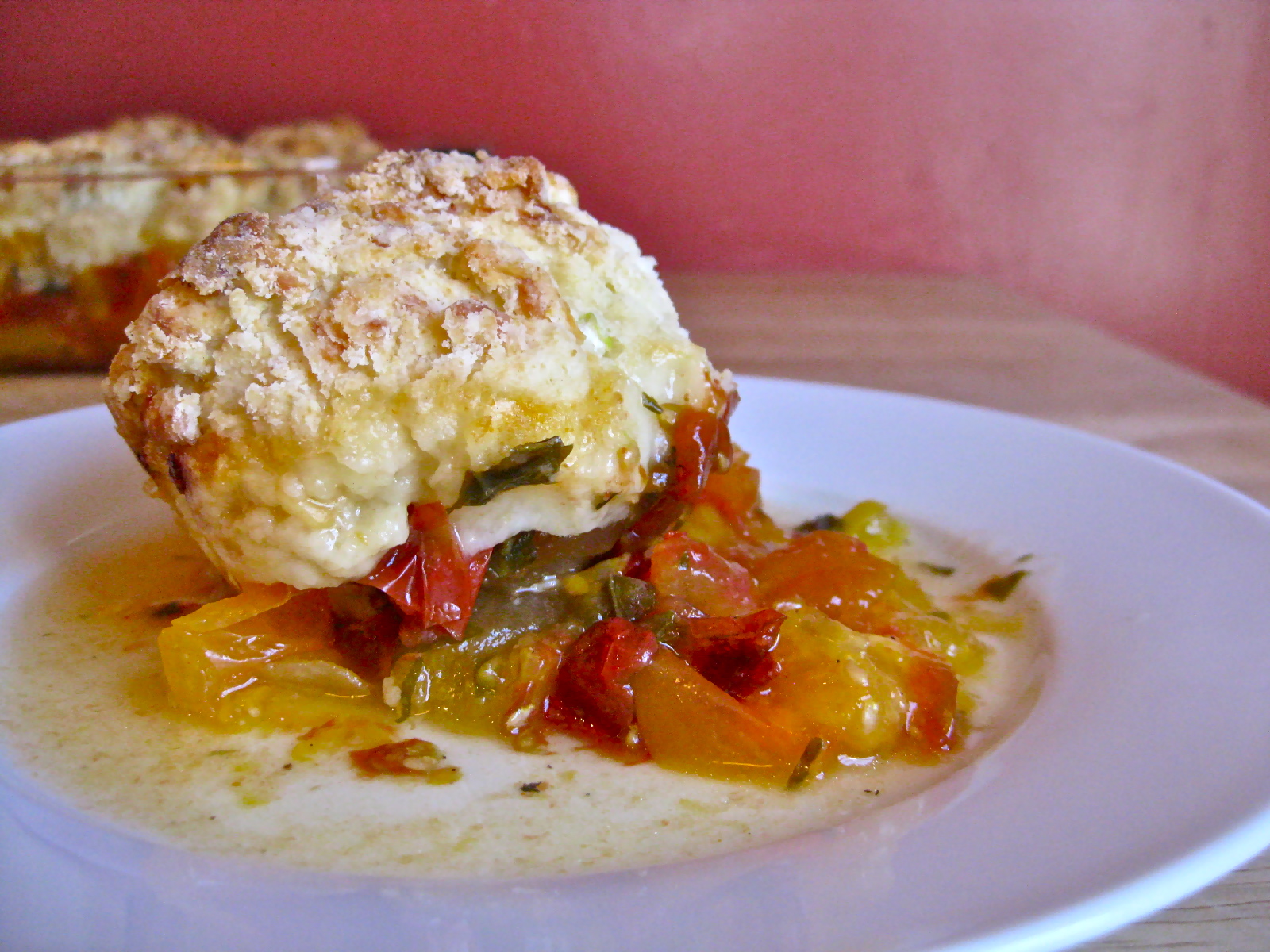
Heirloom Tomato Cobbler with Cheddar and Scallion Biscuit Topping

6 Oct

As if the very name of this dish wasn’t already completely unromantic and slightly clunky, let’s just go ahead and examine its most glaringly obvious head-scratching component: it’s a cobbler made of tomatoes.

I know it seems unlikely, but let me assure you, it works.  Juicy heirloom tomatoes made even more flavorful with a handful of basil and some quality time spent in a hot oven.  Soft and comforting biscuits with pleasantly crunchy tops and bursts of savory sharp cheddar enveloped within.  Put these two elements together and you’ve got nothing less than magic, I tell you.

And before you say it, allow me to tackle the next seemingly problematic tidbit about this dish: heirloom tomatoes in October?  Yes.  You can get heirloom tomatoes in October, and, thankfully, they are just the type of heirloom tomatoes you will want.  This dish does not require pretty, unblemished tomatoes, but rather calls out for those tomatoes you would like to chop up and maybe even hide a little before you eat them.

You don’t need beauty pageant tomatoes for this dish, you just need ripe, fleshy tomatoes that are bursting with flavor and willing to be cooked.  That, to me, is the very essence of the October heirloom tomato.  Summer heirloom tomatoes are for slicing and displaying atop a wonderful savory biscuit.  October heirloom tomatoes are for chopping and nestling beneath some biscuits.  It’s all so very convenient, I think.

Heirloom Tomato Cobbler with Cheddar and Scallion Biscuit Topping

2 pounds heirloom tomatoes, cut into 1-inch to 1/2-inch chunks

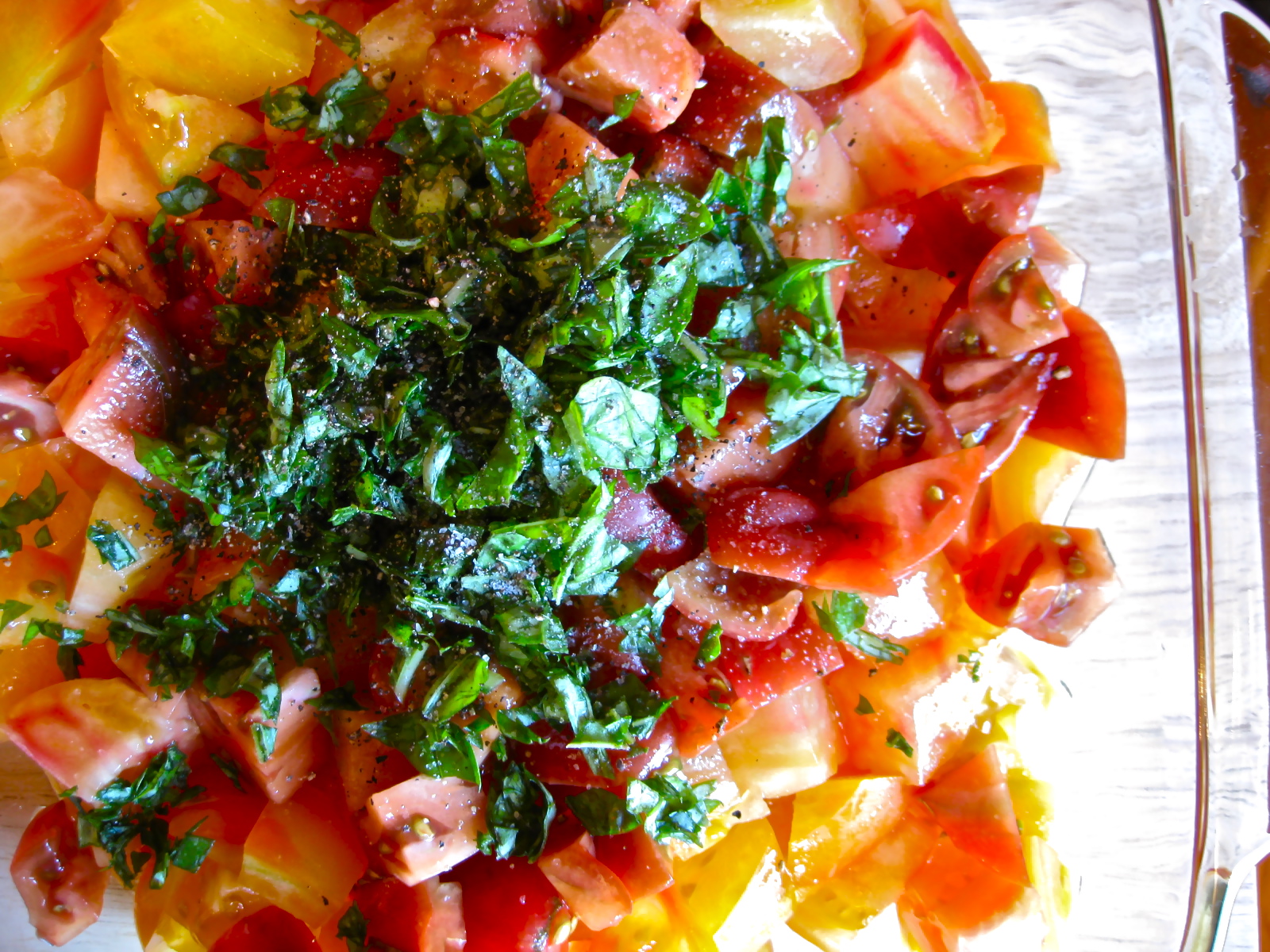
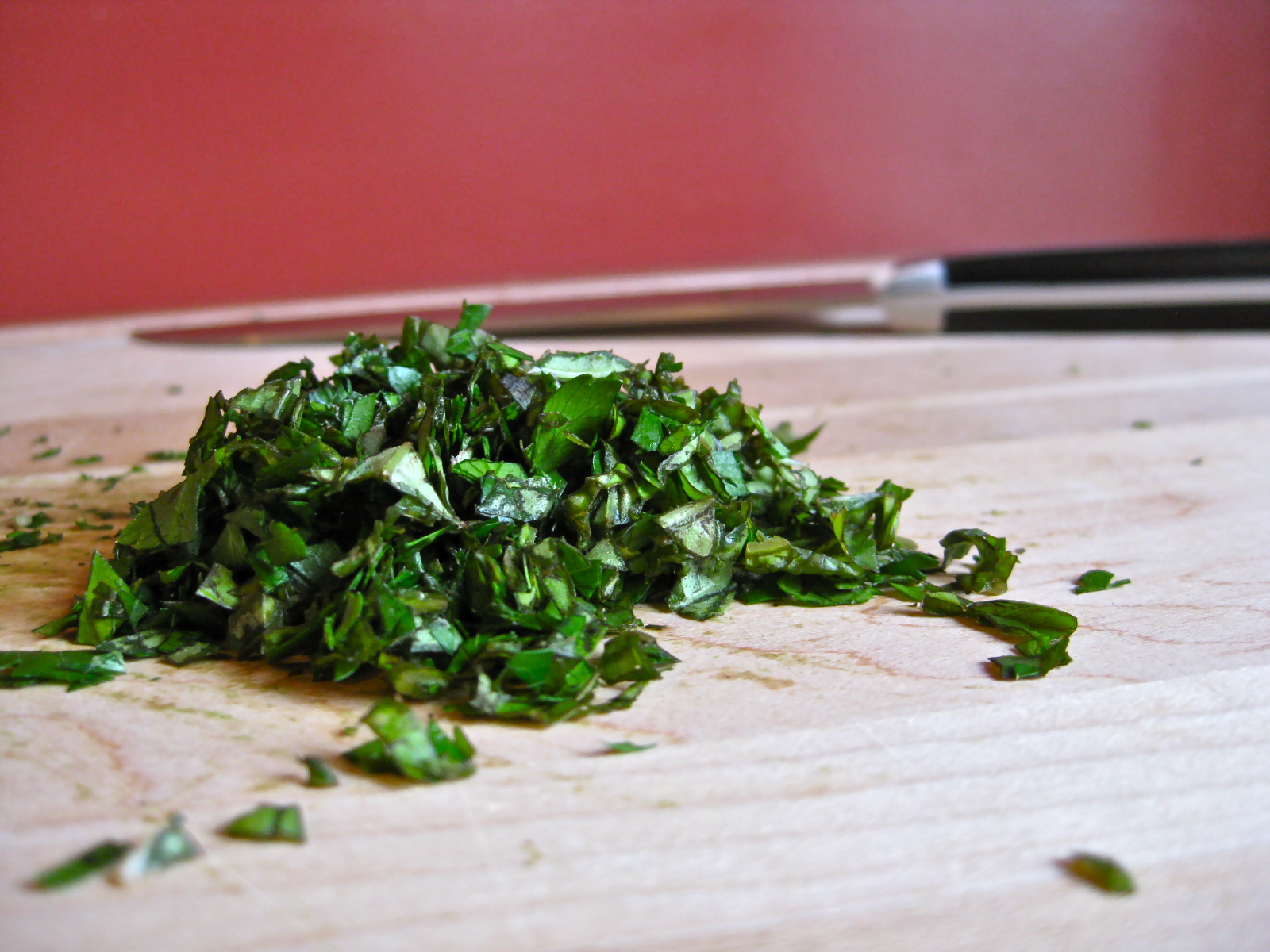
¼ cup chopped fresh basil leaves

salt and pepper

2 cups unbleached all-purpose flour

1 tablespoon baking powder

½ teaspoon salt

4 tablespoons cold unsalted butter, cut into small chunks

¾ cup cold buttermilk or soured milk

¾ cup shredded sharp cheddar cheese

1 large or 2 small scallions, finely chopped (about 3 tablespoons total)

Preheat oven to 400 degrees Fahrenheit.

Place chopped tomatoes and basil in an 8-inch square glass baking dish.  Add salt and pepper to taste, then toss gently to combine.

In a large bowl or in the bowl of a food processor, combine flour, baking powder, and salt.  Whisk or pulse to combine.  Scatter butter over the top of the flour, then cut into the mixture using a pastry cutter, or by pulsing 6 or 7 times in the food processor.  The mixture should resemble coarse crumbs with a few pea-sized chunks of butter remaining.  Gently stir in the buttermilk, or add through the feeding tube of the food processor while intermittently pulsing to combine.  Add the cheese and scallions and gently stir to combine, or sprinkle the cheese and scallions over the top of the mixture in the food processor and then briefly pulse just 2 or 3 times to combine.

Drop the biscuit mixture over the tomatoes, about ¼ cup per scoop.  You will end up with 9 biscuits total, 3 across and 3 down.

Bake the cobbler in the center of the oven for 40-45 minutes, until the tops of the biscuits are deeply golden and the tomatoes are rapidly bubbling.  Allow to cool for 5 minutes before serving.

Roasted Eggplant and Tomato Tart

3 Oct

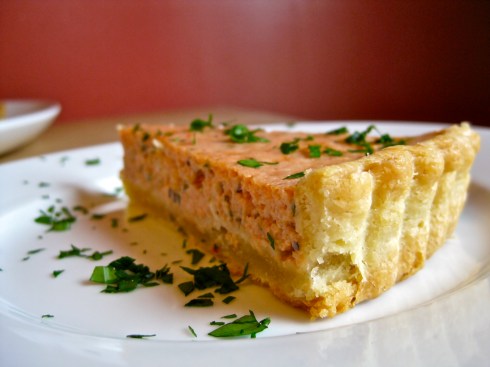
Let’s just start by stating the obvious: this tart looks peculiar.  There’s pretty much no way around it and, believe me, I have tried to somehow overshadow the fact that, though incredibly delicious, this vegetable tart’s filling also happens to be pink.  It’s the color of salmon.  Truth be told, when I first sliced into the tart, my thoughts were dominated by flashes of the Grim Reaper, bony finger pointed at a tabletop, responding to the query of a very badly-American-accented Michael Palin in drag: “The salmon mousse.”

So, it’s pink. But it is also phenomenal.  When I served it, I found myself defending its rather shocking hue by reassuring everyone that, sure, it looks like something a Disney princess would serve at her birthday party, but it tastes like a dream.  Savory roasted eggplant, fresh tomatoes, a buttery and flakey crust that is so incredible, it actually tastes like a croissant—surely these virtues can make one look past the color, yes?
As it turned out, everyone else was looking past the color.  It was me, and me alone, who was stuck in a permanent state of confusion over the pinkness of my dinner.  Even though I was the person who made the tart, which meant that I knew better than anyone else what exactly went into the tart, the superior taste of the thing was just not enough for me.  After every silky smooth, tasty bite, I would turn to my husband and say, “You don’t think it matters that it’s so…pink?”

And then he look up from his plate, cheeks stuffed full of tart like a chipmunk hoarding rations for the winter, and say, “Whht?  Iss fine.  Iss dlissishus.  So iss pnk…whhro crrrslt.”

And then he would finish his chewing, swallow his bite, and say, “I am now going to eat another piece.”

So, you can thank my husband, he of the only mildly understandable full-mouth-talking, that this tart recipe is seeing the light of day.  And you should thank him.  This tart is wonderful.  The roasted eggplant provides a rich smoothness that plays very well off of the summery taste of the barely roasted tomatoes, and the handful of fresh herbs thrown in does wonders for upping the savory factor.  This tart is totally worth your time and attention, which is good because, a pink tart?  Kind of difficult to ignore.

Roasted Eggplant and Tomato Tart

Flaky Tart Dough

It should come as no surprise to anyone that this savory tart dough recipe hails from Tartine.

1 teaspoon salt

2/3 cup very cold water

3 cups plus 2 tablespoons unbleached all-purpose flour

1 cup plus 5 tablespoons (which is 2 sticks plus 5 tablespoons, or 21 tablespoons total) very cold unsalted butter, cut into 1-inch pieces

In a small bowl, combine cold water and salt, then stir to dissolve salt.  Place salt water in refrigerator or freezer to keep very cold until ready to use.

To make the dough in a food processor, place the flour in the work bowl, then scatter the butter pieces over the top.  Pulse briefly until the mixture resembles large crumbs, but there are still large pea-sized chunks of butter scattered throughout.  Add the salt water mixture and pulse several times until the dough comes together in a ball, but is not completely smooth.  There should still be visible butter chunks.

To make the dough by hand, put the flour in a large mixing bowl, then scatter the buter pieces over the top.  Using a pastry blender or two knives, cut the butter into the flour until it resembles coarse crumbs with several large butter pieces scattered throughout.  Drizzle in the salt water mixture, then toss with a fork until the dough starts to come together in a shaggy mass.  Gently mix the dough until it comes together in a ball, but is not completely smooth.  There should still be visible butter chunks.

Turn the dough out onto a lightly floured work surface.  Divide the dough into 2 equal balls, then shape each ball into a disk about 1 inch thick.  Wrap each disk in plastic wrap and chill in the refrigerator for at least 2 hours, or overnight.

If not using the dough immediately, it can keep in the refrigerator, well-wrapped, for up to 4 days, or in the freezer for up to 1 week.

To parbake the dough, roll out a disk of dough on a lightly floured surface.  The dough should be about 1/8-inch thick. If dough is sticky, lightly dust with flour to prevent sticking.  Roll the dough into a circle roughly 1 ½ inches larger than the pan you will be using.

Transfer the dough to a 9 or 10-inch tart pan with a removable bottom, pressingly the dough gently against the sides and bottom of the pan.  Trim the dough even with the rim of the pan.  Place the shell in the freezer, and chill for 30 minutes to 1 hour.

Preheat oven to 375 degrees Fahrenheit.

Line the frozen shell with parchment paper, then fill with pie weights (or dry beans, or a handful of loose change—no, really).  Bake until the surface looks dry and pale, about 20 minutes.  Remove the shell from the oven, remove the parchment paper and pie weights, then place shell back in the oven and bake for another 5-10 minutes, until the surface just begins to turn golden.  If the dough begins to rise up in the middle, gently pierce it with the tip of a sharp knife, taking care not to make a large hole that will drain your upcoming tart filling.

Remove tart shell from oven until needed.

Roasted Eggplant and Tomato Filling

1 large eggplant, about 12 ounces

3 plum tomatoes (I used San Marzanos, but Romas would also work well), cored but otherwise kept whole

3 eggs

¼ cup grated Parmesan cheese

¼ cup chopped fresh basil and Italian parsley (roughly 1 small handful of each fresh, whole herb)

salt and pepper to taste

Preheat oven to 375 degrees Fahrenheit.

Using the tip of a sharp knife, pierce the skin of the eggplant in several places.  Place eggplant on a baking sheet, and bake until eggplant is completely soft and beginning to emit its juices, about 30 to 40 minutes.  Set aside to cool slightly.

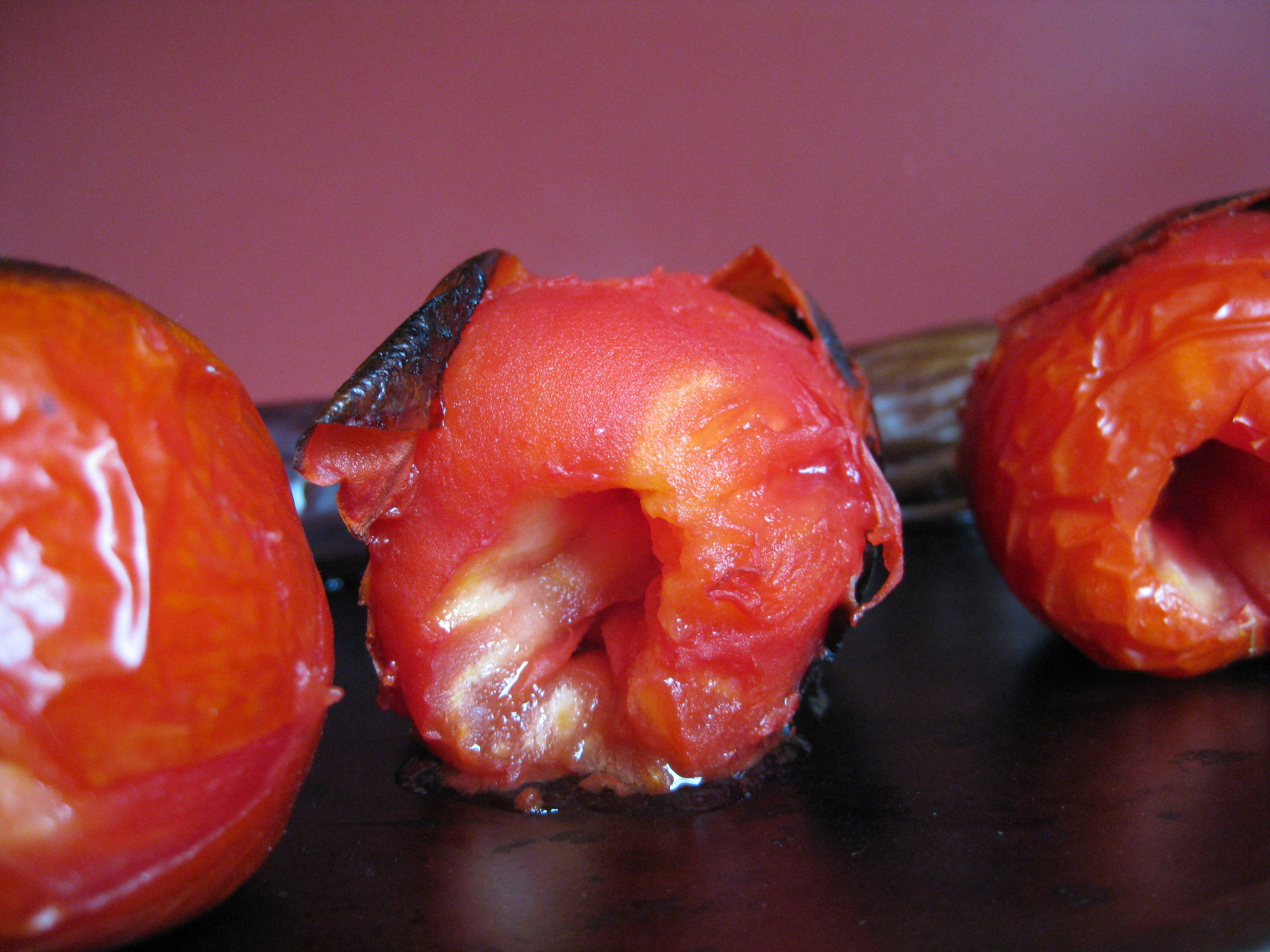
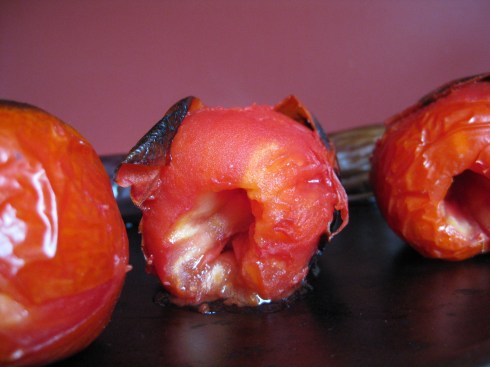
Turn the oven up to broil.  On a heavy baking sheet, broil the tomatoes, turning often, until the skin is charred and split, 5 to 10 minutes, depending on the heat of your oven’s broiler.  Remove tomatoes from oven and set aside to cool slightly.

(Both the eggplant and tomatoes can be roasted and broiled ahead of time and then set aside in the refrigerator for up to 1 day.)

Preheat the oven to 375 degrees Fahrenheit.

When eggplant is cool enough to handle, scoop out the flesh of the eggplant and add it to the bowl of a food processor or blender.  Add cooled tomatoes, skin and all.  Blend eggplant and tomatoes until smooth (if you are using a blender for this, be sure to keep the lid of the blender loose, as blending hot liquids with a tight blender lid may cause the lid to blow off in a rather spectacular fashion).  Add the eggs and blend or pulse until incorporated.  Add Parmesan cheese, chopped herbs, and salt and pepper, then blend or pulse very briefly until just combined.

Pour eggplant mixture into parbaked tart shell.  Bake for 25 to 30 minutes, until the middle of the tart has set and a knife gently inserted into the middle of the tart comes out clean.  Allow to cool slightly before serving.

Balsamic-Glazed Chicken and Zucchini with Grilled Limes

30 Sep

It may seem a little late for a recipe centered around grilling, but summer came so late around here that we’ve been able to keep our grill working well into September.  It’s a good thing we took advantage of that long stretch of dry weather, too, for right now it is raining and I am wearing a scarf.  Over my sweater.  And crying.

But let’s not talk about that.  Let’s instead talk about something that I think everybody needs in their arsenal of quick meals: a fast weeknight dish.  It’s not the most exciting of topics, I know, but maybe pretend you are making this quick meal before you take off to meet some friends for drinks and then go to your favorite bar to see the Hold Steady.  Only that bar has closed down now, and the Hold Steady no longer plays in little bars anyhow, so you might have to see them play some big club with far too many beer-sodden patrons who think they should jump up and down in front of you like the (now departed) keyboardist in the Hold Steady used to do, only when the keyboardist did it it was charming, and when this dude in front of you does it it just blocks your view and makes you a little tired of being violently leaped on every two seconds.

I seem to have veered off course a bit.

So, chicken!  I know that boneless, skinless chicken breasts have a bad reputation, and I completely understand why.  It’s very easy to make something as simple as a chicken breast taste terrible, what with that portion of the chicken being so utterly plain, devoid of fat, and easy to overcook.  The other side of that equation is, it is also fairly easy to make a chicken breast shine, what with its versatility and unrivalled ability to absorb flavor.  With this simple balsamic glaze that requires very little action other than a periodic swipe across the chicken, you can produce a quick chicken dish that is flavorful, fast, and totally satisfying.

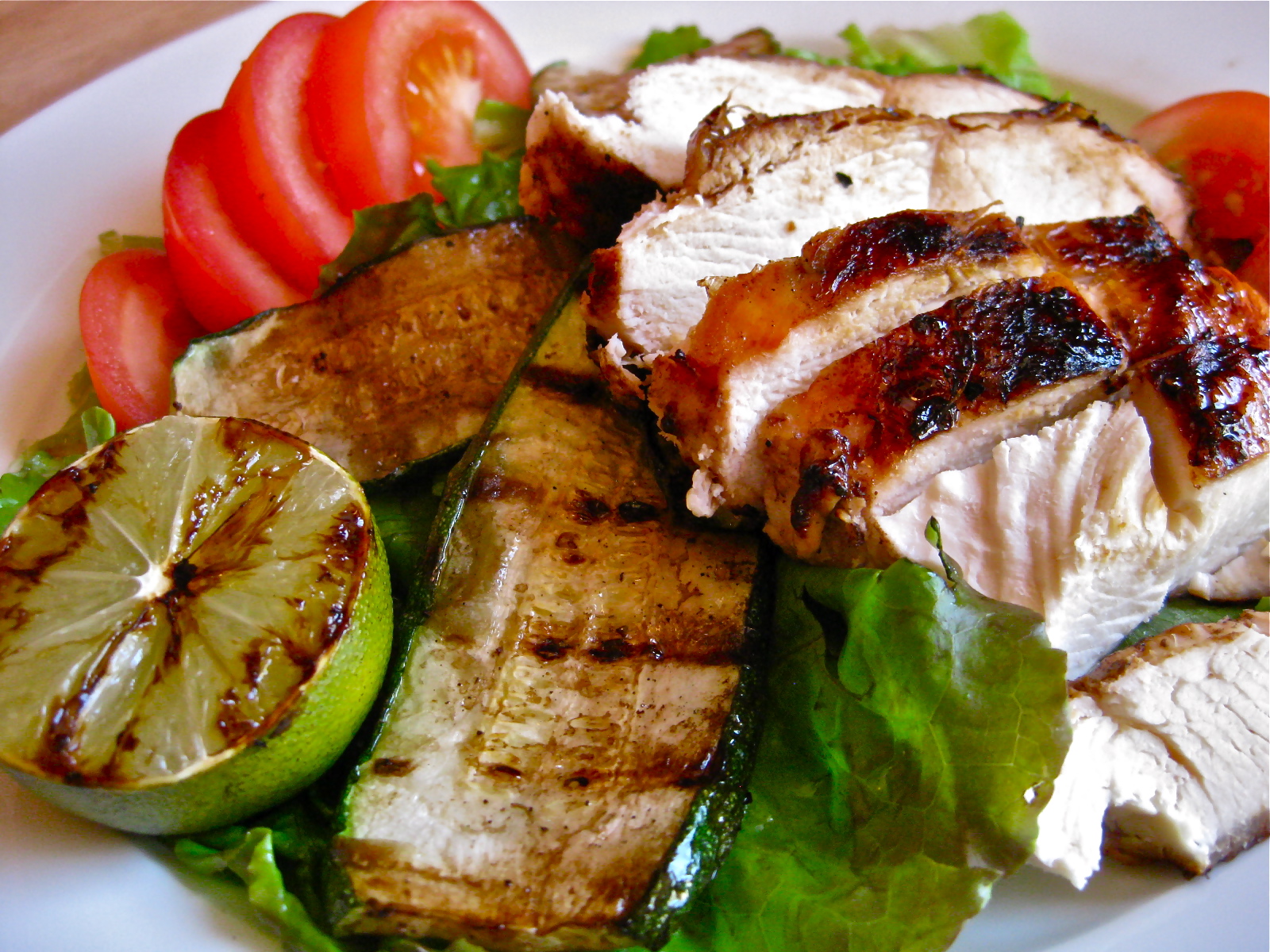
The greatest asset of the entire dish, however, lies not in the chicken, but in the grilled limes.

Just a couple of minutes on a hot grill will coax untold amounts of juice out of each lime, and with just a bit of the bright, caramelized fruit squeezed over each serving of chicken, you instantly add a layer of flavor to each bite that will make you wonder how you ever managed to produce such a fantastic meal in such a short amount of time.

Balsamic-Glazed Chicken and Zucchini with Grilled Limes

Hey, lady, why on earth are you giving us a recipe for grilled chicken when it’s no longer grilling season?  Because if you have a grill pan sitting in your kitchen, that grill pan will work just as well as an outside grill.  Good grill pans are available for as little as $19 on Amazon, and I’ve yet to enter a discount kitchen store that hasn’t had at least half a dozen grill pans sitting around looking all well-priced and ready to be taken home.

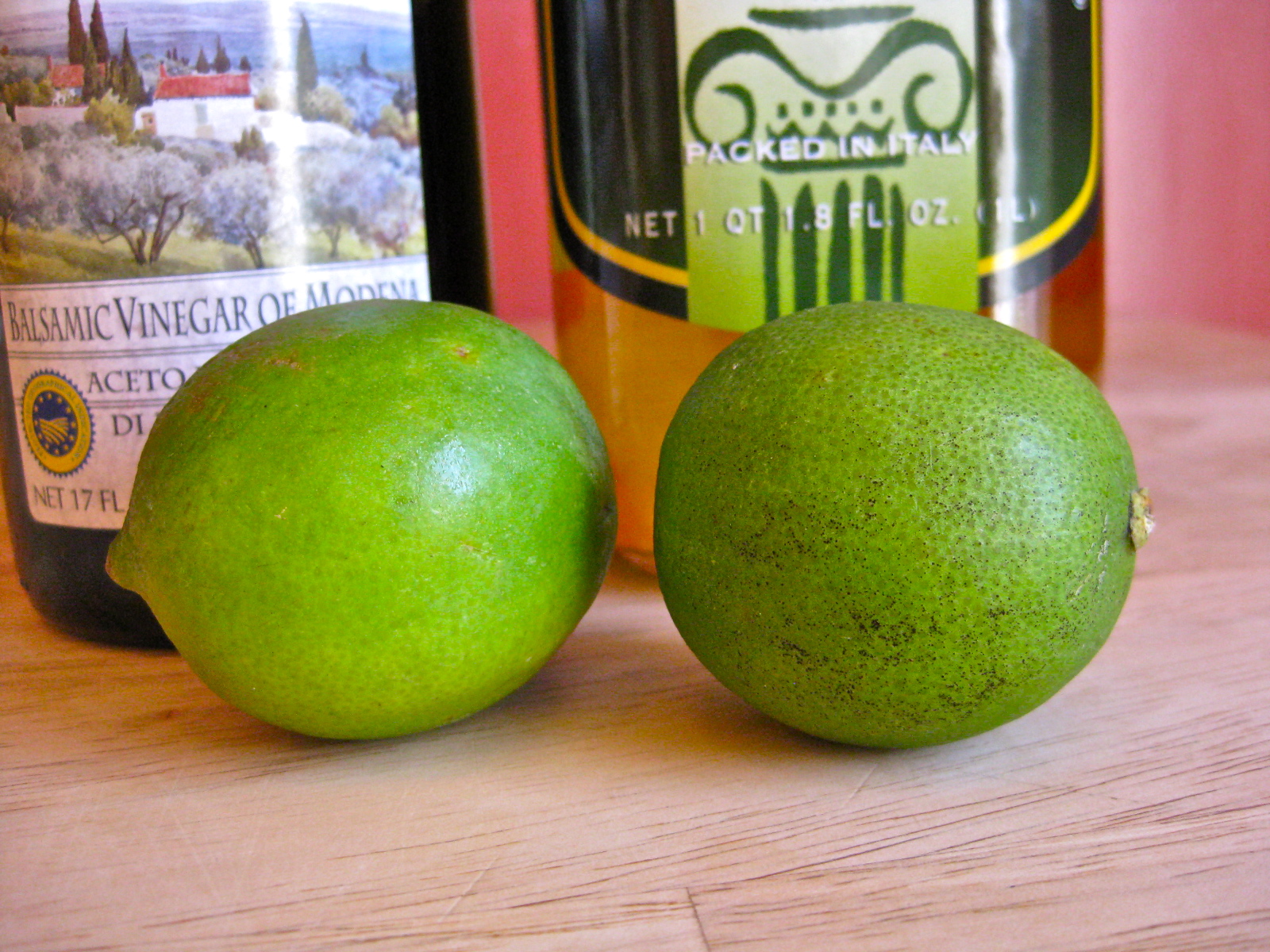
1/3 cup balsamic vinegar

3 tablespoons olive oil

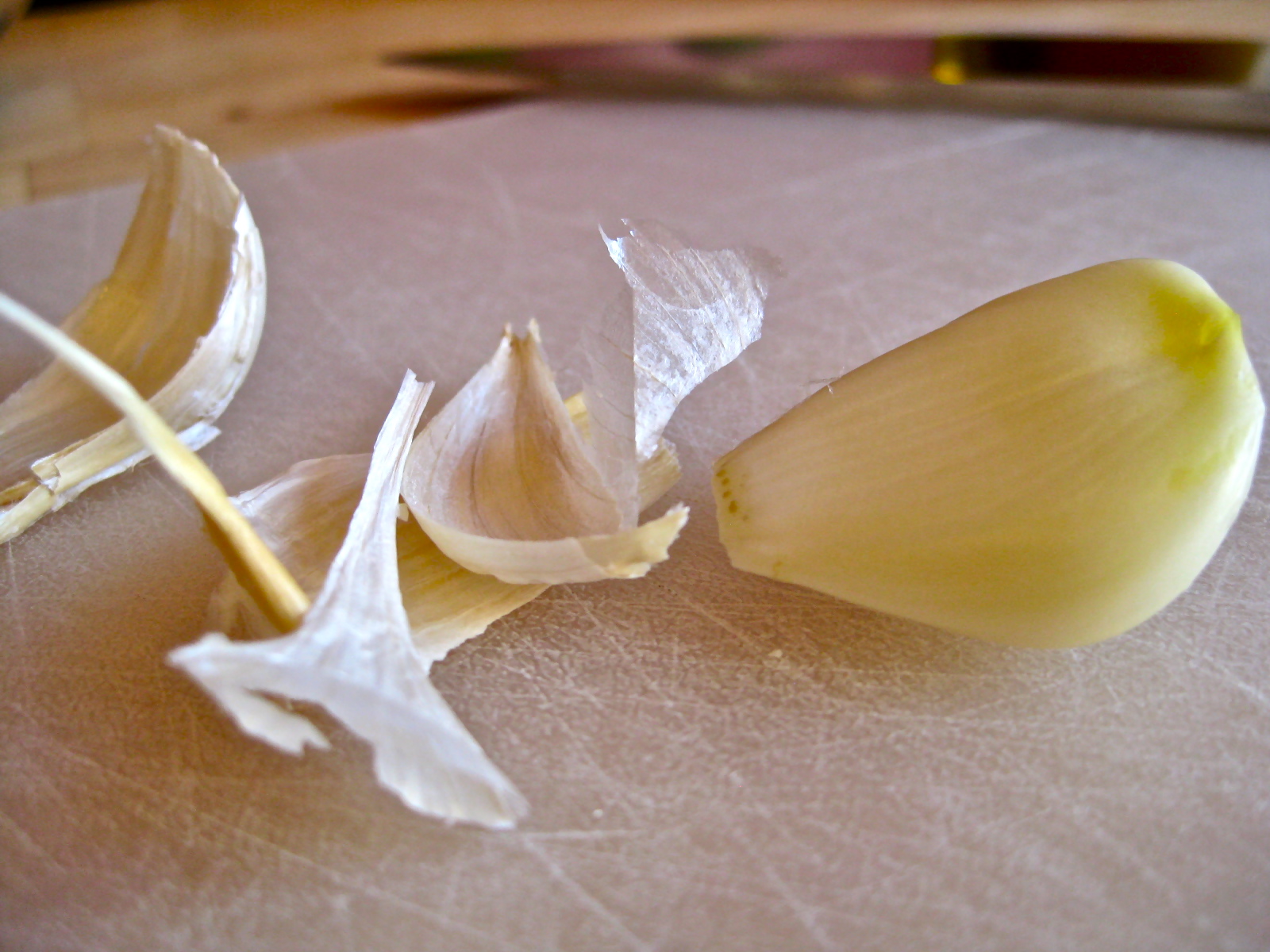
1 large garlic clove, crushed and finely chopped

salt and pepper

4 boneless, skinless, chicken breast halves

2 medium zucchini, sliced lengthwise into ¼-inch slices

2 limes, sliced in half

In a medium bowl, whisk together balsamic vinegar, olive oil, chopped garlic, and salt and pepper to taste.  Add zucchini slices to glaze, toss to combine, and set aside.  The zucchini slices will only have to sit in the glaze for a minute or two.

Heat a grill or grill pan to medium high heat.  Place chicken breasts on grill.  Remove zucchini slices to a plate, and set aside.  Using a heatproof brush, brush a generous amount of the balsamic blaze on the exposed side of each chicken breast.  Cook the first side of the chicken breast for 4-5 minutes (until chicken has dark, visible grill marks), then flip chicken and brush glaze on the cooked side of the chicken.  After 4-5 more minutes, brush chicken with glaze again, flip again, then brush once more.  Cook chicken until done, occasionally brushing with more glaze. Chicken will be done when it reaches an internal temperature of about 160 degrees Fahrenheit.  When poked with a knife, the emitting juices should be clear, not tinged pink or yellow.

While the chicken finishes cooking, add the limes to the grill, cut side down.  Add the zucchini slices to the grill, and cook for 1-2 minutes on each side, until zucchini is soft but not mushy, and has visible grill marks on each side.

If you are using a grill pan instead of an outdoor grill and do not have enough room to cook chicken, zucchini, and limes all at once, cook the chicken first (for a total of about 7-10 minutes on each side, depending on how large the chicken breasts are), set aide, and then cook zucchini and limes.

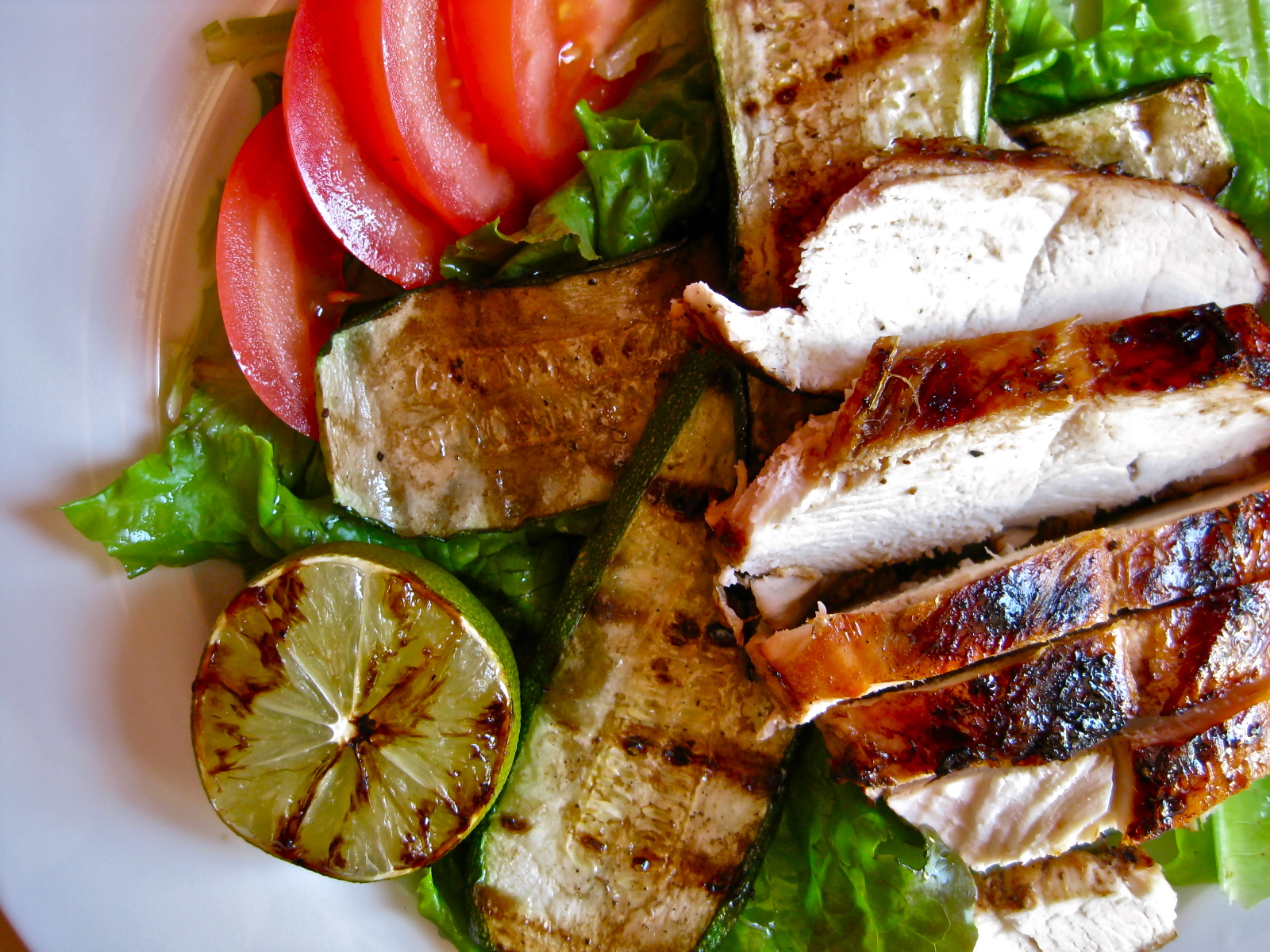
Serve each chicken breast sliced, accompanied by zucchini and half of a grilled lime.  I like to serve the chicken and zucchini on a bed of greens, often with slices of fresh tomato.  When ready to eat, squeeze the juice of the grilled lime over the chicken and vegetables.

Serves 4-6 people.