Tomato Tartlets with Rosemary

19 Sep

Things are rather tomato-heavy around these parts, but I could not be happier.  As mentioned once or a million times previously, we wait a long time for garden tomatoes in these parts, so when the tomatoes start to ripen, the tomato recipes come out in full force.  One of the most attractive tomatoes we grew this year is an heirloom variety called a pineapple tomato.  This is a tomato that does not mess around.  It is hearty, it is flavorful, and it is massive.  This fellow in particular weighed in at just over a pound, and it was the smallest pineapple tomato we’ve harvested so far this year.

Alas, our garden’s output not always so impressive.  Last year was so cold and wet, so lacking in any sort of sustained stretches of warm sun, none of our tomatoes ripened.  Actually, that’s not entirely true.  We ended the season with perhaps half a dozen ripe tomatoes, when but you’ve taken the time to plant and subsequently care for five different types of tomato plants, facing a yield of six tomatoes total does not, in my mind, count as a true harvest.  We ate a lot of fried green tomatoes last year, which, to be quite honest, is not the worst fate one can suffer.
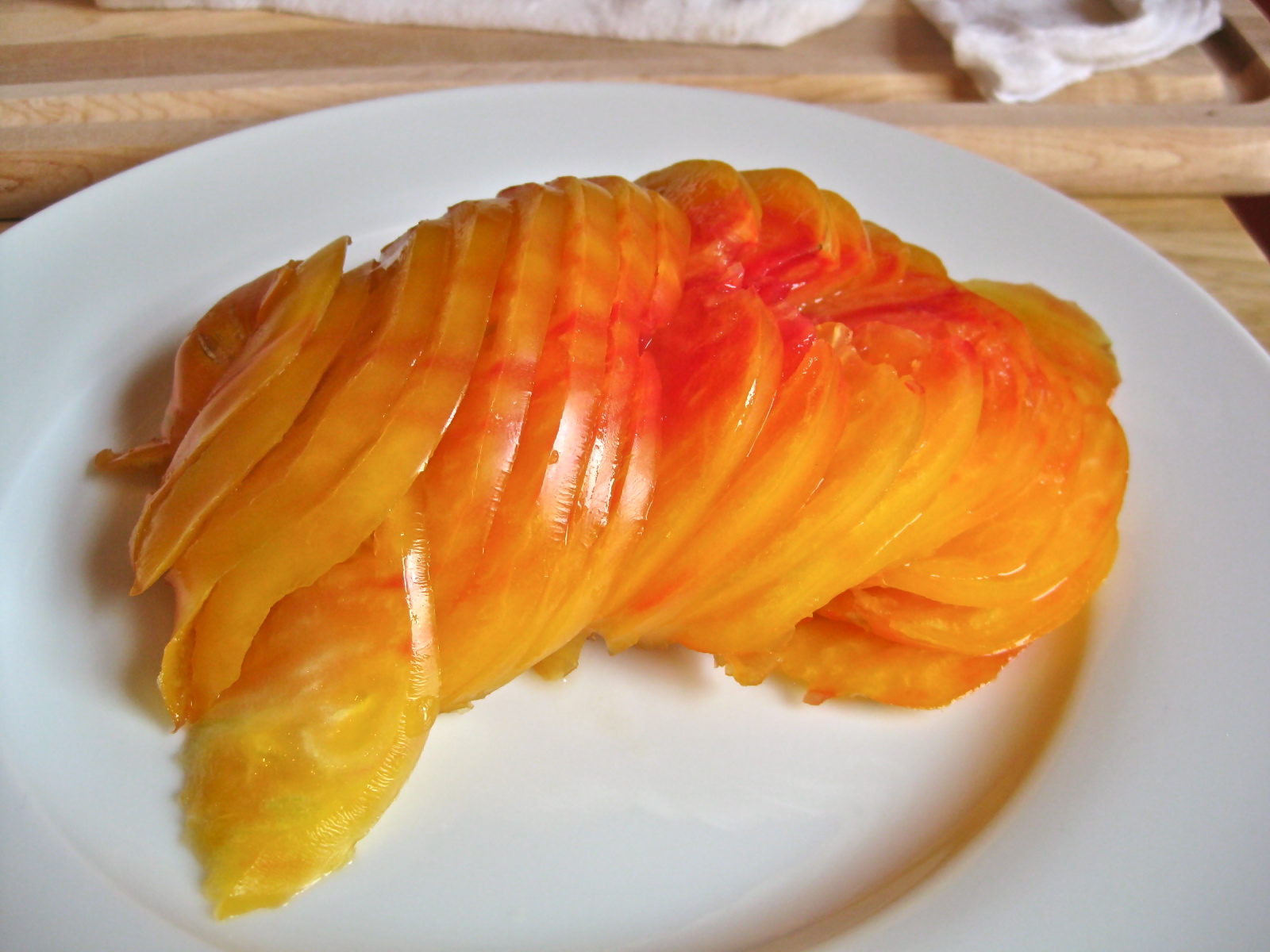
The tomatoes of 2011, thankfully, are doing a lot better.  My favorite way to eat these luscious pineapple tomatoes is raw, piled high on a sandwich of any type.  Sometimes I don’t even go full sandwich, and just eat slices of pineapple tomato on a big hunk of bread.  Sometimes I don’t even bother with the bread.  The tomatoes are that good.
Never one to shy away from a tart of any type, however, when I spotted this tomato-centric recipe in Deborah Madison’s Vegetarian Cooking For Everyone, I knew I had to give it a whirl.  The yeasted crust looked like a nice change from a standard tart crust, and the simple ingredients in the tart seemed like a great combination of elements that would allow the freshness of the tomatoes to really shine through.

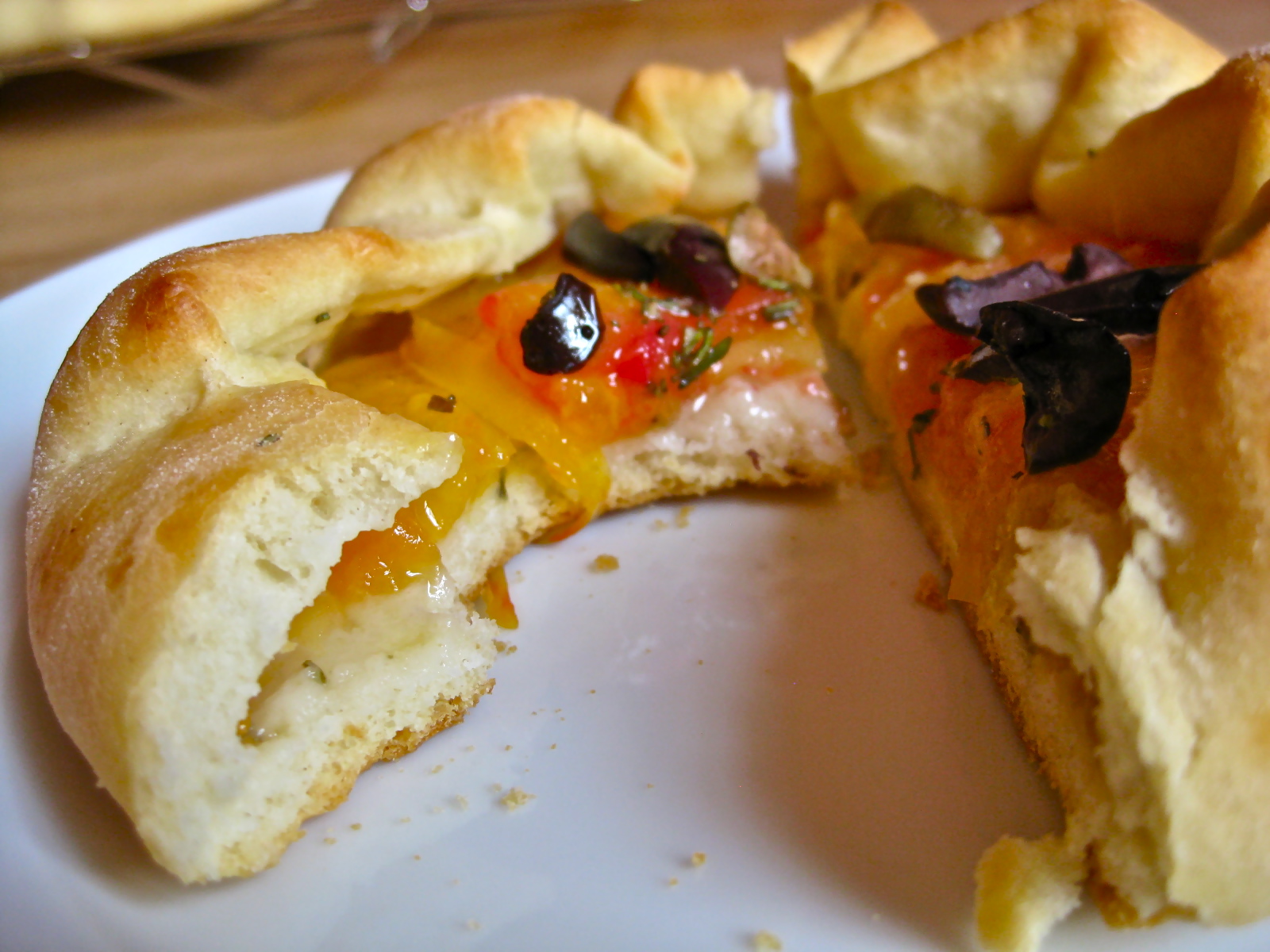
Not surprisingly, this recipe totally delivered.  Made in miniature gallette form, the tartlets are a modest, yet absolutely delicious, presentation for fresh garden tomatoes.  In a surprising variation from my ordinary routine, while making these tarts I found that I was compelled to change very little in either the recipe for the crust or the filling.  They are perfect as is.  Allow me to suggest that you do yourself a favor and become closely acquainted with both.

Tomato Tartlets with Rosemary

From Deborah Madison’s Vegetarian Cooking for Everyone 

Yeasted Tart Dough with Butter

2 teaspoons active dry yeast

½ teaspoon sugar

½ cup warm milk or water

1 egg, at room temperature

¼ teaspoon salt

2 cups flour

4 tablespoons soft butter

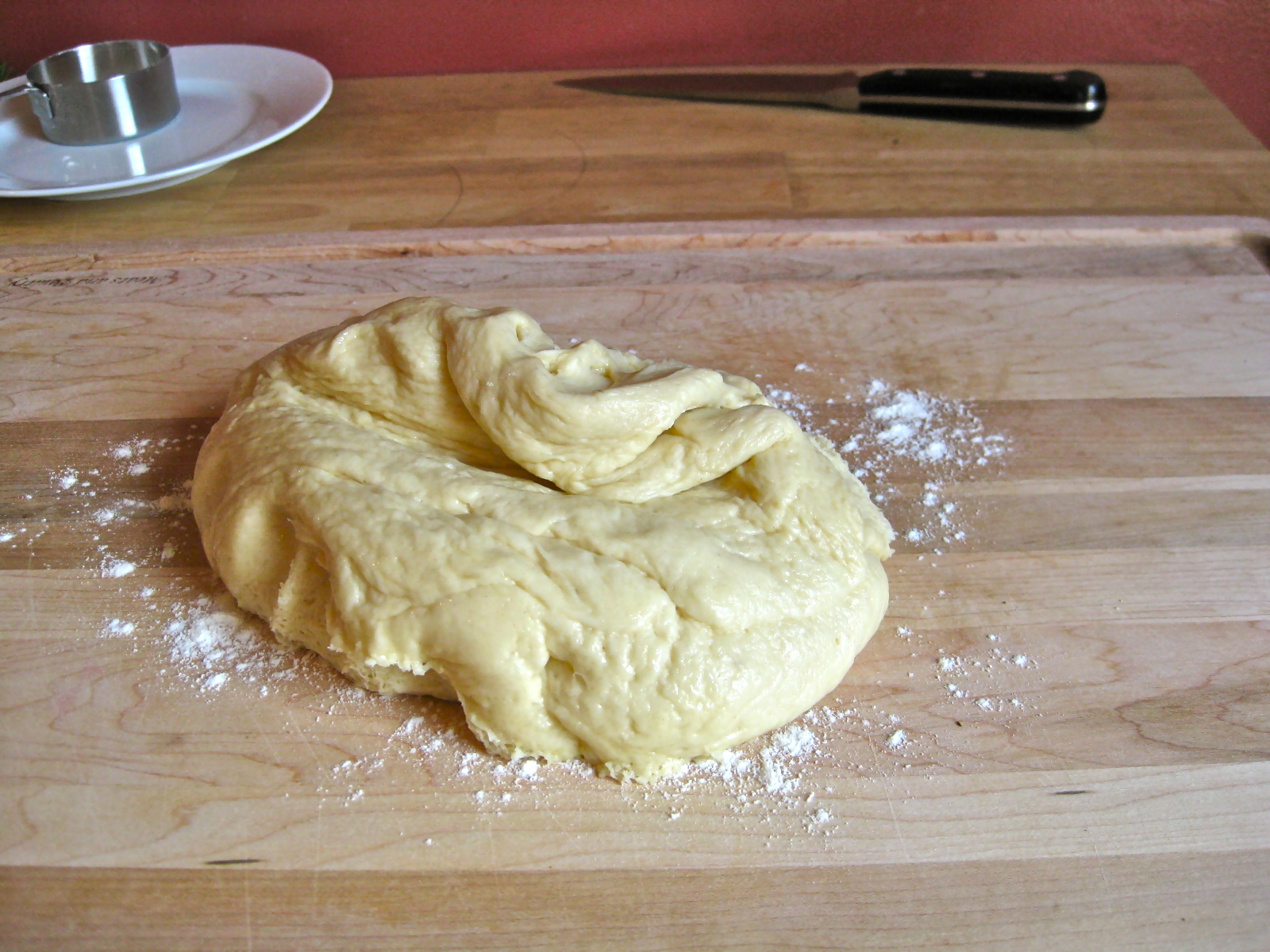
In a large bowl, dissolve the yeast and sugar in the milk (or water), and allow to stand until it begins to bubble, about 10 minutes.  Stir in the egg and salt, then start to add the flour, ½ a cup at a time.  After 1 cup of flour has been added, beat in the butter.  Continue adding the flour until the dough begins to pull away from the sides of the bowl.  Turn the dough out onto a well-floured counter (this dough is VERY sticky), and knead until dough is smooth and supple, anywhere from 3-5 minutes.  If dough is still very sticky and will not release from the counter, add a bit more flour as you knead.  (You are, of course, welcome to mix and knead this dough in a standing mixer.  The instructions remain the same, though you will most likely only need to knead the dough for 3 minutes rather than 5.)

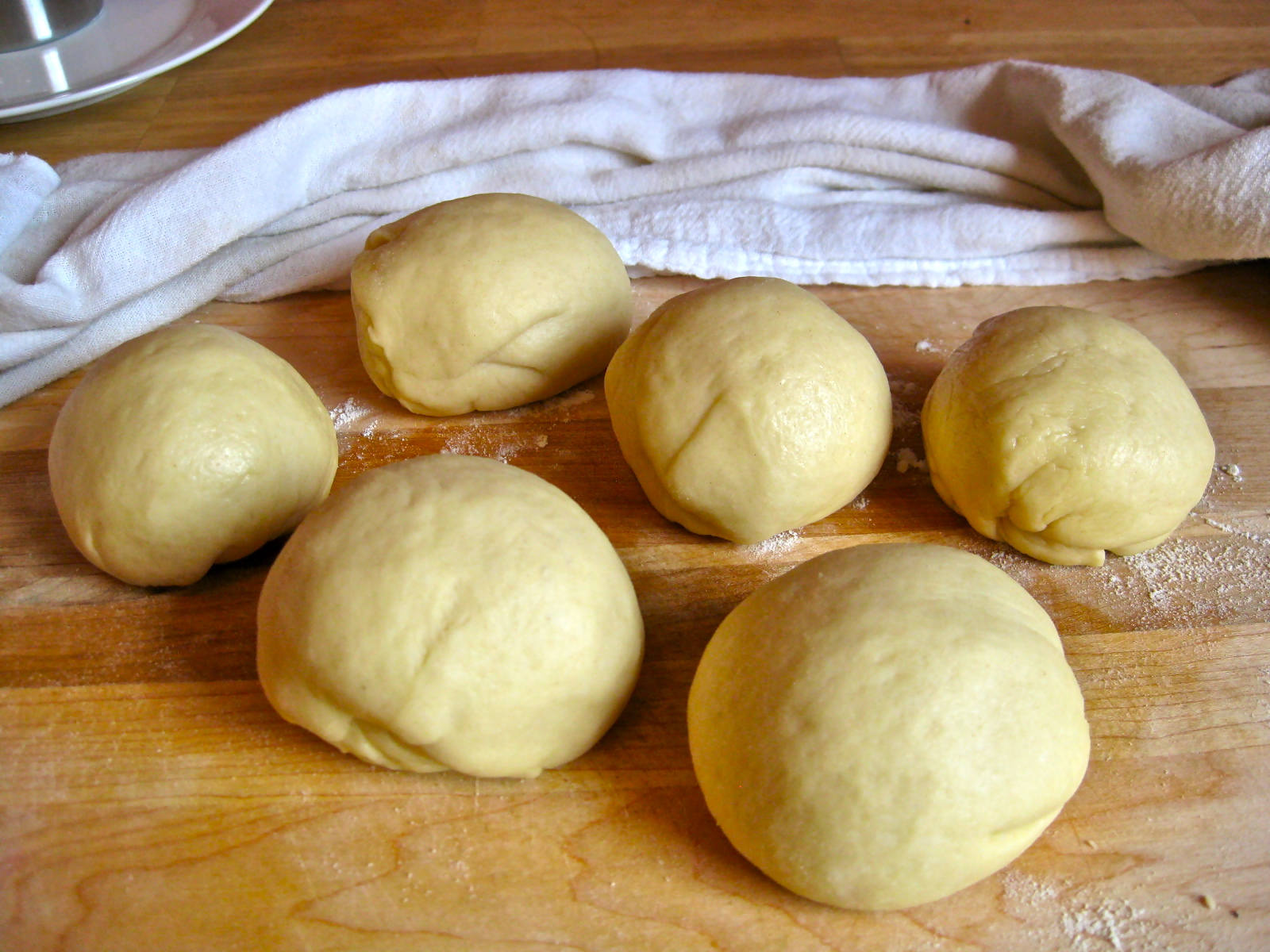
Place the dough in a well-oiled bowl, then cover with plastic wrap, a towel, or a fitted lid.  Allow to rise until doubled in size, about 45 minutes.  Turn the dough out onto a well-floured surface.  Divide the dough into 6 equal pieces, shape each piece into a ball, then allow the dough balls to rest under a towel for 15 minutes.

Tomato and Rosemary Filling

Preheat oven to 425 degrees Fahrenheit.  Line a baking sheet with parchment paper.

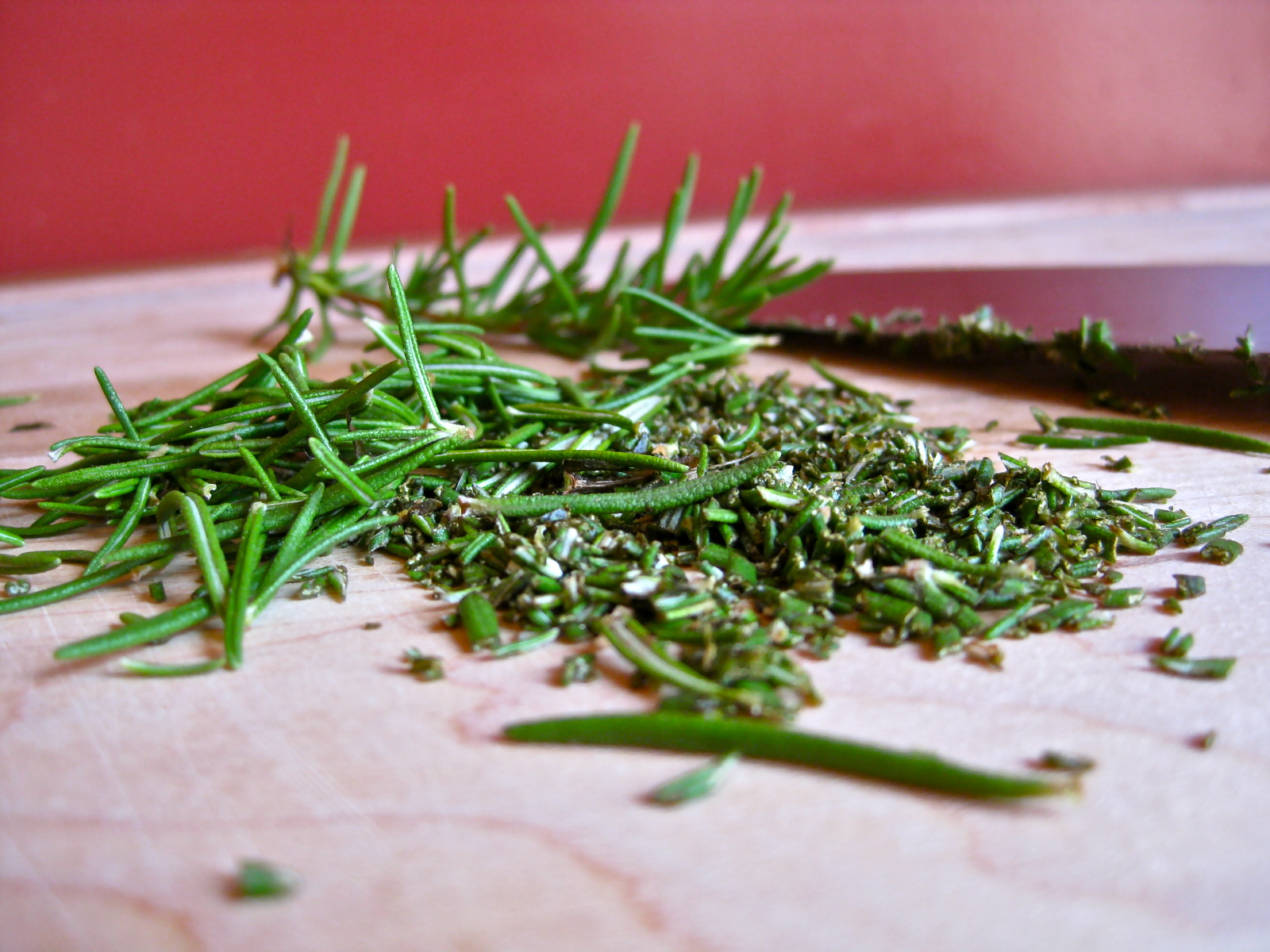
2 tablespoons finely chopped fresh rosemary

1 pound of tomatoes, sliced very thin (thick slices of tomato will cause your tartlets to become soggy)

18 Nicoise olives (I used a mix of Kalamata olives and green olives instead), pitted and halved

extra virgin olive oil

salt and freshly ground pepper

Roll each ball of dough into a circle about 1/8 inch thick (rolling the dough thicker will make the dough turn out a bit too bready).  Sprinkle ½ teaspoon rosemary over each circle, then gently press the rosemary into the dough.  Overlap 4 or 5 thin slices of tomato on each round, leaving a 1-inch border around the edge.  Tuck in the olives amongst the tomato slices, sprinkle with a bit more rosemary, drizzle with a tiny splash of olive oil, then season with salt and pepper.  Fold the edges of the dough over the tomatoes, creasing and tucking as you go. Gently cup your hands around the tarts and press lightly to make the dough form a tight seal around the tomatoes.

Bake on prepared baking sheet for 20 to 25 minutes, until the crust is golden.  Serve hot, warm, or at room temperature.

Makes 6 tartlets.

Black Pepper Buttermilk Biscuits

15 Sep

Ladies and gentlemen, the tomatoes have arrived.

Long have we waited, through the cold of June, the erratic and broken weather cycle of cold-warm-cold in July, the August sun slowly gaining strength, and now, finally, the unexpectedly wonderful burst of heat in September.  As though they had been waiting as eagerly as I had, our tomatoes are very suddenly exploding with ripeness, and there is little I can do to stop myself from coming up with every excuse imaginable to use our garden tomatoes in every manner possible.

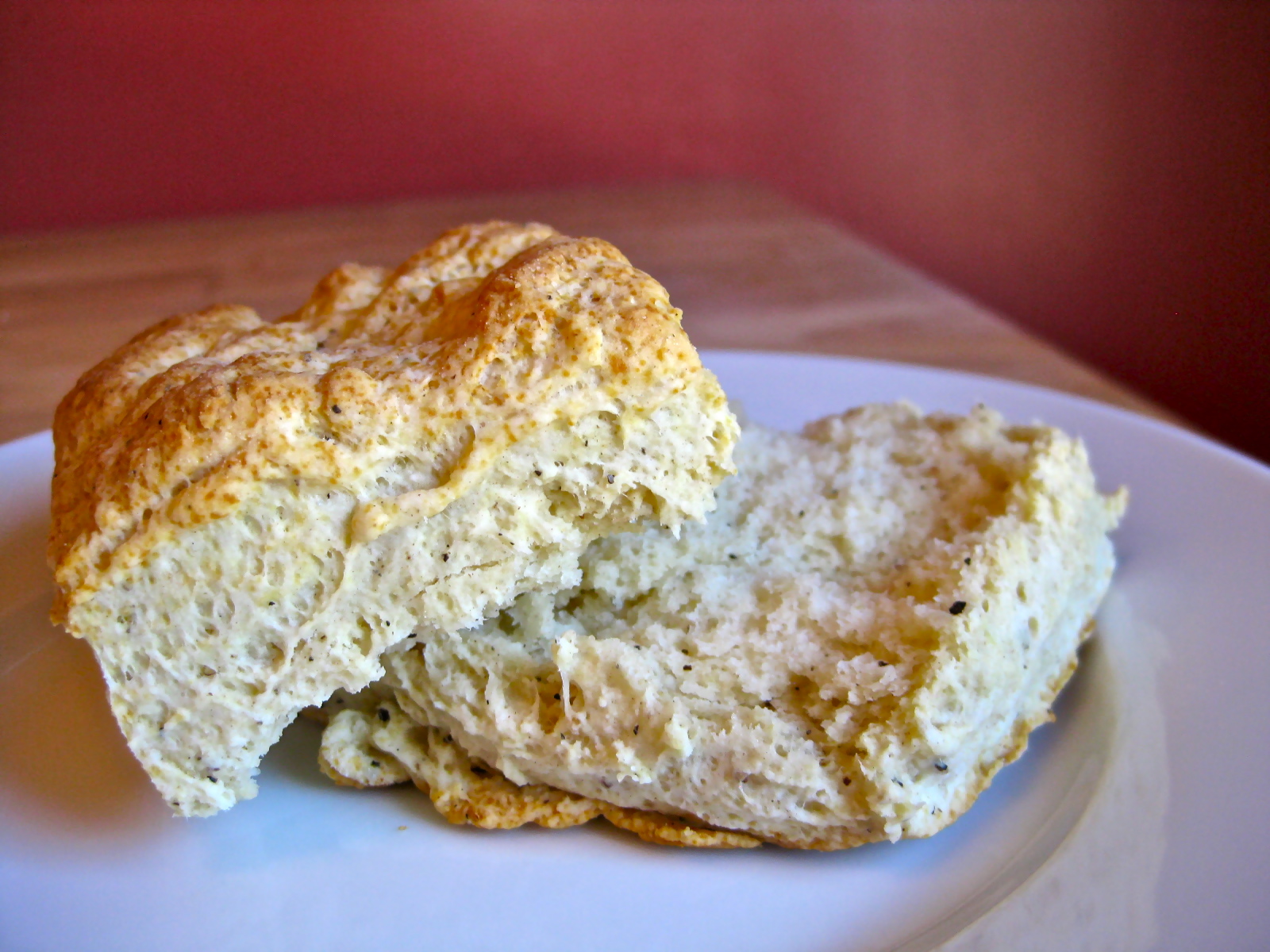
These biscuits, with their flaky, yet sturdy, texture and abundance of spicy black pepper, are the perfect vehicle for garden fresh tomatoes.  Of course, we’ve been waiting so long for tomatoes, my line of thinking as of late dictates that everything is a perfect presentation piece for the glory of the heirloom tomato.  That aside, these biscuits really are spectacular.  There is something so utterly satisfying about tucking a thick slice of tomato in between layers of rich, warm biscuit, and, if you throw in a soft fried egg for good measure, you’ve got yourself a fantastic meal that is fit for breakfast, lunch, or dinner.

I might even admit to having eaten a biscuit topped with tomato for breakfast, lunch, and dinner on what I can only recall as being a banner day.  I earned that trifecta of black pepper against cool tomato, I tell you.  I waited all summer for the summer to arrive, and arrive it finally did.

P.S. Next Saturday it is supposed to be cloudy and in the 60s.  Summer, we hardly knew thee.

Black Pepper Buttermilk Biscuits

This recipe yields 9 very huge, square-shaped biscuits.  If you desire a smaller biscuit (I don’t know why anyone would, but I hold no judgement), try shaping the dough into a 10″ x 8″ rectangle and cutting it into 12 biscuits.  Why do I instruct you to make square biscuits instead of round ones?  Because when you cut your biscuits into rounds using a biscuit cutter, you will inevitably be left with scraps of dough that then need to be re-rolled and reshaped before being cut again.  The more you handle your biscuit dough, the more you activate the gluten in the flour and heat up the little flakes of cold butter in the dough, the end result of both being that your biscuits will turn out less flakey and more tough.  By simply cutting a square biscuit, you eliminate the need to keep fussing with your dough.  You handle the dough much less, resulting in a tender, flakey biscuit every time.

4 cups unbleached all-purpose flour

4 teaspoons baking powder

1 teaspoon baking soda

1 teaspoon salt

1 tablespoon freshly ground black pepper

8 tablespoons (½  cup, or 1 stick) very cold unsalted butter, cut into small chunks

1 ½ cups buttermilk or soured milk

Preheat oven to 450 degrees Fahrenheit.  Line a baking sheet with parchment paper.

In a large bowl, or in the bowl of a food processor, combine dry ingredients.  Add the butter, and cut it into the dry ingredients until the mixture resembles coarse cornmeal.  Add the buttermilk and stir (or pulse, if using the food processor) until the ingredients just come together.

Turn the mixture out onto a floured counter.  Briefly knead the dough 2 or 3 times, then form the dough into an 8” x 8” rectangle about 1” thick.  Using a sharp knife or a bench scraper, cut the dough into thirds both horizontally and vertically, yielding 9 square biscuits.

Place the biscuits 1-inch apart on the prepared baking sheet.  Bake biscuits in the center of the oven for 12-15 minutes, until the tops are golden brown.

Makes 9 very large biscuits.

The Best Wine Opener

12 Sep

For years, when tasked with opening a bottle of wine, I used that bad boy on the left.  It’s compact, it’s fairly straightforward to use in terms of technique, and it’s highly durable.  The only problem I have ever had with it has arisen when encountering a bottle of wine with a particularly stubborn cork.  On more than one occasion, I have managed to break a cork in half, which, though certainly not the end of the world, is at the very least a mild annoyance.

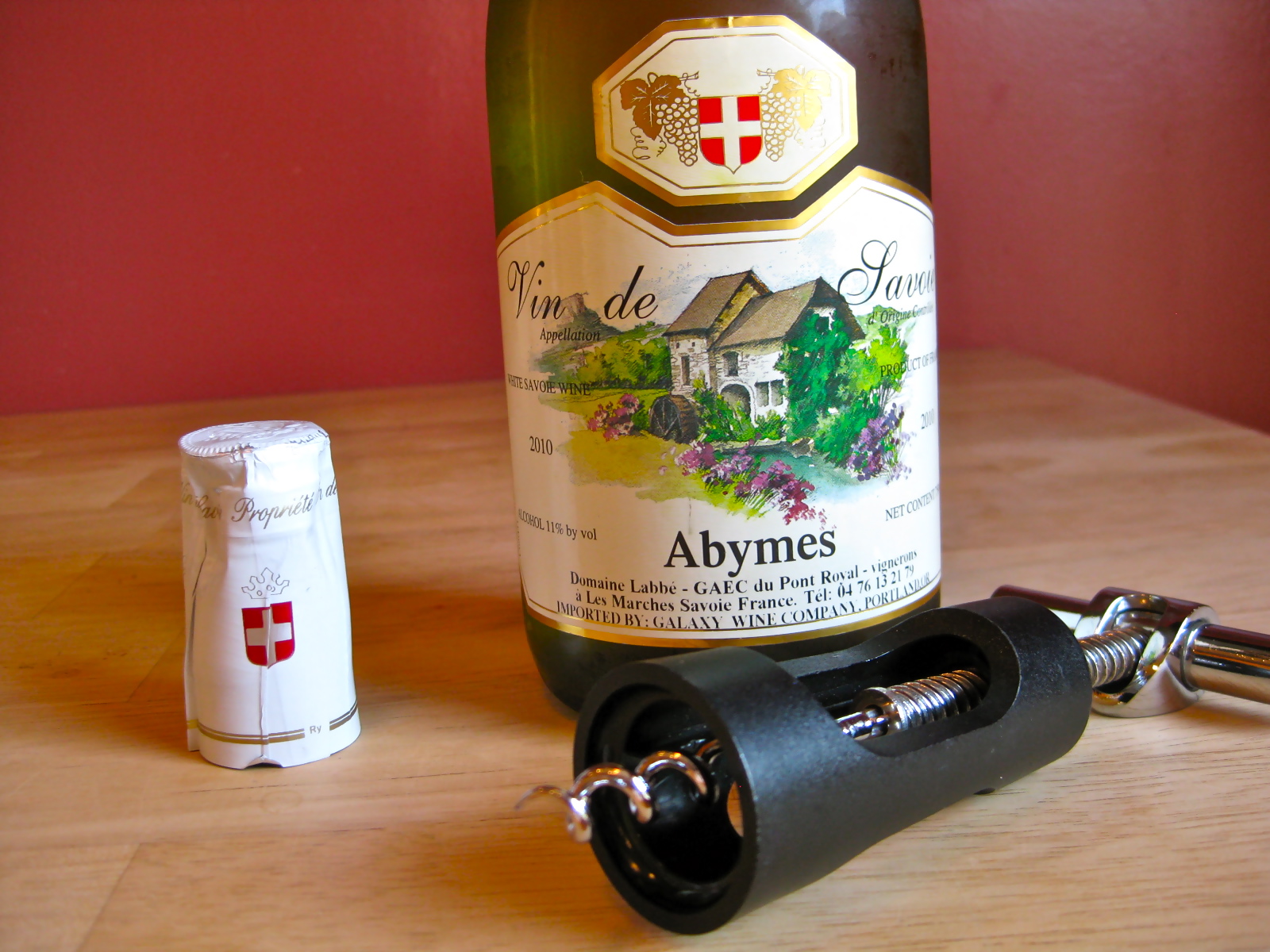
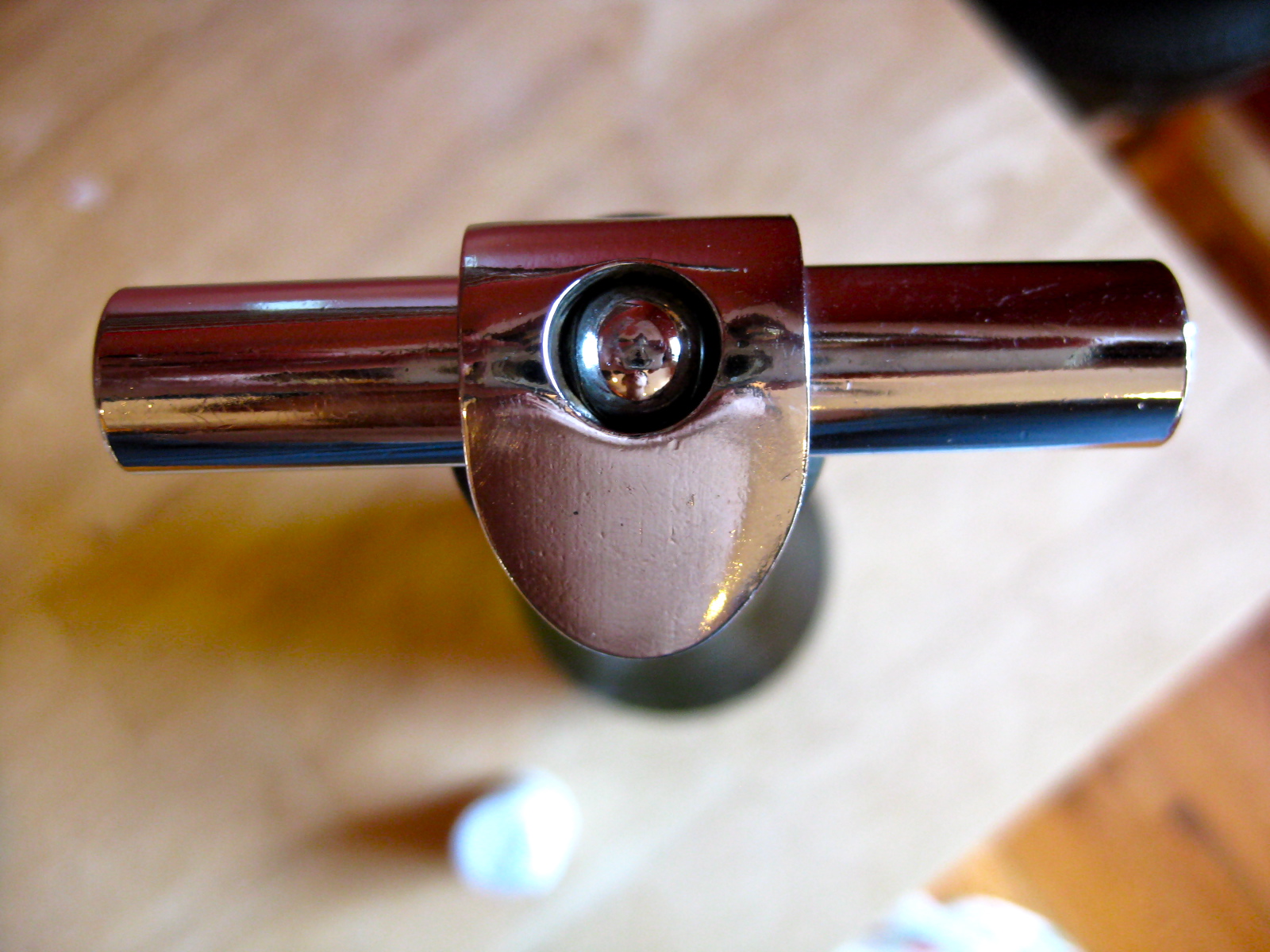
The corkscrew on the right is what I believe people refer to as a locking top wine opener.  It is the best wine opener I have ever used in my life, hands down.

But, wait.  Let me back up a bit.

During all the years I was using my $5 corkscrew pictured above on the left, I was constantly being given bigger, fancier corkscrews by people who thought that I was perhaps clinging to my simple corkscrew out of a sense of duty or frugality (it wasn’t broken, so why replace it?).  Every corkscrew I received, I then tried, and many of them I actually liked.  The problem was, every single one of them—and I really to mean every single one—broke within a few months, or perhaps even a full year, of use.  The one with the wings on the side that leveraged the cork out of the bottle?  Broke.  The ultra-fancy one that had two different handles, a lever, and came with its own display case?  Broke.  The one that came with a special foil cutter and had the unfortunate look of a tool one would find in a dentist’s office?  Both items broke.  So, it was back to me and my simple corkscrew that sometimes broke stuff and made my wine a little more textured than I desired.

And then one Christmas a few years ago, my husband and I were given this wine opener (perhaps by a relative?  I am guessing an uncle?  I don’t know.  My husband has a big family, and there are a lot of uncles floating around in there).

At first, not recognizing it as any wine opener I had ever used before, I resisted it.  It required too much fiddling and fussing, I complained, and it bore a strange resemblance to the vise in my dad’s workshop that used to pinch my fingers all the time when I was a kid (which was entirely my fault because I could never stop fiddling around with the lever on the vise, but whatever).  No, I declared, I will not be needing that, thank you.  But then time wore on, we moved, and I momentarily lost my old corkscrew.  With a bottle of wine waiting to be opened, the time had come.  I could not avoid it any longer.  I had to use the vise-looking corkscrew.

Here is how it is done.

You place the base of the opener over the cork:

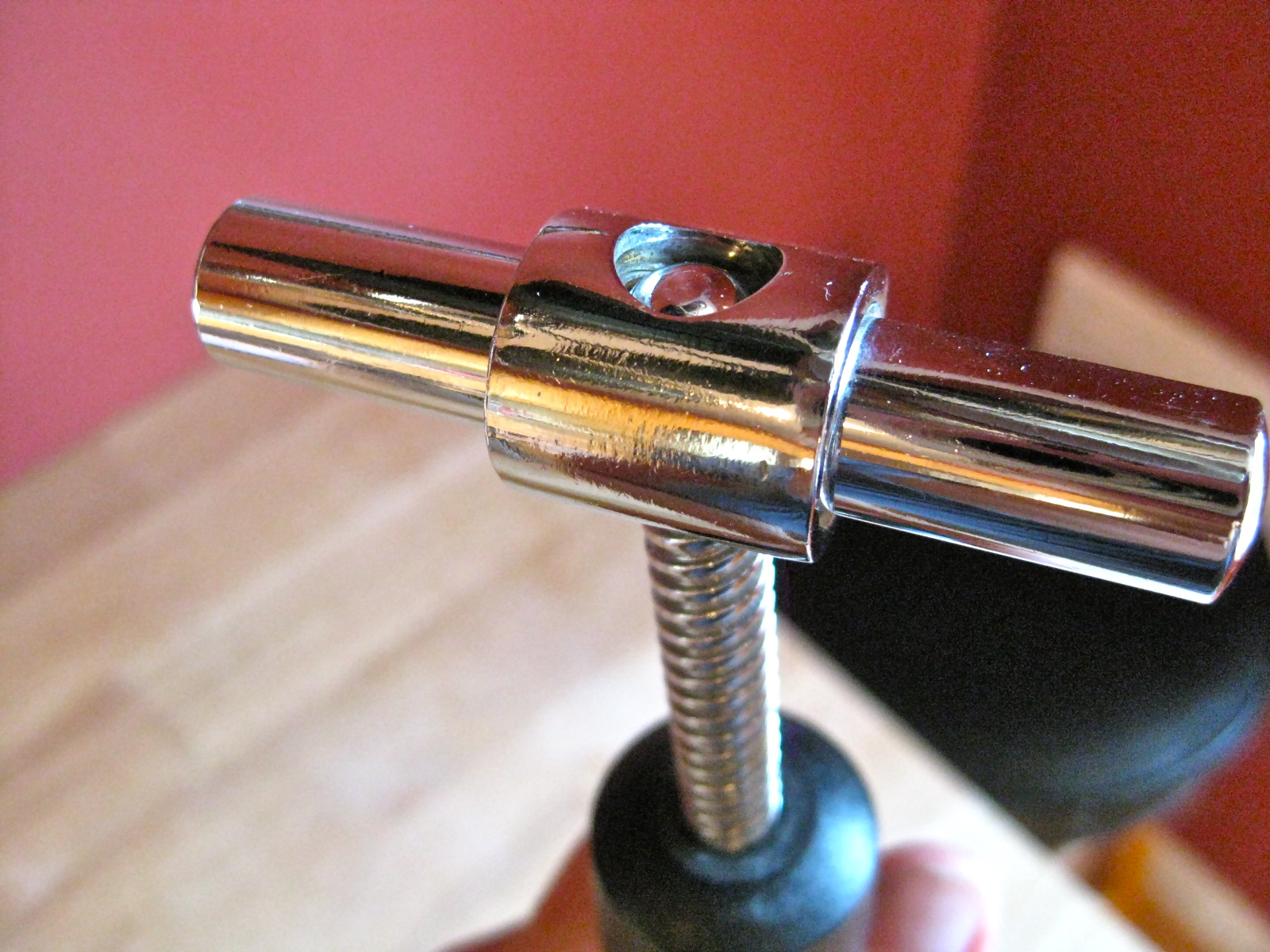
If the tab on top of the opener is positioned with the hole facing up,

you flip the tab about 90 degrees so the opening is facing the side and the solid portion is on top:

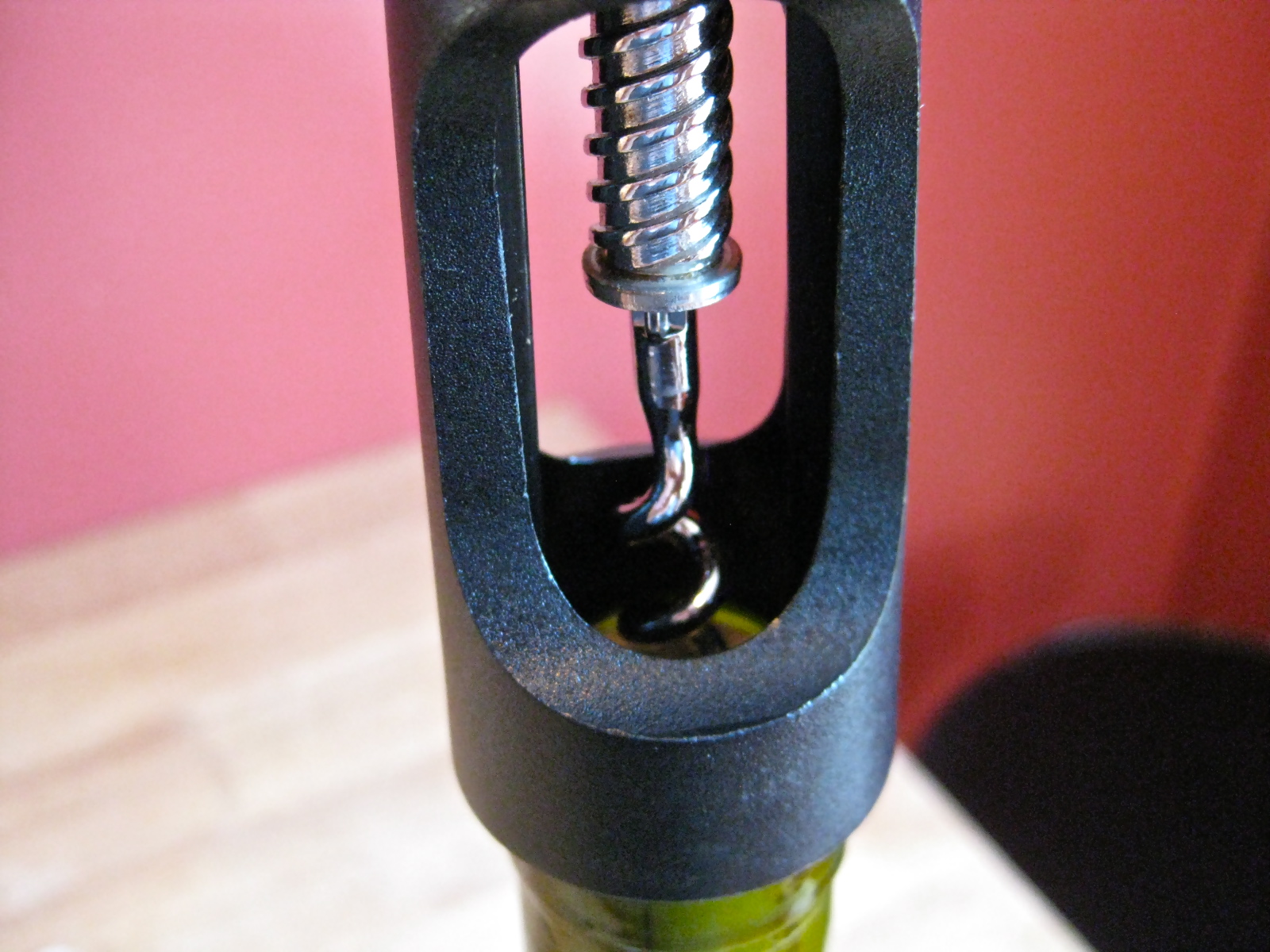
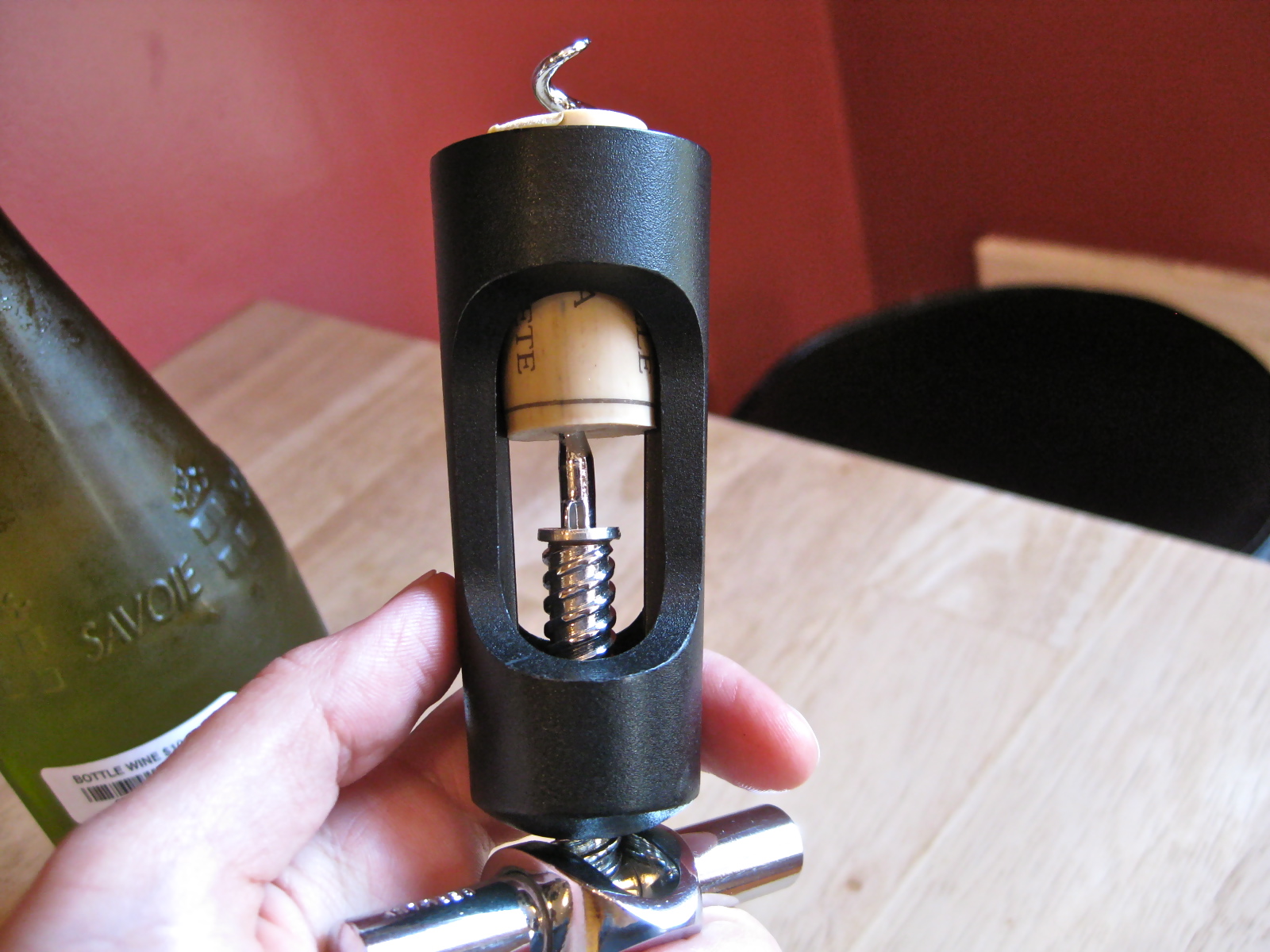
With one hand you hold the base of the opener on top of the bottle, and with the other hand you turn the handle of the opener in a clockwise direction.  This will force the corkscrew into the cork:

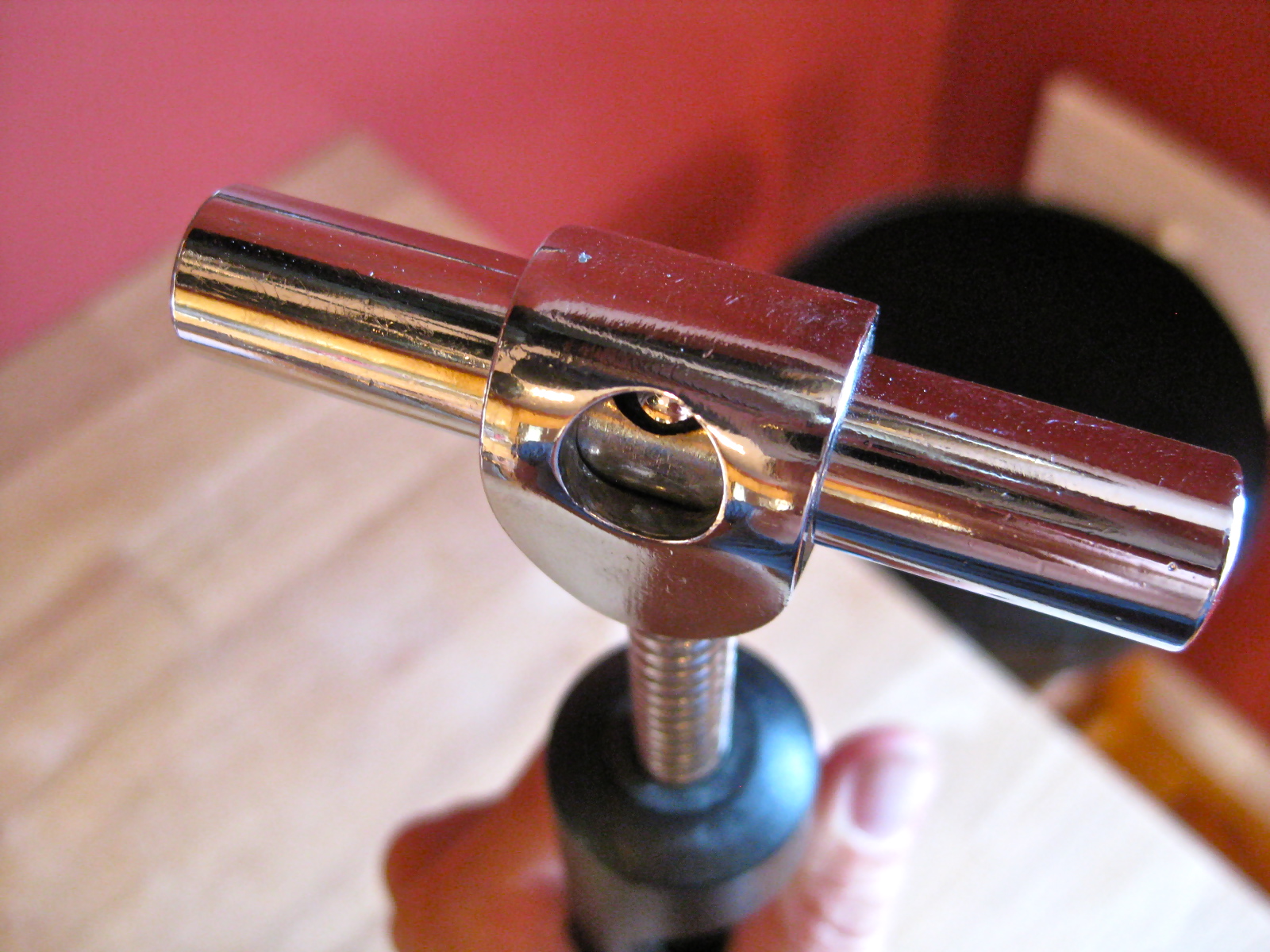
When the corkscrew has been driven all the way into the cork, the tab on top flips back over so the hole is now facing up:

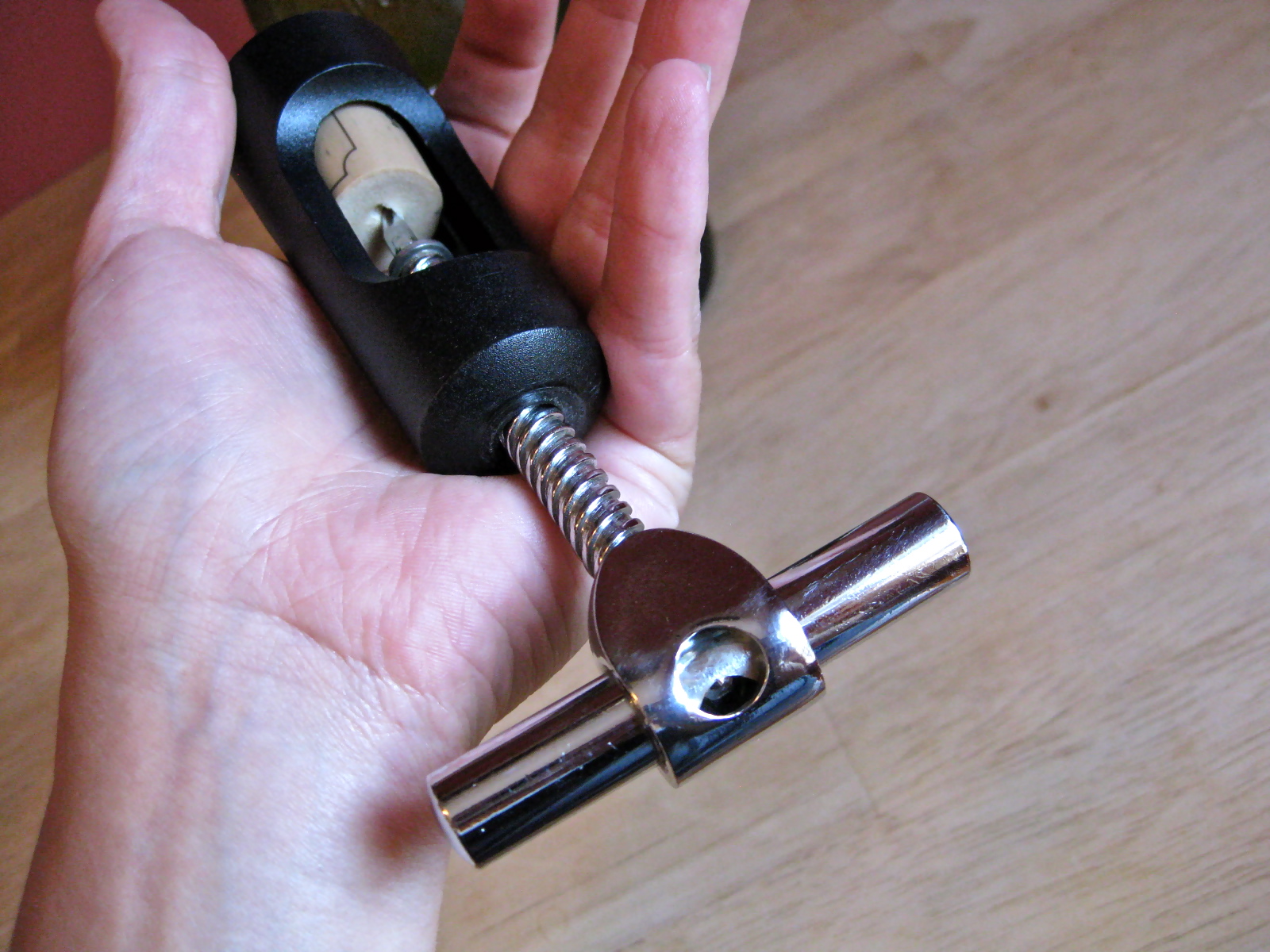
Then you just keep turning the handle clockwise and behold!

The opposite end of the corkscrew comes up through the hole in the tab,

freeing your cork from the bottle in the process:

To free the cork, flip the tab to the side once more, then turn the handle counterclockwise, unscrewing the cork:

This corkscrew works like magic every single time.  After the first time I used it, chastened, I swore my allegiance to it almost immediately.  I still keep the other corkscrew around (you know, for additional wine-opening emergencies), but for my general wine-opening duties, this corkscrew can’t be beat.

Now, here comes the sad part.  I have no idea where it came from.  I’d love to tell you where you can find your own magical wine opener, but when I tried to research places one could buy this type of wine opener, all I could find were collector guides to antique locking top wine openers from Europe.  (This, incidentally, evolved into a rather fascinating afternoon for me, as I came across page after page of great examples of vintage wine openers.  I highly recommend checking those out.)

So, if you are reading this, Uncles of My Husband, perhaps you might enlighten us as to where you procured such a fantastic wine opener?  Just in case I might someday feel the need to get a backup wine opener for my backup wine opener.  Because I am like that.