A Trio of Flavored Butters

14 Apr

What I am about to say may get me kicked out of every food-appreciation club in America, but here goes: I am not an enormous fan of butter.

Now, it’s really as cut and dry as that.  I do, of course, enjoy the way butter adds an unmistakable flavor to a recipe, and, obviously, you can’t bake (and enthusiastically devour) as many things as I do without a fine appreciation of butter, but the habit of positively slathering a biscuit, pancake, or slice of bread with enough butter to create the look of a frosted cake is not really my idea of maximum deliciousness.  While not in any way anti-butter, I so have fairly set standards for where my enjoyment of butter starts and stops.  A light slip of butter atop a slice of warm bread?  Yes.  A biscuit soaked through with a prodigious slick of dripping butterfat?  No.
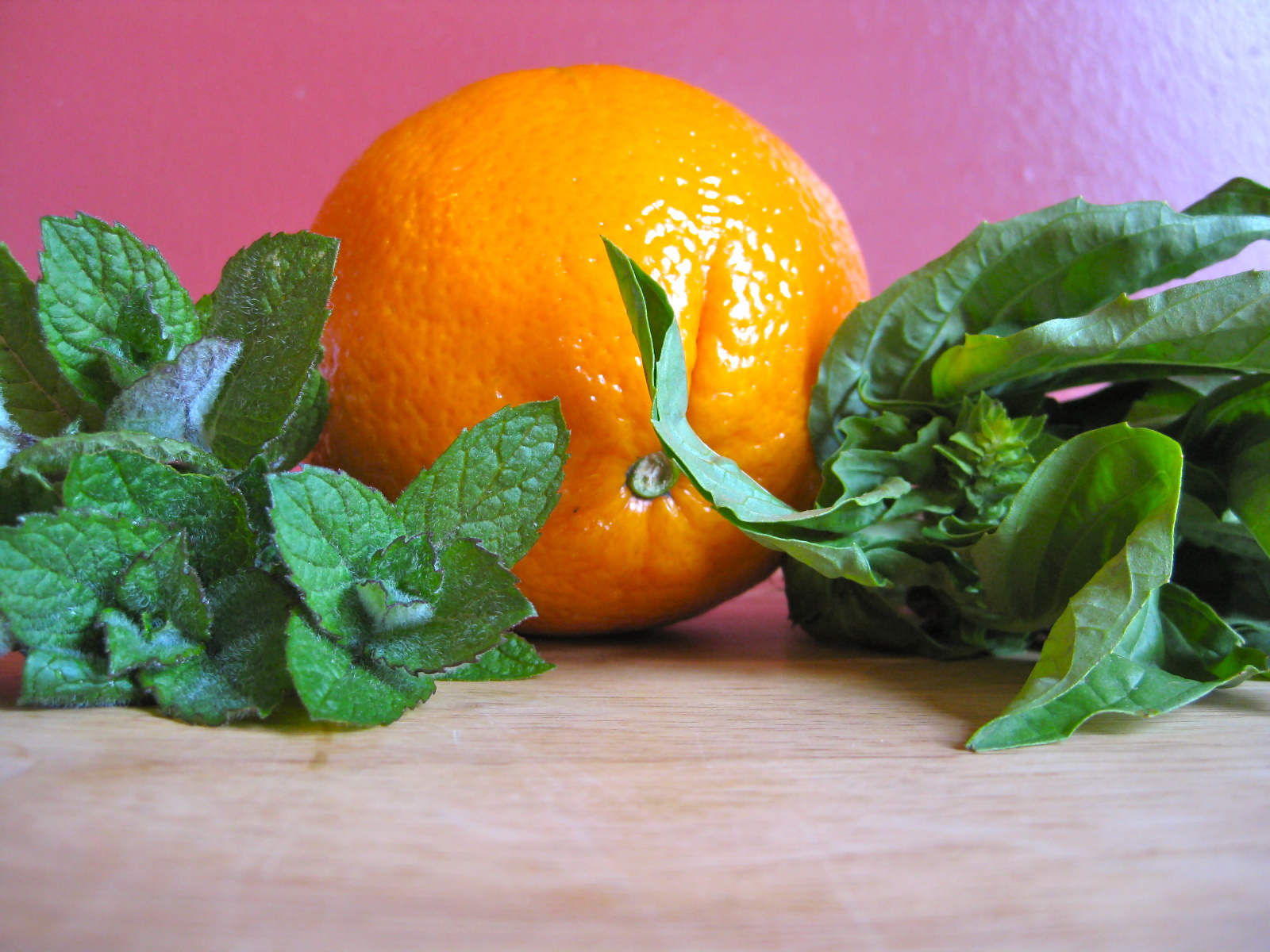
I am sure this proves some sort of fault with my tasting capabilities, and it no doubt points to some sort of loss of my ability to enjoy the most basic things about simple food and plain ingredients, but I am fine with that.  Why?  Because that possible weakness in my taste preferences leads me to do the type thing that I did yesterday afternoon, which was spend a very pleasant half an hour coming up with creative ways to flavor butter.  Just like that, my loss has become your gain.
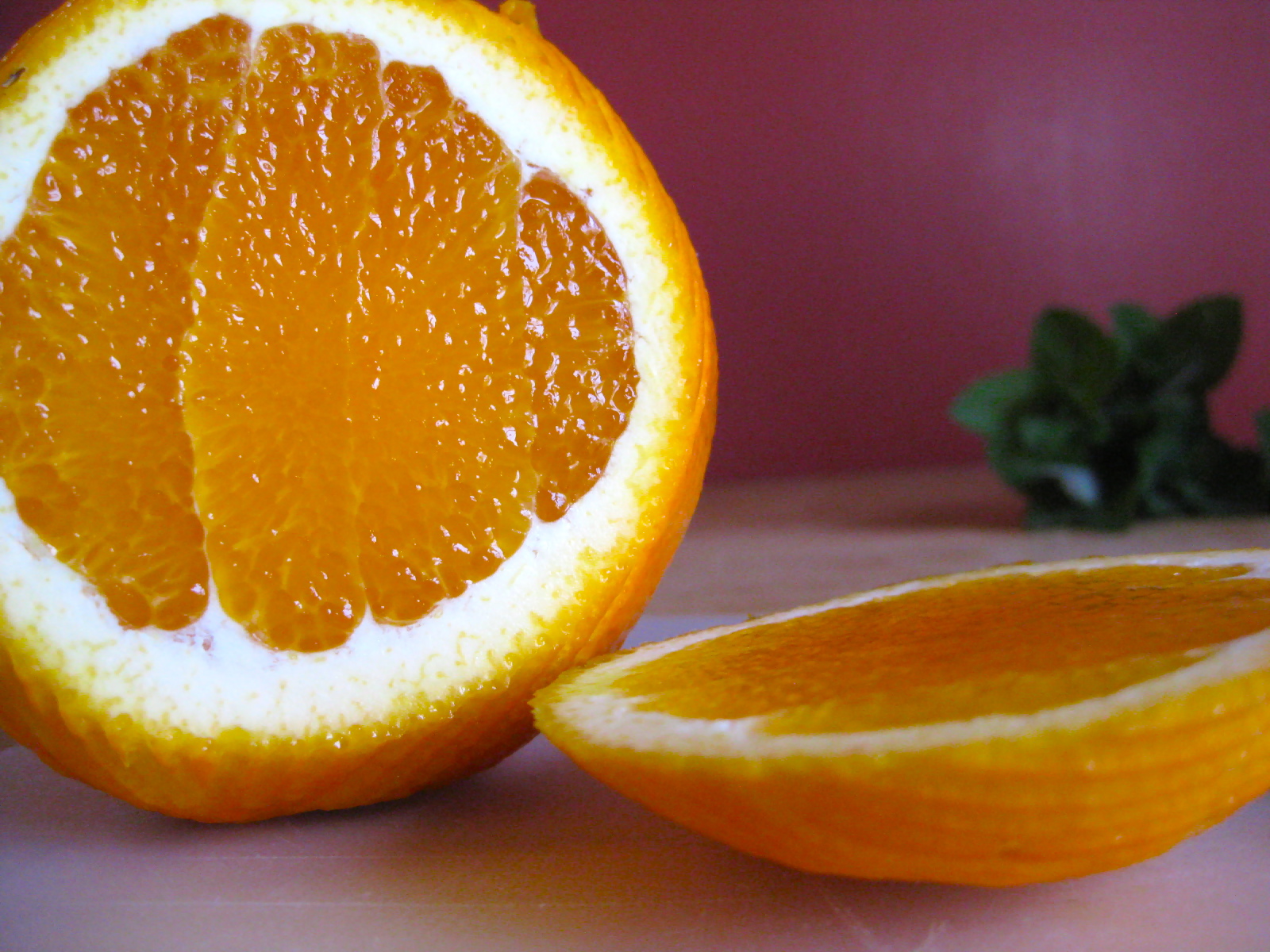
The idea here is to use each butter sparingly.  The subtle briskness of the mint, the fresh shot of citrus, the layered combination of the lemon and basil—these are all meant to coax your butter into something a bit more satisfying to the palette than what ordinary butter provides.  If you are not sure that anything in the world can ever top the simple pleasure of plain old butter, I certainly don’t disparage that opinion.  What I do suggest, however, is that you take a few minutes to at least make and try these wonderful flavored butters, as it might just change your opinion about what butter can do.
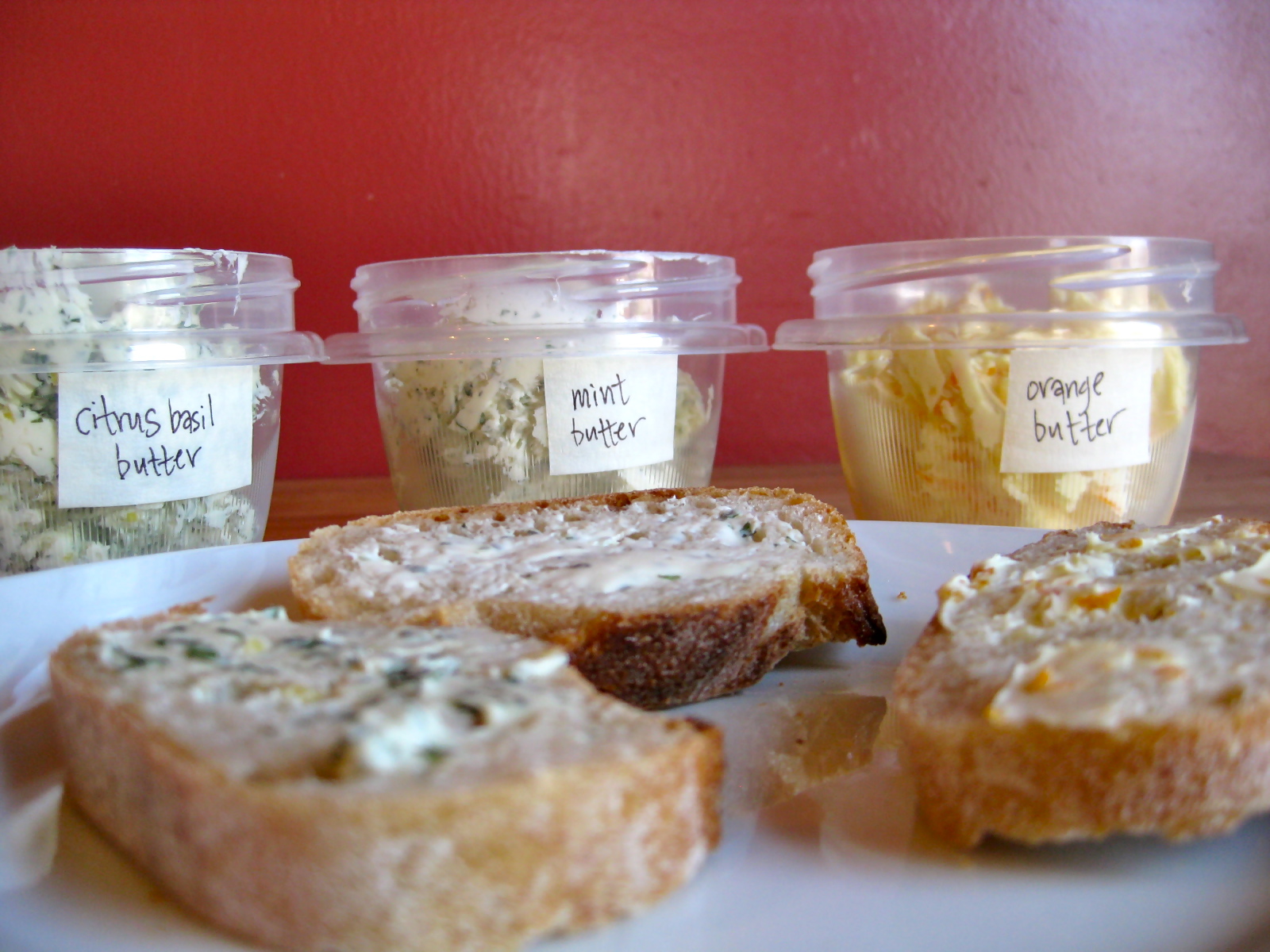
 

It certainly altered my opinion of the joys of butter, a turn of events that has, not surprisingly, managed to almost work against me.  Whereas I used to eschew butter on my bread 90% of the time (with the exception of fresh, hot bread newly released from the oven), I now find myself looking for reasons to spread these lovely flavored butters on everything I can.  If, previously, my loss was transformed into another’s gain, it seems as though my weakness has now become, well, my weakness.
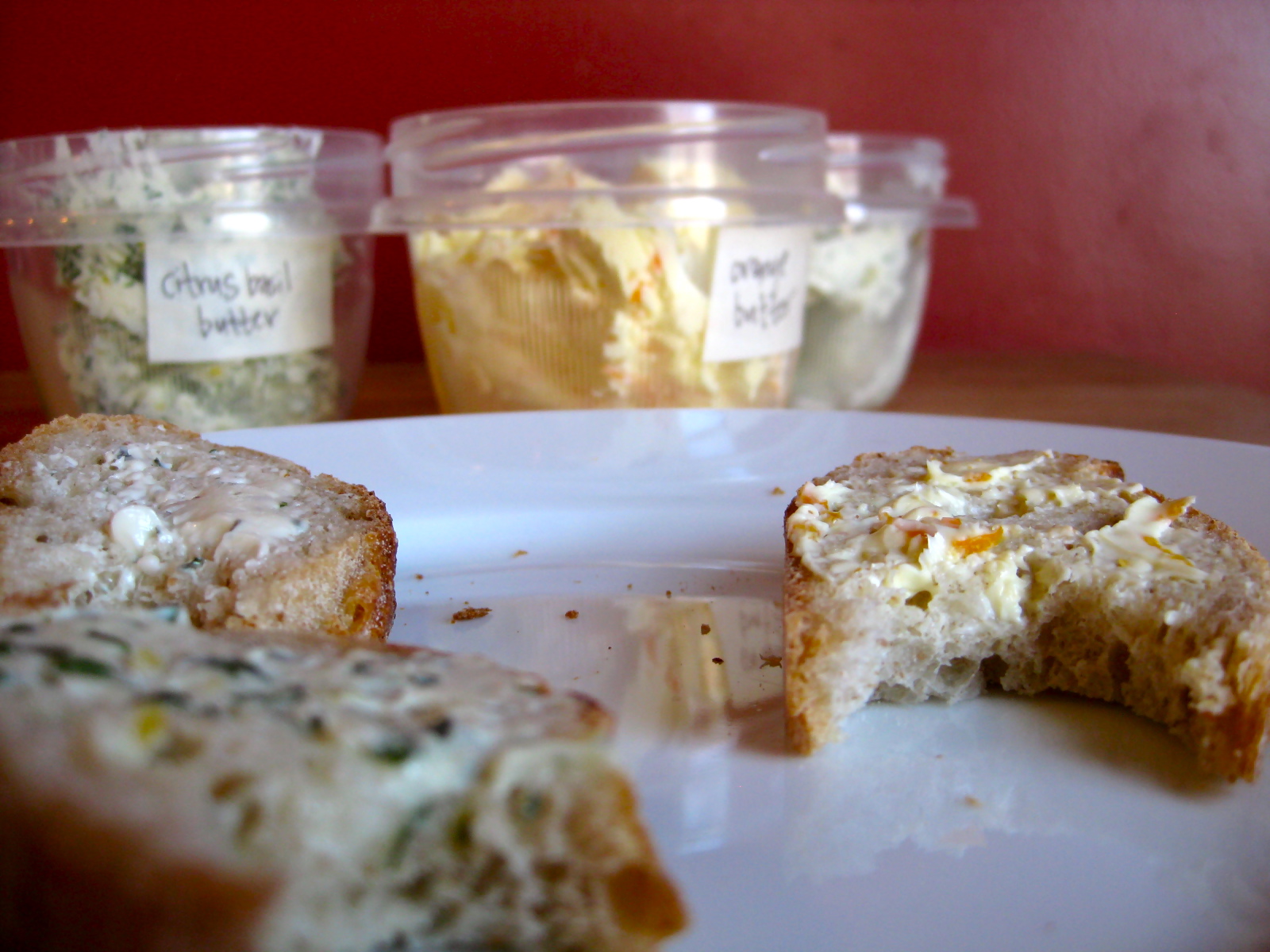
It would be a crime to relegate these butters as being toppings for just baked goods.  I have visions of any of these butters making for an absolutely dreamy combination when lightly dolloped on poached fish, steamed new potatoes, or roasted asparagus.  I plan to get right on those experiments, and I encourage you all to get in on it as well and let me know how it turns out.

Orange Butter

1/2 cup (1 stick) unsalted, softened, room temperature butter

2 heaping tablespoons finely grated or chopped orange zest

2 teaspoons freshly squeezed orange juice

pinch sea salt

Combine all ingredients in a small bowl.  Thoroughly combine by beating vigorously with a wooden spoon or sturdy spatula.  If you want your butter to have a lighter consistency, whip butter combination with an electric mixer until fluffy.

Mint Butter

1/2 cup (1 stick) unsalted, softened, room temperature butter

3 heaping tablespoons finely chopped fresh mint

small squeeze of lemon juice

pinch of sea salt

Combine all ingredients in a small bowl.  Thoroughly combine by beating vigorously with a wooden spoon or sturdy spatula.  If you want your butter to have a lighter consistency, whip butter combination with an electric mixer until fluffy.

Citrus Basil Butter

1/2 cup (1 stick) unsalted, softened, room temperature butter

1/4 cup finely chopped fresh basil

1/4 teaspoon finely grated or chopped lemon zest

small squeeze of lemon juice

pinch of sea salt

Combine all ingredients in a small bowl.  Thoroughly combine by beating vigorously with a wooden spoon or sturdy spatula.  If you want your butter to have a lighter consistency, whip butter combination with an electric mixer until fluffy.

Carrot Muffins

10 Apr

Sometimes I forget that just because someone likes something, it does not necessarily mean that that person wants to eat that thing.  Allow me to explain.  If one was to walk into our house, what one would discover almost immediately is that a certain member of the household is very, very interested in bunny rabbits.  There are bunny rabbit books, bunny rabbit toys, bunny rabbit decorations, and occasionally, bunny rabbits in custom made articles of clothing.

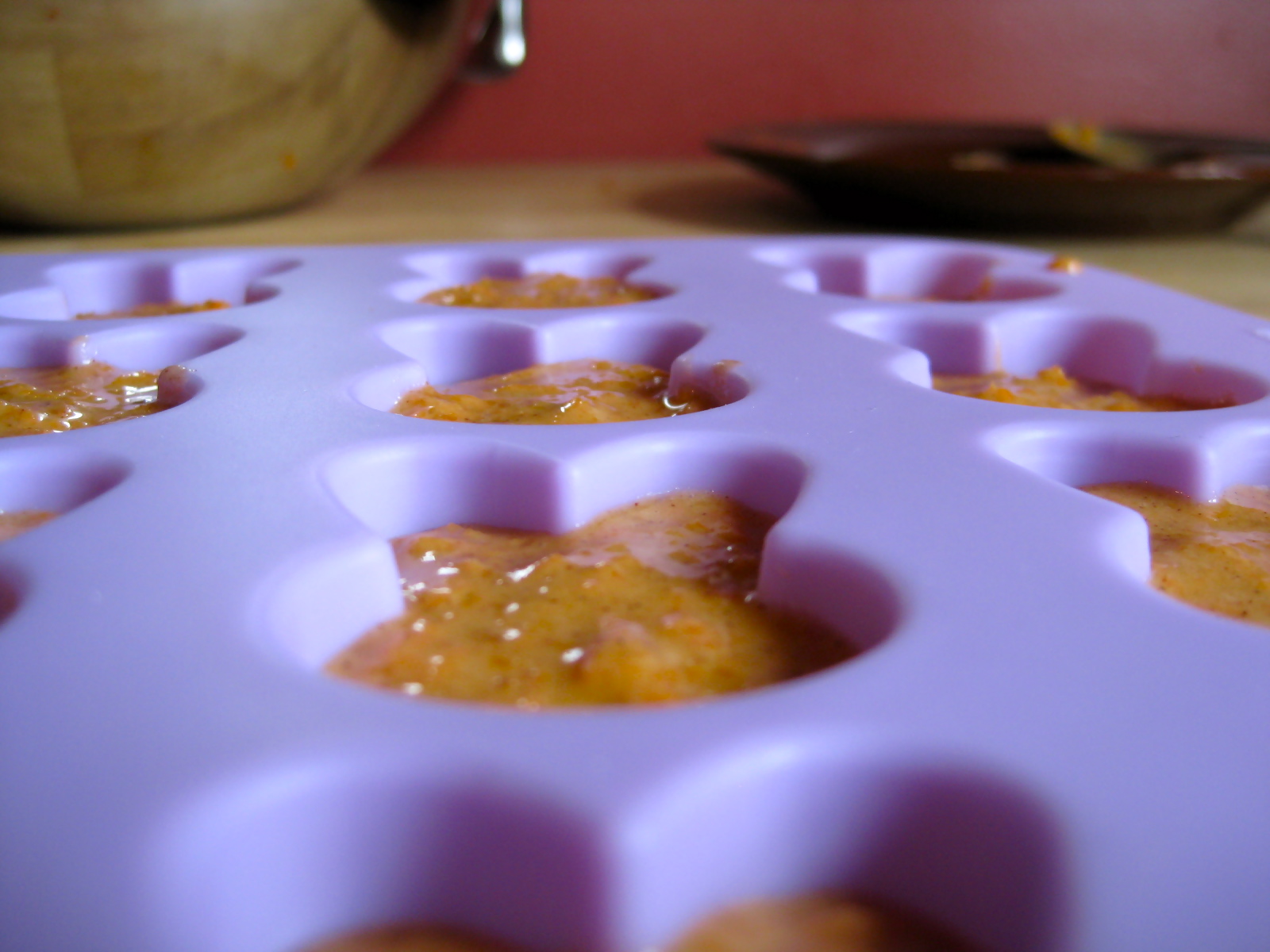
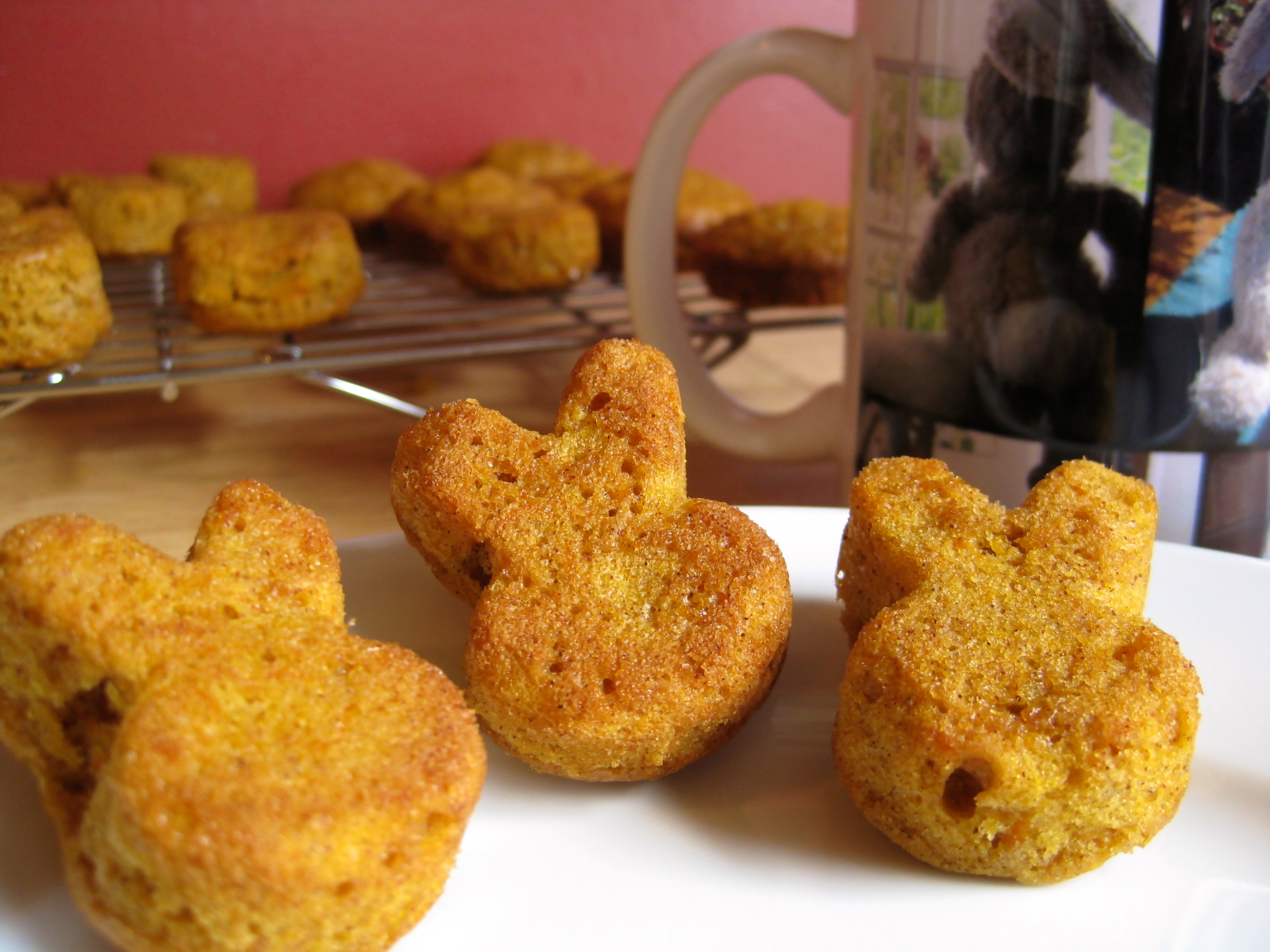
It was in the culinary interest of this bunny rabbit interest that I made the decision to purchase a 24 cavity silicone bunny rabbit baking mold.  Call it a moment of temporary insanity, or perhaps just an instance of intensely debated coercion, but the fact remains that I am now the proud owner of a baking mold in the shape of a small child’s most favorite animal.

Which is where my initial point comes into play.  After bringing home the bunny mold and wondering our loud what I might be able to do with it, it was brought to my attention (by the same party who lobbied so very heavily for the item’s purchase) that, no, it would not be all right to eat something shaped like a bunny, because, hello? That would mean that you were eating a bunny.   It was a thought that, though riddled with illogical assumptions, actually made a tiny bit of sense to me (when thought about from the perspective of a preschooler, that is, which means that most of your thinking will end up being sort of nonlinear and riddled with images from Richard Scarry books and The Country Bunny).

My only course of action at this point, if I wanted to get any use out of that pan, was to change the direction of the train of thought that equated bunny-shaped foods with bunny-cide.  In a moment of near genius (in the low-bar world of bargaining with a small child), I proposed that perhaps if a food made of something that bunnies like to eat themselves was prepared in the bunny pan, maybe that would, in effect, bring one closer to eating like a bunny rather than eating an actual bunny.

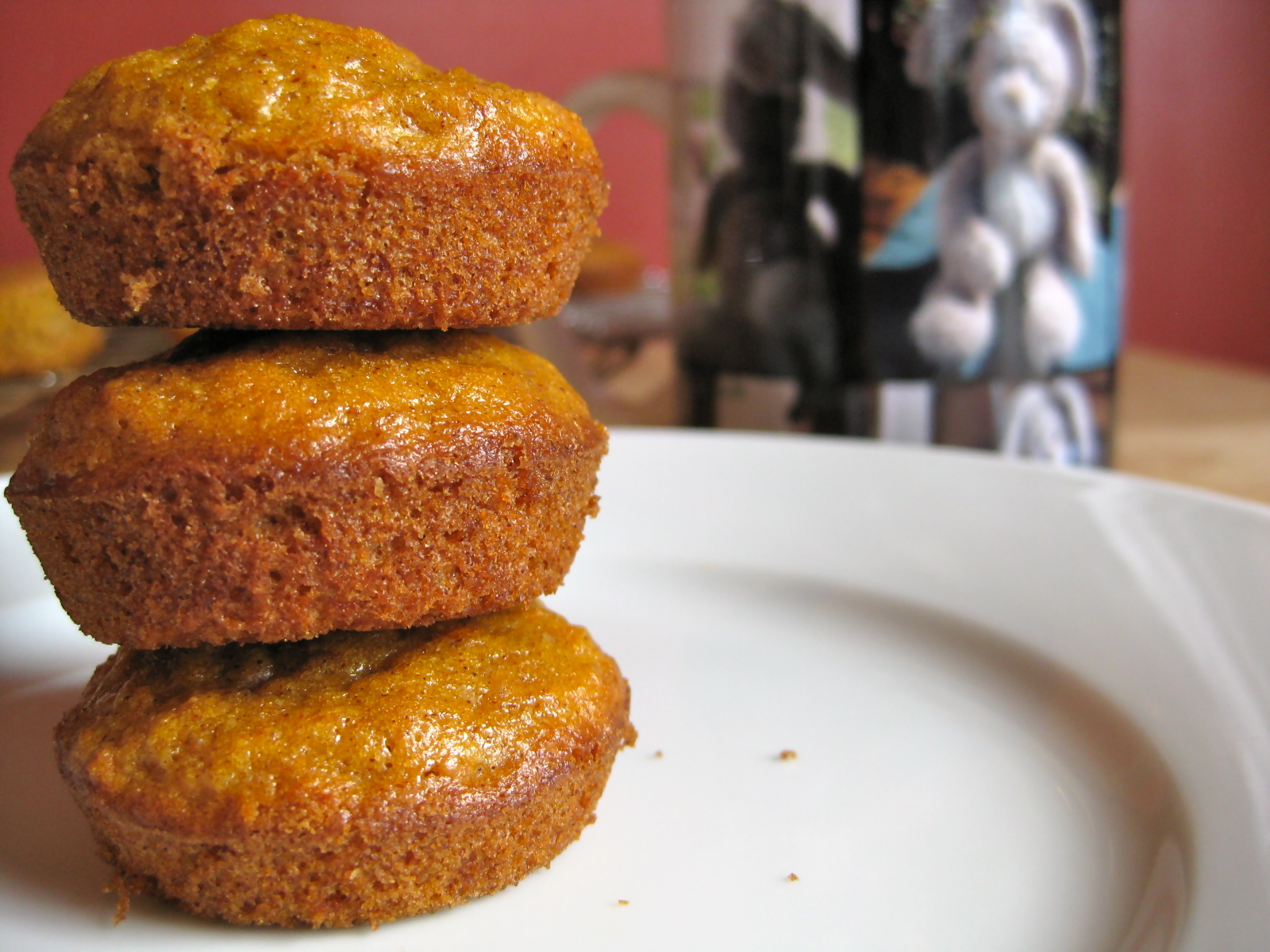
My some miracle, my tactic worked.  Thirty minutes later, my son and I were sitting down to feast upon some of the most sweet and savory muffins we’d ever had the pleasure of meeting.  My rescue was courtesy of Rose Levy Beranbaum, who not only makes the brilliant suggestion of using turbinado sugar in the recipe in lieu of regular sugar (which has the effect of taking the sweetness of the muffin to a place that is more caramelized, and less distractingly sweet), but also recommends that the baked item (which she bakes as a 9” x 5” loaf of bread) sit for 24 hours in order for the moisture to properly distribute throughout the entirety of the loaf.


Not one to argue with Ms. Beranbaum, but definitely interested in eating the carrot muffins before the dawn of a new day, I exercised my newly flexed muscles of rationalization and came to the conclusion that, baked as tiny little muffins, these carrot delights would be, at most, a mere 1 inch thick and 1.5 inches tall.  Using math skills only previously displayed by recipients of the Fields Medal, I thus determined that the muffins would only have to sit for a maximum of five minutes before they could be fully enjoyed at the height of their deliciousness.  A logical judgment in mathematics?  Probably not.  But an exercise in deliciousness?  Definitely.

Carrot Muffins

Adapted from The Bread Bible, by Rose Levy Beranbaum

As previously mentioned, Beranbaum developed this recipe to be baked as a single loaf of bread. I modified the recipe to fill 24 bunny-shaped cups (with a small amount of batter leftover to make 6 mini muffins), which resulted in cutting the recipe in half.  This left me with the unfortunate task of having to somehow halve 3 eggs, but I soon realized that by using 1 extra-large egg instead of using 1.5 large ones, a similar effect could be achieved. This is a long way of explaining why some of the measurements listed here seem a little peculiar.

Preheat oven to 350 degrees F.  Place an oven shelf on the lower-middle level.

If using a bunny-shaped mold, very lightly grease the insides of the bunny cavities (silicone isn’t supposed to stick, but the nature of the bunny ear shapes makes for some serious sticking with these very moist muffins).  There will be enough batter left over to make six mini muffins (lightly grease the mini muffin cups) or one smallish regular-sized muffin (use one paper muffin or cupcake liner). Alternately, you could just make 6 regular-sized muffins and call it good.

3/4 cup plus 2 teaspoons unbleached all-purpose flour

1 1/2 teaspoons baking powder

1/4 teaspoon baking soda

1/4 teaspoon salt

1 teaspoon cinnamon

1 extra-large egg

1/4 cup vegetable oil

1/2 cup sugar, preferably turbinado

1 3/4 cups finely grated carrots

In a medium bowl, whisk together the flour, baking powder, baking soda, salt, and cinnamon.

In a large bowl or a mixer bowl, using a wooden spoon or a hand-held or stand mixer (fitted with the paddle attachment) on low speed, mix together the egg, oil, and sugar for one minute or until blended. Add the flour mixture and continue stirring or beating on low speed just until incorporated, about 20 seconds.  Add the carrots and continue stirring or beating for another 10 seconds or so.

If baking bunny-shaped muffins, using a small spoon (I used a 1/2 teaspoon measuring spoon), drop enough batter in each cavity to fill it 2/3 to 3/4 full.  Utilize remaining batter as previously mentioned. If making 6 regular-sized muffins, evenly fill all 6 muffin cups.

Bake the muffins for 12-15 minutes if you are making mini and bunny shaped muffins.  Bake regular-sized muffins for 20-25 minutes

Roasted Poblano Johnnycakes

5 Apr

I grew up reading the Little House books, Laura Ingalls Wilder’s original nine volume set of semi-autobiographical books about pioneer life.  As a harbinger of interests to come, one of the things I remember most enjoying about the books was Laura’s descriptions of the foods she and her family ate.  When times were good and they had a home with four walls, a well-tended garden, and tidy fields of wheat and corn crops, her family ate fresh garden vegetables and fresh homemade cottage cheese.  When times were rough and months were spent living in a covered wagon or outliving seven straight months of blizzards, they ate bread, potatoes, and, if they were lucky, whatever wild game they could shoot.  Every single thing they ate was cooked in cast iron or baked within an open fire.

Recently my husband and I started reading the Little House books to our preschool-aged son.  In addition to the occasional on-the-fly edit in order to omit the rather blunt and one-sided talk about the local Native American tribes (the original inhabitants of the land on which Laura’s family was settling), we have spent a great deal of time discussing the different types of food that Laura and her family ate.  (We also spent a great deal of time talking about food when we read Farmer Boy, since a substantial portion of that book is spent discussing the mountains of food that Laura’s husband Almanzo ate when he was a boy—every meal seemed to be presented as an exercise in competitive calorie intake, no doubt as a result of their twelve hours a day of hard manual labor on a farm.)  Much of the food of the era, as well as the manner in which people got that food, is not only unfamiliar to a city-dwelling boy of 4.5 years of age, it’s also nearly unimaginable.  What’s a prairie hen?  What is salt pork?  And did you really just say that Pa shot a bunny rabbit so the family could roast it for Christmas dinner?

Perhaps in an effort to distract our son from the fact that Laura’s Pa could frequently be found shooting and skinning what is regarded, to some people in this house, as being the world’s greatest animal, I decided that we should focus our attention on a pioneer-era food that was less fraught with peril and woe.  That is, in essence, the long story of how I came to make johnnycakes.

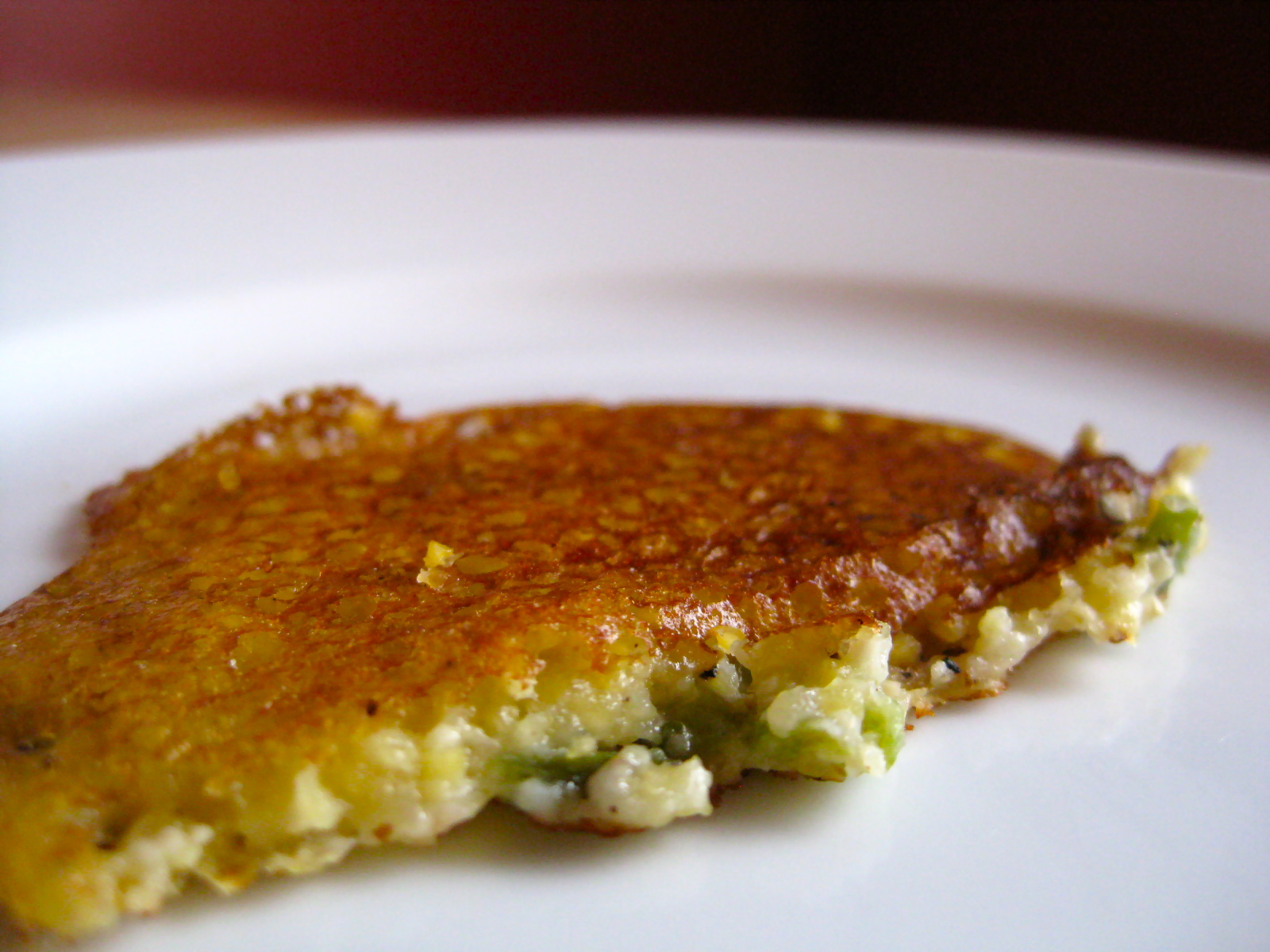
As luck would have it, one of my favorite breakfast food bibles, James McNair’s Breakfast, happened to have, smack dab in the center of the book, a simple recipe for Johnnycakes.  A quick perusal of the ingredients led me to some automatic adjustments, namely the immediate realization that these crispy corn cakes were just begging to be paired up with something mildly spicy and smooth to counter the sweetness and crunchiness.  One roasted poblano pepper later, I had exactly what I had imagined.

When paired with a soft fried egg and an additional sprinkle of chopped roasted poblanos, you’ve got yourself one special meal, suitable for breakfast, lunch, or dinner.  Though not entirely traditional in the pioneer sense, I’d like to think that, were the times good and the livestock thriving, it might even possibly be considered Laura-approved.

Roasted Poblano Johnnycakes

Partially adapted from James McNair’s Breakfast

1 medium-sized poblano pepper

1 cup white flint or other stone-ground cornmeal

1/2 teaspoon salt

3/4 cup boiling water

2 tablespoons unsalted butter, melted

1 teaspoon sugar

1/4 cup milk

Set your oven’s broiler to high heat and place an oven rack on the highest shelf, nearest the heat of the broiler.  Set the poblano pepper on a heavy baking sheet, then place directly under the broiler.  Let the skin of the pepper blister, darken, and flake.  Turn pepper several times, allowing its skin to blister and flake on all sides.  When pepper’s skin has been uniformly darkened, remove pepper from oven and set on a plate, cover with aluminum foil, and allow pepper to cool to the touch and the skin to become loose.  When pepper has cooled slightly, remove the skin.  Remove and discard stem and seeds.  Roughly chop roasted pepper and set aside 1/4 cup to add to the johnny cake batter.

In a bowl, combine the cornmeal and the salt, then gradually add the boiling water, whisking to prevent lumps and integrate cornmeal and water.  Stir in the melted butter, sugar, and milk.  Stir in 1/4 cup chopped roasted poblano pepper.

Meanwhile, heat a griddle or a large, heavy skillet over medium-high heat, then generously brush with melted butter.

Spoon the batter, about a heaping tablespoon for each cake, onto the cooking surface.  Cook turning once, until crisp and golden on both sides.  Serve hot.  If desired, top with a soft fried egg and an additional sprinkling of chopped roasted poblano pepper.