Homemade Fudge Pops

25 Apr

IMG_8861

IMG_8837

IMG_8838

IMG_8841

IMG_8845

IMG_8846

IMG_8847

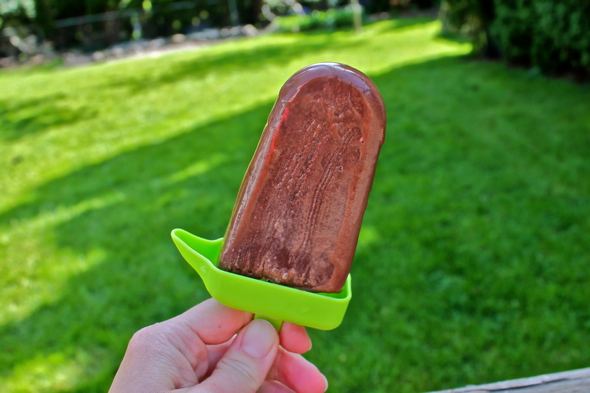
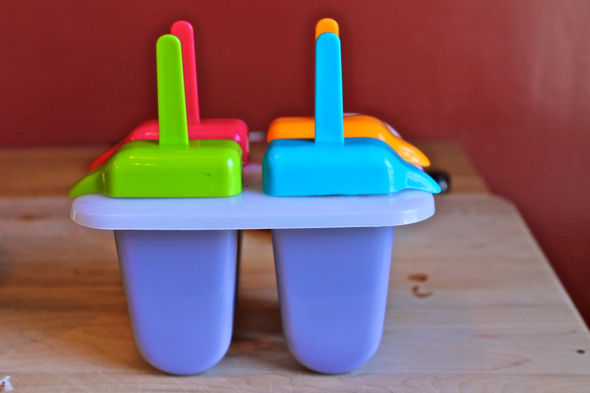
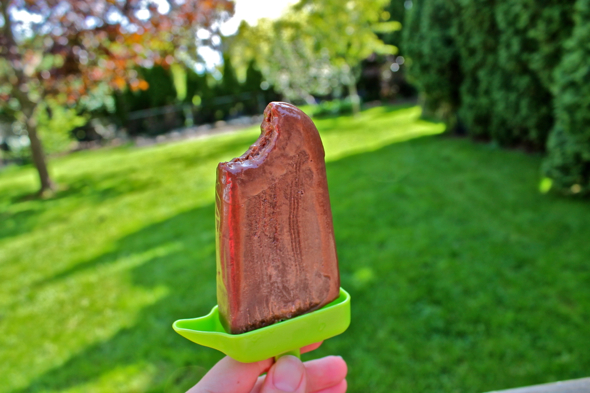
A fudge popsicle (or fudgesicle) is a closer relative to ice cream than proper fudge, and lord knows there is pretty much no situation during which I would turn down an offer to eat some ice cream. These fudge pops offer a nice in between, for those of you who are fans of both ice cream and simpler popsicles. While not as rich as chocolate ice cream, there is certainly more going on here than what one finds in a standard popsicle. Creamy and rich, yet also light and refreshing, I think I have found my new favorite warm weather treat.
IMG_8864

Last Year: Two of my favorites, Lemon, Almond, and Cornmeal Cake and How to Make Homemade Crunchy Herb and Chèvre Croutons

Homemade Fudge Pops (Fudgesicles)

Adapted from On a Stick, by Matt Armendariz

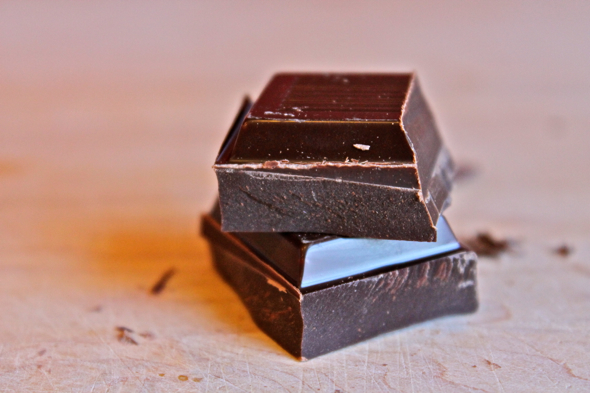
Using the best semi-sweet dark chocolate you can find definitely makes a difference (I used 54% Belgian chocolate with a nice smoky aftertaste).

2 tablespoons (3/4 ounce) chopped semi-sweet dark chocolate

1/3 cup granulated sugar

1 tablespoon cornstarch

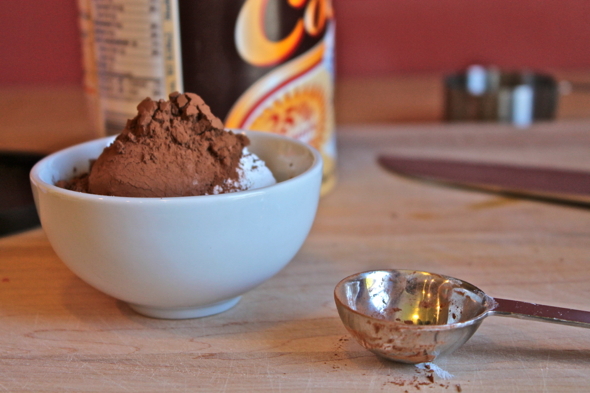
1 1/2 tablespoons unsweetened Dutch processed cocoa powder

1 1/4 cups milk
(I used 1%, and I suspect that a heavier fat milk, or even a mix of milk and heavy cream, would be great here as well)

pinch of salt

1/2 teaspoon pure vanilla extract

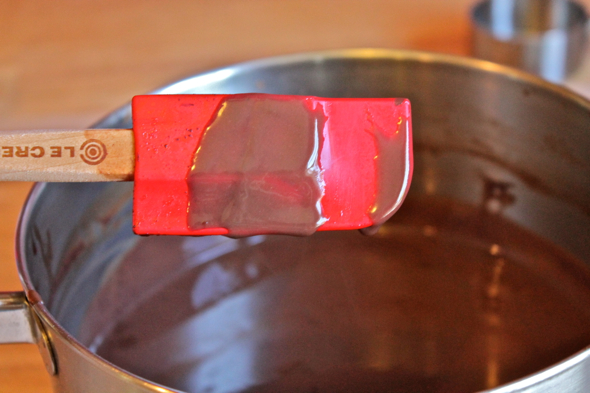
In a medium saucepan set over very low heat, gently melt the chopped chocolate, stirring constantly until smooth. Stir in sugar, cornstarch, cocoa powder, milk and salt. Increase heat to medium and cook, stirring frequently, until the mixture thickens and coats the back of a spoon or spatula (my mixture took about 5 minutes to thicken up nicely).

Remove from heat, add vanilla, and stir gently until combined.

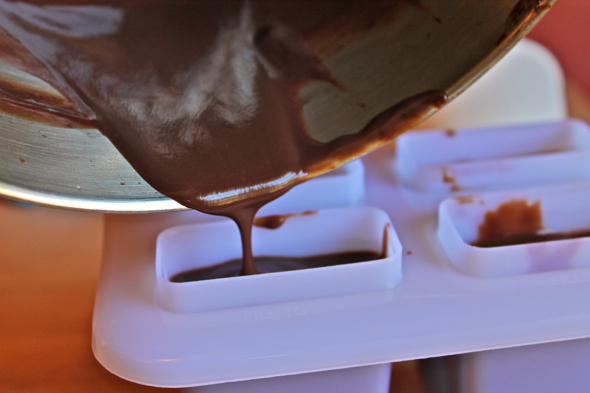
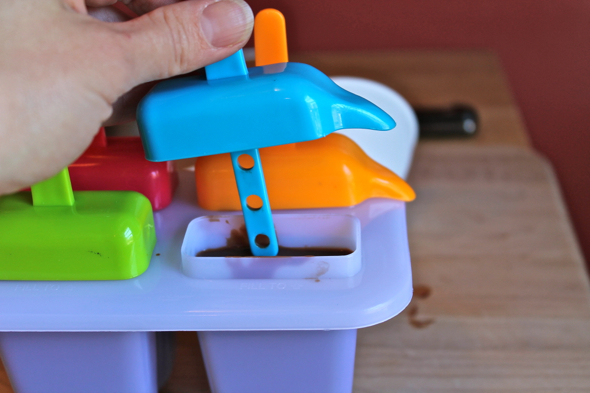
Set aside to cool slightly (the mixture will thicken even more as it cools) then pour into popsicle molds of your choosing. Freeze for at least 8 hours, but preferably overnight in order to obtain the best texture.

Note: After a bit of trial and error, I have found that the best way to release these things from their molds is to run the popsicle molds under a bit of warm water, then gently wiggle the fudge pops free. Trying to pull them out without first warming the molds will result in you most likely just yanking the handles free from the fudge pops themselves, which is just sad.

Coconut Cake with Orange Cream Frosting

18 Apr

IMG_8583

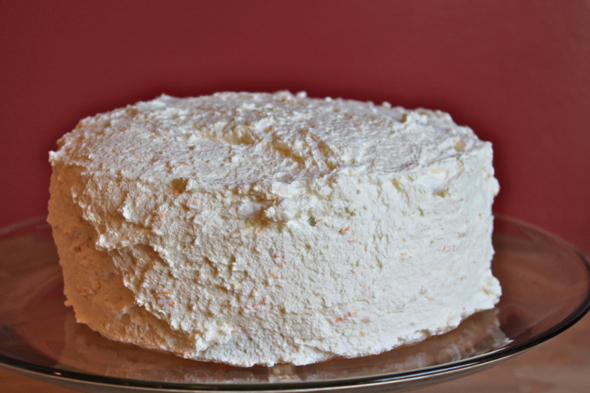
It is with very little fanfare that I present this delicious cake to you without any accompanying photos, sans the one you see above. You see, I did not initially plan on sharing this cake with you all. This was a cake made for a birthday, and I went about creating it with simply the desires of the birthday person in mind, and not the requirements of a certain food-based website in mind. I baked it like I used to bake everything: without a camera at the ready.

And yet, please believe me when I tell you that this cake, this burst of coconut delight and citrusy cream, is one of the best cakes I have ever made. The yogurt and extra egg whites in the cake make for an especially light crumb, and the surrounding cloak of orange zest infused whipped cream provides the perfect amount of decadence without any element of heaviness. It’s what I always tend to think of as a grown up cake, meaning, the type of cake that a child would reject in a second (and, in this case, most did), but an adult would welcome with open arms (and open mouth). No matter, of course. Whatever the kids don’t eat, that just leaves more for the rest of us.

Last Year: Honey Cream, Strawberry, and Chocolate Pizza and Vegetable Pakoras

Coconut Cake with Orange Cream Frosting

Coconut Cake

2 ¼ cups sifted cake flour

1 teaspoon baking powder

½ teaspoon baking soda

½ teaspoon salt

5 tablespoons unsalted butter, at room temperature

2/3 cup granulated sugar

1 large egg

2 large egg whites

1 teaspoon pure vanilla extract

½ cup plain nonfat yogurt

½ cup unsweetened coconut milk

½ cup unsweetened shredded coconut

Orange Cream Frosting

2 cups heavy whipping cream

1 teaspoon powdered sugar

¼ teaspoon pure vanilla extract

finely grated zest of 1 large orange

Preheat oven to 350 degrees Fahrenheit. Grease and flour two 8-inch round cake pans, then line the bottoms of the pans with rounds of parchment paper.

In a medium bowl, sift together flour, baking powder, baking soda, and salt. Set aside.

In a large bowl, or in the bowl of stand mixer, beat the butter until creamy, about 60 seconds. Slowly add the sugar, and beat together until light and fluffy, about 3 minutes. One at a time, add the egg, then the egg whites, beating about 15 seconds in between each addition. Scrape down the sides of the bowl if things resist mixing together. Beat in the vanilla.

With the mixer on low, beat in 1/3 of the flour mixture, then beat in the yogurt. Scrape down the sides of the bowl, then beat in half of the remaining flour mixture, followed by the coconut milk. Add in the last of the flour mixture, then mix until just combined. Beat in the coconut until just incorporated, about 10 seconds. You don’t want to overmix the cake batter, so use a gentle hand with all the incorporating of the ingredients.

Divide the batter evenly between the two prepared pans. Bake in the center of the oven for 22 to 30 minutes, rotating the pans halfway through baking.The cakes will be done when a toothpick or cake tester inserted into the center of a cake emerges somewhat clean, with just a crumb or two attached.

Allow the cakes to cool in the pans for 10 minutes, then invert the cakes onto a wire rack to continue cooling completely.

To make the frosting, in a stand mixer, or using an electric mixer, beat the cream on high speed until it just begins to thicken. Drizzle in the powdered sugar, then vanilla, and continue to beat until the cream forms soft peaks. Add in the orange zest, and beat in until just combined. You can beat the cream until it forms firm peaks, as I did here, if you will need the cake to sit for a bit before eating it. However, if you will be eating the cake right away, and the cream will not be in danger of weeping, I’d go for light and soft peaks in the whipped cream.

When the cakes have cooled completely, frost with orange cream frosting as you would any other two-layer cake.

Homemade Granola Bars

11 Apr

IMG_8761

If I were to tell you straight off the bat that these granola bars were made of whole grains, dried fruit, healthy nuts, and no added sugar or sweeteners, you would probably roll your eyes at me and then refuse a taste of what could only be an exercise of virtuous, boring, tasteless snacking. This would be a mistake, of course, because refusing a taste of one of these delicious granola bars is akin to refusing yourself a…well, a taste of a delicious granola bar. A really, really delicious granola bar.

IMG_8747

IMG_8748

IMG_8752

IMG_8756

IMG_8759

Sweetened with pulverized dates and a hit of fresh, unfiltered apple cider (which is merely unfiltered apple juice, for all you Europeans out there), there is nary an extra sweetener included in these fellows. What is included in these granola bars, however, is a whole lot of stuff that is very good for you, and also has the added benefit of tasting good. It’s not all that often that you can find a place where those two distinctions overlap. Take advantage of that knowledge and put these to work right away.

IMG_8764

Another take on homemade granola bars (although a thicker, sweeter, heartier option) can be found here

Last Year: Cider-Braised Greens and Roasted Fingerling Sweet Potatoes with Lemon Tarragon Aioli

Homemade Granola Bars

2 cups oats (not quick-cooking oats)

½ teaspoon ground cinnamon

½ teaspoon sea salt

1 cup roughly chopped nuts or seeds of your choice (I used almonds, pepitas, and sunflower seeds)

½ cup dried fruit of your choice, roughly chopped to be of similar size to the nuts (I used chopped dried apricots, but raisins, dried cherries, or dried blueberries would also be good)

1 cup pitted whole dates (plain, with no added sugar)

¼ cup unfiltered apple cider (also called unfiltered apple juice)

1/3 cup almond butter

1 tsp pure vanilla extract

2 tablespoons vegetable oil

Preheat oven to 350 degrees Fahrenheit. Line a 9” by 13” baking pan with a sling of parchment paper, then slightly spray or brush the pan and paper with vegetable oil.

In a large bowl, combine the oats, cinnamon, sea salt, nuts, and dried fruit. Toss to combine.

In the bowl of a food processor or blender, combine the pitted dates and apple cider. Pulse until the mixture forms a thick paste, with some visible chunks of date still remaining.

In a medium bowl, combine date and cider mixture with almond butter, vanilla, and vegetable oil, then whisk to combine. Pour wet mixture over oat mixture. Using a spatula or wooden spoon, stir the ingredients together until they are thoroughly combined.

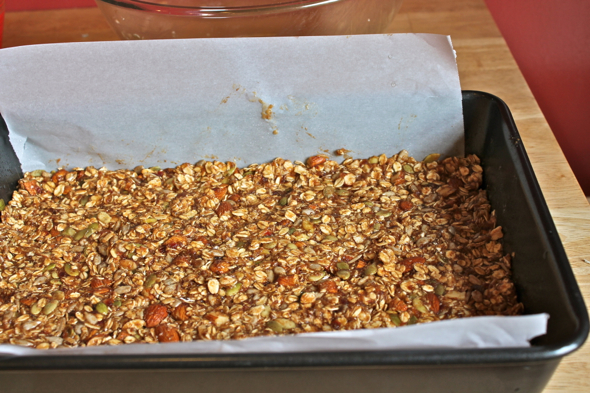
Pour the mixture into the prepared pan. Wet your hands, then pat the mixture into the pan, pressing it down into the edges and corners. The mixture will really, really want to stick to your hands, so keep rewetting your hands as necessary until you’ve flattened the mixture completely into the pan.

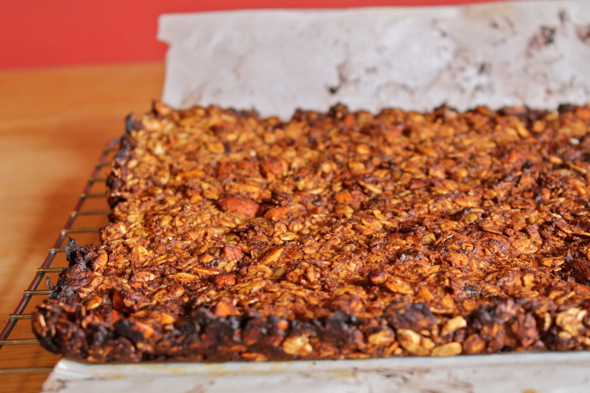
Bake in the center of the oven for 20 to 25 minutes, until the edges are golden brown. I baked the batch pictured above for far too long, so it is overly darkened at the edges. Don’t make the same mistake.

Allow the bars to cool for at least an hour before attempting to cut them. Cutting with a large serrated knife (like a bread knife) works best for these. The granola bars will keep in an airtight container at room temperature for about a week, but they will keep indefinitely if kept in an airtight container in the freezer.