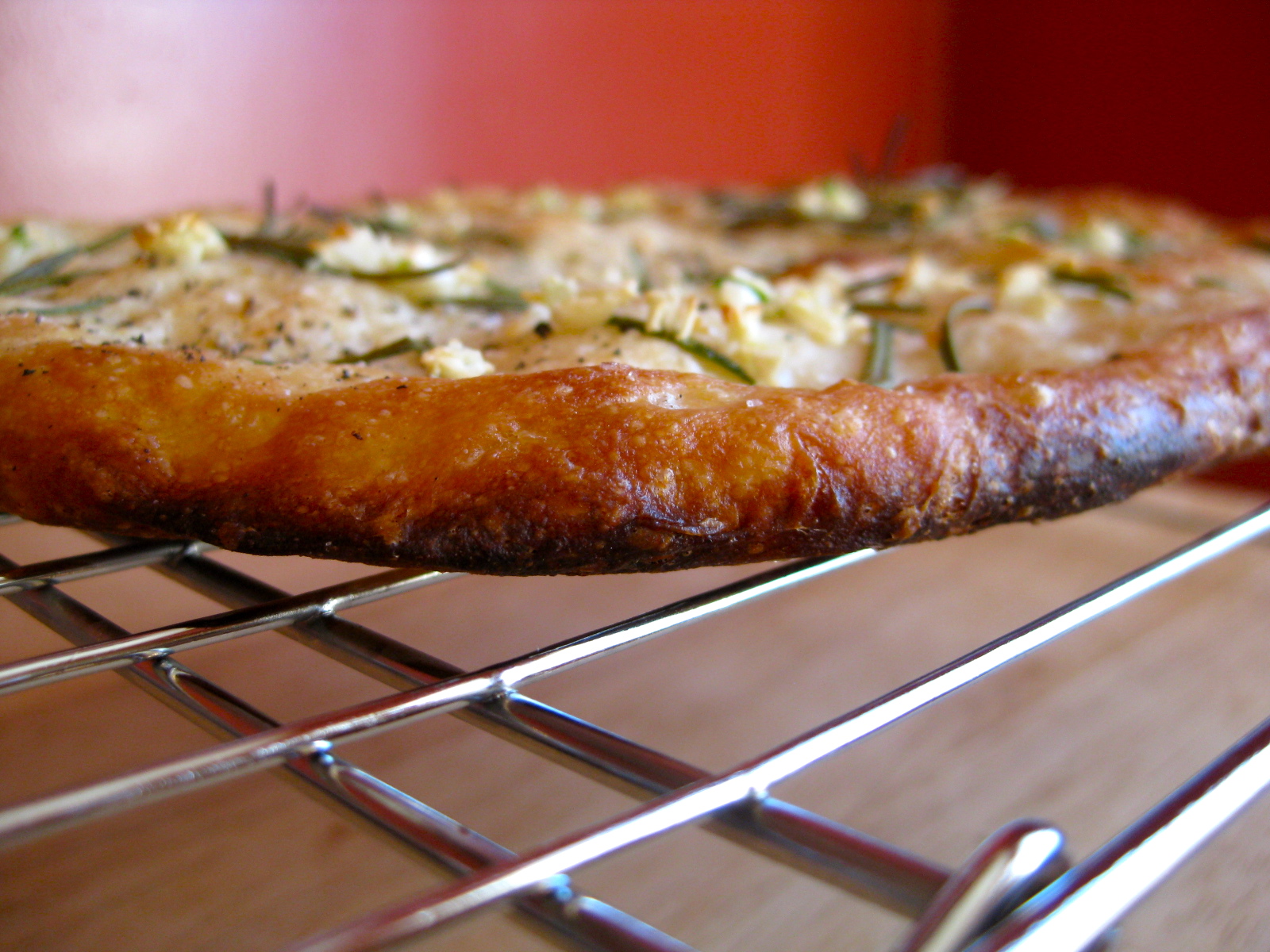
Simple Rosemary Focaccia

4 Mar

Like many people, I used to approach bread baking with a slight sense of fear and confusion.  On the rare occasion that I attempted a simple yeasted dough for something relatively non-threatening (we’re talking pizza dough here, and not, say brioche or pane pugliese), I was never satisfied with the results of the dough’s rise (everything always seemed to turn out rather squat and tough), and was therefore convinced that I was just not equipped with the proper set of skills or instincts with which most bread bakers seemed to have been born.  Was my kneading technique not the right mix of gentle-yet-firm?  Was my kitchen too cold to coax out the dough’s full rise?  Did I need to go out and buy a baking stone?  Did I add too much salt?  Not enough?
As it turned out, the problem with my efforts was attributable not to a lack of technique or savvy, but rather to a lack of something even less instinctual: urgency.  On every single one of my yeasted dough escapades, I was working with envelopes of yeast that had been purchased several months, sometimes even a year, previous, always while in the midst of a brief burst of bread baking confidence.  Predictably, it always took me much longer than I had originally anticipated work up the gumption to attempt another yeasted recipe, so by the time I broke open the package of yeast, it was barely clinging on to life.  Even under the best of circumstances, old and lifeless yeast is never going to bring an effervescent lift to dough, so, unbeknownst to me at the time, I was basically starting my task like Sisyphus in a boulangerie.

So if you have a fear or dark anticipation of bread baking, might I offer you two bits of advice?  The first bit of advice will be fairly obvious: throw away your old envelopes of yeast right now and make a fresh start by buying brand new yeast that is still full of bubbling life.  The second bit of advice?  Make this dead simple focaccia.
A perfect gateway recipe for first-time bread bakers, this focaccia requires no kneading, no special tools, and calls for just a handful of simple ingredients.  Crisp, but with a light and toothsome chew, it’s simple to prepare, boasts an effortless rise, and bakes perfectly in mere minutes.


Chances are, you’ve already got most of the ingredients in your house right now, and if you don’t, no worries.  If you have to go to the store to buy some yeast, at least you’ll know it’s still fresh.

Rosemary Focaccia

From Rose Levy Beranbaum’s The Bread Bible

3/4 cup, plus 1 tablespoon unbleached all-purpose flour

1/2 teaspoon instant yeast

1/2 teaspoon sugar

1/2 teaspoon salt

1/3 cup room temperature or warm water

4 teaspoons olive oil

1 scant tablespoon fresh rosemary needles

1 large garlic clove, coarsely chopped

flaky sea salt

black pepper

Mix the dough: In a small bowl, whisk together the flour, yeast, and sugar.  Then whisk in the salt (this keeps the yeast from coming into direct contact with the salt, which would kill it).  Make a well in the center and pour in the water.  Using a rubber spatula or a wooden spoon, gradually stir the flour into the water until all the flour is moistened and a dough just begins to form, about 20 seconds.  It should come away from the bowl but still stick to it a little, and be a little rough looking, not silky smooth.  Do not overmix, as this will cause the dough to become stickier.

Let the dough rise: Pour the oil into a small bowl or 2-cup measuring cup.  With oiled fingers or an oiled spatula, place the dough in the bowl or cup and turn it over to coat on all sides with the oil.  Cover it tightly and allow it to sit at room temperature for 1 to 1 1/2 hours, or until doubled.

Preheat the oven to 475 degrees F 30 minutes before baking: Have an oven shelf at the lowest level and place baking stone or heavy baking sheet on it before preheating.

Shape the focaccia and let it rise: With oiled fingers, lift the dough out of the bowl or cup.  Holding the dough in one hand, pour a little of the oil left in the bowl or cup onto a baking sheet and spread it all over the sheet with your fingers.  Set the dough on top and press it down with your fingers to deflate it gently.  Shape it into a smooth round by tucking under the edges.  If there are any holes, knead very lightly until smooth.  Let the dough rest for 15 minutes, covered, to relax it.

Using your fingertips, press the dough from the center to the outer edge to stretch it into a rectangle about 9 inches by 6 inches and 1/4 inch high.  If the dough resists, cover it with plastic wrap and continue pressing on it with your fingers.  Brush the top of the dough with any oil remaining in the bowl or measuring cup and cover it with plastic wrap.  Let the dough rise for 20-30 minutes more, or until light and spongy looking.

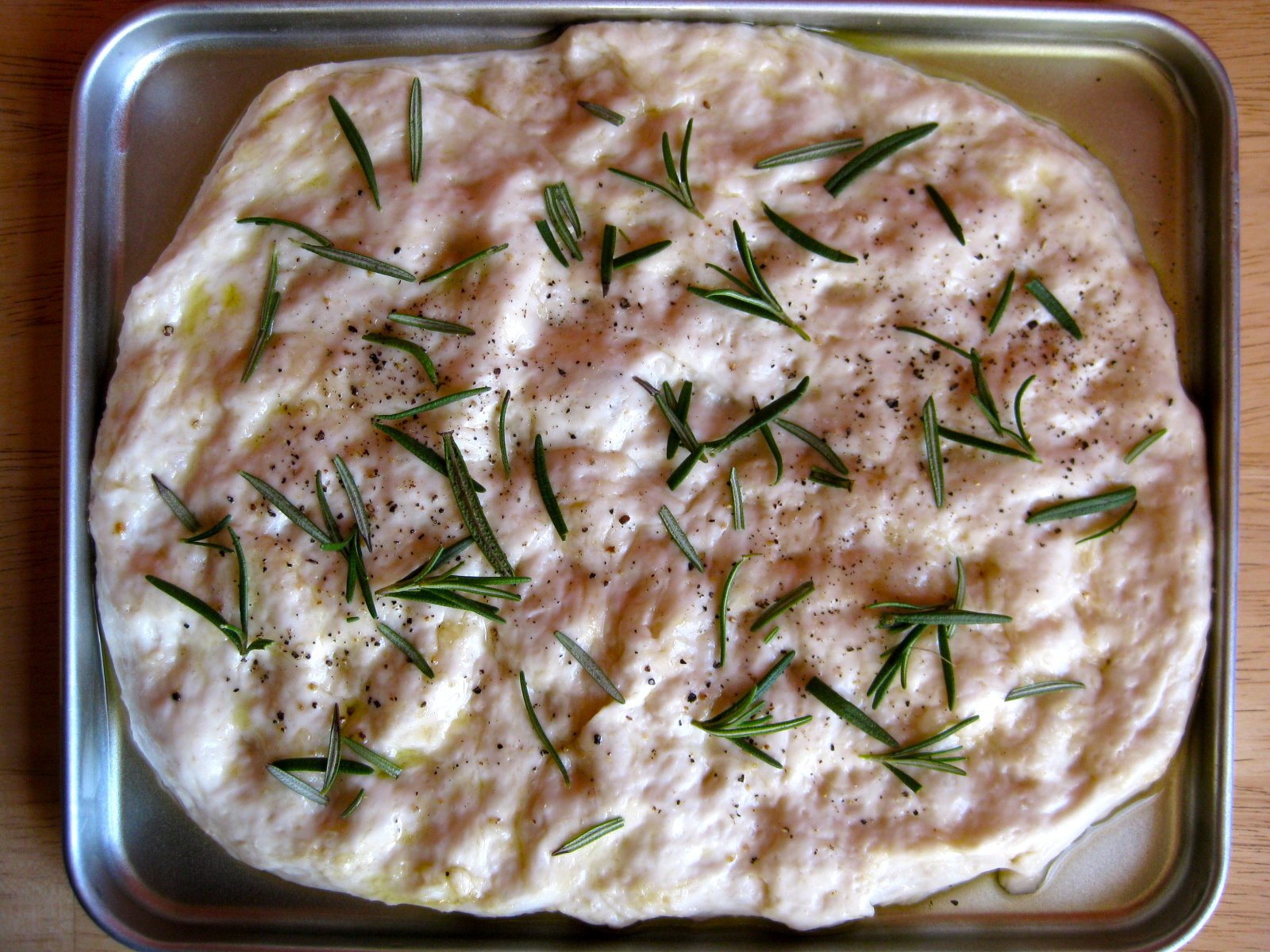
Bake the focaccia: Using your fingertips, press deep dimples at 1-inch intervals all over the dough.  Sprinkle it with the rosemary, salt, and pepper.  Place baking sheet with the focaccia on the preheated hot stone or hot baking sheet and bake for 5 minutes.  Add the garlic, slide a pancake turner underneath the dough to loosen it, and slip it directly onto the stone or heavy baking sheet (this means you will be removing the oiled baking sheet upon which the focaccia spent the first 5 minutes baking).  Continue baking for another 5 minutes or until the top begins to brown around the edges.

Fresh Ginger Ice Cream

2 Mar

When working in the kitchen, it is not unwise to have a certain number of expectations in mind.  You know what you want to accomplish, you have at least a vague prediction of how your accomplishment should turn out, and you hope that, should your kitchen excursion produce something slightly outside the realm of what you anticipated, you’ll be able to fix whatever went awry.  What is sometimes most difficult to overcome, however, is not a dish that can’t be fixed, but rather a dish that should not be fixed, no matter how much you want to.

This point was well illustrated two weekends ago in my own kitchen, when I set out to make a batch of ginger ice cream.  Using as my guide the best ice cream manual in all the land, David Lebovitz’s The Prefect Scoop, a cookbook that has yet to produce a disappointing result (I truly believe that the deliciousness of his lemon speculoos ice cream is quite capable of sending a person to the moon and back in a state of unmatched rapture), I got to work slicing and steeping the fresh ginger, then preparing a rich and velvety custard.

It was then, right before I poured the gingered custard into the ice cream maker, that I began to let my instincts go a bit haywire.  Not one to shy away from brisk and bracing flavors and sensations in food, I expected—and wanted—this ice cream to provide a spicy flare of gingery heat in each bite.  When I stole a quick taste of the pre-frozen custard, however, what I found was a subtle ginger profile enveloped by the rich taste of cream.  Seeking a more pronounced flavor, I whisked in a bit of ginger extract and poured the amended mixture into the ice cream machine.

Twenty minutes later, the ice cream churning into a thick and luscious concoction, I snuck another taste.  Still not gingery enough.  I grated some fresh ginger and added it to the whirring machine.  Two minutes later, I tasted it again.  I added more ginger.  I tasted it again.  I added more ginger.  By this point, realizing that I was nearly out of ginger, I opened up a cupboard and prepared to let loose once more with the bottle of ginger extract.

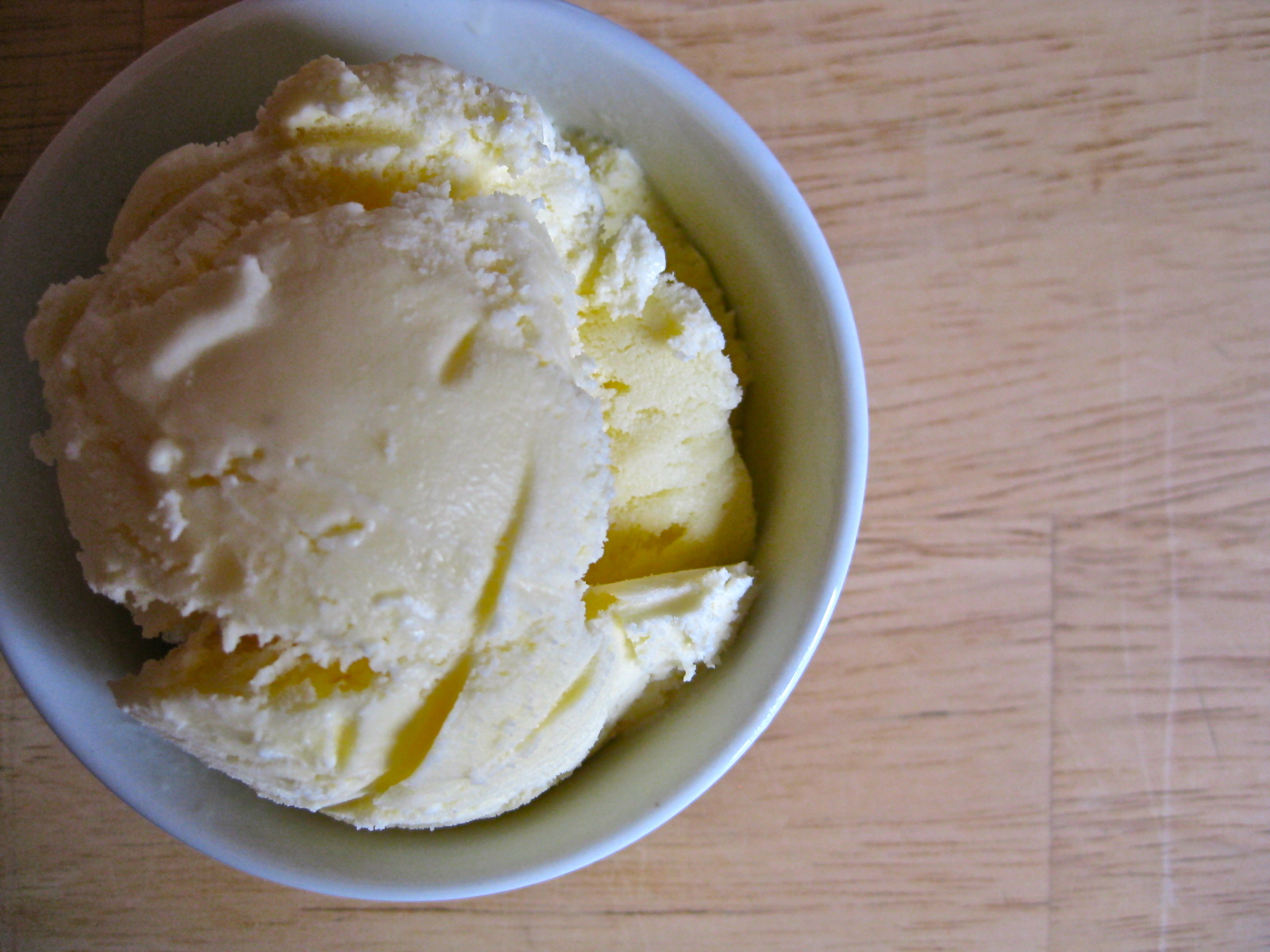
As I was unscrewing the cap to the bottle of extract, I watched the ice cream folding and turning over itself, its lovely yellow hue exaggerating the ribbon-like waves that followed the dasher with each rotation.  That ice cream sure is a lovely color, I thought to myself.  Then I paused, placing the bottle of ginger extract on the counter.  I stopped the machine, removed the lid, and plunged a spoon into the fresh ice cream.  The taste was magical.  It was fantastically smooth, unbelievably rich, and the ginger came across as a bright flash that cut through the soft cloud of creaminess.

Somehow, forgetting that I was making a custard-based ice cream, I had become focused on making the ice cream bracing, spicy, and aggressive, when what I was working against, and shouldn’t have been, was an ice cream that was velvety, subtle, and refreshing.  This was an ice cream that was not meant to stampede one’s taste buds with ginger, but rather provide a gentle kick.  I may be aware of what I like, but I am also very aware of when I am wrong, and my misguided attempts at creating the Most Gingery Ice Cream in the World most definitely fell into that category.  Thankfully, it was an easy problem to fix.  All I had to do was set down my arsenal of ginger and pick up a spoon.


Though I now see the error of my ways when it came to making this ice cream, I do still believe that the ice cream benefits greatly from the addition of some grated fresh ginger, as it adds an undeniable freshness to the creaminess.  If you desire, you can also add in a bit of ginger extract, though I want to stress that it is entirely optional, and not at all a necessity.

Fresh Ginger Ice Cream

Very slightly adapted from The Perfect Scoop

3 ounces unpeeled fresh ginger

1 cup whole milk

2 cups heavy cream

3/4 cup sugar

pinch of salt

5 large egg yolks

1/2 teaspoon ginger extract (optional)

1 heaping tablespoon grated fresh ginger

Cut the ginger in half lengthwise (making it more stable for slicing), and then cut it into thin slices.  Place the ginger in a medium, nonreactive saucepan.  Add enough water to cover the ginger by about 1/2 inch, and bring to a boil.  Boil for 2 minutes, then drain, discarding the liquid.

Return the blanched ginger slices to the saucepan, then add the milk, 1 cup of the cream, sugar, and salt.  Warm the mixture, cover, and remove from the heat.  Let steep at room temperature for 1 hour.

Rewarm the mixture.  Remove the ginger slices with a slotted spoon and discard.  Pour the remaining 1 cup heavy cream into a large bowl and set a mesh strainer on top.

In a separate medium bowl, whisk together the egg yolks.  Slowly pour the warm mixture into the egg yolks, whisking constantly, then scrape the warmed egg yolks back into the saucepan.

Stir the mixture constantly over medium heat with a heatproof spatula, scraping the bottom as you stir, until the mixture thickens and coats the spatula.  Pour the custard through the strainer and stir it into the cream.  Stir until cool over an ice bath.  If using, whisk in ginger extract.

Chill the mixture thoroughly in the refrigerator, then freeze in your ice cream maker according to the manufacturer’s instructions.  During the last few minutes of churning, add the grated fresh ginger.

Italian Wedding Soup

28 Feb

In a household where one person is usually found doing the bulk of the cooking, there can often be a tad bit of confusion involved when the non-cooking sector of the household announces the intention to start taking on regular cooking duties.  This confusion, it should be noted, is not on the part of the cook being given a break, but rather on the part of the new cook who is often times unsure about the differences between foods and ingredients that share a similar profile.

Such was the case when my husband, who has announced that he will now be cooking dinner one night a week, raised the question about the difference between chicken stock and chicken broth.  It was a good question, but one that was tough for me to explain, save for the single qualifier I could think up that described chicken stock as being the more “chickeny” of the two liquids.  Searching for a more detailed answer, we decided to consult with that tried and true tome of all things food: Joy of Cooking.

As it turns out, my description was not far off.  Chicken stock (as with any meat-based stock) is made with a higher bone-to-meat ratio than chicken broth, and thus results in a thicker, more intense product.  Stock also takes twice as long to produce, and one is required to take on a lot more butchering of the chicken in order to portion out the most desirable stock components (back, neck, bones).

It was then, envisioning an entire morning and afternoon spent tending to a stewing chicken skeleton, that my husband opted to take his first plunge into soup-making by way of tenderly poaching a whole chicken and producing what turned out to be an entire stock pot full of chicken broth.

The broth, while delicious, was also abundant, and it managed to stick around through two separate rounds of chicken soup (four rounds, really, if you account for the fact that on both occasions we were made to assemble a separate, non-vegetable, version of the soup for our preschool-aged child) without showing any signs of fatigue.

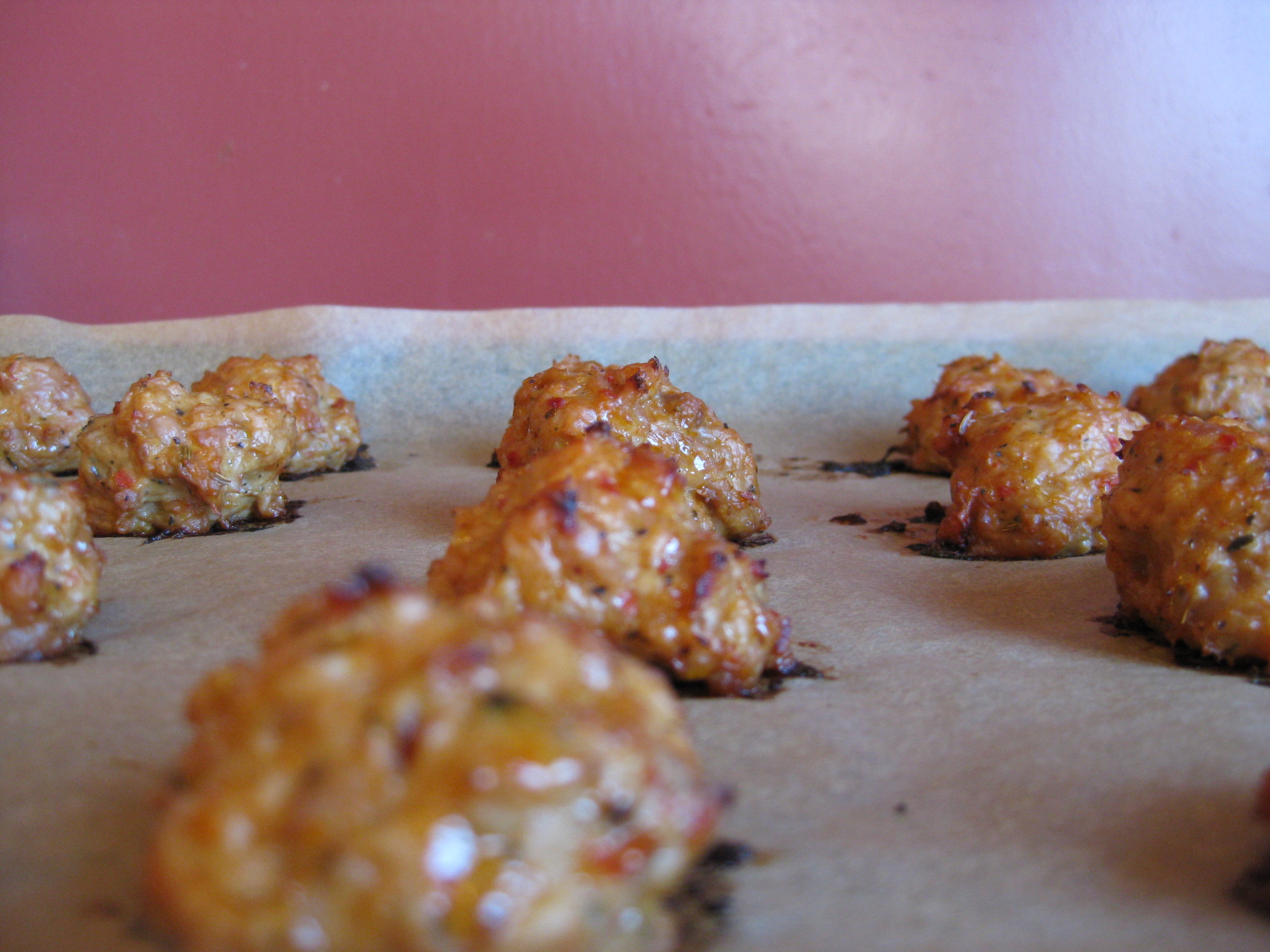
Which is not to say that our taste buds were not more than a little fatigued, leading to the desire for a more complex and dressed-up pot of soup.  Desiring more vegetables (sorry, son), more textures, and more spice, I was drawn to the idea of plumping up the soup into something a bit busier.  By adding tiny meatballs of Italian chicken sausage, the soup was instantly given a bit more heft.

Fresh carrots and celery sautéed with onions gave the flavor of the soup more depth, and a bit of fresh ginger added a much-needed hit of brightness.

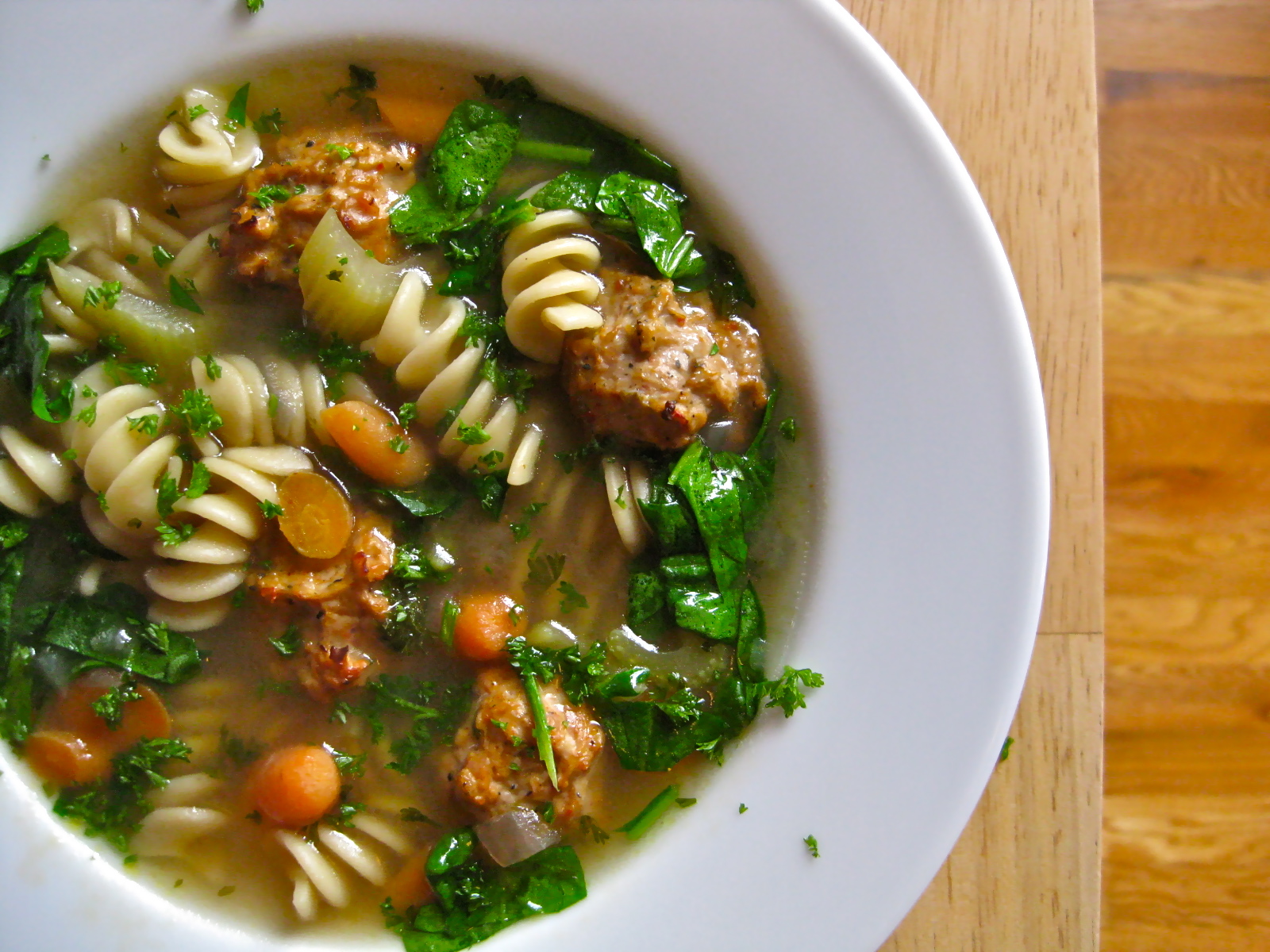
After adding a handful of pasta and then deciding to serve the soup over a bed of fresh spinach, it soon became clear to me that by doctoring up my husband’s chicken broth, I had created a melting pot of colors and flavors known as Italian wedding soup, which, though neither of us is Italian, seemed quite fitting for a dish made by a marrying of both minds and meals.

Italian Wedding Soup

2.5 quarts (10 cups) chicken broth

1 pound bulk Italian chicken sausage

3 tablespoons olive oil

1 medium red onion, finely minced

1 cup diced carrots

1 cup diced celery

1 heaping cup dry pasta (we used rotini)

1 heaping tablespoon freshly grated ginger

salt and pepper to taste

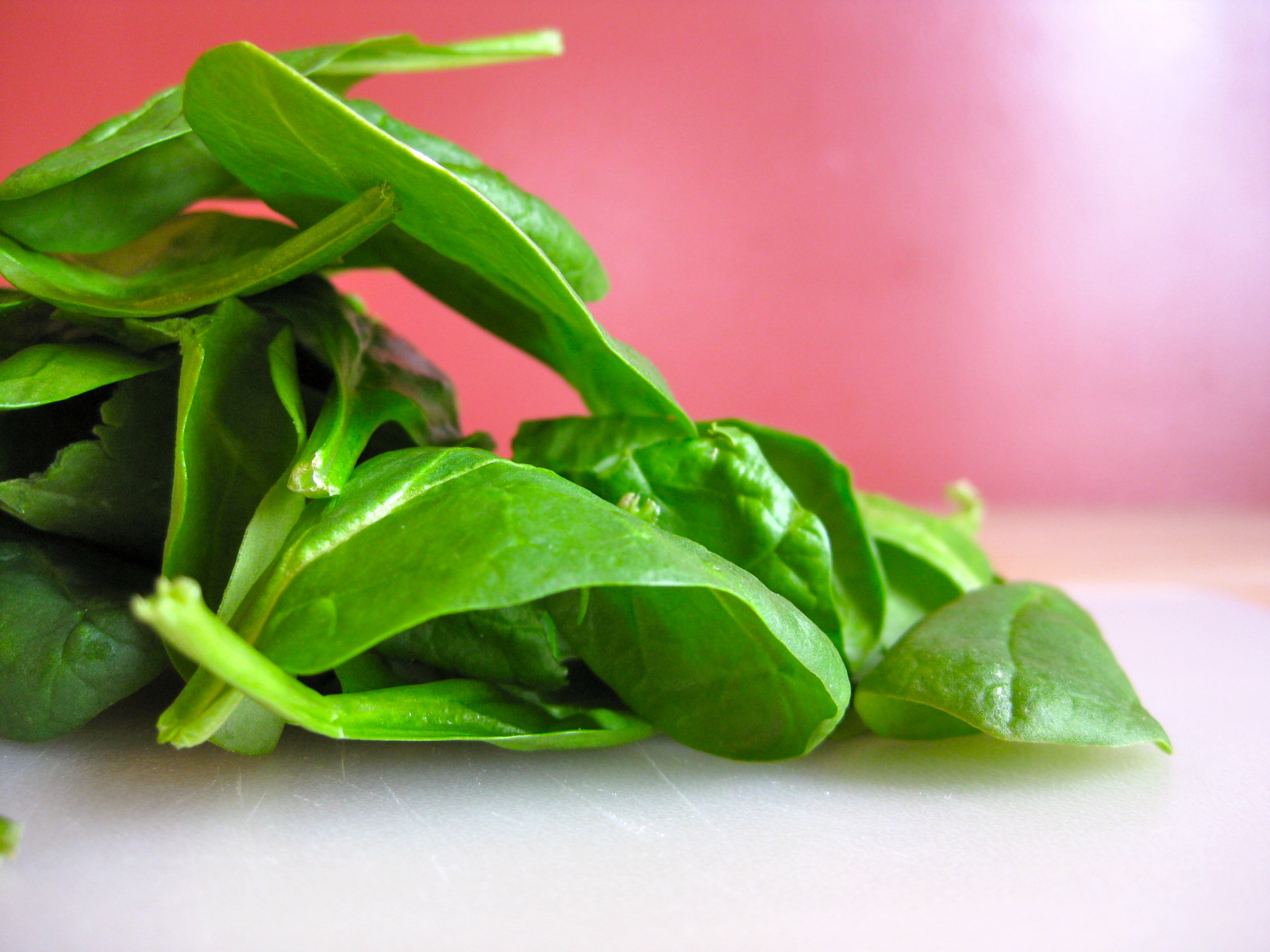
8 oz spinach leaves, washed and coarsely chopped

1/4 cup chopped Italian parsley

Preheat oven to 350 degrees F.  Using a teaspoon, portion out the Italian chicken sausage into 1 inch meatballs, dropping each one onto a baking sheet lined with parchment paper.  Bake meatballs for 20-25 minutes, or until cooked through and just slightly beginning to caramelize on the outside.

While the meatballs are baking, heat the olive oil in a large stock pot over medium heat.  Add the onions, carrots, and celery, then saute, stirring occasionally, until the vegetables are softened but the carrots still retain their bright color, about 5-8 minutes.  Add the chicken broth and bring to a boil.  Add the pasta to the simmering soup, and cook until tender, about 5-8 minutes.  Add the baked meatballs and cook for an additional minute.  Add in the fresh ginger, chopped parsley, and salt and pepper to taste, then stir to combine.  Taste, then adjust seasonings as you see fit.

To serve soup, place a handful of chopped fresh spinach in the bottom of each bowl.  Ladle soup directly over spinach, then top with a sprinkling of additional parsley, if desired.