

One of the greatest sandwiches I’ve ever eaten came from a small café and bakery in Cannon Beach, Oregon. It was a turkey sandwich, replete with fresh vegetables and fortified with huge slices of avocado. I loved the texture, I loved the flavor, but most of all, I loved the bread. The bread that enveloped this sandwich was a soft, thick cut white bread with a large swirl of cinnamon spiraling through it. When I initially saw the description of the sandwich and its bread I was dubious (cinnamon bread with a turkey and avocado sandwich?), but as soon as I took my first bite of the sandwich, all my suspicions went out the window. The bread was sturdy enough to hold together a generous pile of fillings, but soft enough to make each and every bite of that sandwich an absolute treasure. The cinnamon flavor in the bread was very subtle, and the swirl in which the cinnamon was contained had the same texture as the rest of the bread. The bread had a pillowy crust, a delicate chew, and it was the perfect savory pairing for a sandwich.
This is not that bread.


Whereas the bread from that bakery was gentle in texture and flavor, this bread is loud and commands your attention from the get go. The first thing you notice about this bread is the shatteringly crisp cinnamon sugar crust that crackles loudly as you slice into it. The second thing to catch your eye is the gooey cinnamon swirl that puddles into thick caramelized drops as it slowly creeps out of each slice.

The next aspect is the toothsome chew of the bread, not bubbly and chewy like a crisp ciabatta, but certainly not yielding and soft. Biting into this bread is like biting into something a bit less sandwich-y, a bit more dessert-ish. It’s not entirely in the realm of a dessert, but it is certainly the sort of thing that, sliced, toasted, and spread with cream cheese or (why not?) Nutella, would easily satisfy anyone’s craving for a sweet roll or sticky bun.


This is, come to think of it, yet another defining characteristic of this bread. It’s a perfectly sweet baked good that can be enjoyed as a snack, as an accompaniment at breakfast, or as a companion to a cup of tea, but the whole time you are enjoying it, you are overcome with the mild notion that you might just be getting away with something slightly mischievous. It’s not a dessert! It’s a snack! It’s not a cinnamon roll! It’s cinnamon bread. And now that I’ve given you every excuse to eat this bread, I think that pretty much means you no longer have any excuse not to get up and make it right now.


Cinnamon Raisin Swirl Bread
Barely adapted from The America’s Test Kitchen Family Baking Book
I am of the opinion that if you are going to make bread with raisins in it, make bread with raisins in it. I found the original recipe’s raisin requirement to be far too scant, so I’ve taken the liberty of doubling the amount in the version below. Conversely, if you don’t care for raisins, they can be left out to no ill effect.
1/2 cup granulated sugar
1/4 cup packed dark brown sugar
4 teaspoons ground cinnamon
1 1/4 cups warm milk (not skim, but 1% to whole is fine), heated to around 110 degrees
3 tablespoons unsalted butter, melted and cooled, plus extra for brushing
2 large egg yolks
3 1/2 to 4 cups all-purpose flour
1 envelope (2 1/4 teaspoons) instant or rapid-rise yeast
1 1/2 teaspoons salt
1 cup raisins
Mix the sugars and cinnamon together in a small bowl. Measure out 2 tablespoons and reserve for the topping. Whisk the milk, melted butter, and yolks together in a large liquid measuring cup or medium bowl.
Combine 3 1/2 cups of the flour, yeast, salt, and 1/4 cup of the cinnamon sugar in a standing mixer fitted with the dough hook, or in a large bowl. With the mixture on low speed, or if not using a standing mixer, with a rubber spatula, add the milk mixture and mix until the dough comes together, about 2 minutes.
Increase the mixer speed to medium-low and knead until the dough is smooth and elastic, about 8 minutes. If after 4 minutes more flour is needed, add the remaining 1/2 flour, 2 tablespoons at a time, until the dough clears the sides of the bowl but sticks to the bottom. If kneading by hand, turn the dough out onto a clean, lightly floured counter and knead by hand for 12-18 minutes, adding the remaining 1/2 cup flour as needed to prevent the dough from sticking to the counter.
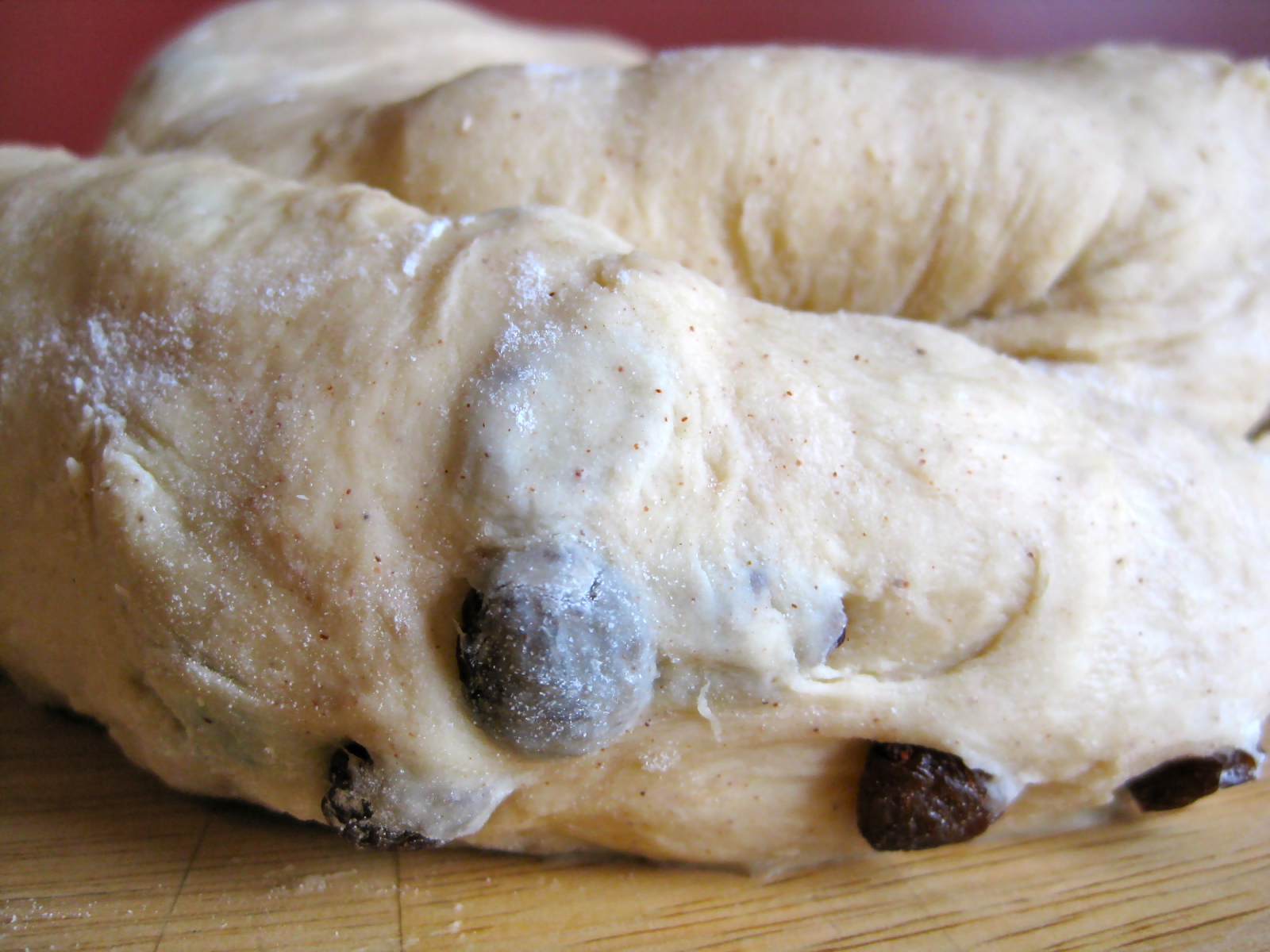
Turn the dough out onto a lightly floured counter and knead in raisins by hand until evenly distributed. Continue to knead the dough, forming it into a smooth, round ball. Place the dough in a large, lightly oiled bowl and cover with greased plastic wrap. Let rise in a warm place until doubled in size, 1 to 1 1/2 hours.
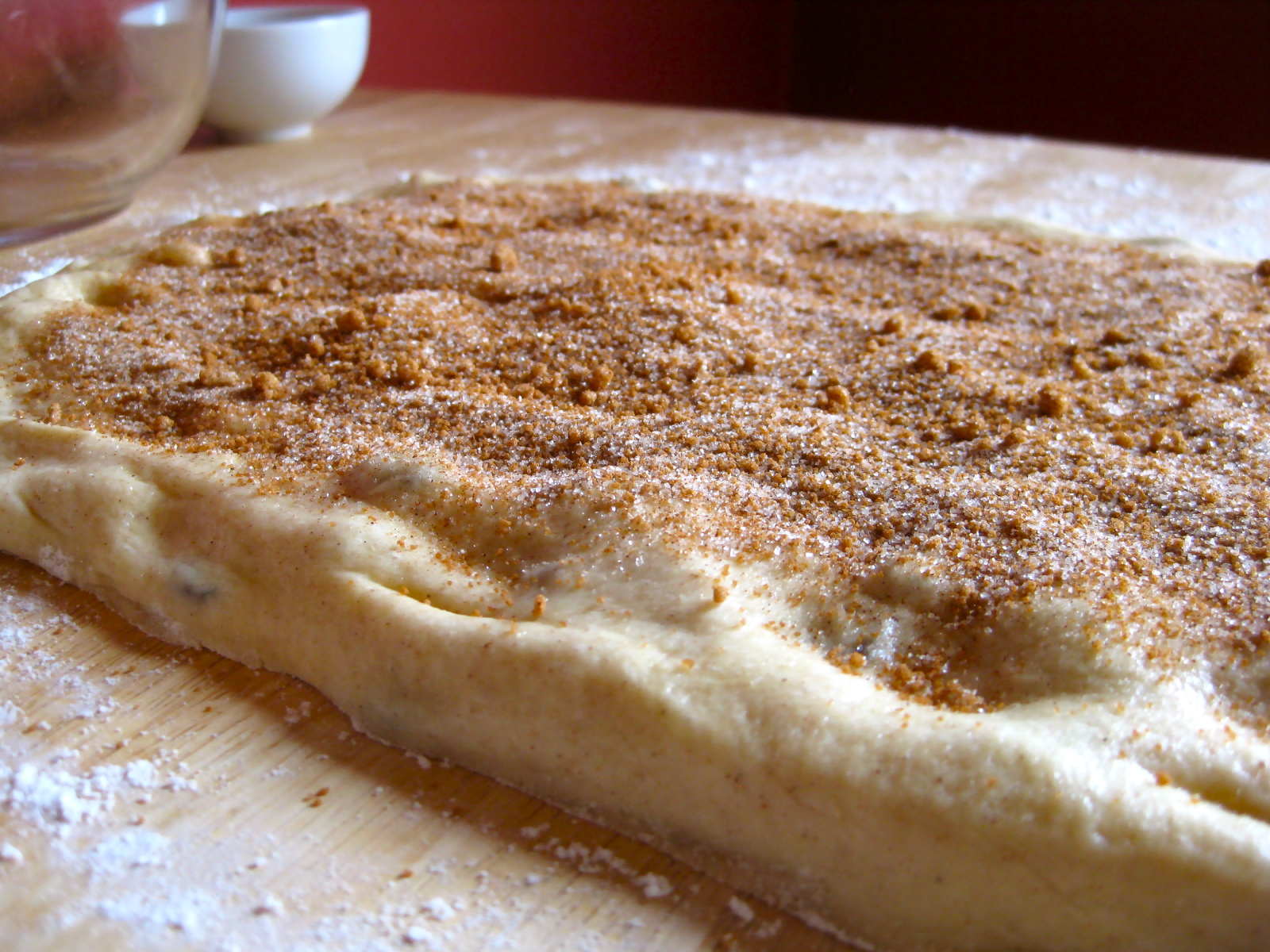
Grease a 9 x 5 inch loaf pan. Turn the dough out onto a lightly floured counter and press into a 20 x 8 inch rectangle with the short side facing you. Spray the dough lightly with water, then sprinkle evenly with the remaining cinnamon sugar, leaving a 1/2 inch border at the far edge. Lightly spray the cinnamon sugar with water until it is damp but not wet.
Loosen the dough from the counter with a bench scraper or metal spatula, then roll the dough into a tight cylinder and pinch the seam closed. Place the loaf seam side down in the prepared pan. Mist the loaf with vegetable oil spray, cover loosely with plastic wrap, and let rise in a warm place until nearly doubled in size and the dough barely springs back when poked with a knuckle, 45 to 75 minutes.
Adjust an oven rack to the lower-middle position and heat the oven to 350 degrees. Brush the loaf lightly with melted butter, sprinkle with the reserved 2 tablespoons cinnamon sugar, then spray lightly with water. Bake until golden, 40 to 60 minutes, rotating the loaf halfway through baking. Cool the loaf in the pan for 15 minutes, then flip out onto a wire rack and let cool to room temperature, about 2 hours, before serving.





 Savory Salty Sweet