Tag Archives: food

Blueberry Cream Pie in a Gingersnap Crust

2 Jul

Some good friends of mine had a baby recently.  Actually, a few good friends of mine have had babies recently, which is rather exciting. In addition to being able to visit and squeeze all the new babies (cheeks!  Thighs!  Chubby arm folds!), I am also able to test out some new recipes on my ravenous and more-than-a-little exhausted friends and their families.
Wait.  That came out wrong, like I am testing out recipes on unsuspecting new parents.  I don’t mean it that way.  I’ve been known to bring newly developed recipes to potlucks, brunches, and the occasional Thanksgiving dinner, so introducing new dishes to many people at a time is old hat to me.  I swear that I only do this sort of thing when I am positive that the recipe is a good one, and that I would never, ever spring a suspicious new dish on people.  Nobody wants to be served something revolting, and I certainly don’t want to serve anyone anything that might be categorized as such.

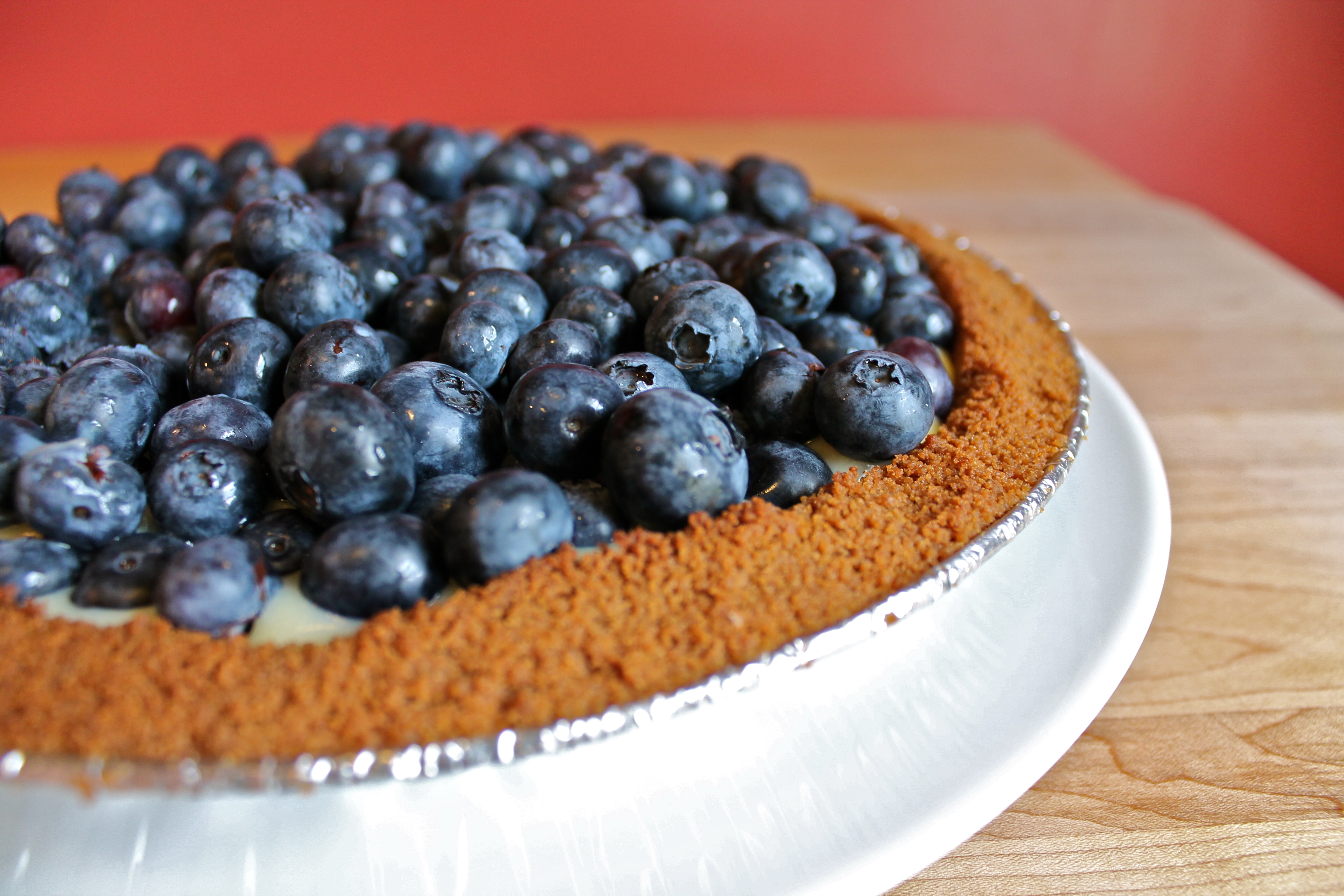
Which is why, when I wanted to come up with a new way to make a blueberry dessert, I decided that the best way to present the blueberries would be in a medium with which I am decidedly familiar: a pie.  Specifically, a pie lined with what has become my favorite crumb crust, made with spicy gingersnap cookies in lieu of graham crackers.  Topping the pie is a middle layer of cool vanilla custard, and on top of that is a full 3 cups of fresh, plump blueberries.  That doesn’t sound like an experiment that could ever go wrong, does it?  Of course not.  And it didn’t, as I heard from the pie’s recipients just a day after I dropped it off.  The last slice of pie had just been happily consumed, the new mother getting the honors of the last bite.  As it should be, I think.

Blueberry Cream Pie in a Gingersnap Crust Recipe

Gingersnap Crust

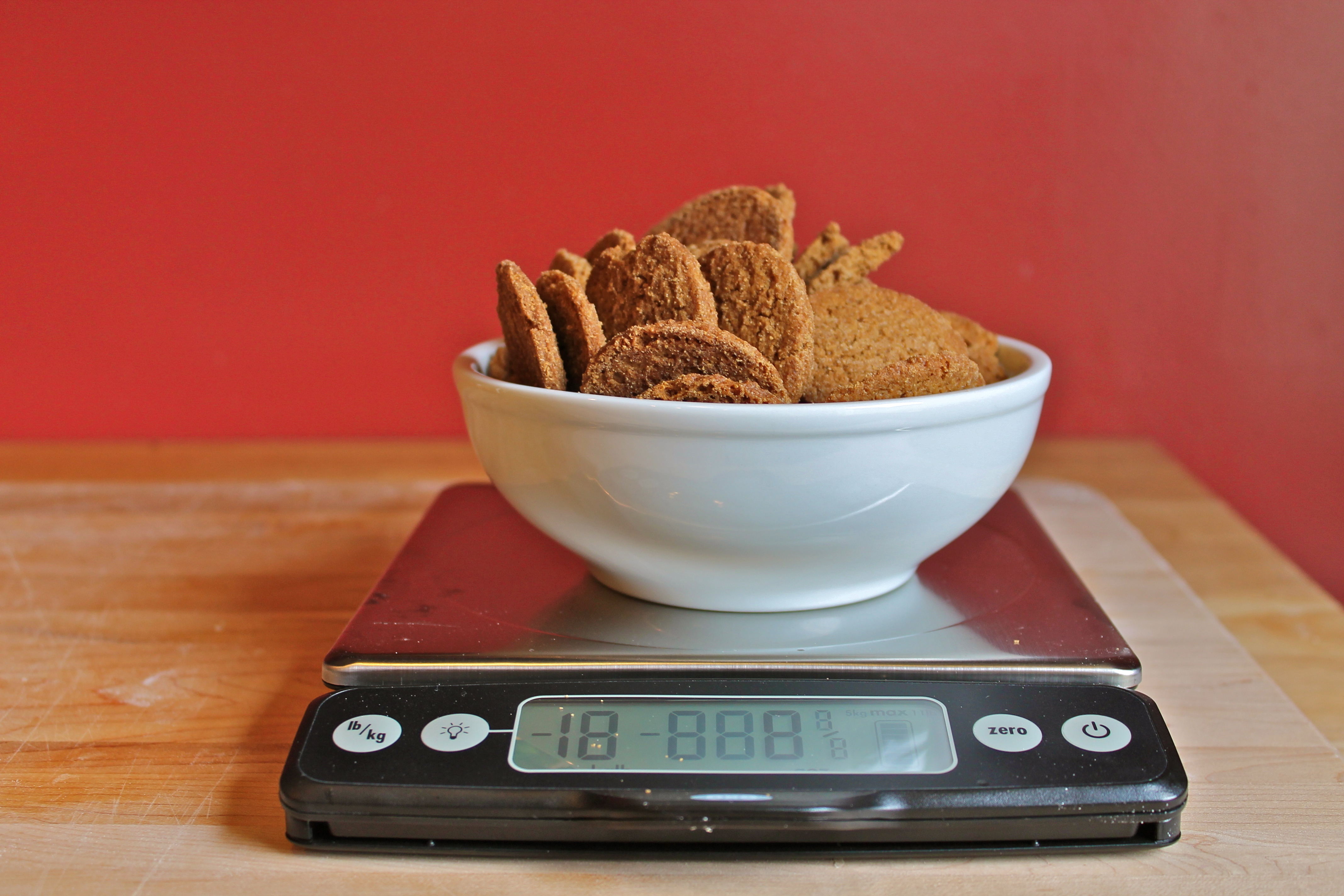
9 ounces gingersnap cookies

4 tablespoons melted unsalted butter

pinch of salt

Preheat oven to 375 degrees Fahrenheit.  Arrange an oven rack to the middle position.

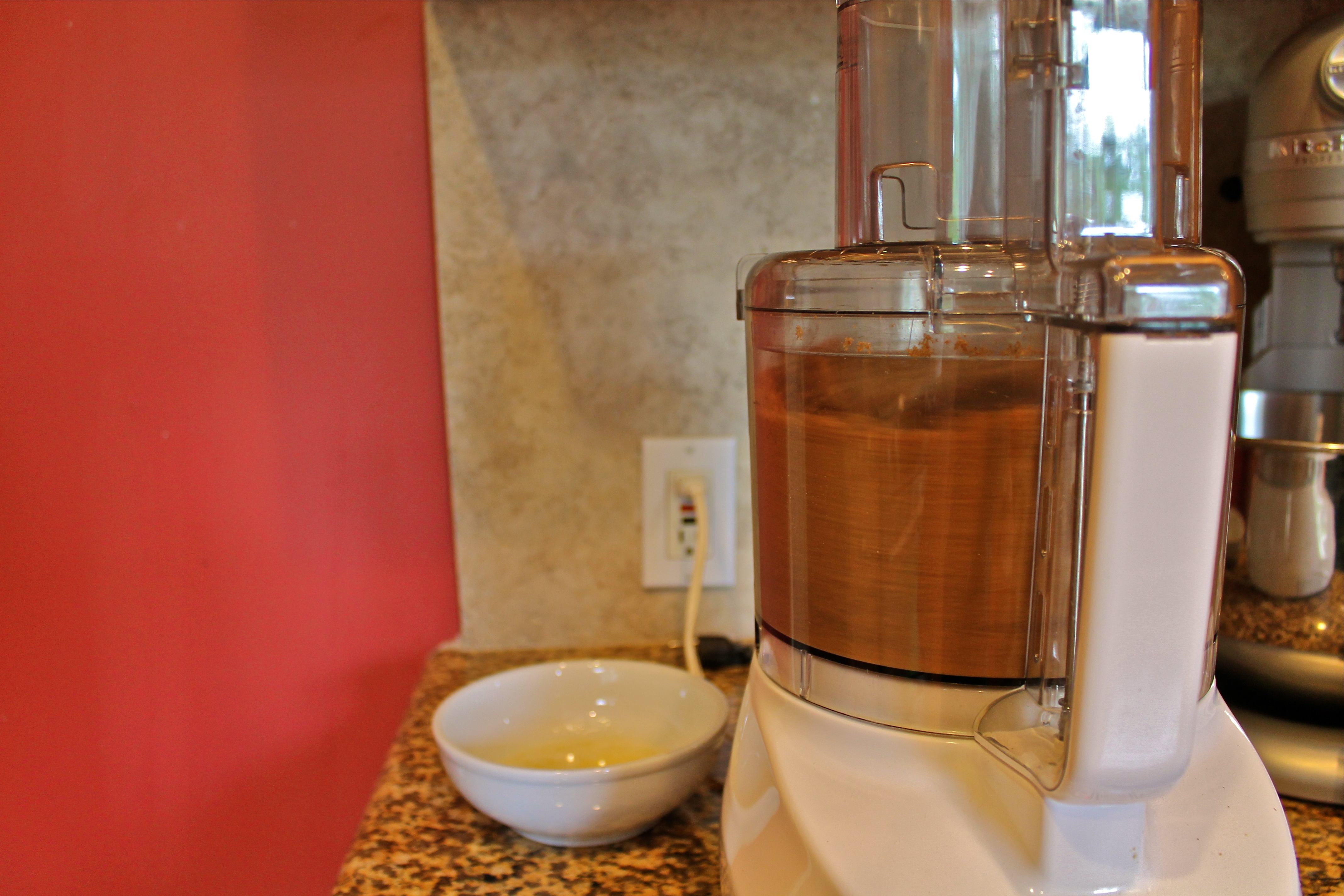
In the bowl of a food processor, process cookies until they are pulverized into small crumbs.  Alternately, if you don’t have a food processor, you can crush the cookies in a plastic bag, using a rolling pin or a meat tenderizer.  When cookies are crushed, slowly drizzle in melted butter, pulsing the food processor as you drizzle.  If not using a food processor, transfer the crumbs to a medium bowl and drizzle in the butter while stirring with a spatula.  Add pinch of salt and process or stir until crumbs start to cling together.

Pour the crumb mixture into a 9-inch pie pan.  Using a spoon or a small metal measuring cup, press the crumbs into the pan, covering the bottom, then pressing the crumbs evenly up the sides of the pan.  Bake the crust for 8 to 9 minutes, until the edges of the crust are just beginning to color.  Remove crust from oven and set aside to cool slightly.

Blueberry Cream Pie

¼ cup cornstarch

1/3 cup sugar

pinch of salt

2 cups milk

3 large egg yolks, lightly beaten

2 teaspoons pure vanilla extract

3 cups fresh blueberries

In a medium saucepan set over medium low heat, whisk together cornstarch, sugar, and pinch of salt.  Slowly pour in milk while steadily whisking, making sure the cornstarch mixture does not clump up. Whisk in the egg yolks.  Reduce heat to medium low and slowly whisk the mixture for 7 to 8 minutes, until it becomes quite thick.  Remove from the heat and immediately whisk in vanilla.

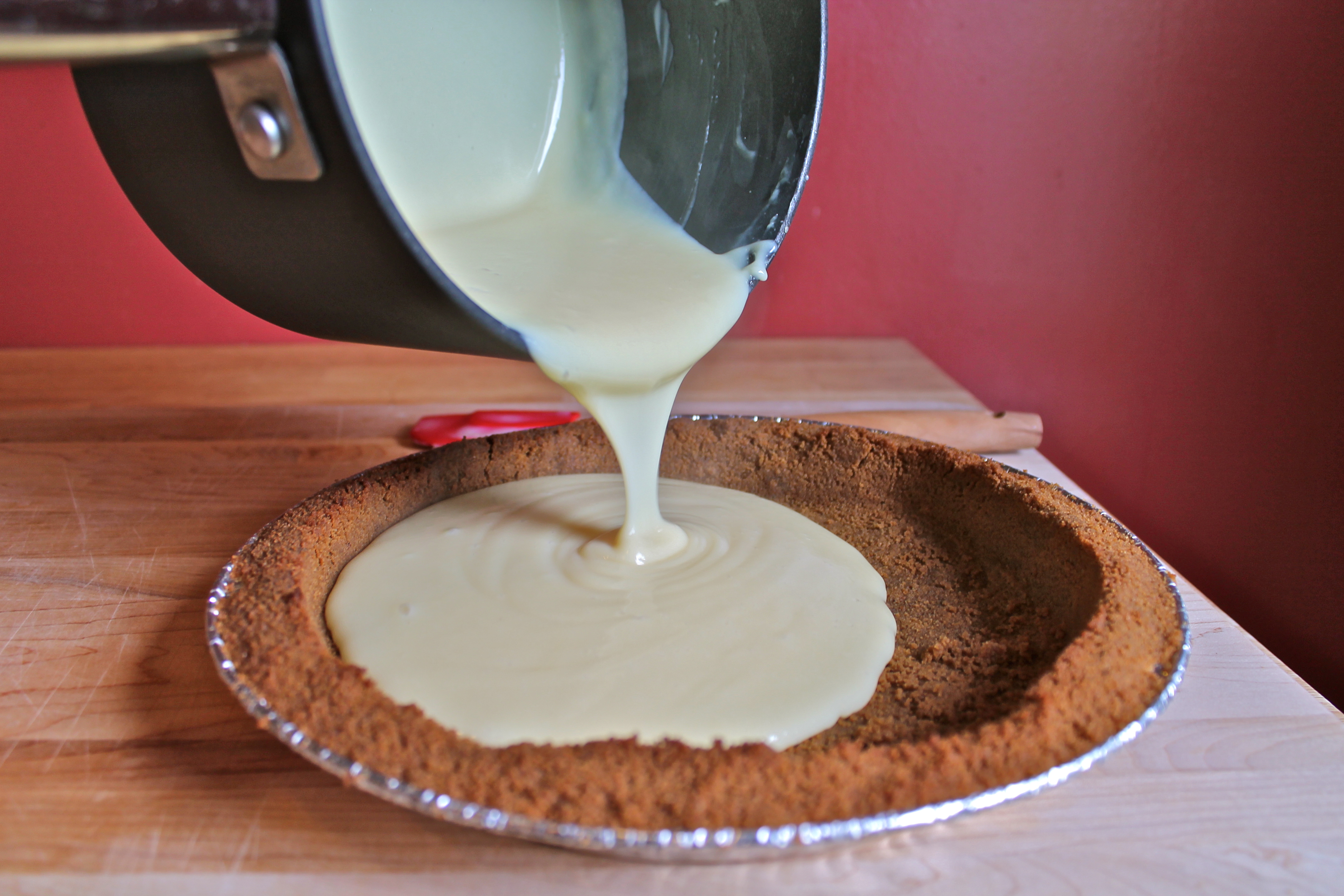
Pour the custard into the baked gingersnap crust.  Pile blueberries on top of custard.  Place pie in refrigerator for at least 2 hours, until custard has set and pie is thoroughly chilled.

Serves 6 to 8 people.

Sour Cherry Upside Down Cake

28 Jun

We’re right on the cusp of greeting the arrival of sour cherries here in Portland.  This event is a monumental one in my book, because with the sour cherries comes a short but treasured period of sour cherry pies, sour cherry galettes, and, if the weather is cooperating, sour cherry and Meyer lemon whiskey sours.  The season for sour cherries is a cruelly short one, but I try to make the most of it.  In fact, I am going to let you in on a little secret.  Sometimes?  If I can summon the willpower?  I take to hoarding my ration of sour cherries.

It’s not as obsessive a plan as it may seem.  I, of course, share whatever I make when the initial sour cherry season comes around, but sometimes, if I am lucky, all my pie-making and galette-fashioning leaves me with not quite enough cherries to fill a new pastry, but certainly enough sour cherries to stick in the freezer and save for as long as I can.  Believe it or not, in between last sour cherry season and this year’s upcoming one, I was able to hold onto a good amount of cherries.  I’ve been making them into syrups, using them to fill the occasional tiny pastry, and last week, when I reached the end of my stash, I worked them into a new riff on that summertime favorite, pineapple upside down cake.  Only in this case I left out the pineapple all together and instead baked a cake atop a bed of sour cherries nestled in a bed of brown sugar and butter.

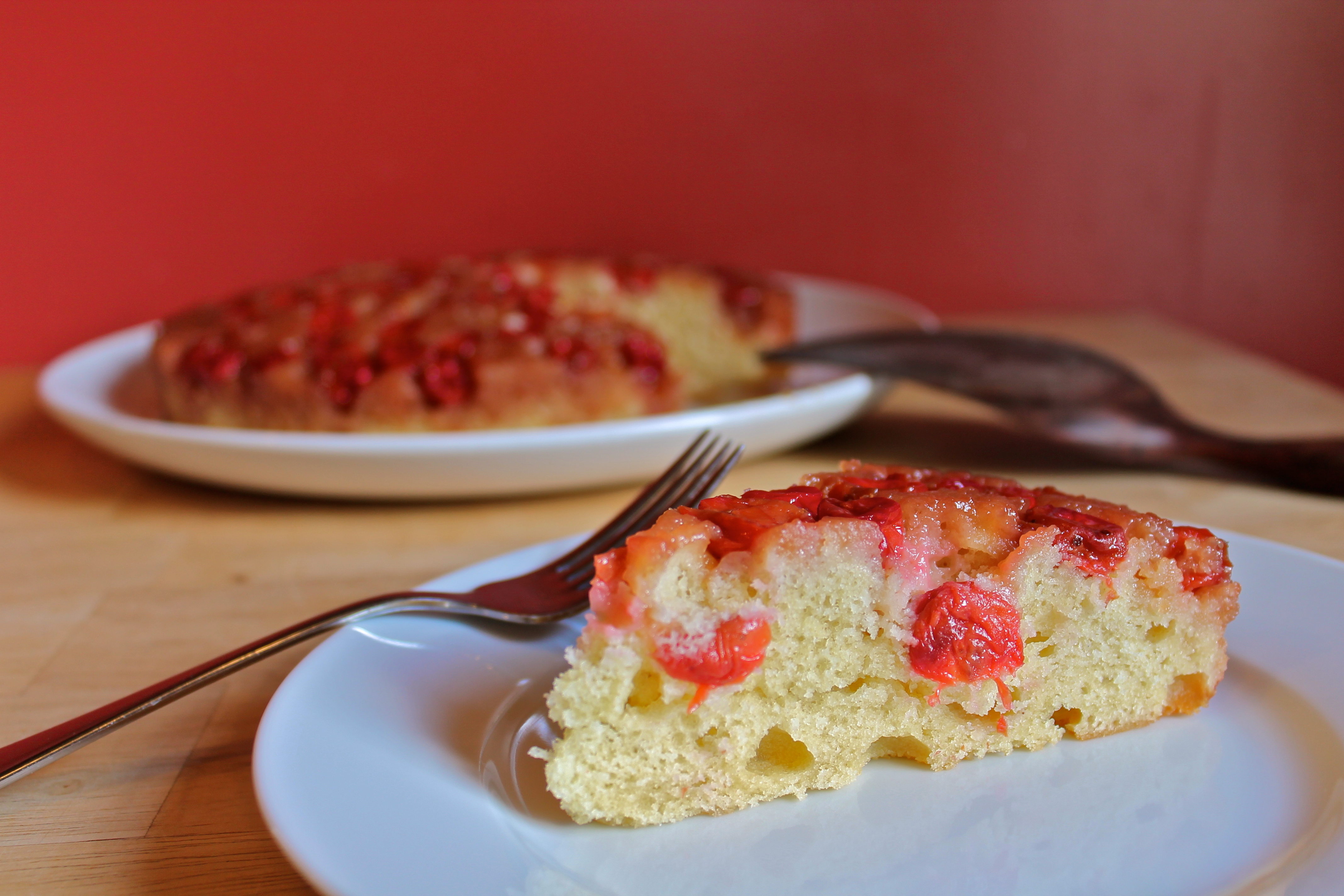
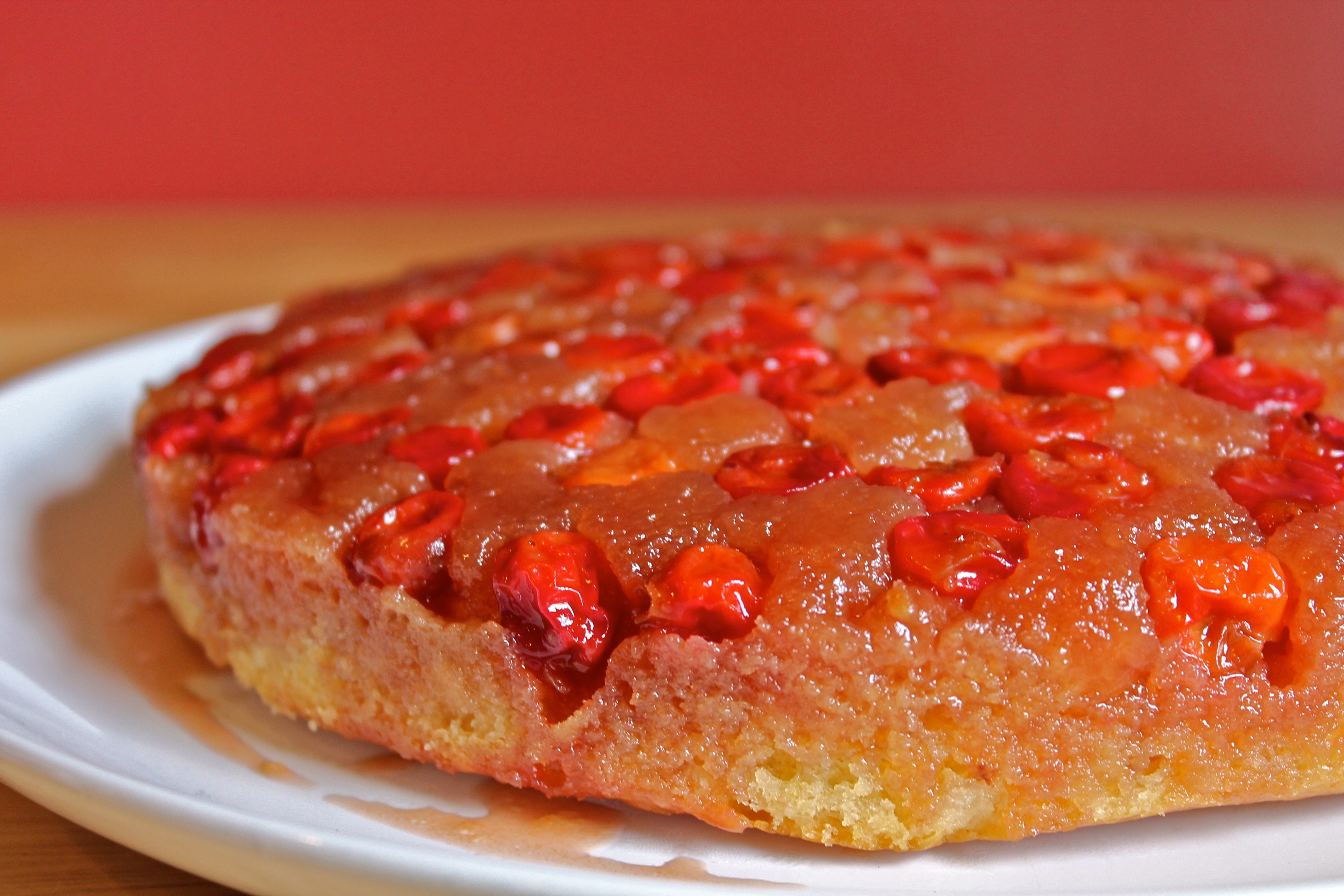
The result was fantastic, as I hoped it would be.  I used the last of the cherries, after all, so if the dessert was a flop, I would have been utterly crushed.  But it was not a flop.  It was a delight.  The sour cherries were the perfect foil for the rich brown sugar topping, and the cake underneath was sturdy enough to hold court against the cherry topping, but light enough to keep the dessert from feeling like a mid-day gut bomb.  Oh, don’t get me wrong—this is a sweet dessert indeed, but it’s a far cry from being a double-decker frosted offering (of which, of course, I am also quite fond).  It’s a perfect summer cake, and a worthy use of any sour cherries you might have on hand.  With a bit of luck, in a few short weeks I might just have some more cherries on my hands.

Last Year: Lemon Cream and Strawberry Trifle

Also last year, I put my ration of sour cherries to good use in a classic sour cherry pie.

Sour Cherry Upside Down Cake Recipe

Inspired by a pineapple upside down cake recipe in The America’s Test Kitchen Family Baking Book

1 pound pitted sour cherries

1/8 teaspoon almond extract

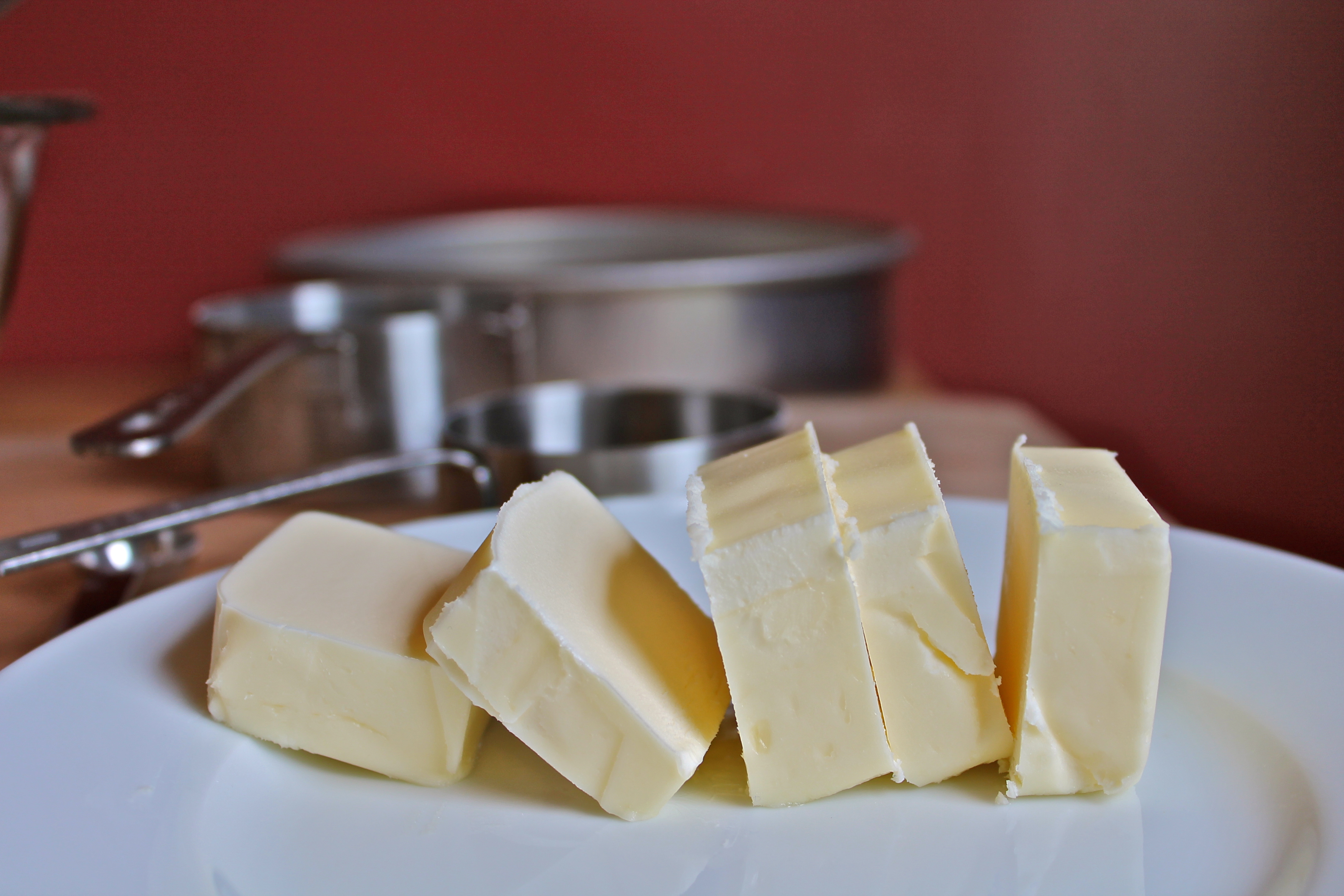
12 tablespoons (1 ½ sticks) unsalted butter, room temperature, cut into tablespoon pieces

½ cup light brown sugar

1 ½ cups unbleached all-purpose flour

1 ½ teaspoons baking powder

½ teaspoon salt

½ cup granulated sugar

2 large eggs, room temperature

1 large egg white, room temperature

½ teaspoon pure vanilla extract

1/3 cup milk, room temperature

Preheat oven to 350 degrees Fahrenheit.  Adjust an oven rack to the lower-middle position.

Place pitted cherries in a colander and toss lightly to allow excess juices to drain slightly.  Drizzle with almond extract, toss lightly to combine, and set side.

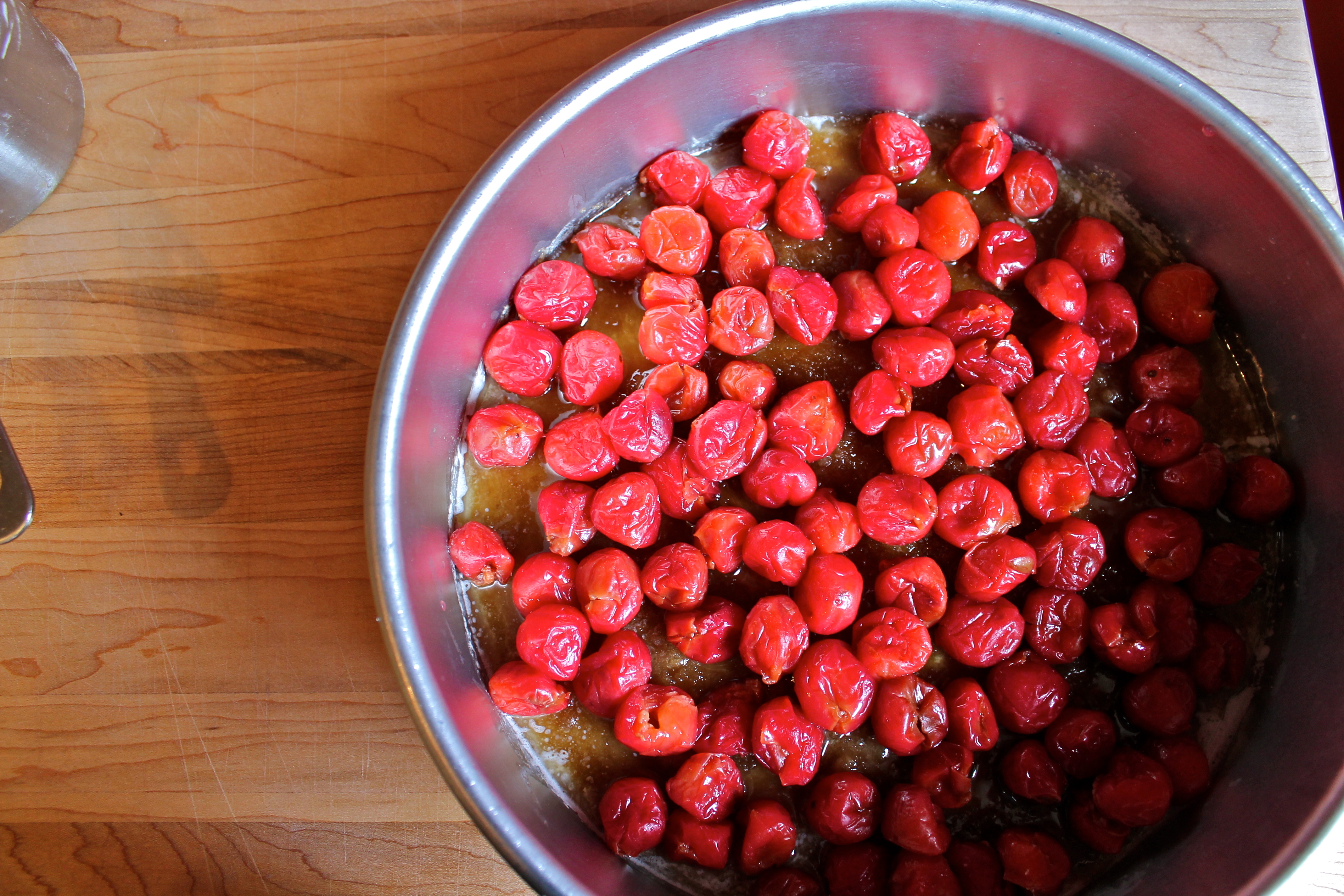
In a 9-inch round cake pan, place 4 tablespoons of butter.  Place pan in the oven until the butter has melted, but not browned (this should take about 2 to 3 minutes).  Sprinkle the brown sugar into the pan, then gently pat the mixture until it evenly covers the bottom of the pan.  Place the cherries in a single layer over the brown sugar mixture, evenly covering the bottom of the pan.

In a medium bowl, whisk together the flour, baking powder, and salt.  In a large bowl, or in the bowl of a stand mixer, beat together on medium speed the remaining 8 tablespoons of butter, along with the granulated sugar, until the mixture is light and fluffy, about 3 to 5 minutes.  Add the eggs, one at a time, beating after each addition until the egg is fully incorporated.  Beat in the vanilla.

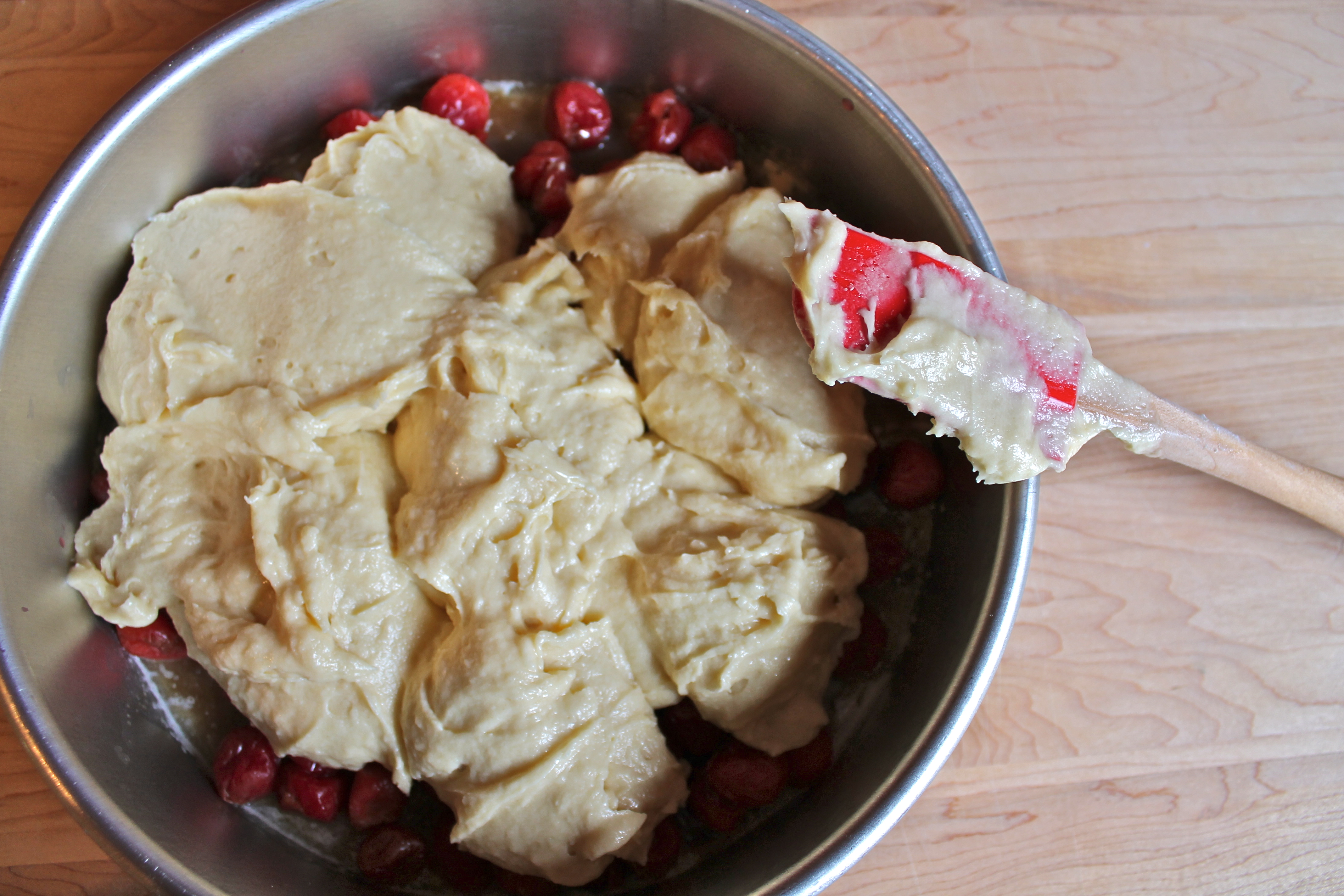
Beating on low speed, add 1/3 of the flour mixture, followed by half of the milk.  Add half of the remaining flour mixture, followed by the rest of the milk.  Add the last of the flour mixture, and beat until just combined.  The batter should be very thick.

Spoon the batter over the cherries, then gently smooth the top.  Gently tap the pan on top of the counter to settle the batter amongst the cherries.  Bake the cake in the center of the oven until a cake tester emerges with just a few moist crumbs attached, about 45 to 50 minutes, rotating pan after about 20 minutes.

Allow the cake to cool in the pan for about 10 minutes.  Place a serving platter on top of the pan, then flip both cake pan and plate over, inverting the cake onto the platter.  Allow the pan to rest upside down on top of the platter for 1 minute, releasing both the cake and the cherry topping without assistance.  Gently remove the pan, then allow the cake to cool for 2 hours before eating.

Serves 8 to 10 people.

Semolina Flatbread with Arugula, Mint, and Spinach Pesto

25 Jun

Generally, when I gather together the elements to make a meal, I attempt to strike a reasonably healthy balance of protein, grain, and vegetable.  In the winter months, you’ll see a fair amount of polenta and pasta sitting in for the grain component, their hearty and warm properties providing the perfect bit of comfort one seeks to counteract the cold and drizzly weather.  In the summertime, when the sun beckons and our meals are almost exclusively eaten outdoors, we eat hunks of bread with our slices of cheese and heaping plates of garden vegetables.  And during the intervening weeks, which means now, when the sun appears only sporadically and our days are often still drenched with the cold and the wet, our meals are punctuated with foods that exist in between, not too hot, not too cold, but a rather Baby Bear-like middle ground.

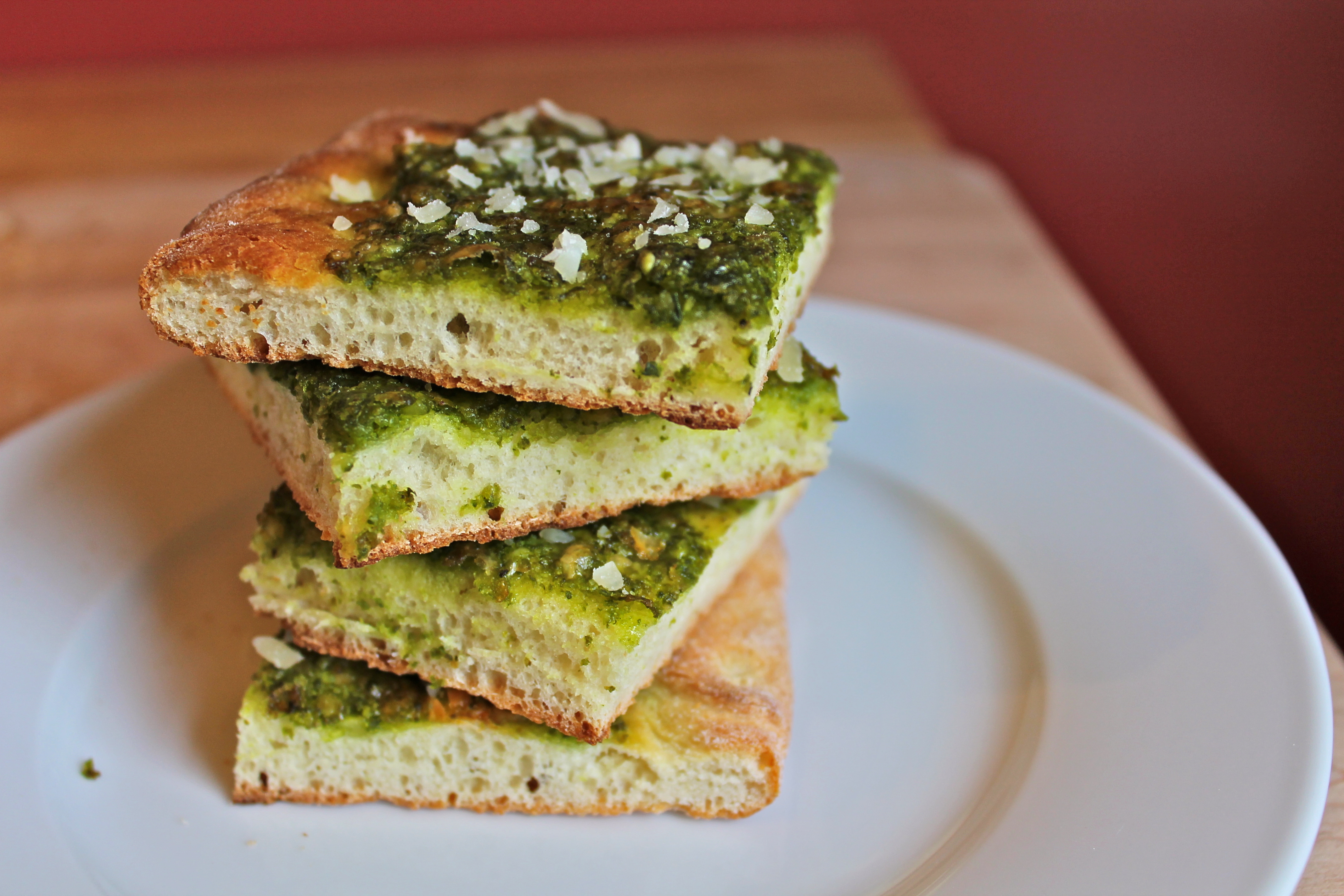
A flatbread like this, hearty and crisp with semolina, slathered with a pert combination of spicy arugula, fresh mint, and lots of lemon zest, is the perfect example of the type of accompaniment I like with my meals on these days of in between.  It’s a great companion for soups (cold weather), or salads (warm weather), and it packs up perfectly for a picnic (dreamy weather).  Paired with yogurt-marinated chicken skewers and some slices of fresh raw bell pepper, it was the defining element of a springtime dinner last week, on a day that couldn’t figure out if it wanted to be rainy or sunny, so it decided to be both several times over.

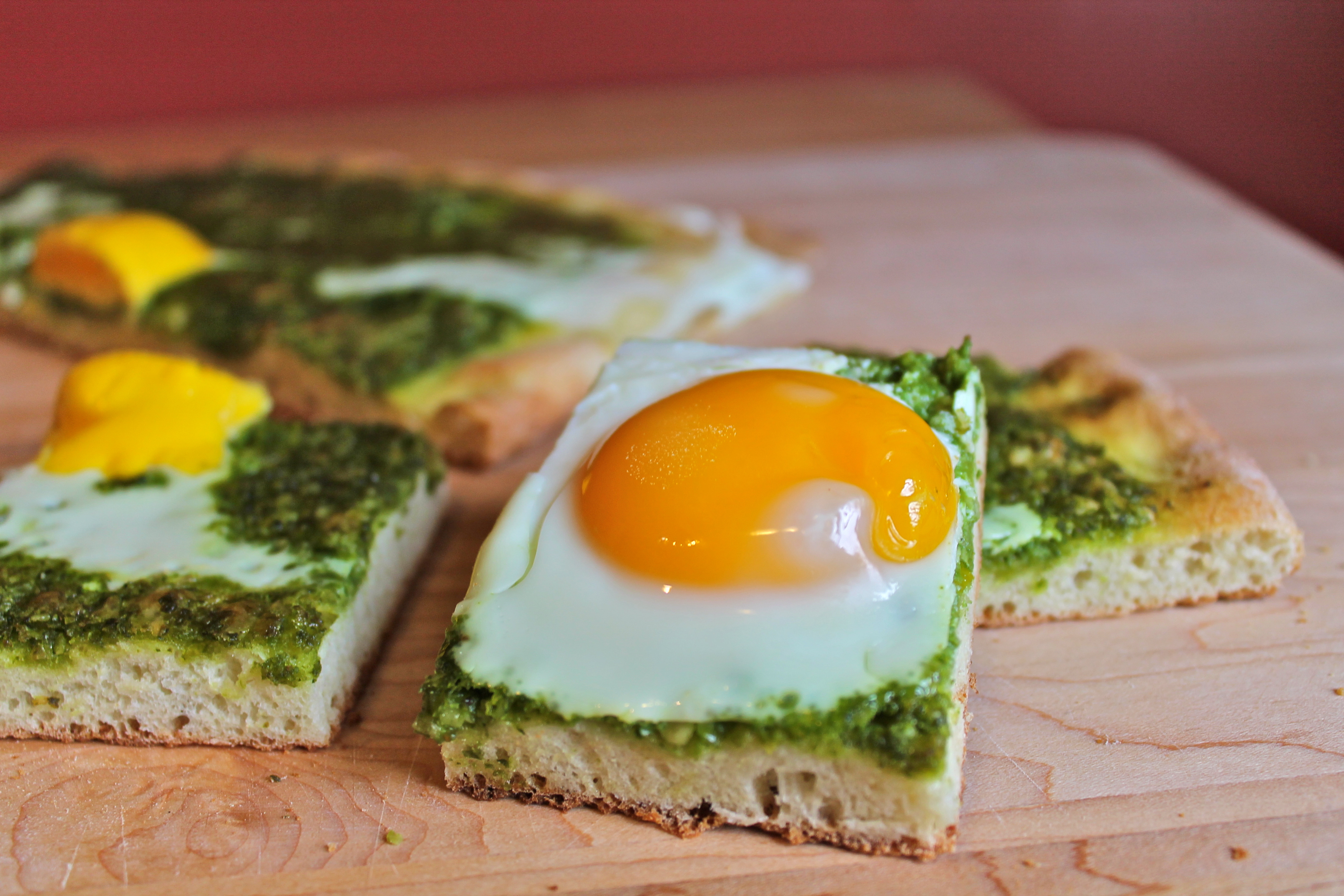
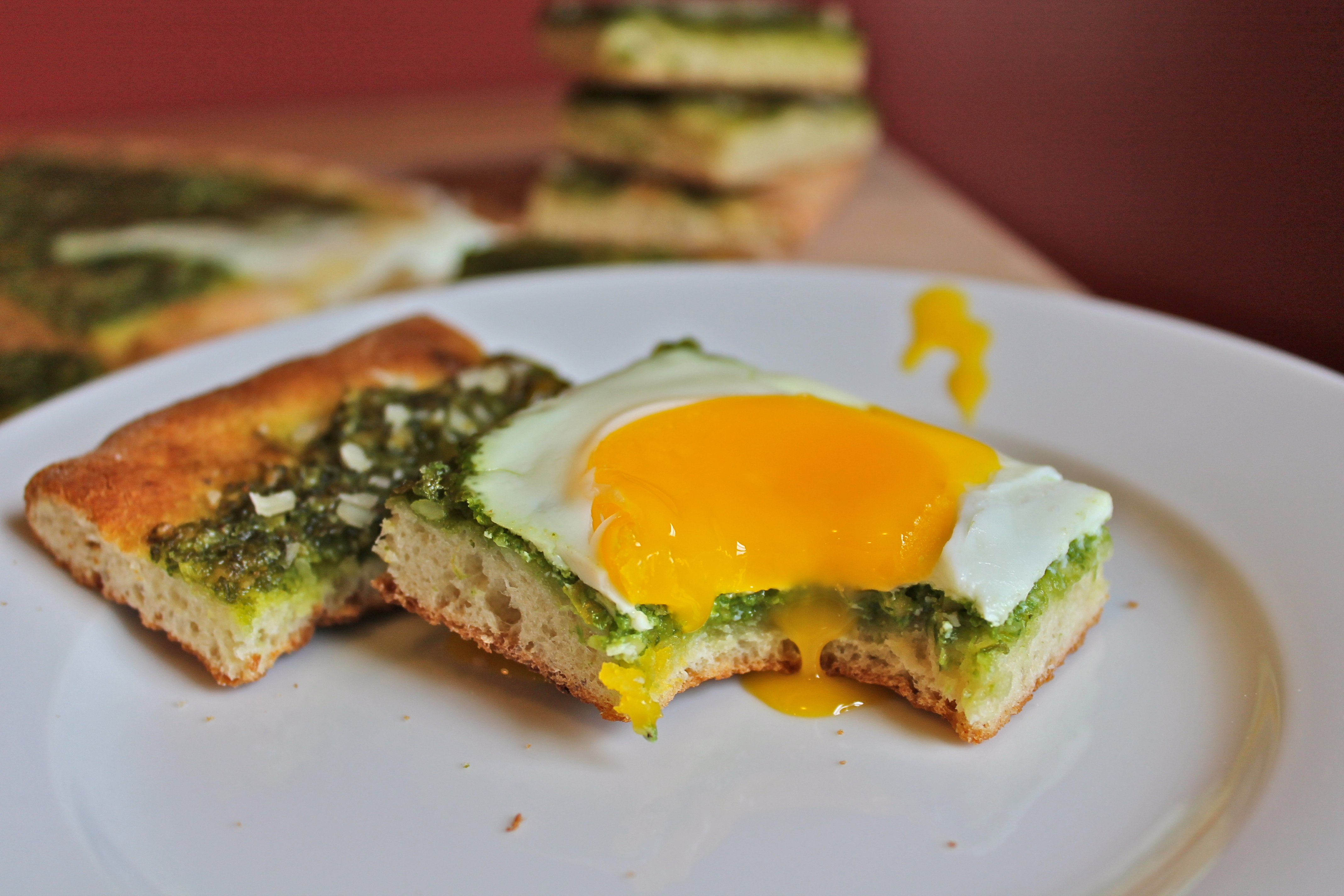
But, guess what else?  This flatbread has a bit of a secret weapon.  In addition to making a fine side dish at lunch or dinner, it is also able to transform itself, with the addition of a single ingredient, into a fantastic breakfast meal.  By simply cracking some eggs onto the flatbread midway through cooking, your flatbread emerges from the oven as a cross between a breakfast pizza and the most flavorful eggs and toast you’ve ever had.  Don’t want to bother with making the dough in the morning then sitting around waiting for it to rise?  I don’t blame you.  Luckily, you can get around it by throwing the dough together the night before, then leaving it to rise in the refrigerator overnight.  Come morning, you’re one step closer to fresh flatbread dotted with baked eggs, and some great leftovers for lunch or dinner, rain or shine.

Last Year: Mango and Avocado Salsa

Semolina Flatbread with Arugula, Mint, and Spinach Pesto Recipe

Semolina Flatbread:

¾ cup warm water

1 tablespoon olive oil

1 tablespoon honey

1 ½ cups bread flour

½ cup semolina flour

pinch sea salt

1 teaspoon rapid rise yeast

In a small bowl, or in a measuring cup, whisk together the warm water, olive oil, and honey.

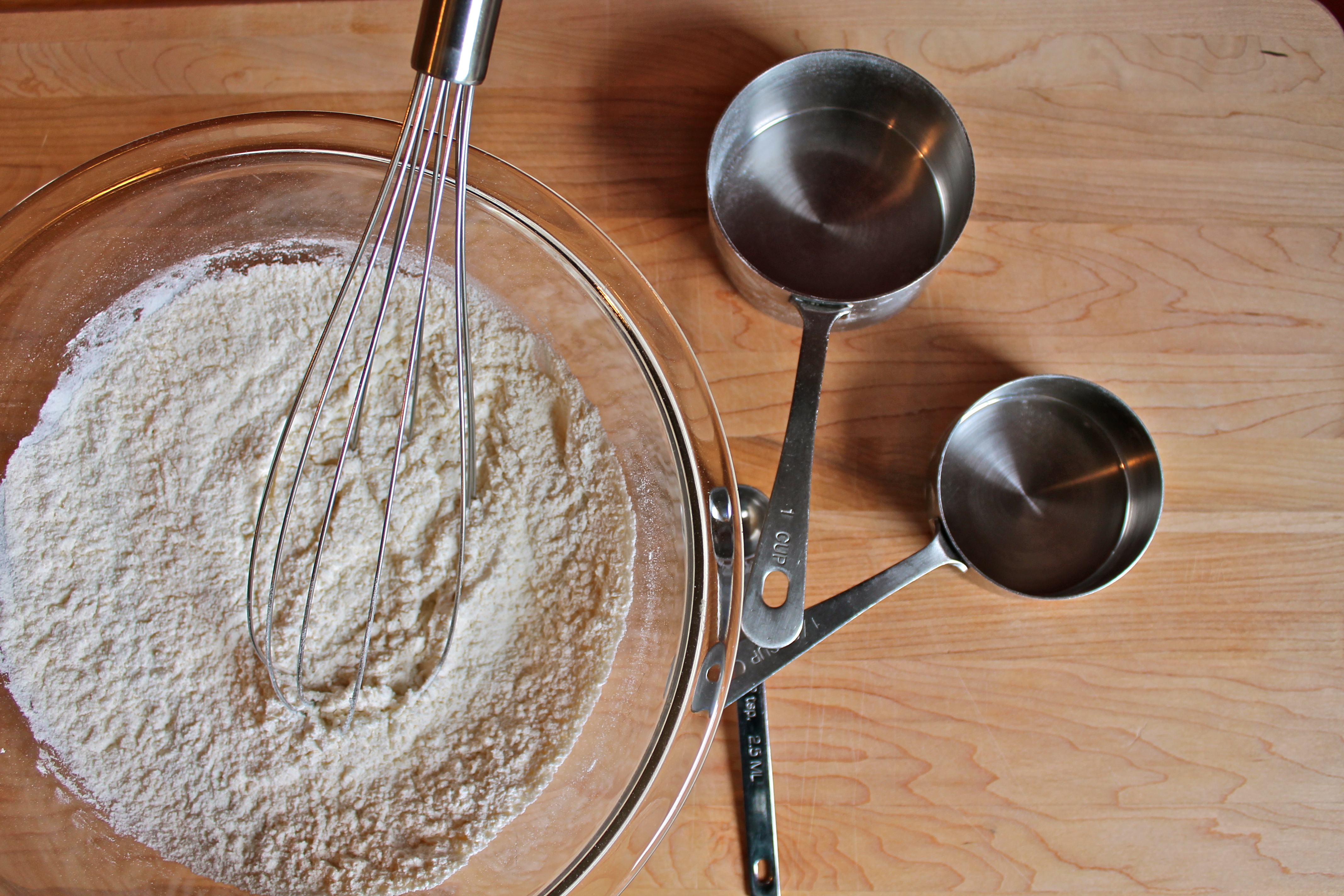
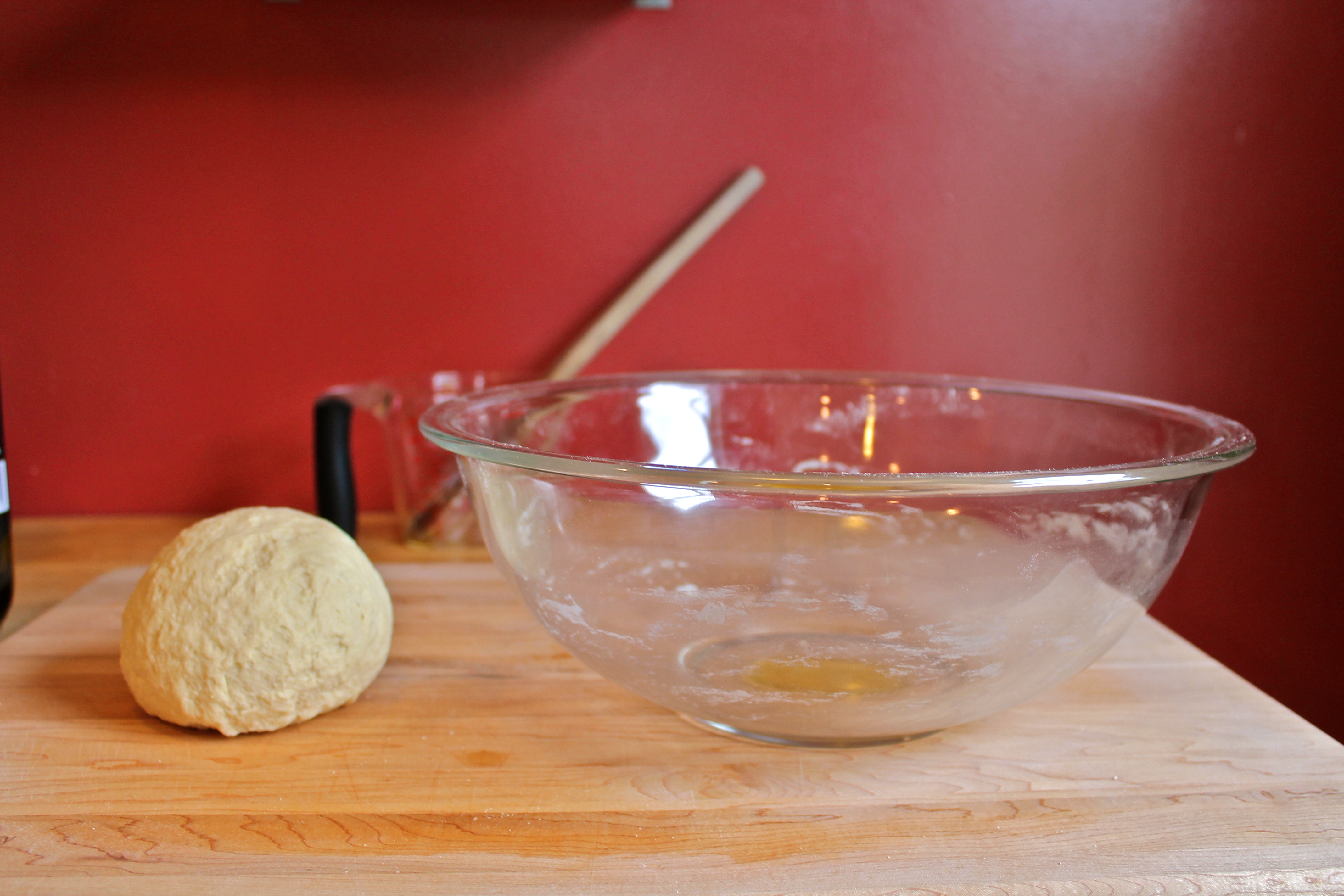
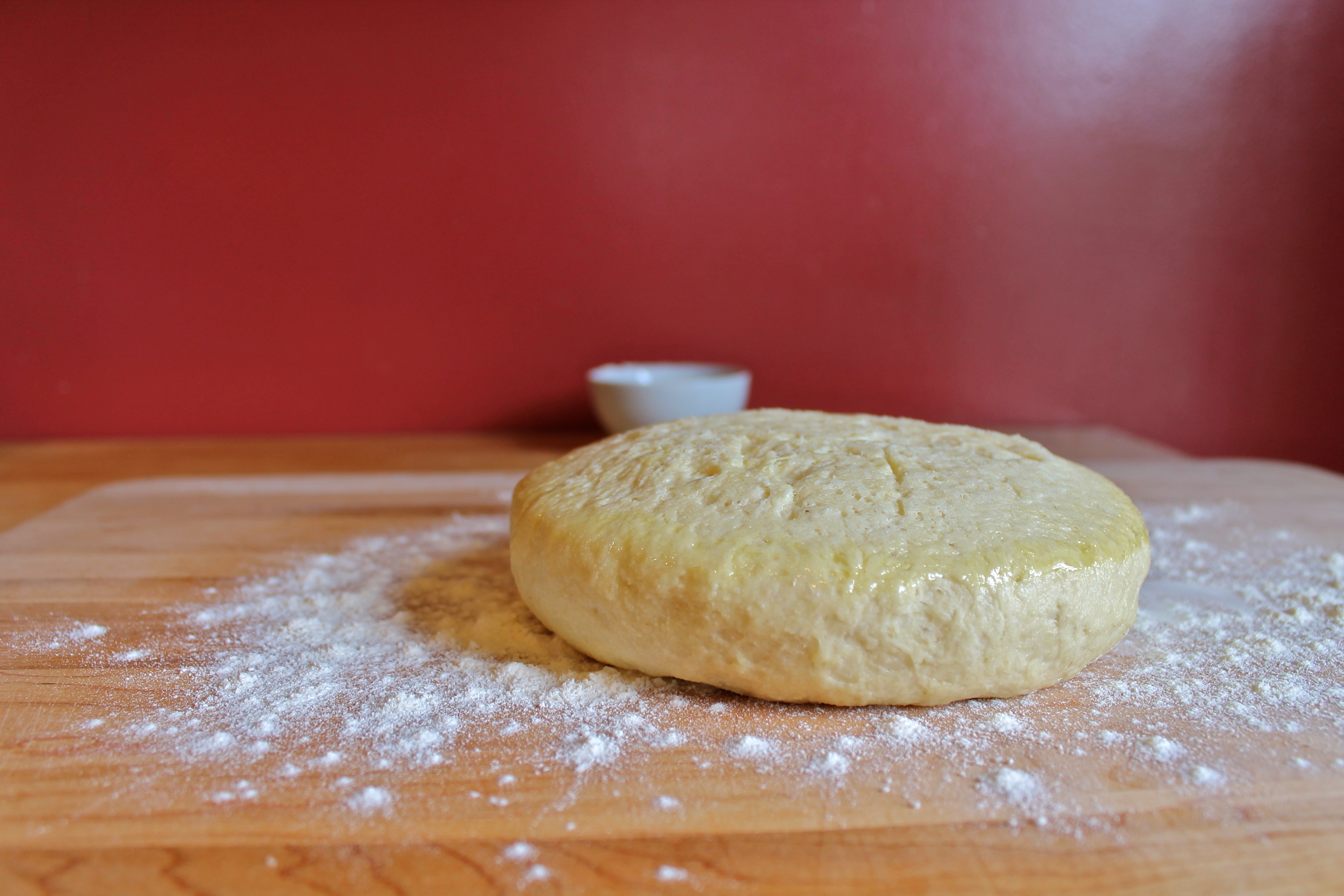
In a large bowl, whisk together bread flour, semolina flour, pinch of salt, and rapid rise yeast.  Pour the water mixture into the flour mixture, stirring with a wooden spoon.  When the ingredients are well combined (the mixture will look a bit shaggy), start kneading the dough, still in the bowl, with your hands.  Knead the dough, turning it over onto itself several times, until it is smooth and somewhat shiny, about 3-4 minutes total.  Form the dough into a ball.  Drizzle a bit of olive oil over the top of the dough, then roll it around in the bowl to coat it all over with oil.  Cover the bowl with a sheet of plastic wrap or a moistened towel, and leave the dough to rise for 1 ½ to 2 hours, until it is large and puffy and more than doubled in size.  Alternately, you can cover the bowl with plastic wrap and then place it in the refrigerator to rise overnight.

While the dough is rising, make the pesto.

Arugula, Mint, and Spinach Pesto

½ cup packed fresh arugula

¼ sup packed fresh mint leaves

1 cup packed fresh spinach

1 large clove garlic, roughly smashed

1 teaspoon freshly grated lemon zest

2 tablespoons roasted almonds, chopped, sliced, or slivered

¼ cup extra virgin olive oil

¼ cup finely grated Parmesan cheese, plus another ¼ cup for topping the flatbread after it bakes

salt and pepper to taste

In the bowl of a food processor or in a blender, combine arugula, mint, spinach, garlic, lemon zest, almonds, olive oil, and ¼ cup of Parmesan cheese.  Add salt and pepper to taste (the cheese is a bit salty already, so you won’t require much additional salt).  Process or bend the ingredients until they are fully incorporated and have turned into a rich paste.  You will have to stop several times to scrape down the sides of the bowl or blender, but it is necessary in order to make sure all the ingredients are properly combined.

Makes about ¾ cup pesto.

Preheat oven to 500 degrees Fahrenheit.  Place a pizza stone or heavy baking sheet on the lower middle rack of the oven as it preheats.

Line a rimless or overturned baking sheet with a large piece of parchment paper, and set aside.

When the dough has fully risen (if you are taking the dough out of the refrigerator after it has risen overnight, allow it to rest on the counter for 20-30 minutes so it can lose some of its refrigerator chill and is easier to work with), turn it out onto a well-floured surface.  Using your hands, shape the dough into a 14-inch by 10-inch rectangle, gently stretching and poking the dough in order to coerce it into taking shape.  Place the rectangle of dough onto the parchment-lined baking sheet.  Spread the pesto over the surface of the dough, leaving a ½-inch border around the edges.

Slide the dough, still on its sheet of parchment paper, onto the heated baking sheet or pizza stone in the oven.  Bake for 10 minutes, until the edges of the dough are golden brown and slightly puffed.

If adding eggs to your flatbread, crack 3 to 4 eggs into a bowl.  After the flatbread has baked for 5 minutes, carefully pour the eggs onto the flatbread, directing the eggs as far from the edges as possible (if the eggs are too close to the edges they will simply slide off onto the hot baking sheet, which makes an incredible mess).  Bake the flatbread for an additional 5 minutes, until the egg whites are fully cooked and the egg yolks are slightly runny.  If you’d like your eggs firmer, add them a minute sooner so they have time to bake a minute longer.

Remove flatbread onto a wire rack to cool slightly.  Sprinkle with remaining ¼ cup grated Parmesan cheese.  When bread has cooled a bit, cut into squares and serve.