Tag Archives: food

Grilled Lemongrass Chicken

29 Jan

Keen observers may have noticed by this point that I tend to go on extended benders when I become interested in making particular types of food.  Over the summer I made more tarts and galettes than any rational human should consider consuming in the span of a mere 3 months, and not long after that I became enamored with all things related to Mexican food.  A short glance at the most recent archives will more than give away the fact that my heart currently resides on the continent of Asia, bringing us food from India, Japan, and undetermined (but it sure tasted good).
A couple of those recipes are courtesy of Naomi Duguid and Jeffrey Alford, a formerly-married couple from Canada (and now Canada and Thailand) who make their living traveling around (mostly through Asia) with their children and researching recipes.  They have written numerous cookbooks (including two books on baking and one book entirely about rice), and I can only imagine that, given their track record of producing incredible recipes and cooking techniques, time will only bring us more of their wonderful work.
This recipe for lemongrass chicken is taken from one of Duguid and Alford’s books with a focus on the cuisines of Southeast Asia, from Myanmar (Burma) to Vietnam.  As is often the case, I was reading this cookbook as I would read a non-cookbook, sitting down and flipping through it page by page, reading everything in detail before moving on.  My best friend once revealed to me that sometimes she liked to sit in bed and read a cookbook before falling asleep, as one might read a novel or a magazine, and I could not stop nodding my head in agreement (needless to say, there is a reason we are best friends).
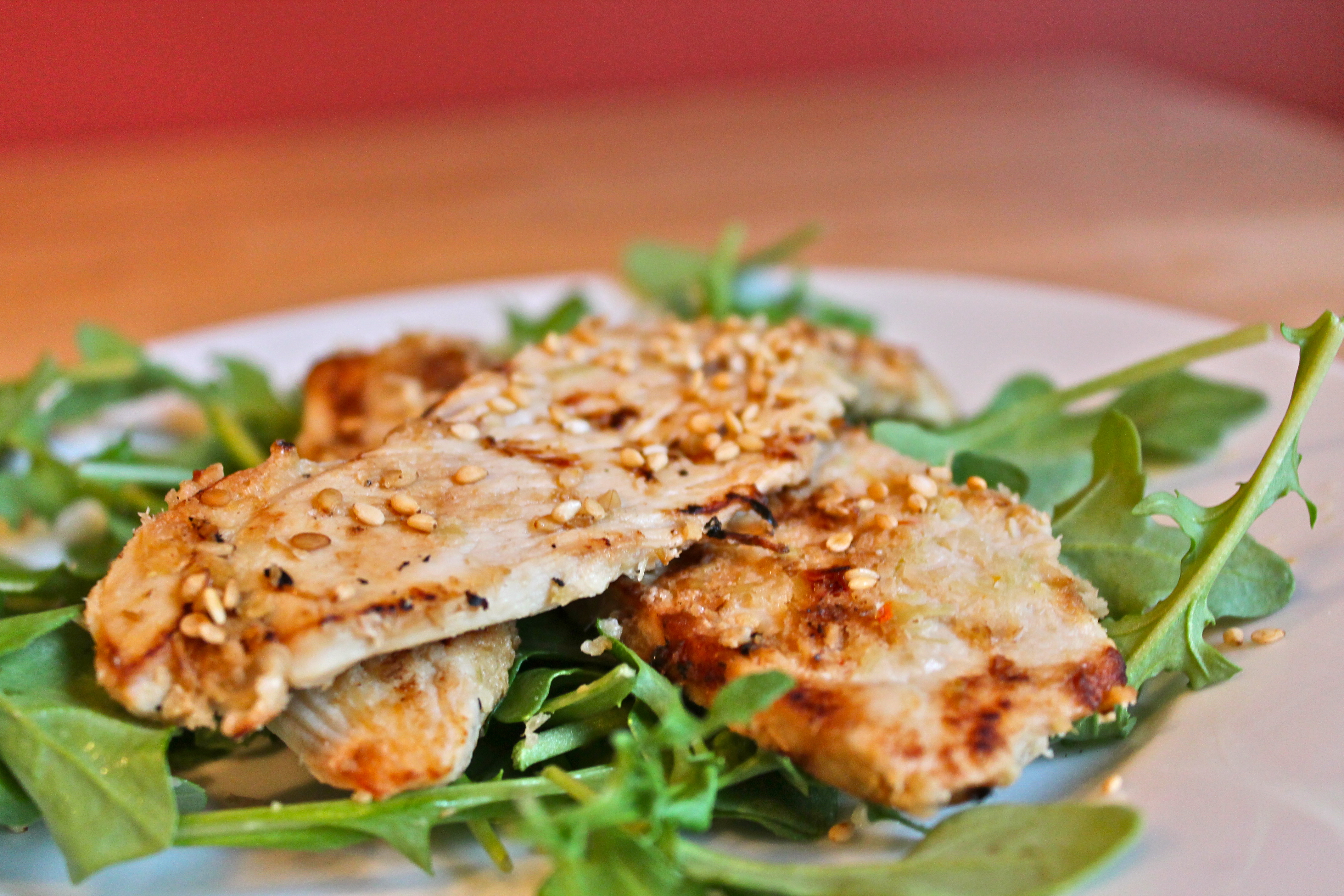
The recipe originally calls for beef, but I, recent indiscretions aside, am not the biggest fan of beef, so I swapped it out from some chicken breasts.  Say what you want to about everyone’s favorite meat to belittle, but boneless, skinless chicken breasts really work well in this application, subtly sitting in the background so the lemongrass marinade can receive all the glory.  For a dish so simple, it is a huge winner in our household.  We eat it over steamed rice, over thin rice noodles sprinkled with herbs, or sometimes over a pile of fresh and snappy arugula.  I can’t say that I’ll ever possess the gumption to cook an everyday meal like Duguid and Alford are prone to doing (I recall an article in the New Yorker that detailed the couple making a casual meal of homemade crackers, hand-rolled noodles, and roasted wild boar), but with inspiration culled from time spent with many a cookbook, I am at least hoping that, little by little, I’ll be able to take these little bursts of global cooking and transform the bulk of them into regular staples on our table.  This recipe is a good place to start.
Grilled Lemongrass Chicken

From Hot, Sour, Salty, Sweet, by Jeffrey Alford and Naomi Duguid

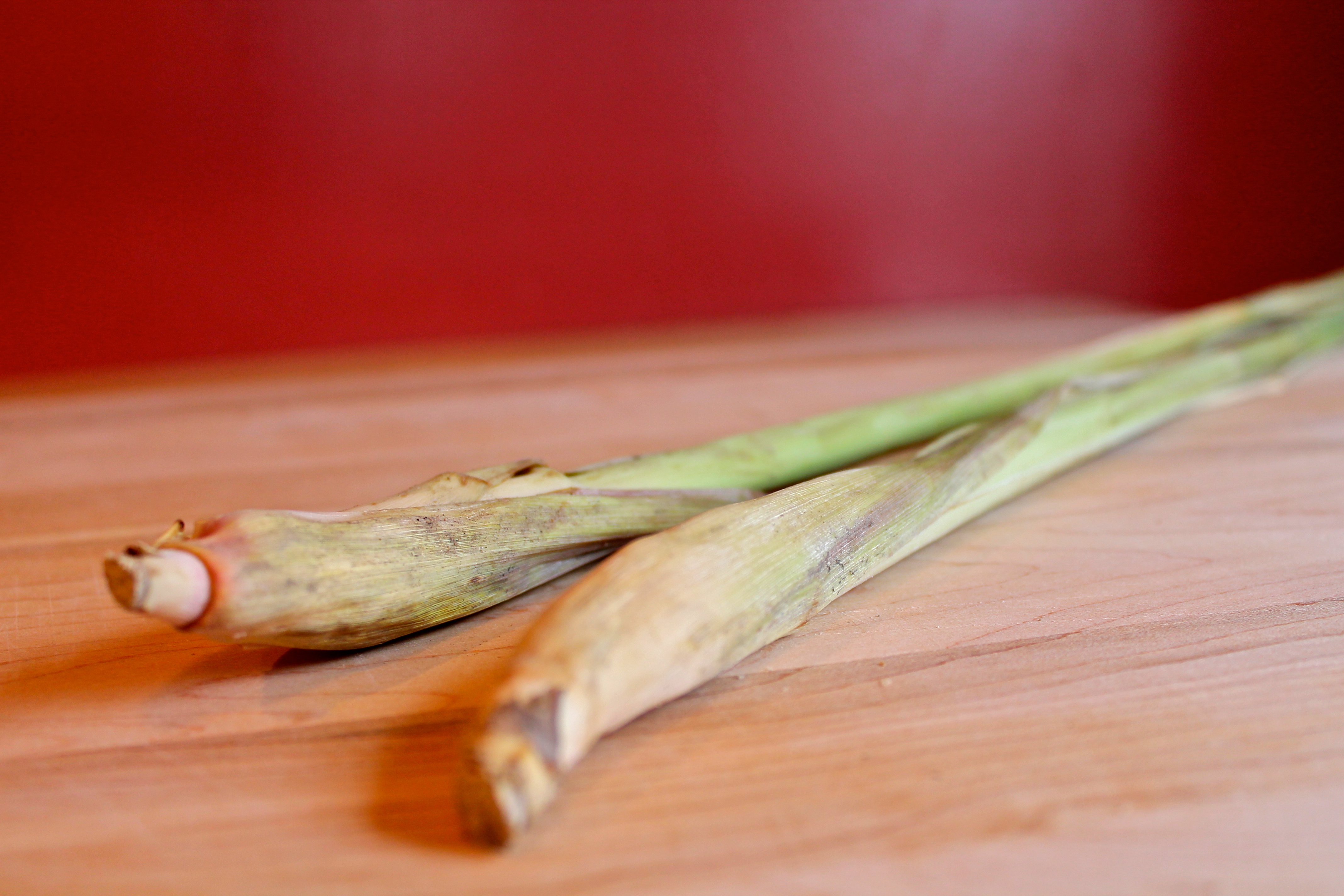
2 stalks lemongrass, trimmed and minced

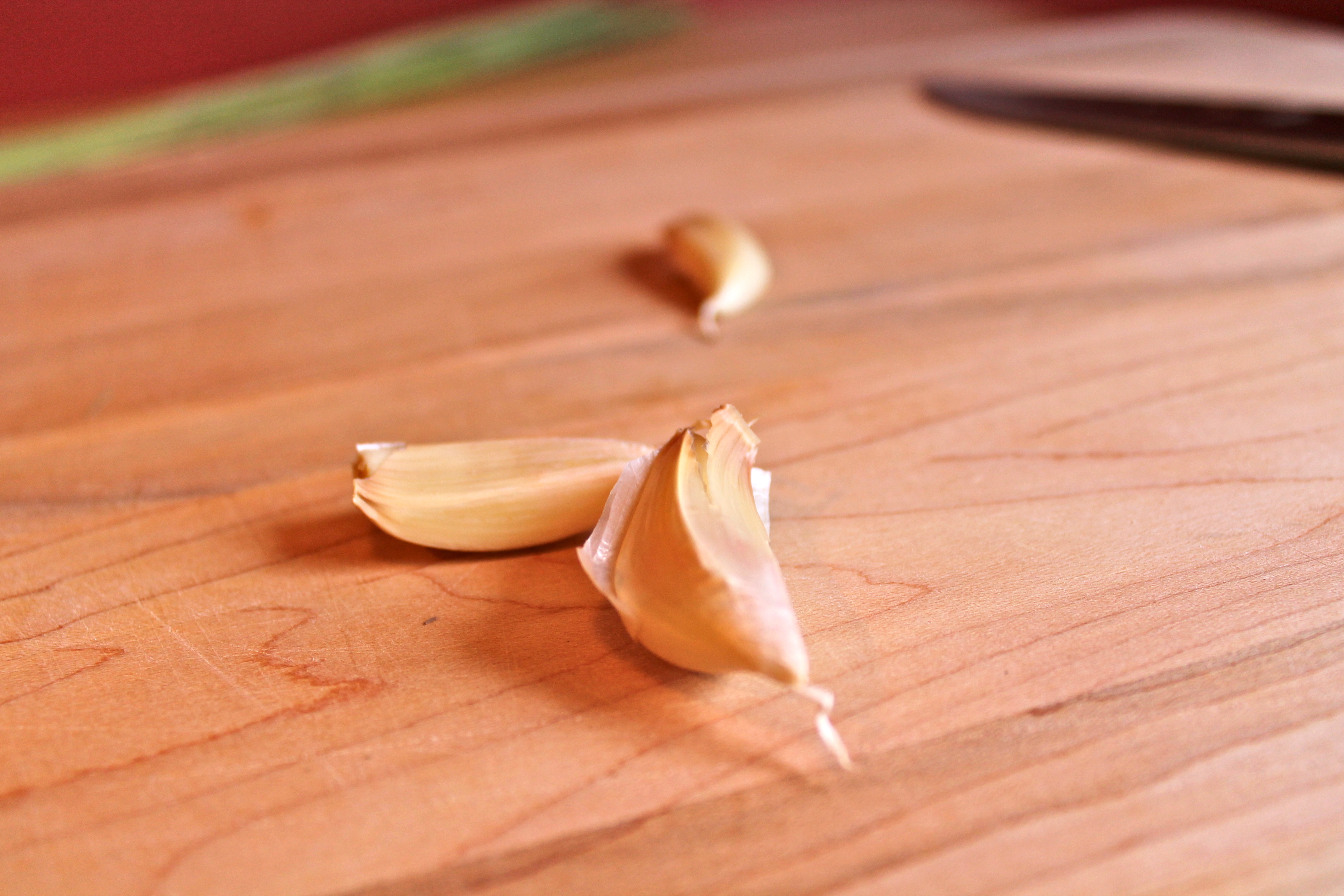
2 to 3 cloves of garlic, peeled and chopped

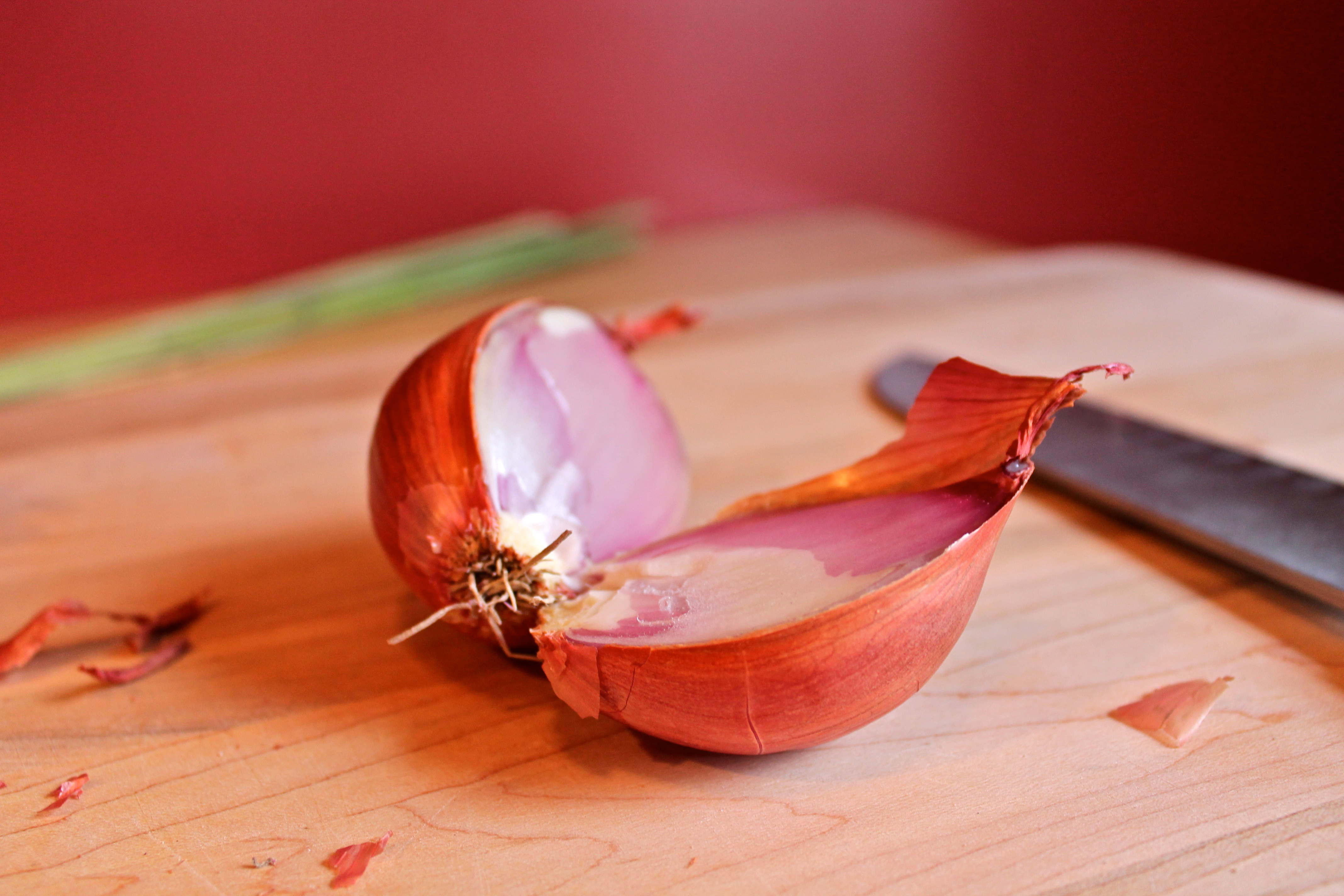
2 shallots, peeled and chopped

1 bird or Serrano chile, finely chopped

2 teaspoons Vietnamese or Thai fish sauce

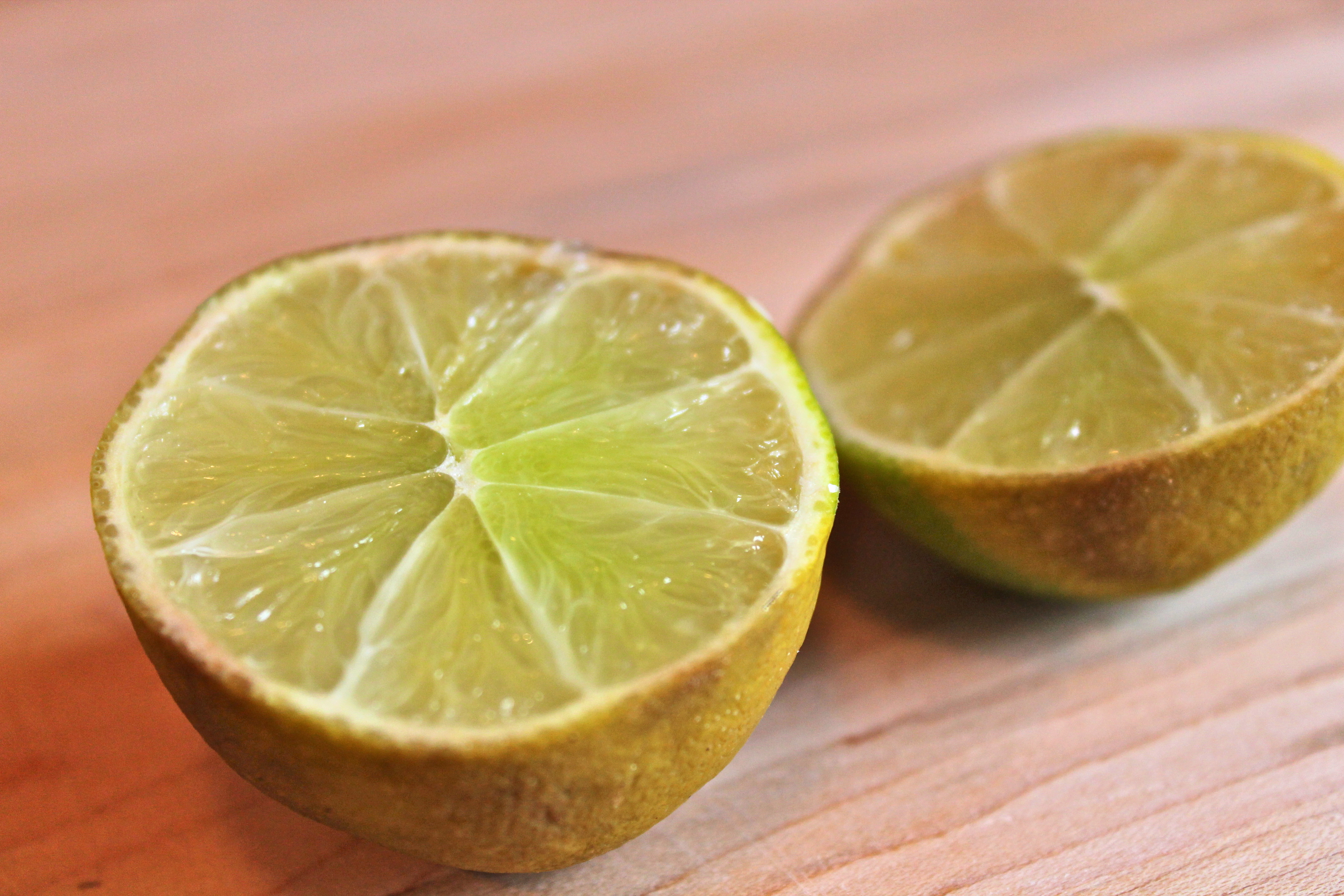
1 tablespoon fresh lime juice

1 tablespoon water

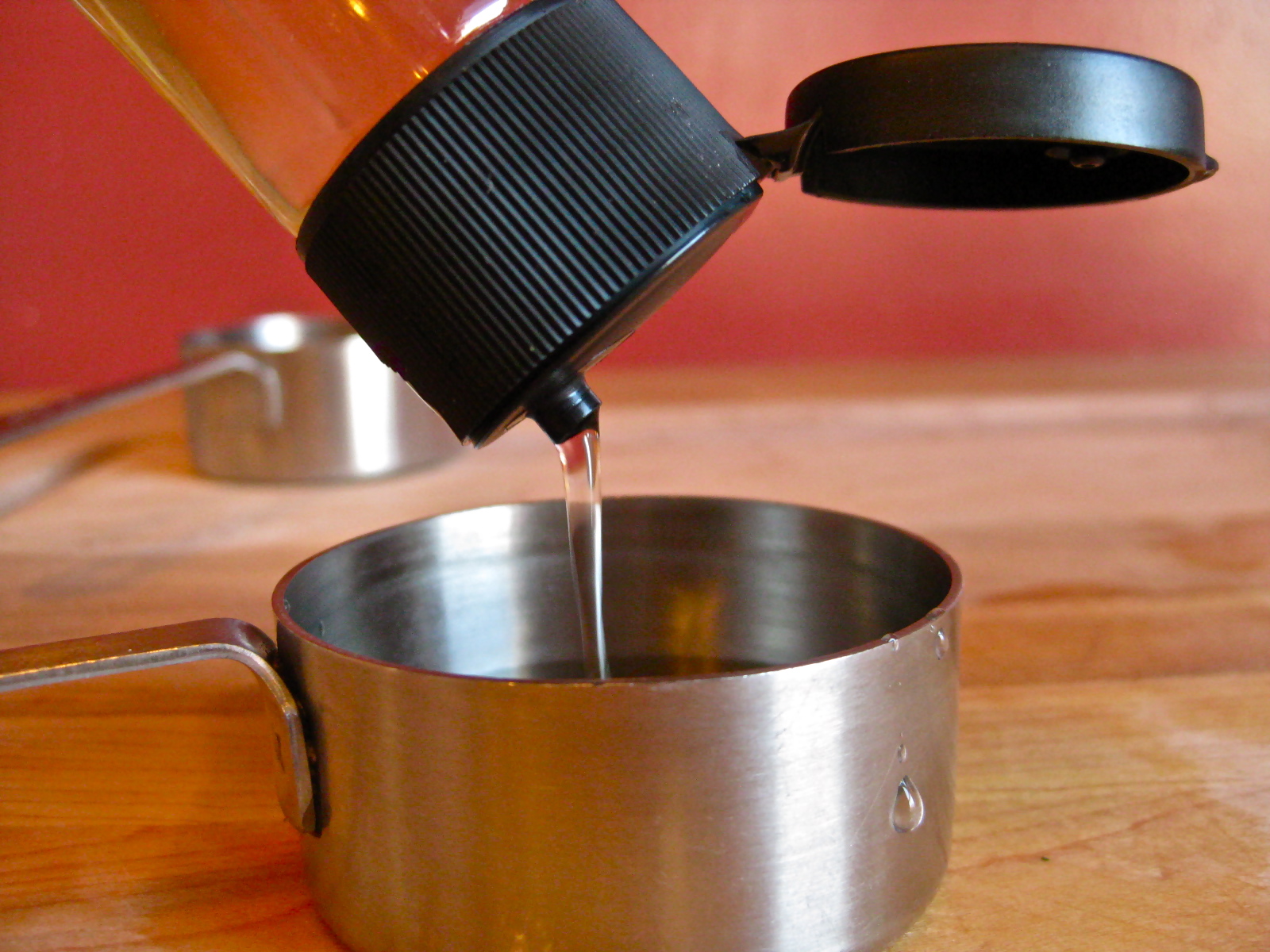
1 tablespoon roasted sesame oil

1 pound boneless, skinless chicken breasts

2 tablespoons roasted sesame seeds

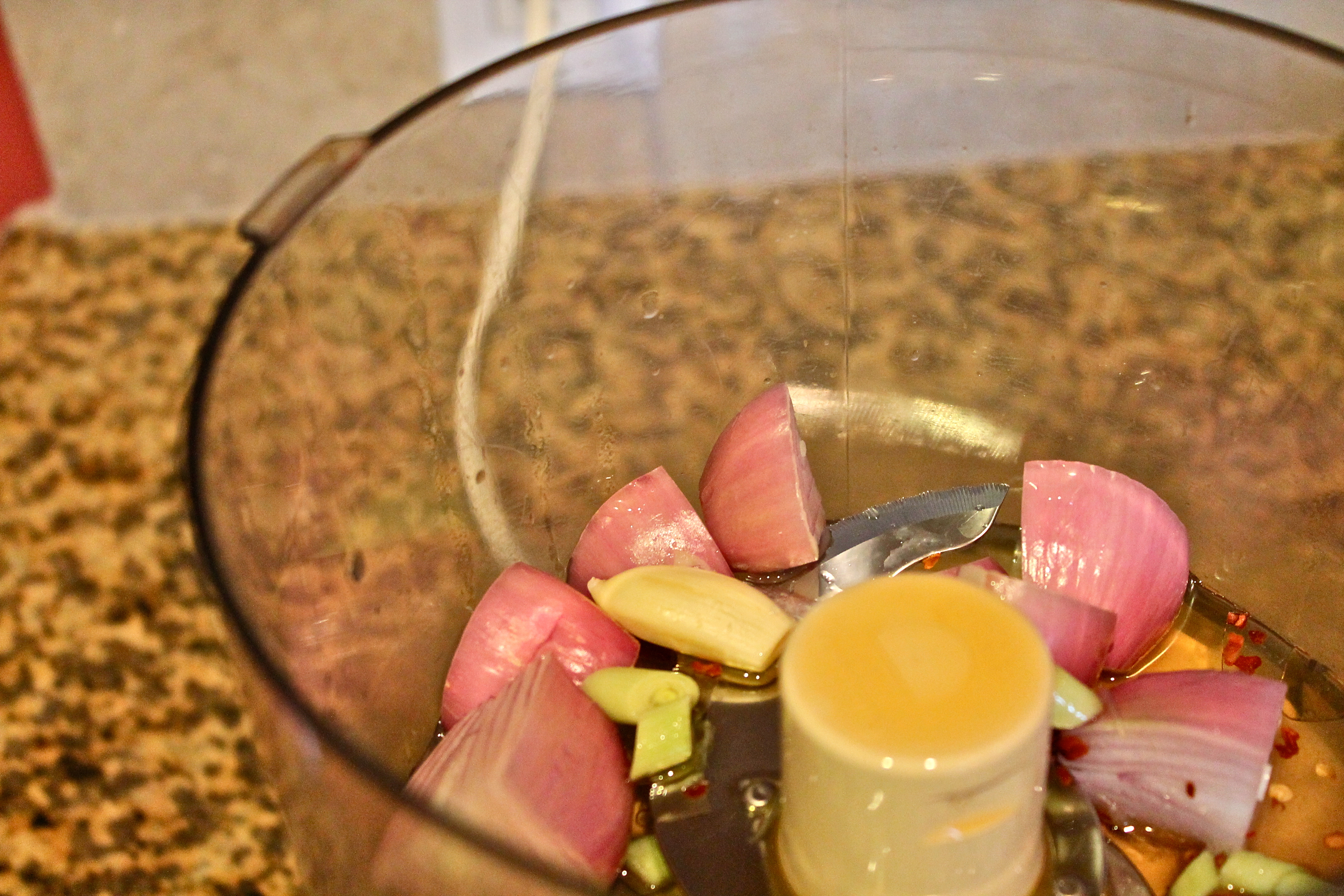
To prepare the marinade, combine lemongrass, garlic, shallots, and chile in a mortar and pestle or a food processor and pound or blend to a paste (adding just a little water if necessary to make a paste).   Transfer the paste to a bowl, add the fish sauce, lime juice, and water and blend well.  Add sesame oil and stir well.  Set aside.

Cut the meat into very thin slices (less than 1/8-inch) against the grain (this is much easier if the meat is cold).  Duguid recommends you then cut the slices into 1 1/2 –inch lengths, but I kept our slices longer and was quite fond of them that way.  Place the meat in a shallow bowl, add the marinade, and mix well, making sure that the meat is well coated.  Cover and marinate in the refrigerator for at least 1 hour, or up to 8 hours.

Prepare a grill, grill pan, or broiler on medium high heat.  Sprinkle the meat with sesame seeds, then grill or broil until cooked through, about 2 minutes for the first side and 1 minute for the second side, depending on how hot your grill or broiler is and how fast the chicken is cooking through.

Serves 4 as part of a meal, more as an appetizer.

Apple Cinnamon Crumb Bread

26 Jan

It has been raining.  The sun has disappeared, the clouds are looming in a rather ominous fashion, everything is absolutely soaked, and there is water where there is not supposed to be water.  Meaning, inside our house.  Clearly, it is time for some cake.

What’s that?  The name of this recipe does not indicate that one would be making cake, but rather bread?  Yes.  Yes, this is true.  But, in the interest of maintaining complete honesty, I could not in good conscience continue to call this baked treat a bread when, butter and sugar and cake flour, oh my, it is clearly nothing so innocent.

What it is is utterly delicious.  I’ve been eyeing this bread (cake) for years, stopping at its lovely and drool-inducing photo every time I flipped through Rose Levy Beranbaum’s Bread Bible, but it was only during a recent bout of rather soggy weather that I was finally persuaded (by myself, and my woe over not being able to see the sun) to make it.  Predictably, I have been cursing myself ever since for the long wait I endured before tasting this bread (cake), as it turns out that this bread (cake) just so happens to be perfect in every way.

Buttery crumb topping?  Perfectly spiced slices of apple waiting beneath the crumb topping?  An unbelievably moist and perfectly textured bread (cake) propping everything up?  Do you like any of these things?  If so, let me know, because I might be compelled to bring you some of this the next time I make it.  When I first made this bread (cake), I was immediately struck with the realization that, alone at home, I could not be trusted to be in the same house with it.  After wrapping it up and practically forcing my son’s kindergarten teacher to take it from me (and subsequently spoiling the children’s heretofore unfettered streak of receiving purely healthy afternoon snacks while at school), I decided that, if I were to make this bread (cake) again, it would have to be while surrounded by a ravenous horde who would be certain to devour the treat before I was able to stuff it down my own gullet.

This is a rather inelegant way of saying my friends, this is a baked good of legend.  I highly recommend you make it, but I also advise you to do so at your own risk of overindulging to the point of shame.  If you are not prone to such behavior, I can only say good for you, and how in the world did we ever come to be friends?

Apple Cinnamon Crumb Bread

From The Bread Bible, by Rose Levy Beranbaum

Crumb Topping and Filling

¼ cup firmly packed light brown sugar

1 ½ tablespoons (or, 1 tablespoon plus 1 ½ teaspoons) granulated sugar

¾ cup walnuts (I used walnuts and pecans, and it was fantastic)

1 teaspoon cinnamon

¼ cup plus 2 tablespoons unsifted cake flour

3 tablespoons unsalted butter, melted

¼ teaspoon pure vanilla extract

Apple Filling and Batter

1 small tart apple (I used a Granny Smith), sliced into 1 heaping cup of slices

2 teaspoons lemon juice

1 large egg

2 large egg yolks

½ cup sour cream

1 teaspoon pure vanilla extract

1 ½ cups sifted cake flour

¾ cup granulated sugar

¼ teaspoon baking powder

3/8 teaspoon (or a scant ½ teaspoon) baking soda

scant ¼ teaspoon salt

9 tablespoons unsalted butter, at room temperature

Preheat the oven to 350 degrees Fahrenheit.  Adjust an oven rack to the middle level.  Grease and flour a 9”x5” loaf pan.

In a food processor fitted with the metal blade, pulse the sugars, nuts, and cinnamon until the nuts are coarsely chopped.  Reserve ½ cup for the filling.  Add the flour, butter, and vanilla to the remainder and pulse briefly just until the butter is absorbed. Alternately, if you do not have a food processor, you can chop the nuts by hand and then mix everything together using a fork.  Empty the mixture into a bowl and refrigerate for about 20 minutes to firm up, then break up the mixture with your fingers to form a coarse, crumbly mixture for the topping.

Just before mixing the batter, peel and core the apple, then cut it into ¼-inch thick slices.  Toss slices with lemon juice.

In a medium bowl, combine the egg, egg yolks, about ¼ of the sour cream, and the vanilla.

In a mixer bowl, or other large bowl, combine the cake flour, sugar, baking powder, baking soda, and salt.  Mix for 30 seconds on low speed using a hand-held mixer or the paddle attachment of a stand mixer.  Add the butter and remaining sour cream and mix until the dry ingredients are moistened.  Increase speed to medium if using a stand mixer or high speed if using a hand-held mixture, and beat for 1 minute to aerate and develop the structure.  Scrape down the sides of the bowl.  Gradually add the egg mixture in two batches, beating for 20 seconds after each addition to incorporate the ingredients and strengthen the structure.  Scrape down the sides of the bowl.

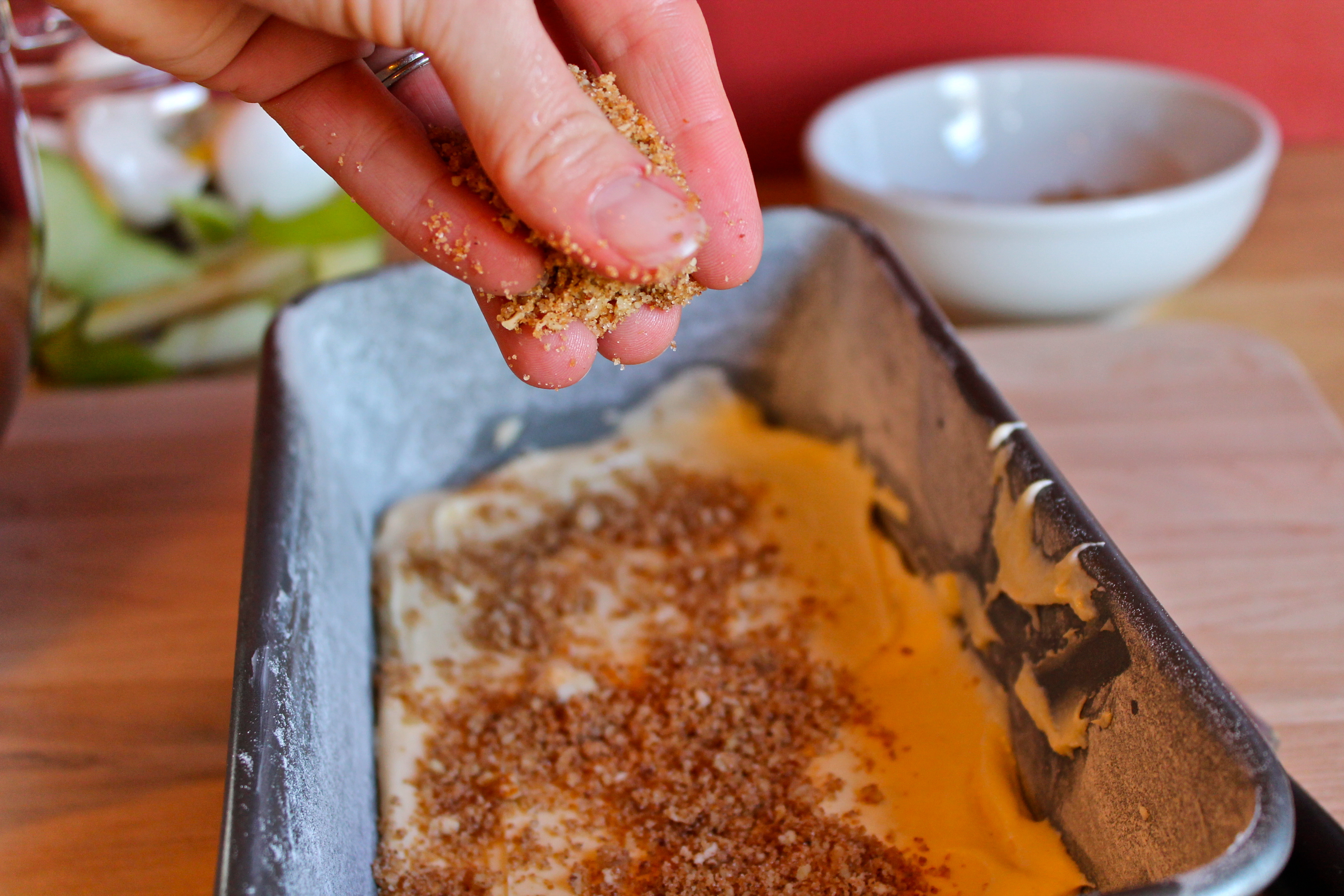
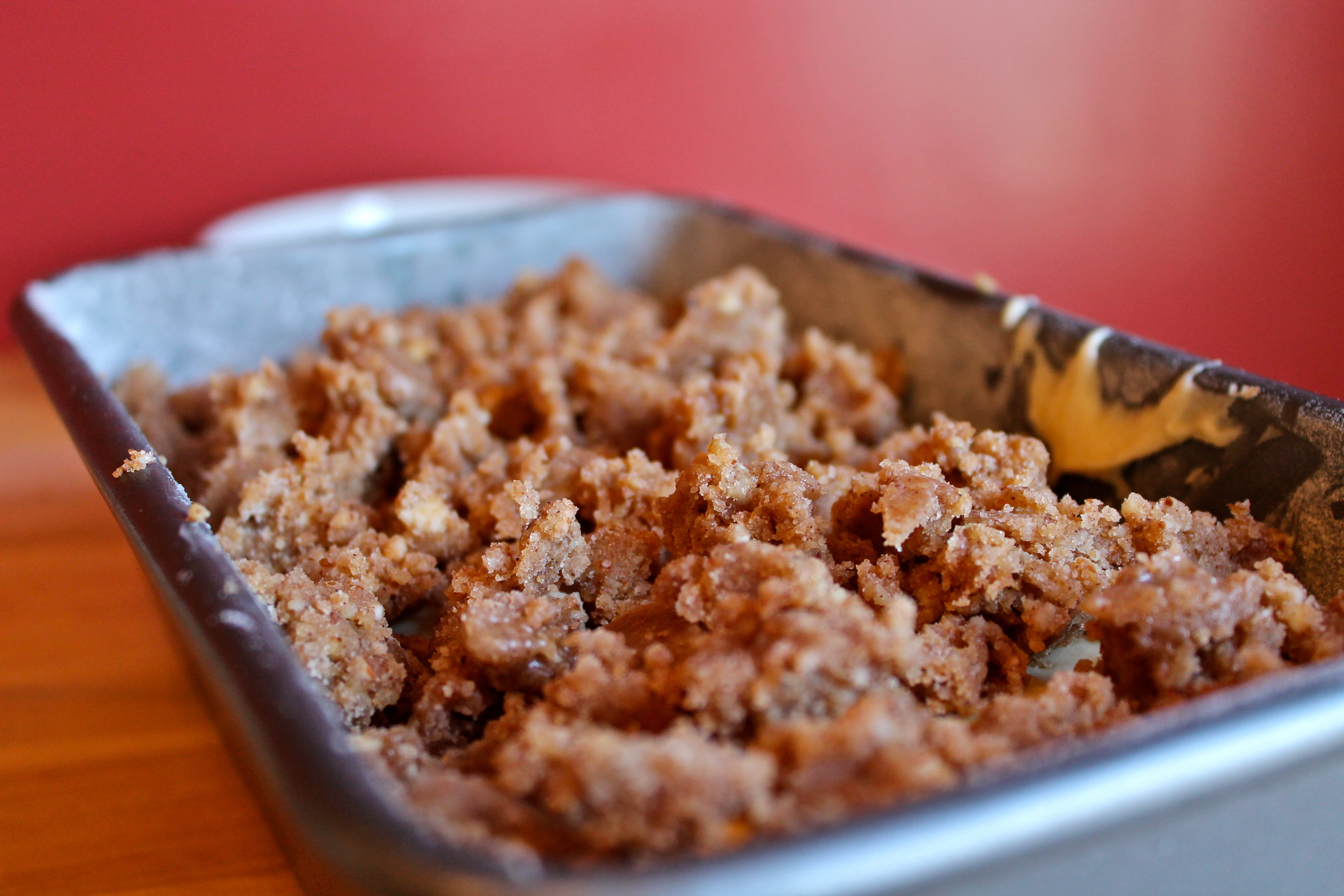
Scrape about 2/3 of the batter into the prepared pan.  Smooth the surface, then sprinkle with the reserved ½ cup crumb mixture.  Top with the apple slices, arranging them in rows of overlapping slices.  Drop the reserved batter in large blobs over the fruit and spread it evenly using a small offset spatula or the back of a spoon.  The batter should be ¾-inch from the top of the pan.  Sprinkle with the crumb topping.

Bake the bread for 50-60 minutes or until a wooden toothpick inserted in the center comes back clean and the bread springs back when pressed lightly in the center.  If tested with an instant-read thermometer, the center of the bread should read 200 degrees Fahrenheit.  Tent the bread loosely with buttered foil after 45 minutes to prevent overbrowning.

Remove the bread from the oven and set it on a wire rack to cool for 10 minutes.  Place a folded kitchen towel on top of a flat plate and cover it with plastic wrap.  Oil the plastic wrap.  Loosen the sides of the bread with a small metal or plastic spatula, and invert it onto the plate.  Grease a wire rack and reinvert the bread onto it, so that it is right side up.  Cool completely, about 1 ½ hours, before wrapping airtight

Ponzu-Marinated Flank Steak

23 Jan

There is a restaurant down the street from me that just might end up unseating the other restaurant down the street from me as the World’s Most Dangerous Restaurant to Have Down the Street from You (which is not to be confused with our other nemesis, The World’s Most Dangerous Food Cart to Have Down the Street from You).  My will power, it is weak.  When faced with the sweet memory of duck breast and lemongrass salad, I grow loose in the knees and wallet, and all I want to do is run down the street and place my order immediately.  I hear the name of a certain restaurant, and I am like a seal that has been trained to bark on command.  Spicy!  Thai!  Street!  Food!  Now!  Completely puzzling, however, is the added desire to eat a particular meat dish from the other, newer dangerous place, a meat dish that, in any other place, I am sure I would loathe.

Picture this: super thin slices of steak (I know!  I am talking about steak! Who am I?) are marinated in a savory, bright, citrusy mix of kelp and lime juice.  Then the meat gets skewered and stuck directly into a roaring fire, searing in every possible place and becoming incredibly, impossibly juicy.  The skewer, still sizzling, is brought directly to your table, where you try with all your might to maintain a sense of dignity and manners while you ravenously devour the meltingly delicious meat.  No one is more surprised than me that I enjoyed this dish as much as I did.  For a split second, I was transformed into a dedicated carnivore, a person who actually devoured meat.  It was utterly bizarre.

A few weeks ago, the holidays in full swing, I was overcome with the idea I had to try and recreate the dish at home, a task made difficult by the fact that a) I didn’t really know what exactly made up the marinade enveloping the meat in question, and b) it is winter, and therefore my access to an open fire over which to cook things is fairly well nonexistent.  The first problem was easily remedied, as a small amount of hunting around led me almost immediately to an old specials menu from the Dangerous Restaurant, and a bit more poking around led me to this great New York Times recipe for ponzu marinade, which happened to be the mystery flavor.  Ponzu, as it turns out, is sort of like a Japanese vinaigrette, and can be used in everything from salads to marinades.  One of the main flavor profiles in ponzu is kombu (dried kelp), which provides a hefty dose of natural glutamates to give the ponzu a fat (but not fatty), umami taste that rounds out your taste buds.  It also helps break down the fibers in meat, tenderizing as it simultaneously flavors.

The other problem, I am afraid, could not really be solved, as winter in the PNW means cold and wet, and cold and wet are no friends of the grill.  In a pinch, I fired up our stovetop grill pan as hot as it could possibly get, and hoped that it would do the trick.

To be quite honest, it was pretty close.  The only thing missing was the melting, seared texture that can only be achieved by sticking a piece of meat into a wall of fire, but the flavor was dead on.  Bright, but also slightly mysterious, there is a lot going on in each bite.  I am waiting for summer to arrive so I can cook this dish again as I really want to (massive pile of fire, I await you), but, in the meantime, this version is certainly no slouch.

Ponzu Marinated Flank Steak

Sauce from Mark Bittman in The New York Times

2/3 cup fresh lemon juice, more to taste

1/3 cup fresh lime juice, more to taste

1/4 cup rice vinegar

1 cup good-quality soy sauce

1/4 cup mirin

1 3-inch piece kombu (dried kelp)

1/2 cup (about 1/4 ounce) dried bonito flakes (or, in a pinch, 1 tablespoon Vietnamese fish sauce)

Pinch cayenne

1 pound flank steak

In a bowl, combine all ingredients except flank steak. Let sit for at least 2 hours or overnight. Strain.

Slice the flank steak against the grain into thin strips.  Add the strips of steak to the bowl of ponzu, and marinate in the refrigerator, covered, for at least 1 hour.  When ready to cook, drain the meat and set aside.

Heat an outdoor grill as high as it will go, or heat a stovetop grill pan on high.  When the grill is incredibly hot, add the strips of steak, cooking as many as you can without crowding the meat.  The meat will cook very fast, only needing a minute or so on each side.  If your grill is not as hot as can possibly be, it might take two minutes per side.  What you are looking for are crisp edges and a remaining quality of juiciness.  It might take a bit of trial and error (depending on how thick your slices are and how hot your grill is), so start by cooking two or three pieces at a time and seeing how long they take.  The meat is thin, so the cooking time should not be more than a couple of minutes per side.