Tag Archives: food

Black Bread Rolls and Food for Traveling

29 Mar

When you have to travel in a car for a very long distance, and, thus, a very long period of time, it’s a challenge to try and figure out what you can do to make your time trapped in a car a little less unpleasant.  Last summer, while undertaking a nearly 700 mile drive south, we prepared the car for the needs of a child: toys, books, and a makeshift desk top crafted out of a strategically-cut piece of plywood.  A couple of weeks ago, preparing for a drive that would be half as long with a turnaround time twice as fast (last summer’s trip netted roughly 1400 miles in 8 days, but our most recent trip spanned 900 miles in only 4 days), we planned not for maximum entertainment while in the car, but rather for maximum efficiency.

Maximum efficiency in this case relegated lunch and snacks to the car, allowing for the most efficient use of driving time with the least amount of stops (or so we thought, until a certain preschool-aged child decided that it was of utmost importance to announce his desire to visit a restroom every 20 minutes, but that’s another story).  It also meant that I was going to be able to plan a small menu of picnic-type items, which gave me a certain amount of pleasure.  I am a big fan of meals that consist of many small bites of many different things, so this was right up my alley.

The first order of business, as it is in life, was snacks.  I roasted some nuts, sprinkled them lightly with sea salt, then combined them with some dried cherries and dried cranberries.  To excite our child, I also threw in some chocolate chips (be sure to combine these items AFTER the roasted nuts have cooled off, lest you inadvertently end up creating some sort of chocolate/nut blob that will cool into the world’s lumpiest candy bar.  Which, come to think of it, actually sounds sort of appealing…).  Baby carrots are always welcome, so I added those to the snack pile.  Strawberries and blueberries were fortuitously on sale at the market, so they came along, too.  I sliced up a pear and an apple, packed them into a tightly sealed container, and moved on to lunch items.

In the interest of keeping things simple, I planned to pack what amounted to tiny little sandwich fixings, only without the messiness of spreads and condiments.  The best way to accomplish this, obviously, is with cheese.  You slap some cheese on slices of bread and you’ve got the beginning of many a delicious sandwich.  You can pack cucumber slices and slices of red pepper, and those apple and pears I mentioned earlier are absolutely wonderful when tucked in between slices of sharp cheddar cheese and spicy black bread.
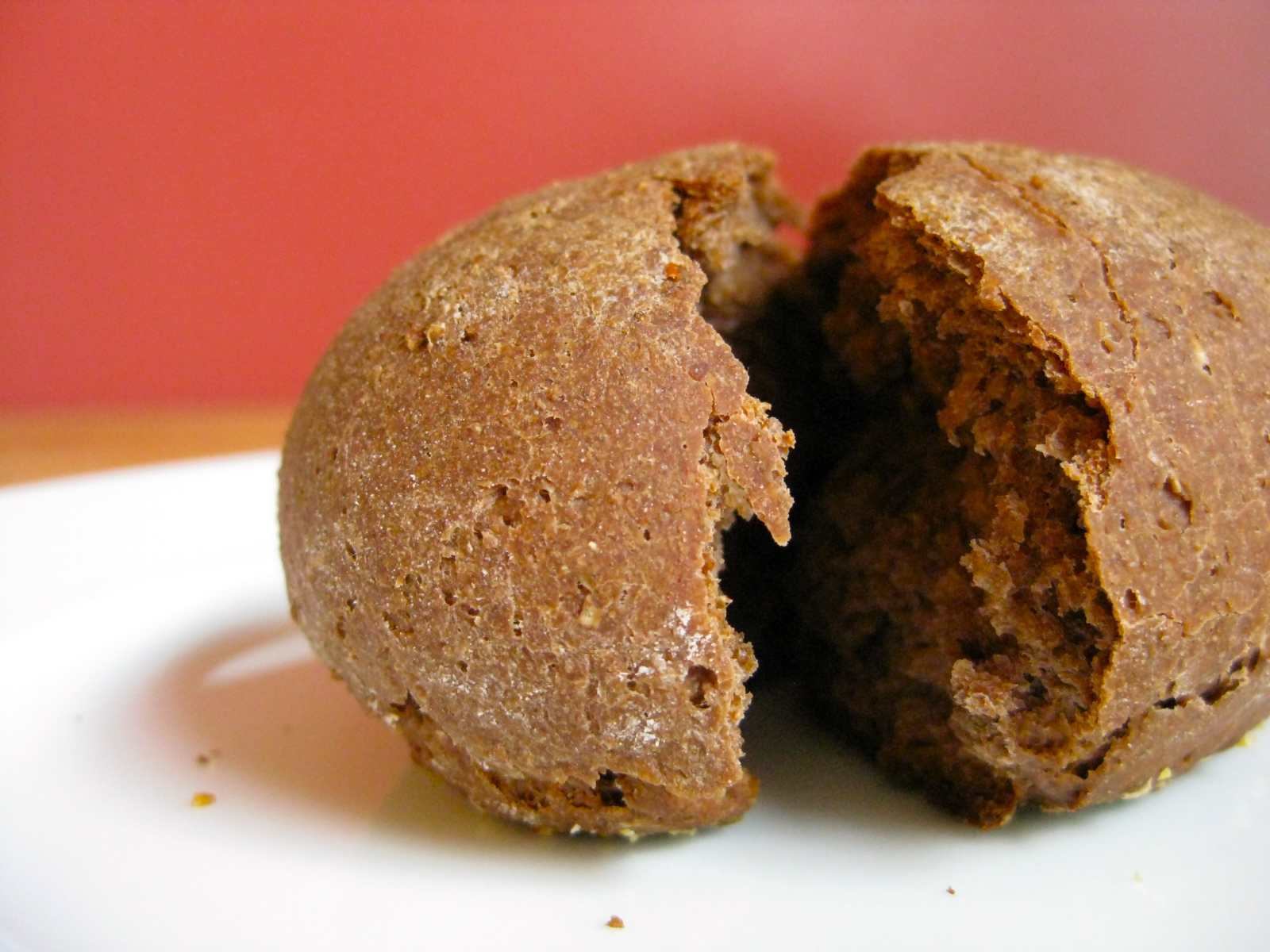
And now, having listed all the foods we managed to pack into one canvas bag for one very long drive, I have to admit something.  The most absolutely essential element to everything we ate?  The bread.  We ate it slathered with almond butter, we ate it enveloping vegetables, cheese and fruit, and we ate it plain, as a snack, managing to totally obliterate the entire supply within the first day of our trip.

Dense, satisfying, and packed with flavor (including hits of fennel, chocolate, espresso, and rye), it’s almost tough to imagine getting into a car now without a little disc of this bread to keep me company.  Luckily, car travel is not required of anyone in order to enjoy this bread, so you can bake it and enjoy it in preparation of another event.  Like, for instance, the fact that it is Tuesday.  Or Wednesday.  Or Thursday.  You get the idea.
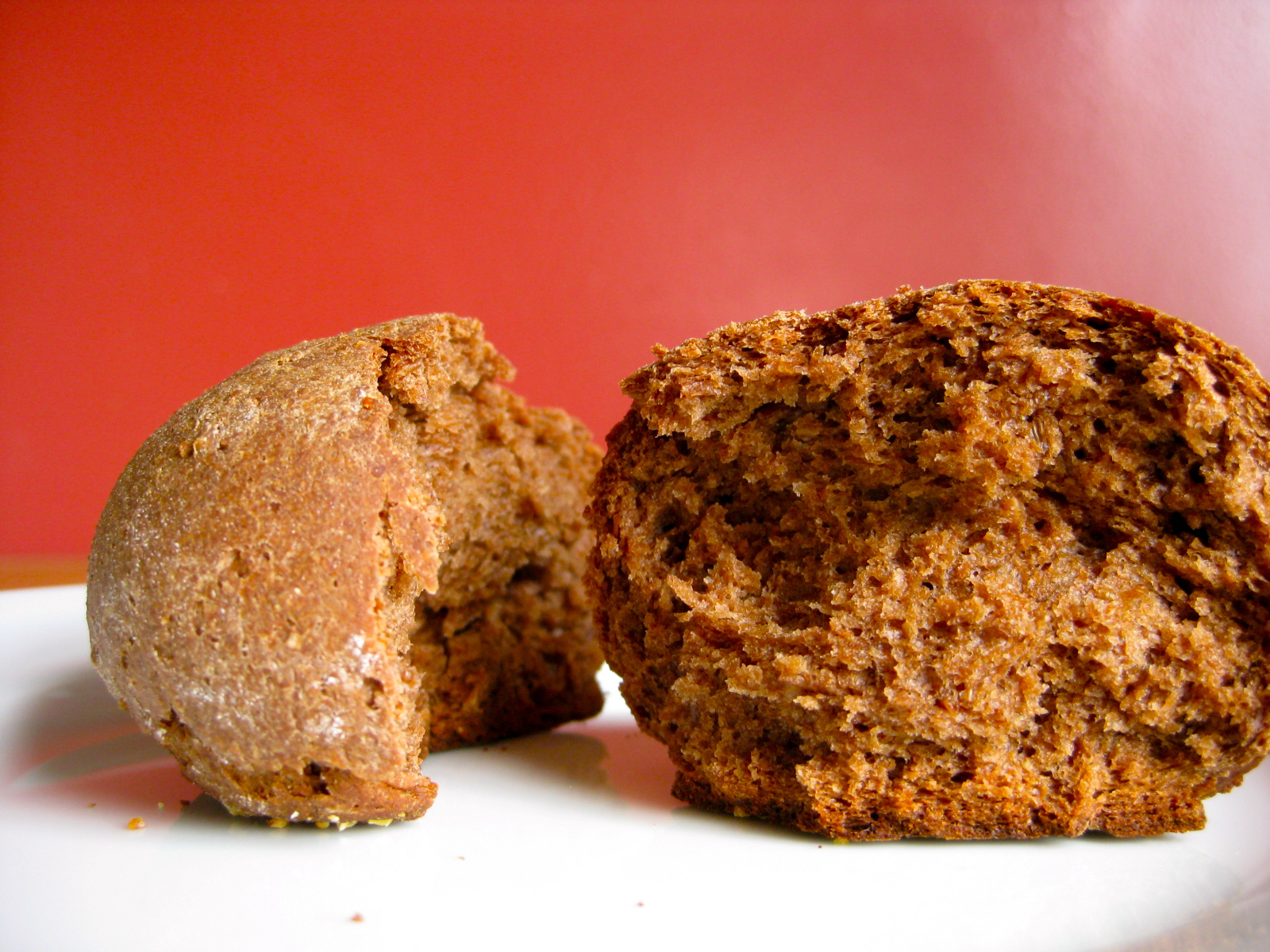
Black Bread Rolls

Adapted slightly from Beth Hensperger’s The Bread Bible

2 1/4 cups warm water (105-115 degrees F)

2 tablespoons active dry yeast

pinch sugar

6 tablespoons (3/4 stick) unsalted butter, melted

3 tablespoons molasses

1 tablespoon instant espresso powder

1 tablespoon salt

1 tablespoon caraway seends

1 teaspoon fennel seeds

1/3 cup wheat bran

1/4 cup unsweetened cocoa powder

3 cups medium rye flour

3 to 3 1/2 cups unbleached all-purpose flour

cornmeal, for sprinkling (optional)

1) Pour the warm water into a small bowl.  Sprinkle the yeast and sugar over the surface of the water.  Stir to dissolve and let stand at room temperature until foamy, about 10 minutes.

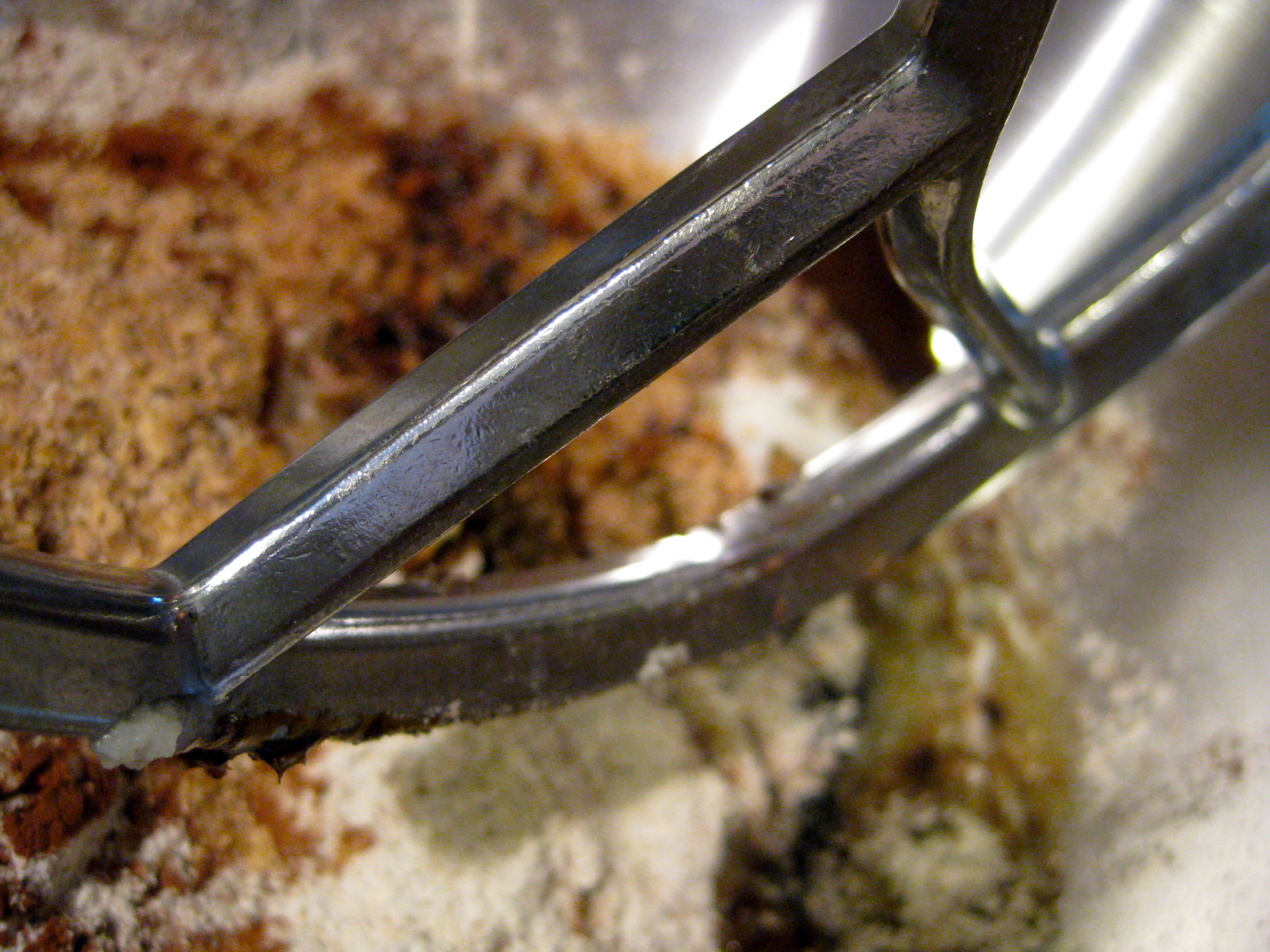
2) Combine caraway seeds and fennel seeds in a spice grinder and coarsely grind until no longer whole, but still slightly chunky (you can use a mortar and pestle for this, but I use an old coffee grinder).  In a large bowl using a whisk or in the work bowl of a heavy-duty electric mixer fitted with the paddle attachment, combine the butter, molasses, instant espresso powder, salt, caraway seeds, fennel seeds, bran, cocoa powder, and rye flour.  Mix until smooth and add yeast mixture.  Beat for about 3 minutes.  Add the unbleached flour, 1/2 cup at a time, and continue to beat (with paddle attachment if using a machine, or with a wooden spoon if mixing by hand) until too stiff to stir.

3) Turn the dough out onto a lightly floured work surface and knead until smooth, elastic, and no longer sticky, about 5 minutes, dusting with flour only 1 tablespoon at a time as needed to prevent sticking.

If kneading by machine, switch from the paddle to the dough hook and knead for 4 to 5 minutes, or until the dough is smooth and springy and springs back when pressed.  If desired, transfer the dough to a floured surface and knead briefly by hand.

4) Place the dough in a greased bowl.  Turn once to grease the top and cover with plastic wrap.  Let rise at room temperature until doubled in bulk, 1 to 1 1/2 hours.

5) Gently deflate the dough.  Turn the dough out onto a lightly floured work surface.  Grease or parchment-line a baking sheet and sprinkle with cornmeal, if desired.  Divide the dough into 12 equal portions.  Shape each dough portion into a round ball and place seam side down on the baking sheet.  Flatted each ball with your palm.  Cover loosely with plastic wrap and let rise until doubled in bulk and puffy, about 25 minutes.

6) Twenty minutes before baking, preheat the oven to 375 degrees F.  Place the baking sheet on the center lower rack in the oven and bake for 35-40 minutes, or until slightly browned and firm to the touch.  Transfer to a rack to cool.

Garden Spaghetti in a Lemon Butter Sauce

25 Mar

There are only three people who live in my house, but all three of us have vastly different preferences when it comes to food.  One of us is a former nearly life-long vegetarian who has only conceded to eating meat if it a) hails from the sea, or b) does not in any way resemble something that was once attached to an animal (this means no bones, no skin, and no “chewy bits”).  Another one is a human food depository with the metabolic rate of a hummingbird, a person who, if pressed, will only list one single food that falls into the realm of being not entirely favorable (this food is water chestnuts and, really, it’s not that they are regarded as inedible so much as they are simply relegated to the bottom of the list of preferred foods).  The third person is a child, and this generally means that the foods most highly regarded by his palette fall into the category of being carbohydrates: bread, pasta, rice, crackers, and fruit.

So what’s a person to do, other than try and conjure up a dish that will be eaten—and, in hope, enjoyed—by all three people?  And how does one go about building such a dish?  I’ll give you a hint: the first step is pasta.

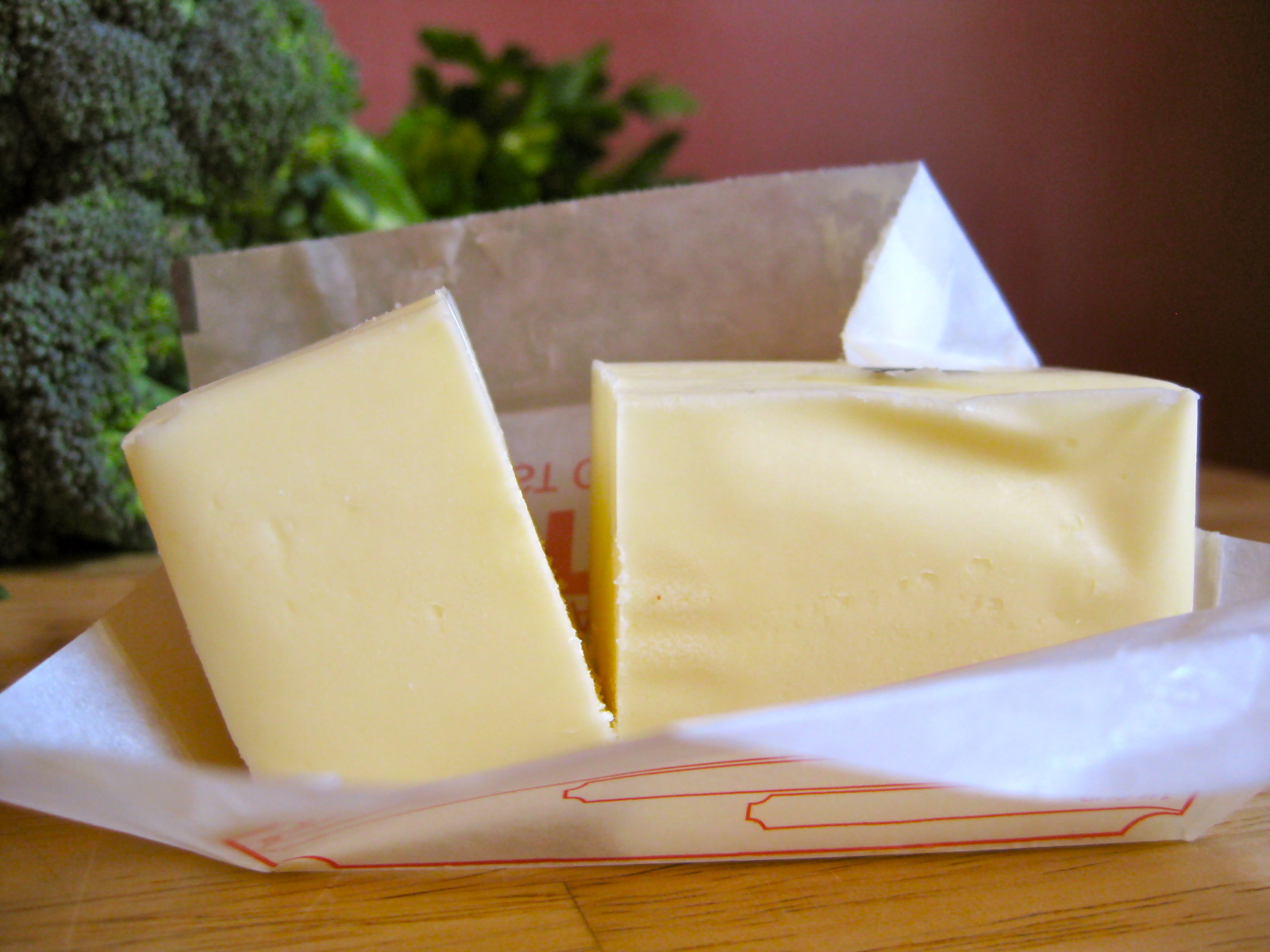
The second step is butter.

You’d be hard pressed to find a person who doesn’t enjoy the simple pleasures of a basic pasta tossed with a bit of butter, oil, and sharp parmesan cheese.  The best thing about pasta bianco (or bianca, depending on who you ask and how much he or she wants to show off a perceived prowess for Italian pronunciation) is that it’s like a building block for any number of dishes one might like to construct.

You start with pasta, cooked al dente with a little bit of the pasta water held off to the side.  The sauce starts as gently heated butter or olive oil (or both), perhaps with a bit of garlic and red pepper flakes thrown in.

You can stop there, tossing the pasta with the butter and oil and then adding a satisfying handful of parmesan cheese to the mix, or you can move on, adding flavors and bulking up the dish to see how far you can take things before you meet that good middle ground of having a dish that is still primarily made of pasta (child’s preference), but also bursting with fresh vegetables and crunchy textures (slightly meat-o-phobic former vegetarian’s preference).

The third person, of course, will most likely be happy no matter what, seeing as the dish is plentiful and, you know, made of food, therefore satisfying his basic list of requirements as related to meals and consumption.  The best part about this pasta, however, is the fact that it is highly delicious, which is arguably the most important element of any dish, no matter who is eating it.


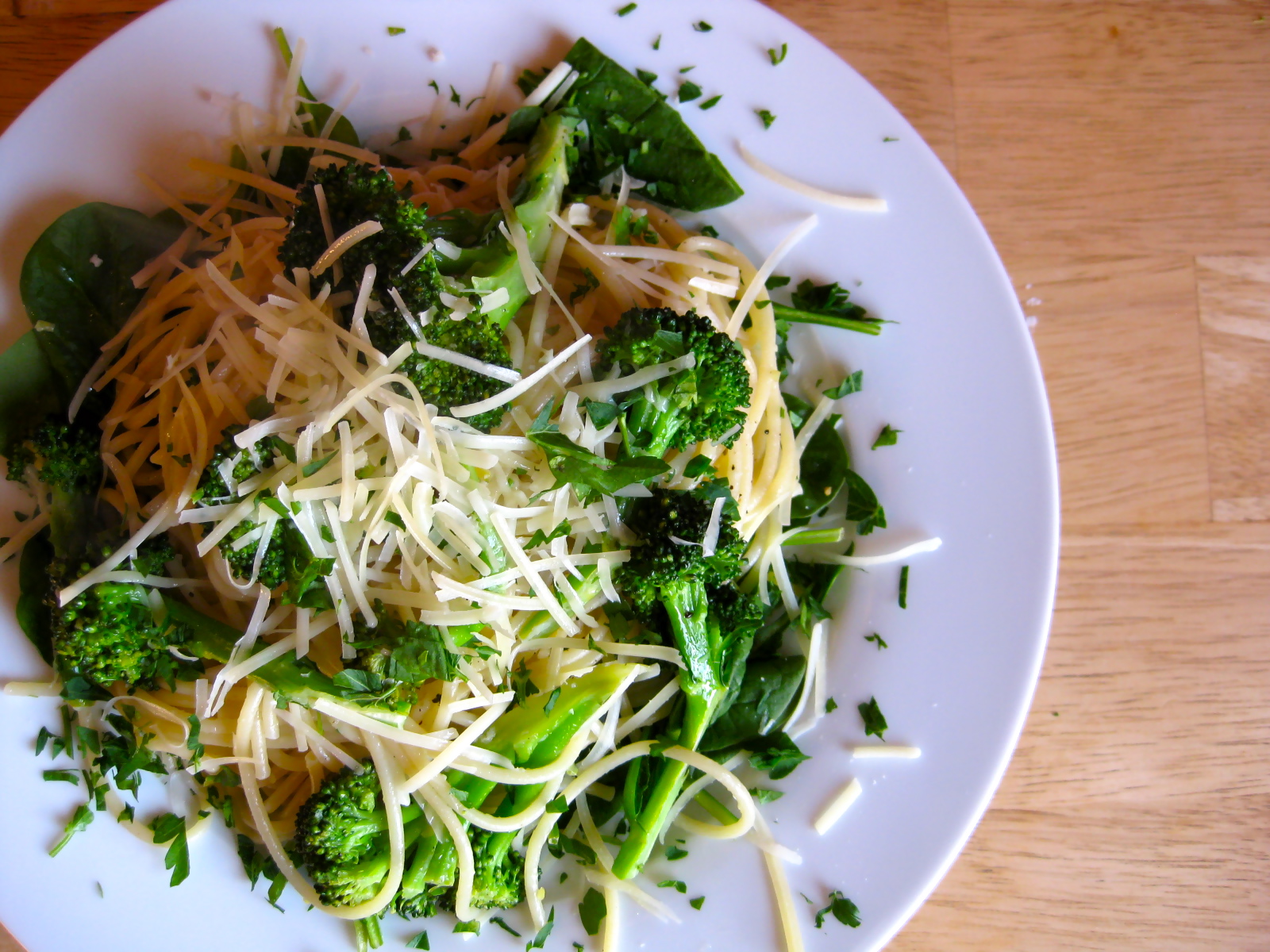
Garden Spaghetti in a Lemon Butter Sauce

1 lb dried pasta (spaghetti, linguine, or another long variety)

1 lb broccoli, washed and trimmed into long-stemmed florets

1 tablespoon olive oil

3-4 tablespoons butter

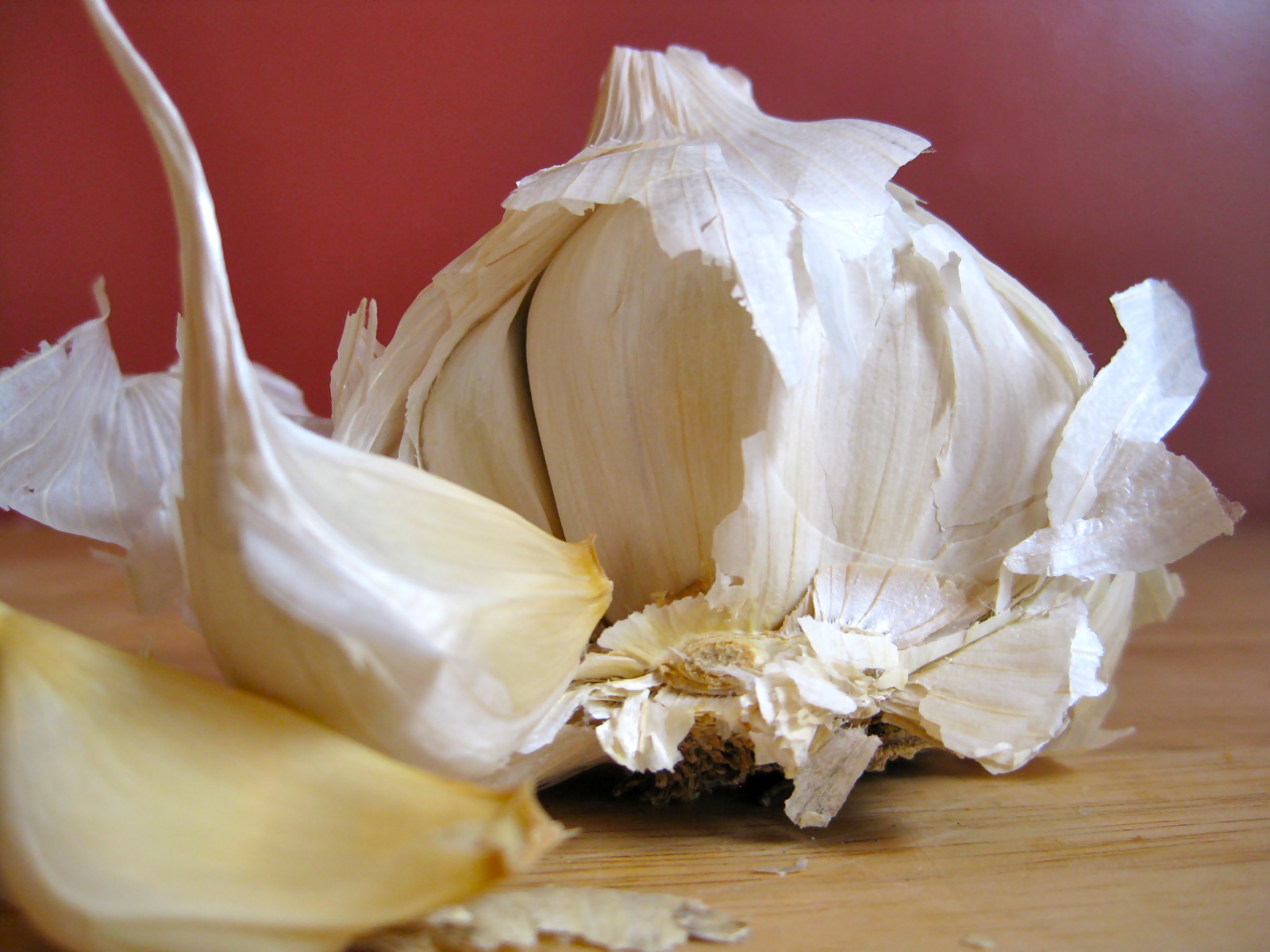
2 cloves garlic, smashed and very finely minced

2 lemons, juiced and zested, the zest finely grated or chopped

optional: 1/4 teaspoon red pepper flakes

salt and pepper to taste

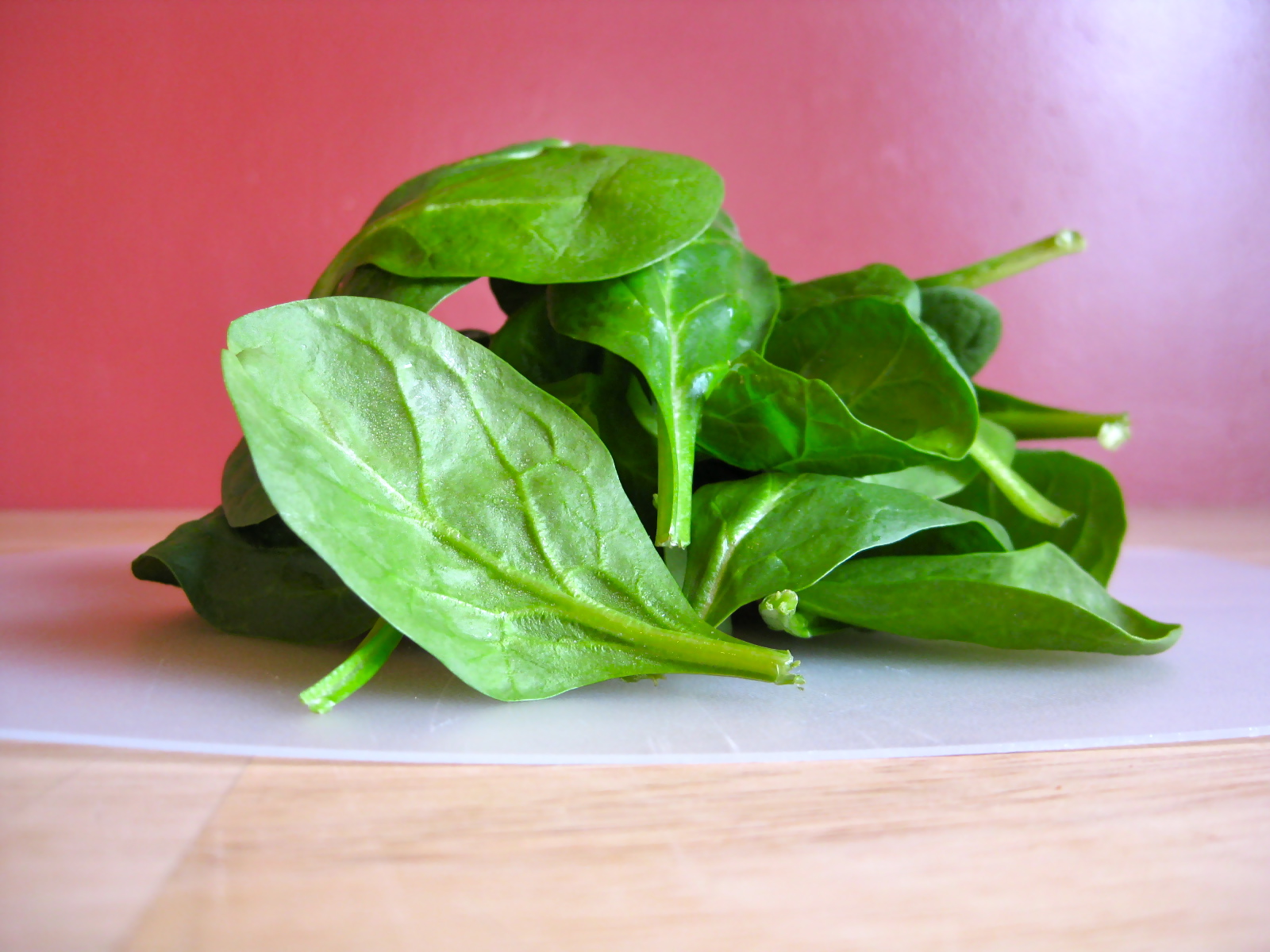
6-8 oz fresh spinach, washed and trimmed

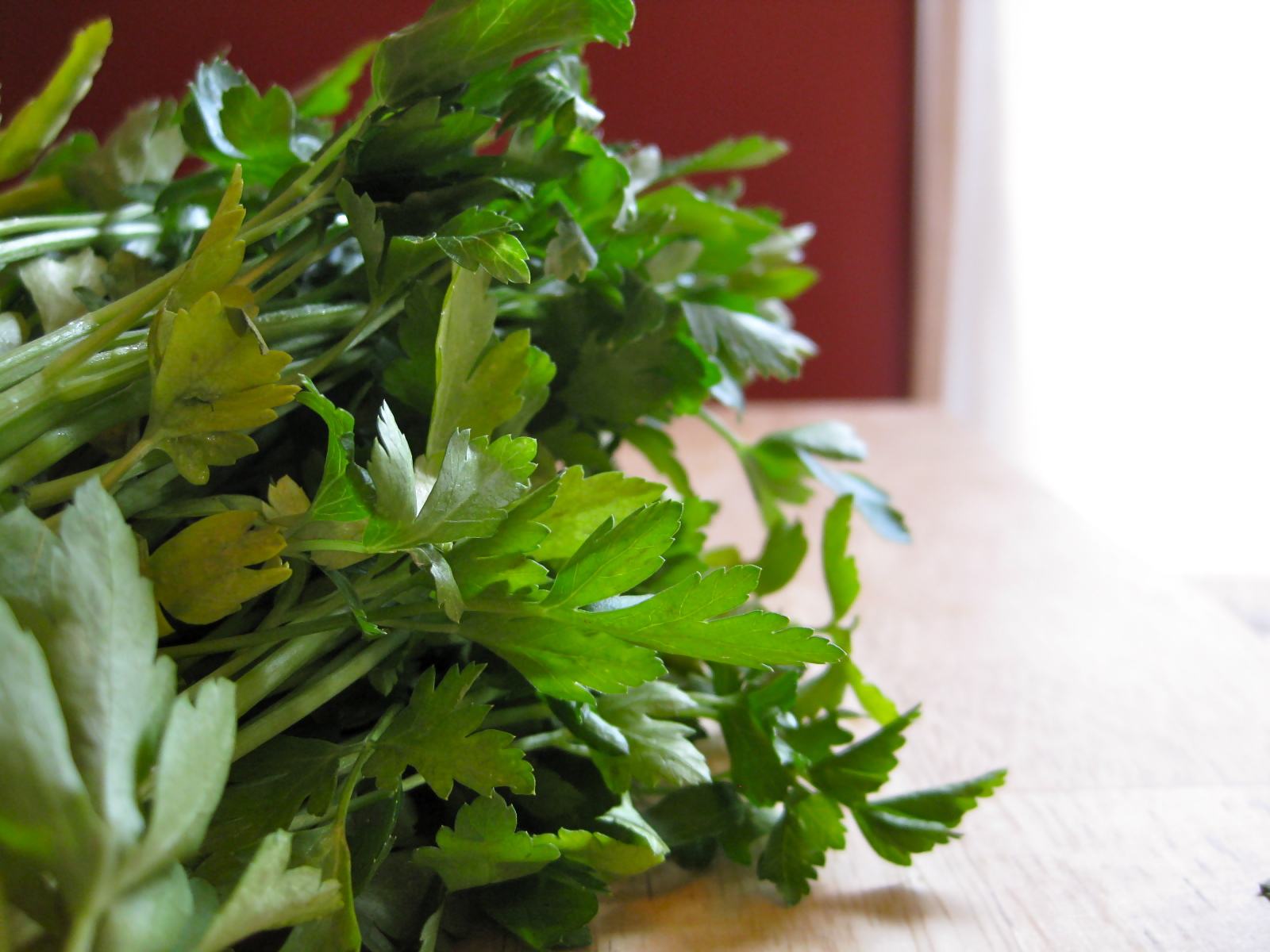
1 large handful Italian parsley, trimmed and coarsely chopped

parmesan cheese, for sprinkling

Bring a pot of salted water to a boil, then cook pasta according to package directions.  During the last minute of cooking, drop in broccoli florets and briefly swirl around to allow for even distribution and cooking.  Drain pasta and broccoli, setting aside 1 cup of pasta cooking water.  Return pasta to cooking pot, toss with 1 tablespoon of olive oil to prevent sticking, and set aside.

While the pasta is cooking, melt butter in a small saucepan set over low heat.  When butter has melted, add in minced garlic and gently simmer for about one minute, allowing the garlic to release a lovely smell, but being careful not to let it brown.  Add in lemon juice and lemon zest, and, if using, red pepper flakes.  Carefully simmer for another minute, then remove from heat.  Carefully stir in reserved cup of pasta water.

Pour lemon and butter mixture over pasta and broccoli.  Toss well to mix.  Add salt and pepper to taste.

To serve, place a handful of spinach on a plate, place pasta over spinach, then sprinkle pasta with parmesan cheese and chopped Italian parsley.

This should make 6 large servings for 6 normal people.  In my house it serves one adult, one preschooler, and one Perfect Eating Machine, with a modest bit remaining for leftovers.

10 Grain Hearth Bread

17 Mar

When the price of gas hits $4 a gallon, you start to see people make real changes in their lives.  People who never dreamed of carpooling start calling up friends and finding ways to combine routes to work.  Avid bus-avoiders start putting on their game faces and choosing which magazines they are going to read on the way to work while someone else does all the driving for them (and, one hopes, they also begin to realize that riding the bus might not be such a bad thing after all).  Routines change, people learn new things, and fresh habits get formed.

The same thing happened to me, only the catalyst was when the price of my favorite multigrain bread hit nearly $5 a loaf.  I was panicked.  Standing in front of the bakery’s bread display, I would stare at the piles of fresh bread, silently willing them to go down in price so I wouldn’t have to shell out MORE than the cost of a gallon of gas just to be able to eat my favorite hearth bread.  In the end, I walked away.  I gave up on the bread, mostly because I couldn’t justify the price, but also, not surprisingly, because I knew that at home I had an empty bag from the bread, and on that bag was a list of ingredients I could mine to make my own bread.

The ingredients, of course, as in the case of all great bread, were simple: flour, whole grains, salt, water, yeast.  By some small miracle, I happened to already have all of those ingredients in the pantry, so now all I had to do was find an actual bread recipe that might come close to approximating the full taste and chewy texture of the bread I had abandoned.

I consulted with the books of my standard trio of go-to bread people–Reinhart, Berenbaum, Hensperger–but wasn’t able to find a recipe that resulted in the combination of an artisan loaf that was packed full of hearty grains and strong flours.  Berenbaum came close, but her multi-grain torpedo loaf relied too heavily on white flour.  I wanted a bread that was dark and flavorful, almost like a Russian rye bread, only with a more pronounced crust and a heavy dose of 10 grain cereal.  It started to become clear to me that if I was going to get the bread I wanted, I either had to break into the bakery that made my favorite bread and skulk around until I could find a copy of the precise recipe and steal it, or take the less dastardly approach of building my own recipe.

My first step to avoiding a life of crime was to open up the America’s Test Kitchen Baking Book, a great source of step-by-step instructions for turning out wonderful hearth breads at home.  As it turned out, this was also my last step.  One of the first recipes I came across was for a loaf of country bread, a free form bread that began with a starter sponge of both rye and wheat flours.  The recipe made no mention of adding extra grains, but I figured that with a rye starter and some ingenuity, I could definitely take this bread where I wanted it to go.


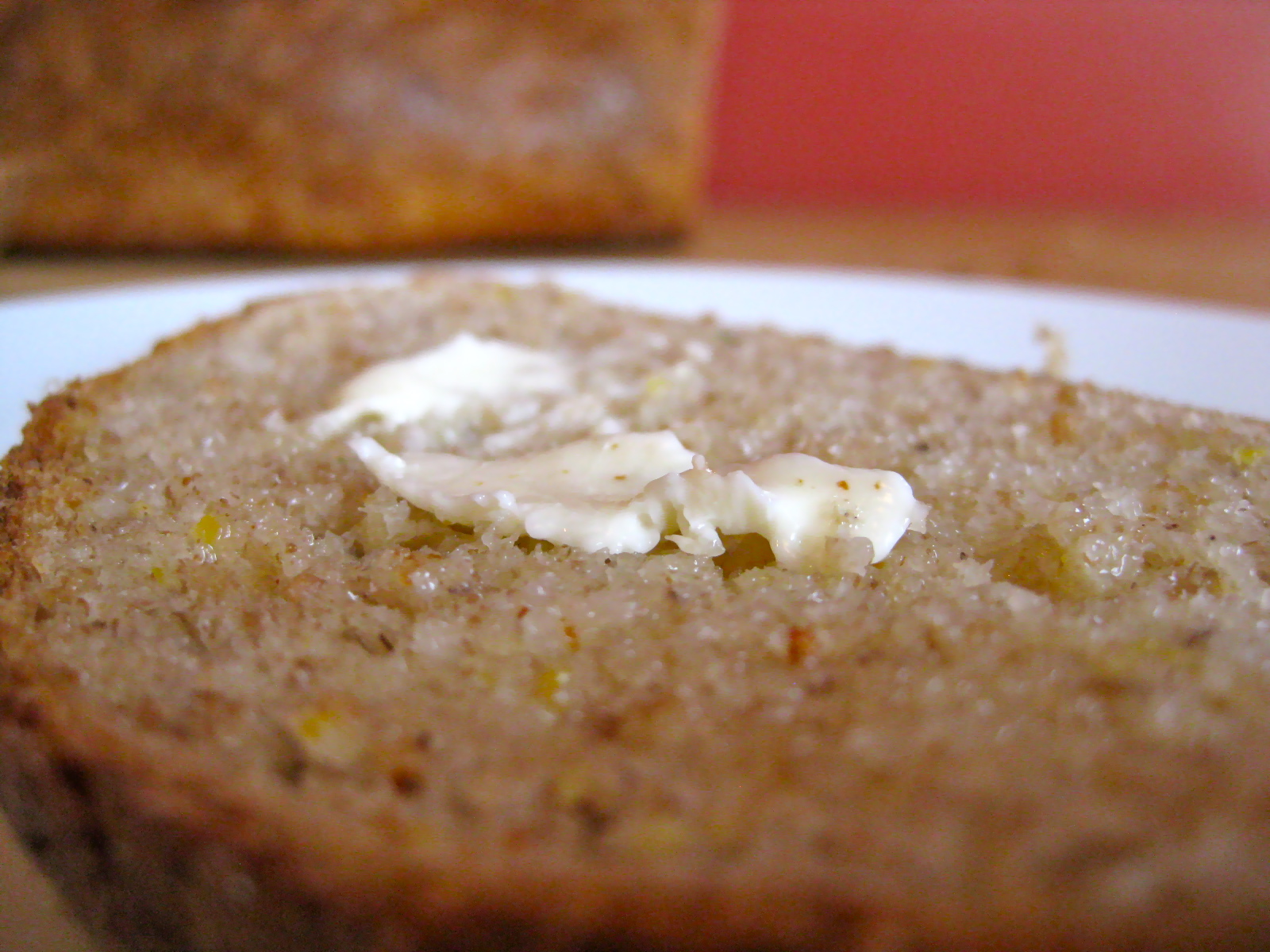
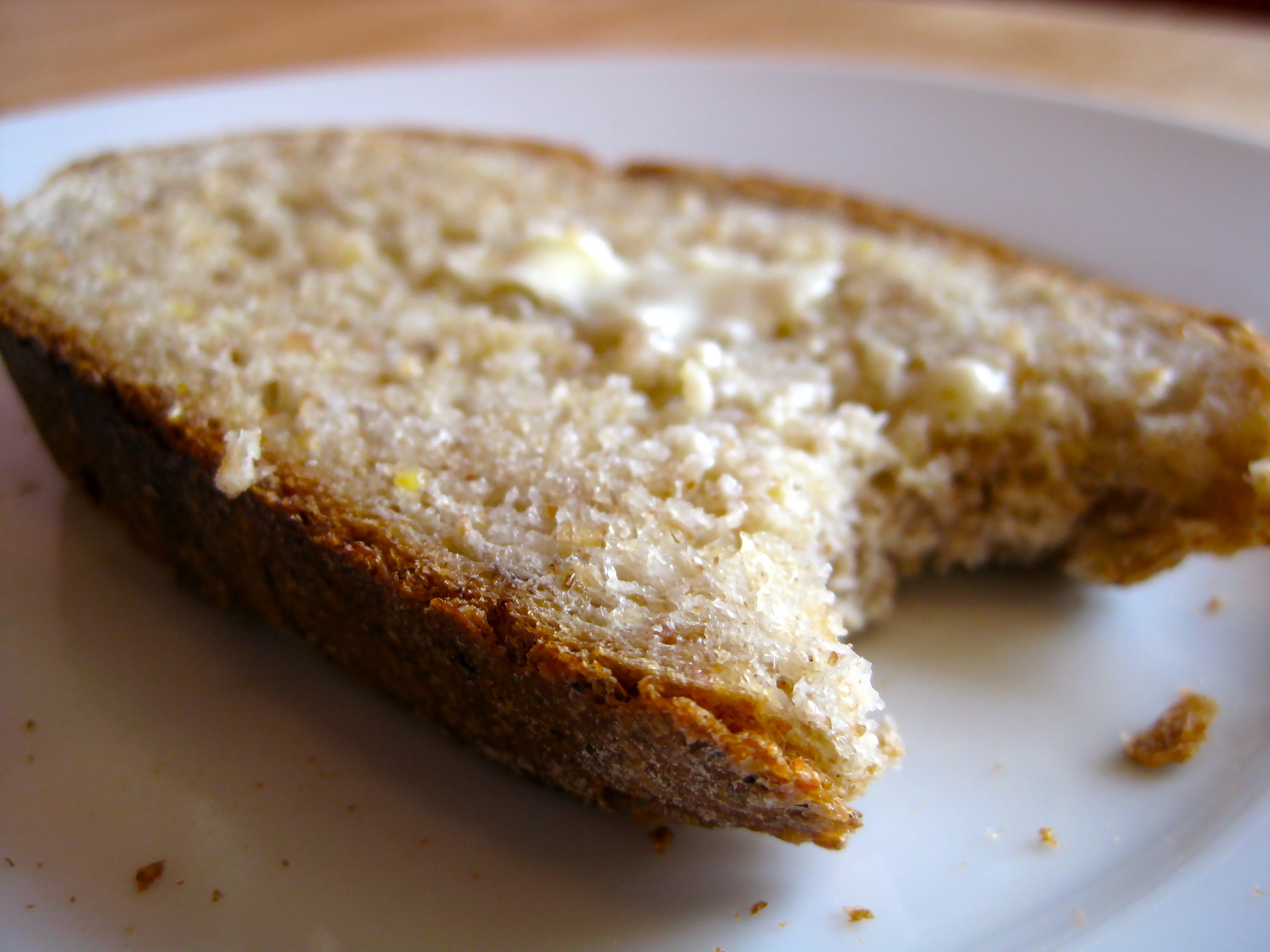
And boy did I.  This bread has structure, crunch, and softness all at once.  It’s great for making sandwiches, but eating a slightly oven-warm slice of this bread, lightly buttered, is positively dreamy.  Perhaps even a little bit, dare I say, habit forming.

10 Grain Hearth Bread

Inspired by The America’s Test Kitchen Family Baking Book

This bread requires that you make a sponge a few hours before you start making the bread (I generally do it the night before), but don’t panic.  Making a sponge is incredibly easy, and requires nothing more of a person than simply mixing some flour, water, and yeast together, then walking away.  That’s it.  You can totally do that.

Sponge

1 cup warm water

1 cup whole wheat flour

1/2 cup medium or dark rye flour

1/2 teaspoon instant or rapid-rise yeast

To make the sponge, stir all of the ingredients together in a medium bowl until combined.  Cover with plastic wrap and let sit at room temperature until the sponge has risen and fallen, at least 6 hours, or up to 24 hours.

Bread Dough

2 3/4 – 3 cups bread flour

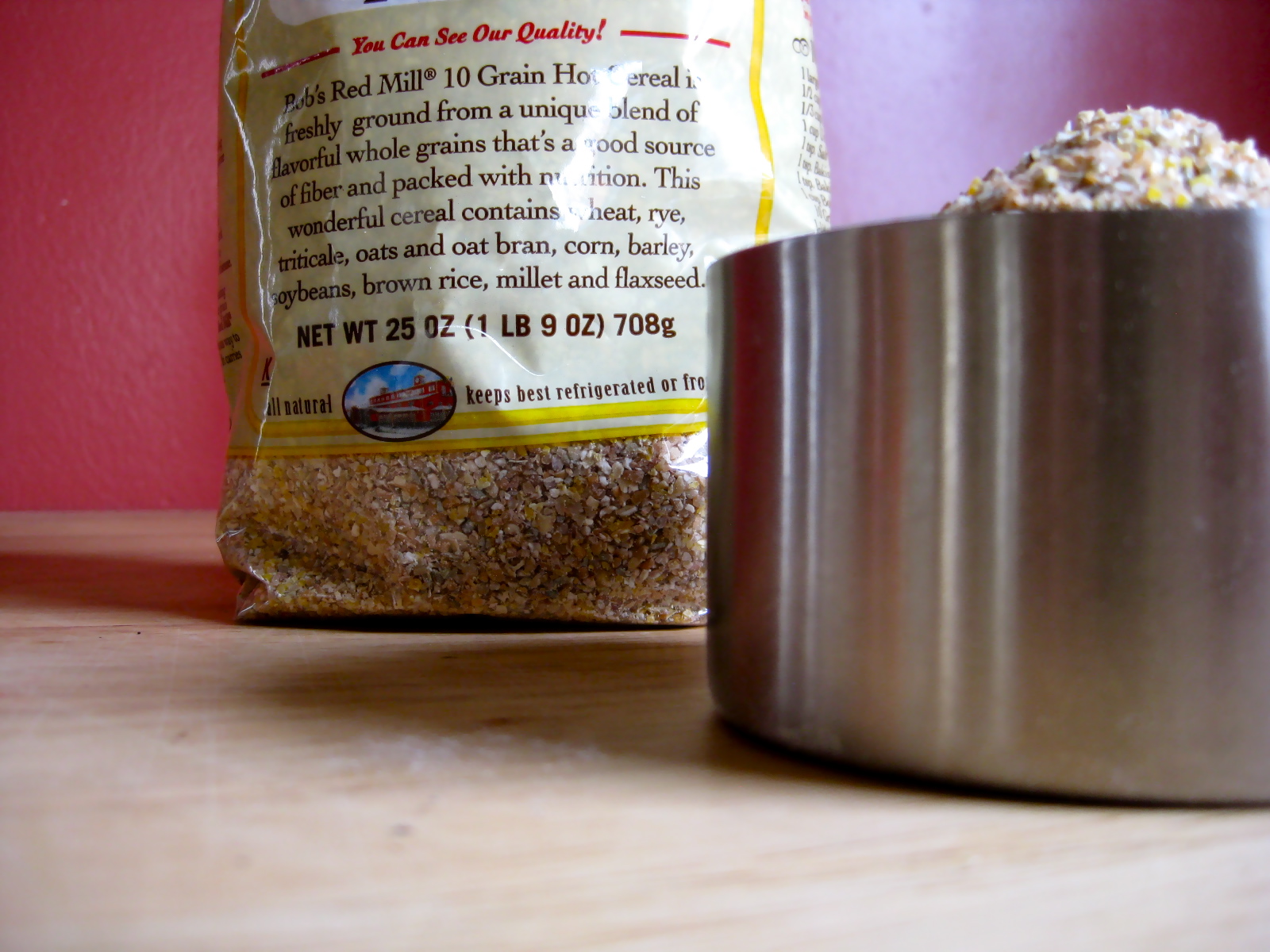
1 cup uncooked 10 grain cereal mix (Bob’s Red Mill is a great source for this ingredient)

1 teaspoon instant or rapid-rise yeast

3 tablespoons honey

1 1/3 cups warm water

1 1/2 teaspoons sea salt

1 egg white gently beaten with 1 teaspoon of water

Combine 2 3/4 cups of the bread flour, 10 grain cereal mix, honey, and yeast in a standing mixer fitted with the dough hook.  With the mixer on low speed, add the water and mix until the dough comes together, about 2 minutes.  Stop the mixer, cover the bowl with plastic wrap, and let stand at room temperature for 20 minutes (this allows the dough to relax a bit before you really begin to knead it).

Remove the plastic wrap, add the sponge and salt, and knead the dough on medium-low speed until it is smooth and elastic, about 8 minutes.  If after 4 minutes more flour is needed (if the dough is not starting to firm up, come together, and release from the sides of the bowl), add the remaining 1/4 bread flour, 2 tablespoons at a time, until the dough clears the sides of the bowl, but sticks to the bottom.

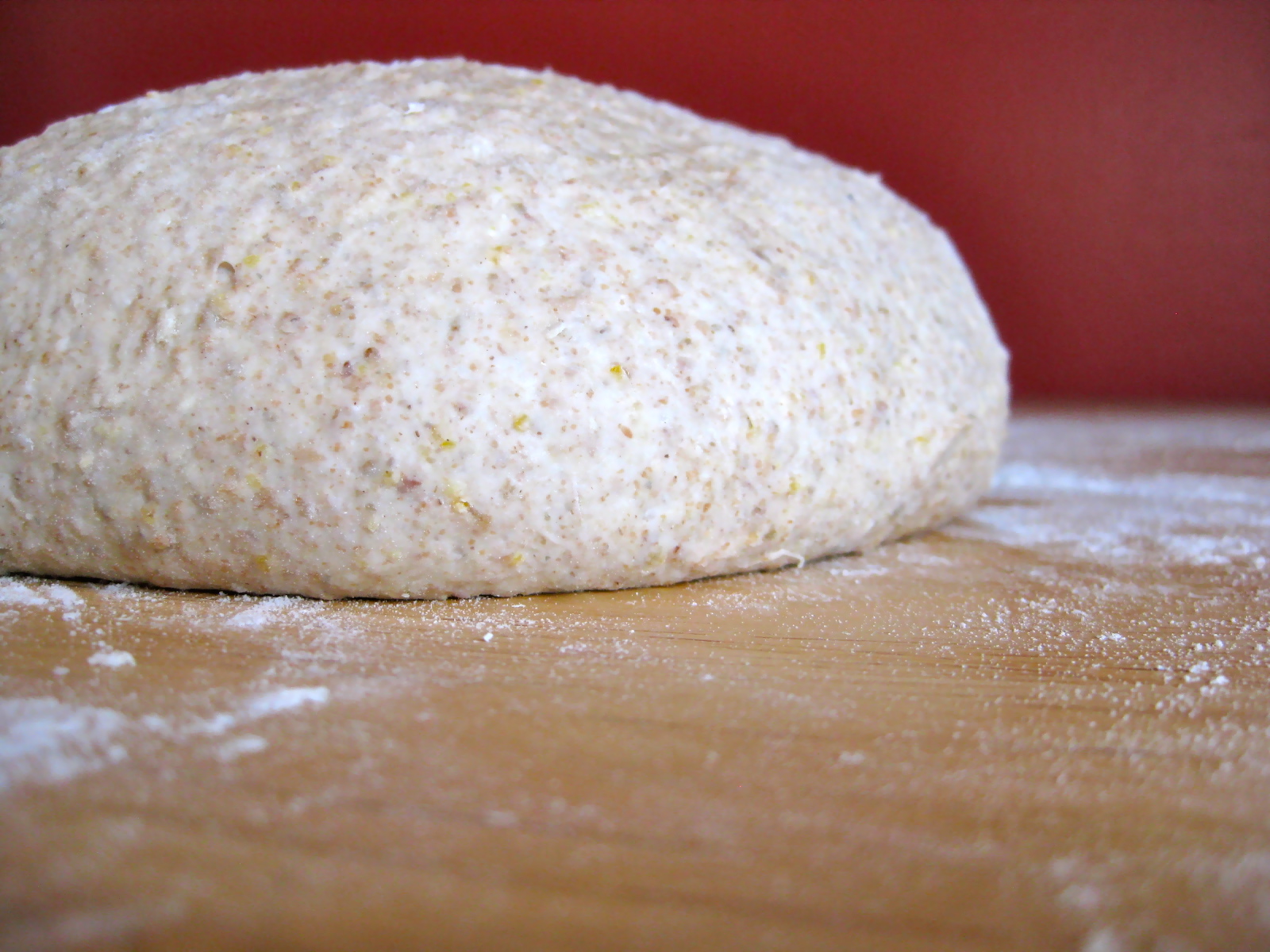
Turn the dough out onto a lightly floured counter and knead by hand to form a smooth, round ball.  Place the dough in a large, lightly oiled bowl and cover tightly with greased plastic wrap.  Let rise in a warm place until doubled in size, 1 to 1 1/2 hours.

Line a large rimless (or inverted) baking sheet with parchment paper.  Turn the dough out onto a lightly floured counter and press it into a 10-inch square.  Fold the top corners diagonally toward the middle.  Using your fingertips and starting at the top of the dough, pull the underside of the dough up over the top, stretching it considerably, and begin to roll the dough up into a rough log.  With each roll, press the seam firmly to seal.  Continue to do this, forming the dough into a taut log, 5-7 more times.  What you are basically doing is rolling and folding, rolling and folding, until the dough resembles the shape of a tight rustic loaf of bread.  Pinch closed any loose openings.

Place the dough seam side down on the prepared baking sheet.  Mist the loaf with vegetable oil spray, cover loosely with plastic wrap, and let rise in a warm place until nearly doubled in size and the dough barely springs back when poked with a knuckle, 1 to 1 1/2 hours.

Meanwhile, adjust an oven rack to the lower-middle position, place a baking stone or heavy sheet pan on the rack, and heat the oven to 500 degrees F.  Let the baking stone or baking sheet heat for at least 30 minutes, but no longer than 1 hour.

Score the top of the loaf with a razor blade or sharp knife, and spray the loaf lightly with water.  Carefully slide the loaf and parchment onto the hot baking stone or hot baking sheet.  Immediately reduce the oven temperature to 425 degrees F and bake until the center of the loaf registers 210 degrees on an instant-read thermometer and the crust is deep golden brown, 35-40 minutes.  Halfway through baking, rotate the loaf and brush it all over with the beaten egg white and water mixture.

Transfer the loaf to a wire rack, discard the parchment, and let cool to room temperature before serving (or, if you live in my house, let the bread cool for 30 minutes, then slice it open and grab some butter).