Tag Archives: recipe

Fruit Crisp Made on the Grill

27 Aug

The wait for hot summer weather in Portland can sometimes be interminable, but then, when the hot weather does finally hit, people seem to forget all the grousing and moaning that they previously took part in when it wasn’t hot enough for their liking, taking part instead in a great deal of grousing and moaning about how unbearably hot it is. When it comes to grousing and moaning, I take part, as most people do, in my fair share (though I generally reserve my woeful moaning for talk of baseball), but you will never, ever find me complaining that it is too hot in Portland. It rains nine months of the year here, and I can’t remember the last time I wasn’t forced to wear a sweater throughout the month of June. More than ¾ of my life is spent waiting for hot weather to arrive.
In addition to having an excuse to lay around in a hammock and read, hot weather also gives me a great excuse to try out the many, many things I’d like to attempt to cook on a grill. The standards of meat and vegetables are always a pleasure, but, as is my way, I have always wanted to try out a number of desserts on the grill. In the past, I have grilled fruit, sprinkled with a bit of brown sugar and drizzled with dots of vanilla, but I’ve always known that I wanted to do more with a grilled dessert.

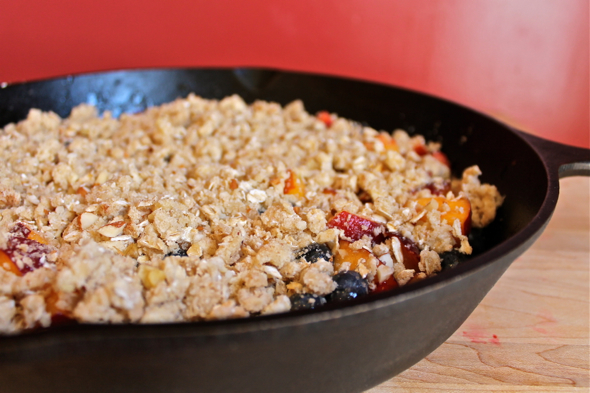
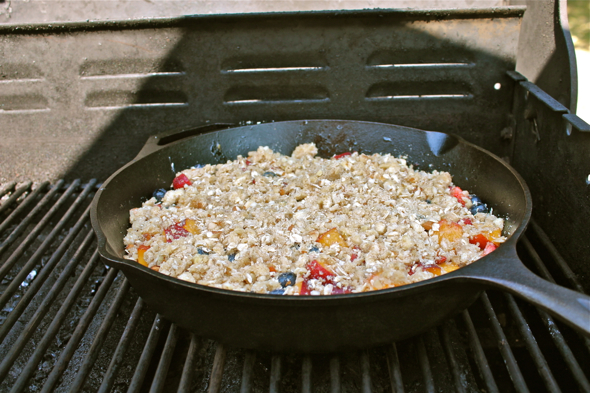
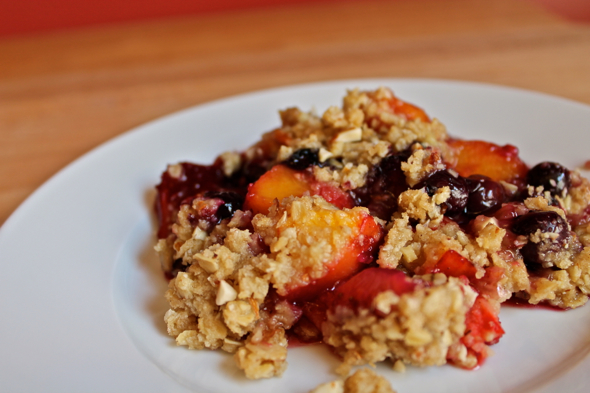
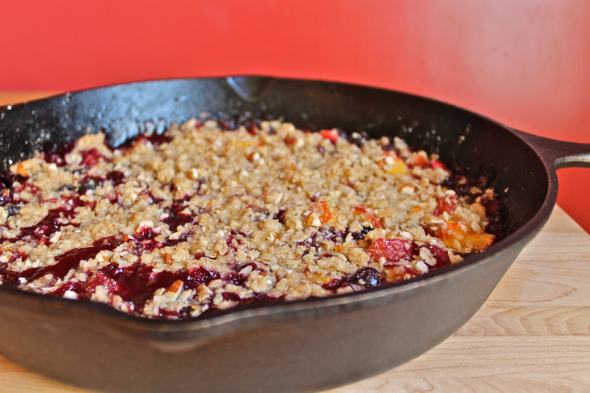
This crisp is the perfect gateway for those of you who would like to audition a grilled dessert. I say this, because I am a person who wants to tackle more dessert-making on the grill, and the success of this crisp has made me only more eager to do so. The fruit, bubbling away contentedly, took on a deep and luscious flavor when contained in the grill for the better part of an hour, and the buttery oat topping seemed to almost melt into the fruit in parts, resulting in a crisp that was not so much actually crisp, but something even better. When slowly grilled, the fruit and the topping joined forces, settling into one another like a perfectly formed puzzle. It was a delightful discovery, and a wonderful introduction to what I hope will be a new world of desserts.
Last Year: Mimi’s Ginger Lemon Tea–good as a cool summer drink, a warm winter tonic, and a catch-all healer for anything and everything that ails you.

Grilled Fruit Crisp Recipe

Prepare an outdoor grill for indirect cooking (more on how to do that here). With the lid down, heat one side on high until the internal temperature of the grill reaches about 350 degrees Fahrenheit.

Topping:

½ cup unbleached all-purpose flour

1/3 cup rolled oats (not quick cooking)

¼ cup light brown sugar

¼ cup coarsely chopped pecans or almonds, or a mix of the two

pinch of cinnamon

pinch of salt

6 tablespoons cold butter, cut into pieces

Fruit:

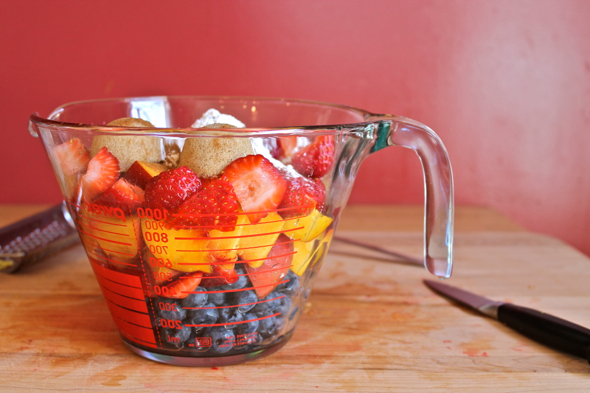
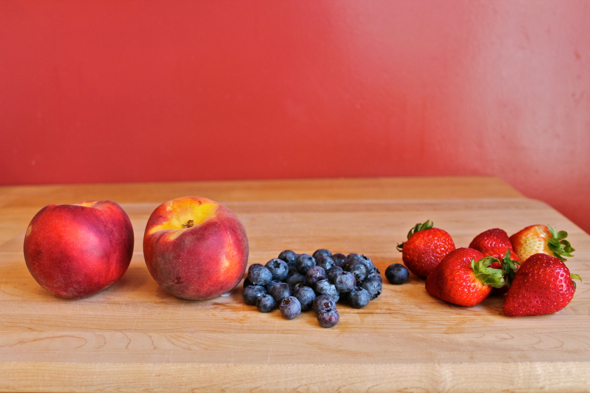
6 cups fruit, sliced into roughly ½-inch pieces (I used strawberries, peaches, and blueberries which, obviously, I did not have to slice)

zest and juice of 1 lemon

1 tablespoon cornstarch

3 tablespoons light brown sugar

pinch of cinnamon

To make the topping, in a medium bowl combine the flour, oats, brown sugar, nuts, cinnamon, and salt. Stir together, then add the butter pieces and, using a pastry cutter or two knives, cut the butter into the flour mixture until the topping resembles coarse crumbs with a few smallish pea-sized bits of butter throughout. Refrigerate the topping while you prep the fruit.

In a medium bowl, combine all ingredients for the fruit filling and toss to combine. Transfer fruit to a heavy cast iron skillet (mine was a 12-inch skillet, but a 10-inch one would also work), spreading it out evenly. Spoon the topping mixture over the fruit as evenly as possible.

Cook the crisp on the unheated side of the grill, lid down, for 40 minutes, until the fruit is bubbling and the edges of the crisp topping have just started to turn golden. Be very careful when remove the skillet from the grill, as it will be incredibly hot. Allow the crisp to cool at least 15 minutes before serving.

Serve plain or with ice cream.

Brown Sugar Nectarine Ice Cream

21 Aug

As a child, I thought that making ice cream at home was the type of thing only early American pioneers did. Ice cream came from the store, or an ice cream shop, and it was packaged in a square container that opened up like an envelope from the front. (I cannot be the only person here who remembers ice cream being packaged in this manner, can I? The flimsy box, the tight corners that held onto the ice cream and resisted being nudged out by a rounded scoop? In terms of ice cream package technology, whoever thought to ditch the box with square corners and develop a more rounded package was a genius.) When, in the book Farmer Boy, Almanzo Wilder and his siblings were left to their own devices after their parents left town for a week and deemed the children to be in charge of the farm, what was the first thing the kids did? They made ice cream (and cake, and candy…and then more cake and ice cream). They made so much ice cream and sweet treats, in fact, that they almost completely emptied out the family’s sugar barrel.

Reading about this intense feat of sugar consumption practically gave me a contact high. Making ice cream at home? For dinner? You can imagine how compelling I found this idea (I was going to add in the words “as a child,” but, let’s face it, I sort of like that idea now as well). It seemed so rugged, and yet also so simple. I want some ice cream, so I’ll just make some. It was like reading about the secrets behind a magic trick.

Obviously, as I got older and became in charge of my own kitchen and what went on in it, I found out that making homemade ice cream was just about as simple as eating homemade ice cream. Once I was gifted an ice cream maker, it was like having a license to print money. Somehow, it seems almost sneaky to make your own ice cream , like you’re totally getting away with doing something that’s meant to be handled only by the likes of professionals. It is also, I have found, slightly addictive. Not just the ice cream itself, I mean, but making the ice cream. Every time I find myself in possession of some interesting chocolate or chilies (or both, because, man have you ever had spicy chocolate ice cream? SO GOOD), or a nice supply of super ripe fruit, my mind immediately turns to thoughts of transforming those goods into a creamy batch of ice cream.

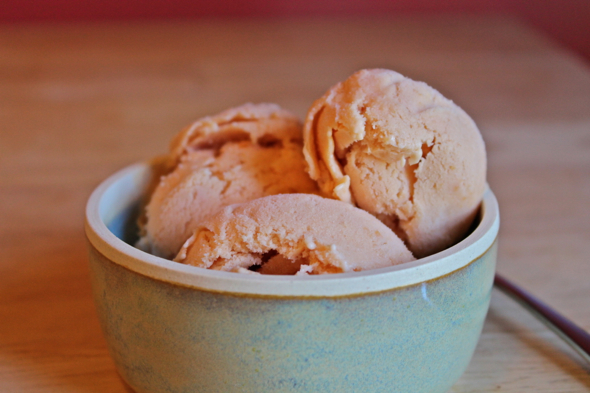
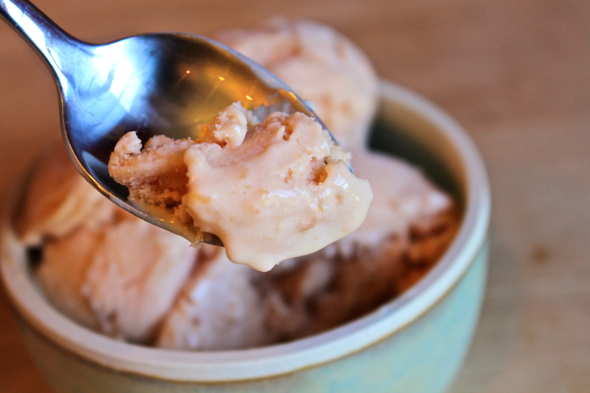
Last week, when it was 95 degrees in Portland, we had just gotten back from our annual trip to San Francisco, where we ate ice cream nearly every single day. This year we rented an apartment across the street from a great gelato place, which meant that we ended up spending an inordinate amount of time there, filling our bellies with gelato. We also, as we do every year, spent a great deal of time getting ice cream form Bi-Rite Creamery, as any ice cream loving person should know to do. I am a huge fan of their brown sugar ice cream with a ginger caramel swirl, so, once we got home to Portland and the heat left me no other choice but to make ice cream, I decided to test drive their brown sugar concept with some fresh nectarines. It’s usually my habit to plump up the flavor of fresh fruit with a bit of lemon juice, but, in the interest of trying something new, I subbed in some lime juice instead. What emerged after my tinkering was a creamy, bright, delightful ice cream with the strong flavor of nectarines balanced by a gentle undertone of sweetness. It was wonderful. It is wonderful. And I suggest you grab yourself an ice cream maker and find out for yourself.

Ice cream, previously: Fresh Ginger Ice Cream, Six Threes Ice Cream, Coconut Lime Frozen Yogurt and Chewy Ginger Cookie Sandwiches

Brown Sugar Nectarine Ice Cream Recipe

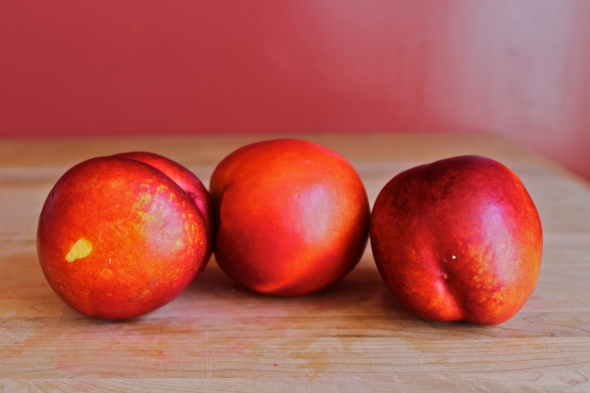
1 ¼ pounds pitted, diced ripe nectarines (about 3 large)

1/4 cup water

½ cup light brown sugar

3 egg yolks

1 cup heavy cream

½ cup milk

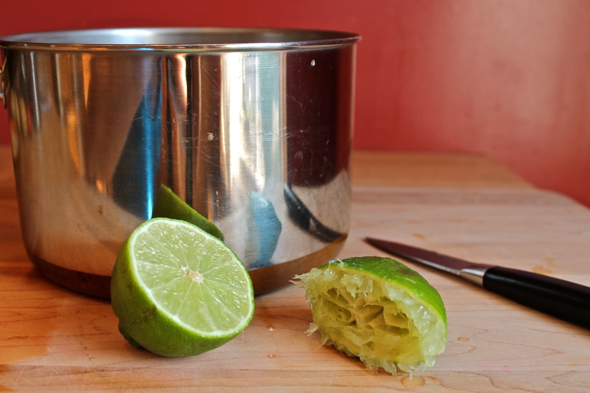
juice of ½ a lime

¼ teaspoon pure vanilla extract

In a medium saucepan, combine nectarines and water. Bring to a boil, cover, then allow to simmer over medium heat for 8-10 minutes, until the nectarines have broken down and released a great deal of their juices. Set aside to cool.

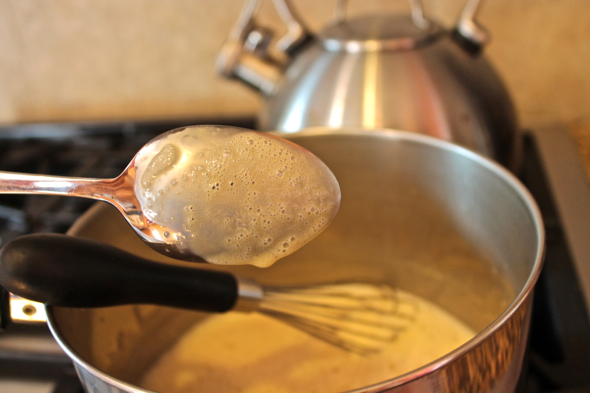
While the nectarines are cooking, combine brown sugar, egg yolks, and heavy cream in a medium saucepan. Whisk to combine, then heat mixture over medium heat, whisking constantly, until mixture thickens and reaches a temperature of around 170 degrees F. The mixture should coat the back of a spoon, leaving a clean trail when swiped with a finger. Remove from heat, whisk in milk, then place in the refrigerator to cool.

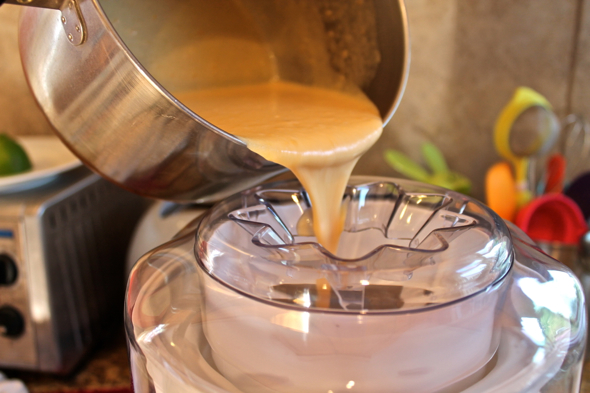
When both mixtures have cooled, combine them in a blender or food processor and blend on high speed until completely smooth and combined. Stir in lime juice and vanilla, then refrigerate until complete cooled, about 2 hours. Alternately, if you don’t want to wait, you can place the nectarine custard mixture in a thin, nonreactive metal bowl, place the metal bowl in larger bowl filled with mostly ice with a bit of water, and stir the mixture as the metal bowl rests in its ice bath. After about 10-15 minutes of careful stirring (being careful not to tip the custard bowl over into the ice water), the mixture will become quite cold.

Freeze mixture in ice cream maker according to manufacturer’s directions.

Makes just under 1 quart of ice cream.

Sweet Potato and Cauliflower Samosas in Phyllo

20 Aug

In the spirit of my propensity to toss bits and pieces of leftover vegetables into a tart or a quiche and then sit back and enjoy the fruits of my frugality, a little while ago I decided that my bits and pieces of this and that were ready to branch out a bit. I love a good tart and quiche, but I also love a good challenge. Also, I love Indian food.

I know that I went super heavy on Indian food posts a few weeks ago, but can you blame me for wanting to add on to my arsenal of Indian food recipes? And it’s not just because I am Indian. I mean, technically I am half Scottish as well as half Indian, but you won’t see me whipping up a batch of haggis any time soon. Though I have been know to make shortbread, but, you know, I put ginger and lime in it, because that’s what happens when India creeps into Scotland.

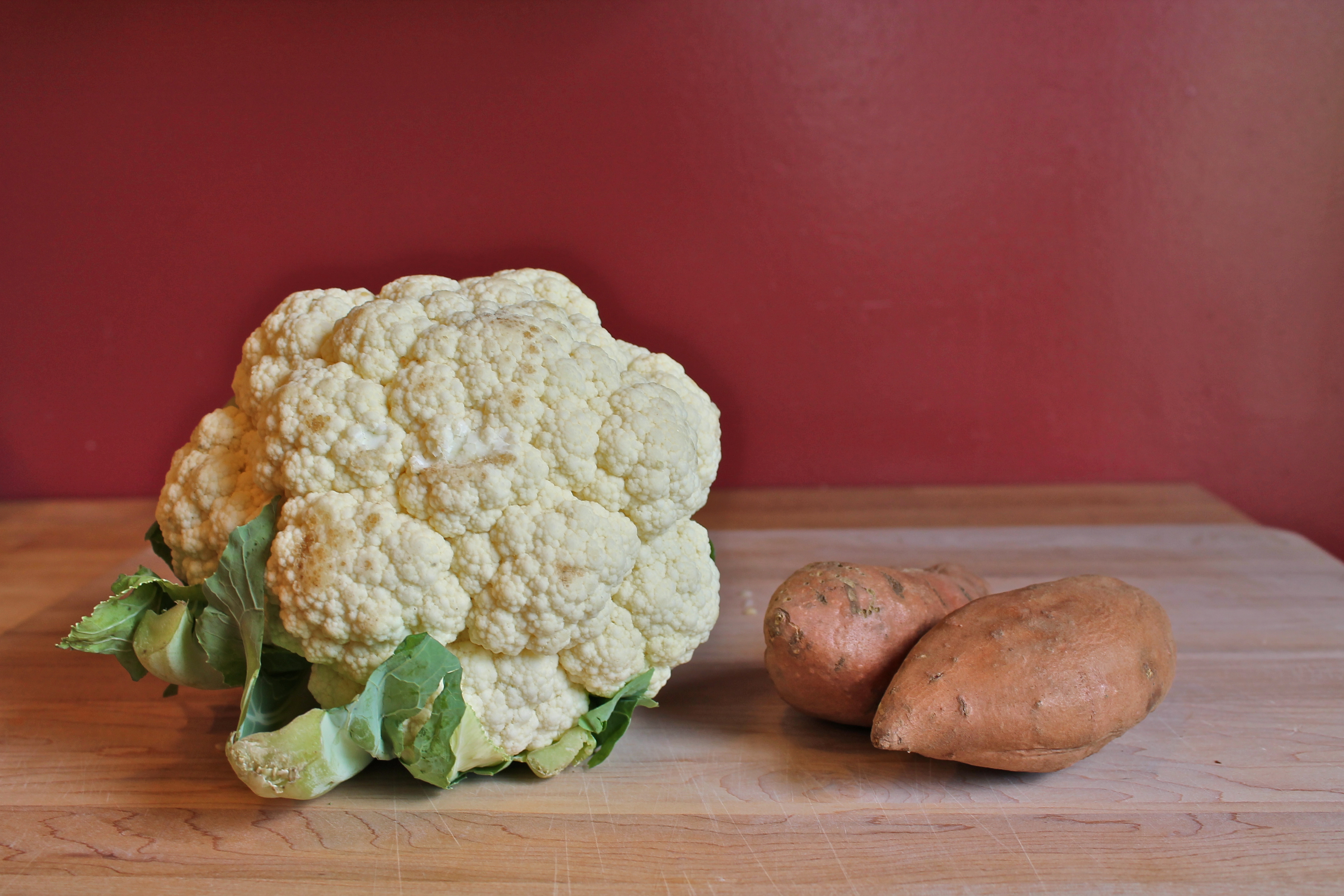
This new riff on samosas is also a new riff on the traditional Indian dish of aloo gobi, a dry sauté of spiced potatoes and cauliflower Literally, in Hindi, “aloo” means potato and “gobi” means cauliflower. Now you know roughly 50% of the Hindi that I know. (If I ever have to negotiate a taxi fare in India, I am going to be in so much trouble.) With a sad little bag of leftover sweet potatoes sitting in the pantry and a fast-wilting head of cauliflower in the refrigerator, I knew I wanted to whip up a decidedly different version of aloo gobi. Since I also had a package of phyllo dough that was quickly turning dry, it soon became clear to me that the universe wanted me to make samosas. And who am I to throw a cold shoulder to the universe?

I am a big fan of my initial recipe for samosas in phyllo, and I cart that sucker out quite a bit when tasked to bring a dish to a potluck or picnic, but these sweet potato and cauliflower samosas are fast overtaking the originals on my list of favorites. The sweet potatoes add a nice change in flavor from ordinary potatoes, and the cauliflower, once sautéed, wrapped up, and baked, practically melts into the creamy and delicious mixture. The spices in this version of samosas are different from the original, I have streamlined the filling and folding process, and, believe it or not, I just might prefer this version overall. For now, at least. Until I find a couple of sprouting potatoes and sagging chiles lying around and decide to make a batch of samosa recipe #1, and then predictably pronounce them to be my reigning favorite.

Last Year: How to Cook Pizza on the Grill

Sweet Potato and Cauliflower Samosas in Phyllo Recipe

3 tablespoons vegetable oil or ghee

1 teaspoon whole cumin seeds

1 large sweet potato, peeled and diced into very small ¼-inch cubes

½ head fresh cauliflower, cored and cut into ½-inch chunks

½ teaspoon ground coriander

¼ teaspoon ground turmeric

¼ teaspoon cayenne pepper

1 teaspoon ground cumin

1 tablespoon grated fresh ginger

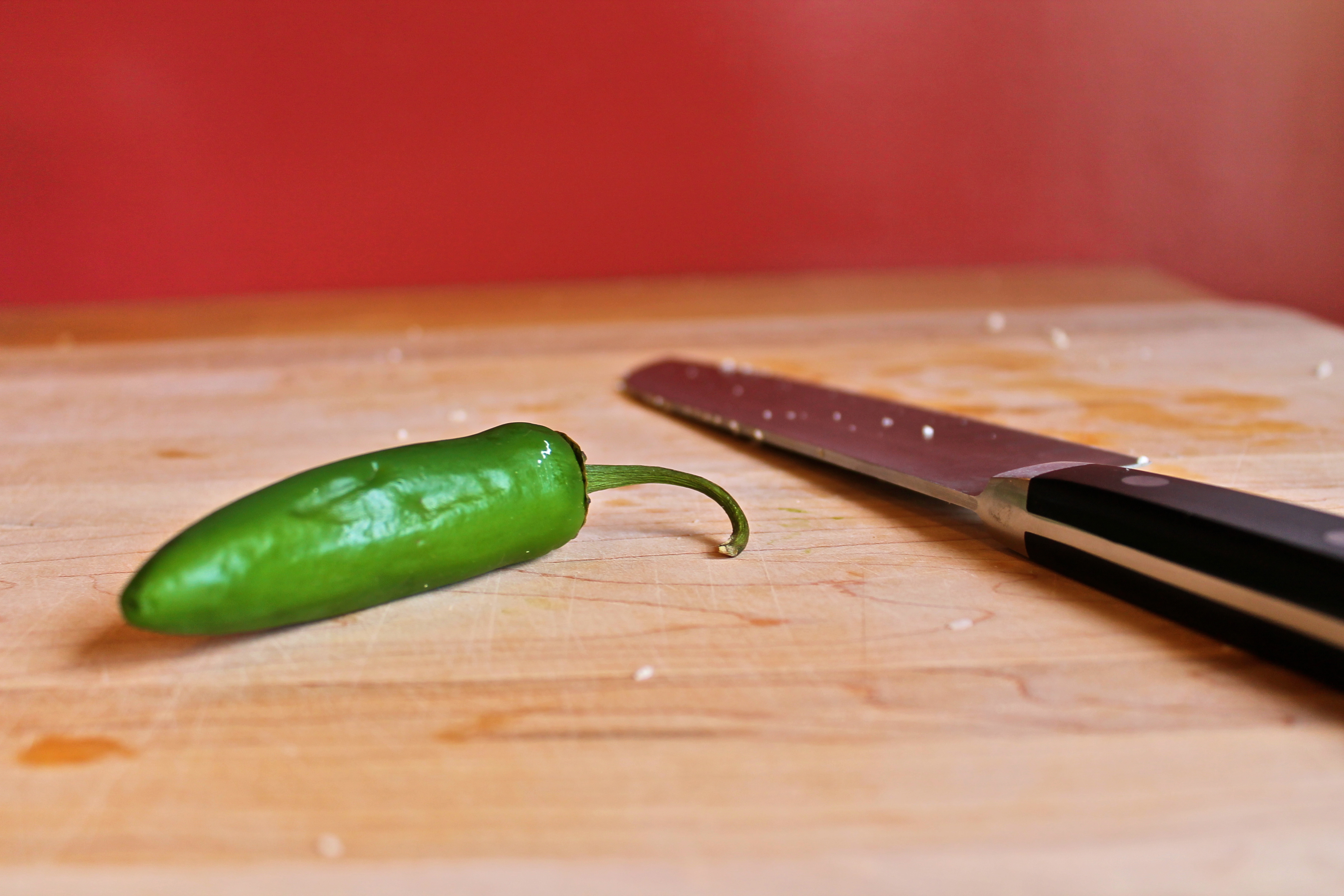
1 small green chile, seeds and ribs removed, then very finely chopped

1 tablespoon lemon juice

½ teaspoon sea salt

1 package phyllo dough, about 35 to 40 sheets

4 tablespoons unsalted butter, melted then cooled a bit

In a large pan set over high heat, heat vegetable oil or ghee until it is very hot. Add cumin seeds, and cook them just until they begin to sizzle and pop (this will take just a few seconds). Carefully add in sweet potatoes, and sauté for 3 minutes, stirring occasionally. Using a slotted spoon, remove potatoes from pan and set aside. In the still-hot pan, add the cauliflower and sauté, stirring occasionally, for 3 minutes. Add the potatoes back to the pan with the cauliflower, then add in the spices, ginger, and chopped chile. Reduce heat to low, stir to combine, cover, then let cook for 5 minutes. Remove cauliflower mixture from heat and set aside to cool to room temperature.

When the mixture has cooled, preheat oven to 375 degrees Fahrenheit. Line two baking sheets with parchment paper and set aside.

Cover phyllo stack with a dampened kitchen towel (this will keep the phyllo from drying out as you work).  Take one phyllo sheet from stack and lay it down on your work surface with a long side nearest you (keeping remaining sheets covered as you work) and brush lightly with butter. Fold the dough towards you in three folds, like a tri fold business letter. You will now have a long, three-layer strip of phyllo dough.

Place a tablespoon of filling near one corner of a strip, then fold corner of phyllo over to enclose filling and form a triangle. Continue folding the strip (as one would fold a flag), maintaining a triangle shape. Put fully wrapped samosa triangle, seam side down, on a parchment-lined large baking sheet. Repeat process, making more triangles in the same manner, until you’ve used all the phyllo and all the filling, whichever comes first. Very, very lightly brush the tops of the formed samosas with any remaining melted butter.

The samosas can be baked in a 375 degree oven, one sheet at a time, for 20-25 minutes, or until they are golden brown.  Cool them slightly on a wire rack before serving.

If you plan to freeze the samosas instead of bake them straightaway, place the wrapped samosas in the freezer on their parchment-lined baking sheets, and freeze for one hour.  Remove the samosas from the freezer, and stack them in an airtight container, separating each stack with a layer of parchment or wax paper.  The samosas will keep in the freezer for up to 1 month.  When you are ready to bake the frozen samosas, follow the baking directions for fresh samosas.  There is no need to adjust the baking time.

Makes 35 to 40 samosas, depending on how generous your 1 tablespoon scoops are.