Tag Archives: recipe

Honey Cream, Strawberry, and Chocolate Pizza

16 Apr

Perhaps it is not entirely honest to refer to this as a pizza, since, barring the fact that it is pizza-shaped and utilizes a crust that is quite fitting for savory pizza applications, it is quite clear that if something contains strawberries, cream, and chocolate, it’s probably not really a pizza, per se.

But, in yet another example of how I like to turn non-dessert foods into dessert, when I had a leftover pizza crust laying around last week, it just seemed wrong to let it live out the last of its days as something not sweet.  Plus, I had leftover strawberries sitting around.  And leftover cream.  And chocolate.  And also, I am not actually trying to justify what I have done, and I hope I am making that painfully obvious right now.

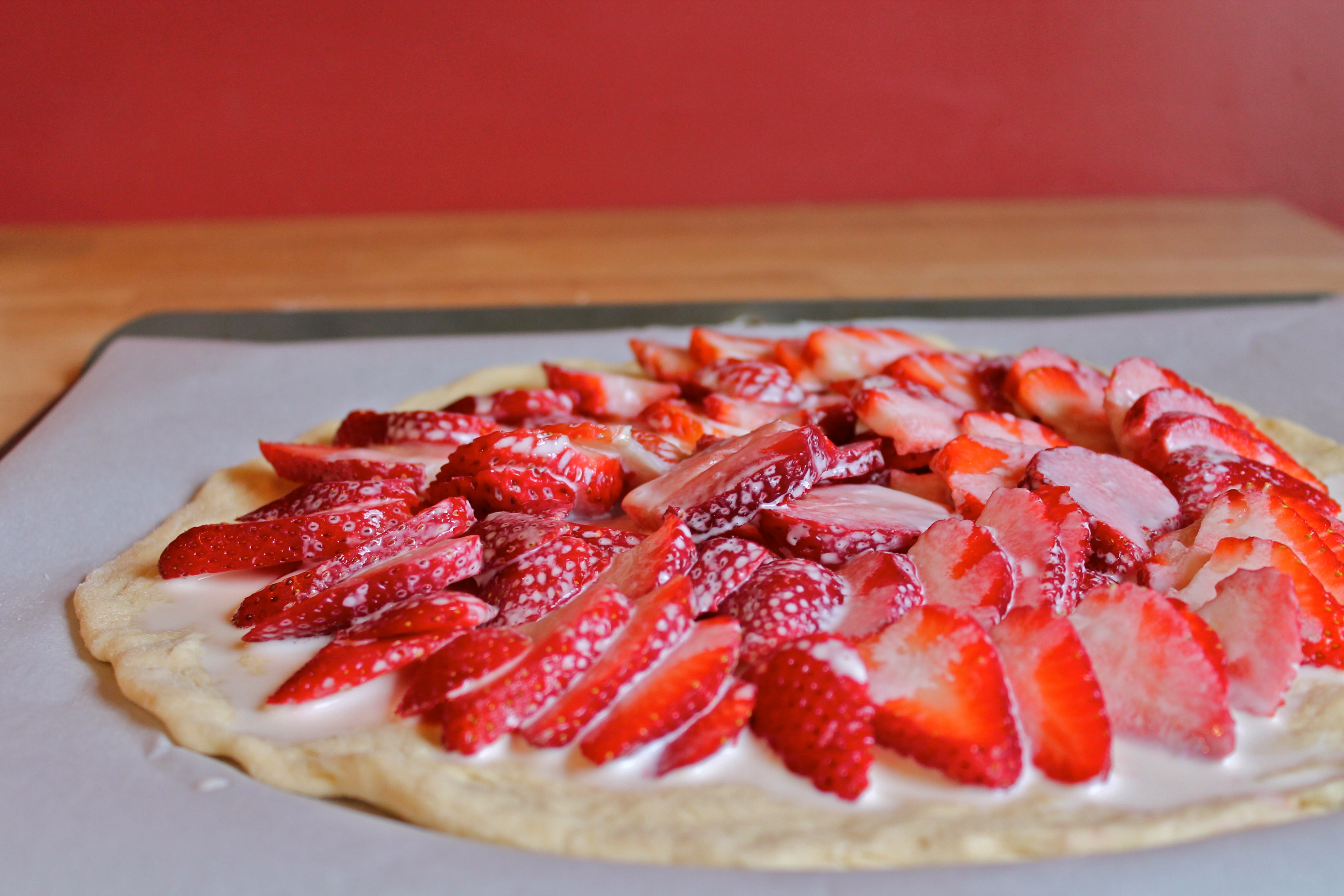
For something so simple to make, this dessert is a real showstopper.  Not only do the honey cream and strawberries go together like, well, strawberries and cream, but the light drizzle of chocolate at the end provides a finish that is as delicious as it is easy on the eyes.  If you want to be really cheeky, you can serve this pizza as a dessert on pizza night, whipping up this pizza dough the night before, allowing it to rest overnight in the refrigerator, then using 2/3 of the dough for dinner pizzas, the last 1/3 for this dessert pizza.  Resting the dough in the refrigerator overnight is not a necessity, but in my years of pizza making (the last year being the most intensive and experimental), I have discovered that a long-rested dough develops an unbeatable flavor and texture that is difficult to approximate with a dough that has rested at room temperature for a couple of hours.  You’ll have to plan ahead a bit, but it is so worth it.

Plenty more recipes for pizza can be found here.  Also, last year on Indie Fixx I published one of my most favorite pizza recipes, which can be found here.

Last Year: A Trio of Flavored Butters

Honey Cream, Strawberry, and Chocolate Pizza Recipe

Pizza dough for 1 pizza, or 1/3 of this dough, rested in the refrigerator overnight for maximum flavor

¼ cup heavy cream

2 tablespoons honey

12 ounces of strawberries, de-stemmed and sliced

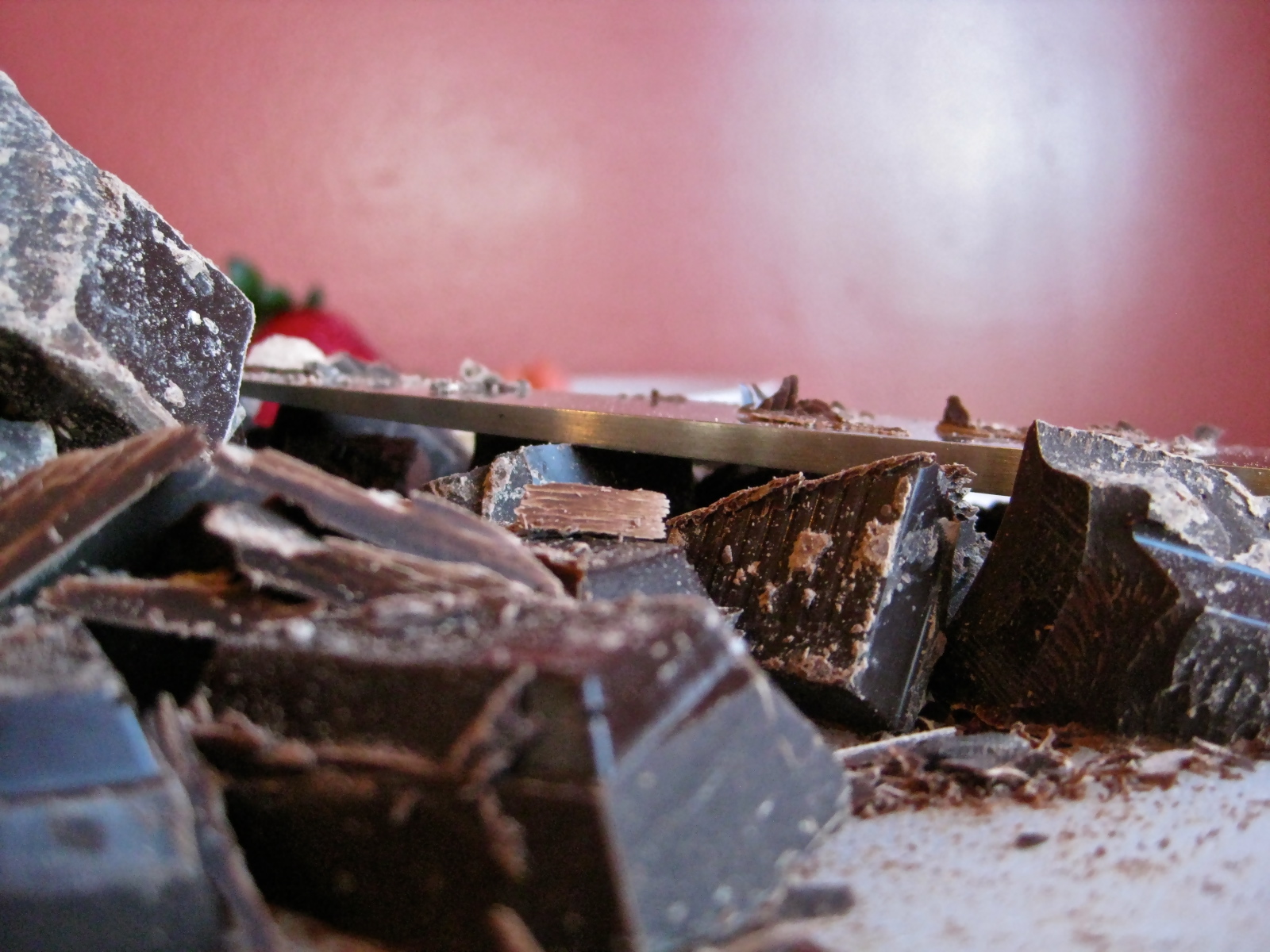
2 ounces bittersweet chocolate, roughly chopped

Preheat oven to 500 degrees Fahrenheit.  Place a baking stone or a heavy sheet pan on the second to lowest shelf in the oven.  Line a rimless baking sheet or an overturned sheet pan with parchment paper, and set aside.

On a lightly floured surface, stretch and push the pizza dough with your hands, coaxing, poking, and punching it until it forms a roughly 12-inch circle.  Place the dough on the parchment-lined baking sheet.

In a small bowl, whisk together the cream and honey until the honey has dissolved.  Brush ¾ of the cream mixture over the pizza dough.  Arrange the strawberries over the cream, trying your best to lay them in concentric circles.  Brush the remaining ¼ of the cream mixture over the tops of the strawberries.

Gently slide the pizza—still on its parchment paper—onto the preheated baking stone or sheet pan.  Bake pizza for 10 to 12 minutes, until the edges of the pizza are dark golden brown and bubbly.

Remove pizza to a rack to cool a bit.  While the pizza is cooling, melt the chopped chocolate in a double boiler or in the microwave on low heat, stirring frequently in both cases.  Melt the chocolate just until it still has come visible chunks, then remove from the heat and stir until the chunks have melted and the chocolate is glossy and smooth.

Drizzle the chocolate over the cooling pizza.  You can eat it while both the pizza and the chocolate are still warm, or you can allow both the pizza and chocolate to cool and firm up before eating.  Either way, it’s delicious.

Roasted Fingerling Sweet Potatoes with Lemon Tarragon Aioli

12 Apr

Not too long ago, after admitting that I had a wee bit of a problem keeping up with the New Yorker, I noticed that, next to my bedside, there sat a leaning tower of old New Yorker issues just waiting to topple over in the middle of the night and trigger a bad dream about thunderstorms or exploding bombs (apparently I am very susceptible to sounds invading my dreams, because just last night I was awoken from a dream about being trapped in a horrible hurricane, only to realize that, oh, no! There really was a hurricane happening right at that moment, only to then realize that, nope, there was no hurricane, there was only my husband, wheezing/snoring in his sleep just inches from my face and giving me nightmares, but I digress).  Knowing that my dusty magazine pile was bordering on unreasonable, I began to stack the old New Yorker issues in my arms and take them to the recycling bin.

As I walked down the stairs, I noticed that several of the magazines were marked in the beginning few pages with a dogeared fold.  One issue sporting this feature would not be notable, but half a dozen?  Against my better judgment—I was, remember, supposed to be getting rid of these magazines—I fished a couple of magazines out of the pile and opened them up to their folded pages.  All of the pages, it turned out, were marked at the same place: the Tables for Two column, the short restaurant review that appears in the first few pages of the magazine, and, some of you might remember, the inspiration for this recipe.  As I soon recalled, for months I had been noting tasty-sounding dishes that were mentioned in the column, with the intention that I would someday gather together the elements in each recipe and then create them in my own way.  Hazelnut orange pesto?  That sounds delicious!  And now this, fingerling sweet potatoes with tarragon?  Sign me up.

Though I can’t remember the name of the restaurant that offered the inspiration for this dish, the thought of combining fingerling sweet potatoes with tarragon stuck in my brain and refused to budge.  Not knowing anything more about the presentation, other than the main ingredient and its accompanying herb, I thought of the way I’d like to see these two things come together.  Petite sweet potatoes roasted in olive oil until soft and crisp and paired up with a wonderfully garlicky, herby aioli sounded just right.

And it was.  The sweet, caramelized potatoes are a natural match with the creamy, forward flavor of the tarragon aioli.  If I am recalling things correctly, the restaurant was favorably reviewed in the New Yorker, and this little sample of a flavor pairing from the restaurant makes it clear why.  So, in what might turn out to be an ingenious excuse for having all those old issues of the New Yorker sitting around, I have decided to create a new category here on Savory Salty Sweet.  The category will be called, fittingly, Tables for Two, and it will feature dishes that I read about in the New Yorker column of the same name and felt inspired to make.  I don’t know how many recipes I will actually be able to create from this endeavor, but I am excited to find out.

Last year: Carrot Muffins

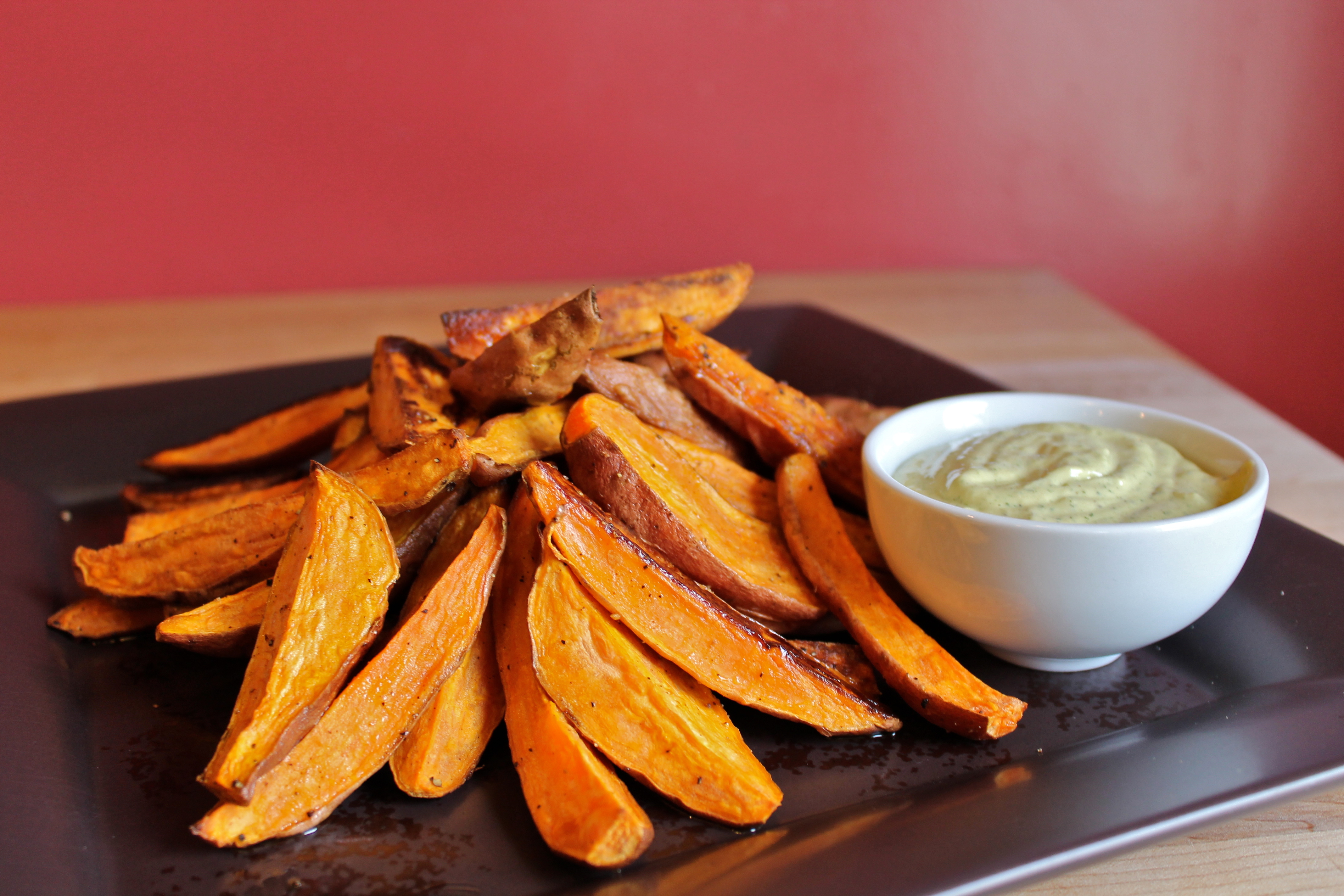
Roasted Fingerling Sweet Potatoes with Lemon Tarragon Aioli Recipe

If you can’t find fingerling sweet potatoes, just use the tiniest sweet potatoes you can find.  I have found that the tinier the potato, the more delicate its flesh, and that’s a real virtue in this recipe.  When you roast the potatoes, you want them to become pillowy soft and creamy with just tiny hits of crispness here and there on each slice.

2 pounds of fingerling sweet potatoes, sliced in half or in quarters in order to make all the potato slices a standard size (having them a uniform size will allow them to all roast at the same rate)

2 tablespoons extra virgin olive oil

salt and pepper to taste

Preheat oven to 400 degrees Fahrenheit.  Place sliced sweet potatoes on a large baking sheet, then drizzle with olive oil and sprinkle with salt and pepper.  Toss everything together, then arrange potatoes in a single layer.  Roast potatoes for 30 minutes, until the potatoes are soft and their edges have started to turn crisp.

Lemon Tarragon Aioli

2 tablespoons freshly squeezed lemon juice

1 tablespoon Dijon mustard

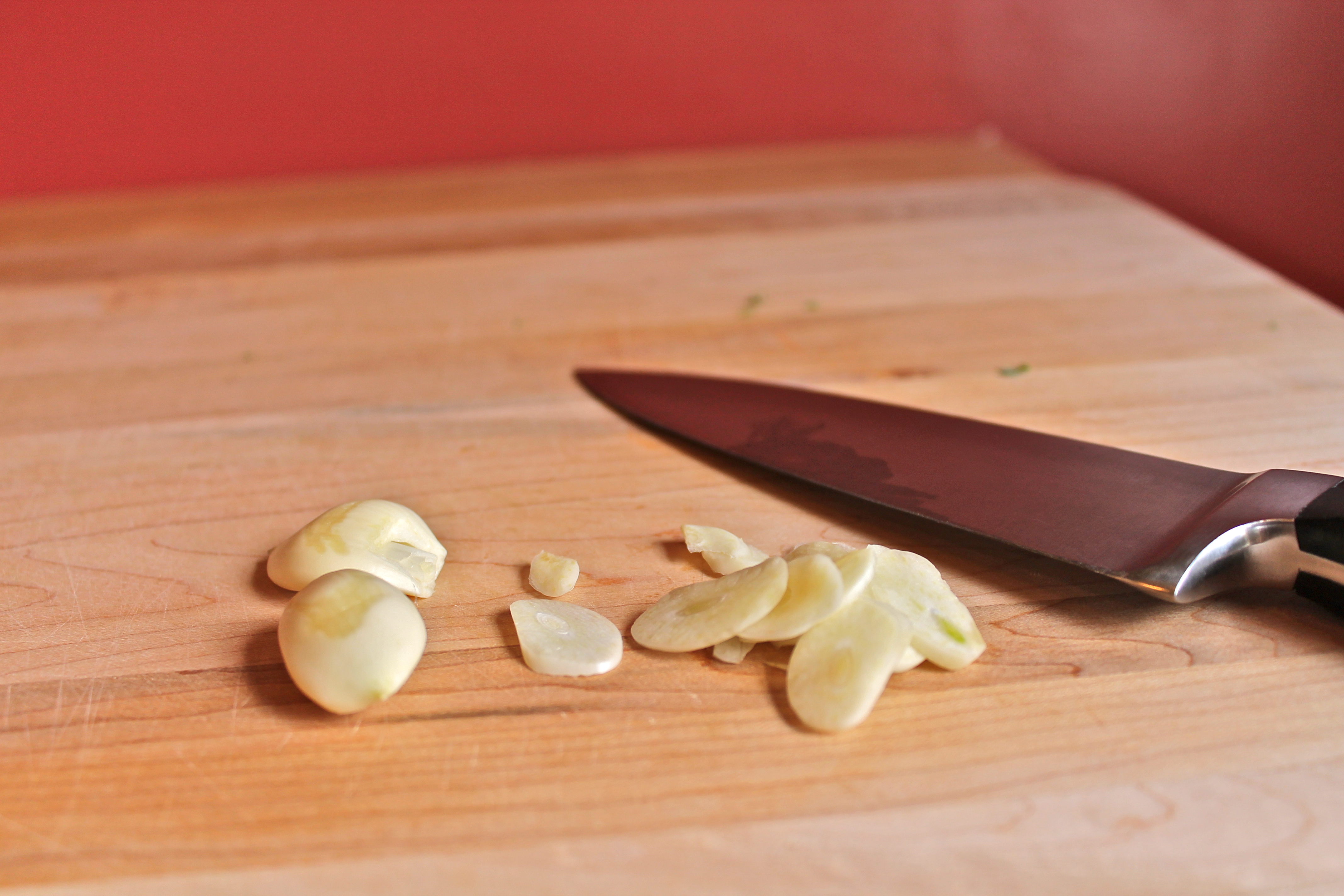
3 cloves of garlic, chopped

1 large egg yolk

2 tablespoons fresh tarragon, roughly chopped

7 tablespoons extra virgin olive oil

salt and pepper to taste

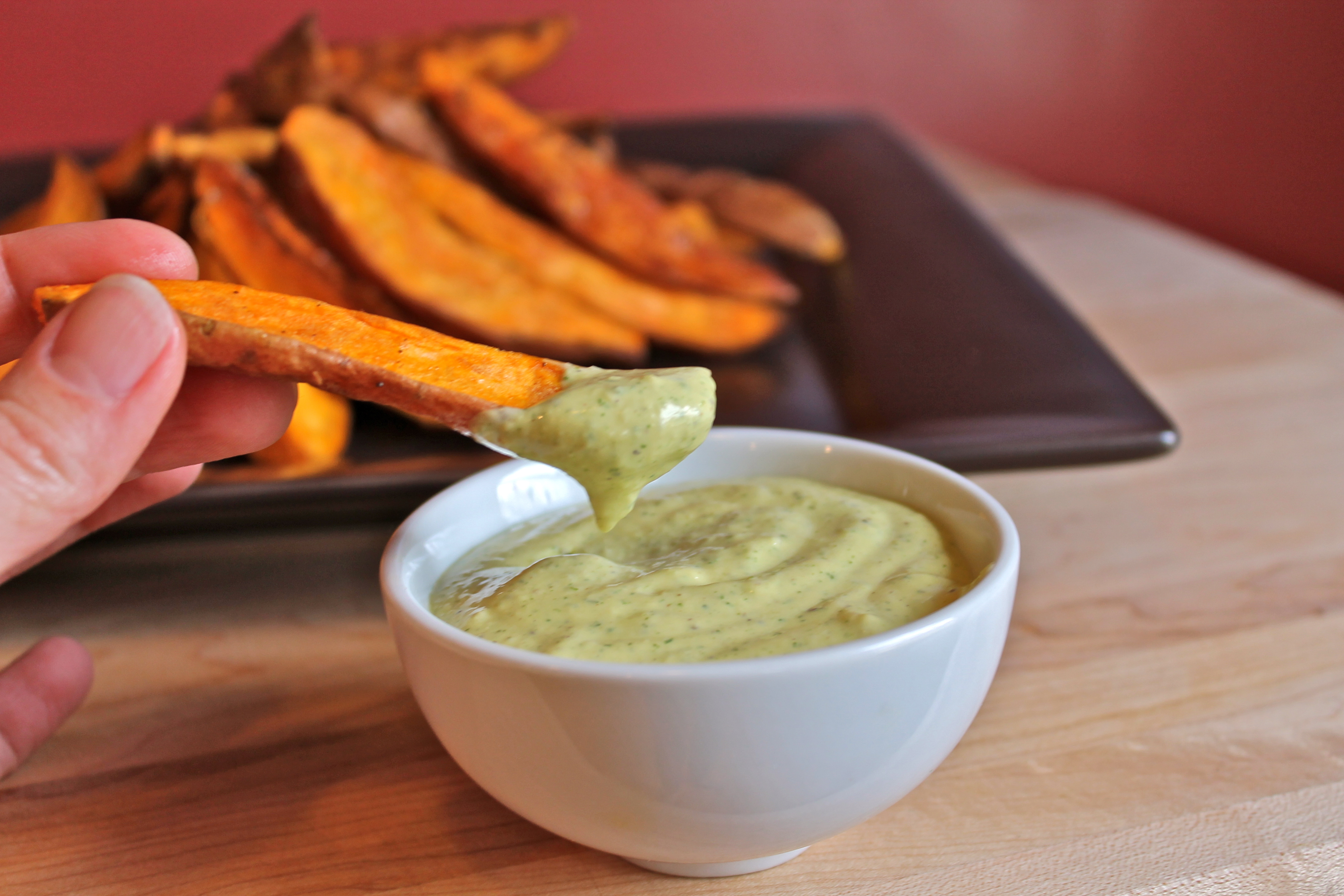
To make aioli, combine lemon juice, mustard, garlic, egg yolk, and tarragon in a food processor or blender.  Process or blend until smooth, then, with the food processor still running, slowly add the olive oil until the mixture becomes smooth and thick.  Remove the lid, stir the mixture with a spatula or spoon to mix in any errant bits trapped on the sides or bottom of the bowl, then add salt and pepper to taste and process for a few more seconds to ensure that everything is smoothly combined.

Serve potatoes warm, with aioli drizzled on top, or in a small bowl on the side.

Cider-Braised Greens

9 Apr

If it were up to me (and it is somewhat puzzling that it is not, considering the fact that I do all the cooking around here), every dinner I served would include these greens.  Lightly garlicky, slightly bitter, and mildly sweet with just a flash of spice, these are the greens that I turn to when I want to whip up something to accompany a basic meal of protein + carbohydrates.  Unfortunately, since many of my house’s food choices are not left entirely up to me, I don’t get to eat these greens all that often.  I could try and be polite about this, but there’s just no skirting the issue.  My kid, he hates leafy greens.

Many years ago, I was sitting in a Thai restaurant with my husband, pre-child years.  We were watching a family of four, two parents, two children, eat their dinner, and I was pleased to see that both kids in the family were happily tucking in pile after pile of sautéed greens, spicy green beans, and grilled tofu.  I watched and admired the family for quite some time, soaking in the spicy, vegetable-laden inspiration of their dining choices.  So, I thought, kids will eat greens and spicy food.  As it turns out, I was only half correct.  Those kids will eat greens and spicy food.

For a long time, I thought that the secret to getting kids to like a certain food was just offering that food to a kid many times (the rumored magic number of offerings before a kid will accept a rejected food is 20—that is, your kid has to taste and reject the food on 20 separate occasions before he or she will finally accept it, which is, to put it simply, disheartening and somewhat ridiculous) until the kid just breaks down and finally decides to eat whatever you are shoving at him.  I now know that the secret to getting your kid to eat food he claims he doesn’t like is…wait, there is no secret.  At least, I haven’t discovered it.  It seems as though the choices many kids make concerning the foods they will and will not eat are completely random.  My son will demolish an entire avocado that has been bathed in fresh lime juice and cracked black pepper, but his friend down the street suffers from a distaste of avocados that is so intense, he has taken to telling people that he is actually allergic to avocados and can’t even be around them.  My son loves salmon, but won’t go near prawns.  He will graze through our garden in the summer, stuffing handfuls of basil, parsley, and mint into his mouth, but if you try and offer him a lettuce leaf, he will back away as though you are waving an angry cobra at his face.

Maybe it’s not really a problem.  Maybe, because he is five, he is just being contrary.  Maybe one day, when he has outgrown his fear of leafy greens and is interested in exploring the world of cooked greens, he will appreciate a recipe like this.  There is not much I can do to in the meantime, save for offering him a tiny bite of my greens each time I make them, waiting in earnest for that magical 21st offering when he will fold under my persistence and finally give in.  If I am really persistent, I could have this nailed by the time he is six.  Maybe seven.  Okay, fine.  Twenty-seven.

With quinoa and grilled salmon

Cider-Braised Greens Recipe

2 tablespoons extra-virgin olive oil

3 large garlic cloves, cut into thin slices

large pinch of red pepper flakes

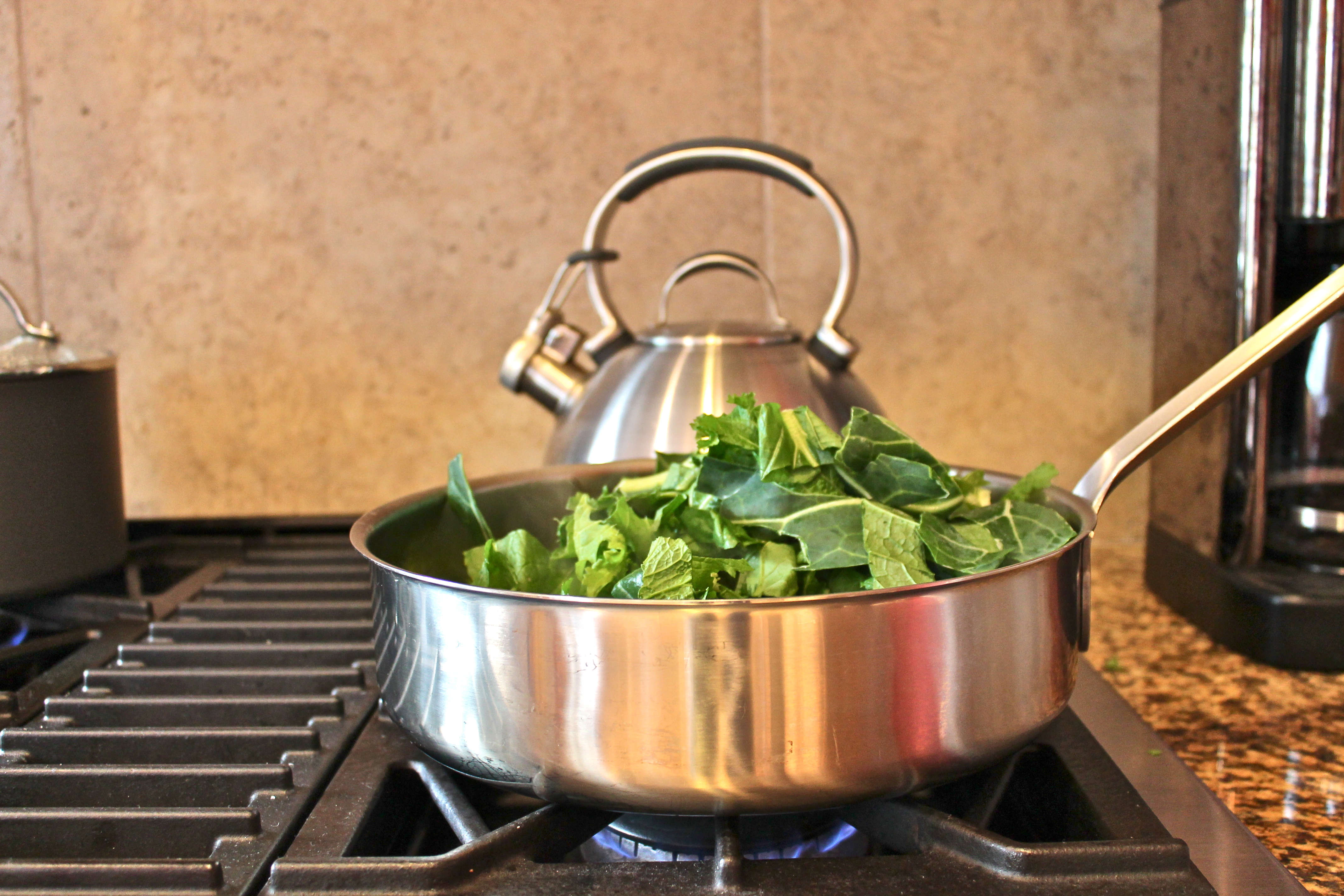
8 ounces of greens, rinsed and coarsely chopped (I used turnip greens, kale, and chard, but you can also use beet greens, collard greens, mustard greens, spinach, or whatever other cooking greens you have on hand)

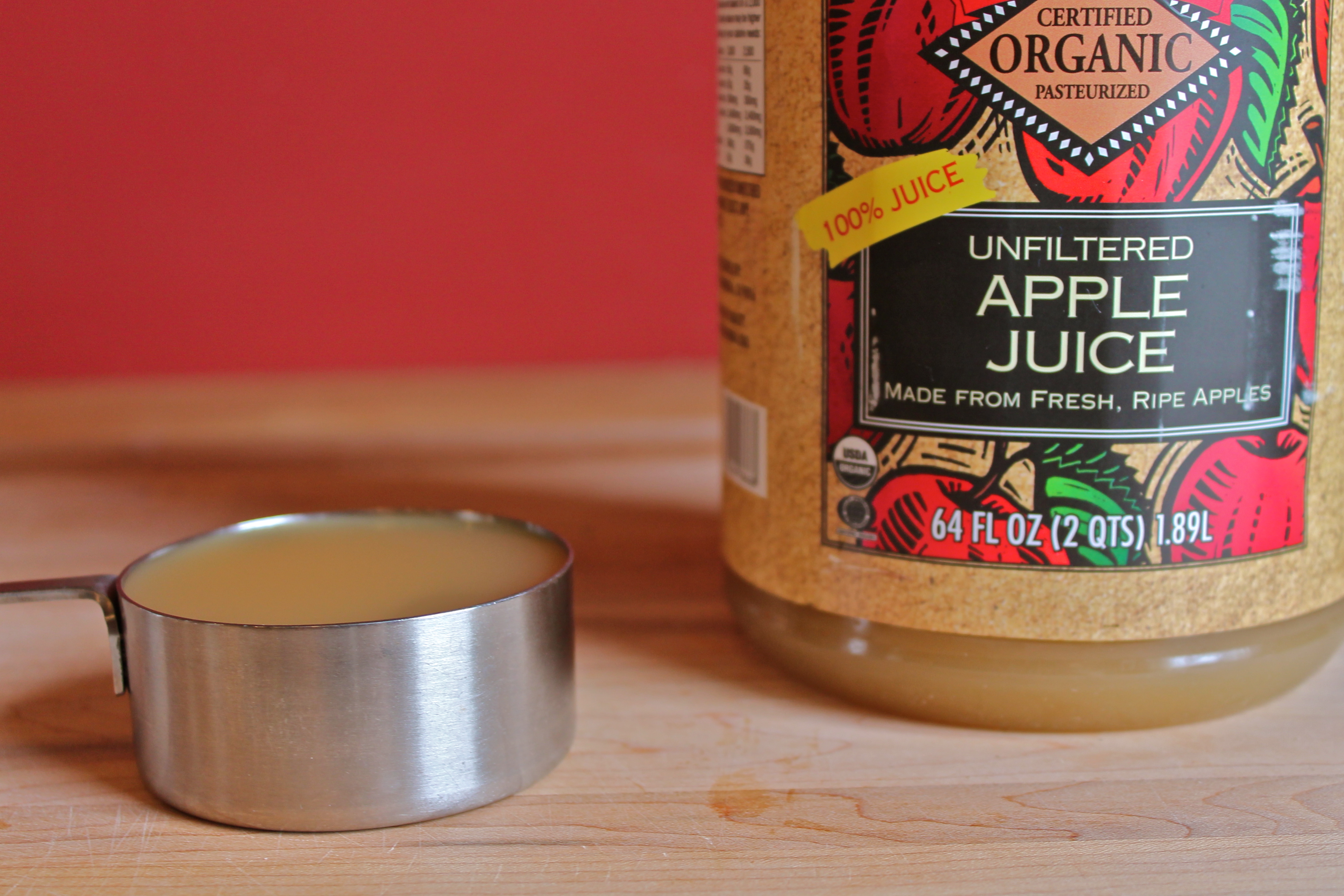
½ cup unfiltered apple cider

salt and pepper to taste

In a large skillet, heat olive oil over medium-high heat.  Add sliced garlic and pinch of red pepper flakes, and sauté, stirring frequently, for 10 to 15 seconds, until the garlic starts to release its aroma.  Add the greens all at once, stirring to coat the greens in the garlicky oil.  Sauté, stirring frequently, until the greens have wilted, about 3 to 4 minutes.  Pour the cider over the greens, stir to combine, place a lid tightly over the pan, and lower heat to medium-low.  Braise the greens for five minutes, until the cider has mostly reduced and the greens are tender.  Remove lid, stir in salt and pepper, and sauté for an additional minute until only a trace of the cider remains.

Serves 2.