Tag Archives: recipe

Creamy and Crunchy Berry Parfaits

27 Jun

IMG_9099

IMG_9075

IMG_9076

IMG_9079

IMG_9082

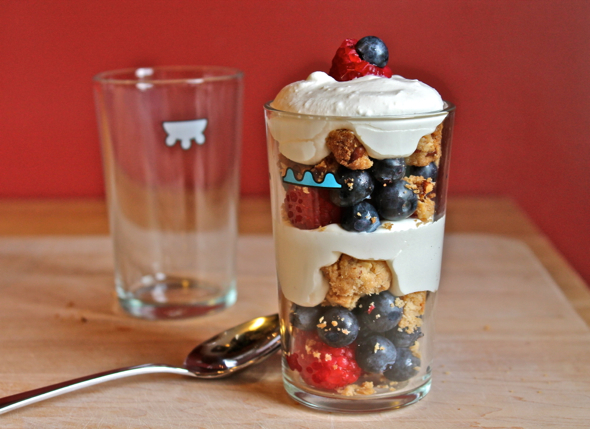
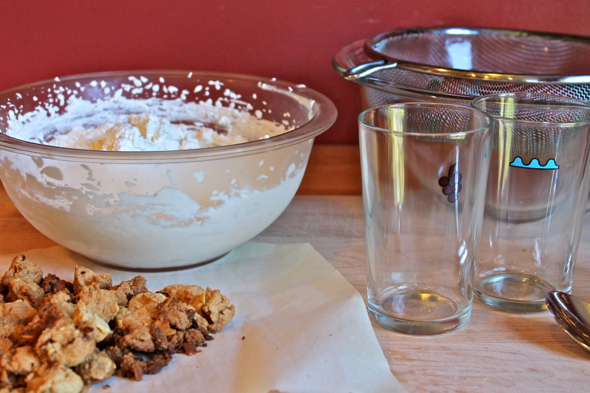
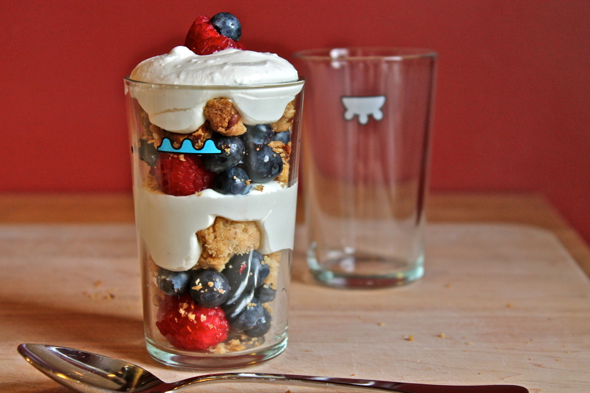
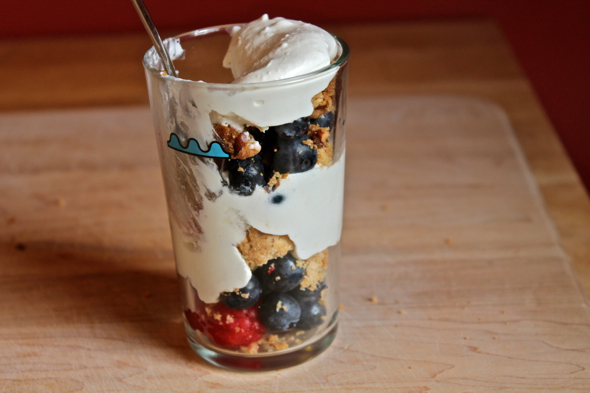
These little parfaits are a perfect combination of creamy, citrus-tinted coolness, juicy berries, and a fantastic hit of barely sweetened crunch (and by barely sweetened, we’re talking only around 2 tablespoons of added sugar, total). They are great for a crowd, and you can even set out the individual components of the dessert, give each of your guests a small glass or bowl, and let each person assemble their own parfait.
IMG_9098

IMG_9105

Last Year: Semolina Flatbread with Arugula, Mint, and Spinach Pesto (this is perfect for picnics) and Sour Cherry Upside Down Cake (this is perfect for…everything)

Creamy and Crunchy Berry Parfaits

½ cup all-purpose flour

1 tablespoon dark brown sugar

1 tablespoon white sugar

pinch sea salt

1 teaspoon vanilla extract

3 tablespoons cold unsalted butter, cut into small cubes

¼ cup coarsely chopped nuts (I used almonds and pecans)

1 cup cold heavy cream

½ teaspoon powdered sugar

drop of pure vanilla extract

¼ cup mascarpone cheese, at room temperature

1 teaspoon lemon zest (or orange zest)

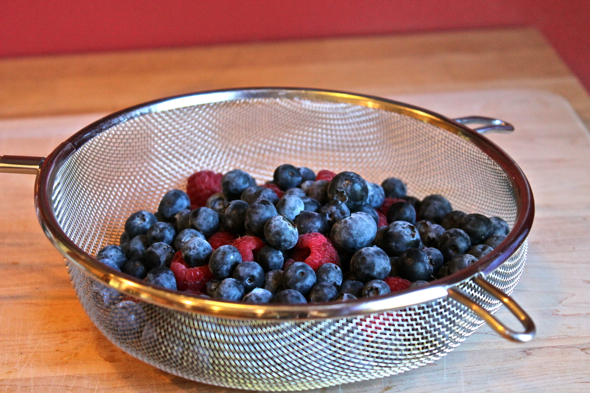
2 to 3 cups blueberries and raspberries (or other berries of your choice)

Preheat oven to 350 degrees Fahrenheit. Line a baking sheet with parchment paper.

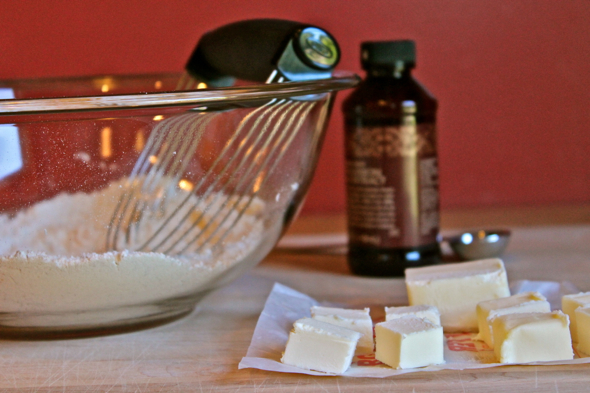
In a small bowl, combine flour, dark brown sugar, white sugar, and salt. Add the vanilla and butter and, using a pastry cutter or two knives, cut the butter into the dry ingredients until the butter is uniformly incorporated and the mixture resembles coarse crumbs that form clumps when pressed together. Stir in the chopped nuts.

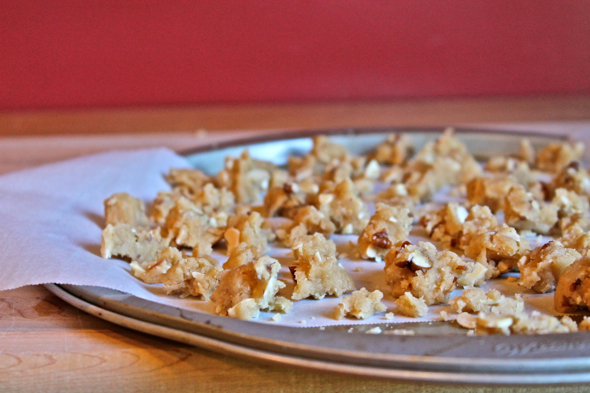
Using your hands, press the crumbly dough into a rough ball or mound. Then, using your fingers, pinch off ½-inch pieces of dough and place them on the prepared baking sheet. If some of the pieces fall apart or happen to be larger or smaller than ½-inch, don’t worry. The dessert police will not come knocking on your door.

Place the pieces of dough on the middle shelf of your preheated oven. Bake the pieces for 17 to 20 minutes, until the edges of the pieces are dark golden and your kitchen smells like cookies. Remove from oven and set aside to cool.

Meanwhile, in a medium bowl, combine heavy cream, powdered sugar, and vanilla. Using an electric beater or, if you have forearms like Lou Ferrigno, a wire whisk, beat the cream until it barely begins to thicken and hold super soft peaks. Add in the softened mascarpone and lemon zest, and beat for just a few seconds, until the mixture holds soft peaks, but is still quite creamy and light.

To assemble parfaits, drop a few berries into the bottom of a small glass, then add a few pieces of crumble (crumbling them even further, if you wish), then dollop on a spoonful or two of mascarpone cream. Repeat layers once more, then top each parfait with a berry or two.

I used 8-ounce glasses for the pictured parfaits, and I was able to make about 8 parfaits, with a bit of crumble left over. You can, of course, easily double this recipe and make twice the parfaits, to feed a whole crowd of revelers.

Mango Limeade

21 Jun

IMG_9019

IMG_9007

IMG_9009

IMG_9013

IMG_9011

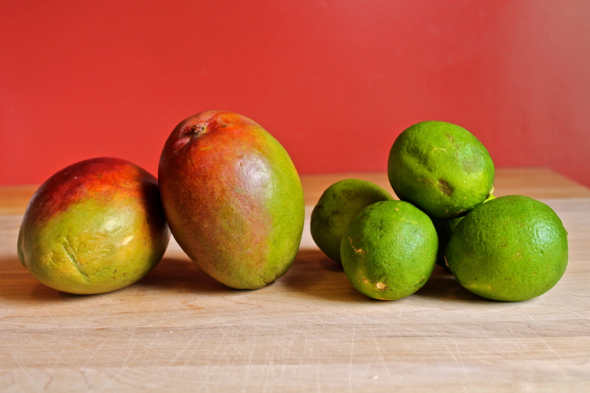
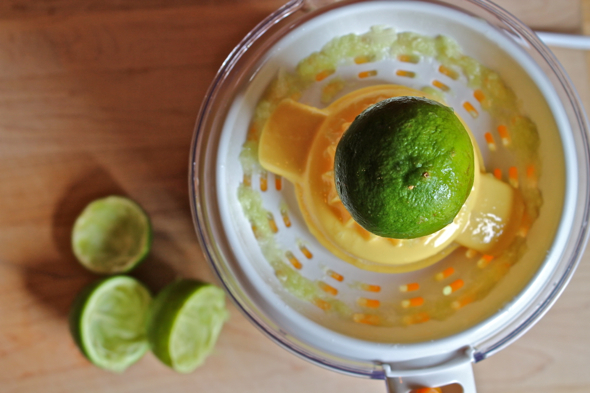
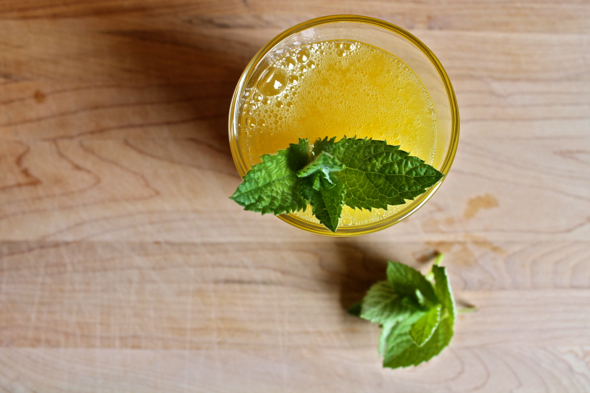
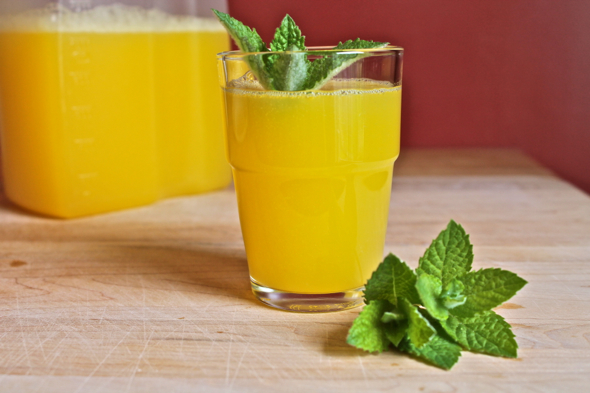
Much like making one’s own popsicles or popsicle variations, making homemade lemonade or limeade is a great kitchen skill to possess. If you are sensitive to the amount of sugar in your drinks, you can dial the sweetness down to suit your preference. If you’ve got a range of fruits on hand, you can experiment with blending things together and coming up with great flavor combinations. Here, the lime juice serves as a companion to the smooth and tropical mango puree, and the sweetness is hushed down considerably.

IMG_9017

Last Year: Roasted Broccoli Pasta Salad and Strawberry Mango Crumble–look! One year to the day, and I post another mango recipe. It must really be the start of summer.

Mango Limeade

If you are feeling a bit fancy, feel free to sub in sparkling water for the plain water in this recipe, or, if your fanciness takes on a more grown-up tone, try stirring some of the mango-lime puree into a glass of sparkling wine or Prosecco.

½ cup fresh lime juice

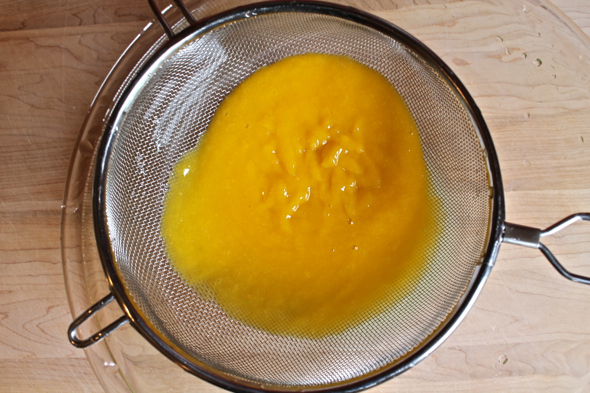
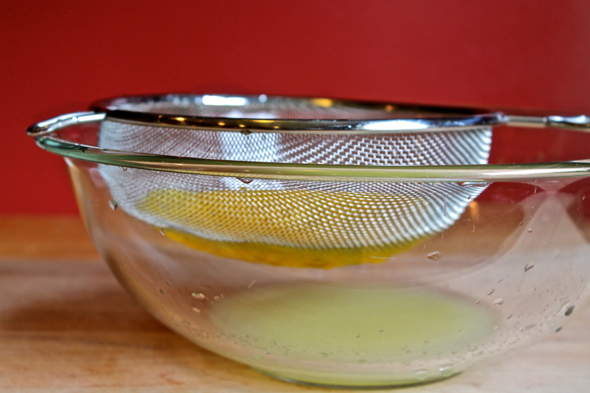
the ripe flesh from 2 mangoes, pureed then strained (you should end up with about ¾ of a cup of mango puree)

¼ to 1/3 cup sugar, depending on your preferred level of sweetness

4 cups water

pinch of salt

In a large bowl or pitcher, combine lime juice, mango puree, and sugar. Stir thoroughly, until the sugar has dissolved. Stir in water and pinch of salt. That’s it. You’re done.

Aloo Gobi Parathas

13 Jun

IMG_9033

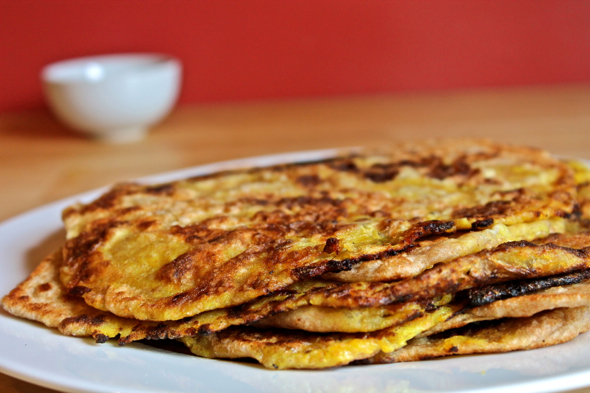
As I may have mentioned before, my son does not like Indian food. Because of this, every Indian item I make tends to be focused on an effort to get my kid to at least taste it, and, in hope, want to eat more. Futile? Perhaps. But, believe it or not, when it comes to introducing my kid to the food of my ancestors, Indian food is the safer road to travel, being as though I am half Indian and half Scottish, and it seems much kinder to introduce parathas to an innocent child rather than force upon him the culinary horror that is haggis. Sheep’s lungs and liver boiled inside its own stomach, or flatbreads filled with potatoes and cauliflower? Parathas it is!

IMG_8994

IMG_8998

IMG_9004

IMG_9023

The dough for these parathas could not be simpler. A mixture of whole wheat flour, all-purpose flour, salt, and water, the dough requires little more than mixing, kneading, and resting, which leaves you a nice window of time to cook up the potato and cauliflower filling. I may be alone in feeling this way, but the next step—the rolling, folding, and rolling again—is one of my favorites.

IMG_9025

IMG_9026

IMG_9027

IMG_9028

IMG_9031

IMG_9035

Last Year: Multigrain Sandwich Bread and Chocolate Coconut Marble Cake

So many more Indian dishes can be found in the archives!

Aloo Gobi Parathas (Indian Flatbreads Stuffed with Potatoes and Cauliflower)

Dough:

1 cup whole wheat flour

1 cup unbleached all-purpose flour, plus more for rolling out the dough

1 teaspoon salt

¾ to 1 cup water

Filling:

1 medium potato (about 8 ounces)

½ a head of medium-sized cauliflower, cut into florets (about 8 ounces)

2 tablespoons vegetable oil, plus more for cooking parathas

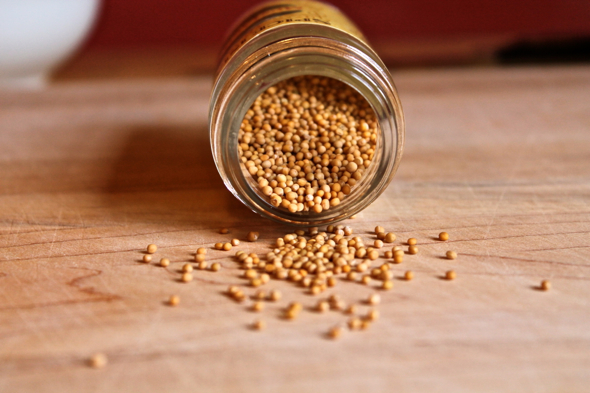
½ teaspoon mustard seeds

½ teaspoon turmeric

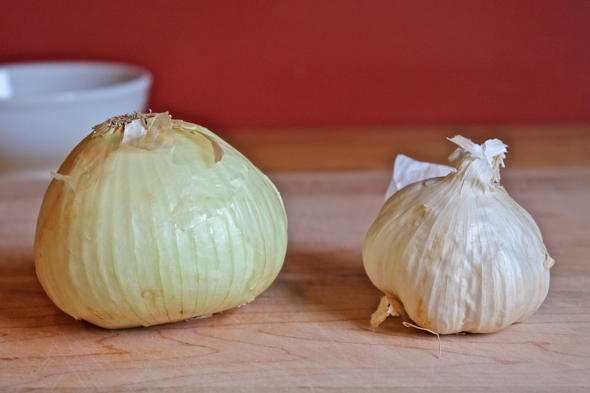
2 teaspoons minced garlic

1 cup finely chopped onion

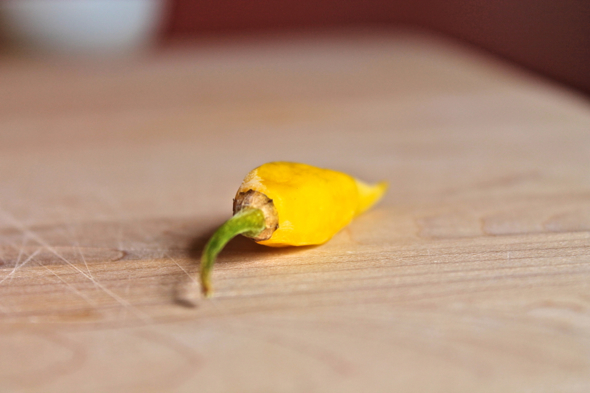
1 small jalapeno or other chile, finely minced (remove seeds and ribs before mincing to tone down the heat)

½ teaspoon salt

In a large bowl, or in the bowl of a stand mixer, combine flours with salt. Stir the flour mixture while slowly pouring in the water. The dough should need not quite the full cup of water in order to come together as a cohesive dough. Turn the dough out onto a floured surface, and knead for around five minutes, until smooth and supple. If you are using a stand mixer, mix the dough together with the dough hook, then, when the dough comes together, knead for an additional 4 to 5 minutes, until the dough is quite smooth. Cover the dough with plastic wrap and allow to rest for at least 1 hour.

While the dough is resting, make the filling.

Boil the potato, still in its jacket, until it can be easily pierced through with the tip of a knife. Set aside to cool. Steam the cauliflower florets until soft, about 8 to 10 minutes. Set aside to cool.

In a large skillet or wok set over high heat, add the vegetable oil and swirl it around until it covers the pan. Add the mustard seeds and cook for about 20 seconds, until they begin to pop and sputter. Lower the heat a tad, add the turmeric and garlic, and stir until the garlic is fragrant, about 20 seconds. Add the chopped onion and cook, stirring frequently, until the onion is soft and just beginning to brown, about 8 to 10 minutes.

While the onion is cooking, peel the skin off of the boiled potato, and add it, along with the slightly cooled cauliflower, to a large bowl. Mash the cauliflower and potato together using a potato masher or, if you have strong forearms, a fork.

When the onions have become soft and slightly browned, add the chile and stir to combine. Add the mashed potato and cauliflower mixture, sprinkle with salt, and continue to stir and cook until the mixture is completely combined. The filling should be quite soft, and only slightly tinged with brown in places. Remove the filling to the bowl in which you mashed the potato and cauliflower. Allow the mixture to cool to room temperature.

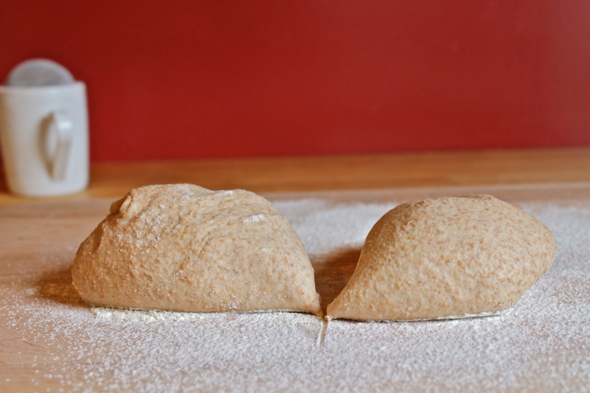
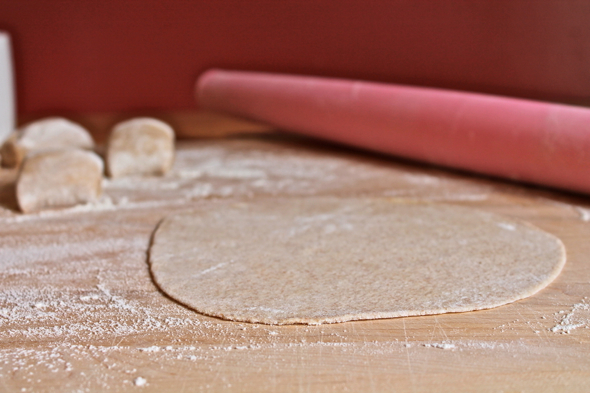
While the filling is cooling, prepare the paratha dough. Cut the dough in half, then into 8 pieces. Use your hands to flatten each piece into a disc. Coat each disc with a light dusting of flour. On a floured surface, use a rolling pin to gently roll each disc into a rough 8-inch round, setting aside and covering each circle as you roll it out. Do not turn dough over while rolling.

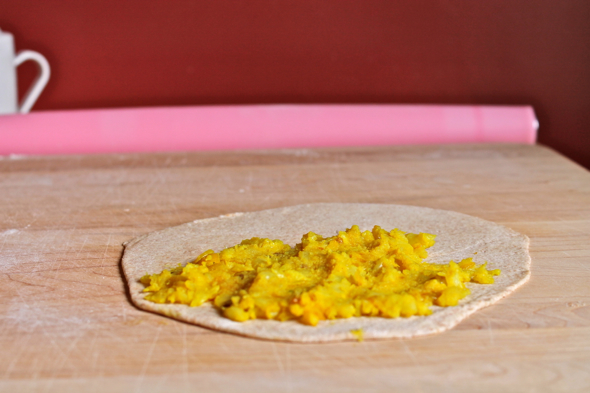
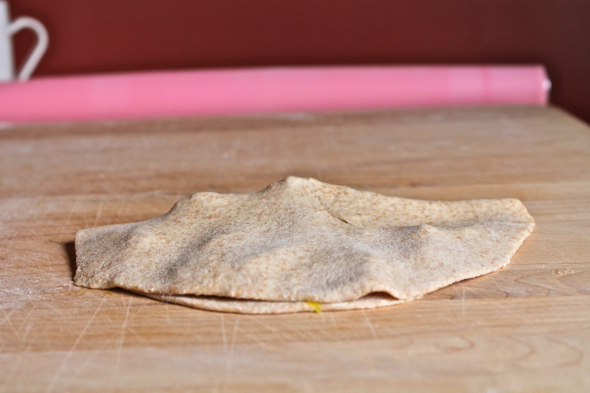
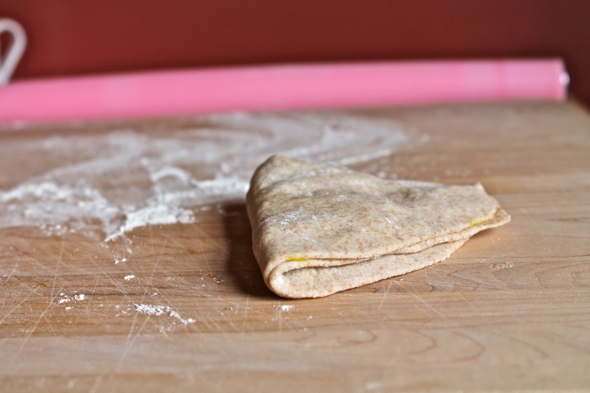
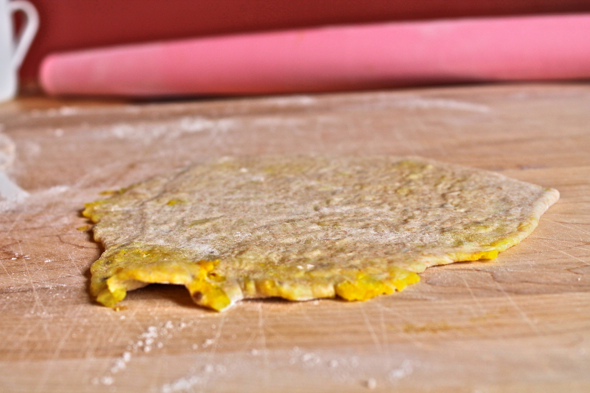
Spread 2 to 3 tablespoons of filling over one half of a dough round. Fold the bare half of the dough round over the filling, then fold in half to make a quarter-round wedge shape. Lightly pat the wedge flat, then gently roll it into a rough 8-inch round. Do not turn rounds over while rolling. Some filling will most likely sneak out the sides, but that is all right. Repeat with remaining dough rounds.

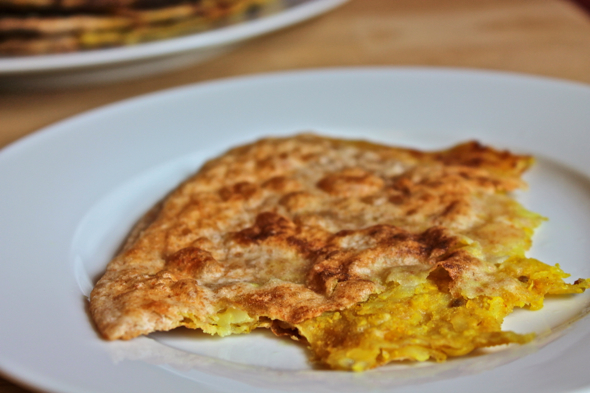
To cook the parathas, have ready a small bowl of vegetable oil of melted ghee. Heat a heavy cast iron skillet over high heat. When the skillet is hot, add a tablespoon of vegetable oil or ghee, and tip the skillet to coat it as much as possible. Lower the heat under the pan to medium-high, and place a paratha, top down, in the skillet. Cook for almost a minute, then turn the paratha over. Brush the surface of the paratha with a bit of vegetable oil of melted ghee, and cook for another minute and a half. Turn paratha over once more, and continue to cook for an additional 30 seconds, until the paratha is well spotted with brown patches on both sides. Remove to a plate, and cover to keep warm. Cook the remaining parathas in the same manner, adding another tablespoon or so of oil or ghee to the skillet in between each paratha.

Makes 8 parathas.