Archive | June, 2011

Lemon Cream and Strawberry Trifle

30 Jun

Summer fruit in this area of the country is a long time coming.  Sure, we’ve had rhubarb for a few weeks now, but can rhubarb, in all its puckery a tart glory, really be counted as a summer fruit?  If you toss rhubarb with a lot of sugar, it can do some mighty fine things, but, straight from the ground, eating it is going to cause you some serious malcontent.  With those parameters in mind, I am sorry to say that I just don’t think rhubarb is going to make the cut.  So what do we do here in Portland when we want to eat our first local summer fruit?  We wait for the strawberries.

It’s been a cold, wet, and (let’s be honest) semi-miserable spring and summer, but our fortitude seems to have paid off.  Fresh strawberries began to show up at the farmers market just a few short weeks ago and, just last week, strawberries made their arrival in our home garden.  Despite the slow start our garden suffered in its beginning stages, a very short burst of warm weather seems to have coaxed some of our fruit into vibrant life, rewarding us with, upon our first harvest, 3 pounds of strawberries.  Not a typo.  3 pounds.

And then, four days later, we harvested another 3 pounds.  Two days after that came another 2 pounds.  We are swimming in sweet, juicy berries, and I could not be happier.

There have been strawberries in our granola, strawberries in our yogurt, strawberries straight from the plant, strawberries on leftover biscuits, and, in what I now realize I subconsciously created as a bit of a strawberry coming out celebration after we harvested our first basket of berries, this astonishingly good strawberry and lemon cream trifle, which, besides tasting somewhat like a heavenly dream, also happens to look quite like one.

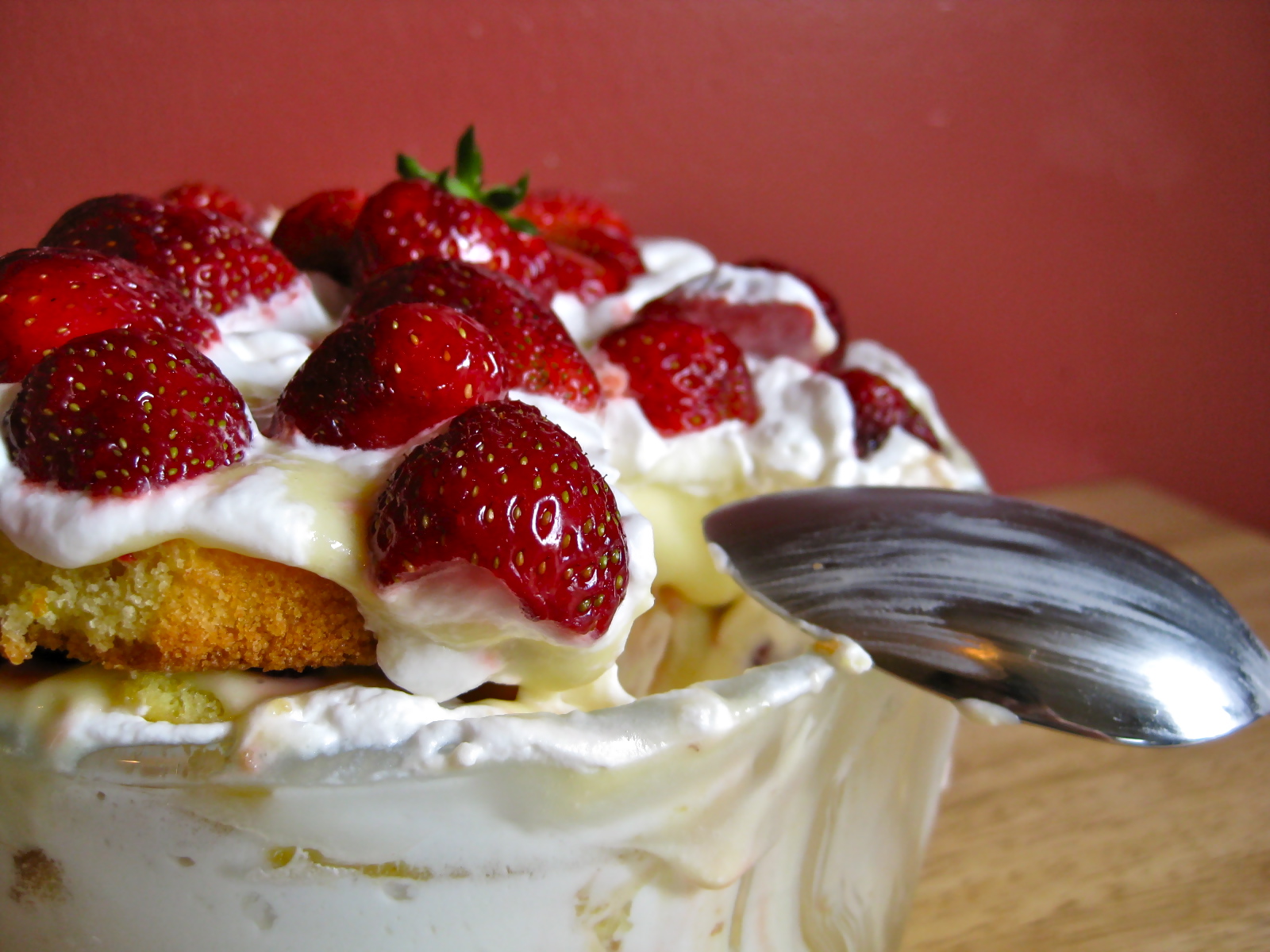
Until it comes time to serve it, that is.  Upon being released from its pristine confines, this wonderful dessert morphs into a sloppy, goopy mess that, were one determining dessert worthiness purely by looks alone, certainly would not be in the running to win any beauty pageants.

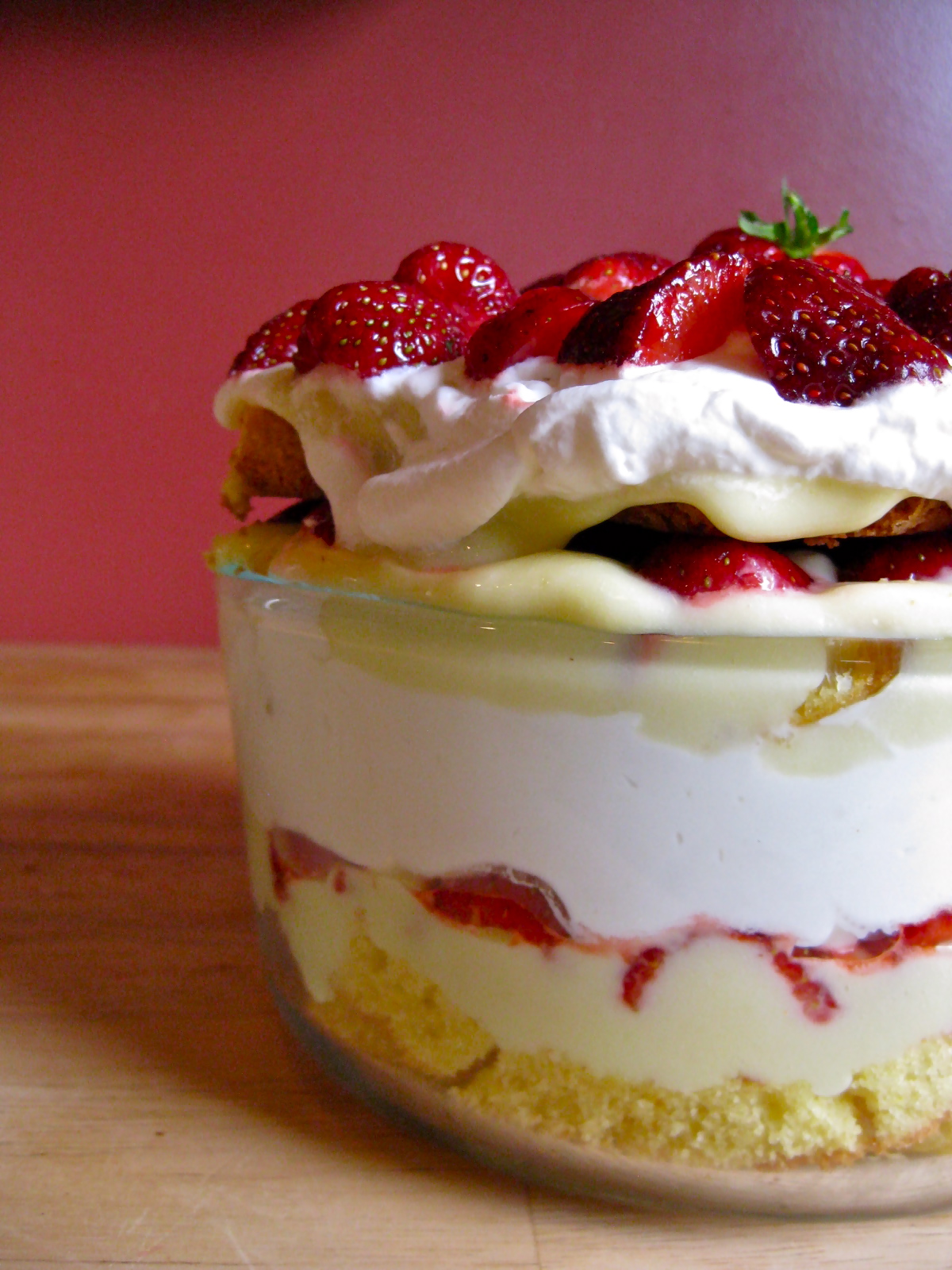
But, if we are to continue with this pageant metaphor, let us all remember that true beauty is not represented by what one sees on the outside, but rather what one possess on the inside, which in this case happens to be fresh garden strawberries, lush lemon cream, and soft peaks of whipped cream, all nestled in between layers of a delectable semolina cake that, unlike the cake layers in many a trifle I have eaten, will not succumb to a soggy and spongy fate when inundated with a veritable flood of delicious creams.  Combine those virtues, and you’ve got what I consider to be a dessert that qualifies as a true and deserving winner.
Strawberry and Lemon Cream Trifle

Orange Semolina Cake

If you want to go all lemon with this trifle, you can certainly swap out freshly squeezed lemon juice for the orange juice, though I find that the subtle orange flavor of this cake is a welcome addition to the overall composition of the trifle. (I previously wrote about this cake recipe here.)

2/3 cup all-purpose flour

½ teaspoon baking powder

2 cups fine semolina

¾ cup sugar

2 tablespoons grated orange zest

4 eggs, separated

¼ cup olive oil

¼ cup vegetable oil

½ cup orange juice

Preheat oven to 350 degrees F.

Grease and flour an 8” x 8” square cake pan.  Place flour, baking powder, and semolina in a bowl and mix to combine.  Combine sugar and orange zest in the bowl of a food processor or in a blender, and pulse to combine thoroughly.  Place egg yolks, orange-sugar mixture, and oils in a bowl and beat until well combined.  Fold egg yolk mixture into flour mixture with orange juice.

Place egg whites in a bowl and beat until soft peaks form.  Fold egg whites into flour and egg yolk mixture and pour into prepared pan.  Bake in preheated oven for 25-30 minutes, or until cake is lightly browned on top and a wooden skewer inserted into center of cake comes out clean.  Cool cake in pan for ten minutes, then release onto a wire rack to cool completely.

Lemon Cream

Adapted from Tartine

½ cup plus 2 tablespoons (5 ounces) of freshly squeezed lemon juice

3 whole large eggs

1 large egg yolk

¾ cup (6 ounces) sugar

pinch of salt

½ cup (4 ounces or 1 stick) cool unsalted butter, cut into 1 tablespoon pieces

Bring about 2 inches of water to a simmer in a saucepan set over medium heat.  In a non-reactive bowl that is able to rest securely in the rim of the saucepan without touching the water, combine lemon juice, whole eggs, egg yolk, sugar, and salt.  Whisk the ingredients together.  Do not allow the egg yolks and sugar sit together without being stirred constantly, as the sugar will react with the eggs and turn them granular.  Place the bowl over the saucepan of simmering water and continue to whisk for around 10-12 minutes, until the mixture thickens considerably and reaches a temperature of 180 degrees F.  Remove the bowl from above the water and allow the mixture to cool to 140 degrees F.  Stir from time to time to help the mixture cool and release its heat.

When the cream has reached 140 degrees, pour it into a blender, or leave it in the bowl if you will be using an immersion blender to mix the lemon cream.  Add the butter to the lemon cream, 1 tablespoon at a time, blending the mixture continuously until each piece of butter is completely incorporated before you add the next one.  The cream will be pale yellow and quite thick.

The lemon cream can be used immediately, or it can be made ahead and kept in the refrigerator, tightly sealed, for up to 5 days.  Makes about 2 cups of lemon cream.

Whipped Cream

1 cup (8 ounces) heavy whipping cream

½ teaspoon sugar

¼ teaspoon pure vanilla extract

Combine whipping cream, sugar, and vanilla in a medium bowl.  Using an electric mixer, whip on low speed until sugar and vanilla have dissolved.  Increase mixer speed to high, and whip until cream forms soft peaks.

Assemble the Trifle

You will need 1 pound of strawberries, each berry hulled and sliced in half from top to bottom.

When cake has cooled, cut it in half so you have two pieces that measure 8” x 4.”  You will only need half of the cake, so tightly wrap the unused half and store it for later use or enjoyment.  Then cut the remaining 8” x 4” piece in half horizontally, separating the top from the bottom.

Line the bottom of a trifle dish, or a similarly-sized glass bowl with a flat bottom (I used a 1.75 quart Pyrex storage dish, and found that I could have benefited from a dish that was taller and allowed for a bit more security of the top layers) with 1/3 of the cake layers, cutting the cake into strips and pieces as needed to fill in as much of the bottom space as possible.  Spoon 1/3 of the lemon cream mixture on top of the cake layer.  Spoon 1/3 of the strawberries on top of the lemon cream.  Spoon 1/3 of the whipped cream on top of the strawberries.  Repeat layering process one more time.  When you get to the third layer, deviate slightly from the layering order by first making a cake layer, followed by a lemon cream layer, then a whipped cream layer, then a strawberry layer.  Laying the strawberries on top of the cake, rather than under a layer of whipped cream, simply looks prettier.

Chill the trifle well before serving.  Trifle can be made ahead and left to wait in the refrigerator, fully assembled, for up to 1 day.

This trifle should serve at least 10 people very generously.  I’d tell you how long leftovers can last in the refrigerator, but ours was completely demolished within 2 days, leaving me to only guess as to how long it could last past that.  I’d say no longer than 3 or 4 days, but I’ll bet yours will be gone long before that as well.

Mango and Avocado Salsa

27 Jun

As the weather finally warms, I am growing ever more excited for the arrival of one of my most treasured summertime traditions: the non meal-meal.  The non meal-meal is exactly what you might ascertain it would be, given its name.  It is a meal that is comprised of many different things that do not, on their own, constitute a meal.  The non meal-meal can be anything one wants it to be, really.  It can be a handful of nuts, an apple, and half of a leftover biscuit.  It can be a log of string cheese and some crackers slathered with almond butter.  Sometimes, when no one is around to express displeasure at my oftentimes rather questionable eating habits, it can be a single bite taken from each container in the refrigerator that holds leftovers from throughout the week.

I’d like to blame my propensity for eating non meal-meals on a lack of food preparation motivation when the warm weather arrives, but, to be quite honest, I don’t really have an excuse for eating that way, so much as I just have an outright confession: I like to eat that way.  My favorite type of meal involves many small bites of many different things (hello, tapas), so grazing my way through the fridge and pantry is a pleasant and long held tradition of mine.

Occasionally, however, I will take this buffet approach of mine and apply it to an actual meal that needs to be, albeit very simply, prepared.  I’ll toss leftover roasted vegetables on some salad greens and sit down for a lunch that involves actual silverware, or, if I feel it must be done, I’ll briefly peel and chop a few items and then combine them into something that resembles an actual dish.

I’d like to tell you all that after I took the time to put this salsa together, I made sure to set some aside for the other people in the house who I am sure would have loved it.  But I did not.  Upon sampling a taste of this creamy, spicy, and sweet concoction, I immediately hoovered down the entire bowl, first with the aid of some tortilla chips, but then, realizing that the chips were merely a cumbersome vessel getting in the way of me and the salsa, I ditched the chips and proceeded to attack the salsa while armed with nothing more than a very large spoon.  Am I ashamed?  Absolutely not.  This salsa, filled with fresh fruit and invigorated by a kick of jalapeno, is nothing short of delightful, and nothing less than vigorously healthful.  Devoid of chips, you can make this salsa and call it a salad, then eat it on a bed of greens (or not) and call it lunch.  Or, if you are me, you can eat it any way you wish and just call it delicious.

Mango and Avocado Salsa

1 large mango, peeled and sliced into small chunks

1 large avocado, peeled and sliced into small chunks

juice of 1 lime

1 jalapeno pepper, chopped finely, seeds and white inner ribs removed and set aside

4 tablespoons of finely chopped red onion

2 tablespoons chopped fresh cilantro

1/4 teaspoon salt

In a small bowl, combine all of the ingredients.  Toss thoroughly with a spoon, then taste for seasoning.  If you want to add more heat to the salsa, add a small amount of the reserved jalapeno seeds, toss again, and taste.  Continue in this fashion until you have reached the spiciness you desire.

Spinach Basil Pesto with Lemon and Almonds

23 Jun

Having a child who happens to absolutely love pesto is both a blessing and a curse.  On the one hand, it’s nice to have a child who will stick a toe in the pool of adventure and happily dig into a sauce that is not only bright green, but also more complex in flavor than the average preschooler’s preferred pasta dish of buttered noodles with cheese.  On the other hand, have you ever been driven to eating pesto three times a week because you live with a tiny person who is prone to bouts of tyrant-like behavior when it comes to food?  No matter what the food, if you are forced to eat it enough, its gloss will soon begin to fade.

Maybe it’s just the repeat performances wearing me down, but I’ve long felt that pesto, that much-maligned sauce of the ‘90s, is in dire need of a makeover. Being a sauce of few ingredients, there are as many ways to make pesto shine as there are ways to make it dull and unexciting, and, much to the world’s misfortune, most pesto ends up suffering the latter lot rather than the former.  It’s too oily.  It’s garlicky enough so as to be considered borderline caustic.  It’s bland.  It’s boring.  It’s predictable.

Guess what?  It doesn’t have to be any of those things.  Breaking apart the simple components of pesto and then dressing them up as you put them back together can yield some fantastic results, and the seemingly endless ways one can Frankenstein together a new type of pesto are limited by only what you may or may not have in your refrigerator on a given day.  Starting from a very basic level of pesto-making, just changing up one or two ingredients can provide your standard recipe with a nice bit of change.  Arugula can get swapped for basil.  A handful of fresh mint can join in.  Fresh tomatoes and walnuts can be tossed into the blend.

Though history may have proven that your kid will eschew spinach in its regular form, you can hide a ton of the vitamin and nutrient packed green in your sauce and, so long as you never let loose your secret, no child will ever be able to detect the difference between spinach pesto and regular pesto.  You know that as long as your pesto still looks like pesto, chances are your kid will never be the wiser.  To appease the adult palette, swapping out roasted almonds for pine nuts not only makes your frequent pesto consumption easier on the wallet, but the hearty taste of the almonds plays nicely off of the subtle nuttiness of the parmesan cheese.  Add in lemon zest for brightness, and you’re on your way to something reinvigorated and fantastic.

This is not pesto from a jar, or tired pesto from a restaurant that seemed to run out of menu ideas sometime during the Clinton administration.  This is pesto refreshed, yet still utterly recognizable as an old standby who you will always welcome, albeit now with a tad bit more enthusiasm.

Bonus information!

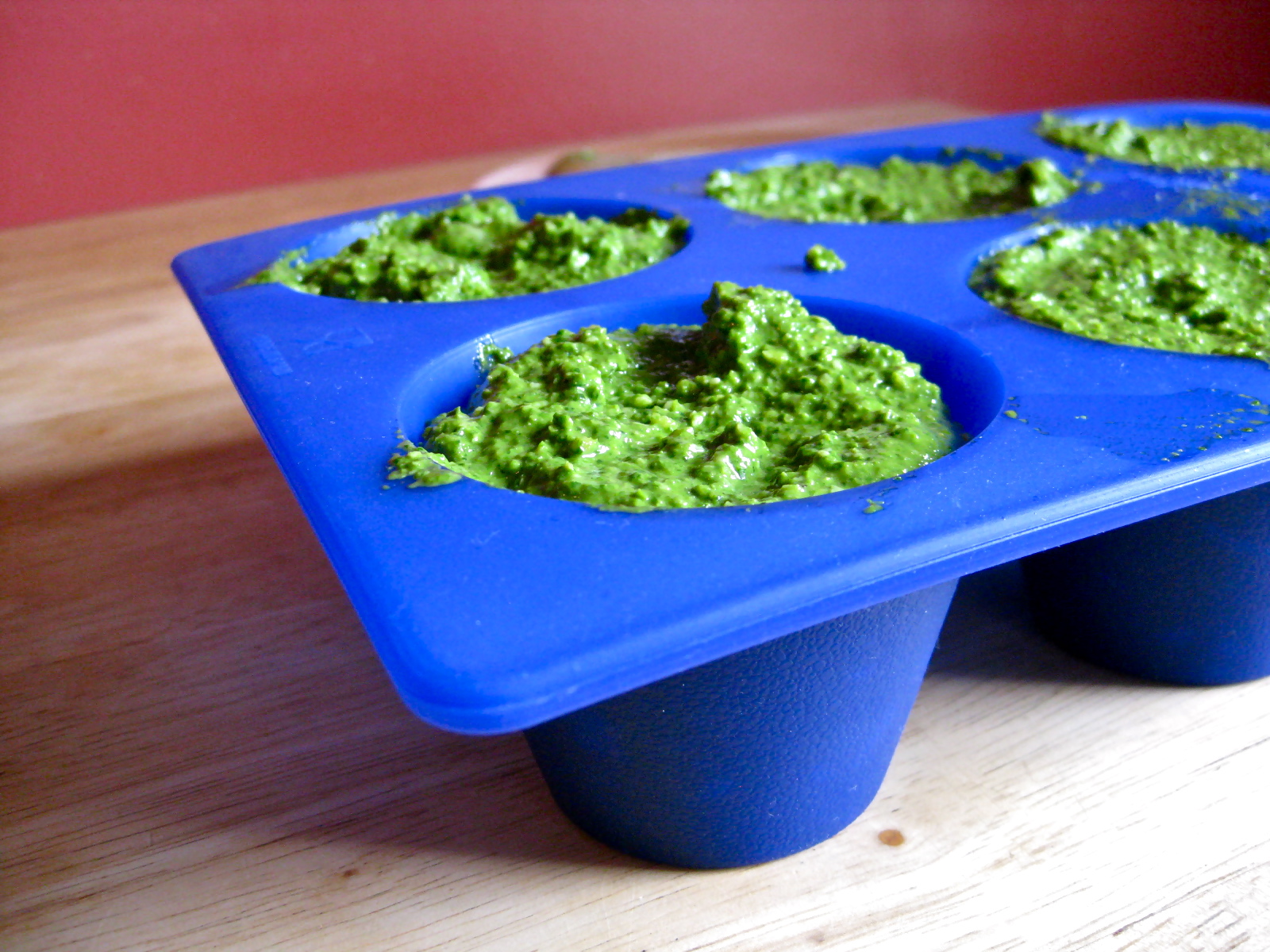
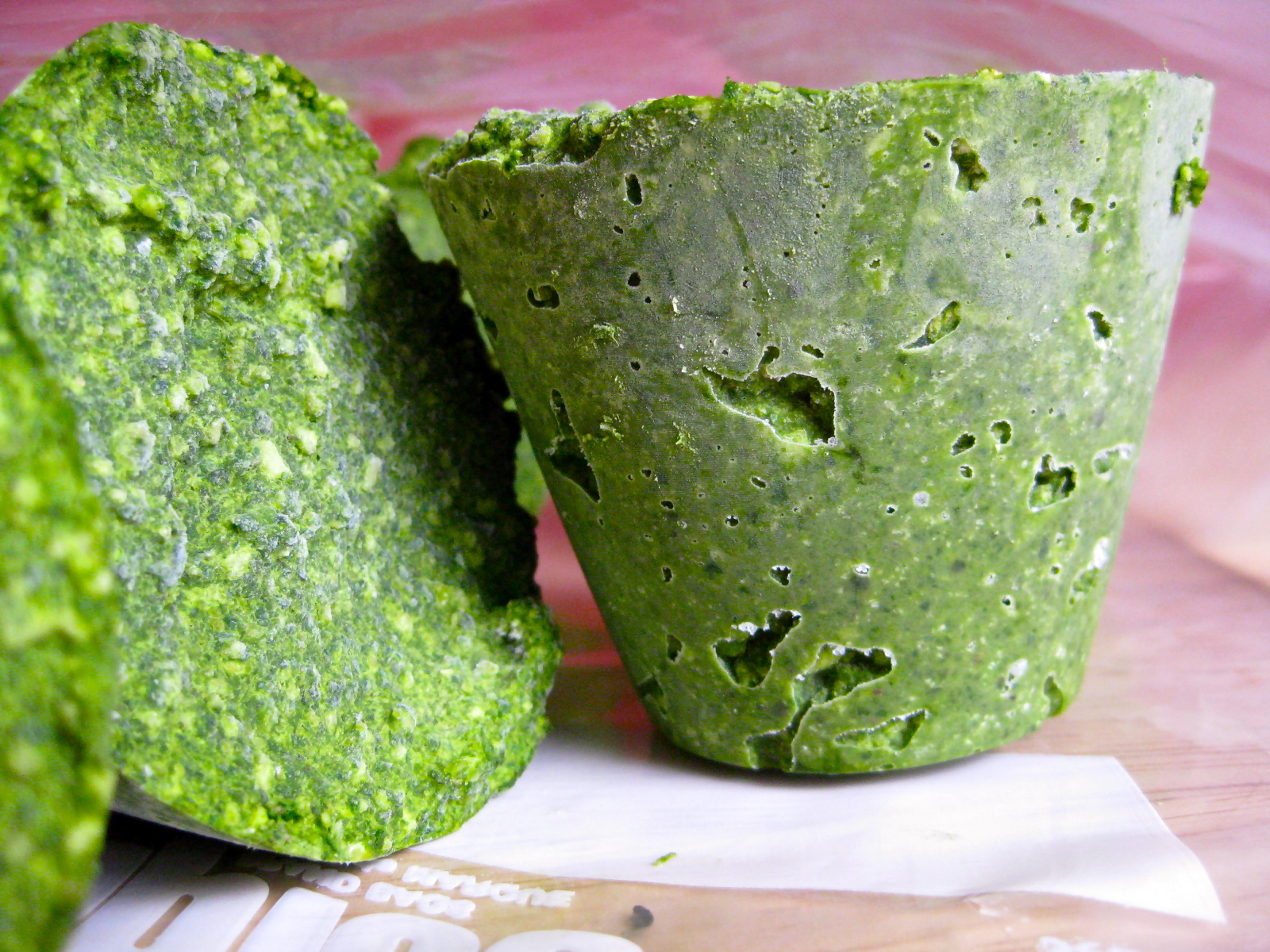
This pesto freezes extremely well.  I have been known to make several enormous batches of this pesto at the end of our gardening season when I harvest all our greens.  After I make a huge batch (or two) of the sauce, I pour it into individual serving sizes and freeze it.  Though I have absolutely no recollection where it came from, this silicone baking mold is great for portioning out pesto for freezing:

After the pesto has frozen (at least three hours, or up to overnight), I release the pesto from each cup (this process is super easy when using a silicone mold, by the way, because the silicone cups just peel back and pop the pesto right out), then place the pesto servings in a thick Ziploc freezer bag and toss them back into the freezer.

The pesto will last in the freezer for several months.  When you want to use a block of your pesto, just place one in a microwave safe bowl and defrost for about a minute on high heat.  Alternately, if you are good about planning ahead, you can just place one of your blocks in the refrigerator to defrost overnight for the next day’s meal.  The molds I have are able to hold just a smidge more than 2/3 of a cup of pesto each.  2/3 of a cup of pesto will coat a moderately dressed pound of pasta, or you can cook 3/4 of a pound of pasta and enjoy your pasta a bit more heavily dressed.

Spinach Basil Pesto with Lemon and Almonds

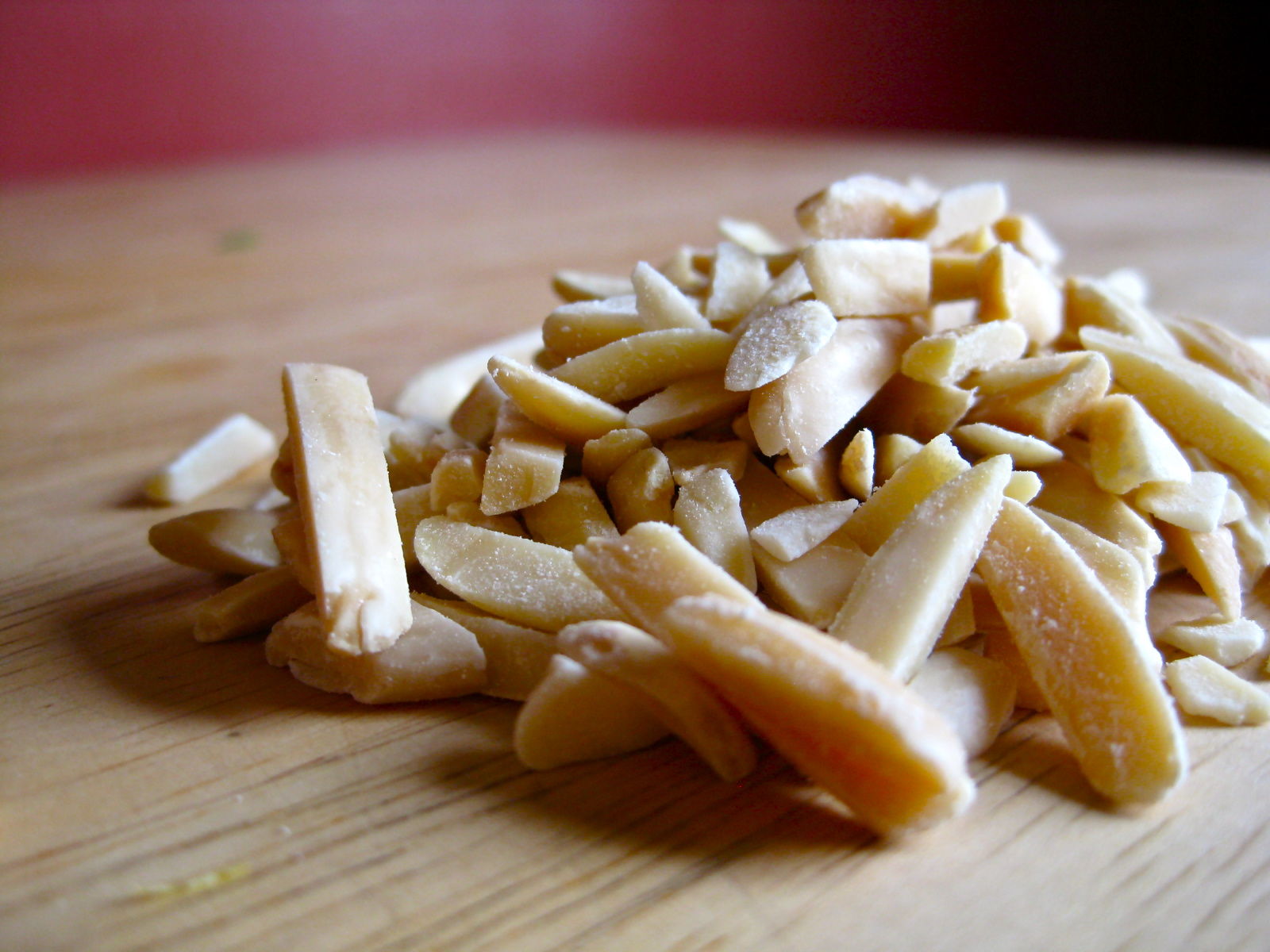
¼ cup slivered or sliced almonds

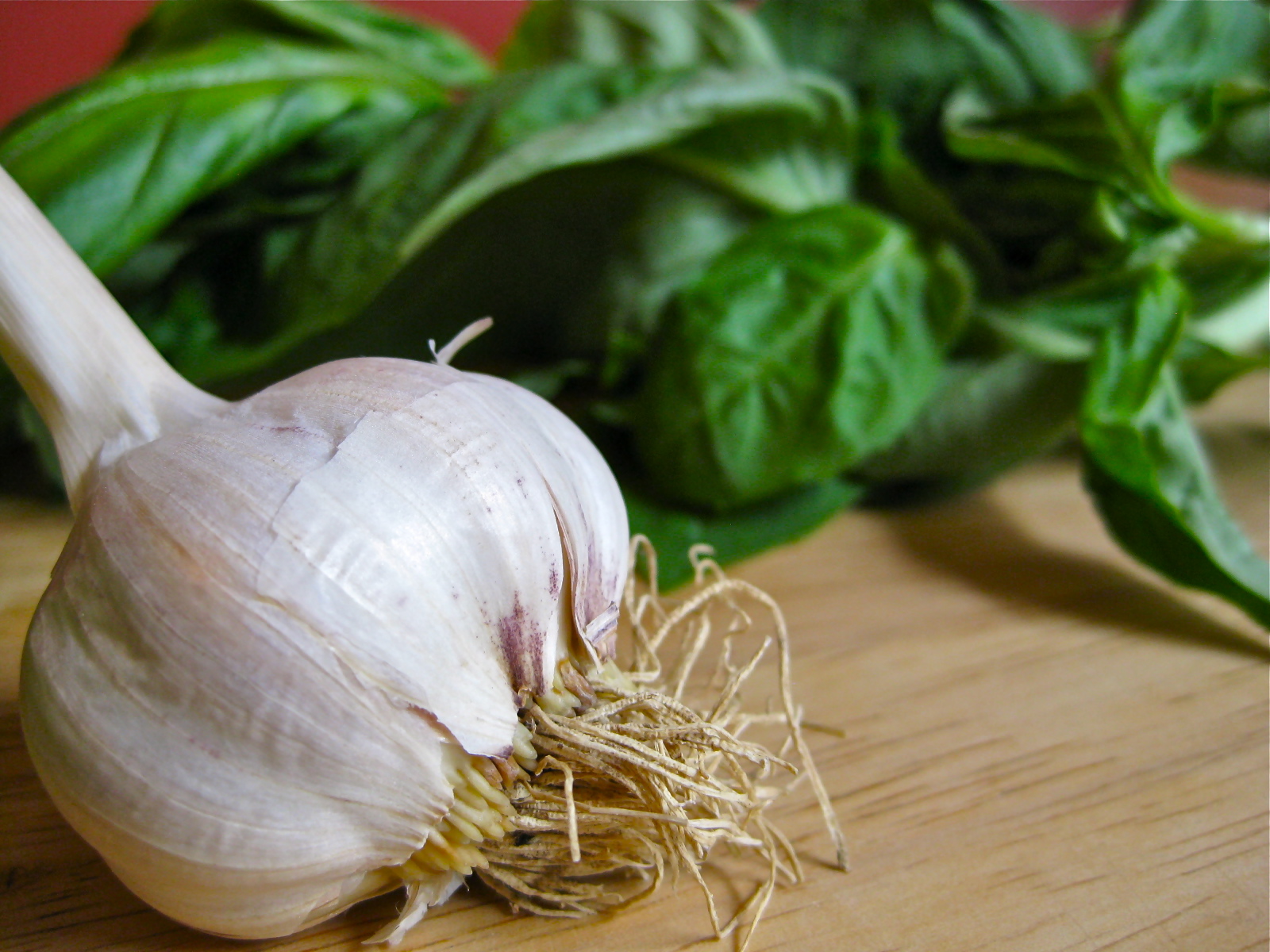
1 tightly packed cup of fresh basil leaves

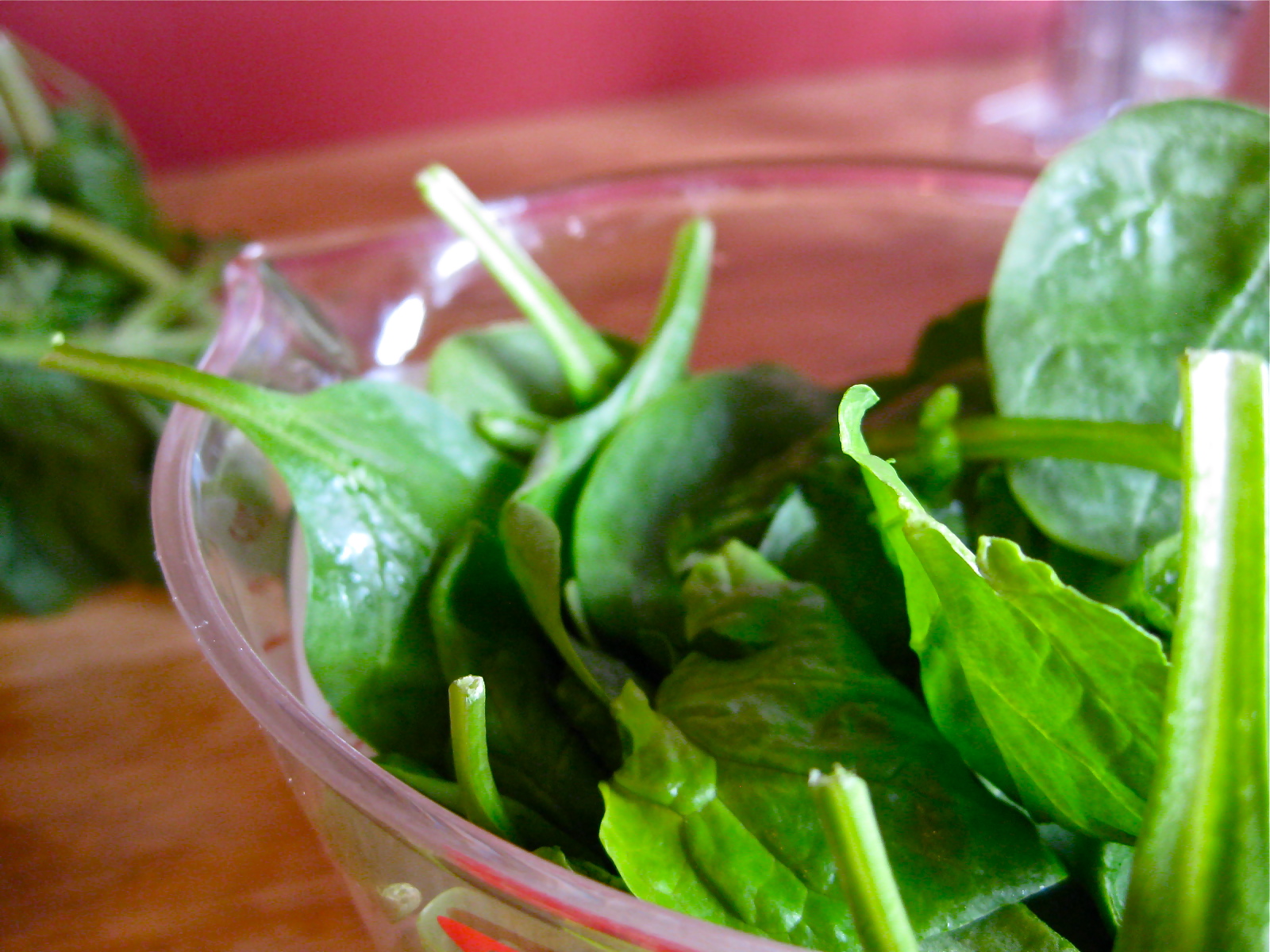
2 tightly packed cups of fresh spinach leaves

2 large cloves of garlic, peeled and coarsely chopped

zest of 1 large lemon

¼ cup extra virgin olive oil

½ cup shredded or grated Parmesan cheese

salt and pepper to taste

In a dry pan, toast almonds over medium high heat until they are golden brown.  Remove from heat and set aside.

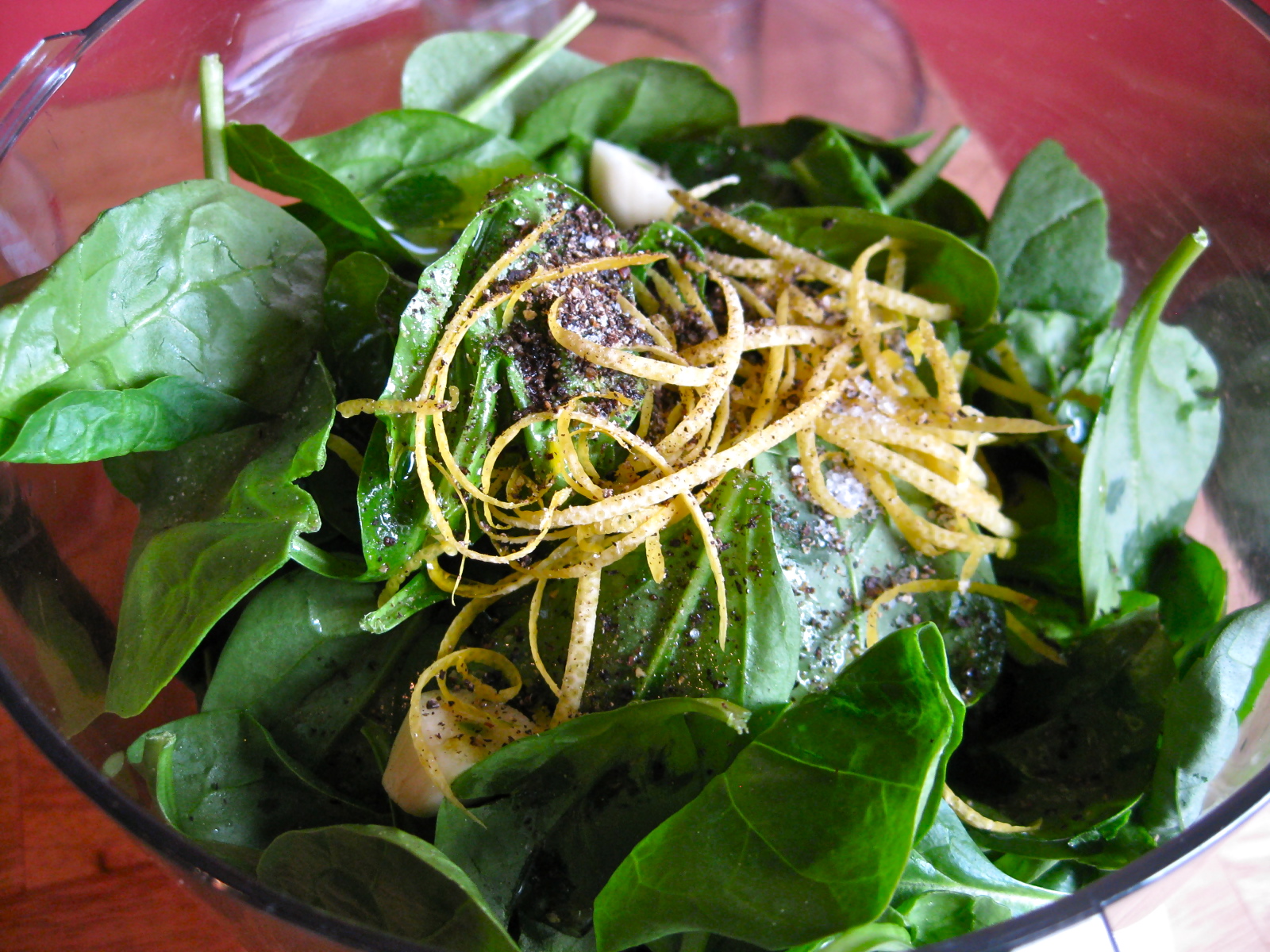
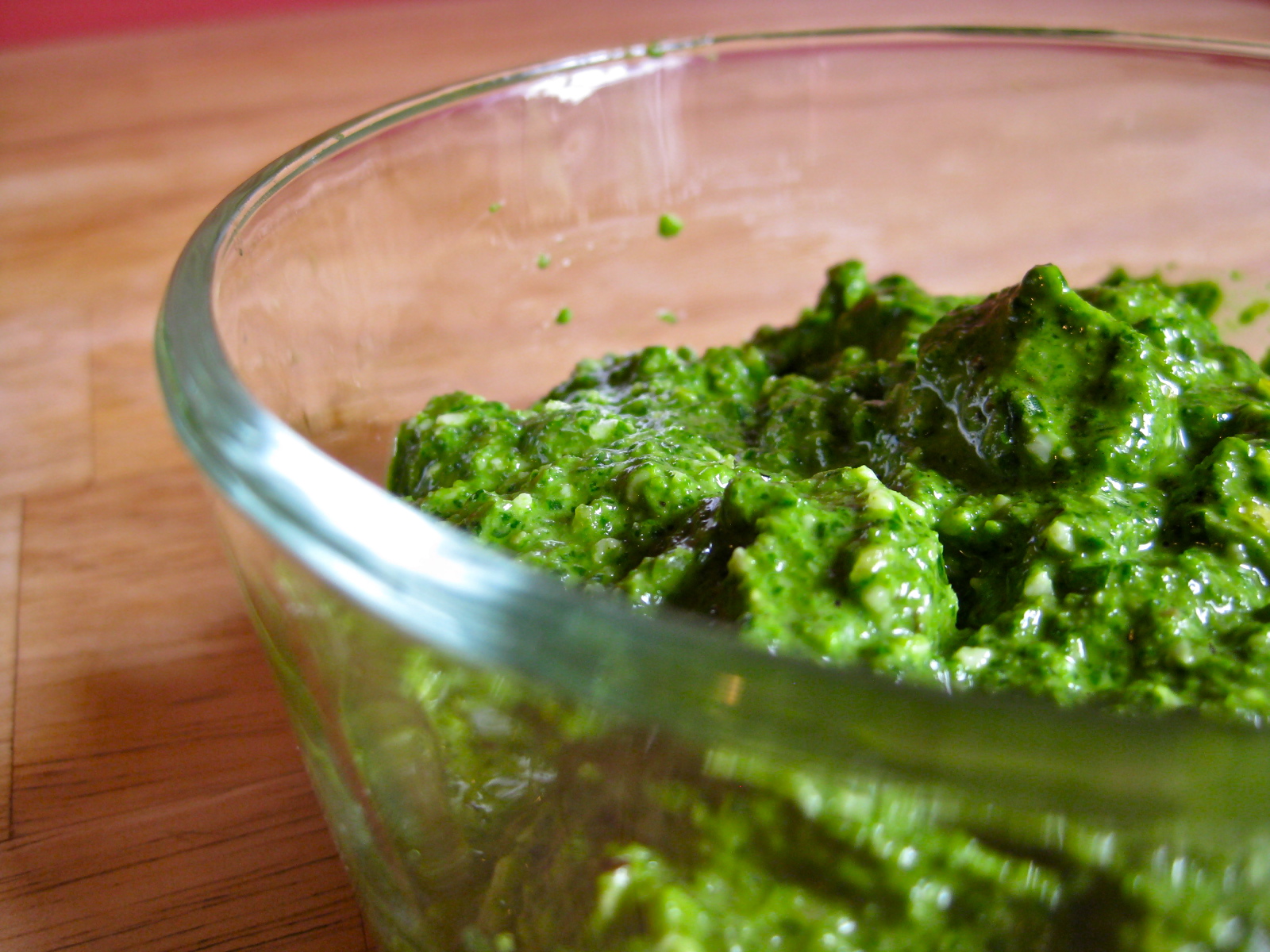
In the bowl of a food processor or blender, combine basil, spinach, garlic, lemon zest, and olive oil.  Process or blend for 15-20 seconds to combine and chop.  Scrape down the sides of the bowl, then add cooled almonds and Parmesan cheese.  Process or blend for another 20-30 seconds, scraping down as needed, until pesto is uniformly combined and no large chunks remain.  Add salt and pepper to taste.

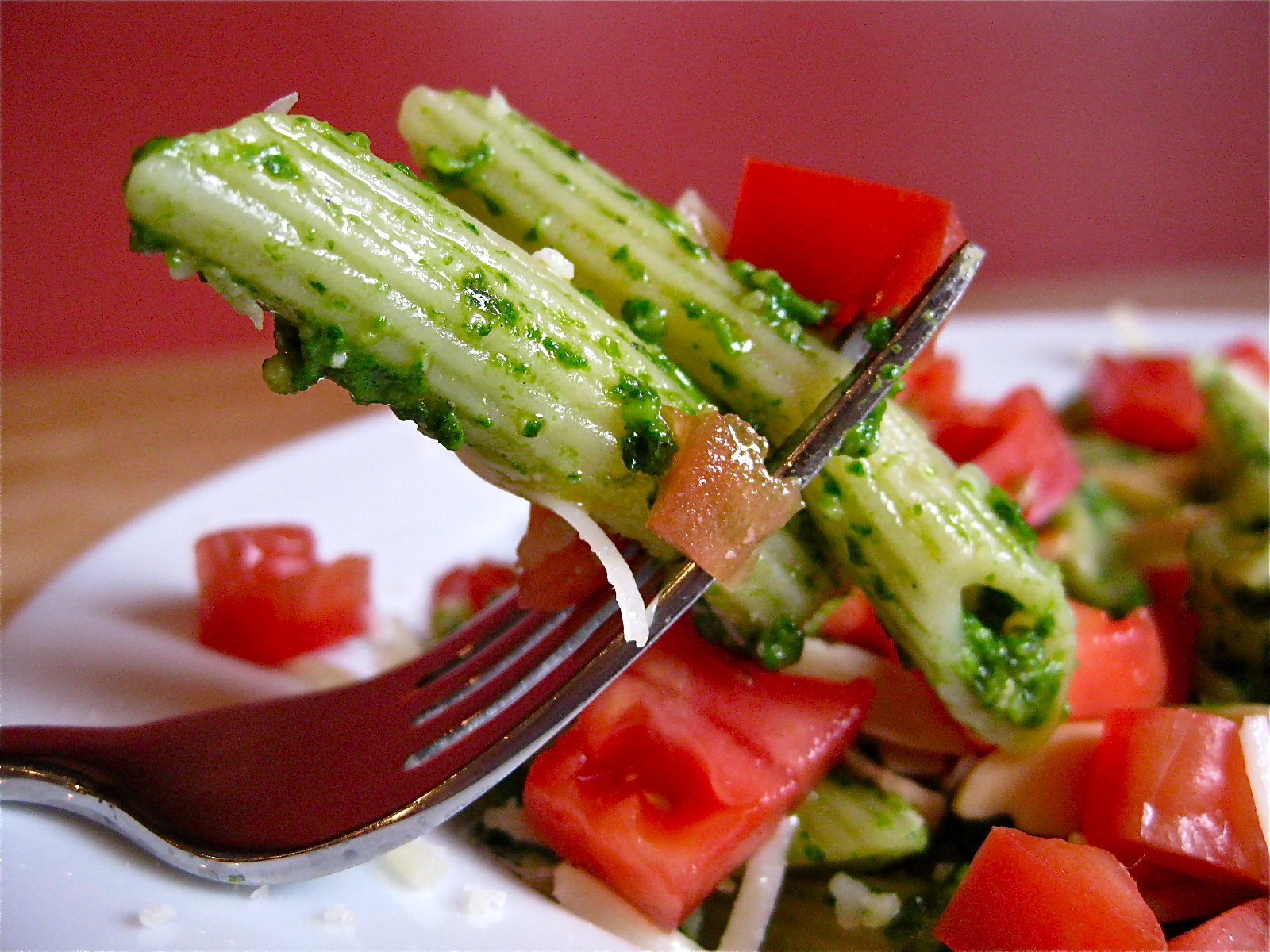
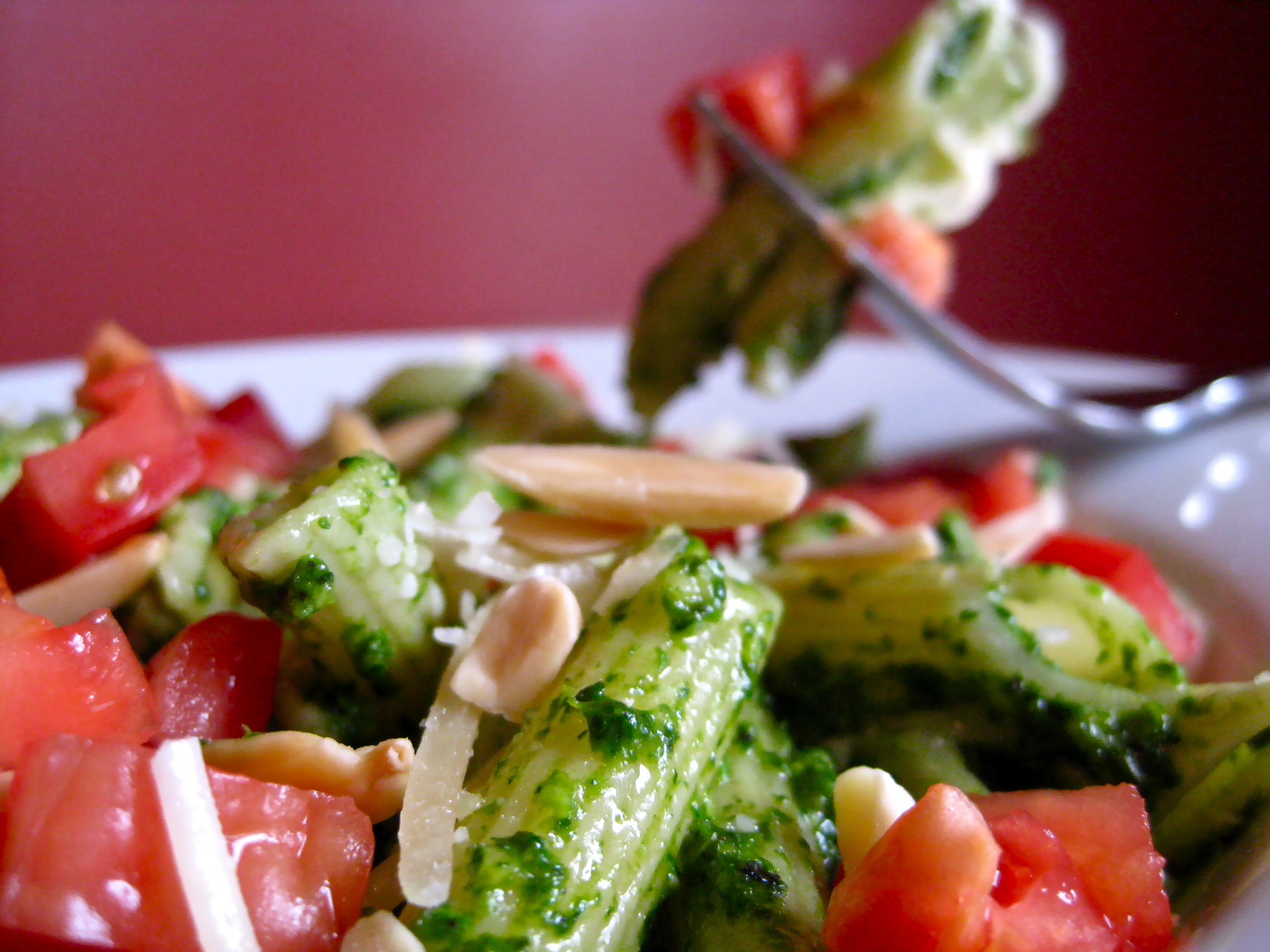
Pour sauce over your favorite pasta and toss to coat.  Taste for seasoning.

If desired, top with chopped tomatoes, more Parmesan cheese, and additional toasted nuts.

Makes 1 cup of pesto, enough for 1 pound of pasta.