Archive | Apple RSS feed for this section

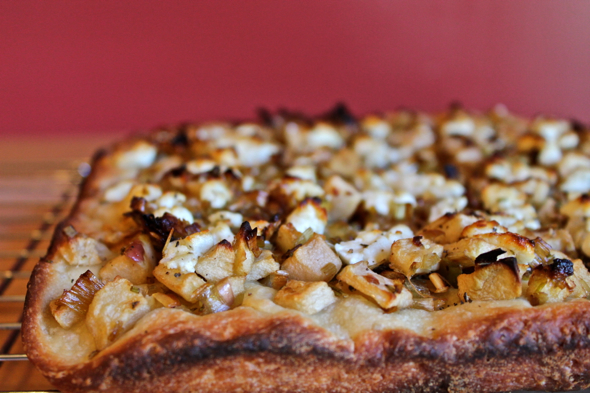
Leek, Apple, and Rosemary Flatbread with Chèvre

29 Oct

It may be a little early to start thinking about the holidays, but with two party invitations having come our way in the last week alone, my brain has already started to focus on celebrations, invitations, and that most oft-repeated phrase in my personal RSVP: What can I bring?
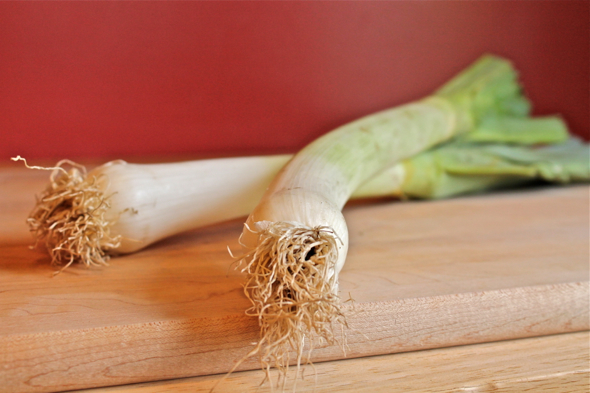
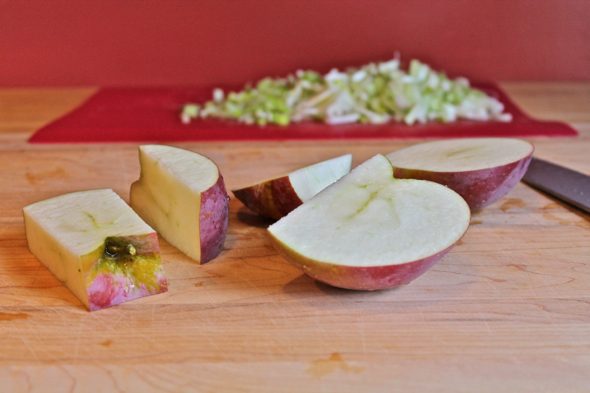
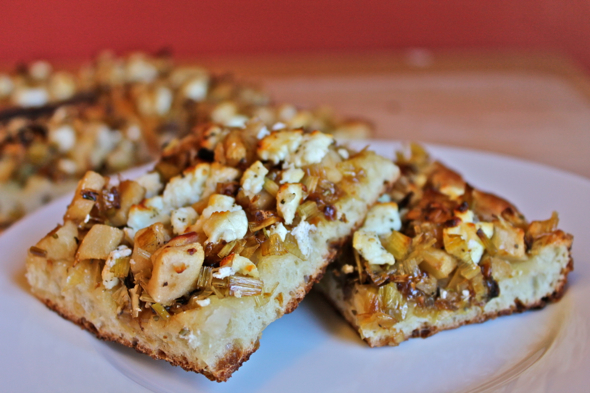
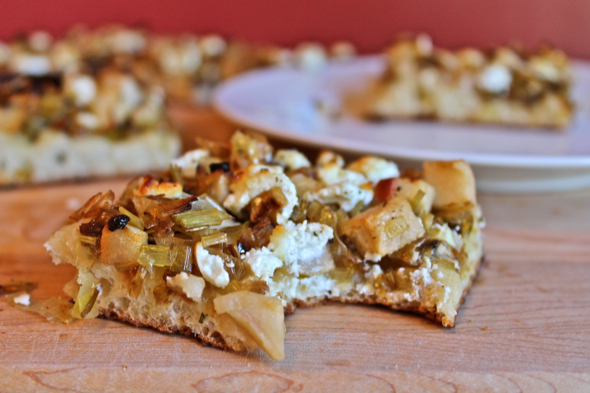
Last week I tried out this flatbread for a party offering, and I could not have been happier with how it turned out. The savory leeks and earthy rosemary are just delightful with the addition of tender bites of apple, and when combined with creamy goat cheese on top of an olive oil-crisped dough, the result is nothing short of heavenly. Don’t like goat cheese? I’ll bet this would be just as tasty with some sharp blue cheese crumbled on top.
Last Year: Butternut Squash and Dry-Cured Olive Pizza with Ricotta and Chèvre. Well, look at that. The San Francisco Giants just won the World Series again (it is taking all the restraint I have just to not type that in all caps), and, in keeping with my current habit of eating black and orange foods to show my support during their postseason run, here is the very first black and orange food recipe I shared, celebrating the one year anniversary of their previous (and first ever!) World Series win.

Leek, Apple, and Rosemary Flatbread with Chèvre Recipe

This flatbread’s dough is a cinch to throw together, as it requires very little in the way of kneading, and allows time to do most of the work. The dough will need at least three hours to proof at room temperature, but, to be quite honest, the dough really shines brightest when left to proof in the refrigerator overnight. If you mix everything together before you go to bed, place it in the refrigerator, then remove the dough from the fridge at least 30 minutes before you need to use it, you’ll get the most flavorful dough possible.

For the dough:

½ cup warm water

1 teaspoon extra virgin olive oil

1 teaspoon honey

1 1/3 cup bread flour

¼ teaspoon sea salt

¾ teaspoon rapid-rise yeast

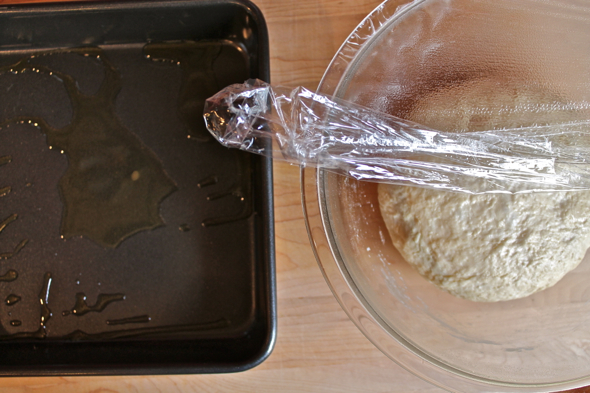
Stir together warm water, olive oil, and honey, then set aside. In a large bowl, combine bread flour, salt, and yeast, and stir to combine thoroughly. Using a sturdy wooden spoon or spatula, stir in water mixture until mixture comes together in a shaggy mass. With the dough still in the bowl, knead the shaggy dough for about 1 minute, until the dough comes together and starts to become smooth. Shape the dough into a ball, drizzle the bowl with a bit of olive oil, then turn the dough around in the oil to coat completely. Tightly cover the bowl with plastic wrap, then leave the dough on the counter to rise for at least 3 hours (or, preferably, in the refrigerator overnight—just remember to remove the dough from the refrigerator at least 30 minutes before you plan to use it).

For the topping:

2 tablespoons olive oil, divided

2 large leeks, white ends only, rinsed clean, sliced lengthwise, then sliced into half moons

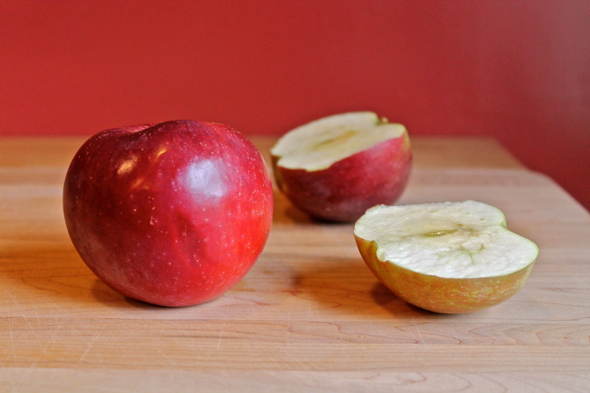
1 large apple, peeled, cored, and diced into ¼-inch chunks

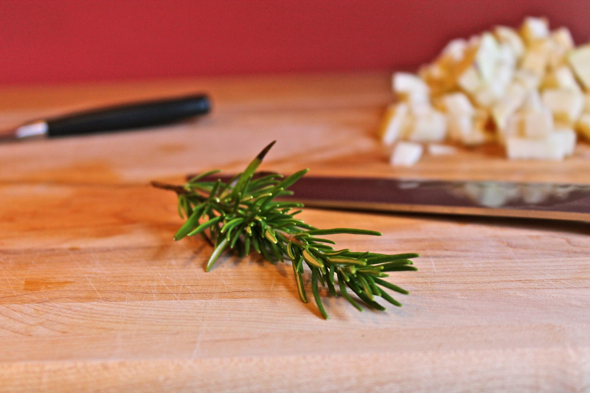
½ heaping tablespoon chopped fresh rosemary

salt and pepper to taste

2 ounces chèvre

Preheat oven to 500 degrees Fahrenheit. Arrange an oven rack in the middle position.

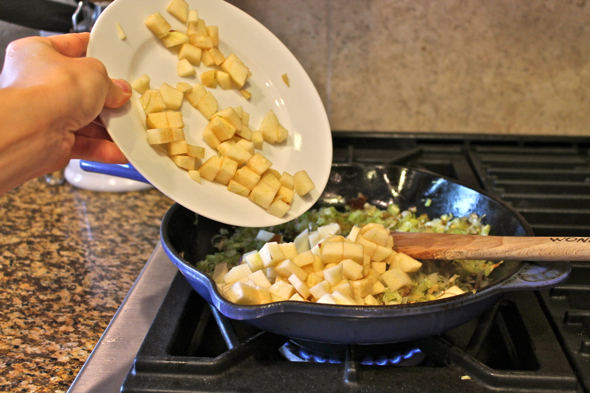
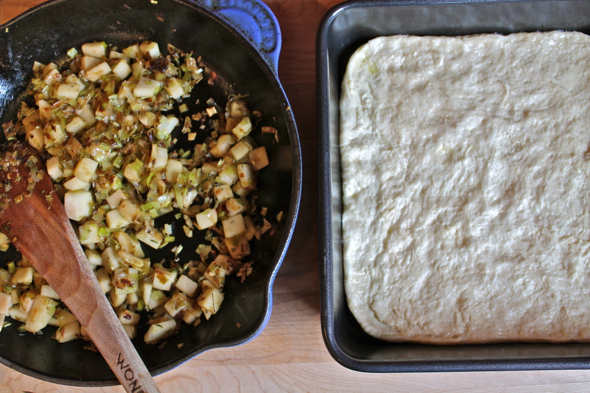
Heat 1 tablespoon of olive oil in a skillet set over medium heat. Add leeks, and stir to coat evenly in oil. Lower heat to medium-low and cook leeks, stirring occasionally, until they are soft, wilted, and starting to turn golden brown (about 15 minutes). Add diced apples and stir to combine. Cook until apples just begin to release a bit of their juices, about 5 minutes. Stir in rosemary, add salt and pepper to taste, then remove pan from heat and set aside to cool just a bit.

Coat the bottom of a 9” by 9” baking pan with the remaining tablespoon of olive oil. Turn room temperature dough out into the oiled pan, and, taking your time so as not to rip the dough, gently coax the dough into a square shape, fitting the dough all along the bottom of the pan. If the dough resists all efforts to be shaped, set the pan aside for a minute or two to allow the dough to rest, then come back and resume your shaping.

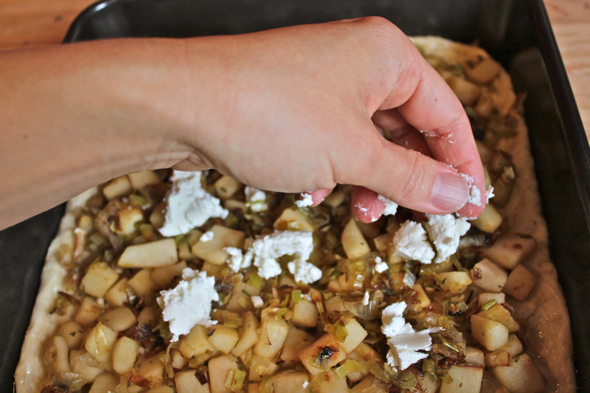
When the dough has been shaped in the pan, spoon the leek and apple mixture on top of the dough, leaving a ¼-inch border along the edges of the dough. Evenly crumble the chèvre over the leek mixture. Bake flatbread in center of oven for 14-16 minutes, until the edges of the dough are crisp and dark brown, and the topping is golden.

Remove flatbread from the pan using a flexible spatula. Cool briefly on a wire rack. Serve warm or at room temperature.

Cheddar, Apple, and Poppy Seed Scones

17 Oct

I don’t want it to end. I am speaking, of course, of the San Francisco Giants, and their near-miraculous performance in the postseason this year. After coming back from a two-game deficit last week, winning the division series and advancing to the pennant race, my heart was as full as it’s been in years. Okay, since 2010, when the Giants won the World Series. But still. My devotion to baseball is such that I tend to get very, very excited when things go well (and, conversely, very, very sad when things do not go well).

Plus, I am having a great time coming up with new and inventive ways to incorporate black and orange foods into our meals. Sometimes the black and orange components are front and center, but other times, like with these scones, the black and orange bits are a bit more subtle, though no less enjoyable. Actually, it just occurred to me that there might have been a more obvious scone to make when adding to my arsenal of orange and black foods: orange chocolate scones. Why did I not think of that earlier?

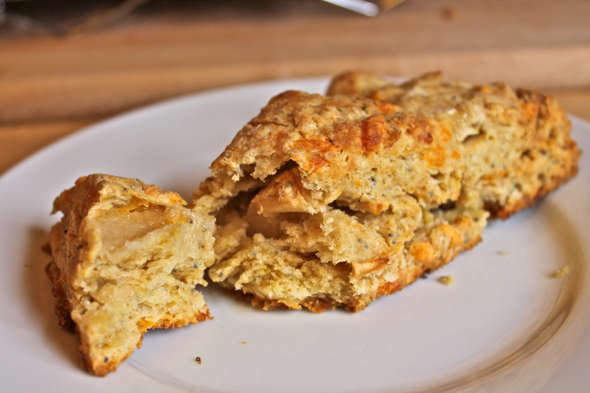
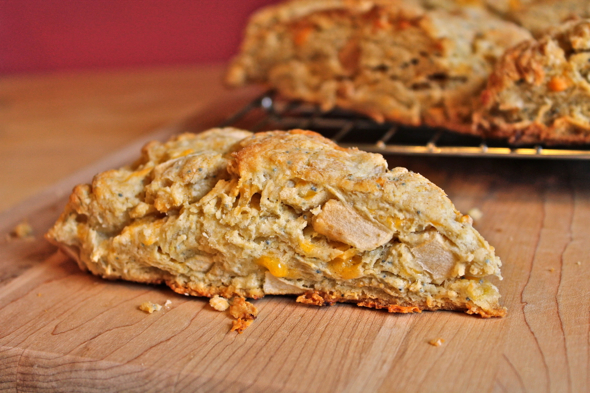
Truth be told, I am glad I did not go the orange and chocolate route. These cheddar apple scones, rich and buttery, but barely sweetened, were an absolute delight. With just a hint of whole wheat pastry flour to add to their heartiness, their pure, simple flavor made for a perfect fall bite. I had a bit of an internal battle with myself before I decided to hold off on adding any pinches of fall-ish spices (cinnamon, nutmeg, etc.), and, in the end, I am so glad I decided to reign things in. With just enough sharp cheddar folded into the dough to offset the fresh sweetness of the apples, these scones are just lovely. The Giants won, so I am, of course, going to credit the scones.

Last Year: Panko-Crusted Sole, a Dinner in 20 Minutes

Cheddar, Apple, and Poppy Seed Scones Recipe

3 cups unbleached all-purpose flour

1 ¾ cups whole wheat pastry flour

1 tablespoon baking powder

¾ teaspoon baking soda

1 tablespoon granulated sugar

1 teaspoon salt

1 tablespoon poppy seeds

finely grated zest of 1 lemon

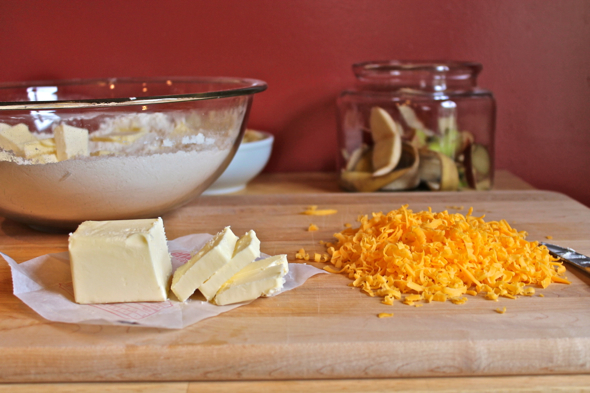
1 cup (2 sticks) cold, unsalted butter, cut into 1-inch chunks

1 ½ cups cold buttermilk or soured milk

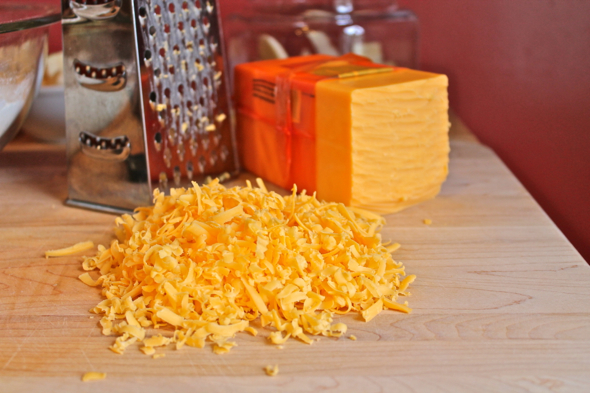
1 cup grated sharp cheddar cheese

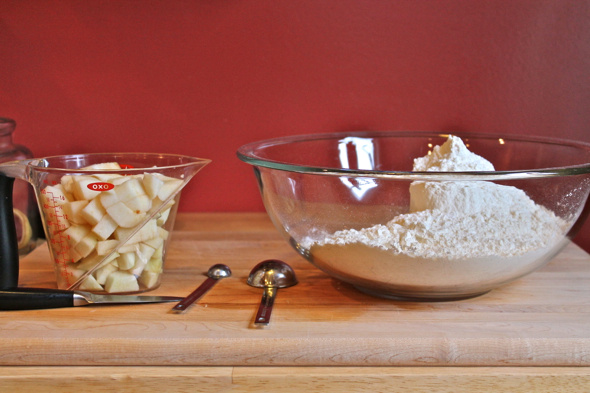
2 cups peeled apple chunks, about ¼-inch in size (from roughly 1 ½ large apples)

Preheat oven to 400 degrees Fahrenheit. Line a large baking sheet with parchment paper and set aside.

In a large bowl, combine flours, baking powder, baking soda, sugar, salt, poppy seeds, and lemon zest. Whisk to combine thoroughly.

Using a pastry cutter or two knives, cut the butter into the flour mixture until the mixture resembles coarse crumbs with a few large pea-sized butter bits strewn throughout. Using a wooden spoon or sturdy spatula, carefully stir in the buttermilk until the dough appears quite shaggy and just begins to hold together. Fold in both the grated cheese and the apple chunks.

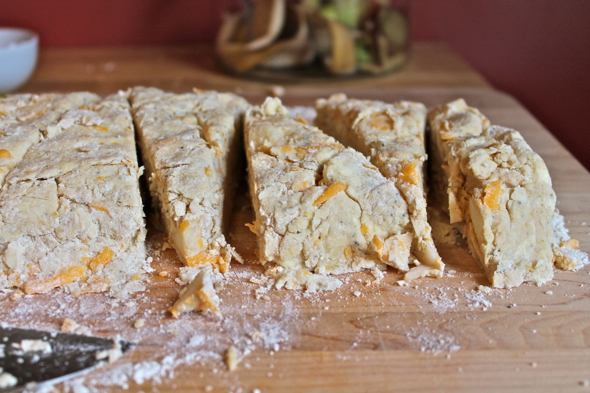
Turned the dough out onto a floured surface. Carefully pat the dough into a long rectangle about 18 inches long and roughly 1 ½-inches thick. Using a sharp knife, cut the dough into 12 triangles.

Place the dough triangles on the prepared baking sheet. You might need to partake in a bit of creative arranging in order to make all 12 triangles fit on the baking sheet. Bake in the center of the oven for 25 to 30 minutes, until the tops of the scones have turned dark golden brown. Remove scones to a wire rack to cool slightly, then serve while still warm.

Makes 12 scones.

Sky-High Apple Pie

11 Oct

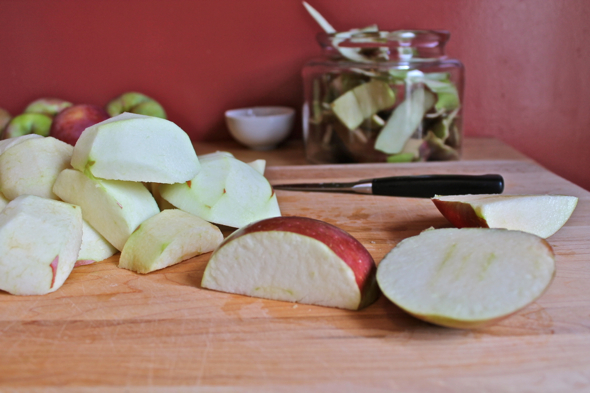
Curious as to just how many apples I might be able to jam into a single pie, a few days ago I started yanking apples off of our tree in the name of kitchen experimentation.

When I had filled a colander with apples, I stopped picking and came inside to weigh my bounty. It turned out that I had picked almost exactly six pounds of apples. Six pounds of apples? I could totally fit that into a pie.

Until now, I have never really bothered to write down a recipe for apple pie. Apple pie is one of those pies that, being a pie baker, I always just sort of whipped together when I felt the urge. This time around, having taken the time to actually make notes about what I was doing, it turns out that I do, actually, have an apple pie technique.

Precooking the apples is part of that technique, as it keeps the apples from losing their shape and volume while they cook in the oven (a sad fate that results in a rather large empty space forming between your pie’s filling and your pie’s dough). A quick simmer allows the apples to slump just enough to eliminate the possibility of pulling a nearly hollow crust of shell from the oven later on. This may seem like a rather fussy and step to have to add in, but it really does produce the best pie possible.

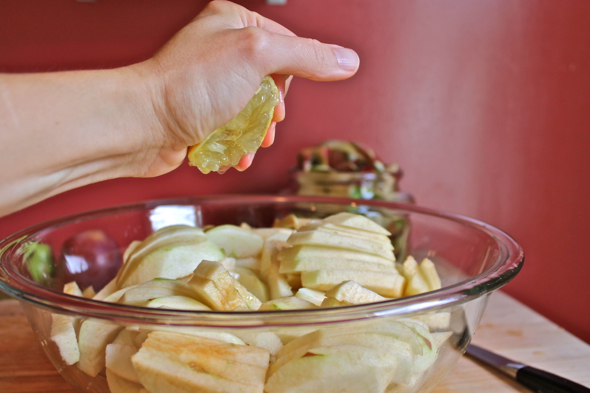
As an added benefit, when simmered on the stove with a sprinkling of dark brown sugar, a kiss of cinnamon, a squeeze of lemon juice, and a pinch of sea salt, the apples produce pool of apple juice that then gets reduced on the stove and drizzled over the filling before you bake the pie. This step is nothing short of a secret weapon. This whole pie contains only ½ a cup of sugar, but by rendering the apples and caramelizing their juice, you’re creating a richness of flavor that belies even a hint of missing sweetness.

Last Year: Apple Cheese Quiche (my son made up this recipe!), and a peek into the Sarah Daft Home Cookbook

Sky-High Apple Pie Recipe

Flaky Tart and Pie Dough

From Tartine

1 teaspoon salt

2/3 cup (5 ½ ounces) very cold ice water

3 cups plus 2 tablespoons (1 pound) unbleached all-purpose flour

1 cup plus 5 tablespoons (10 ½ ounces) very cold unsalted butter

In a small bowl, add the salt to the water and stir to dissolve. Place in the freezer to keep super cold until ready to use.

Place the flour in the bowl of a food processor, or in a large bowl. Cut the butter into 1-inch pieces, then scatter over the flour. If using a food processor, pulse the mixture briefly until it forms into large crumbs and some of the pieces of butter remain pea-sized. If making the dough by hand, cut the butter into the dough using a pastry cutter. You will want the dough to have the same crumb-like look with some large pea-sized chunks of butter throughout.

Drizzle the salt and water mixture over the dough and, if using a food processor, pulse until the dough comes together into a ball but is not completely smooth. You should still see visible butter chunks. If mixing the dough by hand, drizzle the salt and water mixture over the dough while tossing with a fork. The dough should come together in a shaggy mass. Gently mix the dough together until it comes together in a ball but is not completely smooth. As with the food processor dough, you should still see visible butter chunks.

Divide the dough into 2 equal balls on a lightly floured surface. Shape each ball into a disk about 1 inch thick. Wrap each disk in plastic wrap and refrigerate at least 2 hours, preferably overnight.

When you are ready to make your pie, on a floured surface, roll out one disk of chilled pie dough into a circle about 1 inch larger than a 9-inch pie dish. Gently transfer the dough to the pie dish, easing it into the bottom and sides, and pressing gently into place.  Using a sharp knife, trim the dough so it hangs over the pie dish by ½ inch, or, using your fingers, tuck the scraggly edges of the dough under itself and lightly press to adhere. Place the formed dough in the freezer for 30 minutes to 1 hour (this ensures the flakiest dough possible).

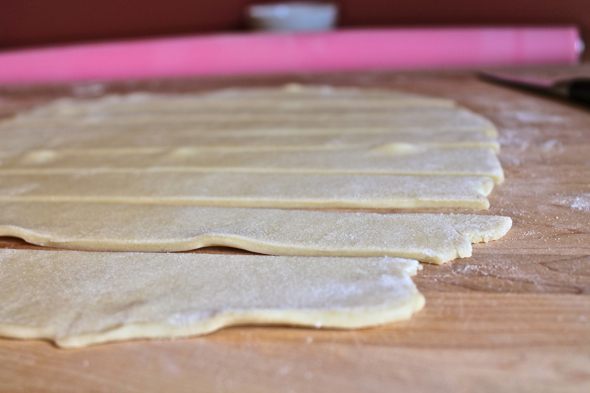
To prepare the other disk of dough to form the lattice pie top, on a lightly floured surface, roll the other disk of dough into a roughly 13 by 10-inch rectangle. Cut the rectangle lengthwise into 8 strips that are 13 inches long. Place strips of dough on a baking sheet and refrigerate while you prepare the pie filling.

Apple Pie Filling

6 pounds tart or tart-sweet apples

juice of 1 lemon

½ cup firmly-packed dark brown sugar

½ teaspoon cinnamon

pinch of salt

1 teaspoon pure vanilla extract

1 egg white, lightly beaten

Peel, core, and slice apples into ¼-inch slices. In a large Dutch oven or similarly heavy-bottomed pot, combine sliced apples, lemon juice, dark brown sugar, cinnamon, and salt. Stir to combine, then cook apples at a low simmer over medium-low heat. Cook for about 15 minutes, stirring frequently, until apples are barely fork-tender and have released quite a bit of their juices. Using a slotted spoon, remove apples from Dutch oven, leaving the juice in the pot. Set aside the apples to cool.

With the heat still set at medium-low, bring the rendered apple juice to a simmer. Stirring frequently, allow the juice to simmer until it has thickened quite a bit and reduced to about 1/3 of a cup of liquid. Stir in vanilla extract. Pour into a small bowl and set aside to cool a bit.

Preheat oven to 425 degrees Fahrenheit. Adjust an oven rack to the lowest position, and place a foil-lined baking sheet on the rack.

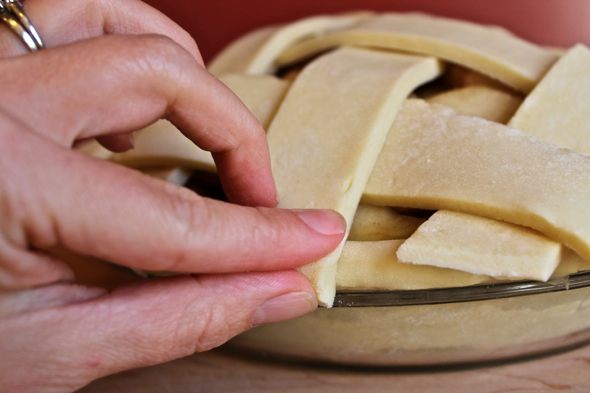
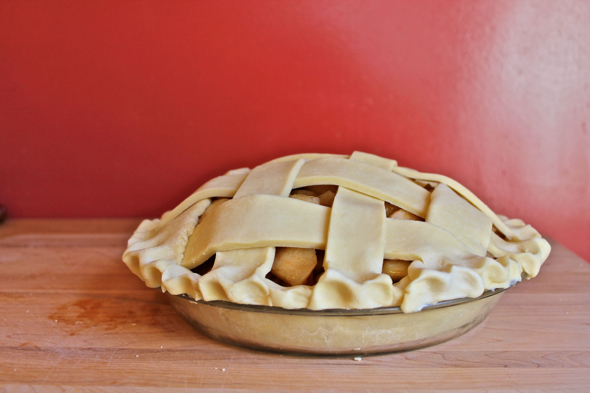
Place the slightly-cooled apples in the dough-lined pie pan. Mound the apples up in the middle, as there are a lot of apples to fit into this pie. Drizzle the apples with the slightly-cooled caramelized apple juice. Weave the long strips of refrigerated pie dough over the top in a lattice pattern. (There is a good tutorial on how to do this here but keep in mind that you will, obviously, be using fewer strips of dough.) Trim the edges of the lattice even with the lower crust, then fold under the edges and crimp into place using your fingers.  Brush the top crust of the pie with the beaten egg white.

Place the pie on the heated baking sheet and bake until the crust is golden, about 25 to 30 minutes. Reduce the oven temperature to 375 degrees, rotate the baking sheet, and continue to bake the pie until the juices are bubbling and the crust is a deep golden brown, about 30 to 35 minutes longer.

Remove the pie from the oven and allow to cool on a wire rack for at least two hours. The pie will set up much better and slice much more neatly if it is not served piping hot.